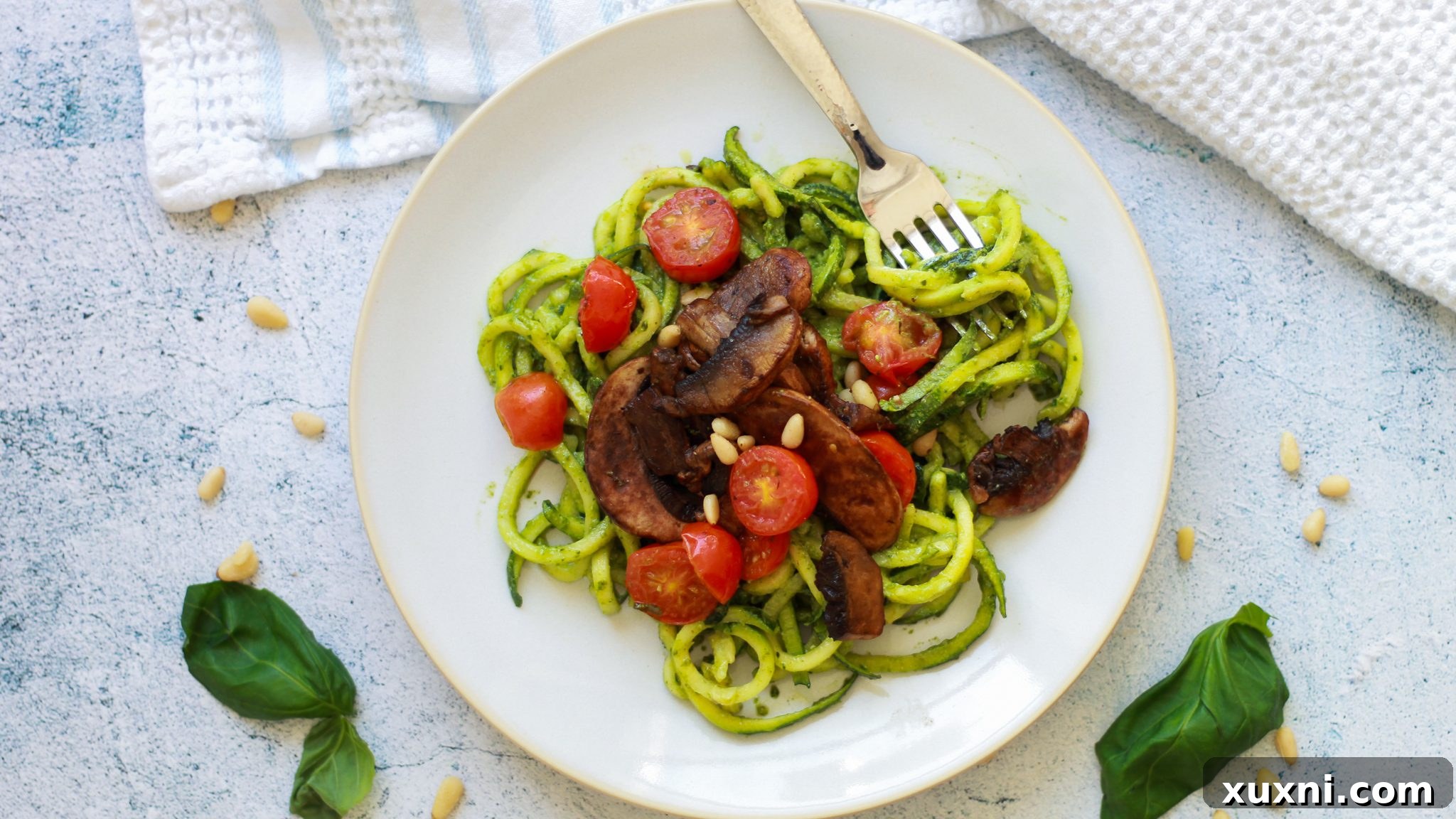
Paleo Vegan Pesto Zoodles: Your Go-To Healthy, Whole30 & Dairy-Free Zucchini Pasta Recipe
There’s something truly magical about pesto. Its vibrant green hue, aromatic basil, and rich, savory flavor can elevate almost any dish. For me, it’s more than just a sauce; it’s a culinary obsession. I confess, I could happily eat pesto by the spoonful! So, when I first experienced the incredible satisfaction of these Paleo Vegan Pesto Zoodles, I was absolutely thrilled. It’s a dish that brings pure joy without any of the guilt.
What makes this recipe truly stand out? These delightful pesto zoodles are crafted to be completely dairy-free, vegan, paleo, and Whole30 compliant. Yes, you read that right! A pasta-like dish that fits seamlessly into all these dietary frameworks, offering a truly delicious and healthful alternative to traditional pasta. It’s proof that healthy eating doesn’t have to mean sacrificing flavor or excitement.
Why Choose Zoodles? The Perfect Veggie Pasta Alternative
Let’s be clear: these pesto zoodles aren’t here to replace the timeless comfort and deliciousness of traditional pesto pasta. As someone who advocates for a “label-less” approach to eating – savoring what I want without strict adherence to arbitrary rules – I believe there’s a place for all kinds of food in a balanced lifestyle. However, for those currently navigating specific dietary paths or simply looking to incorporate more vegetables into their meals in an exciting way, these pesto zoodles are an absolute game-changer.
Zucchini noodles, or “zoodles,” offer a fantastic low-carb, gluten-free, and nutrient-dense alternative to wheat pasta. Zucchini itself is packed with vitamins, minerals, and antioxidants, including Vitamin C, Vitamin B6, potassium, and manganese. It’s also high in water content and fiber, promoting hydration and digestive health. Swapping traditional pasta for zoodles is an easy way to lighten up a meal, reduce calorie intake, and boost your daily vegetable consumption, all without compromising on a satisfying and flavorful experience. It’s a versatile vegetable that transforms beautifully into a pasta-like texture, making it ideal for absorbing rich sauces like our homemade vegan pesto.
Crafting the Perfect Dairy-Free Pesto: The Secret to Amazing Flavor
You might be wondering: how can a pesto be dairy-free and still taste incredibly rich and flavorful? The secret lies in carefully balancing the flavor notes and leveraging potent plant-based ingredients. My culinary philosophy is simple: when you remove an ingredient, you must replace its essence with something equally delightful. Otherwise, you risk ending up with a bland dish, and nobody wants that!
For this Paleo Vegan Pesto, we lean heavily into the power of fresh herbs and aromatics. Generous amounts of fresh basil are the star, providing that iconic sweet and peppery foundation. But we don’t stop there. Ample minced garlic adds a pungent, savory kick that truly makes the pesto sing. High-quality organic olive oil is essential for its fruity notes and luscious texture, emulsifying everything into a smooth, vibrant sauce. Toasted pine nuts contribute a buttery, nutty depth, mimicking the richness often found in traditional cheese-based pestos. If you have nut allergies, you can easily substitute pine nuts with toasted sunflower seeds or even pumpkin seeds for a similar texture and flavor profile.
Some recipes might call for nutritional yeast to add a “cheesy” umami flavor, but in this particular pesto, the combination of fresh basil, robust garlic, and perfectly toasted pine nuts creates such a profound depth of flavor that it stands on its own, dairy-free and absolutely delicious. This carefully curated blend ensures that every spoonful of pesto is bursting with fresh, herbaceous goodness, making it an instant family favorite.
Mastering Zoodle Preparation: Avoiding Mushy Mistakes
One of the most common pitfalls when cooking zoodles is overcooking them, leading to a watery, mushy mess that can detract from the entire meal. To truly enjoy your Paleo Vegan Pesto Zoodles, achieving that perfect al dente texture is crucial. You want them tender enough to eat, but still with a slight bite and firm shape.
Here’s the trick to perfectly cooked zoodles: rapidity and controlled heat. First, ensure your zucchini is spiralized into consistent noodles. Before cooking, some chefs recommend salting the zoodles and letting them sit for 10-15 minutes to draw out excess moisture, then patting them dry. While not strictly necessary for this quick-cook method, it can further prevent sogginess.
When it comes to cooking, use a medium skillet over medium-high heat. Crucially, don’t use too much oil; a little goes a long way, and excess oil can make them cook even faster, or worse, become greasy. Add your zoodles and a pinch of salt and pepper, then cook them for only a few minutes, stirring frequently. You’re looking for them to just begin to wilt and soften, but still hold their shape. This typically takes only 2-4 minutes, depending on the thickness of your zoodles and the heat of your pan. Trust your eyes and taste buds – a slight crunch is preferable to a soggy strand.
Combining Pesto and Zoodles for Optimal Flavor
Once your zoodles have reached that ideal, slightly tender texture, the final step is key to preserving the fresh, vibrant flavor of your homemade pesto. Turn the heat off completely before adding the pesto to the skillet. This prevents the delicate herbs in the pesto from “cooking out” and losing their bright flavor and color. Simply add your desired amount of pesto – about 1/4 to 1/2 cup per serving, depending on your taste preference – and gently toss the zoodles until they are evenly coated.
This method ensures that the pesto remains fresh and aromatic, while the zoodles maintain their sturdy, pleasing shape. The residual warmth from the zoodles will gently heat the pesto, creating a perfectly integrated dish that’s a pleasure to eat. Serve immediately to enjoy the best texture and flavor.
Serving Suggestions and Variations
These Paleo Vegan Pesto Zoodles are incredibly versatile. They can be enjoyed as a light and satisfying main course on their own, or they make an excellent side dish for a variety of proteins. Consider pairing them with grilled chicken, pan-seared fish, or a plant-based protein like baked tofu or tempeh for a complete and balanced meal. You can also toss in other vegetables like cherry tomatoes, bell peppers, or spinach during the last minute of cooking for added nutrition and color. A sprinkle of fresh red pepper flakes can add a lovely touch of heat if you enjoy a little spice.
Don’t limit yourself to just zucchini! This dairy-free pesto recipe is fantastic with other vegetable noodles, such as carrot, sweet potato, or cucumber noodles. Experiment with different combinations to find your favorite veggie pasta creation!
I genuinely hope you cherish this recipe as much as I do. It’s a testament to how incredible healthy, compliant eating can be without ever feeling like a compromise. If you decide to make these delightful Paleo Vegan Pesto Zoodles, I would absolutely love to hear your thoughts and see your creations! Enjoy every vibrant, flavorful bite!
Print
Vegan Pesto Zoodles
5 Stars 4 Stars 3 Stars 2 Stars 1 Star
No reviews
Yield: 4 1x
Description
These paleo vegan pesto zoodles are the perfect alternative for Whole30 followers! The pesto is easy, delicious, and will become a family favorite!
Ingredients
Scale
Zoodles
- 2 large zucchinis (spiralized)
- 1 tsp cooking oil (I use olive)
- 1 pinch sea salt
- 1 pinch black pepper
Pesto
- 2 cups basil (washed)
- 1/2 cup organic olive oil
- 1/2 cup toasted pine nuts
- 2 tbsp minced garlic
- 1 tsp sea salt
Instructions
- To prepare the pesto, place all ingredients into a food processor and blend until smooth.
- Store any unused pesto in an airtight container in the fridge for up to a week. For the zoodles, you’ll typically need about 2 tablespoons of pesto per portion.
- Heat 1 teaspoon of cooking oil (such as olive oil) in a medium skillet over medium-high heat until shimmering.
- Add the spiralized zucchinis, a pinch of sea salt, and a pinch of black pepper to the hot skillet. Cook the zoodles for only 2-4 minutes, stirring frequently, until they just begin to wilt and are tender-crisp. Avoid overcooking to prevent sogginess.
- Once the zoodles are cooked, immediately turn off the heat. Add about 1/4 to 1/2 cup of the prepared pesto directly into the skillet with the noodles. Adjust the amount based on your taste preferences and the number of servings.
- Toss the zoodles gently until they are evenly coated with the vibrant pesto. Serve immediately and enjoy your delicious, healthy meal!