Mastering Homemade Oat Flour: Your Guide to Gluten-Free, Gum-Free Baking
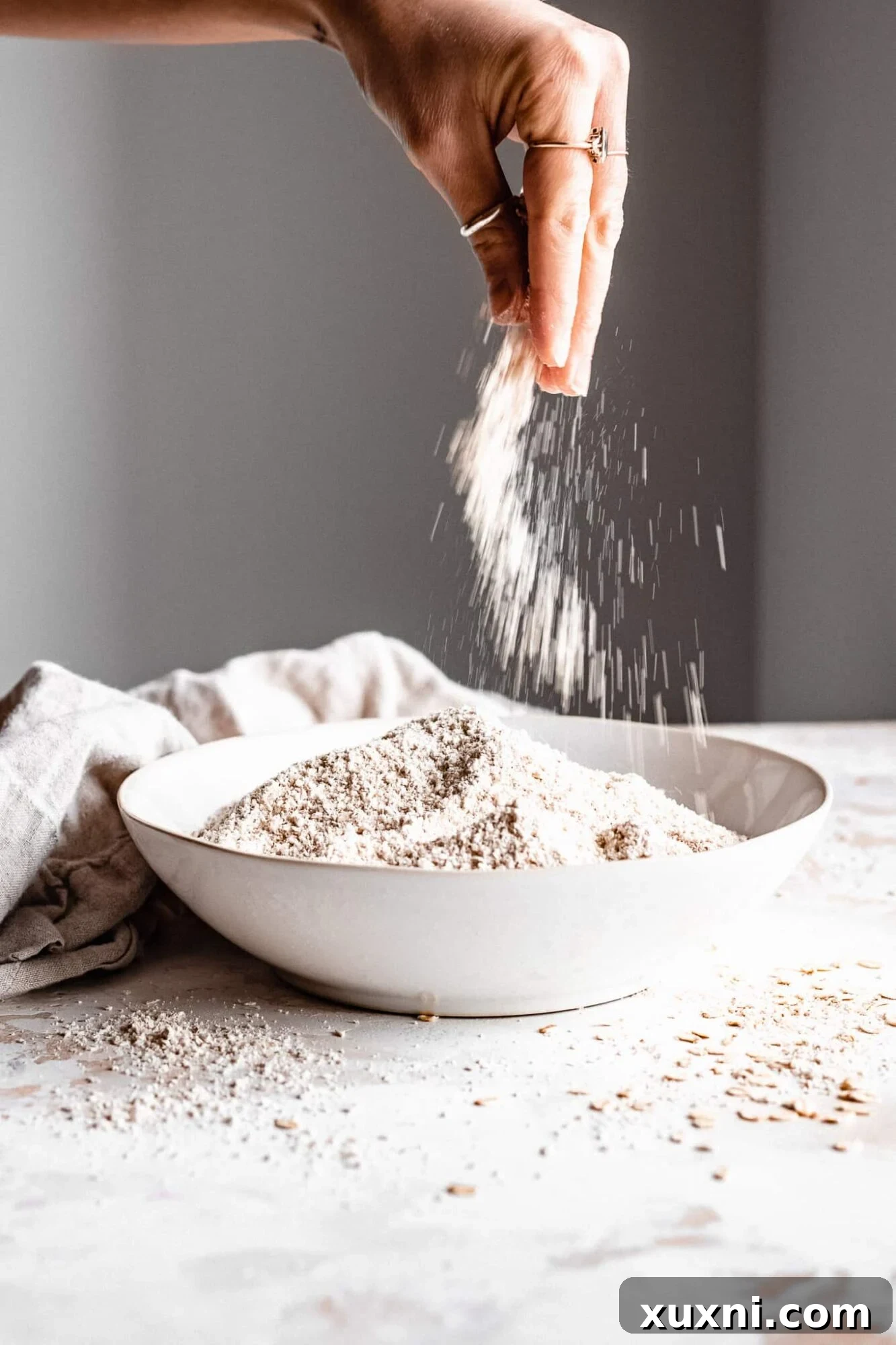
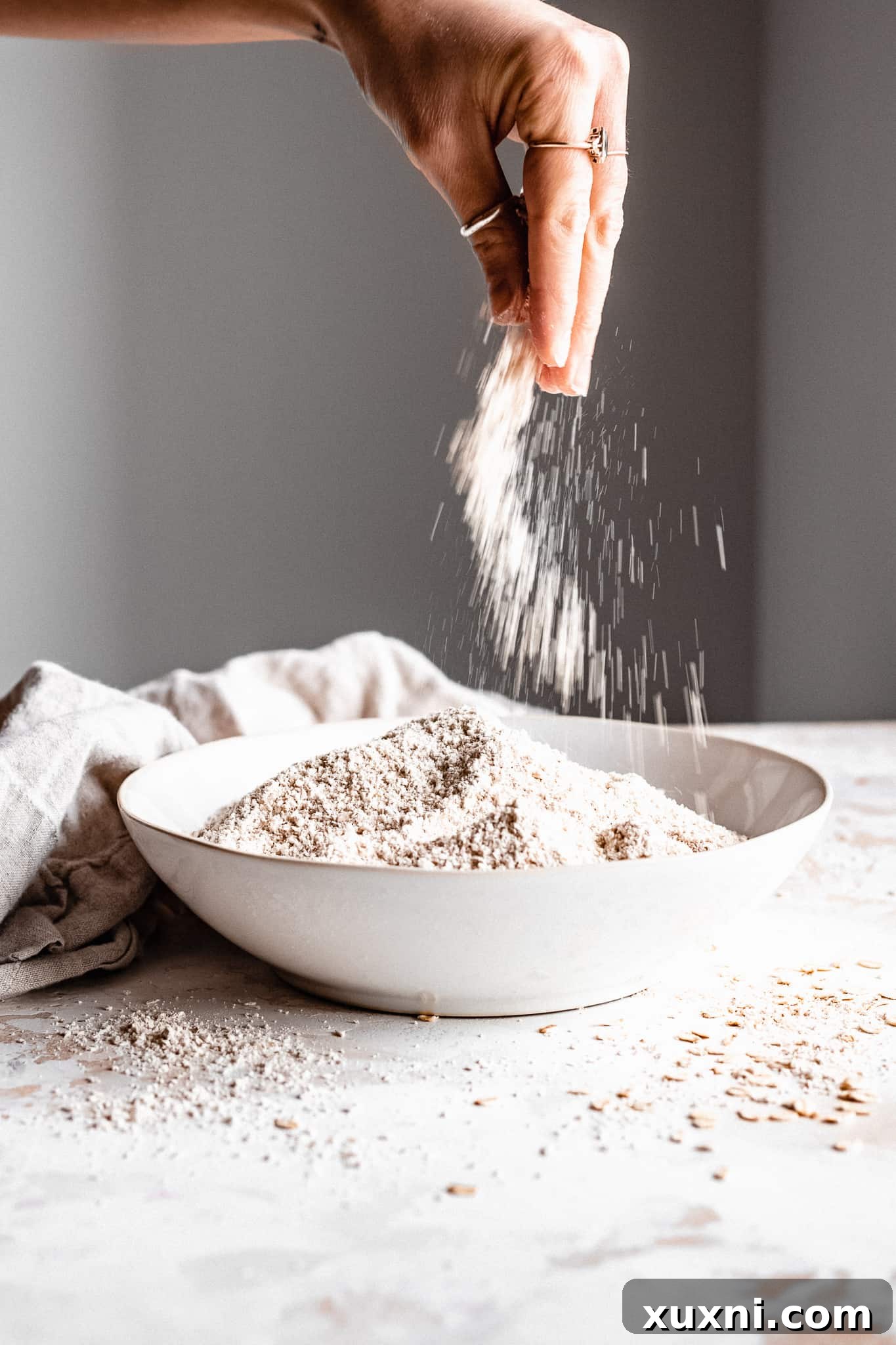
Unlock the secret to effortless gluten-free and gum-free baking with homemade oat flour. This invaluable kitchen trick has been a staple in my baking for years, and for good reason: it’s incredibly simple, budget-friendly, and offers unparalleled control over your ingredients. Forget expensive store-bought alternatives; all you truly need are rolled oats and a few minutes of your time to transform them into a versatile baking essential.
Crafting your own oat flour from scratch takes less than two minutes, making it one of the quickest and most rewarding DIY projects for any home baker. As long as you choose certified gluten-free oats, your homemade flour will be completely free of gluten, as well as unwanted gums often found in commercial gluten-free flour blends. This means a healthier, purer option for all your vegan and gluten-free culinary creations.
Is Oat Flour Gluten-Free and Gum-Free? The Clear Answer.
One of the most common questions surrounding oat flour concerns its gluten and gum content. The good news is, homemade oat flour is indeed naturally gum-free. While oats themselves are inherently gluten-free, cross-contamination can occur during processing. Therefore, it’s crucial to select oats specifically labeled as “certified gluten-free” to ensure your flour meets dietary requirements.
Many individuals sensitive to gluten also find themselves reacting to the added gums (like xanthan gum or guar gum) used in commercial gluten-free flour blends to mimic the elasticity of gluten. Oats, however, possess natural properties that allow them to cohere and develop a desirable texture during baking without any added gums. When ground into flour, their starches and fibers help bind ingredients, much like wheat flour, providing a wonderful alternative for those seeking a cleaner, simpler ingredient list.
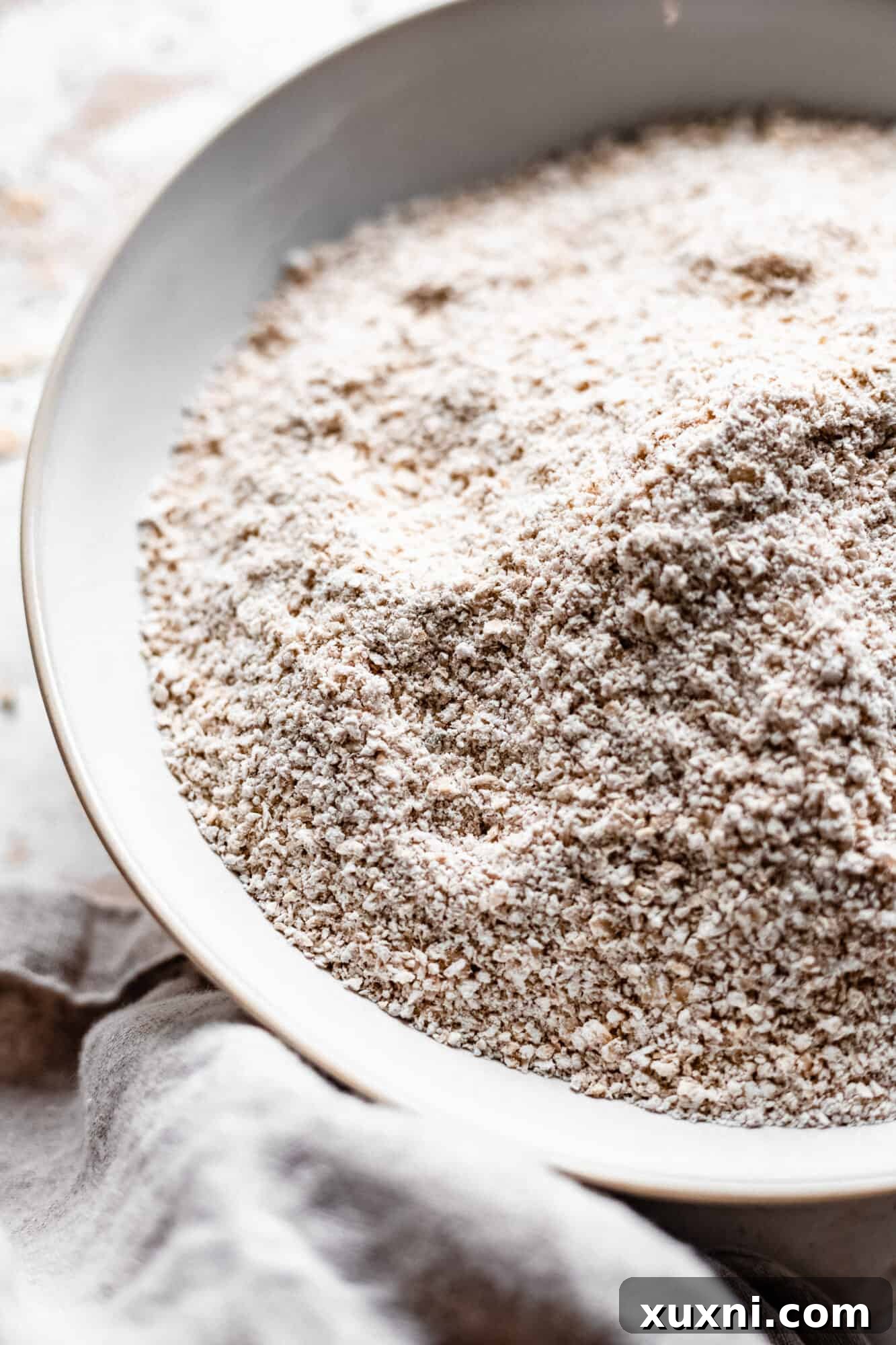
Beyond the dietary benefits, making your own oat flour is remarkably cost-effective. A large bag of organic rolled oats is often significantly cheaper than a small package of specialty gluten-free flour. You’re leveraging a pantry staple to create a premium ingredient, saving money while gaining quality. This DIY approach empowers you to control the freshness and purity of your ingredients, leading to superior results in your baking.
The Easiest Kitchen Hack: How to Make Oat Flour at Home
Get ready for a game-changing kitchen hack that will simplify your gluten-free baking routine. Transforming whole rolled oats into finely ground flour is incredibly quick, taking approximately two minutes from start to finish. Here’s how you can easily make your own oat flour:
- Measure Your Oats: Begin by placing the desired amount of certified gluten-free rolled oats into a sturdy food processor or a high-powered blender.
- Blend to Perfection: Secure the lid and blend the oats for about 60 to 90 seconds initially. Then, pause, scrape down the sides, and continue blending for another minute or until the oats achieve a consistently fine, powdery texture. The total blending time will depend on your appliance and your preferred flour fineness.
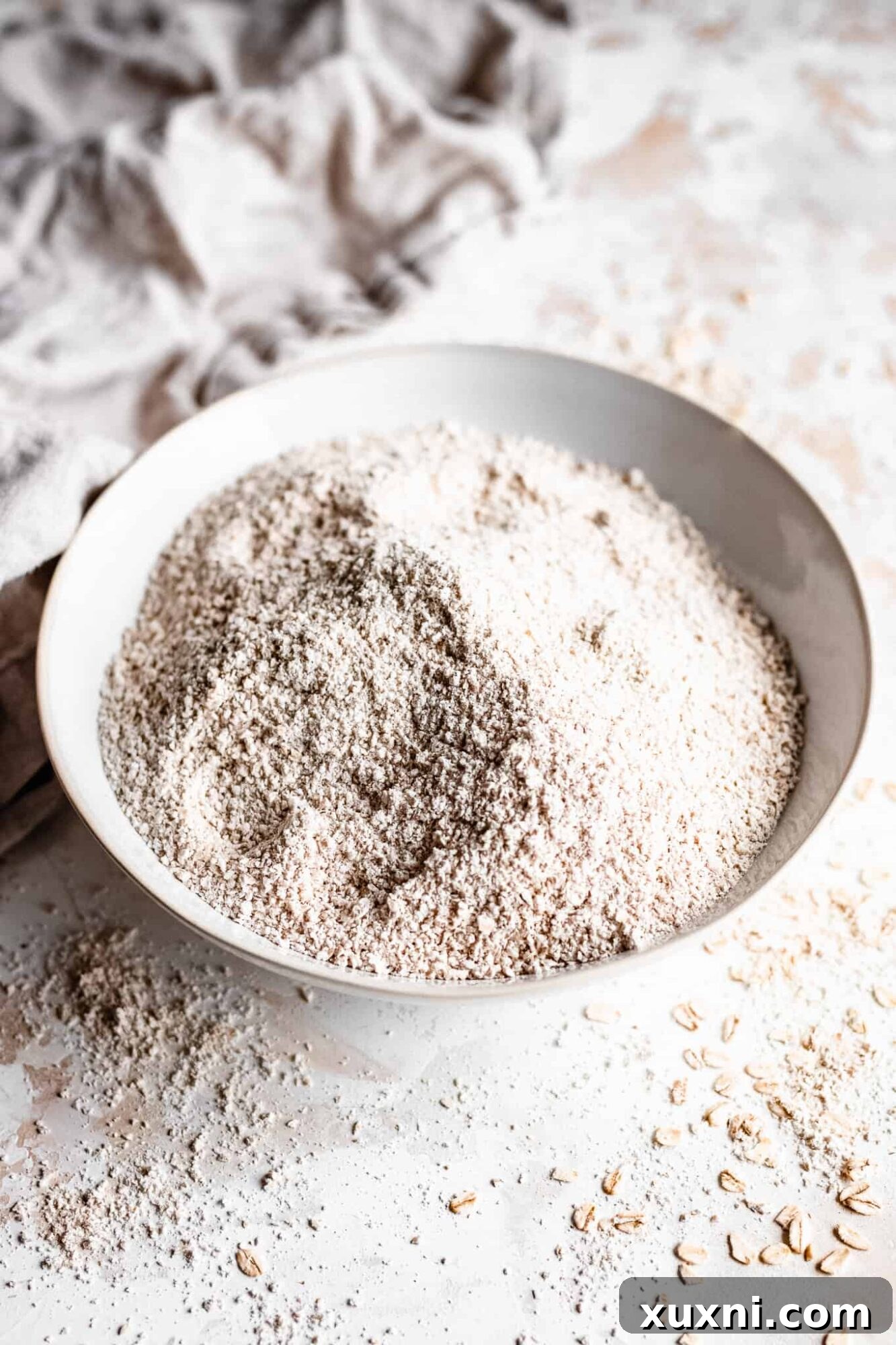
- Sift for Smoothness (Optional but Recommended): For the smoothest possible flour, sift the freshly ground oat flour through a fine-mesh sieve into a large plastic bag or an airtight storage container. This step helps remove any larger, unground oat pieces, ensuring uniform results in your recipes.
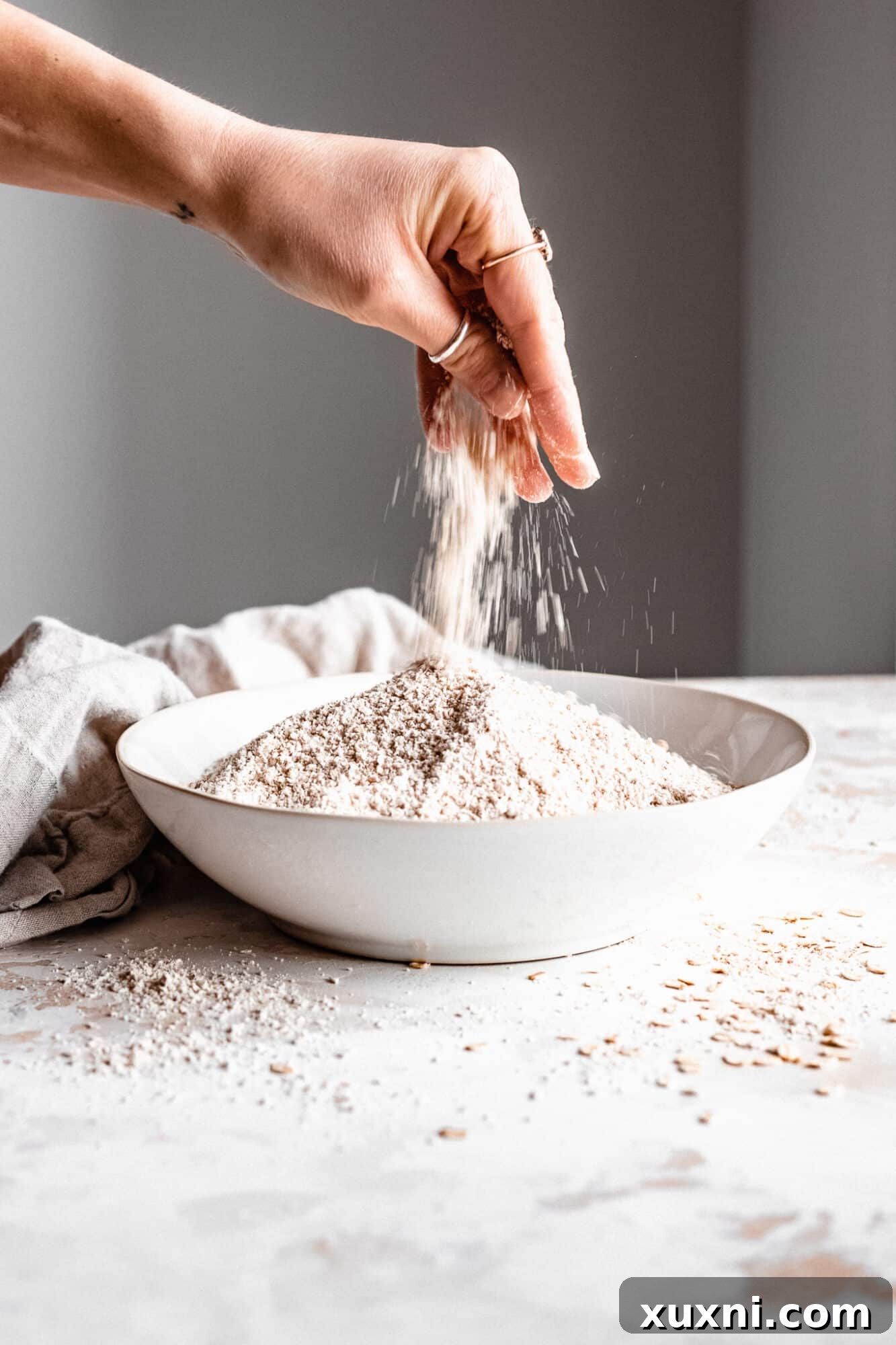
- Ready to Use: Your homemade oat flour is now ready to be incorporated into your favorite recipes!
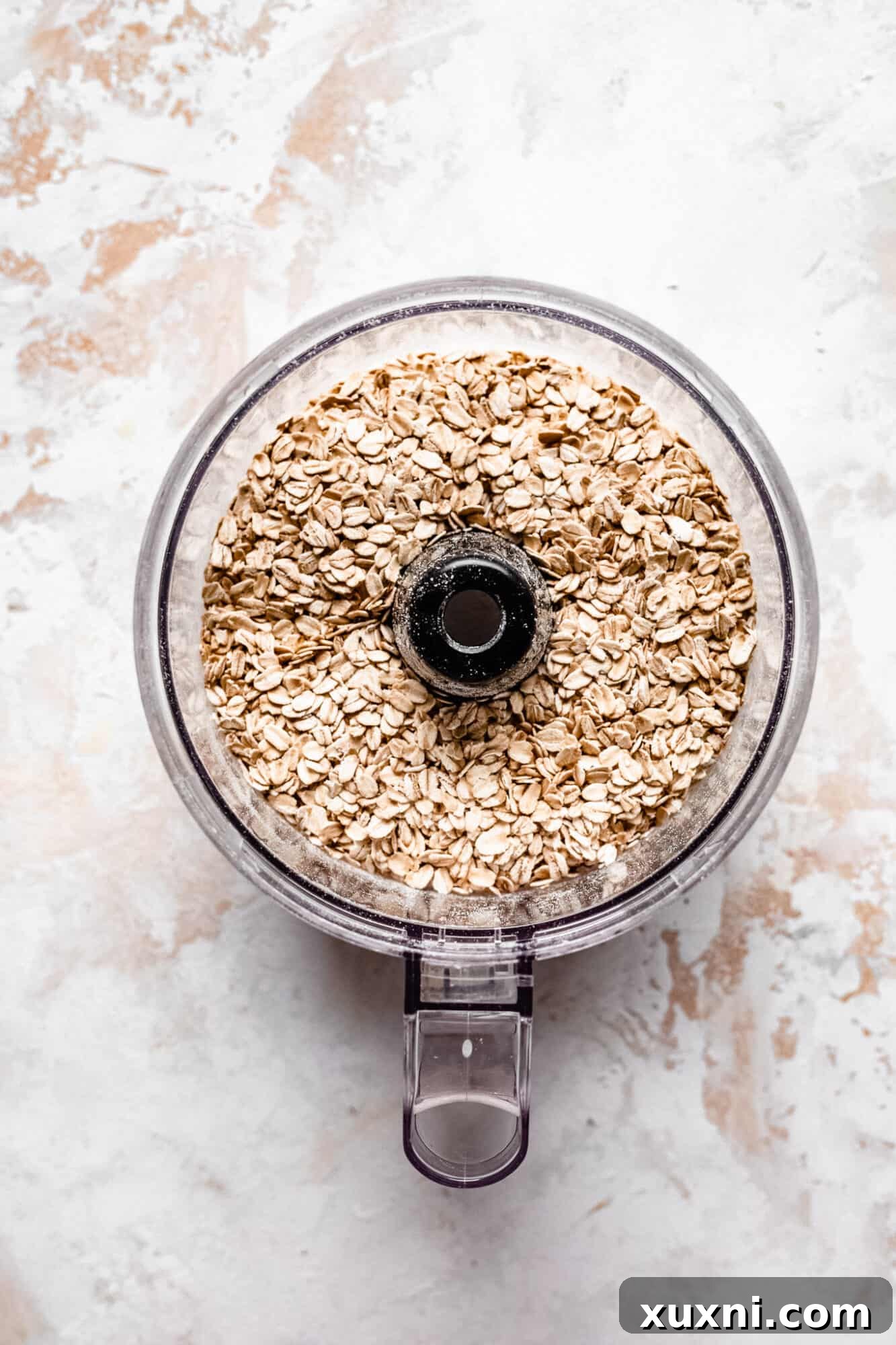
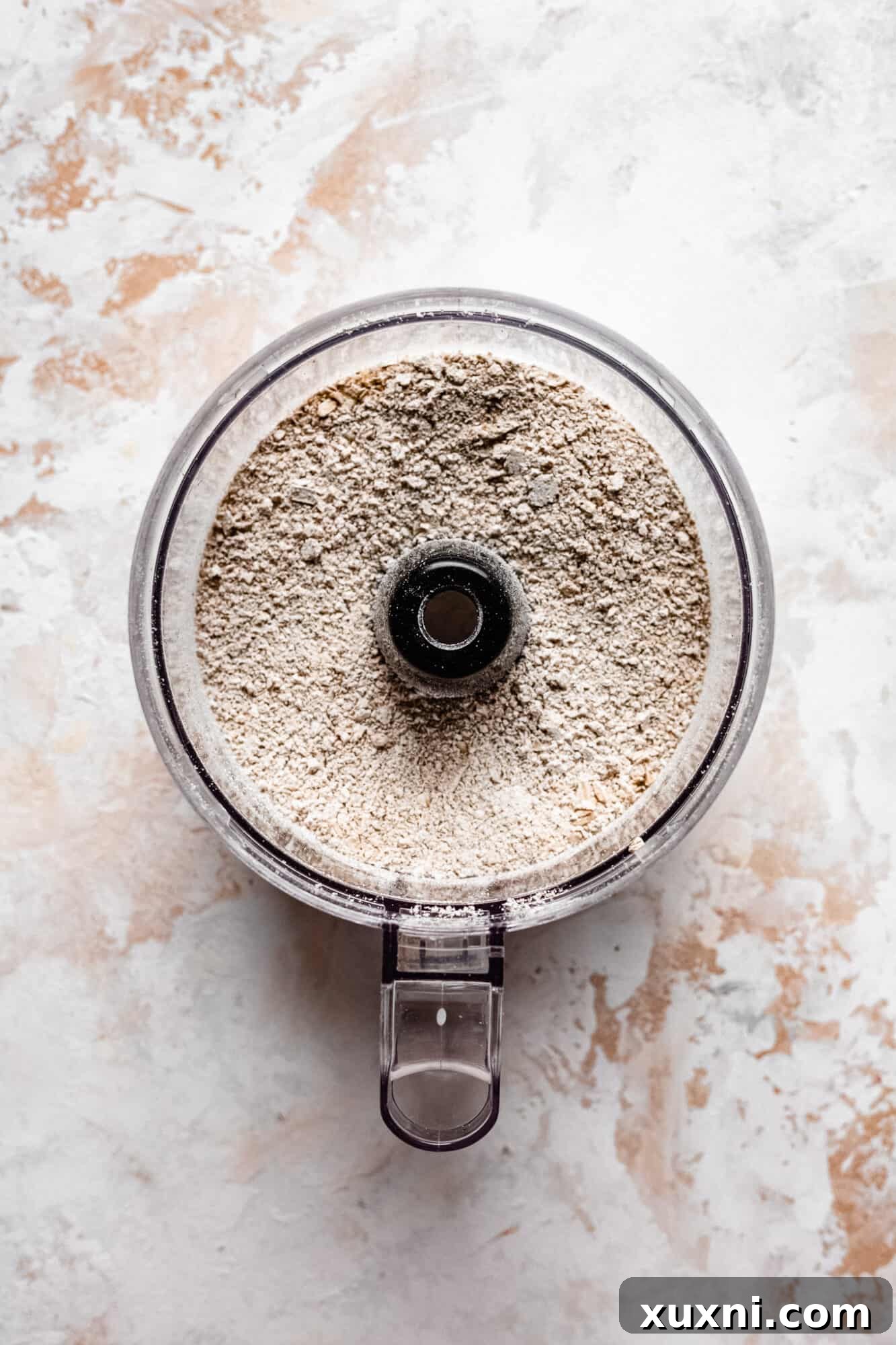
The beauty of making your own oat flour lies in the ability to control its texture. If a coarser grind is desired for certain recipes like crisp toppings or rustic breads, simply blend for a shorter duration, regularly checking the texture until it meets your specifications. For a super-fine powder, akin to all-purpose flour, continue blending for the maximum recommended time, ensuring your food processor or blender works efficiently to achieve that silky consistency.
Blender vs. Food Processor: Which is Best for Oat Flour?
You might wonder if a blender can accomplish the same task as a food processor. The answer is a resounding yes! A high-powered blender, even a standard model like an Oster Kitchen Pro 1200, can effectively grind oats into flour. You don’t necessarily need a premium Vitamix for this task, though a more powerful machine may achieve a finer grind faster.
When using a blender, especially one with less power, you may need to blend the oats for a slightly longer period or in smaller batches to avoid overheating the motor and ensure a uniform grind. Always start with a pulse setting to break down the oats before moving to a continuous blend. Periodically stopping and shaking the blender jar can also help redistribute the oats for an even consistency.
Understanding Oat Flour Yield: How Much Does 1 Cup of Oats Make?
A common misconception is that one cup of whole oats will yield one cup of oat flour. This is not the case. The volume actually decreases once the oats are ground, becoming more compact. The exact yield can vary slightly depending on how finely you grind your oats and the efficiency of your equipment.
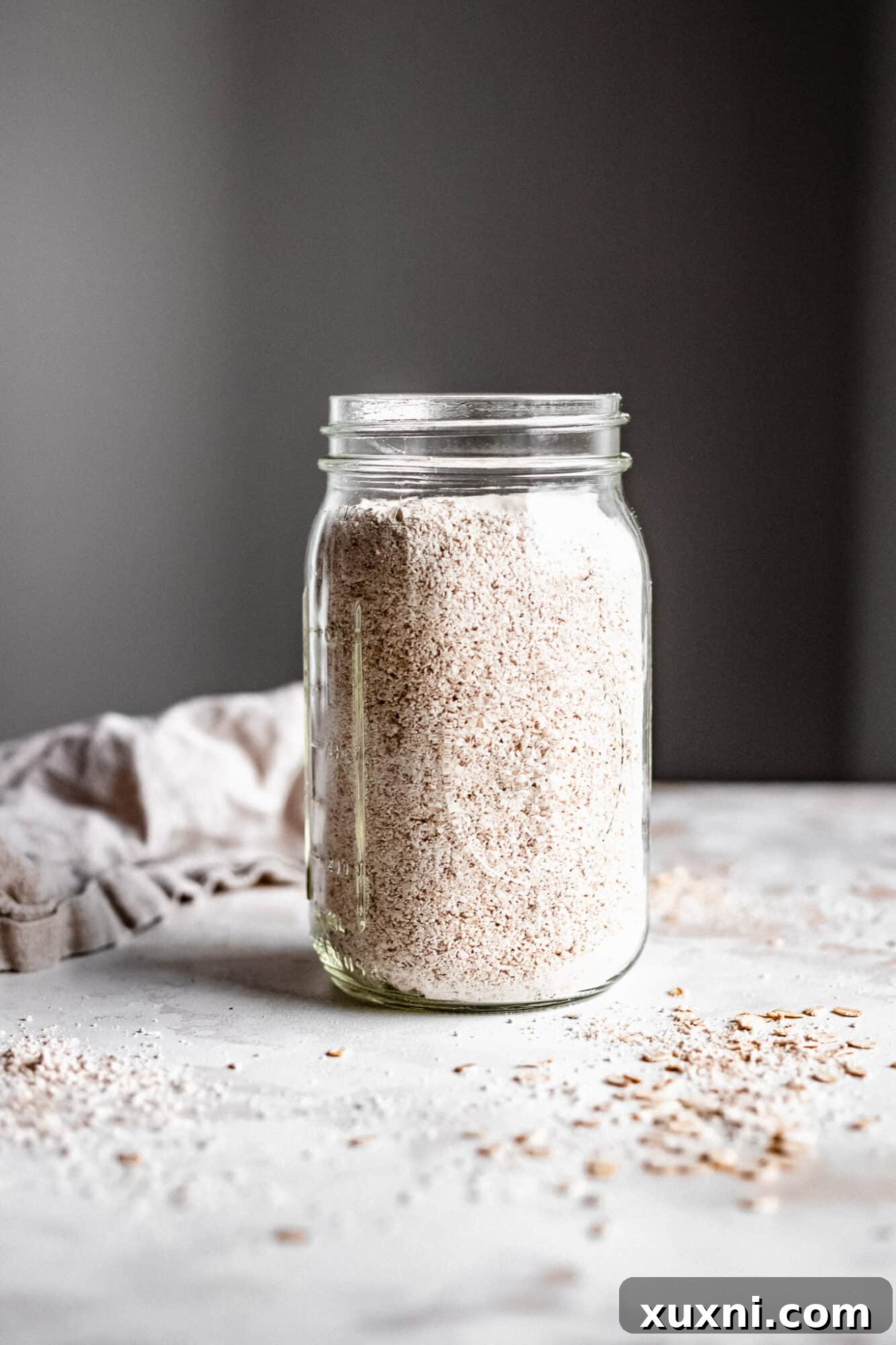
As a general guideline, for every 3½ cups of whole rolled oats, you can expect to produce approximately 3 cups of finely ground oat flour. This ratio provides a reliable starting point for most recipes. However, it is always recommended to measure your flour by weight for the most accurate results, especially in baking, where precision is key to recipe success. Always measure or weigh your freshly made flour before incorporating it into any recipe to prevent any drastic alterations in consistency or texture.
Storing Homemade Oat Flour for Maximum Freshness
One of the fantastic advantages of making your own homemade oat flour is its excellent shelf life, allowing you to prepare larger batches and keep them on hand while also keeping your grocery budget in check. Proper storage is essential to maintain its freshness and prevent it from going rancid.
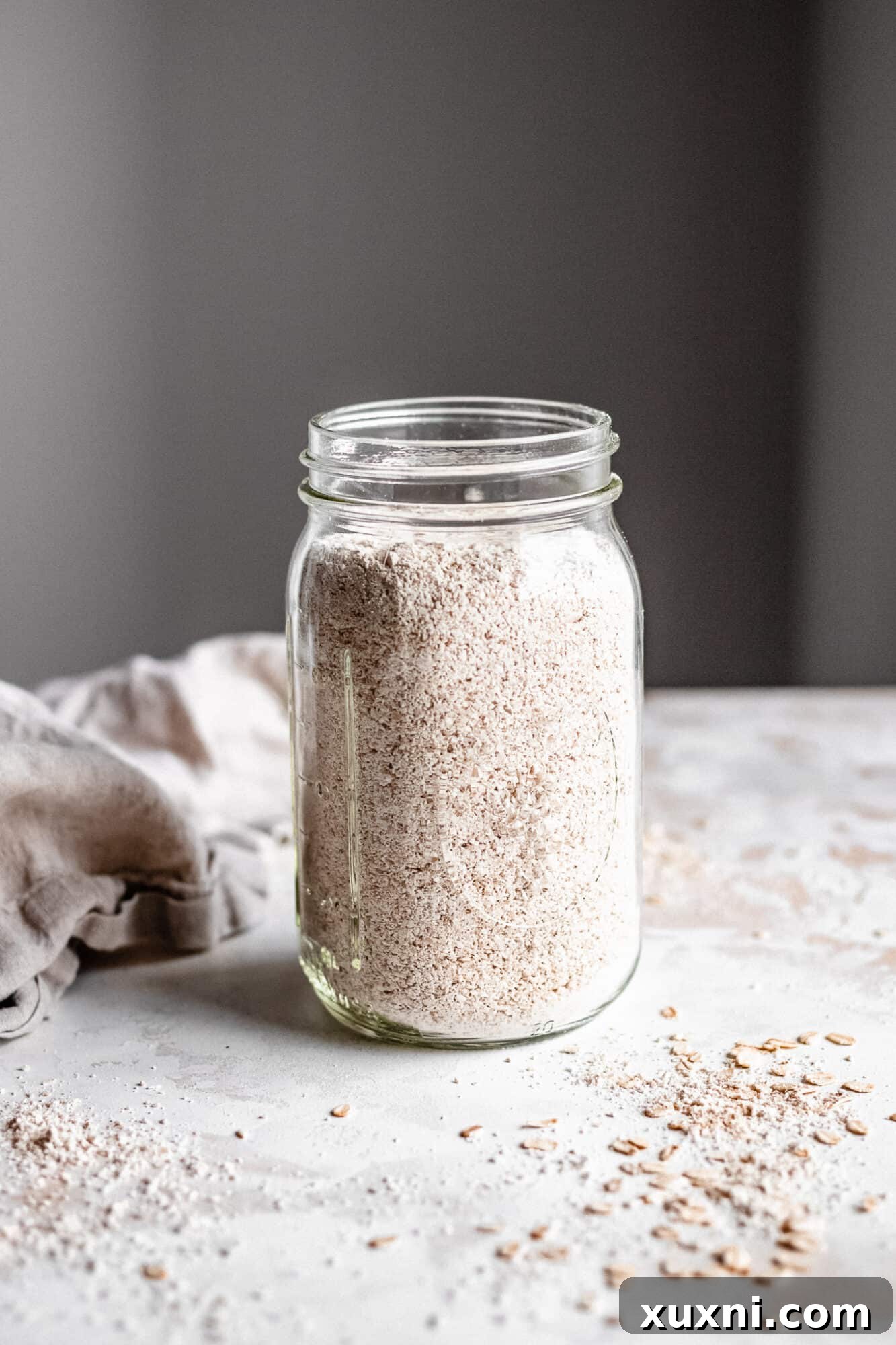
Your freshly made oat flour will remain fresh for approximately three months when stored in a cool, dry area of your pantry. For extended freshness, you can store it in the freezer for up to six months. Freezing helps to preserve the natural oils in the oats, preventing them from oxidizing and developing an off-flavor.
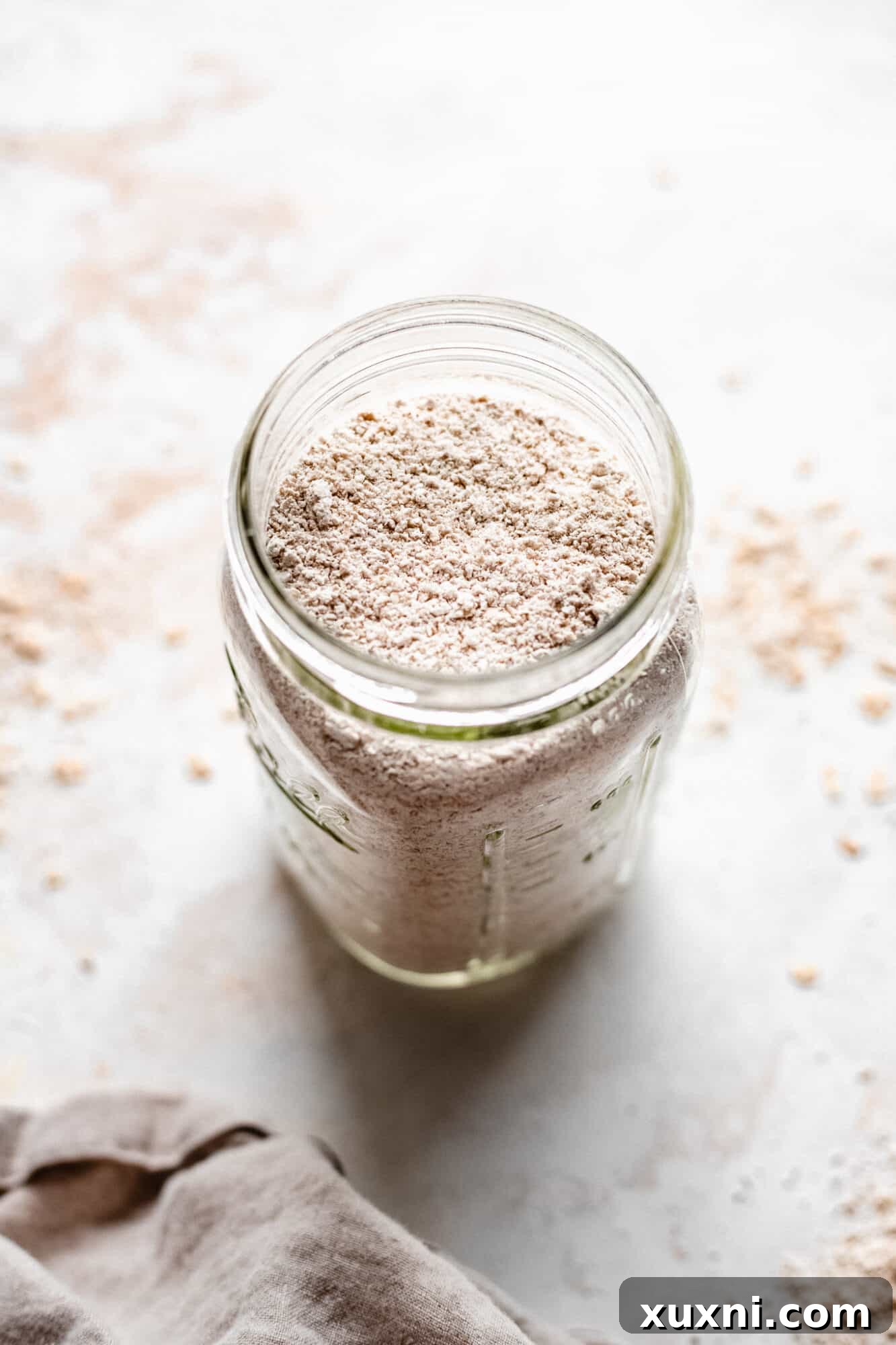
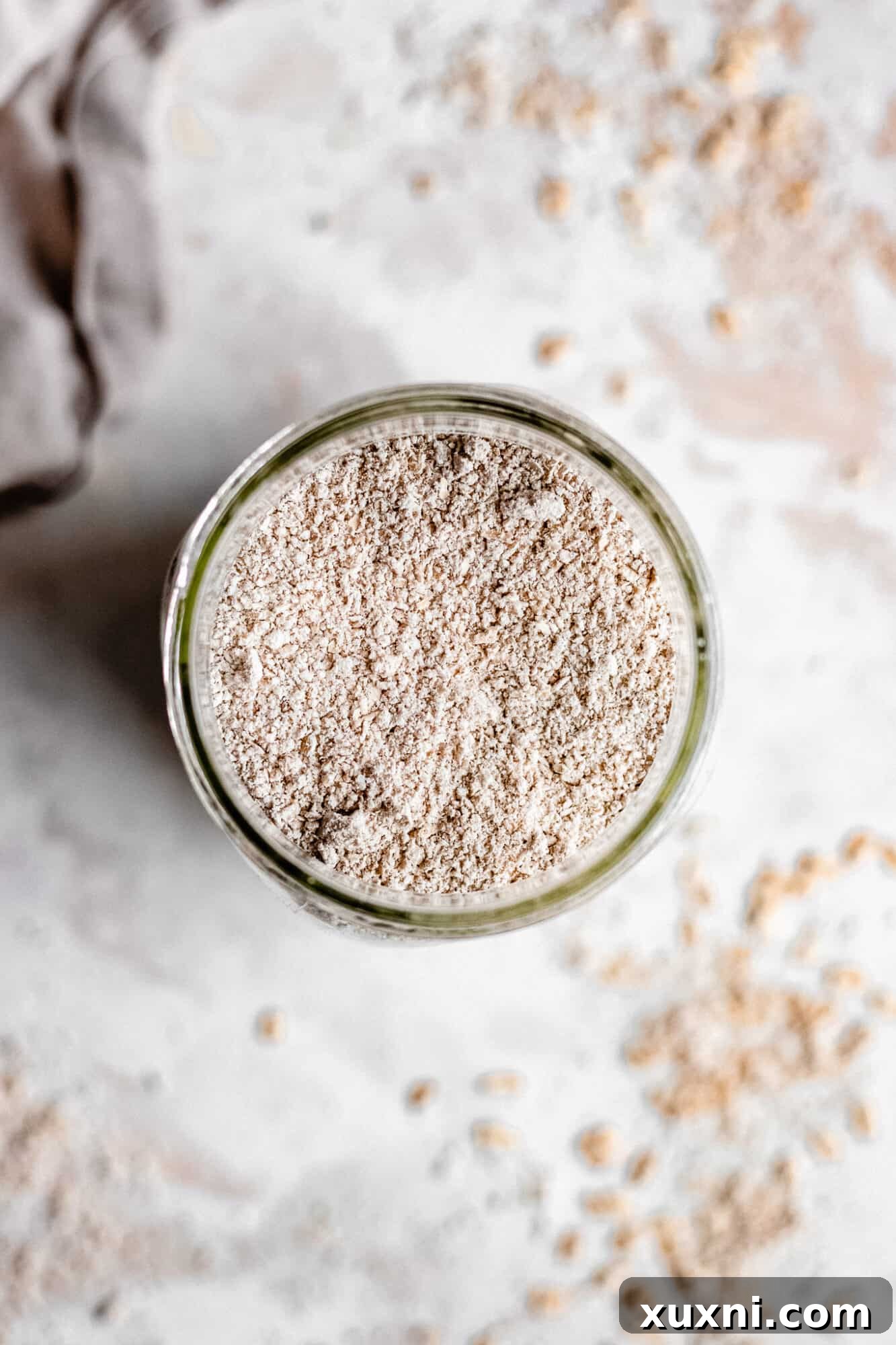
Always ensure you place the oat flour in an airtight container. A sealed plastic bag with as much air removed as possible, or a tightly sealed glass container like a large mason jar or Tupperware, works perfectly. This prevents moisture and air from reaching the flour, which can accelerate spoilage.
Substituting Oat Flour for All-Purpose Flour: Tips for Success
The versatility of homemade oat flour truly shines when you consider its potential as a substitute for all-purpose flour in many recipes. This is particularly beneficial for those adhering to a gluten-free diet, as it offers a wholesome, gum-free option that can be easily made at home, eliminating the need to search for specialized gluten-free flour blends. While I do highly recommend excellent commercial blends like Bob’s Red Mill’s GF Baking 1-to-1 flour or King Arthur’s GF Baking 1-to-1 flour for specific applications, homemade oat flour provides a fantastic, readily available alternative.
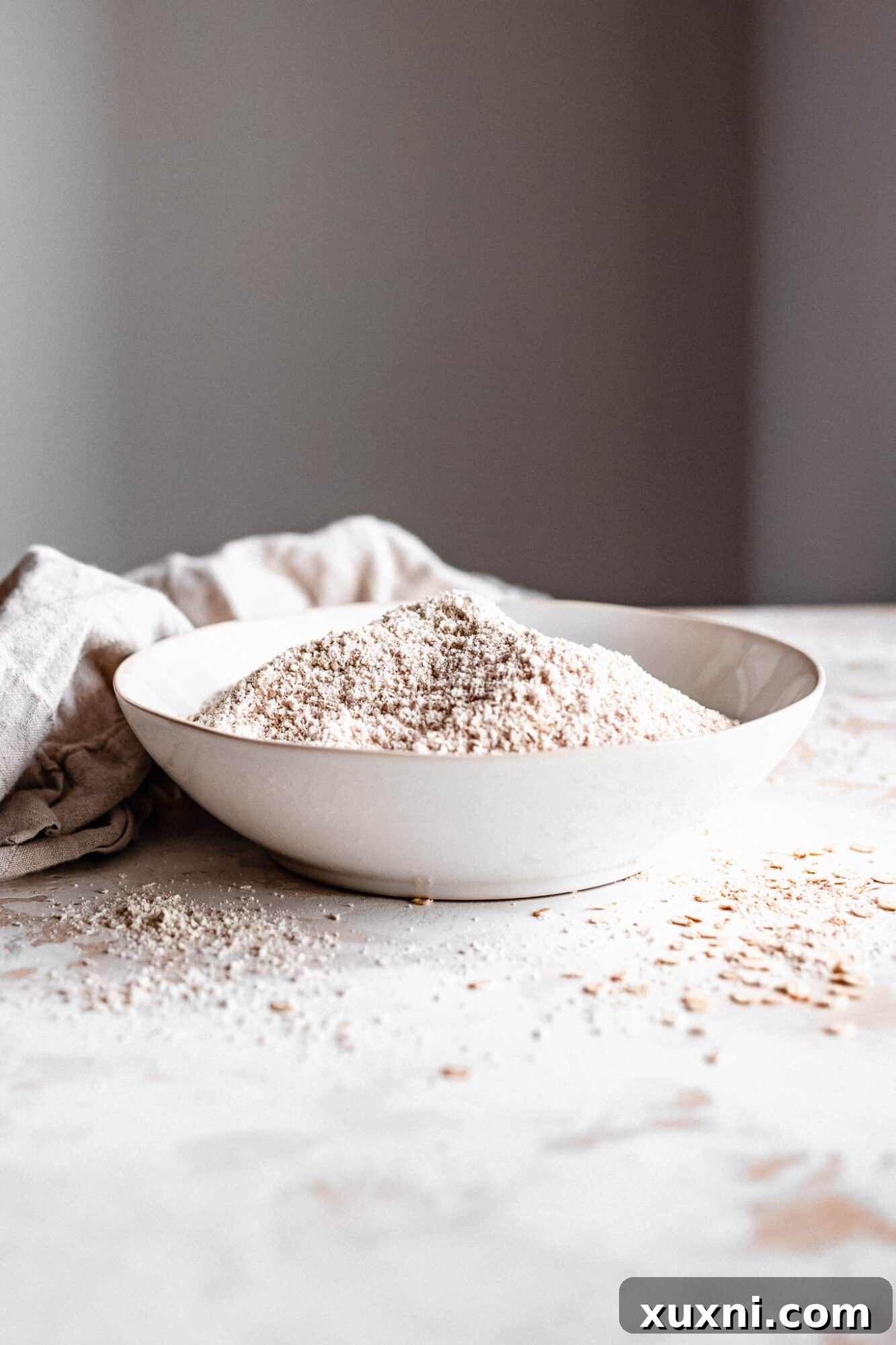
It’s important to set realistic expectations: while oat flour works wonderfully as a substitute, the results won’t be identical to those achieved with traditional wheat flour. Oat flour tends to absorb more liquid and can produce a slightly denser, chewier texture. However, for those who require gluten-free options, this difference is often a welcome trade-off for the nutritional benefits and the absence of gums.
You can successfully use oat flour in a wide range of recipes, including fluffy pancakes, moist muffins, rustic breads, and delectable cupcakes. When substituting, start by replacing about 25-50% of the all-purpose flour with oat flour, gradually increasing the proportion as you become more familiar with its unique properties. For best results in recipes requiring a lighter crumb, you might need to adjust the liquid content or combine oat flour with another gluten-free flour like rice flour or tapioca starch.
For those aiming for a more direct 1-to-1 swap with all-purpose flour, I’m currently developing a homemade gluten-free flour blend recipe. This blend will combine just two specific flours, both nut-free and gluten-free, with absolutely no added gums, promising a texture closer to traditional flour. Stay tuned for that exciting development!
Delightful Oat Flour Recipes to Get You Started
Now that you’ve mastered the art of making your own oat flour at home, it’s time to unleash its potential in your kitchen! Oat flour brings a unique flavor and wonderful texture to a variety of dishes, both sweet and savory. Here are some of my favorite recipes that either specifically call for oat flour or can be easily adapted to feature this fantastic homemade ingredient:
- Vegan Gluten Free Carrot Cake: Enjoy a moist and flavorful cake with the wholesome goodness of oat flour.
- Gluten Free Vegan Oat Bread (Yeast Free): A hearty, delicious bread that’s simple to make and perfect for sandwiches or toast.
- The Ultimate Vegan Chocolate Chip Cookies: Achieve a perfectly chewy texture by incorporating homemade oat flour into these classic treats.
- Cherry Almond Bundt Cake: A beautiful and delicious cake that benefits from oat flour’s tender crumb.
- Buckwheat Banana Bread (use oat flour in lieu of buckwheat flour): A delightful twist on banana bread with a wholesome texture.
- Vegan Belgian Waffles: Start your day with crispy, fluffy waffles made with your fresh oat flour.
- Vegan Buttermilk Pancakes: Light and airy pancakes that are surprisingly easy to make.
- Gluten Free Vegan Oatmeal Chocolate Chip Cookies: The perfect recipe to highlight the natural flavor and texture of oat flour.
- Easy Vegan Millionaire Bars (use oat flour in lieu of cassava flour): A rich and decadent dessert with a gluten-free twist.
- Vegan Lentil Meatballs: Use oat flour as a binder for these savory, protein-packed meatballs.
- Easy Vegan Lentil “Meatloaf”: Create a hearty and satisfying meatloaf alternative with the help of oat flour.
I genuinely hope you find this simple and effective gluten-free baking hack as enjoyable and useful as I do! Don’t hesitate to share your experiences and any ingenious ways you use homemade oat flour in the comments section below. Your feedback and ratings are always appreciated.
As always, I love seeing your beautiful culinary creations! If you use this oat flour hack, please be sure to tag me on Instagram and Pinterest using #thebananadiaries so I can admire your work.
Happy flour making, and happy baking!
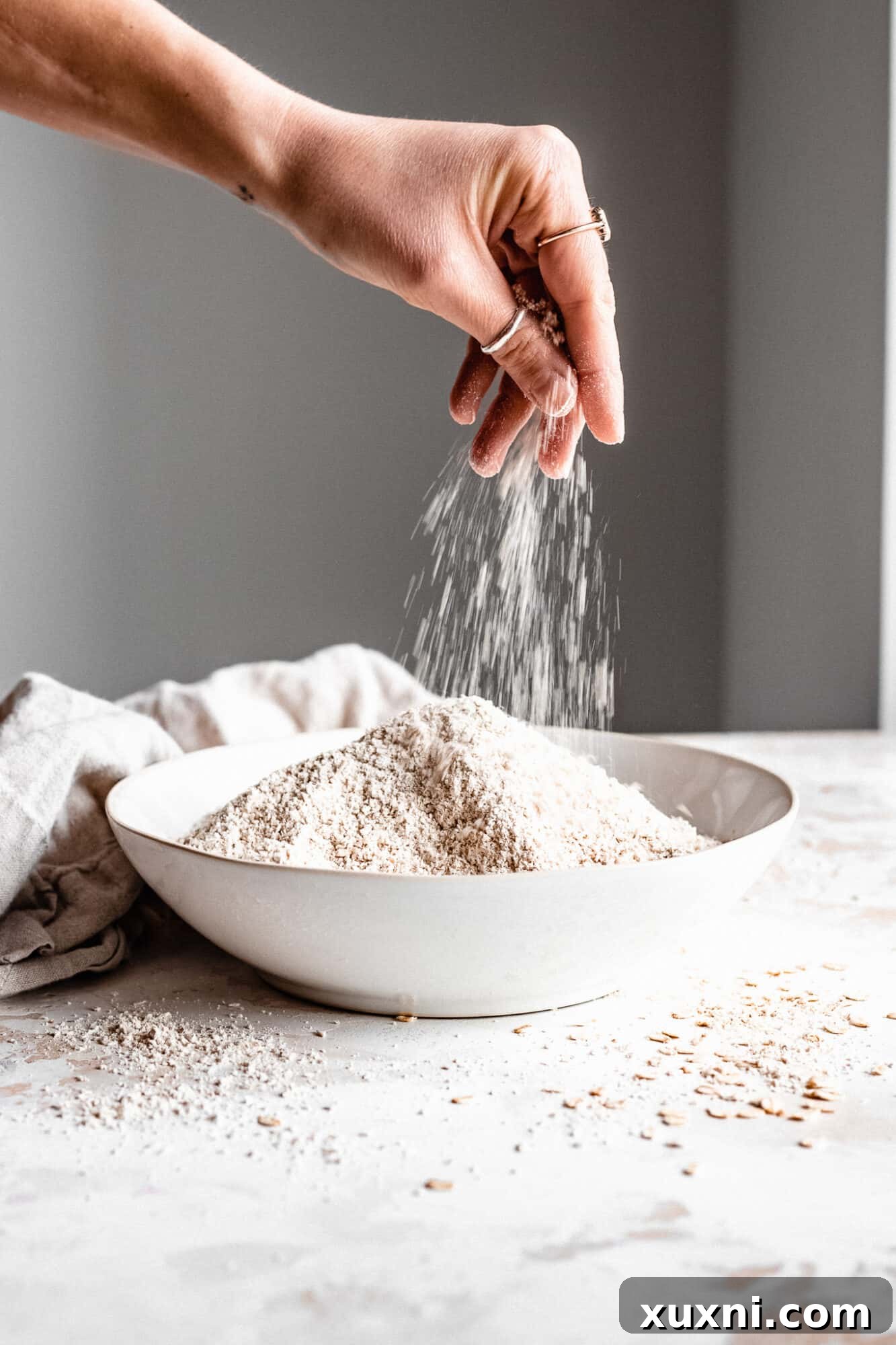
Save This Essential Guide to Homemade Oat Flour for Later!
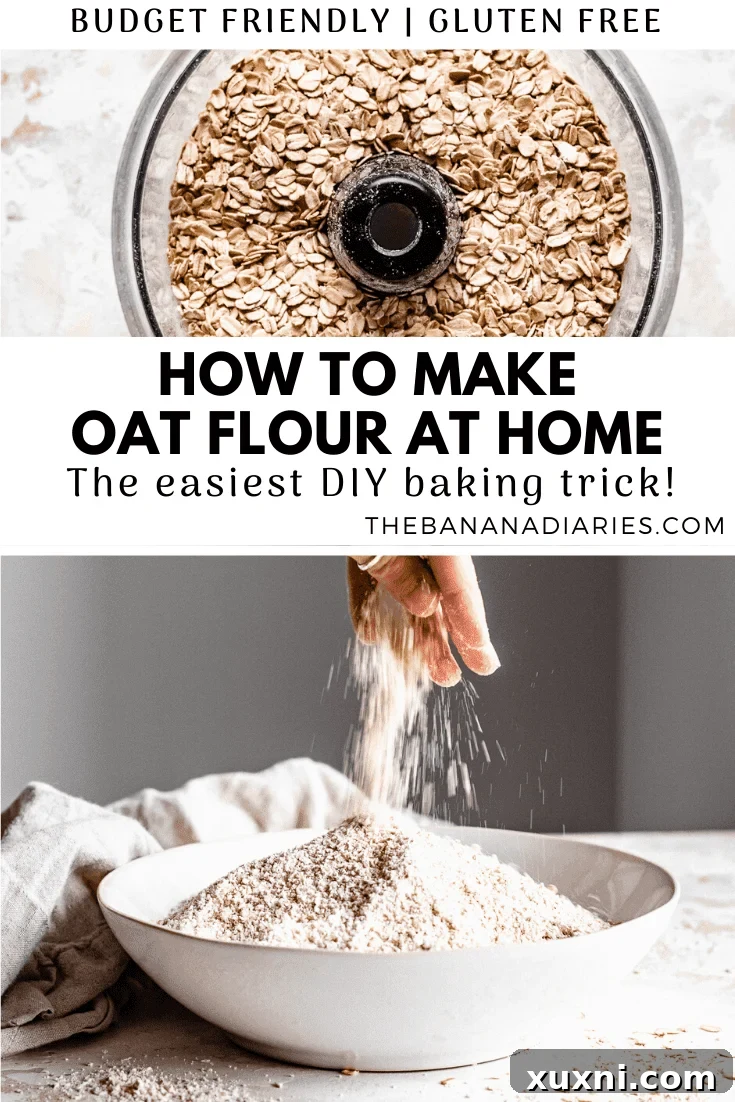
How to Make Oat Flour
5 from 2 reviews
- Author: Britt Berlin
- Prep Time: 1 minute
- Cook Time: 2 minutes
- Total Time: 3 minutes
- Yield: 3 cups
- Category: Baking
- Cuisine: American
- Diet: Gluten Free, Vegan
Description
Learn how to make oat flour from scratch in less than 2 minutes! The easiest gluten-free kitchen trick for making a cheap DIY gluten-free flour that’s free of gums!
Ingredients
- 3 1/2 cups certified gluten-free rolled oats
Instructions
- In a large food processor or high-powered blender, pulse the oats until they’re a fine powder, about 2 minutes. Stop and scrape down the sides as needed to ensure even grinding.
- You have control over the fineness: blend less for coarsely ground oats or longer for a super-fine powder. For a smoother flour, sift the flour through a fine-mesh sieve into a plastic bag or large airtight glass container.
- Store the flour in a cool, dry area in your pantry for up to 3 months, or in the freezer for up to 6 months to maintain optimal freshness.
Nutrition Information (per 1/4 cup oat flour serving)
- Serving Size: 1/4 cup oat flour
- Calories: 105
- Sugar: 0.2 g
- Sodium: 4.9 mg
- Fat: 2.4 g
- Saturated Fat: 0.4 g
- Trans Fat: 0 g
- Carbohydrates: 17.1 g
- Fiber: 1.7 g
- Protein: 3.8 g
- Cholesterol: 0 mg