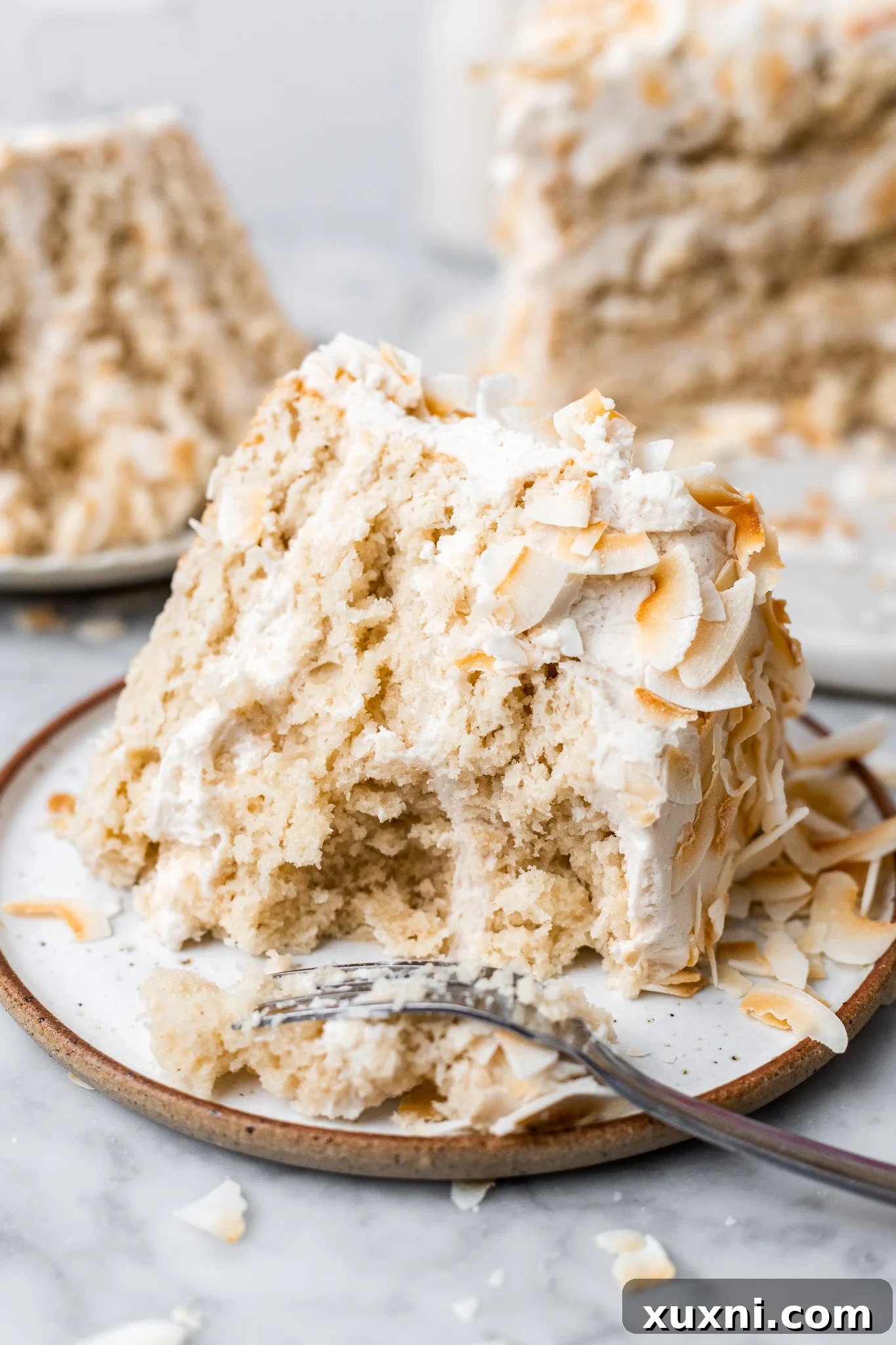
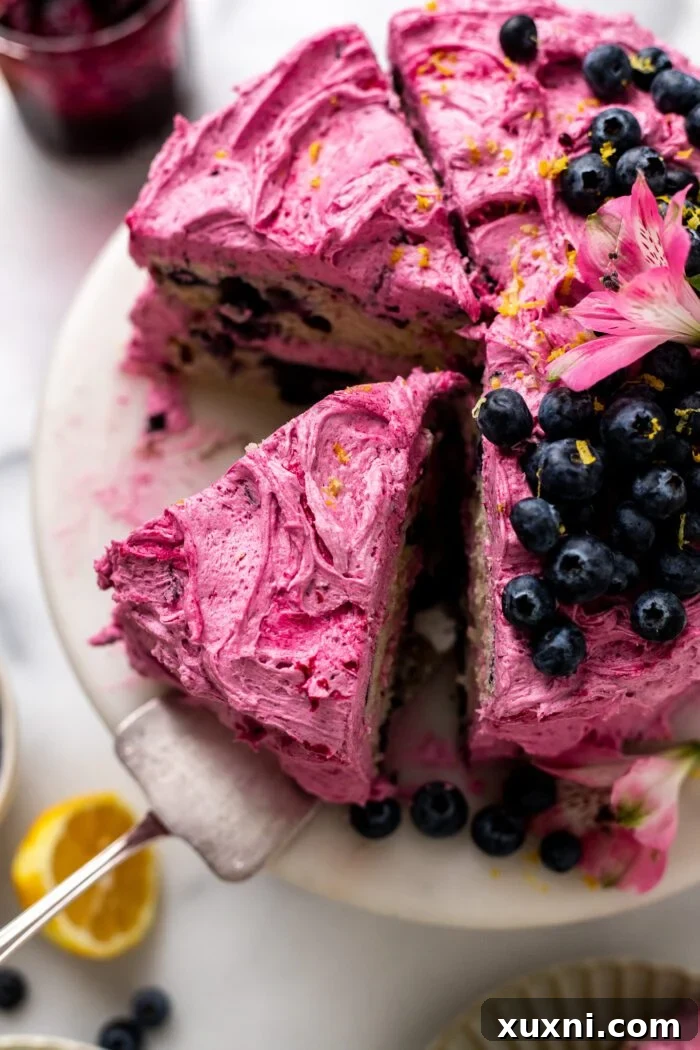
Welcome to the ultimate guide for crafting the most heavenly vegan coconut cake you’ll ever taste! Forget everything you thought you knew about dairy-free baking, because this recipe redefines moistness, fluffiness, and irresistible flavor. Bursting with the tropical essence of fresh coconut and a delicate hint of vanilla, this cake is crowned with a luscious dairy-free coconut cream cheese frosting that truly elevates it above all others. It’s not just a vegan cake; it’s a showstopper designed to impress every palate.
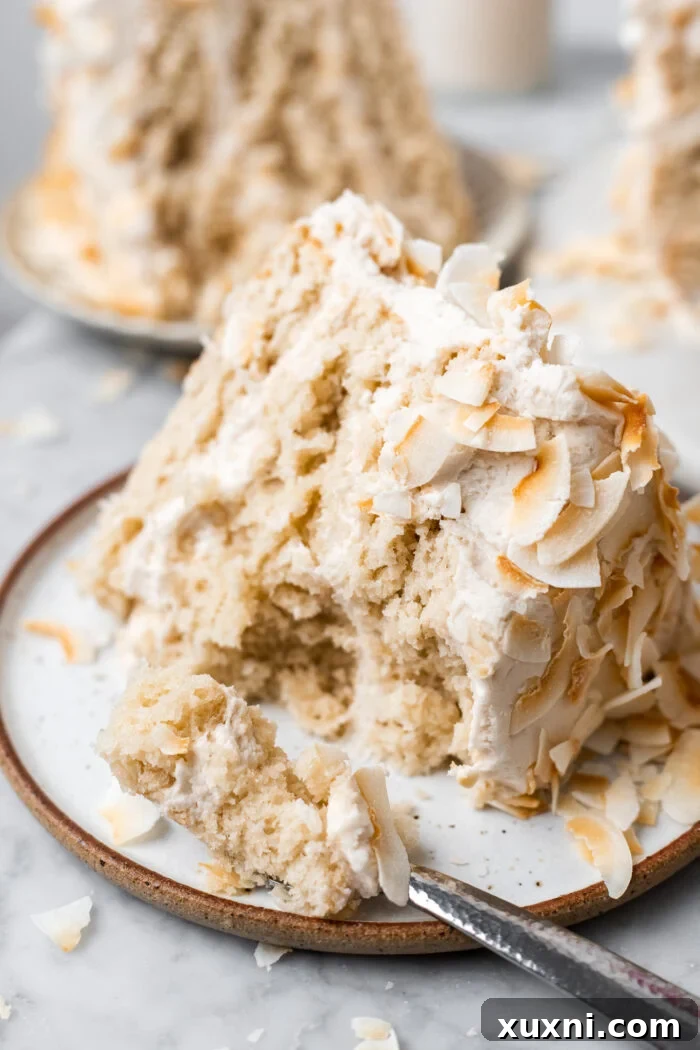
Why This Vegan Coconut Cake Will Become Your New Favorite
I am absolutely thrilled to finally share this extraordinary vegan coconut cake recipe with you. After numerous rounds of testing, I can confidently say we have a true winner on our hands. This isn’t just a claim; it’s a proven fact. Even my Italian grandmother, who traditionally enjoys classic, non-vegan desserts and was introduced to vegan treats only a few years ago, fell head over heels for this coconut cake. She loved it so much, she went back for a second slice! That’s the ultimate endorsement for any dessert, especially one that’s entirely plant-based.
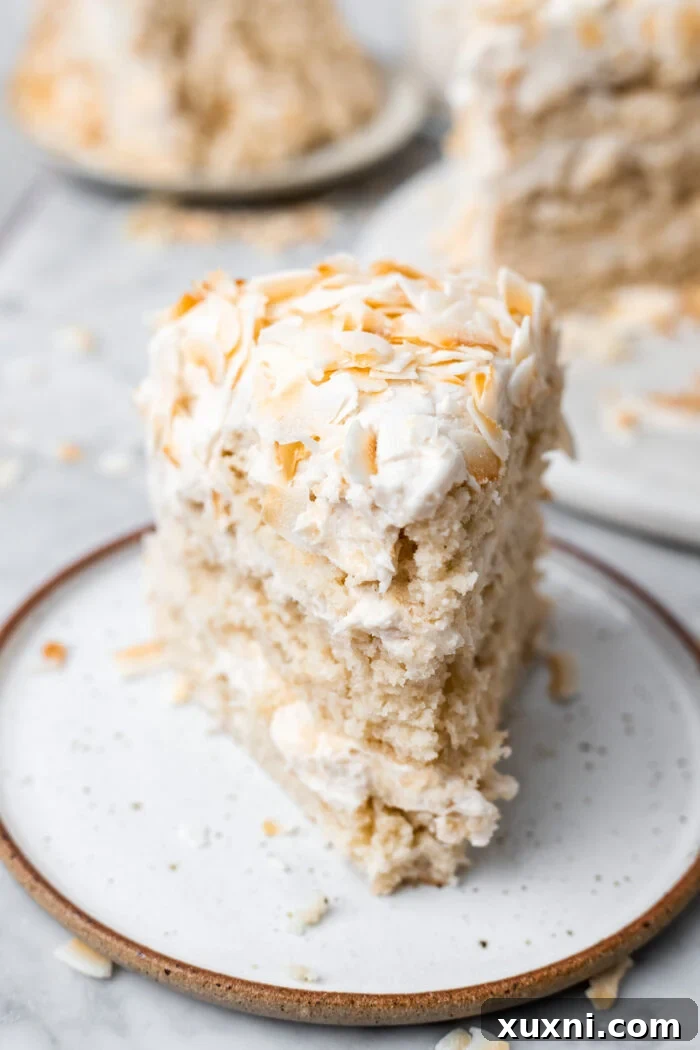
I know, without a doubt, that you’re going to adore this coconut cake, and here are just a few compelling reasons why:
- Unrivaled Moistness and Fluffiness: Prepare yourself for a cake that is the epitome of tender, melt-in-your-mouth perfection. We’re talking about a texture so airy and delicate, it feels like you’re eating a cloud. Say goodbye to any fears of a dry, crumbly vegan cake; this recipe guarantees a consistently moist and flavorful result every single time.
- Surprisingly Simple to Bake: Don’t let the idea of a layered vegan cake intimidate you. Much like my beloved vegan vanilla cake, this vegan coconut cake is designed for ease. Whether you’re a seasoned baker or just starting your culinary journey, you’ll find this recipe incredibly straightforward and rewarding. Its one-bowl method (for certain techniques) further simplifies the process, making it a joy to create.
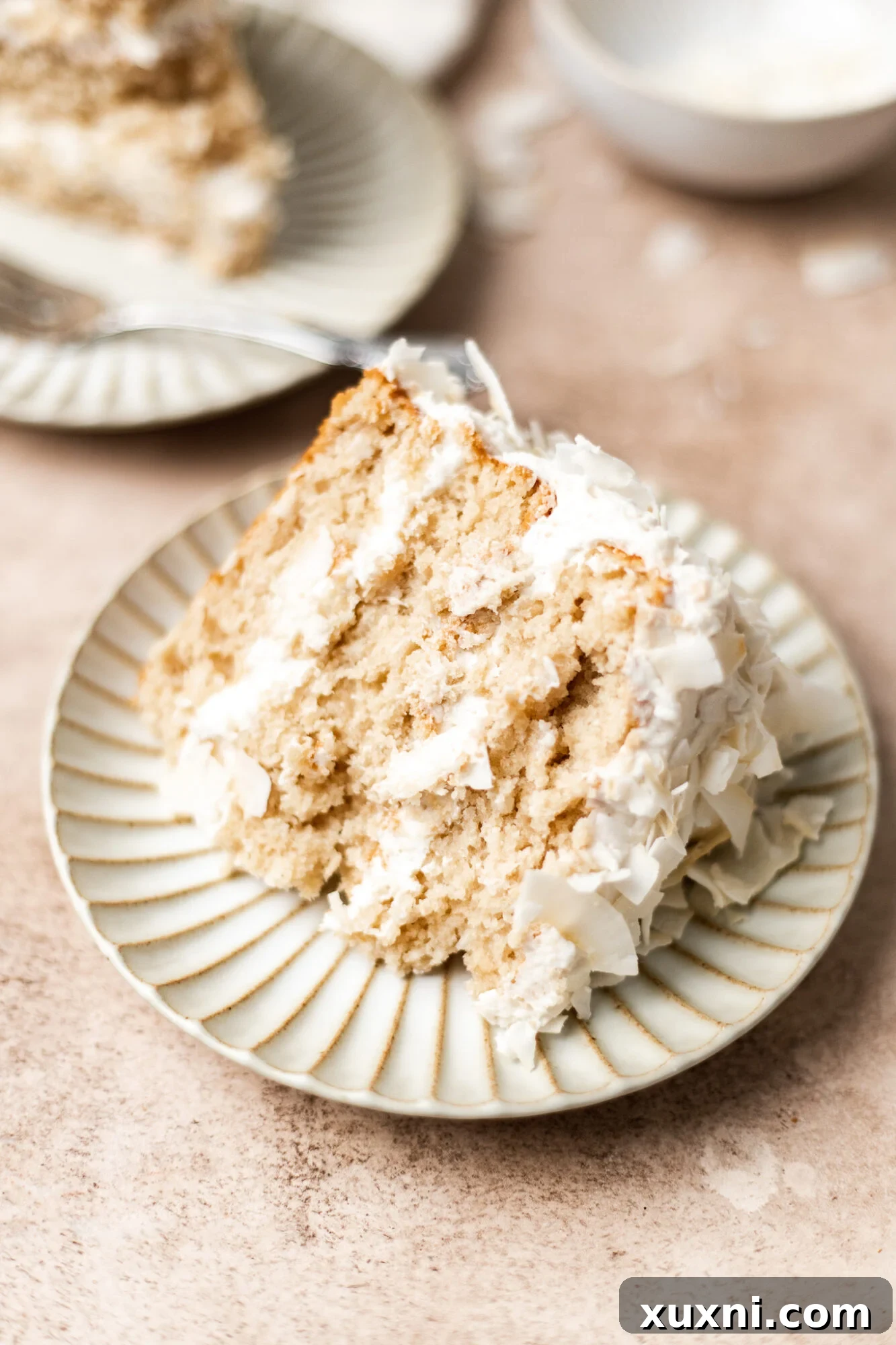
- The Dreamy Dairy-Free Coconut Cream Cheese Frosting: This frosting is truly a revelation. Building on my simple vegan cream cheese frosting base, it’s been infused with coconut to create an irresistible topping. Rich, tangy, and wonderfully creamy, I could honestly eat it straight from the spoon. When paired with the light, fluffy coconut cake, especially if you add toasted coconut, it transforms into an award-winning combination that will leave you speechless.
- A Symphony of Rich, Vibrant Flavors: If you’ve ever doubted that vegan baking can be full of flavor, this cake will change your mind. From the very first bite, you’ll be enveloped by the bright, fresh taste of coconut. This vibrant flavor is beautifully balanced by a subtle yet captivating vanilla undertone, creating a depth that is truly remarkable. The slight tang from the dairy-free cream cheese frosting adds another layer of complexity, making each bite an unforgettable experience that’s absolutely worth every calorie.
- A Cake for Everyone, Not Just Vegans: This vegan coconut cake transcends dietary labels. The fact that my nearly 80-year-old grandmother, who rarely deviates from traditional desserts, absolutely adored it is a testament to its universal appeal. It’s a cake that everyone, regardless of their dietary choices, will cherish and want to bake again and again.
Master Vegan Baking: Unlock Unbelievable Desserts in 5 Steps!
Ready to create stunning vegan and gluten-free desserts so delicious no one will guess they’re eggless and dairy-free? Transform your baking skills and delight everyone with your plant-based creations!
Learn the essential techniques and secrets to consistently incredible vegan bakes. Sign up for our free e-course today to start your journey towards unbelievably delicious vegan desserts!
Essential Ingredients for Your Moist Vegan Coconut Cake
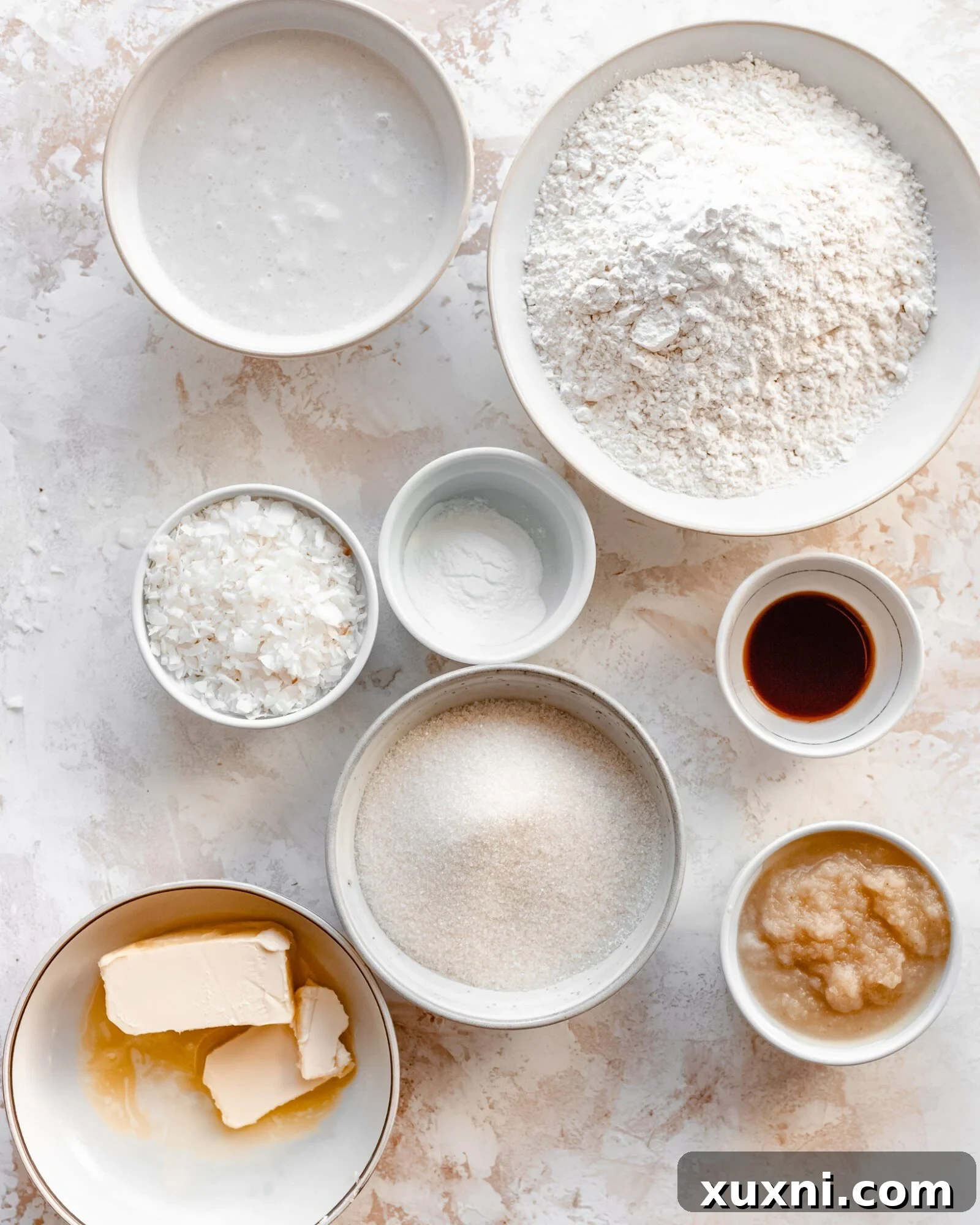
Crafting this incredible vegan coconut cake is intentionally straightforward, utilizing simple, accessible ingredients that deliver maximum flavor and texture. Here’s a closer look at what you’ll need and why each component is crucial:
- Flour: The foundation of our cake! For the lightest crumb, cake flour is ideal. Alternatively, you can achieve a similar tenderness by combining all-purpose flour with a touch of arrowroot powder (as detailed in the recipe card). For a gluten-free vegan coconut cake, a high-quality 1:1 gluten-free baking flour blend (like King Arthur Measure for Measure) works beautifully. Even oat flour, with a little arrowroot powder, can be used for a slightly denser, wholesome option.
- Sugar: Granulated sugar ensures a classic sweet flavor and a tender crumb. If you prefer a more unrefined option, coconut sugar can be used, but note that it will lend a slightly darker, more caramel-like hue to your finished cake. Both options provide the essential sweetness and moisture for this delicious dessert.
- Vegan Butter: This provides richness and helps create that wonderful, moist texture. Softened vegan butter is key for the stand mixer method to achieve a creamy base. For a nut-free option, I highly recommend Flora Plant Butter. If you’re looking to intensify the coconut flavor even further, melted coconut oil can be a fantastic alternative.
- Coconut Milk or Coconut Cream (Canned): This is arguably the most vital ingredient for both flavor and moisture. Always use full-fat coconut milk or, even better, coconut cream from a can. This rich, thick liquid is what gives the cake its decadent texture and pronounced coconut flavor, setting it apart from recipes using thinner carton coconut milk. Remember to shake the can well before opening to ensure a uniform consistency.
- Dairy-Free Yogurt: Our secret weapon for an egg-free coconut cake! Dairy-free yogurt (or applesauce, as an alternative) acts as a fantastic binder and adds incredible moisture, replacing the eggs found in traditional cake recipes. Ensure it’s at room temperature for optimal incorporation into the batter.
- Coconut and Vanilla Extracts: These two extracts are the flavor powerhouses. While this vegan coconut cake naturally boasts a strong coconut presence, a touch of coconut extract amplifies it. However, if you prefer a more subtle coconut note, you can omit it. The vanilla extract is non-negotiable; its warmth and sweetness beautifully complement the coconut, creating a truly harmonious flavor profile.
- Leavening Agents: Baking powder and baking soda are essential for giving our cake its impressive rise and fluffy structure. They react to create air bubbles, ensuring that light, airy texture we all love.
- Unsweetened Shredded Coconut: Incorporated directly into the batter, these coconut shreds provide delightful texture and an extra burst of fresh coconut flavor throughout each slice.
Mastering Your Vegan Coconut Cake: Step-by-Step Guide
While the complete, detailed recipe for this exquisite dairy-free coconut cake, including precise ingredient measurements, can be found in the recipe card below, let’s walk through an overview of the simple baking process. This recipe is adaptable and incredibly forgiving, ensuring success for every baker.
This vegan coconut cake is actually a delightful variation of my hugely popular vegan vanilla cake recipe, known for its light, tender crumb and incredible flavor. It’s a family favorite and a consistent hit with my readers! Just like its vanilla counterpart, this coconut cake offers two convenient preparation methods: the traditional stand mixer method for a classic creaming process, or the ultra-convenient by hand method, perfect for when you’re short on time or equipment.
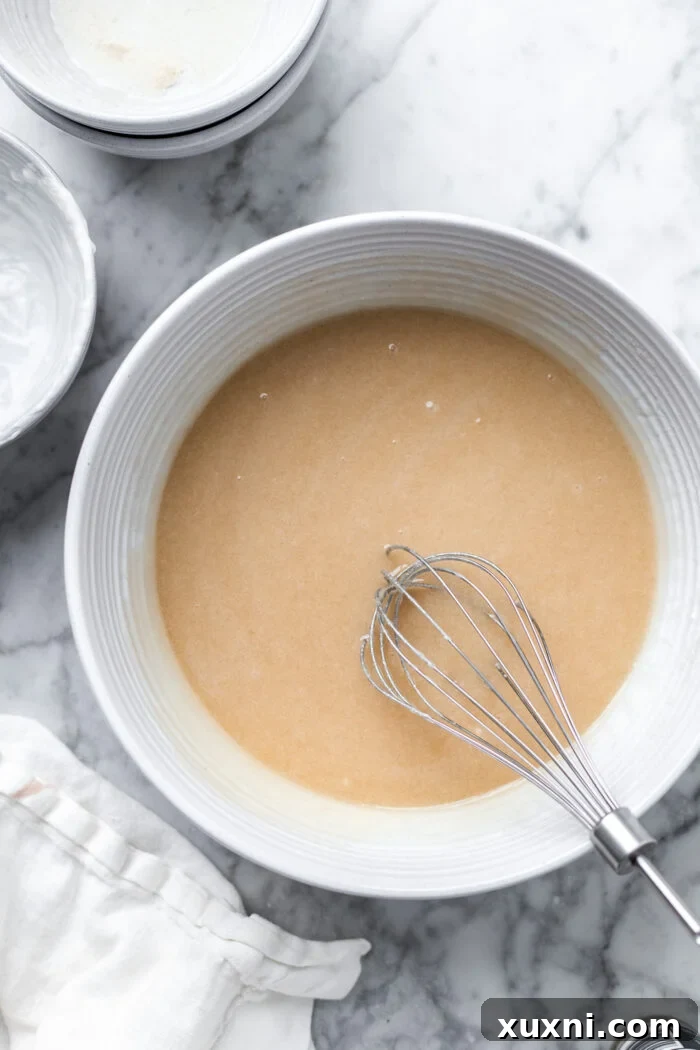
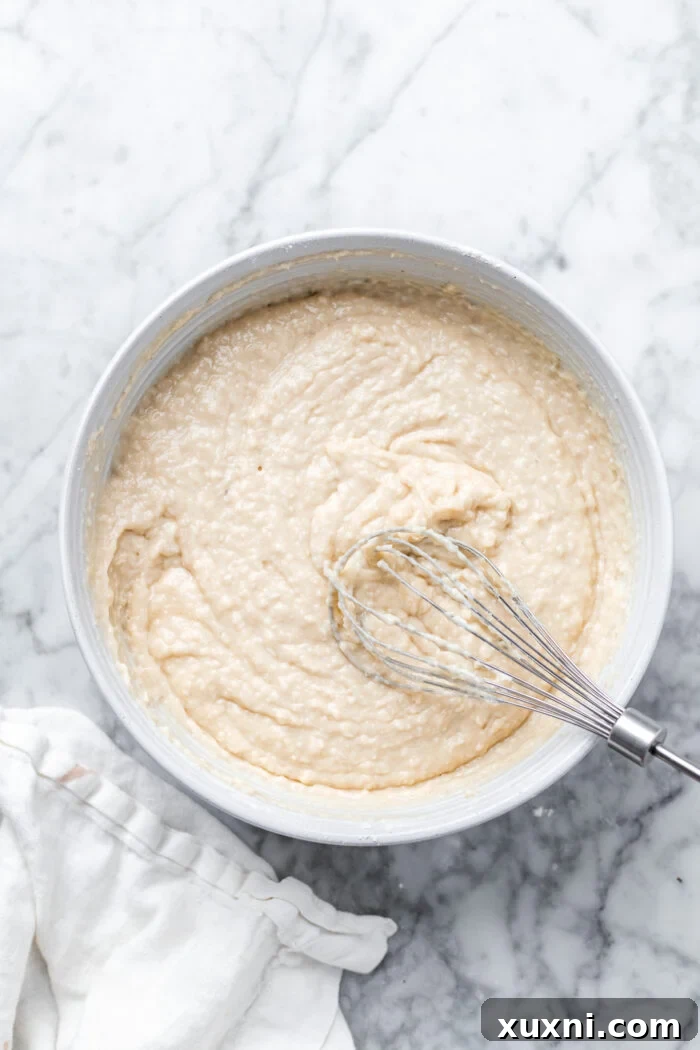
For the record, I frequently use both methods for my cakes. When I’m looking for speed and minimal cleanup, the by-hand method is my go-to. It’s truly amazing how you can create such an outstanding vegan cake without any specialized equipment. In fact, I developed, tested, and photographed over 120 vegan dessert recipes for my cookbook without even touching a stand mixer! So, rest assured, no matter which method you choose, you are guaranteed to achieve a stunning and delicious coconut cake, whether you’re a novice baker or a seasoned pro.
Stand Mixer Method:
This approach offers a classic technique for a light and even crumb. Begin by whisking together your dry ingredients – flour, baking powder, baking soda, and salt – in a separate bowl. Next, cream together the softened vegan butter and granulated sugar until the mixture is light and fluffy, and the sugar has largely dissolved. This creaming step incorporates air, contributing to the cake’s tender texture. Then, gradually add in the dairy-free yogurt (or applesauce), along with the vanilla and coconut extracts, mixing until fully combined. Finally, gently sift in the dry flour mixture alternating with the coconut cream, mixing only until no dry streaks remain. Be careful not to overmix! Fold in the unsweetened coconut flakes, pour the batter evenly into your prepared cake pans, and bake to golden perfection.
By Hand Method (One-Bowl Wonder):
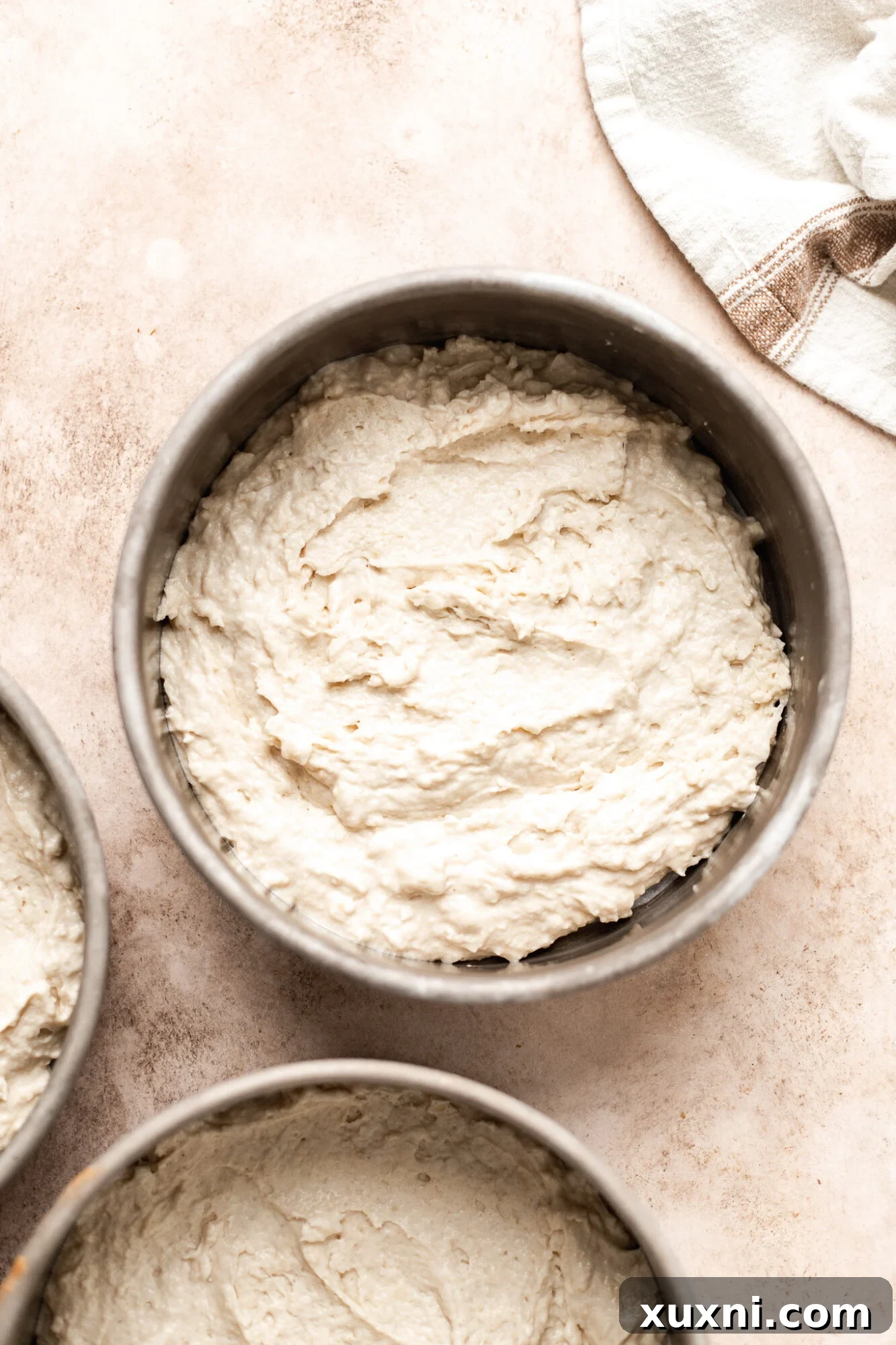
For ultimate simplicity and minimal cleanup, the by-hand method is fantastic. In a large bowl, whisk together all the wet ingredients: melted vegan butter (or coconut oil), sugar, dairy-free yogurt, vanilla extract, coconut extract, and sea salt. Once smooth, add in the baking powder and baking soda, whisking just until incorporated. Next, fold in the shredded coconut. Then, add the flour and pour in the coconut milk. Gently whisk the entire mixture just until all dry ingredients are fully incorporated into the wet, ensuring not to overmix. Pour the beautifully smooth batter into your prepared cake pans and bake. It’s that easy!
Baking to Perfection: Tips for Success
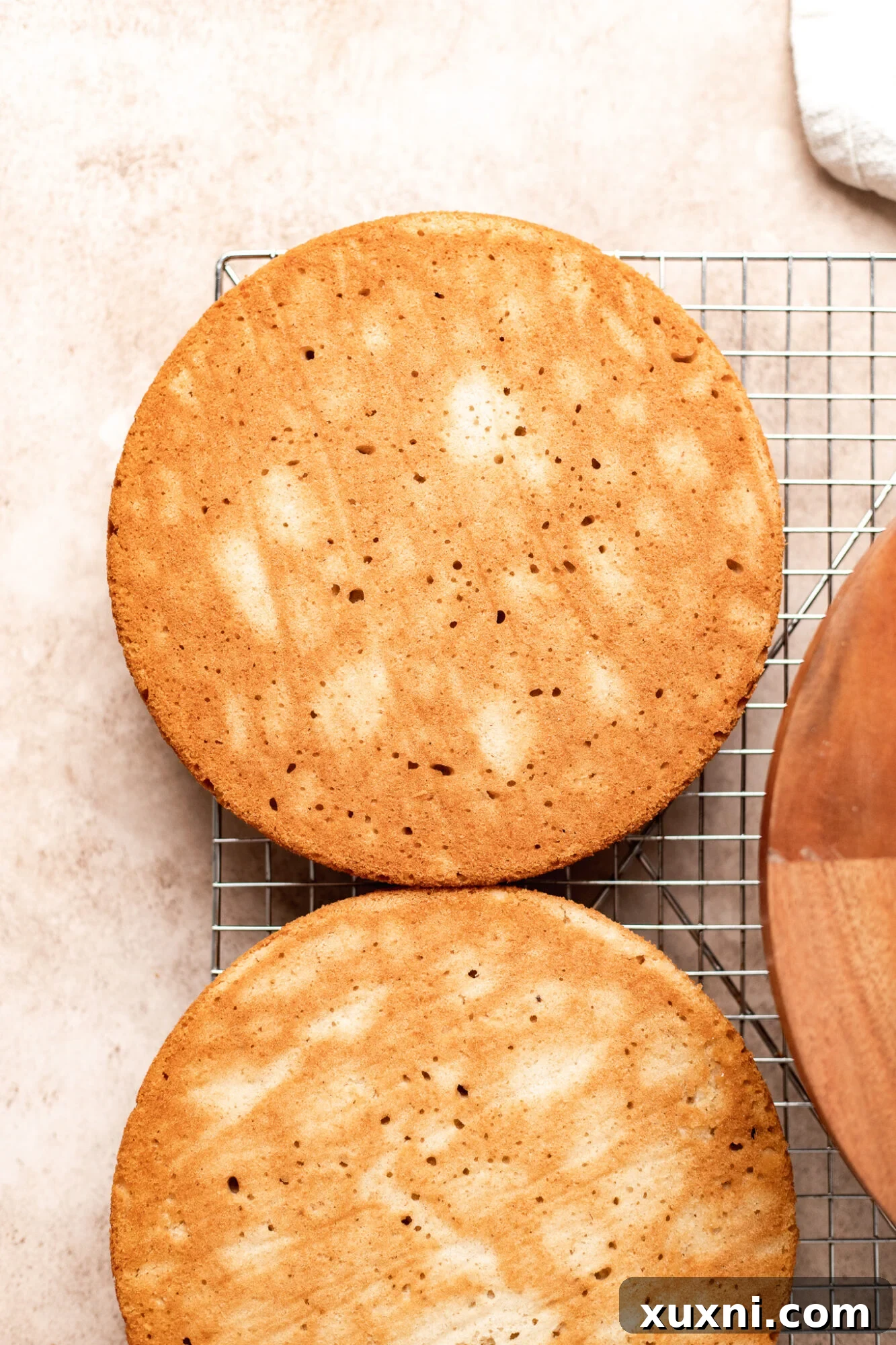
Regardless of the method you choose, a few universal tips will ensure baking success. Always preheat your oven to the specified temperature and prepare your cake pans thoroughly (greasing and lightly flouring or lining with parchment paper) to prevent sticking. When checking for doneness, insert a toothpick into the center of the cake; it should come out clean or with a few moist crumbs attached. Allow your cakes to cool in their pans for about 10-15 minutes before inverting them onto a wire rack to cool completely. This prevents crumbling and ensures easy handling when frosting.
Indulgent Dairy-Free Coconut Cream Cheese Frosting
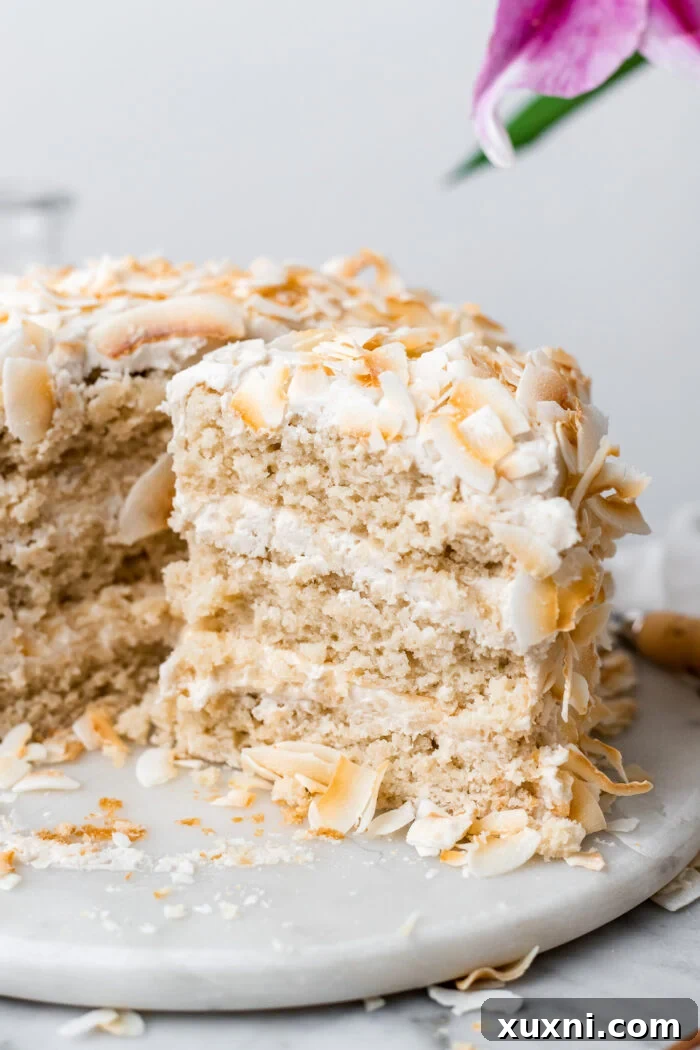
This dairy-free coconut cream cheese frosting isn’t just good; it’s arguably the best vegan frosting I have ever tasted. Its rich, tangy, and impossibly creamy texture is so utterly delightful, you’ll find yourself wanting to eat it with a spoon – and I might just be guilty of taking a few extra bites myself! This is truly what sets this vegan coconut cake apart, elevating it to an unforgettable dessert experience.
Crafting this exquisite frosting is simple. It relies on a perfect balance of key ingredients: creamy vegan butter, tangy vegan cream cheese, and sweet powdered sugar. For an added layer of flavor and luxurious creaminess, we incorporate a touch of coconut cream. This not only enhances the tropical notes but also helps achieve your desired frosting consistency. A hint of vanilla extract and optional coconut extract further rounds out the flavor profile.
To prepare, simply cream together the softened vegan butter and vegan cream cheese until light and fluffy. Gradually add the powdered sugar, beating until smooth and thick. Incorporate the vanilla and coconut extracts, then add coconut cream tablespoon by tablespoon until the frosting reaches your ideal spreadable consistency. For an extra touch of gourmet flair and incredible texture, consider adding toasted coconut flakes, which we’ll discuss next.
Elevating Flavor: How to Perfectly Toast Coconut
While raw, unsweetened shredded coconut or coconut flakes are perfectly acceptable, I wholeheartedly believe that toasting the coconut adds an incredible depth of flavor and aromatic complexity that truly sets this vegan coconut cake above the rest. The gentle heat transforms the natural sweetness of the coconut into a richer, nuttier profile, enhancing every bite.
If you plan to incorporate toasted coconut into both your cake batter and as a decorative topping, I recommend toasting the entire amount before you begin baking. This ensures consistency and efficiency. The process is remarkably simple:
- Preheat your oven to 350°F (175°C).
- Spread your unsweetened coconut flakes evenly in a single layer across a large baking sheet. Avoid overcrowding the pan to ensure even toasting.
- Place the baking sheet in the preheated oven and toast for approximately 5-8 minutes. It’s crucial to stay vigilant during this time, as coconut can go from perfectly golden to burnt very quickly.
- Keep a close eye on the coconut. You’re looking for a beautiful golden-brown color and a wonderfully fragrant aroma. The moment you start smelling that distinct, sweet, toasted coconut scent, it’s usually done.
- Once toasted, remove the baking sheet from the oven and immediately transfer the toasted coconut to a plate or a heat-safe bowl to cool. This stops the cooking process and prevents it from burning further on the hot pan.
Once cooled, your toasted coconut is ready to be folded into the cake batter or pressed onto the frosting for that irresistible crunch and flavor!
Assembling Your Stunning Vegan Coconut Layer Cake
If you’re new to The Banana Diaries, let me tell you: I absolutely adore making layer cakes, and I’m passionate about teaching others how to create beautiful vegan versions! Don’t be intimidated by the idea of assembling a multi-layered cake; with a few simple tips and tools, you can achieve a professional-looking result right in your own kitchen.
To construct a gorgeous three-layered coconut cake, having a few specialized tools can make the process smoother and more enjoyable. My personal arsenal for layer cake perfection typically includes:
- Cake Turntable: This spinning stand allows for effortless frosting application, helping you achieve smooth sides and even coverage with ease.
- Offset Spatula: Indispensable for spreading frosting smoothly over cake layers and sides, navigating curves and edges with precision.
- Bench Scraper: Your best friend for achieving perfectly straight, clean sides on your frosted cake, giving it that polished, professional look.
- Cake Stand: The final flourish! A beautiful cake stand elevates your creation, making it a true centerpiece.
While piping tips and bags can add intricate designs, I often opt for a simpler, elegant finish. If you’re a beginner vegan cake baker, please don’t fret over having every single gadget. You truly do not need all these tools to create a beautiful cake. In fact, if you’re aiming for an elegant yet charmingly rustic look, an offset spatula and even just a spoon (for creating delightful swirls in your frosting!) are more than enough.
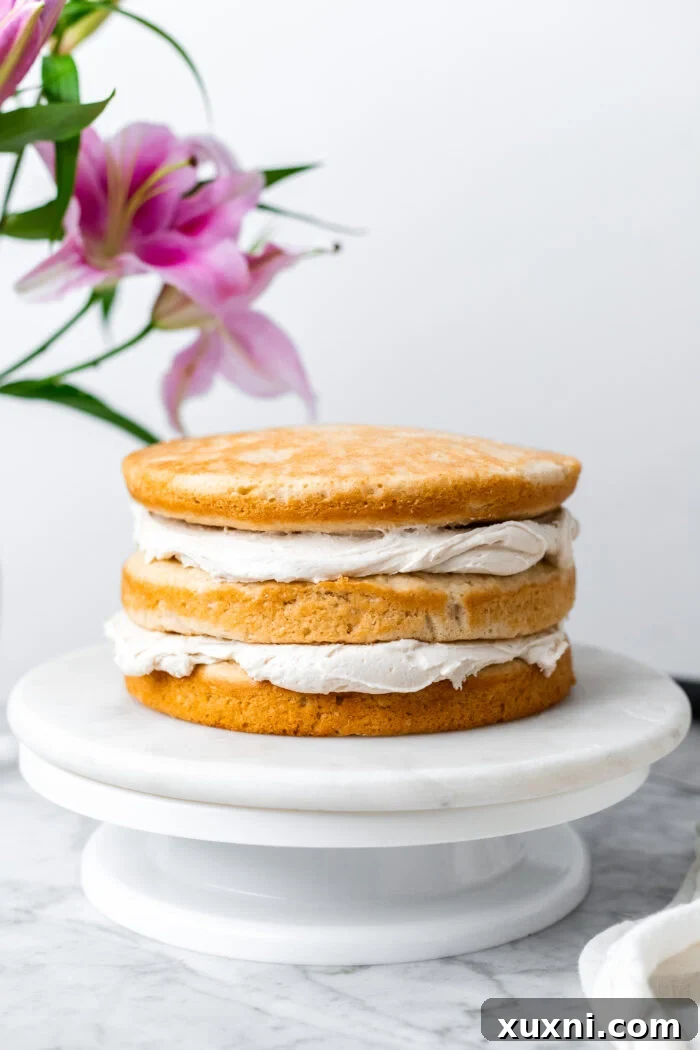
The bench scraper and cake turntable are particularly fantastic for achieving those crisp, clean edges on a professionally finished cake. The turntable especially helps maintain a continuous frosting streak, making it a wonderful investment if you plan to gift cakes for birthdays or even craft your own vegan wedding cake!
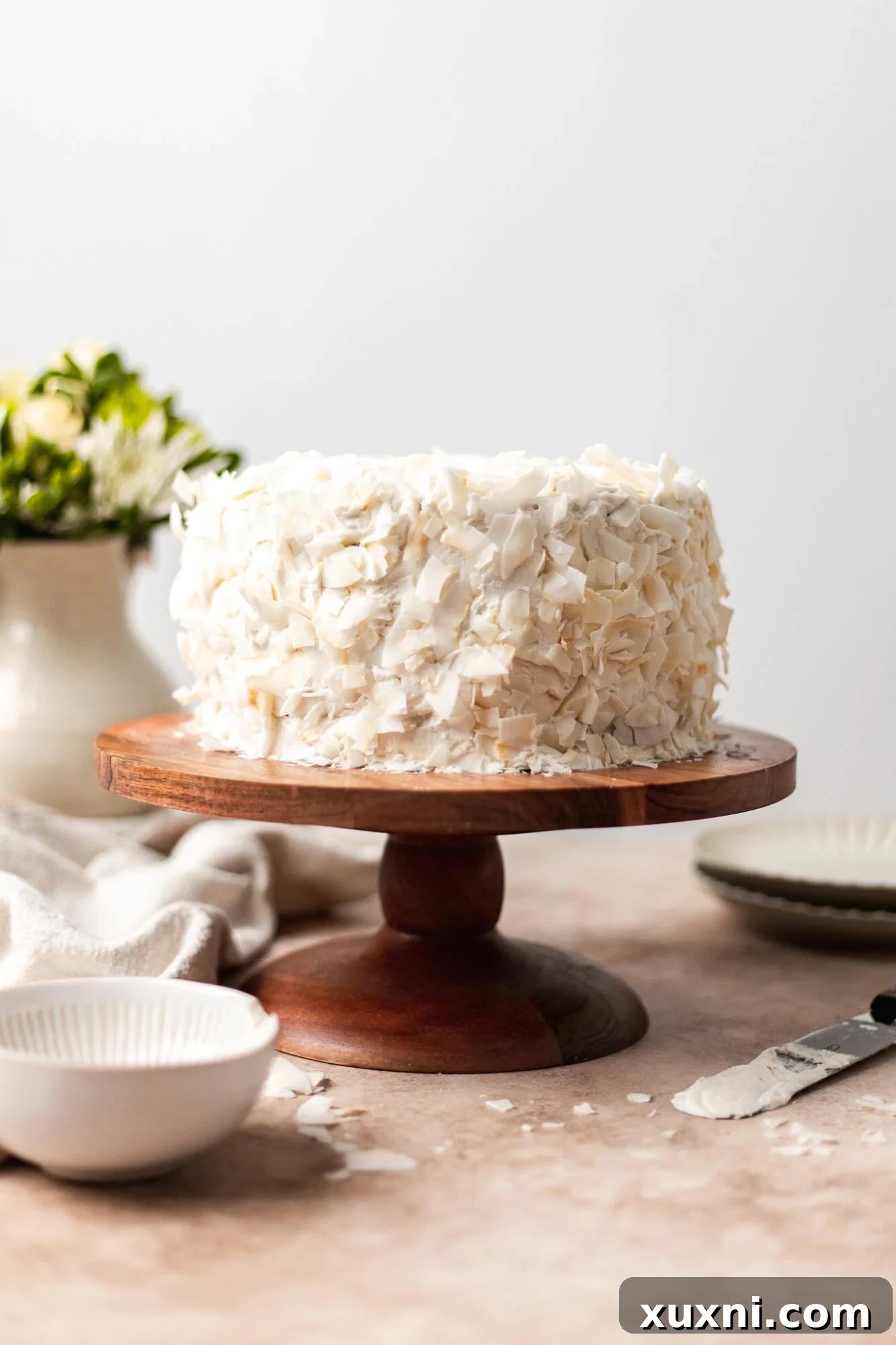
To assemble your layer cake, start by placing your first cake layer on your chosen serving plate or cake stand. Spread about 1/3 to 1/2 cup of frosting over the top – I tend to be generous! For an extra touch of flavor and texture, sprinkle a little toasted coconut over the frosting. Carefully place the second cake layer on top and repeat the frosting and coconut sprinkling. Finally, add the third layer. Then, apply a thin crumb coat of frosting all over the cake to seal in any loose crumbs. Once chilled, apply the final, thicker layer of frosting, smoothing the sides with an offset spatula or bench scraper. Gently press more toasted coconut flakes onto the sides and top for a beautiful, flavorful finish. Slice, serve, and enjoy your masterpiece!
Recipe Q&A: Your Vegan Coconut Cake Questions Answered
Got questions about making and enjoying your vegan coconut cake? Here are some common queries and their answers to ensure your baking experience is flawless:
Q: Can I adapt this recipe to make a vegan coconut sheet cake or a vegan coconut loaf?
A: Absolutely! This versatile batter works wonderfully for various forms. For a vegan coconut sheet cake, simply pour the prepared batter into your chosen sheet cake pan (e.g., a 9×13 inch pan) and bake. The baking time will likely be longer than for round layers, so start checking for doneness with a toothpick after about 27-30 minutes, adding more time as needed. If you prefer a vegan coconut loaf, you’ll generally need two standard loaf pans. Alternatively, you can easily halve the recipe to yield a single loaf. Adjust baking times accordingly, usually between 45-60 minutes, ensuring a clean toothpick test.
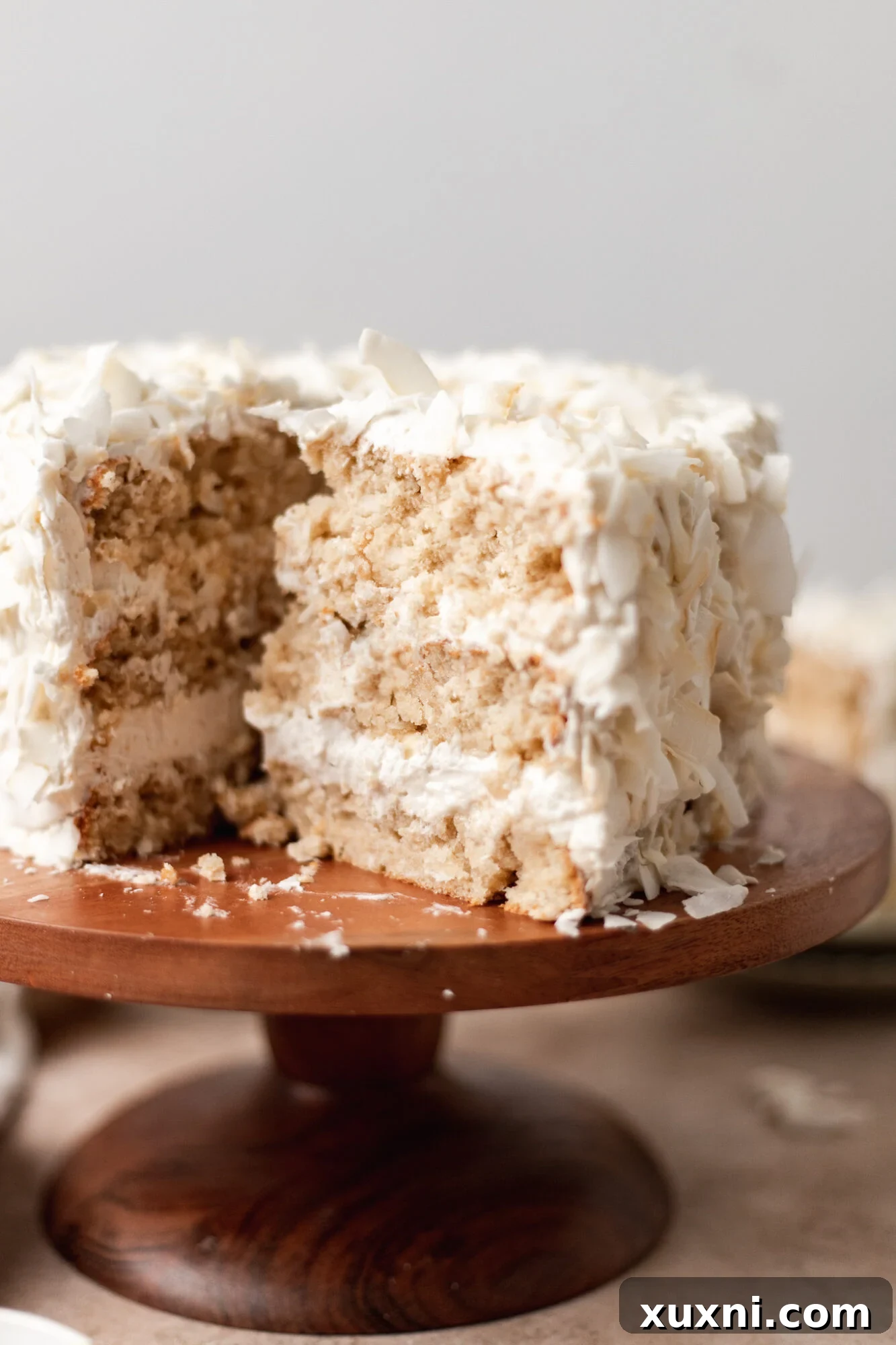
Q: How should I store any leftover vegan coconut cake?
A: In the rare event that you have leftovers of this incredibly delicious dairy-free coconut cake (it’s truly that good!), proper storage is key to maintaining its freshness. I recommend storing the cake as intact as possible; if it’s already sliced, avoid cutting it further until ready to serve. Cover the cake tightly with plastic wrap or place it in an airtight container to prevent any air exposure, which can dry it out. The cake will stay fresh at room temperature for up to 2-3 days, in the refrigerator for up to 5 days, or can be frozen for up to 3 months. When freezing, wrap individual slices or the whole cake in multiple layers of plastic wrap and then foil for best results.
Q: Can I make this a gluten-free vegan coconut cake?
A: Absolutely! This recipe is incredibly adaptable for a gluten-free option. I highly recommend using a good quality 1-to-1 gluten-free baking flour blend, such as King Arthur Measure for Measure. These blends are specifically formulated to replace regular wheat flour cup-for-cup in recipes, ensuring a similar texture and rise without compromising on taste. Just follow the recipe instructions as written, substituting the flour, and you’ll have a delightful gluten-free vegan coconut cake.
Q: What if I can’t find dairy-free yogurt for the egg substitute?
A: If dairy-free yogurt isn’t available, you have a couple of excellent alternatives. Unsweetened applesauce (around 1/4 cup per “egg”) or mashed ripe banana (also about 1/4 cup per “egg”) can both work as effective egg replacers, adding moisture and binding properties to the cake. The slight flavor of these alternatives is usually masked by the prominent coconut and vanilla in this recipe, so feel free to use them if needed.
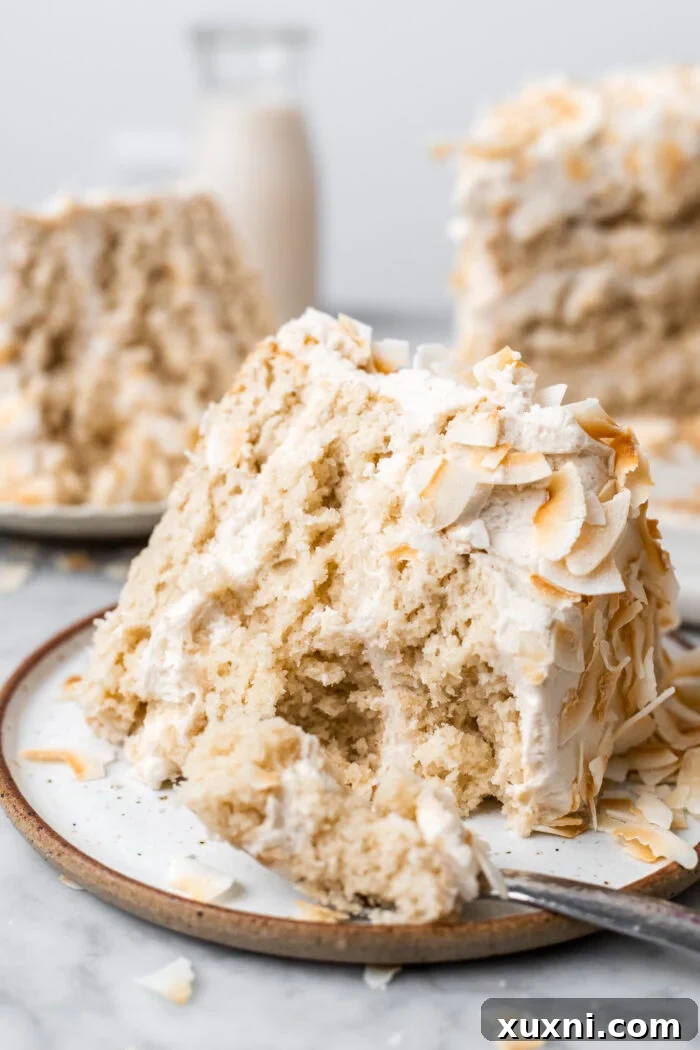
I genuinely hope you fall in love with this vegan coconut cake as much as I have! It truly is the most tender, flavorful, and deliciously light vegan cake I’ve ever had the pleasure of baking and sharing. If you try this recipe, please make sure to let me know in the comment section below, and consider giving it a rating ⭐️⭐️⭐️⭐️⭐️. Your feedback helps more people discover and enjoy this fantastic recipe!
As always, I absolutely adore seeing your beautiful creations on Instagram and Pinterest, so be sure to tag me there! Happy coconut cake baking!
Want to save this irresistible recipe for later? Add it to your favorite recipe board on Pinterest!
If you make this recipe, please be sure to leave a comment and a rating ⭐️⭐️⭐️⭐️⭐️ below. This helps others to find the recipes! As always, I absolutely love to see your beautiful creations on Instagram and Pinterest, so be sure to tag me there as well!
Print
One Bowl MOIST Vegan Coconut Cake Recipe
5 Stars 4 Stars 3 Stars 2 Stars 1 Star
4.9 from 30 reviews
Author: Britt Berlin
Prep Time: 15
Cook Time: 27
Total Time: 42 minutes
Yield: 16 1x
Category: Cake
Method: Baking
Cuisine: American
Diet: Vegan
Description
Prepare to be amazed by this unbelievably moist and fluffy vegan coconut cake! It’s infused with the vibrant flavors of fresh coconut and a hint of vanilla, then perfectly complemented by a luscious dairy-free coconut cream cheese frosting. This recipe is designed to stand out, offering a truly exceptional plant-based dessert experience that’s both easy to make and irresistibly delicious.
Ingredients
Scale
For the Vegan Coconut Cake:
- 3 1/4 cups (410 g) cake flour, all-purpose flour, or gluten-free 1-to-1 baking flour, sifted (Note: If using all-purpose or gluten-free 1-to-1 baking flour, add 1 tsp arrowroot powder for best texture. Sifting is crucial!)
- 1 3/4 cup (350 g) granulated sugar or coconut sugar (Note: Coconut sugar will result in a slightly darker cake.)
- 1 tbsp baking powder
- 1/2 tsp baking soda
- 1 1/2 cup (360 mL) full-fat canned coconut milk or coconut cream (Note: Shake the can well before opening. Do not use light or carton coconut milk.)
- 3/4 cup (150 g) unsweetened dairy-free yogurt, at room temperature (Alternatively, unsweetened applesauce can be used.)
- 1/2 cup (113 g) vegan butter, softened (for stand mixer) or melted (for by-hand method) (Ensure it’s nut-free if needed, like Flora Plant Butter.)
- 2 tsp vanilla extract
- 1 tsp coconut extract (Optional, but recommended for intense coconut flavor.)
- 1/4 tsp sea salt
- 1 cup (100 g) unsweetened shredded coconut or flakes, toasted (See instructions for toasting below.)
For the Vegan Coconut Cream Cheese Frosting:
- 1 cup (226 g) vegan butter, at room temperature
- 1 cup (226 g) vegan cream cheese, chilled
- 4 cups (520 g) powdered sugar, sifted
- 2-4 tbsp full-fat canned coconut cream
- 1 tsp vanilla extract
- 1 tsp coconut extract, optional
- 3 cups toasted coconut flakes, for decorating
Instructions
Method 1: By Hand (No Special Equipment Needed)
- Prepare for Baking: Preheat your oven to 350°F (175°C). Lightly grease three 6-inch round cake pans or two 8-inch round cake pans with olive oil or coconut oil, then dust with flour or line the bottoms with parchment paper. If using toasted coconut, toast it now according to the instructions in the article above.
- Combine Wet Ingredients: In a large mixing bowl, thoroughly whisk together the melted vegan butter (or coconut oil), granulated sugar, dairy-free yogurt, vanilla extract, coconut extract, and sea salt until the mixture is smooth and well combined.
- Add Leavening & Coconut: Sprinkle the baking powder and baking soda into the wet mixture and whisk gently until just incorporated. Then, fold in the unsweetened shredded coconut (toasted, if using) until evenly distributed.
- Incorporate Dry Ingredients: Add the sifted flour to the bowl, then pour in the full-fat canned coconut milk. Using a whisk or spatula, mix just until the dry ingredients are fully incorporated and no flour streaks remain. Be careful not to overmix, as this can lead to a dense cake.
- Bake the Cake Layers: Divide the batter evenly among your prepared cake pans. Place the pans in the preheated oven and bake for 22-24 minutes for 6-inch pans or 27-30 minutes for 8-inch pans, or until a toothpick inserted into the center comes out clean. Let the cakes cool in their pans on a wire rack for 10-15 minutes before carefully inverting them onto the rack to cool completely. Ensure they are fully cooled before frosting.
Method 2: Stand Mixer (For a Classic Crumb)
- Preheat & Prep Pans: Preheat your oven to 350°F (175°C). Grease three 6-inch round cake pans or two 8-inch round cake pans with olive or coconut oil and dust with flour or line with parchment. Toast coconut now, if desired.
- Whisk Dry Ingredients: In a medium bowl, whisk together only the sifted flour, sea salt, baking soda, and baking powder. Set this dry mixture aside.
- Cream Butter & Sugar: In the bowl of a stand mixer fitted with the paddle attachment, cream together the softened vegan butter and granulated sugar on medium speed for about 3 minutes, scraping down the sides of the bowl as needed, until light, fluffy, and the sugar is mostly dissolved.
- Add Wet Flavorings: Add the unsweetened dairy-free yogurt (or applesauce), vanilla extract, and coconut extract to the creamed mixture. Beat on medium-low speed, then increase to medium, until fully combined, again scraping down the bowl as necessary.
- Alternate Dry & Wet: Gradually add half of the dry flour mixture to the stand mixer, mixing on low speed until just combined. Then, add half of the coconut cream and mix until incorporated. Repeat with the remaining flour mixture and coconut cream, mixing until the dry ingredients are just incorporated. Be very careful not to overmix the batter.
- Fold in Coconut: Gently fold the unsweetened shredded coconut (toasted, if using) into the batter using a spatula.
- Bake Cake Layers: Divide the batter evenly into the prepared cake pans. Bake for 22-24 minutes (for 6-inch pans) or 27-30 minutes (for 8-inch pans), or until a toothpick inserted into the center comes out clean.
- Cool Completely: Allow the cakes to cool in their pans for 10-15 minutes on a wire rack. Then, carefully invert them onto the wire rack to cool completely before proceeding with frosting.
Vegan Coconut Cream Cheese Frosting & Assembly:
- Prepare Frosting Base: In a large bowl or the bowl of a stand mixer, add the room temperature vegan butter and chilled vegan cream cheese. Cream together on medium speed for 2-3 minutes until smooth and lump-free.
- Add Powdered Sugar: Gradually add the sifted powdered sugar, 1 cup at a time, continuing to beat the mixture on low, then medium speed, until a thick and fluffy buttercream frosting forms. Scrape down the sides of the bowl as needed.
- Flavor & Consistency: Mix in the vanilla extract and optional coconut extract. Then, add 2-4 tablespoons of full-fat coconut cream, one tablespoon at a time, beating until the frosting reaches your desired smooth and spreadable consistency.
- Frost and Decorate: Once the cake layers are completely cool, assemble your cake. Place the first layer on your cake stand, spread with about 1/3 to 1/2 cup of frosting, and sprinkle with toasted coconut flakes (if using). Repeat with the second layer. Place the final layer on top, then apply a thin crumb coat to the entire cake and chill briefly. Apply the remaining frosting generously to the top and sides of the cake. For a beautiful finish, gently press the extra toasted coconut flakes onto the sides and top of the cake. Slice and enjoy your magnificent vegan coconut cake!
Notes
Coconut Milk & Cream Tip: For the best results, always use full-fat canned coconut milk or coconut cream for this recipe. Ensure you shake the can vigorously before opening, as the thick fat often separates from the watery liquid at different temperatures. This shaking helps everything combine for a consistently rich and creamy addition to your cake.
Gluten-Free Baking: To make a gluten-free vegan coconut cake, I consistently achieve excellent results using King Arthur Measure for Measure gluten-free all-purpose flour. This blend is reliable for a moist crumb and good rise in vegan recipes.
Room Temperature Ingredients: For cakes, especially when using the stand mixer method, having ingredients like vegan butter and dairy-free yogurt at room temperature is crucial. This ensures they emulsify properly and create a smooth, consistent batter, leading to a perfectly textured cake.
Preventing Overmixing: With both methods, avoid overmixing the batter once the flour is added. Overmixing develops gluten, which can lead to a tough, dry cake. Mix just until no dry streaks of flour are visible.