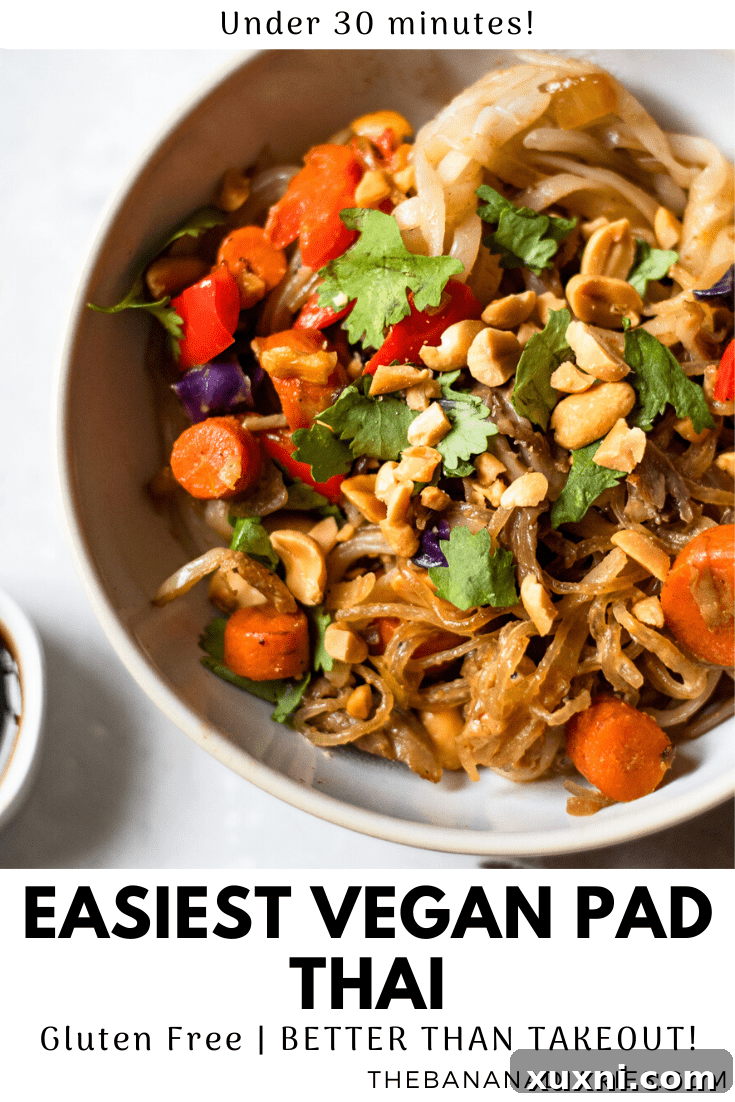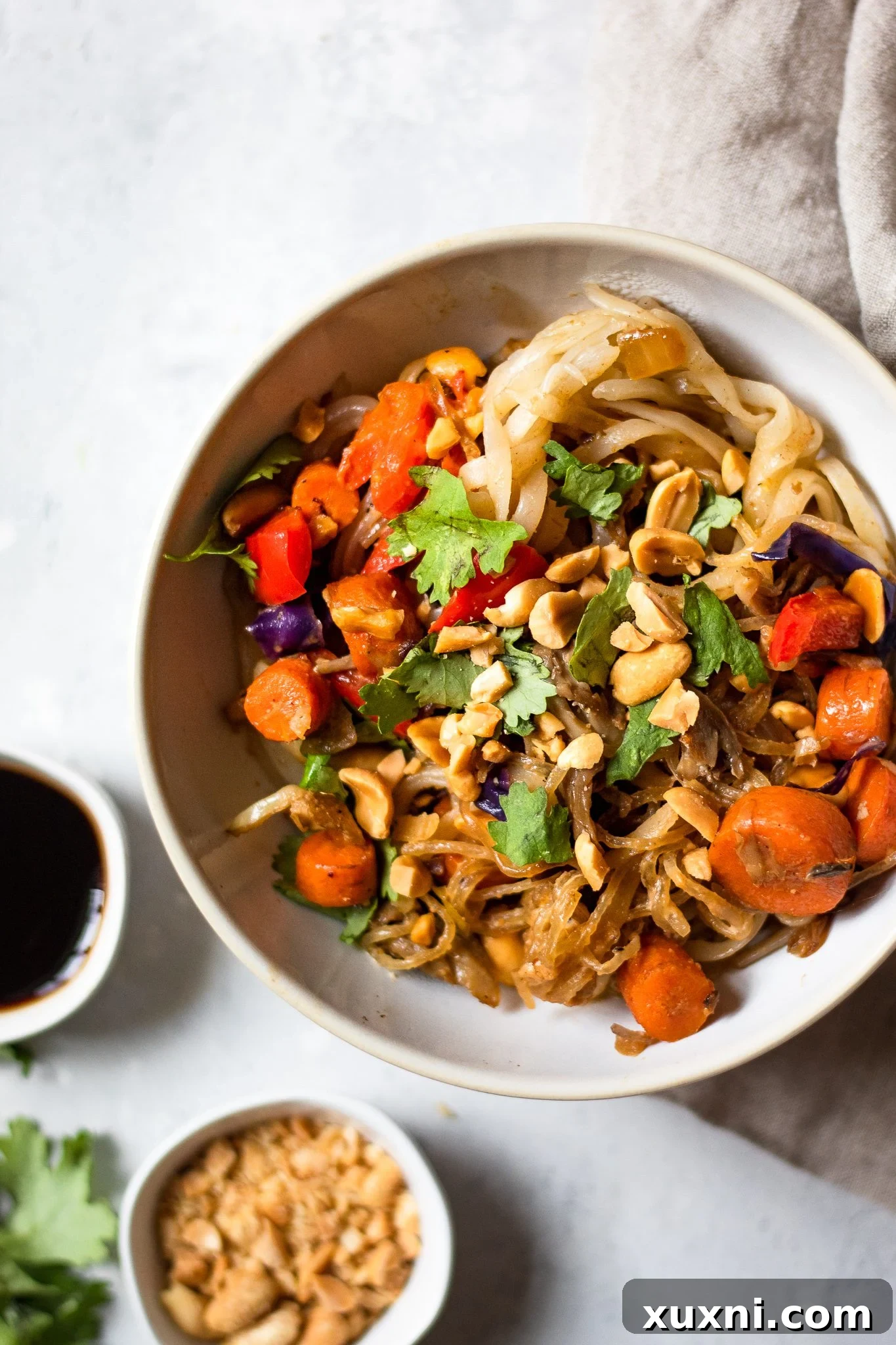
Discover the ultimate easy vegan Pad Thai that’s naturally gluten-free and can even be low-carb! Crafted with a harmonious blend of rice and kelp noodles, this flavorful recipe comes together in under 30 minutes, making it a perfect solution for a quick, healthy, and satisfying meal any day of the week. Say goodbye to takeout and hello to a homemade dish that tastes even better!
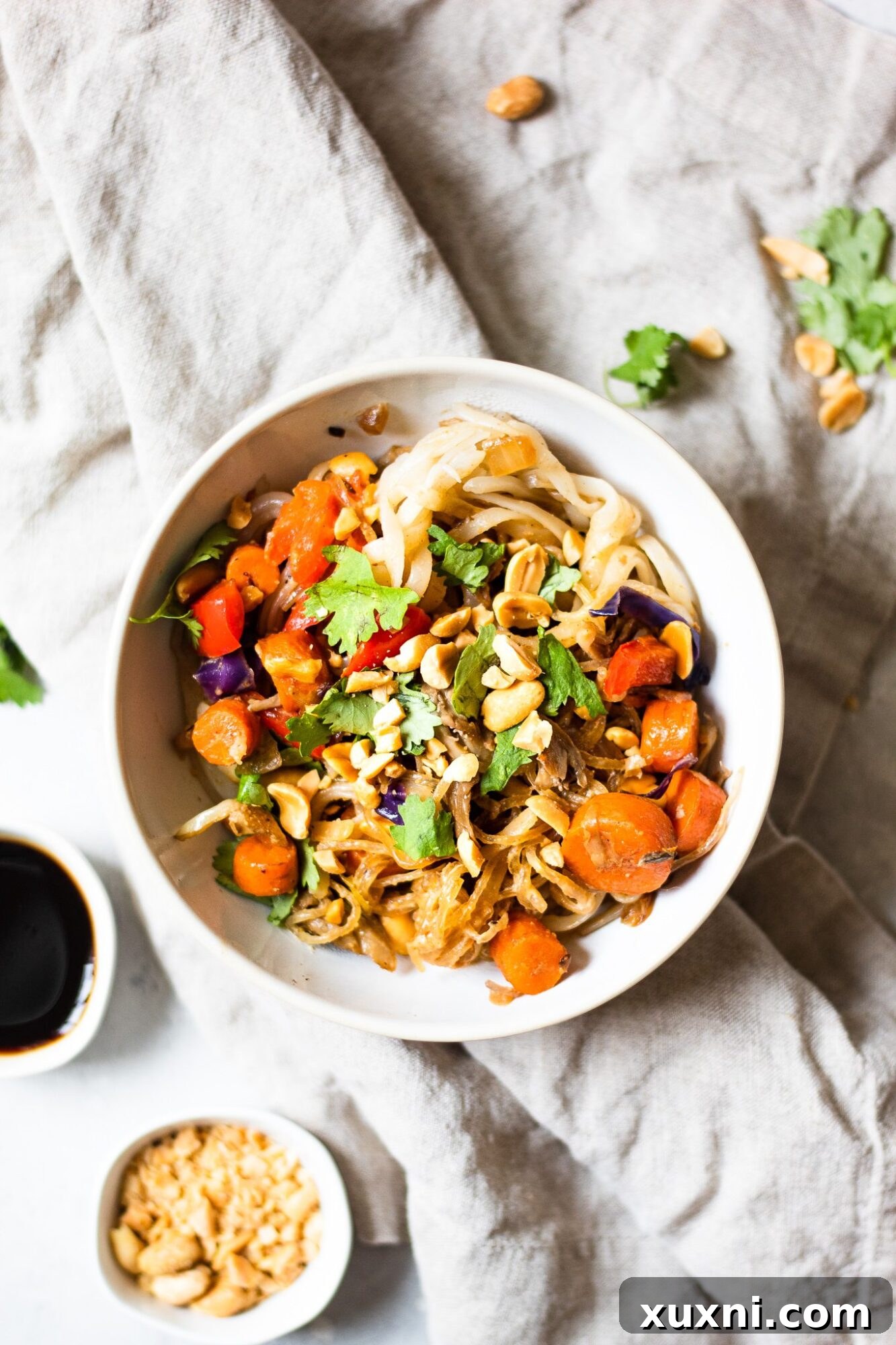
This inspired vegan Pad Thai recipe offers a fresh take on a beloved classic, delivering all the authentic flavors without any of the animal products or gluten. We combine tender rice noodles with nutrient-dense kelp noodles, sauté them with an array of crisp, fresh vegetables, and lavishly coat everything in a rich, savory peanut sauce that is entirely gluten-free. The result is a vibrant, textural, and incredibly delicious dish that will quickly become a family favorite.
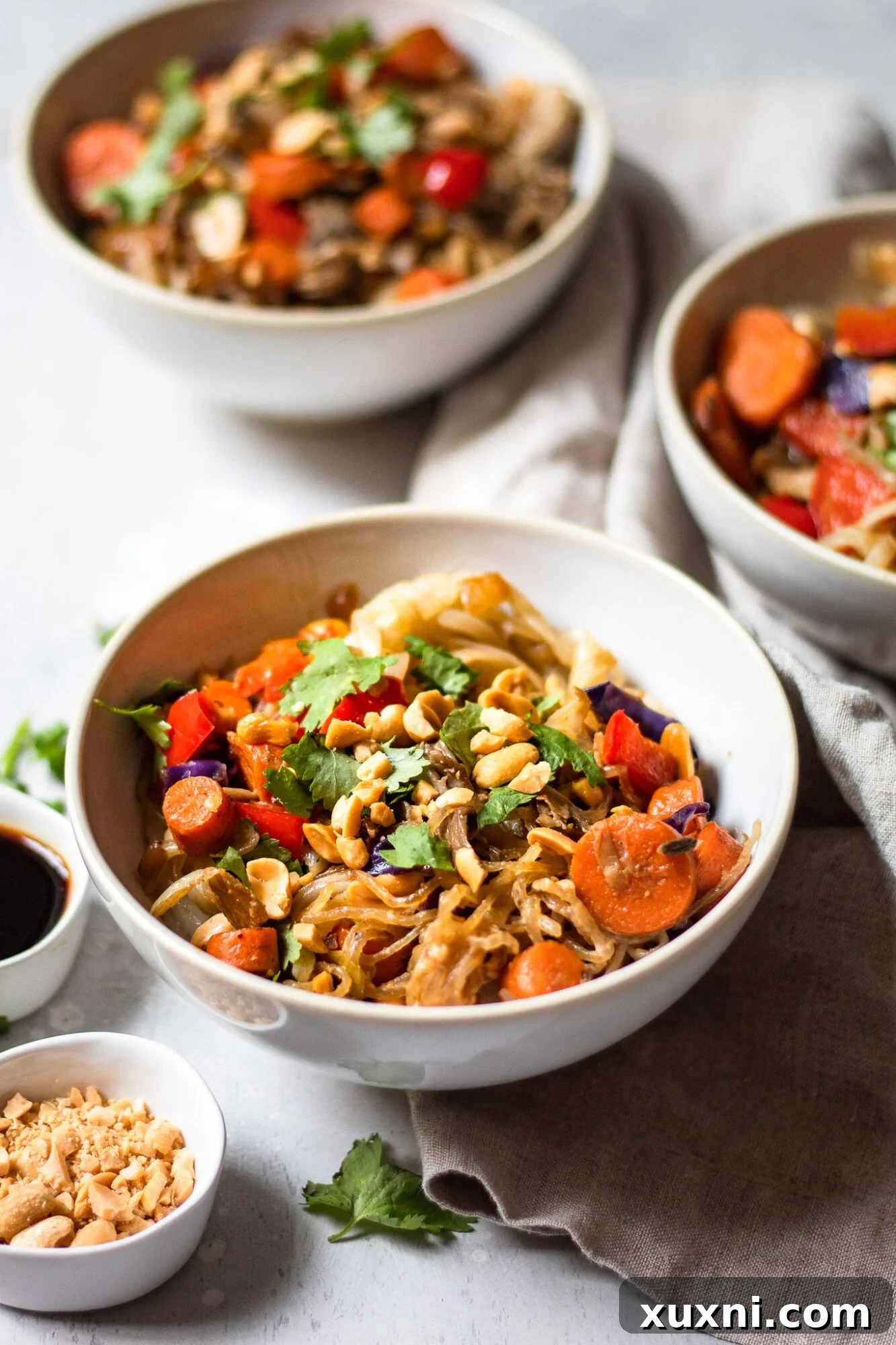
Crafting the Easiest Homemade Pad Thai Sauce
One of the true stars of any Pad Thai is its distinctive sauce, and this vegan version is no exception. Designed for simplicity without compromising on flavor, our Pad Thai sauce is entirely plant-based and incredibly easy to prepare. You only need three core ingredients to achieve a wonderfully balanced and utterly delicious flavor profile:
- Creamy Peanut Butter: Provides the classic nutty base, adding richness and depth. Opt for natural peanut butter with minimal added sugar and no hydrogenated oils.
- Gluten-Free Soy Sauce: Essential for that umami punch and savory foundation. We highly recommend Kikkoman’s Gluten-Free Tamari for its superior flavor and consistent quality.
- Rice Vinegar: Adds a crucial touch of tanginess that brightens the entire dish and balances the richness of the peanut butter.
Astonishingly, this delectable sauce can be whisked together in a mere 30 seconds! Its simplicity means you can focus more on the cooking process and less on complicated sauce preparations. While these three ingredients form the perfect base, feel free to personalize your sauce. A squeeze of fresh lime juice can add extra zing, a dash of sriracha or chili garlic sauce can introduce a delightful kick, and a touch of maple syrup or agave nectar can sweeten it slightly to your preference. Even a tiny bit of minced fresh ginger or garlic can elevate the aromatic complexity of your homemade Pad Thai sauce.
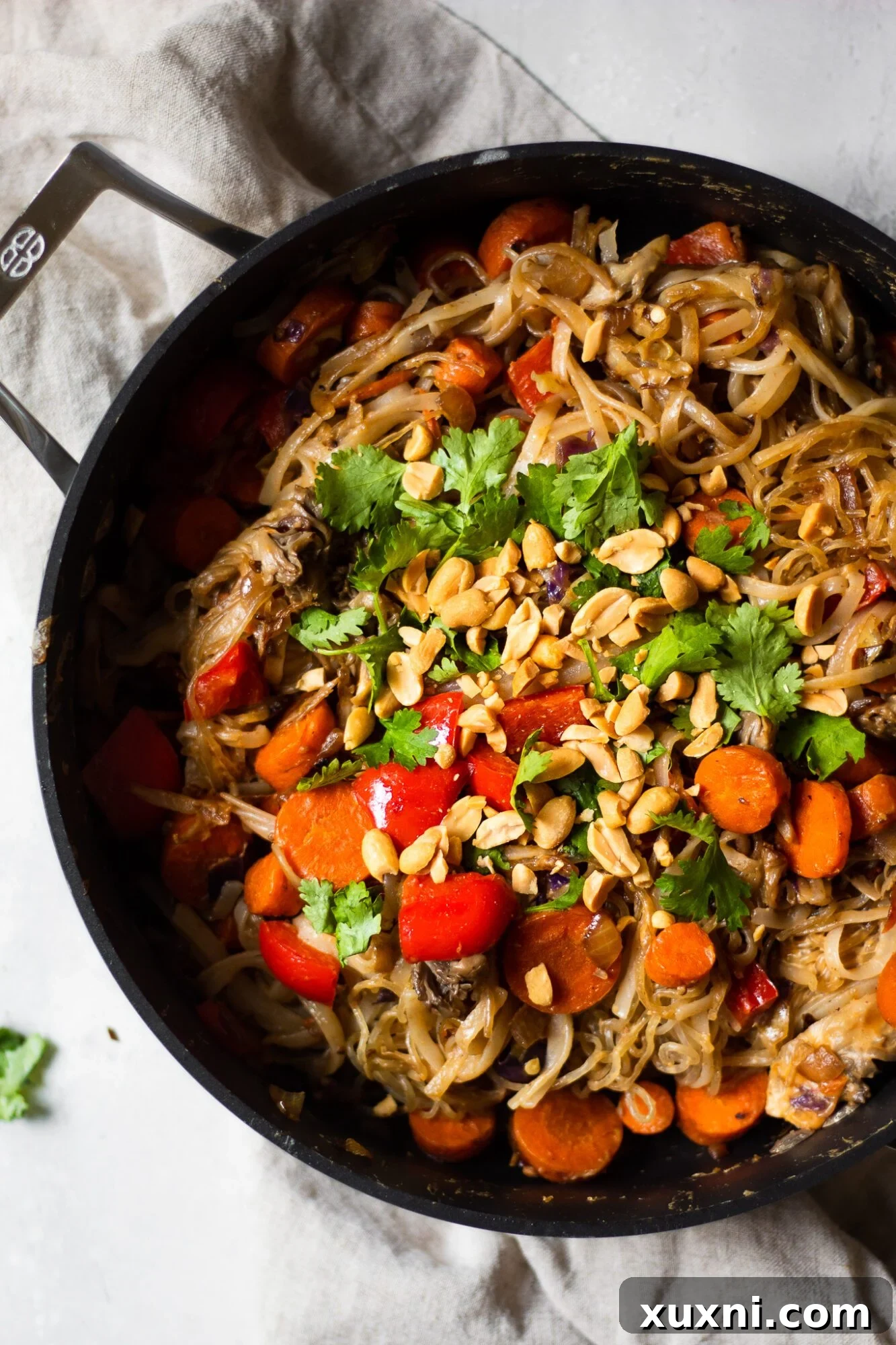
Beyond the incredible sauce, you might be wondering what other key components go into making this a genuinely gluten-free and low-carb friendly vegan Pad Thai. This recipe stands out by thoughtfully selecting ingredients that cater to various dietary needs while delivering maximum flavor and texture. For this particular recipe, you’ll need:
- Rice Noodles (Gluten-Free): The traditional choice for Pad Thai, offering a satisfying chewiness and acting as a fantastic canvas for the sauce. Always check the label to ensure they are certified gluten-free.
- Kelp Noodles: A game-changer for those seeking a low-carb, gluten-free, and incredibly nutritious alternative. Kelp noodles are made from seaweed, are naturally low in calories, and absorb flavors beautifully.
- Bell Pepper: Adds vibrant color, a sweet crunch, and essential vitamins. Red, yellow, or orange bell peppers work wonderfully.
- Carrots: Contribute natural sweetness and a lovely texture when thinly sliced or julienned.
- Cabbage: Whether red or green, cabbage provides a hearty crunch and earthy flavor.
- Garlic + Onion: The aromatic foundation of the dish, creating a fragrant base for all the other ingredients.
- Fresh Cilantro: An indispensable garnish, offering a burst of freshness and herbaceous notes.
- Crushed Peanuts: Crucial for the signature crunch and nutty flavor that elevates every bite.
You’ll notice that we haven’t included a specific protein in the main ingredient list for this Pad Thai recipe. This is a deliberate choice to ensure the recipe is highly customizable and inclusive, allowing you to tailor it perfectly to your preferences and dietary requirements. Whether you’re craving tofu, tempeh, or another plant-based option, this recipe provides the flexibility to add what you desire.
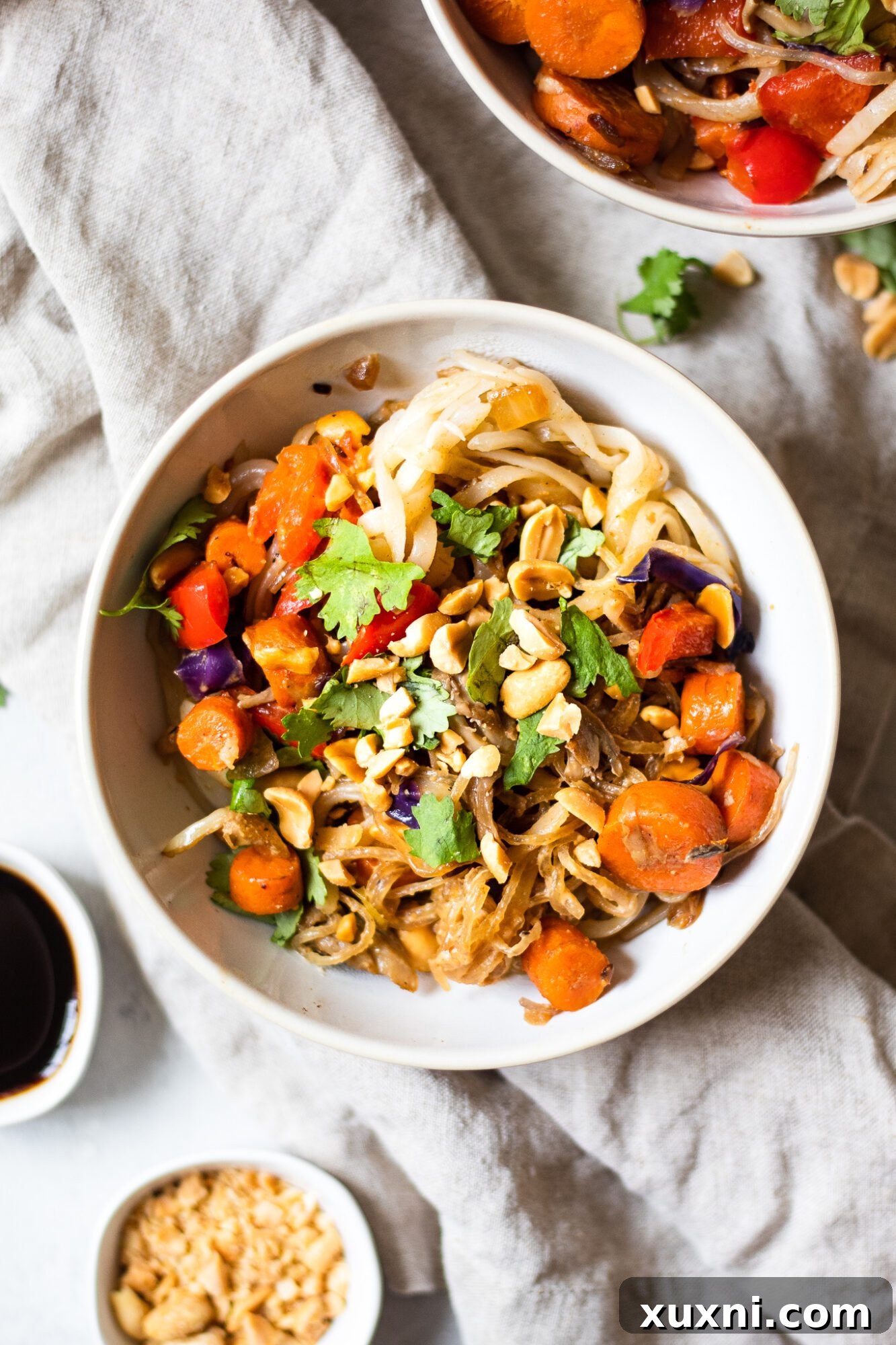
So, feel empowered to choose your favorite plant-based protein! Consider adding crispy pan-fried tofu, crumbled tempeh, steamed edamame, or even chickpeas for an extra boost of nutrition and satiety. This adaptability ensures that everyone, from strict vegans to those simply exploring healthier eating, can enjoy this delightful Pad Thai.
Is Pad Thai Gluten-Free? Understanding the Difference
Traditionally, Pad Thai, when prepared in many Western restaurants, often contains gluten. The primary culprit is typically the soy sauce used, which often contains wheat. However, this easy vegan Pad Thai has been meticulously developed to be entirely gluten-free from start to finish. By using certified gluten-free soy sauce (or tamari) and rice noodles, we eliminate gluten without sacrificing any of the authentic flavors you crave. For those who wish to go a step further and make this dish completely grain-free, you can simply omit the rice noodles and rely solely on the kelp noodles for a truly low-carb experience.
The rise in gluten sensitivity and celiac disease has made it increasingly important to understand ingredient labels. When purchasing soy sauce, always look for “gluten-free tamari,” which is a Japanese-style soy sauce made without wheat. Similarly, ensure your rice noodles are explicitly labeled gluten-free, as some brands may have cross-contamination risks or unexpected additives. Our recipe takes the guesswork out of the equation, providing a delicious and safe option for everyone.
How to Make Gluten-Free Vegan Pad Thai: A Simple Guide
Creating this flavorful vegan Pad Thai is surprisingly straightforward, even with its gluten-free and health-conscious modifications. The key to its ease lies in a bit of smart preparation and understanding the unique properties of kelp noodles. Let’s break down the process into simple, manageable steps:
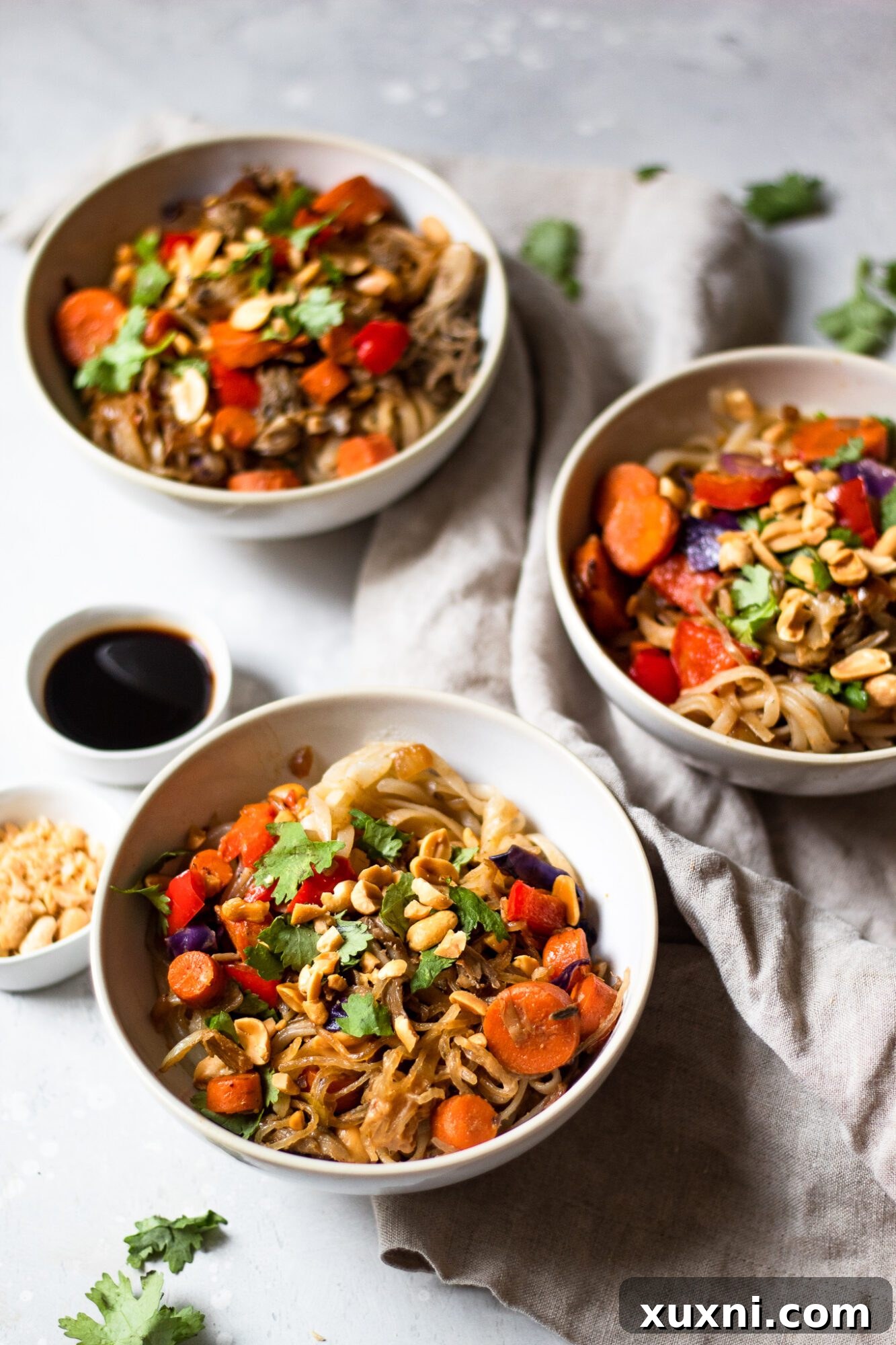
First, you’ll want to take care of a few crucial prep steps to ensure a smooth cooking process:
- Get All Your Veggies Chopped! This might seem obvious, but having all your vegetables prepped and ready before you start cooking makes a huge difference in the flow and speed of the entire process. Aim for uniform cuts for even cooking. Don’t hesitate to customize your vegetable selection; if you’re not a fan of bell peppers, try broccoli florets, snap peas, or mushrooms. The more colors, the better, for both aesthetics and nutrition!
- Properly Prepare the Kelp Noodles. This is the “special trick” to making kelp noodles truly palatable and enjoyable. Fresh out of the package, kelp noodles can have a somewhat firm, almost crunchy texture and a faint sea-like aroma that isn’t always appealing. But don’t let this deter you! These noodles are incredibly healthy, boasting a low-carb profile and high nutrient density. Here’s how to transform them:
- Begin by thoroughly rinsing your kelp noodles under warm running water for several minutes. This helps to remove any residual briny flavor.
- Next, place the rinsed noodles into a bowl and submerge them completely in water mixed with a splash of lemon juice or white vinegar (about 1 teaspoon per cup of water). Let them soak for at least 15-20 minutes, or until it’s time to add them to the cooking pot. This acidic soak dramatically softens their texture, making them much more tender and noodle-like.
Once you’ve completed these essential preparatory steps, the rest of the cooking process is incredibly smooth sailing! You’ll begin by building the aromatic base of your Pad Thai. Simply sauté the minced garlic and chopped onion together in a large skillet over medium heat until they become translucent and wonderfully fragrant. This usually takes just a couple of minutes and sets the stage for the rich flavors to come.
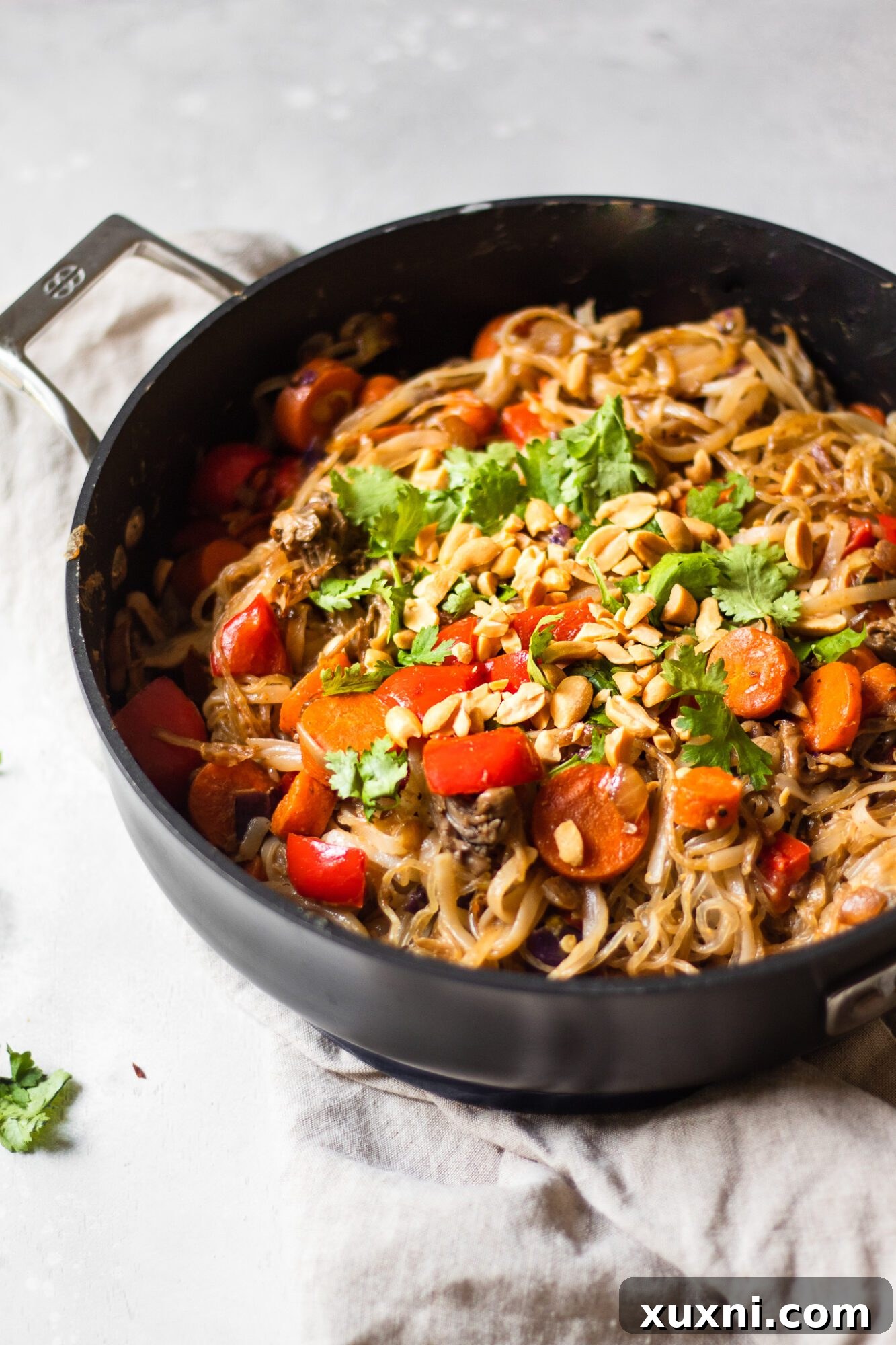
Next, introduce your prepared vegetables – the diced bell pepper, chopped red cabbage, and julienned carrots – into the skillet with the aromatics. Cook them, stirring occasionally, until they reach your desired tenderness, usually tender-crisp. You want them cooked but still with a slight bite to maintain their fresh texture. Once the vegetables are softened, reduce the heat to low and cover the skillet to keep them warm while you turn your attention to the noodles.
For the noodles, bring a large pot of lightly salted water to a rolling boil. Carefully add both the rice noodles and the pre-softened kelp noodles to the boiling water. Cook them according to the package instructions for the rice noodles, aiming for an al dente texture. Remember, the noodles will continue to cook slightly when tossed in the skillet with the vegetables and sauce, so a slight firmness is perfect at this stage. Once cooked, drain them thoroughly.
Now, it’s time to bring all the delicious components together! Add the strained noodles directly into the large skillet with the cooked vegetables. Increase the heat to medium and gently toss everything together, ensuring the noodles are well combined with the colorful veggies. This step allows the flavors to meld beautifully before the sauce is introduced.
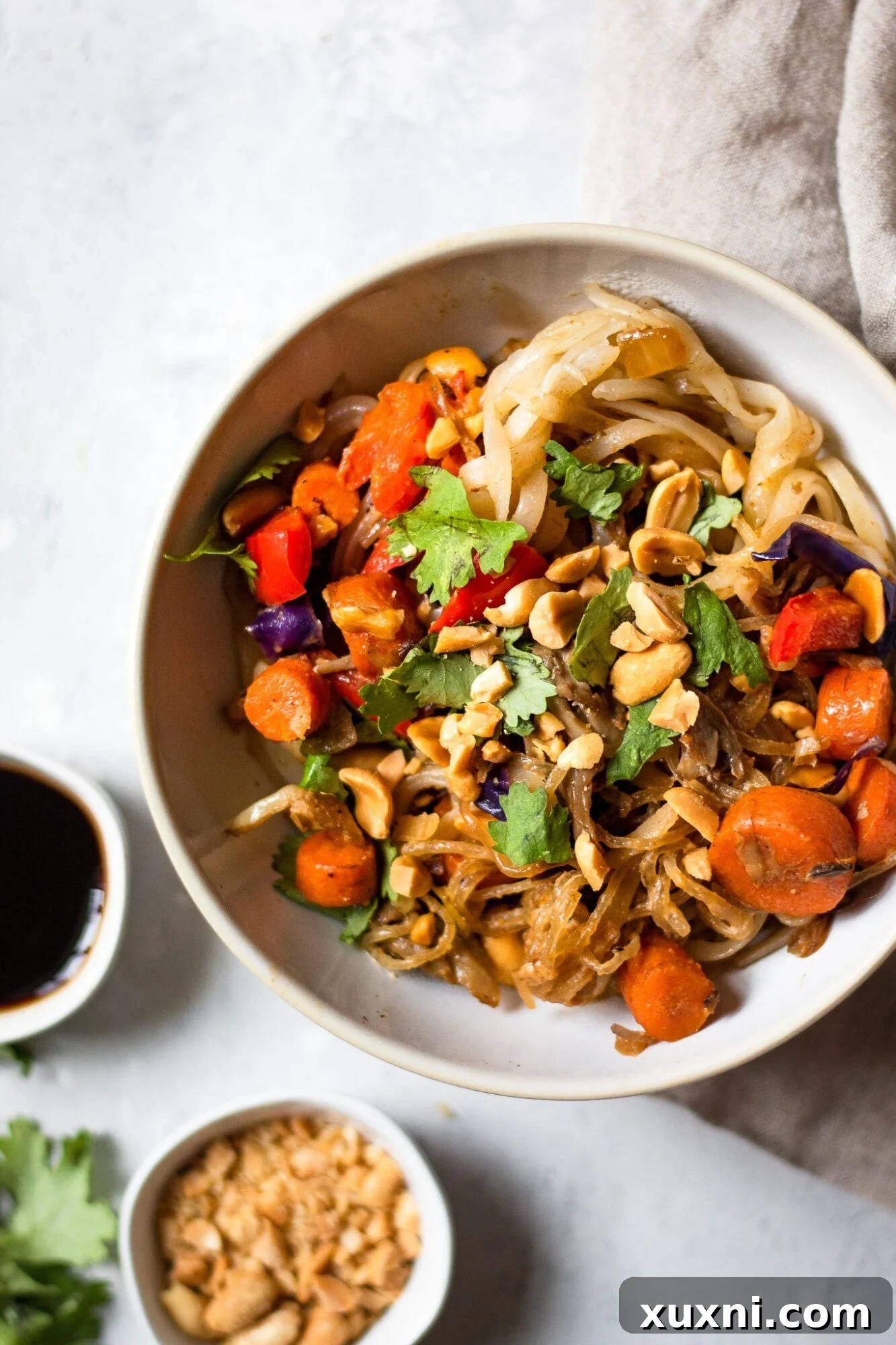
Finally, pour your freshly whisked gluten-free Pad Thai sauce over the noodles and vegetables in the skillet. Give everything a thorough stir, tossing continuously until every strand of noodle and every piece of vegetable is evenly coated in the rich, savory, and slightly tangy peanut sauce. The aroma alone will have your mouth watering!
Once everything is beautifully coated and heated through, remove the skillet from the heat. Serve your homemade vegan Pad Thai immediately in warm bowls or on plates. For the perfect finishing touch, generously garnish with a sprinkling of fresh cilantro and a handful of crunchy crushed peanuts. And there you have it – a restaurant-quality Pad Thai made effortlessly at home!
Oh, and don’t forget to mix in your favorite plant-based protein if you’ve chosen to add one! Crispy tofu cubes or seasoned tempeh bits are fantastic additions that elevate the meal’s nutritional value and satiety.
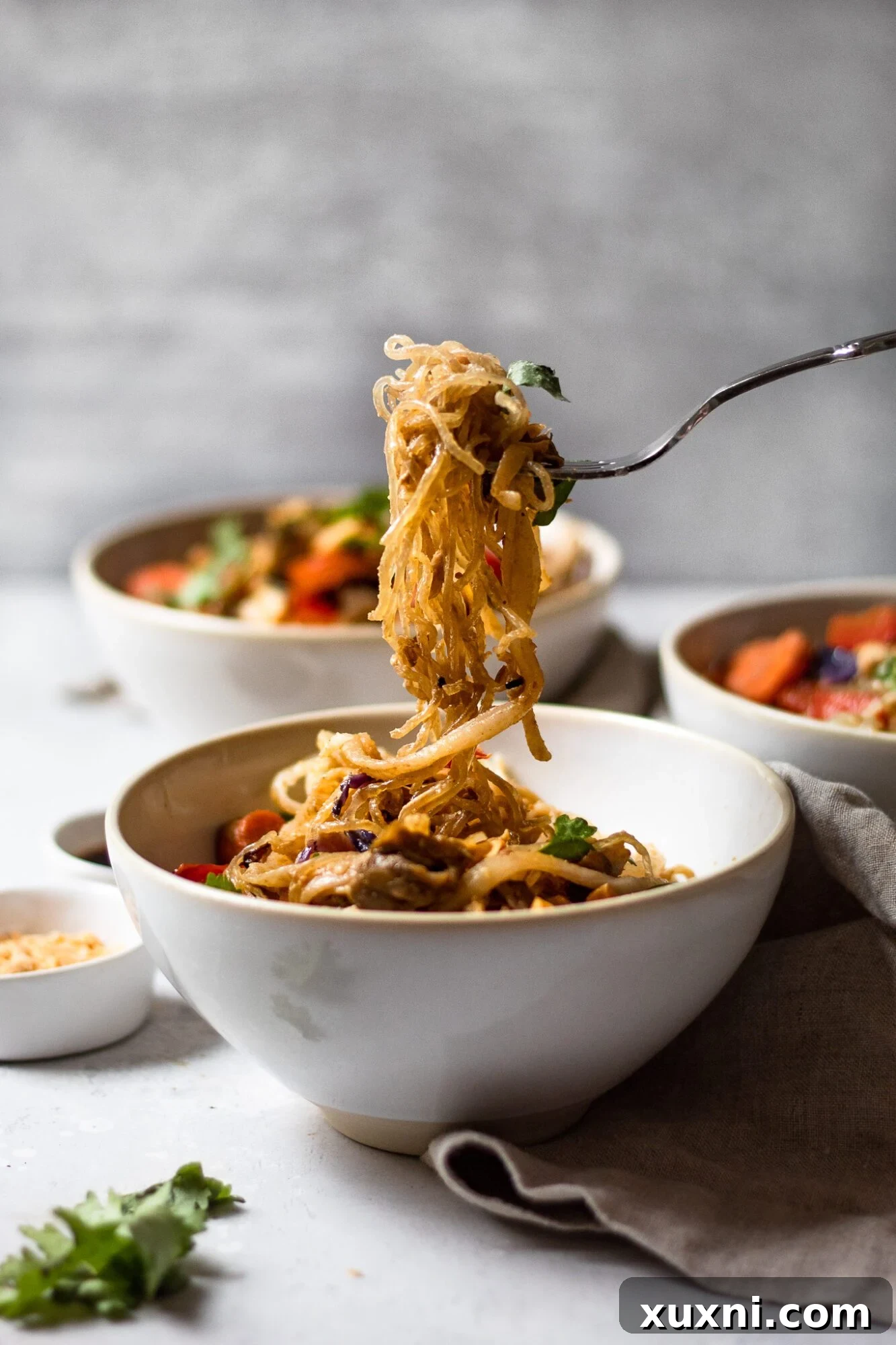
We sincerely hope you fall in love with this easy vegan Pad Thai recipe as much as we have! It truly is a lifesaver for busy weeknights or whenever that irresistible takeout craving strikes, but you prefer a healthier, homemade alternative. It’s comforting, satisfying, and packed with incredible flavors.
If you prepare this delicious Pad Thai, we’d absolutely love to hear about it! Please share your thoughts and, most importantly, tell us what plant-based protein you decided to incorporate in the comments section below. As always, we adore seeing your beautiful culinary creations on Instagram and Pinterest, so be sure to tag us @the_bananadiaries and use the hashtag #thebananadiaries so we can admire your work! Happy Noodling!
More Cozy and Healthy Comfort Food Recipes:
Paleo Vegan Sweet Potato Gnocchi
Homemade Vegan Pizza
Rustic Homemade Focaccia
Creamy Vegan Alfredo
Hearty Spaghetti Squash and Marinara
Fragrant Thai Coconut Curry
Want to save this recipe for later? Add it to your favorite recipe board on Pinterest!
Print Recipe
Easy Vegan Pad Thai (Gluten Free)
Rating: 5 from 1 review
- Author: thebananadiaries
- Prep Time: 5 minutes
- Cook Time: 25 minutes
- Total Time: 30 minutes
- Yield: 4 servings
- Category: Dinner
Ingredients
- 1 tbsp cooking oil
- 1 tsp white vinegar (for soaking kelp noodles)
- 1 package rice noodles (gluten-free)
- ½ package kelp noodles
- 1 large red bell pepper, diced
- 1 cup chopped red cabbage
- 4 large carrots, chopped or julienned
- 2 cloves garlic, minced
- ½ white onion, chopped
- 2 tbsp creamy peanut butter
- 2 tbsp Kikkoman Gluten-Free Soy Sauce (Tamari)
- 1 tsp rice vinegar (for the sauce)
- 4 tbsp fresh cilantro, chopped (for garnish)
- 4 tbsp crushed peanuts (for garnish)
Instructions
- Prepare Kelp Noodles: First, remove kelp noodles from the package and rinse thoroughly under warm water for several minutes. Place them in a bowl and submerge in water mixed with 1 tsp white vinegar. Let them soak while you prepare the vegetables; this softens their texture significantly.
- Sauté Aromatics: In a large skillet or wok, heat 1 tbsp cooking oil over medium heat. Add the minced garlic and chopped white onion. Sauté for 2-3 minutes until translucent and fragrant.
- Cook Vegetables: Add the diced bell pepper, chopped red cabbage, and chopped carrots to the skillet. Continue cooking for 5-7 minutes, stirring occasionally, until the vegetables are tender-crisp. Reduce heat to low and cover to keep warm.
- Boil Water for Noodles: In a large pot, bring 4 quarts of water to a rolling boil with a pinch of sea salt.
- Cook Noodles: Add the rice noodles and the softened kelp noodles to the boiling water. Cook according to the rice noodle package instructions until they are al dente. Drain well.
- Combine Noodles and Veggies: Add the strained noodles to the skillet with the cooked vegetables. Increase the heat to medium and gently toss everything together to combine.
- Prepare the Sauce: While the noodles and vegetables are combining, prepare the Pad Thai sauce. In a small bowl, whisk together the 2 tbsp creamy peanut butter, 2 tbsp Kikkoman Gluten-Free Soy Sauce, and 1 tsp rice vinegar until smooth and well combined.
- Coat the Dish: Pour the prepared sauce over the noodles and vegetables in the skillet. Toss vigorously until all ingredients are thoroughly and evenly coated with the delicious Pad Thai sauce.
- Serve and Garnish: Remove from heat and serve immediately in bowls or on plates. Garnish generously with fresh chopped cilantro and crushed peanuts. Enjoy your easy, healthy, and flavorful vegan Pad Thai!
Nutrition Information (per 1/4 of recipe)
- Serving Size: 1/4 of recipe
- Calories: 320
- Sugar: 11.7 g
- Sodium: 350.9 mg
- Fat: 13.1 g
- Carbohydrates: 45.7 g
- Protein: 6.9 g
- Cholesterol: 0 mg
Did you make this recipe?
Be sure to leave a rating and a review in the section below, and tag @the_bananadiaries on Instagram and hashtag it #thebananadiaries so we can see your delicious creations!