This post contains affiliate links. By clicking on a product link and making a purchase, I may receive a commission at no extra cost to you. Thank you for supporting The Banana Diaries!
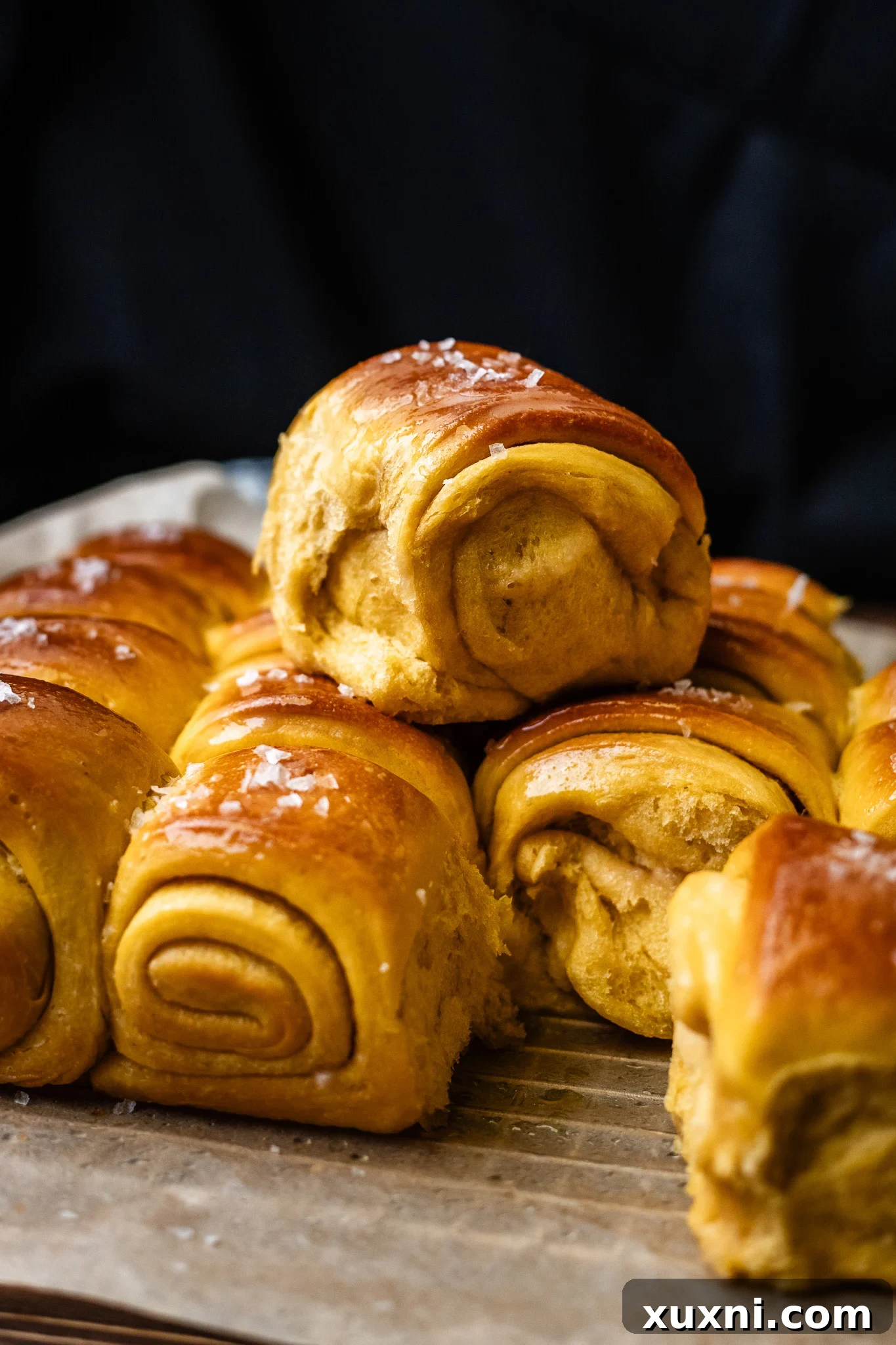
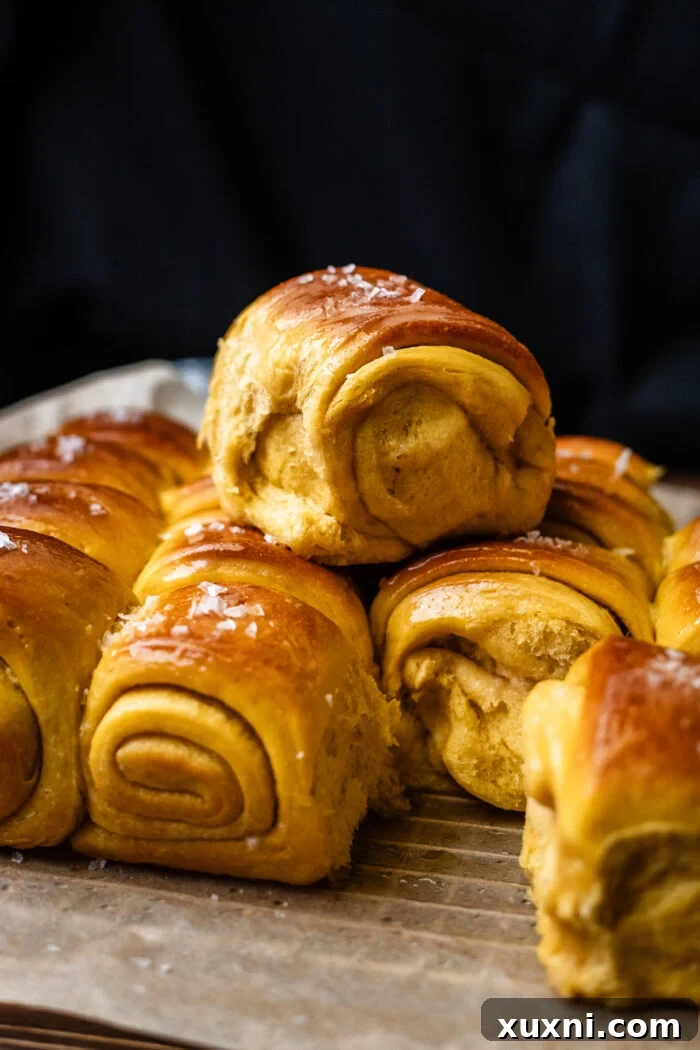
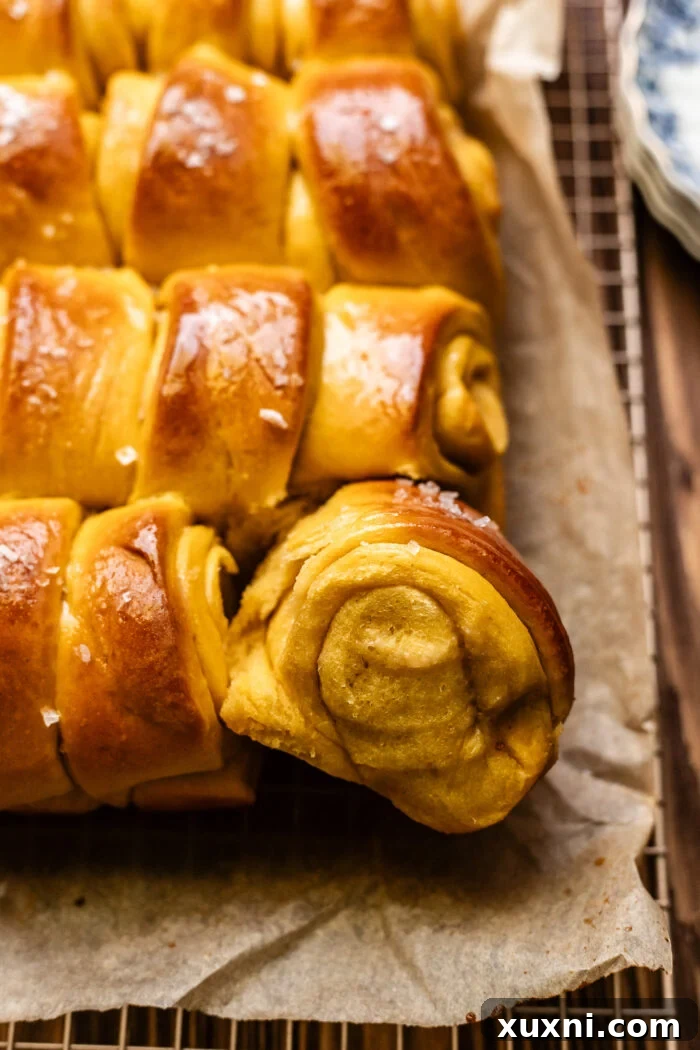
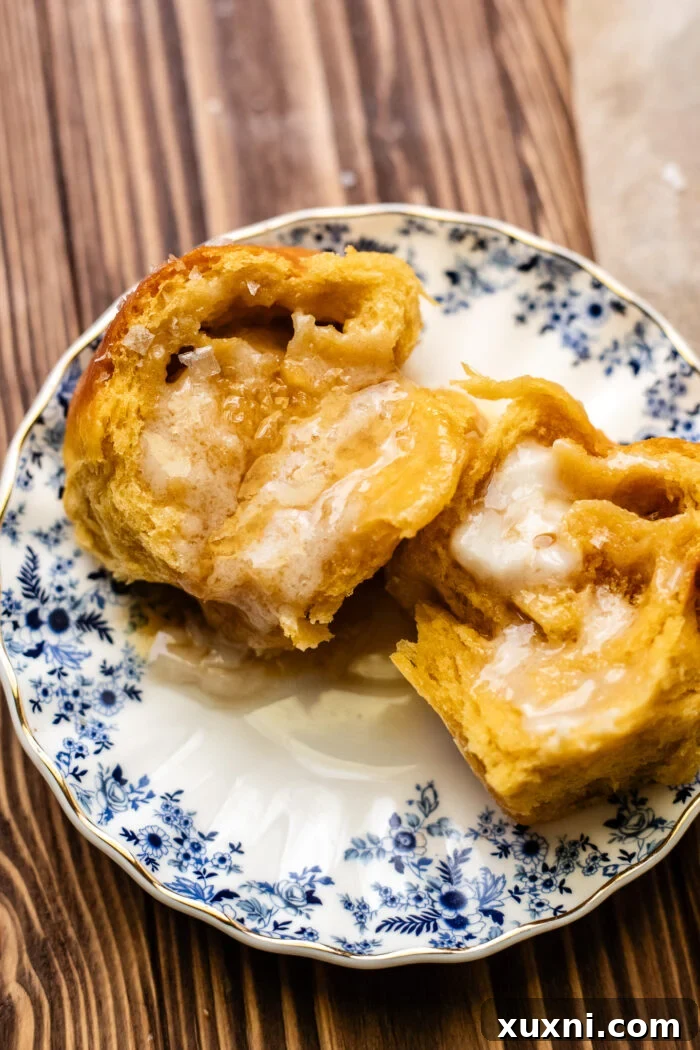
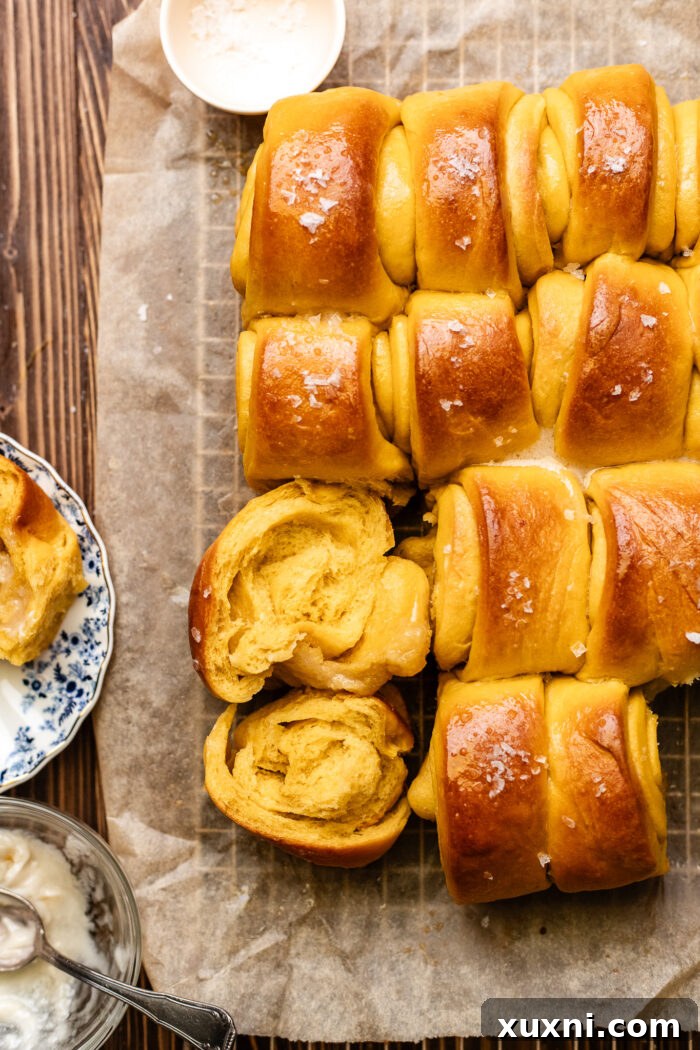
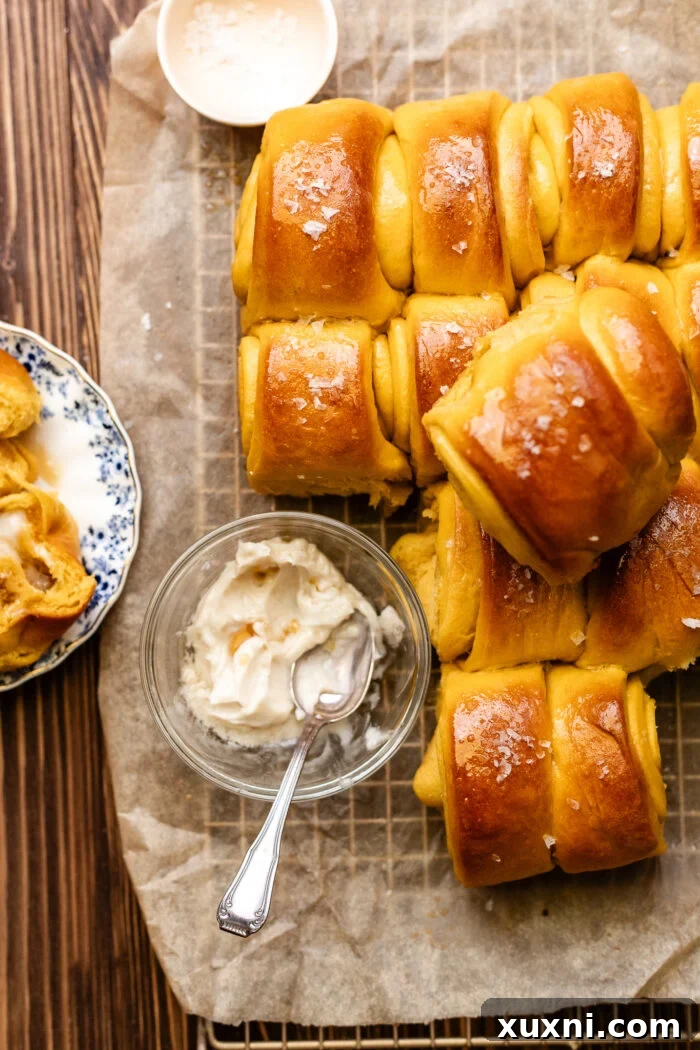
Prepare to fall in love with these incredibly soft, “buttery” sweet potato Parker House rolls. This recipe masterfully combines the hearty comfort of a potato dinner roll with the sophisticated flakiness of a classic Parker House roll. Each bite is infused with a luscious salted maple “butter,” creating an irresistible side dish that’s baked to golden perfection. What’s more, these pillowy sweet potato dinner rolls are surprisingly easy to make and entirely vegan, requiring no eggs or dairy. They are truly the ultimate addition to any holiday meal or special occasion.
Indulge in the Ultimate Comfort: Vegan Sweet Potato Parker House Rolls with Salted Maple Butter
The Parker House Roll Elevated: A Vegan Sweet Potato Masterpiece
Few bread creations compare to the timeless Parker House roll. Known for its distinct fold, tender crumb, and impossibly soft texture, it’s a staple on dinner tables and a symbol of comfort. Traditionally rich with butter and milk, these rolls offer a delicate, almost croissant-like experience. Our recipe takes this beloved classic and elevates it further by infusing it with the earthy sweetness of roasted sweet potatoes and a decadent salted maple vegan butter. This innovative twist not only makes the rolls entirely plant-based but also adds incredible depth of flavor and an even more tender, moist crumb, making them an unforgettable addition to your bread basket.
Why These Sweet Potato Parker House Rolls Will Be Your New Favorite
These aren’t just any dinner rolls; they’re a revelation. Here’s why you absolutely need to bring these to your table:
- Unparalleled Softness and Pillowy Texture: Prepare for rolls so tender they practically melt in your mouth. The addition of sweet potato puree not only imparts a beautiful color but also boosts moisture and starch content, contributing to an incredibly soft, cloud-like texture that stands out, even among traditional rolls. And yes, they are completely vegan! We achieve this exquisite texture without any funky swaps or hard-to-find ingredients; sweet potato puree naturally acts as a binder and moistening agent.
- Surprisingly Easy to Make: Don’t let their elegant appearance intimidate you. Whether you prefer kneading by hand for a therapeutic experience or letting a stand mixer do the heavy lifting, this recipe is designed for accessibility. If you’ve ever tackled homemade cinnamon rolls, you’ll find the process remarkably similar, making you a pro at these savory-sweet delights in no time.
- A Holiday Meal Game-Changer: Planning for gatherings can be stressful, but these rolls make entertaining a breeze. You have the convenient option to prepare the dough ahead of time and let it proof overnight in the refrigerator, significantly simplifying your holiday prep.
- Perfect for Freezing and Reheating: While it’s doubtful you’ll have many leftovers, this recipe is incredibly freezer-friendly. Bake a batch (or two!), freeze them, and then simply reheat in the oven whenever a craving strikes or unexpected guests arrive. This flexibility makes them an ideal staple for busy households.
Essential Ingredients for Your Sweet Potato Masterpiece
The beauty of these rolls lies in their simple, wholesome ingredients. Most are likely already in your pantry:
- Sweet Potato Puree: This is the star ingredient, providing natural sweetness, moisture, and acting as a fantastic vegan egg substitute. It gives the rolls their signature hue and contributes to their incredibly soft crumb.
- Bread Flour: For optimal structure and a chewy yet tender interior, bread flour is highly recommended over all-purpose flour. Its higher gluten/protein content creates a stronger dough capable of trapping more air, resulting in a lighter, more voluminous roll.
- Active Dry Yeast: The leavening agent that brings these rolls to life. Ensure your yeast is fresh and active for the best rise. Instant yeast can also be used, with slightly different activation steps (often mixed directly with dry ingredients).
- Maple Syrup: Used both in the dough for subtle sweetness and, most notably, in our irresistible salted maple butter. Choose pure maple syrup for the best flavor.
- High-Quality Vegan Butter: Essential for achieving that rich, “buttery” flavor and tender texture. The quality of your vegan butter truly makes a difference. Brands like Miyoko’s Kitchen offer exceptional flavor and texture, avoiding any processed aftertaste.
- Sea Salt: A touch of sea salt in the dough balances the sweetness and enhances all the other flavors. Flaky sea salt is also perfect for sprinkling on top of the finished rolls, adding a delightful crunch and visual appeal.
You’ll notice the absence of specific vegan egg replacers in this recipe. That’s because sweet potato puree naturally takes on the role of an egg, binding the ingredients, contributing to the bread’s lovely structure, and keeping the rolls wonderfully soft and moist without any extra fuss.
Canned vs. Fresh Sweet Potato: Which to Choose?
Both canned and fresh sweet potato purée work beautifully in this recipe, offering flexibility depending on your preference and what’s available. For the rolls pictured, canned sweet potato puree was used, offering a convenient shortcut without sacrificing quality. However, using fresh sweet potato, especially during the fall season when they are abundant, can add an even deeper, more vibrant flavor.
If opting for fresh sweet potatoes, ensure they are fully cooked and smoothly pureed. You can either bake them until tender (around 375°F/190°C for 45-60 minutes, or until easily pierced with a fork) or steam them. Once cooked, remove the skin and blend the flesh using a food processor or immersion blender until it forms a perfectly smooth puree. It’s crucial that the puree is free of lumps to integrate seamlessly into your dough.
A key tip for working with fresh sweet potato puree: allow it to cool to room temperature before adding it to your yeast mixture. Introducing hot puree to active yeast can inhibit or even kill the yeast, preventing your rolls from rising properly. Patience here will be rewarded with perfectly proofed, fluffy rolls!
Crafting Your Sweet Potato Parker House Rolls: A Visual Journey
For the full written instructions and exact ingredient measurements, please refer to the recipe card at the bottom of this post. You can also click the “Jump to Recipe” button at the top of the page. Below, we’ll provide a concise overview of the key steps, complete with visuals to guide you through the process for a better understanding.
Want to save this recipe for later? Add it to your favorite recipe board on Pinterest!

If you make this recipe, please be sure to leave a comment and a rating ⭐️⭐️⭐️⭐️⭐️ below. This helps others to find the recipes! As always, I absolutely love to see your beautiful creations on Instagram and Pinterest, so be sure to tag me there as well!
SOFT Sweet Potato Parker House Rolls with Salted Maple Butter – Dairy Free and Vegan!
5 Stars
4 Stars
3 Stars
2 Stars
1 Star
4.3 from 3 reviews
- Author: Britt Berlin
Prep Time: 15
Cook Time: 30
Total Time: 45 minutes
Yield: 16 1x
Category: Bread
Method: Baking
Cuisine: American
Diet: Vegan
Description
These ridiculously soft and “buttery” sweet potato Parker House rolls are the perfect fusion of a comforting potato dinner roll and a fancy, flaky croissant-like Parker House roll. Enriched with a salted maple “butter,” these incredibly pillowy sweet potato rolls bake to a beautiful golden perfection and are surprisingly easy to make. Best of all, they’re completely vegan, requiring no eggs or dairy! They are truly the ultimate side dish for holiday feasts and everyday meals alike.
Ingredients
Scale
Salted maple butter:
- 1/2 cup (113 g) salted vegan butter, room temperature
- 2 tbsp maple syrup
- 1/4 tsp sea salt
- Flaky sea salt, for topping when noted
Sweet potato Parker house rolls:
- 3/4 cup (180 mL) dairy-free milk, warmed to 110F
- 1 packet (7 g) active dry yeast
- 1 tbsp sugar
- 1 cup (240 g) sweet potato puree (from canned or freshly baked sweet potato)
- 1/4 cup (60 mL) maple syrup
- 1 tsp sea salt
- 5 cups (625 g) bread flour
- 7 tbsp salted vegan butter, room temperature
Vegan “egg” wash:
- 1 tbsp dairy-free milk
- 1 tbsp maple syrup
Instructions
- Prep for Success: Before you begin, carefully read all instructions and precisely measure and weigh all your ingredients. This ensures a smooth baking process. Lightly grease a large bowl with cooking oil or coconut oil, which will be used for the dough’s initial rise, and set it aside. Gently warm your dairy-free milk to exactly 110°F (43°C), using a food thermometer for accuracy. This temperature is crucial for activating the yeast without harming it.
- Activate the Yeast: Once your dairy-free milk reaches the ideal temperature, pour it into a mixing bowl. Add the active dry yeast and sugar, stirring gently with a wooden spoon until combined. Cover the bowl and place it in a warm environment (ideally 75-80°F or 24-27°C) to activate for 10-12 minutes. The activation time can vary based on ambient temperature; you’ll know it’s ready when the mixture smells distinctly yeasty and a frothy foam forms on the surface. If no foam appears, your yeast may not be active, and you’ll need to start this step over with fresh yeast.
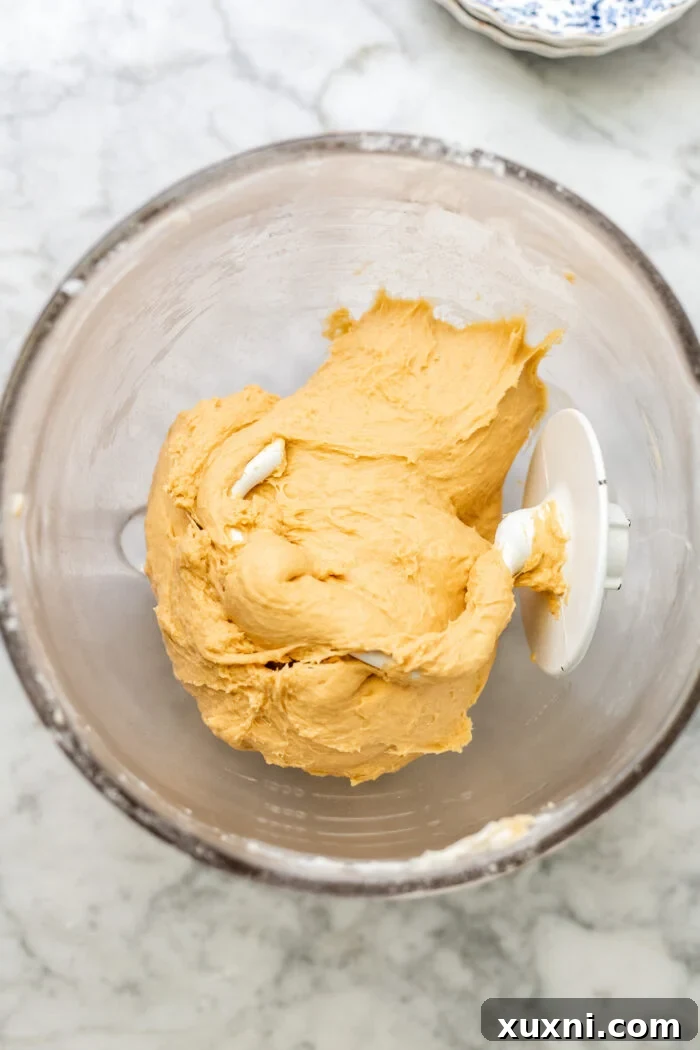
- Form the Dough: Transfer the activated yeast mixture to the bowl of a stand mixer fitted with a dough hook attachment, or a large mixing bowl if kneading by hand. Add the sweet potato puree, maple syrup, and sea salt. Start mixing on medium-low speed (or stir with a large spoon by hand) until these wet ingredients are just combined. Gradually add the bread flour, mixing on medium speed until the flour is mostly incorporated. Finally, add the room-temperature vegan butter. Continue mixing and kneading until the butter is fully integrated, and you achieve a smooth, elastic dough that is slightly tacky but not overly sticky. You may add a tiny bit more flour if necessary, but generally, it shouldn’t be needed.
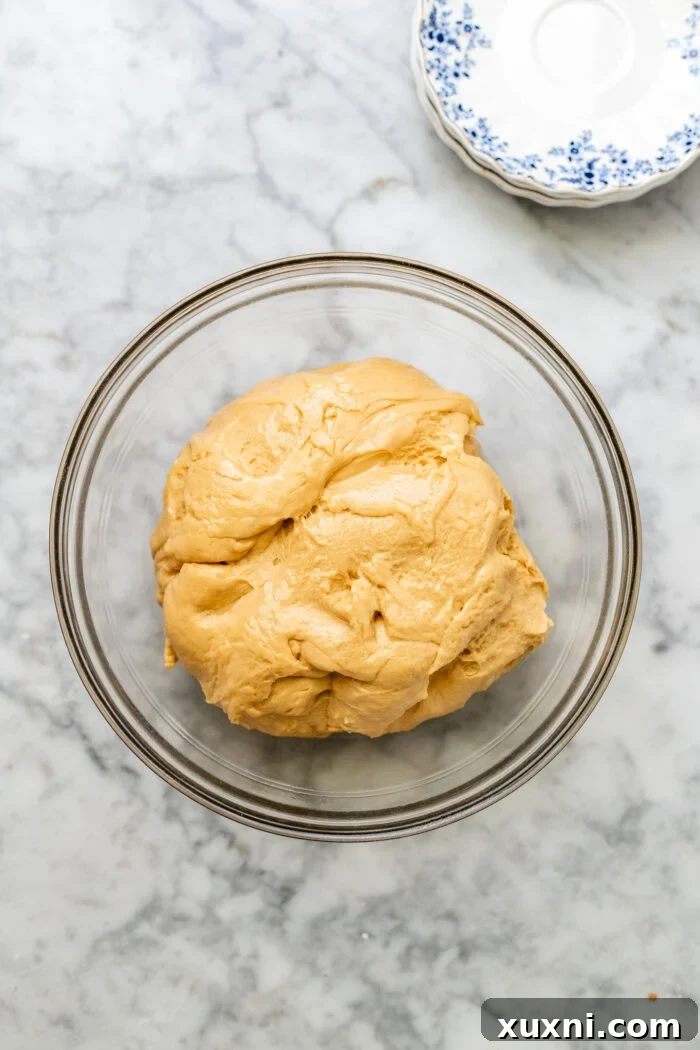
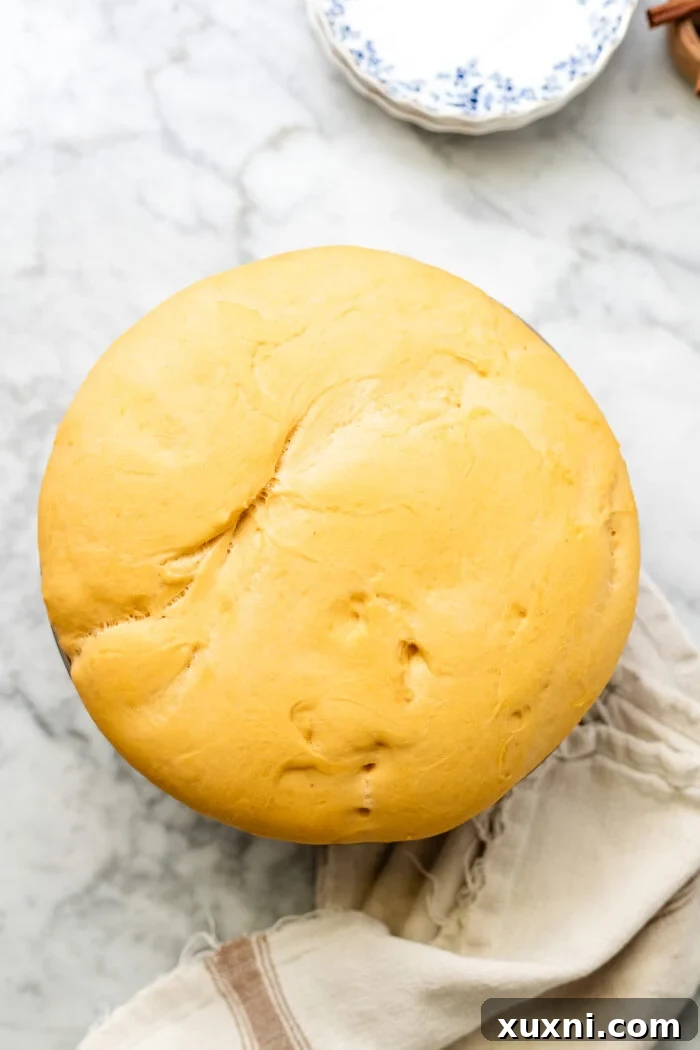
- First Proofing: Shape the dough into a ball and place it in the greased bowl prepared earlier. Cover the bowl with a clean, thin dish towel. Find a warm spot that’s at least 85°F (29°C) for the dough to rise. If your oven has a “proof” setting, use it. Alternatively, you can preheat your oven to its lowest setting (around 100°F/38°C), then turn it off and leave the oven light on, creating a warm microclimate. Proof the dough until it has doubled in size, which typically takes about one hour. In colder kitchens, this process may take longer.
- Prepare for Shaping: While your dough is undergoing its first rise, prepare your baking dish. Grease a medium casserole dish (approximately 10×13 inches) thoroughly with cooking oil or vegan butter. For easier removal after baking, you may also line it with parchment paper. Next, prepare your delicious salted maple butter by whisking together the room-temperature vegan butter, maple syrup, and sea salt in a small bowl. Set this aside, as it will be generously spread on the dough.
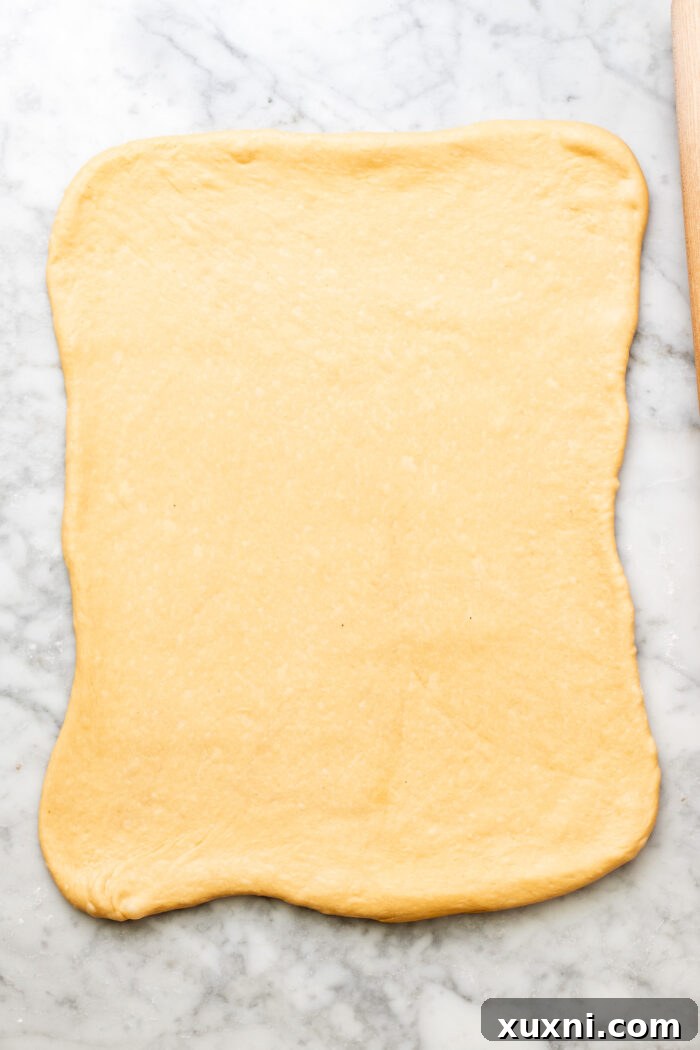
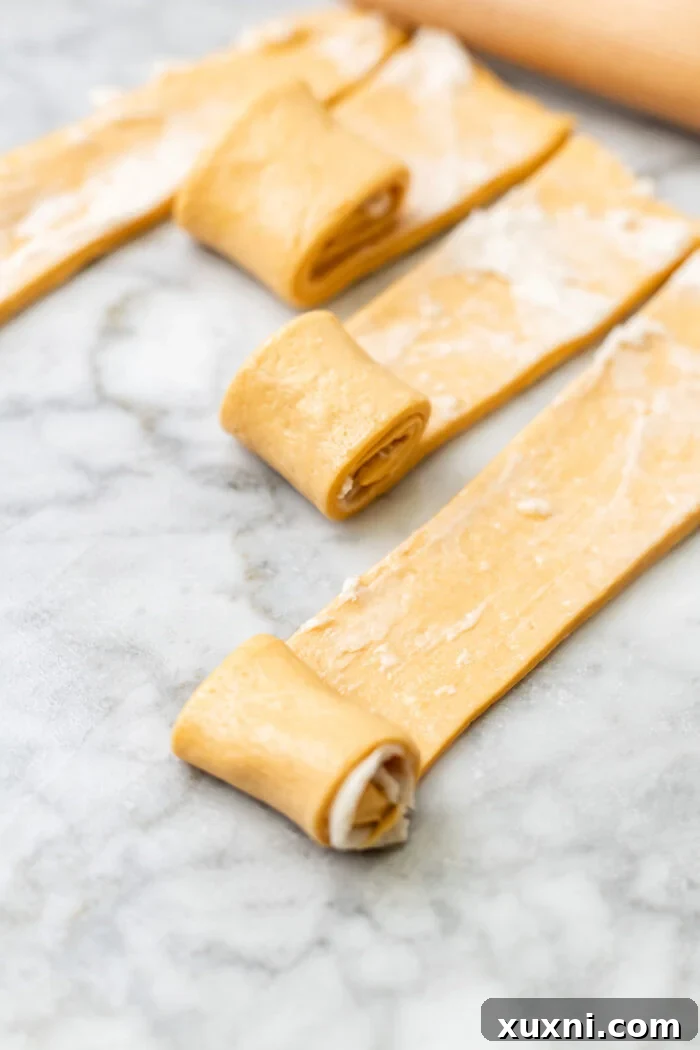
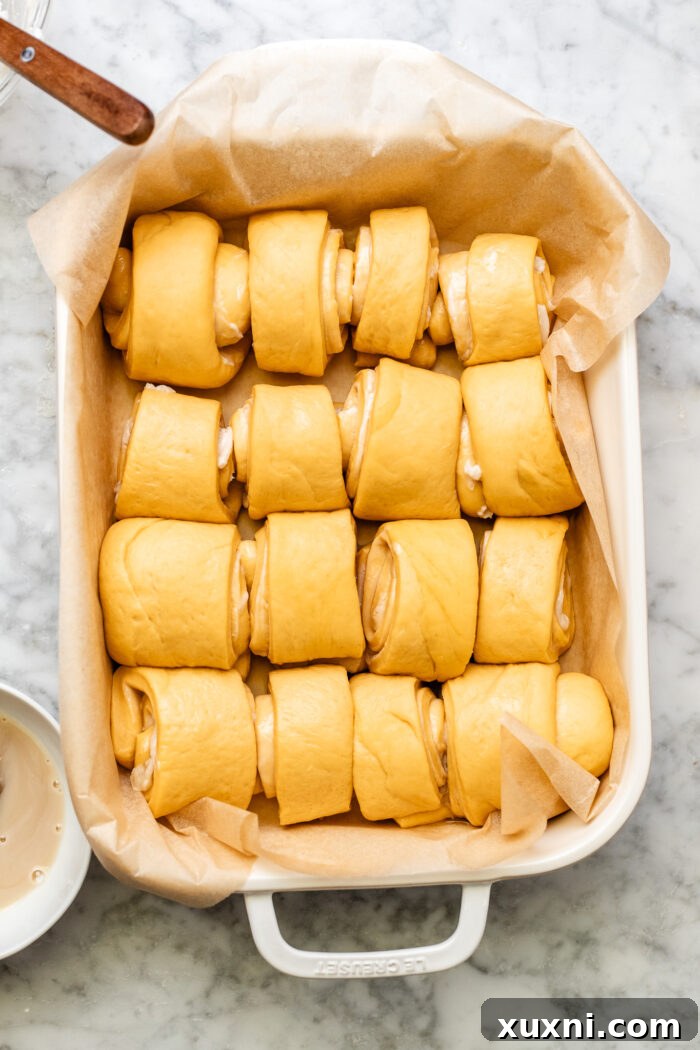
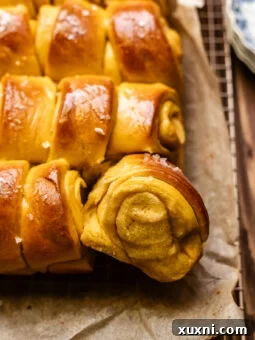
- Shape the Parker House Rolls: Once the dough has proudly doubled in size, gently punch it down to release the air. Carefully transfer the dough from the bowl onto a clean, lightly floured surface. Using a pizza cutter or a large, sharp kitchen knife, divide the dough exactly in half. Take one half and roll it out into a rectangle measuring approximately 16×12 inches. Evenly spread about 1/4 cup of your prepared salted maple butter over the entire surface of this dough rectangle. Then, along one of the 16-inch sides, lightly mark the dough at 2-inch intervals. Use your pizza slicer or knife to cut the rectangle into eight 2×12-inch strips. Carefully roll each strip tightly, like a cinnamon roll, and place it seam-side down into your prepared baking tray. Repeat this entire process for the second half of the dough. You should yield a total of 16 beautifully shaped rolls.
- Second Rise and Preheat: Cover the shaped Parker House rolls in the baking dish with a thin, clean dish towel once more. Place them in a warm area (near your preheating oven works well) for their second rise, allowing them to nearly double in size again, which usually takes about 30 minutes. During this second rise, preheat your oven to 350°F (175°C).
- Prepare the Vegan “Egg” Wash: As the rolls near the end of their second rise and the oven finishes preheating, quickly prepare your vegan “egg” wash. In a small bowl, whisk together the dairy-free milk and maple syrup. Using a pastry brush, gently and lightly brush this mixture over the tops of all the rolls. This wash will contribute to a beautiful golden-brown crust and a subtle sweetness.
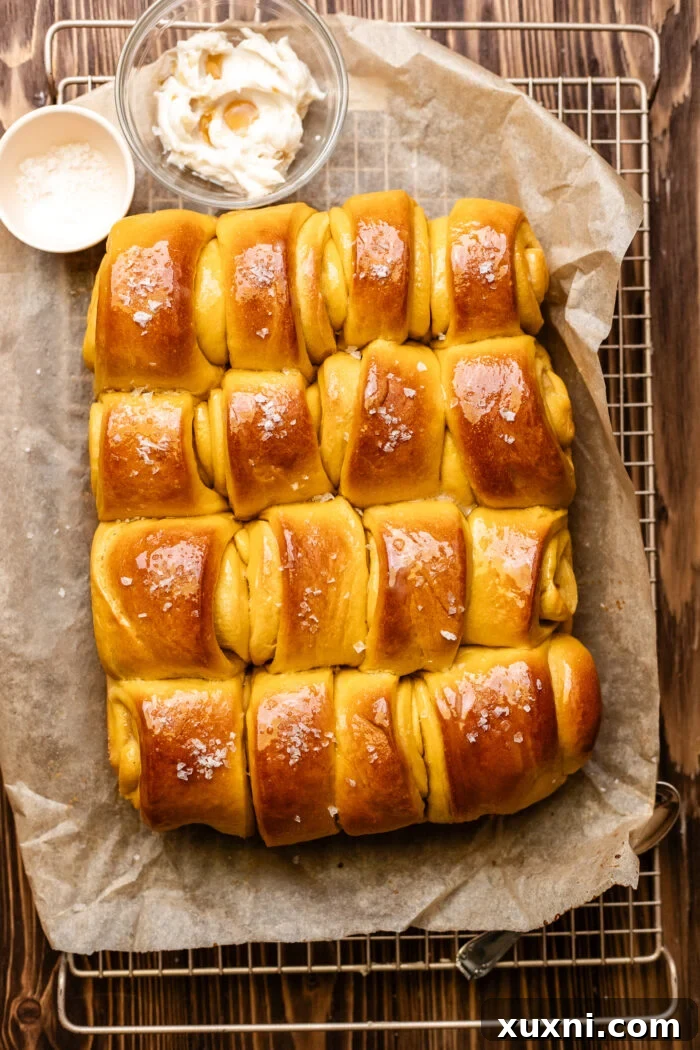
- Bake to Golden Perfection: Carefully place the baking dish containing your risen dinner rolls into the preheated oven. Bake for 28-33 minutes, or until the tops of the rolls are gloriously golden brown and cooked through. Keep an eye on them towards the end of the baking time to prevent over-browning. Once baked, remove the dinner rolls from the oven.
- Cool and Serve: Allow the rolls to cool slightly in the pan before serving. While still warm, you can brush them with either extra melted plain vegan butter or an additional batch of the salted maple butter you prepared. For an extra touch of flavor and texture, sprinkle the tops with flaky sea salt. Serve warm and enjoy!
- Storage: To store any leftover rolls, place them in an airtight container or a sealed plastic bag. They will remain fresh at room temperature for 1-2 days. For extended freshness, store them in the refrigerator for 4-5 days, or freeze them for up to 3 months. To reheat frozen rolls, simply warm them in a preheated oven until soft and fragrant.
Equipment
baking dish
Buy Now →
pizza cutter
Buy Now →
rolling pin
Buy Now →
Notes
Step-by-Step Visuals: For a clearer understanding of the shaping process, refer to the step-by-step images provided within the blog post above.
Flour Choice: While bread flour is highly recommended for its higher gluten content, which provides superior structure and a chewier texture, all-purpose flour can be used as a substitute. Be aware that using all-purpose flour may result in a slightly less risen and less structured roll due to its lower protein content.
Sweet Potato Preparation: You have the flexibility to use either canned sweet potato puree for convenience or fresh sweet potato puree. If using fresh, ensure it’s either baked or steamed until very tender. After cooking, remove the skin and blend it thoroughly into a completely smooth puree to ensure it integrates seamlessly into the dough for a uniform, soft texture. Lumpy puree can affect the dough’s consistency.