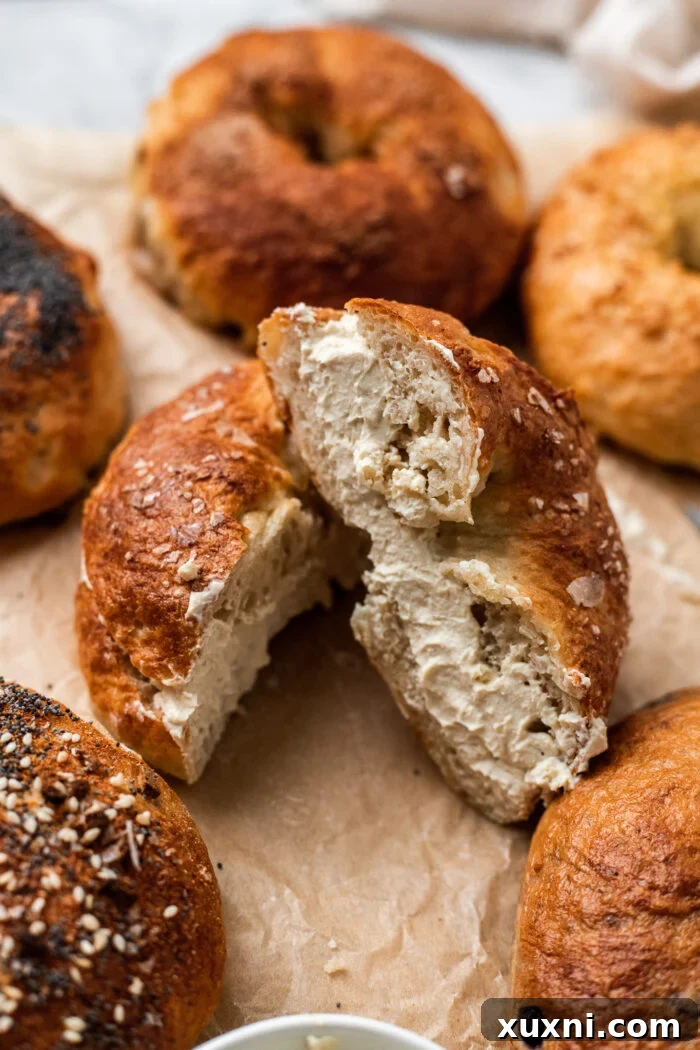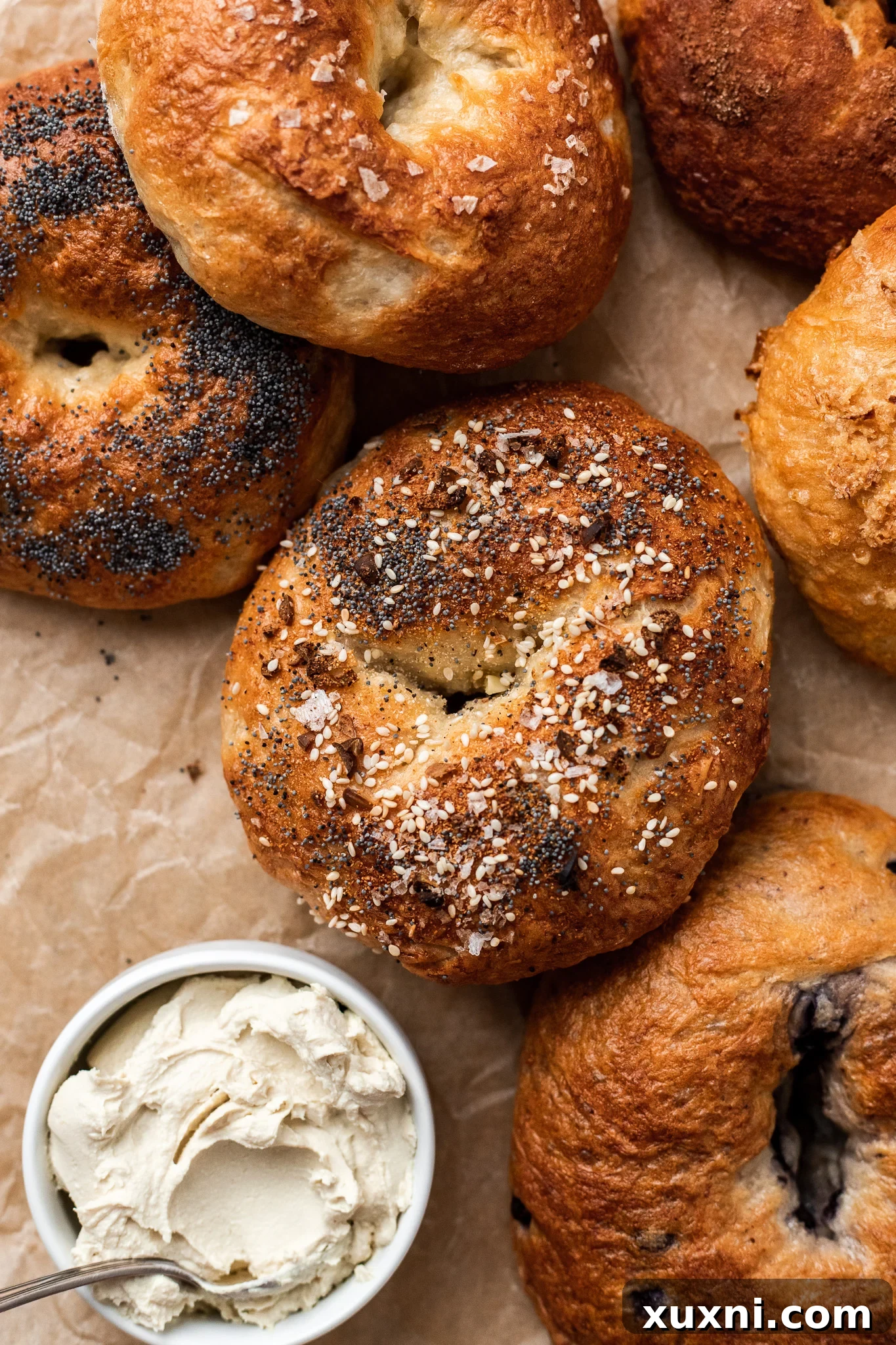
Unlock the secrets to baking the most irresistibly chewy, authentic homemade vegan bagels right in your kitchen! This comprehensive guide will show you how to craft easy vegan bagels that rival the legendary New York style, delivering that perfect golden crust, dense interior, and satisfying chewiness without ever needing to leave home.
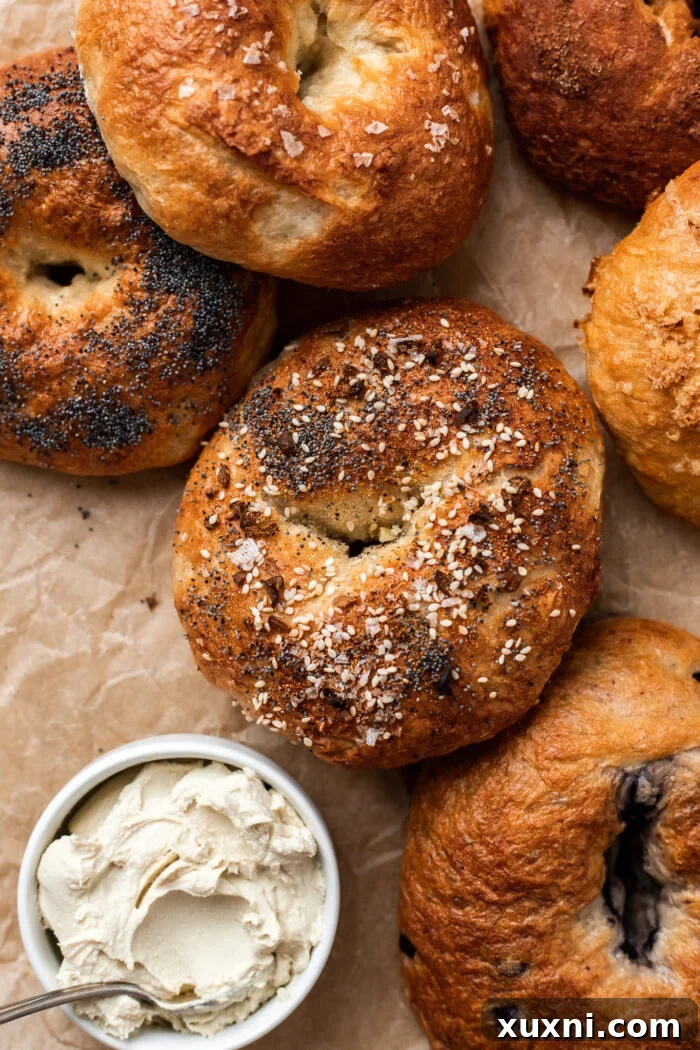
Mastering Chewy Homemade Vegan Bagels: A New York-Style Experience At Home
Having grown up immersing myself in the vibrant food scene of New York City and later calling it home, I’ve had my fair share of iconic New York bagels. I can confidently say that these homemade vegan bagels don’t just mimic the classic taste and texture; they elevate it! Imagine biting into a bagel that’s perfectly chewy, wonderfully dense, yet delightfully soft on the inside – that’s precisely what this easy vegan bagel recipe delivers. It’s a foundational recipe so exceptional, I even adapted it for my beloved cinnamon raisin bagels, proving its versatility.
Forget about settling for mediocre, store-bought bagels. Once you experience the unparalleled freshness and flavor of these homemade delights, you’ll never look back. Prepare to transform your breakfast or brunch with a bagel spread generously with rich vegan cream cheese or luxurious vegan mascarpone. This recipe isn’t just about making bagels; it’s about creating an experience that tastes better than anything you’ve had before.
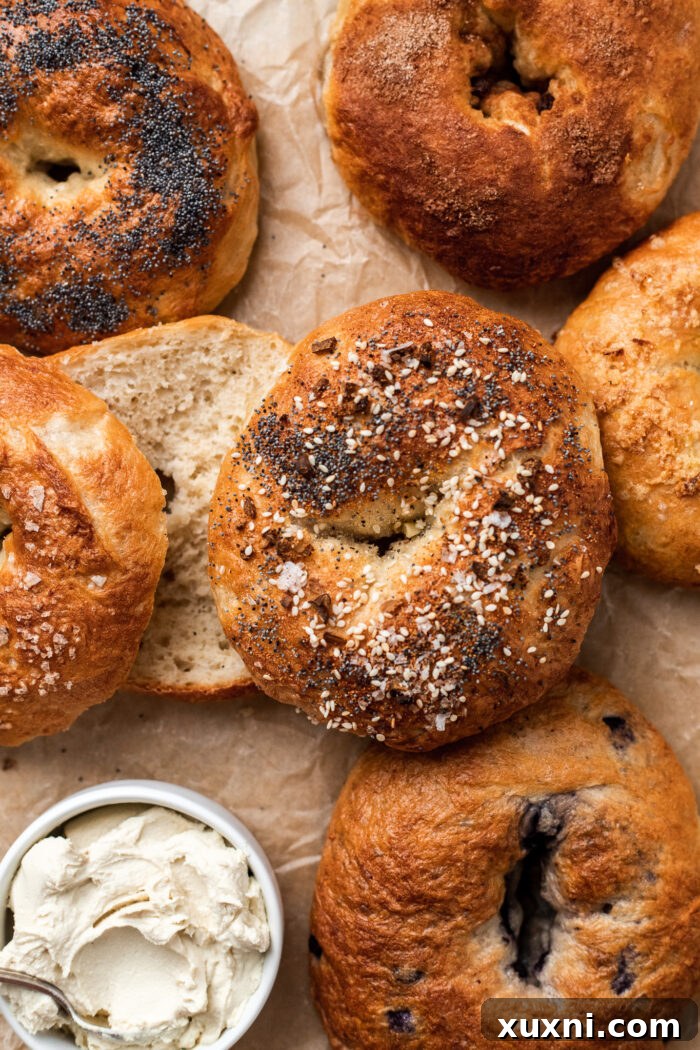
Why Bake Your Own Vegan Bagels? The Benefits You Can’t Ignore
Beyond the sheer delight of a freshly baked bagel, there are numerous compelling reasons to embark on this culinary adventure:
- Unmatched Freshness and Flavor: Store-bought bagels simply cannot compare to the aroma and taste of a bagel pulled straight from your oven. The nuanced flavors of the yeast and the satisfying chew are at their peak.
- Health-Conscious Ingredients: This recipe creates bagels that are naturally oil-free, egg-free, dairy-free, and can easily be nut-free if you avoid certain toppings. You control exactly what goes into your food, free from preservatives and artificial additives often found in commercial products.
- Cost-Effective: Making bagels from scratch is significantly more economical than purchasing them regularly, especially if you have a family of bagel lovers.
- Customization at Your Fingertips: From unique toppings to incorporating different flavors into the dough itself, homemade bagels offer endless possibilities for personalization.
- Therapeutic Baking Experience: The process of kneading dough, watching it rise, and shaping it into perfect circles can be incredibly calming and rewarding. It’s a fantastic way to destress and create something delicious.
Key Ingredients for Perfect Vegan Bagels: Understanding Their Role
These homemade vegan bagels boast an incredibly simple ingredient list, making them accessible for any home baker. Each component plays a vital role in achieving that sought-after chewy, dense, and soft New York-style texture. This recipe is naturally oil-free, egg-free, dairy-free, and can be easily made nut-free.
- Active Dry Yeast: Essential for the lift and classic bread-like flavor of your bagels. Active dry yeast requires activation, which means letting it bloom in warm water with a bit of sugar. You can also use instant yeast, which often allows for a faster proofing process as it doesn’t strictly require blooming first.
- Warm Water (110°F): The precise temperature of the water is crucial for properly activating the yeast. Water that is too cold won’t wake up the yeast, while water that is too hot will kill it. Aim for a temperature that feels like a warm bath on your wrist, or use a thermometer for accuracy.
- Maple Syrup: This acts as the food source for the yeast, encouraging it to activate and multiply, leading to a good rise. It also adds a subtle sweetness and contributes to the golden-brown crust. Brown sugar or coconut sugar are excellent alternatives, offering similar flavor profiles and functionalities.
- Flour (All-Purpose or Bread Flour):
- Bread Flour: Highly recommended for bagels due to its higher protein content (typically 12-14%). This higher protein level develops more gluten, which is essential for the characteristic chewy texture and structural integrity of a perfect bagel.
- All-Purpose Flour: While bread flour is ideal, all-purpose flour (around 10-12% protein) can still yield very good results. Your bagels will still be chewy and dense, though perhaps slightly less robust than those made with bread flour.
- Arrowroot Powder (or Cornstarch): This is a secret ingredient for achieving that quintessential chewy texture. It helps to bind the dough and contributes to a denser crumb, mimicking the effects of gluten development.
- Sea Salt: Balances the sweetness, enhances the overall flavor of the bagels, and also helps to control yeast activity.
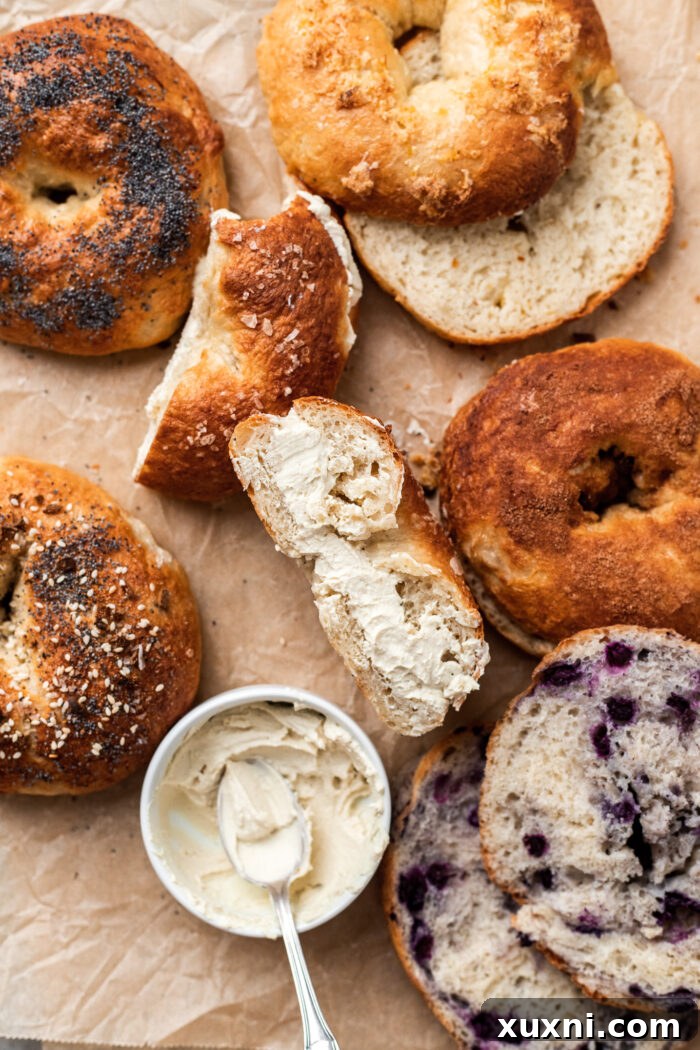
Your Step-by-Step Guide to Baking Perfect Homemade Vegan Bagels
Crafting these oil-free vegan bagels is a rewarding process that’s far simpler than you might imagine. We’ll break it down into three manageable stages: preparing the dough, shaping and boiling for that signature chew, and finally, baking to golden perfection.
Quick Note: While I’m detailing the process here, you’ll find the complete, precise measurements and full instructions conveniently listed in the recipe card at the bottom of this post.
Step 1: Crafting the Perfect Bagel Dough
The initial stage of making vegan bagel dough mirrors the process for many beloved bread recipes, such as my vegan focaccia or vegan cinnamon rolls. It all begins with activating your yeast.
To start, gently combine your warm water (remember that 110°F mark!), maple syrup, and a small spoonful of flour in a medium bowl. Sprinkle the active dry yeast over this mixture. Give it a gentle stir, then cover the bowl and set it aside in a warm spot for about 10-15 minutes. This allows the yeast to “bloom” and become active. You’ll know it’s ready when a frothy layer forms on the surface and you detect a distinctly yeasty aroma. If this doesn’t happen, your yeast might be old or the water temperature was off, and it’s best to start over at this early stage.
Once your yeast is bubbling, it’s time to bring the dough together. In a large mixing bowl (or the bowl of a stand mixer fitted with a dough hook), add the activated yeast mixture to the dry ingredients (flour, arrowroot powder, and salt). Begin mixing on low speed, gradually increasing to medium. If using a stand mixer, knead for 2-3 minutes. If you’re opting for the hands-on approach, you might need a little extra flour to prevent sticking, and be prepared for a slightly longer kneading session. Regardless of your method, finish by hand-kneading the dough on a lightly floured surface for about 5-7 minutes. The goal is a smooth, elastic, and uniform dough ball that springs back slightly when poked.
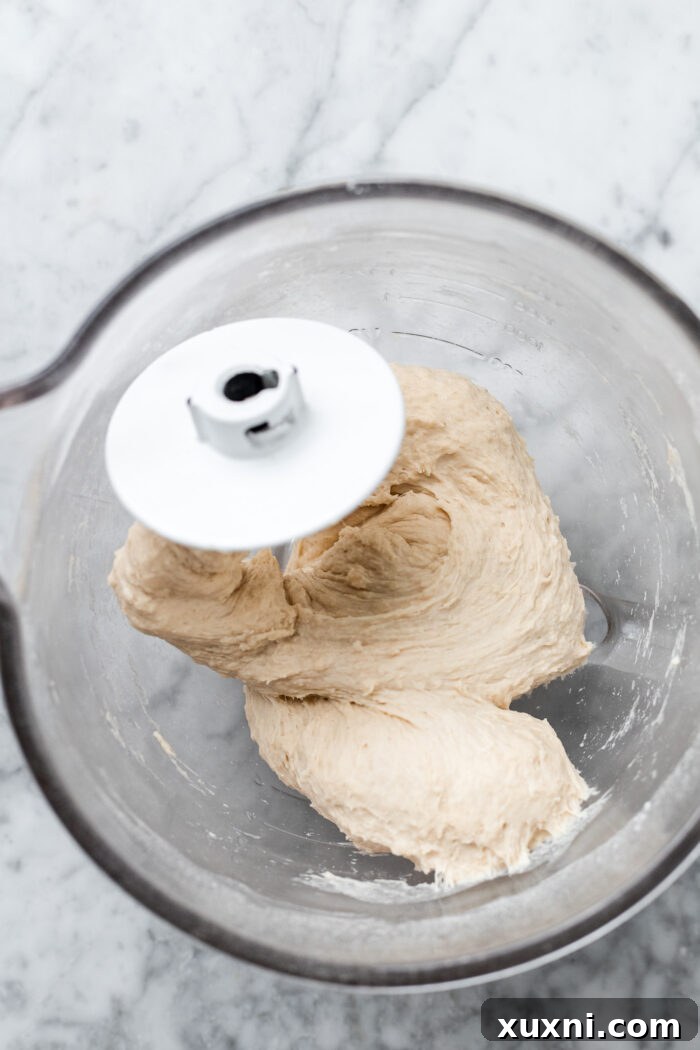
Now, transfer your beautifully kneaded dough to a clean, lightly oiled large bowl. Cover it tightly with a clean kitchen towel or plastic wrap, and allow it to proof in a warm environment (ideally around 85°F) until it has visibly doubled in size. This usually takes about 45-60 minutes, depending on the warmth of your kitchen. Once it has achieved its fluffy, doubled volume, you’re ready to move on to the fun part: shaping!
Step 2: Shaping and Boiling for the Ultimate Chewy Texture
When it comes to shaping bagels, some methods involve rolling the dough into a long rope and pinching the ends together. While effective, there’s a much simpler and more aesthetically pleasing technique that ensures your bagels have that perfect, classic look and feel.
First, gently punch down your proofed dough to release the air. Transfer it to a lightly floured surface. Using a bench scraper or a sharp knife, divide the dough into 8 equal sections. Aim for consistency to ensure even baking. Roll each section into a smooth, tight ball. Now for the signature bagel hole: instead of stretching, simply press your thumb firmly into the center of each dough ball. Gently work your fingers around the hole, stretching the dough outward to create an opening that is less than an inch wide. Remember, less is truly more here – a smaller initial hole will expand during boiling and baking, resulting in a perfectly shaped bagel. A hole that’s too large initially can lead to flimsy bagels.
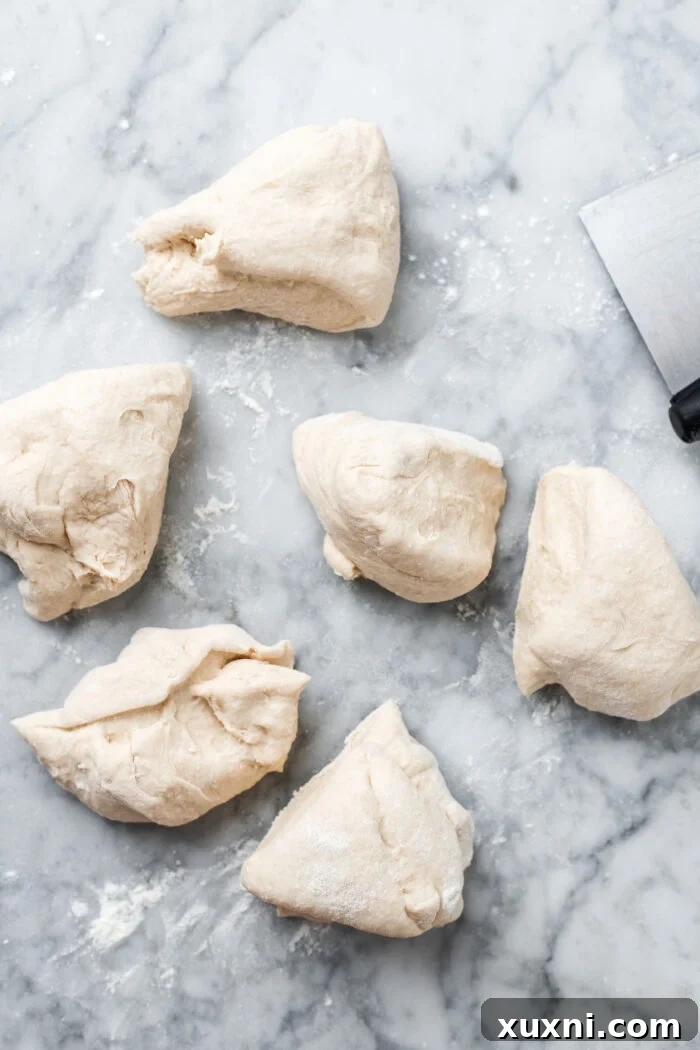
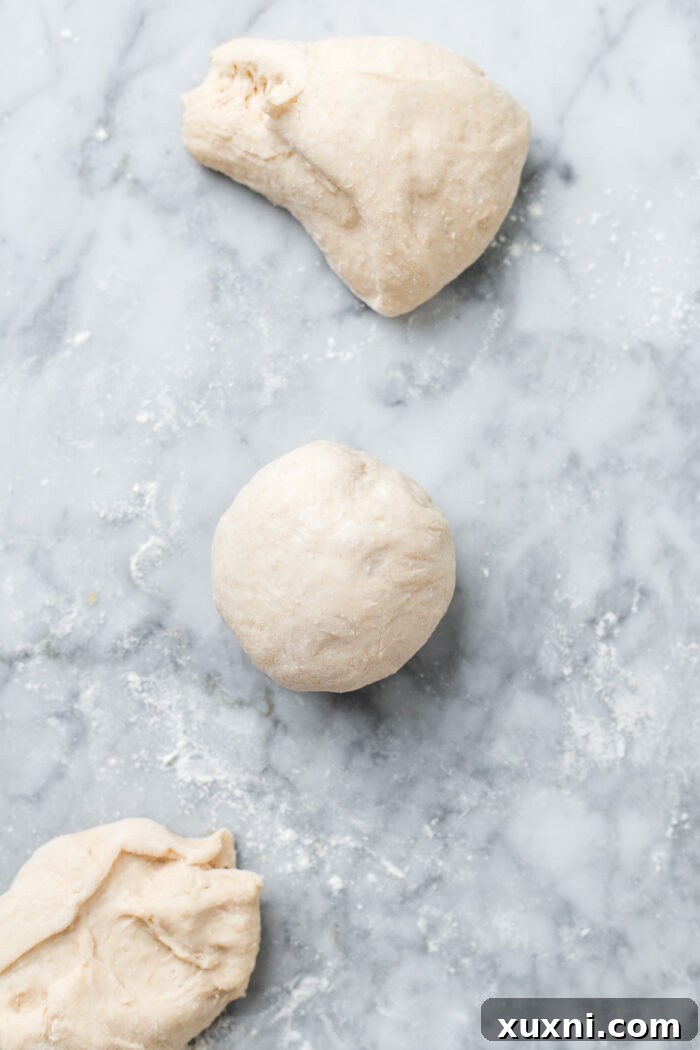
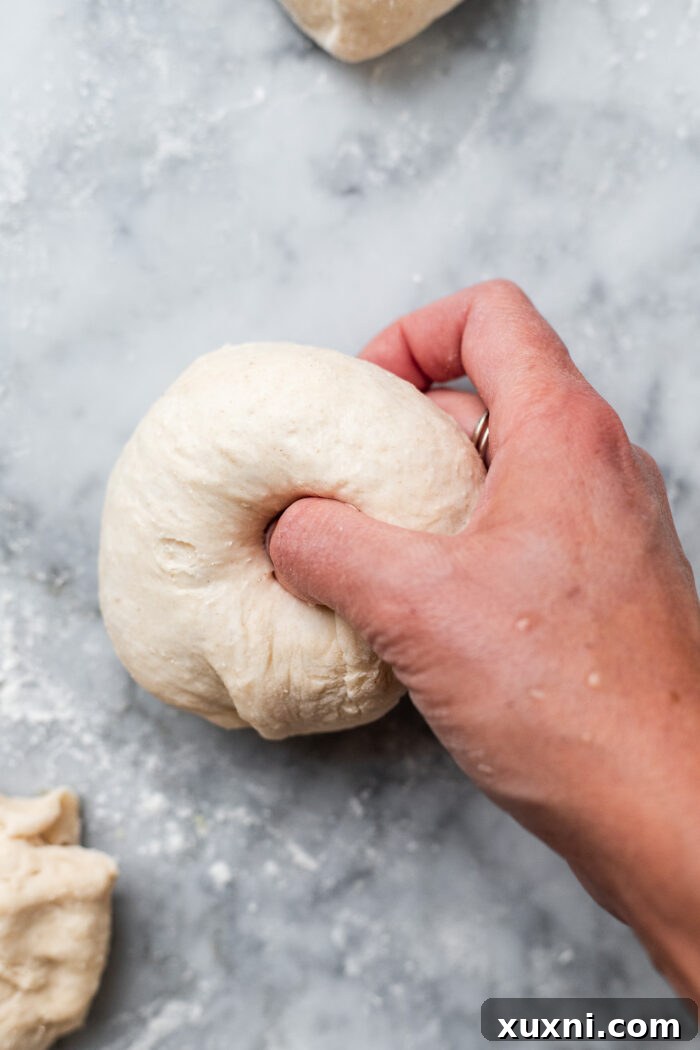
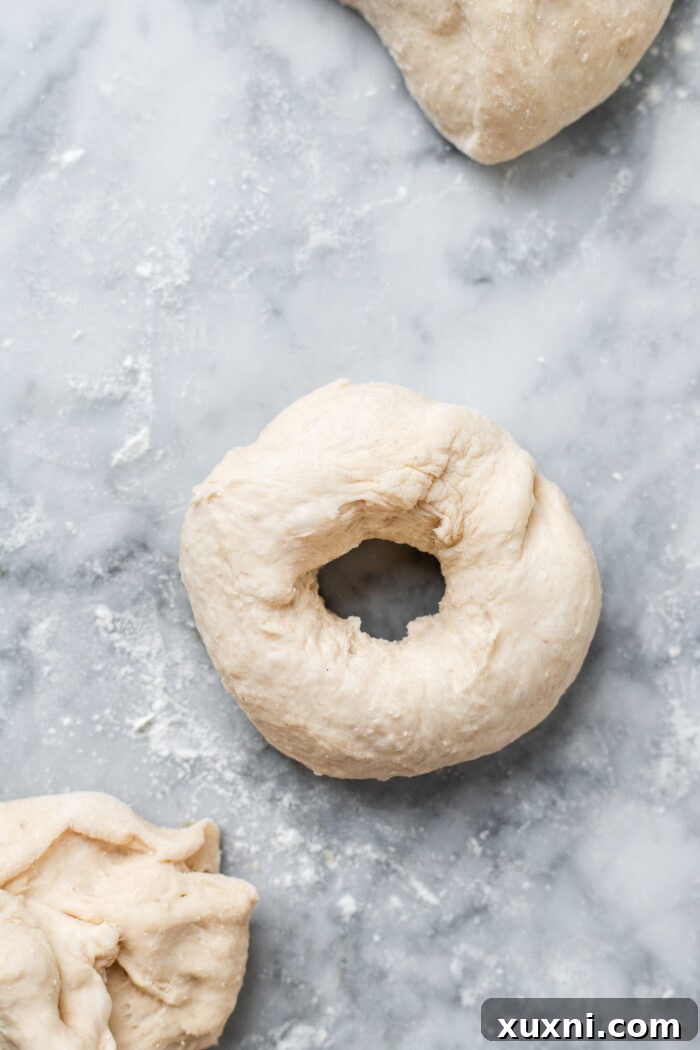
Once shaped, place your bagels on parchment-lined baking sheets and cover them for a second brief proof of about 30 minutes. Meanwhile, prepare for the crucial boiling step. Bring a large pot of water (at least 4 quarts) to a rolling boil. Boiling bagels is what sets them apart, gelatinizing the starch on the outside and creating that distinct chewy crust and glossy finish. Carefully transfer one or two bagels into the boiling water using a slotted spatula. They should float almost immediately. Boil each side for precisely 1 minute. Resist the urge to boil them longer, as this can make them too dense. After boiling, carefully remove the bagels, letting excess water drain, and return them to the parchment-lined baking sheet. They will appear puffy and slightly wrinkly – this is perfectly normal. Repeat this process for all remaining bagels.
Step 3: Adding Toppings and Baking to Golden Perfection
This is where you can truly personalize your homemade vegan bagels! If you desire more than just plain bagels, now is the time to add your favorite toppings before they head into the oven. The boiling process creates a slightly sticky surface, which acts as a natural adhesive for your chosen adornments.
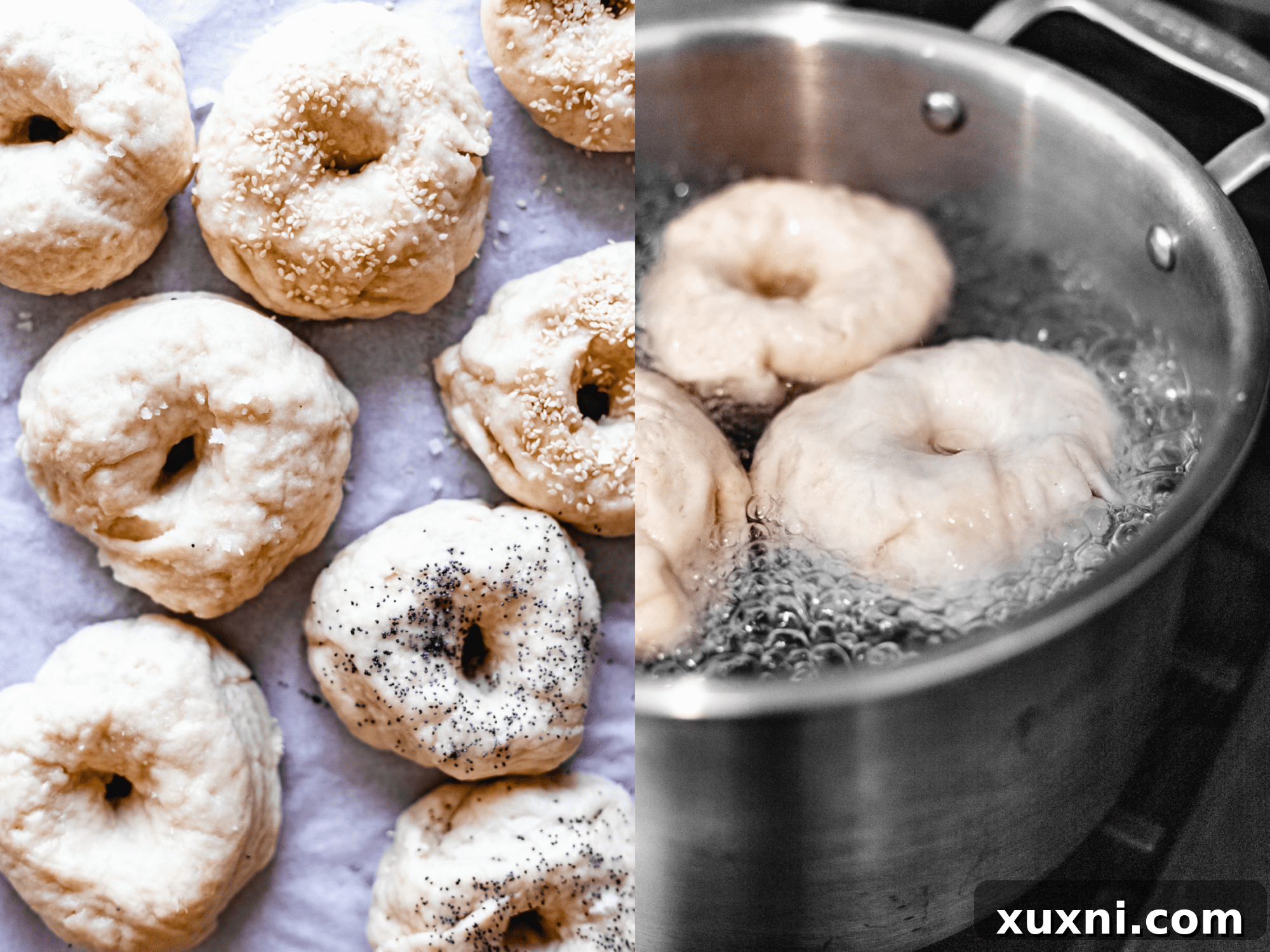
You can choose from a delightful array of toppings:
- Sesame Seeds: A classic choice, offering a nutty flavor and pleasant crunch.
- Poppy Seeds: Tiny, delicate, and earthy.
- Everything But The Bagel Seasoning: A popular blend of sesame seeds, poppy seeds, dried garlic, dried onion, and sea salt for an explosion of flavor.
- Dried Onion Flakes: For a subtle savory onion kick.
- Flaked Sea Salt: A simple yet effective topping that enhances the savory notes and provides a beautiful textural contrast.
- Cinnamon Sugar: For a sweet twist, perfect for those who enjoy dessert-like bagels.
Once topped, transfer your baking sheets to a preheated oven at 425°F. Bake your bagels for approximately 20-23 minutes. For even browning, remember to rotate your baking sheets halfway through the baking time. Keep an eye on them; they’re ready when they have achieved a beautiful, light golden-brown hue. There’s no need for any additional glaze, as the boiling process gives them a natural sheen.
Delicious Variations and What to Serve On Your Bagels
One of the greatest joys of making homemade bagels is the endless potential for customization. While plain bagels are fantastic, don’t hesitate to experiment with different flavors and toppings.
Creative Bagel Variations:
- Sweet Delights: Integrate ingredients like blueberries, dried cranberries, or chocolate chips directly into the dough during the kneading phase. For a cinnamon swirl, roll out the dough, sprinkle with cinnamon sugar, and then roll it up before shaping.
- Savory Sensations: Mix in dried garlic granules, finely chopped dried onion, or even a tablespoon of nutritional yeast for an umami boost into the dough. Create an everything bagel from scratch by coating generously with the eponymous seasoning blend.
What to Serve with Your Perfect Bagels:
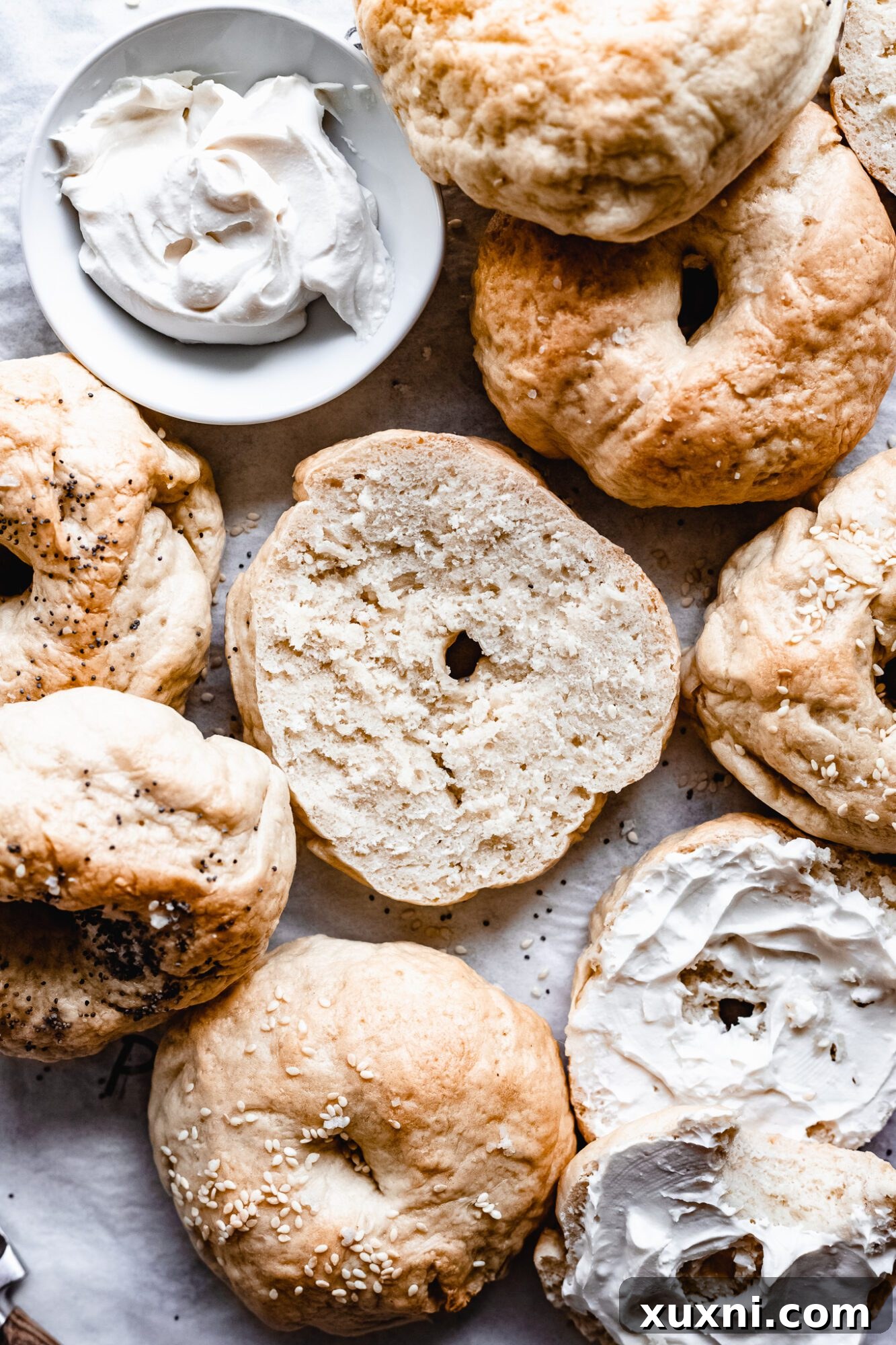
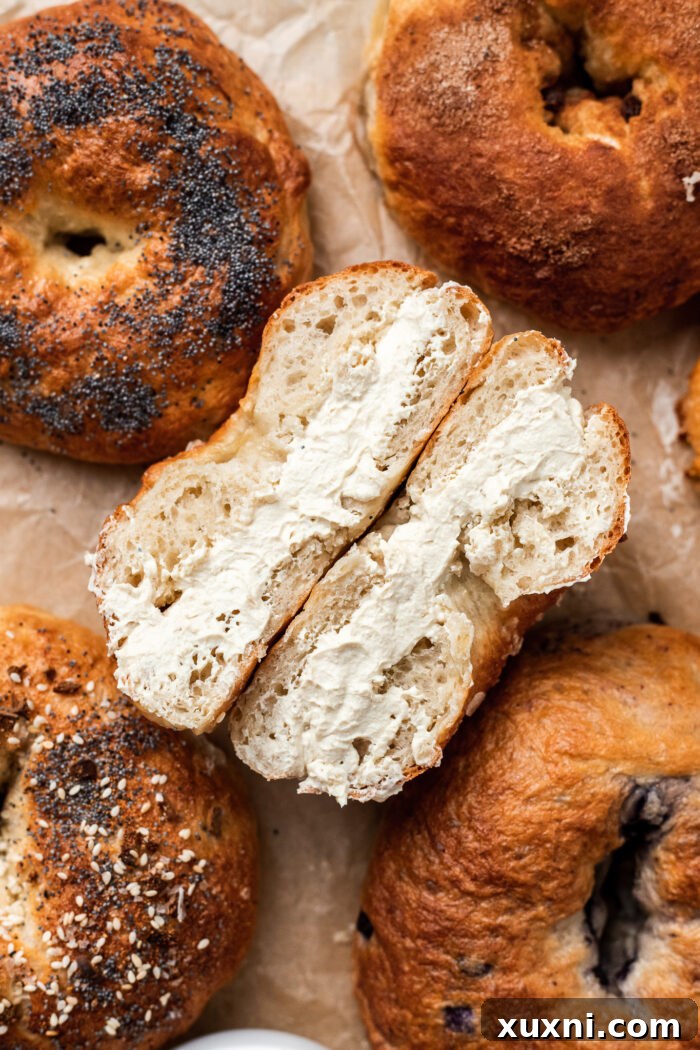
The beauty of a fresh bagel is its versatility. I personally adore a generous smear of vegan cream cheese, especially my quick and easy 3-ingredient homemade vegan cream cheese. That post even includes 7 different flavor variations, so you can keep your bagel experience exciting! For a sweeter indulgence, try spreading a pat of your favorite vegan butter (I highly recommend Forager Project), a sprinkle of cinnamon, a pinch of sea salt, and a delightful drizzle of maple syrup.
If you’re not avoiding nuts, a rich spread of almond butter, homemade cashew butter, or creamy peanut butter makes for a hearty and satisfying topping. Even a tropical touch of coconut butter would be absolutely lovely. For savory options beyond cream cheese, consider fresh avocado slices with everything seasoning, hummus, or even a vegan “lox” spread.
Storage and Reheating Tips for Maximum Freshness
To ensure your homemade vegan bagels remain as fresh and delicious as possible, proper storage is key. I highly recommend storing them in an airtight sealed bag or container. When sealing, try to press out as much excess air as possible to prevent them from drying out.
- Room Temperature: Freshly baked bagels can be stored at room temperature for up to 2 days.
- Refrigeration: For longer storage, refrigerate your bagels for up to 5-7 days.
- Freezing: These bagels freeze beautifully! Wrap them individually or place them in a freezer-safe bag, ensuring all air is removed. They will stay fresh in the freezer for up to 3 months. This is perfect for batch baking and enjoying fresh bagels anytime.
To reheat and bring them back to life, simply slice your frozen or refrigerated bagel and toast it in a toaster or toaster oven until warmed through and slightly crisp. Alternatively, you can bake them in a preheated oven at 350°F (175°C) for about 5-7 minutes. This brings back much of their original warmth and chewiness.
Frequently Asked Questions About Vegan Bagels
Q: Why are my bagels not chewy enough?
A: Chewiness is primarily developed through proper gluten formation and the boiling process. Ensure you’re kneading the dough for the full recommended time (5-7 minutes) to develop sufficient gluten. Also, don’t skip the boiling step! The brief boil gelatinizes the starches on the exterior, creating that characteristic chewy crust.
Q: Can I use instant yeast instead of active dry yeast?
A: Yes, you can! If using instant yeast, you typically don’t need to bloom it first. You can often mix it directly with the dry ingredients, then add the warm water and maple syrup. However, for best results and to ensure your yeast is active, some bakers still prefer to bloom instant yeast for a few minutes. If you skip blooming, your dough might rise a bit faster.
Q: What if my dough doesn’t rise?
A: Several factors can affect dough rising:
- Yeast Issues: Your yeast might be old or inactive. Always check the expiration date and ensure your water temperature is correct (110°F).
- Temperature: Dough needs warmth to rise. Ensure your proofing area is warm (around 85°F). Cold kitchens will slow down or halt the process.
- Over-kneading/Under-kneading: Both can impact gluten development, which affects rising. Follow the kneading times carefully.
If your yeast doesn’t bloom in the first step, it’s best to start with fresh yeast.
Q: Can I make these bagels ahead of time?
A: Absolutely! You can prepare the dough, complete the first proof, shape the bagels, and then place them on a parchment-lined baking sheet. Cover tightly with plastic wrap and refrigerate overnight (up to 24 hours). The next day, let them come to room temperature for about 30-60 minutes before proceeding with the boiling and baking steps. You can also freeze baked bagels as described in the storage section.
Q: Are these truly like New York bagels?
A: Having lived in New York and enjoyed countless bagels, I’ve meticulously developed this recipe to capture that authentic New York style: a shiny, slightly crisp exterior, a dense yet tender interior, and a satisfying chew. The combination of bread flour, a touch of arrowroot, and the crucial boiling step truly delivers that iconic experience.
I genuinely hope you fall in love with these homemade vegan bagels as much as I have! There’s nothing quite like the satisfaction of creating something so delicious and authentic in your own kitchen.
As always, your beautiful creations inspire me! Please remember to tag me on Instagram and Pinterest using #thebananadiaries so I can see your wonderful vegan bagels!
Happy vegan bagel making!
Want to save this incredible recipe for later? Add it to your favorite recipe board on Pinterest!
If you make this recipe, please be sure to leave a comment and a rating ⭐️⭐️⭐️⭐️⭐️ below. This helps others to find the recipes! As always, I absolutely love to see your beautiful creations on Instagram and Pinterest, so be sure to tag me there as well!
Print
Homemade Chewy Vegan Bagels
5 Stars 4 Stars 3 Stars 2 Stars 1 Star
4.8 from 5 reviews
Author: Britt Berlin
Prep Time: 60
Cook Time: 18
Total Time: 1 hour 18 minutes
Yield: 8 1x
Category: Breakfast
Method: Baking
Cuisine: American
Diet: Vegan
Description
Learn how to make the best chewy homemade vegan bagels ever! These easy vegan bagels taste just like a New York style bagel, without leaving home!
Ingredients
Scale
- 2.5 tsp activated dry yeast
- 1 1/2 cups (375 mL) filtered water, heated to 110F
- 2 tsp maple syrup, room temperature
- 4 1/8 cups (520 g) bread flour*
- 1 tbsp cornstarch or arrowroot starch
- 1/2 tsp sea salt
- Desired toppings (see blog post for measurements!)
Instructions
- Please read through all instructions before beginning. Familiarize yourself with each step to ensure a smooth baking process.
- Measure out all ingredients before beginning. Precision is key in baking. Also, verify that your water is precisely 110°F when blooming the yeast. This temperature is crucial for yeast activation.
- Bloom the yeast: In a medium bowl, combine the warm water, active dry yeast, and maple syrup. Stir gently with a wooden spoon until combined, then cover the bowl and set it aside to rest in a warm spot for 10-15 minutes. The yeast should become foamy and emit a distinct, yeasty aroma, indicating it’s active. If no foam forms, the yeast may be inactive, and it’s best to start over. While the yeast is blooming, lightly grease a large, clean bowl with olive oil for the first dough proof.
- Make the bagel dough: In a separate large bowl, whisk together the bread flour, cornstarch (or arrowroot starch), and sea salt. To the bowl of a stand mixer fitted with a dough hook (or a large bowl if mixing by hand with a wooden spoon), add the bloomed yeast mixture, and about one-third of the flour mixture. Mix on medium speed for 1 minute until partially combined. Then, gradually add the remaining flour mixture. Continue mixing on medium speed to bring the dough together, then increase to medium-high speed and knead for 2-3 minutes in the stand mixer.
- Knead the dough: Transfer the dough to a clean, lightly floured surface. Lightly flour your hands and knead the dough by hand for an additional 5-7 minutes. During this process, the dough will transform, becoming smooth, elastic, and easy to form into a large, cohesive ball. This vigorous kneading is essential for developing the gluten structure that gives bagels their characteristic chew.
- Proof the dough: Place the well-kneaded bagel dough into the clean, greased bowl you prepared earlier. Cover the bowl securely with a clean kitchen towel or plastic wrap. Allow the dough to proof in a warm environment (ideally around 85°F, like a slightly warm oven that’s turned off) until it has doubled in size, which typically takes about 45-60 minutes. While the dough is rising, line two large baking sheets with parchment paper in preparation for shaping.
- Shape the bagels: Once the dough has proudly doubled in size, gently punch it down to release the air. Transfer it to a lightly floured clean surface. Briefly knead the dough to deflate it completely. Using a bench scraper or a sharp kitchen knife (lightly floured to prevent sticking), divide the dough into 8 equal sections. Take one section and gently knead it into a small, smooth ball. To create the classic bagel shape, press your thumb firmly into the center of the dough ball, then gently work your fingers around the hole, stretching the dough to form an opening that is less than an inch wide. Remember, a smaller hole is better as it will expand. Place the shaped bagel onto a prepared baking sheet. Repeat this process for the remaining dough balls, ensuring four bagels are spaced apart on each baking sheet.
- Second proof: Once all bagels are shaped, cover each baking sheet loosely with a clean kitchen towel. Allow the bagels to undergo a second, shorter proof for 30 minutes. During this time, they will slightly puff up.
- While the bagels are rising: Bring a large kitchen pot containing 4 quarts of water to a rolling boil. Simultaneously, preheat your oven to 425°F (220°C).
- Once the water is boiling: Using a slotted spatula or a large spoon with holes, carefully transfer one or two bagels at a time into the vigorously boiling water. The bagels should float to the surface. Boil each side for exactly 1 minute. Boiling is crucial for the chewy texture and shiny crust. After 1 minute per side, carefully remove the bagels with the slotted spatula, allowing excess water to drain, and place them back onto the parchment-lined baking sheets. They will appear quite puffy after boiling. Repeat this process for all remaining bagels.
- Before baking: If desired, immediately add your chosen toppings to the boiled bagels. The slightly sticky surface of the boiled bagels will help the toppings adhere. Popular choices include sesame seeds, poppy seeds, everything bagel seasoning, dried onion flakes, or a sprinkle of flaked sea salt. For sweet bagels, a cinnamon sugar mixture is delightful.
- Bake the bagels: Carefully place the baking sheets into the preheated oven. Bake for 20-23 minutes. To ensure even browning and a consistent crust, rotate the baking sheets halfway through the baking time. Remove the bagels from the oven once their tops are beautifully light golden-brown and feel firm.
- Allow the bagels to cool for 10 minutes: Transfer the baked bagels to a cooling rack and let them cool at room temperature for at least 10 minutes before slicing. This brief cooling period allows the interior to set. Then, serve them warm with your favorite accompaniments, such as homemade vegan cream cheese, creamy vegan butter, rich peanut butter, smooth cashew butter, or simply enjoy them plain.
- Storage: Store any leftover bagels in an airtight bag or container at room temperature for up to 2 days to maintain their freshness. For longer storage, you can refrigerate them for up to a week, or freeze them for up to 2 months. To reheat, simply toast or warm in the oven.
Notes
Refer back to the blog post above for additional tips, tricks, and frequently asked questions to perfect your vegan bagel baking! Enjoy the process and the delicious rewards!