The Ultimate Soft & Pillowy Vegan Challah Bread Recipe
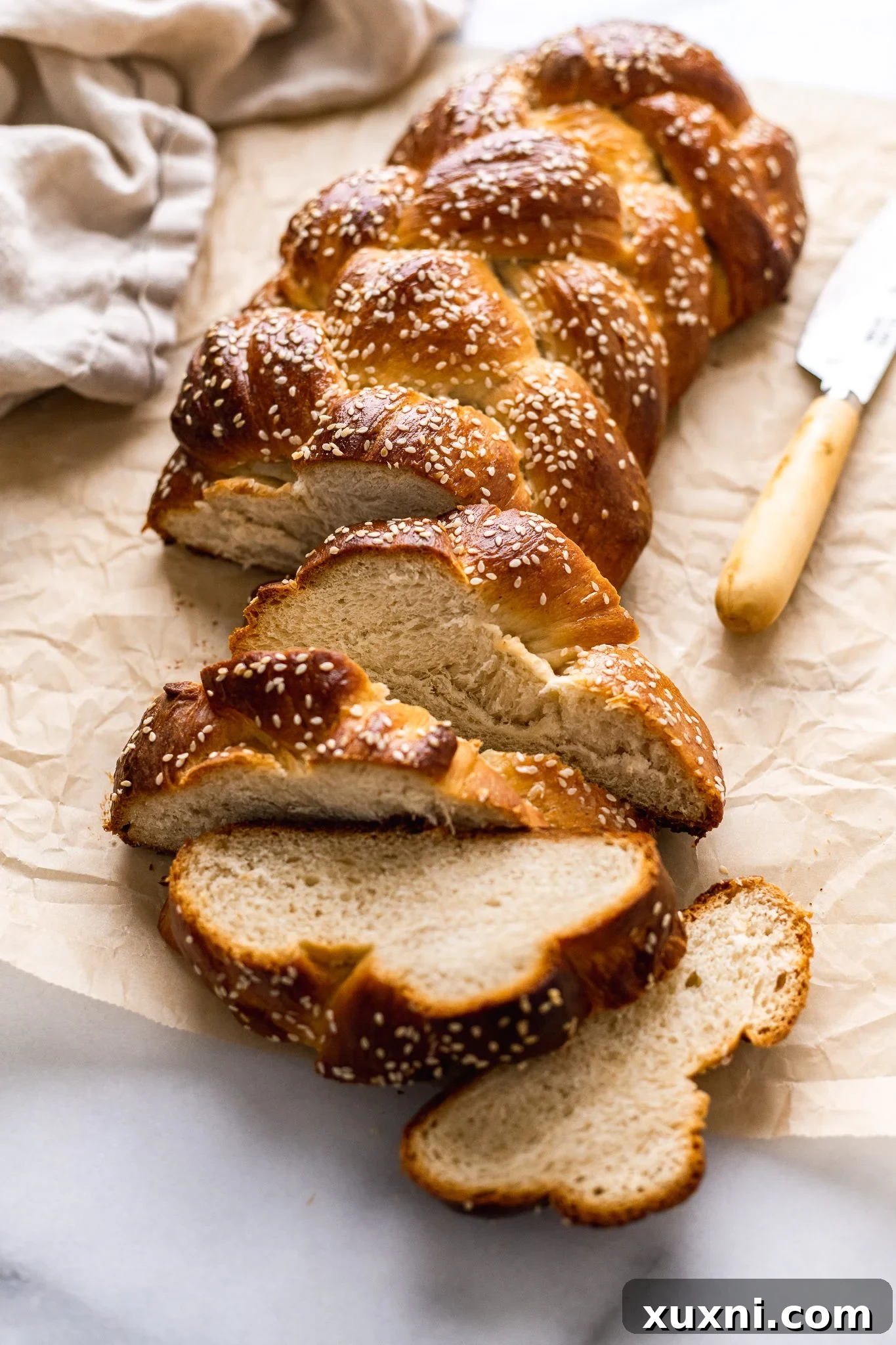
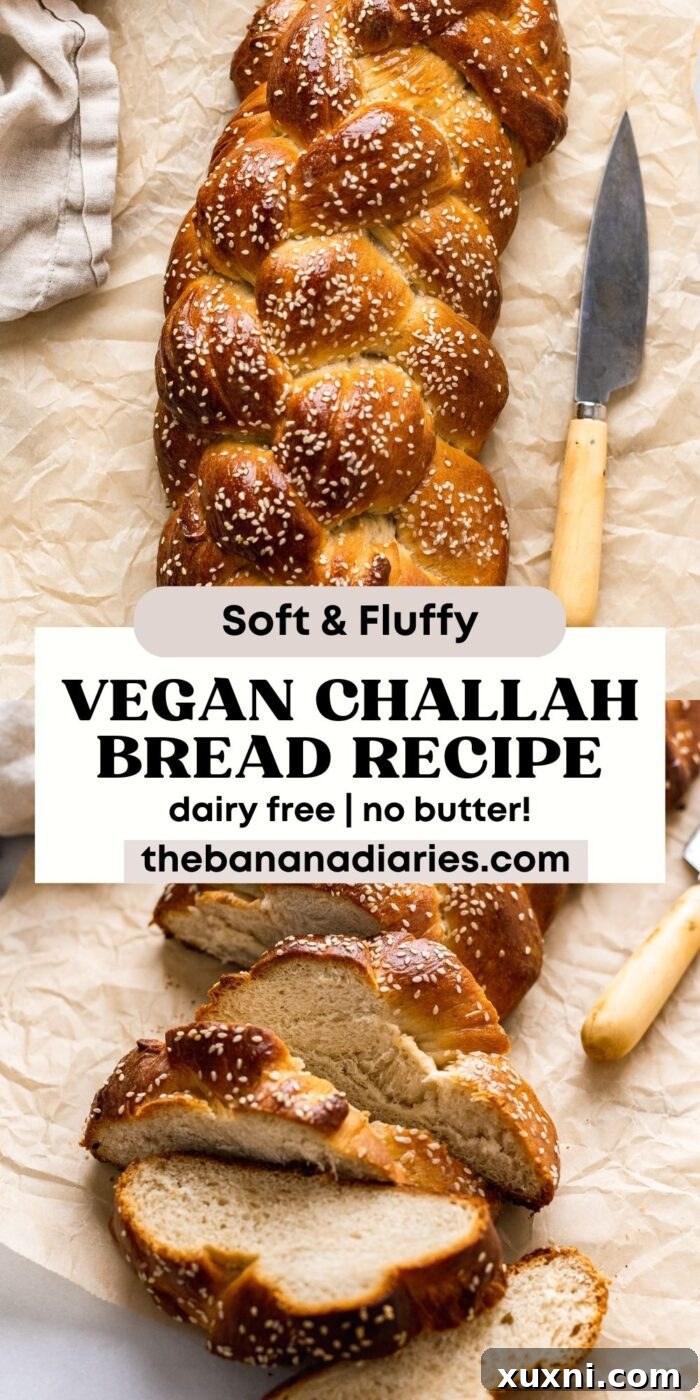
Experience the magic of homemade bread with our incredibly easy Vegan Challah recipe! This plant-based delight is unbelievably soft, pillowy, and rich, tasting every bit as luxurious as traditional Challah bread, yet entirely free from eggs and dairy. Prepare to be amazed by its golden crust and tender crumb, making it an instant favorite for any occasion.
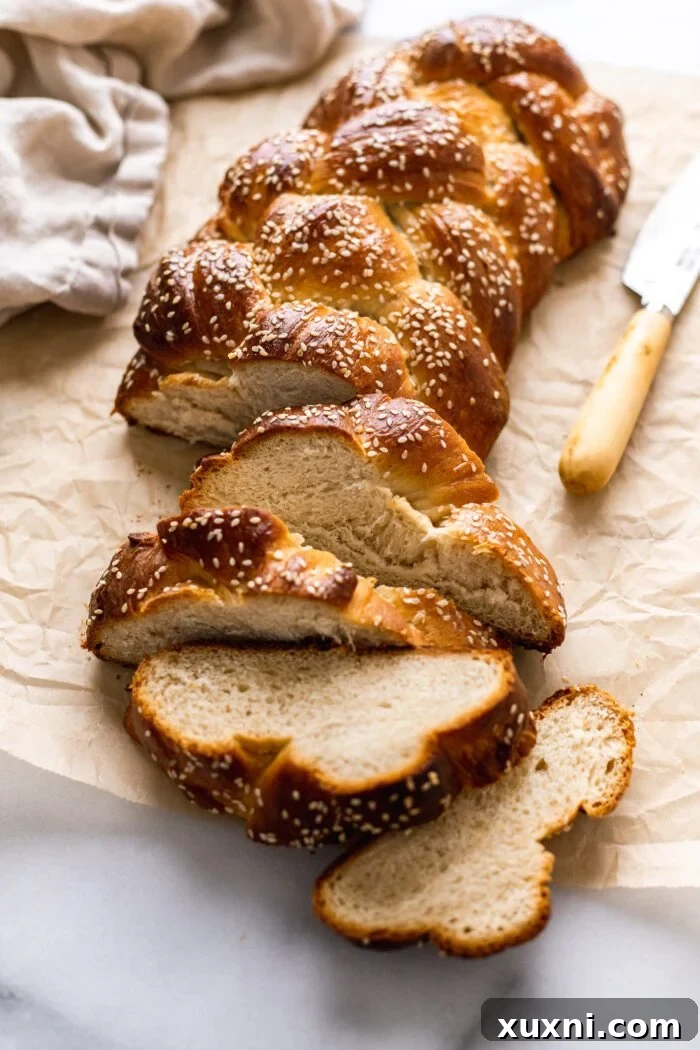
If you cherish the exquisite taste and beautiful braid of traditional Jewish Challah bread but are searching for a completely vegan alternative, your quest ends here. This recipe delivers a truly authentic experience, crafted to replicate the beloved texture and flavor without any animal products. Say goodbye to compromise and hello to a challah that everyone can enjoy!
Our vegan challah draws inspiration from the classic egg challah, renowned for its unparalleled richness and moisture. However, we cleverly adapt it by using water and strategic plant-based ingredients to achieve that signature fluffy, slightly sweet, and utterly satisfying texture. The result is a challah that rivals its traditional counterpart in every bite.
This delightful plant-based challah has become a staple in our household, especially cherished during special occasions like Rosh Hashanah and Yom Kippur. Beyond holiday feasts, it transforms into an incredible base for a decadent vegan French toast – a perfect start to any weekend! Imagine a stack of golden slices, drizzled with maple syrup, or even a luscious vegan French toast casserole for festive brunches. Its versatility is boundless, making it a star in both sweet and savory applications. In fact, this very recipe earned its place in my highly acclaimed cookbook, a testament to its consistent deliciousness.
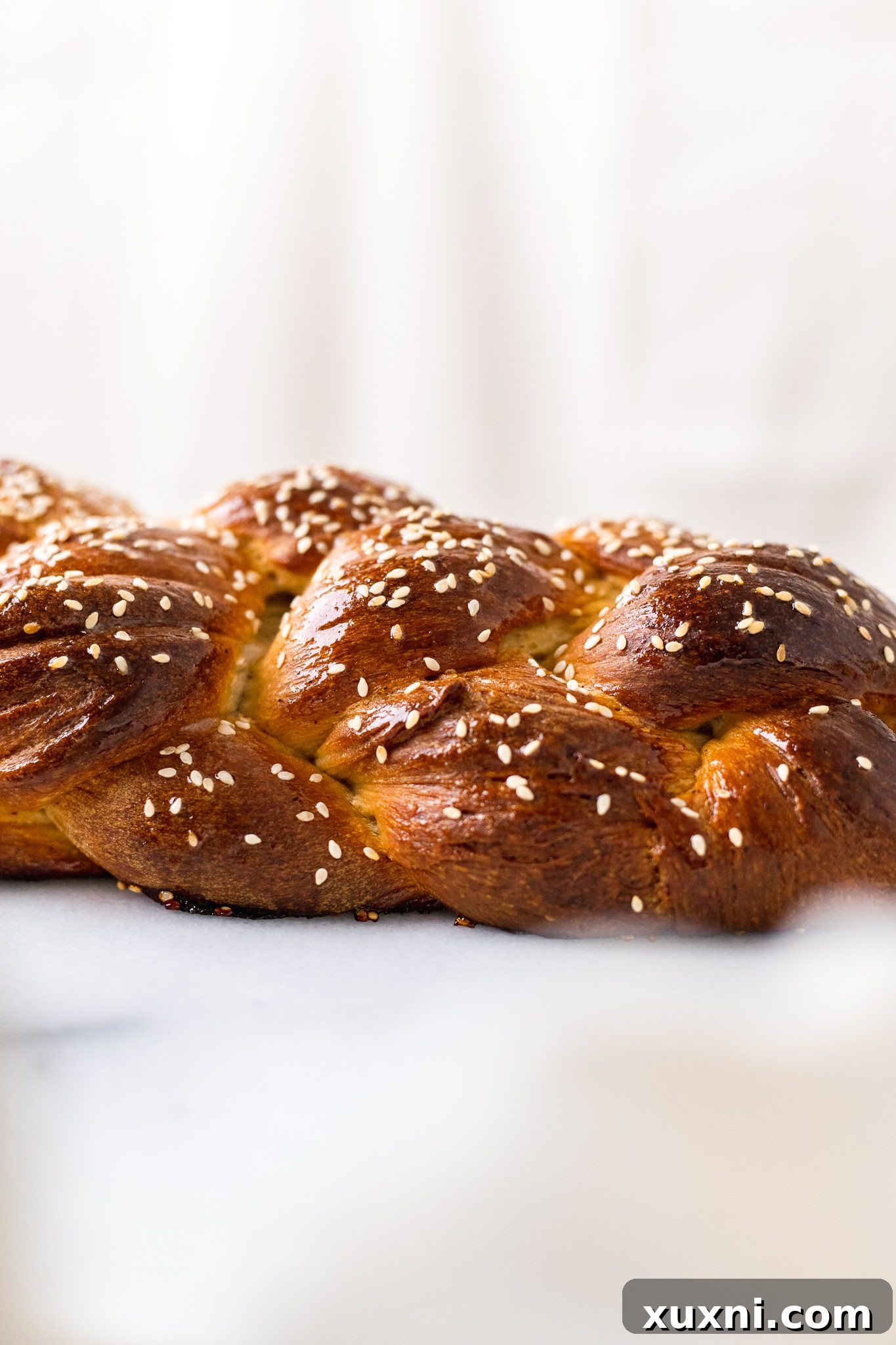
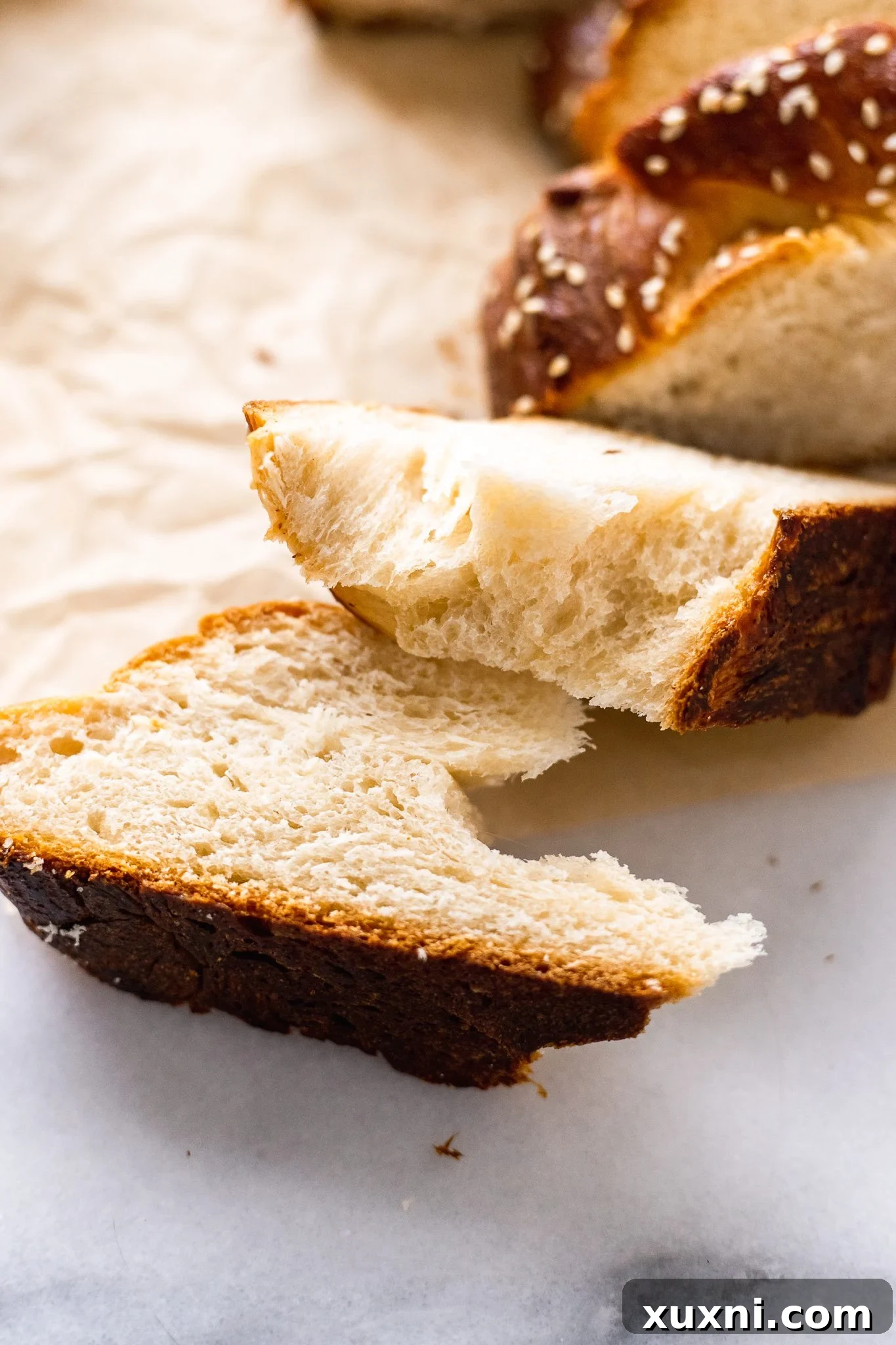
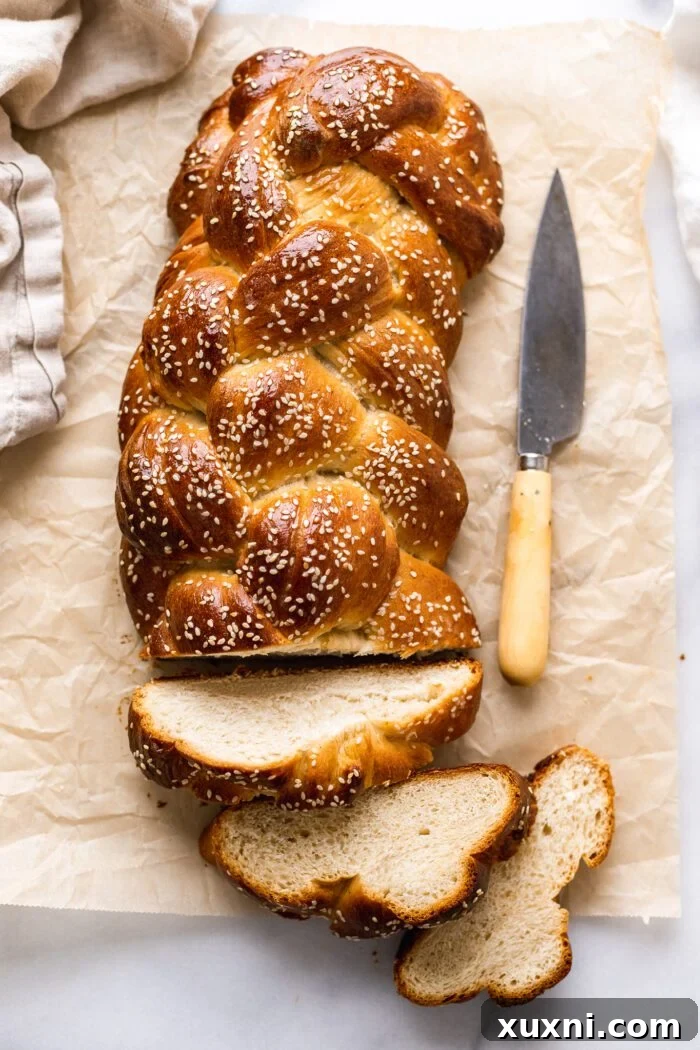
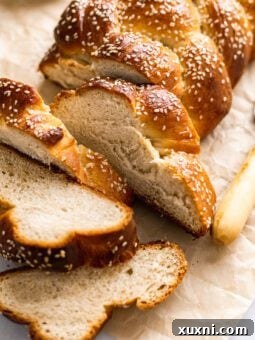
Much like its cousin, vegan brioche bread, this challah boasts an incredibly soft, pillowy interior and a delightful sweetness. Glazed with a unique vegan “egg wash” for that irresistible golden sheen and adorned with a sprinkle of sesame seeds, this homemade vegan challah is destined to become a staple in your kitchen. It’s not just a recipe; it’s an invitation to elevate your vegan baking repertoire with a truly special vegan bread creation.
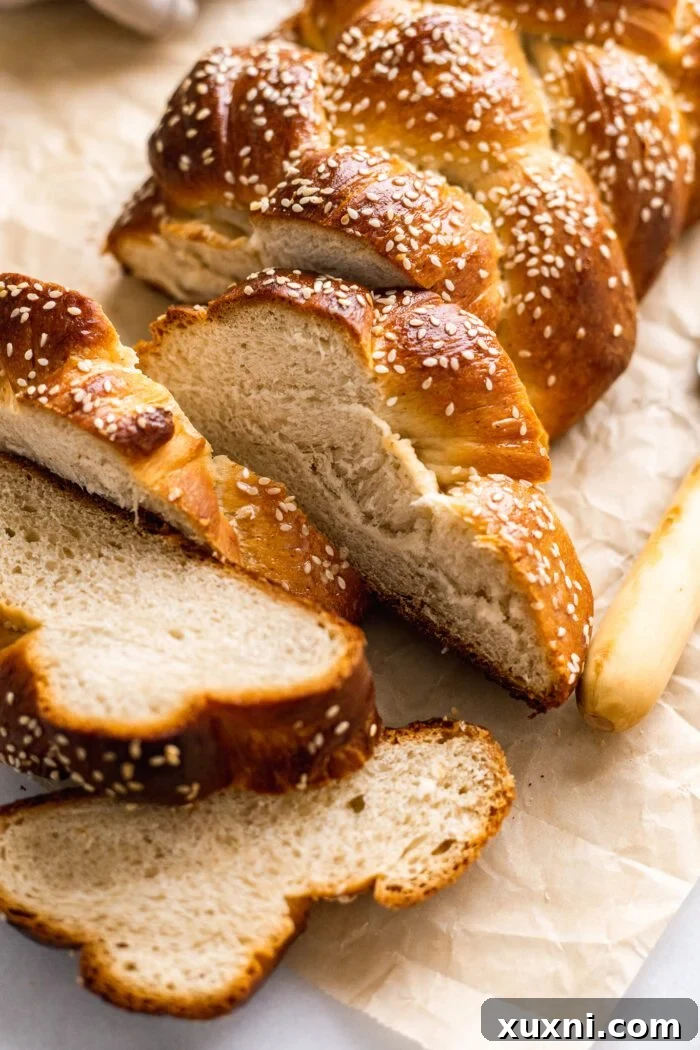
Table of Contents
- Challah Bread vs. Brioche: A Culinary Comparison
- Egg Challah vs. Water Challah: Understanding the Differences
- Essential Ingredients for Vegan Challah
- Step-by-Step Guide: Crafting Your Vegan Challah Bread
- Starting with the Perfect Dough
- Mastering the 6-Strand Challah Braid
- Second Proofing and Baking to Golden Perfection
- Delightful Ways to Serve Vegan Challah
- Vegan Challah Recipe FAQs
Challah Bread vs. Brioche: A Culinary Comparison
For those new to the world of Challah, you might wonder how it stands apart from another beloved enriched bread: brioche. Both are celebrated for their rich, tender textures, but their traditional compositions and cultural significance present distinct differences. Understanding these nuances helps appreciate the innovation behind a truly successful vegan challah.
Traditionally, both challah and brioche are considered enriched doughs, meaning they contain fats and sometimes eggs, which contribute to their characteristic softness and flavor. However, their core ingredients and ratios vary due to their origins. Brioche typically incorporates generous amounts of milk, butter, and eggs, resulting in a very rich, almost cake-like crumb. Challah, on the other hand, is a Jewish ceremonial bread and must adhere to specific dietary laws, particularly being parve (neutral) or pareve. This means it traditionally contains no dairy products. Therefore, authentic challah is made with water, oil, and eggs, making it dairy-free by default. Our vegan version respects this tradition by remaining dairy-free while also eliminating eggs.
While traditional challah is inherently dairy-free, it’s crucial to note that it’s not always vegan, as eggs are a cornerstone of its classic preparation. This is precisely where our recipe shines, offering a genuine challah experience that is both dairy-free and completely plant-based. It captures the essence of challah’s rich flavor and signature softness, allowing everyone to partake in this cherished culinary tradition.
Egg Challah vs. Water Challah: Understanding the Differences
Within the realm of traditional challah, there are primarily two main variations: egg challah and water challah. Each offers a slightly different texture and flavor profile, shaped by its unique ingredient composition. Our vegan challah recipe skillfully navigates these distinctions to bring you the best of both worlds.
The challah we’re crafting today is most closely aligned with egg challah. Classic egg challah is characterized by its use of eggs and oil, alongside fundamental bread ingredients like yeast, water, salt, and flour. The eggs contribute significantly to its rich color, deep flavor, and tender, brioche-like texture. To replicate this without eggs, we utilize a clever vegan egg replacement—dairy-free yogurt—which introduces a similar richness and fat content, crucial for that desirable soft crumb. We also incorporate additional water to ensure supreme moisture, marrying the best qualities of both egg and water challah.
Water challah, by contrast, is traditionally made solely with water and oil (plus yeast, salt, and flour), deliberately omitting eggs. This results in a lighter, chewier bread, often with a slightly crisper crust. However, a vital point to remember is that even if you purchase a “water challah” from a store, it might still not be vegan due to the common use of an egg wash on its exterior for a golden finish. This often leads to confusion, as water challah is not automatically vegan.
For those interested in exploring a pure water challah experience, my cookbook features a dedicated vegan water challah recipe, which relies simply on water and a neutral oil for its distinctive texture. Both versions are incredibly delicious and offer unique characteristics, but for today, we’re focusing on achieving that rich, tender texture reminiscent of the finest egg challah, all in a glorious plant-based form.
Essential Ingredients for Perfect Vegan Challah
Crafting a truly exceptional vegan challah requires a handful of common pantry staples, thoughtfully combined to create a dough that’s rich, pliable, and flavorful. Let’s delve into the key ingredients you’ll need for this incredibly satisfying bread-making journey:
- Warm Water: Precision is key here! The water should be between 110°F and 115°F (43°C-46°C). Water that’s too hot will kill the yeast, rendering it inactive, while water that’s too cool won’t allow the yeast to properly activate, leading to a dense loaf. This warm bath wakes up our yeast, preparing it to leaven our beautiful bread.
- Organic Granulated Sugar: Beyond sweetness, sugar provides vital food for the yeast, helping it to thrive and produce that perfect airy texture. Opt for organic granulated sugar (like Florida Crystals) to ensure it’s processed without bone char, making it truly vegan.
- All-Purpose Flour or Bread Flour: Both types of flour work wonderfully for this recipe. All-purpose flour yields a tender crumb, while bread flour, with its higher protein content, will give your challah a slightly chewier texture and more structure, which is excellent for braiding. Choose what you prefer or have on hand.
- Neutral Oil: This is our primary fat source, mimicking the richness that eggs and butter provide in traditional recipes. Avocado oil, light olive oil, or vegetable oil are excellent choices. If using coconut oil, ensure it’s triple-refined to eliminate any coconut flavor, keeping the challah’s taste pure and classic.
- Quick Rise Yeast (Instant Yeast): For this specific method, quick rise or instant yeast is ideal. It can be mixed directly with dry ingredients and requires only one rise time (or rather, its activity is more immediate). This streamlines the process, making homemade challah more accessible. My cookbook features a water challah recipe that uses active dry yeast, which requires a preliminary proofing step in warm water.
- Dairy-Free Yogurt: This is our secret weapon for an egg-free challah that still achieves a rich, tender crumb. Dairy-free yogurt adds essential fat and moisture to the dough, much like eggs do in traditional challah. It contributes to the dough’s elasticity and the bread’s plush texture. While other options like pumpkin puree, applesauce, or cooked sweet potato can be used as a 1:1 substitute, dairy-free yogurt is preferred for its fat content, which closely replicates the desired richness.
- Vegan Egg Wash: To achieve that iconic golden-brown, glossy crust without eggs, we use a simple yet effective vegan egg wash. A blend of maple syrup and dairy-free milk creates a beautiful caramelized finish. For an extra touch of flavor and visual appeal, sprinkle with sesame seeds before baking!
- Salt: A small but mighty ingredient, salt is crucial for balancing the flavors in the bread and controlling yeast activity. Don’t skip it; it enhances the overall taste significantly.
It might seem incredible that such a simple list of plant-based ingredients can transform into a stunning, egg-free challah that tastes so authentic, but trust the process – the results are truly remarkable!
Step-by-Step Guide: Crafting Your Vegan Challah Bread
Embarking on the journey to bake a beautiful 6-stranded challah might appear daunting at first glance, but with a clear guide, it’s a surprisingly rewarding and straightforward process. We’ll begin by creating the perfect dough, allowing it ample time to rise, and then move on to the artistic part: shaping our exquisite vegan challah loaf.
Starting with the Perfect Dough
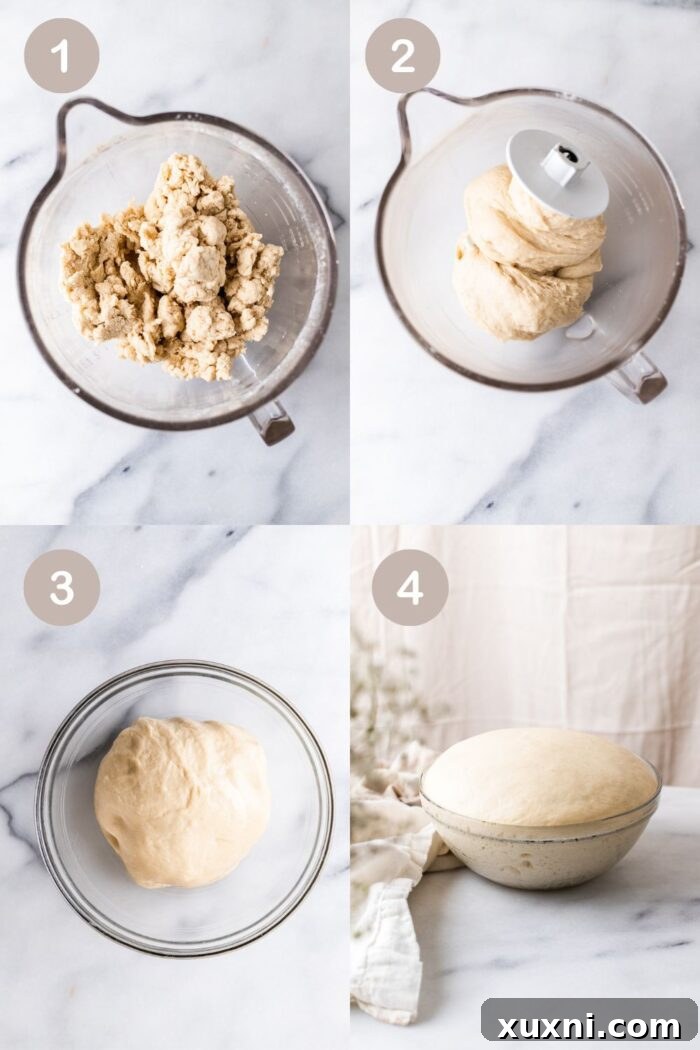
The foundation of any great bread is a well-made dough. Whether you prefer the convenience of a stand mixer or the hands-on satisfaction of mixing by hand, the process remains accessible. For this recipe, utilizing quick-rise yeast simplifies things; there’s no need for a separate proofing step beforehand. Begin by whisking the quick-rise yeast directly into your flour, sugar, and salt mixture in the bowl of a stand mixer fitted with a dough hook, or in a large mixing bowl if working by hand.
Next, introduce the warm water, dairy-free yogurt, and neutral oil. If using a stand mixer, mix on medium speed until the dough comes together into a shaggy mass, then add the oil gradually, allowing it to incorporate. Increase the speed to high and knead the dough for approximately 10-15 minutes. If kneading by hand on a lightly floured surface, aim for 10 minutes of vigorous kneading. The goal is to develop the gluten fully, resulting in a soft, pliable, and slightly tacky dough that successfully passes the window pane test – where a small piece of dough can be stretched thin enough to see light through without tearing. This indicates perfect gluten development.
Once your dough is perfectly kneaded, form it into a smooth ball. Place it into a lightly greased bowl, ensuring all sides are coated to prevent sticking. Cover the bowl with a clean kitchen towel or plastic wrap and place it in a warm, draft-free area (ideally around 80°F-95°F / 27°C-35°C). Allow it to rise until it has visibly doubled in size, which typically takes about 60-120 minutes, depending on the warmth of your environment. This initial rise is crucial for developing flavor and achieving a light, airy texture.
Mastering the 6-Strand Challah Braid
While a 6-strand challah braid may initially appear intricate, it’s a technique that becomes surprisingly simple and meditative with practice. Don’t be intimidated; follow these steps, and for visual learners, the accompanying video tutorial is an invaluable resource. You’ll be braiding like a pro in no time!
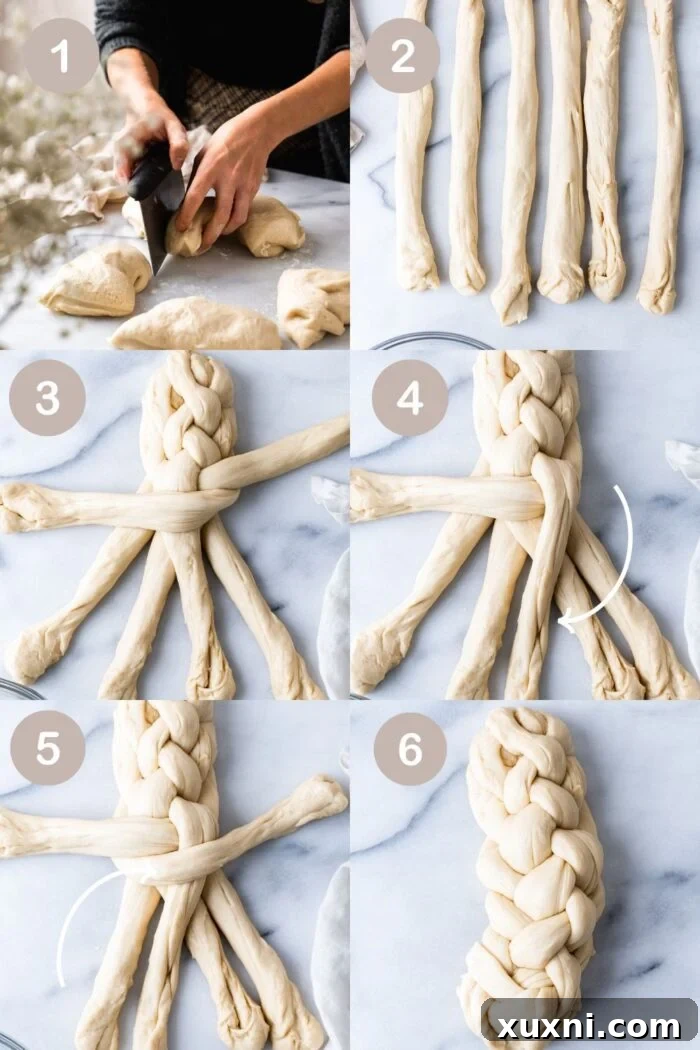
First, gently deflate your risen dough and transfer it to a lightly floured clean work surface. Divide the dough into six equal pieces. For the most uniform loaf, using a kitchen scale to measure each piece accurately is highly recommended. Once divided, roll each piece into a strand approximately 18 inches long, ensuring they are roughly the same thickness from end to end. This uniformity is key to a beautiful, even braid.
Next, gather all six strands at one end and firmly pinch them together. This creates a secure starting point for your braid. Splay the strands out, arranging them side-by-side on your work surface, ready for weaving. Imagine them numbered 1 through 6 from left to right.
Let’s begin the braiding sequence:
- Take the right outermost strand (strand 6) and cross it over the strand next to it (strand 5), then under the next strand (strand 4). Essentially, it goes over-under.
- Now, take the left outermost strand (strand 1) and cross it over the strand next to it (strand 2), then under the next strand (strand 3). This also follows the over-under pattern.
- At this point, you should have two strands now at the center, and the pattern will have shifted. Spread out your four middle strands slightly to clearly define the center.
- Identify the new right outermost strand. Cross it over the adjacent strand, then under the next.
- Identify the new left outermost strand. Cross it over the adjacent strand, then under the next.
Continue this alternating over-under pattern, always starting with the outermost right strand, then the outermost left strand, ensuring each strand moves across the bread in an over-under motion towards the center. As you braid, gently pull the strands taut to keep the braid tight and even. When you reach the end, pinch all six strands together securely and tuck the ends underneath the loaf for a neat finish.
Again, if these instructions feel complex, please do watch the dedicated video tutorial. Visual demonstration often clarifies this braiding technique better than written words alone. You’ll be delighted with the elegant, intricate result!
Second Proofing and Baking to Golden Perfection
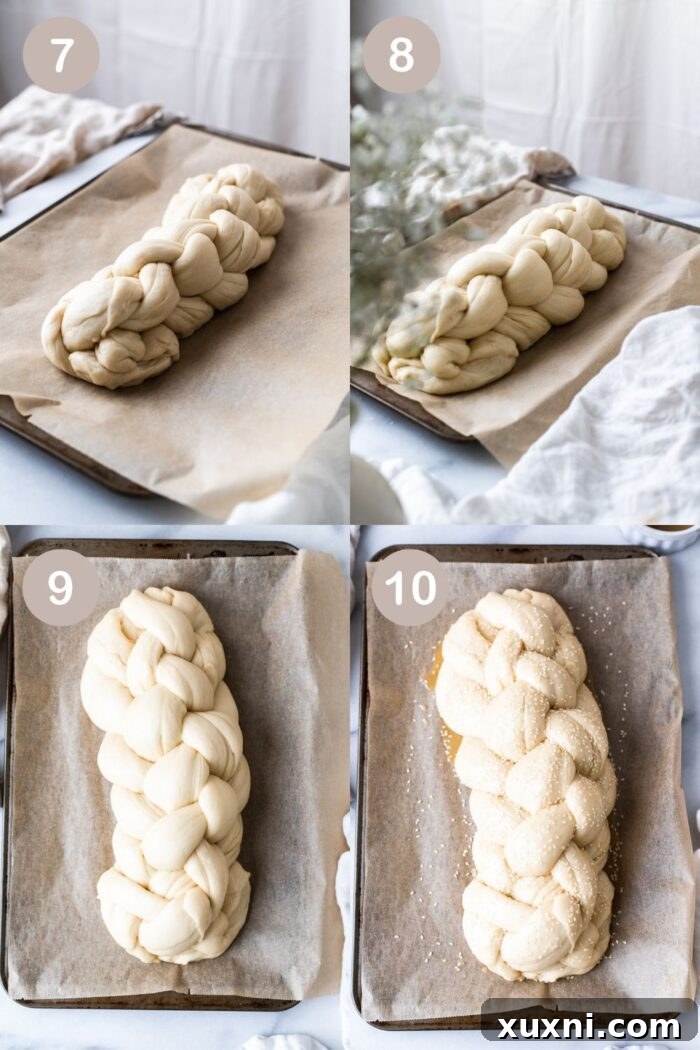
Once you’ve mastered the braid, carefully transfer your beautifully shaped vegan challah onto a baking sheet lined with parchment paper. This parchment paper prevents sticking and makes for easy cleanup. Cover the braided loaf loosely with a clean kitchen towel or plastic wrap. Find a warm, draft-free spot again for its second proof (this time, no more than 95°F / 35°C – an oven turned off with the light on often works perfectly). Allow the challah to rise for another hour, or until it has visibly doubled in size once more. This second rise is crucial for achieving that light, airy texture and prevents a dense final loaf. It’s a testament to patience in baking!
As your challah nears the end of its second proof, preheat your oven to 375°F (190°C). Prepare your vegan “egg” wash by whisking together maple syrup and dairy-free milk. Gently brush this mixture generously over the entire surface of the risen challah. This not only gives it a beautiful golden hue but also adds a subtle sweetness to the crust. If desired, sprinkle generously with sesame seeds for a classic finish and delightful crunch.
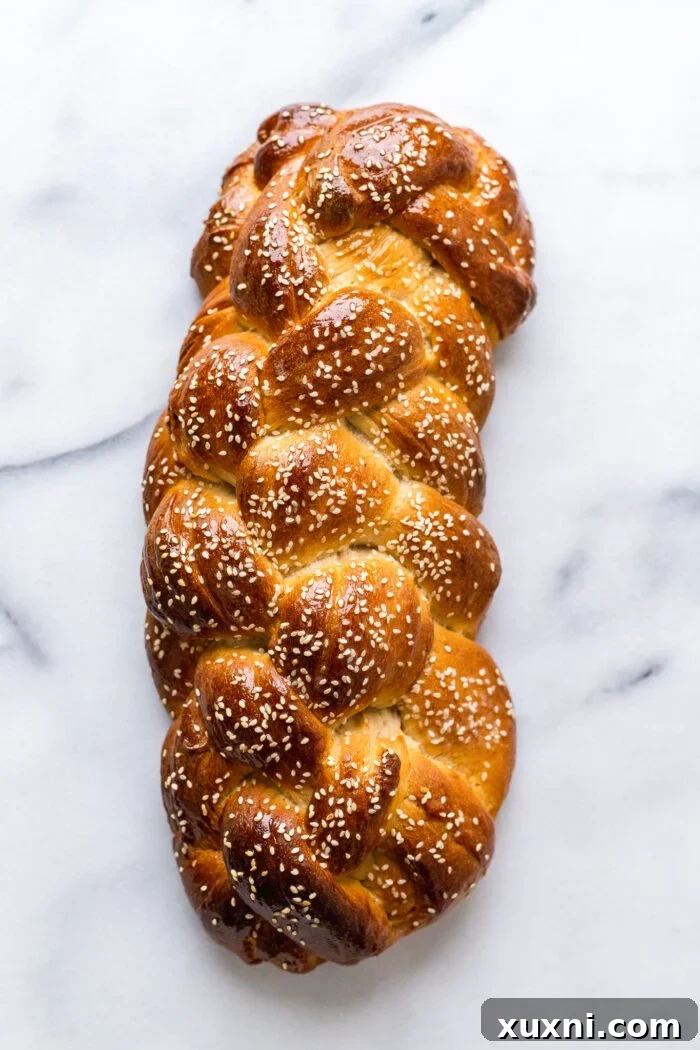
Carefully transfer the baking sheet to the preheated oven and bake for 35-40 minutes, or until the challah boasts a deep, golden-brown crust and sounds hollow when tapped on the bottom. Keep an eye on it during the last 10 minutes to ensure it doesn’t over-brown. Once baked to perfection, remove it from the oven and let it cool slightly on a wire rack before slicing. The aroma filling your kitchen will be pure bliss!
Delightful Ways to Serve Vegan Challah
Freshly baked challah is a delight in itself, boasting a tender crumb and a slightly sweet crust that makes it hard to resist eating plain. However, its versatility extends far beyond just enjoying it on its own. Here are some of our favorite creative and delicious ways to serve this incredible vegan challah, suitable for any meal or occasion:
- Simple & Sweet: Enhance its natural sweetness with a generous spread of homemade berry jam, a dollop of fruit preserves, or a drizzle of agave or maple syrup.
- Savory Mornings: Toast thick slices and top with creamy vegan cream cheese, fresh avocado slices for a healthy twist, or even a sprinkle of everything bagel seasoning for an unexpected savory delight.
- Gourmet Sandwiches: Elevate your lunch game by using challah as the base for sandwiches. Its soft yet sturdy structure holds up beautifully. For a truly indulgent experience, try making an elevated vegan grilled cheese, complete with homemade nut-free vegan mozzarella cheese!
- Unforgettable French Toast: Challah is arguably the best bread for French toast. Our vegan French toast recipe is a game-changer, soaking up the batter perfectly and frying to golden perfection. For a seasonal treat, try our vegan pumpkin French toast!
- Brunch Casserole Perfection: Planning for a crowd? Turn leftover challah into a magnificent vegan French toast casserole. It’s a wonderful make-ahead option that feeds many and tastes even better the next day.
- Luscious Bread Pudding: Transform day-old challah into a comforting vegan bread pudding. The challah’s inherent sweetness and tender texture make it ideal for absorbing a rich custard and baking into a truly heartwarming dessert.
- Croutons & Breadcrumbs: Don’t let any leftover challah go to waste! Cube stale challah, toss with olive oil and herbs, and bake for homemade croutons. Alternatively, process into fresh breadcrumbs for coating savory dishes or thickening soups.
However you choose to enjoy it, this vegan challah bread is sure to bring joy and deliciousness to your table. Its versatility ensures it won’t last long!
Vegan Challah Recipe FAQs
Here are answers to some of the most common questions about making and enjoying this delicious vegan challah bread:
- Can I make this vegan challah gluten-free?
- Currently, a perfected gluten-free vegan version of this challah bread is still under development. Creating a gluten-free bread that truly captures the soft, pillowy texture and elasticity of traditional challah is a meticulous process, and it’s essential to ensure the gluten-free version lives up to the high standards of its gluten-containing counterpart. Rest assured, we are actively working on it, as well as a gluten-free vegan brioche bread! In the meantime, feel free to explore other gluten-free bread recipes available on our blog.
- Do I need a stand mixer for this recipe?
- While a stand mixer fitted with a dough hook attachment certainly simplifies the kneading process and is my preferred method for efficiency, it is by no means essential. You can absolutely achieve excellent results by kneading the dough by hand! In fact, my very first successful water challah was made entirely without a stand mixer. Be prepared for a good arm workout, as hand kneading typically requires about 10-15 minutes to reach the desired elasticity and smoothness.
- Can I omit the sesame seeds? What are other topping options?
- Absolutely! The sesame seeds are primarily for aesthetic appeal and a subtle textural contrast. If you don’t have them on hand or simply prefer not to use them, your challah will still be delicious. For alternative toppings, consider poppy seeds for a different classic look, or even a sprinkle of flaked sea salt for a savory touch. Some enjoy a streusel topping for a sweeter challah, though that’s less traditional. Feel free to get creative with your preferences!
- Can I freeze vegan challah?
- Yes, vegan challah freezes exceptionally well, making it perfect for meal prepping or enjoying freshly baked bread whenever the craving strikes! If you find yourself with leftovers, or if you’re baking ahead, simply allow the challah to cool completely. Then, either wrap the entire loaf or individual slices tightly in plastic wrap, followed by a layer of aluminum foil or place them in an airtight freezer bag. It can be frozen for up to 3 months. To thaw, simply transfer it to the refrigerator overnight, or for a quick refresh, toast individual slices in a toaster oven until warmed through and slightly crispy.
- Are there other options for shaping vegan challah bread besides a 6-stranded braid?
- Definitely! While the 6-stranded braid is a showstopper, there are many beautiful and simpler ways to shape challah. If you’re looking for a less complex option, a traditional 3-stranded braid is very common and can easily be formed into a straight loaf or even coiled into a round challah, which is often served for Rosh Hashanah. You could also try a 4-stranded challah braid, which offers a lovely, slightly simpler alternative to the 6-strand. Don’t let braiding complexity deter you; the taste will be fantastic regardless of the shape!
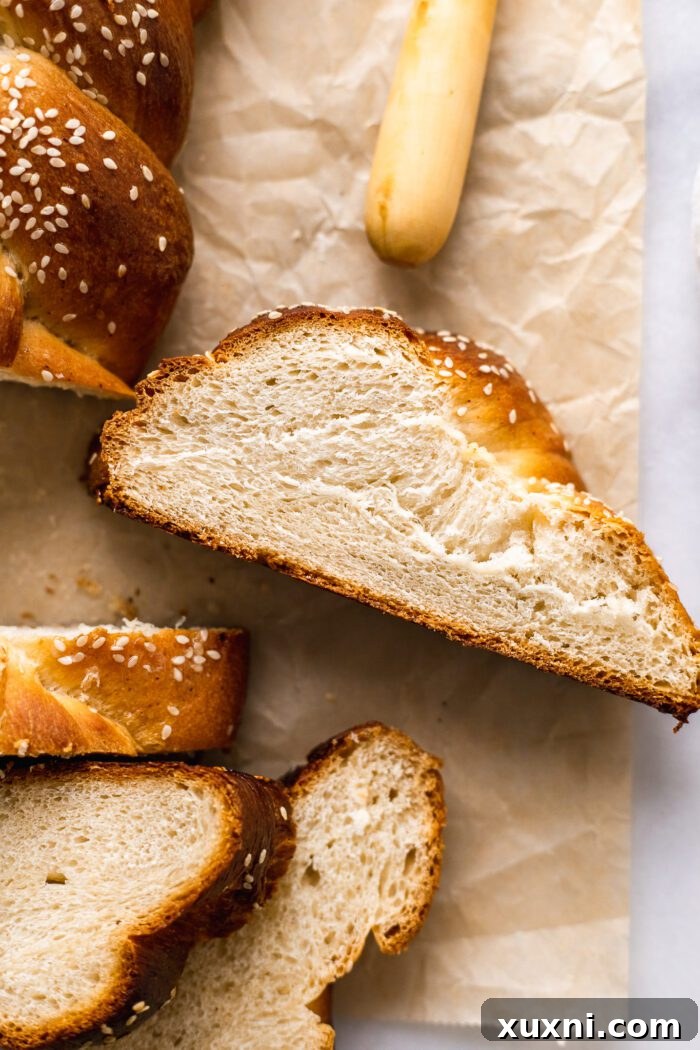
You are going to absolutely adore this vegan Challah bread recipe! Its soft, tender crumb, delicate sweetness, and stunning appearance make it a truly special bake. We encourage you to try your hand at this satisfying recipe; it’s a wonderful way to bring homemade warmth and deliciousness into your kitchen.
If you give it a go, please share your experience by leaving a comment and rating below. We love hearing from you and seeing your culinary creations!
As always, we’re thrilled to see your beautiful bakes! Be sure to tag us @the_bananadiaries on Instagram and Pinterest, and use the hashtag #thebananadiaries so we can celebrate your success!
Happy baking, and enjoy your sensational homemade vegan challah!
Want to save this recipe for later? Add it to your favorite recipe board on Pinterest!
Print
Soft & Pillowy Vegan Challah Bread Recipe
5 Stars 4 Stars 3 Stars 2 Stars 1 Star
5 from 2 reviews
Author: Britt Berlin
Prep Time: 90
Cook Time: 40
Total Time: 2 hours 10 minutes
Yield: 15 1x
Category: Bread
Method: Baking
Cuisine: Jewish
Diet: Vegan
Description
The easiest homemade Vegan Challah bread recipe! Soft, pillowy and plush, this vegan challah tastes just like traditional Challah bread, yet is completely egg free (and of course dairy free!).
Ingredients
Scale
- 1/2 cup (120 mL) warm water
- 4 cups (550 g) bread flour or all purpose flour
- 1/2 cup (100 g) granulated sugar or coconut sugar
- 1/4 tsp sea salt
- 2.5 tsp (.25 oz) quick rise yeast
- 12 tbsp (185 g) neutral oil*
- 1/4 cup (62.5 grams) dairy free yogurt, room temperature*
- vegan “egg” wash*
- 1 tbsp sesame seeds
Instructions
- Please read through all instructions before beginning.
- Prep: Grease a medium bowl with olive or coconut oil, and set aside. Line a baking sheet with parchment paper.
- Whisk the dry ingredients: In the bowl of a stand mixer, whisk together the flour, sugar, salt, and yeast. Attach the bowl to the stand mixer, along with the dough hook attachment. Alternatively, you can mix the dough by hand using a wooden spoon and no stand mixer.
- Make the dough: Add the water and the dairy free yogurt to the bowl. Mix on medium speed until a very shaggy dough forms, about 3-4 minutes. Then add in the tablespoons of oil, and begin to mix again on medium speed. Stop every so often to reincorporate the oil. Once the oil is incorporated, turn the speed of the stand mixer onto high, and allow the dough to be kneaded in the bowl for about 10-15 minutes, or until soft and pliable. The dough might still be slightly tacky, but should not leave globs of dough on your finger tip.
- Knead the dough: Once it starts to form a ball, lightly flour a clean surface and shape the dough into a ball.
- First proof: Place the dough ball into the medium sized greased bowl. Cover with a clean dish towel and place in a warm area (ideally above 80F) to rest for about 60-120 minutes, or until doubled in size.
- Shape the challah bread: I’ll be describing how to braid a 6-braided challah bread. Please see the blog post for alternative options:
-
Lightly flour a clean work surface. Then you’ll first divide the dough into 6 even pieces. You can use a kitchen scale to achieve more accuracy. Roll out each dough piece to be 18″ long.
-
Then pinch the tops of each strand together on one side, so you have strands splayed out.
-
Next, take the right outermost strand, and cross it over the top. Then take the left outermost strand, and cross it over the right at the top. Now you’ll have two of the strands at the top, and four middle strands. Spread the four middle strands out a bit with two on either side so you know the middle.
-
Next, take the right outermost strand and cross it over to the middle of the four strands. Then take the second to the outermost left strand, and cross that over to the right, to be the outermost strand on the right now.
-
Now, repeat for the other side. Take the left outermost strand and cross it over to the middle of the four strands. Then take the second to the outermost right strand, and cross that over to the left, to be the outermost strand on the left now.
-
Repeat this pattern for the entirety of braiding your vegan challah bread. I also recommend watching the video tutorial here to help as well.
-
- Proof: Carefully transfer the challah dough over to your baking sheet lined with parchment paper. Cover in a warm area (no more than 95F- an oven turned off but with the light on is fine) to rise until double in size, about 1 hour.
- Brush with vegan egg wash: Preheat the oven to 375F. Mix the maple syrup and dairy free milk together, then brush the tops of the challah bread with the vegan egg wash. Sprinkle with sesame seeds if desired.
- Bake: Place the vegan challah bread into the oven to bake for 35-40 minutes, or until golden brown.
- Slice and serve!
Notes
Quick rise yeast: This method is designed for instant yeast (quick rise yeast). If you’d like to use active dry yeast, please follow the water challah recipe in my cookbook.
Neutral oil: You can use coconut oil (triple refined for no flavor), avocado oil, vegetable oil, or olive oil.
Dairy free yogurt: you can also use an equal amount of pumpkin puree, applesauce, or cooked sweet potato in lieu of the yogurt.
Vegan egg wash: Mix together 1 tbsp maple syrup and 1 tbsp of dairy free milk, such as soy milk.
Nutrition
- Serving Size: 1/15 of loaf
- Calories: 178
- Sugar: 5.7 g
- Sodium: 5.3 mg
- Fat: 4 g
- Carbohydrates: 31.3 g
- Protein: 3.6 g
- Cholesterol: 0 mg