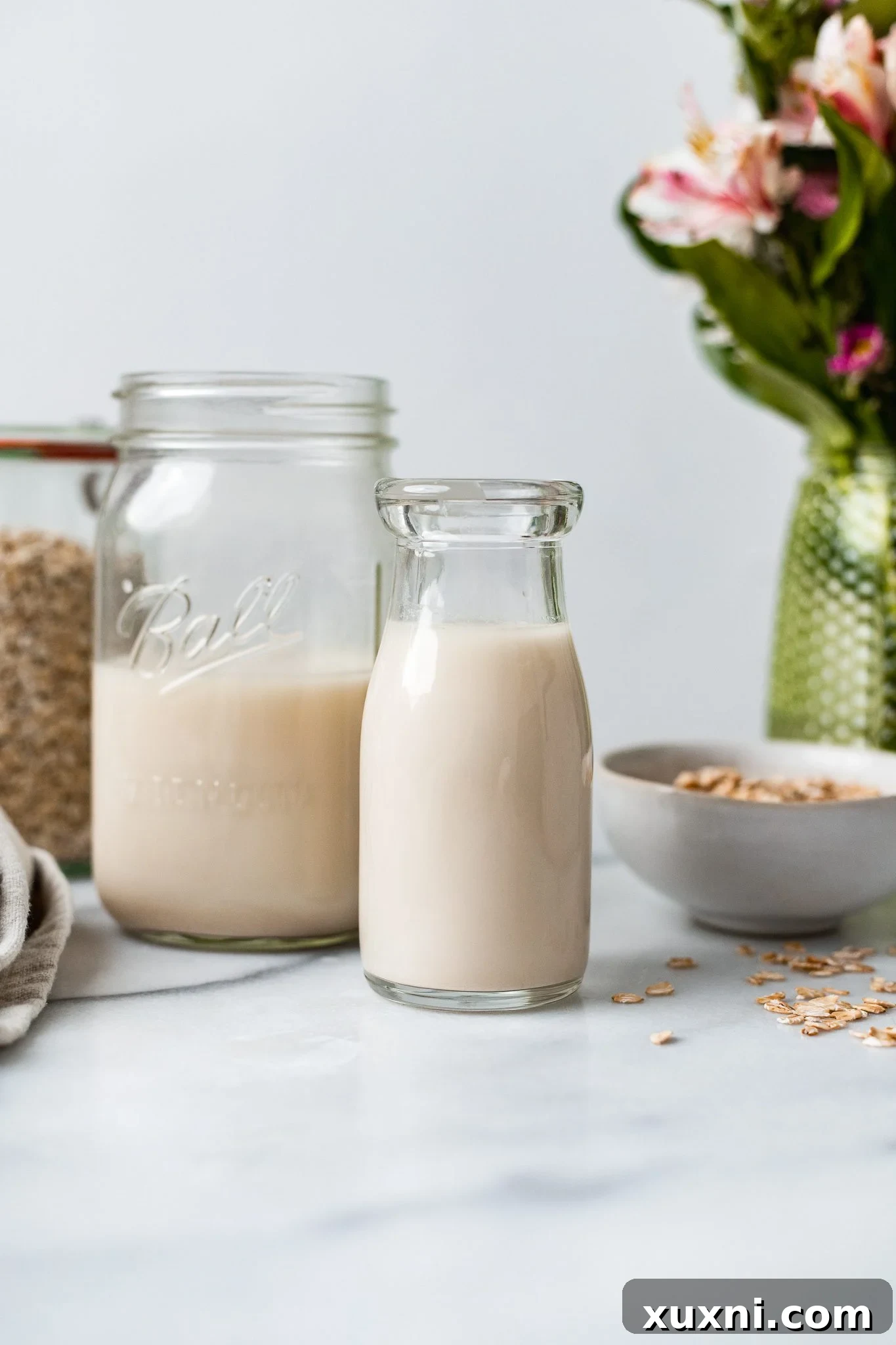
Are you ready to transform your coffee, smoothies, and baked goods with perfectly creamy, smooth, and absolutely non-slimy homemade oat milk? This comprehensive guide will show you exactly how to achieve the best dairy-free and nut-free milk option in just minutes, ensuring a delightful texture every single time.
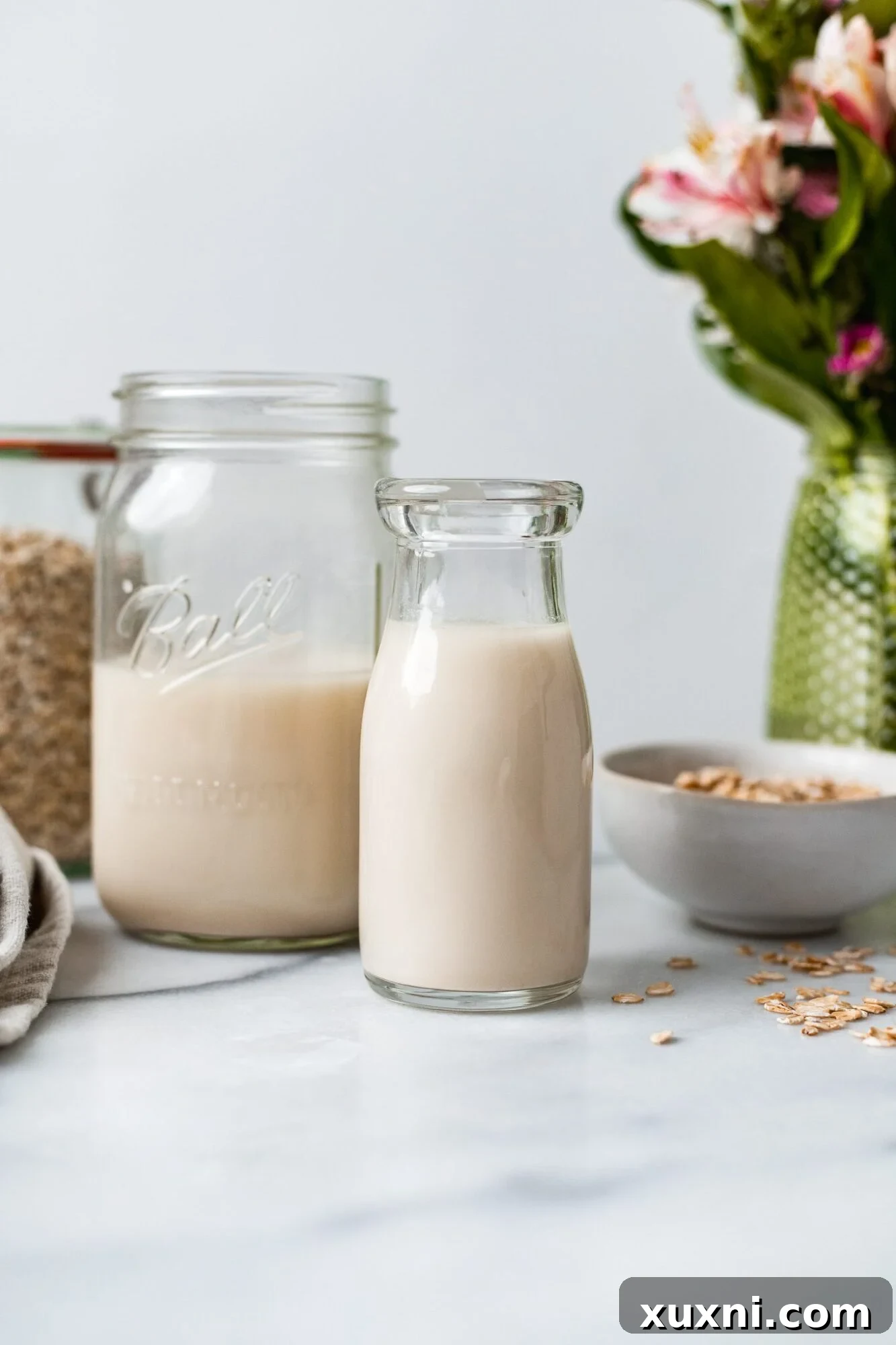
As a passionate enthusiast of all things dairy-free, I confess a deep affection for store-bought oat milk. It stands out as my absolute favorite plant-based milk on the market, serving as a versatile and reliable alternative in countless recipes. However, there are those moments when I’m in the middle of preparing a delicious meal or baking a sweet treat, only to realize I’ve run completely out. This is where the magic of homemade oat milk comes into play.
Fear not, for after extensive experimentation and many gooey mishaps, I have finally uncovered the foolproof secrets to crafting non-slimy oat milk right in your own kitchen. If you’ve ever attempted to make oat milk at home, you might have, like me, ended up with a strange, viscous concoction reminiscent of the green slime from Nickelodeon. But those days are over!
Before we dive into the simple steps for creating wonderfully smooth oat milk, let’s first understand the common pitfalls that lead to that undesirable slimy texture. Knowing what to avoid is just as crucial as knowing what to do. Then, I’ll walk you through the surprisingly quick and easy process to ensure your homemade oat milk is perfectly creamy and utterly delicious. Trust me, once you master this, you’ll be using this incredible dairy-free, nut-free milk in everything – from enriching your morning coffee and blending into smoothies to baking delectable cakes and cookies, or simply enjoying it on its own. It’s truly a game-changer!
Why Does Homemade Oat Milk Turn Slimy? The Common Pitfalls Explained
If your past attempts at making oat milk have resulted in a thick, unappetizingly slimy liquid, you’re not alone. This “oat slime” phenomenon is a common frustration, but it’s easily avoidable once you understand its root causes. Many online recipes might inadvertently lead you astray, as they often omit crucial details or provide misleading advice.
Here are the primary reasons why your homemade oat milk might be turning slimy, and how to steer clear of these mistakes:
1. You’re Soaking Your Oats (Don’t Do It!): Contrary to popular belief and some recipe instructions, soaking your oats before blending is a major culprit for sliminess. Oats contain an enzyme that, when activated by prolonged exposure to water, causes them to break down and release starches. This process is great for making creamy overnight oats or oatmeal, where you want that sticky, binding texture. However, for oat milk, it’s precisely what you want to avoid. Soaking allows too much starch to be released, resulting in a thick, gummy consistency rather than a smooth, pourable milk.
2. You’re Using Warm Water: Think about how you prepare a bowl of oatmeal. You typically use warm or hot water to cook the oats, which helps them soften and create that familiar porridge-like texture. The same principle applies here: using anything other than ice-cold water when making oat milk will prematurely activate the starches in the oats. This leads to them becoming mushy and slimy during the blending process. Always reach for the coldest water possible to keep those starches in check and ensure a clean, smooth separation.
3. You’re Squeezing the Oat Pulp Too Vigorously: It’s tempting to squeeze every last drop of liquid from the oat pulp after blending, especially when using a nut milk bag or cheesecloth. However, excessive squeezing is another common mistake that contributes to slimy oat milk. Just like over-blending, aggressive squeezing forces more of the oats’ starch and finer particles through the straining material, directly into your milk. Instead of squeezing, aim for a gentle draining process. We’ll explore the proper straining technique in the next section to ensure you get maximum liquid yield without compromising texture.
By understanding and avoiding these three key errors, you’re already well on your way to making flawless, non-slimy homemade oat milk. Let’s move on to the incredibly simple ingredients you’ll need.
The Foundation of Flavor: Simple Ingredients for Your Homemade Oat Milk
One of the many beauties of making oat milk at home is its incredible simplicity, requiring only two core ingredients and a few optional additions to elevate the flavor. You’ll be amazed at how quickly you can whip up a batch with items likely already in your pantry.
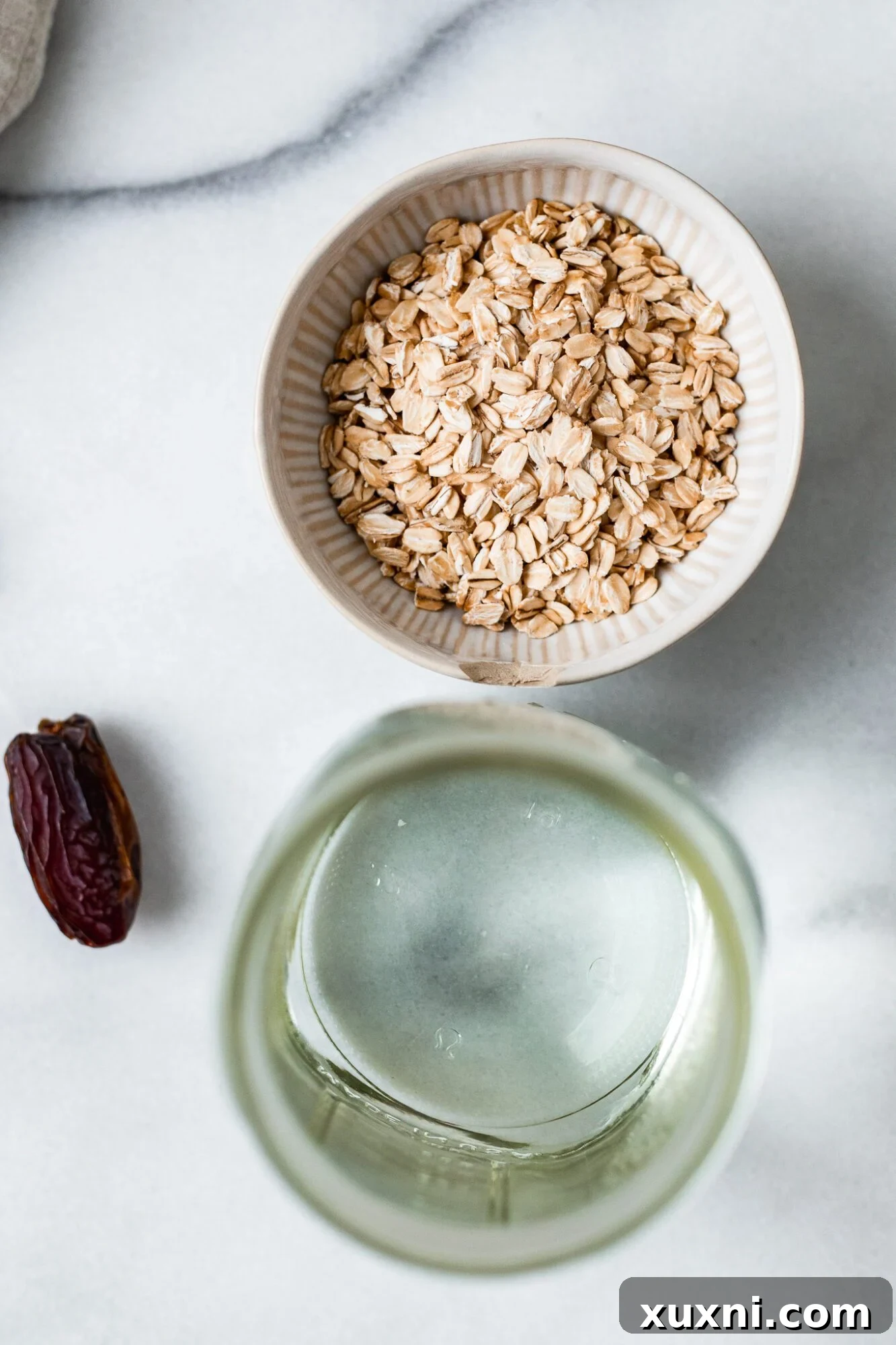
- Rolled Oats: This is the star of our recipe. I highly recommend using old-fashioned rolled oats, or even sprouted rolled oats like those from One Degree Organics, which I often use. Rolled oats offer the perfect balance for texture and creaminess. If you have dietary restrictions, such as gluten intolerance, it is absolutely essential to use oats that are certified gluten-free to avoid cross-contamination. Steel-cut oats are too tough and whole for this recipe, and instant oats tend to break down too quickly, potentially contributing to sliminess.
- Ice-Cold Water: As discussed, the temperature of your water is paramount. Always use filtered, ice-cold water. This is a non-negotiable step to prevent the activation of starches that lead to a slimy texture. The colder the water, the less chance of a gelatinous outcome.
- Optional Flavor Enhancers: While oats and water make a perfectly neutral base, these optional additions can customize your oat milk for various uses:
- Dates: A single pitted Medjool date adds a subtle, natural sweetness that is perfect for beverages or desserts without overwhelming the flavor.
- Vanilla Extract: Just a teaspoon of vanilla extract can impart a warm, inviting aroma and a hint of classic sweetness.
- A Pinch of Sea Salt: A tiny bit of salt enhances all the flavors and provides a nice balance, especially if you’re using the milk in savory dishes or want to counteract any bitterness.
- Maple Syrup: For a slightly richer, more pronounced sweetness, a drizzle of maple syrup works wonderfully.
Isn’t it incredible how so few ingredients can yield such a versatile and delicious product? For sweet applications like smoothies, coffee creamers, or baked goods, I strongly recommend adding a date and a teaspoon of vanilla extract. One medium-sized date typically provides enough sweetness without making the milk overly sugary. Conversely, if your intention is to use this non-slimy dairy-free milk in savory recipes, such as creamy soups or sauces, then you should definitely omit the dates and vanilla, opting instead for a tiny pinch of sea salt to round out the flavor profile. The customization possibilities are endless!
Learn How to Bake *Unbelievably* Vegan Desserts in 5 Steps!
Want to make amazing vegan and gluten-free desserts that no one will guess are eggless and dairy-free? Sign up for this free e-course to transform your vegan bakes!
How to Make Oat Milk (That’s Actually Creamy, Not Slimy) – A Step-by-Step Guide
For the full written instructions and exact ingredient measurements, please refer to the recipe card located at the bottom of this post. You can also easily jump directly to the recipe by clicking the “jump to recipe” button at the top of the page. Below, we’ll provide a clear, concise overview of each step, accompanied by helpful visuals to ensure your homemade oat milk turns out perfectly every time.
Crafting delicious, non-slimy oat milk is incredibly straightforward. Follow these simple steps for a creamy, smooth, dairy-free delight:
- Blend with Precision.
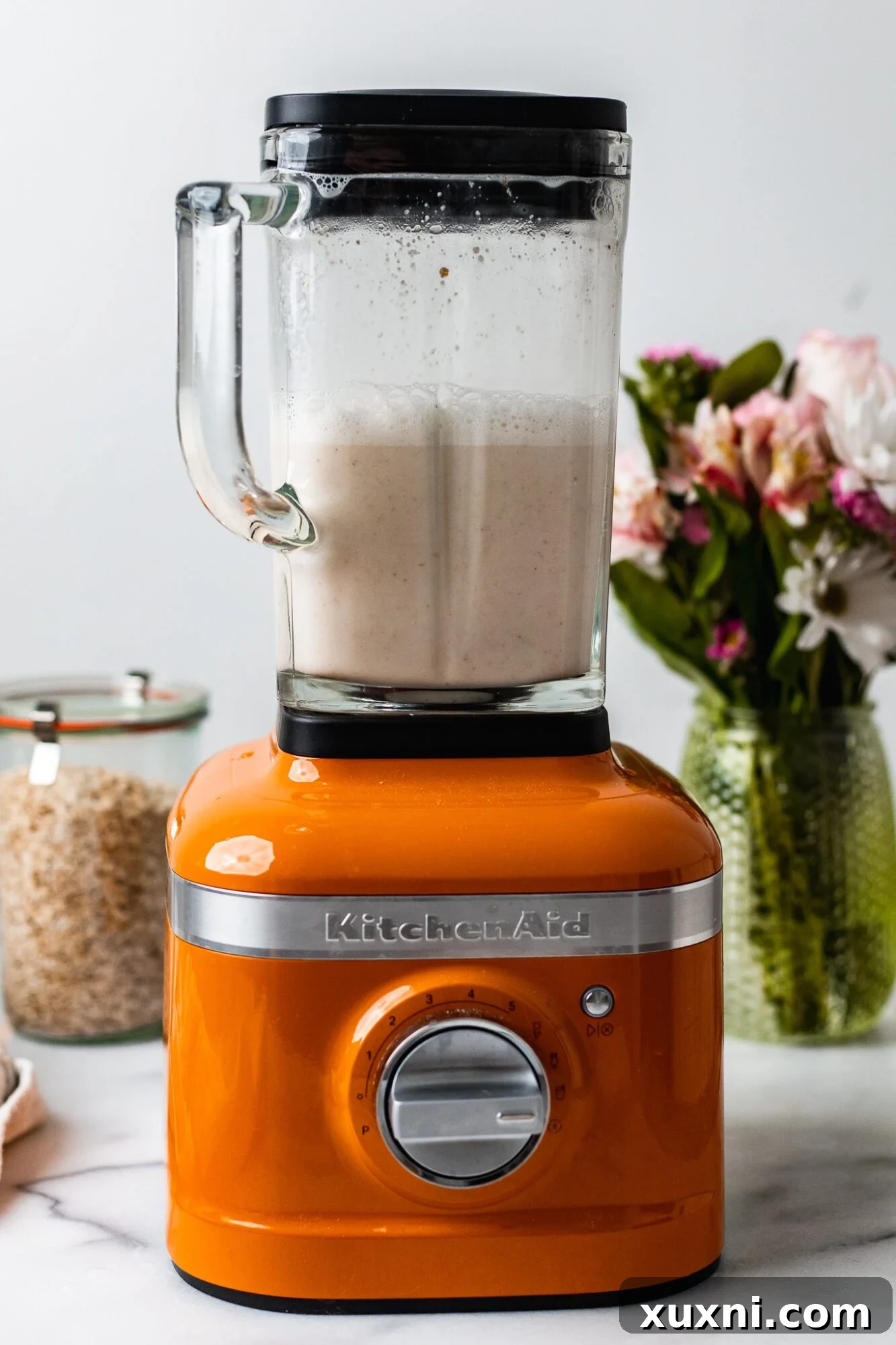
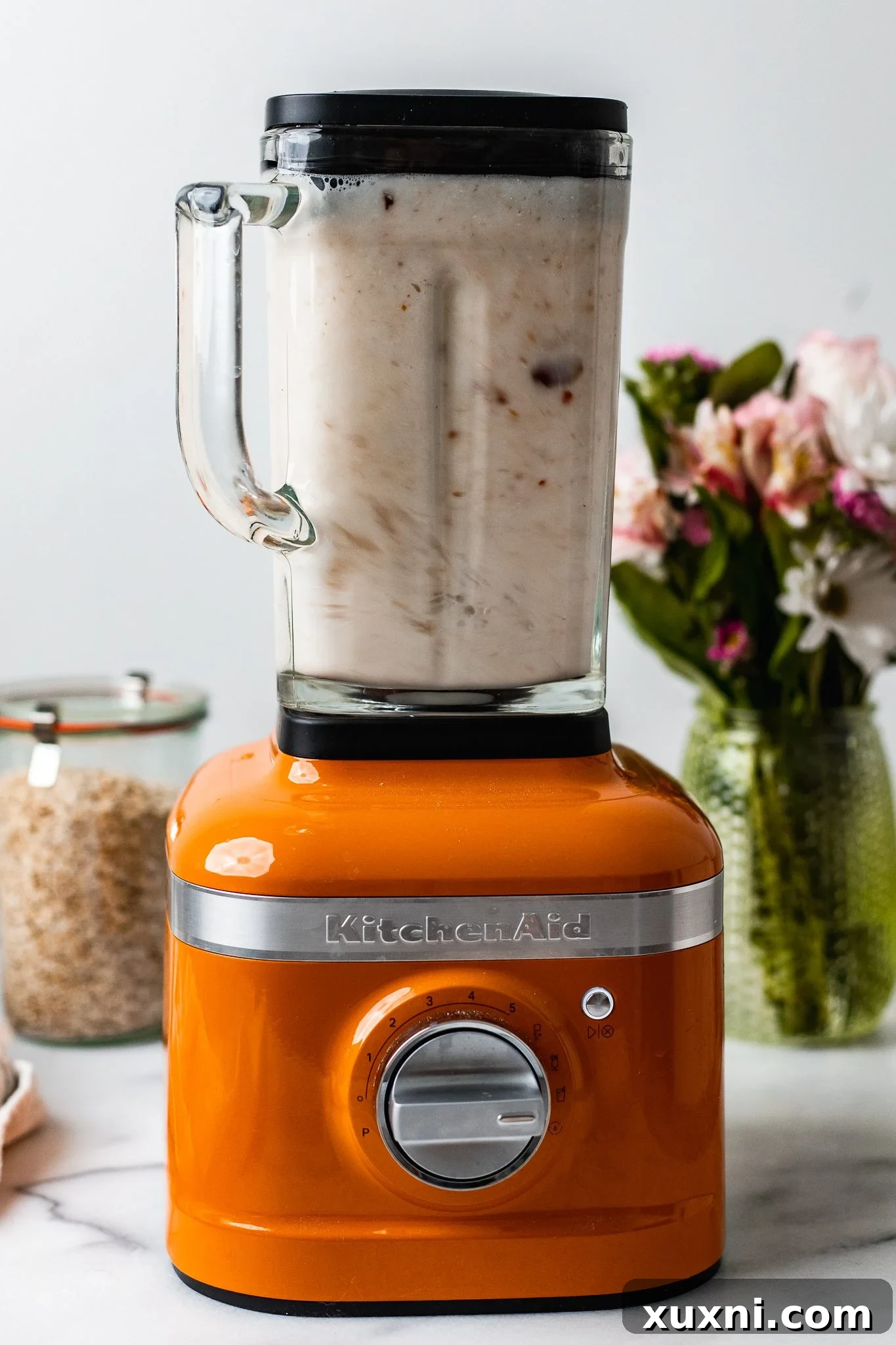
Begin by adding all your chosen ingredients—rolled oats, ice-cold filtered water, and any optional flavorings like dates or vanilla extract—into a high-speed blender. This initial blend is crucial for creating the base of your oat milk. However, the key here is speed, not duration. Blend the mixture for only 30-40 seconds. Seriously, resist the urge to over-blend! Blending for too long generates friction and heat, which, along with extended agitation, will cause the oats to release excessive starches, resulting in that unwanted slimy texture. A quick, powerful burst is all you need to break down the oats sufficiently.

- Initial Strain (Gentle is Key).
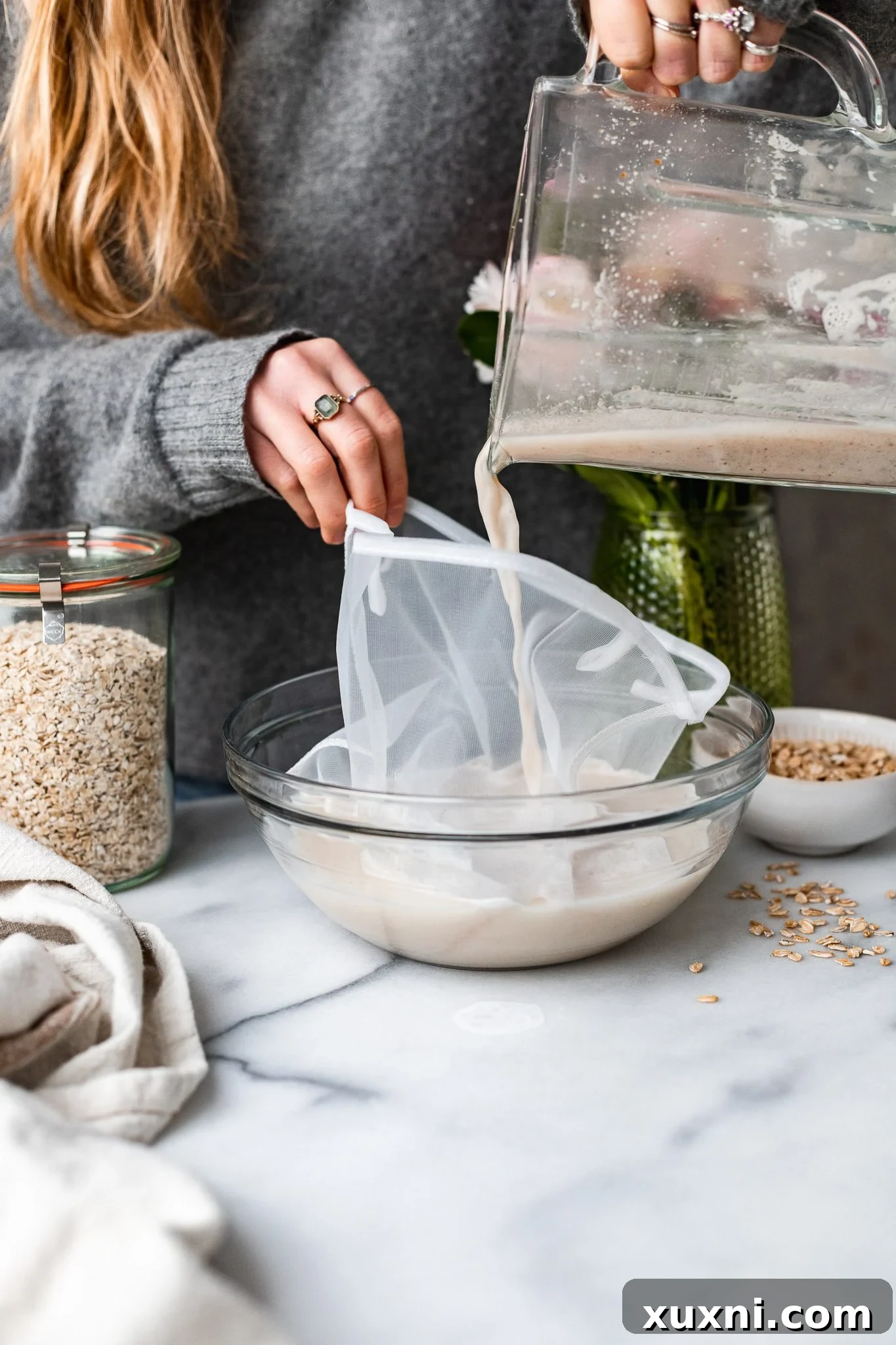
Once blended, prepare for the first straining process. Drape a clean cheesecloth, a dedicated nut milk bag, or a very thin, clean kitchen towel over a large mixing bowl. Secure it firmly, perhaps with an elastic band, to ensure it doesn’t slip. Carefully pour the blended oat mixture into the lined bowl. The goal here is to allow the liquid oat milk to seep through the material into the bowl below, effectively capturing the oat pulp. If you don’t have these specialized tools, a super fine-mesh sieve can work in a pinch, but you will definitely need to double-strain to achieve optimal smoothness.
- Separate the Pulp (No Squeezing!).
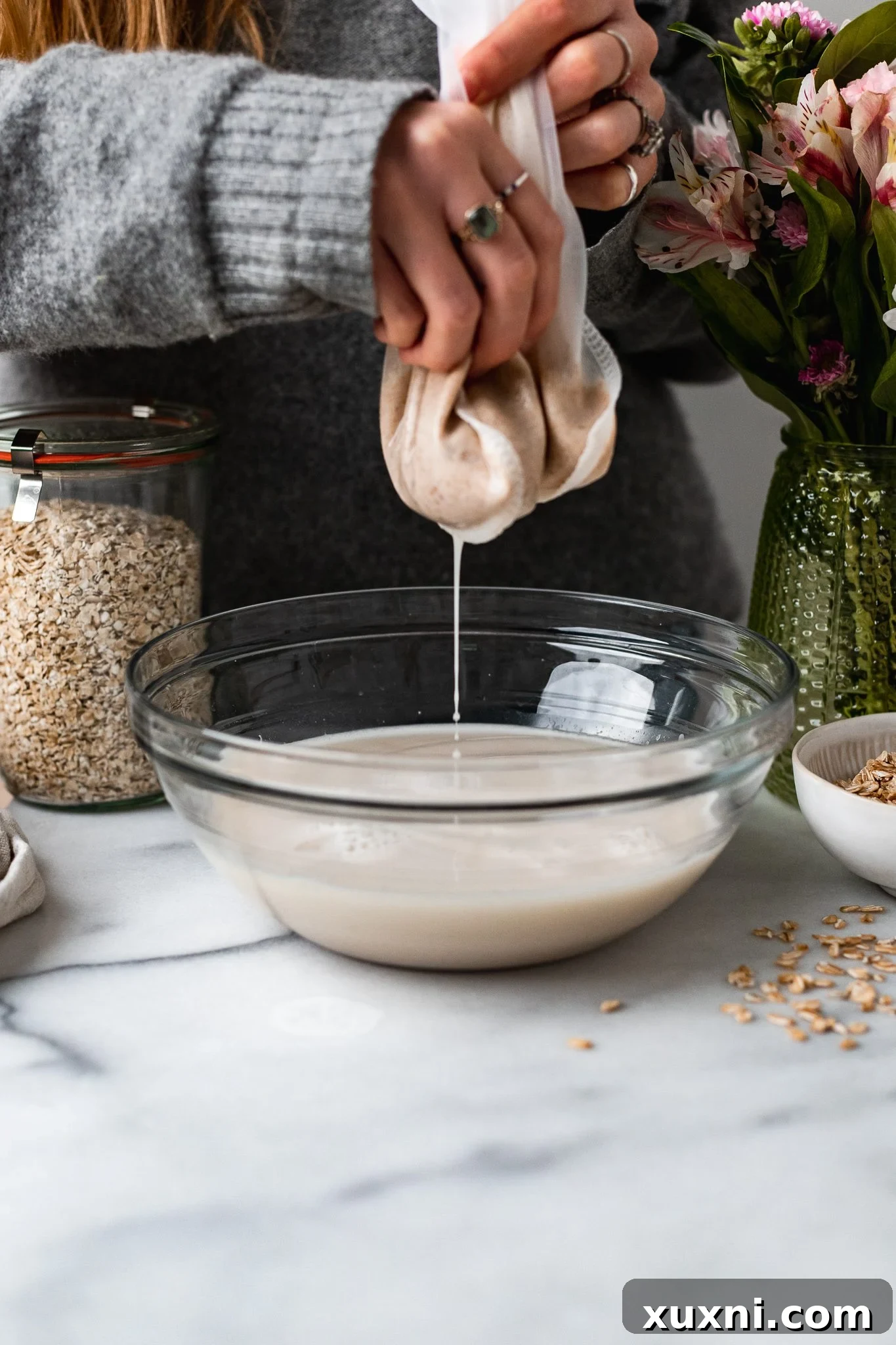
After the majority of the liquid has drained through, carefully gather the edges of the cheesecloth or nut milk bag to form a pouch containing the oat pulp. Gently lift this pouch, allowing any remaining liquid to drip naturally into the bowl. The crucial instruction here is: do not squeeze the pulp aggressively! Unlike making nut milk, where squeezing is common, for oat milk, it will release too much starch and fine particles, leading to sliminess. A very light, minimal squeeze is acceptable if you feel there’s a significant amount of liquid left, but prioritize gentle draining. Once the dripping slows, discard the oat pulp or save it for another recipe (it can be used in baking or composted). Pour the now single-strained oat milk back into your clean blender pitcher.
- Double Strain for Ultimate Smoothness.
For truly superior texture and an impeccably smooth finish, we will double strain the oat milk. Re-cover your empty bowl with a fresh piece of cheesecloth or a clean nut milk bag, or use the same one if thoroughly rinsed. Pour the oat milk from the blender through the straining material once more. This second strain ensures that any lingering fine particles or minuscule oat fibers are removed, yielding the creamiest, silkiest oat milk imaginable. Again, avoid aggressive squeezing. This extra step, while seemingly minor, makes a significant difference in achieving a professional-quality, non-slimy result.
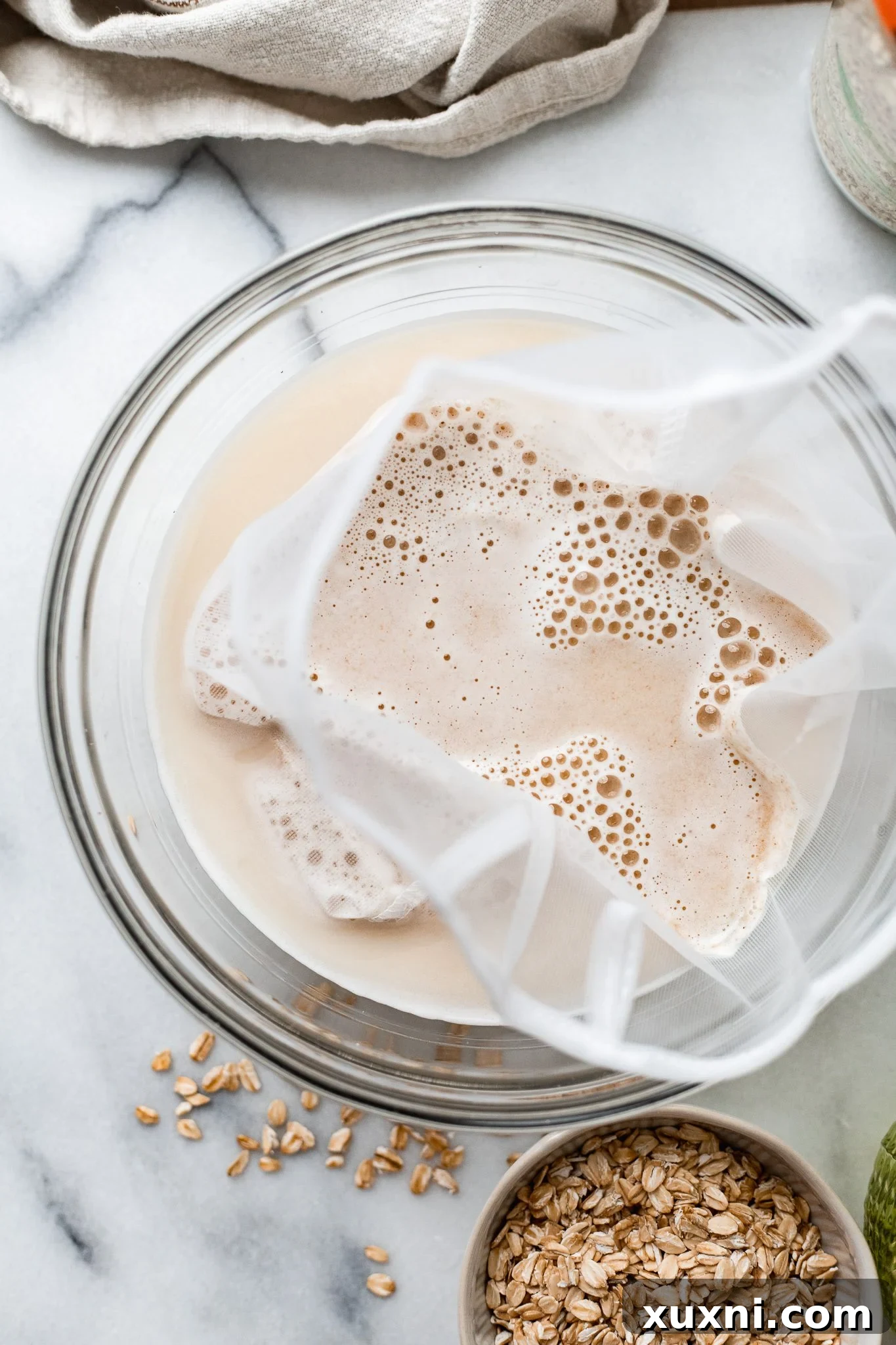
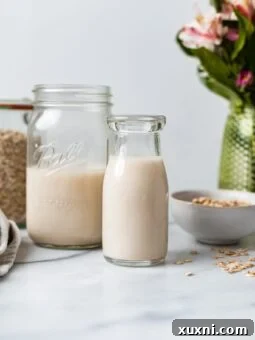
And that’s it! Your delicious, homemade, and perfectly non-slimy oat milk is ready. Simply pour your double-strained oat milk into a clean, airtight glass bottle or container and store it in the refrigerator. This entire process, from start to finish, truly takes a mere 3-5 minutes, making it an ideal solution for those times when you desperately need a creamy addition to your morning coffee or a key ingredient for a sweet recipe!
Britt’s Essential Tips for Perfect Homemade Oat Milk Every Time
Having personally navigated the trial-and-error journey of making oat milk – which included more than a few “oobleck” messes, much like the infamous non-Newtonian fluid from childhood experiments – I’ve distilled the process down to foolproof methods. My goal is to equip you with all the best tips, so you can achieve creamy, smooth oat milk without any of the sliminess. We’ve already covered the three main culprits behind slimy oat milk, but here are a few more essential tips to guarantee perfection with every batch:
- Embrace the Double Strain for Unbeatable Creaminess: While a single strain will give you oat milk, double straining is the secret to an incredibly creamy and smooth texture that rivals store-bought brands. Yes, it adds a tiny bit of extra effort, but the entire process still remains under 5 minutes from start to finish. This second pass through the cheesecloth or nut milk bag removes any remaining fine sediment, resulting in a truly luxurious mouthfeel.
- The Golden Rule: Do NOT Over-Blend!: This cannot be emphasized enough. Blend your oats and water for a maximum of 40 seconds. In fact, 30-35 seconds is often even better! Any blending beyond this short window creates excessive friction and heat, accelerating the breakdown of oat starches and inevitably leading to that undesirable slimy texture. Watch the clock and be precise!
- Storage is Key for Freshness: To keep your homemade oat milk at its freshest and prevent it from spoiling prematurely, always store it in a completely sealed, airtight container. My top recommendations are a glass Weck jar or a classic Mason jar with a tight-fitting lid. This minimizes air exposure and helps maintain its quality for longer.
- Don’t Worry About Sediment – It’s Natural!: If, after a day or two, you notice a layer of oat sediment settling at the bottom of your glass or container, there’s absolutely no need for concern. This is a completely natural occurrence for homemade oat milk, as it contains no artificial gums, emulsifiers, or thickeners that prevent separation in commercial versions. Simply give the bottle a good shake a few times before each use, and your oat milk will become perfectly creamy again.
Versatile Uses for Your Delicious Homemade Oat Milk
The beauty of homemade oat milk lies in its incredible versatility. You can use it in virtually any application where you would typically use regular dairy milk or other dairy-free alternatives. Its naturally creamy texture and mild flavor make it an excellent choice for a wide array of culinary creations. Here are just a few ideas to get you started:
- Morning Beverages: Elevate your daily coffee, tea, or matcha latte with a generous splash of creamy oat milk. It froths beautifully for lattes and cappuccinos, offering a rich texture without the distinct coconut flavor found in some plant milks. It’s also fantastic in herbal coffee!
- Smoothies and Shakes: Create ultra-creamy and nutritious smoothies. Oat milk provides a smooth base that blends well with fruits, vegetables, and protein powders, adding a subtle sweetness and body.
- Baking and Desserts: From cakes and cookies to muffins and pancakes, oat milk performs exceptionally well in baked goods. Try it in my famous vegan vanilla cake or my easy chocolate cheesecake for dairy-free treats that everyone will adore. Its neutral flavor won’t interfere with your dessert’s intended taste.
- Savory Dishes: Don’t limit oat milk to sweet recipes! It’s an excellent addition to creamy soups, sauces, and gravies. Imagine the richness it can bring to dishes like my indulgent vegan gnocchi soup or my flavorful Marry Me Tofu pasta. It can even be used to make a dairy-free béchamel sauce or a creamy curry base.
- Cereal and Oatmeal: A classic pairing! Pour homemade oat milk over your favorite cereal or use it as the liquid base for a comforting bowl of oatmeal.
- Straight Up!: Honestly, this oat milk is so good, especially with the optional date and vanilla, you might just find yourself drinking it straight from the glass! It’s wonderfully refreshing and satisfying.
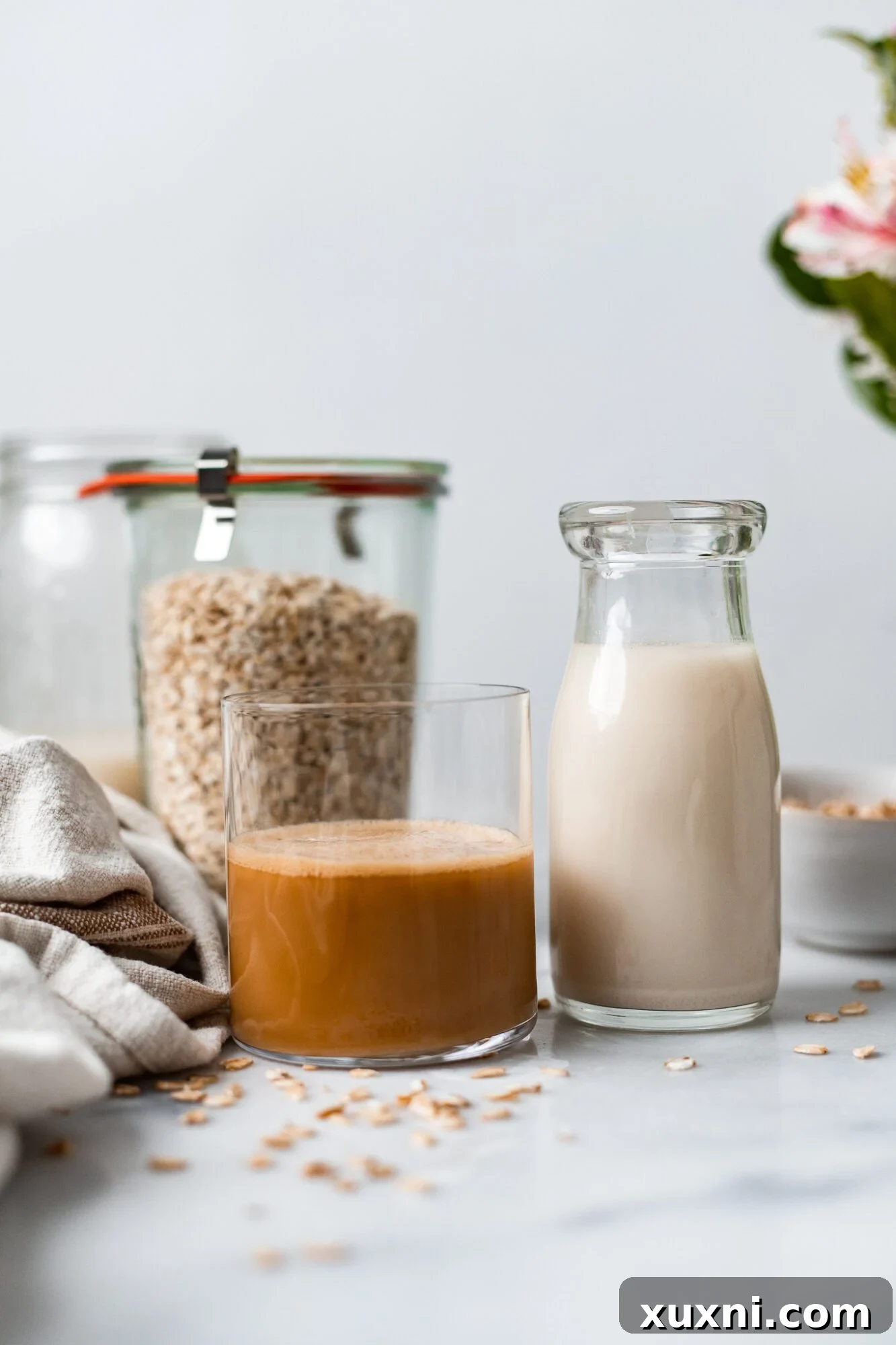
Recognizing Spoilage: How to Tell When Your Homemade Oat Milk Has Gone Bad
Understanding the shelf life of homemade oat milk is important, as it differs from commercially produced varieties. Typically, fresh homemade oat milk will last for approximately 4-5 days when stored correctly in an airtight container in the refrigerator. After this period, it’s best to err on the side of caution and either use it up or discard it.
The most reliable indicator that your oat milk has spoiled is a change in smell. When it starts to go bad, you’ll likely notice a distinct, slightly sour, or “funky” odor that is different from its fresh, neutral aroma. Its texture might also become unusually thick or clumpy, and in some cases, you might observe a change in color, although smell is usually the first and clearest sign.
It’s important to remember that homemade oat milk has a shorter shelf life compared to store-bought dairy-free milks (like almond milk or commercial oat milk) because it lacks the preservatives, stabilizers, and ultra-high temperature pasteurization processes used in commercial production. While this means it doesn’t last as long, it also means you’re consuming a pure, additive-free product. For many of us, fresh oat milk is consumed so quickly that its shorter lifespan isn’t an issue at all!
Recipe Variation: How to Make Decadent Chocolate Oat Milk
Want to turn your plain oat milk into a rich, delicious chocolate treat? It’s incredibly easy to do! Once you’ve successfully blended and double-strained your classic homemade oat milk, transforming it into a chocolate version is just one extra step away.
Here’s how to create luxurious chocolate oat milk:
After your oat milk has been fully blended and strained (and is back in a clean blender pitcher), simply add 2 tablespoons of melted vegan chocolate into the blender with the oat milk. For best results, use a good quality vegan chocolate that has been gently melted. You can melt it in a microwave safe bowl in 30-second intervals, stirring in between, or use a double boiler method.
Once the melted chocolate is added, blend the mixture again for another 15-20 seconds, or until the chocolate is fully incorporated and the milk is smooth and uniformly colored. Taste and adjust sweetness if desired (you might want to add a touch more maple syrup or another date if you like it sweeter). Pour your homemade chocolate oat milk into an airtight container and store it in the fridge. This makes a delightful drink on its own, a perfect base for chocolate smoothies, or an indulgent addition to your coffee!
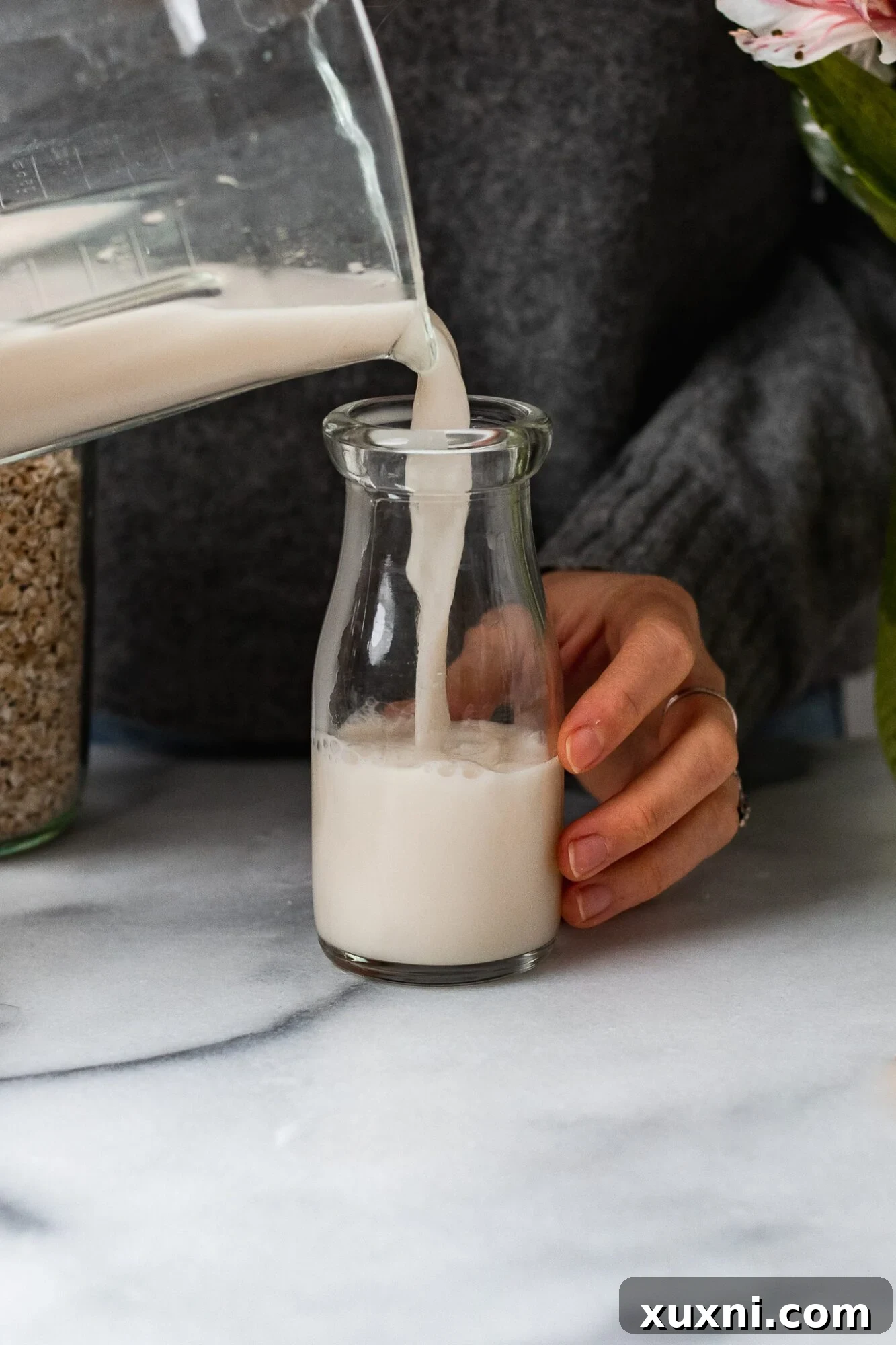
I truly believe you’re going to adore making your own oat milk as much as I do. The satisfaction of crafting something so delicious and versatile with minimal effort is unparalleled. If you give this recipe a try, please don’t hesitate to let me know your thoughts in the comments section below! Your feedback and ratings help other aspiring homemade oat milk makers discover these crucial tips and enjoy the benefits of creamy, non-slimy plant-based milk. As always, I absolutely love to see your beautiful creations, so be sure to tag me on Instagram and Pinterest!
Happy oat-milking, and enjoy your perfectly creamy, homemade dairy-free delight!
Want to save this recipe for later? Add it to your favorite recipe board on Pinterest!
If you make this recipe, please be sure to leave a comment and a rating ⭐️⭐️⭐️⭐️⭐️ below. This helps others to find the recipes! As always, I absolutely love to see your beautiful creations on Instagram and Pinterest, so be sure to tag me there as well!
Print
How to Make Oat Milk (That’s NOT Slimy! Finally!)
5 Stars 4 Stars 3 Stars 2 Stars 1 Star
4.7 from 49 reviews
Author: Britt Berlin
Prep Time: 4
Cook Time: 1
Total Time: 5 minutes
Yield: 6 1x
Method: blending
Description
Learn how to make homemade oat milk in under 5 minutes that is truly creamy and smooth, never slimy! This dairy-free, nut-free recipe is perfect for coffee, baking, and more.
Ingredients
Scale
- 1 cup old-fashioned rolled oats (ensure certified gluten-free if needed)
- 4–6 cups ice-cold filtered water* (see notes for consistency preference)
- 1 tsp vanilla extract (optional, for sweetness)
- Optional: 1 pitted Medjool date (for natural sweetness), a pinch of sea salt, or 1 tsp cinnamon
Instructions
- Add all your measured ingredients (rolled oats, ice-cold water, and any optional flavorings) into the base of a high-speed blender.
- Blend on high for a very short duration – only 30-40 seconds maximum. Blending longer than this will generate heat and over-process the oats, resulting in undesirable slimy oat milk.
- Once blended, set your blender aside. Prepare a large mixing bowl by draping a cheesecloth or a nut milk bag over it, ensuring it is securely positioned.
- Carefully pour the blended oat mixture over the cheesecloth or nut milk bag into the bowl below. Allow the liquid to naturally drip through, separating the oat milk from the pulp. It is crucial NOT to squeeze the cheesecloth or nut milk bag, as this forces starch through and makes the milk slimy. Let gravity do most of the work. Once the majority of the liquid has drained, you can discard the leftover oat pulp or save it for another recipe.
- To ensure the smoothest, creamiest texture, pour the strained oat milk back into the cleaned blender pitcher. We will perform a second strain. Repeat Step 4 once more, using a fresh or thoroughly rinsed cheesecloth/nut milk bag over the clean bowl. This double straining removes any remaining fine particles, guaranteeing a perfectly non-slimy finish.
- Pour your freshly double-strained oat milk into a clean, airtight glass jar or container. Seal it tightly and store it in the refrigerator.
- Your homemade oat milk will remain fresh for approximately 5 days in the refrigerator. You’ll know it has gone bad if it develops a distinct off-odor or a noticeably altered texture. Remember to shake it well before each use as natural separation may occur.
Notes
For additional in-depth tips, troubleshooting advice, and creative uses for your homemade oat milk, please make sure to read the full blog post!
Adjusting Water Amount for Desired Consistency: The amount of water you use directly impacts the thickness and creaminess of your oat milk. If you prefer a thicker, richer oat milk, similar to popular brands like Oatly or Forager Project, use 4 cups of ice-cold filtered water. For a slightly thinner, more pourable consistency that is still wonderfully creamy, opt for 6 cups of water. Experiment to find your perfect preference!
Nutrition
- Serving Size: 1 cup
- Calories: 45
- Sugar: 2.8 g
- Sodium: 9.6 mg
- Fat: 0 g
- Carbohydrates: 8.7 g
- Protein: 1.1 g
- Cholesterol: 0 mg