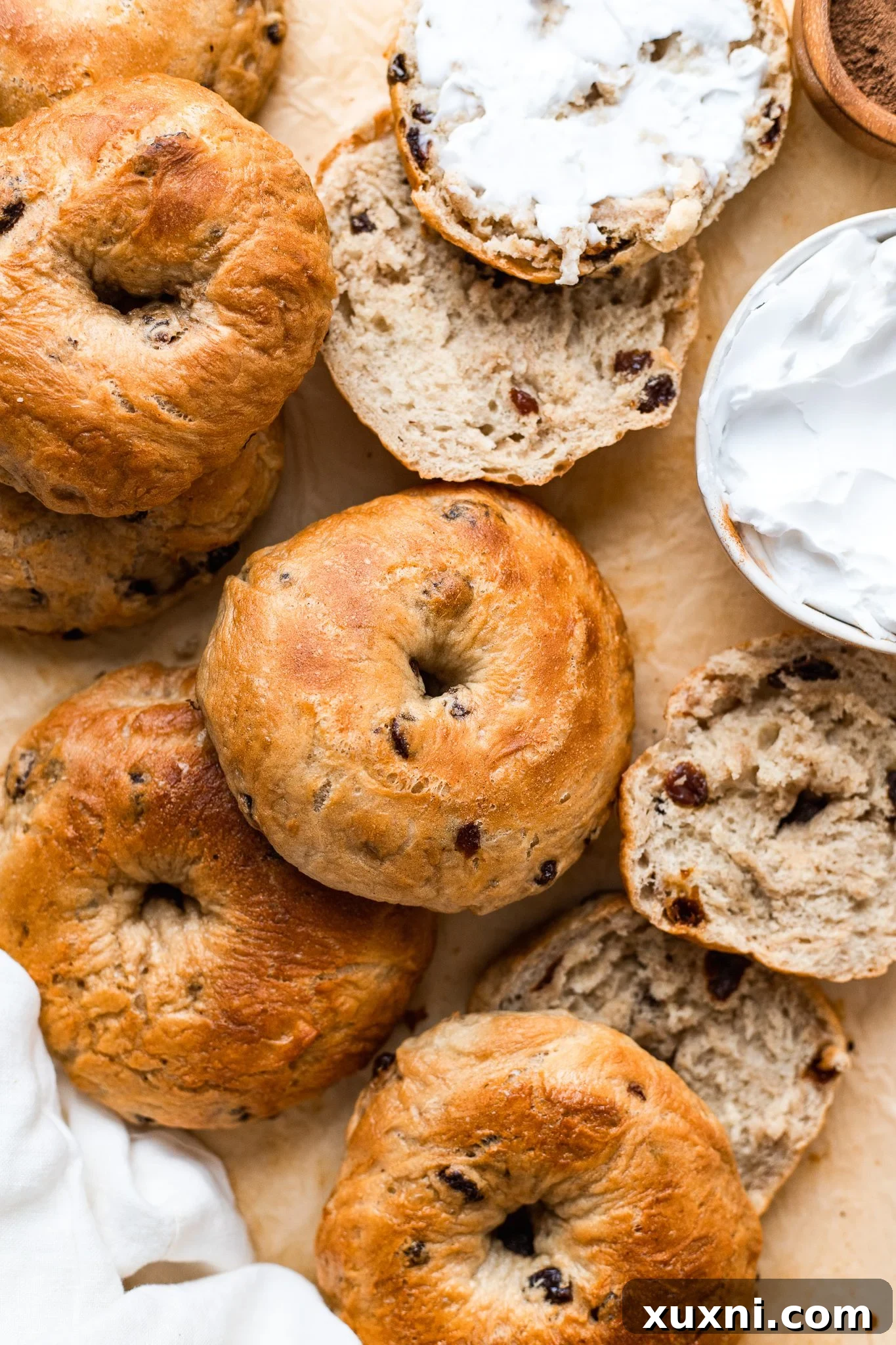
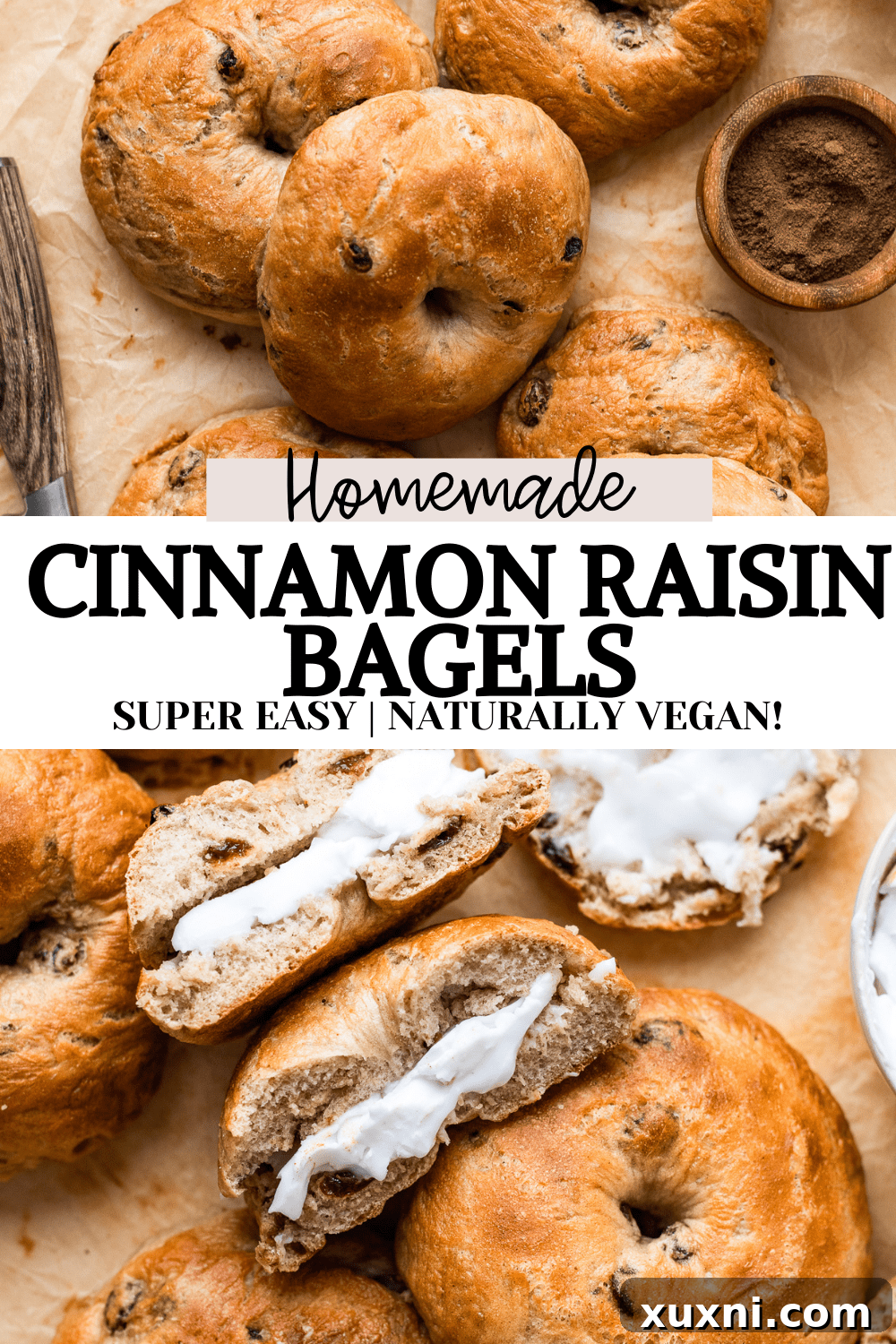
Welcome to the ultimate guide for creating the most delectable homemade cinnamon raisin bagels you’ve ever tasted! Forget those store-bought versions; this recipe delivers a soft, chewy, and perfectly sweet bagel experience right in your own kitchen. Swirled with fragrant cinnamon sugar and dotted with plump, juicy raisins, these naturally vegan bagels are crafted from simple, wholesome ingredients. They are not just better than your local bakery’s offering, but they also bring a delightful touch of nostalgia with every bite. Get ready to embark on a rewarding baking journey that culminates in truly irresistible bagels, perfect for breakfast, brunch, or any time you crave a comforting treat.
Why You’ll Fall in Love with These Homemade Cinnamon Raisin Bagels
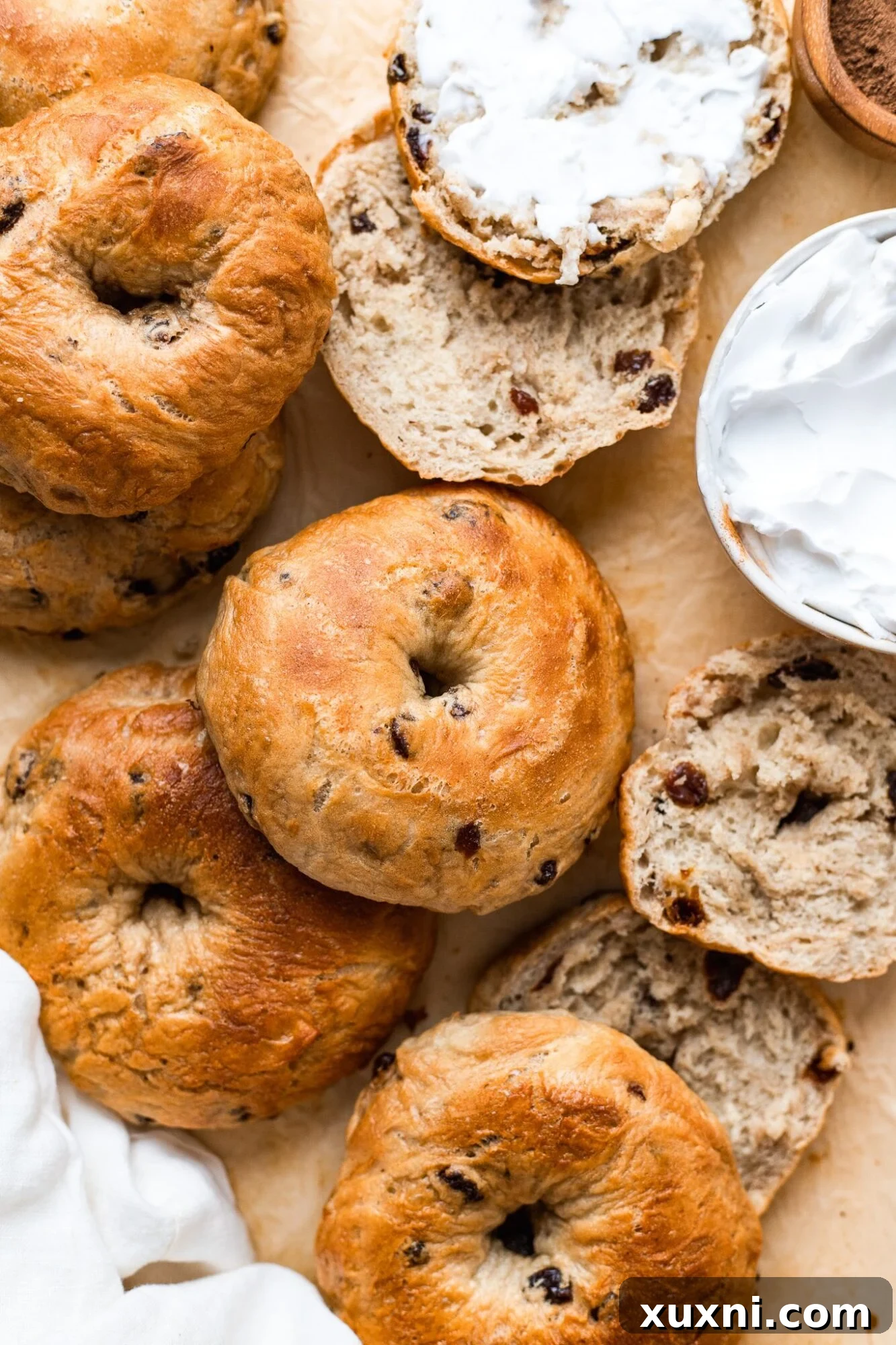
If you have fond memories of warm, toasted cinnamon raisin bagels as a child, then prepare to rediscover that joy – and then some! This homemade recipe captures the essence of that classic flavor profile, elevating it with superior texture and natural goodness. Each bagel is a symphony of sweet cinnamon swirls and succulent raisins, baked into a dough that’s wonderfully
chewy, soft, and satisfyingly doughy. A subtle hint of vanilla rounds out the flavor, making these bagels appealing to both kids and adults. They are truly exceptional when toasted and generously spread with creamy vegan cream cheese, a dusting of extra cinnamon sugar, or simply melted vegan butter.
Beyond their incredible taste and texture, these bagels boast several impressive qualities:
- Naturally Vegan: Crafted without any animal products, these bagels are perfect for those following a vegan lifestyle or looking to incorporate more plant-based options into their diet.
- Refined Sugar-Free Option: With maple syrup and coconut sugar, this recipe allows for an easily adaptable refined sugar-free version, catering to health-conscious bakers.
- Simple Ingredients: You won’t find any obscure items on this ingredient list. We use readily available pantry staples to create bakery-quality bagels.
- Better Than Bakery: The freshness, chewiness, and depth of flavor achieved with homemade bagels simply can’t be matched by most commercial bakeries.
- Versatile: Ideal for a hearty breakfast, a delightful brunch, or a satisfying afternoon snack.
Are Bagels Inherently Vegan? Understanding the Basics
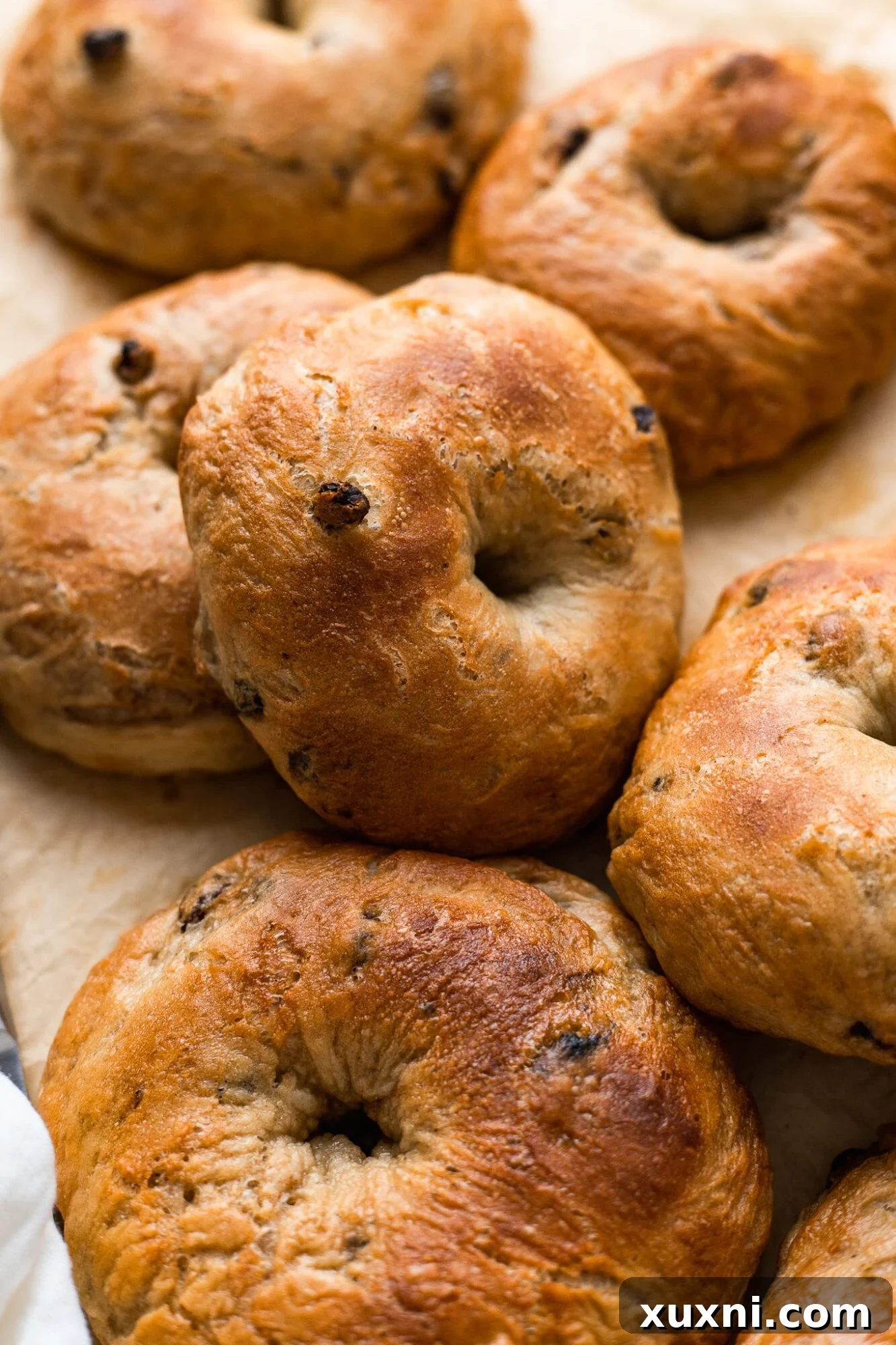
The question of whether bagels are vegan is an important one, and the answer often depends on how they are prepared. Traditionally, a basic bagel recipe includes just four primary ingredients: water, flour, yeast, and salt. All of these are plant-based, making a plain bagel inherently vegan at its core.
However, complications arise in commercial bakeries. Many establishments opt to use an egg wash to brush the tops of bagels before baking. This step helps create that signature shiny, golden-brown crust, but it also renders the bagel
non-vegan. Additionally, some specialty bagels might include milk, cheese, or other non-vegan ingredients directly in the dough.
When purchasing bagels from a bakery, it’s always best to inquire about their ingredients and preparation methods. Specifically ask if the bagels contain any egg, milk, or cheese. This clarity ensures you can enjoy your bagel with confidence, especially since the term “vegan” might sometimes be misunderstood by those unfamiliar with the dietary specifics.
Rest assured, this particular homemade cinnamon raisin bagel recipe is meticulously designed to be
100% vegan. You can enjoy every soft, chewy bite knowing that it aligns perfectly with a plant-based diet. This recipe ensures everyone, regardless of dietary preferences, can savor a truly great homemade bagel.
Essential Ingredients for Your Vegan Bagels
Crafting these exceptional vegan bagels requires a selection of straightforward, yet crucial, ingredients. As previously noted, the base dough of most bagels is typically vegan. The key to our vegan cinnamon raisin bagels lies in both the dough and our clever “egg wash” alternative. Here’s a detailed look at what you’ll need:
- Activated Dry Yeast: The magic behind the rise! Ensure your yeast is fresh and properly activated for optimal dough expansion.
- Water: Filtered water, heated to a precise 110°F (43°C), is vital for blooming the yeast correctly.
- Maple Syrup & Coconut Sugar: Maple syrup serves as a fantastic, naturally refined sugar-free substitute for traditional malt syrup often found in bagel recipes, contributing a subtle sweetness and helping with browning. Coconut sugar is used for the delightful cinnamon sugar swirl, offering a rich, caramel-like sweetness. Feel free to use brown sugar if coconut sugar isn’t available or preferred.
- Flour: A blend of all-purpose flour with a touch of cornstarch creates a wonderfully tender yet chewy crumb. Bread flour can also be used for an even chewier texture, thanks to its higher protein content.
- Salt: Essential for flavor balance and to control yeast activity.
- Vanilla Extract: Adds a warm, aromatic depth that complements the cinnamon beautifully.
- Cinnamon: The star spice, providing that signature warm and comforting flavor throughout the bagels.
- Raisins: Sweet, chewy, and classic. Opt for no-sugar-added raisins for a healthier touch. If you’re out of raisins, dried cranberries make a delicious alternative, adding a tart counterpoint to the sweetness.
To achieve that coveted glossy sheen on our baked bagels, traditionally accomplished with an egg wash, we’ll use an ingenious vegan alternative: a simple mixture of melted vegan butter (or coconut oil) and maple syrup. This combination not only provides a beautiful shine but also adds another layer of subtle sweetness and richness to the crust.
Step-by-Step Guide to Crafting Homemade Cinnamon Raisin Bagels
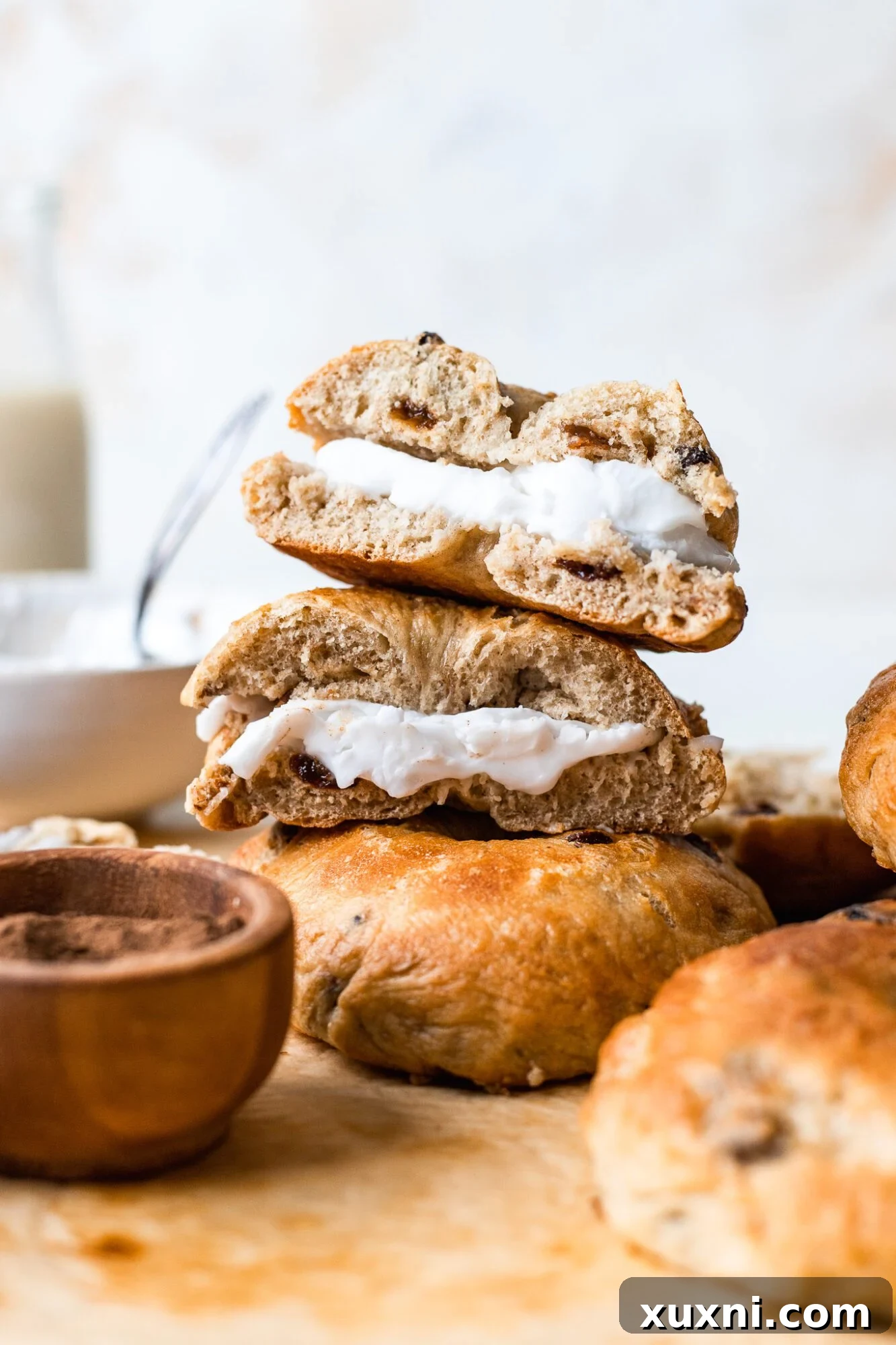
Whether you’re a seasoned bread baker or trying your hand at yeast dough for the first time, making these vegan bagels is a rewarding and surprisingly straightforward process. Below, we’ll provide a clear overview of the key steps. For precise measurements and detailed instructions, please refer to the complete recipe card at the end of this post.
- Activate the Yeast: This initial step is paramount for ensuring your dough rises properly. Gently heat filtered water to precisely 110°F (43°C). Any hotter and you risk killing the yeast; too cool, and it won’t activate effectively. Combine the warm water with yeast, a touch of maple syrup, and a tablespoon of flour. Cover the mixture and let it rest in a warm spot for 10-15 minutes. You’re looking for a foamy layer to form on the surface and a distinct yeasty aroma, indicating successful activation.
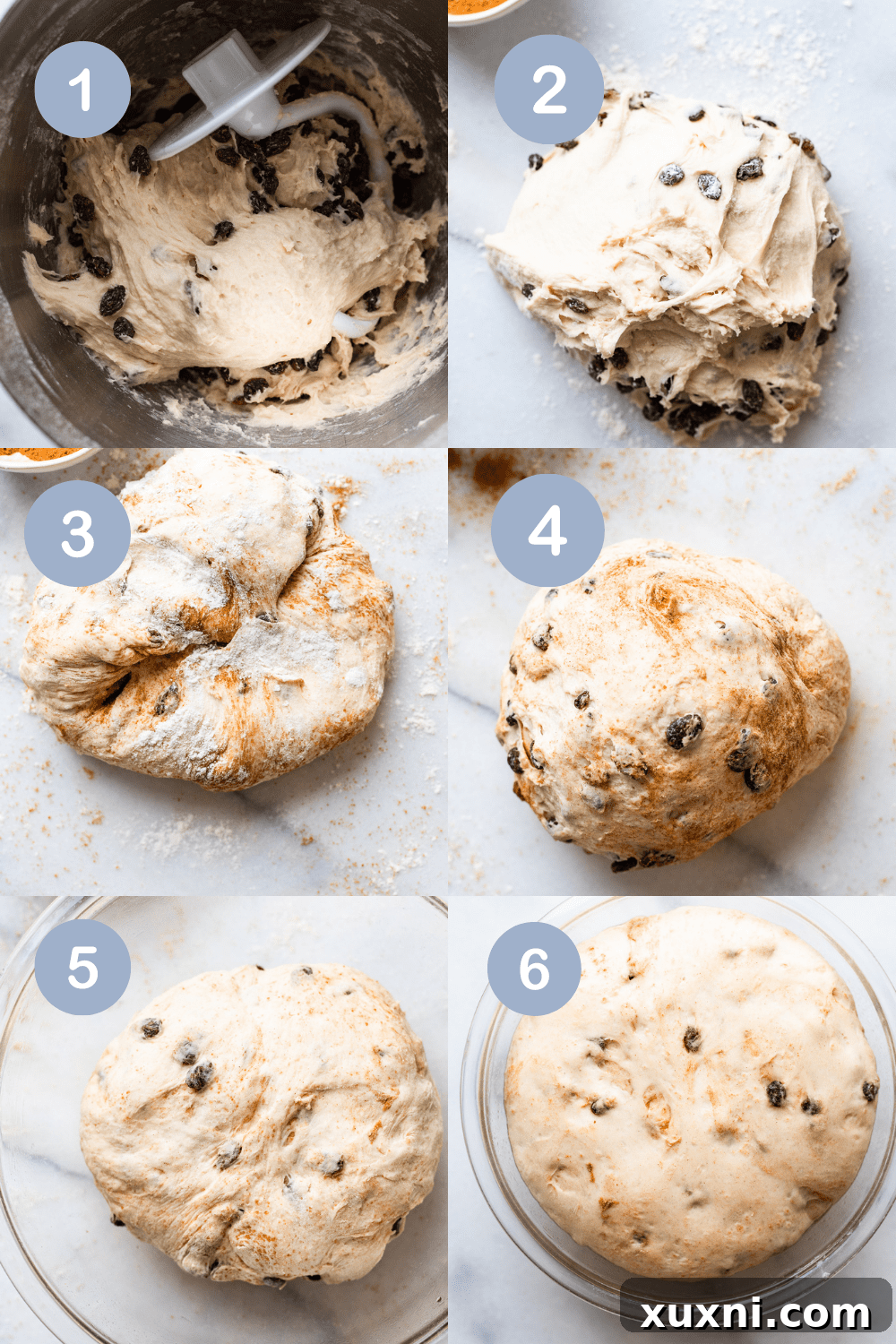
- Prepare the Cinnamon Raisin Dough: Once your yeast is active and bubbly, it’s time to bring the dough together. You can achieve excellent results using either a stand mixer with a dough hook or by hand with a sturdy wooden spoon. Gradually incorporate the bloomed yeast mixture, vanilla extract, and additional maple syrup into the dry ingredients (flour, cornstarch, salt). Mix until a shaggy dough forms, then continue kneading. The raisins are folded in towards the end of the initial mixing, ensuring they are evenly distributed.
- Infuse with Cinnamon Sugar: Transfer the raisin-studded dough to a lightly floured surface. Now comes the delightful part: gently knead in the cinnamon sugar mixture. This process typically takes about 5-7 minutes, during which you’ll fold and work the cinnamon sugar into the dough, creating beautiful swirls and infusing every part with flavor. The dough should become smooth, elastic, and form a cohesive ball.
- First Proofing (Rise): Place the kneaded dough into a lightly oiled bowl, turning it once to coat. Cover the bowl with a clean kitchen towel and allow it to proof in a warm environment until it has doubled in size. This usually takes 45-60 minutes, depending on the warmth of your space. An oven with the light on or a “proof” setting works perfectly.
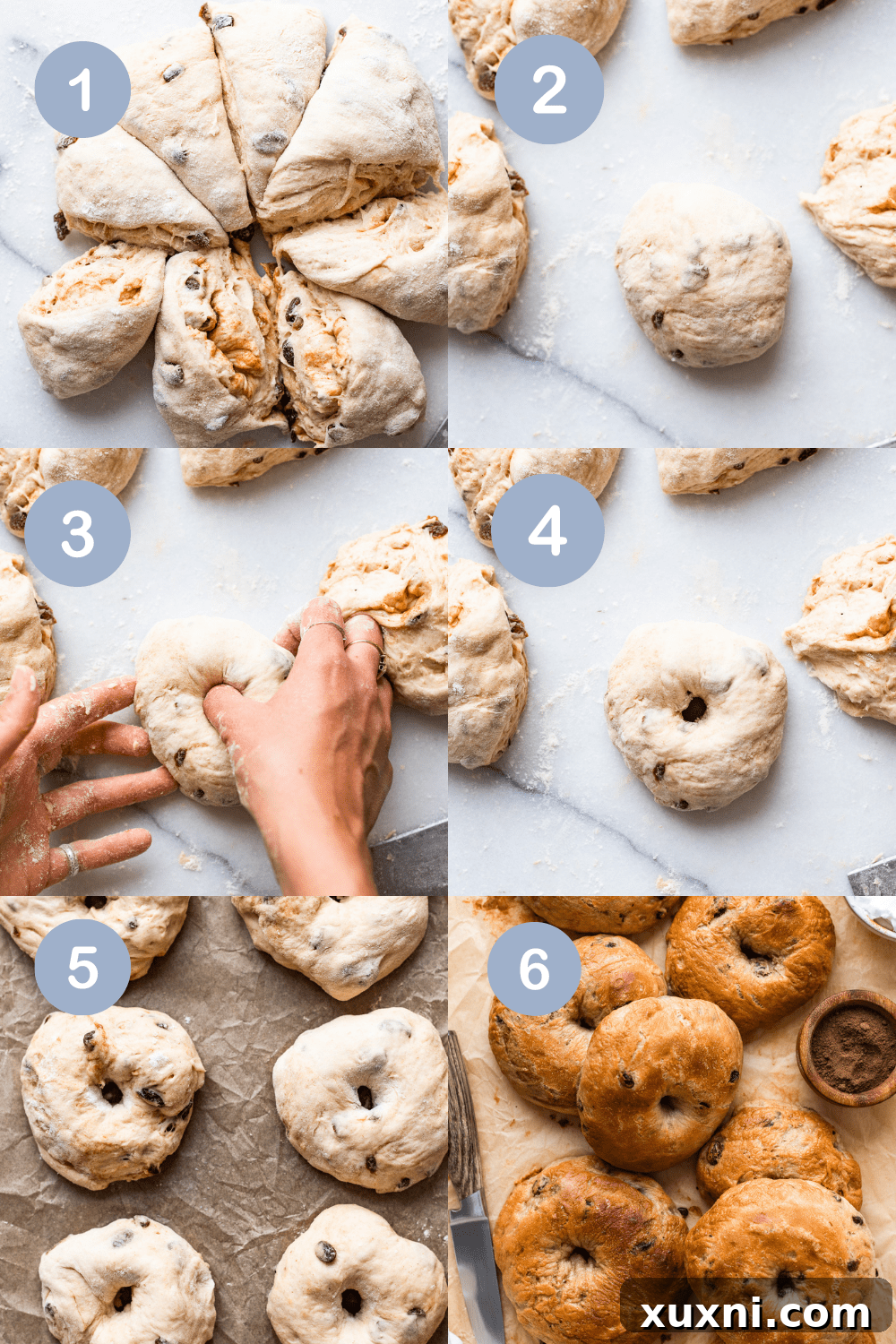
- Shape the Bagels: After the first rise, gently punch down the dough to release the air. Divide the dough into eight equal portions. For each portion, roll it into a smooth ball. Then, press your thumb through the center of the ball to create a hole. Gently stretch the dough around the hole to enlarge it slightly, forming the classic bagel shape. Place the shaped bagels onto parchment-lined baking sheets, leaving space between them.
- Second Proofing: Cover the shaped bagels with clean kitchen towels and let them rest for another 30 minutes. This allows them to puff up slightly before boiling.
- Boil the Bagels: This is a critical step for achieving the signature chewy texture of a classic bagel. Bring a large pot of water to a rolling boil. Carefully place one or two bagels at a time into the boiling water. Boil each bagel for exactly 1 minute, then use a slotted spatula to transfer them back to the baking sheets. They will appear quite puffy.
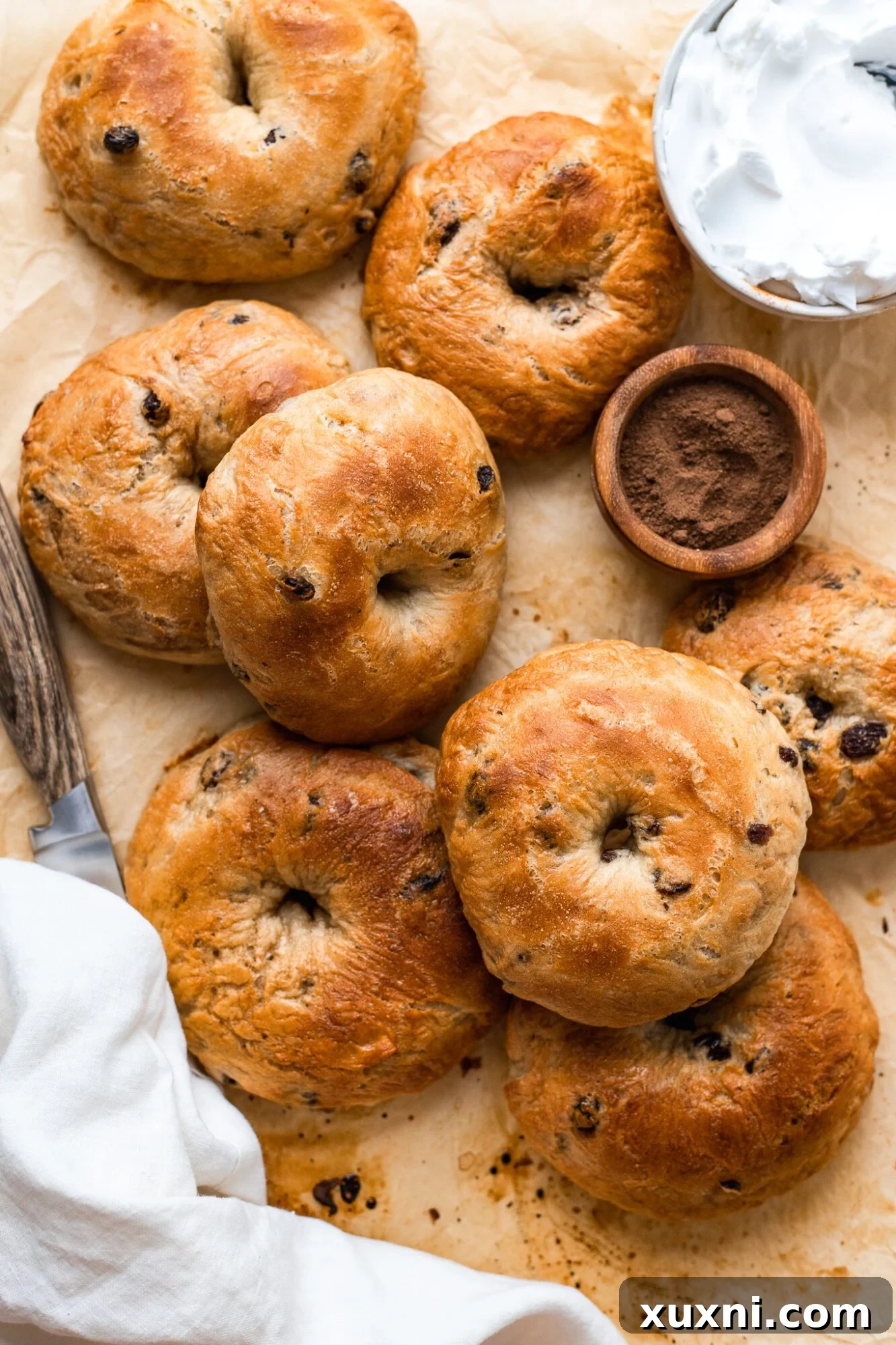
- Bake to Golden Perfection: Before baking, brush each boiled bagel with our homemade vegan “egg wash” (melted vegan butter and maple syrup). This ensures a beautiful golden crust. Transfer the baking sheets to a preheated 425°F (220°C) oven and bake for 20-23 minutes, rotating the pans halfway through for even browning. Once golden, remove them from the oven and let them cool on a rack for 10-15 minutes before slicing and enjoying.
The Non-Negotiable Step: Why Boiling Bagels is Essential
You might wonder if the boiling step is truly necessary when making bagels at home. The answer is a resounding yes! The brief water bath before baking is what gives bagels their characteristic chewy texture and shiny crust, distinguishing them from ordinary bread rolls.
During the boiling process, the raw bagel dough absorbs a small amount of water, which gelatinizes the starch on the surface. This creates a protective barrier that seals in moisture during baking. Without this step, your bagels would bake up more like fluffy, soft bread rolls, lacking the dense, chewy interior and slightly crisp exterior that defines a true bagel. The boiling also contributes to the unique flavor profile by enhancing the maltiness and depth of the crust. So, for an authentic, bakery-quality bagel experience, do not skip the boil! It’s a quick step that yields incredible results.
Storage and Freezing Tips for Your Homemade Bagels
Once you’ve enjoyed your freshly baked cinnamon raisin bagels, you’ll want to ensure any leftovers stay delicious for as long as possible. Proper storage is key:
Room Temperature: For immediate enjoyment, store your bagels in an airtight bag or container at room temperature for up to 2-3 days. This helps maintain their soft texture.
Fridge: To extend their freshness slightly, you can store them in an airtight container in the refrigerator for up to a week. Be aware that refrigeration can sometimes alter the texture of bread products.
Freezer: For longer-term storage, freezing is your best bet. Place the cooled bagels in an airtight freezer bag or container and store them for up to 2 months. To thaw, simply transfer them to the refrigerator overnight, or for a quicker method, place them on a parchment-lined baking sheet and warm them in a 350°F (175°C) oven for 5-7 minutes until heated through and slightly crisp. You can also slice them before freezing for easier toasting directly from frozen.
Irresistible Vegan Bagel Topping Ideas
Once your homemade cinnamon raisin bagels are ready, the possibilities for toppings are endless! Whether you’re fully vegan or simply exploring more plant-based options, these suggestions will take your bagel experience to the next level:
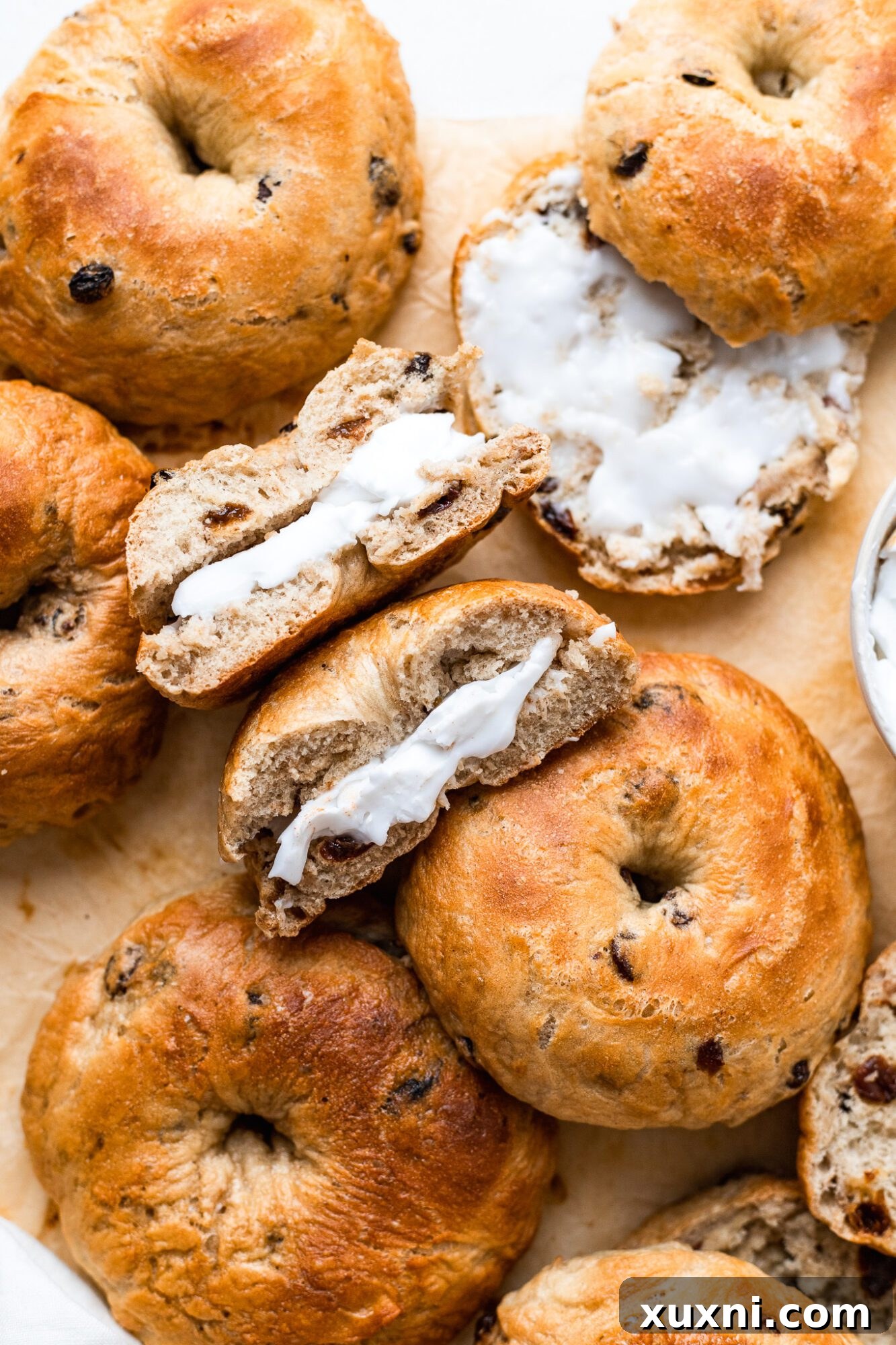
- Vegan Cream Cheese: A classic pairing! Brands like Violife offer incredibly creamy and satisfying vegan cream cheese options that spread beautifully. Consider a plain or a subtly sweet cinnamon-flavored variety.
- Melted Vegan Butter: Simple, yet profoundly delicious. A generous smear of melted vegan butter (Flora Plant Butter is a fantastic choice) enhances the bagel’s natural sweetness and provides a rich mouthfeel.
- Cinnamon Sugar Sprinkle: Elevate the cinnamon flavor by adding an extra sprinkle of cinnamon and brown sugar on top of melted butter or cream cheese.
-
Nut Butters:
- Peanut Butter: A protein-packed and satisfying choice.
- Cashew Butter: Creamy and mild, perfect for those who prefer a less intense nut flavor.
- Homemade Vegan Nutella: Indulge in a rich, chocolatey hazelnut spread. It’s surprisingly easy to make your own healthier version at home.
- Vegan Yogurt with Fruit: For a lighter, fresher option, spread a layer of vegan yogurt (Forager Project is highly recommended) and top with sliced bananas, fresh berries, or other seasonal fruits.
- Mashed Banana & Cinnamon: A naturally sweet and healthy topping, especially when paired with a dash of extra cinnamon.
Tips for Perfect Homemade Bagels Every Time
Achieving bakery-quality bagels at home is entirely possible with a few key considerations:
- Precision with Yeast Activation: The water temperature for blooming yeast is crucial. Use a thermometer to ensure it’s precisely 110°F (43°C). Too hot will kill the yeast, too cold will prevent it from activating.
- Proper Kneading: Whether by hand or mixer, kneading develops the gluten, which is essential for that signature chewy texture. Knead until the dough is smooth, elastic, and passes the “windowpane test” (you can stretch a small piece thin enough to see light through it without tearing).
- Warm Proofing Environment: Yeast loves warmth! A slightly warm, draft-free spot is ideal for the dough to rise effectively. An oven with just the light on can create the perfect microclimate.
- Don’t Over-Boil: While boiling is essential, don’t overdo it. One minute per side is typically sufficient to create the desired crust without making the bagel too dense.
- Use Parchment Paper: Bagels can be sticky after boiling. Parchment paper prevents them from sticking to the baking sheet, ensuring they keep their shape.
Troubleshooting Common Bagel Baking Issues
Even experienced bakers encounter hiccups. Here are solutions to common bagel problems:
- Dough Not Rising: This is almost always a yeast issue. Ensure your yeast is fresh (check expiration dates!) and that your water temperature was correct during activation. If your yeast doesn’t foam, discard and start with new yeast.
- Dense, Hard Bagels: This could be due to over-kneading (which tightens gluten excessively) or insufficient proofing. Ensure you’re not adding too much extra flour during kneading and allow the dough to fully double in size during the first rise.
- Flat Bagels: If your bagels flatten out after shaping or boiling, it usually indicates insufficient gluten development (not enough kneading) or over-proofing (the dough rose too much and then collapsed).
- Bagels Sticking to the Pot/Sheet: Always use a slotted spatula for boiling, and ensure your baking sheets are well-lined with parchment paper.
Get Creative: Bagel Flavor Variations
While cinnamon raisin is a classic, you can easily adapt this recipe to create other delightful vegan bagel flavors:
- Blueberry Bagels: Fold in fresh or frozen blueberries (no need to thaw) during the last few minutes of kneading. Adjust sweetness slightly if using fresh berries.
- Everything Bagels: Omit the cinnamon and raisins. After boiling and brushing with the vegan “egg wash,” generously sprinkle with an everything bagel seasoning blend before baking.
- Sesame Seed Bagels: Skip the cinnamon and raisins. After boiling and brushing, dip the bagels in sesame seeds before placing them on the baking sheet.
- Chocolate Chip Bagels: Replace raisins with vegan chocolate chips for a sweet treat.
- Savory Herb Bagels: For a savory twist, omit the cinnamon, raisins, and cinnamon sugar. Instead, knead in a blend of dried herbs like oregano, basil, and garlic powder.
You are truly going to absolutely love these easy vegan cinnamon raisin bagels! They are incredibly fun to make and yield results that taste out of this world amazing. The best bagels are always the ones enjoyed fresh out of the oven, aren’t they?
Happy bagel baking!
If you make this recipe, please be sure to leave a comment and a rating ⭐️⭐️⭐️⭐️⭐️
below. This helps others to find the recipes! As always, I absolutely love to see your beautiful creations on Instagram and Pinterest, so be sure to tag me there as well!
More Vegan Bread Recipes You’ll Love:
Classic Homemade Vegan Bagels
Best Vegan Dinner Rolls
Easy Vegan Focaccia
Best Vegan Brioche Bread
Want to save this recipe for later? Add it to your favorite recipe board on Pinterest!
If you make this recipe, please be sure to leave a comment and a rating ⭐️⭐️⭐️⭐️⭐️
below. This helps others to find the recipes! As always, I absolutely love to see your beautiful creations on Instagram and Pinterest, so be sure to tag me there as well!
Easy Homemade Cinnamon Raisin Bagels | Vegan
5 from 1 review
- Author: thebananadiaries
- Prep Time: 30 minutes
- Additional Time: 90 minutes rise time, 10 minutes boiling
- Cook Time: 20 minutes
- Total Time: Approximately 2 hours 30 minutes (active + rise time)
- Yield: 8 Bagels
- Category: Breakfast
- Method: Baking
- Cuisine: American
- Diet: Vegan
Description
These super chewy, soft, and sweet homemade cinnamon raisin bagels are the homemade bagel recipe to make! With swirls of sweet cinnamon and chewy raisins in every bite, these naturally vegan bagels are made with the simplest ingredients and taste better than a bakery!
Ingredients
- 2.5 tsp activated dry yeast
- 375 mL filtered water, heated to 110°F (43°C)
- 1 tsp maple syrup, room temperature (for yeast)
- 1 tbsp flour (for yeast)
- 520 grams all-purpose flour or bread flour*
- 1 tbsp cornstarch or arrowroot starch
- 1/2 tsp sea salt
- 2 tbsp maple syrup (for dough)
- 1 tsp vanilla extract
- 145 grams raisins, no sugar added
- 3 tbsp brown sugar or coconut sugar (for swirl)
- 2 tbsp ground cinnamon (for swirl)
- 1 tbsp melted vegan butter with 1 tbsp maple syrup (for “egg wash”)
*Note: Bread flour will result in a chewier bagel.
Instructions
- Please read through all instructions before beginning.
- Measure out all ingredients before beginning. Make sure that your water is 110F when you bloom the yeast.
- Bloom the yeast: To a medium bowl, combine the water, dried yeast, 1 tsp maple syrup, and 1 tbsp flour. Mix with a wooden spoon, cover, and set aside to rest for 10-15 minutes. The yeast should start to form foam at the top of the water and begin to smell yeasty. If it does not, you might need to start from scratch. As the yeast is blooming, grease a large clean bowl with olive oil for the first proof. Set aside.
- Make the raisin dough: In a large bowl, whisk together the flour, cornstarch, and salt. Then in a stand mixer with a dough attachment or in a large bowl with a wooden spoon, add the bloomed yeast mixture, vanilla extract, 2 tbsp maple syrup, and about 1/3 of the flour mixture. Mix on medium speed for 1 minute, then stop and add in the remaining flour. Mix on medium speed to begin, then switch to medium-high speed to knead the dough for 2-3 minutes. Add in the raisins as the dough is being mixed until they’re evenly distributed.
- Knead the dough with the cinnamon sugar: In a small bowl, combine the brown sugar (or coconut sugar) and 2 tbsp cinnamon. Set aside. On a clean floured surface, lightly flour the dough and begin to knead it for 5-7 minutes. As you continue to knead, take a few tablespoons of the cinnamon sugar mixture and knead it into the dough, folding it and working it in. Continue kneading until you’ve used up all of the cinnamon sugar mixture, about 5-7 minutes total. The dough should be smooth and easily formed into a large ball.
- Proof the dough: Place the cinnamon raisin dough into your clean greased bowl and cover with a clean kitchen towel. Place in a warm area that’s at least 85°F (29°C) to proof until doubled in size, about 45-60 minutes. While the dough is rising, line two baking sheets with parchment paper.
- Shape the bagels: Once the dough has risen, lightly punch it down and flour a clean surface once more. Lightly knead to deflate the dough on the surface, then divide the dough into 8 even sections using a bench scraper or large kitchen knife. It’s easiest to lightly flour the knife before slicing the dough. Take one piece of bagel dough and lightly knead it into a small and smooth ball. Press your thumb into the middle of the dough ball to form a hole. Gently work your hands around the bagel to slightly stretch the hole and form the classic bagel shape. Place the formed bagel onto a baking sheet lined with parchment paper. Repeat for the remaining dough balls, placing four bagels onto each baking sheet, spaced apart.
- Second proof: Cover each baking sheet with a clean kitchen towel and allow the shaped bagels to rise for 30 minutes.
- While the bagels are rising: Bring a large kitchen pot with 4 quarts of water to a boil. Preheat the oven to 425°F (220°C).
- Once the water is boiling: Use a slotted spatula and carefully place one bagel at a time into the boiling water. (You can place about two bagels into the pot to boil together.) Allow the bagels to boil for 1 minute (30 seconds per side if you prefer a slightly less chewy bagel), then carefully remove them with the slotted spatula and place them back onto the baking sheet. They will be very puffy! Repeat for the remaining bagels.
- Before baking: In a small bowl, whisk together the melted vegan butter and 1 tbsp maple syrup. Brush each bagel top generously with this combination.
- Bake the bagels: Place the baking sheets into the oven to bake for 20-23 minutes. About halfway through, rotate the pan to ensure the tops evenly brown. Remove the bagels once the tops are lightly golden brown.
- Allow the bagels to cool for 10 minutes: Let the bagels cool at room temperature on a cooling rack for 10 minutes before slicing. Then serve with vegan cream cheese, vegan butter, peanut butter, cashew butter, or enjoy as is!
- Storage: Store any leftover bagels in an airtight bag or container at room temperature for up to 2 days, in the fridge for up to a week, or in the freezer for up to 2 months.
Nutrition
- Serving Size: 1 bagel (approximate, without “egg wash” topping)
- Calories: 337
- Sugar: 17.8 g
- Sodium: 153.1 mg
- Fat: 0.9 g
- Saturated Fat: 0.1 g
- Carbohydrates: 75 g
- Fiber: 3.8 g
- Protein: 8 g
- Cholesterol: 0 mg
*Nutritional information is an estimate and may vary based on specific ingredient brands and preparation methods.