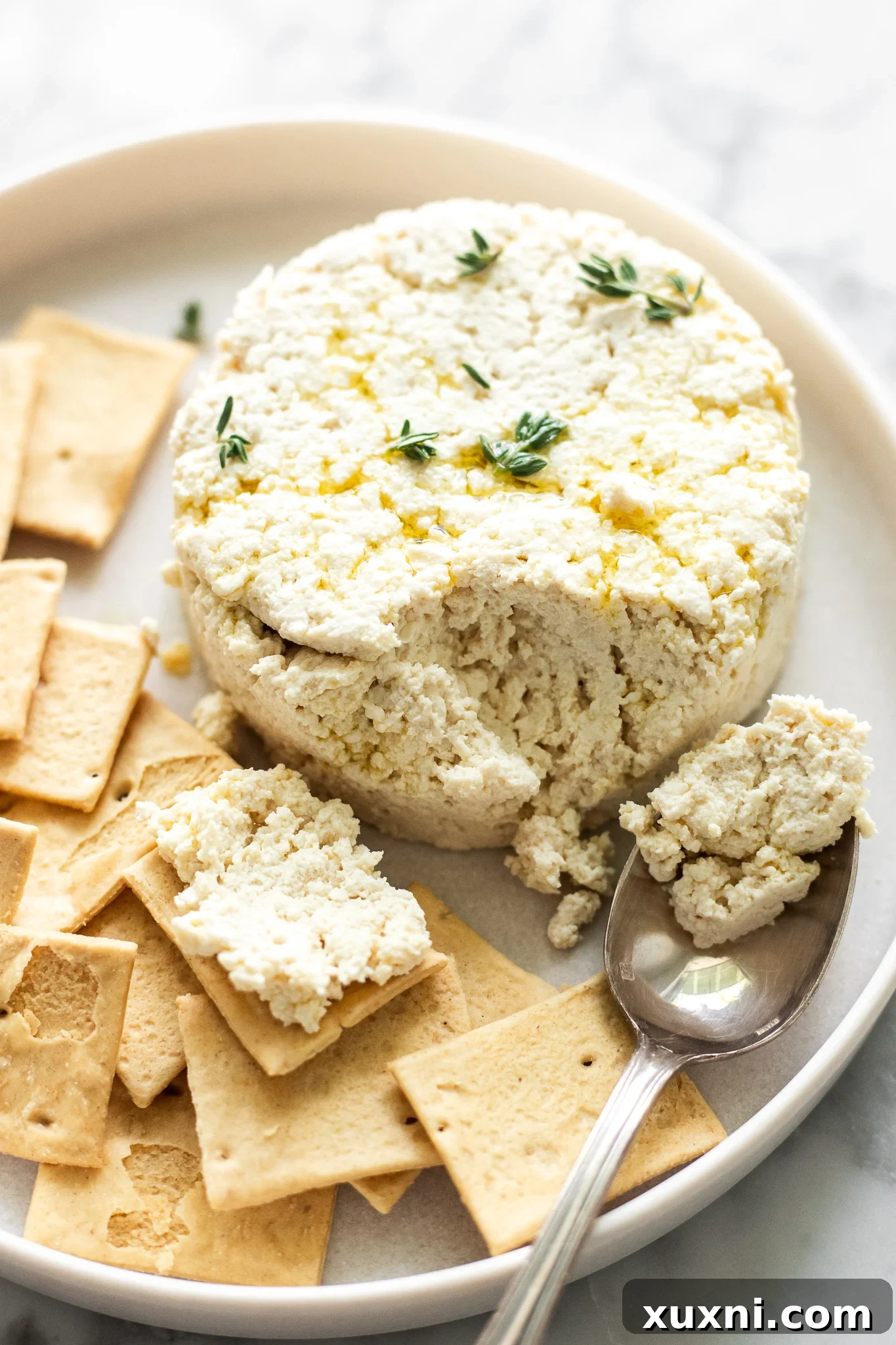
Unlock the secret to an incredibly creamy, dairy-free ricotta right in your own kitchen! Forget about store-bought alternatives that often contain nuts or soy, and prepare to be amazed by this truly traditional, two-ingredient vegan ricotta. Crafted without any tofu or almonds, this recipe mirrors the ancient Italian cheesemaking process, resulting in a delightfully rich and versatile product. Its smooth, decadent texture makes it ideal for a multitude of culinary creations – from savory spreads and indulgent lasagna to classic vegan cannoli and beyond. Get ready to elevate your plant-based cooking with a homemade staple that promises to be a game-changer.
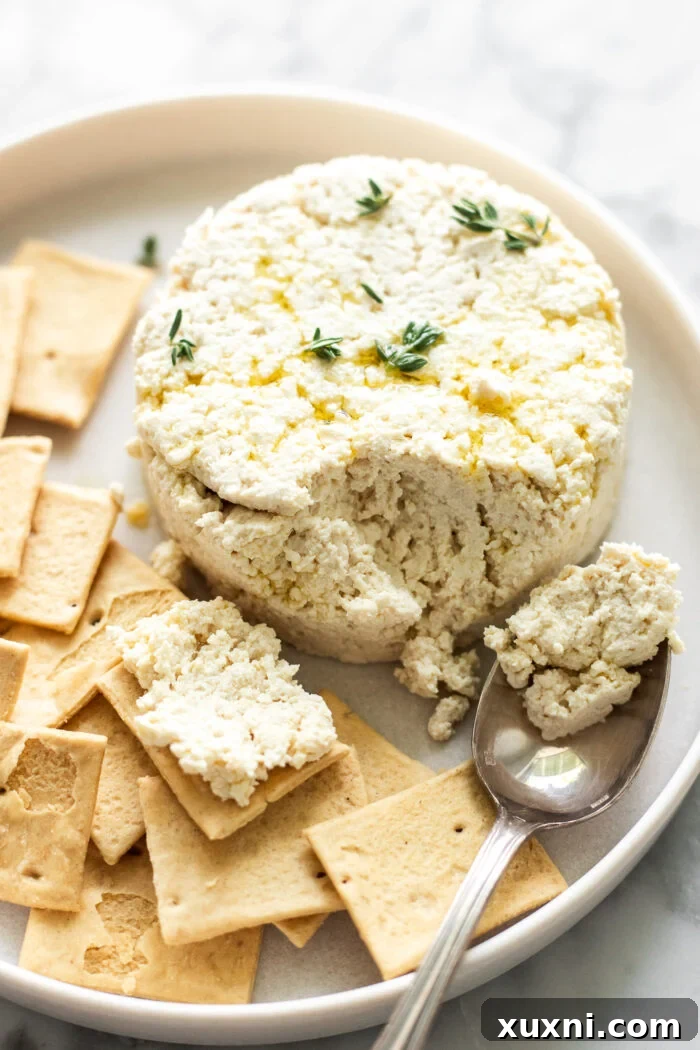
Experience the Best Vegan Ricotta, Crafted with a Traditional Method
For those on a relentless quest for the ultimate vegan ricotta – whether homemade or from a specialty store – your search ends here. This remarkably simple, swift, and utterly delicious recipe will redefine your expectations. We’re not just making a vegan version; we’re employing the very same principles used in traditional ricotta production, adapting them for a plant-based kitchen. This approach is similar to how we achieve our homemade vegan mascarpone and vegan cream cheese, ensuring authentic texture and flavor without complexity.
What truly sets this recipe apart is its ingenious simplicity and accessibility. You won’t need a pantry full of specialized vegan ingredients. Say goodbye to lengthy lists, expensive nuts, or the often-used tofu base that can alter the flavor profile. Our method bypasses these common ingredients, offering a genuinely nut-free and soy-free alternative that’s perfect for those with allergies or anyone seeking a cleaner, more minimalist approach to vegan cheesemaking. This means a rich, creamy ricotta that everyone can enjoy, free from common allergens and artificial additives.
The beauty of this recipe lies in its ability to replicate the delicate, slightly granular, yet incredibly smooth texture of authentic Italian ricotta. The process involves coagulating plant-based proteins, much like dairy ricotta is made from the whey proteins of other cheeses. This results in a product that is not only visually appealing but also holds its form beautifully, making it ideal for various culinary applications. Whether you’re layering it into a savory dish or folding it into a sweet dessert, its authentic consistency will shine through.
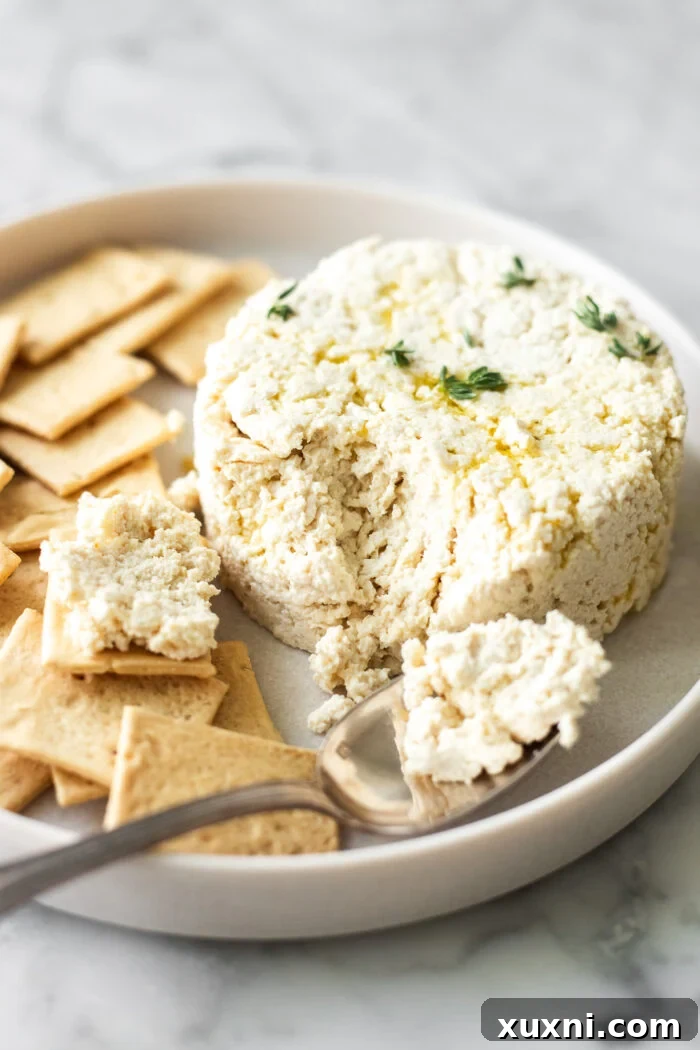
This easy-to-make, from-scratch dairy-free ricotta seamlessly fits into all your culinary endeavors, transitioning effortlessly from savory to sweet. Imagine it as the star in your favorite vegan lasagna recipe, providing that essential creamy layer, or as the luscious filling for decadent vegan cannoli. Its mild, fresh flavor makes it a versatile canvas for any dish.
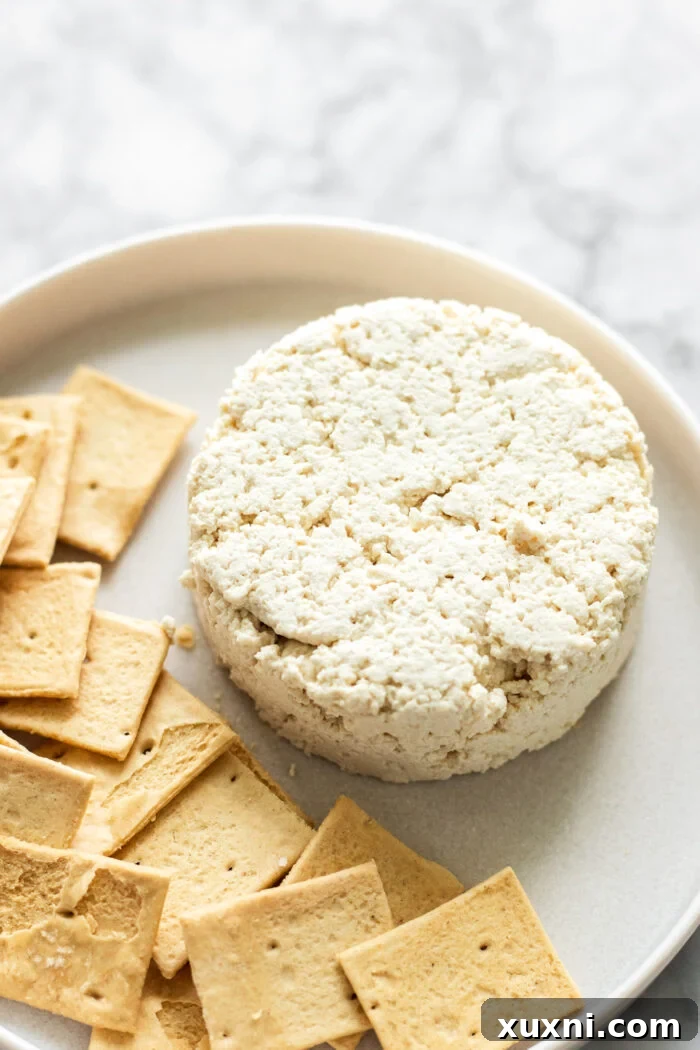
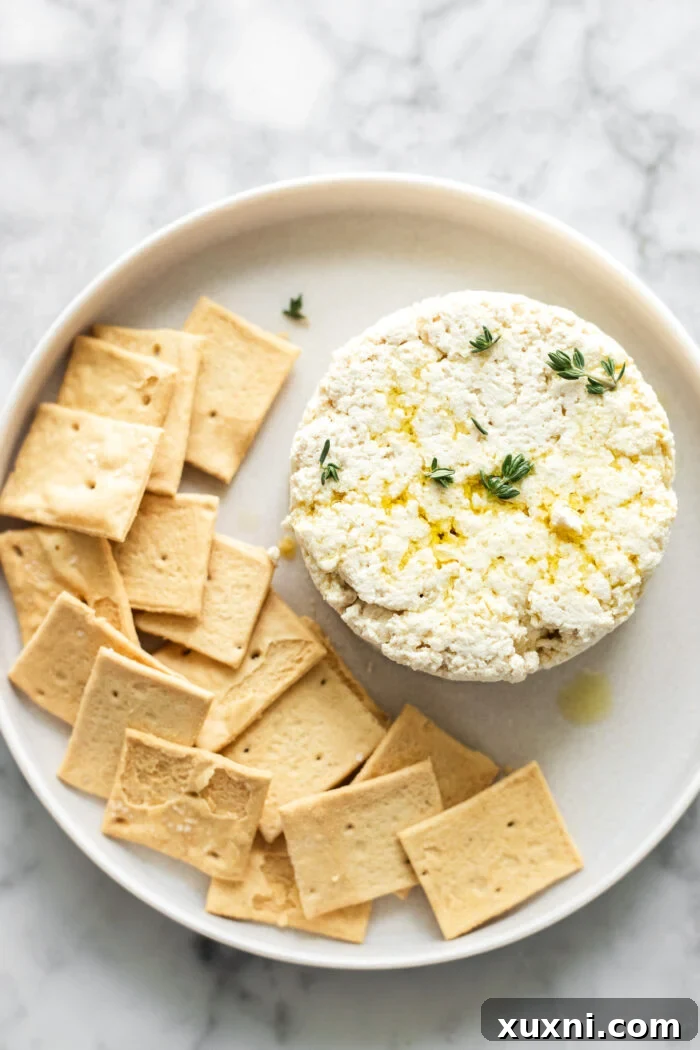
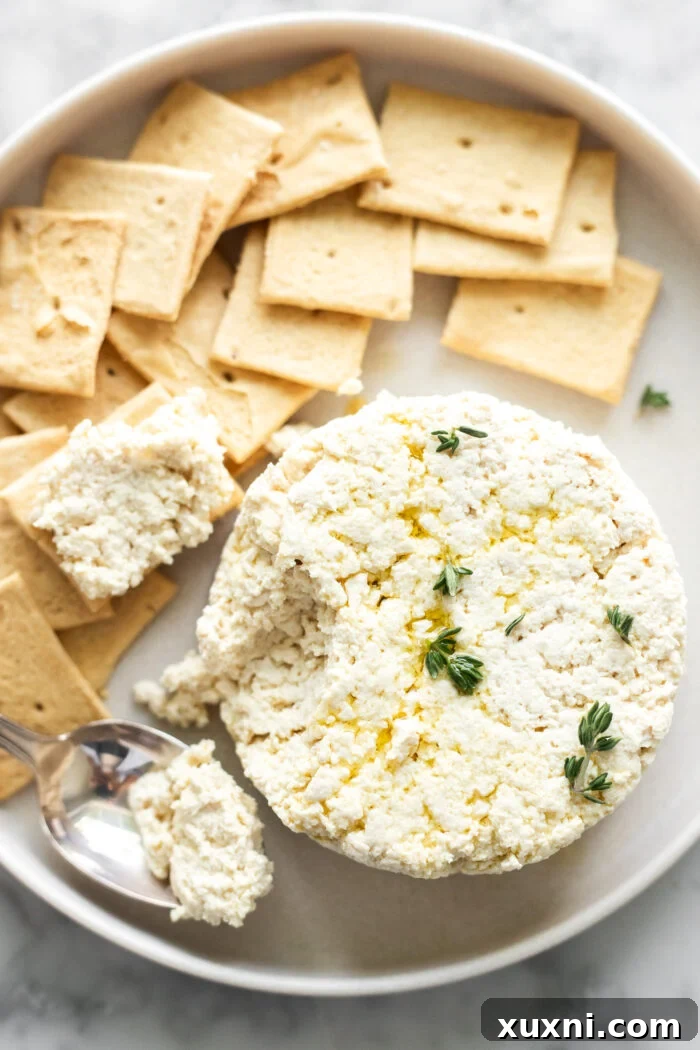
Beyond these classic uses, this vegan ricotta truly shines in simpler preparations. Picture it generously spread on crusty bread or crispy crackers, drizzled with a high-quality extra virgin olive oil, sprinkled with fresh herbs like basil or chives, and seasoned with a touch of flaky sea salt. This creates an exquisite appetizer or a sophisticated snack that highlights its creamy texture and delicate taste. It’s the perfect versatile vegan cheese component for snacking, cooking, and baking – a true kitchen essential that you’ll find yourself reaching for again and again. Its adaptability ensures it will quickly become a cherished part of your plant-based repertoire.
Unveiling the Two Essential Ingredients for this Remarkable Vegan Ricotta
The magic of this vegan ricotta lies in its minimalist ingredient list. You only need two core components to achieve a rich, creamy, and authentic-tasting dairy-free cheese. These carefully selected ingredients interact synergistically to replicate the traditional ricotta-making process, ensuring a perfect texture and mild flavor every time.
- Pea Milk: This is the cornerstone of our vegan ricotta. Pea milk, particularly brands like Ripple, stands out due to its remarkably high protein content, which mimics the protein structure of dairy milk. This protein-rich composition is crucial because it allows the proteins to coagulate effectively when introduced to an acid, forming the curds that are the foundation of ricotta. These curds are then gently pressed to create your final vegan ricotta.
A Crucial Note on Pea Milk Selection: It is paramount that you select **refrigerated pea milk**, not the shelf-stable, room-temperature variety. While shelf-stable options offer convenience, they often contain stabilizers or processing methods that prevent the essential protein coagulation required for this recipe. Using shelf-stable pea milk will likely result in a failed batch where the milk simply won’t curdle, no matter how much acid or heat you apply. Always check the dairy aisle for refrigerated pea milk to ensure success.
While this recipe is meticulously designed to be soy-free and nut-free, offering a fantastic option for those with allergies, you can substitute pea milk with other high-protein plant milks if necessary. Both soy milk and almond milk have been tested and can work, as their protein content also allows for coagulation. However, be mindful that these alternatives will introduce soy or nuts into the recipe, deviating from the intended allergen-friendly profile. Pea milk remains the top recommendation for its neutral flavor and exceptional coagulation properties.
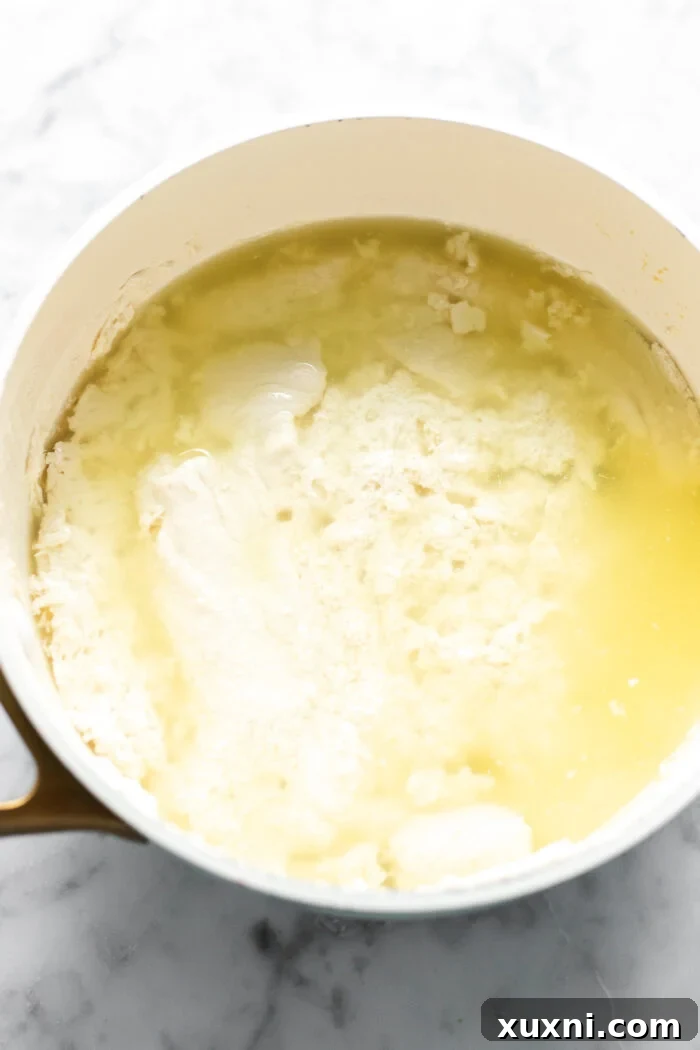
- Vinegar (or Lemon Juice): The second essential ingredient is an acid, which acts as the catalyst for curdling. When heated, this acid reacts with the proteins in the pea milk, initiating a coagulation process. This reaction causes the milk to separate into solid curds (our future ricotta) and a thin, yellowish liquid, much like the “whey” found in traditional cheesemaking.
For optimal results, rice vinegar is an excellent choice as it provides the necessary acidity without imparting a strong flavor, ensuring your ricotta remains neutral and versatile. White vinegar can also be used, or for a brighter, slightly citrusy note, fresh lemon juice works wonderfully. The key is the acidic component that triggers the separation, transforming simple pea milk into delectable vegan ricotta.
Zero-Waste Cooking: Making the Most of Leftover Vegan Whey
As a recipe creator, minimizing waste is always a top priority for me. It’s incredibly satisfying to find ways to utilize every possible component of a recipe. The creation of this vegan ricotta will leave you with a byproduct – the leftover liquid, or “whey,” from the pea milk. Don’t let this valuable liquid go to waste!
Drawing inspiration from my vegan mascarpone recipe, where readers shared brilliant ideas, this pea milk “whey” can be repurposed in numerous ways. It’s an excellent addition to smoothies, boosting their nutritional profile and adding a subtle creaminess. It can also enrich the base of soups, adding depth and body without altering the flavor significantly. Furthermore, this liquid can be used to help thicken sauces, providing a natural emulsifier and a velvety texture. Some even use it as a base for baking, where its moisture can enhance breads or cakes. So, rest assured, that extra liquid created from your vegan ricotta is a resource, not waste, ready to be incorporated into other delicious recipes!
Step-by-Step Guide: Crafting Your Own Vegan Ricotta
While the complete, detailed instructions and precise ingredient measurements are located in the recipe card at the bottom of this post (or accessible via the “jump to recipe” button at the top), this section provides a helpful visual and descriptive overview of each step, designed to ensure a seamless and successful cheesemaking experience.
Elevate Your Culinary Creations: How to Make Whipped Vegan Ricotta
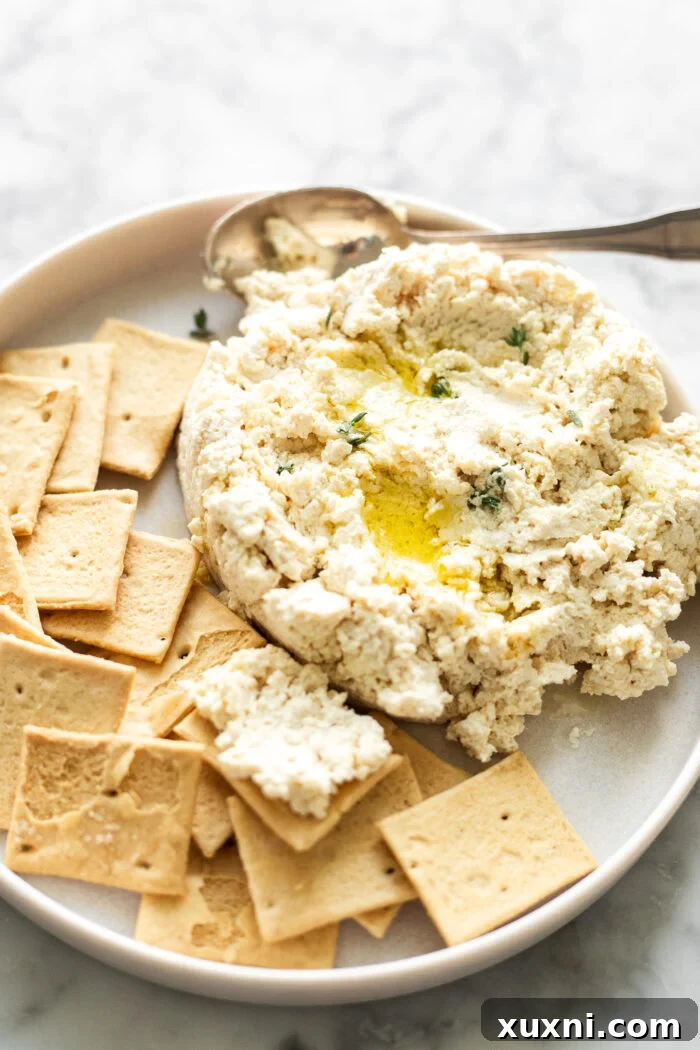
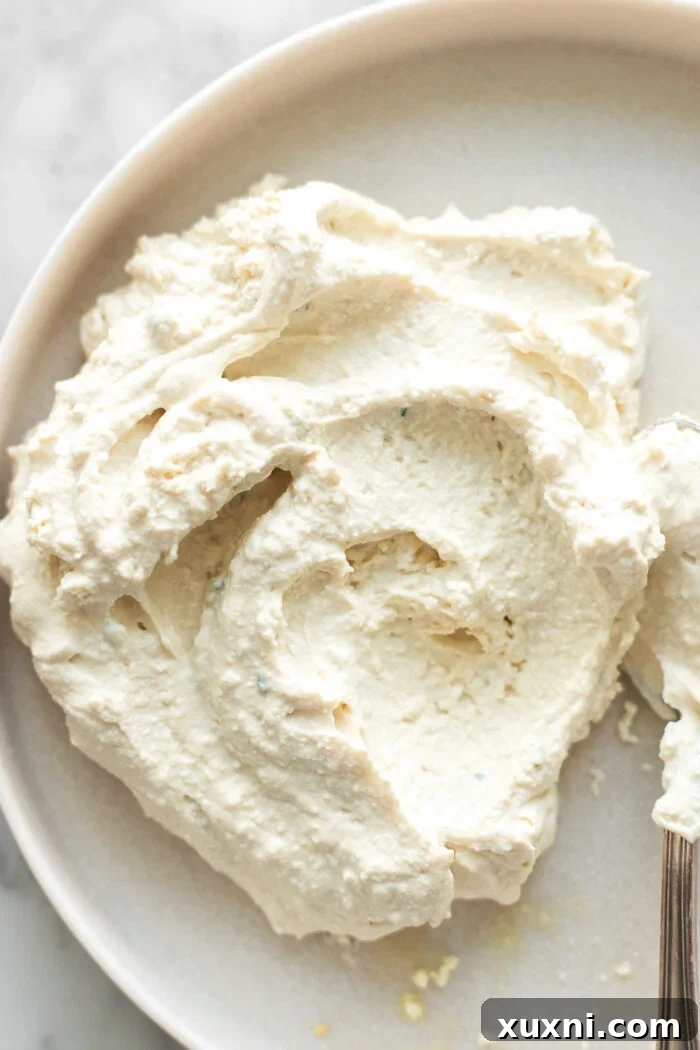
Just when you thought this incredibly easy vegan ricotta couldn’t get any better, it does! One of the most delightful aspects of this simple recipe is its adaptability to transform into a luxuriously smooth whipped vegan ricotta. This elevated texture is particularly fantastic for crafting exquisite vegan cannoli fillings, creating light and airy sweet ricotta dips, or even spreading on toast for a gourmet breakfast.
The process couldn’t be simpler. Once your homemade vegan ricotta has been chilled and is firm, transfer it to a mixing bowl. Using an immersion blender, or a stand mixer with a paddle attachment, blend the ricotta until it achieves a wonderfully creamy, ethereal, and airy consistency. That’s truly all it takes! No additional ingredients are needed to achieve this incredible transformation, preserving the pure flavor of your ricotta.
The resulting whipped texture adds a sophisticated touch, making it perfect for elegant desserts or a lighter, more spreadable savory option. Imagine it piped into dessert shells or dolloped onto fresh fruit. This simple step unlocks a whole new world of culinary possibilities for your homemade vegan ricotta. Pretty cool, right?
Inspired Recipes: Unleash the Versatility of Your Vegan Ricotta
Once you’ve mastered this simple two-ingredient vegan ricotta, a world of culinary possibilities opens up. Its creamy texture and mild flavor make it an exceptionally versatile ingredient for both sweet and savory dishes. Here are some fantastic ideas to get you started:
Sweet Applications:
- Vegan Cannoli: The quintessential use! Fill crispy cannoli shells with the plain or whipped ricotta, perhaps with a touch of vanilla and sweetener.
- Vegan Cannoli Cake: Incorporate it into layers or as a topping for a truly indulgent dessert experience.
- Dairy-Free Cannoli Dip: Blend with a touch of powdered sugar, vanilla, and chocolate chips for an irresistible party dip served with fruit or cookies.
- Whipped Berry Dip: For a lighter dessert, whip the ricotta with vanilla bean paste and a drizzle of maple syrup, then serve alongside fresh mixed berries.
- Vegan Lemon Ricotta Pancakes: Fold it into your pancake batter for an incredibly light, fluffy, and subtly tangy breakfast treat.
- Vegan Cannoli Cheesecake: Elevate your cheesecake with this ricotta, adding a unique texture and flavor dimension.
- Baking Substitute: Use it in lieu of vegan sour cream or cream cheese in various baking recipes to add moisture and richness.
Savory Culinary Delights:
- Vegan Lasagna: Layer it generously between pasta sheets and rich tomato sauce for that classic, comforting Italian texture.
- Vegan Lasagna Soup: Swirl a dollop into each serving of this hearty soup for a creamy finish.
- Pasta ai Broccoli: Mix it into your pasta dishes with broccoli and garlic for a creamy, flavorful sauce.
- In Vegan Lentil Meatballs: Add a spoonful to your lentil mixture to bind and moisten the “meatballs,” giving them a tender texture.
- Enhanced Vegan Gnocchi: Incorporate it into your homemade gnocchi dough alongside the potato for an even lighter and more tender dumpling.
- Gourmet Vegan Pizza Topping: Spread it on homemade vegan pizza bases, perhaps with fresh spinach, minced garlic, and a squeeze of lemon juice, before baking for a rich, creamy layer.
- Bruschetta or Crostini: A simple spread on toasted baguette slices with roasted vegetables, sun-dried tomatoes, or a balsamic glaze makes for an elegant appetizer.
Don’t forget to save this incredible recipe! Pin it to your favorite recipe board on Pinterest so you can easily find it later!
If you try this delightful vegan ricotta recipe, we would be thrilled to hear from you! Please consider leaving a comment and a ⭐️⭐️⭐️⭐️⭐️ rating below to help other home cooks discover this fantastic recipe. And as always, we absolutely adore seeing your beautiful culinary creations! Be sure to tag us on Instagram and Pinterest – we can’t wait to see what you make!
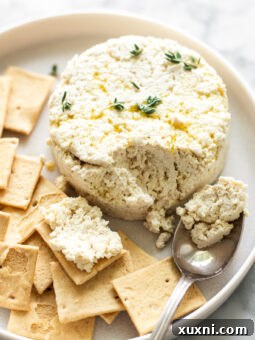
2 Ingredient Vegan Ricotta for Baking and Cooking – No Tofu, No Nuts!
- Author: Britt Berlin
- Prep Time: 5 minutes
- Cook Time: 10 minutes
- Total Time: 15 minutes
- Yield: 2 cups
- Category: Cheese
- Method: Stovetop
- Cuisine: Italian
- Diet: Vegan
Description
Make your own vegan ricotta from scratch the traditional way of Italian ricotta- with just 2 simple ingredients (none of which are tofu nor almonds!). This ricotta is creamy, delicious, and perfect for spreads, cannoli, lasagna, and more!
Ingredients
- 48 ounces (1419 mL) pea milk (or soy milk or almond milk)
- 1/4 cup (60 mL) rice vinegar or lemon juice
- Optional: 1 pinch sea salt
Instructions
- Heat: In a large saucepan, combine the pea milk and vinegar. Stir well. Place the saucepan over medium-high heat and bring the mixture to a boil. Continue heating until the curds have fully separated, bubbled to the top, and appear puffed (refer to the photos above for visual guidance). This process typically takes about 5-7 minutes.
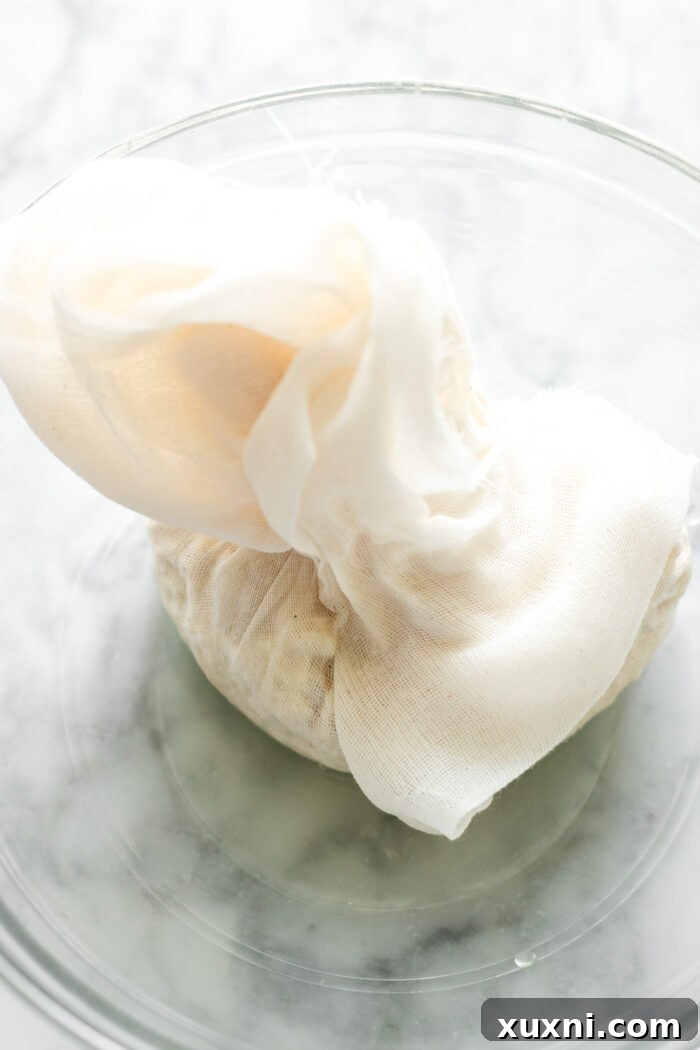
- Prepare for Straining: While the pea milk is heating, prepare your straining setup. Place a fine-mesh sieve over a large bowl. Line the sieve with a double layer of cheesecloth, ensuring there’s enough overhang to gather and squeeze the curds later (see blog post photos for illustration).
- Strain: Once the pea milk mixture has reached full coagulation and boiling, carefully remove the saucepan from the heat. Pour the entire mixture into the cheesecloth-lined sieve. Allow the liquid to drain naturally from the curds. Let the mixture cool down significantly for 10-20 minutes at room temperature, as the curds will be extremely hot and unsafe to handle immediately.
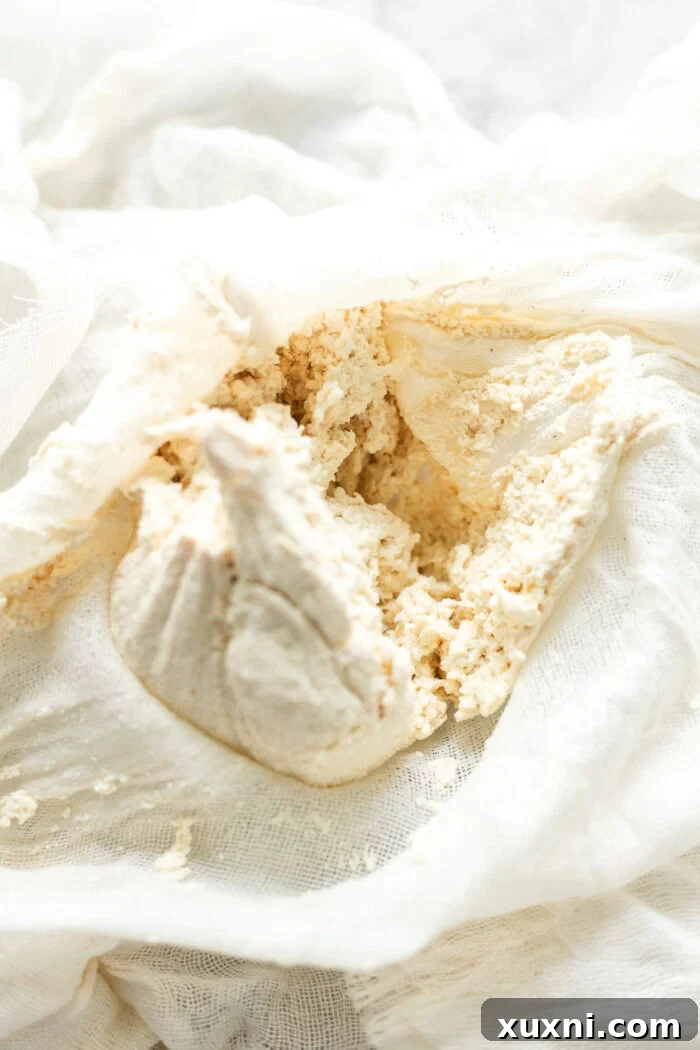
- Squeeze Excess Liquid: Once the mixture is cool enough to handle comfortably, gather the edges of the cheesecloth to form a pouch around the curds. Gently but firmly squeeze out any remaining liquid into the bowl beneath. The goal is to remove as much whey as possible without forcing the curds through the cloth. Once adequately pressed, remove the cheesecloth containing the curds from the bowl. At this point, the curds should closely resemble the texture of traditional ricotta.
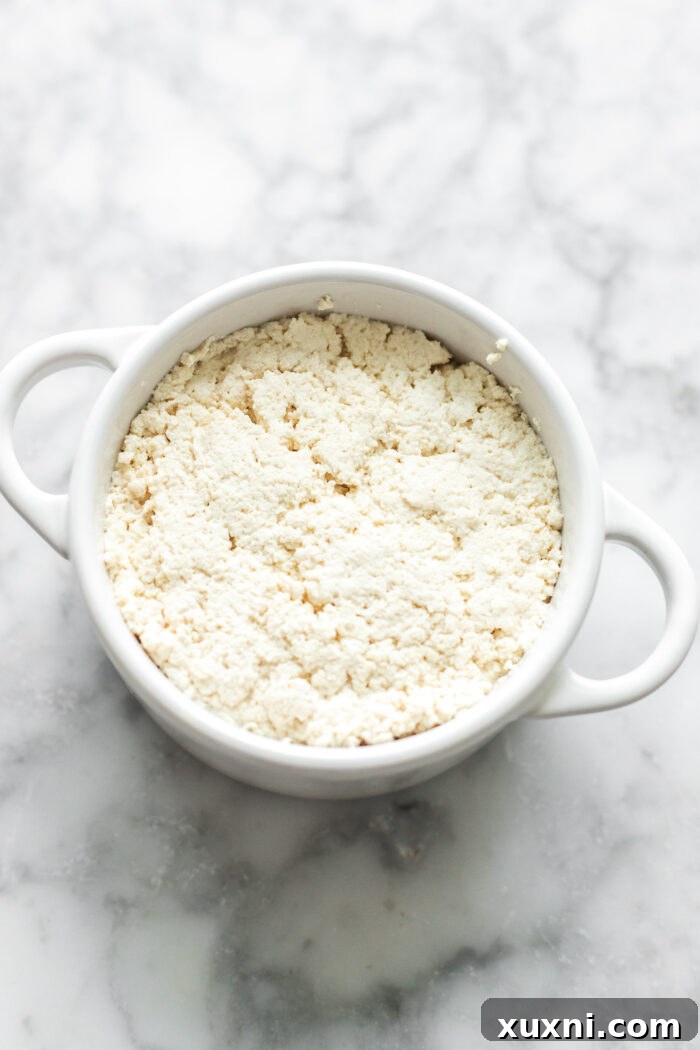
- Mold and Chill the Ricotta: If you wish to add salt, transfer the pea milk curds to a clean bowl, add a pinch of sea salt, and mix thoroughly with a spoon. Then, spoon the seasoned ricotta into a ramekin or a small, heat-safe bowl for shaping. Press the ricotta down firmly into the ramekin to ensure it takes on a compact, desirable form. Cover the ramekin and refrigerate until the ricotta is completely cold and set, which enhances its texture and firmness.
- Serve and Enjoy: Once chilled, your vegan ricotta is ready to use. If you’ve molded it, carefully invert the ramekin onto a plate and tap gently to release the ricotta. Serve as you would traditional ricotta, in either sweet or savory dishes. Store any leftovers covered in the refrigerator.
- For Whipped Ricotta: To create a luxurious whipped ricotta, transfer the chilled ricotta to a bowl. Use an immersion blender (or a stand mixer with a paddle attachment) to blend the ricotta until it becomes wonderfully creamy, smooth, and airy. This whipped version is perfect for dessert fillings, elegant dips, or as a lighter spread.
Notes
Pea milk: For the best results, I highly recommend using Ripple pea milk. Crucially, always opt for the refrigerated version. Shelf-stable, unrefrigerated pea milk typically contains stabilizers that prevent proper curdling, leading to a failed recipe.
Soy milk or almond milk substitutes: While this recipe is designed to be soy-free and nut-free using pea milk, soy milk or almond milk can be used as substitutes if pea milk is unavailable or if dietary restrictions allow. Both soy and almond milks contain proteins that will coagulate similarly to pea milk. However, be aware that using these alternatives will change the allergen profile of the recipe, making it no longer soy-free or nut-free.