This post contains affiliate links. By clicking on a product link and making a purchase, I may receive a commission at no extra cost to you. Thank you for supporting The Banana Diaries!
Prepare to be amazed by this truly revolutionary vegan pie crust recipe! Achieving that coveted flaky, buttery texture usually associated with traditional pie crusts has never been easier, especially when using a food processor. What sets this recipe apart is its ingenious combination of high-quality vegan butter and a touch of vegan shortening, a duo that ensures a richness and flakiness capable of challenging even the most classic pastry recipes. The best part? You’ll spend only about 5 minutes of hands-on time crafting this perfect foundation for both your sweet and savory culinary creations.
Why You’ll Absolutely Adore This Easy Vegan Pie Crust Recipe
You’re about to discover your new favorite pie crust. This vegan recipe is so remarkably similar to a classic, dairy-laden pie crust that many won’t even realize it’s plant-based. It boasts an exquisitely flaky, tender, and “buttery” texture, coupled with a professional appearance that will make your homemade pies look store-bought – but infinitely better! This isn’t just a great vegan pie crust; it might just be the best pie crust recipe available, period, designed to delight all eaters, regardless of their dietary preferences!
Beyond its incredible taste and texture, this recipe offers unparalleled versatility. We’ve ensured that this vegan pie crust can be made entirely allergen-friendly, providing options for Paleo, gluten-free, and nut-free diets. This means everyone at your table can enjoy a delicious slice of pie without compromise, making it ideal for holiday gatherings, family dinners, or any special occasion where a truly inclusive dessert is desired.
This is the very same dependable pie crust recipe I rely on for my beloved vegan pumpkin pie, the comforting sweet potato pie, and even my delightful apple pie, especially when I want to create an impressive lattice topping. Its consistent performance makes it a go-to choice for a wide array of fillings.
While this specific recipe yields enough dough for one single pie crust – perfect for open-top pies or bottom crusts – it’s incredibly easy to adapt. Simply double the recipe to create a double crust, allowing you to craft magnificent two-crust pies or dedicate the second half of the dough to an elegant lattice design. The possibilities are endless when you have such a reliable and delicious base.
Essential Ingredients for Your Flaky Vegan Pie Crust
Crafting this incredible vegan pie dough begins with a handful of accessible ingredients. We’ll detail the core components here, and later, we’ll dive into substitutions and dietary adaptations to ensure everyone can enjoy this recipe. Let’s start with the basics for a flawless pie dough, easily made in minutes with the right tools:
- Flour: The foundation of any great crust. You have the flexibility to use standard all-purpose flour for a classic result. However, for those with gluten sensitivities or dietary preferences, we offer fantastic gluten-free alternatives. For detailed guidance on achieving a perfect gluten-free vegan pie crust, I highly recommend exploring my dedicated posts: either the comprehensive gluten-free pie crust recipe or the equally delicious oat flour pie crust recipe. Using a kitchen scale for precise measurement will always yield the best, most consistent results.
- Vegan Butter: This is the secret weapon for achieving that rich, “buttery” flavor and incredible flakiness. High-quality vegan butter mimics traditional butter beautifully in pastry. While this recipe can work with chilled coconut oil as an alternative, ensure your coconut oil is truly solid and well-chilled for the best texture. The key to flakiness is keeping all fats as cold as possible.
- Sugar or Maple Syrup: This optional ingredient is specifically for sweet pie crusts, adding a subtle touch of sweetness that complements fruit or cream fillings. If your pie recipe is savory – think quiches or pot pies – you can confidently omit the sugar or maple syrup entirely without impacting the crust’s structure or flakiness.
- Avocado Shortening: A true game-changer for achieving an unparalleled flaky crust. Shortening is 100% fat, meaning it contributes to flakiness without adding any water content, unlike butter which contains a small percentage of water. This pure fat content creates distinct layers, resulting in a tender, shatteringly crisp crust. If avocado shortening isn’t available, you can use additional chilled vegan butter, though the flakiness might be slightly less pronounced.
- Chilled Water: The binding agent that brings all the ingredients together. It’s crucial that your water is ice-cold. Cold water prevents the vegan butter and shortening from melting prematurely, which is essential for maintaining those pockets of fat that create a flaky texture during baking. Add it gradually, just until the dough comes together.
- Sea Salt: A pinch of salt is vital for enhancing the overall flavor of your pie crust, whether it’s destined for a sweet or savory filling. It balances the richness of the fats and elevates the taste.
I personally have a deep affection for using vegan butter in my pie dough, as it consistently delivers that perfect, melt-in-your-mouth flakiness. However, I’ve successfully experimented with making vegan pie crusts using only chilled coconut oil or a balanced mix of vegan butter and coconut oil. Feel free to choose the method that best suits your preferences and available ingredients – the core principles of keeping ingredients cold and working quickly remain the same for excellent results!
Step-by-Step Guide: Crafting a Flaky Vegan Pie Crust in Your Food Processor
Creating a perfect pie dough, especially one that’s vegan and incredibly flaky, is a simple task when utilizing a food processor. This method ensures uniform consistency and minimizes handling, which is crucial for a tender crust. Follow these steps for an effortlessly delicious pie dough:
- Combine Dry Ingredients: Begin by adding your measured flour and sea salt to the bowl of your food processor. If you’re making a sweet pie and opted for sugar instead of maple syrup, add it now as well. Pulse these dry ingredients together a few times until they are well combined. This ensures an even distribution of salt and sugar throughout the flour.
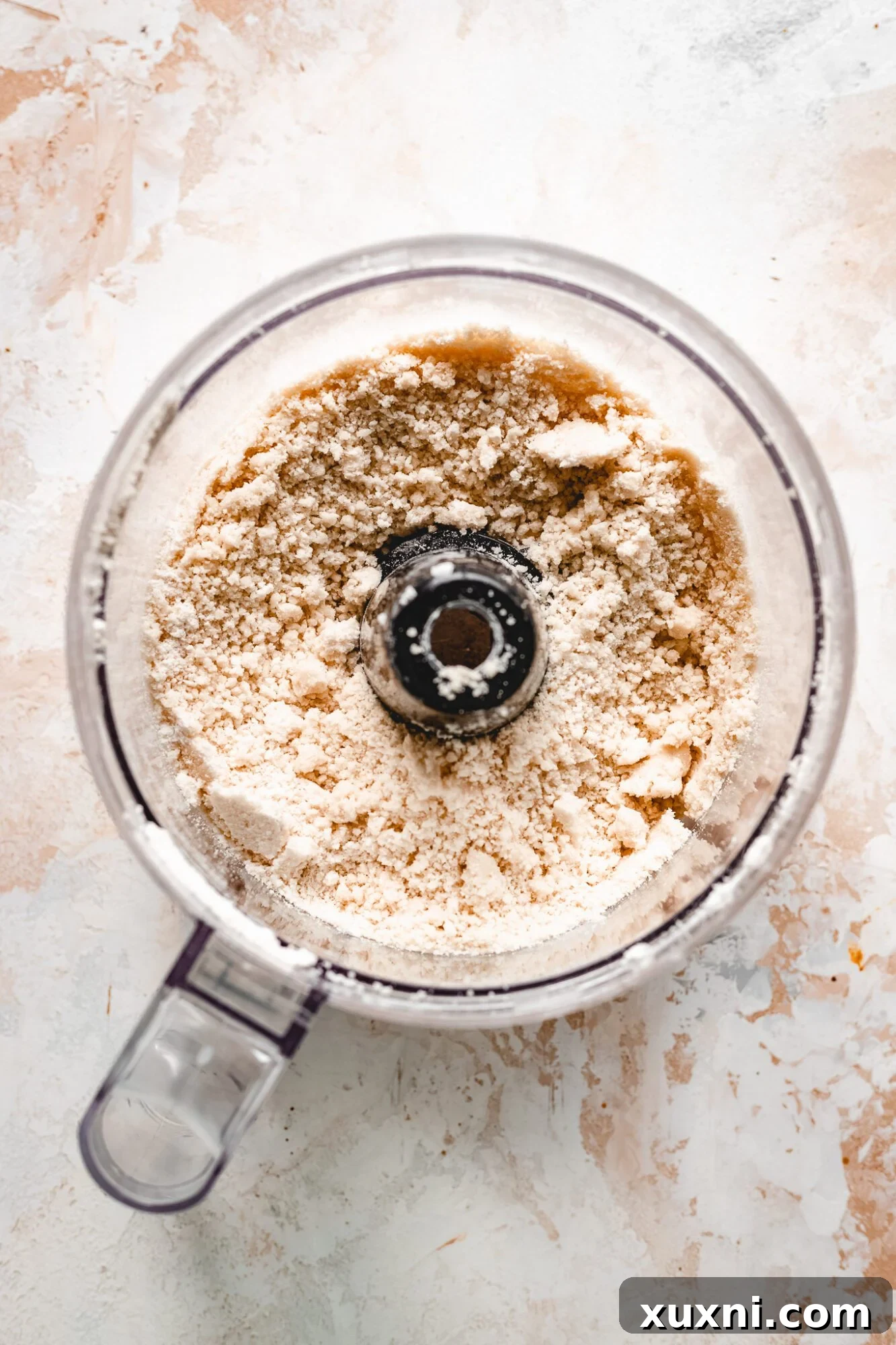
- Incorporate the Fats: Next, add the cold, cubed vegan butter and avocado shortening (or coconut oil if substituting) to the food processor. It’s imperative that your fats are as cold as possible to achieve the desired flaky texture. Pulse the ingredients together in short bursts. Continue pulsing until the mixture transforms into a coarse, sand-like texture, with some pea-sized pieces of fat remaining. Avoid over-processing; you want visible flecks of fat.
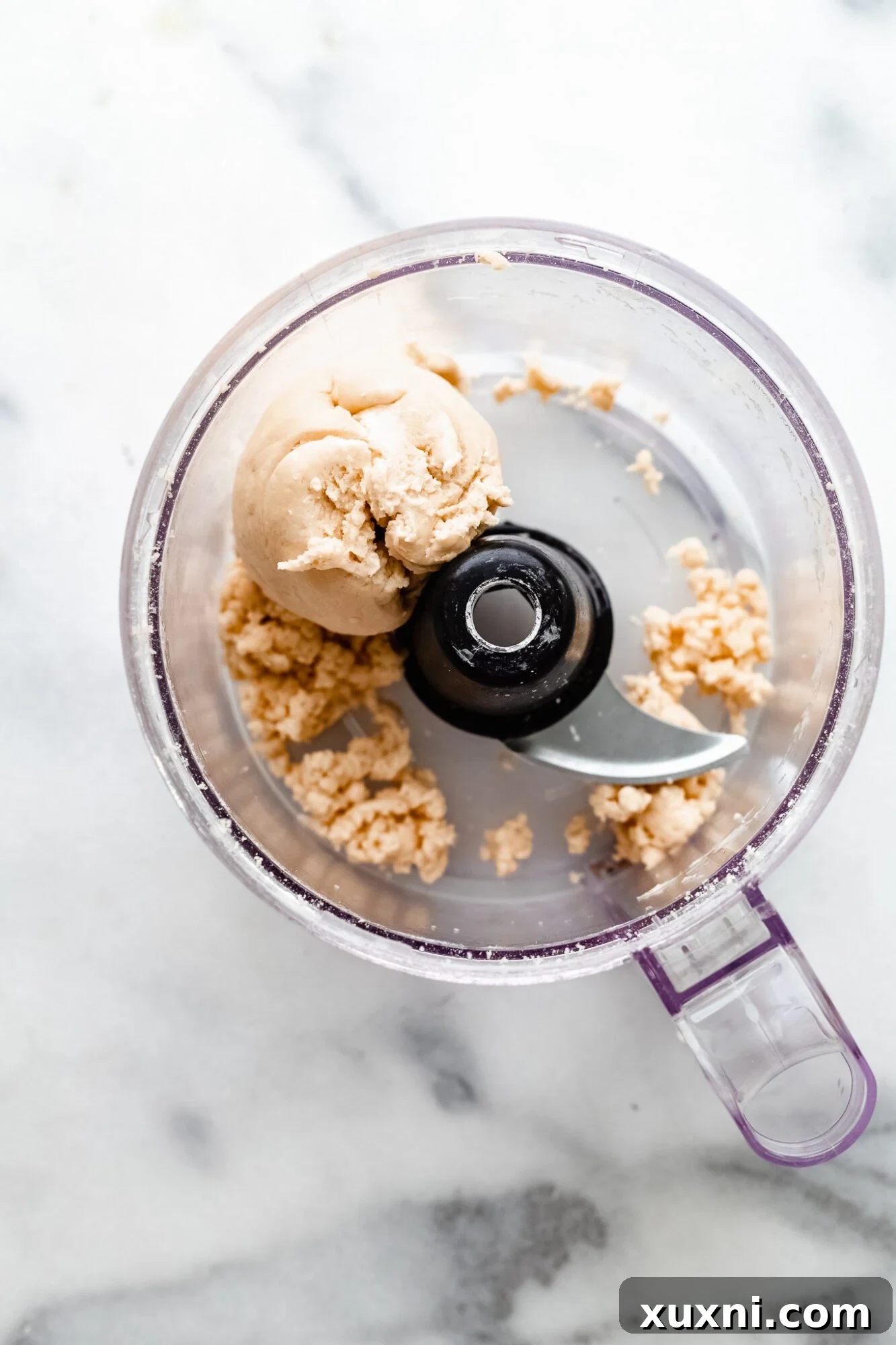
- Form the Dough: Secure the lid back onto your food processor. With the processor running, carefully remove the top insert from the lid. Slowly drizzle in the optional maple syrup (if using for sweetness) and, crucially, the chilled water, adding it one tablespoon at a time. Continue to blend until the dough just begins to clump together and forms a large, cohesive ball. Stop immediately once this stage is reached to prevent overworking the dough, which can lead to a tough crust. Refer to the pictures in the post for visual guidance on the desired dough consistency.
- Chill the Dough: Carefully remove the newly formed dough from the food processor bowl. Place the dough onto a piece of plastic wrap on a clean surface. Gently, using your hands, form the dough into a flat disk. This shape makes it easier to roll out later. Wrap the disk tightly in the plastic wrap and transfer it to the refrigerator. Allow it to chill for a minimum of 30 minutes. For even better results and easier handling, you can chill it overnight. This chilling period is vital for the fats to firm up and for the gluten in the flour to relax, resulting in a tender and flaky baked crust.
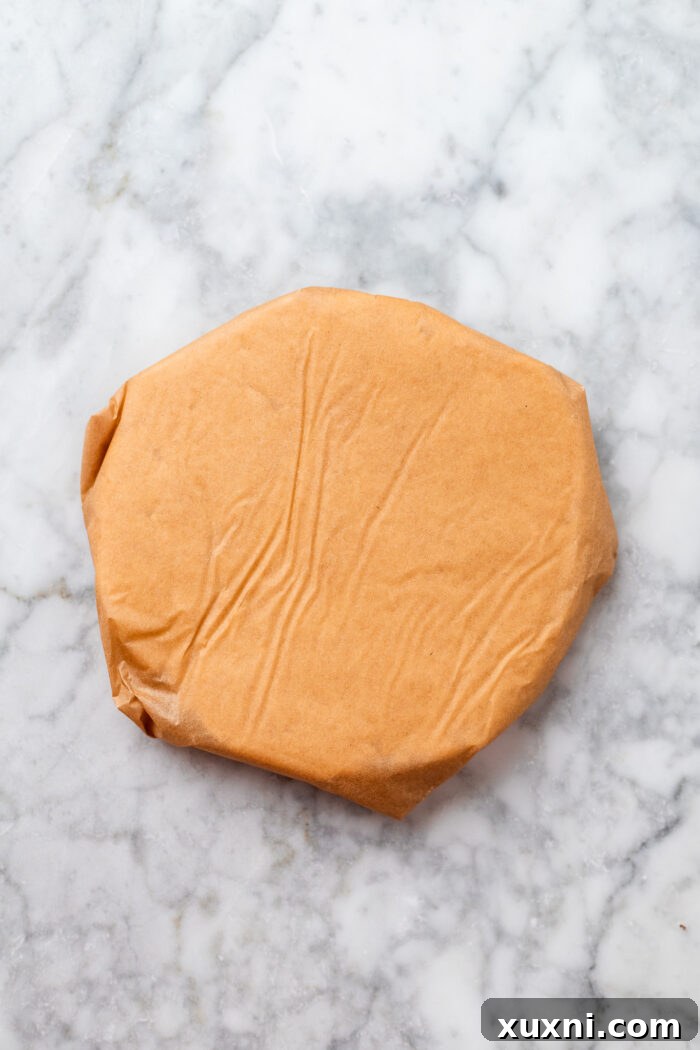
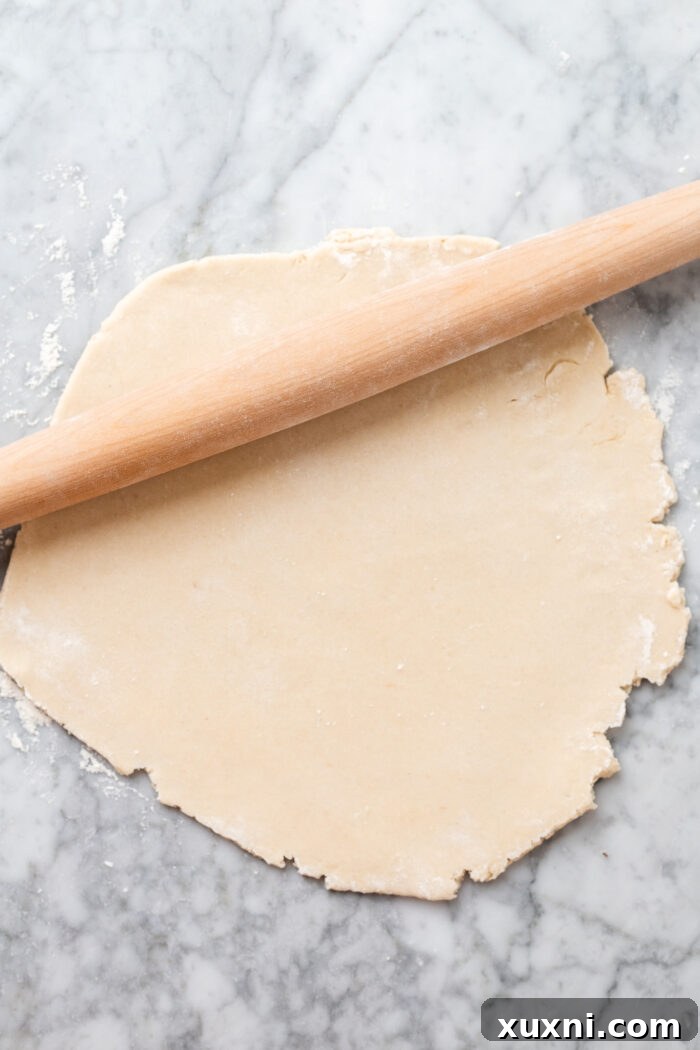
When you’re ready to roll out your perfectly chilled pie crust, retrieve it from the refrigerator. For easier handling, lightly dust a clean surface of parchment paper with a sprinkle of flour. Additionally, lightly dust the top of your pie crust disk with a little extra flour to prevent the rolling pin from sticking to the dough. This preparation ensures a smooth rolling process.
Important tip: If your dough feels excessively cold and stiff, making it difficult to roll, don’t force it. Instead, allow the dough to sit at room temperature for a few minutes to soften slightly. This brief rest will make it more pliable and prevent cracking as you roll.
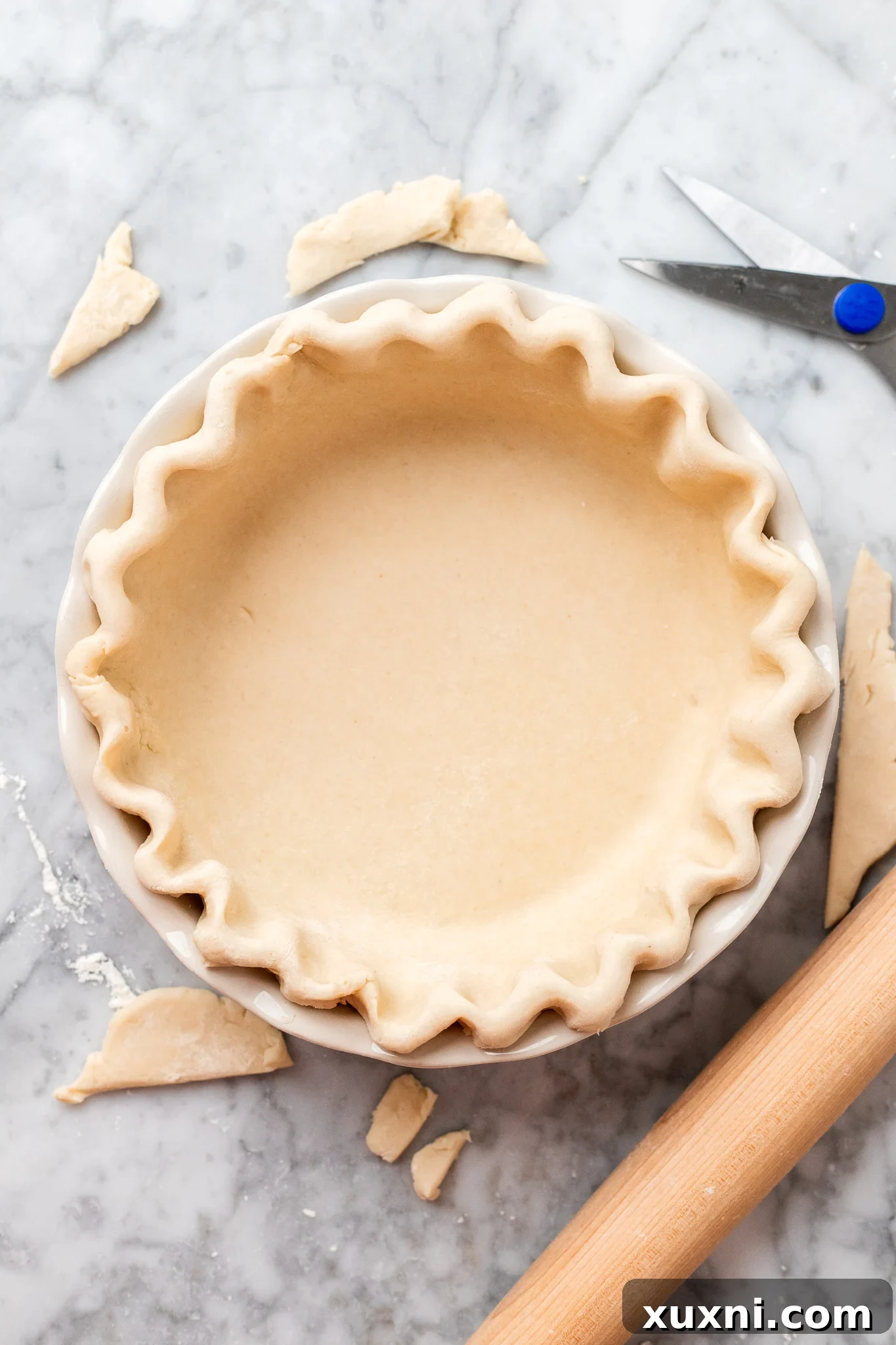
With patience and a gentle hand, roll your dough outwards from the center, rotating it frequently to maintain a circular shape. Continue rolling until it’s about an 1/8 inch thick and approximately 1/2 inch wider than the edges of your pie dish. This extra overhang allows for easy trimming and crimping.
Carefully transfer the rolled dough into your pie dish. The easiest way to do this is to gently roll the dough around your rolling pin and then unroll it over the dish. Once in place, lightly press the dough into the contours of the pie dish, ensuring it lines up evenly with the edges.
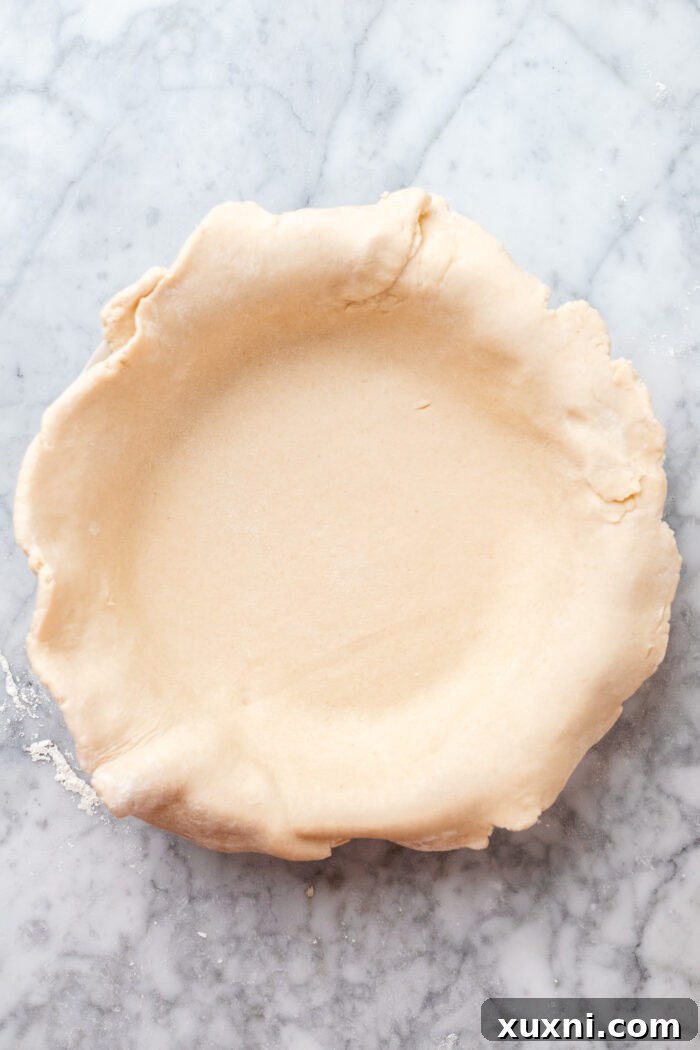
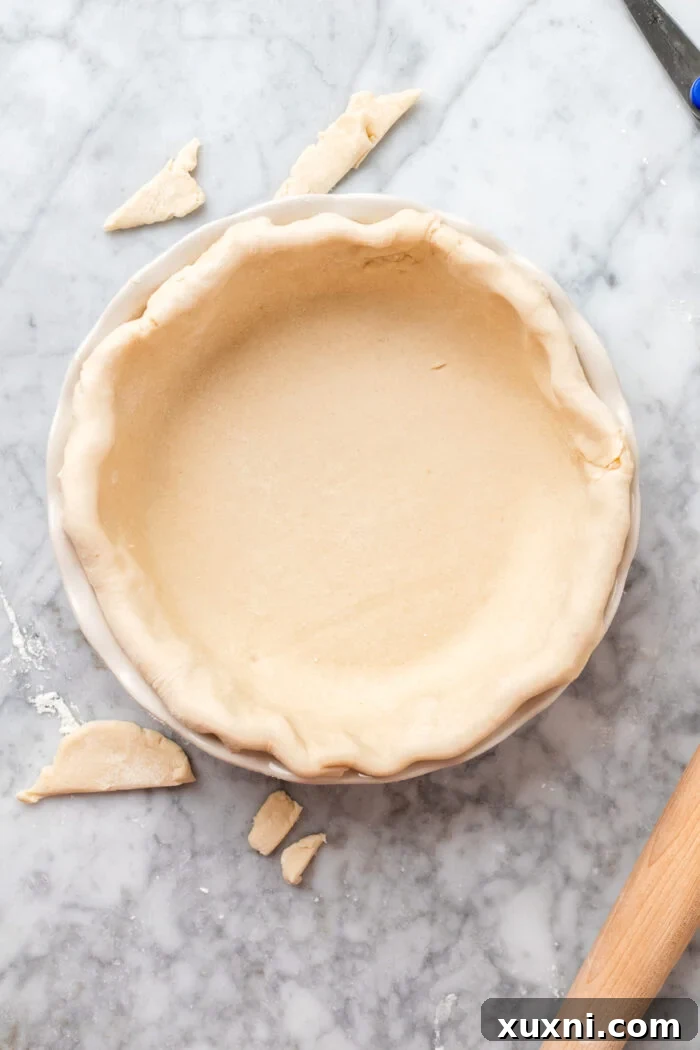
Using kitchen shears or a small knife, snip away any excess dough extending unevenly beyond the edges of the dish. Leave about a 1/2 inch overhang for crimping.
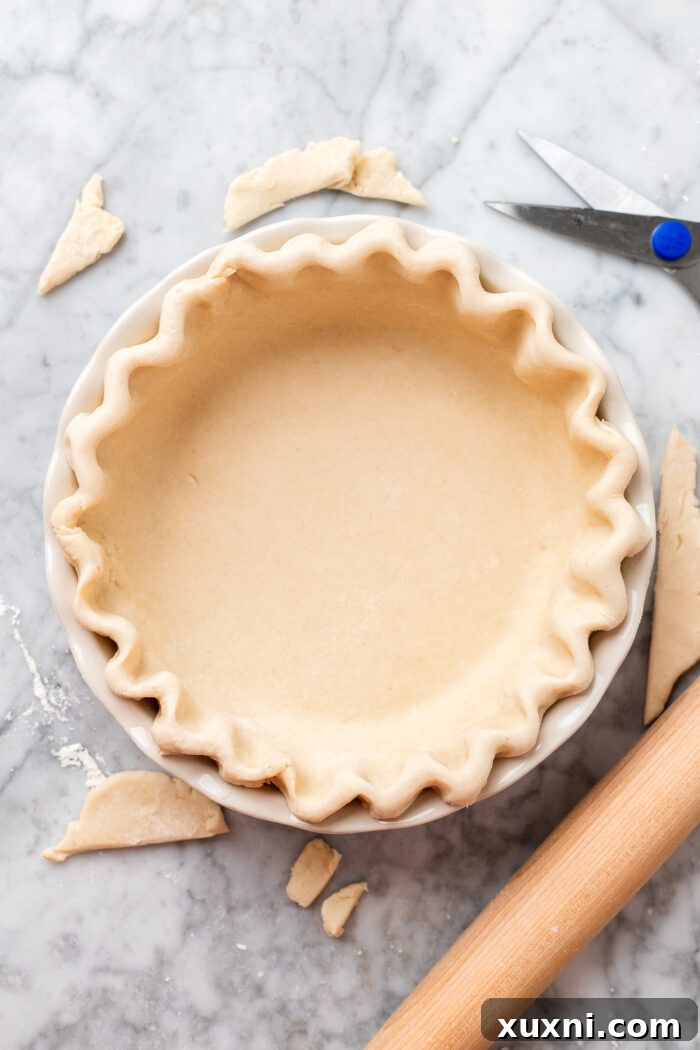
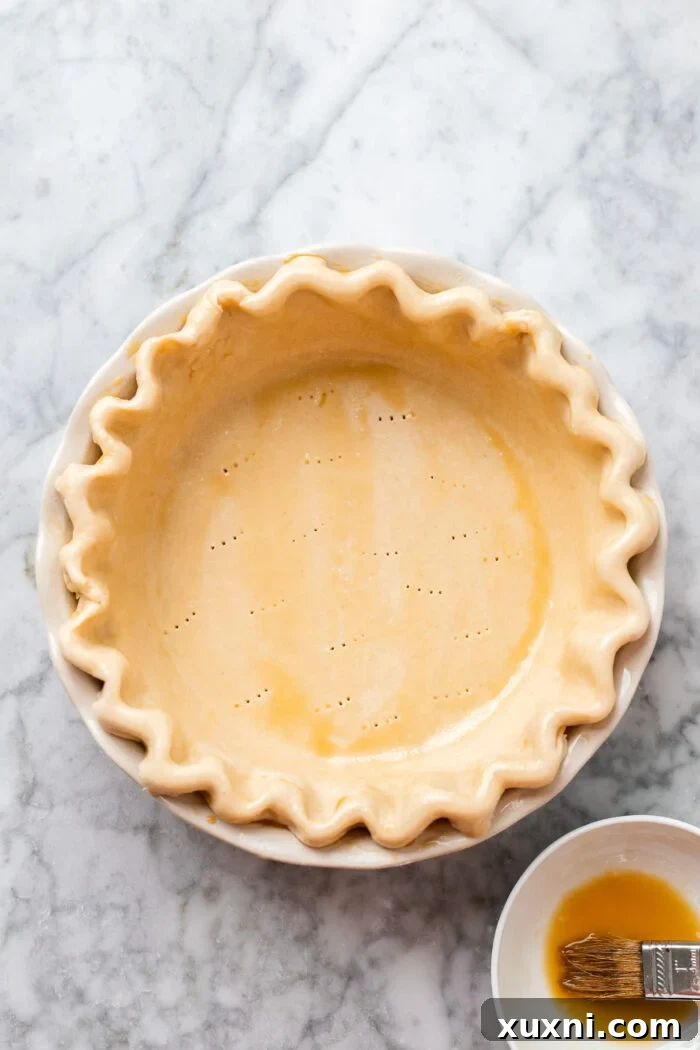
To create the classic decorative crimped edge, gently press your thumb between the knuckles of your index and middle fingers, with the dough nestled in between. Repeat this motion all along the edges of the pie dough, working your way around the entire circumference. This technique creates a beautiful, professional-looking finish.
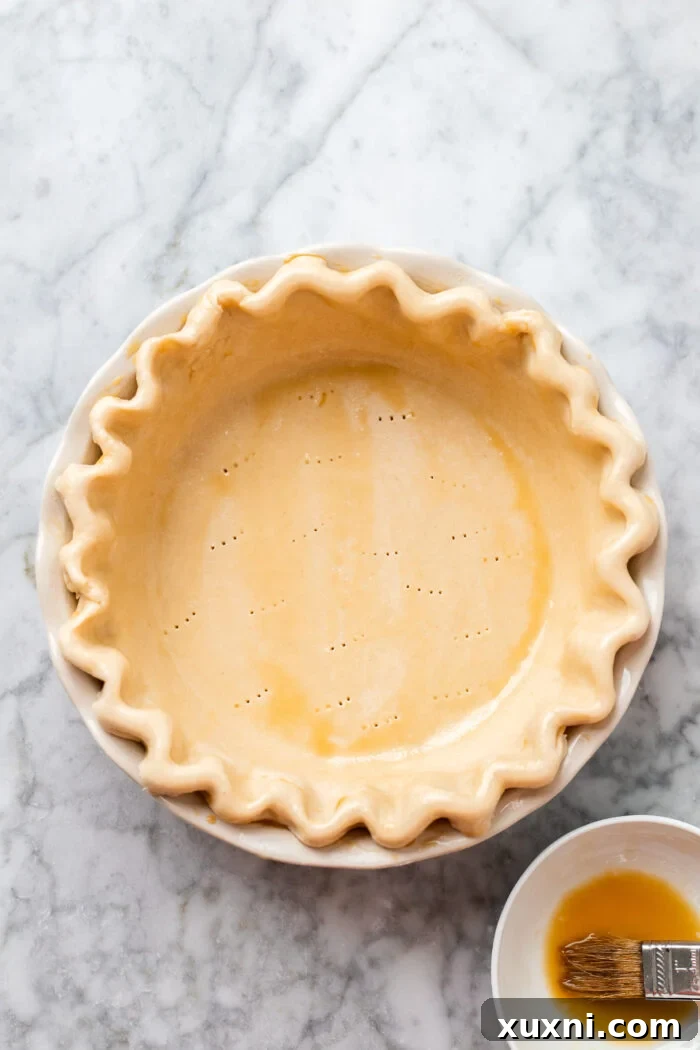
Finally, for a golden, glossy finish, brush the crimped edge of your pie crust with a simple vegan “egg wash.” A mixture of maple syrup and your preferred plant-based milk (such as soy milk, almond milk, or even homemade oat milk) works wonderfully. Now, your beautiful crust is ready for its next step: par-baking or filling!
Understanding Blind Baking: When and How to Pre-Bake Your Pie Crust
The decision to blind bake (or pre-bake) your pie crust is entirely dependent on the specific pie recipe you’re following. Blind baking is a crucial technique that ensures a perfectly cooked crust, preventing it from becoming soggy, especially with certain types of fillings.
When to Blind Bake (Fully Baked Crust): If you’re preparing a pie with a no-bake filling (like a vegan chocolate cream pie or a no-bake cheesecake pie), you’ll need to fully blind bake your crust. This means baking it until it’s golden brown and fully cooked through before adding the cold, prepared filling.
When to Par-Bake (Partially Baked Crust): For pies with wet fillings that will be baked later (such as fruit pies, pumpkin pies, or quiches), a partially baked, or “par-baked,” crust is often required. This step helps to “set” the crust and prevent the dreaded “soggy bottom,” ensuring a crisp foundation underneath your filling.
A Must-Do Step: Chill Your Crust! Regardless of whether you’re blind baking or par-baking, it is absolutely essential to let your pie crust rest and chill in the refrigerator before it goes into the oven. This chilling period is a non-negotiable step: it allows the fats to firm up, preventing the crust from shrinking excessively or losing its shape during baking. Aim for at least 15-30 minutes of chilling once the crust is in the pie dish.
How to Determine if Blind Baking is Needed: The best guide is always your specific pie recipe. A well-written recipe will explicitly state if and how long to blind bake or par-bake the crust. As a general rule, if you’re adding a raw, uncooked filling that will then be baked, a par-bake is usually necessary to prevent a soggy bottom. If your filling requires no baking at all, then a full blind bake is the way to go.
The Blind Baking Process:
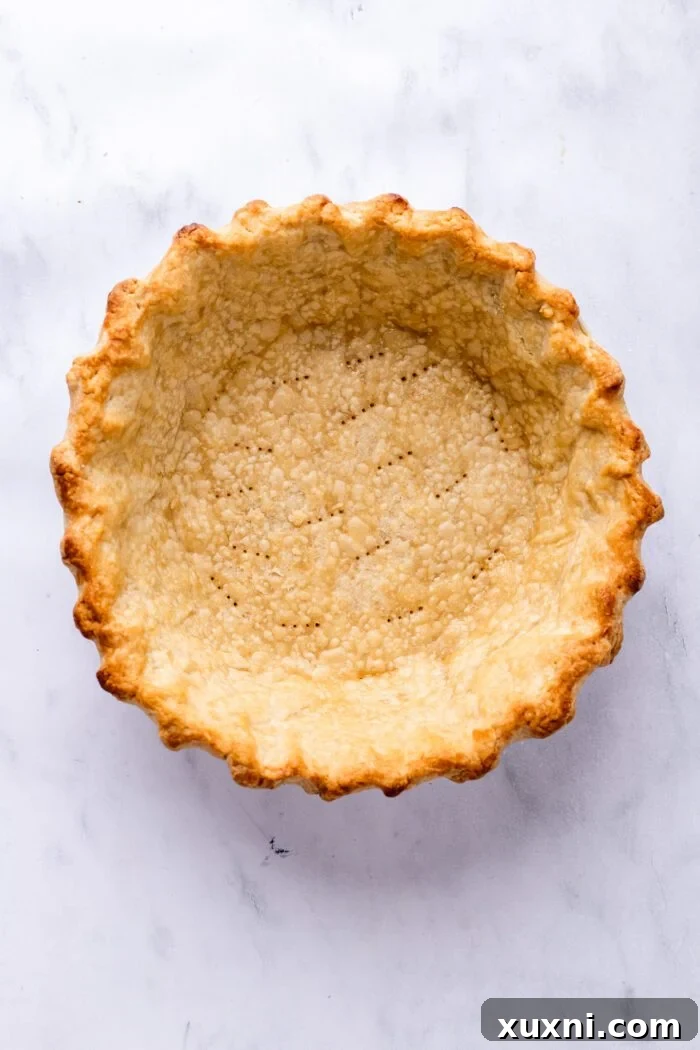
Once your pie crust has rested and chilled for about 15 minutes in the pie dish, use a fork to gently poke several holes across the bottom of the crust. These “docking” holes allow steam to escape, preventing the crust from puffing up unevenly. Next, line the inside of the crust with a piece of parchment paper, ensuring it covers the bottom and sides. Then, fill the parchment-lined crust with pie weights, dried beans, or uncooked rice. These weights help to keep the dough from shrinking and maintain its shape during baking. Make absolutely sure you use parchment paper, or you’ll end up baking the weights directly into your crust!
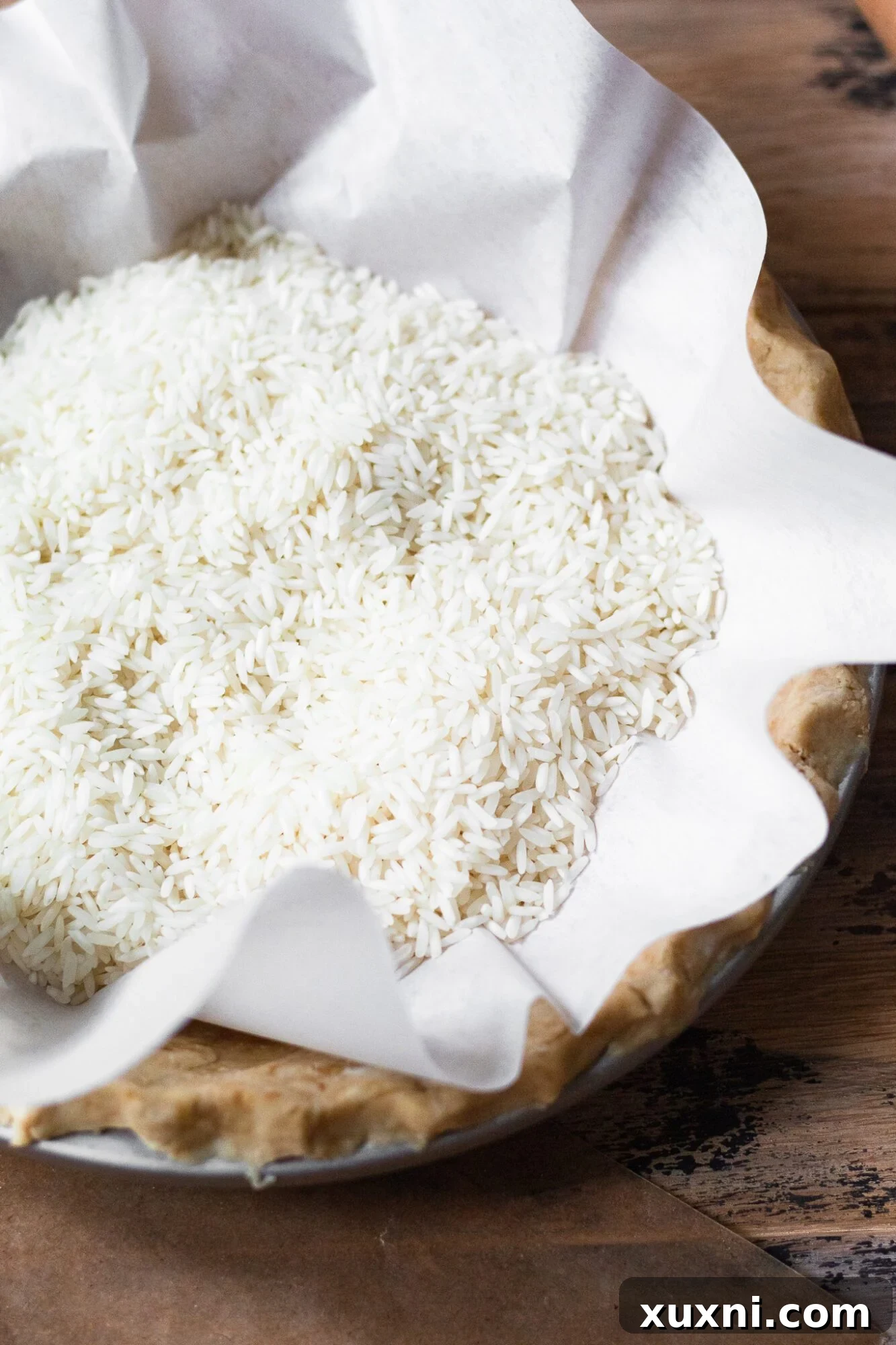
Bake your weighted pie crust in a preheated oven at 375°F (190°C) for 7-8 minutes for a partial bake. After this initial baking, carefully remove the parchment paper and weights, then allow the crust to cool slightly before filling. If your recipe calls for a full blind bake, continue baking the crust without weights until it’s golden brown, usually another 10-15 minutes, depending on your oven. Always let the crust cool completely before adding a no-bake filling.
Protecting Your Edges: If your pie requires further baking after the filling is added, remember to cover the edges of your crust with aluminum foil or a reusable pie crust shield. This simple step prevents the delicate edges from burning and becoming overly dark while the rest of your pie bakes to perfection. Nobody wants a burnt crust marring their delicious pie!
Mastering the Art of a Lattice Pie Crust
One of my absolute favorite ways to elevate a pie is by adding a beautiful, decorative lattice top. Whether you’re adhering to a gluten-free, Paleo, vegan, or dairy-free diet, you absolutely deserve to enjoy a pie that is as stunning to look at as it is delicious to eat. A lattice crust adds an undeniable touch of elegance and craftsmanship to any dessert.
The base pie crust recipe provided in the recipe card is designed for a single crust. Therefore, to create a full lattice top, which covers the entire pie, you will need to double the recipe. This ensures you have enough dough for both the bottom crust and the intricate woven top.
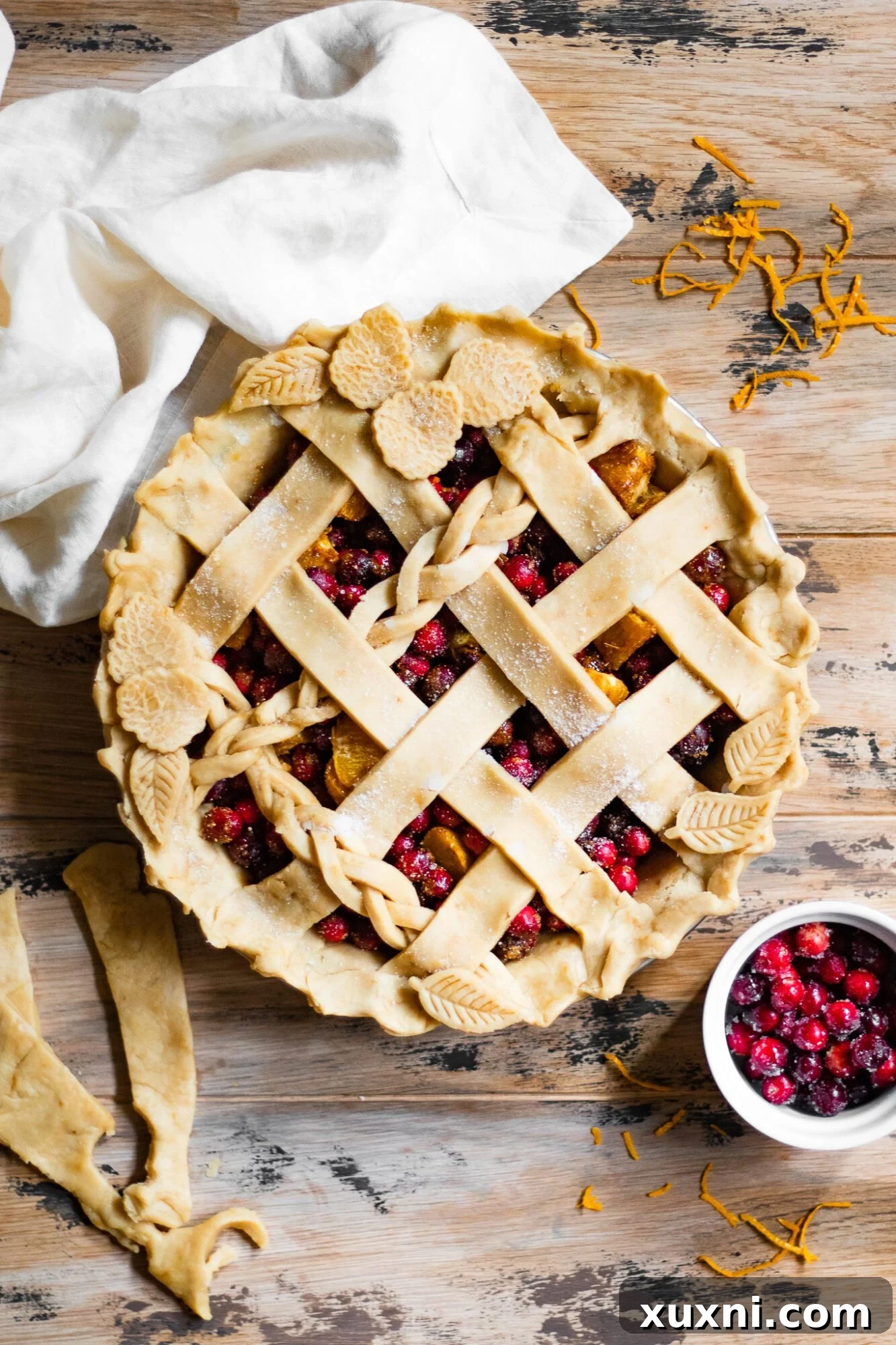
Typically, pies that feature a lattice crust do not require the bottom crust to be blind baked beforehand (at least, none of the numerous pies I’ve made have!). So, once you’ve finished preparing the bottom crust and gently pressed it into your pie dish, allow it to rest. While it chills briefly, prepare your pie filling and then get ready to craft your lattice top:
- Prepare the Second Dough: Roll out the second half of your pie dough disk with the same care and technique you used for the bottom crust. Ensure it’s rolled out wide enough to accommodate the dimensions of your pie. For instance, if you’re using a 10-inch pie dish, you’ll want your strips to be at least 10 inches long. To be on the safe side, roll the dough to a minimum length of 12 inches to allow for easy handling and trimming.
- Cut the Strips: Using a ruler and a sharp knife or pastry wheel, measure and mark 1-inch wide strips across your rolled-out dough. Make small dashes as guides to ensure even widths. Carefully slice along these marks to create 10-12 uniform strips, each approximately 10-12 inches long and 1 inch wide. The exact number of strips can vary based on your desired lattice pattern.
Now that your dough strips are perfectly prepared, let’s move on to weaving your basic lattice crust:
- Lay the First Set of Strips: Carefully place 5 of your dough strips parallel to each other over the top of your pie filling. Do not press them down or adhere them to the pie crust yet, as you’ll need to lift them during the weaving process.
- Begin Weaving – Strip 1: Take your sixth strip (the first strip for perpendicular weaving) and place it horizontally across the leftmost side of your pie.
- Weave – Section 1: Gently fold back every other vertical strip (typically the second and fourth) that are underneath the horizontal strip you just placed. Lay the new horizontal strip across the remaining vertical strips. Then, carefully fold the lifted vertical strips back over the horizontal strip.
- Weave – Section 2: Take your seventh strip and place it horizontally next to the sixth strip. This time, you’ll lift the opposite set of vertical strips (the first, third, and fifth) to weave. Place the seventh horizontal strip, then fold the lifted vertical strips back over it.
- Continue Weaving: Repeat this alternating process for the remaining horizontal strips. For each new horizontal strip, you will lift the opposite set of vertical strips from the previous step, creating an interlocking woven pattern. Continue until you’ve covered the entire pie with your lattice design.
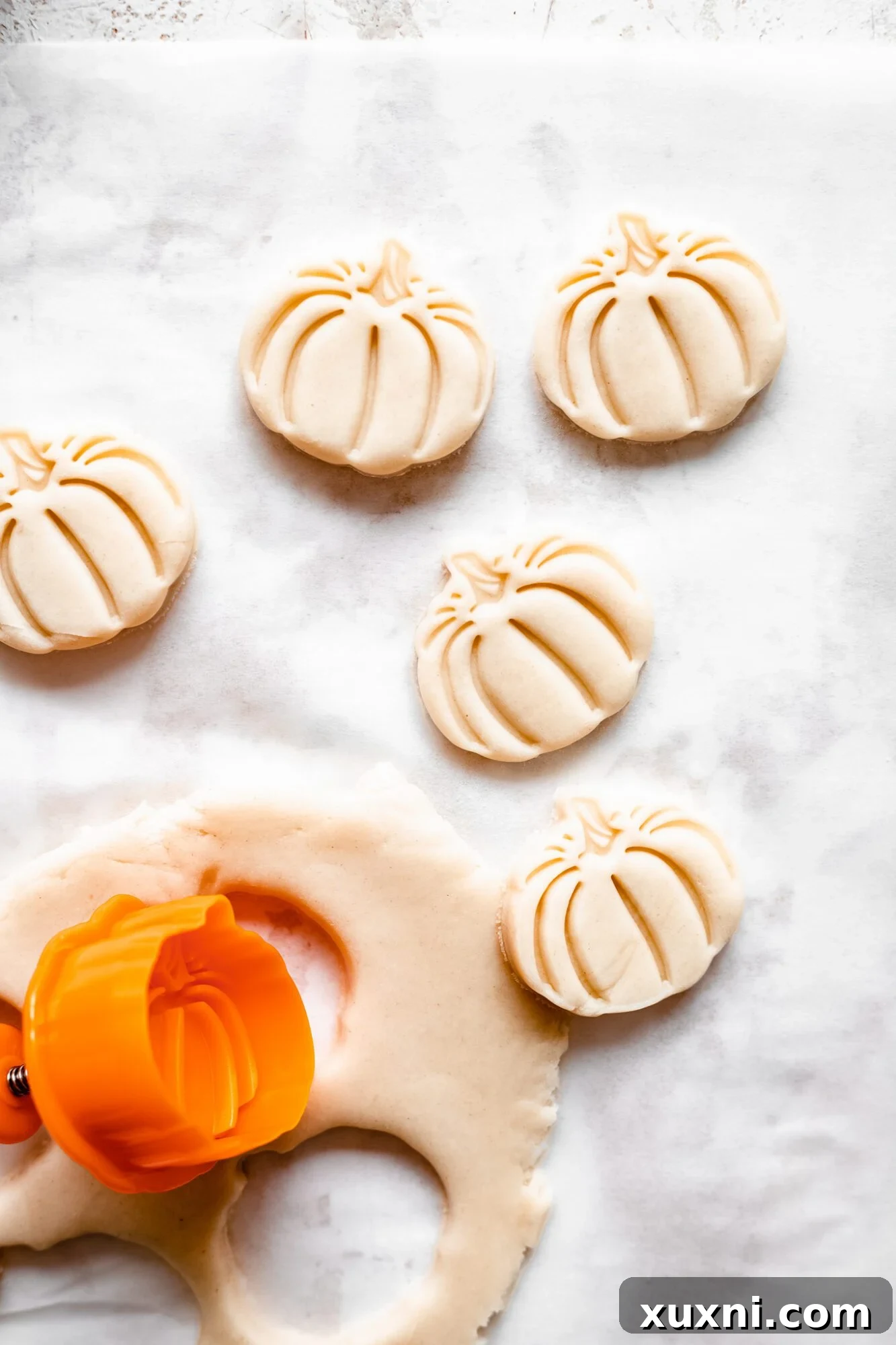
- Secure the Edges: Once your lattice is complete, gently fold the overhanging edges of both the bottom crust and the lattice strips inwards, sealing them together. You can then use your fingers to create decorative ridges or crimps around the entire circumference of the pie, adding a beautiful finished look. If you have any leftover dough scraps, get creative! Use small cookie cutters to make festive shapes (like leaves or stars) and place them over any areas that might not look as neat, or to add an extra decorative touch.
- Final Chill: For the best results and to help the lattice hold its shape beautifully during baking, place your assembled pie back into the refrigerator to chill for another 30 minutes. This final chill is particularly important for lattice crusts.
And there you have it! That’s how you create a stunning lattice crust. For those who are visual learners, I highly recommend watching the accompanying video tutorial, as it provides the easiest and clearest demonstration of how to expertly weave each strip. It makes the process incredibly straightforward!
You might have also noticed some braided strips in my example photos. While not necessary for a basic lattice, they add another layer of intricate beauty and are surprisingly simple to make! To create a braided strip, simply take one of your 1-inch wide strips, slice it lengthwise into three thinner, equal strips (leaving one end intact), and then braid them together just as you would hair. You can then weave this braided strip into your lattice design for an extra special touch.
It’s simpler than it looks, right? Now, let’s explore how you can easily customize this amazing pie crust recipe to meet various dietary needs and preferences!
Transforming This Recipe: Can I Make This a Gluten-Free Vegan Pie Crust?
Absolutely, yes! One of the fantastic advantages of this recipe is its adaptability to be completely gluten-free without sacrificing any of the delicious flakiness or “buttery” taste. I understand the importance of having reliable gluten-free options, which is why I’ve dedicated an entire blog post to perfecting this variation.
For all the specific details, ingredient recommendations, and nuanced tips on how to achieve a flawless gluten-free vegan pie crust, I encourage you to visit my comprehensive guide: Gluten-Free Vegan Pie Crust Recipe. You’ll find that it comes out just as flaky, tender, and visually appealing as its all-purpose flour counterpart, ensuring everyone can enjoy a slice of homemade pie!
Troubleshooting Tips: What to Do If Your Pie Dough Is Crumbling
Encountering a crumbling pie dough can be frustrating, but it’s a common issue with straightforward solutions. This usually happens for a few key reasons, and understanding them will help you troubleshoot effectively:
- Too Much Flour: The most frequent culprit is often too much flour. You might notice this during the initial dough-making process if your ingredients aren’t coming together to form a cohesive ball. Flour measurements can vary, especially when using volume (cups) instead of weight. For optimal accuracy and consistent results, I cannot emphasize enough the value of using a kitchen scale. You can find reliable and affordable scales for around $10 on Amazon!
- Insufficient Liquid: Another common reason for crumbling dough is simply not enough liquid to bind the ingredients. This often goes hand-in-hand with too much flour.
- Inadequate Mixing: If the ingredients, particularly the fat and liquid, haven’t been thoroughly incorporated, the dough won’t bind properly. While a food processor helps, sometimes the dough needs a bit more encouragement to come together.
Here’s how to fix crumbling dough when you’re rolling it out:
1. Add More Chilled Water: Your first course of action should be to gradually add a few extra tablespoons of ice-cold water. Do this one tablespoon at a time, incorporating it gently. Cold water is key to maintain the fat’s integrity and the dough’s flakiness.
2. Gentle Kneading: After adding water, if the dough still feels too dry, gently knead it a little. This helps distribute the liquid and brings the dough together without developing too much gluten (which can make it tough). Try rolling it out again.
3. Dough is Too Cold: Paradoxically, extremely cold dough can also crumble. If your dough is fresh out of a long chill and feels like concrete, it might just need a few minutes to soften slightly at room temperature. As it warms up from being worked (kneaded or rolled), it will become more pliable. Be patient and give it a moment to relax before attempting to roll again.
4. Re-knead and Re-chill (If Not Mixed Well): If you suspect the issue was that your ingredients weren’t mixed well enough initially (e.g., the fat wasn’t properly incorporated with the flour), gather the crumbling dough, return it to a bowl, and give it a good, brief knead to ensure everything is evenly combined. While this might warm the dough slightly, it’s worth doing. You may then need to re-chill it in the fridge for another 15-30 minutes to firm it up before rolling again. A little extra chill time is a small price to pay for a perfectly cohesive crust!
By addressing these common issues with these simple adjustments, you’ll be able to salvage your dough and get back to creating a beautiful, flaky pie crust.
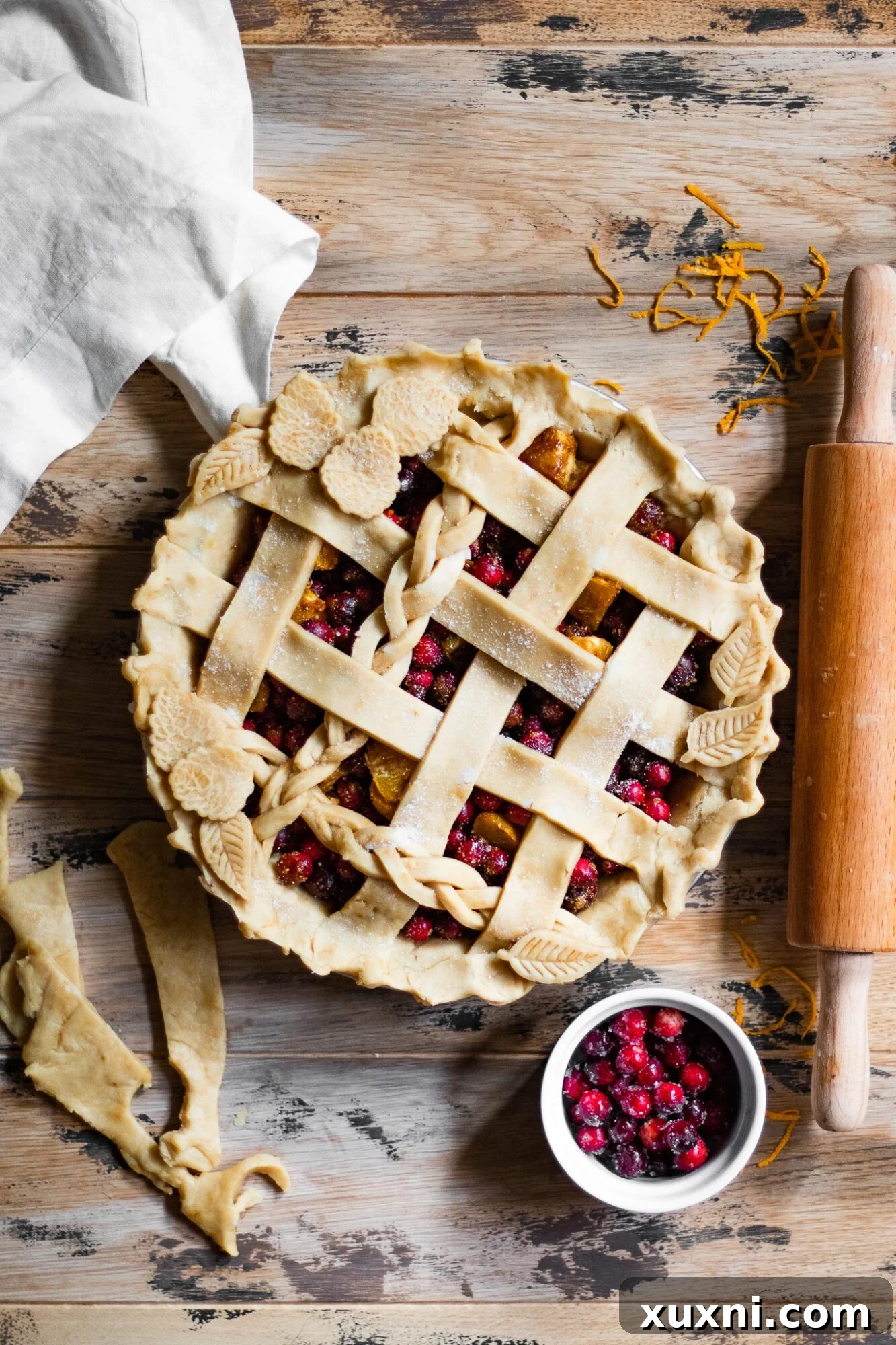
You are truly going to fall in love with this incredibly easy vegan pie crust recipe! It’s not just simple to make; it’s the ultimate foundation for all your baking aspirations, especially as the holiday season approaches. This versatile crust is your secret weapon for crafting the most delectable pumpkin pie, a rich pecan pie, or even a classic, comforting apple pie. Its flaky, “buttery” perfection will make every slice a moment to savor.
As always, I absolutely adore seeing your culinary creations! Please make sure to tag me on Pinterest and Instagram (you can find me at @the_bananadiaries) so I can admire and share your beautiful bakes with our community!
Happy pie baking, and may your crusts always be flaky!
Explore My Favorite Vegan Pie Recipes
Once you’ve mastered this amazing vegan pie crust, the possibilities for delicious desserts are endless! Here are some of my all-time favorite vegan pie recipes that pair perfectly with this versatile crust:
Decadent Vegan Brownie Pie
The Best Vegan Banana Cream Pie
Rich and Flavorful Vegan Pecan Pie
Creamy Vegan Sweet Potato Pie
Wholesome and Delicious Healthy Apple Pie
Classic Vegan Pumpkin Pie
Indulgent Vegan Chocolate Cream Pie
If you try this incredible recipe, please be sure to leave a comment and a rating ⭐️⭐️⭐️⭐️⭐️ below. Your feedback is invaluable and helps others discover these delicious recipes! As always, I absolutely love seeing your beautiful culinary creations, so don’t forget to tag me on Instagram and Pinterest!
Watch the Full Tutorial: How to Make the Best Vegan Pie Crust!
Print Recipe
Easy Flaky Vegan Pie Crust Recipe – “All Butter” Method
4.6 from 5 reviews
- Author: BRITT BERLIN
- Prep Time: 5 minutes
- Cook Time: 15 minutes
- Total Time: 20 minutes
- Yield: 1 pie crust
- Category: Dessert
- Method: Baking
- Cuisine: American
- Diet: Vegan
Description
This undetectably vegan pie crust is SO flaky and “buttery,” and it’s super quick and easy to make in a food processor. We’re using a combination of vegan butter and avocado shortening that will give even a traditional pie crust a run for its money. Just 5 minutes of hands on work, and perfect for both sweet and savory pies!
Ingredients
- 2 1/2 cups (325 g) all purpose flour or gluten free 1:1 baking flour, plus more for rolling*
- 3/4 cup (180 g) salted vegan butter, chilled and cubed
- 3 tbsp (30 g) avocado shortening or coconut oil
- 1/4 tsp sea salt
- 1–2 tbsp sugar, optional
- 1/2 cup (111 mL) chilled water
Instructions
- Pulse Dry Ingredients: Add the flour and salt (as well as optional sugar if not using maple syrup) to a food processor, and pulse the ingredients together until well combined.
- Incorporate Fats: Add in the avocado shortening and cold, cubed vegan butter to the food processor. Pulse the ingredients until the mixture resembles a coarse sand texture with some pea-sized pieces of fat visible.
- Form the Dough: Place the lid back onto the food processor and begin to blend again. Remove the top insert from the lid and carefully pour in the optional maple syrup (if you didn’t use sugar) and chilled water, adding only 1 tbsp of water at a time until the dough just begins to form a large, smooth ball. Do not overmix.
- Chill: Stop the food processor and remove the dough. Place it onto a piece of plastic wrap and gently form the dough into a flat disk. Wrap the dough tightly in the plastic wrap and chill in the fridge for a minimum of 30 minutes, or even overnight if preferred.
- Prep for Rolling: When the pie crust is ready to be rolled, remove the dough from the fridge and allow it to rest at room temperature for about 15 minutes to slightly soften.
- Roll the Dough: Lightly sprinkle a piece of parchment paper, the dough disk, and your rolling pin with flour. Gently roll the dough outwards from the center to be about 1/8″ thick and at least 1″ wider than the edges of your pie dish. Carefully drape the rolled pie dough over the pie dish and gently press it into the sides.
- Par-Bake (if needed): To par-bake, place the dough back into the fridge and chill for at least 15 minutes while your oven preheats to 375°F (190°C). Poke several holes into the bottom of the crust with a fork and line it with parchment paper filled with pie weights. Bake for 7-8 minutes to partially bake. Remove from the oven, remove weights and parchment, and fill with your desired filling. Follow the baking directions from your filling recipe for the remainder of the baking time.
- Baking Tip: To prevent the crust edges from burning during baking, cover them loosely with aluminum foil or a pie crust shield. Enjoy your delicious homemade pie!
Equipment
pie cut outs
Buy Now →
pie dish
Buy Now →
rolling pin
Buy Now →
Notes
Gluten-Free Adaptation: For comprehensive details on how to make this pie crust entirely gluten-free, please refer to our dedicated gluten-free vegan pie crust recipe post. It contains all the necessary adjustments and tips for a perfect result.
To Make a Lattice Crust: To create a decorative lattice top for your pie, you will need to double the pie crust recipe.
- After the initial dough preparation and first chilling stage, separate the dough into two equal halves. Wrap each half tightly in plastic wrap and chill them in the fridge for at least one hour (or overnight).
- Prepare your pie filling. Once ready, place the filling into the bottom pie crust (which you would have rolled out and placed in the pie dish as per instruction step 6) and set it aside, or briefly return it to the fridge.
- Roll out the second dough disk to form a circle that measures approximately 12″ in diameter. To create the lattice, measure and slice the dough into 1-inch wide strips. You will typically need about 10-12 strips, depending on the desired density of your lattice pattern.
- Lay half of the strips parallel to each other over the pie filling. Do not press them down yet.
- Gently lift back every other vertical strip (e.g., the second, fourth, and sixth). Place one of your remaining strips horizontally across the pie, perpendicular to the lifted strips. Then, fold the lifted vertical strips back over this new horizontal strip.
- Now, pull back the alternate set of vertical strips (e.g., the first, third, and fifth). Place another horizontal lattice strip directly next to the last one, ensuring it’s parallel to it. Fold the lifted vertical strips back over this new horizontal strip.
- Repeat this process, alternating which groups of parallel vertical strips you lift, until you have successfully created a beautiful woven lattice crust over your entire pie.
- Once the lattice is complete, proceed to secure the edges and crimp them as described in instruction step 7. If you have any leftover dough, feel free to make small decorative cut-outs to enhance the design.
- Place your entire pie back into the fridge to chill for a minimum of 30 minutes before baking to help the lattice hold its intricate shape.