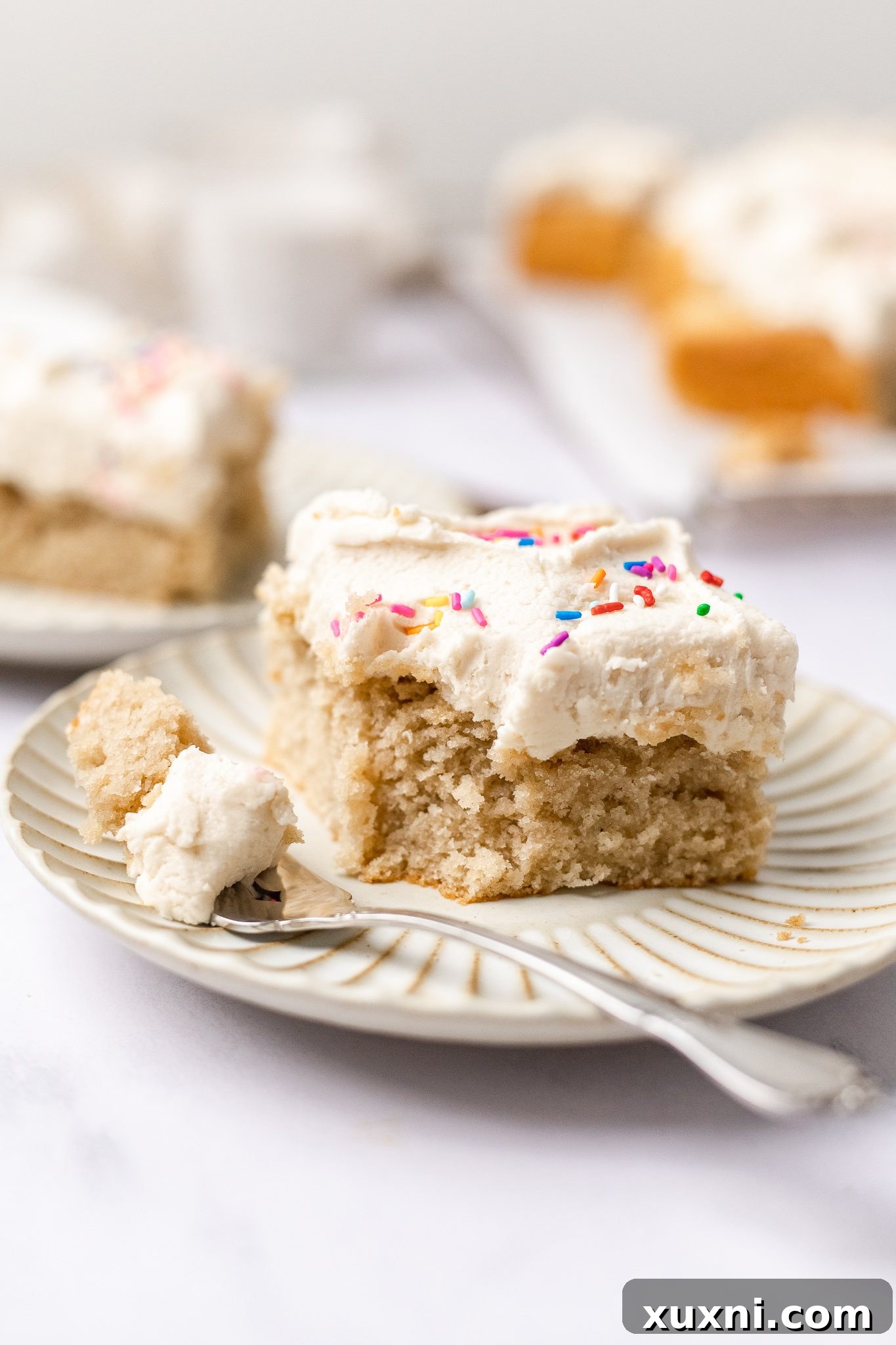
Easy & Delicious Vegan Vanilla Sheet Cake Recipe
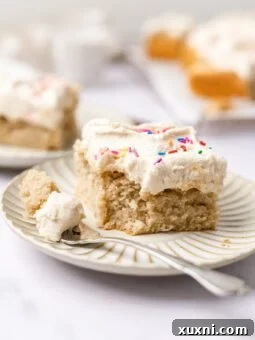
Indulge in the ultimate homemade dessert experience with this unbelievably simple and absolutely delicious vanilla sheet cake. Light, fluffy, and perfectly moist, this eggless recipe is a true crowd-pleaser, making it ideal for birthdays, holidays, and all your special gatherings.
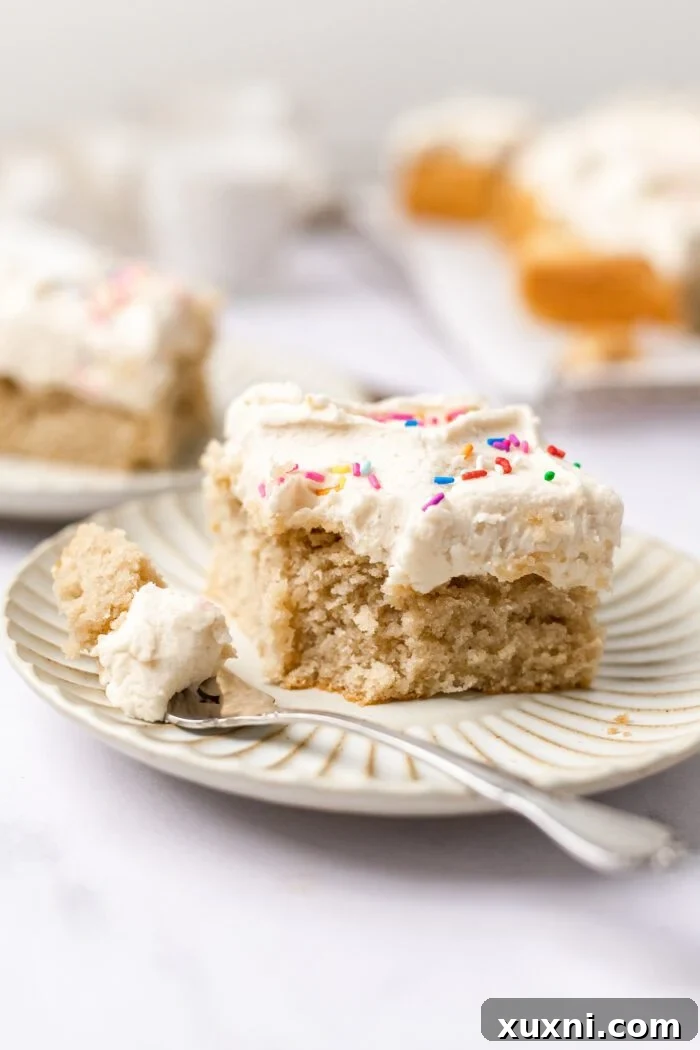
Prepare to fall in love with this effortlessly simple yet exquisitely flavorful vanilla sheet cake. Every bite promises a delightful combination of moistness, fluffiness, and a delicate crumb, bursting with rich vanilla essence. Far more straightforward to prepare than a traditional layer cake, this dessert is your go-to solution for larger gatherings, from festive birthday parties and lively summer barbecues to cherished holiday meals, ensuring everyone gets a generous slice.
This versatile recipe serves as the foundational base for many delightful creations, including my popular easy and fun blackberry lavender sheet cake, which is particularly wonderful for springtime celebrations. What truly sets this vanilla sheet cake apart is its naturally vegan composition – meaning no eggs or dairy are required! Plus, it can be effortlessly adapted to be gluten-free without any compromise on taste or texture. Seriously, no one will even guess it’s a special diet cake! It truly stands out as one of the best vegan cake recipes you’ll ever bake.
Why This Vegan Vanilla Sheet Cake is a Must-Try
There’s a reason this vanilla sheet cake has become a beloved staple. Beyond its incredible flavor, it offers numerous benefits that make it the perfect choice for any occasion:
- Incredibly Easy to Make: Designed with simplicity in mind, this recipe is accessible for bakers of all experience levels. Forget complicated techniques; this cake comes together effortlessly.
- Deliciously Moist & Fluffy: Our carefully crafted recipe guarantees a cake with an exceptionally tender crumb that practically melts in your mouth, infused with an authentic, rich vanilla flavor.
- Naturally Vegan & Eggless: Cater to various dietary preferences without compromise. This cake contains no eggs or dairy, making it a fantastic option for vegan diets or those with allergies.
- Gluten-Free Friendly: Easily adaptable for a gluten-free diet, ensuring everyone can enjoy a slice without sacrificing the delightful taste or texture.
- Perfect for Any Celebration: Its generous proportions make it ideal for feeding a crowd, whether it’s a birthday party, holiday feast, or a casual family gathering.
- Versatile Recipe Base: This classic vanilla base is a blank canvas, perfect for customizing with different frostings, fillings, or fun decorations.
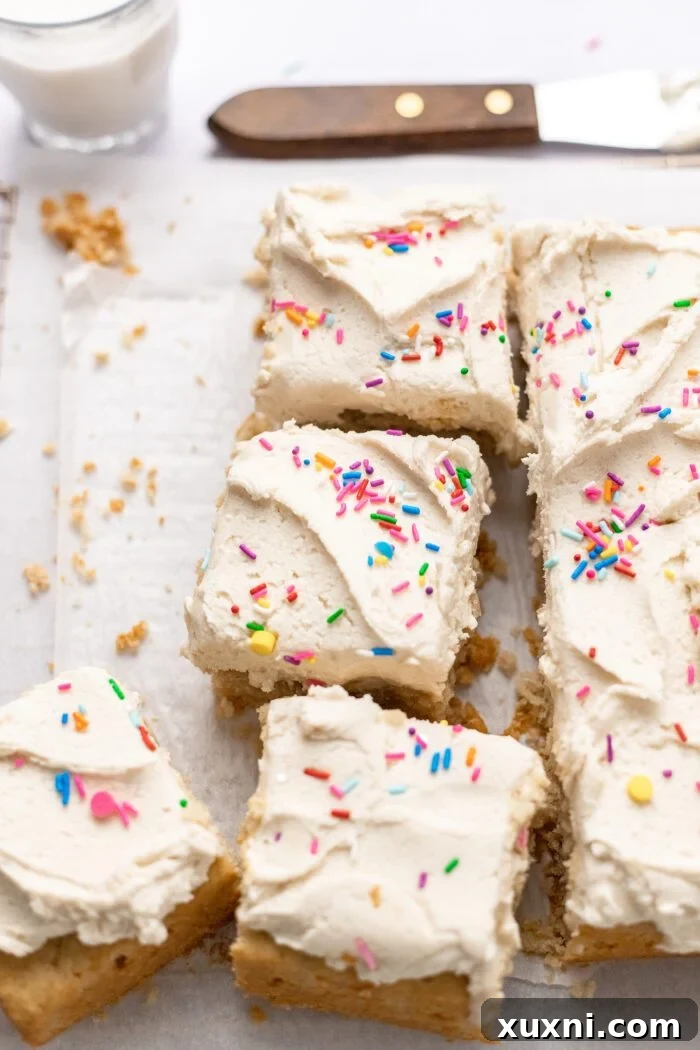
Choosing the Right Cake Pan for Your Sheet Cake
The success of your cake often hinges on the seemingly small details, and the choice of your baking pan is paramount. When it comes to baking a perfect sheet cake, the material and type of pan make a significant difference. For this vegan vanilla sheet cake, I wholeheartedly recommend opting for a metal pan. Let’s delve into why:
- The Superiority of Metal Pans: Even Heat Distribution
Metal baking pans are excellent conductors of heat. They absorb heat quickly from the oven and, crucially, distribute it uniformly across the entire surface of the pan. This even heat distribution ensures that your cake bakes consistently from edge to center, preventing common issues like burnt edges or an underbaked middle. Furthermore, metal pans cool down relatively quickly once removed from the oven, halting the cooking process and helping to maintain the cake’s delicate moisture. This results in a beautifully golden-brown crust and a tender, moist interior – precisely what we aim for in a perfect sheet cake.
- The Pitfalls of Glass Pans: Uneven Baking and Dryness
While attractive for serving, glass pans present challenges for baking cakes. Glass is an insulator, meaning it heats up slowly and retains heat for a much longer period than metal. This prolonged heat retention can cause the edges of your cake to over-bake and become dry and tough, even after the cake has been pulled from the oven. The uneven heating can also lead to a cake that is not uniformly risen or cooked through. For a consistently moist and evenly baked vanilla sheet cake, it’s best to steer clear of glass pans during the baking process.
- Why to Avoid Silicone Pans: A Recipe for Disaster
Silicone baking pans might seem convenient, but they are absolutely unsuitable for this sheet cake recipe. Silicone is a very poor heat conductor, leading to extreme inconsistencies in baking. Cakes baked in silicone often suffer from overbaked, rubbery exteriors and a doughy, underbaked center. This typically results in a frustratingly uneven and ultimately disappointing outcome. Save your silicone molds for other culinary ventures and stick to reliable metal for this cake.
In conclusion, a sturdy metal baking pan is your best ally in achieving a uniformly baked, wonderfully moist, and perfectly risen vegan vanilla sheet cake. It’s a fundamental step that sets the stage for baking success.
Understanding Sheet Cake Pan Sizes and Their Impact
Sheet cakes are renowned for their practicality and ability to feed a crowd, largely due to their generous rectangular shape. The standard pan size I recommend for this versatile vegan vanilla cake recipe is a 9×13 inch sheet cake pan. This dimension offers the perfect balance, providing a good cake height that’s substantial enough for elegant slicing and serving, making it ideal for most family gatherings, potlucks, and celebrations.
For those times when you need an even larger volume of cake or prefer a thinner profile, you can certainly bake this vanilla cake in a larger 13×18 inch sheet cake pan (often referred to as a half-sheet pan). Do note, however, that utilizing this larger pan will naturally result in a shorter cake. If you opt for the 13×18 inch pan, be prepared to adjust your baking time downwards, as a thinner cake will cook faster. Keep a watchful eye on it to prevent over-baking, and perform the toothpick test earlier than the recipe suggests.
The beauty of this robust vegan vanilla cake batter lies in its adaptability beyond just sheet pans! With a few simple adjustments, you can easily transform this recipe into a classic vegan vanilla layer cake. For detailed instructions on how to achieve a show-stopping tiered dessert, refer to the linked recipe. It provides guidance for using three 8-inch round cake pans or even smaller 6-inch cake pans, perfect for creating impressive stacked cakes. In fact, this resilient and delicious batter is so reliable that it can even serve as the foundational recipe for an exquisite vegan wedding cake, highlighting its incredible versatility for the most special life events.
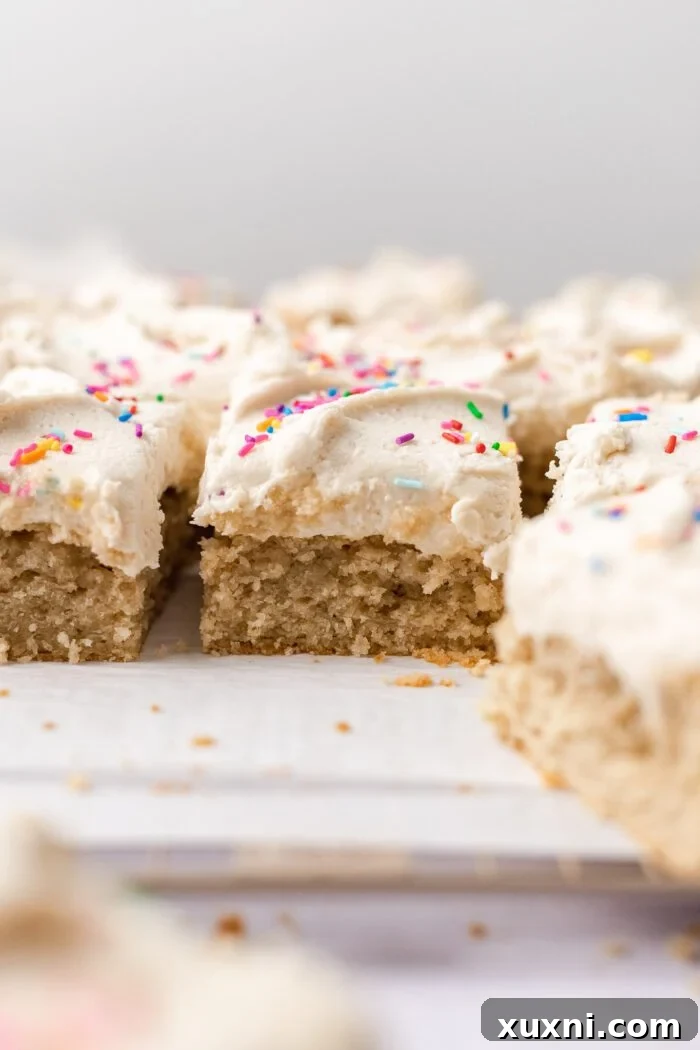
Essential Ingredients and Smart Substitutions for Vegan Vanilla Sheet Cake
Understanding the role of each ingredient and knowing how to make smart substitutions is key to successful vegan baking. Here’s a detailed guide to the components of our delicious vanilla sheet cake:
- Flour: The Structural Backbone
You can use either standard all-purpose flour or cake flour for this recipe, with both yielding excellent results. Cake flour, with its lower protein content, typically produces an even more tender crumb. If you’re baking gluten-free, a high-quality 1:1 gluten-free baking flour blend (I highly recommend Bob’s Red Mill in the blue bag for reliable results) is your best bet. A crucial note for gluten-free flour: always measure by volume (cups) rather than weight for consistent results, as GF flours vary significantly in density. For instance, 1 cup of Bob’s Red Mill GF flour measures approximately 140 grams, meaning you would require around 512 grams of gluten-free flour, not the 450 grams specified for wheat flour. Adding 1 tablespoon of arrowroot powder or cornstarch can also help improve the texture of gluten-free cakes.
- Granulated Sugar: Sweetness and Moisture Retention
Standard granulated sugar provides both sweetness and helps retain moisture in the cake, contributing to its tender texture. For a strictly vegan cake, ensure you select an organic or unrefined granulated sugar, as some conventional sugars are processed using bone char. Florida Crystals is a widely available and reliable vegan-friendly option that I frequently use in my baking.
- Leavening Agents: Baking Powder and Baking Soda for the Perfect Rise
This dynamic duo — baking powder and baking soda — are critical for creating the cake’s light, airy, and fluffy texture. They react to create carbon dioxide bubbles, which expand during baking and cause the cake to rise. Always double-check that your leavening agents are fresh and active, as expired products will result in a dense, flat cake. You can test baking soda with vinegar and baking powder with hot water to ensure their potency.
- Salted Vegan Butter: Richness, Flavor, and Texture
High-quality salted vegan butter, such as Miyoko’s Kitchen or Flora Plant Butter, is essential for imparting a rich flavor, contributing to a moist texture, and creating structure when creamed with sugar. It’s imperative that the vegan butter is at room temperature for optimal creaming. If you’re not adhering to a vegan diet, many readers have successfully substituted with regular salted dairy butter. If using unsalted dairy butter, remember to add an additional 1/8 teaspoon of fine sea salt to the dry flour mixture to balance the flavors.
- Dairy-Free Yogurt or Unsweetened Applesauce: The Clever Egg Replacement
In our eggless vegan recipe, plain, unsweetened dairy-free yogurt (soy, almond, or coconut work well) or unsweetened applesauce acts as a brilliant egg replacer. These ingredients add crucial moisture, help bind the cake batter, and contribute to a tender, cohesive crumb. Both options perform admirably, so use whichever is most convenient for you.
- Dairy-Free Vegan Buttermilk: Acidity for Activation and Tenderness
Similar to traditional buttermilk, our dairy-free buttermilk is a simple concoction of dairy-free milk (soy or almond milk are excellent choices) and a splash of apple cider vinegar. The acidity from the vinegar reacts with the baking soda, enhancing the cake’s rise and resulting in an incredibly tender crumb. Allow it to sit for a few minutes until it lightly curdles, indicating it’s ready.
- Vanilla Extract: The Heart of Vanilla Flavor
As this is a vanilla sheet cake, vanilla extract is not just an accent; it’s the star of the show. This recipe calls for a generous two full tablespoons of high-quality pure vanilla extract. This seemingly large quantity is deliberate and crucial for infusing the cake with an unparalleled depth of rich, comforting vanilla flavor. Don’t skimp on this! For an even more intense vanilla aroma and visible specks, consider adding an optional 1/4 teaspoon of vanilla powder or 1 teaspoon of vanilla bean paste.
- Frosting Options: The Decadent Topping
While the detailed recipe card outlines a luscious vegan cream cheese frosting, this versatile cake is equally delightful with other toppings. A classic vegan vanilla buttercream frosting offers a smooth, sweet finish, or for those who adore a chocolate pairing, a rich and creamy vegan chocolate frosting would be an absolutely sublime choice.
Expert Tips and Tricks for a Flawless Vegan Vanilla Sheet Cake
Baking is a science, but a few insider tips can elevate your results from good to absolutely spectacular. Follow these expert recommendations to ensure your vegan vanilla sheet cake turns out perfectly every time:
- Precision with a Kitchen Scale:
For the most accurate and consistent baking results, especially with flour, always use a kitchen scale to weigh your ingredients. While cup measurements are provided, weighing eliminates variability and is the gold standard for professional bakers. This is particularly important for gluten-free baking.
- Correct Flour Measurement (If Using Cups):
If you’re relying on US cup measurements for flour, it’s vital to measure correctly. Spoon the flour into your measuring cup until it overflows, then level it off with the straight edge of a knife. Never scoop flour directly from the bag, as this compacts it, leading to an excess of flour and a dry, dense cake.
- Avoid Overmixing the Batter:
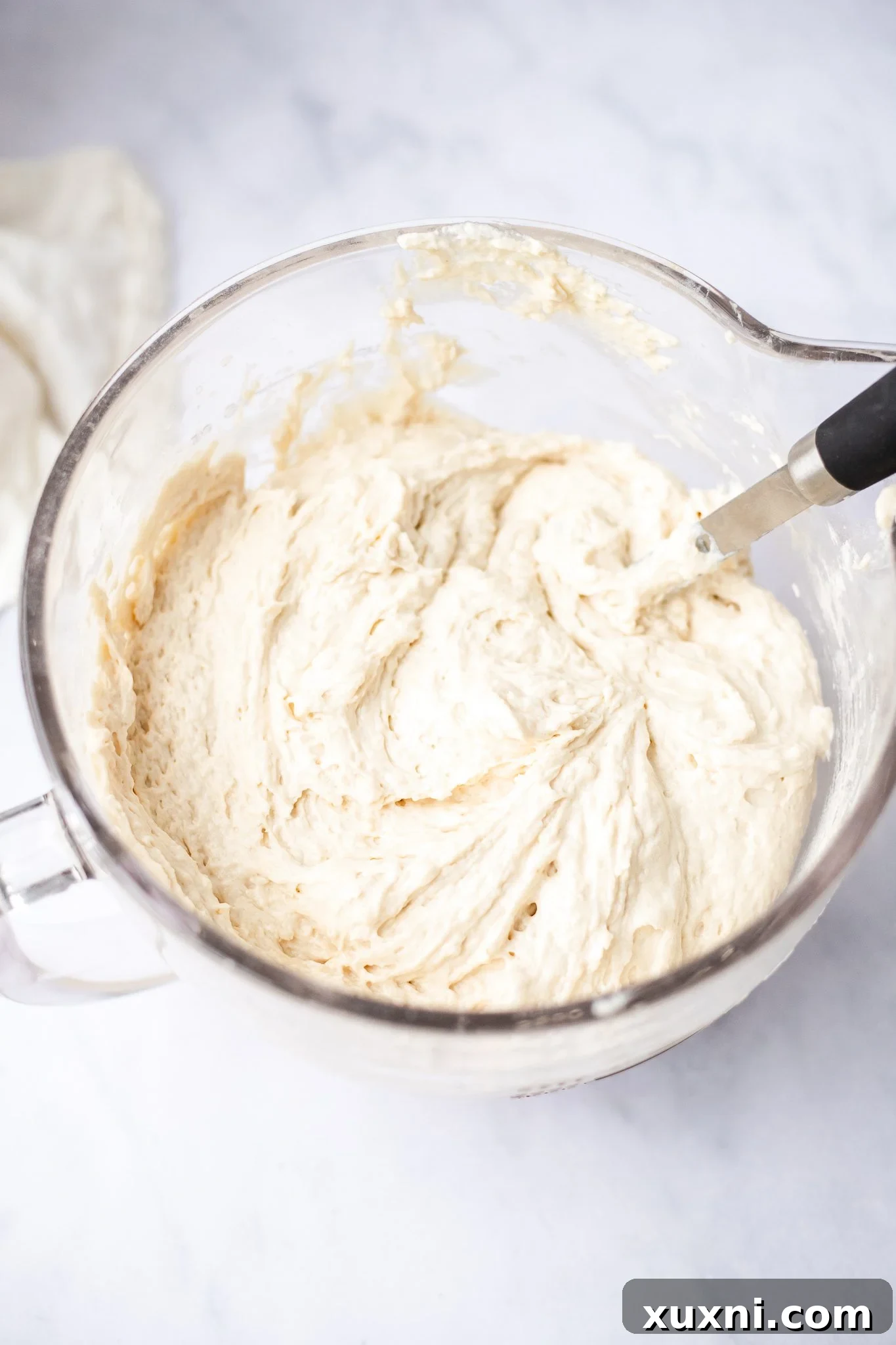
This is a golden rule in baking! Overmixing develops the gluten in the flour, resulting in a tough, chewy, and dense cake. Mix your wet and dry ingredients together only until they are just combined and no streaks of dry flour are visible. A few small lumps in the batter are perfectly normal and preferred over overmixing.
- Ensure Room Temperature Ingredients:
For a smooth, well-emulsified batter that bakes evenly, make sure your vegan butter, dairy-free yogurt/applesauce, and vegan buttermilk are all at room temperature. Cold ingredients don’t blend as effectively, leading to a lumpy batter and potentially inconsistent baking.
- Spice Up Your Cake with Sprinkles:
Want to turn this classic vanilla sheet cake into a celebratory Funfetti cake? Simply fold in 1 cup of colorful vegan sprinkles into the batter just before pouring it into your prepared pan. It adds a delightful pop of color and festivity!
- Enhance Vanilla Flavor with Vanilla Bean Paste or Powder:
To deepen the vanilla flavor even further and add beautiful specks, consider incorporating 1 teaspoon of high-quality vanilla bean paste or 1/4 teaspoon of vanilla powder alongside the vanilla extract. This small addition makes a big difference in aroma and taste.
- Creative Holiday Decorations:
This sheet cake offers a fantastic canvas for creative decorations. For patriotic holidays like Memorial Day or the Fourth of July, frost the cake with white frosting, then arrange sliced strawberries and blueberries to create an edible flag design. It’s a fun and delicious way to celebrate!
- Grease and Line Your Pan Properly:
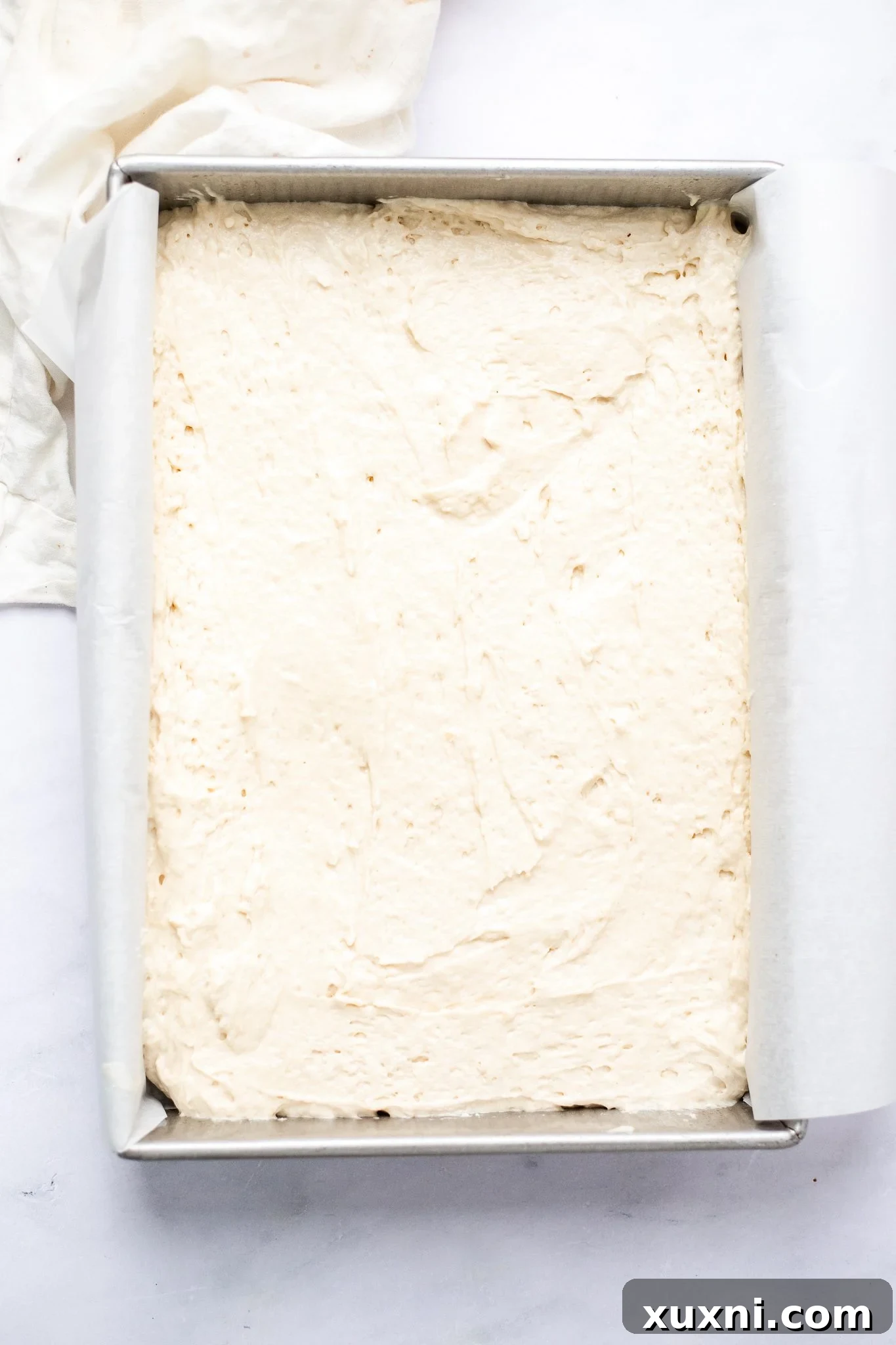
Always grease your metal pan thoroughly and line it with parchment paper, leaving an overhang on the sides. This ensures your cake doesn’t stick and can be easily removed and transferred to a cooling rack without breakage.
Troubleshooting: How to Prevent a Dry and Crumbly Cake
No one wants a dry, crumbly cake! Ensuring your vegan vanilla sheet cake is wonderfully moist and tender is easier than you think with these key strategies and troubleshooting tips:
- Always Use a Metal Pan:
Reiterating a crucial point, the metal pan is your best defense against dryness. Its superior and even heat conduction, combined with quicker cooling, prevents the cake from over-baking. Glass pans, with their insulating properties, tend to overcook the edges, leading to moisture loss.
- Measure Flour Accurately:
The most common culprit for a dry cake is too much flour. Excess flour absorbs all the vital moisture in the batter, leaving your cake dense and arid. Always weigh your flour for precision, or if using cups, remember to spoon and level it carefully, never compacting it.
- Do Not Overmix the Batter:
Overmixing is detrimental to cake texture. It develops gluten excessively, resulting in a tough, chewy, and inevitably dry cake. Mix only until the ingredients are just combined and no visible streaks of flour remain. Err on the side of slightly undermixing rather than overmixing.
- Avoid Prolonged Refrigeration for Cooling:
While it’s tempting to speed up the cooling process, prolonged exposure to cold, circulating air in a refrigerator or freezer will actively draw moisture out of your cake, leading to a stale, dry outcome. Allow your cake to cool completely at room temperature on a wire rack. A quick chill of 5-10 minutes is acceptable if you’re in a rush, but anything longer will compromise moisture.
- Calibrate Your Oven:
An oven that runs hotter than its set temperature can rapidly over-bake your cake. Invest in an inexpensive oven thermometer to verify your oven’s accuracy. If it’s consistently off, adjust your baking temperature accordingly.
- Don’t Overbake:
Begin checking for doneness a few minutes before the recipe’s suggested bake time. A toothpick inserted into the center should come out clean or with a few moist crumbs attached. If it comes out wet, continue baking in short intervals. Overbaking by even a few minutes can turn a moist cake into a dry one.
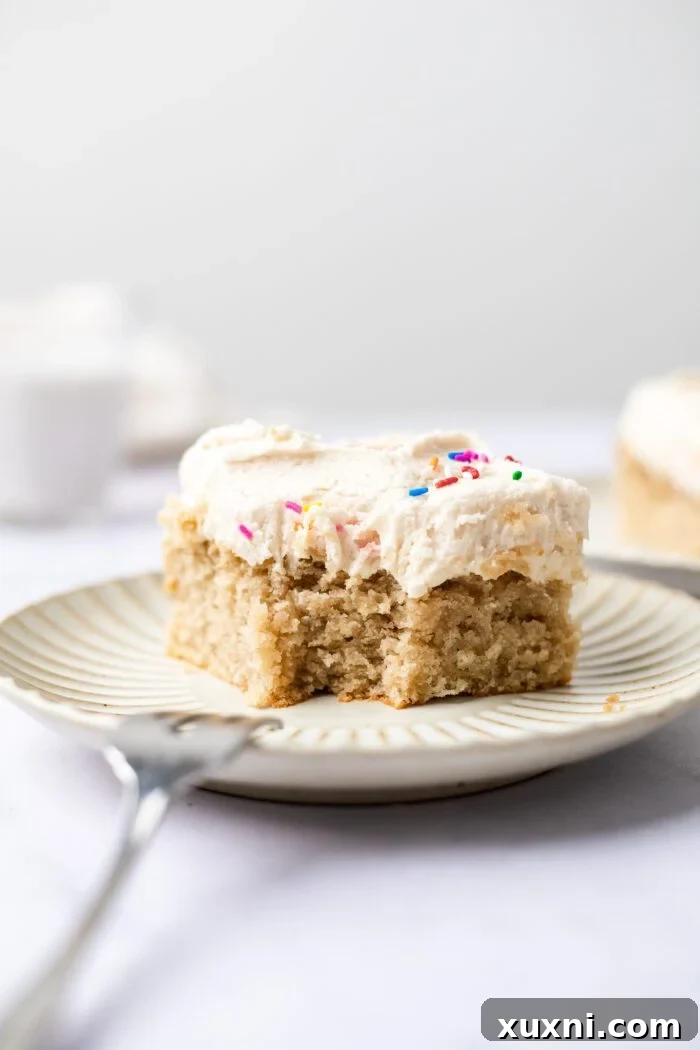
Mastering the Art of Frosting Your Vegan Vanilla Sheet Cake
A beautifully frosted cake is the crowning glory of any dessert. Applying frosting correctly ensures not only an appealing look but also helps seal in the cake’s moisture. Here’s how to achieve a flawless finish:
- The Golden Rule: Cool Completely – No Exceptions!
This is arguably the most crucial step for perfect frosting. You absolutely must allow your vanilla sheet cake to cool fully to room temperature before applying any frosting. Even a hint of warmth will cause your frosting to melt, slide off the cake, and create a messy, unappealing finish. Depending on your kitchen’s ambient temperature and humidity, this cooling process can take anywhere from 1 to 2 hours, or sometimes even longer. Exercise patience here; it truly pays off for a beautifully finished dessert.
- Tools for Smooth Application:
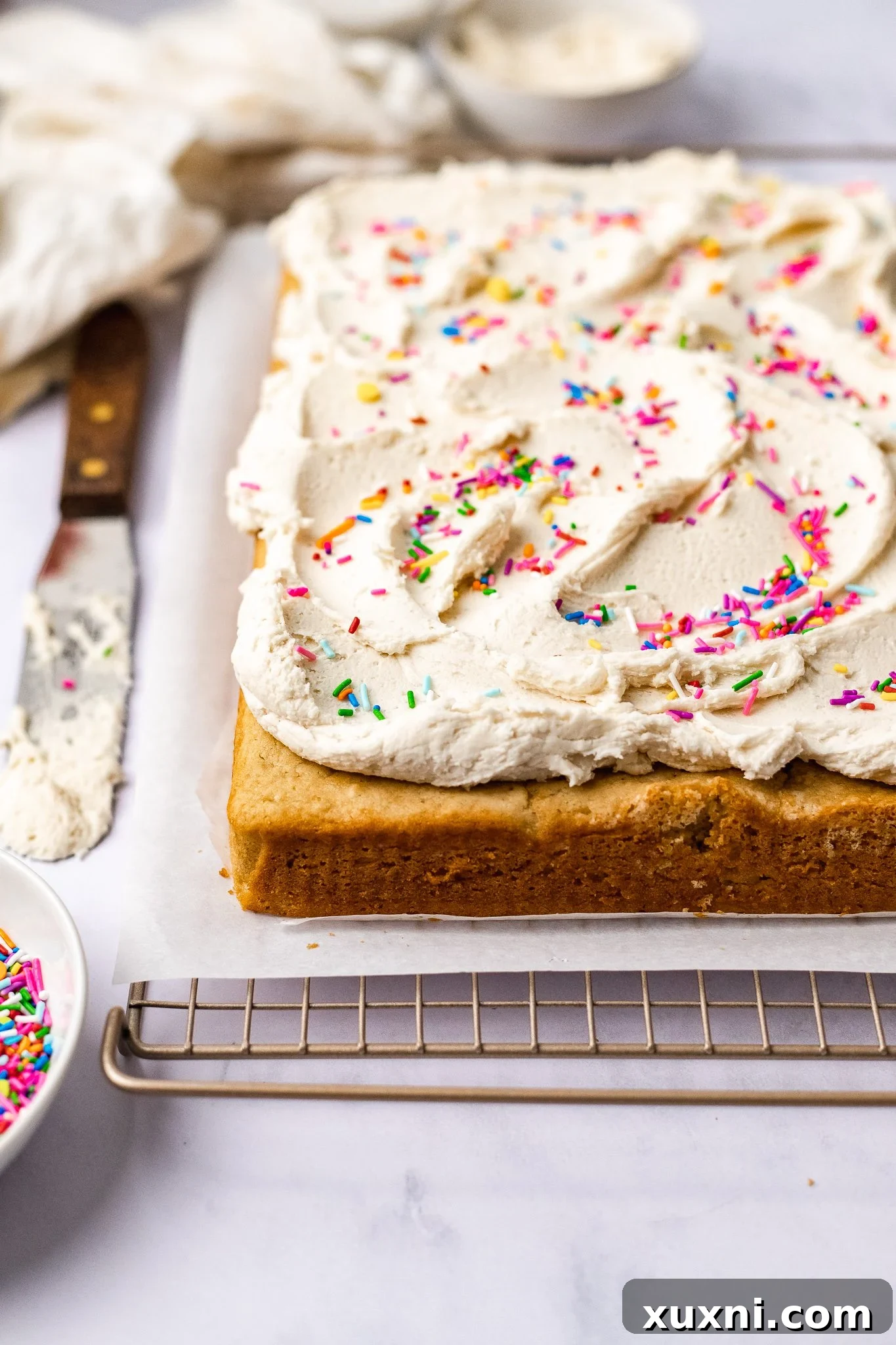
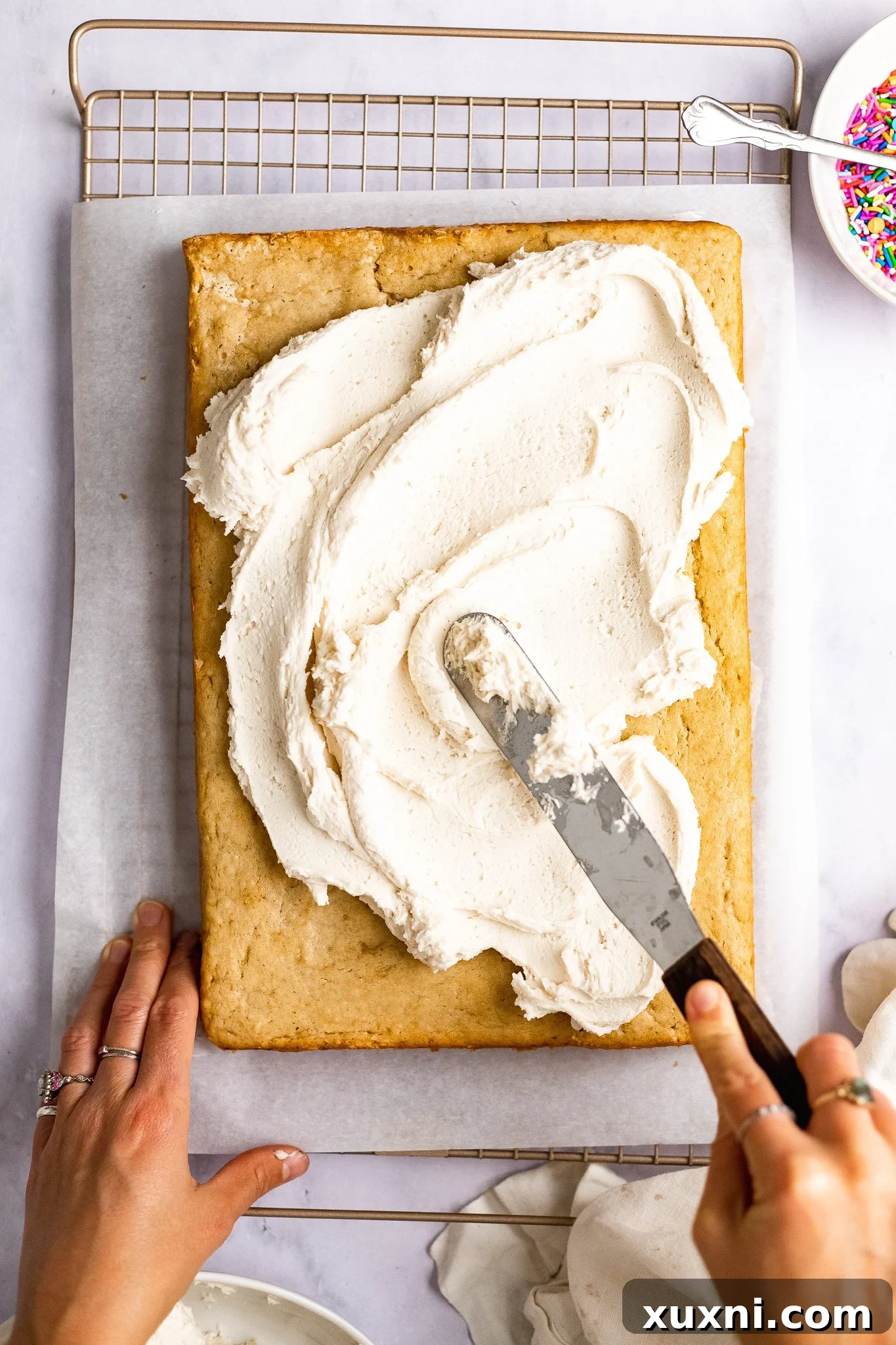
When you’re ready to frost, an offset spatula is your best friend. Its angled blade makes it incredibly easy to spread frosting smoothly and evenly across the cake’s surface, reaching into corners with ease. If an offset spatula isn’t available, the back of a large spoon can also work wonders for creating lovely swoops, swirls, or a charming rustic texture, adding an artisanal touch to your cake’s presentation.
- Achieving Even Layers:
For a professional-looking finish, aim for an even layer of frosting across the entire top of the cake. Start by placing a generous dollop of frosting in the center of the cooled cake. Then, using your offset spatula or spoon, gently spread it outwards towards the edges, using consistent, light strokes. Don’t be afraid to add more frosting as needed to achieve a uniform thickness.
- Crumb Coat (Optional but Recommended):
For a pristine, crumb-free final coat, consider applying a thin “crumb coat” first. Spread a very thin layer of frosting over the entire cake, effectively trapping any loose crumbs. Chill the cake in the refrigerator for about 15-20 minutes until the crumb coat is set, then apply your final, thicker layer of frosting. This technique ensures a perfectly smooth and professional appearance.
Serving and Storage Suggestions for Your Vegan Vanilla Sheet Cake
Once your delectable vegan vanilla sheet cake is baked, frosted, and ready, knowing how to properly serve and store it will ensure every slice is as fresh, moist, and enjoyable as the first. This is especially important for preserving its delightful texture and flavor.
- Perfect Serving:
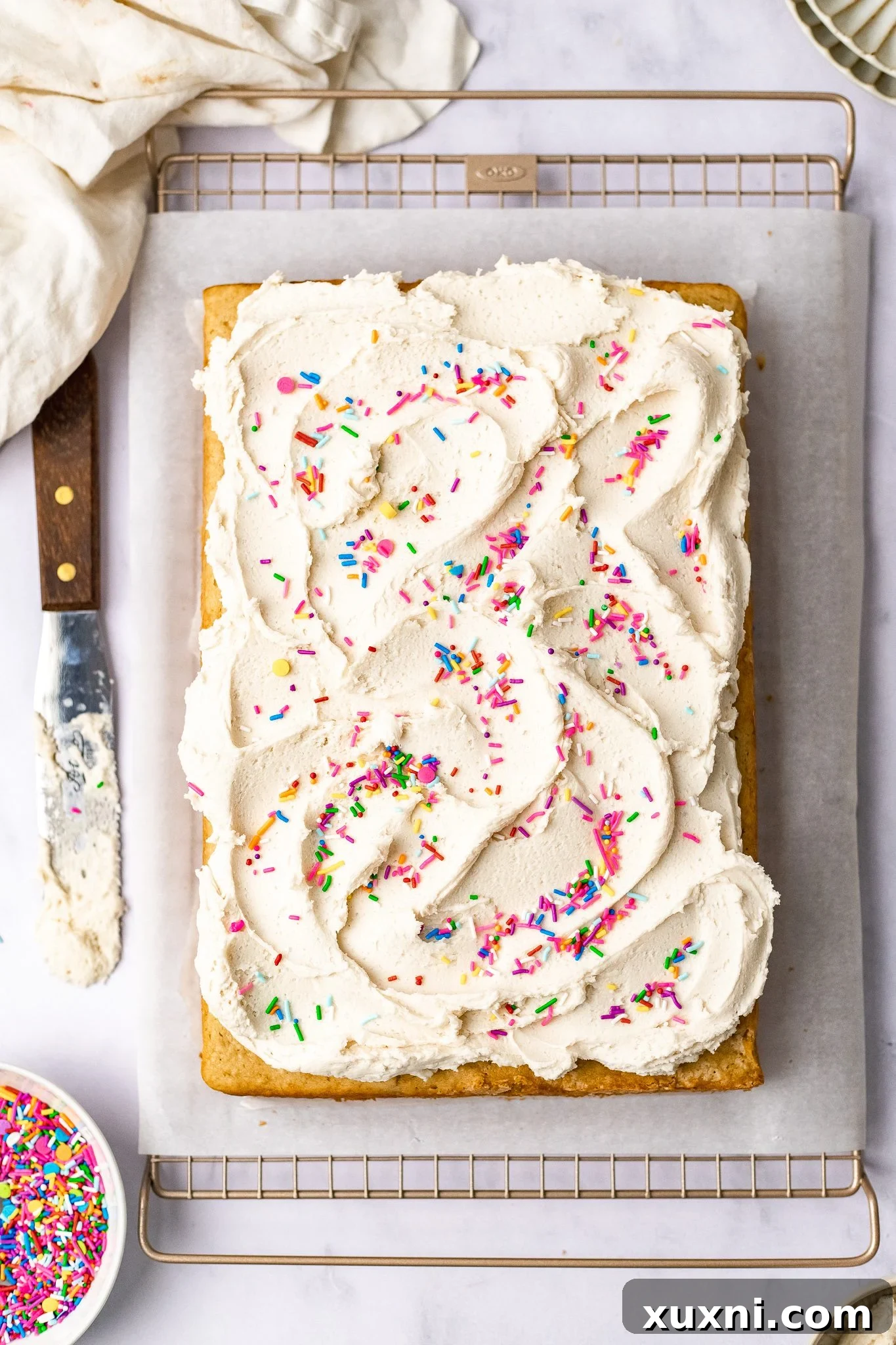
This sheet cake is inherently designed for easy portioning and serving a crowd. For the cleanest cuts, use a sharp, non-serrated knife. For an extra touch of perfection, you can run the knife under hot water and wipe it clean between each slice – this helps prevent sticking and creates crisp edges. Depending on the occasion, you can garnish individual slices with fresh berries (strawberries, raspberries, or blueberries complement vanilla beautifully), a dusting of powdered sugar, chocolate shavings, or additional festive sprinkles to elevate its visual appeal and add an extra layer of flavor.
- Storage at Room Temperature:
If your cake is frosted with a non-perishable frosting (like a basic vegan buttercream) and your kitchen is cool (below 70°F or 21°C), the frosted cake can be stored in an airtight container at room temperature for up to 2-3 days. Ensuring it’s airtight is critical to prevent the cake from drying out and absorbing ambient odors.
- Refrigeration for Perishable Frostings:
If your vegan cream cheese frosting is made with perishable ingredients, or if your kitchen is warm and humid, it’s best to store the cake in the refrigerator. Cover the cake tightly with plastic wrap or place it in an airtight container to protect it from drying out and absorbing fridge odors. Refrigerated cake can last for up to 5-7 days. For the best flavor and texture, allow refrigerated cake to come to room temperature for about 30-60 minutes before serving.
- Freezing for Longer Shelf Life:
This cake freezes beautifully, making it perfect for preparing ahead or saving leftovers. For longer storage, unfrosted cake layers can be wrapped tightly in several layers of plastic wrap, followed by a layer of aluminum foil, and frozen for up to 2-3 months. Thaw the cake overnight in the refrigerator before frosting and serving. You can also freeze individual slices of frosted cake; wrap each slice thoroughly before placing them in a freezer-safe bag or container. Thaw individual slices at room temperature or in the refrigerator as needed.
Want to save this recipe for later? Pin it on Pinterest!
If you try this delightful recipe, please take a moment to leave a comment and a rating ⭐️⭐️⭐️⭐️⭐️ below. Your feedback helps other bakers discover and enjoy this recipe! And as always, I absolutely adore seeing your beautiful creations, so be sure to tag me @the_bananadiaries on Instagram and Pinterest with #thebananadiaries so we can see your amazing creations!
Vegan Vanilla Sheet Cake Recipe
This vanilla sheet cake is so easy to make and tastes absolutely delicious! Light, fluffy, and moist, this sheet cake recipe doesn’t need any eggs, and is perfect for birthdays and holidays!
Average: 5 stars from 11 reviews
- Author: Britt Berlin
- Prep Time: 15 minutes
- Cook Time: 60 minutes
- Total Time: 1 hour 15 minutes
- Yield: 24 servings
- Category: Dessert
- Method: Baking
- Cuisine: American
- Diet: Vegan
Print Recipe
Ingredients
For the Vegan Vanilla Sheet Cake:
- 1 1/4 cup (300 mL) vegan buttermilk
- 3 2/3 cup (450 g) all-purpose flour (or 512 g gluten free 1:1 baking flour + 1 tbsp arrowroot or cornstarch)
- 2 tsp baking powder
- 1 tsp baking soda
- 1 3/4 cup (350 g) granulated sugar
- 1 cup (220 g) salted vegan butter (I recommend Miyoko’s or Flora Plant butter), room temperature
- 1 cup (240 g) unsweetened applesauce or dairy free yogurt, room temperature
- 2 tbsp vanilla extract (yes, 2 tablespoons!!)
- Optional (but recommended): 1/4 tsp vanilla powder
For the Vegan Cream Cheese Frosting:
- 2 cups vegan butter, room temperature
- 1 cup vegan cream cheese, room temperature
- 4 cups organic powdered sugar
- 1 tsp vanilla extract
- 2–4 tbsp unsweetened dairy free milk
Instructions
- Prep: Preheat the oven to 350 F (175 C). Grease a 9×13 inch metal sheet pan with olive or cooking oil, and line with parchment paper, leaving an overhang on the sides for easy lifting. Set aside.
- Prepare the vegan buttermilk: In a measuring cup or small bowl, combine the dairy-free milk with the apple cider vinegar. Stir gently and set aside for 5-6 minutes. The milk will curdle slightly, indicating it’s ready. Use this time to weigh and measure your remaining ingredients.
- Whisk dry ingredients: In a medium bowl, whisk together the flour, baking powder, and baking soda until well combined. This ensures even distribution of leavening agents. Set aside.
- Cream butter and sugar: In a stand mixer fitted with a paddle attachment, or a large bowl using a hand mixer, cream together the room temperature vegan butter and granulated sugar on medium-high speed for 2-3 minutes until light and fluffy. Scrape down the sides and bottom of the bowl frequently to ensure even mixing.
- Add wet ingredients: Incorporate the unsweetened applesauce or dairy-free yogurt and the generous 2 tablespoons of vanilla extract. Mix again on medium speed until just combined, scraping the bowl as needed.
- Combine wet and dry: Add about half of the whisked dry mixture to the wet ingredients, along with half of the prepared vegan buttermilk. Mix on medium-low speed until just combined, being careful not to overmix.
- Complete the batter: Add the remaining dry mixture and vegan buttermilk. Mix on medium-low speed until there are no more dry streaks of flour. Scrape down the bottom and sides of the bowl one last time to ensure everything is fully incorporated.
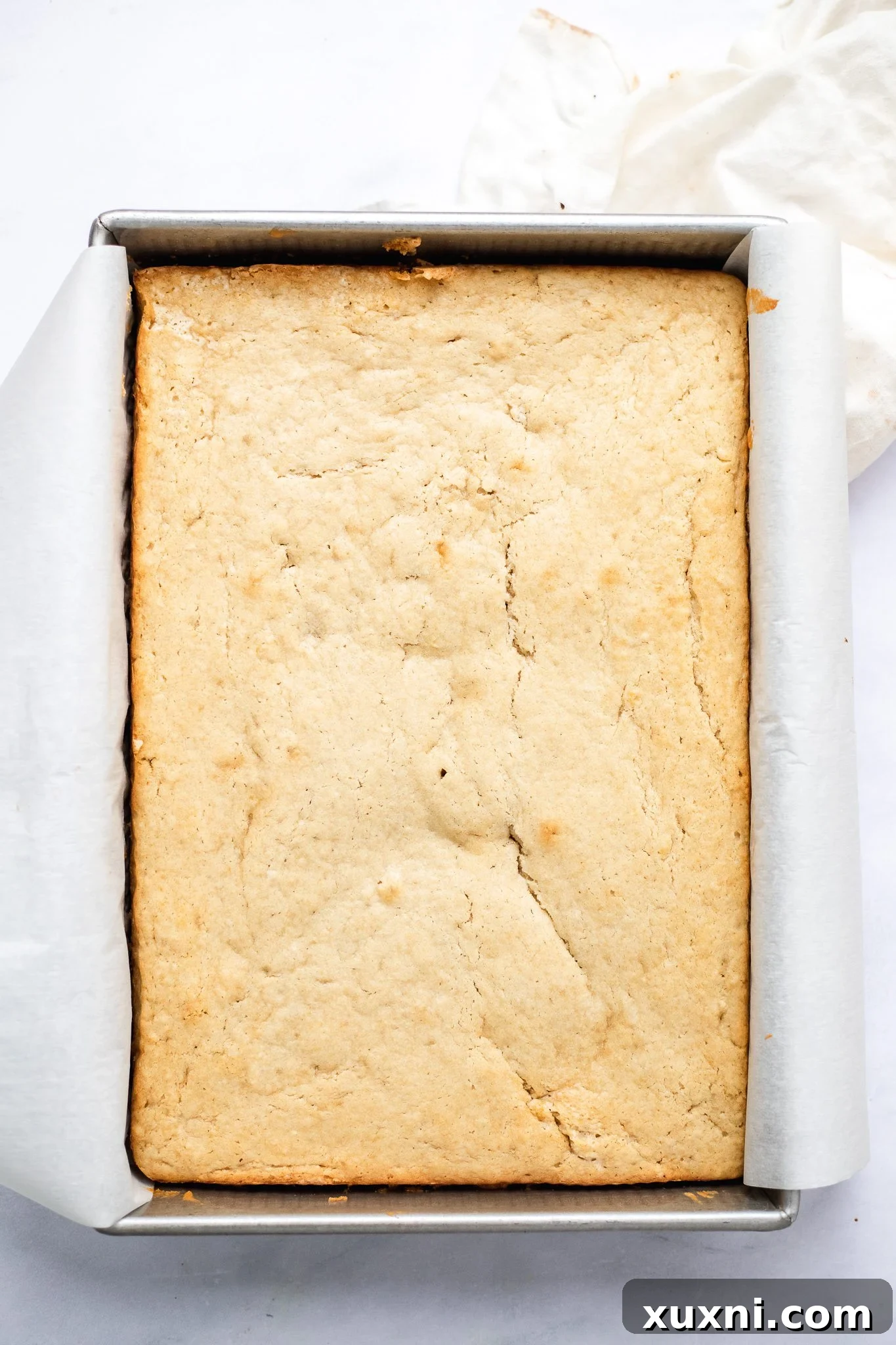
- Bake: Pour the luscious batter evenly into the prepared 9×13 inch cake pan. Bake for 50-55 minutes, or until a wooden toothpick inserted into the center comes out clean or with a few moist crumbs attached.
- Cool: Once baked, remove the cake from the oven. Allow it to cool in its pan on a wire rack for 10-15 minutes. This helps the cake firm up before handling. Carefully lift the cake out of the pan using the parchment paper overhang and transfer it directly to the cooling rack to cool completely. This crucial step will take approximately 1 to 2 hours. Ensure there is absolutely no warmth remaining before proceeding to the frosting stage.
- Make the cream cheese frosting: While the cake cools completely, prepare your frosting. In a large bowl or stand mixer, cream together the room temperature vegan butter and vegan cream cheese for 2-3 minutes until smooth and fluffy.
- Add sugar and vanilla: Gradually add the organic powdered sugar, about 1 cup at a time, beating on low speed until fully incorporated before increasing to medium speed. Continue beating until the frosting is thick and creamy. Stir in the vanilla extract and then add 2-4 tablespoons of unsweetened dairy-free milk (almond or coconut milk are great) to reach your desired frosting consistency. Beat until light and fluffy.
- Frost and serve: Once the cake is completely cool, apply the vegan cream cheese frosting using an offset spatula or the back of a spoon. Decorate as desired with sprinkles, berries, or chocolate shavings, then slice and enjoy your magnificent homemade vegan vanilla sheet cake!
Notes
- Gluten-Free Adaptation: To make this cake gluten-free, substitute all-purpose flour with a 1:1 gluten-free baking flour blend. Remember to use the US cup measurements (or weigh 512 g) for the gluten-free flour to ensure correct proportions.
- Alternative Frosting Ideas: This versatile cake pairs wonderfully with other frosting types. Consider a classic vegan vanilla buttercream for a lighter taste, or a rich vegan chocolate frosting for a delightful contrast.