
Welcome to the definitive guide on crafting the best oven baked sweet potatoes. Whether you’re seeking an effortless snack or a wholesome side dish to complement any meal, these nutrient-packed powerhouses are a culinary delight. Simple to prepare and bursting with flavor, a sprinkle of sea salt and cinnamon can elevate them to an extraordinary treat. Get ready to transform humble sweet potatoes into a perfectly caramelized, tender, and irresistible addition to your healthy eating repertoire.

These healthy oven baked sweet potatoes are not just food; they’re a culinary revelation. Their natural sweetness intensifies in the oven, yielding a creamy interior and a subtly crisped skin that’s simply heavenly.
In this comprehensive guide, we’ll delve into more than just the art of baking sweet potatoes to perfection. We’ll explore their incredible health benefits, unravel the common confusion between sweet potatoes and yams, and discover a myriad of delightful ways to enjoy them. From simple weeknight sides to creative meal prep solutions, you’ll soon master this versatile root vegetable.
And for those who truly adore sweet potatoes, don’t miss our guide on how to make crispy roasted sweet potatoes in the oven – another delicious variation to add to your cooking skills!
Oven baked sweet potatoes are undoubtedly one of my absolute favorite foods. They are incredibly easy to meal prep in advance, offering a convenient and hearty addition to any meal throughout the week. Their rich nutrient profile makes them an excellent source of complex carbohydrates, crucial for sustained energy and a balanced diet.

Before we dive into the baking process, let’s address some common questions. First, we’ll clarify the often-misunderstood difference between a sweet potato and a yam. Then, we’ll explore the incredible benefits of incorporating sweet potatoes into your diet. Finally, you’ll learn my simple yet effective tips for baking sweet potatoes to tender, caramelized perfection!
Unraveling the Mystery: What’s the Difference Between a Sweet Potato and a Yam?
It’s a pervasive culinary misconception: many people assume that the red-skinned, orange-fleshed vegetable commonly labeled as a “yam” in North American supermarkets is actually a true yam. In reality, what you’re typically buying is a variety of sweet potato. True yams and sweet potatoes are distinctly different plants, belonging to separate botanical families with origins from different parts of the world.
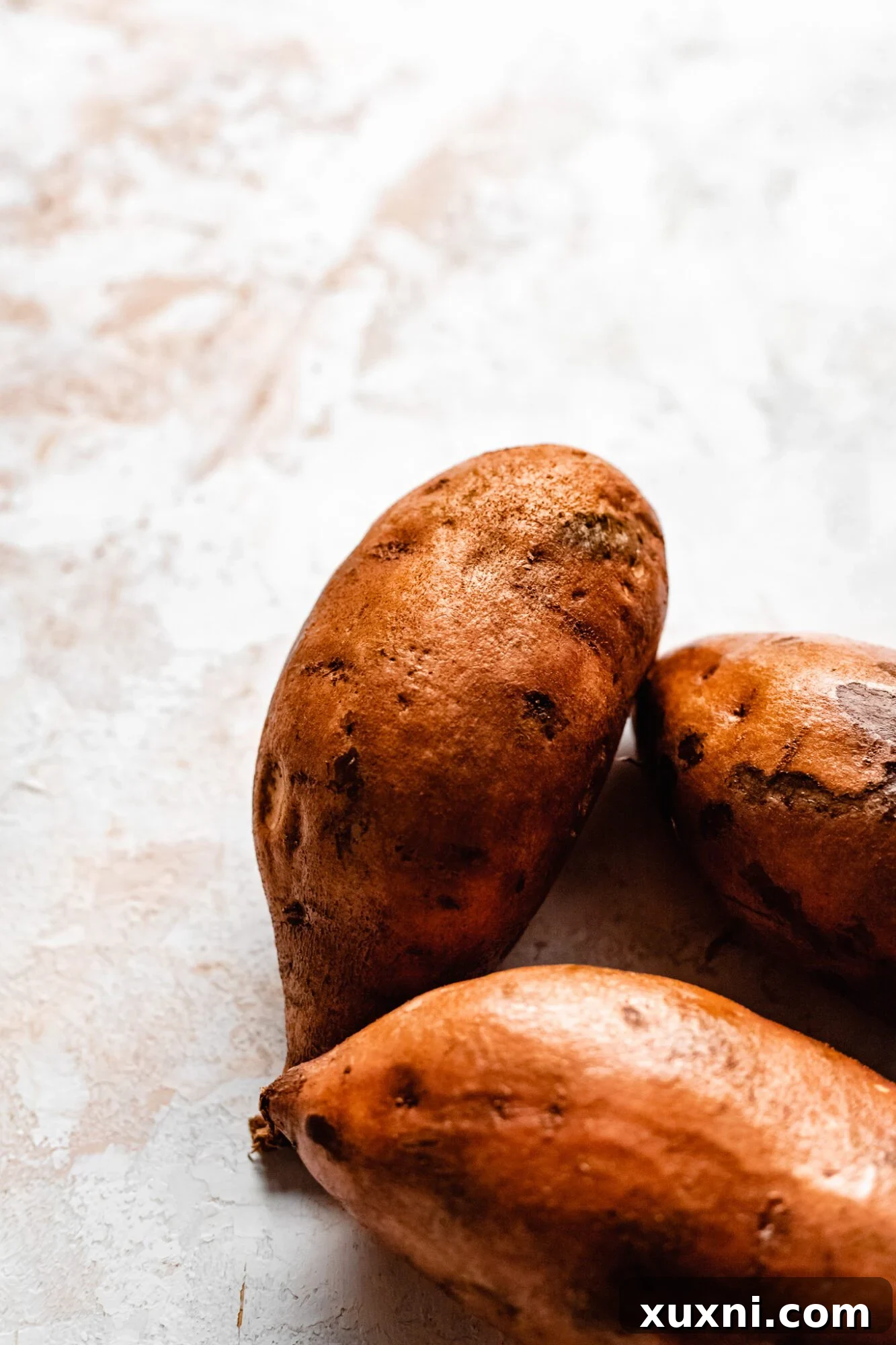
While both yams and sweet potatoes are root vegetables, they are not even distant relatives. Sweet potatoes (Ipomoea batatas) are part of the morning glory family (Convolvulaceae), whereas true yams (genus Dioscorea) belong to the monocot family Dioscoreaceae. True yams are native to Africa and Asia, and are typically characterized by their rough, dark, bark-like skin (which can be black or brown) and a starchy, often drier, white or purple flesh. They are much less sweet than sweet potatoes and require longer cooking times, playing a significant role in traditional cuisines around the globe but rarely found in mainstream Western grocery stores.
Sweet potatoes, on the other hand, boast an impressive range of variations, each with unique characteristics and culinary applications. Here are some of the most common types you’ll encounter:
- Japanese Sweet Potatoes: These gems feature a purplish-red skin and a dense, white flesh that transforms into a wonderfully sweet, nutty, and slightly drier texture when cooked. They are fantastic for both savory and sweet dishes, offering a sophisticated flavor profile.
- Hannah Sweet Potatoes: With their delicate, light brown or tan skin and pale white flesh, Hannah sweet potatoes are less sweet than their orange counterparts. They have a more crumbly texture and a mild, earthy flavor, making them incredibly versatile for a wide range of recipes, particularly those where you want the natural potato flavor to shine.
- Jewel Sweet Potatoes: Perhaps the most widely recognized variety, Jewel sweet potatoes have a vibrant copper skin and a rich orange flesh. They are known for their sweet, moist texture and are often the “sweet potato” people envision when thinking of this vegetable.
- Garnet Sweet Potatoes: Similar to Jewels, Garnets feature a reddish-purple skin and bright orange flesh. They are exceptionally moist and sweet, making them perfect for baking, mashing, or any dish where a creamy, sweet profile is desired.
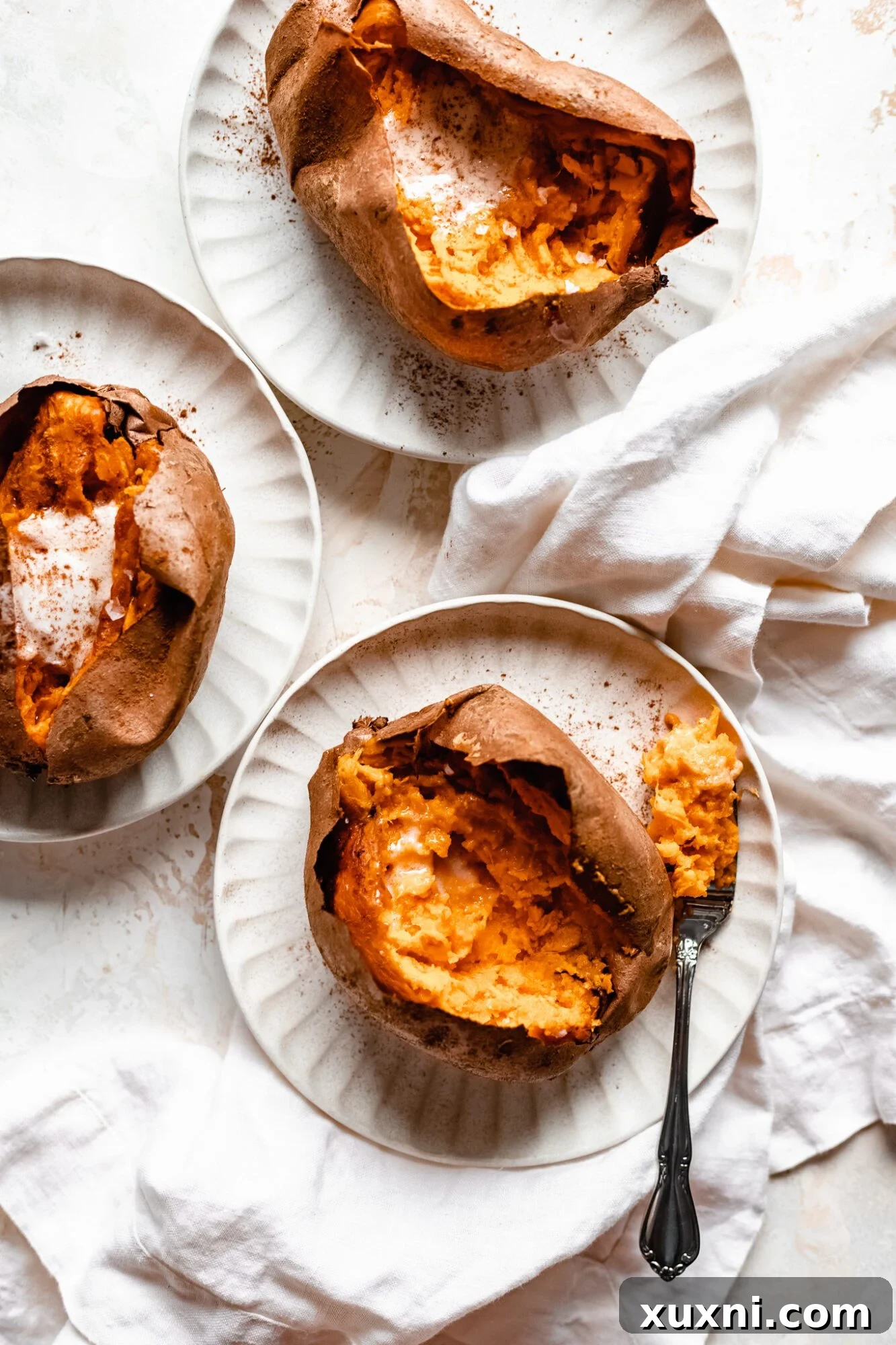
The good news is that my oven baking technique works beautifully for any of these sweet potato varieties! I highly recommend Japanese and Hannah sweet potatoes for recipes that lean sweeter or incorporate delicate flavors, while the classic orange-fleshed Jewel and Garnet varieties are superb for heartier, more savory preparations.
The Abundant Health Benefits of Baked Sweet Potatoes
Beyond their delicious taste and incredible versatility, sweet potatoes are a nutritional powerhouse. Incorporating them into your diet, especially when baked, offers a wealth of health advantages that support overall well-being.
Sweet potatoes are fantastic because they are an excellent source of complex carbohydrates. Unlike simple sugars that cause rapid spikes and crashes in blood glucose, complex carbs provide sustained energy release, helping to keep you feeling full and energetic for longer. They are also rich in dietary fiber, which aids digestion, promotes gut health, and contributes to satiety.
One of the most exciting benefits, particularly for those who meal prep, is their ability to develop resistant starch. When baked sweet potatoes are cooled and then reheated, some of their digestible starches convert into resistant starch. This type of starch acts like soluble fiber, feeding beneficial gut bacteria and improving digestive health. It can also help with blood sugar control and weight management.
But let us not forget about the amazing array of micronutrients packed into sweet potatoes! They are truly chock-full of essential vitamins and minerals:
- Vitamin A (Beta-Carotene): Sweet potatoes are famously rich in beta-carotene, a powerful antioxidant that the body converts into Vitamin A. This vitamin is crucial for maintaining healthy vision, bolstering the immune system, and promoting glowing skin.
- Vitamin C: Another potent antioxidant, Vitamin C is vital for immune defense, collagen production, and protecting cells from damage.
- B Vitamins: Including B6 and folate, these vitamins play key roles in energy metabolism, brain function, and nerve health.
- Manganese: Essential for bone health, metabolism, and antioxidant defense.
- Potassium: Important for maintaining healthy blood pressure, fluid balance, and muscle function.
- Vitamin E: A fat-soluble antioxidant that protects cell membranes from oxidative damage.
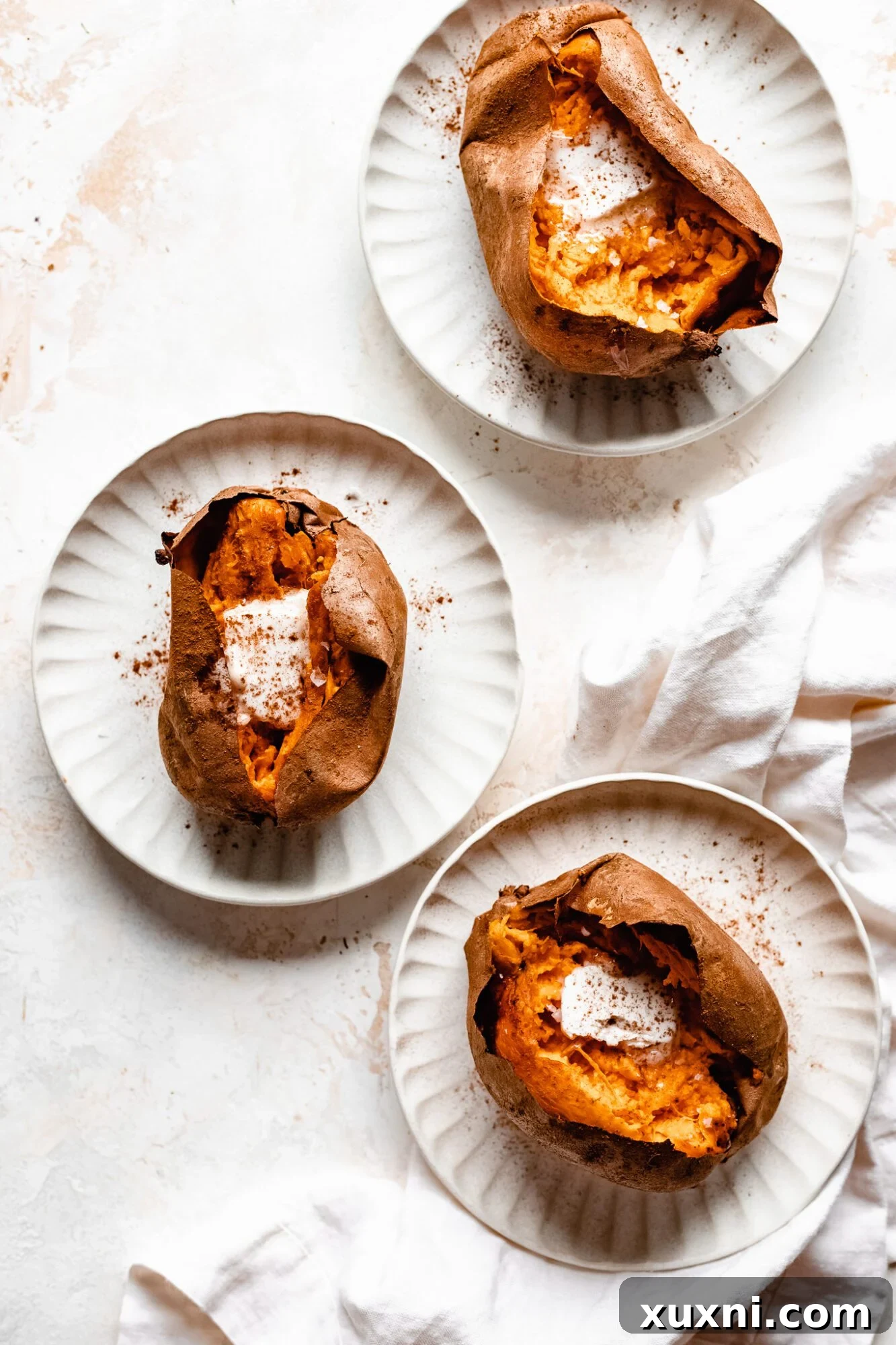
Moreover, sweet potatoes are incredibly cost-effective, making them an excellent choice for budget-conscious individuals looking for a nutritious and satisfying food source. Their versatility and nutritional density make them a staple for healthy eating.
Mastering the Art of Oven Baked Sweet Potatoes
While there are indeed many methods for cooking sweet potatoes, from boiling to steaming, I firmly believe that oven baked sweet potatoes are simply superior. The dry heat of the oven works magic, concentrating the natural sugars and allowing them to caramelize, resulting in a depth of flavor and a wonderfully tender texture that other cooking methods simply can’t replicate. This caramelization creates a truly flavorful side or a richer ingredient for your favorite recipes.
The only method I strongly advise against is cooking your sweet potato in a microwave. Trust me, microwaving is the quickest way to end up with a bland, unappealing sweet potato, devoid of any delicious caramelization or complex flavor development. For true sweet potato bliss, the oven is your best friend!
Preparing sweet potatoes for baking is surprisingly simple, making them one of my favorite foods for meal prepping. Not only are they easy to cook, but storing them in the fridge and reheating can also help build up beneficial resistant starch, which is incredibly good for gut health.
Let’s walk through the essential steps:
Step 1: Selecting and Thoroughly Washing Your Sweet Potato
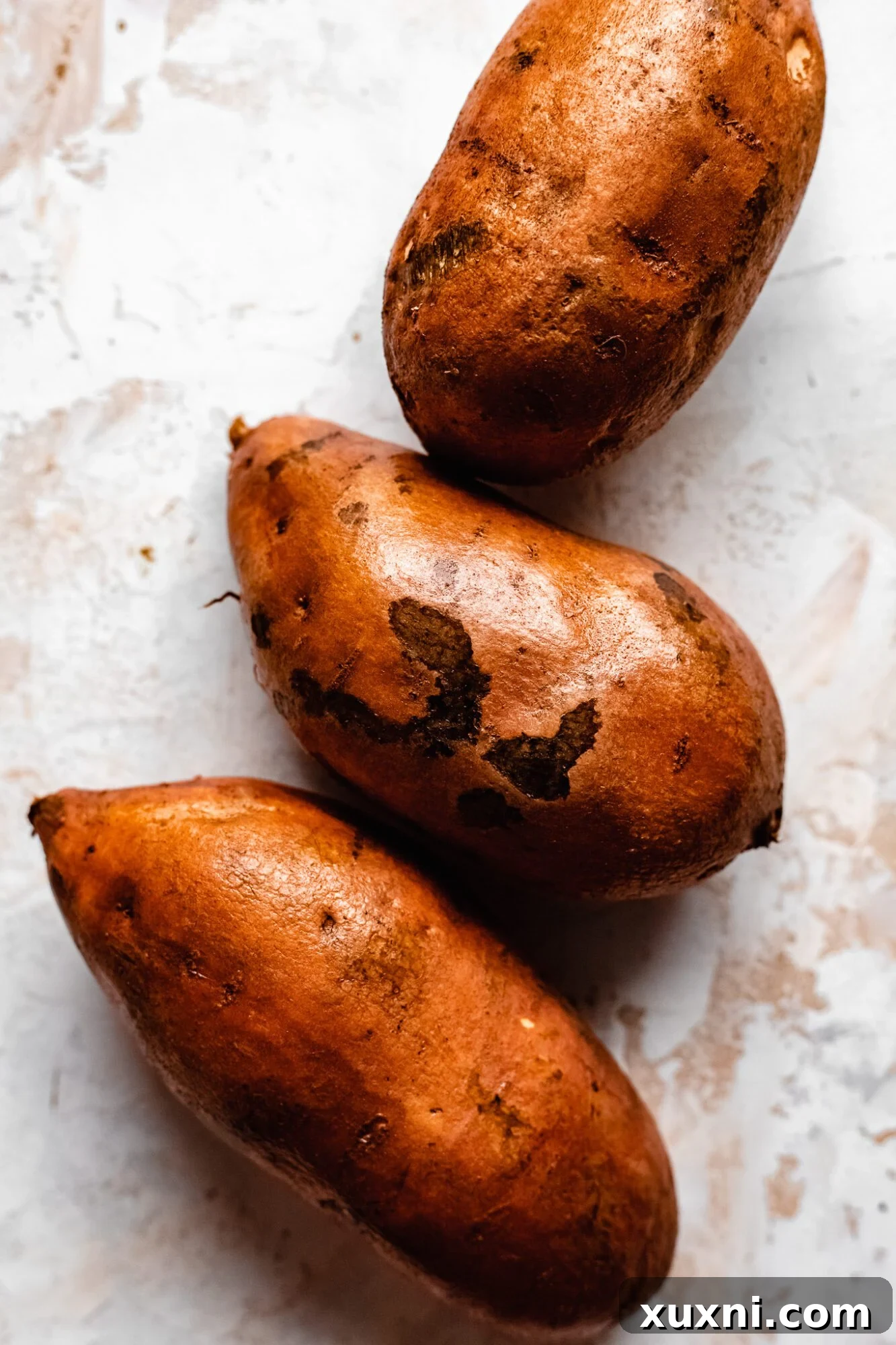
Before you begin any cooking, the first crucial step is to select the right sweet potatoes and ensure they are impeccably clean. Choose sweet potatoes that are firm to the touch, free from soft spots, blemishes, or sprouts. For even baking, try to pick potatoes that are similar in size and shape.
Sweet potatoes grow in the ground, and they pass through many hands before reaching your kitchen. Therefore, a thorough scrub is essential. Rinse your sweet potatoes under very warm running water, using a vegetable brush to gently scrub away any dirt or debris from the skin. This meticulous cleaning ensures that you can confidently enjoy the skin, which is packed with extra fiber and nutrients. After washing, pat them completely dry with a clean kitchen towel.
Step 2: The Essential Fork Poke
While often seen as an optional step, poking your sweet potato is actually quite important for optimal baking results. Piercing the skin allows steam to escape during the baking process, preventing the sweet potato from potentially bursting in the oven and helping it to cook more evenly throughout its dense flesh. This simple step only adds a minute or two to your preparation time but makes a noticeable difference in the final product.
To do this, carefully take a fork and lightly stab several holes (about 6-8) evenly around each sweet potato. Make sure to penetrate the skin but avoid going too deep. Once pierced, place your prepared sweet potatoes onto a baking sheet, ideally lined with aluminum foil or parchment paper for easy cleanup.
Step 3: Baking Your Sweet Potato to Perfection
With your sweet potatoes washed, dried, and poked, the final stage is simply to bake them! It’s truly that straightforward to achieve a tender, caramelized sweet potato. Once baked, the possibilities for how you can enjoy them are endless. These versatile root vegetables can be transformed into a comforting sweet potato casserole, added to a vibrant buddha bowl, blended into creamy sweet potato hummus, or even reimagined as a delightful sweet treat, such as my vegan Paleo sweet potato cake or decadent sweet potato mousse! The choice is yours, and the delicious results are guaranteed.

The Golden Rule: How Long Should I Bake Sweet Potatoes?
The key to achieving that perfect balance of tender interior and caramelized sweetness lies in the right temperature and bake time. I personally recommend baking at 415°F (213°C) as this method offers the quickest cook time while still allowing the natural sugars within the sweet potato to beautifully caramelize, yielding an intensely flavorful result.
- Bake at 415°F (213°C): Approximately 60 minutes * my favorite way for quick and delicious results! *
- Bake at 375°F (190°C): Approximately 70 minutes (A great option for slightly slower cooking, which can lead to even deeper caramelization if you have the time).
- Bake at 350°F (175°C): Approximately 75-80 minutes (Ideal for very tender results, though it requires a bit more patience).
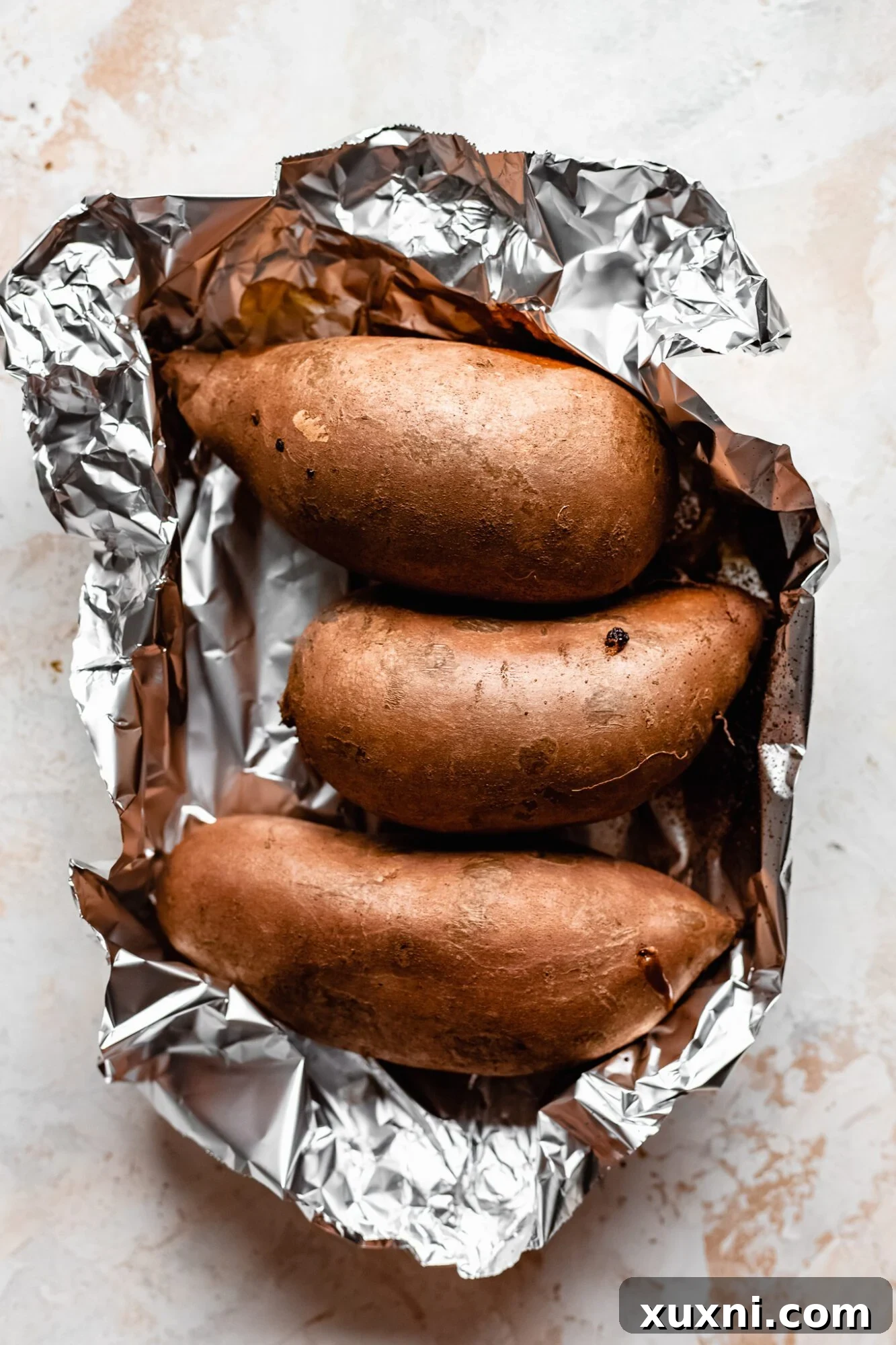
It’s important to keep in mind that these bake times are approximate and largely depend on the size and thickness of your sweet potatoes. A large sweet potato, measuring 8 inches or more, or weighing over 10 ounces, will naturally require a longer baking period compared to smaller ones. To check for doneness, simply insert a fork into the thickest part of the sweet potato; it should slide in easily with minimal resistance. If it’s still firm, continue baking in 10-15 minute increments until tender.
Creative Ways to Savor Your Baked Sweet Potatoes
The beauty of perfectly baked sweet potatoes lies in their incredible versatility. They can effortlessly transition from a humble side dish to the star of a meal, suitable for breakfast, lunch, dinner, or even dessert! Here are some of my favorite creative ways to enjoy them:
Sweet Applications:
- Sweet Potato Breakfast Boats: Stuff with yogurt, granola, berries, or nut butter for a wholesome start to your day.
- Paleo Vegan Sweet Potato Waffles: Use the baked flesh to create delicious, healthy waffles.
- Whole30 Sweet Potato Mousse: A surprisingly decadent and healthy dessert.
- Vegan Sweet Potato Casserole: A comforting dish, perfect for holidays or any cozy evening.
- Vegan Sweet Potato Brownies: Incorporate into baked goods for added moisture and nutrients.
- Creamy Vegan Lemon Vanilla Tart: Yes, sweet potato can even be the base for sophisticated tarts!
- Mashed with Maple Syrup and Cinnamon: A simple yet divine side dish or breakfast topping.
- Sweet Potato Toast: Slice baked sweet potato into “toast” and top with avocado, nut butter, or poached eggs.
Savory Pairings:
- Vegan Lentil Meatloaf: Serve alongside for a balanced, hearty meal.
- Gluten-Free Vegan Lentil Meatballs: A perfect companion for a complete plant-based dinner.
- Paleo Vegan Sweet Potato Gnocchi: A unique and delicious twist on a classic pasta dish.
- Vegan Lo Mein: Dice and add to stir-fries for extra texture and nutrients.
- Veggie Quinoa Burgers: Serve alongside or as a topping for healthy burgers.
- Stuffed Sweet Potatoes: Fill with chili, black beans, corn, salsa, or your favorite protein and vegetables.
- As a Base for Grain Bowls: Cube and add to a vibrant Buddha bowl with greens, grains, and a protein source.
- Simple Side Dish: A perfect accompaniment to roasted chicken, fish, or any grilled protein.
As I mentioned before, these healthy baked sweet potatoes are truly a game-changer for meal prep. Cooking a batch in advance can save you a significant amount of time throughout your busy week, ensuring you always have a nutritious option at hand.
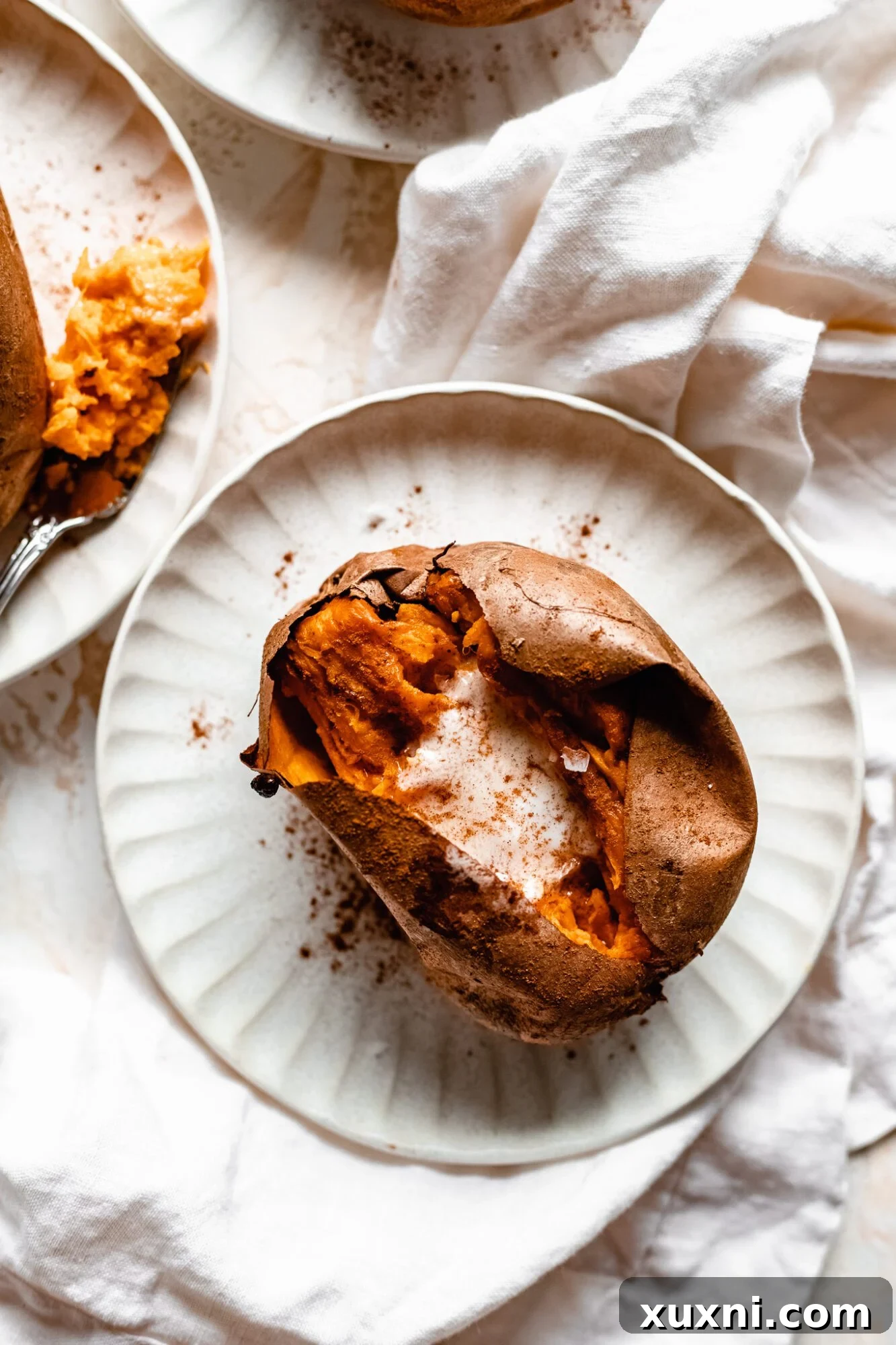
If you’re eager to learn more about efficient meal prepping and how to dedicate just one hour a week to save countless hours later, I encourage you to download my free fall meal prep guide and check out the companion video on YouTube!
I love seeing your culinary creations! Be sure to share your perfectly baked sweet potatoes with me on Instagram and Pinterest. And if you enjoyed this recipe, please take a moment to give it a rating and review in the section below to share your experience!
Enjoy your sweet potato baking journey and savor every delicious bite! 🙂
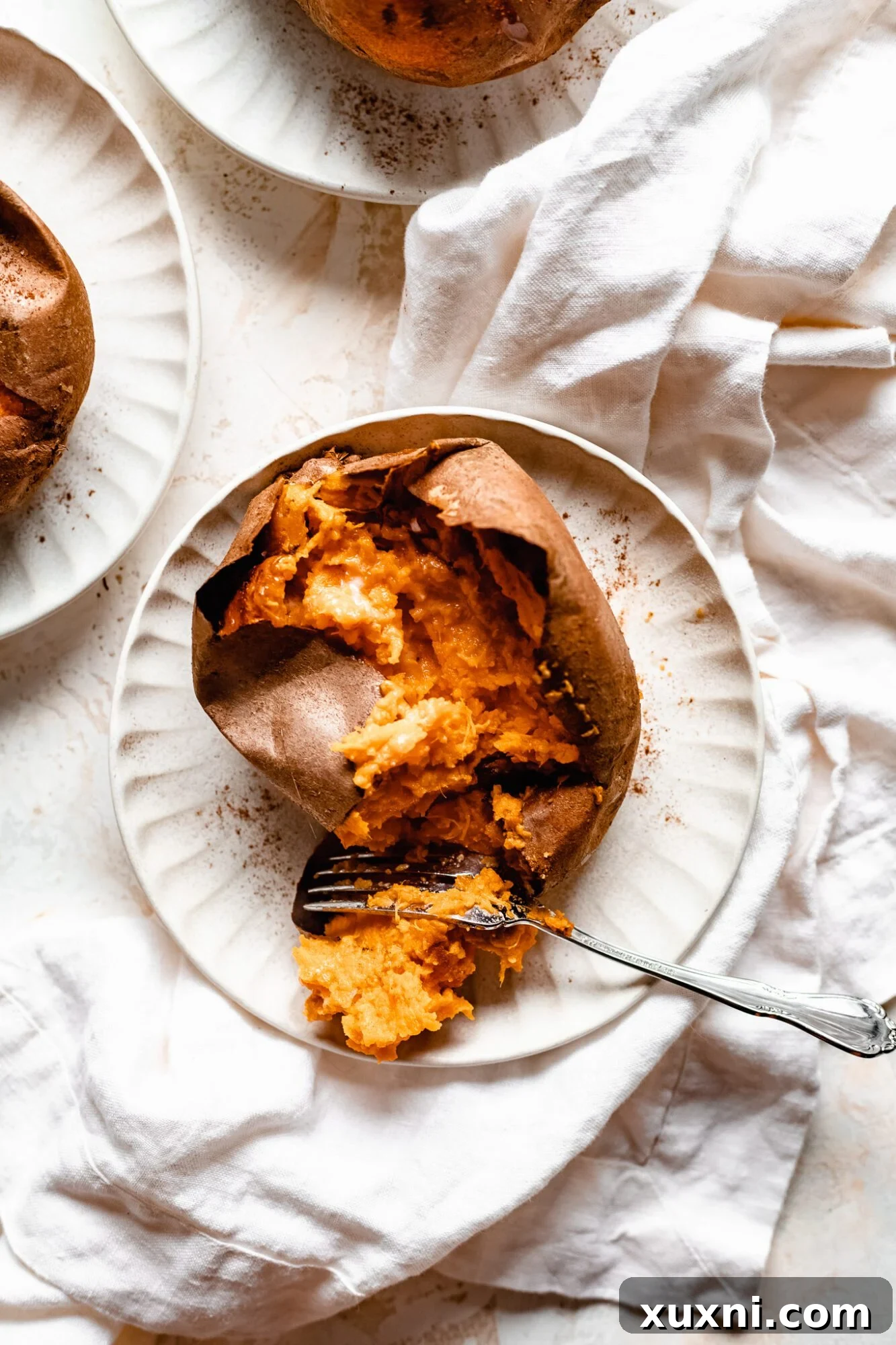
Want to save this recipe for later? Pin it to your favorite recipe board on Pinterest!
Print

Baked Sweet Potato
5 Stars 4 Stars 3 Stars 2 Stars 1 Star
5 from 3 reviews
Author: Britt B
Prep Time: 2 minutes
Cook Time: 60 minutes
Total Time: 62 minutes
Yield: 3 1x
Category: Side Dish
Method: Baking
Cuisine: American
Diet: Vegan
Description
Learn how to make the best baked sweet potatoes in the oven for an easy snack or versatile side to any meal! These sweet potatoes are packed with nutrients and vitamins. Simply sprinkle with a little sea salt and cinnamon for an extra boost of flavor, and enjoy them perfectly caramelized and tender.
Ingredients
Scale
- 3 large sweet potatoes
Optional Additions
- 3 tbsp vegan butter
- 1 tsp ground cinnamon
- Sea salt to taste
Instructions
- Preheat your oven to 415°F (213°C). Line a baking sheet with aluminum foil or parchment paper for easy cleanup.
- Wash the sweet potatoes thoroughly under warm running water, scrubbing the skin well with a vegetable brush to remove any dirt. Pat them completely dry.
- Place the washed and dried sweet potatoes onto the prepared baking sheet. Using a fork, carefully poke several holes (about 6-8) evenly around each sweet potato to allow steam to escape during baking.
- Bake in the preheated oven for approximately 60 minutes. To check for doneness, insert a fork into the thickest part of a sweet potato; it should feel very soft and tender. If still firm, continue baking for another 10-15 minutes, checking again.
- Once tender, remove the sweet potatoes from the oven and let them cool for 5 minutes before handling. This allows the internal heat to redistribute and the potatoes to firm up slightly.
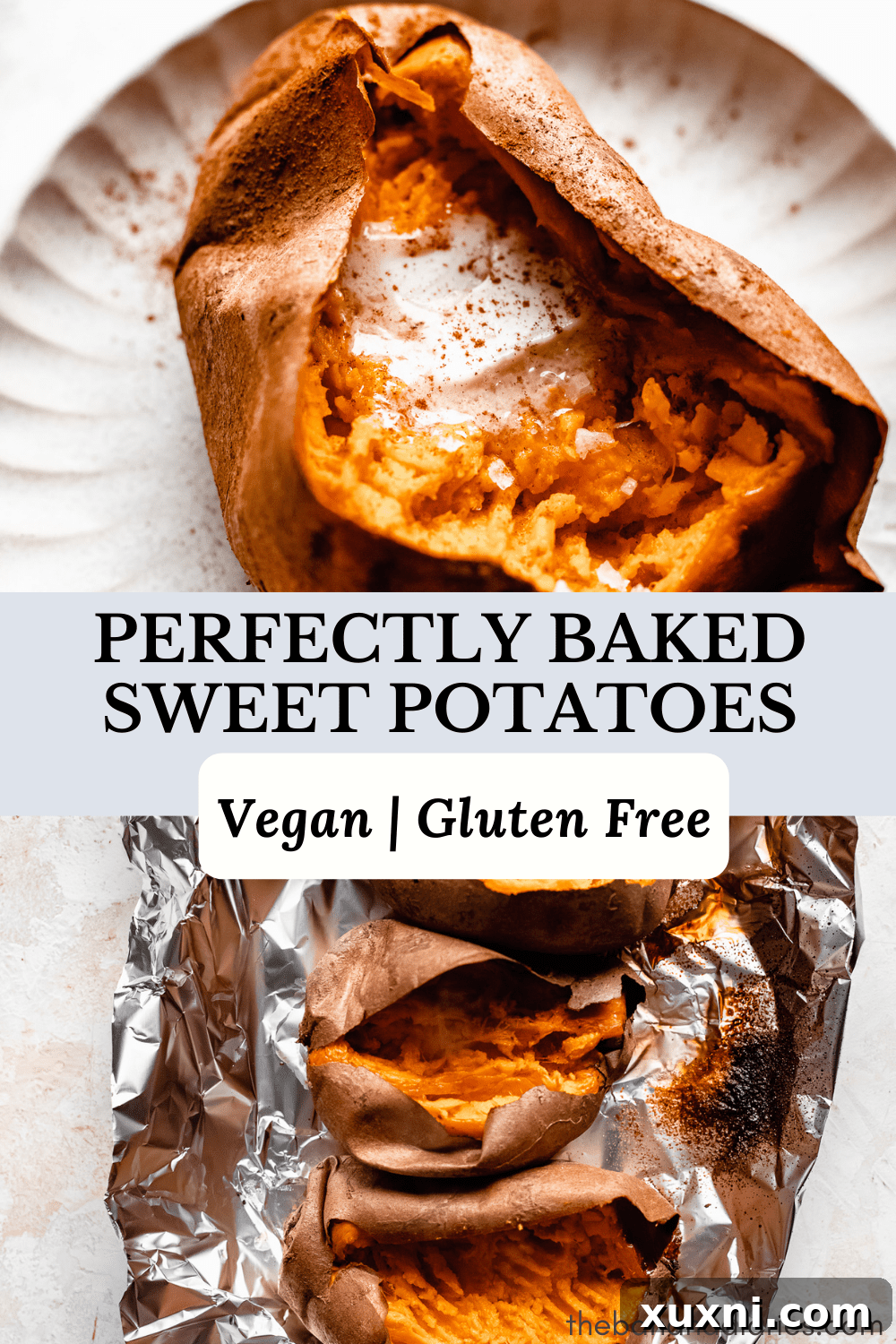
- Carefully slice each sweet potato lengthwise down the middle. For an extra boost of flavor, sprinkle with sea salt and ground cinnamon, and add a pat of vegan butter if desired, allowing it to melt into the warm flesh. Serve immediately and enjoy!
Nutrition Information
- Serving Size: 1 large sweet potato
- Calories: 172
- Sugar: 8.4 g
- Sodium: 110 mg
- Fat: 0.1 g
- Saturated Fat: 0 g
- Carbohydrates: 40.2 g
- Fiber: 6 g
- Protein: 3.1 g
- Cholesterol: 0 mg