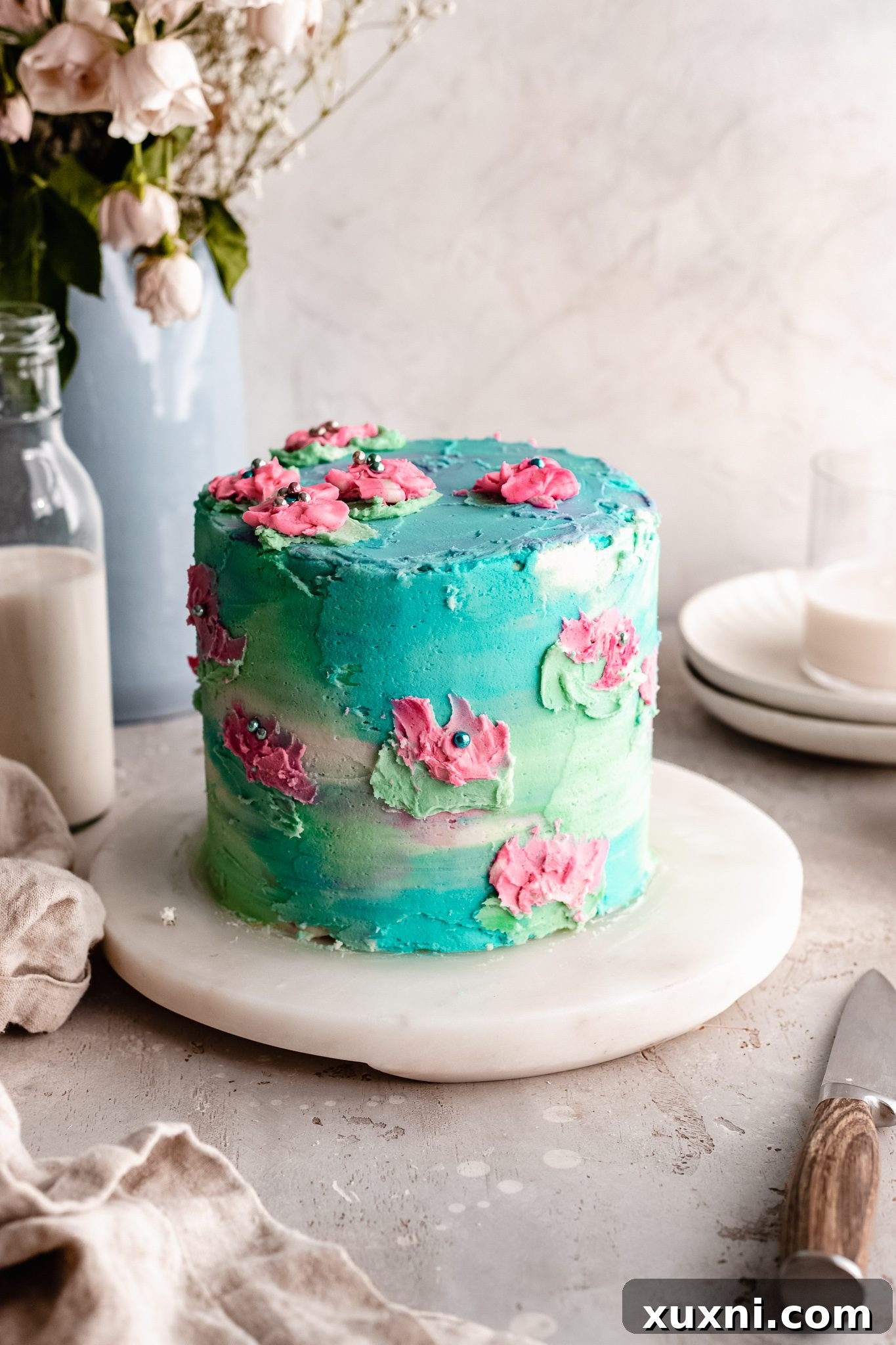
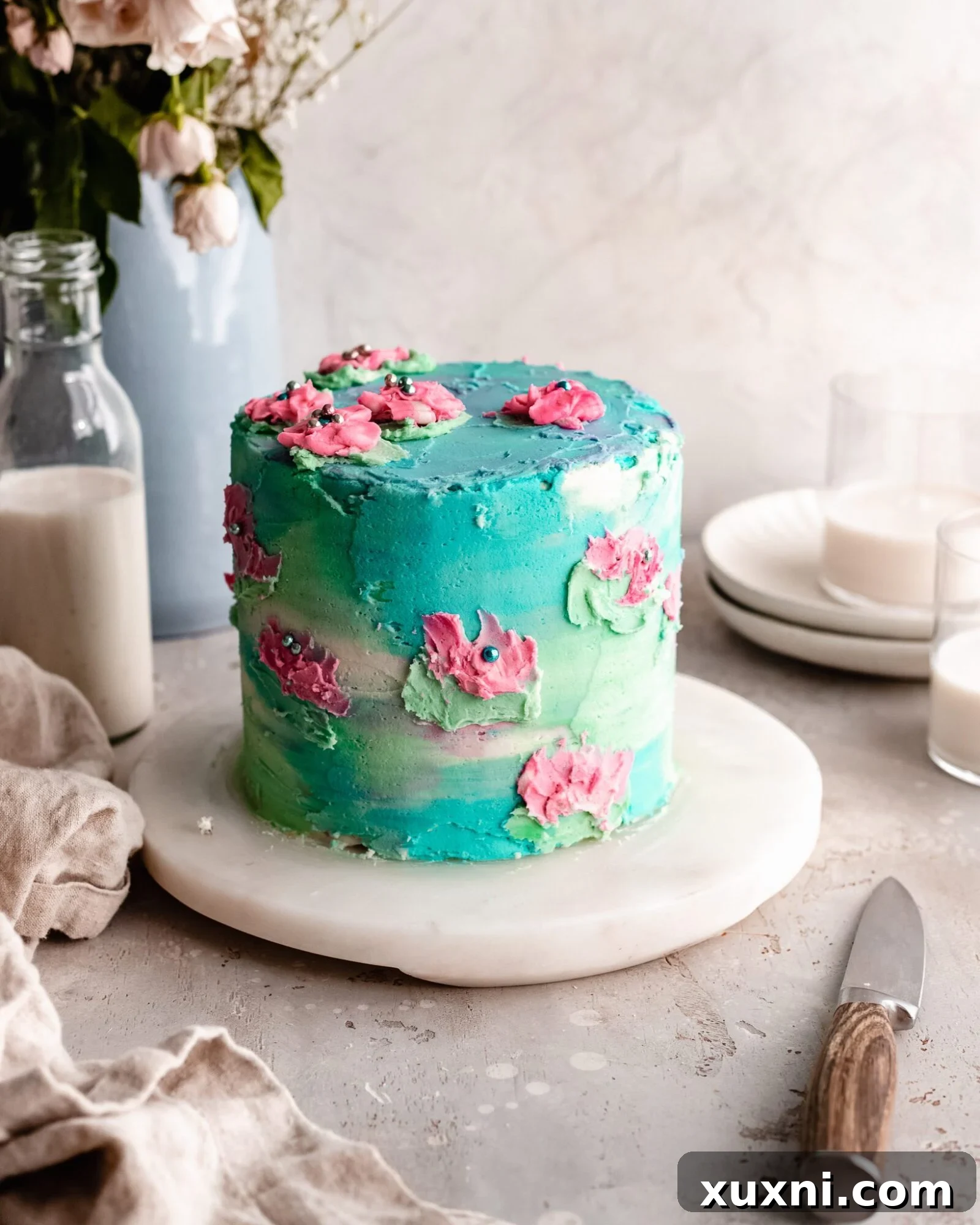
Mastering the Art of Watercolor Cakes: Your Ultimate Guide
Unleash your inner artist and learn how to create a breathtaking watercolor cake with remarkable ease! This comprehensive guide provides simple, step-by-step instructions and insightful tips, ensuring you achieve a beautiful, elegant, and professional-looking cake every time. Whether you’re a seasoned baker or just starting your decorating journey, you’ll be amazed at how achievable this stunning effect truly is. Get ready to transform your ordinary cakes into extraordinary edible masterpieces!
The Perfect Vegan Buttercream for Watercolor Cakes
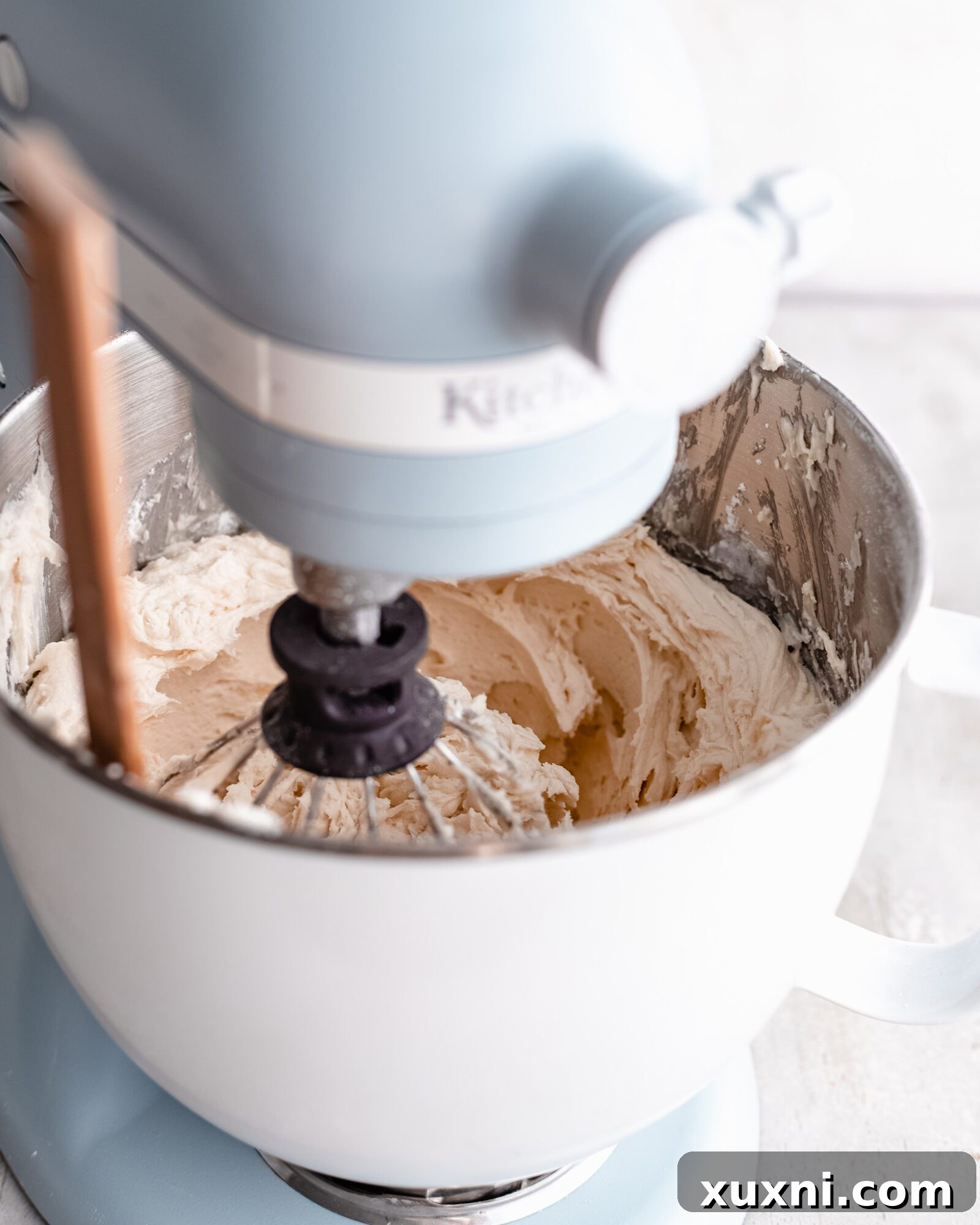
At the heart of every magnificent watercolor cake is a perfectly crafted buttercream. For this artistic endeavor, I highly recommend my signature vegan buttercream recipe. Don’t let the “vegan” label mislead you; this frosting is incredibly rich, smooth, and delicious, consistently winning over even the most discerning non-vegan palates. In fact, many claim it’s their all-time favorite buttercream!
Creating a watercolor effect requires a generous amount of frosting – one portion for the essential crumb coat and additional batches for tinting with your chosen colors. The full, detailed recipe for my dairy-free buttercream can be found below in the dedicated recipe section. However, feel free to substitute it with your preferred buttercream recipe if you have one you love. The key is achieving a consistent, pliable texture that’s perfect for smooth application and vibrant color blending.
A well-made buttercream is not just about taste; it’s the canvas for your edible art. Its stability and smooth texture are crucial for achieving those delicate, blended watercolor strokes. A frosting that is too soft will meld colors prematurely, while one that is too stiff will be difficult to spread evenly. Finding that sweet spot in consistency is paramount for success.
Choosing Vibrant Vegan Food Colors
While you can use any food colors you prefer, as a dedicated vegan dessert blog, I’m passionate about exploring and recommending natural, plant-based options. Many traditional food colorings contain animal-derived ingredients or artificial dyes that some prefer to avoid. Moreover, not all vegan food colors are created equal; some can fade when baked or appear less vibrant depending on the brand and application.
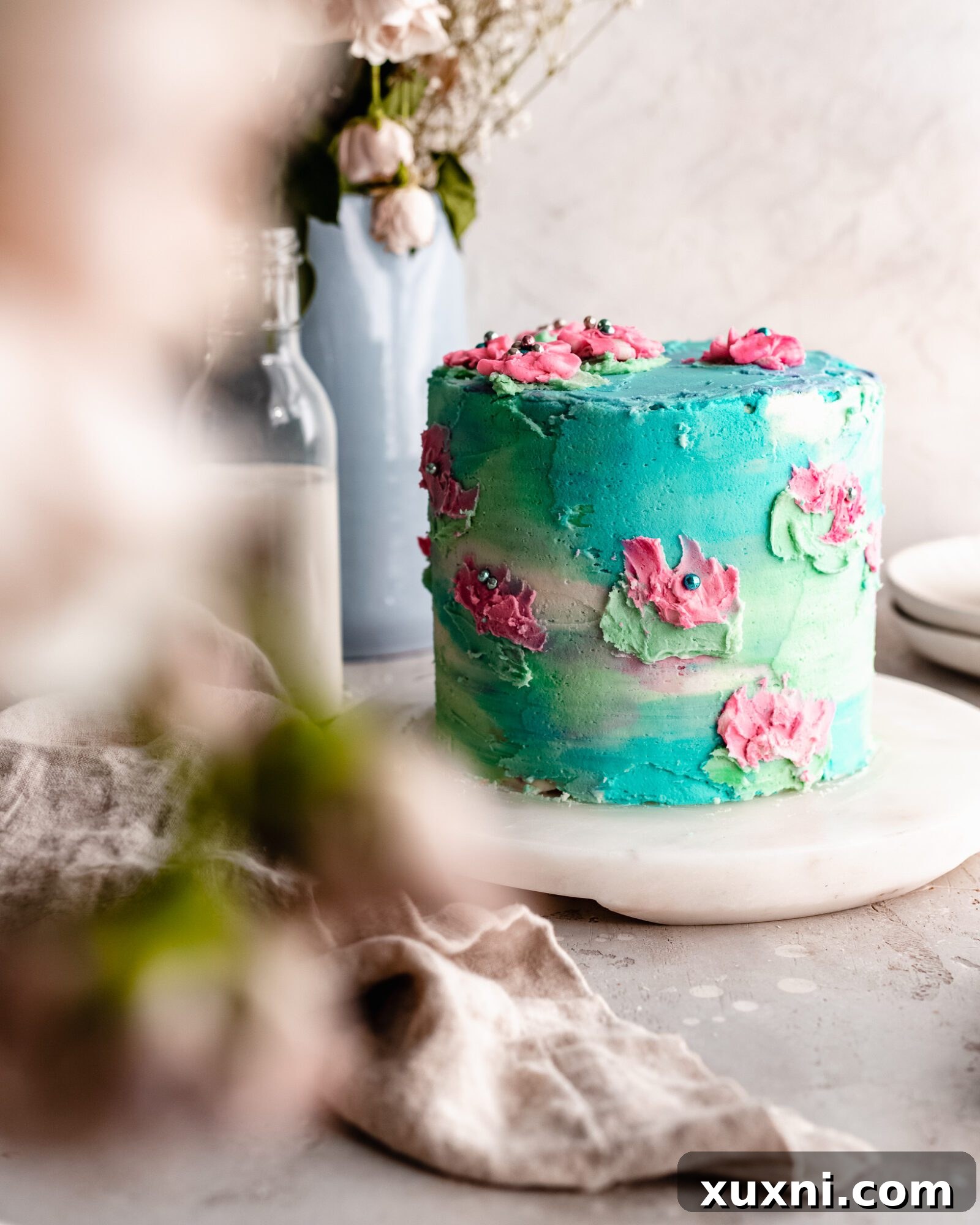
After extensive testing, I’ve discovered some truly exceptional vegan food colors that will make your watercolor cake pop with gorgeous, rich hues. My inspiration for this cake often draws from the serene beauty of Monet’s Water Lilies, and these colors help bring that artistic vision to life on your dessert.
For liquid food colors, Nomeca offers fantastic vibrant options. For a more accessible choice that still delivers great results for frosting, Whole Foods 365 brand liquid colors are also an excellent pick.
For powdered food colors, which I absolutely adore for their intense richness and depth of color, Suncore Foods stands out as my top recommendation. Their pitaya powder (for vibrant pinks), blue butterfly pea flower powder (for stunning blues and purples), and sweet potato powder (for beautiful purples and reds) are unparalleled. Beyond commercial brands, you can also harness the power of natural pantry staples: beet powder for reds, turmeric powder for vivid yellows, and matcha for earthy greens. These natural powders not only provide beautiful coloration but also often impart subtle, pleasant flavors, adding another dimension to your vegan watercolor cake.
When working with natural colors, remember that the intensity can vary. It’s always best to start with a small amount and gradually add more until you reach your desired shade. Some natural pigments are more subtle, lending a softer, more organic feel to your watercolor design, which can be absolutely stunning.
How to Make a Stunning Watercolor Cake: Step-by-Step Tutorial
Creating a beautiful watercolor cake is an exciting and rewarding process. Before you dive in, a little planning goes a long way. Start by envisioning your desired color palette. A basic understanding of color theory – including primary colors, complementary colors, and how to mix secondary colors – will be incredibly helpful if you plan to create custom shades from your food colorings.
Need inspiration? Canva’s color combination palette article is a fantastic resource, offering a wealth of basic suggestions to get your creative juices flowing. For my cake, I leaned towards a triadic color combination, heavily inspired by the tranquil hues of Monet’s Water Lilies, which effectively chose the palette for me!
- Bake Your Favorite Cake: Every exquisite watercolor cake begins with a perfectly baked foundation. You can’t paint a masterpiece without a sturdy canvas! I offer a wide array of delicious vegan cake recipes on the blog, from classic vanilla to rich chocolate, that would be ideal for this project. Ensure your cake layers are completely cooled before you begin frosting. Warm cakes will cause your buttercream to melt and slide, leading to a messy and frustrating experience.
- Prepare the Buttercream: Once your cake layers are cool, it’s time to prepare your luscious vegan buttercream. You’ll find detailed instructions for whipping up the perfect consistency in the recipe card below. Achieving a smooth, light, and airy buttercream is crucial for both the crumb coat and the vibrant watercolor layers. This is your paint, so make sure it’s just right!
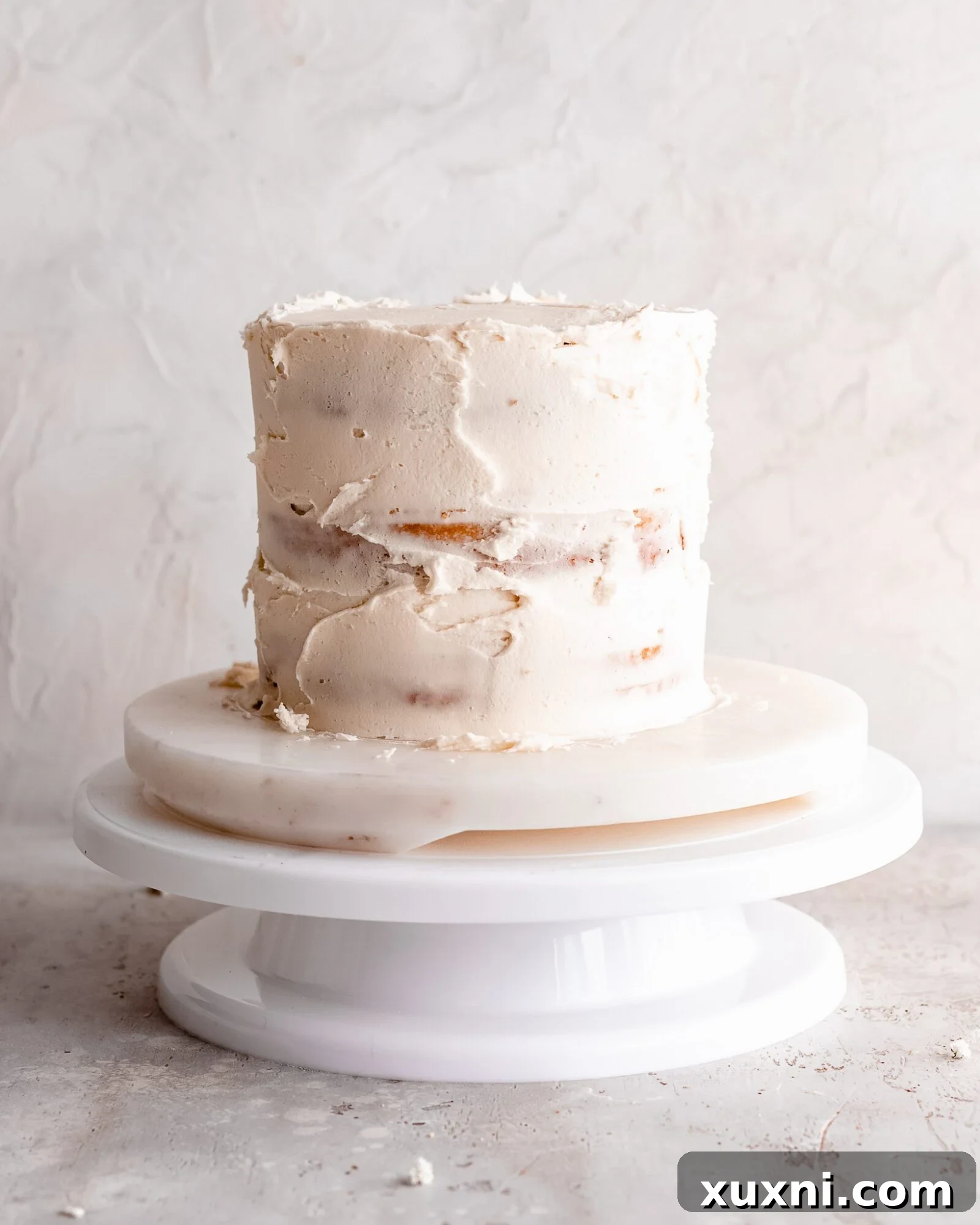
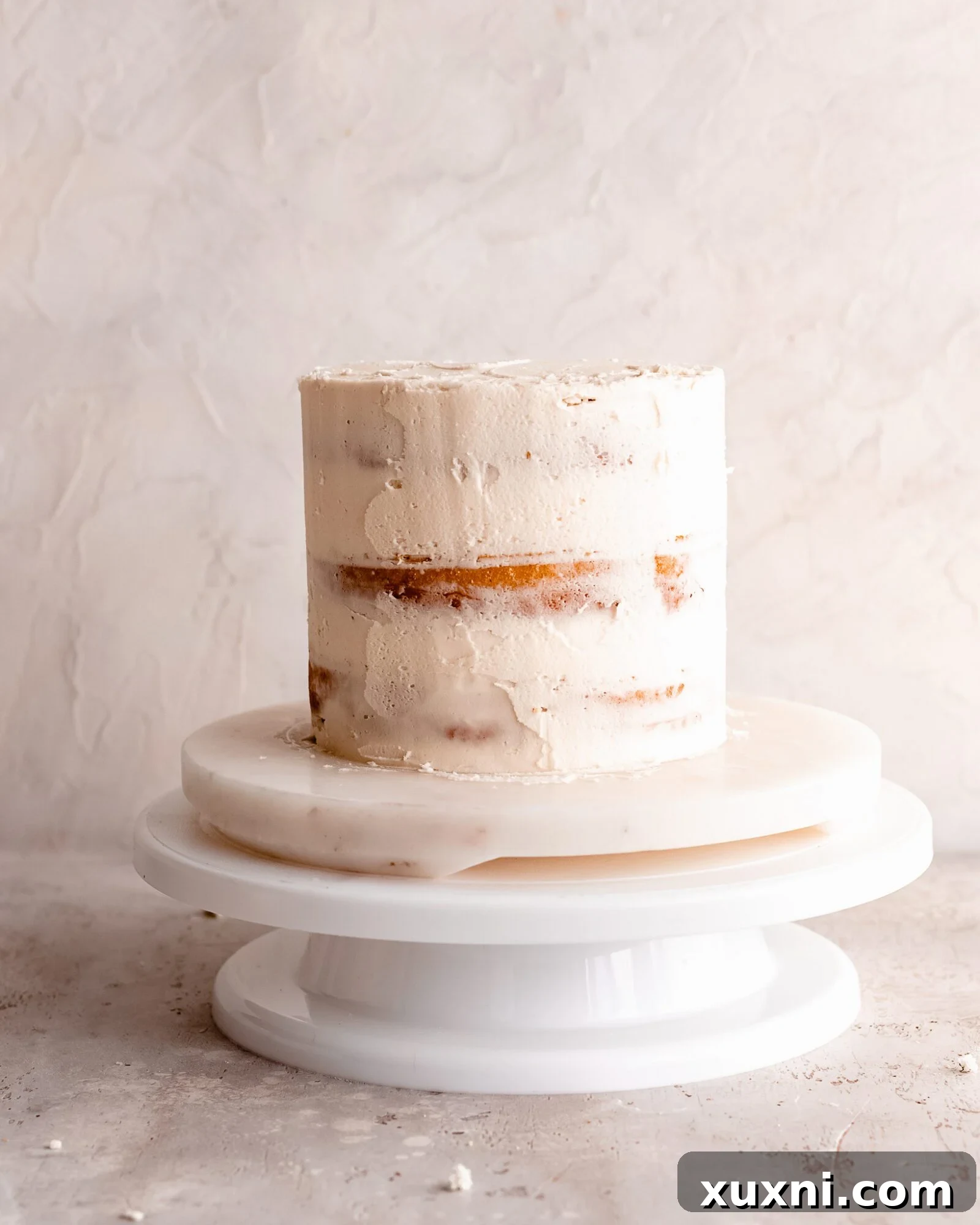
- Crumb Coat the Cake: The crumb coat is an essential first layer of frosting that seals in any loose crumbs, creating a smooth, clean surface for your final decoration. Apply a thin, even layer of buttercream over the entire cake, including the top and sides. Don’t worry about perfection at this stage; its primary purpose is functional. Use a bench scraper to smooth the edges, removing excess frosting and creating a relatively even base. Once applied, refrigerate the cake for approximately 20-30 minutes, or until the crumb coat is firm to the touch. This chilling step is vital, as it prevents crumbs from mixing into your colorful outer layers and makes the subsequent frosting application much easier and cleaner.
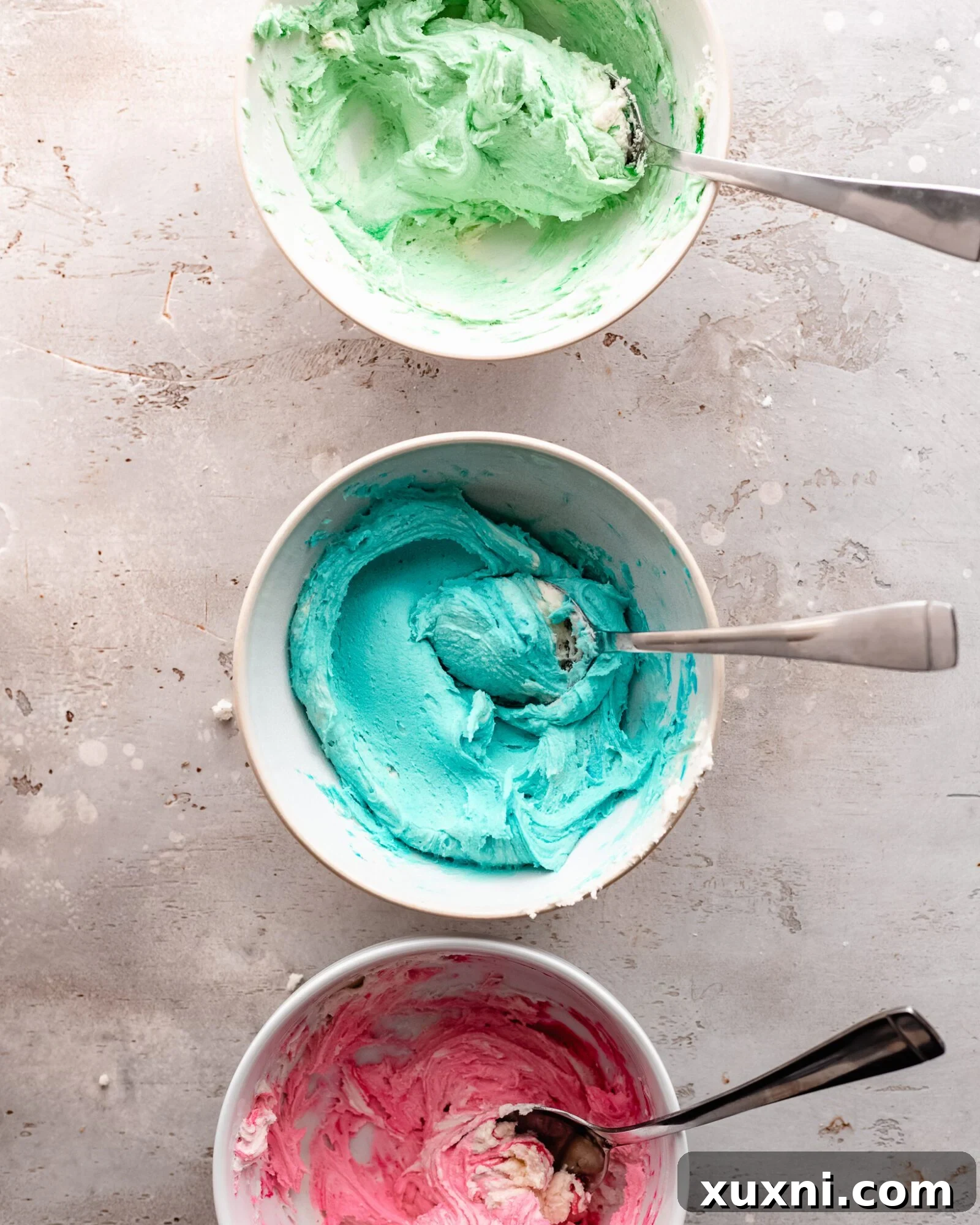
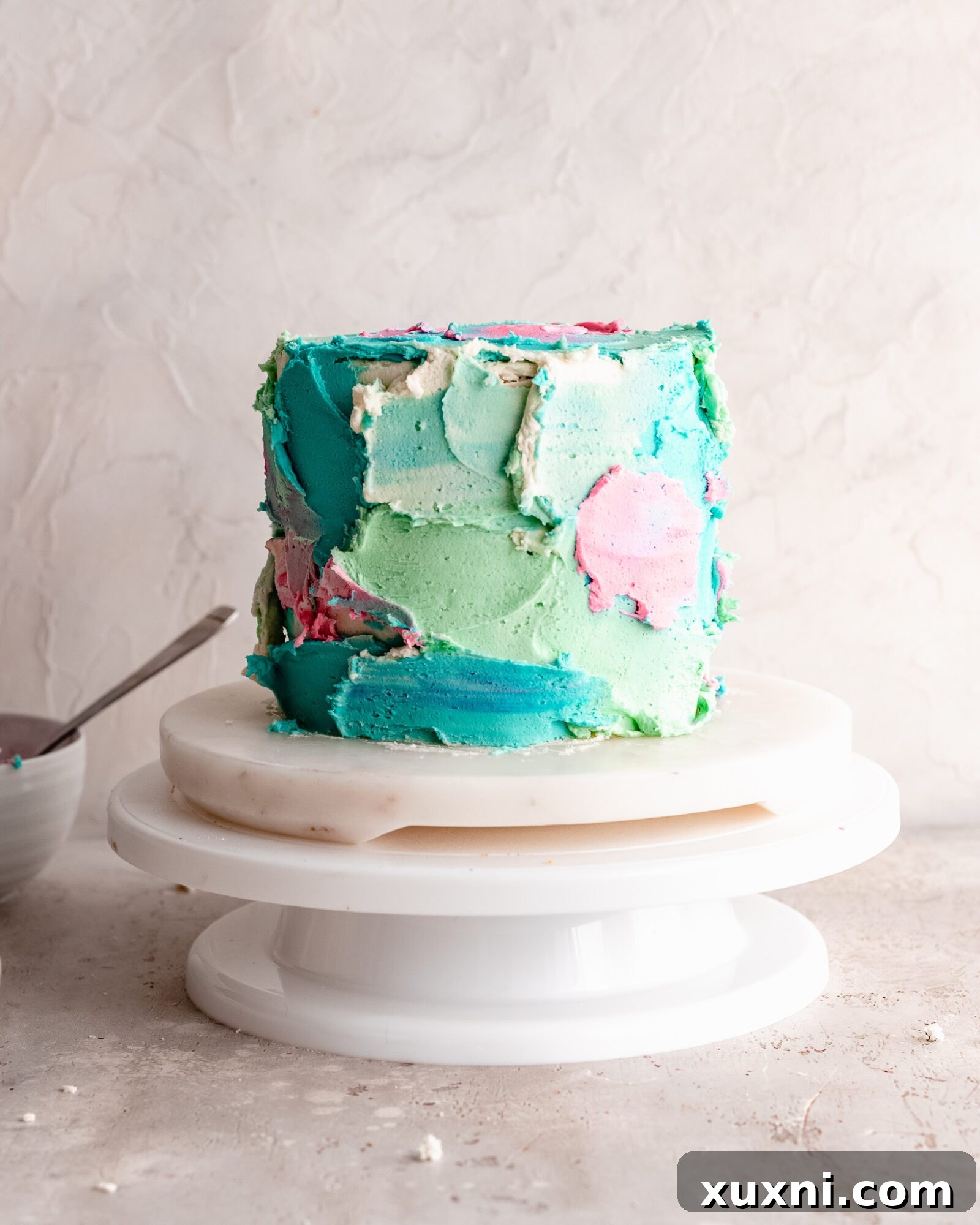
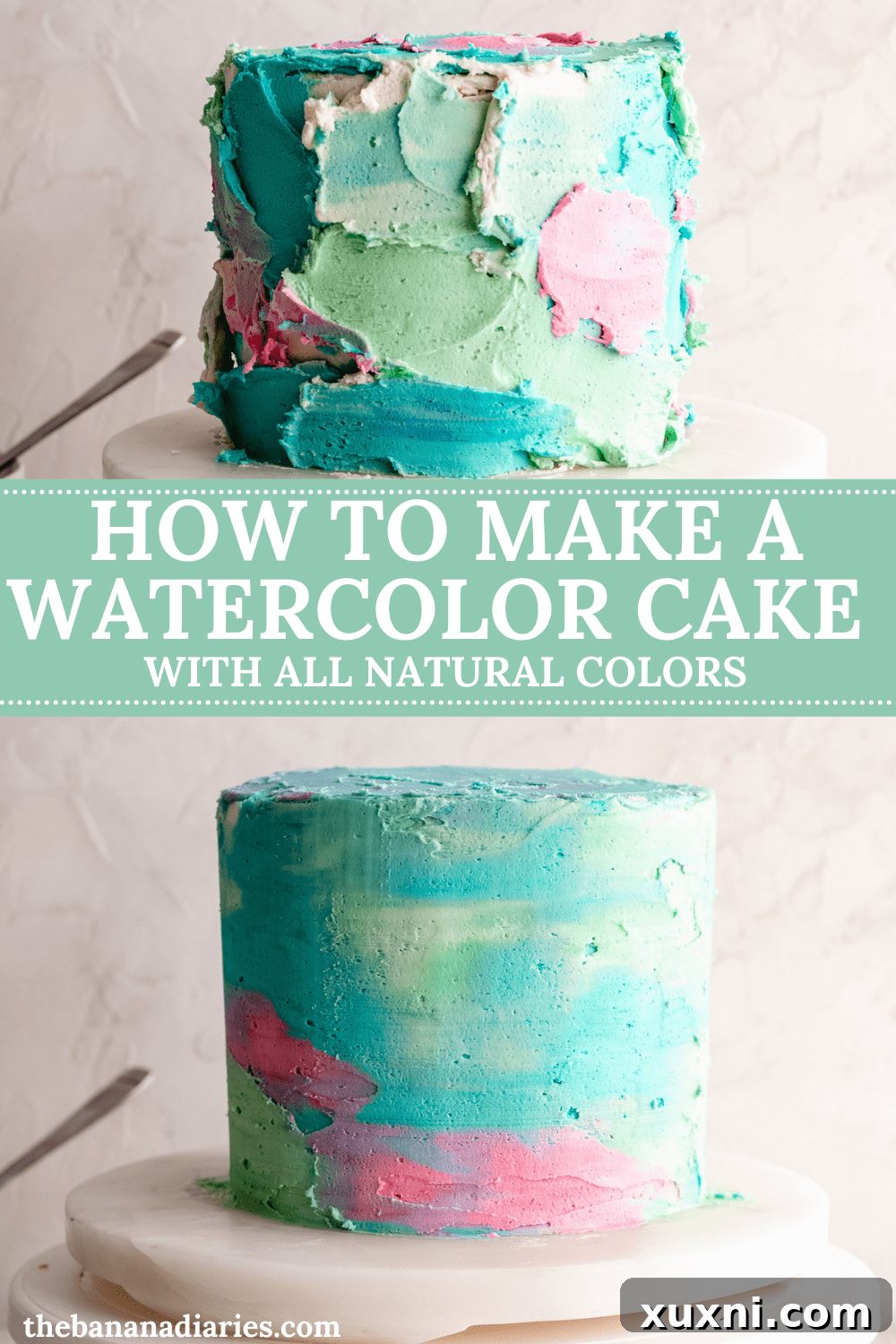
- Apply Your Watercolor Colors: After the crumb coat has chilled, it’s time for the fun part – “painting” your cake! You won’t have used all of your prepared buttercream for the crumb coat, so now you’ll divide the remaining frosting into separate bowls, one for each color you plan to use. Mix your chosen vegan food colors into each portion, adjusting the intensity as desired. Using an offset spatula, gently apply patches or smears of one color at a time around the sides of the cake. Continue with your other colors, placing them strategically to create a beautiful mosaic of hues. Don’t forget to add some color to the top of the cake as well! The beauty of watercolor is its organic flow, so embrace a somewhat freeform application.
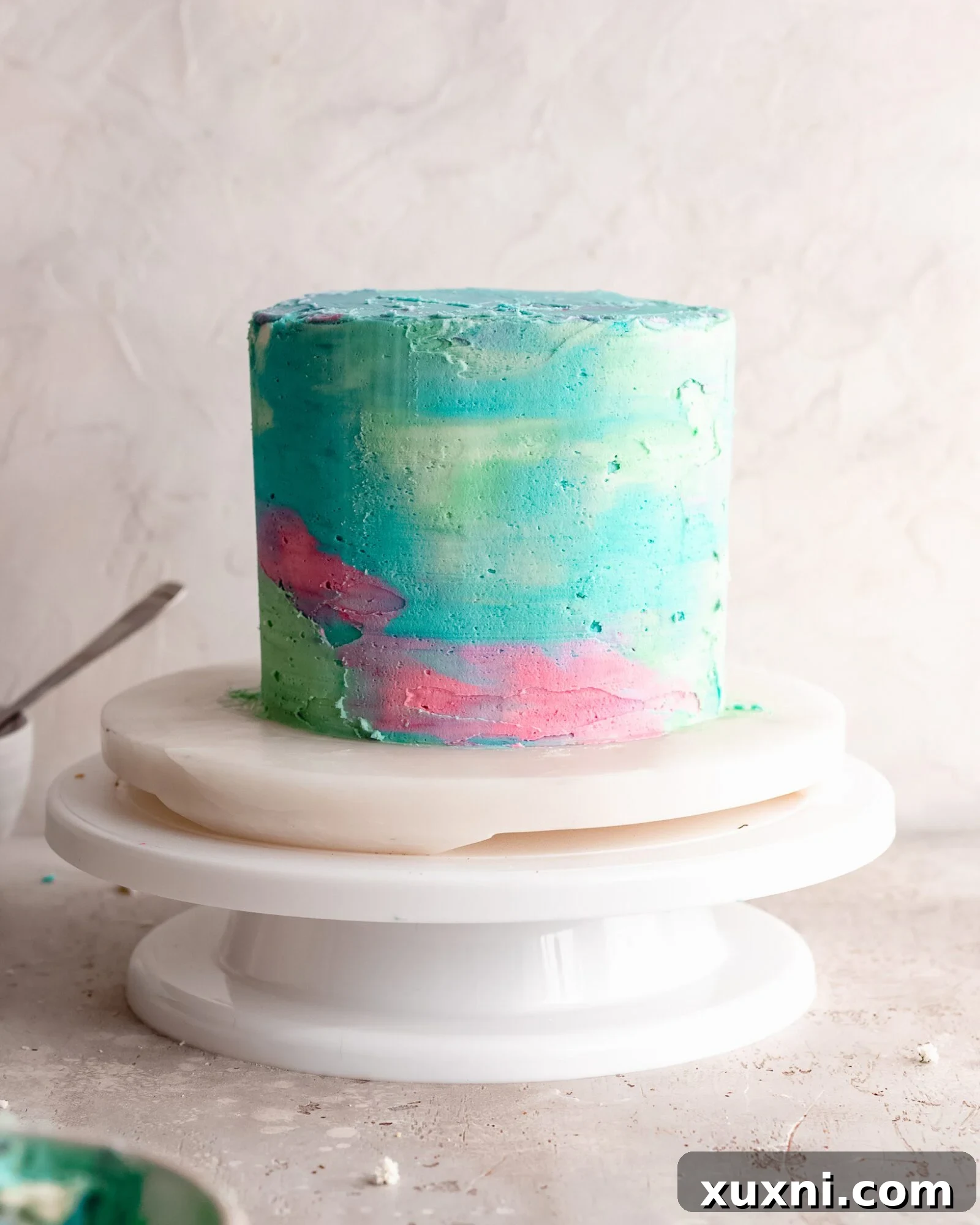
- Smooth and Blend the Colors: This is where the magic of the watercolor effect truly comes alive. Using your bench scraper, gently and slowly smooth the applied colors around the sides of the cake. The key here is “LESS IS MORE.” You want to blend the colors just enough to create a soft, seamless transition, allowing them to marble together beautifully without over-mixing them into a muddy single color. If you see any gaps or areas needing more color, simply apply a small amount of the desired frosting and scrape again. Practice a light touch and slow, steady movements to achieve those coveted watercolor swirls.
- Add Finishing Touches: After smoothing the sides, address any areas that might need a touch-up – perhaps a spot that was over-blended, a small gap, or an edge that isn’t quite crisp. Apply a tiny bit more frosting as needed. To achieve that coveted sharp, clean top edge often seen on professional cakes, gently pull your offset spatula towards you from the very edge of the cake inward, wiping the spatula clean after each stroke. This technique creates a beautifully defined line, mimicking the smooth finish of fondant without the extra work.
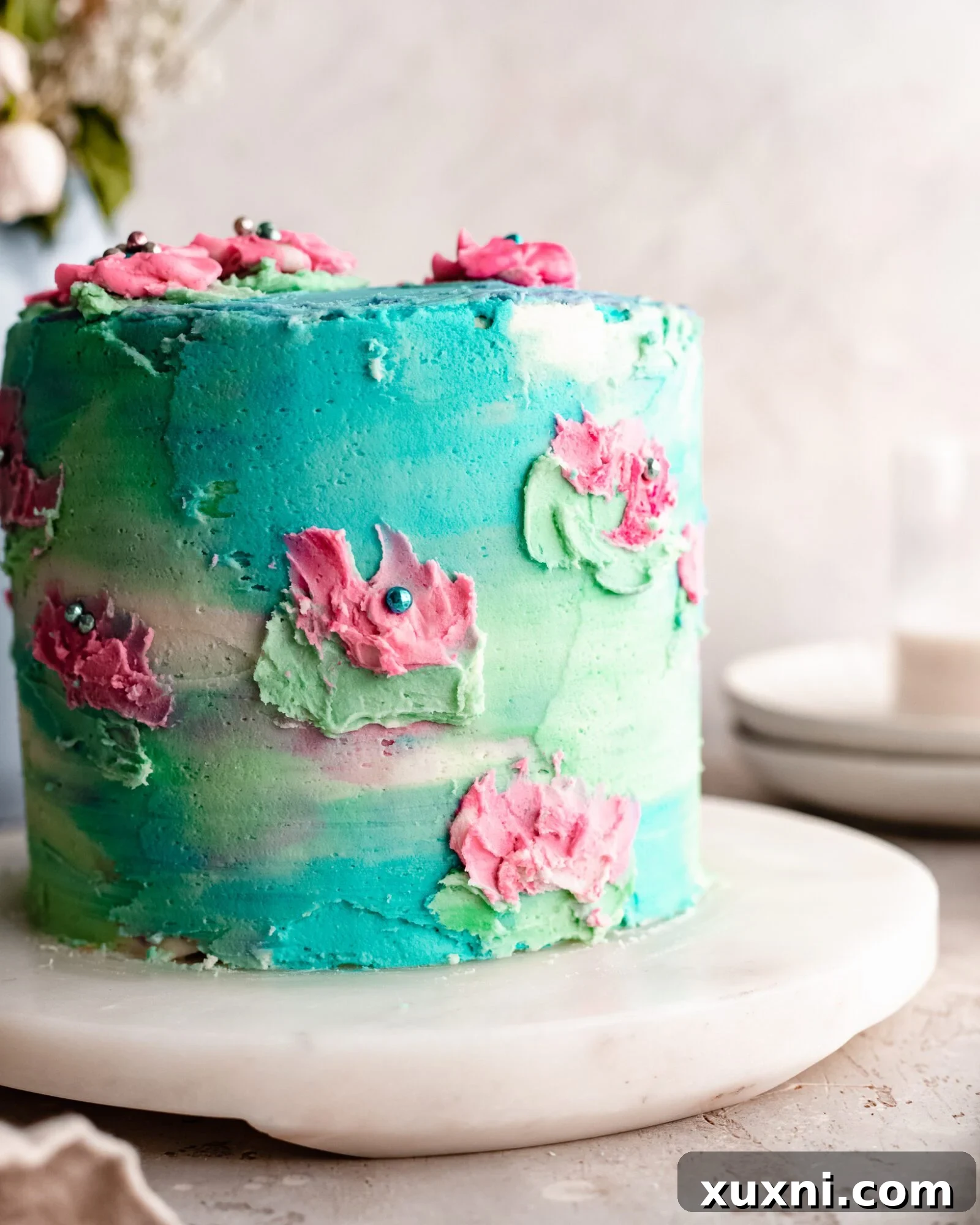
- Decorate with Flair!: Now for the most exciting part – personalizing your watercolor cake! This is your opportunity to let your creativity shine. You can add elegant piping along the top or bottom borders, paint delicate buttercream flowers onto the sides (as I did, inspired by water lilies!), or adorn it with fresh fruit, edible glitter, or sprinkles. This is YOUR cake, so make it a true reflection of your artistic vision. Consider edible pearls for a touch of elegance or fresh herbs like mint sprigs for a natural, rustic feel.
How to Paint a Cake with Buttercream
The thought of “painting” a cake might seem intimidating, but I assure you, it’s far simpler and more enjoyable than it sounds! It’s essentially like traditional painting, but with delicious buttercream as your medium and an offset spatula or small palette knife as your brush.
I find an offset spatula to be an incredibly versatile tool for applying and manipulating buttercream colors precisely where I want them. Think of it as a palette knife in fine art – you’re dabbing, spreading, and sculpting the colors onto your cake “canvas.”
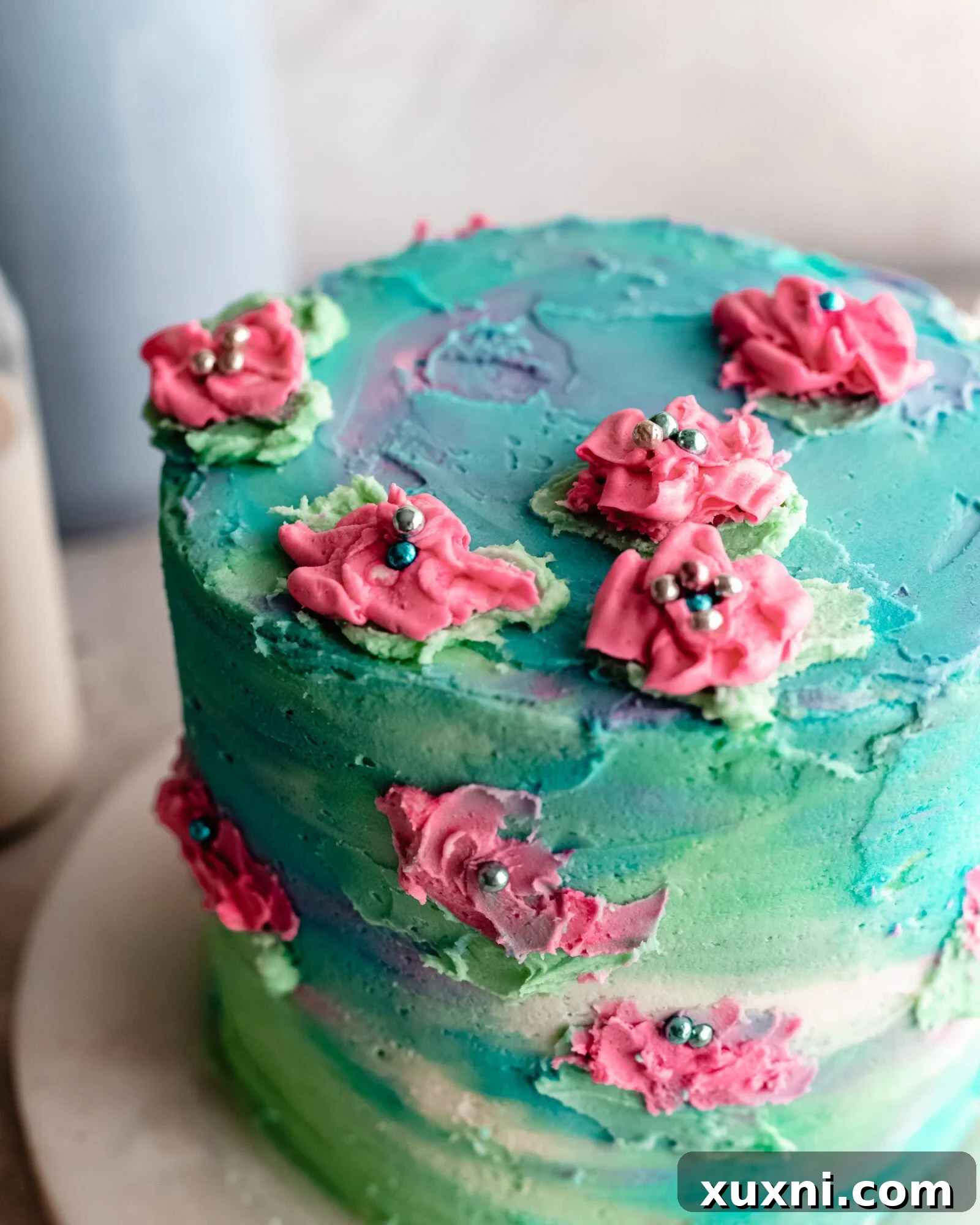
Another helpful tip for painted cakes is to have a general idea of what you want to paint and where before you begin. While spontaneity can be fun, a rough plan ensures your painted design looks cohesive and intentional. You don’t need a detailed sketch, just a mental roadmap.
Beyond water lilies, the possibilities for cake painting are endless! Consider vibrant flowers, cheerful suns, lush botanical elements, whimsical rainbows, or abstract shapes and patterns that evoke a modern art feel. You can even use small, clean food-grade paintbrushes for finer details, just be sure they are new and dedicated solely to food use.
Essential Cake Painting Tips & Tricks
- Master Color Theory: The colors you choose and how they interact are fundamental to a successful watercolor effect. Consult a color wheel to understand complementary colors (those that contrast beautifully), analogous colors (those next to each other on the wheel, creating harmony), and how to mix primary colors to achieve your desired secondary and tertiary shades. Avoid mixing too many disparate colors that might result in a muddy appearance.
- Avoid Over-Mixing: This cannot be emphasized enough for watercolor cakes! Gentle, minimal smoothing with your bench scraper is key. You want to blend the edges of the color patches, allowing them to softly merge, rather than completely integrating them. If you find you’ve over-mixed, don’t despair! Simply apply a bit more of the original colors to those areas and gently re-scrape.
- Embrace the Form with Your Strokes: When painting details like flowers or leaves, try to make your strokes mimic the natural growth or form of the object. For instance, a large lily petal often begins at its base and sweeps upwards; your spatula or brush stroke should follow that natural gesture. This adds realism and dimension to your edible art.
- Have Fun and Be Creative: Remember, this is your artistic expression! My inspiration for this cake was Monet’s Water Lilies, but your cake is a blank canvas. Choose colors and designs that resonate with you. Experiment with different textures, patterns, and themes. The joy of decorating is in the process, so let your imagination guide you.
- Use the Right Tools (and Keep Them Clean): A clean bench scraper is crucial for smooth blending. Wipe it clean after every few passes to prevent transferring colors unintendedly. Have multiple offset spatulas if you’re working with many colors, or wipe yours thoroughly between applications. A cake turntable is also incredibly helpful for even application and smoothing.
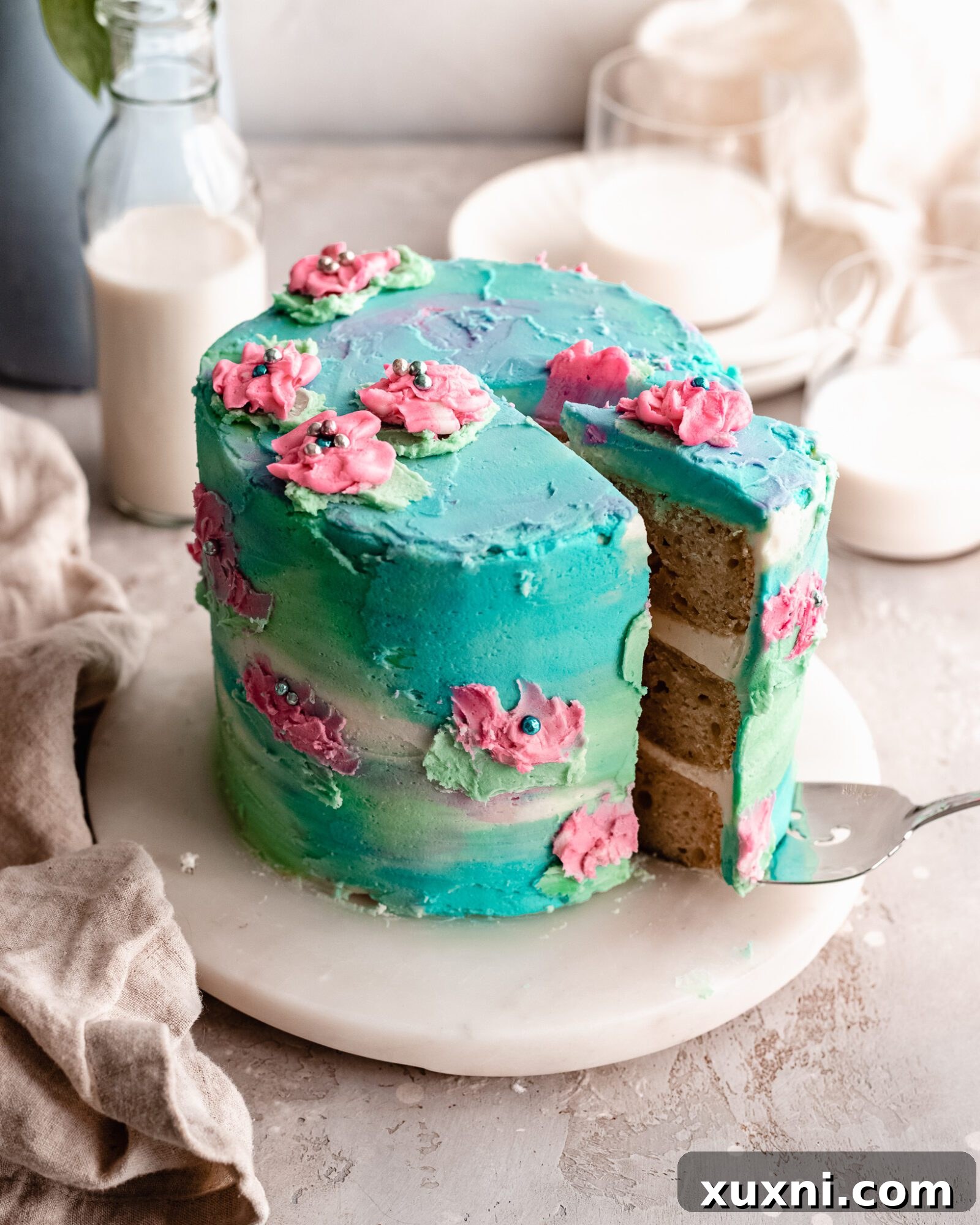
I genuinely hope you have an absolute blast making your very own watercolor cake! It’s an incredibly fun process that yields surprisingly elegant and professional results, making any occasion feel extra special. The beauty of this technique lies in its forgiving nature – imperfections often add to the unique, organic charm of a watercolor design.
If you create this stunning watercolor cake, please share your experience! Let me know how it went for you by leaving a comment and a rating below so others can discover and enjoy this creative recipe. Your feedback is always appreciated!
As always, I absolutely love seeing your beautiful culinary creations! Be sure to tag me on Instagram and Pinterest. Don’t forget to use the hashtag #thebananadiaries so I can easily find and admire your work!
Happy watercolor cake decorating!
More Delicious Vegan Cake Recipes to Inspire You:
- Best Vegan Vanilla Cake
- Vegan Lemon Blueberry Cake
- Ultimate Vegan Chocolate Cake
- Vegan Brownie Cookie Dough Cake
- Easy Vegan Carrot Cake
- Vegan Raspberry Lemon Cake
Want to save this recipe for later? Pin it to your favorite recipe board on Pinterest!
This post contains affiliate links. This means that when you make a purchase through these links, I may receive a small commission at no additional cost to you. All recommendations are based on my personal experience and preference, ensuring you get only the best suggestions! Thank you for supporting The Banana Diaries!
How to make a Watercolor Cake (with natural colors!)
No reviews
- Author: thebananadiaries
- Prep Time: 25 minutes
- Total Time: 25 minutes
- Yield: 16 servings
- Category: Dessert
- Method: Baking
- Cuisine: American
- Diet: Vegan
Description
Learn how to make a watercolor cake in the EASIEST way possible, yet still achieve that beautiful and elegant look! With step by step instructions and picture tutorials, you’re going to love making a watercolor cake!
Ingredients
- Your favorite vegan cake recipe (I suggest this vegan vanilla cake or this vegan chocolate cake)
- 2 cups vegan butter, room temperature
- 4 cups powdered sugar, sifted
- 2-3 tbsp dairy free milk
- Vegan food colors (see notes below)
Equipment:
- Cake turntable
- Offset spatula
- Bench scraper
- Piping bags and tips (optional, for decoration)
Instructions
- Prepare your chosen cake according to its specific instructions. You can adapt the suggested recipes above for either 6-inch or 8-inch cakes. Both will yield three layers, with 8-inch layers being slightly thinner.
- Crucially, ensure your cake layers are entirely cool before proceeding. Any residual warmth will cause the buttercream to melt, leading to a disastrous sliding cake. The cakes must be completely cool to the touch, both top and bottom.
- Prepare the Vegan Buttercream: With your cakes cooled, place the room temperature vegan butter into a stand mixer fitted with a paddle attachment (or use a large bowl with a hand mixer). Cream the butter on medium-high speed for 2-3 minutes until it becomes light and fluffy.
- Gradually sift in the powdered sugar, one cup at a time, mixing thoroughly between each addition. If the mixture becomes too stiff or crumbly, add 1-2 tablespoons of dairy-free milk, slowly, until it comes together. Avoid adding too much liquid at once.
- Continue to beat the frosting until it is exceptionally light, fluffy, and smooth. The ideal consistency is spreadable and pliable but firm enough to hold its shape. If it’s too thick, add another tablespoon of dairy-free milk and beat again. If too soft, you can chill it briefly.
- Apply the Crumb Coat: Place one cake layer onto your cake turntable, securing it with a small dab of buttercream underneath. Spread about 1/3 cup of frosting evenly over the top of this layer with your offset spatula, extending it slightly over the edges. Place the second layer on top and repeat. For the third layer, apply about 1/4 cup of frosting (or more if using an 8-inch cake) to the top, smoothing it to the edges.
- Use the remaining buttercream (approximately 1.5-2 cups) to lightly coat the sides of the cake. Don’t worry about complete coverage at this stage, as much will be removed during the smoothing process. Once the sides are coated, take your bench scraper and carefully smooth the sides of the cake, holding it almost parallel to the cake. Some layers might peek through, which is perfectly fine for a crumb coat. Continue smoothing and removing excess frosting until the sides are relatively smooth and crisp. Then, use your offset spatula to gently smooth the top edges by pulling the spatula inwards from the cake’s perimeter. Transfer the cake to the fridge to chill for 20 minutes to set the crumb coat.
- Prepare Watercolor Buttercream: Just before removing the chilled cake, prepare your colored buttercreams. You should have about 1.5-2 cups of frosting remaining. You won’t need all of it for the watercolor effect. For example, I used roughly 2/3 cup for blue, 1/2 cup for green, and 1/3 cup for pink. I also reserved a small amount of white buttercream, drawing inspiration from the reflections in Monet’s Water Lilies.
- Apply and Blend Colors: Once the cake is thoroughly chilled, begin applying small smears of your chosen colors to the outside of the cake using an offset spatula. Don’t cover the entire surface uniformly; aim for patches and spots. Repeat with each color. You can also add some frosting to the top. I filled some smaller gaps with white buttercream. Now, with your bench scraper, gently smooth the sides of the cake again. Be very careful not to over-smooth, as this will cause the colors to blend too much and lose their distinct watercolor appearance. Remember: less is more when it comes to blending here. Reapply small amounts of frosting in any noticeable gaps and gently scrape again.
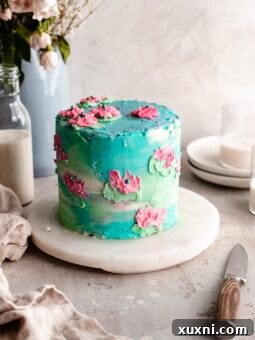
- Decorate (Optional): If you have any leftover buttercream, get creative with decorations! Using an offset spatula or small piping tips, you can create delightful details like lily pads and water lilies on the sides and top of your cake, as I did.
- Slice, serve, and enjoy your beautiful, handcrafted watercolor cake!
Notes
Vegan Food Colors:
Liquid Food Colors:
- Nomeca
- India Tree
- Whole Foods 365 Food Colors
Powdered Vegan Food Colors (for vibrant, natural hues):
- Suncore Foods (offers various fruit and vegetable powders)
- Beet powder (for pinks and reds)
- Turmeric powder (for yellows)
- Spirulina (for greens)
- Blue spirulina (for vibrant blues)
- Powdered purple sweet potato (for purples and deep reds)