
Welcome to the ultimate guide for crafting the most exquisite vegan croissants you’ve ever tasted! Imagine flaky, buttery layers that melt in your mouth, so light and airy, you’d swear they came straight from a Parisian patisserie. This comprehensive recipe not only empowers you to achieve bakery-quality results at home but also provides options for delightful variations like vegan pain au chocolat and decadent vegan almond croissants.

Many home bakers might shy away from making croissants, especially vegan ones, assuming the process is overly complicated or requires advanced pastry skills. However, the truth is, making vegan croissants is surprisingly achievable and immensely rewarding! This recipe demystifies the art of lamination, guiding you through each critical step to create a dairy-free and egg-free breakfast treat that’s simply delightful. They are a perfect accompaniment to your morning coffee or brunch spread, fitting seamlessly alongside other plant-based favorites like my vegan cinnamon rolls or vegan brioche.
Pressed for time? While authentic croissants benefit from patience, for a quicker but equally delicious indulgence, you might enjoy my vegan cannoli cruffins or vegan pistachio cruffins!
Table of contents
- The Magic Behind Perfect Vegan Croissants
- Essential Ingredients & Smart Substitutions:
- Can this vegan croissants recipe be made gluten-free?
- A Detailed Look at the Vegan Croissant-Making Process
- Crafting the Dough and Beurrage
- Mastering the First & Second Laminations
- The Third Lamination & Precision Slicing
- Rolling, Shaping, & Baking Your Vegan Croissants
- Can I Make Croissants in One Day?
- Flexible Timelines for Your Vegan Croissant Journey:
- Option 1: An Overnight Rest for Ultimate Flavor
- Option 2: A Morning Start for Afternoon Delight
- Option 3: The Leisurely Three-Day Approach
- Why Coconut Oil is Not a Suitable Vegan Butter Substitute
- Creative Croissant Variations to Explore
- How to Make Irresistible Vegan Almond Croissants
- The Almond Croissant Process: Step-by-Step
- Watch the Magic Unfold: How to Make Vegan Croissants
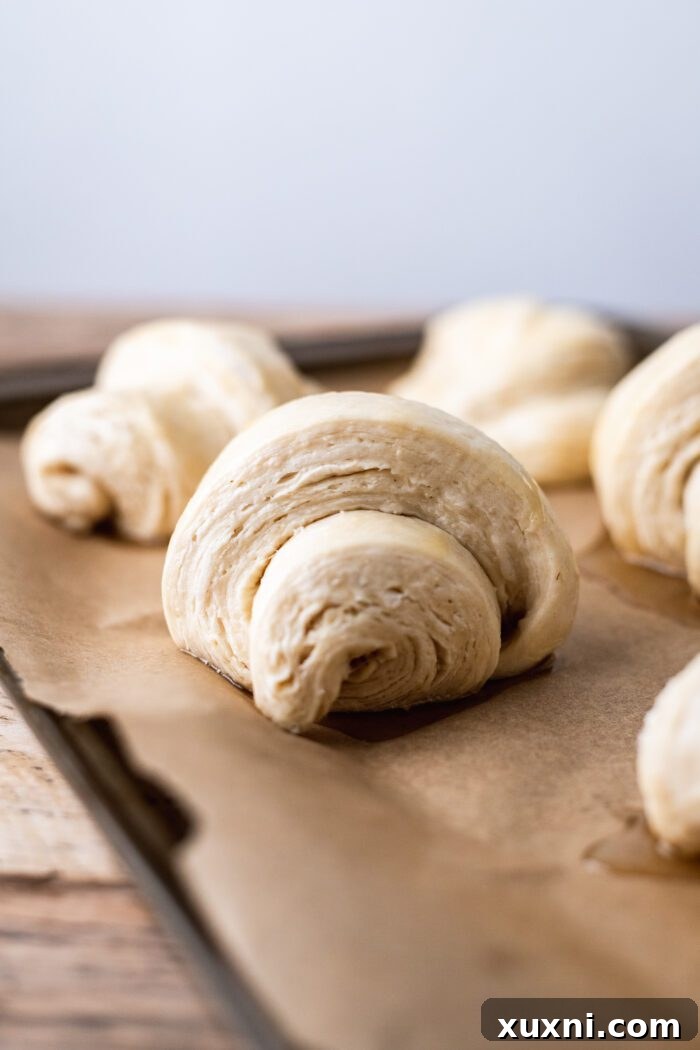
The Magic Behind Perfect Vegan Croissants
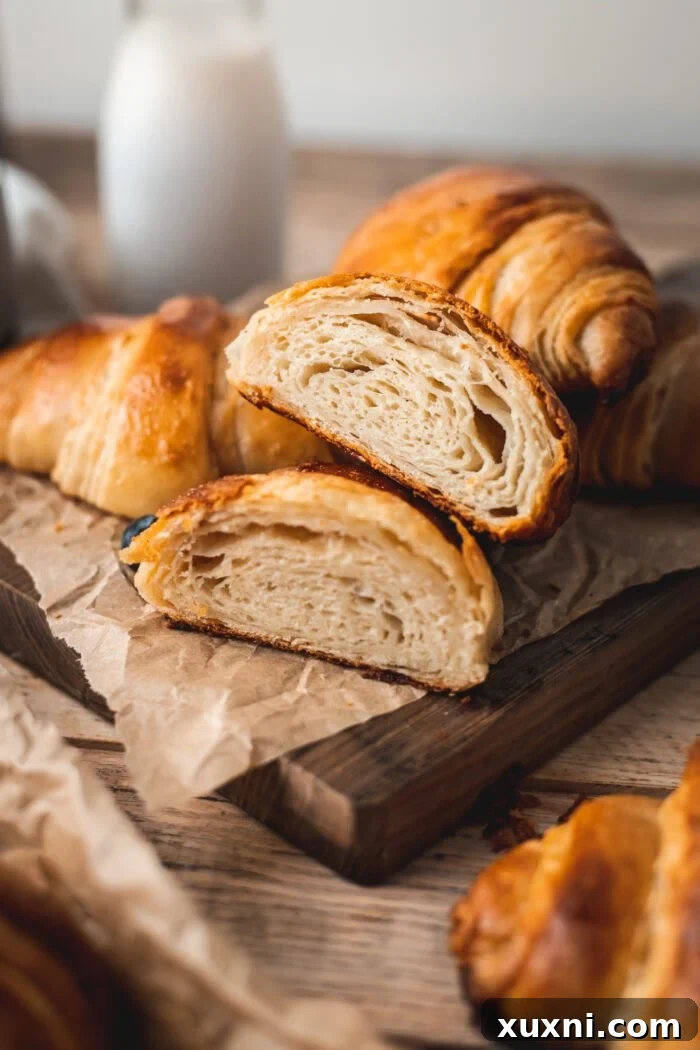
What makes a croissant truly exceptional? It’s all about those delicate, airy layers and that rich, buttery flavor. In traditional baking, this is achieved through meticulous lamination with dairy butter. For vegan croissants, the challenge lies in replicating this without animal products. This recipe conquers that challenge by focusing on the right ingredients and precise techniques, proving that a plant-based croissant can be just as, if not more, satisfying.
The secret lies in the careful preparation of both the dough and the “beurrage” (butter block), followed by a series of folding and chilling steps known as lamination. This process creates hundreds of paper-thin layers of butter and dough, which, when baked, expand to form the characteristic flaky texture. Don’t be intimidated; while it requires patience and attention to detail, each step is straightforward and incredibly rewarding.
Essential Ingredients & Smart Substitutions:
Choosing the right ingredients is paramount to achieving those perfect vegan croissant layers. Here’s a breakdown of what you’ll need and why:
- All-Purpose Flour: For this recipe, all-purpose flour provides the ideal balance of strength and tenderness needed for laminated dough. While professional bakeries often use pastry flour, all-purpose or even bread flour will yield a sturdier, more manageable dough, which is excellent for beginner vegan croissant bakers. I am diligently working on a gluten-free version, so please stay tuned for updates!
- Sugar: Granulated sugar not only sweetens the croissants but also aids in yeast activation and browning. For a strictly vegan option, I recommend using organic granulated sugar, such as Florida Crystals Organic, or coconut sugar for a slightly different flavor profile.
- Instant Yeast: To streamline the dough-making process and ensure reliable rise, instant yeast is my go-to. It can be mixed directly with the dry ingredients, saving you the step of proofing it in liquid first, which can be crucial in a multi-day baking project like croissants.
- Salt: A touch of sea salt is essential to balance the sweetness of the sugar and enhance the overall flavor of your croissants, ensuring they aren’t bland.
- Dairy-Free Milk: Any of your favorite unsweetened dairy-free milks will work beautifully here. I personally find soy milk provides a rich texture, but almond milk, oat milk, or even a light coconut milk are excellent alternatives that contribute to the dough’s moisture and flavor.
- High-Quality Vegan Butter: This is perhaps the most critical ingredient for achieving authentic croissant flakiness and flavor. I highly recommend Miyoko’s Kitchen Cultured Vegan Butter (unsalted) because its European-style formulation mimics traditional dairy butter closely, providing the necessary fat content and pliability for lamination. While Earth Balance can be used, Miyoko’s will undoubtedly give you the best, most authentic results due to its superior texture and richness.
- Vegan “Egg” Wash: To achieve that beautiful golden-brown, glossy finish on your baked croissants, a simple vegan egg wash does the trick. A mixture of maple syrup and dairy-free milk provides the perfect touch, adding sweetness and promoting browning without any animal products.
Can this vegan croissants recipe be made gluten-free?
Presently, this specific recipe is not suitable for a gluten-free diet. The intricate process of lamination relies heavily on the gluten structure in wheat flour to create those distinct, airy layers. Adapting this for gluten-free flours requires a different approach to maintain structural integrity and flakiness. However, I understand the demand for inclusive recipes, and I am actively developing a dedicated gluten-free vegan croissant recipe. Please keep an eye on my gluten-free recipes section for updates – you might find other delicious options to enjoy in the meantime!
A Detailed Look at the Vegan Croissant-Making Process
While the full, detailed instructions are provided in the recipe card below, this section offers a comprehensive overview with additional tips and insights. Watching the accompanying YouTube video is highly recommended to visualize each step!
Crafting the Dough and Beurrage:
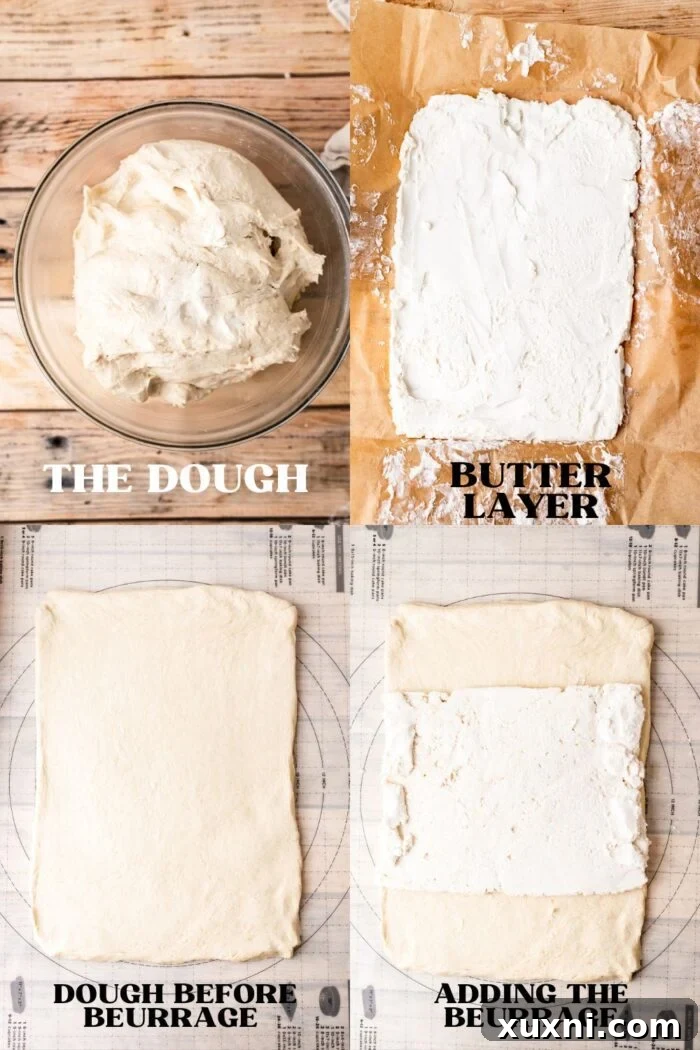
The foundation of any great croissant is its dough. This recipe calls for a relatively simple dough, which you can easily prepare using a stand mixer with a dough hook attachment. If you don’t have a stand mixer, a large mixing bowl and a sturdy wooden spoon, followed by hand-kneading, will work just as well. The goal is a smooth, slightly tacky dough that is elastic and pliable after kneading.
Once your dough is made and chilling, your focus shifts to the “beurrage,” or the butter layer. This crucial component is what creates the hundreds of flaky layers. I learned a fantastic method for shaping the butter block from Sally’s Baking Addiction, which ensures even distribution.
The vegan butter for the beurrage should be at a cool room temperature – pliable but not melted. I typically remove the butter from the fridge at the same time I start making the dough; by the time the dough has had its initial chill, the butter will be perfectly tempered. To shape the butter, simply form it into a precise 7×10-inch rectangle between two sheets of parchment paper. The YouTube video demonstrates this technique for maximum accuracy.
When it’s time to encase the butter in the dough, roll your chilled dough into a 10×14-inch rectangle. Strategically place the 10-inch length of your butter block in the center, aligning it with the 10-inch width of the dough. Then, fold the longer ends of the dough over the butter block, creating a neat package, and thoroughly pinch the edges to seal. This method helps prevent butter from escaping during subsequent rolling and lamination steps.
Mastering the First & Second Laminations:
Lamination is where the magic truly happens, transforming a simple dough and butter block into a masterpiece of layers. The key to successful lamination is precision, a light touch, and keeping the dough consistently cold.
Sometimes, if my dough is exceptionally cold and cooperative, I might proceed with both the first and second laminations sequentially. However, to prevent the butter from getting too warm and risking seepage, it’s generally safer to perform the first lamination, then rest the dough in the refrigerator for 30 minutes before tackling the second.
During lamination, exact measurements and neat right angles are paramount. Take your time to roll the dough evenly. There are several popular methods for folding laminated dough: the single fold, the letter fold (or tri-fold), and the book fold (or four-fold). I typically begin with a letter fold for the first lamination to establish a solid structure, followed by a book fold for the second to maximize the number of layers. Using a combination of these folds yields the flakiest croissants.
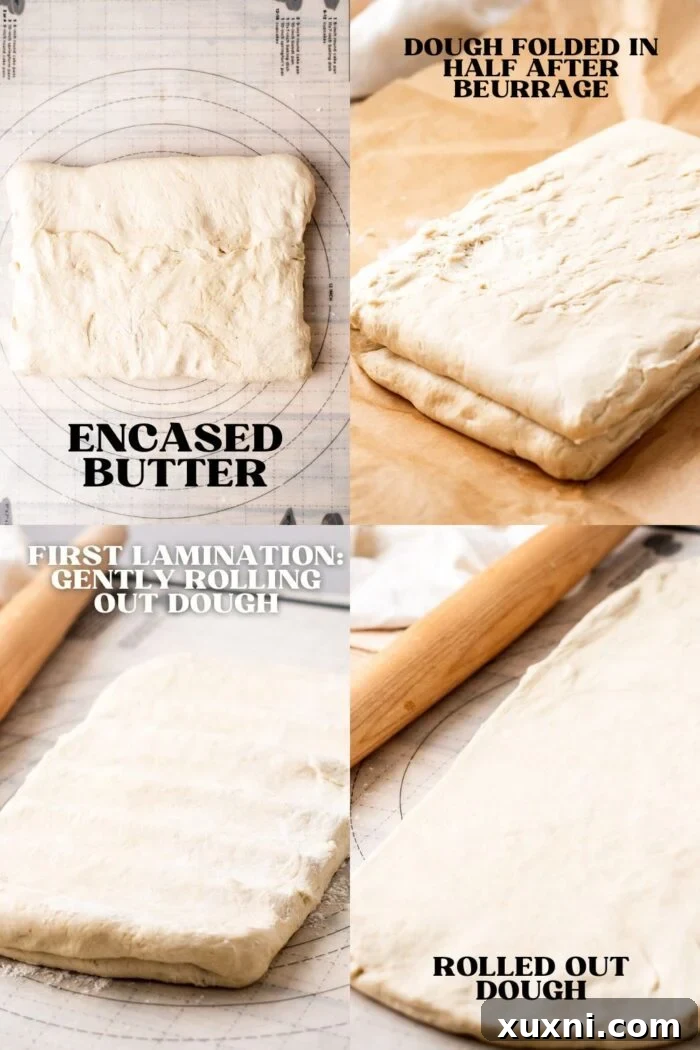
Pro Tip: Invest in a silicone baking mat with a built-in ruler. This small tool will dramatically simplify measuring your dough to achieve tight, uniform corners, which are crucial for beautifully structured croissants.
The Third Lamination & Precision Slicing:
After your second lamination and a brief rest, you’ll perform the third and final lamination, typically another letter fold. This completes the layering process. The dough then requires a final, longer rest—either for a couple of hours or ideally overnight in the refrigerator (refer to the timelines below for guidance).
For the slicing and shaping, I’ve adopted a brilliant method from Joshua Weissman, which ensures uniform and perfectly shaped croissants. You’ll roll out your laminated dough to approximately a 10×20-inch rectangle. Along one 20-inch edge, make small dash marks every 4.5 inches. On the opposite 20-inch edge, make your 4.5-inch marks offset, starting halfway between the first marks (e.g., if the first side has marks at 0, 4.5, 9 inches, the second side will have them at 2.25, 6.75, 11.25 inches). This staggered marking is key for creating triangles efficiently.
Using a pizza cutter, connect these alternating marks with diagonal slices to form perfect triangles. This method is incredibly efficient and ensures consistent croissant sizes.

Rolling, Shaping, & Baking Your Vegan Croissants:
With your triangles ready, it’s time to shape them into the familiar crescent form before their final rise and bake. Gently stretch each dough triangle by about an inch to elongate it slightly. Starting from the widest base of the triangle, begin to tightly roll the dough towards the pointed tip. You can either maintain a straight roll or gently curve the ends to create a classic crescent shape. Place the shaped croissants onto a parchment-lined baking sheet.
Pro Tip: Always tuck the tip of the croissant securely underneath the main body. This prevents the delicate pastry from unraveling during the proofing and baking stages, ensuring a beautifully formed final product.
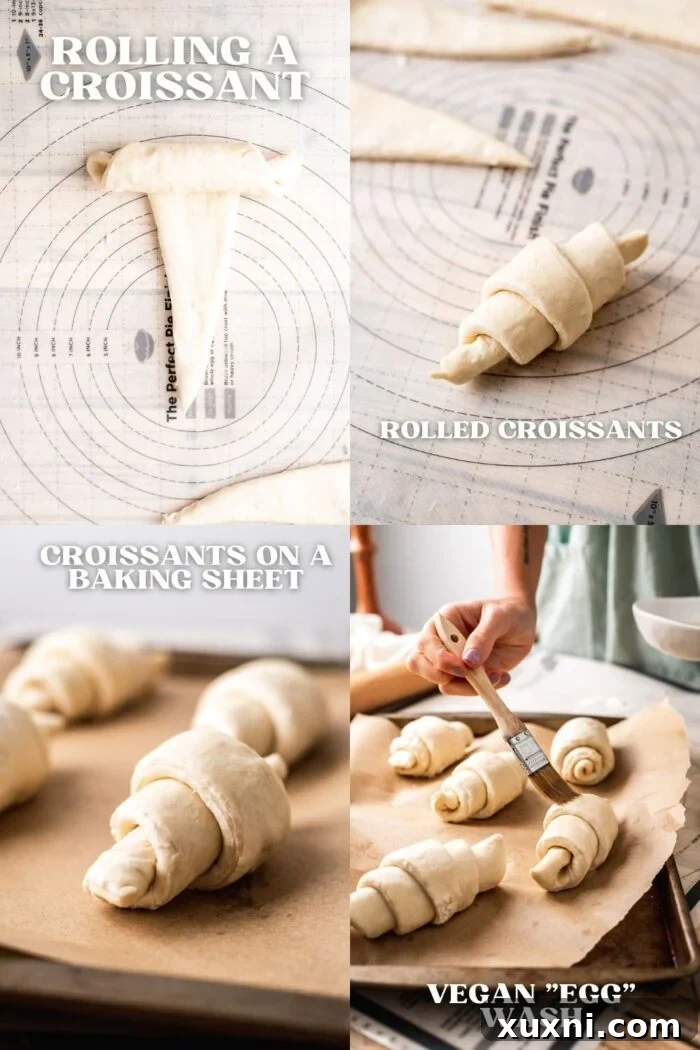
Once shaped, brush the tops of your croissants with the vegan egg wash. This initial layer aids in browning and forms a slight protective skin. Now, the croissants need to proof—a final rise that allows the yeast to work its magic. Place them in a warm, draft-free environment, ideally no warmer than 78°F (25°C), until they have visibly doubled in size (this usually takes about an hour). It’s crucial not to let them get too warm during proofing, as this can cause the butter layers to melt and seep out, ruining the delicate structure you’ve worked so hard to create. If your kitchen is warm, consider a slightly cooler spot or a shorter proof time.
Finally, give the croissants one last brush of vegan egg wash just before baking. Transfer them to a preheated oven and bake until they achieve a deep, rich golden-brown color on top. The aroma filling your kitchen will be pure bliss!
Can I Make Croissants in One Day?
While technically possible, I strongly advise against attempting to make croissants from start to finish in a single day. The process requires multiple chilling and resting periods for the dough, which are essential for developing flavor, relaxing the gluten, and ensuring the butter layers remain distinct. Rushing these steps can lead to tough, dense, or greasy croissants rather than the light, airy, flaky perfection you’re aiming for. It’s a project that truly benefits from patience and planning.
However, if you’re an early riser with a strong desire for same-day croissants and understand the potential trade-offs (slightly less developed flavor, potentially less defined layers), here’s a highly condensed, intense timeline:
7:00 AM: Begin making the croissant dough.
9:30 AM: Prepare and shape the butter layer (beurrage).
10:00 AM: Encapsulate the butter and perform the first lamination.
10:30 AM: Complete the second lamination.
11:00 AM: Execute the third lamination.
1:00 PM: Roll out the dough and shape your croissants.
1:30 PM: Begin the proofing process.
2:30 PM: Bake your croissants.
3:00 PM: Serve and savor your freshly baked vegan croissants!
Flexible Timelines for Your Vegan Croissant Journey:
To help you integrate croissant-making into your schedule, I’ve outlined three different timelines. Each option respects the crucial resting periods, ensuring you get the best possible results without feeling rushed. Choose the one that best suits your availability and preference for fresh pastries!
Option 1: An Overnight Rest for Ultimate Flavor
This timeline is ideal for enjoying fresh croissants on a leisurely morning, with much of the foundational work done the evening before.
Day 1:
7:00 PM: Prepare the dough, cover, and refrigerate overnight.
Day 2:
8:30 AM: Remove vegan butter for beurrage to come to room temperature.
9:00 AM: Shape the beurrage, encase it in the dough, and perform the first lamination.
9:30 AM: Complete the second lamination (after a brief chill if needed).
10:00 AM: Perform the third lamination, then refrigerate for 2 hours.
12:00 PM: Roll out and shape your croissants.
12:30 PM: Begin the proofing process.
1:30 PM: Bake your beautiful croissants, then serve and enjoy!
Option 2: A Morning Start for Afternoon Delight
If you prefer to start earlier and enjoy your croissants in the afternoon, this timeline might be perfect for you, with an overnight rest for the laminated dough.
DAY 1:
1:00 PM: Make the dough, cover, and chill.
3:30 PM: Prepare the butter layer.
4:00 PM: Encapsulate butter, perform the first lamination.
4:30 PM: Complete the second lamination.
5:00 PM: Perform the third lamination. Cover and refrigerate the laminated dough overnight.
DAY 2:
7:00 AM: Remove dough from fridge and let rest on the counter for 30 minutes to relax.
7:30 AM: Shape the croissants.
8:00 AM: Start the proofing process.
9:00 AM: Bake the croissants and indulge!
Option 3: The Leisurely Three-Day Approach
For maximum flavor development and minimal stress, this timeline spreads the process over three days, allowing ample resting time for the dough and a final overnight proof.
DAY 1:
5:00 PM: Make the dough, cover, and refrigerate.
5:30 PM: Prepare the butter layer and chill.
DAY 2:
10:00 AM: Perform the beurrage and first lamination.
10:30 AM: Complete the second lamination.
11:00 AM: Perform the third lamination. Refrigerate the dough for 2 hours.
1:00 PM: Shape the croissants. Cover and proof them overnight in the fridge.
DAY 3:
8:00 AM: Remove croissants from the fridge and let them rest at room temperature while your oven preheats.
9:00 AM: Bake your croissants to golden perfection and enjoy!
Why Coconut Oil is Not a Suitable Vegan Butter Substitute
A common question in vegan baking is whether coconut oil can replace vegan butter, especially in recipes like croissants. For this recipe, I must emphatically state that I do not recommend substituting coconut oil for vegan butter in the beurrage. While some vegan butters do contain coconut oil, they are carefully formulated with other fats and emulsifiers to achieve the specific texture and melting point required for lamination.
Coconut oil on its own has a vastly different chemical composition and behavior. It tends to be very hard when cold and melts quickly at room temperature. This extreme difference in consistency between the dough and the fat layer will make the lamination process nearly impossible. As you roll the dough, the coconut oil will either crack and break through the layers or melt too rapidly, leading to a greasy, dense, and ultimately failed croissant with no distinct flaky structure. Stick to a high-quality, European-style vegan butter for the best results.

Creative Croissant Variations to Explore
The beauty of this base vegan croissant recipe is its versatility. Once you’ve mastered the classic, you can easily customize the flavor during the rolling and shaping phase. Get creative and try these delicious variations:
- Vegan Pain au Chocolat: For a classic French indulgence, place one or two pieces of high-quality vegan dark chocolate at the base of your dough triangle before rolling. The chocolate will melt into a gooey center, creating an irresistible treat. Get the full recipe here.
- Vegan Cheese Croissants: Spread about 1 tablespoon of your favorite rich and creamy vegan cheese spread onto the dough triangle before rolling. As it bakes, the cheese will melt and become wonderfully savory.
- Vegan Pesto Croissants: For a savory twist, brush 1 tablespoon of vibrant vegan pesto onto the dough triangle. This herbaceous addition makes for a fantastic savory breakfast or snack.
- Cinnamon Sugar Croissants: Sprinkle a generous amount of cinnamon sugar mixture over the dough triangle before rolling. This creates a sweet, spiced spiral within the croissant layers, perfect for those who love a hint of warmth.

How to Make Irresistible Vegan Almond Croissants
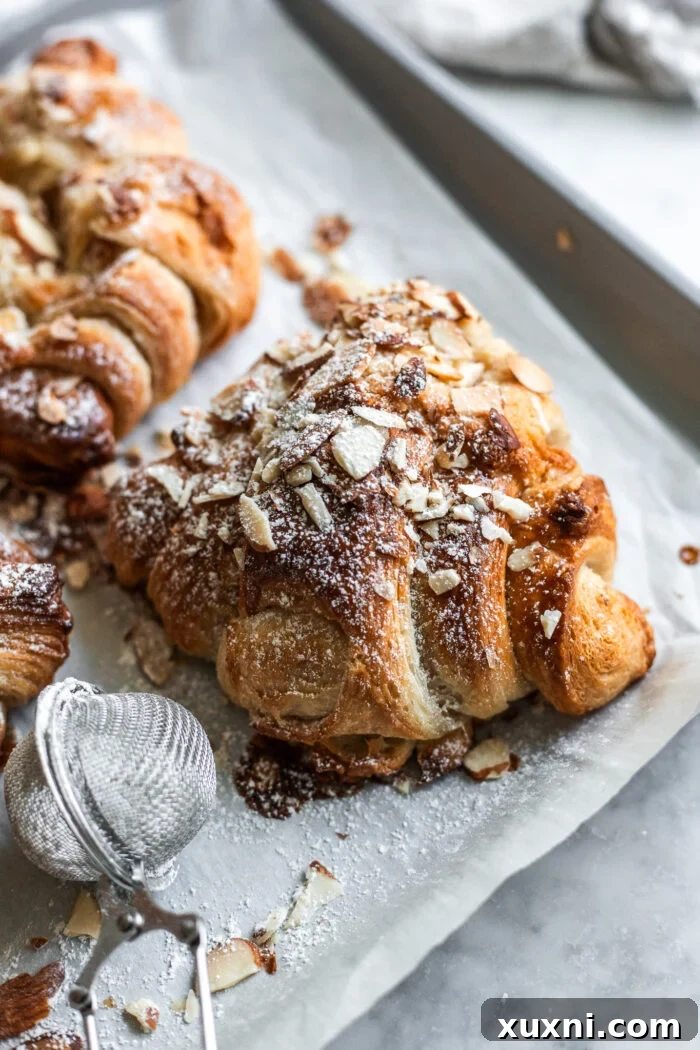
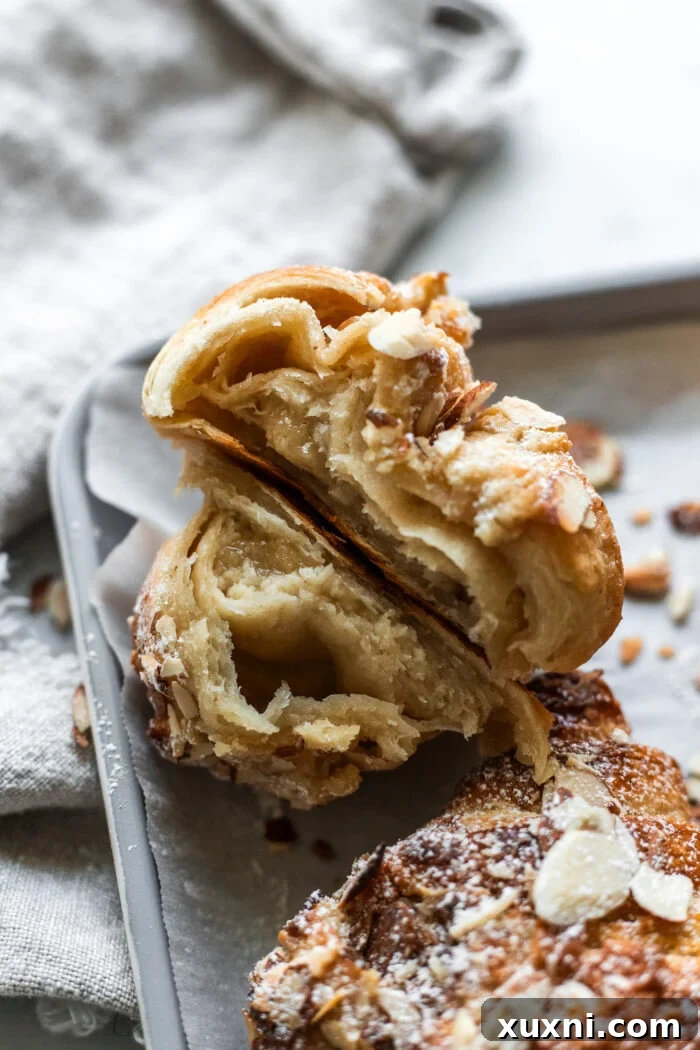
Crafting vegan almond croissants that rival their traditional counterparts was a journey of experimentation, but the results were nothing short of phenomenal. These are not just good for vegan croissants; they are better than any almond croissant I’ve tasted, vegan or otherwise! Each bite offers incredible flakiness, a rich buttery texture, delicate sweetness, and an intense, delightful almond flavor. They are truly a showstopper.
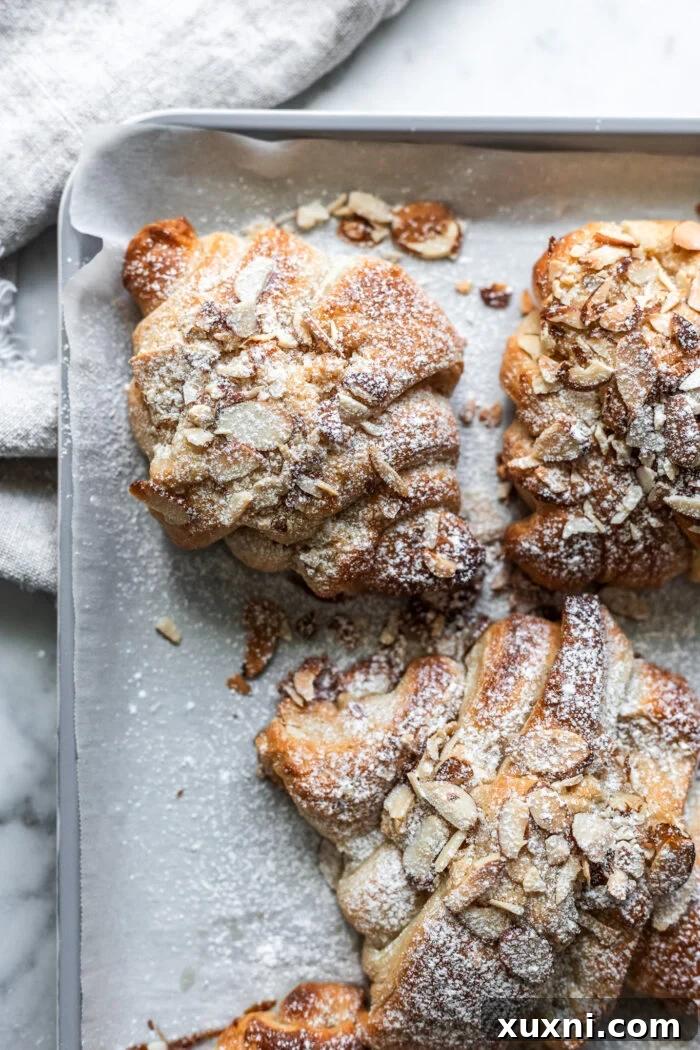
To transform your classic vegan croissants into these almond-filled wonders, you’ll need a few additional ingredients for the decadent frangipane filling and a sweet almond syrup. The measurements for these are as follows:
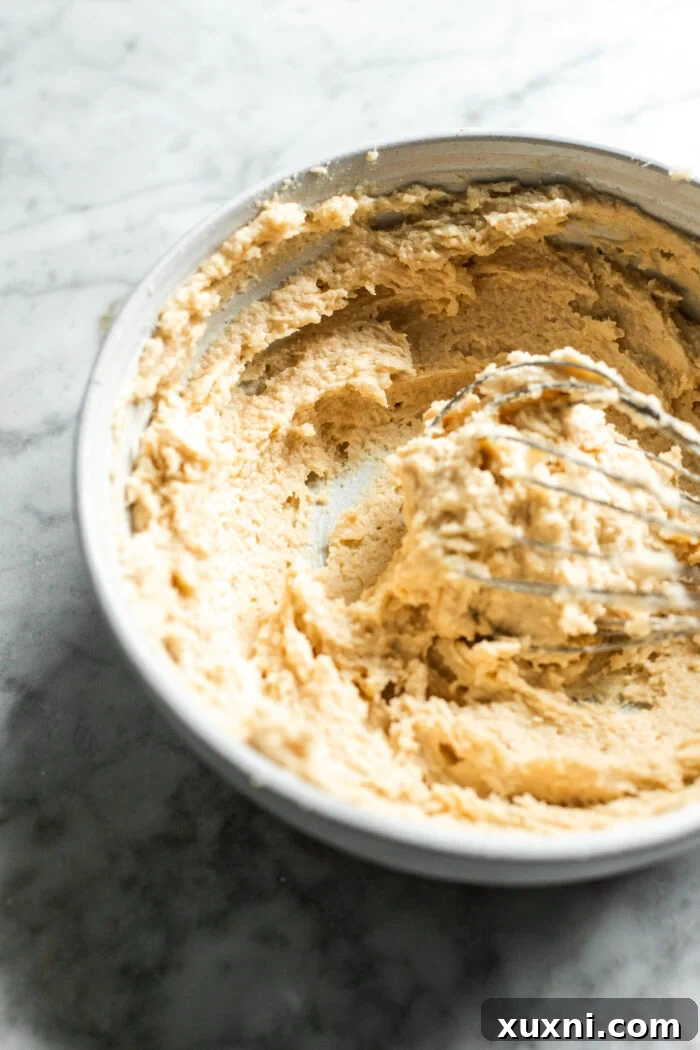
Vegan Almond Croissant Filling (Frangipane, adapted from King Arthur Baking):
- 3 tbsp (42 g) unsalted vegan butter, melted
- 1/4 cup (50 g) granulated sugar
- 1/2 cup (50 g) almond flour
- 1/8 tsp sea salt
- 2 tbsp all-purpose flour
- 1 tbsp almond milk
- 2 tsp vanilla extract OR 2 tsp almond extract (your preference for flavor intensity)
Vegan Almond Syrup:
- 1/4 cup (50 g) granulated sugar
- 1/4 cup (60 mL) water
- 1 tsp vanilla extract
- 1 tbsp almond butter (or 2 tsp almond extract for a stronger almond note)
- 1 cup slivered almonds, for topping and texture
The Almond Croissant Process: Step-by-Step
You’ll begin making vegan almond croissants following the main croissant recipe, with a few crucial adjustments for proofing and assembly to accommodate the filling. For the best flavor development and ideal texture with the almond filling, I highly recommend opting for a longer proofing time for the shaped croissants, ideally following Option 2 or Option 3 from the timelines detailed above.
However, to provide immediate guidance, here’s how to integrate the almond elements directly into the main recipe card’s flow. You can also refer to the dedicated Instagram Reel for a visual guide.
- After completing Step 7 of the main recipe card (the third lamination), you will prepare the frangipane filling.
- For the Frangipane: In a small bowl, whisk together the melted vegan butter and granulated sugar until well combined. Then, fold in the almond flour, sea salt, all-purpose flour, almond milk, and your chosen extract (vanilla for a subtle nuttiness or almond extract for a more pronounced almond flavor).
- Chill the Filling: Cover the bowl of frangipane and place it in the refrigerator to chill alongside your croissant dough. Chilling will make it thicker and easier to handle.
- Prepare the Almond Syrup: If you’re using an overnight proofing option, the syrup can be stored at room temperature in an airtight container. To make it, combine all syrup ingredients in a small saucepan. Whisk continuously over medium heat until the mixture comes to a gentle bubble (about 2-3 minutes) and the sugar fully dissolves. Remove from heat and allow it to cool completely before storing or using.
- Continue to Step 8 of the main recipe (rolling out the dough): Once you reach Step 9 (shaping the croissants), take approximately 2 teaspoons of the chilled frangipane filling and smear it evenly along the widest base of each dough triangle. The thickness from chilling is desirable. Roll each croissant tightly from the base to the tip, placing it on your baking sheet with the tip tucked underneath to prevent unrolling. You will have some frangipane leftover, which will be used as a topping later.
- Proofing Almond Croissants: For almond croissants, an extended proofing period is beneficial. I recommend proofing them in the fridge for at least 2 hours, or ideally, overnight. Do NOT apply the vegan egg wash from Step 10 yet. This will be done just before baking.
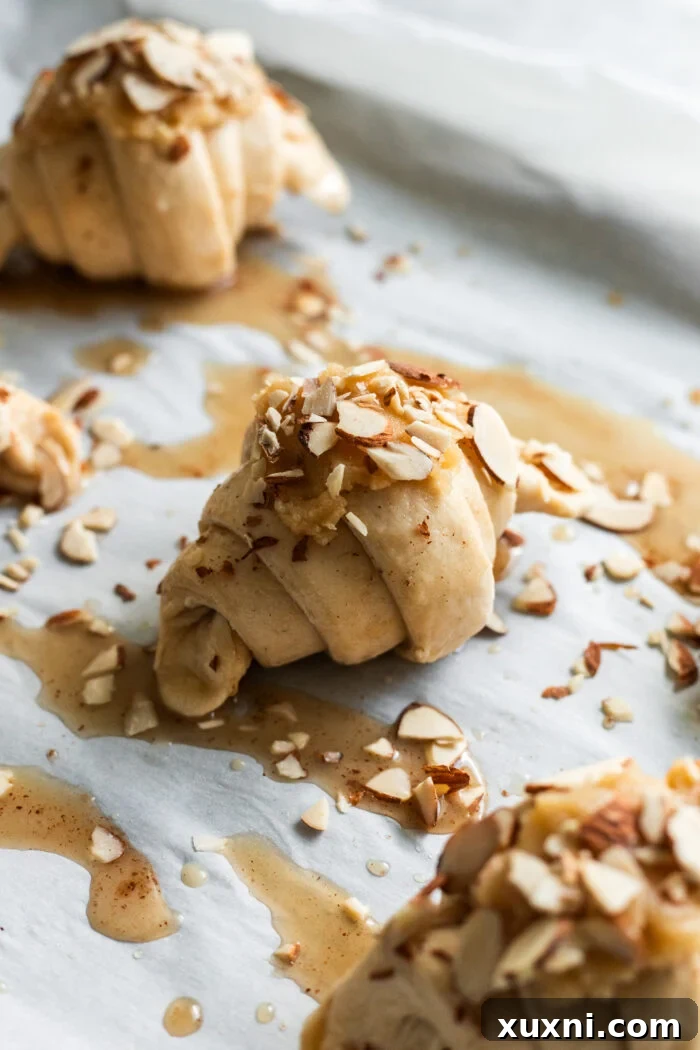
- Brush and Assemble: As your oven preheats to 390°F (195°C), retrieve your proofed almond croissants. First, brush them generously with a layer of the prepared almond syrup. Then, apply a layer of the vegan egg wash over the syrup. Finally, spread the remaining frangipane filling evenly over the top of each croissant and finish with a liberal sprinkling of slivered almonds.
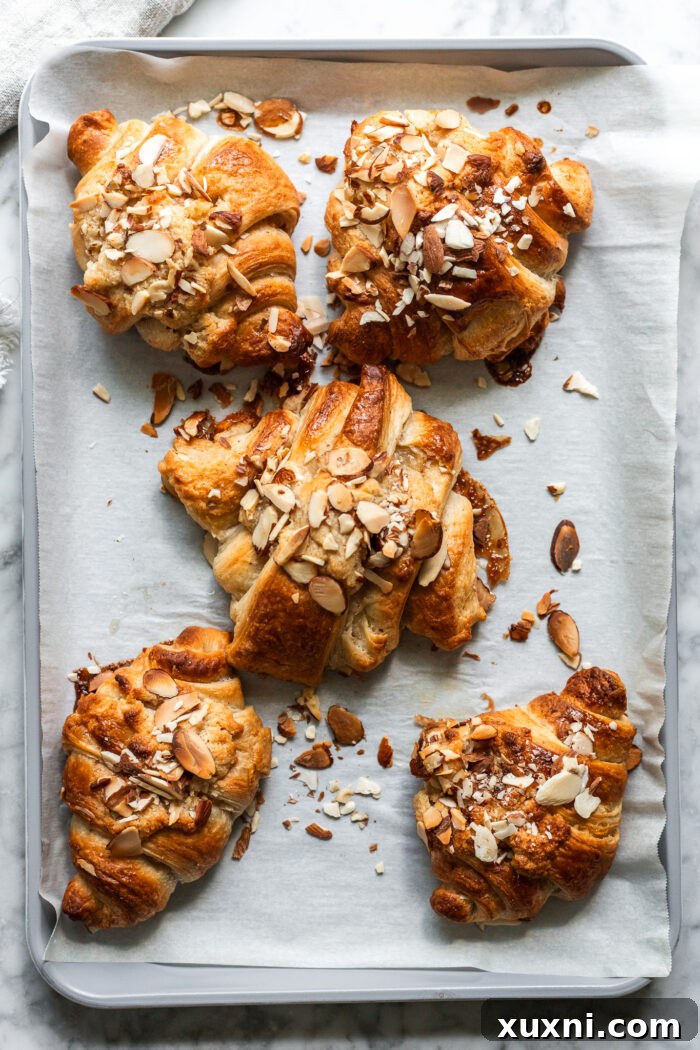
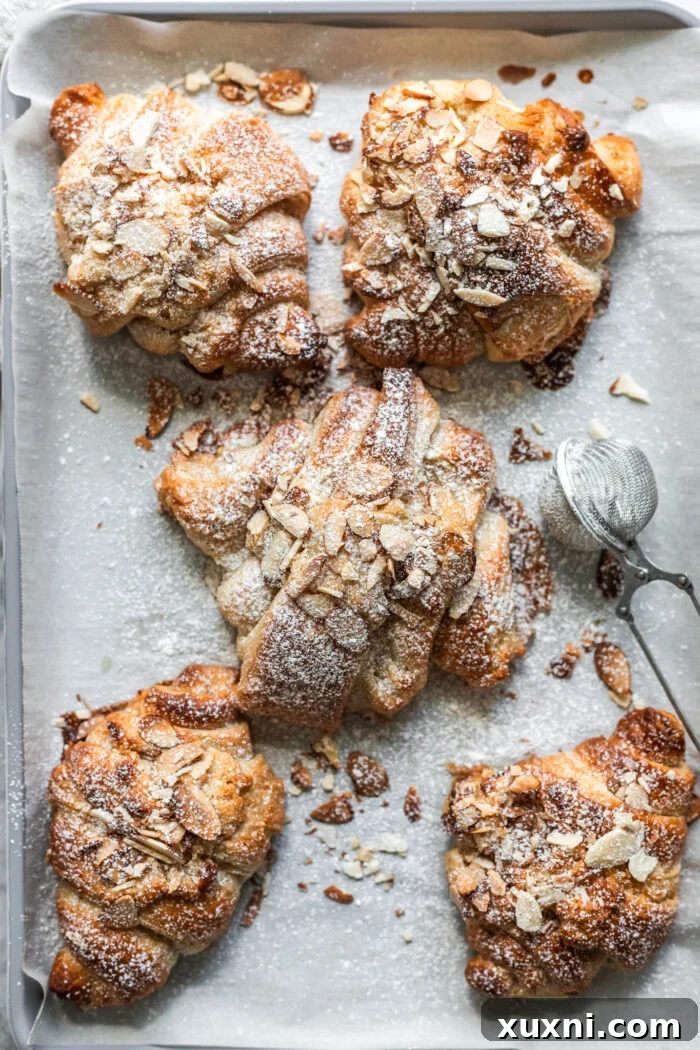
- Baking: Bake the croissants on the middle rack of your preheated oven for 22-24 minutes, or until they are beautifully golden brown and the frangipane topping is slightly caramelized. You may need to rotate the baking sheet halfway through to ensure even browning, depending on your oven. If you notice them browning too quickly, reduce the oven temperature to 380°F (190°C) and loosely cover them with parchment paper.
- Serve and Enjoy: Once baked, remove the croissants from the oven and allow them to cool on the baking sheet for a few moments. Serve them warm to fully appreciate their delicate layers and rich almond flavor!
Watch the Magic Unfold: How to Make Vegan Croissants
For a visual step-by-step guide that complements this written recipe perfectly, be sure to watch my detailed video on how to make these incredible vegan croissants. Seeing the lamination process and shaping techniques in action can make all the difference in building your confidence and ensuring flawless results!
Want to save this recipe for later? Add it to your favorite recipe board on Pinterest!
Pin this recipe to your dessert or breakfast boards on Pinterest to easily find it next time you’re craving homemade vegan croissants!

If you embark on this delicious baking adventure, please take a moment to leave a comment and a rating ⭐️⭐️⭐️⭐️⭐️ below. Your feedback helps other bakers discover and enjoy these recipes! And I absolutely adore seeing your beautiful creations on Instagram and Pinterest, so don’t forget to tag me @the_bananadiaries and use the hashtag #thebananadiaries!
Print Recipe

How to make Vegan Croissants (Easy Guide!)
5 Stars 4 Stars 3 Stars 2 Stars 1 Star
4.7 from 6 reviews
Author: Britt Berlin
Prep Time: 30 minutes
Minimal resting time: 6 hours
Cook Time: 22-25 minutes
Total Time: Approx. 6 hours 52 minutes
Yield: 10-11 Croissants
Category: Breakfast
Method: Baking
Cuisine: French
Diet: Vegan
Description
Learn how to make the most perfect vegan croissants ever! So flaky, buttery, and light, you’d think these vegan croissants came from a bakery!
Ingredients
Scale
Vegan Croissant Dough:
- 4 cups (500 g) all-purpose flour*
- 1 1/4 cup (300 mL) cold dairy-free milk
- 1/4 cup (50 g) granulated sugar
- 1 tbsp instant yeast*
- 1/2 tsp sea salt
- 1/3 cup (5 tbsp) unsalted vegan butter, room temperature
Beurrage (Butter Block):
- 350 g unsalted vegan butter, room temperature
- Vegan “egg” wash (1 tbsp maple syrup + 1 tbsp soy milk)
RECOMMENDED EQUIPMENT:
- Large rolling pin
- Silicone baking mat with a ruler printed onto it (I use this one)
- 2 large baking sheets
- Parchment paper
- Pizza cutter
Instructions
- Before you begin, please read the entire blog post, especially the flexible timelines. Watch the accompanying video for visual guidance. Decide which parts of the process you will complete on separate days to accommodate resting times.
- Prep: Carefully measure out all the ingredients for the dough. Simultaneously, take the vegan butter designated for the beurrage out of the fridge to allow it to reach cool room temperature while you prepare the dough.
- Make the Dough: In the bowl of a stand mixer fitted with a dough hook (or a large mixing bowl for hand-kneading), combine the flour, granulated sugar, instant yeast, and salt. Pour in the cold dairy-free milk and mix on medium speed until a shaggy, cohesive dough forms. Then, add the room-temperature vegan butter (from the dough ingredients) and continue mixing on medium speed for about 7-10 minutes until the dough becomes smooth, elastic, and slightly tacky to the touch. If kneading by hand, ensure it’s thoroughly worked until smooth.
- First Rest: Cover the dough tightly with plastic wrap or a clean kitchen towel and refrigerate for a minimum of 3 hours, or ideally, overnight. This chilling period is crucial for developing flavor and relaxing the gluten.
- Shape the Beurrage: Approximately 30 minutes before your dough is ready, prepare the butter block. On a piece of parchment paper, draw a 7×10-inch rectangle. Spread the room-temperature vegan butter evenly within this rectangle, using the parchment paper as a guide to achieve clean edges (refer to the video or blog photos for assistance). Once shaped, wrap the butter completely in the parchment paper and place it in the fridge for 30 minutes to firm up slightly, ensuring it’s still pliable.
- First & Second Lamination: Remove the chilled dough and the butter block from the fridge. The butter should be firm but flexible, not hard. Lightly flour a large rolling pin and your silicone baking mat (which preferably has a ruler printed on it, or use a separate ruler).
- Encase the Butter: Roll the dough into a precise 10×14-inch rectangle, aiming for neat, right-angle corners. Place the butter block in the center of the dough, aligning its 10-inch length with the dough’s 10-inch width. Fold the two longer ends of the dough over the butter to completely enclose it, creating a “pamphlet” shape (see video and photos). Firmly pinch all exposed edges of the dough together to seal the butter inside.
- First Lamination (Letter Fold): Rotate the dough 90 degrees so that the sealed edges are to your sides. Gently but firmly press down on the dough with your rolling pin to start spreading the butter evenly. Then, carefully roll the dough into a 10×20-inch rectangle. Perform a letter fold: fold one-third of the dough over the middle, then fold the remaining third over that (like folding a letter into an envelope). If the dough or butter feels too warm or soft, wrap it in parchment paper or plastic wrap and chill for 30 minutes before proceeding.
- Second Lamination (Book Fold): Rotate the dough again by 90 degrees. Repeat the gentle pressing and rolling process, extending the dough into another 10×20-inch rectangle. This time, perform a book fold: fold both ends of the dough towards the center, meeting in the middle, then fold the entire dough in half like a book (see video and photos). Cover the folded dough tightly and rest it in the refrigerator for 30 minutes to 1 hour.
- Third Lamination: Remove the dough from the fridge. Roll it out one last time to a 10×20-inch rectangle. Perform a final letter fold, then cover the dough and refrigerate for at least 2 hours, or preferably overnight, to allow the gluten to relax and the flavors to meld.
- Cut the Croissant Triangles: When you’re ready to shape, line two large baking sheets with parchment paper. Roll out your chilled dough to approximately 10×20 inches (precision is less critical here than during lamination). Along one 20-inch side, make small dash marks at 4-inch or 4.5-inch intervals (4-inch intervals yield slightly smaller, more numerous croissants). On the parallel 20-inch side, make marks in the middle of the opposing intervals (e.g., if the first marks are at 0, 4, 8 inches, the second marks are at 2, 6, 10 inches). Using a pizza cutter, connect these alternating marks with diagonal cuts to form a series of triangles (refer to the video and photos for a clear visual). This method typically yields 10-11 croissant triangles.
- Roll the Croissants: Take one dough triangle. Gently stretch it with your fingers to lengthen it by about 1 inch. Starting from the widest base of the triangle, tightly roll the dough towards the pointed tip. Place the rolled croissant onto a prepared baking sheet, ensuring the tip is securely tucked underneath the croissant to prevent it from unraveling during baking. Repeat this process for all remaining triangles, spacing about 5 croissants per baking sheet.
- Proofing: Brush the tops of the shaped croissants with the vegan egg wash (reserve the remaining wash for a second brushing). Cover the croissants loosely with a clean dish towel or plastic wrap. Allow them to proof at room temperature, ideally between 70-78°F (21-25°C), for 1-2 hours, or until they have visibly doubled in size and feel light and puffy. Crucially, avoid placing them near a hot stove or in a too-warm environment, as this will melt the butter layers. For enhanced flavor, you can also proof them overnight in the refrigerator, covered. While the croissants proof, preheat your oven to 390°F (195°C).
- Bake: Once adequately proofed, gently brush the tops of the croissants again with the reserved vegan egg wash. Carefully transfer the baking sheets to the preheated oven. Bake for 20-25 minutes, rotating the sheets halfway through, until the croissants are puffed, deeply golden brown, and incredibly fragrant.
- Enjoy! Remove the croissants from the oven and let them cool on the baking sheet for about 10 minutes before transferring them to a wire rack. Serve warm with your favorite coffee, tea, or fresh fruit for a truly gourmet breakfast. Store any leftover croissants in an airtight container or bag at room temperature for up to 2 days, or in the refrigerator for up to 5 days, though they are always best enjoyed fresh on the first day!
Notes
For all detailed tips, tricks, and visual guides, please read the full blog post!
For specific instructions on making vegan almond croissants, please refer to the dedicated section in the blog post above.
Flour: I am actively working on a gluten-free version of this recipe. Please check back for updates!
Instant Yeast: Using instant yeast is highly recommended over active dry yeast for this recipe. It helps accelerate the dough-making process and reduces the risk of the butter melting prematurely during the crucial proofing stages, ensuring a superior flaky texture.