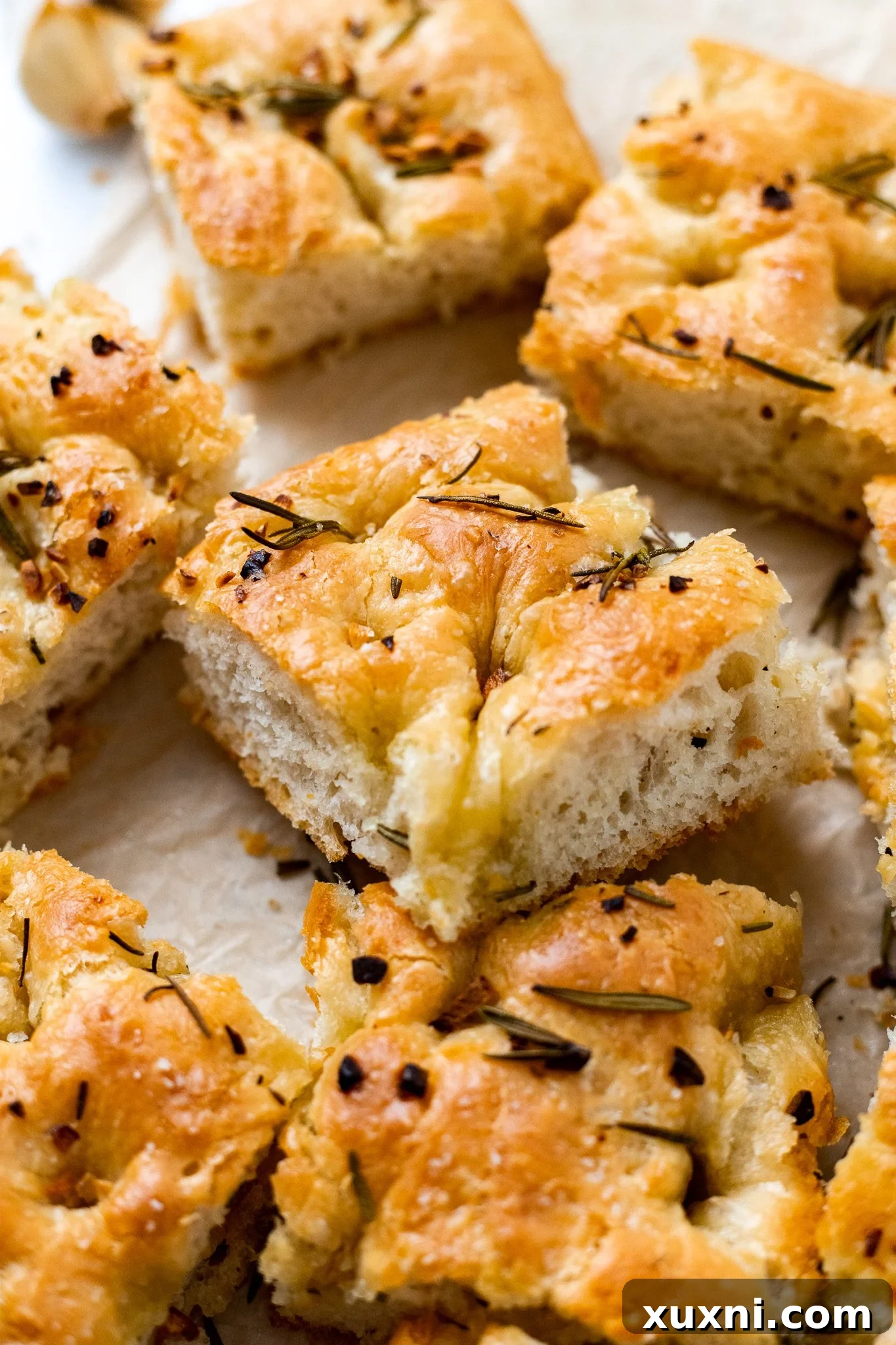
Easy No-Knead Vegan Focaccia Bread: Your Guide to Crispy, Chewy Perfection
Embark on a delightful baking adventure with this incredibly straightforward, no-knead focaccia bread recipe. Whether you’re a novice in the kitchen or a seasoned baker, this guide ensures a successful and rewarding experience. Our naturally vegan and dairy-free focaccia boasts an irresistible texture—a gloriously crisp exterior yielding to a wonderfully soft and airy interior. Beyond its ease, this homemade focaccia is endlessly customizable with your favorite plant-based toppings, and for ultimate convenience, it offers an overnight preparation option, fitting seamlessly into any schedule.
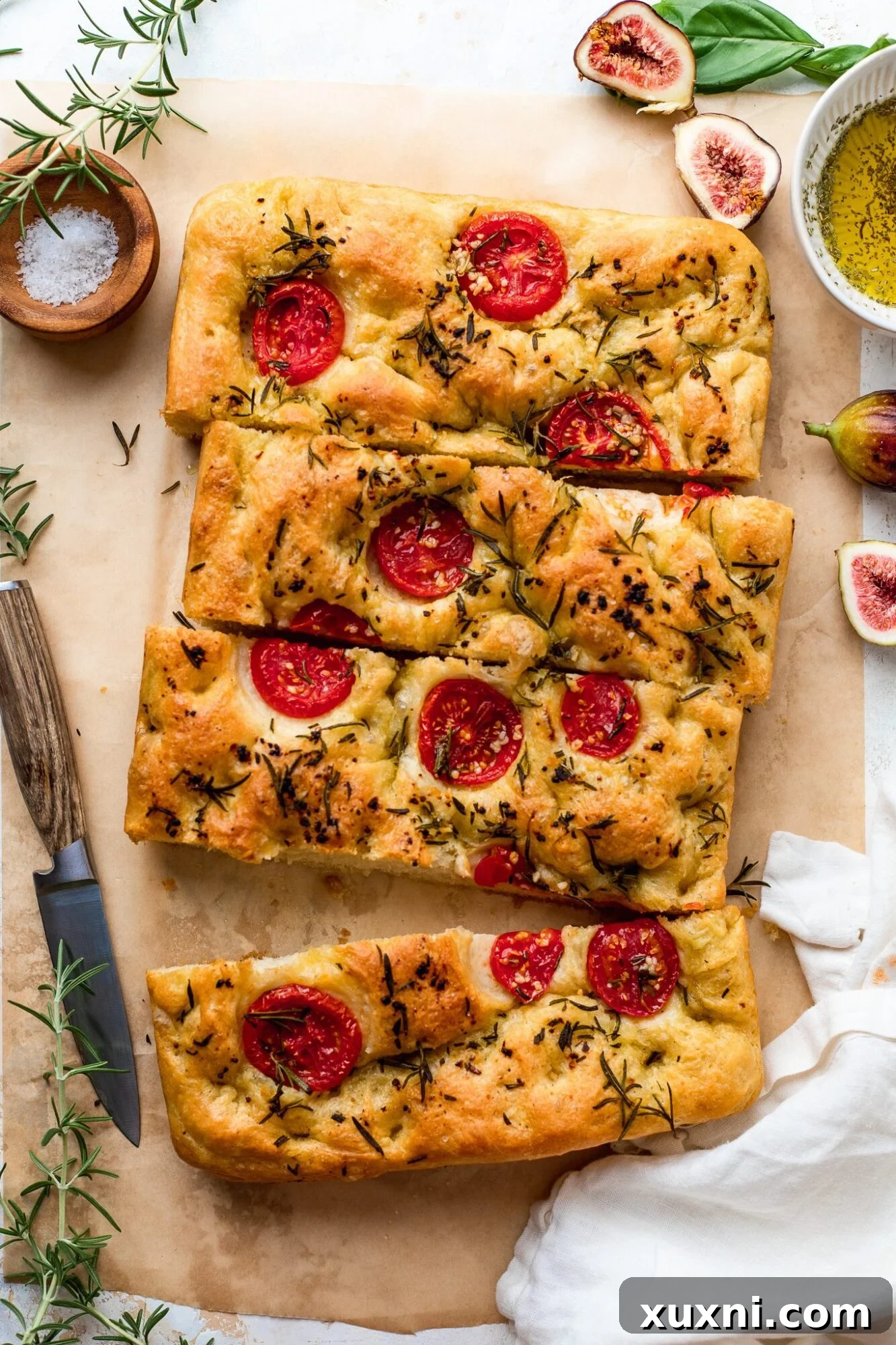
Focaccia truly stands as one of the most approachable and rewarding breads to bake, especially for those new to the art of yeast baking. At its heart, this classic Italian table bread requires only a handful of fundamental ingredients: all-purpose or bread flour, warm water, salt, premium olive oil, and active dry yeast. With these simple components, you’re set to create something truly special. But we’re not just aiming for basic; this recipe elevates traditional focaccia to an extraordinary level with the inclusion of a fragrant homemade garlic-rosemary infused olive oil, ensuring every bite is rich with aromatic flavor and a hint of Mediterranean sunshine.
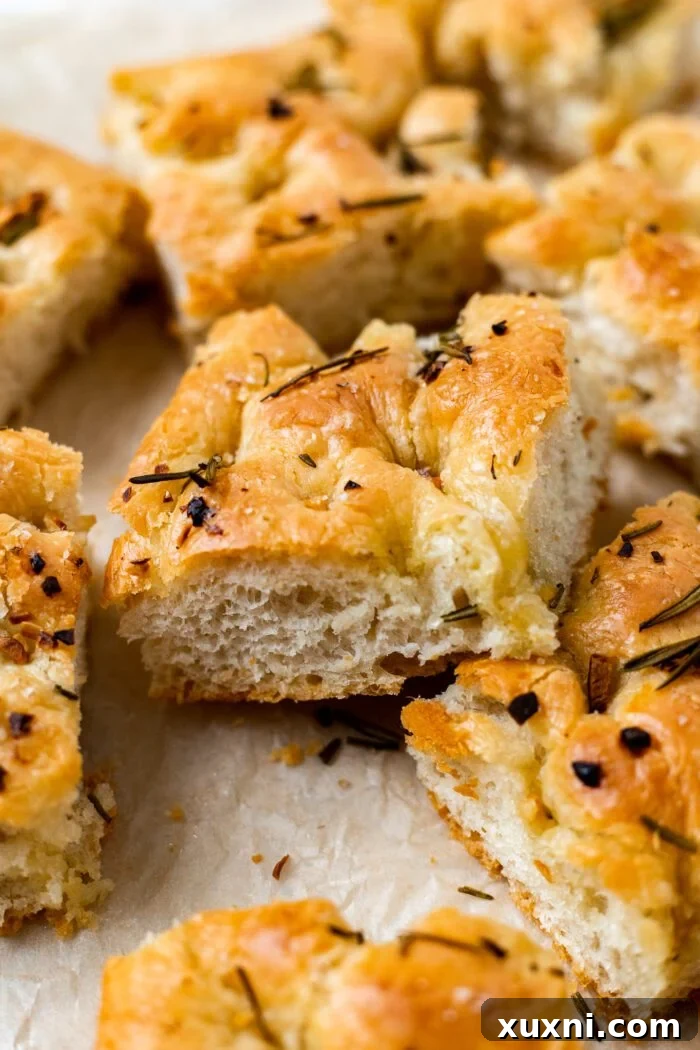
Imagine the irresistible aroma wafting through your kitchen as this golden-brown masterpiece bakes to perfection. Once cooled slightly, you won’t be able to resist tearing off a warm, pillowy slice. This focaccia is not just a side dish; it’s a versatile culinary delight. Serve it warm, perfect for dipping into creamy hummus, a rich bread dipping oil, or simply use it to sop up the last, flavorful drops of your favorite pasta sauce. Its sturdy yet tender crumb makes it ideal for sandwiches, or as a delightful accompaniment to soups and salads.
Table of Contents
- The Ancient Roots of Focaccia: A Culinary Journey Through History
- Focaccia vs. Other Breads: Understanding Its Unique Place
- Is Focaccia Bread Typically Vegan? Essential Considerations
- Why This No-Knead Focaccia Recipe is a Must-Try
- Essential Vegan Focaccia Ingredients Demystified
- Step-by-Step Guide: Crafting Your Perfect Soft & Chewy Focaccia
- 1. Activating Your Yeast: The Foundation of Fluffy Bread
- 2. Preparing the Dough & The Initial Rise (First Proof)
- 3. Shaping and Gluten Development: The Clever No-Knead Method
- 4. Sequential Proofing: Building Structure and Flavor
- 5. Spreading the Dough in the Baking Pan
- 6. The Grand Finale: Topping and Baking Your Focaccia Masterpiece
- Irresistible Vegan Focaccia Topping Ideas for Every Palate
- Can This Focaccia Recipe Be Made Gluten-Free?
- Troubleshooting Common Focaccia Dough Issues for Success
- More Delicious Vegan Bread Recipes to Explore
The Ancient Roots of Focaccia: A Culinary Journey Through History
Focaccia, a beloved flatbread globally, boasts a profound and rich history that stretches back to antiquity in Italy. While its origins are frequently associated with Northern Italy, particularly the coastal region of Liguria, various regional adaptations of this delightful bread exist across the entire Italian peninsula, reaching all the way to Sicily. Intriguingly, Sicily also claims a bread remarkably similar to focaccia, sharing a close kinship with the ancient Greek pita, underscoring the deep, interconnected culinary heritage of the Mediterranean basin.
The very name “focaccia” itself offers a fascinating etymological window into its venerable past. It is believed to be derived from the Roman term panis focacius, which quite literally translates to “hearth bread” or “baked bread from the hearth.” This historical nomenclature suggests that early iterations of focaccia were likely cooked directly on the hot embers of a hearth or beneath hot ashes. This primitive yet effective baking method not only imparted a distinct smoky flavor but also contributed to a rustic, appealing texture. This enduring tradition highlights focaccia’s long-standing role as a fundamental staple, cherished for millennia by Italian families and a testament to the timeless appeal of simple, wholesome ingredients transformed by heat.
Focaccia vs. Other Breads: Understanding Its Unique Place
While focaccia is indeed a member of the diverse bread family, it possesses a distinct personality and unique characteristics that set it apart from many other traditional doughy varieties. Even its close cousin, pizza, shares more differences than similarities in preparation and texture. Although my great-grandpa, hailing from Sicily, famously utilized a focaccia-like base for his homemade pizzas, the modern focaccia, as we know it, follows a different path to perfection.
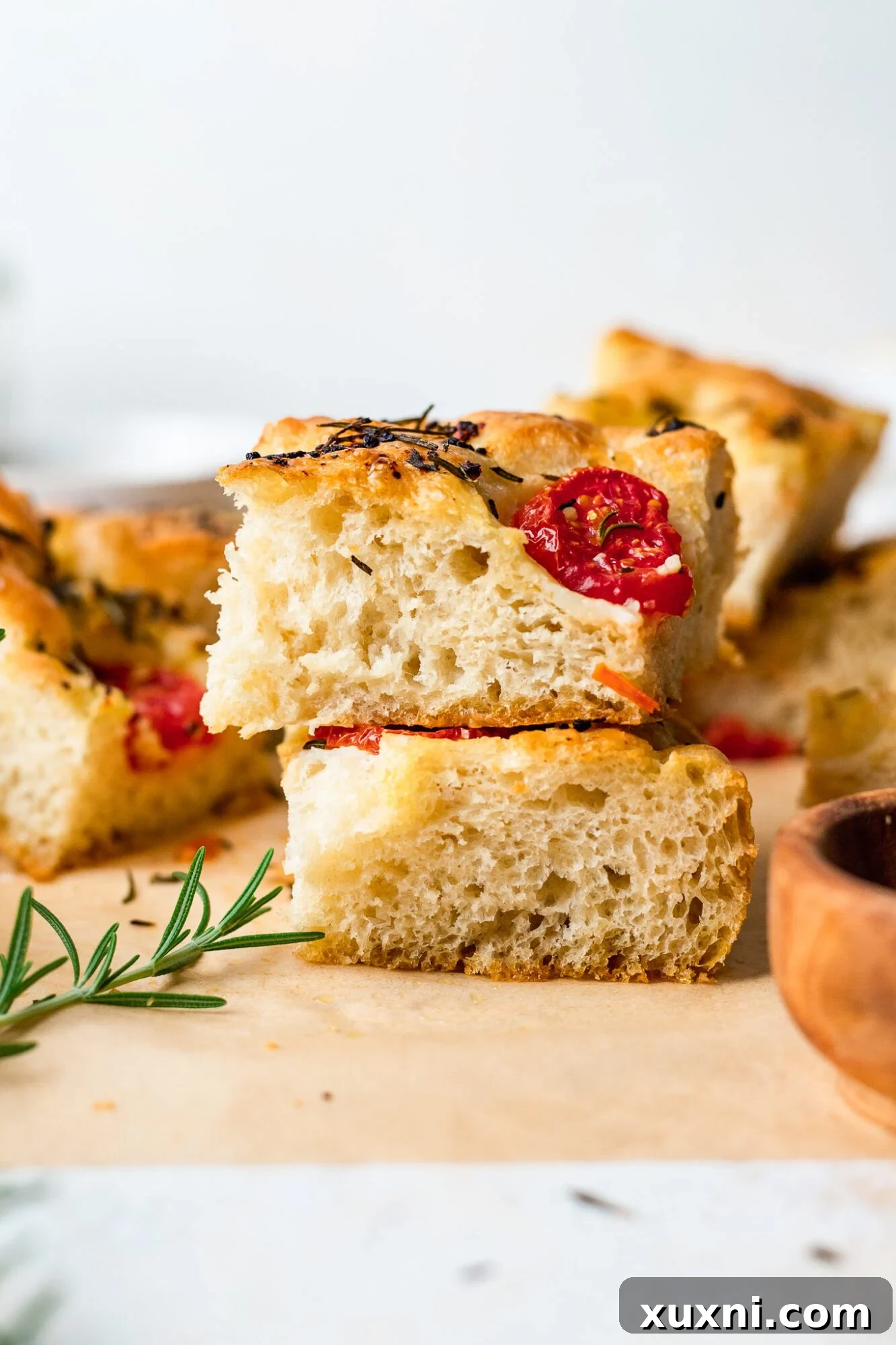
Fundamentally, focaccia is an elevated flatbread, specifically designed to achieve a beautiful rise, resulting in an incredibly airy, open crumb structure while maintaining a relatively flat profile. A crucial distinguishing factor is its exceptionally high hydration level, meaning the dough incorporates a significantly greater proportion of water relative to flour. This generous hydration is directly responsible for focaccia’s signature soft, moist, and wonderfully chewy interior. Moreover, the liberal use of high-quality olive oil is not merely a flavoring agent; it is absolutely critical for the success of focaccia. The olive oil infuses the bread with its characteristic rich flavor, prevents it from drying out, and, most importantly, creates that coveted crispy, golden, and slightly oily crust that is the hallmark of authentic focaccia.
In the culinary spectrum, focaccia occupies a fascinating middle ground, often described as residing between a lean dough and an enriched dough. Lean doughs, such as those used for classic baguettes or ciabatta, typically consist solely of flour, water, yeast, and salt. Focaccia begins with this lean foundation but strategically incorporates the added richness of olive oil. While this addition of fat mirrors the principle of an enriched dough (which might contain butter, milk, or eggs), focaccia doesn’t quite cross into that category. This thoughtful balance of ingredients grants focaccia its unique, savory flavor profile and its wonderfully versatile texture.
Another key differentiator lies in its baking method. Unlike many other breads that are shaped into individual loaves or rolls, focaccia is traditionally baked in a large, shallow sheet pan. This method allows it to spread and rise uniformly into its characteristic flatbread form. The distinctive dimpling process, where fingertips gently press into the dough before baking, serves a dual purpose: it creates visual appeal and, more critically, forms pockets that generously hold the infused olive oil and any chosen toppings, ensuring an explosion of flavor in every bite. These subtle yet significant variations in ingredients, preparation, and baking ultimately converge to create focaccia’s unique taste and its universally beloved texture, setting it distinctly apart from other breads and even pizza.
Is Focaccia Bread Typically Vegan? Essential Considerations
For those following a plant-based diet, there’s excellent news: authentic focaccia bread is, for the most part, inherently vegan. Its traditional recipe, rooted in simplicity and the bounty of the Mediterranean, relies on olive oil as its primary fat source, thereby naturally excluding animal products. The foundational ingredients typically include only flour, water, yeast, salt, and olive oil, making it naturally dairy-free and egg-free. This makes classic focaccia a fantastic and safe choice for vegans and those with dairy allergies.
However, it is always prudent to exercise a degree of caution and vigilance, particularly when sourcing focaccia from restaurants, bakeries, or experimenting with less traditional recipes. Some modern adaptations, or creative interpretations found in commercial settings, might introduce ingredients such as eggs, butter, or even milk powder to alter the texture, enhance richness, or extend shelf life. To ensure your focaccia aligns with vegan principles, always make it a practice to scrutinize ingredient lists or politely inquire with the staff about the components used in their preparation.
The most common point where a focaccia might stray from being vegan is not necessarily in the bread base itself, but rather in its toppings. While the dough might be perfectly plant-based, popular additions such as various cheeses (like Parmesan, mozzarella, or gorgonzola), cured meats (prosciutto, salami), or certain pesto varieties (which traditionally contain Parmesan cheese) would render the finished product non-vegan. But fret not! This comprehensive article is dedicated to guiding you through the creation of a truly delectable and 100% vegan focaccia. Further down, I’ve curated an extensive and inspiring list of my absolute favorite vegan focaccia topping ideas, empowering you to customize your bread with a spectrum of delicious plant-based flavors.
Why This No-Knead Focaccia Recipe is a Must-Try
Regardless of your baking expertise, from absolute beginner to seasoned pro, this no-knead focaccia recipe is designed for unparalleled success and enjoyment. Focaccia is celebrated for its inherent simplicity, but our specific no-knead methodology completely eliminates the most intimidating aspect of bread making: the strenuous physical kneading. You won’t require a heavy-duty stand mixer, nor will you need to develop strong arm muscles; this recipe is wonderfully hands-off, allowing the magical process of yeast fermentation to gracefully accomplish most of the hard work for you.
Your active involvement in the kitchen will be minimal—just a few minutes of preparatory work and gentle handling. The rest is a patient waiting game as time and a warm environment work in tandem to transform a humble mixture of ingredients into a light, airy, and profoundly flavorful bread. This vegan focaccia serves as an ideal and incredibly satisfying introduction to the art of baking with yeast, unequivocally proving that delectable homemade bread is not only within your capabilities but also surprisingly easy to achieve. Moreover, the bread is infused with an exceptional depth of flavor, particularly from the aromatic garlic-rosemary olive oil, making it an outstanding addition to virtually any meal or gathering.
Envision presenting this magnificent golden-hued, fragrant bread as a stunning centerpiece or a mouth-watering side at your next vegan dinner party, a joyous holiday celebration, or a relaxed summer barbecue. Its naturally vegan composition ensures that it is inclusive and enjoyable for all guests, irrespective of their dietary preferences. If your culinary desires yearn for a focaccia that is exquisitely soft, gratifyingly chewy, and bursting with delightful, savory flavors, then you absolutely “knead” to embrace this easy vegan focaccia bread. The delightful irony, of course, is that not a single moment of actual kneading is required to achieve this phenomenal result!
Essential Vegan Focaccia Ingredients Demystified
As previously established, focaccia lends itself beautifully to a vegan preparation, and this recipe fully embraces a plant-based approach without compromising on flavor or texture. We will meticulously utilize only wholesome, vegan-friendly ingredients to craft a focaccia that is not only exquisitely delicious but also inclusive for all dietary needs. Below, we’ll delve into the core components required for the irresistibly soft and chewy focaccia bread base, along with special notes on our flavor-enhancing infused olive oil.
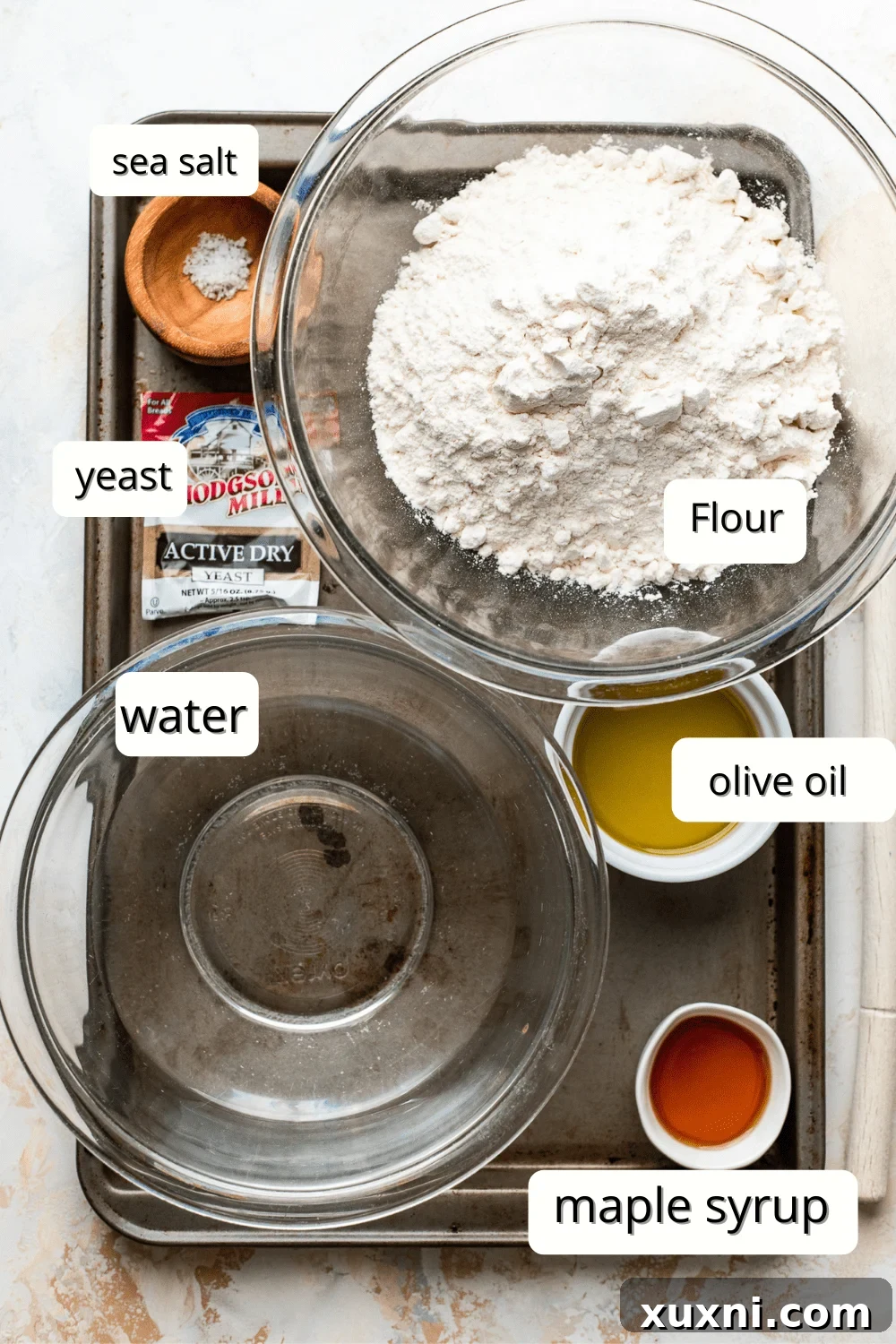
- Flour: You have the flexibility to choose between all-purpose flour or bread flour for this recipe. Bread flour, with its higher protein content, typically develops more gluten, resulting in a slightly chewier and more structured crumb. All-purpose flour, while lower in protein, will still yield excellent results, producing a tender and delicious focaccia.
- Water: Lukewarm water is absolutely critical for the successful activation of the yeast. It is imperative to ensure the water temperature is within the ideal range of approximately 105-115°F (40-46°C). Water that is too hot will kill the yeast, rendering it inactive, while water that is too cold will inhibit its activity, leading to poor or no rise.
- Yeast: Active dry yeast is our chosen leavening agent. A standard 5 ½ ounce packet, which typically contains about 2 ¼ teaspoons or 7 grams, is precisely what’s needed to bring your dough to vibrant life, initiating the fermentation process that creates the bread’s airy structure.
- Maple syrup: A small measure of maple syrup serves a vital role as a food source for the yeast. This touch of sweetness jumpstarts the yeast’s activity, helping it to activate and bloom effectively. If maple syrup is unavailable, an equal amount of granulated sugar can be used as a suitable substitute.
- Olive oil: This is arguably the single most important ingredient for achieving authentic, flavorful focaccia. It is essential to use a good quality extra virgin olive oil, not only for the depth of flavor it imparts but also for its crucial role in developing that wonderfully crispy and slightly oily crust. We will use it both within the dough, for greasing the pan, and generously as the base for our infused oil and final drizzle.
- Sea salt: Coarse sea salt, incorporated both into the dough and sprinkled generously on top just before baking, is indispensable. It not only enhances the overall flavor profile of the bread but also provides a delightful textural crunch that contrasts beautifully with the soft interior.
These seemingly simple ingredients collectively form the foundation of our incredibly flavorful focaccia dough. To truly elevate the taste and aroma, we will prepare a fragrant rosemary garlic-infused olive oil. This special oil will be expertly crafted during the initial proofing stage of the dough, allowing ample time for the potent flavors of freshly minced garlic and aromatic rosemary to slowly and thoroughly meld with and infuse the olive oil. This infused oil is a game-changer; it’s what truly distinguishes this focaccia, transforming it into a deeply aromatic, intensely savory, and utterly irresistible bread that will captivate your senses and leave you craving more.
Step-by-Step Guide: Crafting Your Perfect Soft & Chewy Focaccia
For precise ingredient measurements, detailed quantities, and comprehensive instructions, please be sure to refer to the full recipe card conveniently located at the very bottom of this post. You can also quickly access it by utilizing the “jump to recipe” button positioned at the top of this page. This section provides a detailed overview of each critical step, accompanied by helpful visuals, to ensure you achieve a flawlessly soft, chewy, and utterly delicious focaccia with confidence.
1. Activating Your Yeast: The Foundation of Fluffy Bread
The journey to baking perfect focaccia commences with the essential step of activating your yeast. This crucial process ensures that your dough will rise magnificently, yielding that coveted light and airy texture. Begin by combining the entire packet of active dry yeast with warm water in a small bowl. The water temperature is paramount here; it should ideally be between 105-115°F (40-46°C), feeling pleasantly warm to your touch, but never hot enough to scald. To give the yeast a beneficial boost, add a small amount of maple syrup (or granulated sugar) to this mixture; this serves as a readily available food source, encouraging the yeast to “wake up” and begin its work.
Gently stir this combination with a wooden spoon or whisk until all ingredients are well incorporated. Then, allow the mixture to rest undisturbed for approximately 5-10 minutes. This waiting period is vital. You’ll know your yeast is vibrant and active when a distinct foamy or bubbly layer forms on the surface of the water, indicating that the yeast organisms are alive and actively producing carbon dioxide. If, after 10 minutes, your yeast mixture shows no signs of foam or bubbles, it’s likely that your water was either too hot (killing the yeast) or too cold (inhibiting its activity), or perhaps your yeast has expired. In such a scenario, it is best to discard the mixture and start this initial step anew to ensure a successful dough.
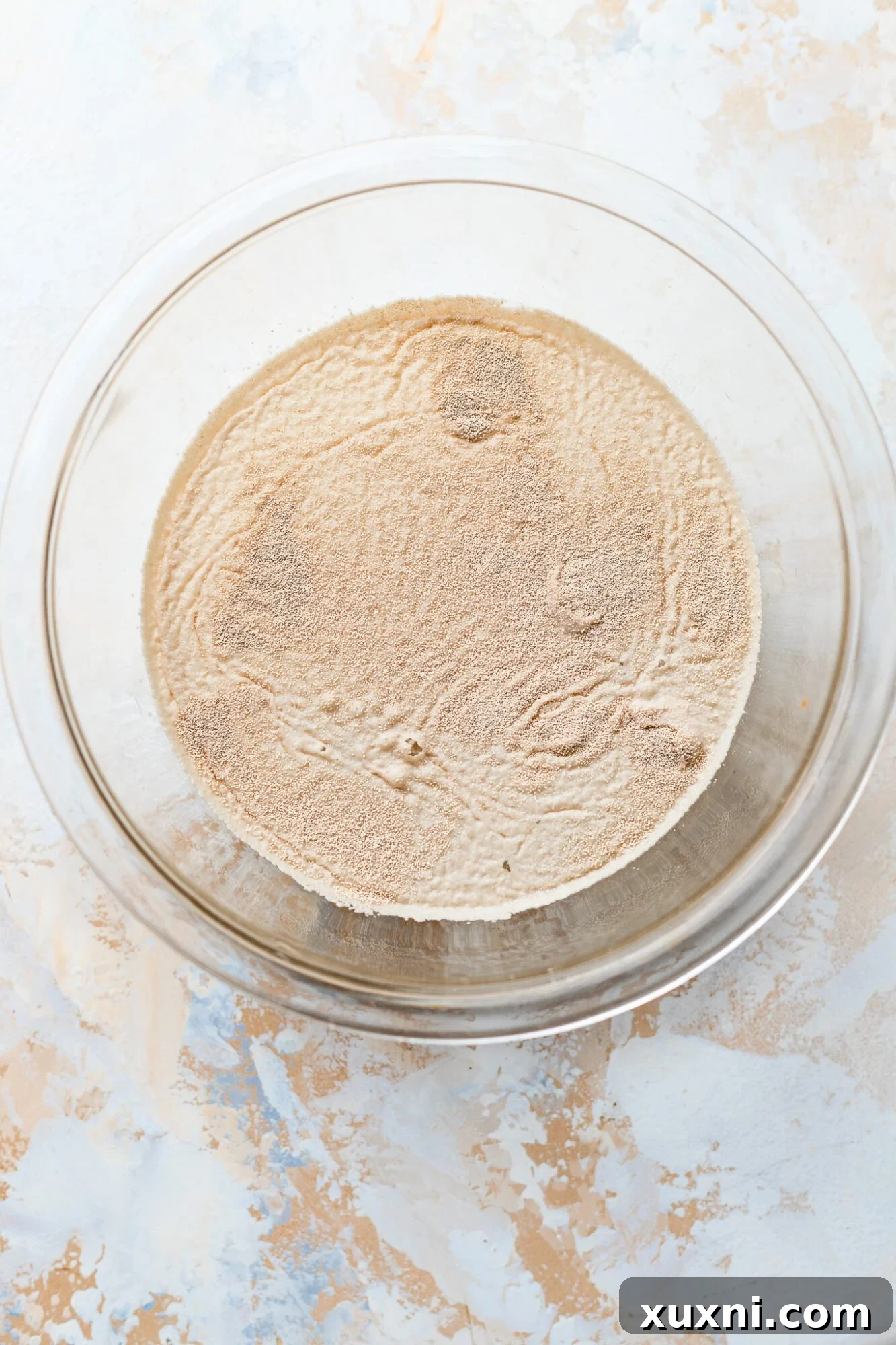
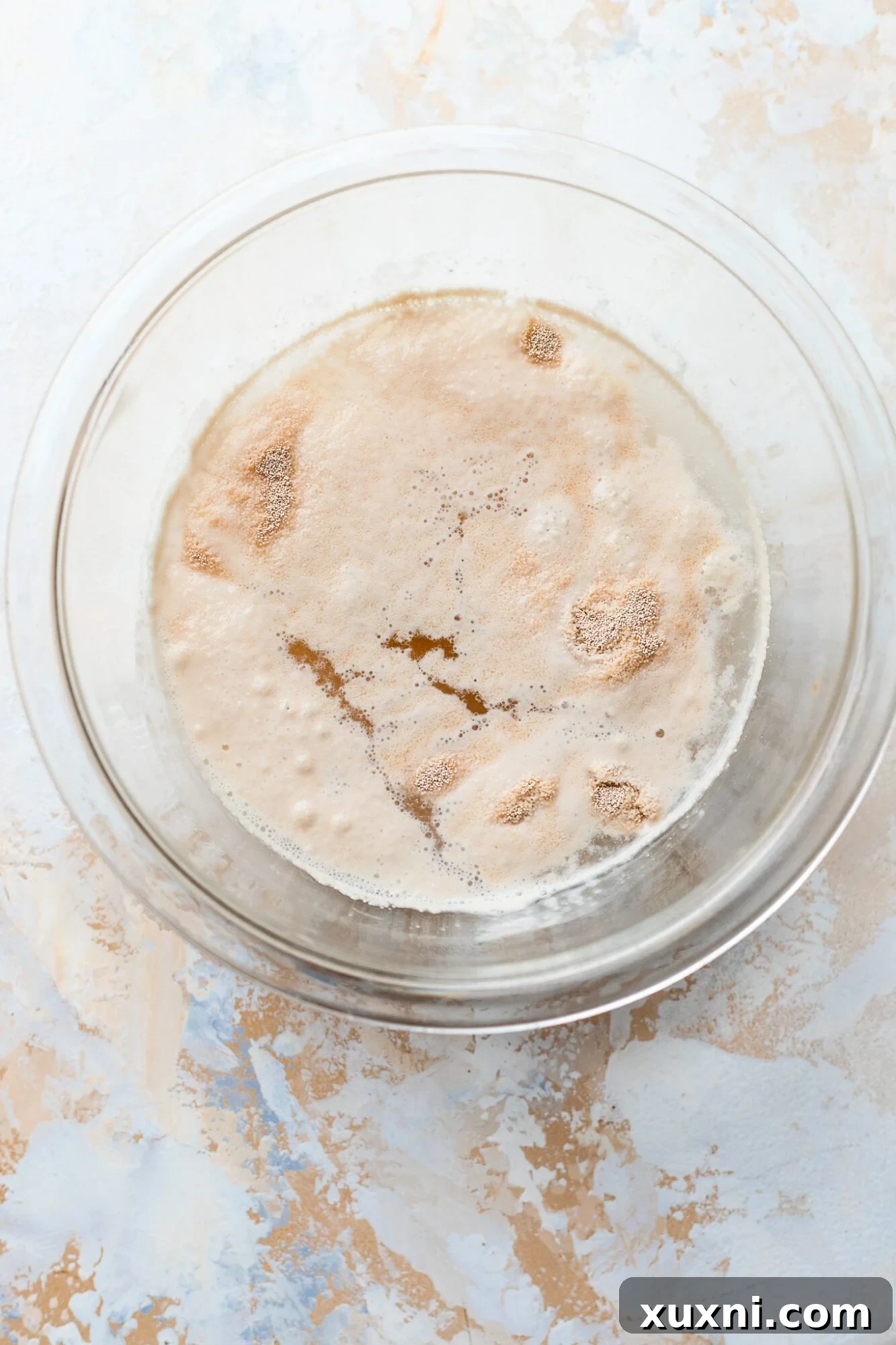
2. Preparing the Dough & The Initial Rise (First Proof)
One of the many alluring aspects of this focaccia recipe is its minimal equipment requirement; you truly don’t need a specialized bread machine, a heavy-duty stand mixer, or any unique tools beyond a spacious mixing bowl and a sturdy wooden spoon. To begin the dough-making process, start by whisking together your chosen flour (either all-purpose or bread flour) and the sea salt in your large bowl. This preliminary step ensures that the salt, essential for both flavor and regulating yeast activity, is evenly distributed throughout the dry ingredients.
Next, carefully pour your freshly activated (foamy) yeast mixture into the dry ingredients. Using your wooden spoon, gently stir until the flour and liquid are just combined. At this stage, the dough will appear shaggy, sticky, and somewhat unformed, which is precisely the desired consistency for a high-hydration focaccia dough. Now, incorporate half of the total olive oil. You can continue mixing with the wooden spoon, or, for more efficient and thorough integration, use your hands. If the dough clings stubbornly to your hands, a light coating of olive oil on your palms will work wonders to prevent sticking. Continue working the oil into the dough until it is mostly absorbed and a loose, cohesive dough ball begins to take shape.
Once your dough is mixed, cover the bowl securely with a clean kitchen towel or plastic wrap. Place it in a warm, draft-free location for its vital first proof, allowing it to rest and rise for 30 minutes. During this period, the yeast will initiate its fermentation process, causing the dough to visibly expand, typically doubling in size as it creates air pockets.
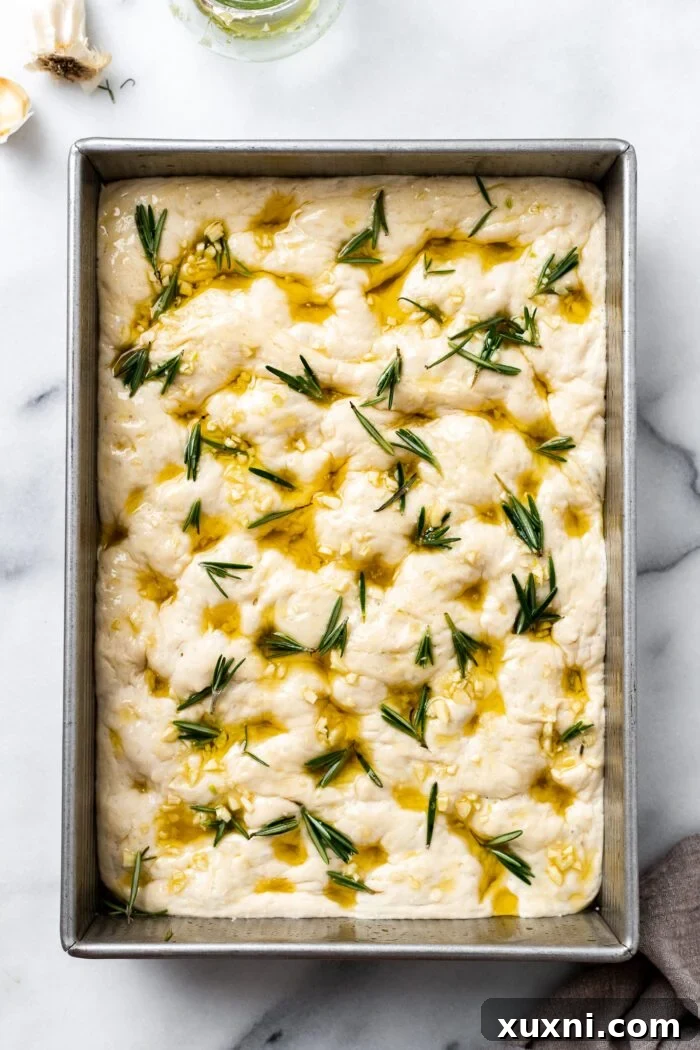
While your dough is undergoing its initial proof, this is the perfect opportunity to prepare our signature infused olive oil. In a separate small bowl, simply combine the remaining olive oil with finely chopped fresh rosemary and freshly minced garlic. Give this mixture a quick whisk to combine and then set it aside. This resting time is crucial as it allows the potent, vibrant flavors of the garlic and rosemary to slowly and beautifully meld with the olive oil, creating an incredibly aromatic and savory topping that will ultimately elevate your focaccia to gourmet status. We will reserve this flavorful oil to be drizzled just before the final baking stage.
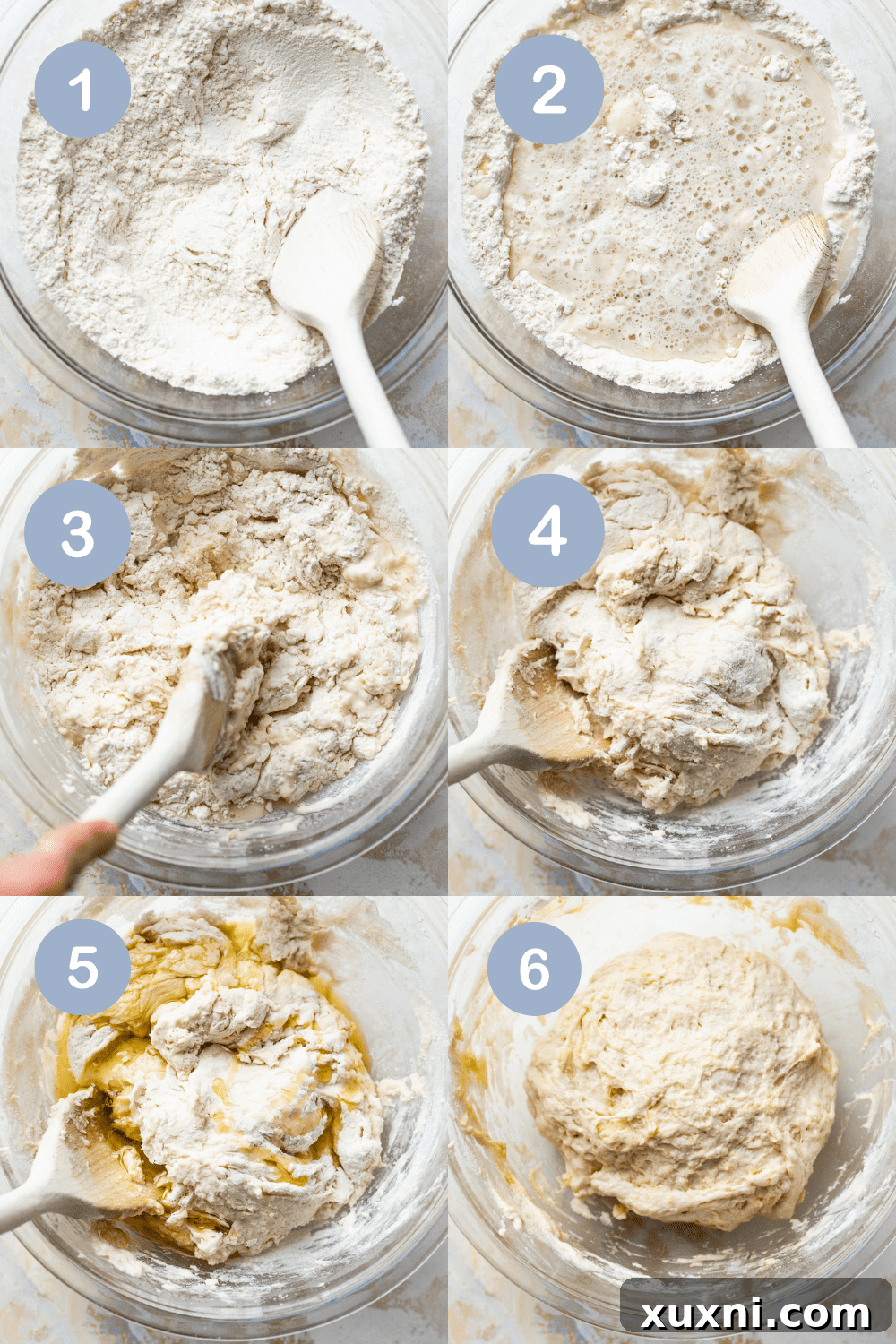
3. Shaping and Gluten Development: The Clever No-Knead Method
After its initial, restful 30-minute proof, your dough will have visibly expanded and taken on a wonderfully airy quality. Now comes the ingenious heart of our “no-knead” technique, a method that masterfully develops the crucial gluten structure without demanding any strenuous traditional kneading. This process involves a series of gentle stretches and folds, which efficiently strengthen the dough’s network, ultimately contributing to that coveted soft yet chewy texture characteristic of perfect focaccia.
To begin, lightly coat your hands with olive oil to prevent any sticking. With a gentle touch, carefully deflate the dough by lightly pulling it away from the sides of the bowl and allowing it to settle back towards the center. Next, locate one of the four “corners” or edges of the dough. Gently pull this section upwards, stretching it as far as it can comfortably go without tearing. The key here is to maintain a balance between gentleness and a firm stretch. Once fully extended, fold that stretched corner over the main body of the dough, towards the center. After completing this, rotate the bowl a quarter turn (either clockwise or counter-clockwise) and repeat this identical stretching and folding motion with the next “corner” of the dough. Continue this methodical process until you have completed all four sides of the dough, ensuring each section is stretched and folded over.
This deliberate yet gentle manipulation plays a vital role in aligning and strengthening the gluten strands within the dough, building essential elasticity and structure. Upon completing these four stretches and folds, re-cover the bowl securely with a clean kitchen towel or plastic wrap. Allow the dough to rest once more for an additional 30 minutes. This crucial resting period grants the gluten sufficient time to relax and allows the yeast to continue its fermentation, effectively preparing the dough for the subsequent rounds of shaping, which will further enhance its texture and flavor.
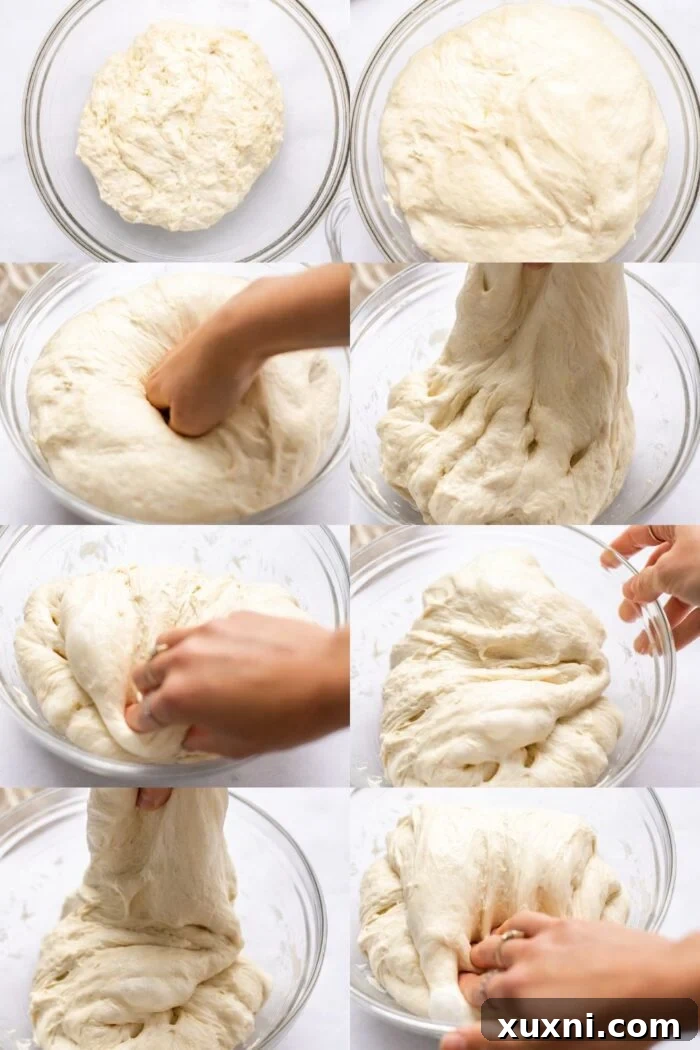
4. Sequential Proofing: Building Structure and Flavor
Once your dough has completed its second period of rest, you will embark on repeating the gentle stretching and folding process, precisely as described in the preceding step (Step 3). This iterative series of folds is paramount for progressively developing a robust and elastic gluten network, a fundamental requirement for achieving focaccia’s characteristic airy interior and its satisfyingly chewy crust. You will repeat this delicate shaping process three more times, meaning you’ll perform a total of four complete rounds of stretching and folding, with an essential resting interval of 20-30 minutes between each set of folds. This entire sequence, including all the necessary resting times, will span approximately 2 hours, during which the dough gains strength, elasticity, and flavor.
For those who appreciate the convenience of advance preparation or desire to cultivate even deeper, more complex flavors in their focaccia, an overnight option is readily available. After completing the very first round of stretching and folding (as per Step 6 in the recipe card), instead of continuing with subsequent folds at room temperature, simply cover your dough bowl tightly with plastic wrap and place it into the refrigerator. A cold proof, lasting for at least 12 hours and up to a maximum of 24 hours, facilitates a significantly slower fermentation process. This extended cold fermentation not only dramatically enhances the flavor complexity, imparting subtle tangy notes, but also greatly improves the overall texture of the final bread, making it exceptionally tender and flavorful. When you are ready to proceed with baking the following day, retrieve the dough from the refrigerator and allow it to gently come to room temperature for approximately one hour before continuing to the subsequent steps in the recipe.
5. Spreading the Dough in the Baking Pan
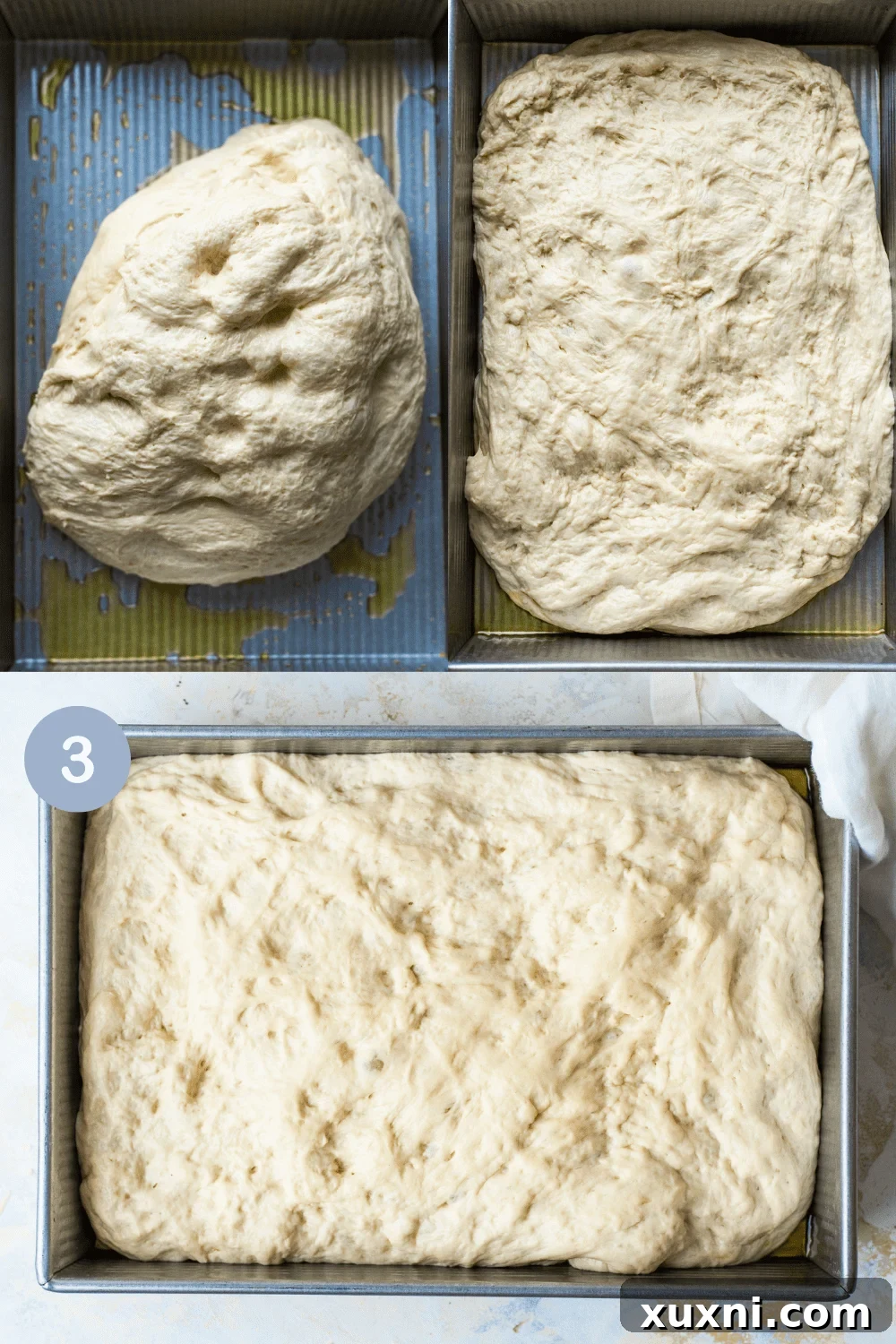
After your focaccia dough has successfully completed its full series of proofs and shaping (whether diligently done at room temperature or thoughtfully after an overnight cold fermentation), the time has come to delicately prepare it for its final form within the baking pan. Begin by lightly greasing your chosen baking sheet—a standard 9×13 inch pan is typically ideal—with a generous amount of good quality olive oil. Then, with utmost care, gently deflate the airy dough one last time by easing it out of its mixing bowl and carefully positioning it into the very center of the prepared baking sheet.
Now, using fingertips lightly coated with olive oil to prevent sticking, begin the gentle process of stretching the focaccia dough outwards. Coax it gradually towards the corners and edges of the baking sheet. It is crucial to approach this step with a soft touch, avoiding any forceful pulling or stretching that could potentially tear the delicate gluten network. If, at any point, you perceive that the dough is resisting your gentle efforts, or if it feels tough and begins to spring back excessively, do not be concerned. This simply indicates that the gluten strands require a bit more time to fully relax. In such a scenario, simply cover the pan with a clean kitchen towel and allow the dough to rest undisturbed for approximately 15 minutes. After this brief, restorative rest, attempt the stretching process again; you will undoubtedly find the dough to be much more pliable and cooperative. It’s also perfectly acceptable if the dough doesn’t perfectly fill every single corner of the pan at this stage, as it will naturally continue to relax and expand during its final rise.
Once you have successfully and gently spread the dough to your desired shape within the confines of the baking pan, re-cover it once more with a clean kitchen towel. This marks the beginning of the final proofing stage. During this critical period, the dough will undergo a magnificent transformation, becoming wonderfully puffy, airy, and ultimately preparing itself for those distinctive, classic dimples that will so beautifully cradle all the delectable toppings and our aromatic infused olive oil.
6. The Grand Finale: Topping and Baking Your Focaccia Masterpiece
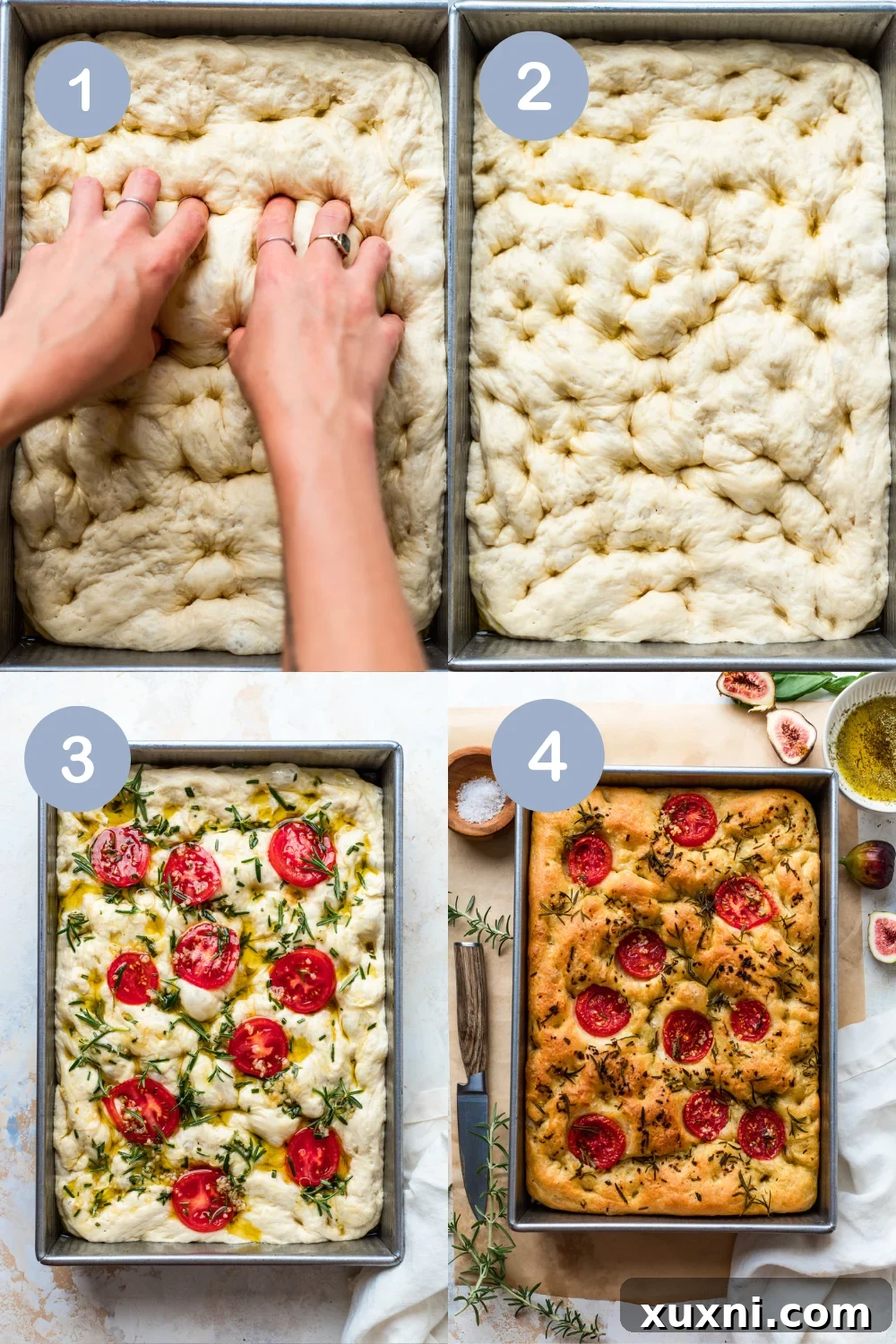
The exhilarating moment has arrived to transform your beautifully risen and puffy dough into a culinary masterpiece! After its successful final proof, gently lift and remove the towel covering the dough. Lightly dip your fingertips into a small bowl of olive oil, and then, with a confident yet gentle pressure, press your oiled fingertips deeply into the dough across its entire surface. This crucial step creates those iconic focaccia dimples. These indentations are more than just aesthetically pleasing; they are fundamental for crafting small pockets that will generously hold the infused olive oil and any chosen toppings, ensuring that every single bite is bursting with maximum flavor saturation.
With the dimples in place, it’s now time to unleash your creativity with the toppings! Artistically arrange your selected vegan focaccia toppings (we will explore an array of fantastic ideas below) across the dimpled surface of the dough. Give your prepared garlic-rosemary infused olive oil one last gentle whisk to re-emulsify the flavors, and then liberally pour it over the toppings, ensuring an even and generous distribution over the entire surface of the bread and into every dimple. To finish, a final sprinkle of coarse sea salt is essential; it not only amplifies the flavor profile but also introduces a delightful textural crunch that contrasts beautifully with the soft bread.
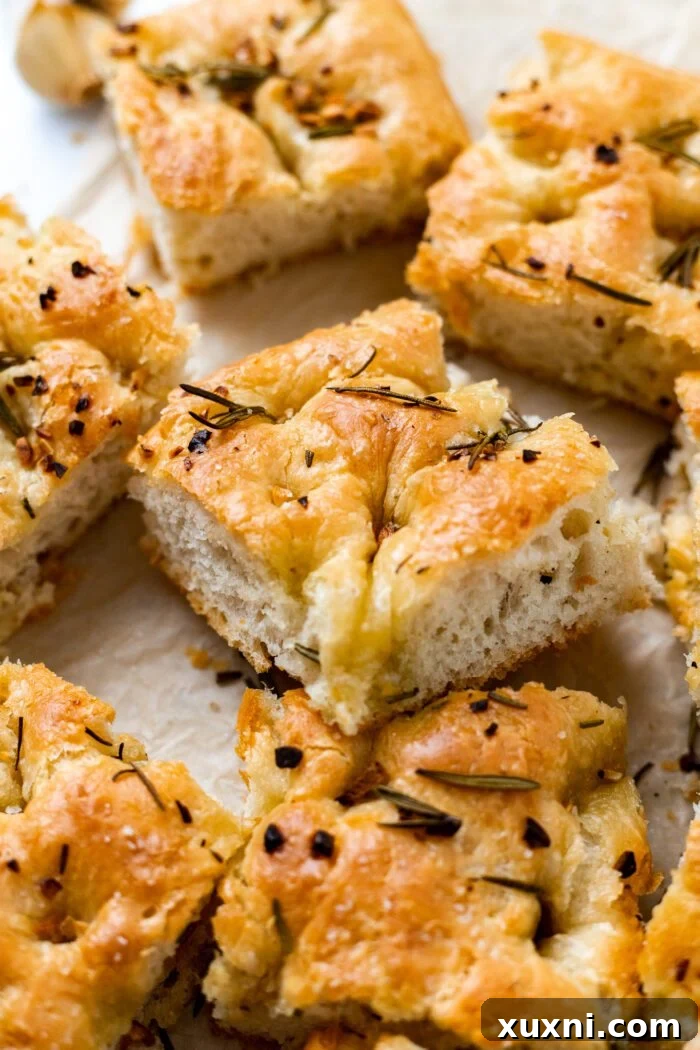
With your focaccia magnificently topped and ready, carefully transfer the baking sheet to your preheated oven, set to a robust 450°F (230°C). Bake for approximately 22-28 minutes, keeping a keen eye on it until the top of the focaccia achieves a gorgeous golden-brown hue and its edges appear wonderfully crispy. Once baked to perfection, remove the focaccia from the oven and allow it to cool in the pan for about 10 minutes before carefully transferring it to a cutting board. This brief cooling period is important as it allows the internal structure of the bread to fully set. Finally, slice your magnificent focaccia into generous squares or rectangles, serve it warm, and prepare to indulge! It’s utterly delectable dipped in more olive oil, your favorite vegan dip, or simply savored plain, allowing its inherent flavors to shine. Enjoy the incredible fruits of your labor!
Irresistible Vegan Focaccia Topping Ideas for Every Palate
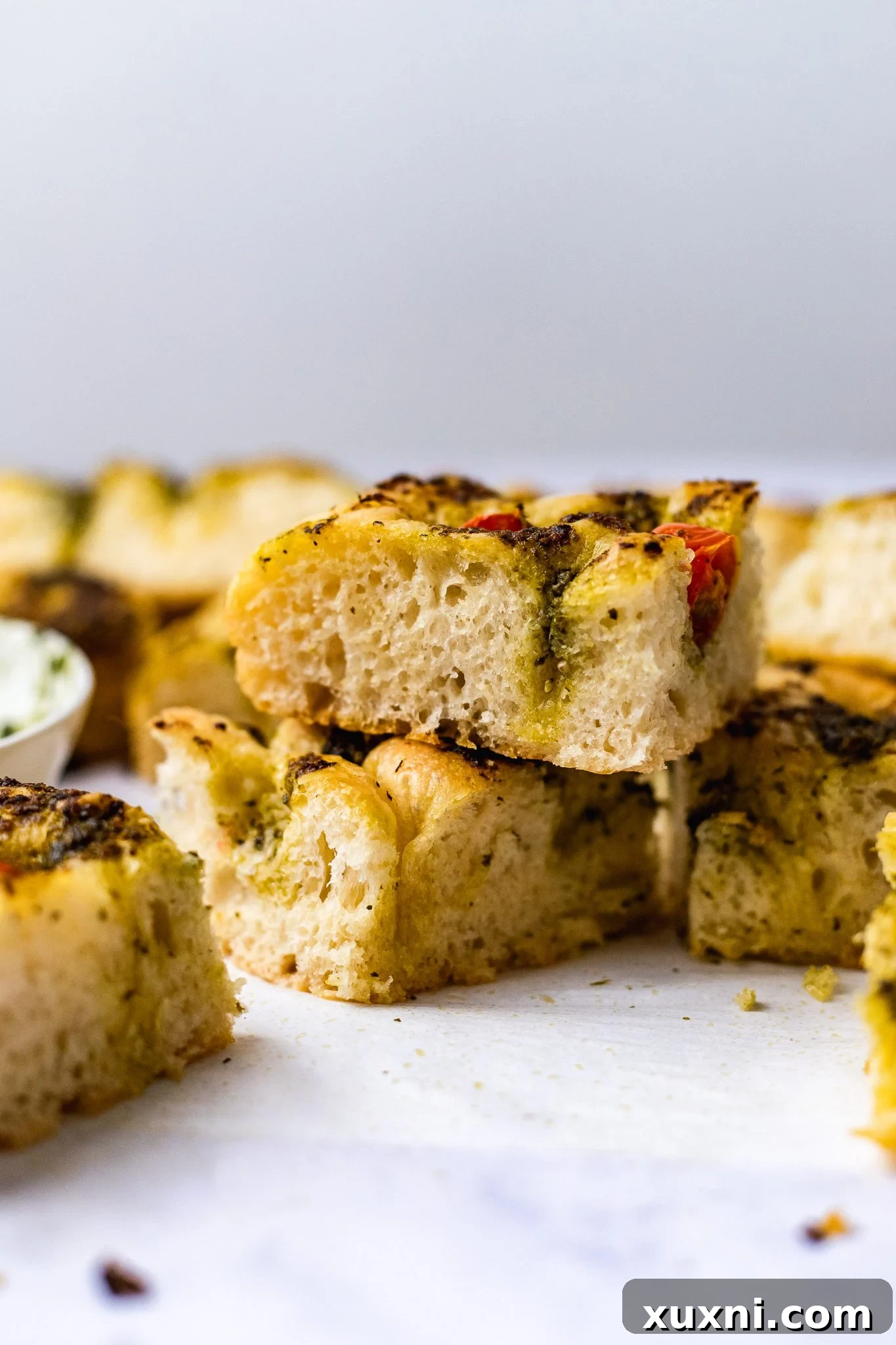
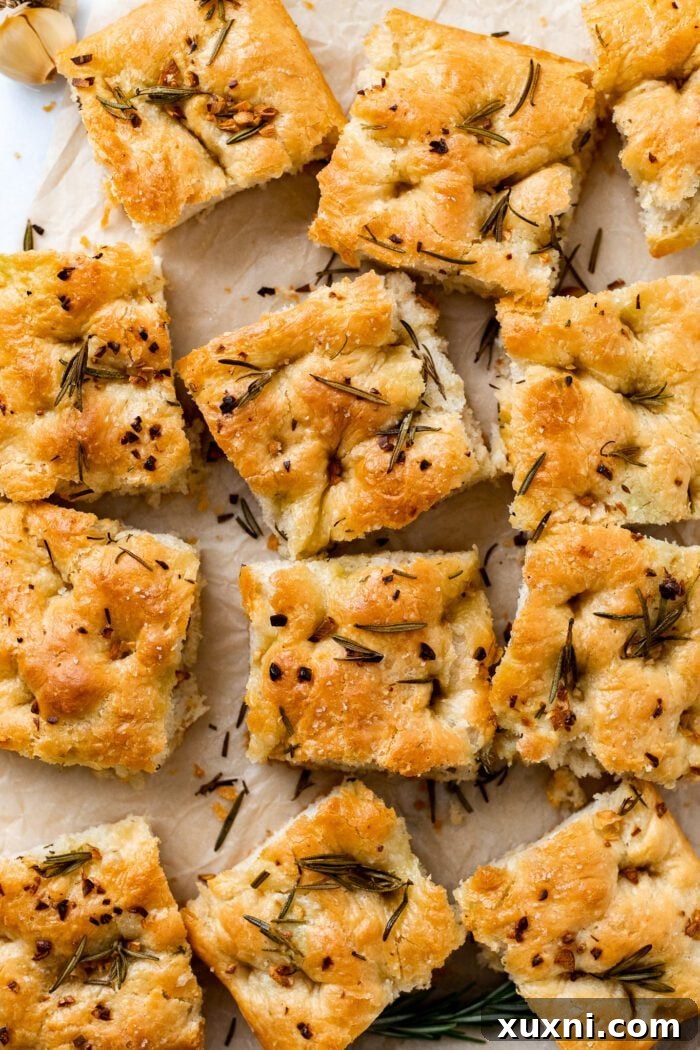
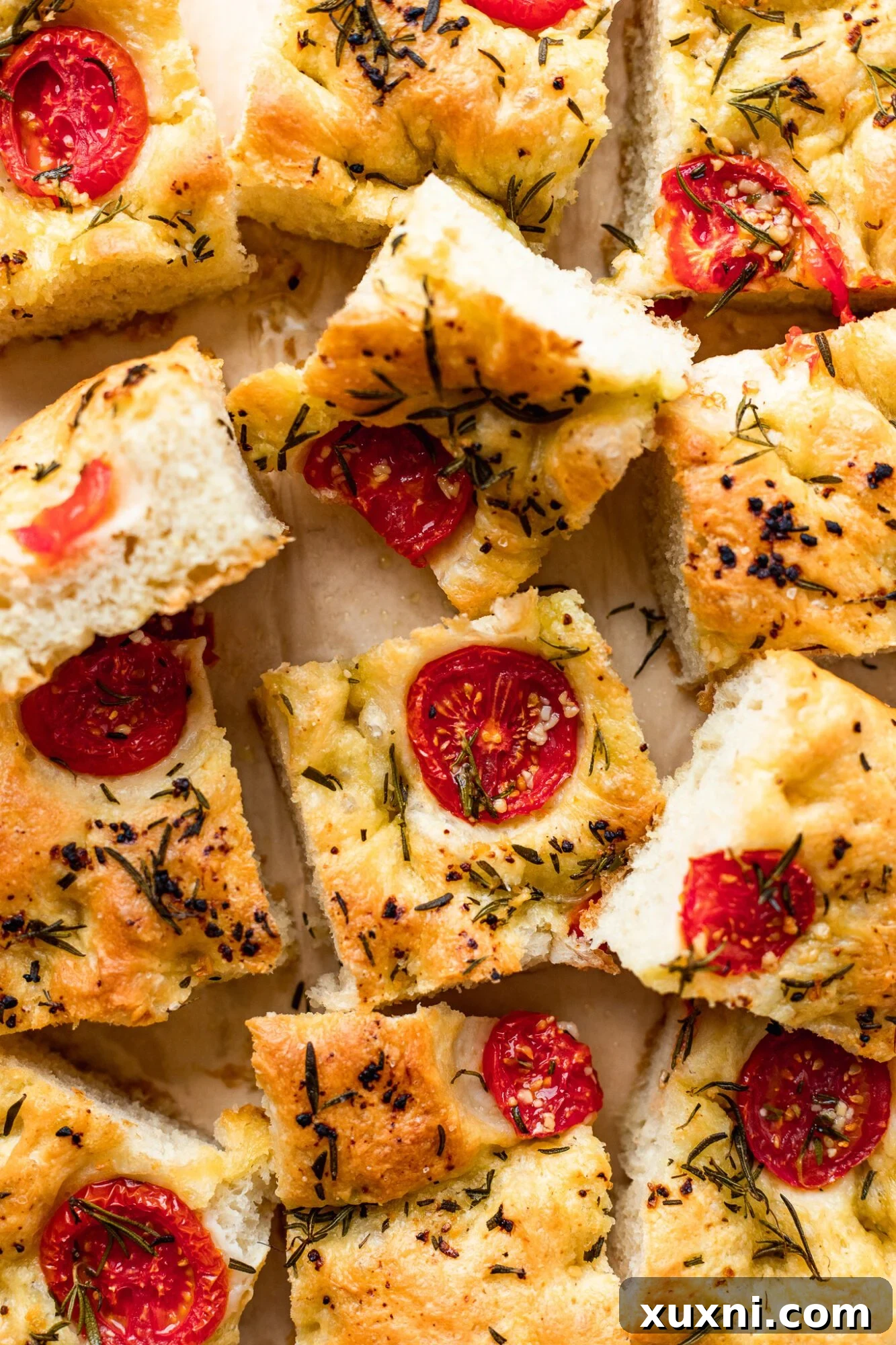
With our focaccia base being magnificently vegan, it’s only natural that we delve into a vibrant world of plant-based toppings to adorn your freshly baked bread. The inherent beauty and versatility of focaccia lie in its ability to serve as a delectable blank canvas, eagerly awaiting your creative touch and preferred flavor combinations. The particular focaccia featured in the accompanying photographs showcases a classic and utterly delightful combination: bright, fresh compari tomatoes alongside aromatic sprigs of rosemary, harvested directly from our garden—a simple yet profound pairing.
However, the spectrum of possibilities extends far beyond the traditional! Here is an extensive and inspiring list of flavorful vegan focaccia topping ideas and imaginative combinations, designed to ignite your culinary creativity and cater to virtually every palate:
- Sweet & Savory Figs and Rosemary: For an exquisite blend of sweet and savory, delicately sliced fresh figs pair exceptionally well with fragrant, woody rosemary sprigs.
- Robust Mediterranean Medley: A harmonious mix of finely chopped black or green olives, sun-dried tomatoes (either oil-packed or rehydrated), and a generous sprinkle of dried oregano effortlessly evokes the sun-drenched flavors of the Mediterranean coast.
- Aromatic Herb Garden: A vibrant medley of fresh herbs such as rosemary, dill, basil, and parsley not only delivers a burst of incredibly fresh flavor but also adds captivating visual appeal with its varied greens.
- Classic Garlic & Sea Salt: Embrace simplicity and allow the rich, fruity notes of the olive oil and the pristine crunch of coarse sea salt to truly shine. Consider adding a touch more minced garlic for an extra savory kick.
- Bursting Cherry Tomato & Fresh Basil: Halved fresh cherry tomatoes, when baked, burst with juicy sweetness and a delightful tang, perfectly complemented by the fragrant, peppery notes of fresh basil added just after baking.
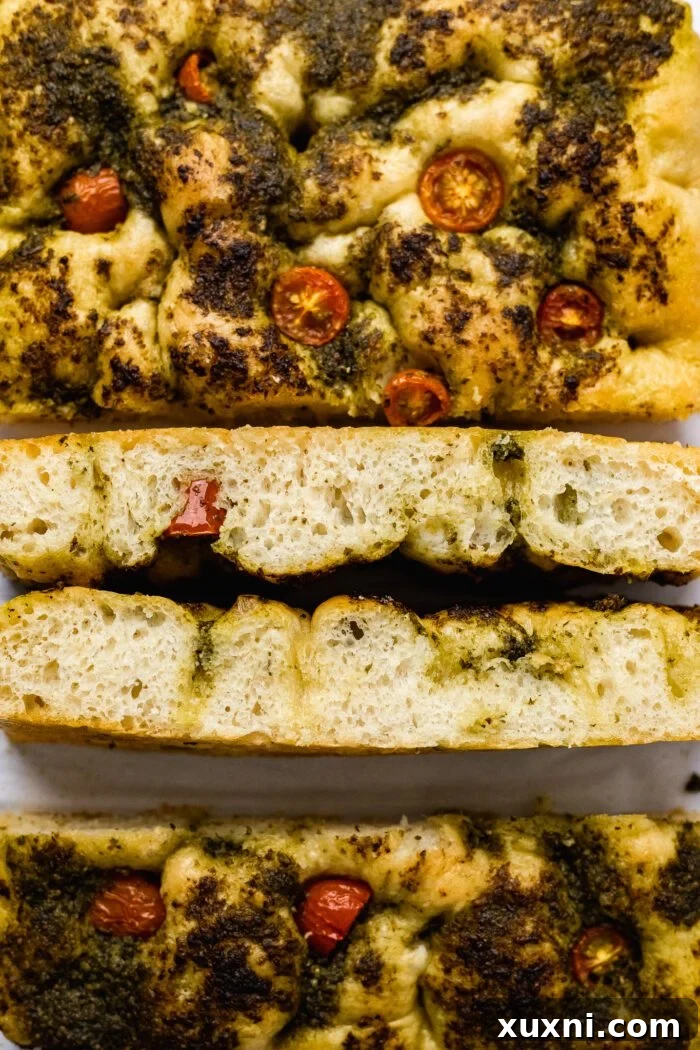
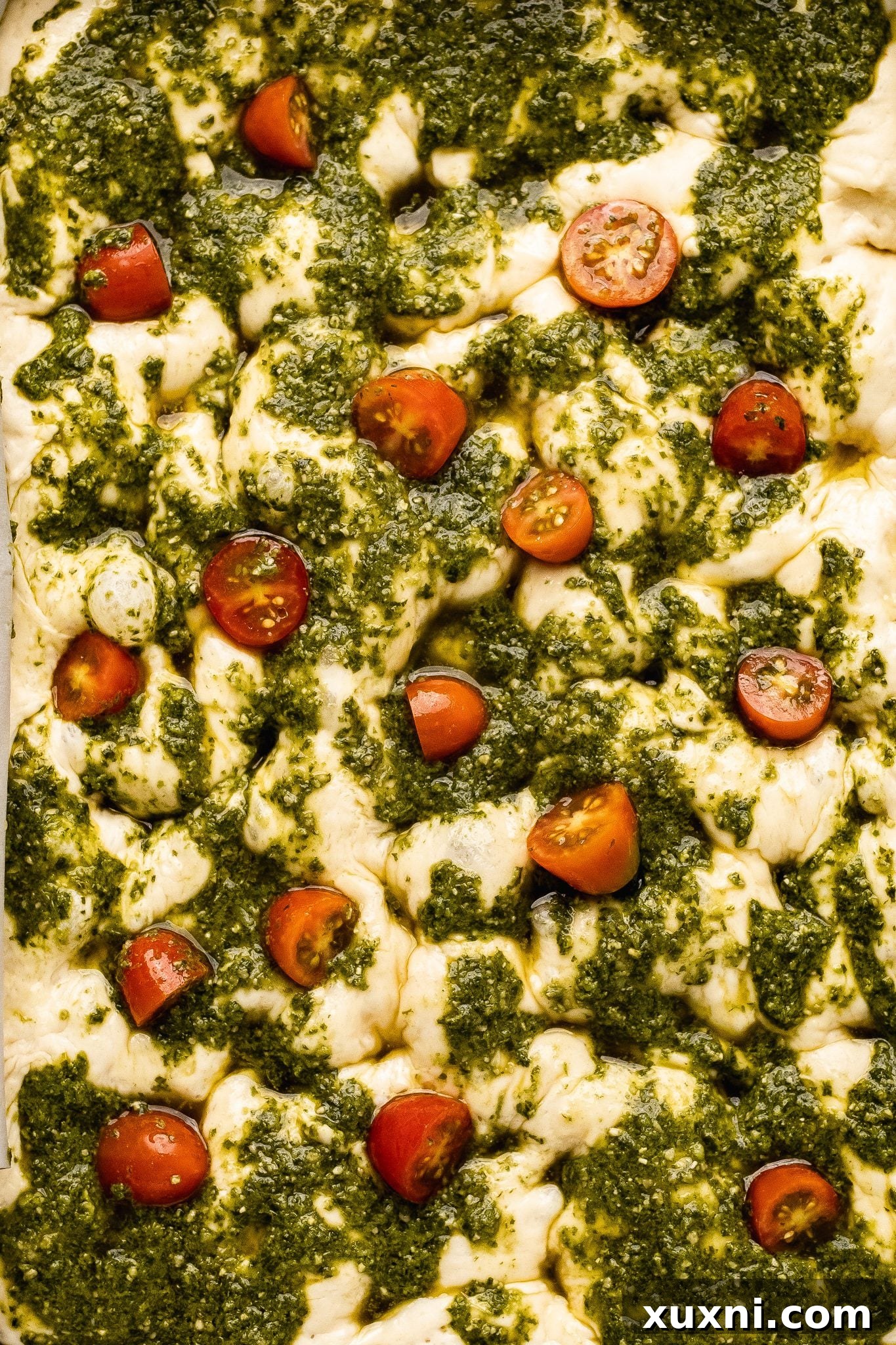
- Zesty Vegan Pesto: A generous, vibrant spread of homemade or high-quality store-bought vegan pesto makes for an incredibly flavorful and visually stunning focaccia. Pair with a few cherry tomatoes for added sweetness and color, as beautifully illustrated in our images.
- Earthy Mushroom & Thyme: Sautéed slices of earthy mushrooms (cremini or shiitake varieties work exceptionally well) combined with fresh thyme sprigs create an umami-rich and deeply satisfying topping that’s perfect for cooler weather.
- Creamy Vegan Cheese: Crumble or artfully shred your preferred brand of vegan mozzarella or Parmesan (such as Violife) over the top for a wonderfully cheesy, savory, and comforting twist.
- Tangy Artichoke Hearts & Lemon Zest: Quartered artichoke hearts (drained and thoroughly patted dry from a can or jar) brightened with a hint of fresh lemon zest offer a delightful, bright, and tangy flavor profile.
- Elegant Asparagus & Chili Flakes: Tender, vibrant asparagus spears, lightly tossed with a drizzle of olive oil and a delicate pinch of chili flakes, create an elegant, subtly spicy, and seasonal topping.
- Sweet Caramelized Onions: Slowly cooked, deeply sweet, and intensely savory caramelized onions provide a profound, complex flavor contrast that is simply irresistible.
- Exotic Za’atar: This aromatic and versatile Middle Eastern spice blend—typically a mix of thyme, sumac, and sesame seeds—imparts a unique, tangy, and savory note that transports your taste buds.
- Bold Everything But The Bagel Seasoning: For a strikingly bold, garlicky, oniony, and poppy seed-rich crunch, liberally sprinkle this incredibly popular seasoning mix across the surface.
- Fresh Chives: A final, delicate flourish of freshly chopped chives added after baking introduces a subtle, delicate oniony flavor and a touch of vibrant green.
Feel empowered to experiment with these diverse suggestions or boldly create your own unique combinations based on your preferences and what’s in season. Remember, the art of focaccia topping lies in finding a harmonious balance; avoid overcrowding the bread, allowing each individual topping to distinctly contribute to the overall flavor symphony. The possibilities are truly endless!
Can This Focaccia Recipe Be Made Gluten-Free?
This particular focaccia recipe, as meticulously formulated and presented, fundamentally relies on the gluten structure inherent in wheat flour to achieve its characteristic soft, airy, and wonderfully chewy texture, as well as its impressive rise. Consequently, it cannot be directly adapted to be gluten-free by merely substituting a gluten-free flour blend. Gluten is an indispensable protein network in traditional bread making; it provides the essential elasticity, strength, and structure that allows the dough to trap gases produced by yeast, resulting in a light and airy loaf.
However, the demand for truly delicious gluten-free options is well understood, and the absence of gluten certainly doesn’t mean you have to forgo the pleasure of homemade focaccia! I am delighted to share that I offer a fantastic, specifically developed gluten-free focaccia bread recipe available on the blog. That recipe is expertly formulated using a carefully selected blend of gluten-free flours and binders, specifically designed to achieve a remarkably soft, flavorful, and structurally sound focaccia texture without any wheat-based ingredients. Crucially, you can absolutely utilize any of the mouth-watering vegan topping ideas generously shared in this article to customize your gluten-free focaccia, ensuring a delightful and inclusive culinary experience for everyone!
Troubleshooting Common Focaccia Dough Issues for Success
Venturing into bread baking, especially for the initial time, can sometimes evoke a sense of intimidation or apprehension. However, I want to assure you that crafting focaccia should be an exceptionally fun, engaging, and deeply rewarding experience, far from a daunting chore! It’s often referred to as a “labor of love” for good reason, and with these expert troubleshooting tips, you’ll be well-equipped to deftly navigate any potential hiccups like a seasoned artisan baker. Here’s a comprehensive breakdown of common issues you might encounter and straightforward solutions to ensure your focaccia-making journey is a resounding success:
- Flour Type: For optimal results with this specific recipe, it is paramount to use either high-quality all-purpose flour or bread flour. These flours contain the necessary gluten-forming proteins required for the dough’s proper development, elasticity, and rise. This particular recipe has not been rigorously tested with gluten-free flours or Paleo-specific flours, as these alternatives typically necessitate entirely different hydration levels, mixing techniques, and ingredient ratios. If your dietary needs require a gluten-free option, I strongly encourage you to try my dedicated, super quick, and easy-to-follow gluten-free focaccia bread recipe, which is specifically formulated for success without wheat.
- Maple Syrup Substitute: If you find yourself without maple syrup, there’s no need to delay your baking! A small amount of granulated sugar can be seamlessly swapped in as a direct substitute. Use it in the same specified ratios to effectively activate the yeast. Both provide the necessary simple sugars for yeast metabolism.
- Dough Didn’t Rise: This is arguably one of the most common concerns for new bread bakers, and several factors could contribute to this issue:
- Yeast Temperature Sensitivity: The most frequent culprit is often related to the water temperature. Yeast is a living organism; water that is too hot (above 115°F/46°C) will kill it, rendering it inactive, while water that is too cold (below 105°F/40°C) will significantly inhibit its activity, leading to a sluggish or non-existent rise. Aim for water that feels comfortably warm to the touch, similar to a warm bath.
- Yeast Viability: Always ensure your active dry yeast is fresh and within its expiration date. Old or expired yeast will simply not perform. You’ll confirm its viability if it produces a distinct foamy or bubbly layer after 5-10 minutes in the warm, sweetened water. If it doesn’t bloom, it’s best to discard and use new yeast.
- Insufficient Gluten Development: Even though this is a “no-knead” recipe, the repeated stretching and folding steps are absolutely crucial for developing the dough’s gluten structure. This gluten network is what traps the carbon dioxide gas produced by the yeast, allowing the dough to rise. Don’t be timid during these steps; be gentle but purposeful in your movements to build that essential strength.
- Environment (Lack of Warmth/Time): Yeast thrives in warm, draft-free environments. If your kitchen is particularly cold, your dough will take considerably longer to rise, or might not rise adequately at all. To create an optimal environment, try placing the covered dough bowl in a slightly warmed (but then turned off) oven, near a sunny window, or under a warm lamp. Patience is truly a virtue in bread making; sometimes, the dough just needs more time than anticipated.
- Active Dry Yeast vs. Instant/Quick Rise: This recipe is specifically developed for active dry yeast, which typically requires a preliminary activation (blooming) in liquid. While instant yeast often doesn’t require this step and can be mixed directly with dry ingredients, using it might subtly alter the timing of your proofs. Quick-rise or fast-acting yeasts are formulated to work at an accelerated pace, which could significantly change the proofing times outlined in this recipe. For the most consistent and reliable results, it is highly recommended to stick to active dry yeast. For a deeper, more extensive dive into all things yeast and comprehensive bread-baking tips, I encourage you to explore my detailed vegan brioche bread recipe post.
- Why is my dough sticky? It’s important to understand that focaccia dough, particularly a high-hydration no-knead variety, is intentionally designed to be quite wet and sticky. This characteristic is perfectly normal and is, in fact, desirable! This high water content is what directly contributes to the focaccia’s signature airy, open crumb, and wonderfully soft texture. So, if your dough feels sticky, rest assured—you’re likely doing everything correctly! Resist the natural urge to add excessive amounts of extra flour, as this will unfortunately lead to a denser, drier, and tough focaccia. Lightly oiling your hands with a bit of olive oil during the handling and shaping stages will effectively help manage the stickiness without compromising the dough’s integrity.
- Can I make this into a sourdough focaccia bread? At this current time, I have not yet ventured into developing a dedicated sourdough focaccia bread recipe, and therefore, I cannot provide specific guidance or recommendations for converting this particular recipe to a sourdough version. The nuances of sourdough starters and their unique fermentation processes differ significantly from those of commercial yeast. However, should I create and test a sourdough focaccia recipe in the future, I will be sure to update this section accordingly!
Armed with these comprehensive tips and troubleshooting insights, you are now perfectly poised to create an absolutely sensational homemade easy focaccia! Its rich, aromatic flavors, combined with that exquisite crispy-chewy texture, make it an impeccable choice for virtually any occasion, from a casual afternoon snack to the star centerpiece of an elegant dinner party. Embrace the process, savor the aromas, and most importantly, delight in the delicious reward!
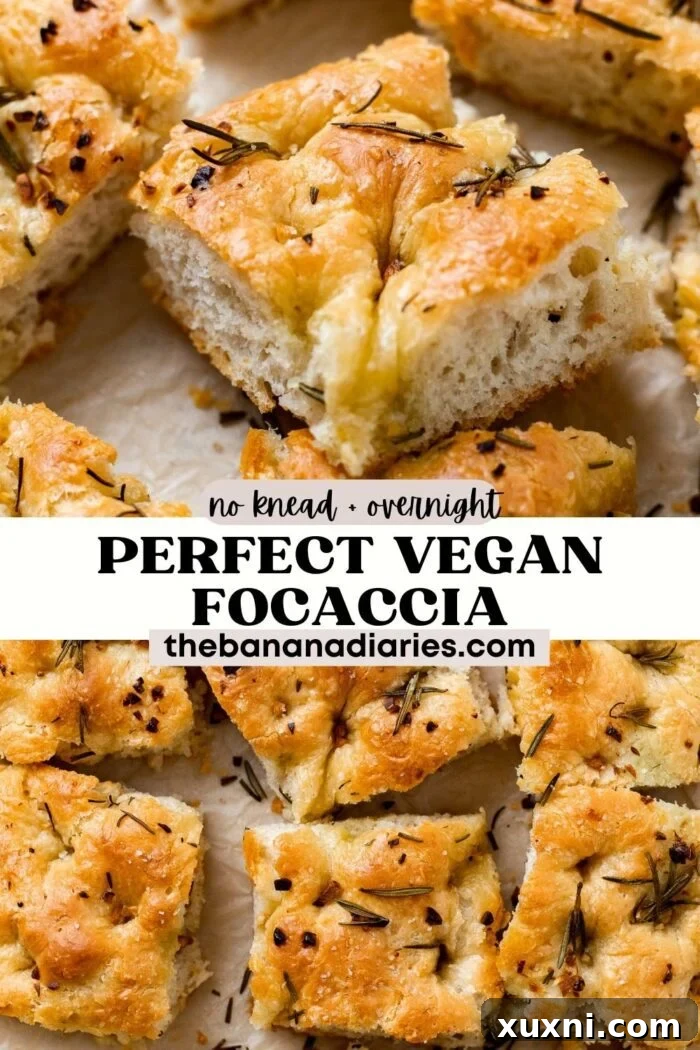
Want to save this irresistible recipe for later? Pin it to your favorite recipe board on Pinterest!
If you embark on making this delightful recipe, please take a moment to leave a thoughtful comment and a star rating (⭐️⭐️⭐️⭐️⭐️) below. Your valuable feedback is incredibly helpful to others who are looking to discover and enjoy these recipes! As always, I absolutely adore seeing your magnificent culinary creations on Instagram and Pinterest, so please don’t hesitate to tag me there!
Crisp Easy Vegan Focaccia Bread Recipe (No Kneading! Great for Beginners!)
⭐⭐⭐⭐⭐
5 from 11 reviews
- Author: Britt Berlin
- Prep Time: 15 minutes
- Resting Time: 150 minutes (approx. 2 hours 30 min)
- Cook Time: 25 minutes
- Total Time: Approximately 40 minutes active + 150 minutes resting
- Yield: 16 servings
- Category: Breads
- Method: Baking
- Cuisine: Italian
- Diet: Vegan
Description
Delicious and easy no-knead focaccia bread that’s crisp yet soft and chewy, perfect for beginners and pros alike! This naturally vegan and dairy-free homemade focaccia is easily customizable with your favorite toppings and can be prepared overnight for ultimate convenience.
Ingredients
- 1 1/2 cups (360 mL) warm water, heated to 105-115°F (40-46°C)
- 1 packet (about 2 1/4 tsp or 7g) active dry yeast
- 1 tbsp maple syrup (or granulated sugar)
- 3 2/3 cups (460 g) bread flour (or all-purpose flour)
- 3 tsp coarse sea salt
- 1/2 cup (100 mL) extra virgin olive oil, divided
- 2 tsp minced garlic
- 1/4 cup chopped fresh rosemary
- A pinch of coarse sea salt for topping
- Optional Toppings of your choice: vegan pesto, cherry tomatoes, olives, figs, fresh rosemary sprigs, basil leaves, sliced mushrooms, vegan cheese, caramelized onions, etc.
Instructions
- Initial Preparation: Carefully read through all instructions and review the step-by-step photos provided in the blog post for visual guidance before you begin. The total time for this vegan focaccia, from start to finish, is approximately 4 hours, though most of this is hands-off resting time. Ensure all ingredients are accurately measured out prior to starting.
- Bloom the Yeast: In a small bowl, combine the warm water (105-115°F or 40-46°C), the entire packet of active dry yeast, and the maple syrup. Stir gently for about 10 seconds to combine. Cover the bowl and allow the mixture to rest for 10 minutes, or until a distinct foamy layer forms on the surface, indicating the yeast is active.
- Prepare the Dough: In a large mixing bowl, whisk together the flour and 3 teaspoons of sea salt to ensure even distribution. Pour the bloomed yeast mixture into the dry ingredients. Using a sturdy wooden spoon or your hands, mix until the dry ingredients are just moistened and a shaggy, sticky dough forms. Add 1/4 cup (50 mL) of the olive oil. Continue mixing, working the oil into the dough (lightly oiling your hands can prevent sticking) until the olive oil is mostly absorbed and a loose, cohesive dough ball begins to form.
- First Proof: Cover the bowl securely with a clean dish towel or plastic wrap. Place the dough in a warm, draft-free location and allow it to rest and rise for 30 minutes, or until it has visibly doubled in size.
- Prepare Infused Oil: While the dough is on its first proof, prepare the rosemary-garlic infused olive oil. In a separate small bowl, combine the remaining 1/4 cup of olive oil with the minced garlic and chopped fresh rosemary. Whisk briefly to blend and then set it aside to allow the flavors to infuse.
- Activate Gluten (First Fold): After the 30-minute first proof, lightly grease your hands with olive oil. Gently deflate the risen dough. Lift one corner of the dough upwards, stretching it gently without tearing, and fold it over the center of the dough ball. Rotate the bowl a quarter turn and repeat this stretch-and-fold process for the remaining three corners of the dough.
- Sequential Proofs & Folds: Re-cover the bowl and allow the dough to rest for another 20-30 minutes, or until it has doubled in size again. Repeat the stretch-and-fold process (as in Step 6) three more times, ensuring a 20-30 minute resting interval between each round of folds. This completes four total rounds of stretching and folding over approximately 2 hours.
- Overnight Option: For enhanced flavor and convenience, after performing the first stretch-and-fold (Step 6), cover the dough tightly and refrigerate for 12-24 hours. Before proceeding, allow the dough to return to room temperature for about 1 hour.
- Shape in the Pan: Lightly grease a 9×13 inch baking sheet with olive oil. Gently deflate the dough and transfer it to the center of the prepared pan. With oiled fingertips, gently stretch and coax the dough towards the corners of the pan. If the dough resists or springs back too much, cover it with a towel and let it rest for 15 minutes before attempting to stretch it again. It does not need to perfectly fill the pan at this stage.
- Final Proof: Once the dough is gently shaped in the pan, cover it again with a clean kitchen towel for a final proof of 45-60 minutes, or until it appears puffy and has nearly doubled in size. Towards the end of this proof, preheat your oven to 450°F (230°C).
- Add Toppings & Dimple: Remove the towel covering the dough. Lightly oil your fingertips and gently press them into the dough to create deep, characteristic focaccia dimples across the entire surface. Artistically arrange your desired vegan toppings onto the focaccia. Give the infused garlic-rosemary olive oil a final whisk and pour it evenly over the toppings and into the dimples, ensuring generous distribution. Finish with a final sprinkle of coarse sea salt.
- Bake: Carefully place the focaccia into the preheated oven. Bake for 22-28 minutes, or until the top of the focaccia is beautifully golden brown and the edges are crisp. Remove from the oven and allow the focaccia to cool in the pan for 10 minutes before carefully transferring it to a cutting board.
- Serve & Store: Slice the warm focaccia into generous squares or rectangles and serve immediately. It’s fantastic dipped in olive oil, your favorite vegan dip, or enjoyed alongside a meal. Store any leftover focaccia in an airtight container at room temperature for 2-3 days, in the refrigerator for up to 5 days, or freeze for up to 2 months for longer preservation.
Notes
Gluten-Free Focaccia: This recipe is designed for wheat-based flour and is not suitable for direct gluten-free flour substitutions. For a delicious gluten-free option, please refer to my dedicated gluten-free focaccia bread recipe, which is specifically formulated for success.
More Delicious Vegan Bread Recipes to Explore
If you’ve fallen completely in love with the rewarding experience of baking homemade vegan bread, here are more delightful recipes to enthusiastically add to your ever-growing baking repertoire:
- Best Vegan Panettone – Indulge in a festive, fluffy, and aromatic Italian sweet bread, perfect for holiday celebrations.
- Easy Vegan Pane di Pasqua – A beautifully braided, tender Italian Easter bread, symbolic and delicious for any festive occasion.
- Garlic & Herb Vegan Dinner Rolls – Discover incredibly soft, aromatic rolls infused with savory garlic and herbs, making them an ideal accompaniment to any dinner table.