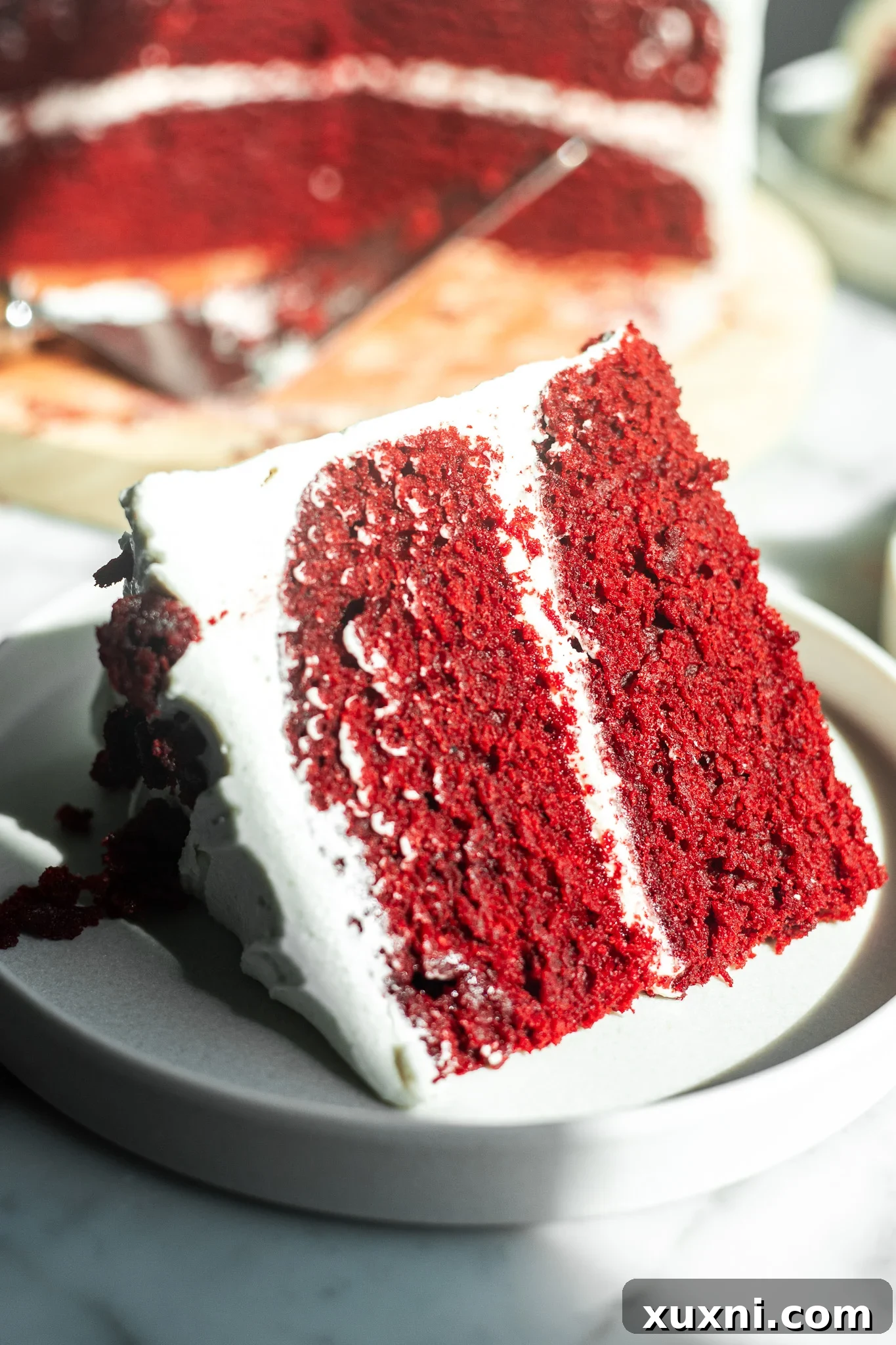
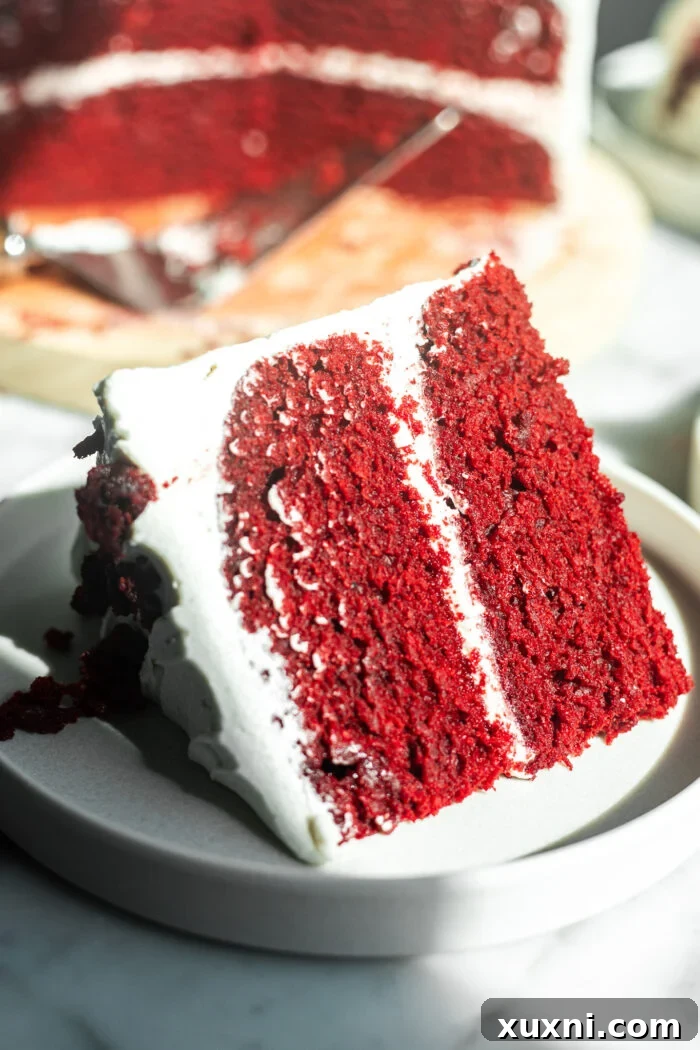
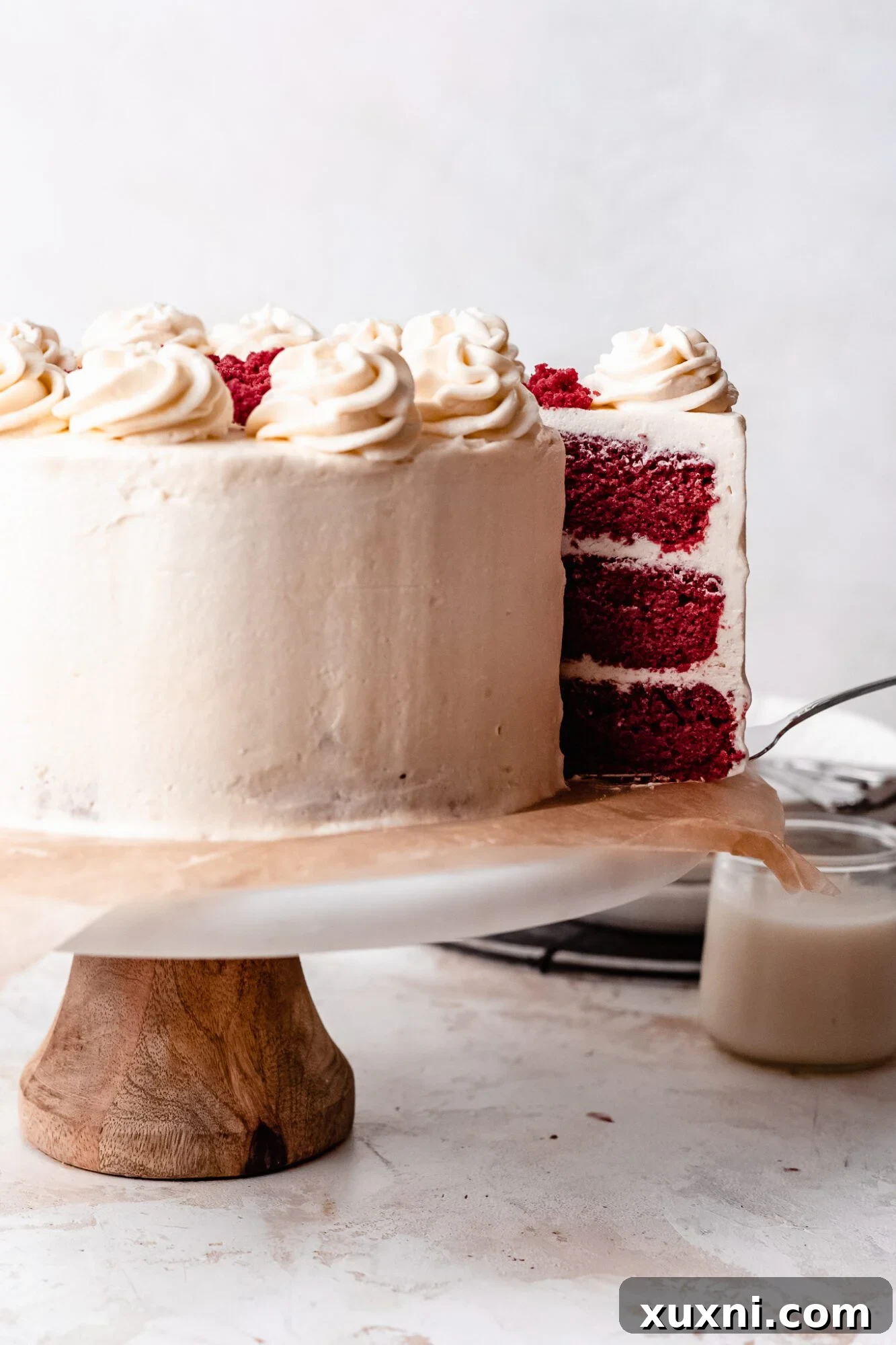
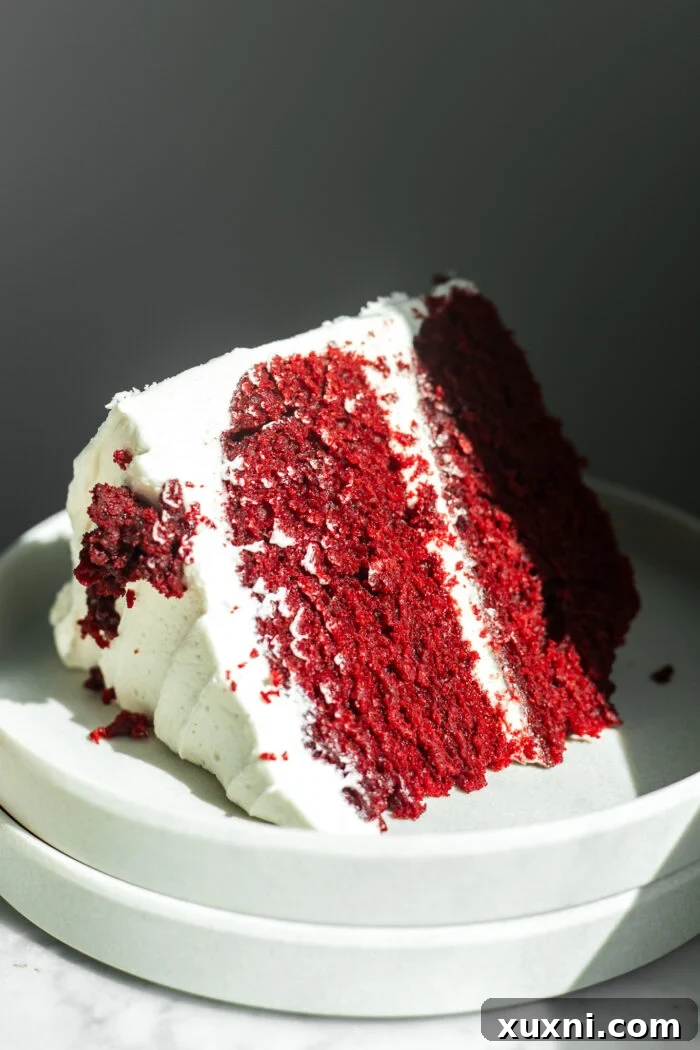
Prepare to be amazed by the ultimate dessert experience: this truly one-bowl, extraordinarily moist vegan red velvet cake. Expertly crafted without eggs or dairy, each tender, rich, and velvety layer is generously enrobed in a silken, dairy-free vanilla bean cream cheese frosting. It strikes a flawless balance of subtle cocoa, perfect sweetness, and that unmistakable hint of tangy perfection that defines a classic red velvet cake. Whether you’re a seasoned vegan baker or simply seeking an unbelievably delicious plant-based treat, this recipe is designed to impress and delight.
★★★★★
“I had attempted red velvet cake before embracing a dairy-free lifestyle, and the results were always disappointing. Recently, a request came in to make a red velvet cake, and I challenged myself to create a vegan version. I was incredibly nervous, but this recipe turned out absolutely AMAZING. It was so good that it converted even the most staunch cake-haters into cake-lovers, and the best part? They weren’t even vegan! Thank you so much! 🙏🏼 – Lysa”
Why This Vegan Red Velvet Cake Will Become Your New Favorite
Among countless dessert recipes, red velvet cake consistently ranks as a top favorite, and this exceptional vegan adaptation truly elevates it to a new level. My experience working at Georgetown Cupcakes, where red velvet consistently outsold even chocolate, solidified its status as a beloved classic. There’s an undeniable allure to red velvet that transcends typical cake flavors, and this plant-based version captures every bit of that magic.
Just like our highly acclaimed vegan vanilla cake, indulgent vegan chocolate cake, and luscious vegan caramel cake (all absolute must-try recipes!), this red velvet stands out. It’s not merely a dessert; it’s a celebration centerpiece for a myriad of special occasions. Imagine serving this vibrant, tender cake at Thanksgiving or Christmas gatherings. Beyond the traditional holidays, it’s perfect for Valentine’s Day, a memorable birthday bash, a proud graduation celebration, an elegant engagement party, and even truly special vegan weddings.
When you take your first bite of this remarkable vegan red velvet cake, you’ll be astonished to discover that it is completely eggless, dairy-free, and adaptable to be gluten-free. What’s more, we’ll guide you on how to achieve that gorgeous, naturally red hue! Despite being free from common allergens, this cake maintains the quintessential qualities of a red velvet: a classically sweet flavor with a subtle tang, an incredibly rich profile, and an unmatched moist, velvety texture. This isn’t just a great vegan cake—this will undoubtedly become your go-to red velvet recipe, whether you follow a vegan diet or not!
Unlock the Secrets to Baking Unbelievably Delicious Vegan Desserts in 5 Easy Steps!
Are you eager to create incredible vegan and gluten-free desserts that are so good, no one will ever guess they’re eggless and dairy-free? Sign up for our free e-course today to master the art of plant-based baking and truly transform your desserts!
What Exactly is Red Velvet Cake? Demystifying a Classic
Red velvet cake holds a special place in the hearts of many, and its popularity is well-deserved. A truly excellent red velvet boasts a uniquely smooth, “velvety” texture. This characteristic is largely attributed to the interplay of acidic ingredients within the batter. The subtle tang, alongside its inherent sweetness, creates a compelling flavor profile that makes it incredibly difficult to stop at just one slice.
And of course, no discussion of red velvet is complete without mentioning the iconic cream cheese frosting! It’s arguably the most beloved component for many, myself included. For our vegan red velvet cake with dairy-free cream cheese frosting, we’ve perfected a fluffy, rich, and utterly divine white frosting that is completely dairy-free. This creates a striking visual contrast with the deep red cake layers and adds a luscious, tangy counterpoint that makes every bite heavenly.
If you’re aiming to make this recipe completely refined sugar-free, that’s certainly an option. However, it’s important to note that opting for unrefined sweeteners will likely result in a frosting that is more brown than white, and your cake will lean towards a purple hue rather than the traditional vibrant red. While the taste remains delicious, the visual aesthetic will be distinctly different.
Is Red Food Coloring Vegan? Navigating Ethical Choices
When crafting a vegan red velvet cake, one of the most crucial and often overlooked details lies in the red food coloring itself. The vegan status of red food coloring can vary significantly depending on the brand you choose, as some are indeed vegan while others are definitively not.
The core challenge in making a truly vegan and cruelty-free red velvet cake often comes down to the pigment. Many conventional red food colorings contain carmine (also known as cochineal extract, cochineal, or natural red 4), which is derived from crushed cochineal insects. This ingredient is, by definition, not vegan. Furthermore, even if a food coloring is made with plant-based ingredients, if it has been tested on animals, it cannot be considered cruelty-free, and thus, not truly vegan.
However, fear not! There are excellent ways to achieve that stunning red hue while maintaining a fully vegan and ethical approach for this healthier red velvet cake.
For a vibrant, traditional red, I highly recommend using a high-quality, plant-based red food dye. Many health food stores, like Whole Foods, now carry excellent options. Additionally, I’ve found that Wilton produces vegan-friendly red food coloring gels that deliver an exceptionally beautiful and consistent red hue. A significant bonus is that Wilton has confirmed they do not test on animals, making it a purchase you can feel good about!
Recently, I’ve also discovered the brand Nomeca on Amazon. Their entire range of food colorings is vegan, and they offer a fantastic array of fun, vibrant colors beyond red, such as sunset yellow and pink, which I’ve thoroughly enjoyed using for cookie decorating. The best part? Their colors are remarkably fade-resistant, ensuring your bakes look as good as they taste.
Another fantastic natural alternative for achieving a red color is beet powder. My personal favorite for potency and color vibrancy is Suncore Foods. Many other brands of beet powder tend to yield a more maroon or purplish hue rather than a true red. While the color may vary, rest assured that using beet powder will still result in an incredibly delicious cake, imbued with a subtle earthy sweetness that complements the red velvet flavor beautifully.
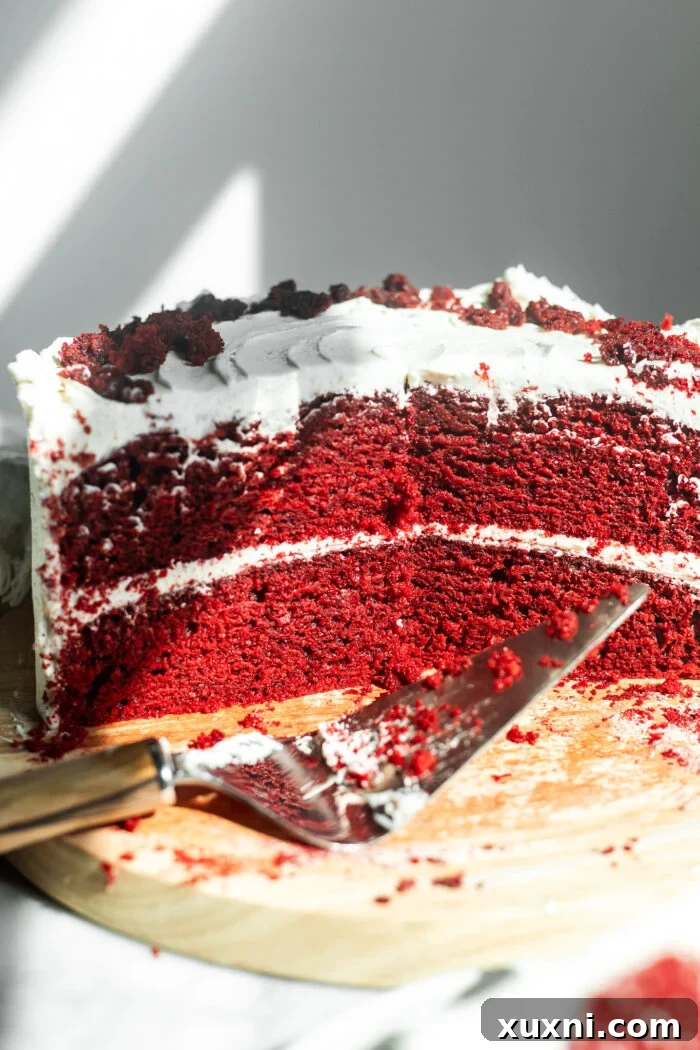
Red Velvet vs. Chocolate Cake: Understanding the Distinct Differences
A common misconception is that red velvet cake is simply chocolate cake dyed red. This couldn’t be further from the truth! While both are beloved desserts, their flavor profiles and compositions are distinctly different.
The key lies in the cocoa. Red velvet cake contains only a smidgen of cocoa powder, just enough to add a hint of richness and depth without overpowering the other delicate flavors. In contrast, a true chocolate cake celebrates cocoa in abundance, making it the dominant flavor. Historically, when red velvet cake first emerged, it actually contained more cacao, which naturally contributed to a reddish-brown hue through the reaction of acidic ingredients with non-Dutched cocoa. However, over time, the amount of cocoa lessened, and artificial red food coloring became more prevalent to achieve the vibrant red we associate with it today.
Rest assured, this vegan red velvet cake offers an entirely unique and delicious experience, distinct from our vegan chocolate cake. You’ll enjoy a completely different flavor adventure between these two fantastic recipes!
The Unique Flavor Profile of Red Velvet Cake
The flavor of a perfectly baked red velvet cake is surprisingly complex and utterly captivating. Contrary to what many might assume, it’s not overtly chocolatey. The small amount of cocoa powder is essential, yes, providing a subtle depth and richness that underpins the overall taste, but it plays a supporting role rather than a starring one.
The true genius of red velvet cake, and what gives it its name, lies in the chemical reaction between acidic ingredients—typically buttermilk and vinegar—and cocoa powder (especially non-Dutched varieties). This reaction creates the characteristic “velvety” crumb texture that melts in your mouth, unlike any other cake. This acidity also imparts a distinctive, delicate tang that is crucial to the red velvet experience. Don’t worry, this tang is not unpleasant; it’s a wonderfully subtle counterpoint to the sweetness, adding complexity and making the cake incredibly addictive.
Once you try this particular recipe, with its harmonious blend of flavors and unparalleled texture, you are truly going to fall head over heels in love with this cake!
Overview: Step-by-Step Guide to Making a Perfect Vegan Red Velvet Cake with Dairy-Free Cream Cheese Frosting
For the complete written instructions, detailed ingredient measurements, and a printable recipe card, please refer to the bottom of this post. You can also easily jump directly to the recipe card using the “jump to recipe” button located at the top of this page. Here, we’ll provide a concise overview of the steps involved, accompanied by helpful visuals for clearer understanding.
Creating this healthier red velvet cake is remarkably straightforward and offers ample opportunity for creative decoration. We’ll guide you through the fundamental steps of baking and frosting, allowing you to unleash your artistic flair with the finishing touches.
Crafting the Perfect Vegan Red Velvet Cake Layers
For those new to vegan baking, the idea of making a vegan cake might seem daunting. However, I assure you, the process is incredibly similar to traditional cake baking. There’s no need to stress; just trust the recipe, and you’ll achieve spectacular results!
To prepare these moist and flavorful vegan red velvet cake layers, you will need the following key ingredients:
- Flour: You have the flexibility to use either standard all-purpose flour for a classic bake or a high-quality gluten-free 1:1 baking flour if you require a gluten-free option. Sifting your flour before mixing is a small but crucial step that contributes to an exceptionally tender crumb.
- Vegan Butter or Neutral Oil: Either works wonderfully. In recent times, I’ve found that using a neutral oil, such as sunflower seed oil or avocado oil, significantly enhances the cake’s moisture content, yielding a supremely tender result, much like our popular vegan red velvet cupcakes.
- Dairy-Free Milk: Opt for unsweetened varieties of plant-based milks like oat milk, soy milk, or almond milk.
- Vinegar: This ingredient is vital! When combined with the dairy-free milk, it creates our essential homemade vegan buttermilk, which contributes to the cake’s tender texture and characteristic tang.
- Granulated Sugar: While it is technically possible to make this cake with a refined sugar-free alternative like coconut sugar, please be aware that using such alternatives will significantly alter the final color, making the cake more brown than the traditional vibrant red.
- Dairy-Free Yogurt: Just a small amount is added to further enhance the distinctive tanginess that is a hallmark of authentic red velvet cake, while also boosting moisture.
- Baking Soda and Baking Powder: The combination of these leavening agents works in tandem with the acidity of the vinegar and cocoa to create a perfectly risen, fluffy cake.
- Cocoa Powder: For the best results and a truly tender texture, I highly recommend using a rich, high-quality Dutch-process cocoa powder. This provides that subtle chocolate depth without being overwhelming.
- Vegan Red Food Coloring: To achieve that iconic red hue, I personally use Ann Clark food coloring, which is certified vegan-friendly. Always double-check ingredient labels, as formulations can occasionally change. Refer to the “Is Red Food Coloring Vegan?” section above for more brand recommendations and natural alternatives.
The process for making this incredible vegan red velvet cake is quite straightforward:
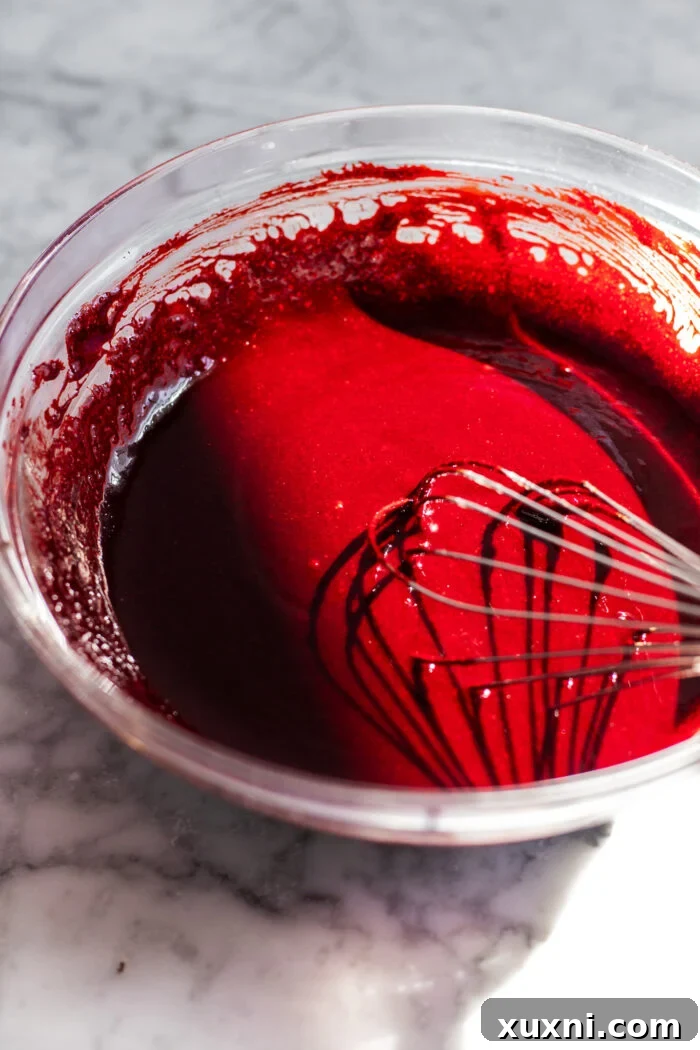
- In a large mixing bowl, thoroughly whisk together the oil (or melted vegan butter), granulated sugar, cocoa powder, vanilla extract, dairy-free yogurt, and sea salt until well combined. Then, incorporate the baking soda and baking powder.
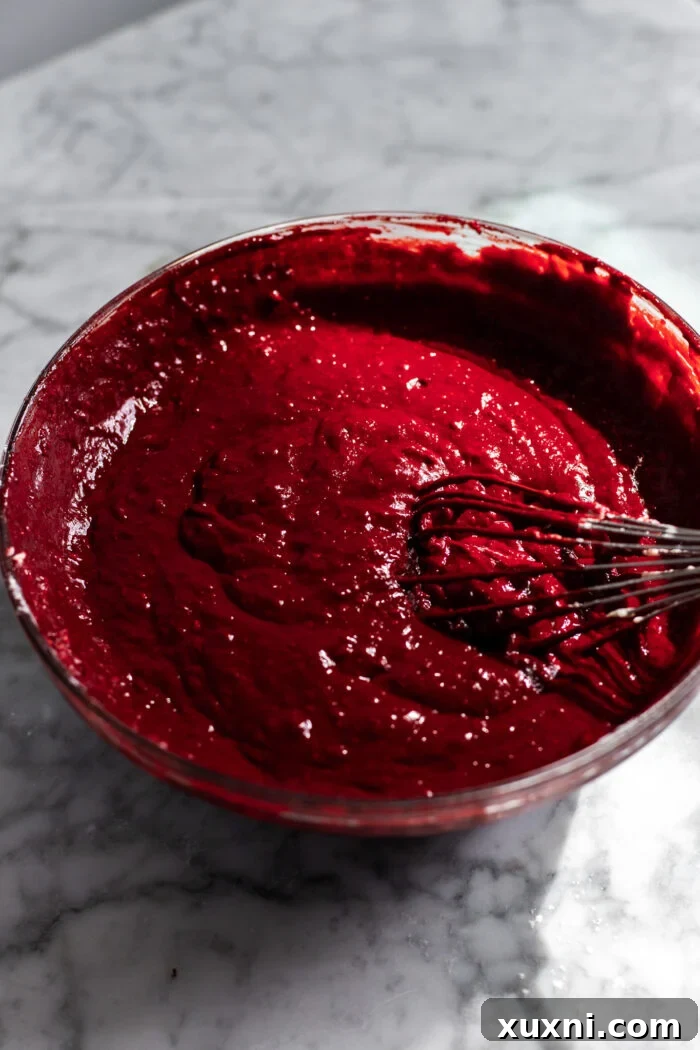
- Gradually add the sifted flour alternately with the homemade vegan buttermilk, mixing just until the ingredients are combined and no dry streaks of flour remain. Be careful not to overmix!
- Evenly distribute the velvety batter into your prepared cake pans (either two 8-inch pans or three 6-inch pans) and bake for approximately 30-35 minutes, or until a toothpick inserted into the center comes out clean.
- Allow the cakes to cool completely in their pans before transferring them to a wire rack for final cooling. This step is crucial for easy handling and proper frosting adhesion.
See? It’s not much different from baking a conventional red velvet cake, is it? The beauty of vegan baking is in its simplicity and delicious results!
Creating the Silky Vegan Cream Cheese Frosting
Just like our vegan cake layers, making a rich and creamy vegan cream cheese frosting is just as straightforward and enjoyable as preparing its traditional dairy counterpart. The only delightful difference? It’s entirely dairy-free!
To whip up this delectable frosting, you’ll need a few essential ingredients:
- Vegan Cream Cheese: Choose a high-quality, firm vegan cream cheese for the best texture.
- Vegan Butter: For optimal flavor and consistency, I highly recommend using Miyoko’s Kitchen Cultured Vegan Butter – it truly is exceptional.
- Powdered Sugar: Also known as confectioners’ sugar, this provides the sweetness and structure for a smooth, fluffy frosting.
- Vanilla Extract: A generous splash of pure vanilla extract enhances all the flavors and adds a beautiful aroma.
The secret to perfect vegan cream cheese frosting lies in the temperature of your ingredients. You’ll want both the vegan cream cheese and vegan butter to be at room temperature, yet still slightly cool to the touch. This means they should be soft enough to easily make a fingerprint impression but firm enough to hold their shape without melting. An ideal temperature for these ingredients is around 68°F (20°C).
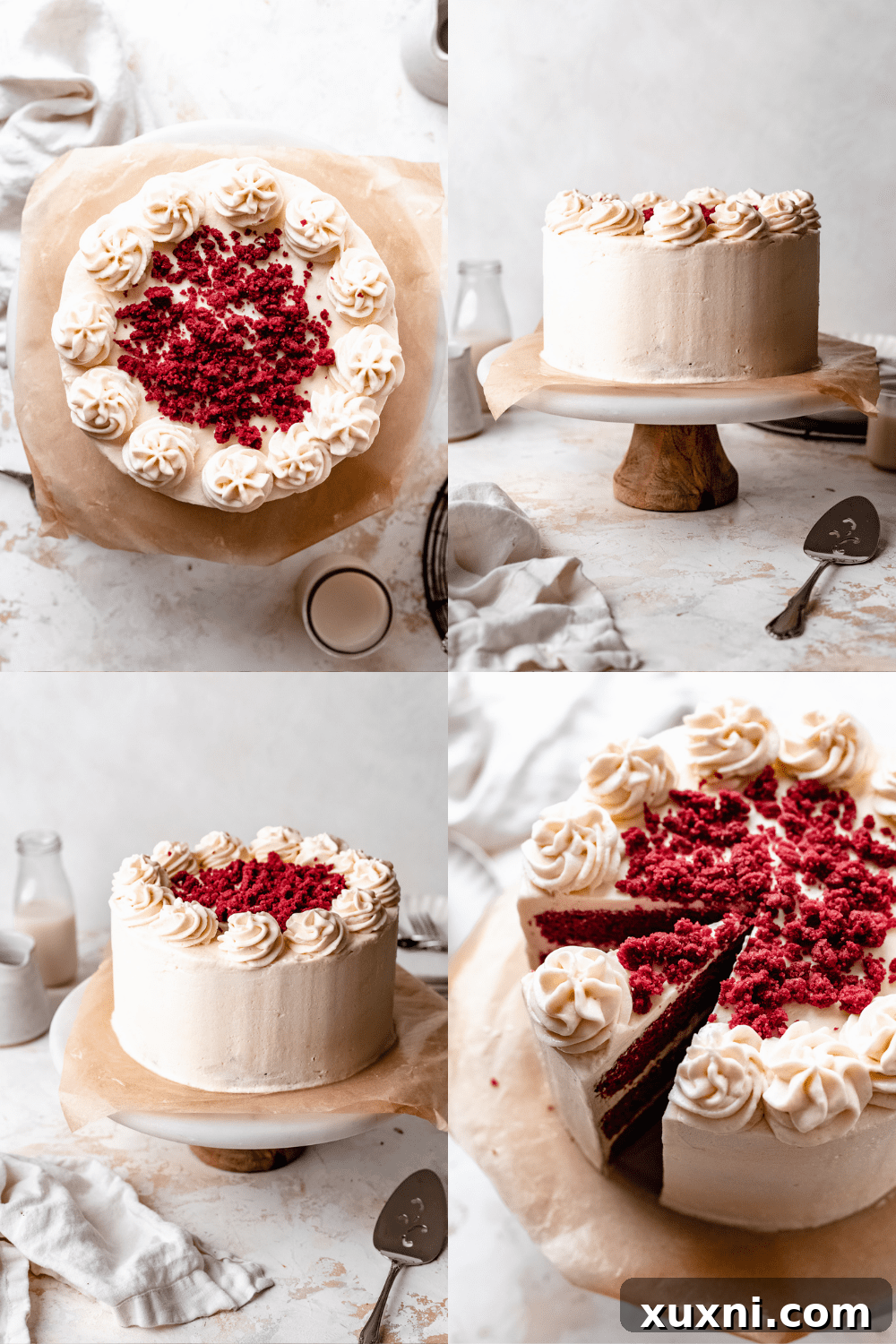
Once your ingredients are at the perfect temperature, the process is simple: beat together the vegan cream cheese and vegan butter in a large bowl with a hand mixer until they are light, whipped, and fluffy. Gradually add the powdered sugar, one cup at a time, continuing to beat until you achieve a thick, smooth, and fluffy frosting consistency. Finish by beating in a touch of vanilla extract, and voilà! Your luscious dairy-free cream cheese frosting is ready.
Now comes the fun part: frosting your cake in elegant layers! For the most professional-looking finish, make sure your cake layers are completely cooled and perfectly level before you begin. A sharp, thin knife is ideal for trimming any domes. I highly recommend using a frosting knife and a bench scraper to achieve incredibly smooth sides that will rival the polished look of fondant, but without the artificial taste.
Note for optimal results: Vegan cream cheese frosting tends to be softer than traditional buttercream. This means it can soften more quickly at room temperature. For the cleanest, most stable finish, it’s best practice to refrigerate your cake briefly between applying the crumb coat and the final layer of frosting. This helps set the frosting and makes the decorating process much smoother.
Can Vegan Red Velvet Cake Be Made Without Food Coloring?
Absolutely! You have the option to entirely omit the food coloring from your vegan red velvet cake if you prefer. While it won’t achieve the vibrant, classic red hue that gives the cake its name, rest assured that the food coloring does not contribute any flavor to the cake. Therefore, its absence will not compromise the delicious taste and signature velvety texture that you’ve come to expect.
Without food coloring, your cake will have a beautiful, rich reddish-brown tone, a natural result of the cocoa powder interacting with the acidic ingredients. It will still be a delightful and impressive dessert, showcasing its inherent deliciousness rather than relying solely on its visual appeal. Many bakers choose this option for a more natural, subtle look, proving that this cake is truly a star in its own right, color or no color.
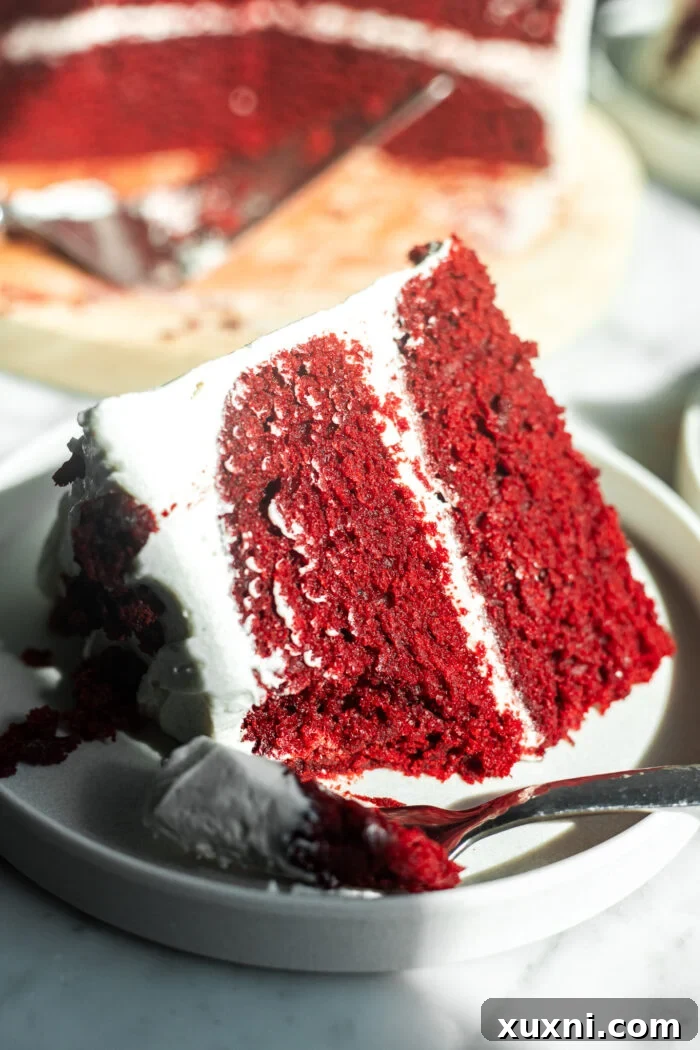
Expert Tips & Tricks for Baking the Best Healthy Vegan Red Velvet Cake
Achieving red velvet perfection, especially with a vegan twist, is easier than you think with these expert tips:
- How to make this a gluten-free vegan red velvet cake: Converting this recipe to a gluten-free version is incredibly simple. I highly recommend using a high-quality 1-to-1 gluten-free baking flour blend. My favorites include Bob’s Red Mill 1-to-1 Gluten Free Baking Flour or King Arthur’s Gluten-Free Measure for Measure Flour. These blends are specifically designed to swap seamlessly into recipes, ensuring your cake retains its tender texture and delicious flavor.
- Ensure cakes are level before frosting: If you’re constructing a beautiful multi-layered cake, perfectly level layers are paramount for stability and aesthetics. Before you begin frosting, carefully trim any domed tops from your cooled cake layers using a sharp, thin serrated knife (exercise caution!). When stacking, place the crumbed, sliced side down. This provides a flat, even surface for your frosting and helps create a polished finish.
- Sift the flour for ultimate tenderness: This seemingly minor step makes a significant difference in the final texture of your cake. Sifting flour removes lumps and aerates it, leading to a lighter, more tender, and wonderfully fluffy crumb. If you’re not baking gluten-free, using cake flour (which has a lower protein content) can further enhance this tenderness. For gluten-free bakers, adding a teaspoon or two of cornstarch or arrowroot powder to your gluten-free flour blend can mimic the properties of cake flour, resulting in a similarly delicate texture.
- Don’t overmix the batter: Overmixing develops gluten (even in gluten-free flours to some extent, leading to gumminess) and can result in a dense, tough cake. Mix your batter just until the dry ingredients are fully incorporated into the wet, and no streaks of flour remain.
- Properly prepare your cake pans: For easy release and perfect cake layers, always grease your cake pans thoroughly and line the bottoms with parchment paper. This prevents sticking and ensures your beautiful cakes slide out effortlessly after cooling.
- Achieve the perfect frosting consistency: As noted earlier, vegan cream cheese frosting can be a bit softer. If your frosting seems too runny, try refrigerating it for 15-20 minutes, then beating it again. If it’s too stiff, add a tiny splash of dairy-free milk until it reaches your desired creamy consistency.
How to Store Your Delicious Vegan Red Velvet Cake
To ensure your vegan red velvet cake remains fresh and delightful, proper storage is key. I recommend storing any leftover cake in a dedicated cake container or, if sliced, in an airtight container. On your countertop, the cake will maintain its quality for about one to two days. However, for extended freshness, it’s best to store it in the refrigerator, where it will keep beautifully for up to four days.
Before serving chilled cake, allow it to come to room temperature for about 30 minutes to an hour. This will ensure the cake layers are at their most tender and the cream cheese frosting is perfectly soft and creamy, offering the optimal taste and texture experience.
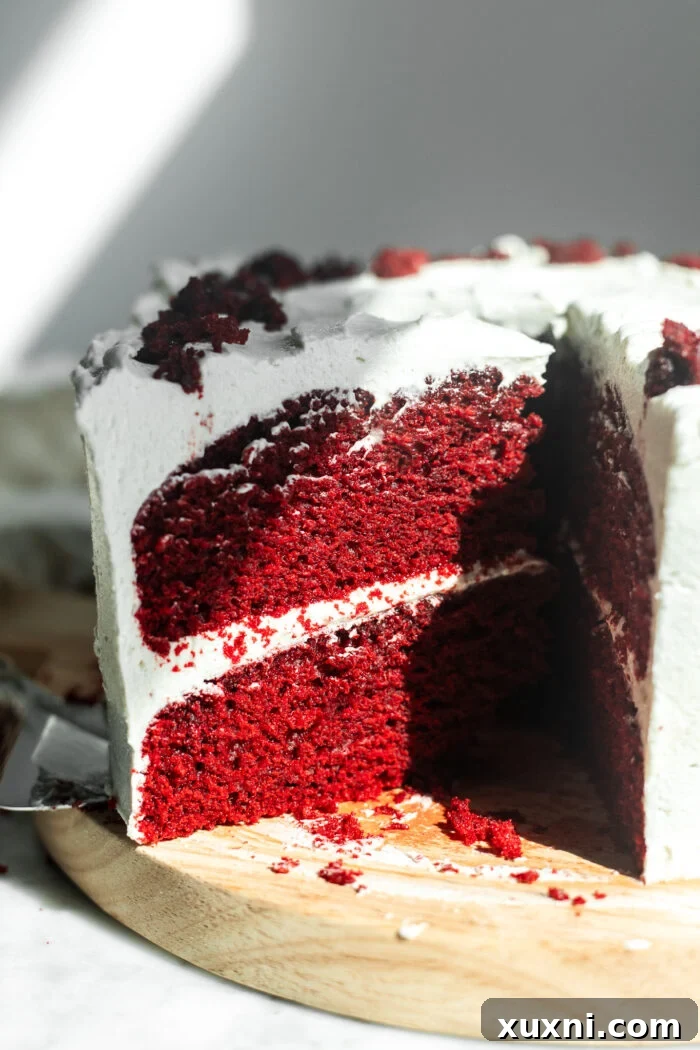
You are truly going to fall in love with this vegan red velvet cake! It perfectly captures the harmonious balance of subtle cocoa notes, classic vanilla essence, exquisite sweetness, and that irresistible hint of tang. It’s a celebration of flavor and texture that proves plant-based baking can be utterly extraordinary.
As always, I adore seeing your magnificent baking creations! So, please remember to tag me on Instagram and Pinterest when you share your stunning red velvet masterpieces!
Happy cake baking, and enjoy every single delightful bite!
Save This Irresistible Recipe for Later! Pin it to Your Favorite Recipe Board on Pinterest!
If you try this recipe, please be sure to leave a comment and a rating ⭐️⭐️⭐️⭐️⭐️ below. Your feedback helps others discover and enjoy these recipes! As always, I absolutely love seeing your beautiful creations on Instagram and Pinterest, so don’t forget to tag me there!
Print Recipe
One Bowl MOIST Vegan Red Velvet Cake with Cream Cheese Frosting
⭐️
⭐️
⭐️
⭐️
⭐️
5 from 13 reviews
- Author: BRITT BERLIN
- Prep Time: 10 minutes
- Cook Time: 35 minutes
- Total Time: 45 minutes
- Yield: 16 servings
- Category: Dessert
- Method: Baking
- Cuisine: American
- Diet: Vegan
Description
This truly one-bowl MOIST vegan red velvet cake is layered with a silky dairy-free vanilla bean cream cheese frosting, and unbelievably made without eggs and dairy. It’s tender, rich, and velvety with the perfect balance of cocoa, sweetness, and just a hint of tang!
Ingredients
Scale
- 1 1/2 cup (360 g) vegan buttermilk, room temperature
- 3/4 cup (195 g) neutral cooking oil or melted vegan butter, room temperature
- 1 1/2 cup (300 g) granulated sugar
- 1 tbsp vanilla extract
- 3 tbsp cocoa powder
- 1 tbsp vegan red food coloring*
- 3 tbsp dairy-free yogurt or vegan sour cream
- 3 cup (375 g) all-purpose flour or gluten-free 1:1 baking flour*
- 2 tsp baking powder
- 1/2 tsp baking soda
- 1/4 tsp sea salt
- 1 batch vegan cream cheese frosting
Instructions
- Preparation: Read through all instructions thoroughly before beginning. Preheat your oven to 350°F (175°C). Lightly grease three 6-inch cake pans or two 8-inch cake pans with olive or coconut oil. Line the bottoms of the pans with parchment paper circles and set them aside. To make the vegan buttermilk, add the apple cider vinegar to the unsweetened dairy-free milk and let it curdle for 5 minutes.
- Mix the Batter: In a large mixing bowl, whisk together the oil (or melted vegan butter), granulated sugar, vanilla extract, cocoa powder, vegan red food coloring, and dairy-free yogurt until smooth and well combined. Add in the baking powder, baking soda, and sea salt, and whisk again to fully integrate.
- Combine Wet and Dry: Gradually add the sifted all-purpose (or gluten-free 1:1 baking) flour alternately with the prepared vegan buttermilk. Mix gently after each addition, just until the flour is integrated into the wet ingredients. Be careful not to overmix, as this can lead to a dense cake.
- Bake the Cakes: Divide the finished batter evenly among your prepared cake pans. Place the cake pans into the preheated oven and bake for approximately 30-35 minutes, or until a toothpick inserted into the center of a cake comes out clean.
- Cool Completely: Allow the cakes to cool in their pans for about 10 minutes. Then, carefully invert them onto a wire cooling rack to cool completely. It is crucial for the cakes to be entirely cool before attempting to frost them to prevent the frosting from melting.
For the Vegan Cream Cheese Frosting:
- When your cakes are fully cooled and you are ready to frost, ensure each cake layer is leveled using a serrated knife for an even stack.
- In a large bowl, combine the room-temperature vegan butter and vegan cream cheese. Beat them together with an electric hand mixer until the mixture is light, creamy, and fluffy.
- Gradually add the powdered sugar, one cup at a time, continuing to beat the mixture on medium speed until it transforms into a thick, smooth, and fluffy buttercream-like consistency.
- Stir in the vanilla extract and beat for another minute until it is fully incorporated and the frosting reaches your desired texture.
- Carefully frost your cooled and leveled cake layers. Apply a thin crumb coat first, chill, then apply the final generous layer of frosting. Enjoy your spectacular vegan red velvet cake!
Notes
Gluten-Free Option: For the best gluten-free results, I highly recommend using King Arthur Measure for Measure Gluten-Free Baking Flour or Bob’s Red Mill 1-to-1 Gluten-Free Baking Flour. These blends offer a fantastic texture substitution.
Vegan Food Coloring Options:
- Wilton Food Coloring Gels: Known for vibrant colors and not animal-tested.
- Whole Foods Plant-Based Food Coloring: A great natural option available at health food stores.
- Suncore Foods Beet Powder: For a natural, deep red color with a subtle earthy sweetness. Note that beet powder may result in a more maroon/purplish hue depending on the brand.
- Nomeca Food Coloring (Amazon): A completely vegan brand with excellent color vibrancy and fade resistance.
Using Coconut Sugar: If you choose to use coconut sugar or another unrefined granulated sugar, please be aware that your cake will likely have a more tan/brown appearance rather than the traditional vibrant red, even with the addition of vegan food coloring. However, the flavor will still be absolutely delicious!