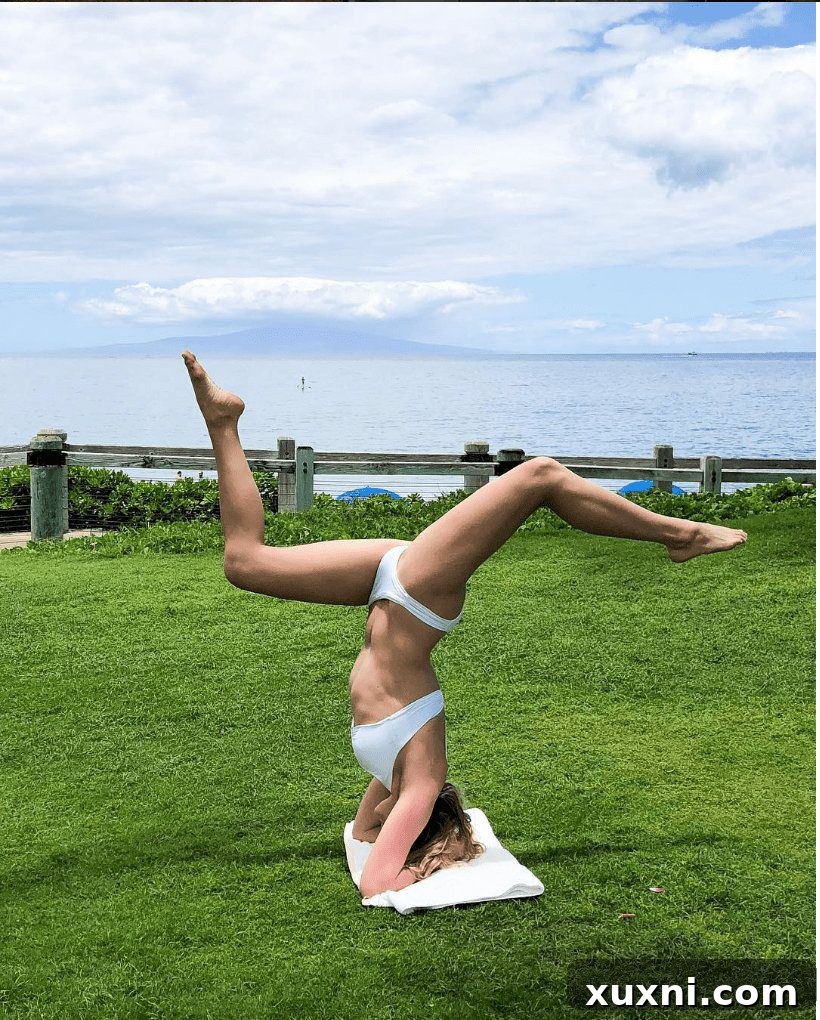
Lately, I’ve noticed a significant increase in questions regarding the journey into inversions. It’s a fascinating and empowering aspect of movement practice, whether you’re interested in yoga, gymnastics, or simply exploring your body’s capabilities. This comprehensive guide shares the strategies that have genuinely worked for me, offering insights that go beyond mere physical technique. While my background in gymnastics certainly provided an initial edge, particularly in overcoming the fear of falling, I firmly believe that with dedication and the right approach, anyone can cultivate the strength and confidence to turn their world upside down. So, if you’re feeling discouraged or unsure where to start, take heart – your inversion journey begins here!
Mastering inversions isn’t just about physical strength; it’s a profound practice that builds mental resilience, body awareness, and a unique perspective. From handstands to headstands and forearm stands, the principles remain consistent. Let’s delve into the core strategies that will not only help you get upside down but also sustain your practice with grace and power.
1. Cultivate a Safe Landing Zone to Conquer the Fear of Falling
The single most significant hurdle for many aspiring inversion practitioners isn’t a lack of physical strength, but rather the psychological barrier of fear – specifically, the fear of falling. It’s a primal instinct, and your brain is designed to keep you upright and safe. To truly progress, you must first create an environment where falling feels less like a failure and more like a necessary part of learning. This starts with your landing pad.
Invest in a thick, comfortable yoga mat, or even double up on mats. A soft pillow, a folded blanket, or even practicing on a patch of grass can make a world of difference. The goal here is to trust your landing. Imagine you’re learning to ride a bike; you expect to wobble and fall a few times. Each fall provides invaluable information about your balance and where you need to adjust. Similarly, in inversions, falling teaches you what your limits are, how to react, and how to eventually recover. The initial tumbles might sting a little, both physically and emotionally, but they are crucial lessons. Embrace them! Celebrate every fall as a moment of learning and growth. A soft, welcoming surface significantly reduces the physical sting, allowing you to focus on the technical aspects of your inversion rather than the anxiety of impact.
By consciously creating a safe space, you begin to rewire your brain’s response to instability. You tell yourself, “It’s okay to try, because I have a soft place to land.” This foundational step of physical safety directly translates into mental freedom, empowering you to push boundaries and explore new aspects of your balance without undue apprehension. Remember, no master gymnast or yogi achieved their first inversion without experiencing gravity’s pull firsthand. They just learned how to fall safely, and more importantly, how to get back up.
2. Leverage the Wall as Your Ultimate Training Partner
The wall is not a crutch; it’s an indispensable tool for building confidence, strength, and proper alignment in inversions. Whether you’re working on a handstand, headstand, or forearm stand, having the wall nearby provides a sense of security, allowing you to explore the feeling of being inverted without the immediate pressure of perfect balance. It’s like having training wheels for your inversion journey.
Start by facing the wall, placing your hands (for handstand/forearm stand) or head (for headstand) a few inches away. Kick up gently, allowing your heels to rest against the wall. This initial contact is comforting because you know you won’t fall completely over. Use this position to understand the strength required in your shoulders, arms, and core to hold yourself upright. Pay attention to your body’s alignment – are your hips stacked over your shoulders? Is your spine straight? The wall provides immediate feedback.
As you gain strength and confidence, gradually begin to “inch away” from the wall. This doesn’t mean moving your hands further back, but rather subtly reducing your reliance on the wall. Practice lifting one heel slightly, then the other, feeling for that moment of independent balance. The beauty of the wall is that it’s always there as a backup. Knowing that it will catch you if you overshoot your kick-up encourages you to kick with enough power to actually reach the inverted position, rather than undershooting it out of fear. This gradual progression helps you acclimate to the sensation of being vertically inverted, allowing your body to learn the subtle micro-adjustments needed for freestanding balance. Think of it as a scaffolding that supports you until your internal structure is strong enough to stand on its own.
3. Actively Push Through Your Shoulders: The Foundation of Stability
Imagine pushing the ground away from you. This is the sensation you need to cultivate in your shoulders for a stable inversion. Many beginners collapse into their shoulders, putting immense strain on their joints and making the inversion feel heavy and unstable. Instead, you need to actively engage your shoulder girdle, creating a strong, supportive platform.
Try this simple exercise right now: Raise your hands directly above your head, as if you’re reaching for the ceiling. Now, shrug your shoulders up towards your ears, feeling your shoulder blades lift and spread. This upward and outward motion, known as scapular protraction, is crucial. In a handstand, you are quite literally pushing the ground away, extending through your arms and shoulders. This active push creates space in your neck and protects your shoulder joints, distributing your body weight efficiently. It’s akin to carrying a heavy weight above your head; you wouldn’t let your arms buckle. Instead, you’d engage every muscle to create a strong, locked-out support system.
This engagement prevents your shoulders from “sinking” and provides the necessary lift to maintain proper posture throughout your inversion. Without this active push, your shoulders become passive supports, leading to instability and potential injury. Regularly practicing exercises like planks, downward-facing dog (focusing on pressing through the hands and shoulders), and even shoulder shrugs with light weights can help build this crucial awareness and strength. Remember, your shoulders are not just holding you up; they are actively pushing you higher, creating length and stability from your foundation all the way to your toes.
4. Engage Your Core by Tucking Your Navel: Protect Your Back, Power Your Practice
While arms and shoulders are critical for support, your core is the true powerhouse of any inversion. A common mistake is to arch the lower back excessively, which not only puts strain on your lumbar spine but also makes balancing significantly harder. The key to a stable, safe inversion lies in actively engaging your core by tucking your pelvis and drawing your navel towards your spine.
Think of creating a long, straight line from your fingertips to your toes. An arched back breaks this line, creating a “banana” shape that is difficult to control. Instead, you want to maintain a neutral or slightly posterior pelvic tilt, which flattens the lower back and activates your deep core muscles. A fantastic exercise to understand this engagement is “boat rocks” or hollow body holds. In a hollow body position, you lie on your back, lifting your head, shoulders, and legs slightly off the ground, with your lower back pressed firmly into the mat. This requires intense abdominal engagement and teaches you to tuck your pelvis effectively.
When inverted, this navel tuck prevents your hips from splaying open and your back from arching. It creates a solid, stable trunk that acts as the central axis for your balance. Your core isn’t just about six-pack abs; it includes your transverse abdominis, obliques, and pelvic floor – a whole network of muscles working together to stabilize your spine and control your movements. By proactively tucking your navel and engaging your core, you safeguard your lower back from undue stress and empower your body to find that elusive point of balance with greater ease and control. This foundational strength ensures that your core is doing the heavy lifting, rather than your vulnerable spine.
5. Initiate Your Lift from Your Core, Not Your Legs: The Art of Controlled Entry
This tip is a game-changer for many aspiring inverters. It’s a common misconception that getting into an inversion primarily relies on kicking your legs up with force. While a certain amount of momentum is necessary in the initial stages, a truly controlled and elegant entry originates from your core. Your legs are essentially “along for the ride,” guided by the strength and precision of your abdominal muscles.
Imagine hanging from a pull-up bar and performing leg raises. Are you using your quads to aggressively kick your legs up, or are you engaging your lower abs to lift them in a controlled manner? It’s predominantly your core. Apply this same principle to your inversions. Instead of a wild, uncontrolled kick that often leads to overshooting and falling backwards, focus on a deliberate, core-driven lift.
From your starting position (e.g., L-shape handstand prep, or a simple pike position for headstand), engage your core deeply. Visualize your belly button pulling your legs upwards. This controlled motion allows for a slower, more intentional ascent, giving your body more time to find and adjust to its balance point. When your legs are propelled primarily by your core, they move with greater precision and less extraneous momentum. This prevents the common issue of overshooting the vertical line, where you kick up too hard and fall out the other side. A strong, engaged core acts as your internal stabilizer, enabling you to gently stack your hips over your shoulders and your legs over your hips. This not only makes your inversions look more graceful but also significantly reduces the risk of injury and empowers you to hold the pose for longer periods, showcasing a truly beautiful and controlled inversion.
Bonus Tip: Strengthen Beyond the Physical – The Mind-Body Connection in Inversions
While the previous five tips focus on tangible physical techniques, my sixth and arguably most profound insight addresses the holistic nature of strength. A significant amount of the work required for inversions isn’t always done within the inversion itself, but rather in the preparation and the cultivation of an inner mindset. This involves both targeted physical strengthening and a deep dive into self-awareness.
Physical Arm & Shoulder Strengthening: Build a robust foundation for your inversions by incorporating specific exercises into your routine. This means more than just casual lifting; it’s about focused, progressive strengthening. Examples include:
- Push-ups: Master various forms – incline, decline, standard, and eventually one-arm if accessible. Focus on full range of motion and core engagement.
- Tricep Dips: Excellent for building pushing strength crucial for stability.
- Pike Push-ups: A fantastic progression towards handstand push-ups, building overhead pushing strength in a modified inverted position.
- Plank Variations: Holding planks, side planks, and elevated planks builds core stability and shoulder endurance.
- Dumbbell Shoulder Press: If you have access to weights, overhead presses build powerful shoulders.
Consistency in these foundational exercises will significantly improve your capacity to hold and control inversions.
The Figurative Strength – A Deeper Reflection: This is where the practice truly transcends the physical. I’ve learned that physical weakness in an area often mirrors a figurative weakness in other aspects of life. When I found myself unable to progress in my inversion practice, I realized it wasn’t just about my physical arm strength; it was about a broader inability to “pull myself up,” both literally and metaphorically. I often felt like I needed external support, whether it was the wall in my handstands or reassurance in my personal life.
This realization prompted a deeper self-inquiry:
- Self-Relationship: How strong is your relationship with yourself? Are you kind, patient, and encouraging, or critical and demanding?
- Prioritizing Wellbeing: Do you genuinely prioritize your own physical, mental, and emotional care, or do you constantly put others first?
- Self-Advocacy: Do you speak up for your needs and boundaries, or do you often remain silent, seeking approval?
- Resilience: How do you handle setbacks and challenges outside of your physical practice? Do you give up easily, or do you persist and learn?
When I consciously began to address these internal areas – strengthening my self-worth, setting boundaries, and nurturing my own well-being – I noticed a profound shift. Paradoxically, as my internal (or “invisible”) strength grew, my physical arm strength seemed to develop more easily, and my handstands began to flourish. The mental blocks dissolved, the fear diminished, and the physical practice felt less like a struggle and more like an expression of my newfound inner resilience. This interconnectedness highlights that true mastery in any physical endeavor comes from a harmonious balance between the body and the mind.
I genuinely hope these detailed tips provide you with a clear roadmap for your inversion journey. Remember, the path to mastering inversions is one of consistent practice, unwavering patience, and a willingness to learn from every attempt, whether you succeed or fall. Do not give up! Every single person capable of an inversion started right where you are now. Trust the process, celebrate your small victories, and embrace the transformative power of turning your perspective upside down. I’d love to hear about your progress! Feel free to share your experiences on social media, or leave a comment below. Keep practicing, and you absolutely can do this!