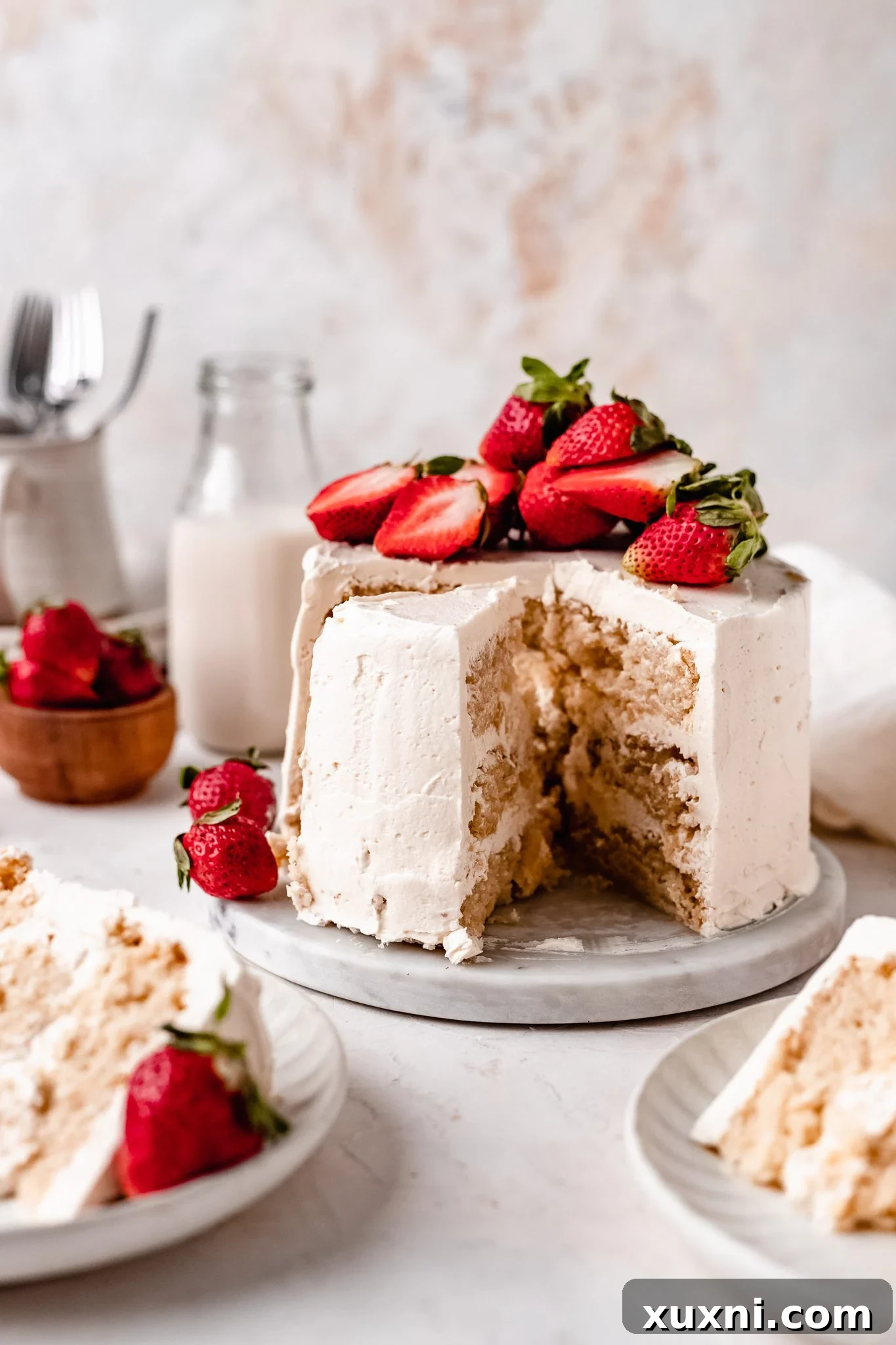
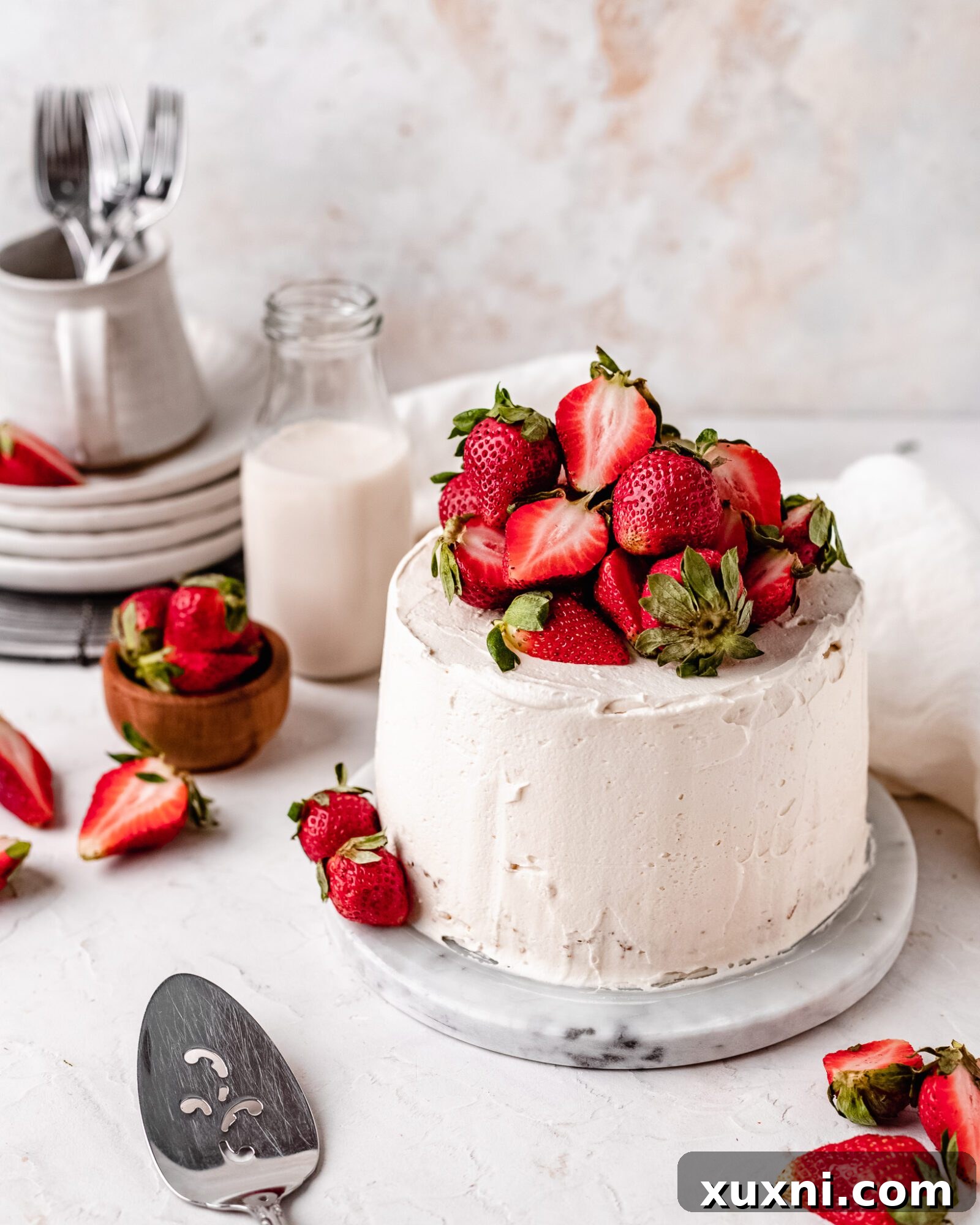
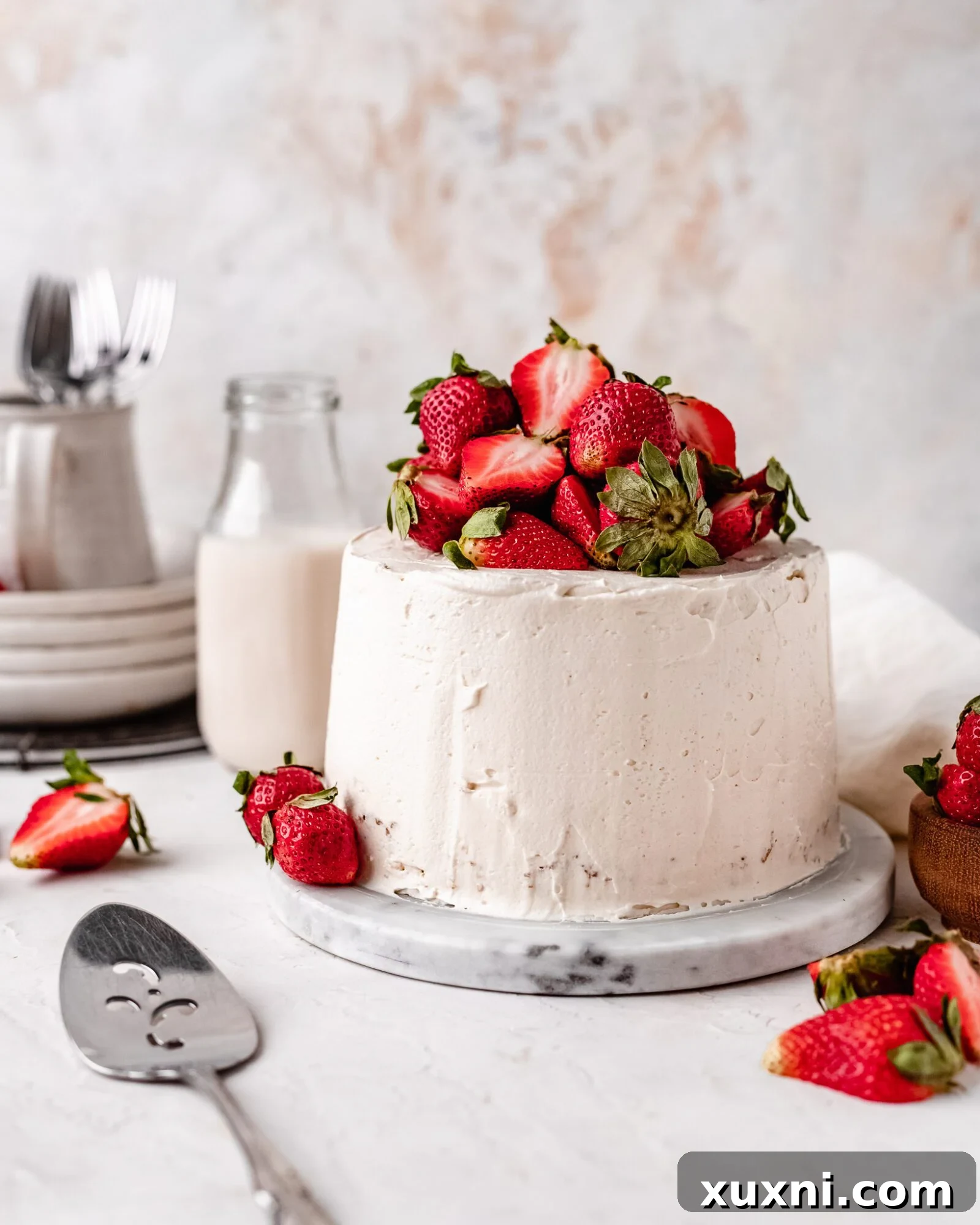
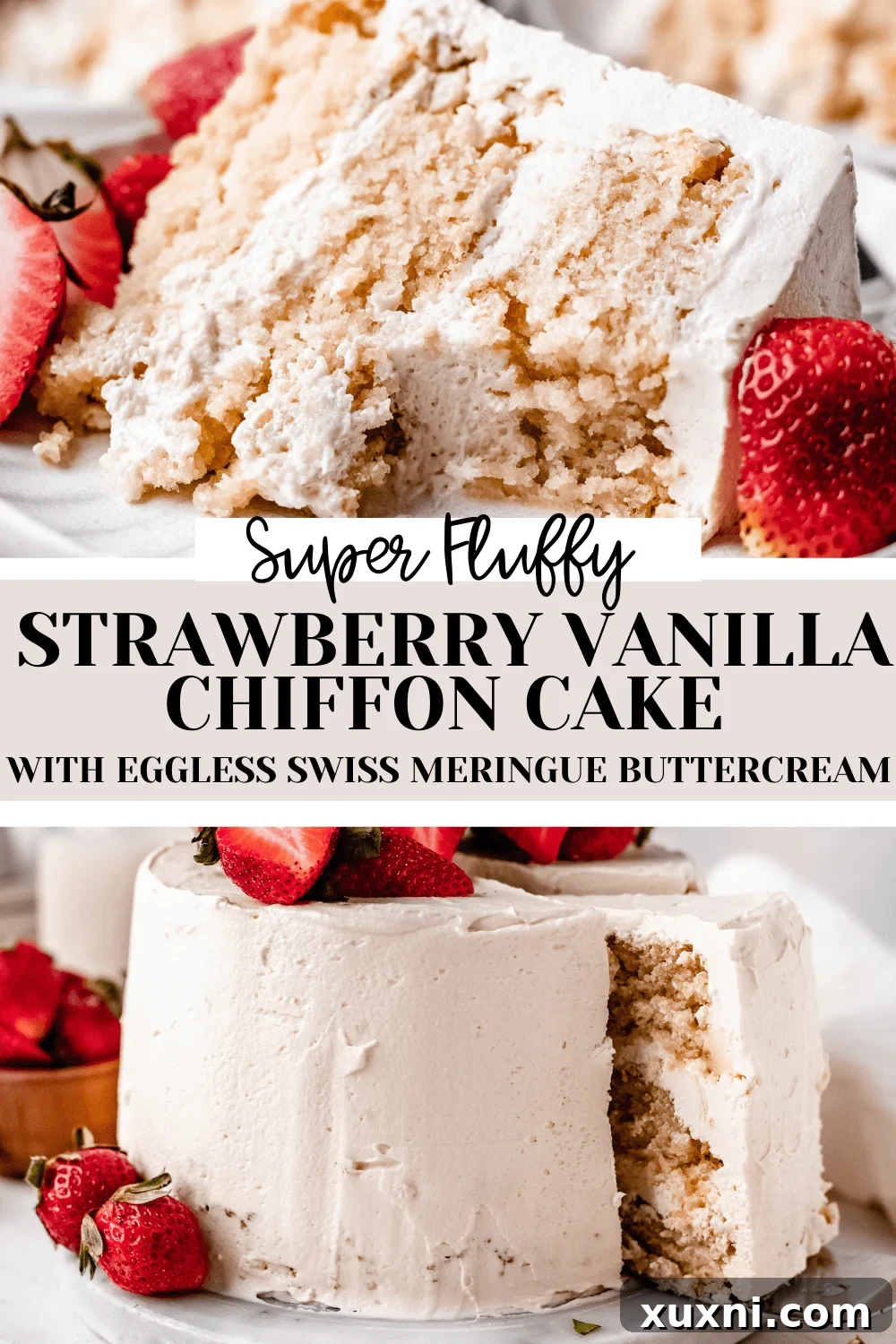
Welcome to the ultimate guide for creating the most exquisite Strawberry Vanilla Chiffon Cake you’ve ever tasted! This isn’t just any chiffon cake; it’s a culinary masterpiece meticulously crafted to be utterly delicate, incredibly moist, and wonderfully fluffy, all while being completely eggless and dairy-free. Infused with sweet, aromatic vanilla notes and generously layered with a luscious homemade vegan Swiss meringue buttercream, this vegan chiffon layer cake stands as a testament to the fact that plant-based baking can be truly extraordinary. Perfect for any special occasion or simply to treat yourself, this recipe promises to delight everyone, regardless of their dietary preferences. Prepare to amaze your taste buds and impress your guests with this stunning homemade chiffon cake, designed for all eaters!
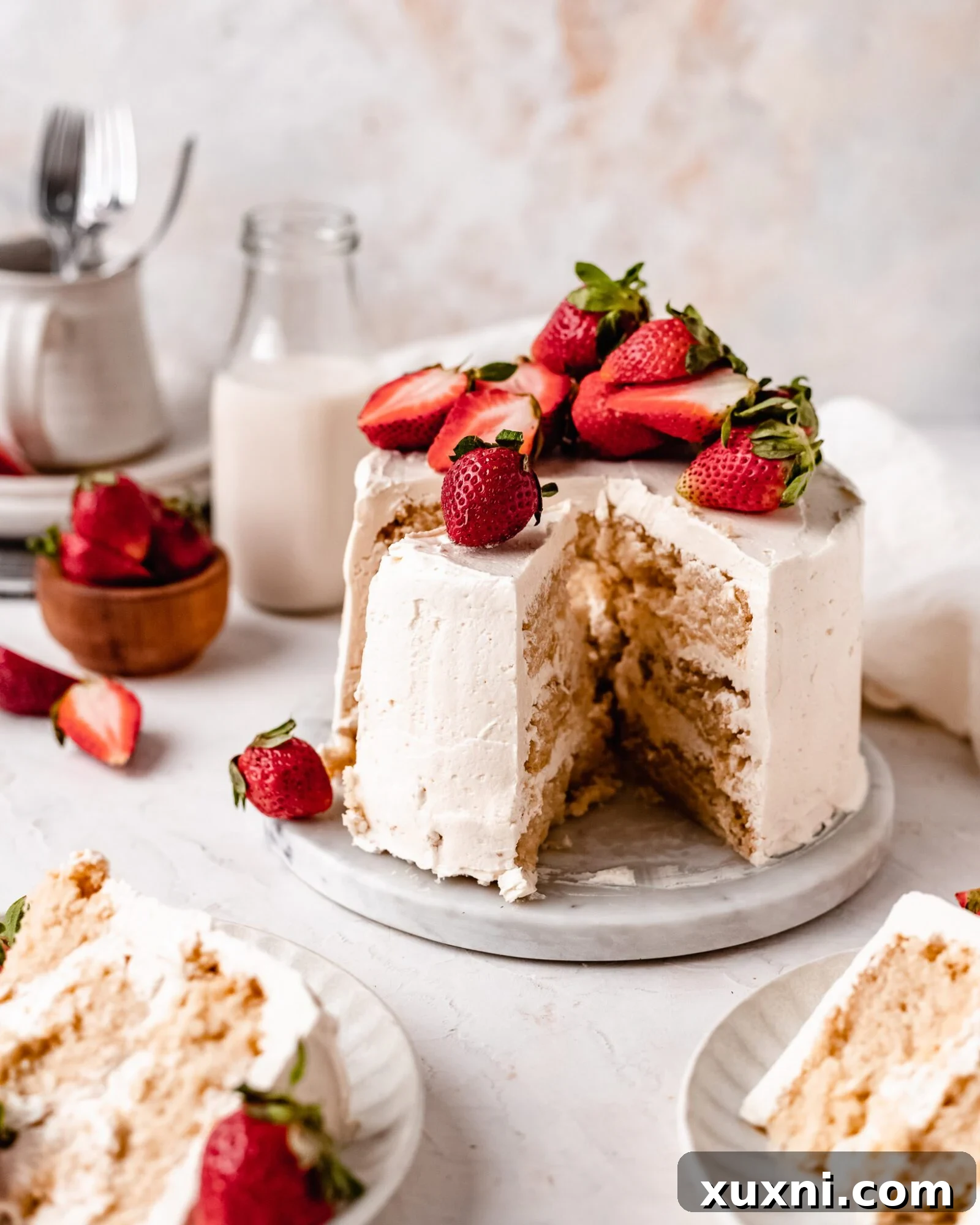
Understanding the Nuances: Chiffon Cake vs. Sponge Cake vs. Angel Food Cake
If you’re embarking on your first chiffon cake adventure, you might be curious about how it compares to other classic light cakes like sponge cake and angel food cake. While they all share a characteristic airiness, their compositions and leavening methods create distinct textures and flavors. Let’s delve into what makes each unique.
At its core, a sponge cake serves as the broad category under which both chiffon and angel food cakes fall. This family of cakes is primarily leavened using whipped eggs (or, in our ingenious vegan rendition, aquafaba) and often augmented by chemical leavening agents like baking soda and baking powder. The goal is always a light, airy crumb. However, within this family, you find fascinating variations. For our discussion today, we’ll focus on the two most popular “sponge” varieties: chiffon and angel food.
An angel food cake is renowned for its ethereal lightness, largely due to its complete absence of fat (it’s oil-free and butter-free). Its impressive rise relies heavily on a substantial amount of whipped egg whites (meringue) combined with the slight boost from artificial leavening agents. This results in a cake that is exceptionally fluffy, almost cloud-like, and often has a subtle tangy note contributed by the baking powder.
A chiffon cake, in contrast, embraces fat in the form of vegetable oil, which is a key differentiator. This inclusion of oil is precisely what grants chiffon cakes their signature moist and tender crumb, setting them apart from the drier texture of angel food cakes. Like angel food cakes, chiffon cakes depend heavily on whipped egg whites (or aquafaba meringue, in our case) for their magnificent rise, but the oil adds a richness and an irresistible melt-in-your-mouth quality that makes them truly special. The balance of a sturdy meringue structure and the moistening effect of oil creates a cake that is both light and deeply satisfying.
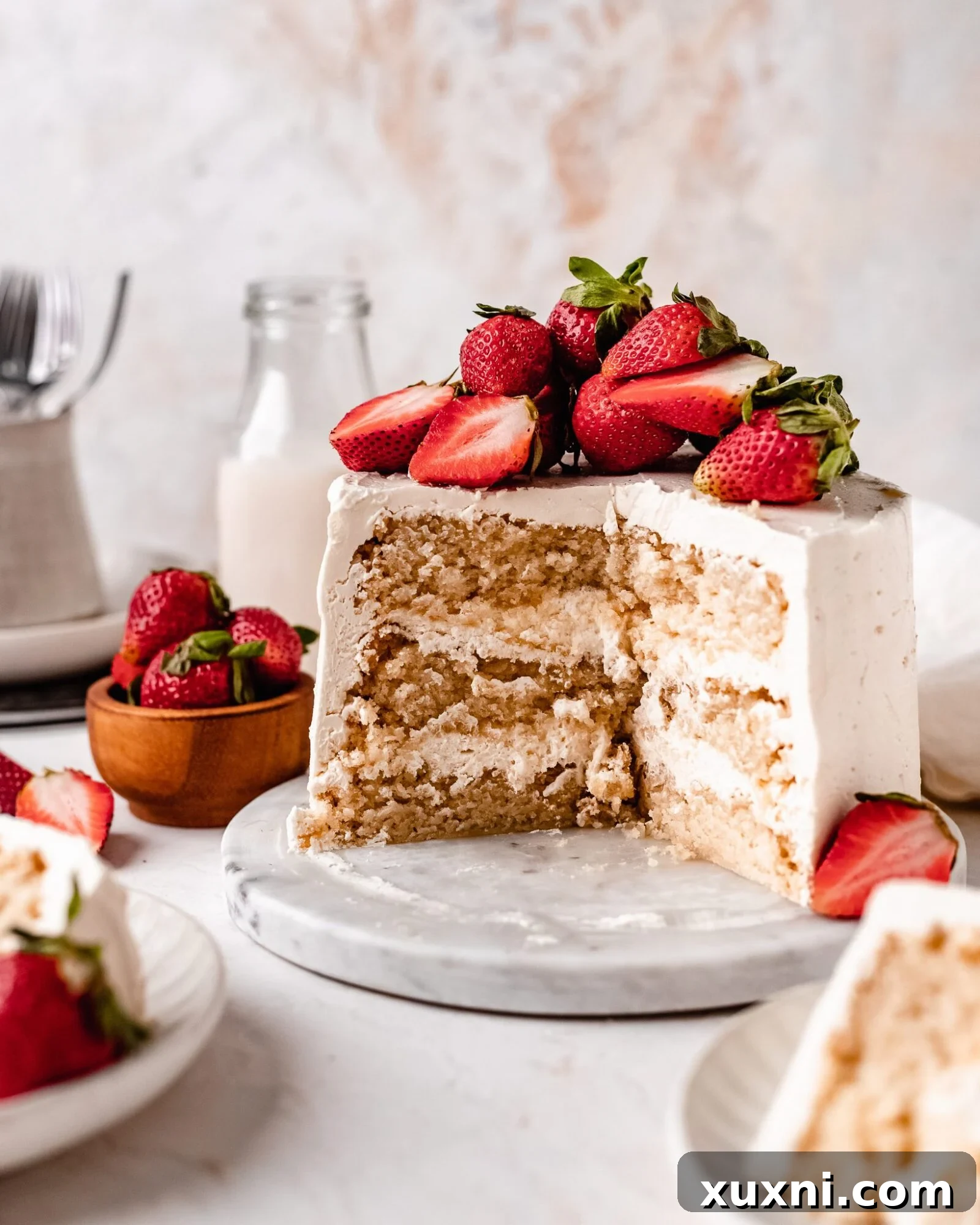
For our extraordinary Strawberry Vanilla Chiffon Cake, we elevate the traditional concept even further by transforming it into a delightful chiffon layer cake. This allows us to pair the incredibly delicate vegan chiffon sponge with our rich and velvety vegan Swiss meringue buttercream frosting. This combination is truly unparalleled and is destined to become your go-to recipe for birthdays, anniversaries, or any cherished gathering. Get ready to experience a cake that will undoubtedly steal the show!
Is a Delicious Vegan Sponge Cake Truly Possible? Absolutely!
The answer is a resounding yes! Many traditional sponge cake recipes rely heavily on egg whites for their signature lift and structure. However, in the innovative world of vegan baking, we have a secret ingredient that perfectly mimics the properties of egg whites: aquafaba. If you’re new to this term, don’t worry – it’s simply the brine from a can of chickpeas, and it performs wonders in creating a light, airy meringue without any animal products.
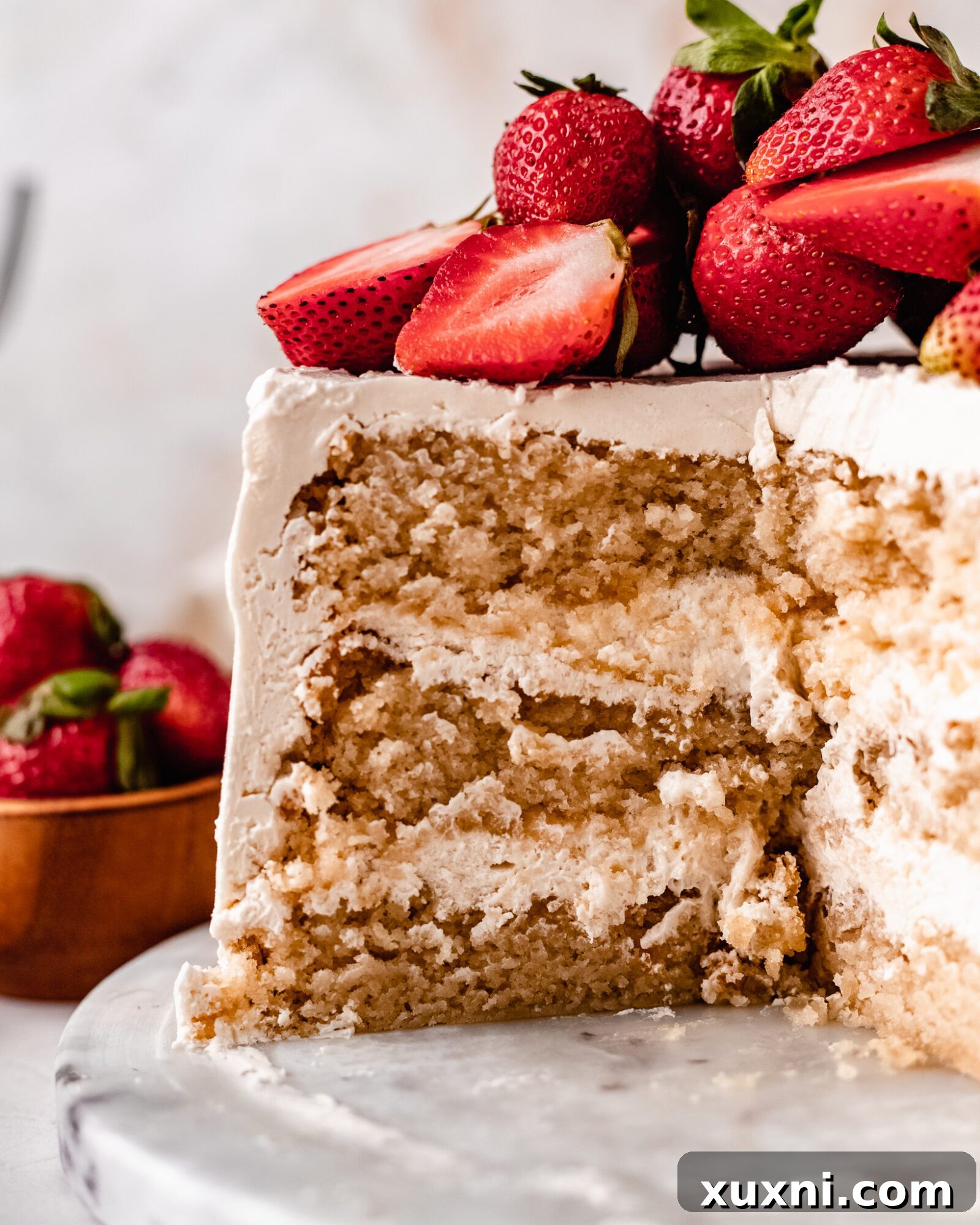
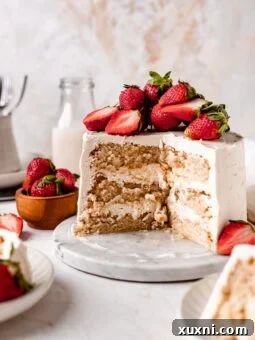
You’ll be genuinely astonished by the delicate, tender, and incredibly fluffy texture of this vegan sponge cake. Its crumb is so fine and moist, you might find it hard to believe it’s completely eggless and dairy-free. Paired with the silken, light, and wonderfully fluffy vegan Swiss meringue buttercream, this strawberry vanilla chiffon cake transcends expectations. It’s an ideal centerpiece for any festive occasion: be it a graduation, a wedding celebration, a birthday bash, Mother’s Day brunch, Memorial Day picnic, Fourth of July barbecue, or any cherished holiday gathering. This cake ensures everyone can enjoy a slice of pure joy!
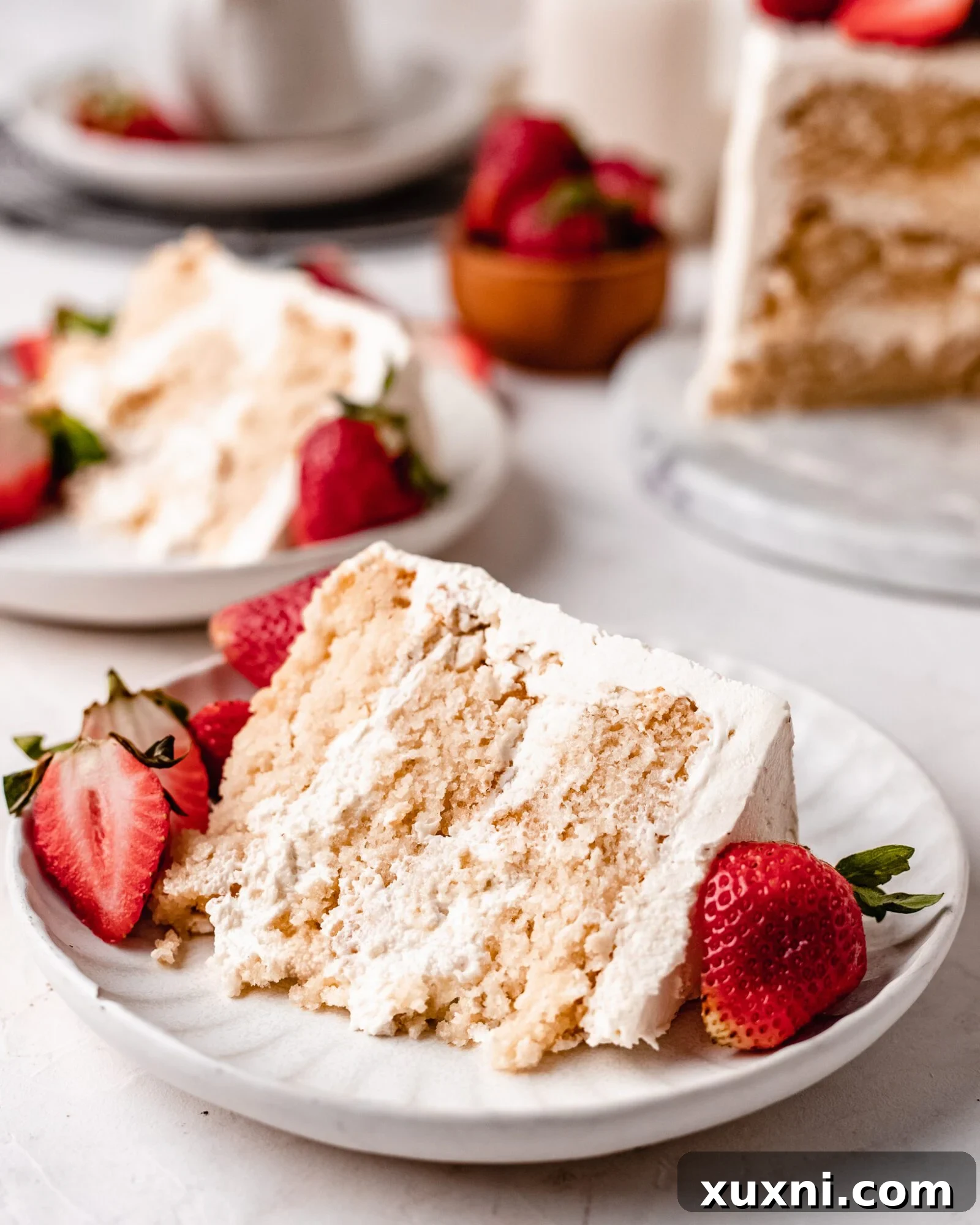
With its subtle yet captivating vanilla essence woven throughout the chiffon cake, complemented by the incredibly light crumb and the glossy, decadent fluffiness of the frosting, this cake is guaranteed to be a crowd-pleaser. Its exquisite flavor and texture will win over every palate, whether vegan or not!
Demystifying Aquafaba: A Guide for New Vegan Bakers
If you’ve landed on this strawberry vanilla chiffon cake recipe and are new to the world of vegan baking, or perhaps haven’t experimented with eggless recipes before, there’s no need to feel daunted. Vegan baking, particularly with ingredients like aquafaba, can be surprisingly straightforward and, in some aspects, even simpler than traditional baking!
As this is essentially a vegan sponge cake, the most significant departure from a conventional chiffon cake recipe is the brilliant incorporation of aquafaba. This versatile ingredient is nothing more than the viscous water found in a can of chickpeas – yes, the liquid you might typically drain and discard! Far from waste, aquafaba is a culinary marvel, serving as a fantastic 1:1 substitute for egg whites in countless traditional baking applications. It whips up into a stable, airy meringue, providing structure and lightness just like egg whites (you’ll find more detailed guidance on ratios and usage in the recipe card at the bottom of this post!). If the idea of using canned chickpea brine doesn’t appeal to you, fear not! You can easily make your own aquafaba at home from dried chickpeas. I highly recommend this excellent recipe by Lazy Cat Kitchen, which offers superb tips on how to properly reduce chickpea brine for optimal performance across various recipes, ensuring perfect results every time.
Crafting Your Own Eggless Strawberry Vanilla Chiffon Cake: A Step-by-Step Guide
Now that we’ve explored the fascinating world of chiffon cakes and the magic of aquafaba, let’s dive into the exciting process of making this incredible strawberry vanilla chiffon cake! As with all my recipes, comprehensive written instructions and precise ingredient measurements are conveniently located in the recipe card below. However, here, we’ll walk through the essential steps with additional insights and visuals to provide a clearer understanding and boost your confidence.
Before you begin, I highly recommend reviewing the numerous tips, FAQs, and troubleshooting advice provided in the subsequent sections, especially if this is your first time baking a chiffon cake, or specifically an eggless vegan sponge cake. A thorough read will equip you with all the knowledge needed to ensure a flawless baking experience!
We’ve already discussed the star ingredient, aquafaba, but let’s review the other key components for this delectable vanilla chiffon cake:
- Chilled Aquafaba (the magical egg white substitute)
- Cream of Tartar (essential for stabilizing the aquafaba meringue)
- Granulated Sugar (divided for both meringue and batter)
- All-Purpose Flour (the structural backbone of our cake)
- Baking Powder (provides additional lift for an airy texture)
- Sea Salt (enhances all the flavors)
- Unsweetened Applesauce (adds moisture and acts as a binder)
- Olive Oil (contributes to the cake’s signature moistness)
- Dairy-Free Milk (adds richness and liquid to the batter)
- Pure Vanilla Extract (infuses the cake with irresistible vanilla flavor)
We’ll delve into the delightful ingredients for the vegan Swiss meringue frosting in the next section. I assure you, this frosting alone is a game-changer; it’s the secret weapon that makes this vegan sponge cake taste anything but vegan. The combination creates a truly harmonious flavor and texture profile!
To begin crafting this exceptional chiffon cake, we’ll be baking it as a elegant layer cake rather than a traditional tube cake. Start by meticulously preparing your cake pans and preheating your oven to the precise temperature. As an avid baker, I always emphasize measuring out all ingredients beforehand; this mise en place ensures a smooth and stress-free baking process.
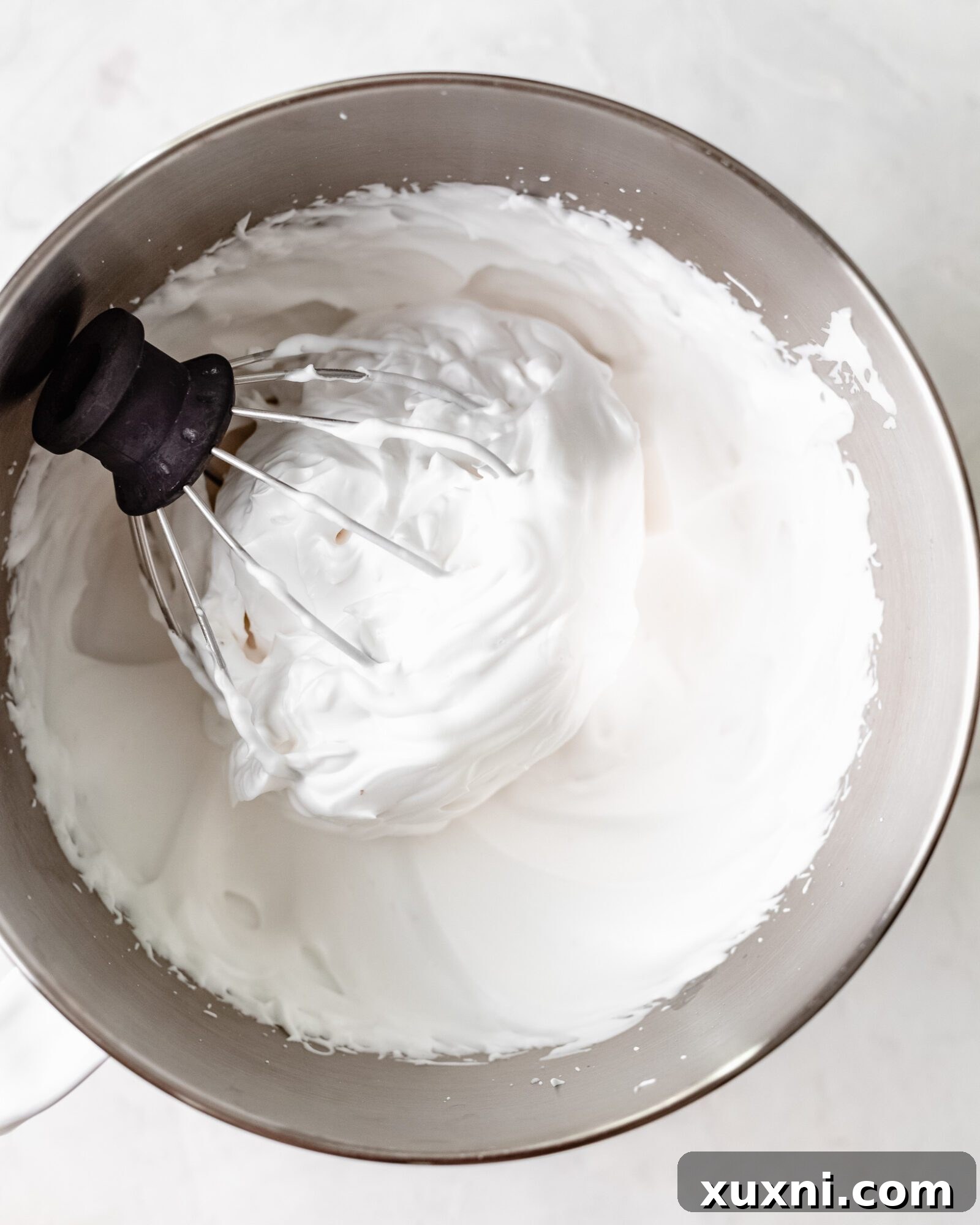
The foundational first step is to whip the chilled aquafaba to a state of nearly stiff peaks. Unlike some meringues that require very firm, dry peaks (like for vegan macarons), we’re aiming for something slightly softer but still robust enough to hold its shape well – think medium-firm to nearly stiff. You’ll incorporate the cream of tartar, a crucial stabilizer, and a portion of the granulated sugar into the aquafaba, then whip diligently until these almost-stiff peaks are achieved. This process typically takes me about 10-12 minutes in a stand mixer. It’s important to note that vegan meringue often requires a bit more whipping time compared to traditional egg white meringue, so patience is key here.
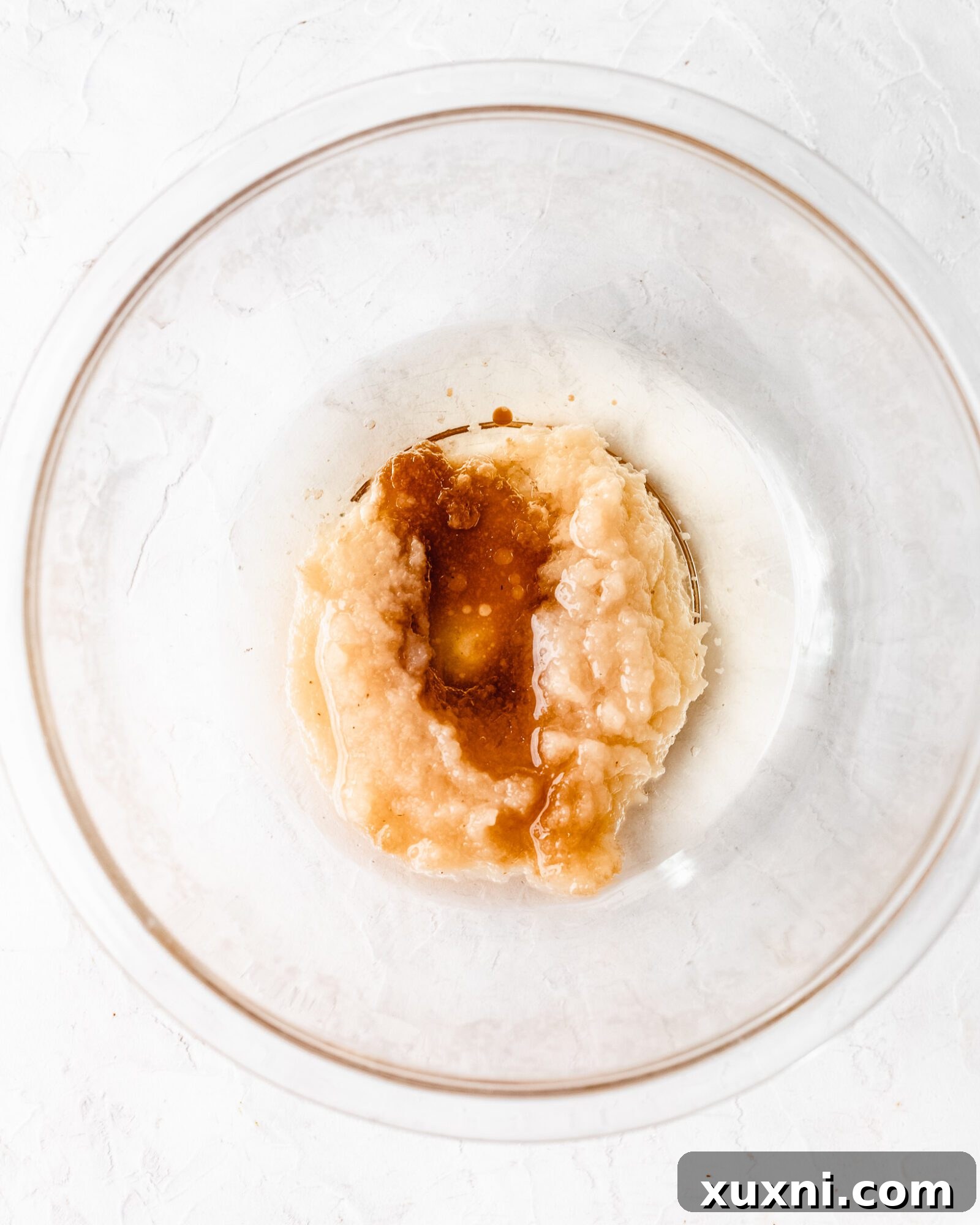
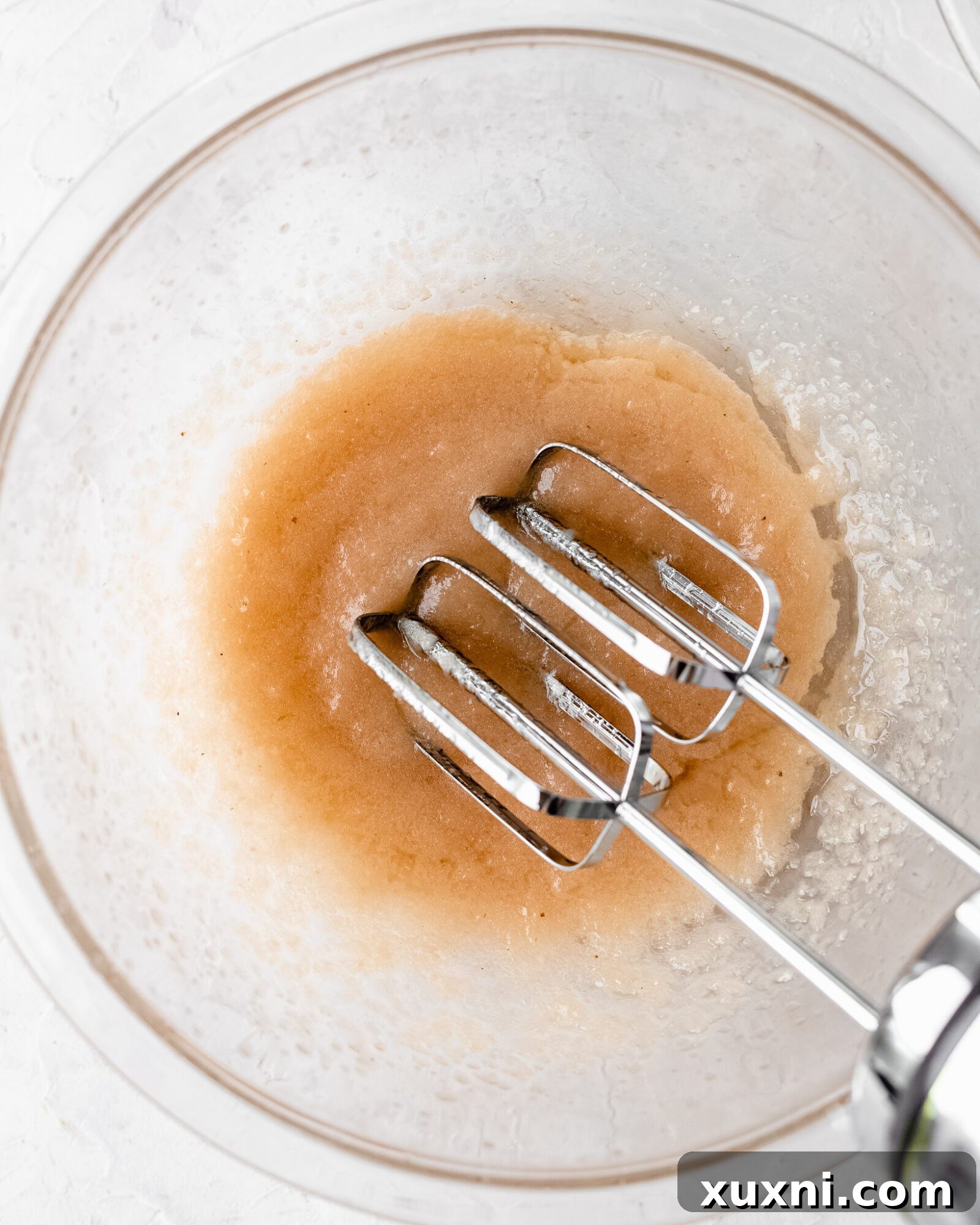
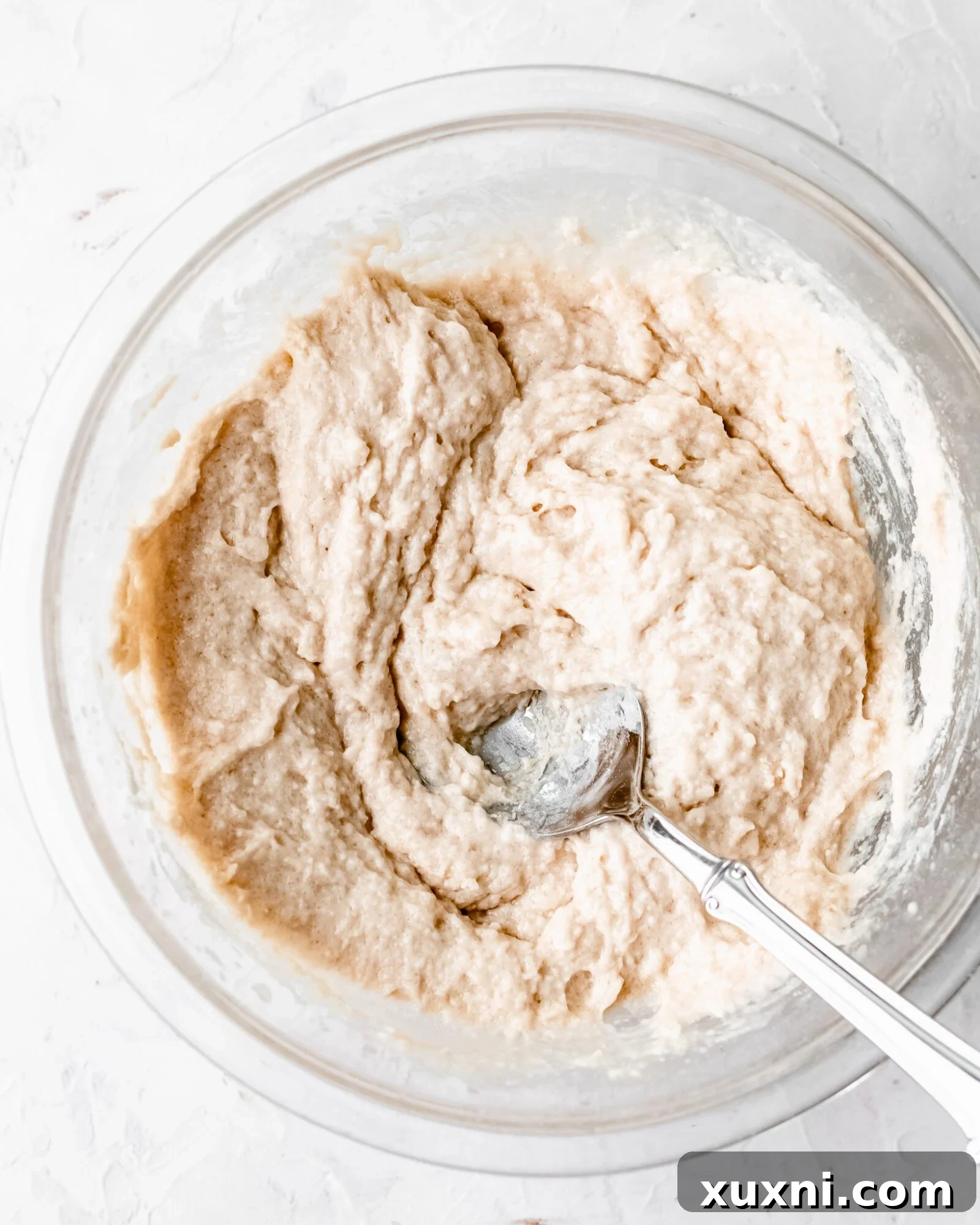
Once your aquafaba meringue has reached the ideal consistency, gently set it aside. Now, it’s time to prepare the rich and flavorful remaining cake batter. Begin by sifting together the all-purpose flour, the reserved granulated sugar, baking powder, and sea salt into a clean bowl. Sifting is vital for an ultra-light cake, preventing lumps and aerating the dry ingredients. In a separate medium bowl, whisk together the wet ingredients: the unsweetened applesauce, olive oil, dairy-free milk, and pure vanilla extract until well combined. Gradually fold the sifted dry ingredients into this wet mixture, mixing just until a thick, smooth cake batter forms. Be careful not to overmix at this stage, as it can lead to a tougher cake.
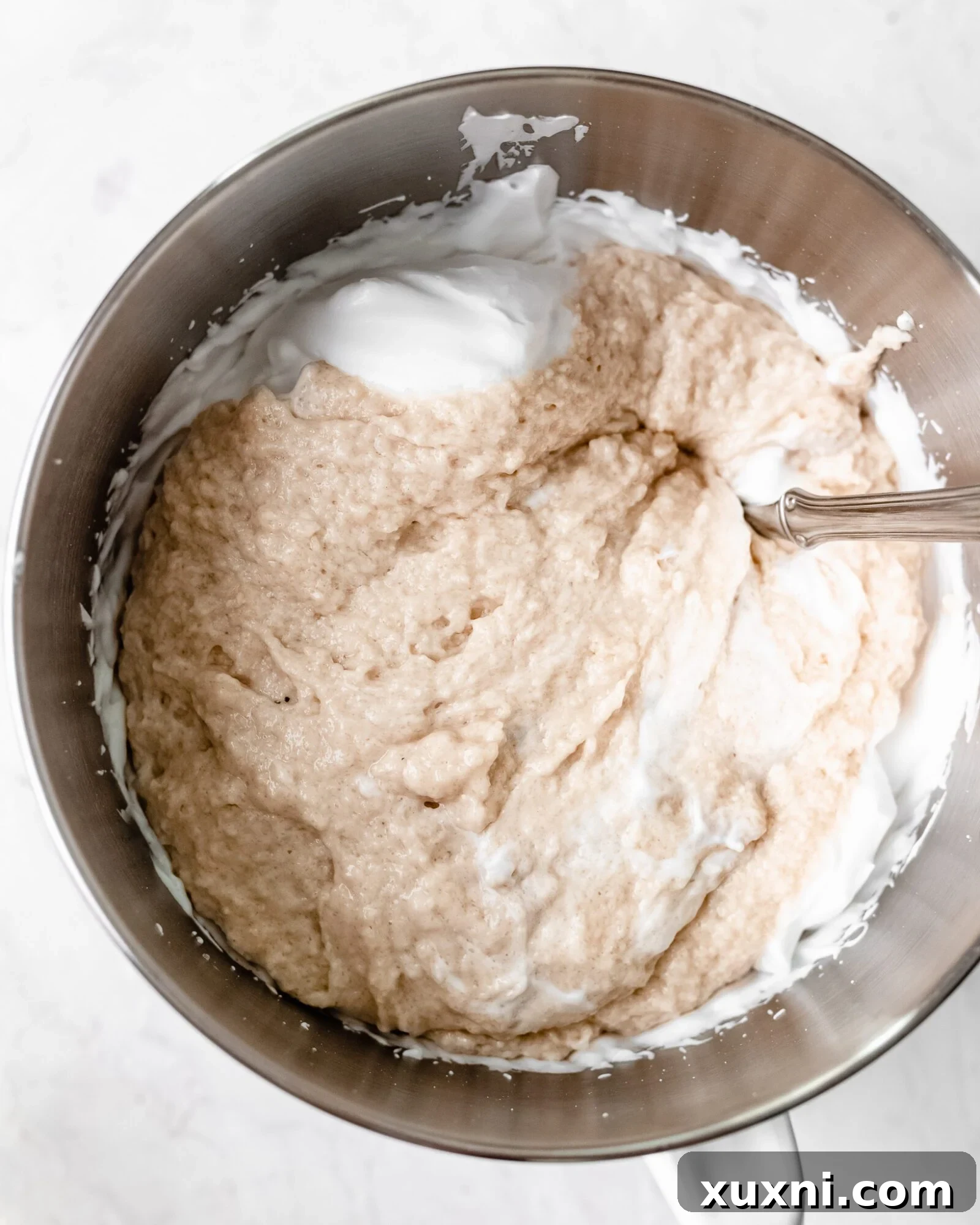
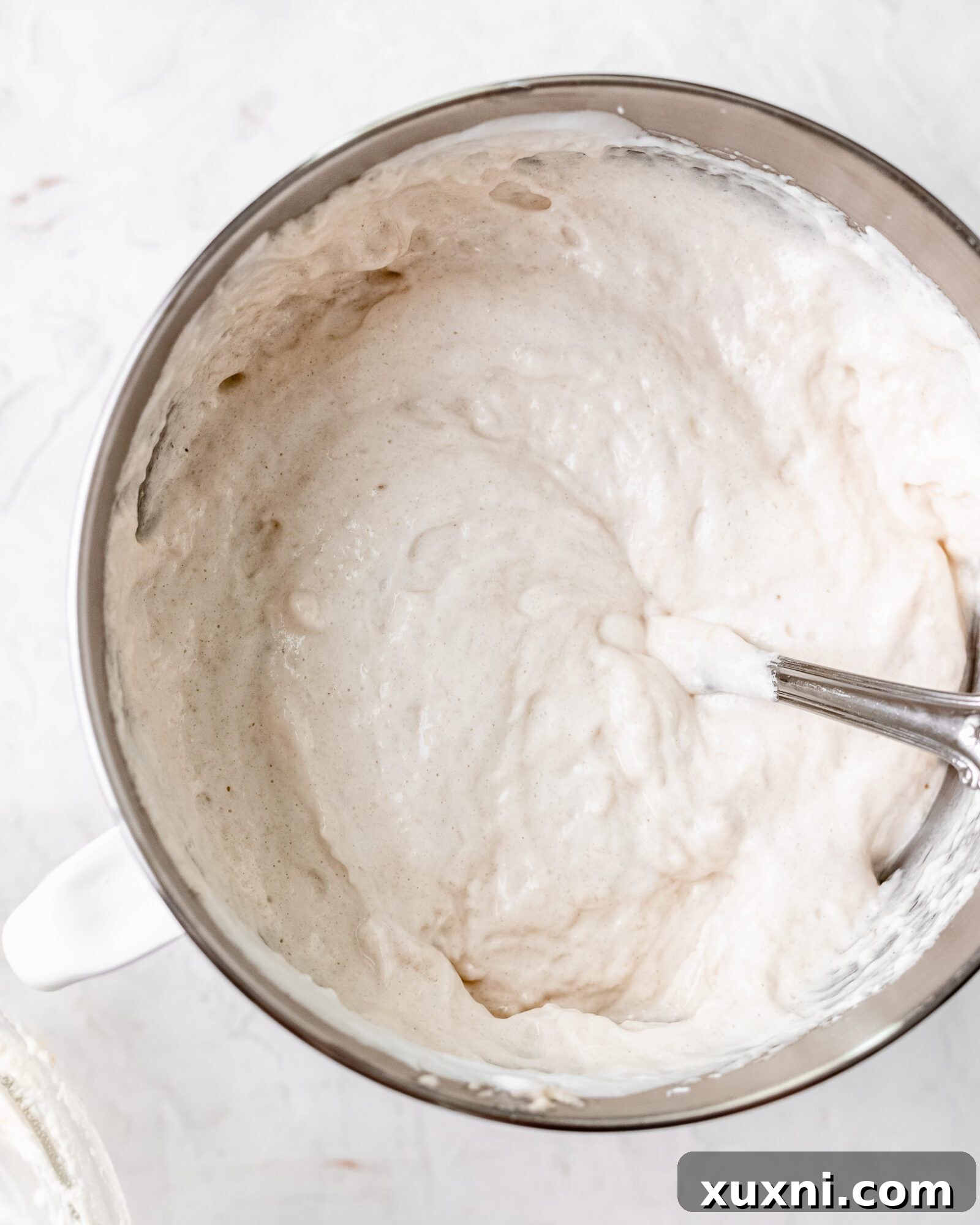
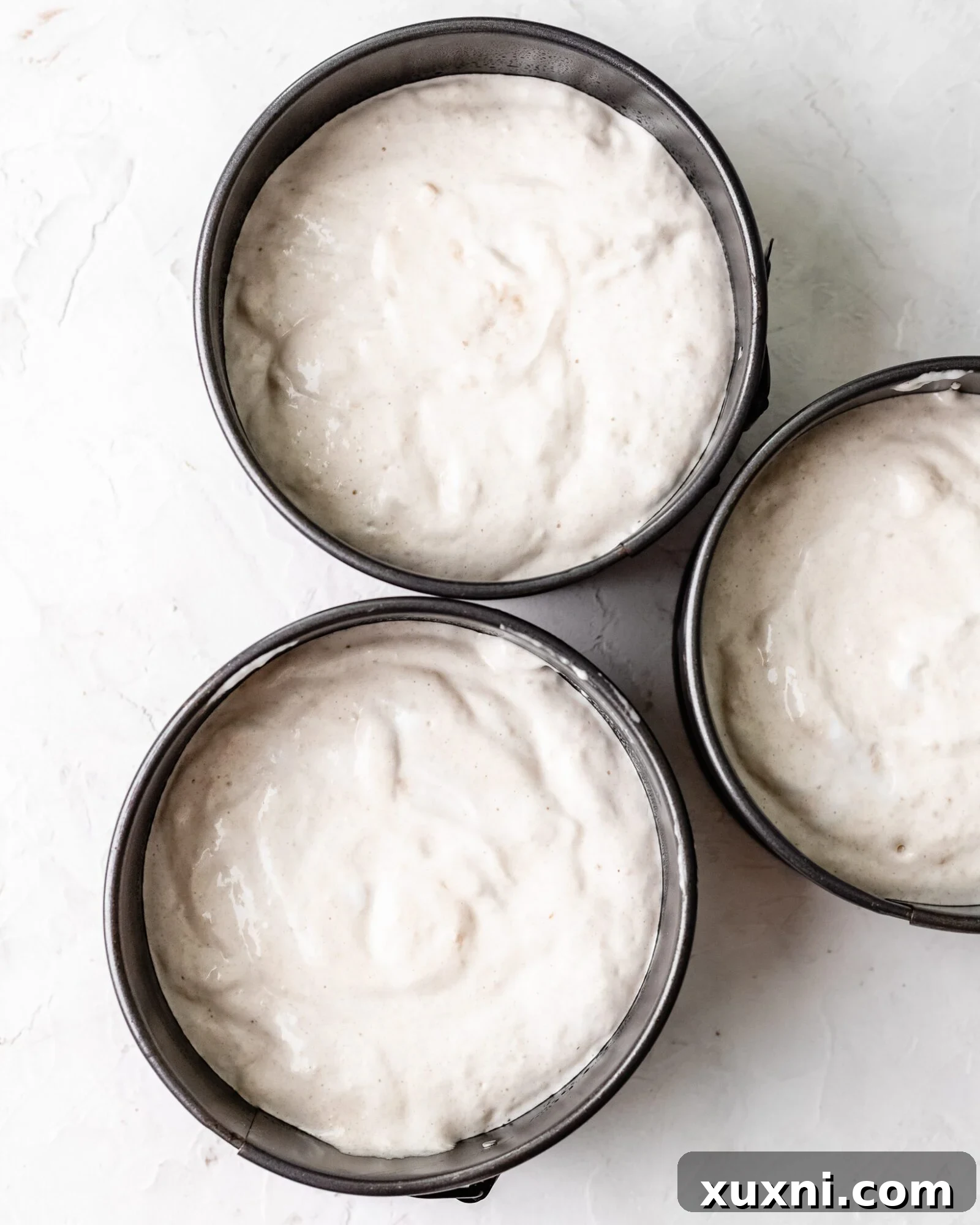
Next, we’ll delicately combine the airy meringue with the denser cake batter. This step requires a gentle touch to preserve the precious air bubbles incorporated into the aquafaba. Carefully fold the cake batter into the meringue bowl using a rubber spatula, employing a cutting and folding motion. Continue until no white streaks of meringue are visible, making sure to scrape the bottom of the bowl to ensure a uniform mixture. It might appear that you have a substantial amount of batter, but rest assured, this is normal for a beautifully risen chiffon cake! Divide the ethereal batter evenly among your prepared cake pans, then carefully transfer them to the preheated oven for baking.
A vital note on baking: you’ll observe that the cakes will puff up quite significantly in the oven, achieving an impressive height. Don’t be alarmed; they will gently settle back down as they cool. The most critical aspect is to ensure they don’t unexpectedly cave in and sink, a common chiffon cake challenge that we’ll address thoroughly in our troubleshooting section.
Once your cakes emerge from the oven, allow them to cool completely. This step is absolutely non-negotiable before proceeding to the equally delightful second part of this chiffon cake recipe: preparing the luscious vegan Swiss meringue frosting! Rushing this cooling process can lead to melted frosting and a compromised cake structure, so patience truly is a virtue here.
Crafting the Ultimate Vegan Swiss Meringue Buttercream
Okay, I’ve certainly built up the anticipation for this vegan Swiss meringue buttercream, and for good reason—it truly is the crowning glory of this eggless chiffon cake. Trust me when I say, the effort is undeniably worth it!
As with many beloved recipes that undergo a vegan transformation, we’ve made a few thoughtful adjustments to the traditional Swiss meringue buttercream method. I specifically chose the Swiss meringue style for its inherent stability and smooth texture, believing it would lend itself best to a successful vegan adaptation. While the process has been wonderfully simplified compared to its classic counterpart, the result is astonishingly similar in taste and luxurious mouthfeel. In fact, non-vegan taste testers have consistently been unable to distinguish it from a traditional buttercream, a testament to its incredible fidelity and deliciousness. You are going to be absolutely thrilled with this frosting!
For this divine vegan Swiss meringue buttercream frosting, you’ll need just a few simple ingredients:
- Chilled Aquafaba (our egg white replacement, crucial for volume and stability)
- High-Quality Vegan Butter (at room temperature for optimal creaming)
- Sifted Powdered/Caster Sugar (for sweetness and a smooth consistency)
That’s truly all it takes! With these three fundamental ingredients, you’re well on your way to creating a spectacular frosting. Begin by placing the room-temperature vegan butter into the bowl of a stand mixer fitted with the paddle attachment, or a large bowl if using a hand mixer. Cream the butter for a full 2-3 minutes until it becomes exceptionally light and fluffy. Next, incorporate the chilled aquafaba and continue to cream the mixture. You’ll observe a remarkable transformation: the butter will lighten in color, becoming even whiter and achieving an incredibly voluminous, airy texture. Finally, gradually add the sifted powdered sugar, continuing to beat the frosting until it reaches a super voluminous, satiny smooth, and beautifully glossy consistency. This indicates it’s perfectly emulsified and ready to use.
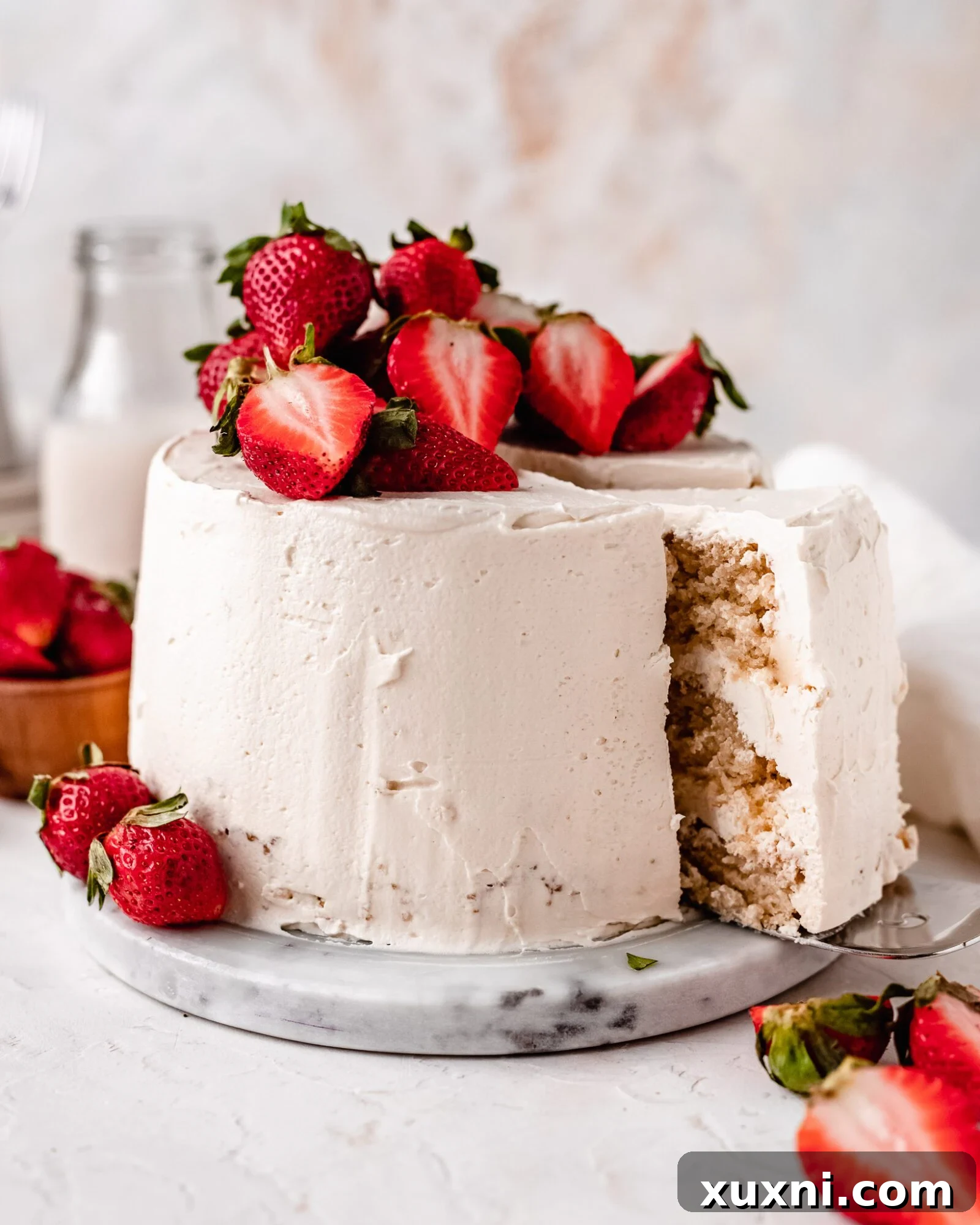
Once your chiffon cake layers are fully cooled and your buttercream is gleaming, it’s time for the art of assembly! You’ll find several detailed tips for frosting a layer cake in the recipe card instructions that will guide you to a flawless finish. You can enhance this strawberry chiffon cake by layering sliced fresh strawberries between the cake rounds for an extra burst of fruity flavor, or, as I prefer, simply arranging them artfully on top for a stunning presentation. The choice is yours, and either way, the results will be magnificent!
Essential Recipe FAQs & Baking Tips for Chiffon Cake Success
Baking a chiffon cake, especially a vegan and eggless version, can feel like a delicate dance. To ensure your experience is enjoyable and yields perfect results, I’ve compiled a list of frequently asked questions and crucial tips. Consider these your guiding stars for a stress-free baking journey!
- Precision in Measurement is Paramount: Always take the time to measure and weigh out all your ingredients meticulously before you begin. For a delicate recipe like this vegan chiffon cake, having everything ready (mise en place) is critical. This systematic approach eliminates last-minute rushes and minimizes the chance of missing an ingredient or making a measurement error.
- Embrace the Digital Scale for Accuracy: On the subject of measuring, using a digital kitchen scale will provide you with the most accurate and consistent results, far superior to volume measurements. While I provide cup measurements, remember that “1 cup of flour” can vary wildly depending on how it’s scooped. Always spoon flour into your measuring cup and level it off. However, weighing ingredients like flour and especially aquafaba in grams ensures precise ratios, which are vital for the delicate balance of a chiffon cake. I personally use a reliable digital scale that I purchased on Amazon for around $10, and it works flawlessly!
- Read the Entire Recipe First: This might seem obvious, but it’s particularly important for multi-step recipes like this vegan sponge cake. Familiarizing yourself with the full instructions, from start to finish, allows you to anticipate upcoming steps, understand the flow, and mentally prepare for each stage. The complete recipe card is located just below this extensive guide!
- Properly Prepare Your Cake Pans: Traditional chiffon cake recipes often advise against greasing the pan, suggesting the batter needs to “climb” the ungreased sides to achieve maximum height. However, through extensive testing with this aquafaba-based recipe, I’ve found it’s actually beneficial to lightly grease and line the pans. Aquafaba tends to be stickier than egg whites, and an ungreased pan can make unmolding a delicate chiffon cake a real challenge – believe me, I’ve had a few casualties! For this cake, I recommend lining the bottom of your pans with parchment paper and lightly greasing the walls with a neutral oil. The key is “lightly”—you want enough grease to prevent sticking, but not so much that the cake can’t adhere and climb slightly, allowing for a beautiful rise and easy release.
- Ensure Aquafaba is Chilled: Whether you’re using canned aquafaba or making your own, it is absolutely crucial that it is thoroughly chilled before you begin whipping, especially for the vegan Swiss meringue frosting. Chilled aquafaba whips up much more effectively, producing stable, sturdy bubbles that are essential for the cake’s lift and the frosting’s texture.
- Reducing Homemade Aquafaba for Optimal Consistency: If you opt to make your own aquafaba from dried chickpeas, you must ensure it is properly reduced until it reaches a thick, viscous consistency, similar to the brine from a can of good quality chickpeas. A thinner aquafaba will not whip to stable peaks, leading to a less successful cake and frosting.
- Layering with Strawberries: While I adore fresh strawberries on my strawberry chiffon cake, I typically reserve them for decorating the top. This is because incorporating fruit between layers can sometimes make crumb-coating and achieving a smooth exterior challenging, as the fruit can poke through the frosting. However, if you desire strawberries throughout your cake, you absolutely can layer them in the middle – just be prepared for a slightly trickier frosting process!
- For a Pure Vanilla Chiffon Experience: If you prefer to focus solely on the rich vanilla flavor, simply omit the strawberries entirely. To intensify the vanilla profile even further, consider adding 1 teaspoon of high-quality vanilla bean paste to your vegan Swiss meringue frosting – it adds both depth of flavor and beautiful specks of vanilla bean.
Can I Make This Vegan Sponge Cake Gluten-Free?
While I understand the desire for a gluten-free vegan sponge cake, I have not yet thoroughly tested this specific recipe using a 1:1 gluten-free baking flour blend. My primary focus during development was to perfect the delicate texture and structure for a truly authentic vegan chiffon cake. The unique protein structure in all-purpose flour plays a significant role in a chiffon cake’s rise and elasticity. However, you are welcome to experiment with a high-quality 1:1 gluten-free baking flour, such as Bob’s Red Mill Gluten-Free 1-to-1 Baking Flour. Please be aware that I cannot guarantee identical results for this chiffon cake when made gluten-free, as the crumb might differ. If you do try it, I’d love to hear about your experience in the comments!
Is a Stand Mixer Required for Whipping Aquafaba to Stiff Peaks?
While a stand mixer certainly makes the process considerably easier and quicker, it is not strictly necessary. Before I invested in a stand mixer, I spent a significant amount of time and elbow grease whipping aquafaba with a hand mixer. It will undoubtedly require more patience and effort on your part, potentially taking longer to achieve those nearly stiff peaks, but you can absolutely achieve the same beautiful, stable results with a good hand mixer. Just be prepared for a bit of an arm workout!
If I’m Not Vegan, Can I Just Make This a Regular Vanilla Chiffon Cake with Eggs?
As a dedicated vegan baker, my expertise lies in crafting delicious plant-based recipes, and I haven’t personally developed or tested this chiffon cake with egg whites. While the recipe card does provide an approximate aquafaba-to-egg-white ratio for those curious, I cannot speak to the precise results or necessary adjustments if you choose to use traditional eggs. I sincerely encourage you to try this vegan sponge cake exactly as written; you might be utterly amazed and won’t even realize it’s eggless! However, if you’re truly hesitant about using aquafaba, there are many wonderful traditional chiffon cake recipes available that utilize egg whites, and I wouldn’t want you to settle for anything less than perfection (don’t worry, my feelings won’t be hurt!).
Can I Use a Fluted Pan Instead of Making a Chiffon Layer Cake?
While you certainly can attempt to use a fluted tube pan for this chiffon cake, I personally find that using traditional round layer cake pans yields superior results for this specific recipe. I’ve experimented with a fluted pan before, and because this vegan chiffon cake is exceptionally delicate and a bit different in structure compared to a more traditional chiffon, it tends to perform better and unmold more cleanly as a layer cake. Don’t despair if you love the tube cake format, though! We are actively working on an amazing vegan angel food cake recipe that will be perfect for a fluted pan.
Chiffon Cake Troubleshooting: Common Issues and Solutions
There’s nothing quite as disheartening as a baking project that doesn’t quite turn out as planned – trust me, I’ve been there! Chiffon cakes, with their delicate balance of ingredients and precise techniques, can present a bit of a learning curve, especially if you’re new to making them. To help you navigate any potential challenges, I want to share some common issues I’ve encountered during my process of perfecting this vegan vanilla chiffon cake recipe. Hopefully, these insights will not only help you understand what went wrong if an issue arises but, more importantly, assist you in preventing problems from occurring in the first place!
The Case of the Sinking Cakes
A chiffon cake that sinks in the middle can be incredibly frustrating. This common issue typically stems from a few key factors:
- Insufficiently Whipped Meringue: The meringue (our aquafaba meringue, in this case) is the primary leavening agent for chiffon cakes. If it wasn’t whipped to nearly stiff peaks, it lacks the structural integrity to hold up the cake batter, leading to collapse. The solution is simple: whip the mixture longer. For first-timers, or those new to vegan meringue, I highly recommend consulting resources like this article from The Kitchn, which includes a video illustrating the various stages of meringue.
- Over-Whipped Meringue: While less common with aquafaba (which is generally quite forgiving), over-whipping egg whites can sometimes make them brittle and prone to collapse in the oven. With aquafaba, it’s quite difficult to over-whip to this extent, so focus primarily on achieving those nearly stiff peaks.
- Incorrect Oven Temperature: An oven that’s too hot can cause the cake to rise too quickly and then deflate, while one that’s too cool might not set the structure properly, leading to sinking. The ideal temperature for this chiffon cake is 325°F (160°C). Since oven temperatures can vary significantly from what they display, investing in an inexpensive oven thermometer is an excellent way to ensure your oven is consistently at the correct temperature.
Unraveling a Gluey Cake Texture
If your chiffon cake turns out with an unpleasantly dense or gluey texture, it’s often due to one of two reasons, similar to the sinking cake issue:
- Aquafaba Not Chilled: This might seem counterintuitive, as many traditional American chiffon cake recipes (where the cake reportedly originated!) call for room temperature egg whites. However, for aquafaba, using it chilled is paramount. Chilled aquafaba produces significantly sturdier and more stable air bubbles when whipped. These robust bubbles are crucial for supporting the cake’s structure, preventing both sinking and the development of a gluey texture. This tip is especially important if you’re making your own aquafaba; ensure it has cooled completely in the refrigerator before attempting to whip it.
- Excessive Flour: A common culprit, particularly if you’re not weighing your ingredients, is using too much flour. When measuring by volume (cups), it’s easy to inadvertently pack in more flour than needed, resulting in a heavier, glue-like texture. This underscores the importance of weighing your ingredients precisely with a digital kitchen scale. If you must use volume measurements, always remember to spoon your flour into the measuring cup and then level it off gently, rather than scooping directly from the bag.
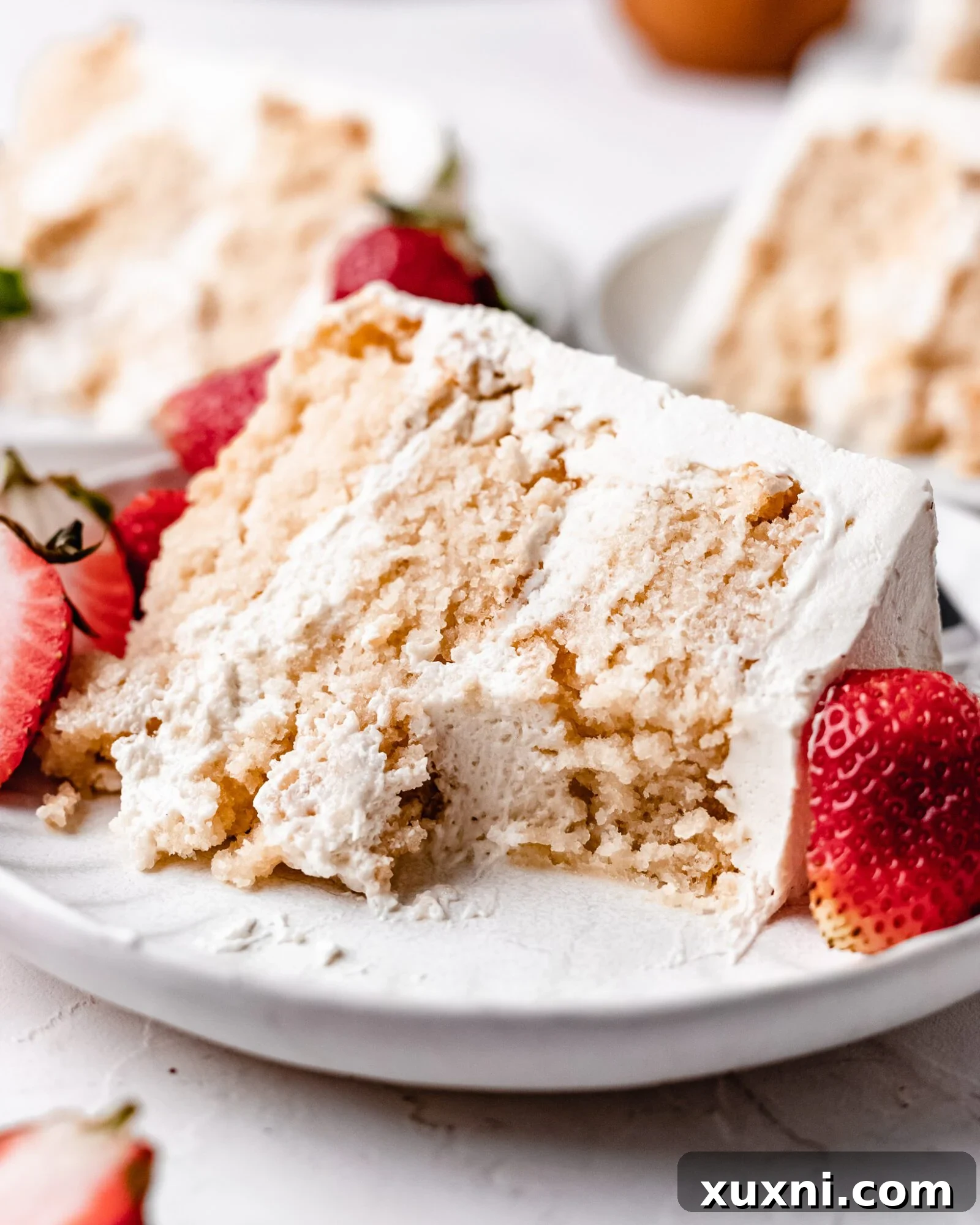
You are truly going to astound everyone when you present this phenomenal vegan Strawberry Vanilla Chiffon Cake! I’m willing to wager that not a single person will guess this incredibly light and moist chiffon cake is entirely plant-based. If you bake this secretly vegan sponge cake, please be sure to leave a comment and a rating ⭐️⭐️⭐️⭐️⭐️ below. Your feedback helps other enthusiastic bakers discover and enjoy this wonderful recipe!
As always, I absolutely adore seeing your magnificent creations on Instagram and Pinterest, so don’t forget to tag me there! Use the hashtags #thebananadiaries and #vegandesserts so I can celebrate your baking triumphs!
Happy Chiffon Cake Baking!
Discover More Classic Vegan Cakes You’ll Adore:
If you loved this vegan chiffon cake, you’re in for a treat with these other incredibly popular and delicious plant-based cake recipes from my collection:
The Best Vegan Vanilla Cake Ever
Truly Amazing Vegan Chocolate Cake
Decadent Vegan Red Velvet Cake with Cream Cheese Frosting
Effortless Vegan Lemon Cake with Raspberry Buttercream
Refreshing Vegan Blueberry Lemon Cake
Visually Stunning Vegan Zebra Cake (Marble Cake)
Don’t want to forget this incredible recipe? Pin it now to save for later on your favorite Pinterest recipe board!
Print
Easy Strawberry Vanilla Chiffon Cake Recipe (Eggless & Vegan)
5 Stars 4 Stars 3 Stars 2 Stars 1 Star
5 from 6 reviews
Author: thebananadiaries
Prep Time: 20
Cook Time: 30
Total Time: 50 minutes
Yield: 16 1x
Category: Dessert
Method: Baking
Cuisine: American
Diet: Vegan
Description
This Strawberry Vanilla Chiffon Cake is truly a must-make for any occasion! Experience the most delicate, moist, and fluffy eggless sponge cake, bursting with sweet vanilla flavors. Each layer is generously adorned with an irresistible homemade vegan Swiss meringue buttercream, making this chiffon layer cake an absolute delight for everyone!
Ingredients
Scale
For the Vegan Chiffon Cake:
- 150 grams chilled unsalted aquafaba (from a can of chickpeas)
- 1 tsp cream of tartar
- 1 1/3 cup (267 grams) granulated sugar, divided
- 2 1/4 cups (281 grams) all-purpose flour, sifted
- 2 tsp baking powder
- 1/4 tsp fine sea salt
- 3/4 cup (190 grams) dairy-free milk, at room temperature
- 1/2 cup (128 grams) unsweetened applesauce, at room temperature
- 1/2 cup (95 grams) light olive oil or neutral vegetable oil
- 2 tsp pure vanilla extract
For the Vegan Swiss Meringue Buttercream & Assembly:
- 1 cup (226 grams) high-quality vegan butter, softened to room temperature
- 1/4 cup (107 grams) chilled unsalted aquafaba
- 2 cups (224 grams) vegan confectioner’s sugar (powdered sugar), sifted
- 1 cup fresh sliced strawberries, for garnish and optional layering
Instructions
- Prepare Your Workspace and Pans: Begin by carefully measuring and weighing all your ingredients. This crucial “mise en place” ensures a smooth baking process. Preheat your oven to 325°F (160°C). Prepare three 6-inch round cake pans by lightly greasing their walls with oil and lining their bottoms with parchment paper. Set them aside.
- Whip the Aquafaba Meringue: In the clean bowl of a stand mixer fitted with the whisk attachment, or using a large bowl and a hand mixer, combine the chilled aquafaba and cream of tartar. Beat on medium speed for about 3 minutes until the mixture becomes visibly foamy. Gradually add 1/3 cup of the granulated sugar, then increase the speed to medium-high or high. Continue beating until you achieve nearly stiff, glossy peaks. This process typically takes 10-12 minutes in a stand mixer. The peaks should hold their shape firmly with only a slight curl at the tip, not drooping at all.
- Craft the Cake Batter: In a separate small bowl, whisk together the sifted all-purpose flour, the remaining granulated sugar, baking powder, and sea salt. Set aside. In a medium bowl, whisk together the dairy-free milk, unsweetened applesauce, olive oil, and vanilla extract until well combined. Add the dry flour mixture to the wet ingredients, and gently whisk just until the dry ingredients are fully incorporated and a thick, smooth batter forms. Be careful not to overmix.
- Gently Combine and Bake: Pour the prepared cake batter into the large bowl containing your whipped aquafaba meringue. Using a rubber spatula, gently fold the batter into the meringue using a cut-and-fold motion. Continue folding carefully until there are absolutely no visible white streaks of aquafaba meringue remaining, ensuring you scrape the bottom of the bowl. Be extremely gentle to avoid deflating the airy meringue. Divide the delicate batter evenly among your three prepared cake pans. Place the pans into the preheated oven and bake for 30-32 minutes, or until a toothpick inserted into the center of a cake comes out clean. The cake tops will appear lightly golden.
- Cool the Cakes Properly: Once baked, remove the cakes from the oven and allow them to cool in their pans for precisely 10 minutes. You’ll notice a slight natural settling or sinking, which is perfectly normal for chiffon cakes; as long as the centers don’t dramatically cave in, you’re on the right track! After 10 minutes, carefully invert the cakes onto a wire cooling rack to cool completely. It is crucial that the cakes are fully cooled before you even think about frosting them, as they are exceptionally delicate – more so than a traditional vegan vanilla cake. Handle with the utmost care!
- Prepare the Vegan Swiss Meringue Buttercream: Once your cake layers have completely cooled, it’s time to make the frosting. (If you prefer, you can opt for a simpler vegan vanilla buttercream instead.) To begin the Swiss meringue buttercream: In a stand mixer with a paddle attachment, or using a large bowl and a hand mixer, cream the softened vegan butter for 2-3 minutes until it’s light and fluffy. Add the chilled aquafaba and continue creaming until the mixture visibly lightens in color and becomes even fluffier. Finally, gradually add the sifted powdered sugar, continuing to cream until the frosting is silky smooth, incredibly voluminous, and beautifully glossy.
- Assemble and Decorate Your Chiffon Cake: Use the freshly prepared frosting immediately for optimal texture. Start by using about two-thirds of the frosting to layer the cakes and apply a thin crumb coat to the sides and top. This initial layer seals in any loose crumbs. For best results, chill the cake in the refrigerator for 20-30 minutes to set the crumb coat. You can also place the remaining frosting in the fridge to keep it cool. Once the crumb coat is firm, use the rest of the frosting to apply your final, smooth coating. Garnish the top generously with fresh sliced strawberries for a vibrant finish and serve!
- Storage Instructions: To keep any leftover Strawberry Vanilla Chiffon Cake fresh, store individual slices or the remaining cake in an airtight container. It will keep beautifully in the refrigerator for up to 3-4 days, or you can freeze it for up to 2 months. Thaw frozen cake in the refrigerator overnight before serving.
Notes
Understanding Aquafaba: This recipe offers a delightful vegan rendition of a classic chiffon cake, with aquafaba (chickpea brine) brilliantly stepping in as the replacement for egg whites. As a general guideline, approximately 2 tablespoons of aquafaba is equivalent to one egg white. If you are specifically looking for a chiffon cake recipe that uses traditional egg whites, I would recommend exploring other recipes tailored for that purpose, as my focus here is exclusively on plant-based baking. For this recipe, I’ve successfully used aquafaba directly from a can of chickpeas, but you do have the option to make your own from scratch, though this will add to your preparation time.
Crafting Your Own Aquafaba at Home: Should you choose to prepare your aquafaba from dried chickpeas, I highly recommend following the detailed recipe and tips provided by Lazy Cat Kitchen. Their guide will help you achieve the correct thick, viscous consistency essential for optimal whipping.
Gluten-Free Adaptations: As of now, I have not had the opportunity to test this specific chiffon cake recipe with a gluten-free 1:1 baking flour blend. My development prioritized perfecting the delicate eggless and dairy-free texture. I will certainly update this recipe if and when I perform such tests. If you decide to experiment with a gluten-free blend, please feel free to share your results in the comments section below – your feedback would be incredibly valuable!
Alternative Frosting Options: If the idea of a vegan Swiss meringue buttercream seems daunting or you simply prefer a different frosting style, you can absolutely substitute it with a classic vegan vanilla buttercream. This will still result in a delicious cake!