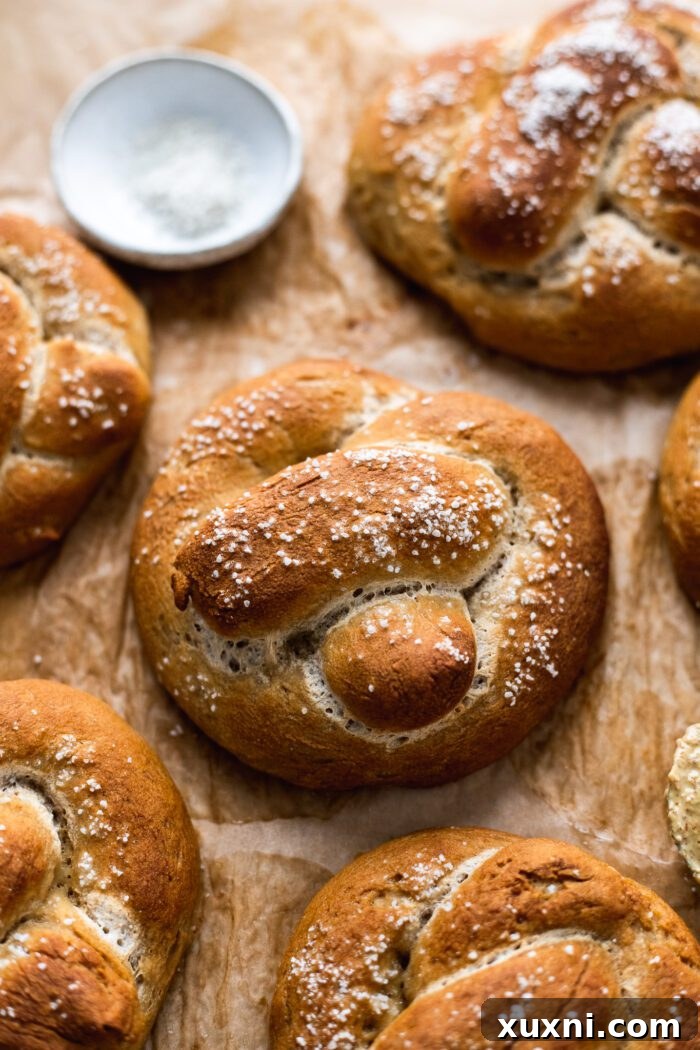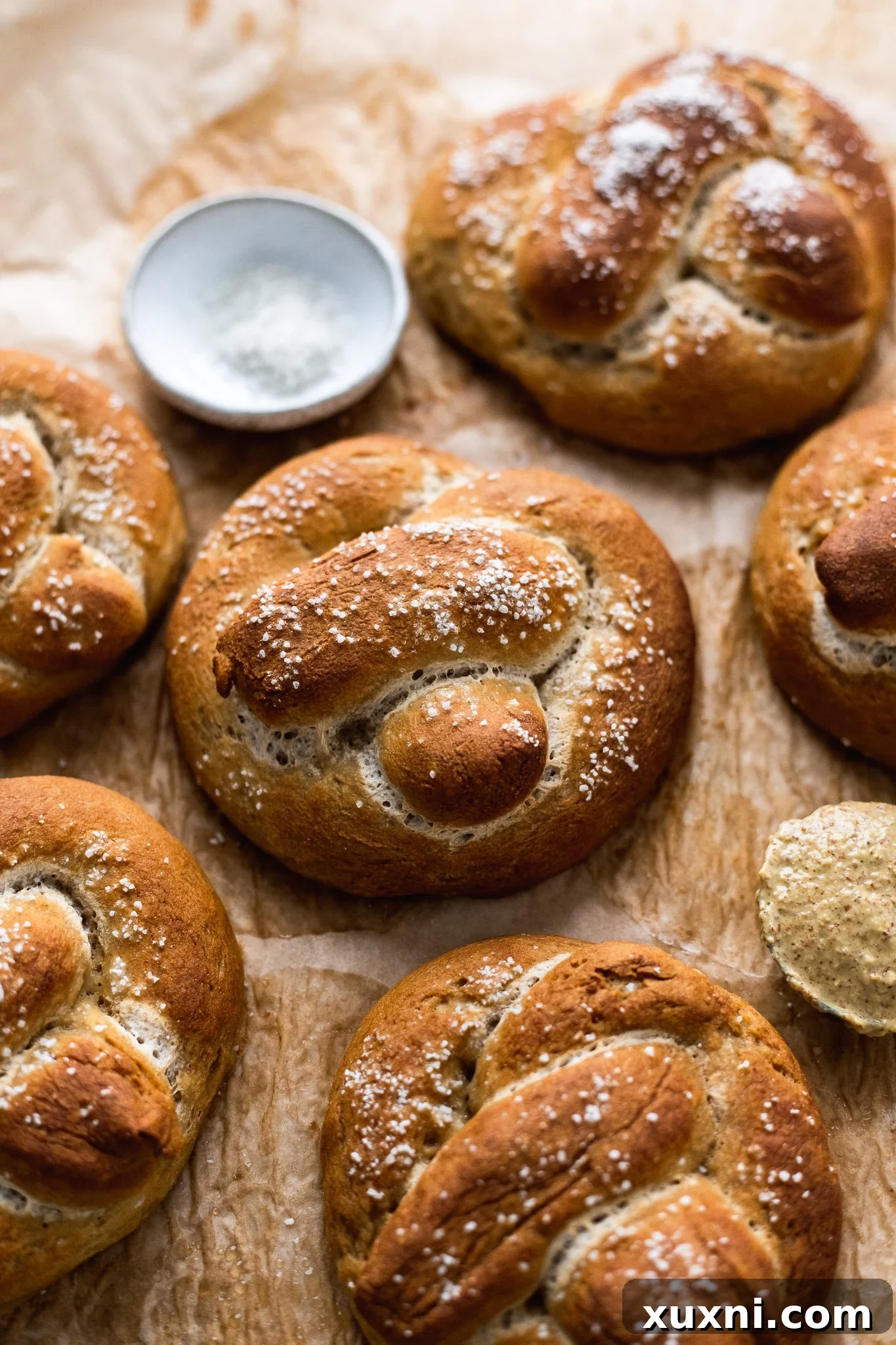
Craving that iconic soft pretzel experience but navigating a gluten-free or vegan diet? Look no further! This comprehensive guide reveals how to craft the most incredibly soft, plush, and satisfying gluten-free soft pretzels you’ve ever tasted. You’ll be amazed at how simple the ingredients are and delighted that no bread machine is needed to achieve bakery-quality results. Prepare for a truly authentic pretzel experience that’s entirely gluten-free, dairy-free, and egg-free.
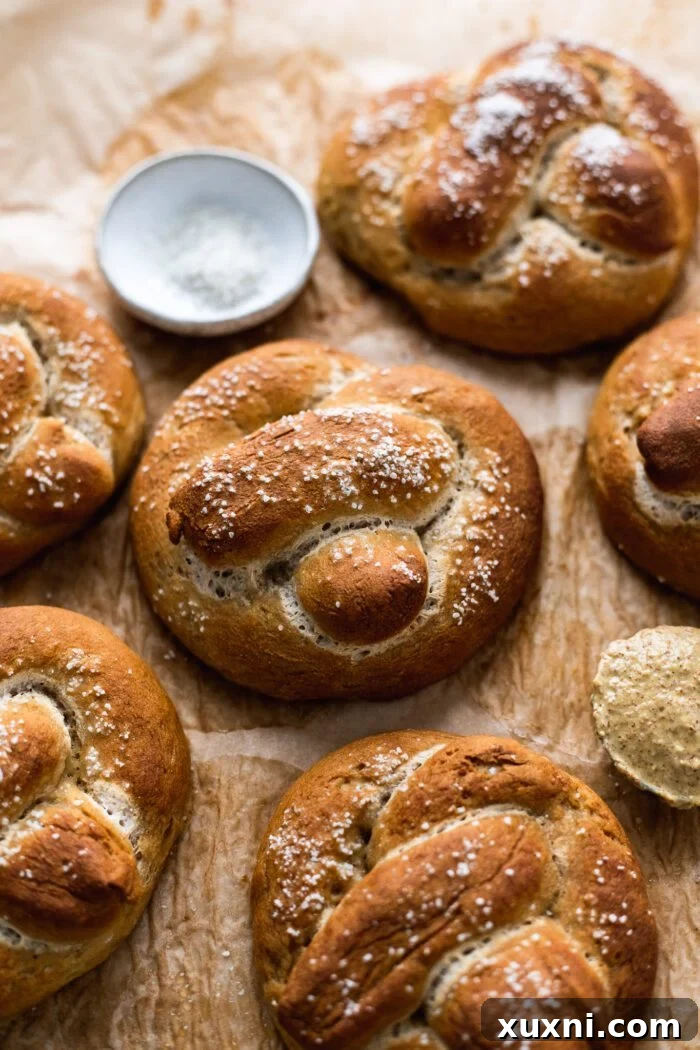
Table of Contents
- Why This is the Ultimate Gluten-Free Pretzel Recipe You Need
- The Magic Ingredient: Psyllium Husk Powder
- Essential Ingredients for Gluten-Free Pretzels
- Key Equipment for Perfect Pretzels
- The Science Behind the Pretzel’s Signature Baking Soda Bath
- Ingredient Deep Dive & Substitution Notes
- Step-by-Step Guide: How to Make Gluten-Free Vegan Soft Pretzels
- Creative Gluten-Free Pretzel Topping Ideas
- Storage and Reheating Tips
- Frequently Asked Questions (FAQs)
Why This is the Ultimate Gluten-Free Pretzel Recipe You Need
If you’ve been searching for a genuinely satisfying pretzel that accommodates gluten-free, vegan, dairy-free, or egg-free dietary needs, your quest ends here. This isn’t just a “good for gluten-free” recipe; it’s an outstanding soft pretzel recipe, period. Many gluten-free baked goods can be crumbly, gritty, or lack the authentic texture of their traditional counterparts. This recipe defies those expectations.
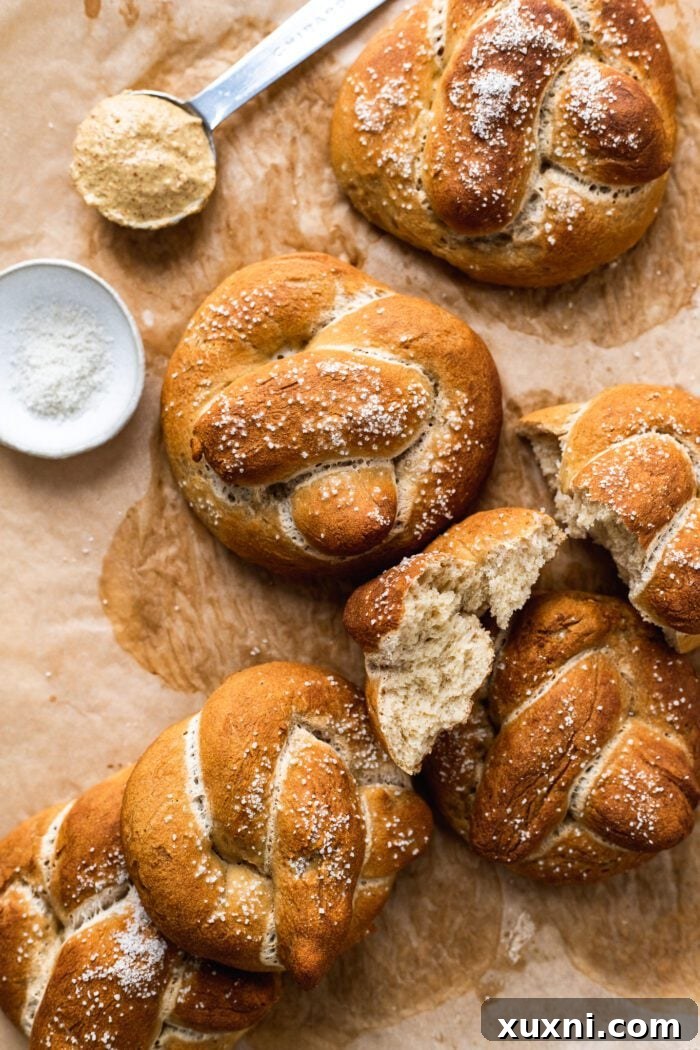
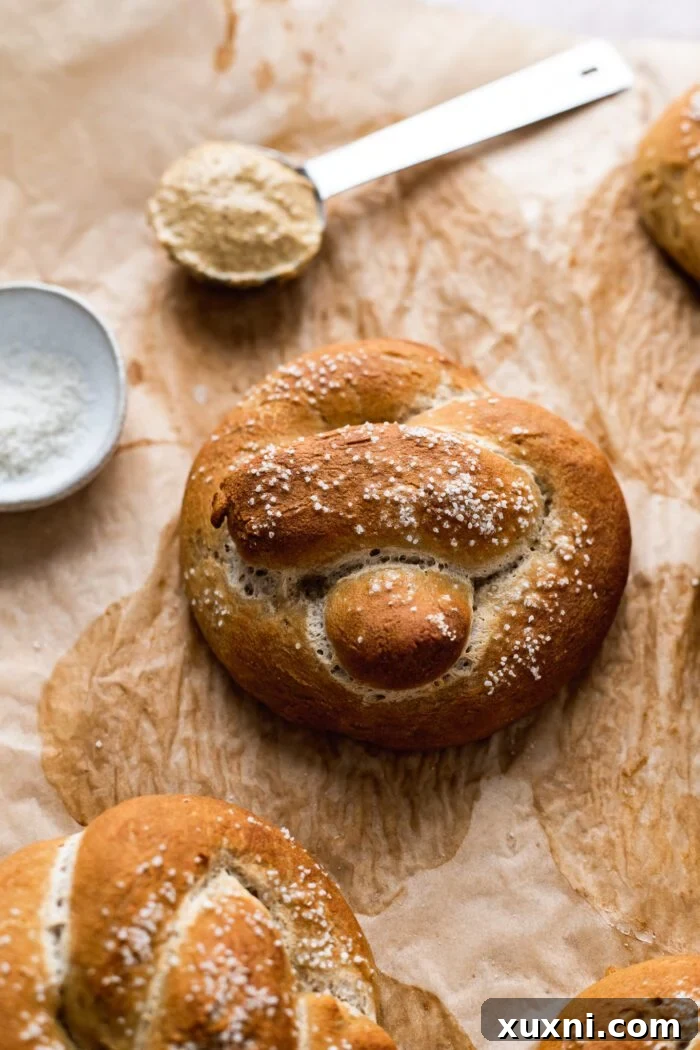
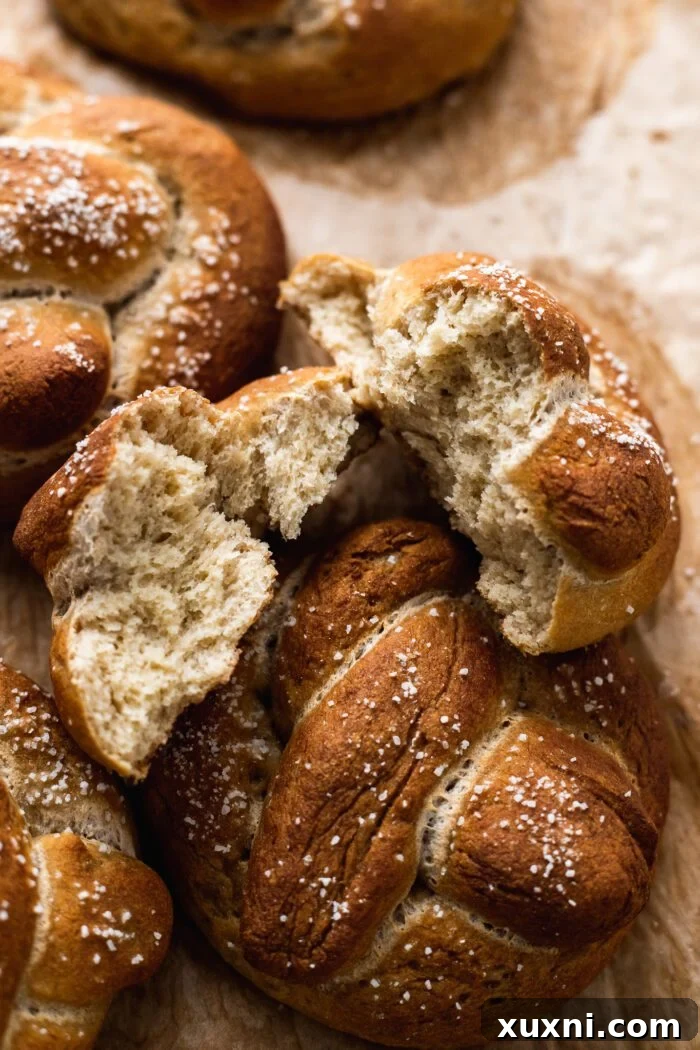
These gluten-free soft pretzels rival even my classic vegan soft pretzels in taste and texture. They boast an unbelievably soft, wonderfully chewy, and plush interior with that distinct, savory “pretzel-y” flavor. There’s absolutely no grittiness, and both the dough and the finished pretzels look, feel, and taste remarkably like classic wheat-based dough. You won’t miss the mall version one bit!
What makes them so exceptional? The secret weapon is **psyllium husk powder**. This incredible fiber plays a crucial role in creating the bread-like structure and elasticity that gluten typically provides, allowing us to achieve an authentic texture without relying on xanthan gum. Don’t worry, psyllium husk powder is widely available and incredibly versatile for many gluten-free bread recipes. Beyond this key ingredient, the rest of the components are simple pantry staples.
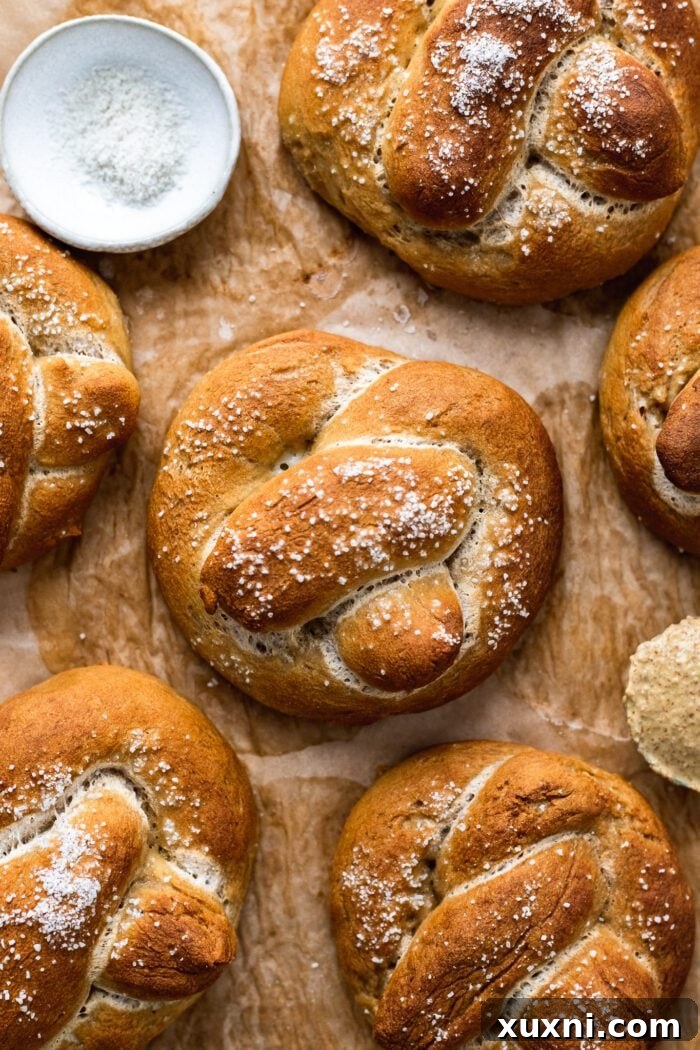
These soft pretzels are perfectly seasoned with just the right amount of salt, surprisingly easy to prepare, naturally vegan, nut-free, and corn-free. Even better, they’re often quicker to make than traditional soft pretzels! Just like my popular gluten-free focaccia bread, gluten-free sandwich bread, and gluten-free pizza dough, this gluten-free recipe is destined to become a staple in your kitchen. Get ready to fall in love with homemade pretzels, whether or not you follow a gluten-free or vegan diet!
The Magic Ingredient: Psyllium Husk Powder
In gluten-free baking, achieving the right texture can be a challenge. Gluten, a protein found in wheat, provides elasticity, structure, and chewiness to traditional bread and pretzel dough. Without it, baked goods can often be dense, crumbly, or overly stiff. This is where psyllium husk powder truly shines!
Psyllium husk is a form of soluble fiber derived from the seeds of the *Plantago ovata* plant. When mixed with liquid, it forms a gel-like substance that mimics the binding and elastic properties of gluten. In these soft pretzels, psyllium husk powder:
- **Provides Structure:** It helps the dough hold its shape during kneading, shaping, and rising, preventing it from crumbling or spreading too much.
- **Adds Chewiness:** That satisfying, elastic chewiness characteristic of a perfect soft pretzel is largely thanks to the psyllium husk.
- **Enhances Moisture Retention:** It helps keep the pretzels soft and fresh for longer by retaining moisture.
- **Replaces Xanthan Gum:** Many gluten-free recipes rely on xanthan gum as a binder, but psyllium husk powder is so effective that we can completely omit xanthan gum from this recipe, offering an alternative for those who prefer to avoid it.
For best results, always use psyllium husk *powder* rather than whole psyllium husks. The powdered form integrates more smoothly into the dough and provides a more consistent texture. If you only have whole husks, you’ll need to use less and potentially grind them finer for optimal results, but I strongly recommend the powder for this recipe.
Essential Ingredients for Gluten-Free Pretzels
Creating delicious gluten-free dough doesn’t require a complex array of specialty flours. This recipe simplifies the process by utilizing just two key flours, combined with a few other crucial elements. If you’re a seasoned gluten-free baker, these ingredients will likely be familiar. If you’re new to the world of gluten-free baking, don’t worry – we’ll explain each one!
Here’s a breakdown of what you’ll need:
- Tapioca Starch (or Tapioca Flour): These terms are interchangeable. Tapioca starch is derived from the cassava root and is essential for achieving the beloved chewy texture in our gluten-free pretzels. It acts as a fantastic binder, helping to hold the dough together and ensure a soft, pliable crumb. Its inclusion also eliminates the need for additional corn starch or arrowroot starch.
- Millet Flour: This naturally gluten-free whole grain flour is my top choice for its ability to create a wonderfully soft and tender texture in gluten-free breads. It’s a versatile flour that I always keep stocked in my pantry. While millet flour is highly recommended, check our substitution notes below if you need alternatives.
- Psyllium Husk Powder: As discussed, this is the cornerstone of our recipe, providing the necessary elasticity and structure to mimic gluten. It’s responsible for the bread-like consistency and allows us to make these pretzels entirely without xanthan gum. Using the powdered form is crucial for the best results; whole husks require a different ratio and can lead to a less smooth dough.
- Quick-Rise Yeast: This recipe is specifically formulated for quick-rise (or instant) yeast. This type of yeast works faster and can be mixed directly with dry ingredients, making the process more efficient. Please avoid active dry yeast, as the rising method and timings in this recipe are not designed for it, and your dough will take significantly longer to proof.
- Maple Syrup: A touch of maple syrup serves a vital purpose: it provides the necessary food for the yeast, allowing it to activate and thrive, resulting in a perfectly risen, airy dough. You can also use granulated sugar or light brown sugar.
- Warm Water: The ideal temperature of the water is critical for yeast activation. It creates the perfect environment for the yeast to “wake up” and begin its work, contributing to the dough’s rise and overall texture.
- Apple Cider Vinegar: This ingredient is a secret weapon in gluten-free baking. The acidity helps to stabilize the air bubbles within the dough, leading to a more consistent and bread-like texture by strengthening the protein structure of the gluten-free flours.
- Baking Soda: This powerful ingredient doesn’t go into the dough itself but is the star of the traditional pretzel bath. More on its importance below, but it’s essential for achieving that characteristic pretzel flavor and deep brown crust.
- Sea Salt: We use finely ground sea salt within the dough for balanced seasoning and larger, flaky sea salt to sprinkle on top of the pretzels, providing that classic salty crunch.
Key Equipment for Perfect Pretzels
While this recipe is designed to be accessible, having the right tools can make the process smoother and yield even better results. Here’s what I recommend:
- Stand Mixer with Dough Hook: This is highly recommended for ease and efficiency. The dough hook kneads the dough effectively, ensuring a consistent texture with minimal effort.
- Large Mixing Bowl & Wooden Spoon: If you don’t have a stand mixer, don’t worry! You can still achieve wonderful pretzels by hand. Just be prepared for a bit more arm work to get the dough properly combined and kneaded.
- Pastry Cutter or Large Kitchen Knife: Essential for cleanly dividing the dough into equal portions, which helps in creating uniform pretzels.
- Kitchen Scale: Crucial for accurate measurement, especially with gluten-free flours. Unlike traditional baking where volume measurements (cups) can be forgiving, gluten-free baking thrives on precision. Weighing your ingredients ensures consistent results every time.
- Ruler: A simple ruler is incredibly helpful for measuring the length of your dough ropes, guaranteeing evenly sized and perfectly shaped pretzels.
- Baking Sheet: You’ll need at least one, preferably two, lined with parchment paper for resting and baking the pretzels.
- Parchment Paper: Prevents sticking and makes for easy cleanup.
- Large Pot: For preparing the crucial baking soda bath. Choose one large enough to comfortably boil one or two pretzels at a time.
- Slotted Spoon or Spider Strainer: For safely removing the boiled pretzels from the hot baking soda bath.
The Science Behind the Pretzel’s Signature Baking Soda Bath
The unique characteristics of a pretzel – its irresistible chewiness, deep brown crust, and distinctive flavor – are not just from baking; they come primarily from a crucial step: the baking soda bath. This technique, also shared with bagels, sets pretzels apart.
Boiling the pretzels before baking is what gives them their signature chewy texture. This is true for both traditional and gluten-free pretzels. The brief dip in hot water gelatinizes the starches on the surface of the dough, creating a firm exterior that helps the pretzel hold its shape and develop that satisfying chew once baked.
The addition of **baking soda** to the boiling water is the game-changer that transforms a chewy bread into a true pretzel. Baking soda creates an alkaline solution. When the pretzel dough hits this alkaline bath, a chemical reaction known as the Maillard reaction is greatly enhanced. This reaction is responsible for:
- The Classic Pretzel Flavor: Without the baking soda, you’d end up with pretzel-shaped bagels – delicious, but lacking that iconic tangy, salty pretzel taste. The alkalinity promotes the formation of specific flavor compounds.
- The Deep Brown Coloring: The Maillard reaction accelerates browning, giving pretzels their characteristic dark, shiny, and appetizing crust. This rich color is difficult to achieve with just baking alone.
It’s important to control the boiling time in the baking soda bath. Too short, and you won’t get the full effect; too long, and the pretzels can absorb too much baking soda, leading to an overly soapy flavor. Follow the recommended 20-25 second boiling time precisely for the perfect balance of flavor and texture.
Ingredient Deep Dive & Substitution Notes
Understanding each ingredient’s role and potential substitutions is key to successful gluten-free baking. Here are more detailed notes:
- Tapioca Starch: As mentioned, this may be labeled as tapioca flour. They are the exact same product. There is no direct substitution for tapioca starch in this recipe, as it’s crucial for the chewy texture and binding properties. Using something else will significantly alter the final result.
- Millet Flour: While I highly recommend sticking with millet flour for its superb texture contribution, if you absolutely must substitute, oat flour (ensure it’s certified gluten-free) or sorghum flour are the closest alternatives. However, please be aware that the final texture may not be identical. These flours can be a bit denser or absorb liquid differently, so watch your dough consistency.
- Psyllium Husk Powder: This ingredient is non-negotiable for this recipe. It cannot be swapped out, not even for xanthan gum. Psyllium husk behaves entirely differently in how it absorbs liquid and forms a gel, directly influencing the dough’s elasticity and structure in a way xanthan gum cannot replicate for this specific recipe’s success. For consistent results, I recommend Kate’s Natural psyllium husk powder, which you can easily find on Amazon.
- Maple Syrup: This acts as food for the yeast. You can readily substitute it with an equal amount of granulated sugar (ensure it’s organic if you’re keeping the recipe strictly vegan, as some white sugars are processed with bone char) or light brown sugar for a slightly deeper, more molasses-like flavor.
- Quick-Rise Yeast: Again, do not use active dry yeast. Quick-rise yeast is specifically chosen for its faster activation and ability to be mixed directly with other dry ingredients, streamlining the process. Using active dry yeast would require activating it separately in warm liquid first and would extend the proofing time significantly, making it incompatible with the recipe’s timeline.
- Warm Water: The ideal temperature for activating yeast is typically between 105-115°F (40-46°C). Water that is too hot will kill the yeast, while water that is too cold will inhibit its activation. Use a kitchen thermometer for precision.
Step-by-Step Guide: How to Make Gluten-Free Vegan Soft Pretzels
Making these pretzels is a straightforward process, but attention to detail, especially in gluten-free baking, ensures perfect results. Follow these steps for deliciously soft, chewy, and authentic pretzels.
- Preparation is Key: Begin by measuring and weighing all your ingredients precisely. For gluten-free baking, a kitchen scale is your best friend! Line a large baking sheet with parchment paper; this will be for your shaped pretzels. Fill a large pot with 6 cups of water and add the ½ cup of baking soda. Set this aside for now; you’ll bring it to a boil later, once the dough has proofed. Take a moment to read through all instructions before you start – organization makes for a smoother baking experience.
- Combine Dry Ingredients: In the bowl of your stand mixer (or a large mixing bowl if kneading by hand), thoroughly whisk together the millet flour, tapioca starch, finely ground sea salt, psyllium husk powder, and quick-rise yeast. Ensure all components are evenly distributed to guarantee a consistent dough.
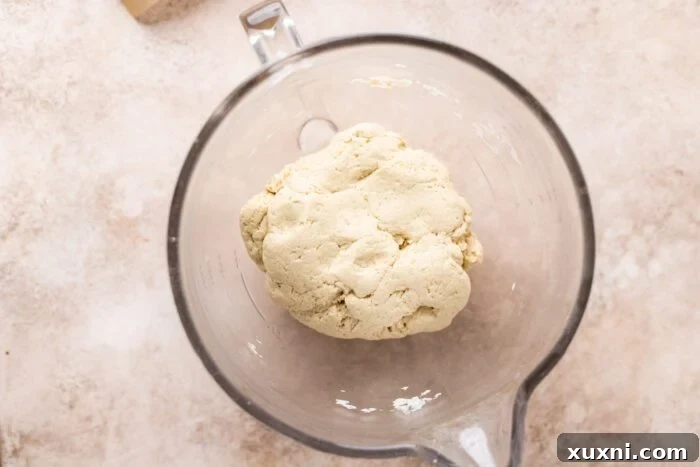
- Form the Dough: Now, add the lukewarm water, maple syrup, and apple cider vinegar to your dry mixture. If using a stand mixer, attach the dough hook and mix on medium speed. If working by hand, use a sturdy wooden spoon. Mix until the ingredients come together to form a thick, consistent, and slightly tacky dough. This typically takes about 2-3 minutes in a stand mixer to come together, followed by 4-5 minutes of kneading. If kneading by hand, it might take 5-7 minutes to combine before you even begin the kneading process. Knead for an additional 4-5 minutes by hand until the dough feels elastic and smooth. The dough should resemble traditional pretzel dough in appearance and texture.
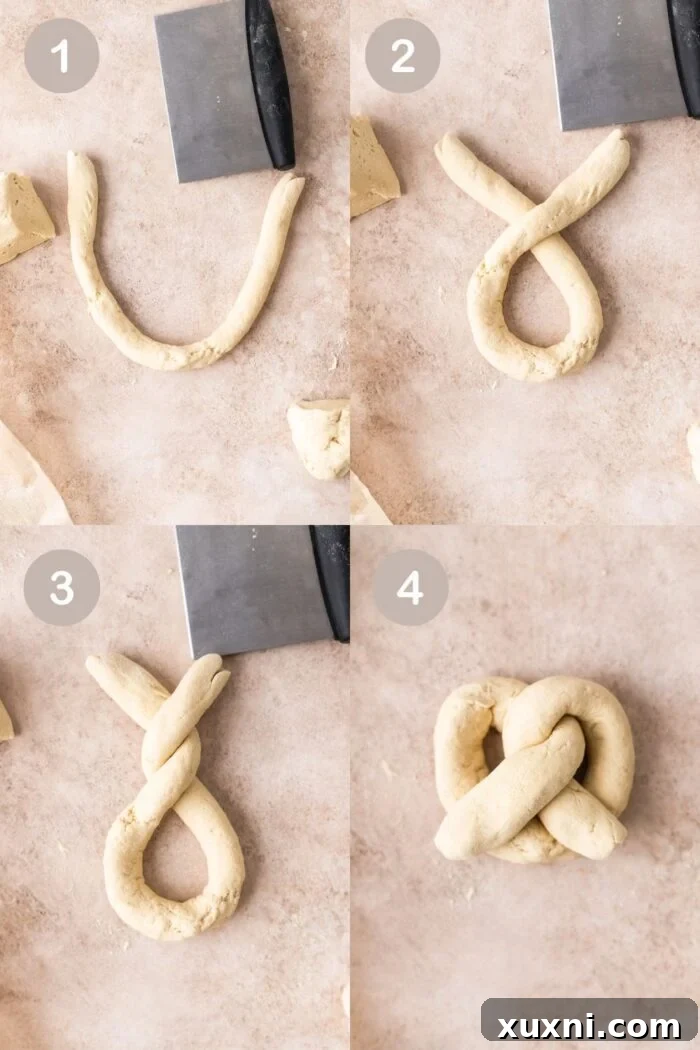
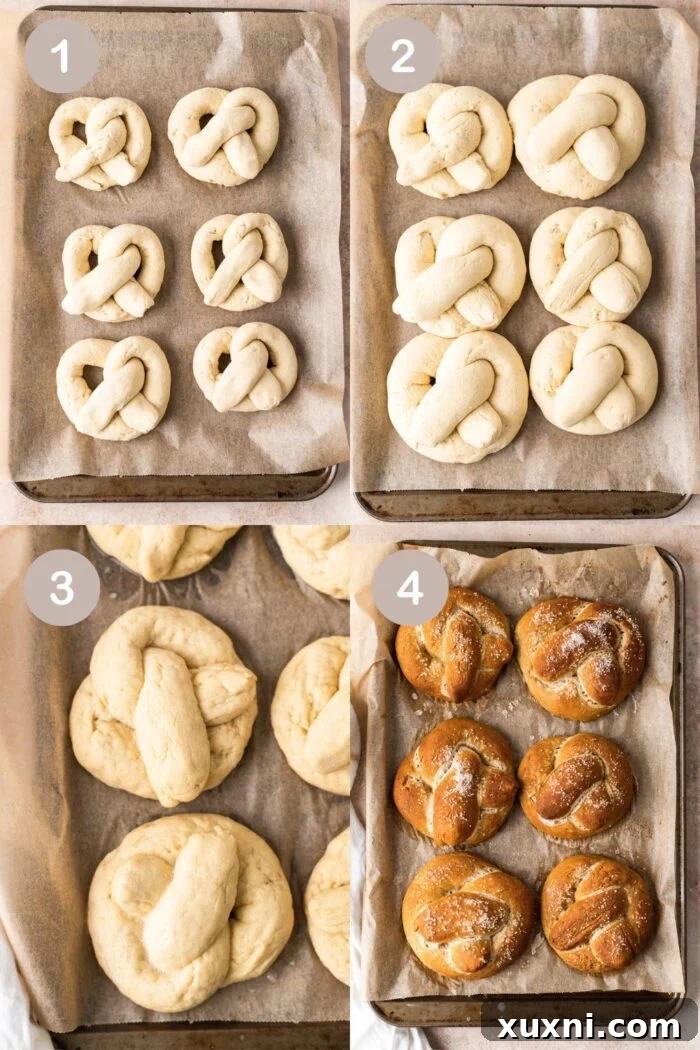
- Shape Your Pretzels (Immediately!): Unlike some bread recipes, there’s no initial rise needed before shaping. Lightly flour a clean work surface with millet flour. Divide your dough into 6 equal pieces using a pastry cutter or knife – using a kitchen scale here can help ensure even sizing. Take one piece of dough and roll it into a long, thin rope, approximately 18 to 20 inches in length. Aim for an even thickness throughout the rope. To form the classic pretzel shape, cross the two ends of the rope once, then twist them over each other a second time. Gently fold this twisted section down towards the bottom curve of the dough and press the ends firmly into the dough to secure the shape. Place the shaped pretzel onto your prepared parchment-lined baking sheet. Repeat this process for the remaining 5 pieces of dough. Once all are shaped, lightly cover the pretzels on the baking sheet with a clean dish towel.
- Proof and Prepare the Bath: Place your covered pretzels in a warm spot in your kitchen to proof (rise). They should almost double in size, which typically takes about 30 minutes. While the pretzels are proofing, begin heating your large pot of water with baking soda on the stove. Bring it to a rolling boil. Preheat your oven to 425°F (220°C).
- The Baking Soda Bath: Once the water is boiling and your pretzels have adequately proofed, carefully transfer 1-2 pretzels into the boiling water using a slotted spoon or spider strainer. It is absolutely crucial to **boil each pretzel for no longer than 20-25 seconds.** Use a timer! Exceeding this time will cause the pretzels to absorb too much baking soda, resulting in an undesirable soapy taste. After 20-25 seconds, remove the pretzels with the slotted spoon, allowing excess water to drain, and place them back onto the parchment-lined baking sheet. Repeat this quick boiling process for all remaining pretzels.
- Bake to Golden Perfection: Immediately after the baking soda bath, sprinkle the boiled pretzels generously with flaky sea salt. Transfer the baking sheet to your preheated oven. Bake for 15-18 minutes, or until the pretzels are beautifully browned and have developed a shiny, rich crust. The exact baking time may vary slightly depending on your oven.
- Serve and Enjoy!: Carefully remove the perfectly baked pretzels from the oven. These are best enjoyed warm, fresh out of the oven! Dip them into your favorite mustard sauce, a homemade vegan cheese sauce, or explore the topping ideas below. Enjoy every soft, chewy bite!
Creative Gluten-Free Pretzel Topping Ideas
While a classic soft pretzel with flaky sea salt is undeniably delicious, you can elevate your homemade gluten-free pretzels with a variety of exciting toppings. Apply these after the baking soda bath and before baking for the best adhesion and flavor integration.
- Cinnamon Sugar: For a sweet treat, brush the pretzels with melted vegan butter, then generously sprinkle a mixture of cinnamon and sugar.
- Vegan Cheddar or Jack Cheese: Sprinkle shredded vegan cheese over the pretzels before baking for a gooey, savory delight.
- Garlic and (Vegan) Butter: Brush with melted vegan butter mixed with minced garlic for a savory garlic bread-like pretzel.
- Garlic and Onion Powder: A simple yet flavorful combination. After brushing with vegan butter, dust with garlic powder and onion powder.
- Everything Bagel Seasoning: For a burst of savory flavor and texture, sprinkle generously with everything bagel seasoning (sesame seeds, poppy seeds, dried garlic, dried onion, salt).
For a simpler but equally delicious twist, simply brush the hot, freshly baked pretzels with melted vegan butter and sprinkle with sesame seeds or poppy seeds.
Storage and Reheating Tips
These gluten-free soft pretzels are best enjoyed fresh, but they can be stored and reheated to maintain their deliciousness. For best results:
- Short-Term Storage: Store cooled pretzels in an airtight container at room temperature for up to 2 days. For optimal freshness, separate layers with parchment paper.
- Freezing for Longer Storage: To freeze, allow baked pretzels to cool completely. Wrap each pretzel individually in plastic wrap, then place them in a freezer-safe bag. They can be frozen for up to 2-3 months.
- Reheating from Room Temperature: To reheat, simply place pretzels on a baking sheet and warm in a preheated oven at 350°F (175°C) for 5-7 minutes, or until soft and warm throughout.
- Reheating from Frozen: No need to thaw! Place frozen pretzels directly on a baking sheet and bake in a preheated oven at 350°F (175°C) for 10-15 minutes, or until heated through and soft. A light mist of water before reheating can help restore some moisture.
Frequently Asked Questions (FAQs)
Can I make these pretzels ahead of time?
Yes, you can prepare the dough, shape the pretzels, and then proof them. After proofing, you can refrigerate them for a few hours before boiling and baking. For longer storage, you can freeze the shaped, unboiled pretzels. When ready to bake, thaw them, then proceed with the boiling and baking steps. However, for the freshest taste and best texture, it’s recommended to bake them the same day they are made.
What if my dough isn’t rising?
Several factors can affect yeast activation. Ensure your water is warm (105-115°F or 40-46°C) – too hot will kill the yeast, too cold won’t activate it. Also, check the expiration date of your yeast; old yeast might not be active. Make sure your proofing area is genuinely warm. If after 30 minutes there’s no noticeable rise, your yeast might be inactive, and you may need to start over with fresh yeast.
Why is a kitchen scale so important for gluten-free baking?
Gluten-free flours vary significantly in density compared to wheat flour, and even between different gluten-free flours. Measuring by volume (cups) can lead to inconsistent results, with variations in how tightly flour is packed. A kitchen scale ensures precise measurements by weight, which is critical for the delicate balance of gluten-free ingredients to achieve the correct dough consistency and final texture.
Can I use whole psyllium husks instead of powder?
While whole psyllium husks are a good source of fiber, for this recipe, psyllium husk *powder* is strongly recommended. The powdered form integrates more smoothly and provides a more consistent, gel-like structure, essential for mimicking gluten in the dough. If you only have whole husks, you would need to use a smaller amount (roughly 20-25% less by weight) and potentially grind them finer, but the texture may still vary.
My pretzels taste like baking soda, what went wrong?
This is a common issue if pretzels are boiled for too long in the baking soda bath. The key is to strictly adhere to the 20-25 second boiling time per pretzel. Any longer, and the dough will absorb too much baking soda, resulting in a distinctly soapy or metallic flavor. Use a timer to ensure precision!

If you make this incredible recipe, please be sure to leave a comment and a rating ⭐️⭐️⭐️⭐️⭐️ below. Your feedback helps others discover and enjoy these recipes! As always, I absolutely love to see your beautiful creations on Instagram and Pinterest, so be sure to tag me @the_bananadiaries and use the hashtag #thebananadiaries so we can celebrate your baking success!
Print Recipe
Perfectly Plush Gluten Free Soft Pretzels (Vegan!)
- Author: Britt Berlin
- Prep Time: 15 minutes
- Proof Time: 30 minutes
- Cook Time: 18 minutes
- Total Time: 1 hour 3 minutes
- Yield: 6 pretzels
- Category: Bread
- Method: Baking
- Cuisine: American
- Diet: Gluten Free, Vegan
Description
Learn how to make the easiest gluten free soft pretzels that are so soft and plush, you’d never know they’re gluten free. Simple ingredients and no bread machine needed!
Ingredients
- 1 1/2 cups (360 mL) warm water
- 1 tbsp maple syrup
- 2 cups (272 g) millet flour
- 1 cup + 1 tbsp (140 g) tapioca starch/flour
- 1 tsp finely ground sea salt
- 2 1/4 tbsp (24 g) psyllium husk powder
- 1 packet (7 g) instant dry yeast
- 1 tbsp apple cider vinegar
- 1/2 cup baking soda (for baking soda bath)
- Flaky sea salt, for topping
Instructions
- Prep: Measure all ingredients. Line a baking sheet with parchment. Fill a large pot with 6 cups water and add 1/2 cup baking soda (do not boil yet). Read instructions thoroughly.
- Whisk Dry Ingredients: In a stand mixer bowl (or large bowl), whisk together millet flour, tapioca starch, sea salt, psyllium husk powder, and instant dry yeast until thoroughly combined.
- Make the Dough: Add warm water, maple syrup, and apple cider vinegar. Mix with a dough hook (or wooden spoon by hand) on medium speed for 2-3 minutes until a thick, consistent, slightly tacky dough forms. Knead for an additional 4-5 minutes until smooth and elastic.
- Shape the Pretzel Dough: Lightly flour a clean surface with millet flour. Divide dough into 6 equal pieces. Roll one piece into an 18-20″ rope. Cross the ends twice, then fold them down to form the pretzel shape, pressing to secure. Place on parchment paper and repeat for all. Cover with a clean dish towel.
- Proof the Pretzels & Boil Water: Let pretzels rise in a warm area until almost doubled in size (about 30 minutes). While proofing, bring the baking soda water to a rolling boil. Preheat oven to 425°F (220°C).
- Baking Soda Bath: Once boiled and proofed, carefully place 1-2 pretzels into the boiling water for no longer than 20-25 seconds (use a timer!). Remove with a slotted spoon, drain excess water, and return to the baking sheet. Repeat for all pretzels.
- Bake: Sprinkle the boiled pretzels with flaky sea salt. Bake for 15-18 minutes, or until nicely browned and shiny.
- Serve and Enjoy! Remove from oven and serve warm. Enjoy plain or with your favorite dips and toppings!
Notes
For all detailed tips, tricks, and ingredient substitutions, please refer to the comprehensive blog post above.