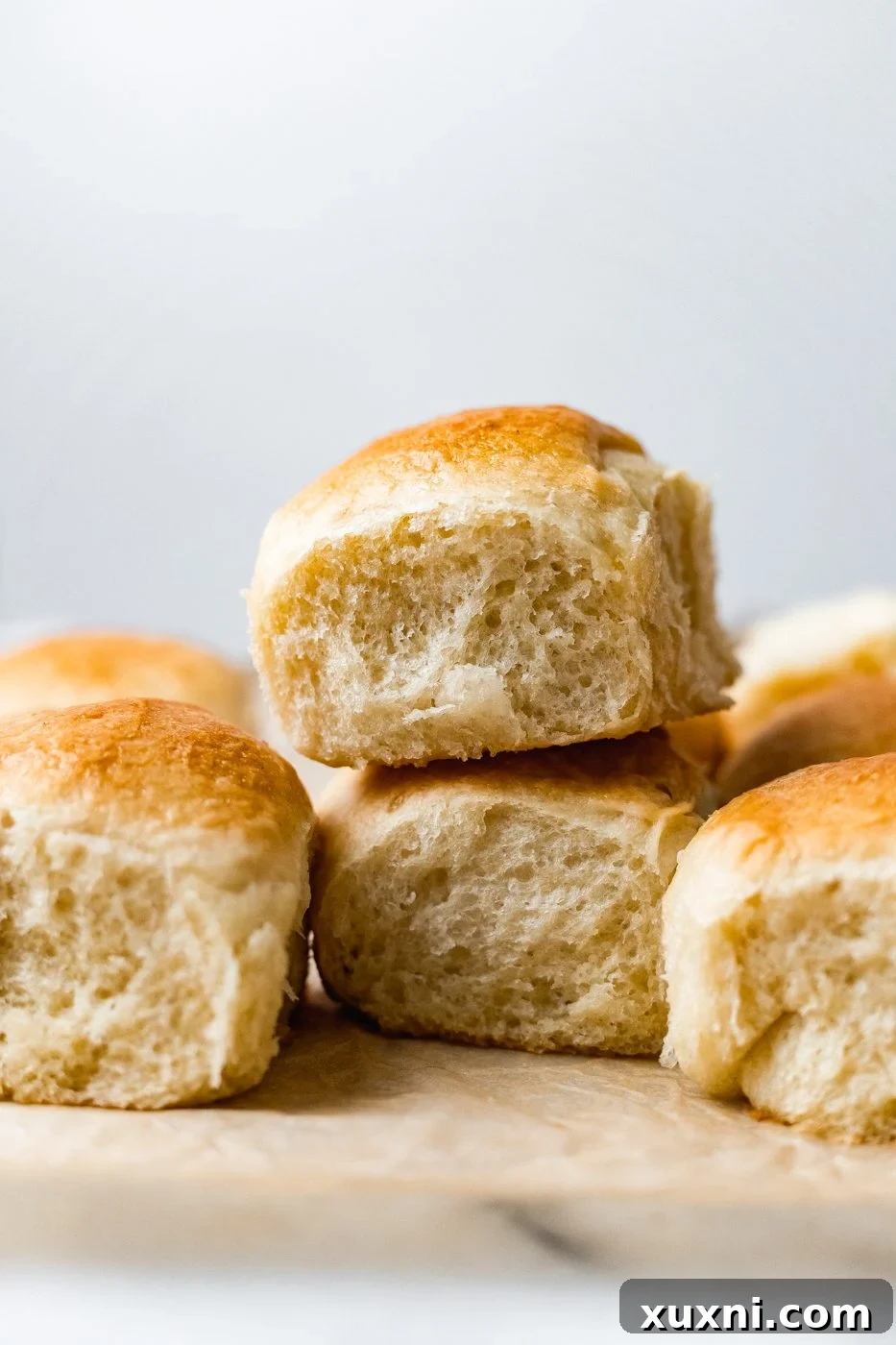
Welcome to the ultimate guide for crafting the most delectable homemade vegan dinner rolls! This effortlessly easy recipe will yield rolls that are remarkably soft, wonderfully “buttery,” and exquisitely fluffy, all while being completely free of eggs and dairy. With just 5 fundamental ingredients, you’ll create a side dish so irresistible, no one will believe it’s plant-based. These rolls are destined to become a staple at your dinner table, perfect for everyday meals and holiday gatherings like Thanksgiving, Christmas, or Easter.
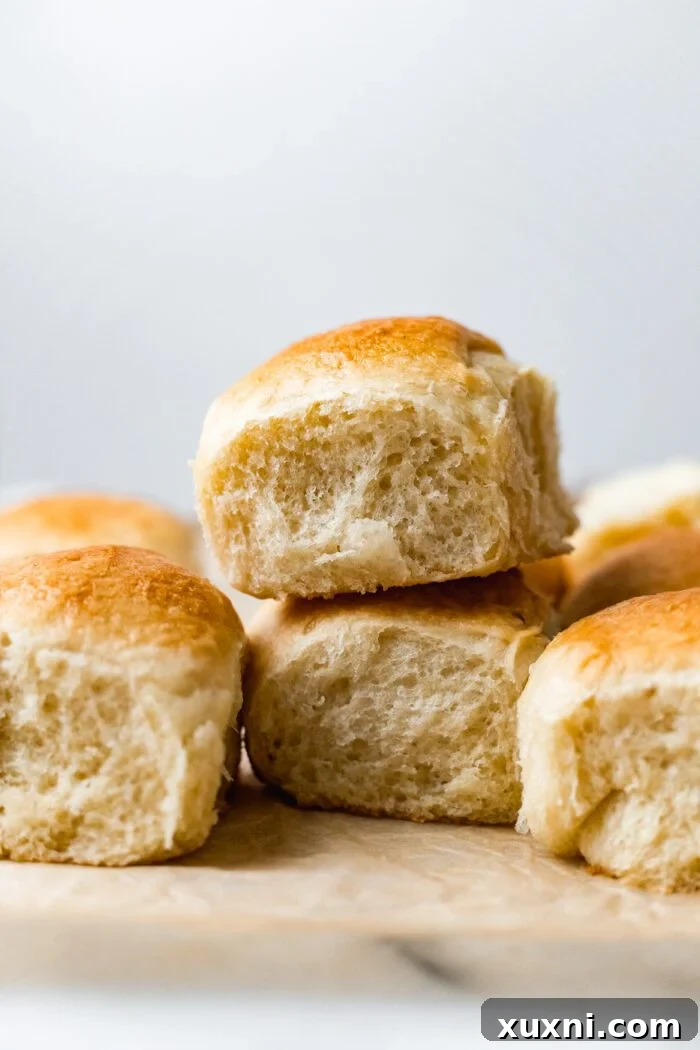
Why You’ll Fall in Love with These Homemade Vegan Dinner Rolls
In my culinary opinion, no holiday feast or comforting family dinner is truly complete without the inviting aroma and melt-in-your-mouth texture of homemade dinner rolls. This vegan rendition isn’t just a substitute; it’s a superior classic that will quickly become your new favorite go-to recipe for fluffy, tender, and light rolls.
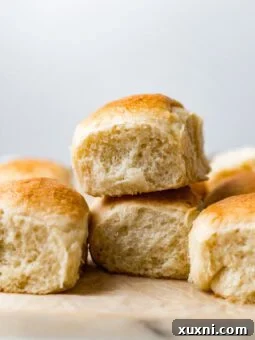
These vegan dinner rolls exemplify perfection: they are incredibly fluffy, impossibly tender, remarkably light, and literally melt in your mouth with every bite. The truly amazing part? You would never suspect these rolls are entirely eggless and dairy-free. My own family, including those who are not vegan, absolutely adores them and now specifically requests these plant-based wonders for all our festive occasions. Beyond their incredible taste and texture, these rolls offer a fantastic option for those with dietary restrictions or allergies, ensuring everyone can enjoy a warm, comforting bread roll.
What makes this recipe even more appealing is its simplicity. In fact, because it omits eggs, it’s arguably even easier than many traditional dinner roll recipes. We harness the power of only 5 core, readily available plant-based ingredients that you likely already have in your pantry, whether you follow a vegan diet or not. This accessible approach means fewer specialized ingredients and a smoother baking experience for everyone.
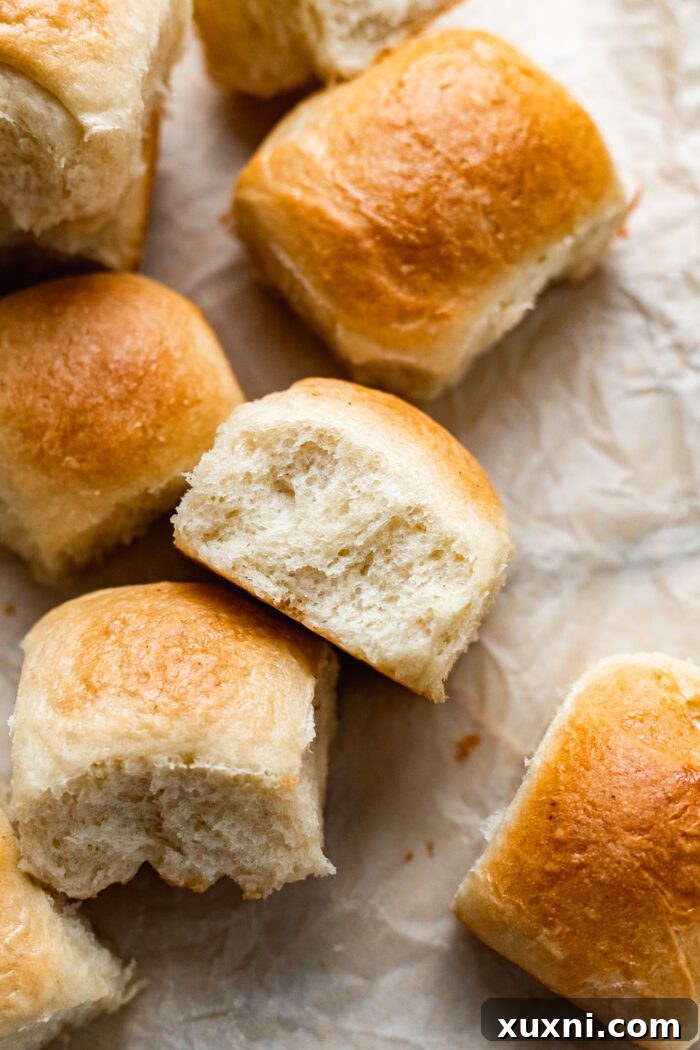
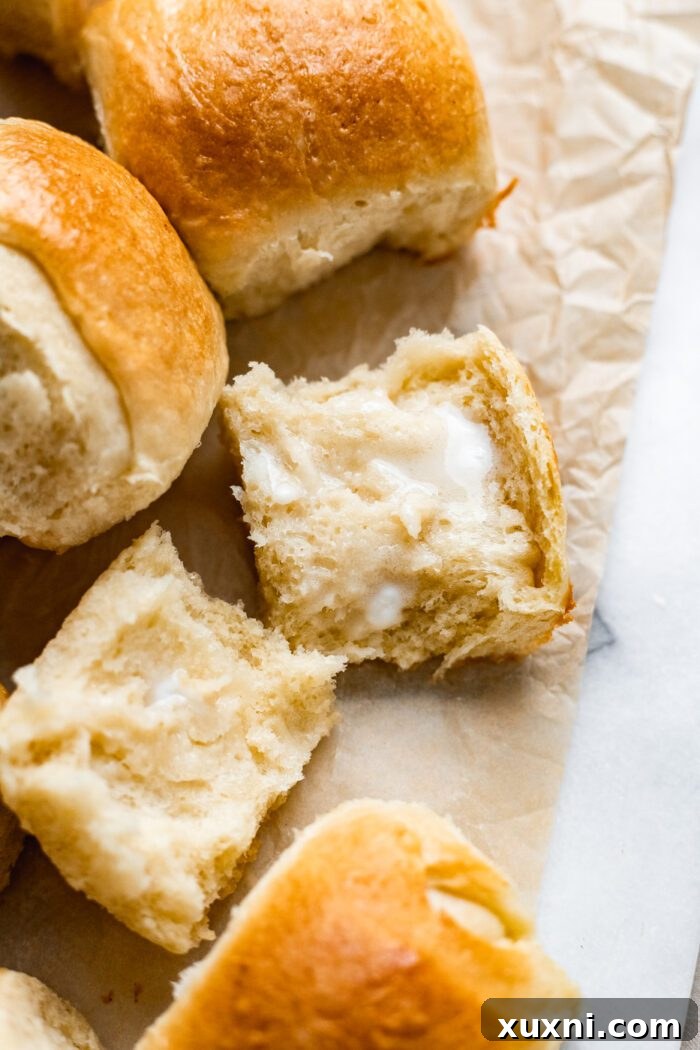
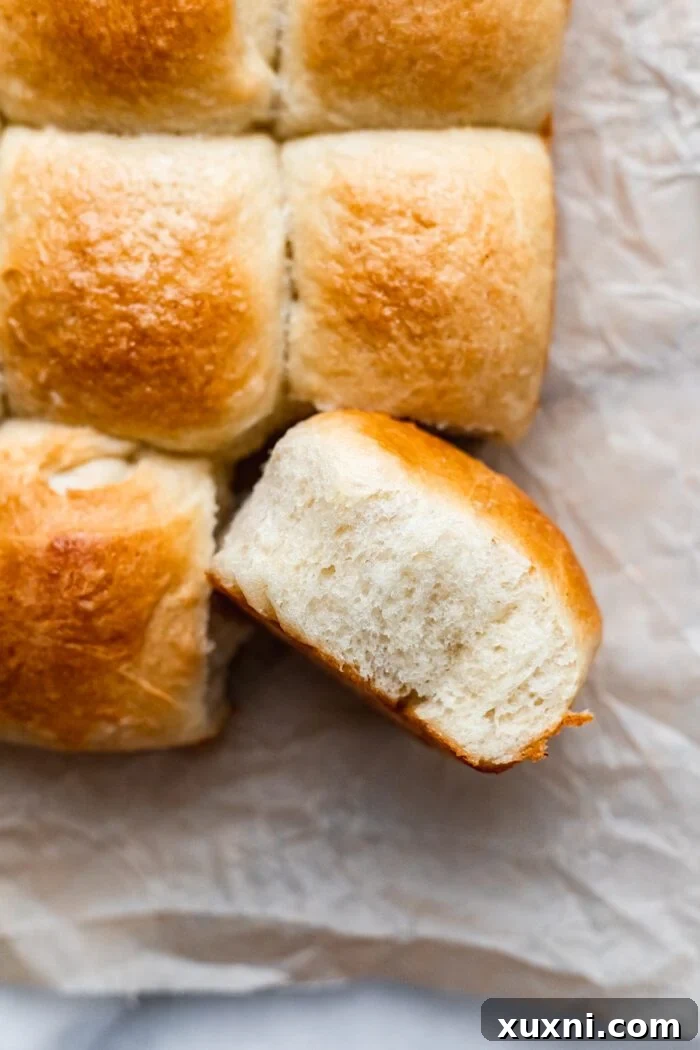
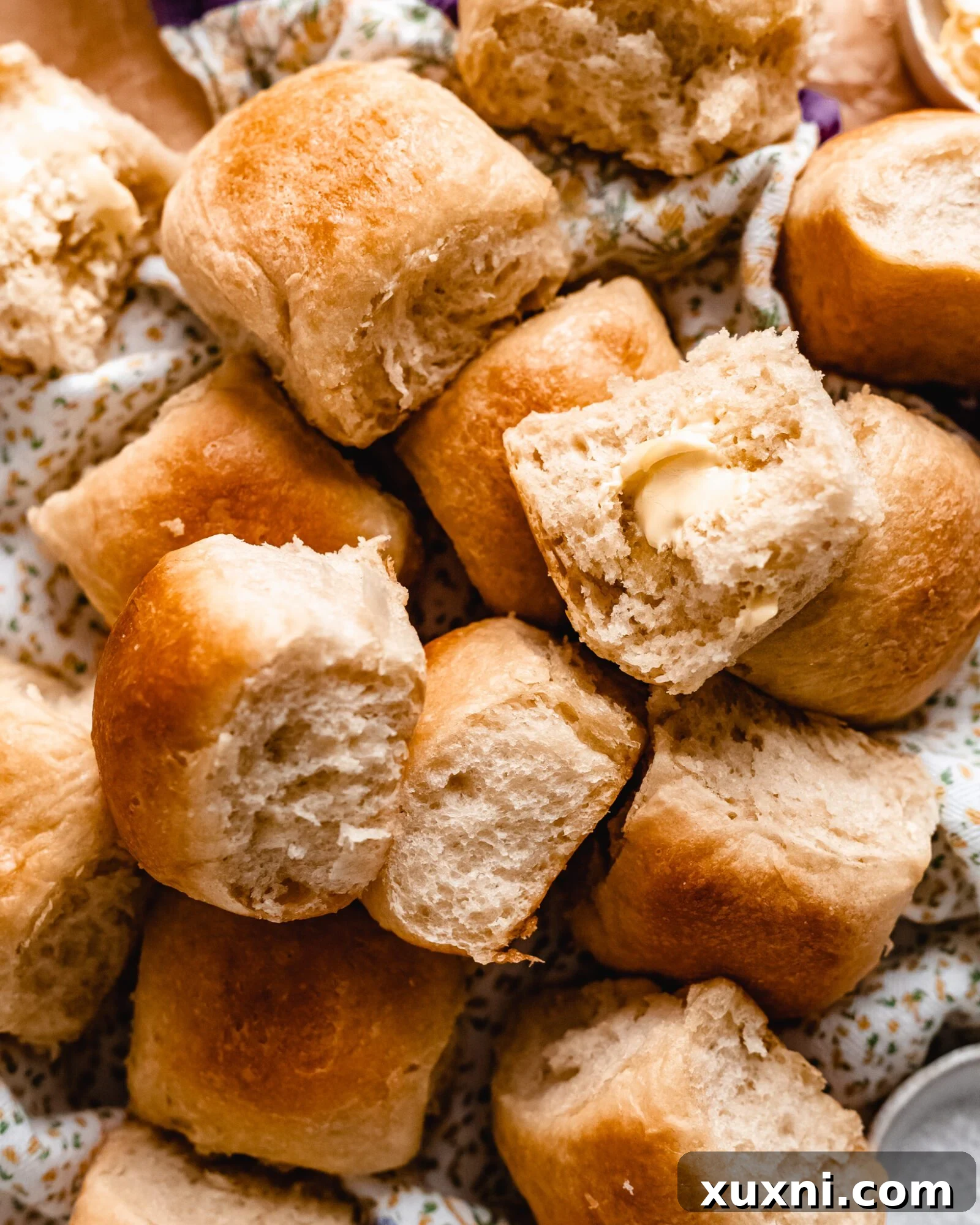
These warm, pillowy vegan buns are absolutely perfect straight from the oven. Slather them generously with a pat of vegan butter, a spoonful of your favorite fruit jam, or a savory herbed spread for an unparalleled taste experience. They serve as an ideal side dish, elevating any dinner party or family meal with their comforting presence.
Essential Ingredients for Perfect Plant-Based Rolls
Creating these remarkably soft and fluffy vegan dinner rolls is surprisingly simple, thanks to a concise list of just 5 core ingredients. Each plays a crucial role in achieving the desired texture and flavor:
- Dairy-Free Milk: This liquid component is vital for hydrating the dough and providing the necessary warmth for yeast activation. You can use your favorite variety; oat milk is my top choice for its creamy texture and subtle sweetness, which contributes to a rich roll. Almond milk or soy milk also work beautifully, offering a neutral flavor profile. If you’re feeling adventurous, you can even make your own oat milk for an extra fresh touch.
- Activated Dry Yeast: Yeast is the magical ingredient responsible for the rolls’ incredible rise and airy texture. For this recipe, we specify activated dry yeast, which requires a preliminary step to ‘wake it up.’ While rapid-rise yeast can speed up the process, the detailed instructions below are tailored for activated dry yeast, ensuring a consistent and reliable rise. Understanding yeast behavior is key to successful bread making, which we’ll delve into further.
- All-Purpose Flour: There’s no need for specialty flours here! Standard all-purpose flour is perfectly suited for these vegan dinner rolls, yielding an amazingly fluffy, light, and tender result. While bread flour can also be used for a slightly chewier crumb due to its higher protein content, rest assured that all-purpose flour alone will produce exceptional rolls that everyone will love.
- Vegan Butter: To achieve that classic “buttery” richness and incredibly tender crumb, room temperature vegan butter is essential. It should be soft to the touch, not cold and firm, to properly incorporate into the dough. While coconut oil can be a substitute, vegan butter provides the best flavor and texture. I highly recommend unsalted vegan butter, such as Miyoko’s, allowing you to control the salt content. Adding salt separately helps prevent it from directly inhibiting the yeast’s activity if too much is used upfront.
- Maple Syrup: Dinner rolls are cherished for their subtle hint of sweetness, which complements savory dishes without overwhelming them. A touch of maple syrup not only provides this delicate sweetness but also acts as a food source for the yeast, aiding in its activation and growth.
- Fine Sea Salt: A pinch of fine sea salt is crucial for rounding out the flavors, enhancing the overall taste of the rolls, and balancing the sweetness from the maple syrup. It also plays a role in regulating yeast activity, ensuring a steady and even rise.
Step-by-Step Guide to Making Fluffy Vegan Dinner Rolls
You’ll be pleasantly surprised by the straightforward process of making these incredibly delicious vegan dinner rolls. While full, detailed instructions and precise ingredient measurements are provided in the recipe card below, let’s walk through the fundamental steps to give you a clear overview.
Whether you’re a seasoned baker with a stand mixer or prefer the hands-on approach, this recipe adapts beautifully. I’ve personally made countless batches of bread by hand for years and only recently acquired a stand mixer. I can confidently say that these vegan dinner rolls have been thoroughly tested both ways and yield wonderfully consistent results regardless of your equipment choice.
Here’s a breakdown of how we create these easy and delightful vegan dinner rolls:
- Ingredient Preparation is Key: Success in baking often begins with proper preparation. Before you even think about mixing, gather and precisely weigh all your ingredients. For the softest, most perfectly fluffy dinner rolls, a kitchen scale is highly recommended for accuracy. I find it easiest to have everything measured and ready before initiating the yeast activation. This “mise en place” approach creates a streamlined and stress-free baking process, minimizing errors.
- Activating Your Yeast for Success: Like many great vegan bread recipes, this step is simple yet crucial. Gently warm your dairy-free milk to 110°F (43°C). Achieving this specific temperature is vital – too cold, and the yeast won’t activate; too hot, and you risk killing it. Once warmed, add a pinch of flour and your activated dry yeast to the milk, stir, and cover. Place the bowl in a warm spot (75-80°F / 24-27°C) for about 10-12 minutes. You’ll know your yeast is thriving when a foamy layer appears on the surface, and the mixture develops a distinct, almost beer-like, yeasty aroma. If you don’t see this activity, it’s best to restart this step.
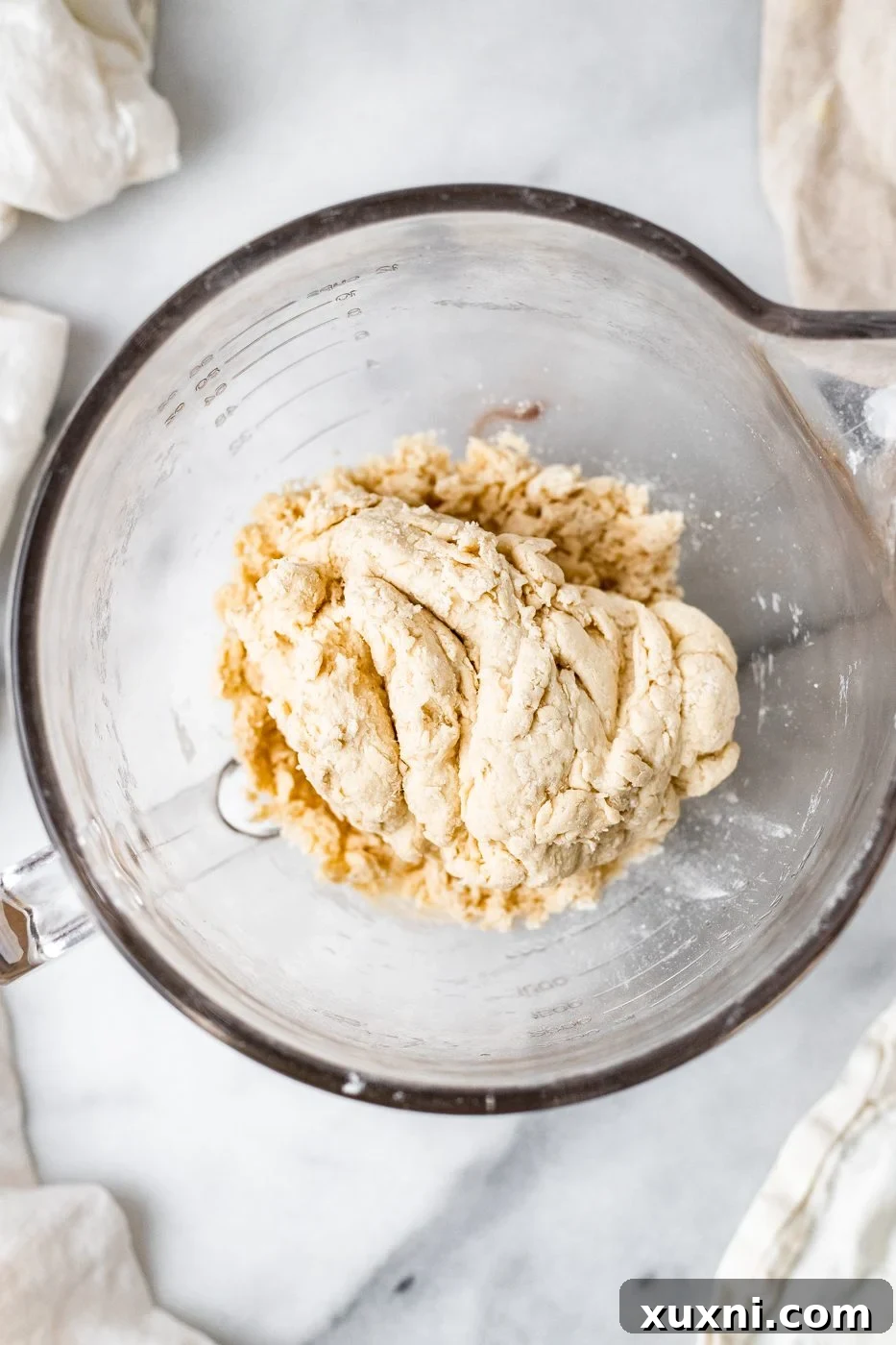
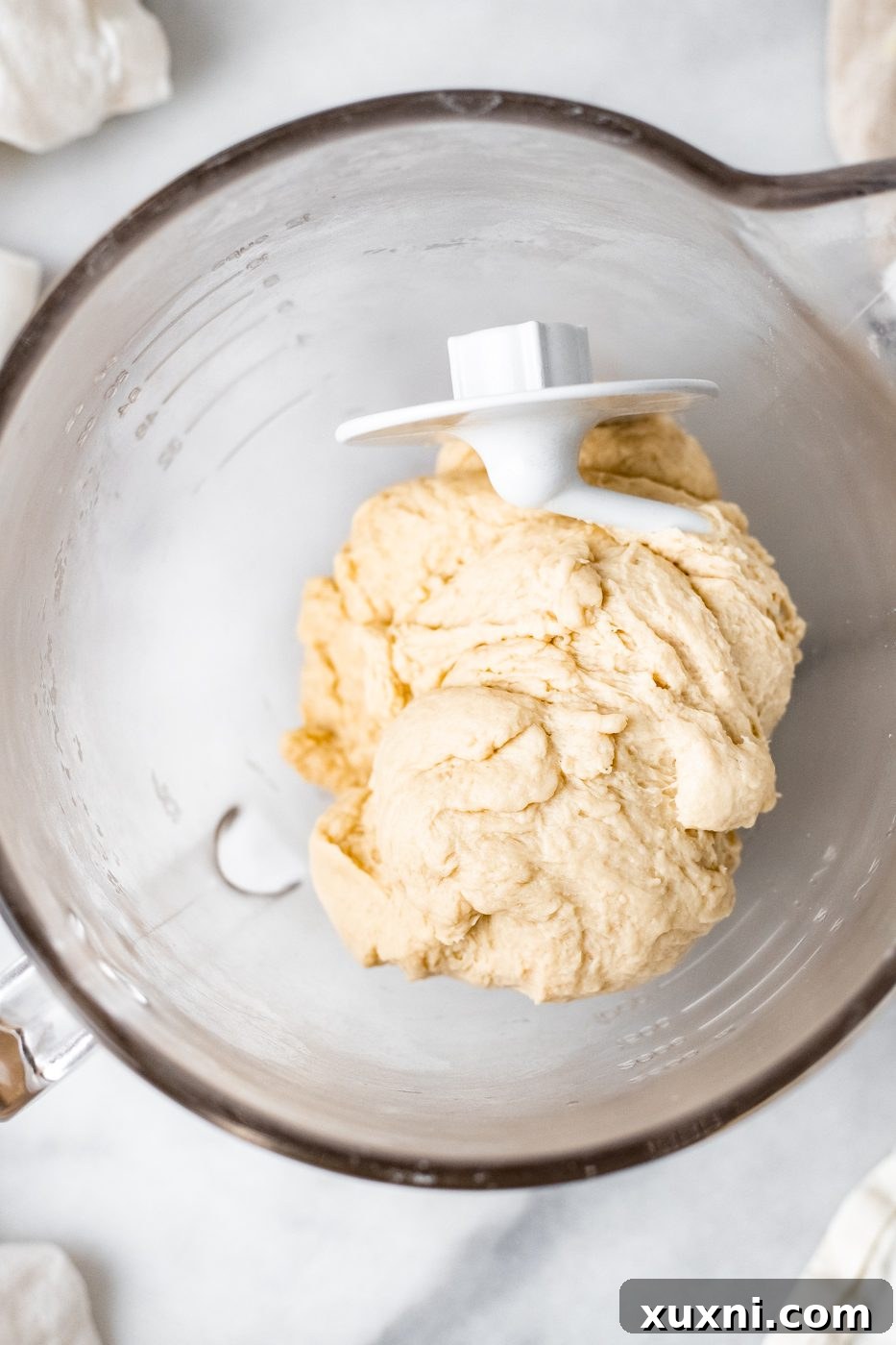
- Crafting the Perfect Dough: Once your yeast is bubbly and active, it’s time to form the dough. In the bowl of your stand mixer fitted with a dough hook (or a large bowl if mixing by hand), combine the activated yeast mixture with the maple syrup. Begin mixing on a medium-low speed until well combined. Gradually add about half of the all-purpose flour, mixing until it starts to incorporate. Then, add the remaining flour, followed by the room temperature vegan butter and sea salt. Continue mixing and kneading until the butter is fully incorporated, and the dough transforms from a shaggy, sticky mass into a smooth, elastic ball. If the dough is still too sticky to handle, add a tiny bit more flour, one tablespoon at a time, until it reaches the desired consistency.
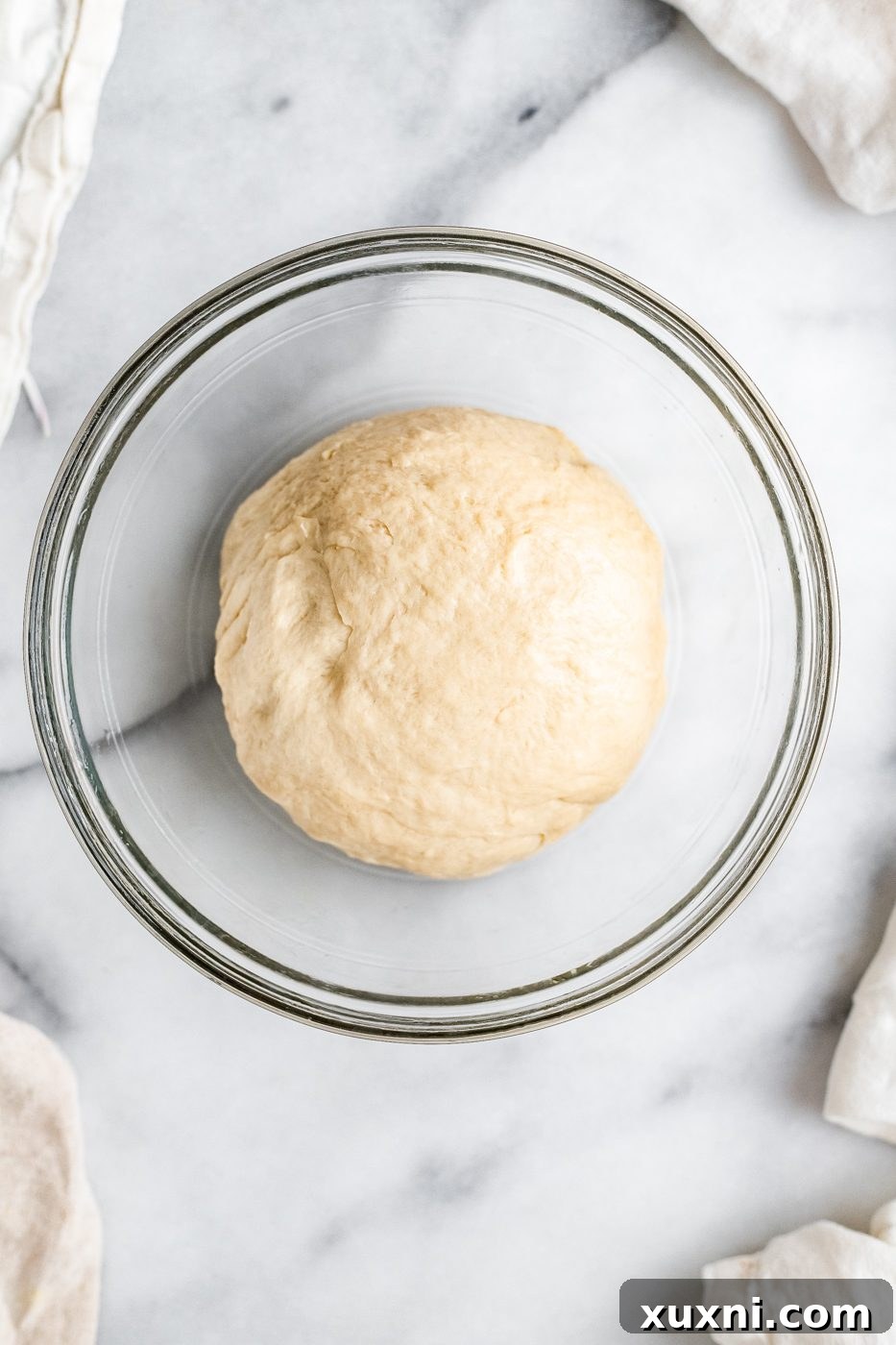
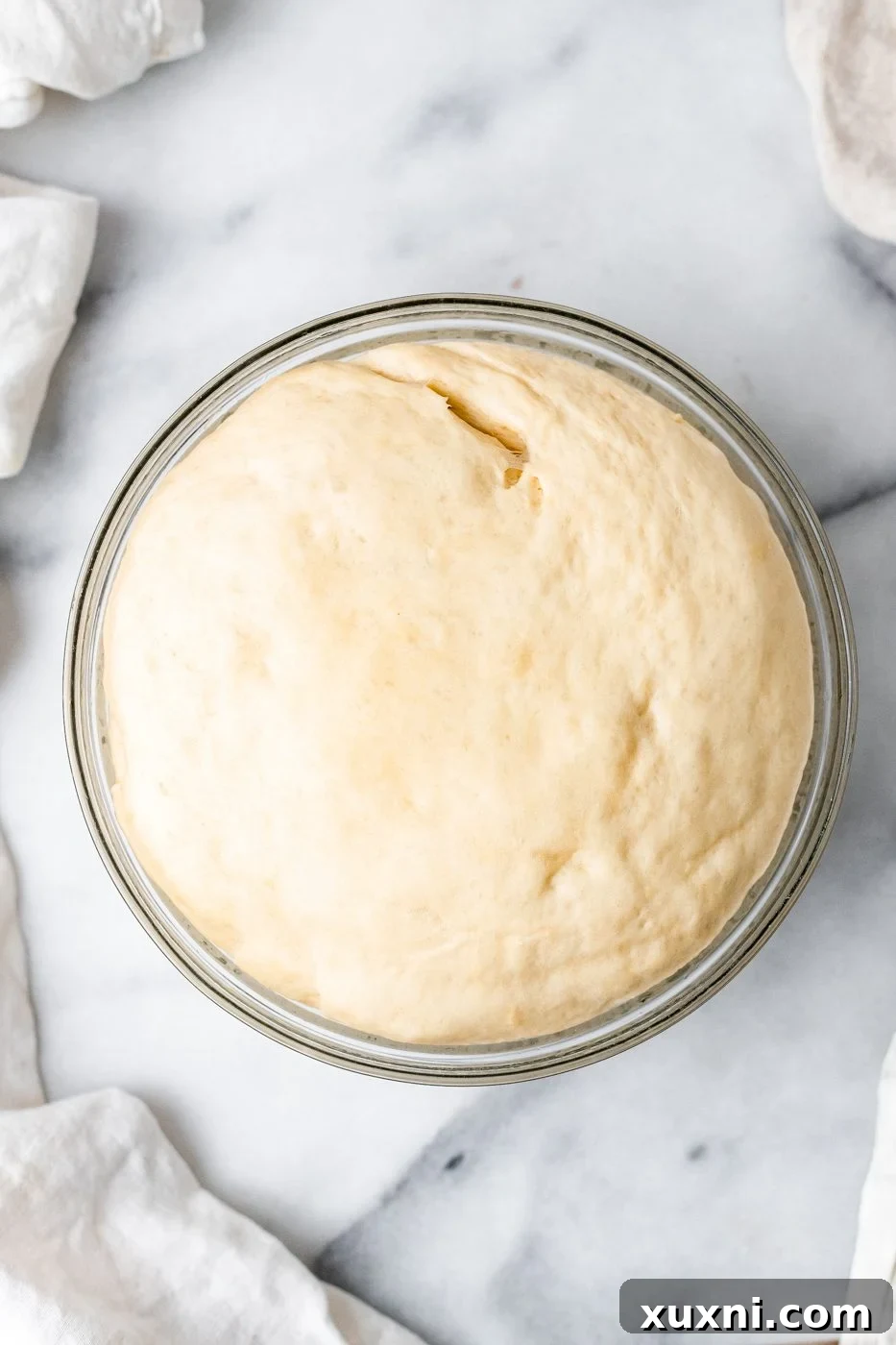
- The First Rise: Proofing for Volume: Transfer your beautifully kneaded dough ball into the greased bowl. Cover it with a thin, clean dish towel. This cover is important, but a thin towel allows for crucial air circulation. Place the bowl in a warm environment, ideally around 85°F (29°C), to allow the dough to double in size. Many modern ovens have a “proof” setting, which is perfect. Alternatively, you can preheat your oven to 100°F (38°C), turn it off, and then place the covered bowl inside with the oven light on. This creates a gentle, warm microclimate. This first rise, or “proof,” typically takes about an hour, but can vary based on your room temperature – colder environments require more time, while warmer ones speed up the process.
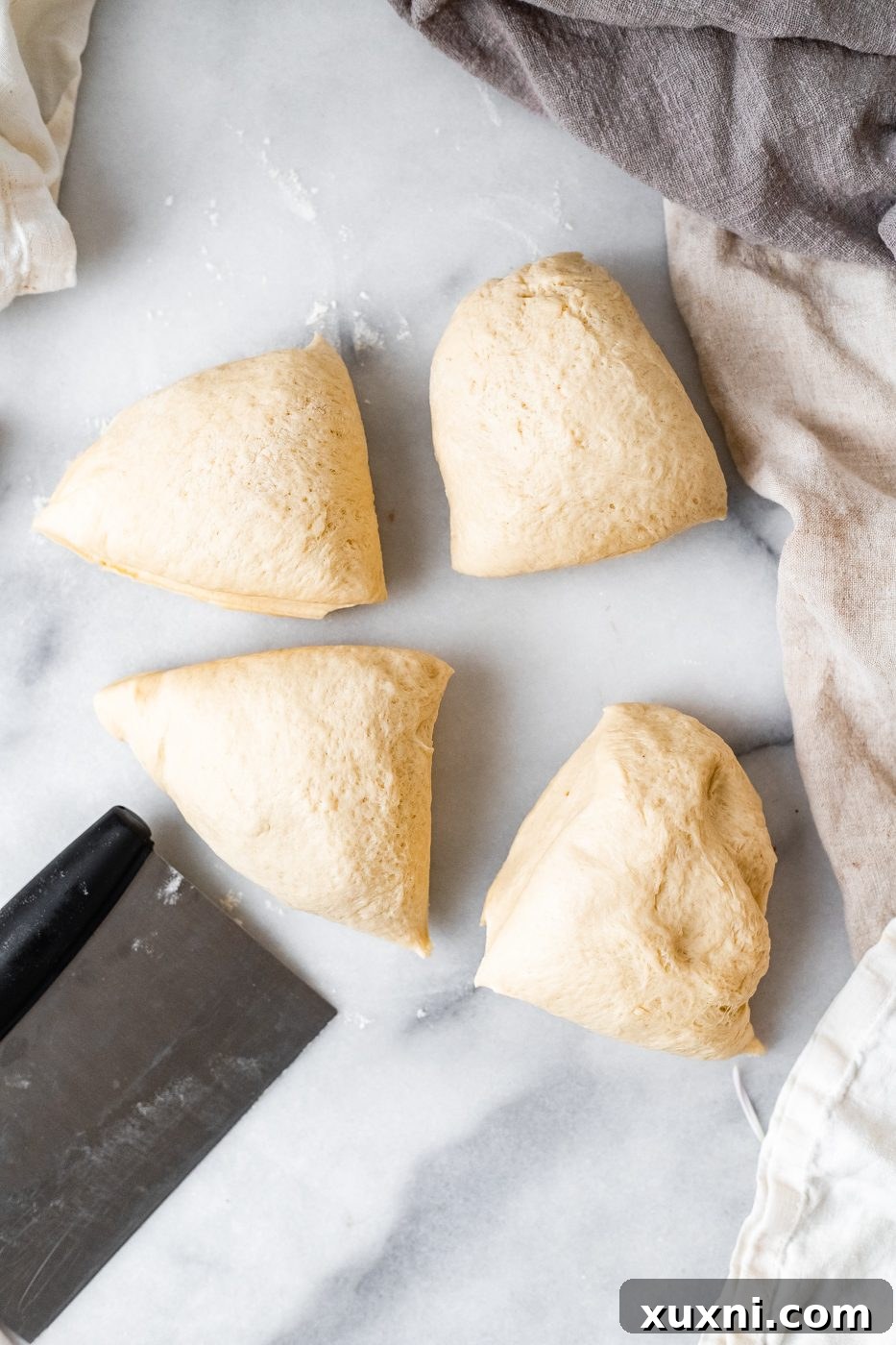
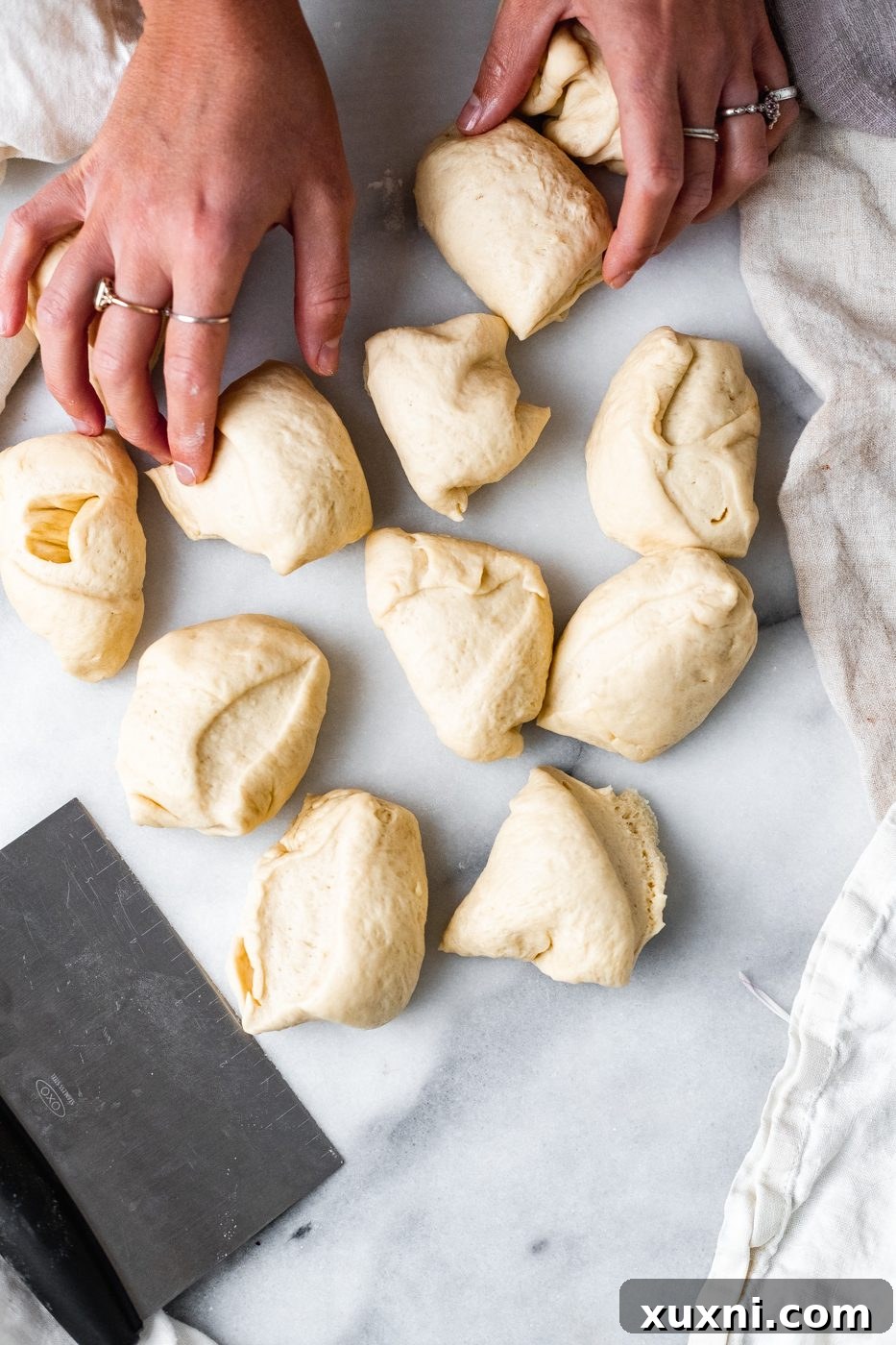
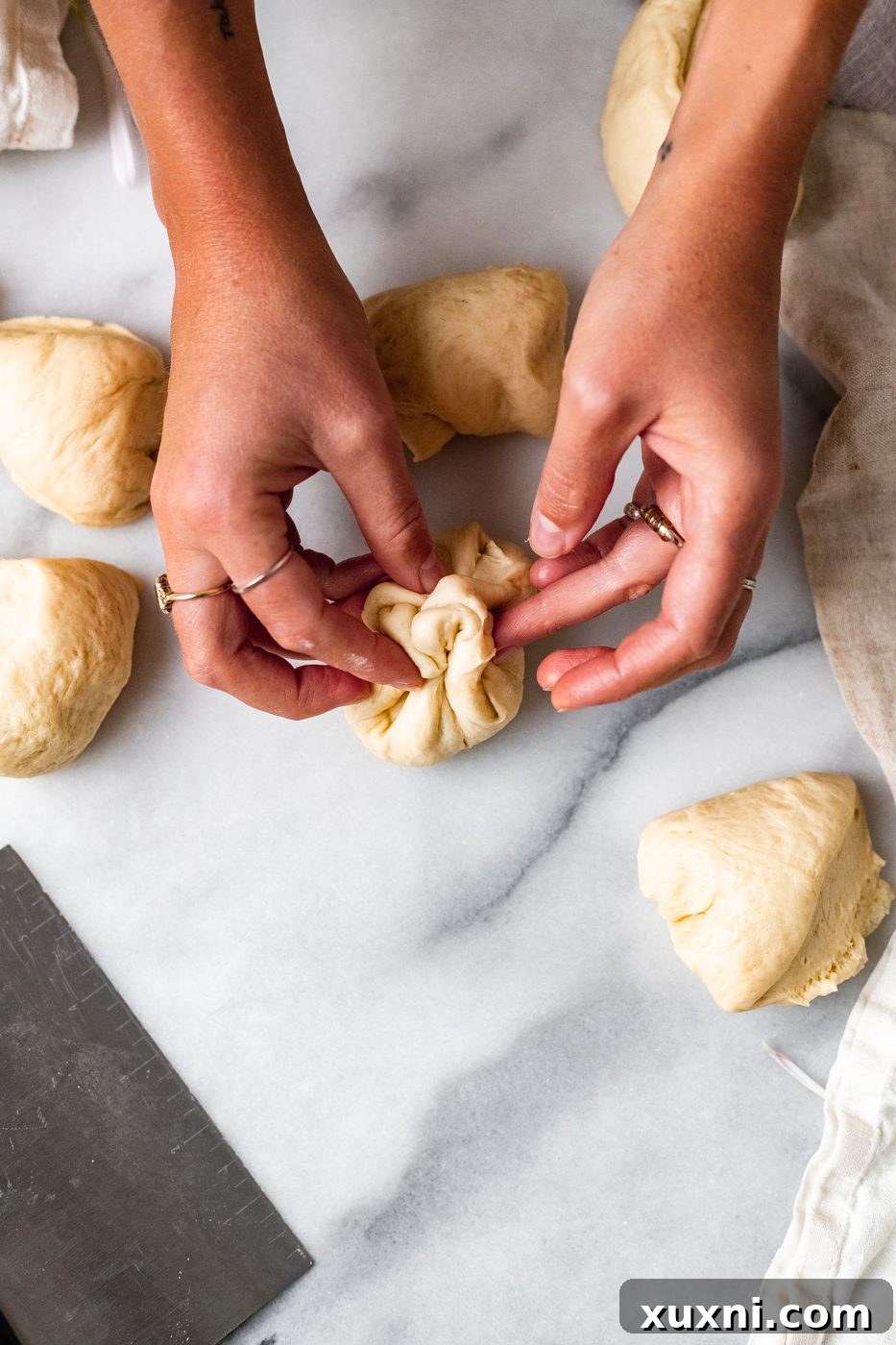
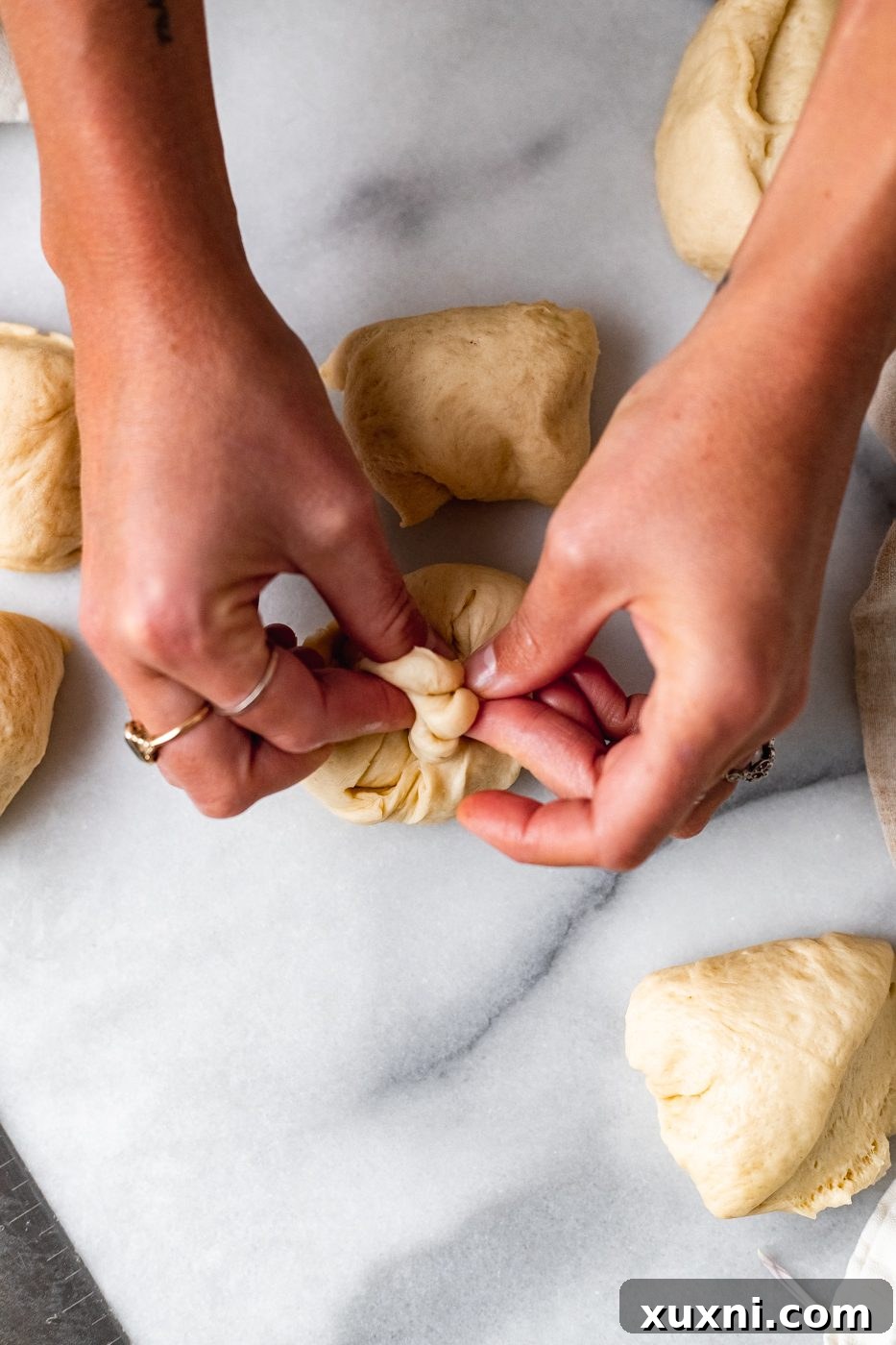
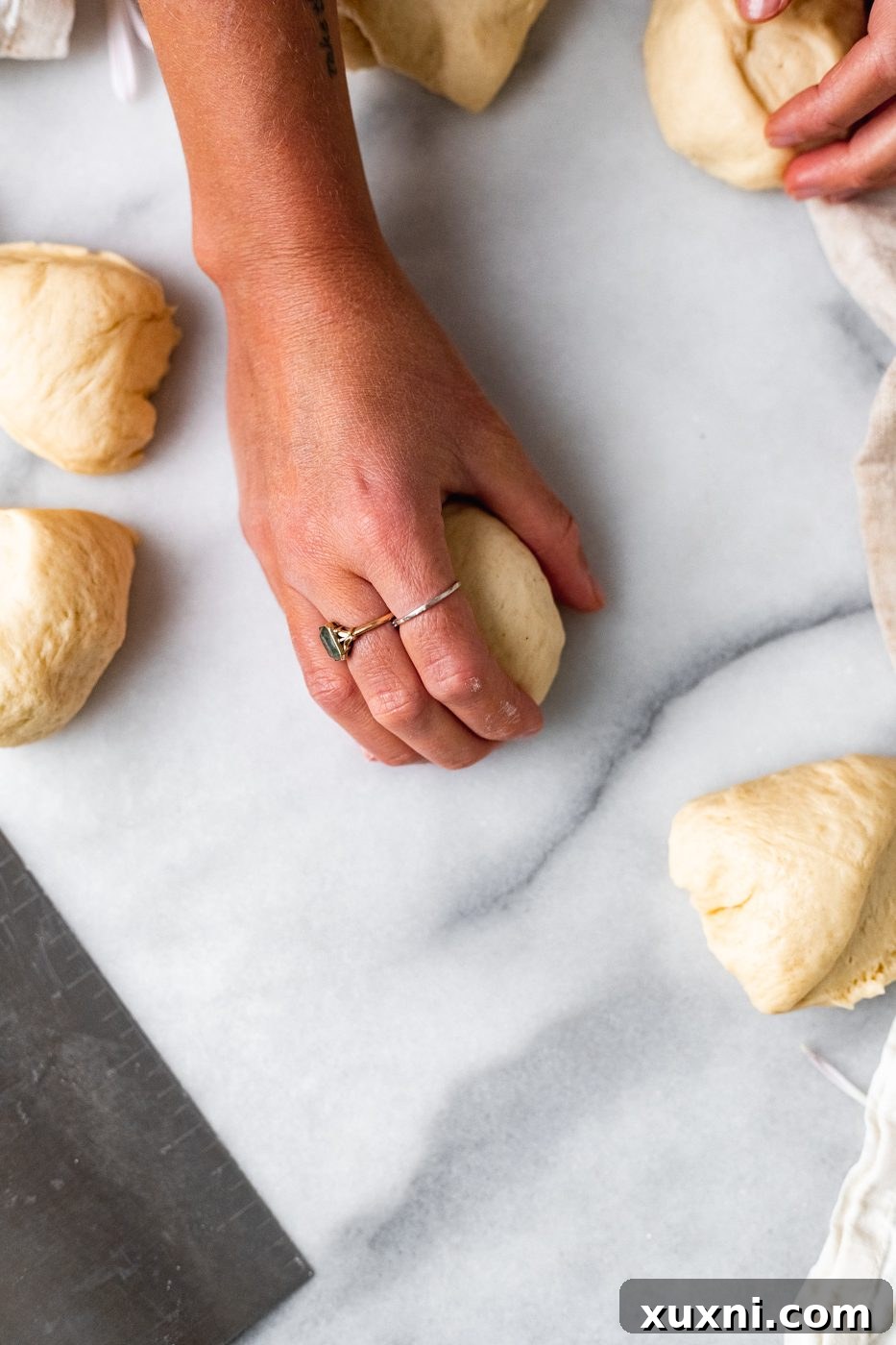
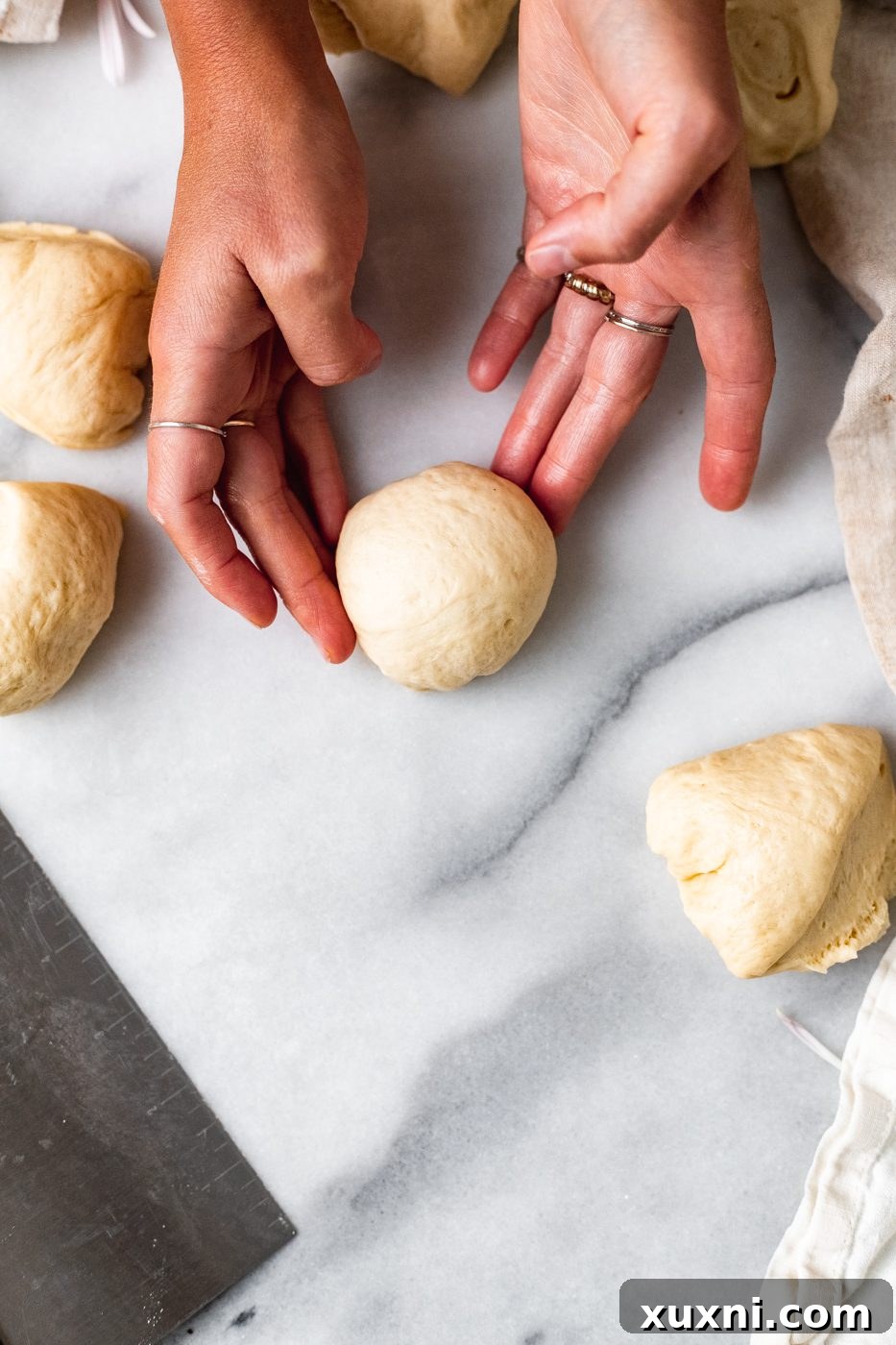
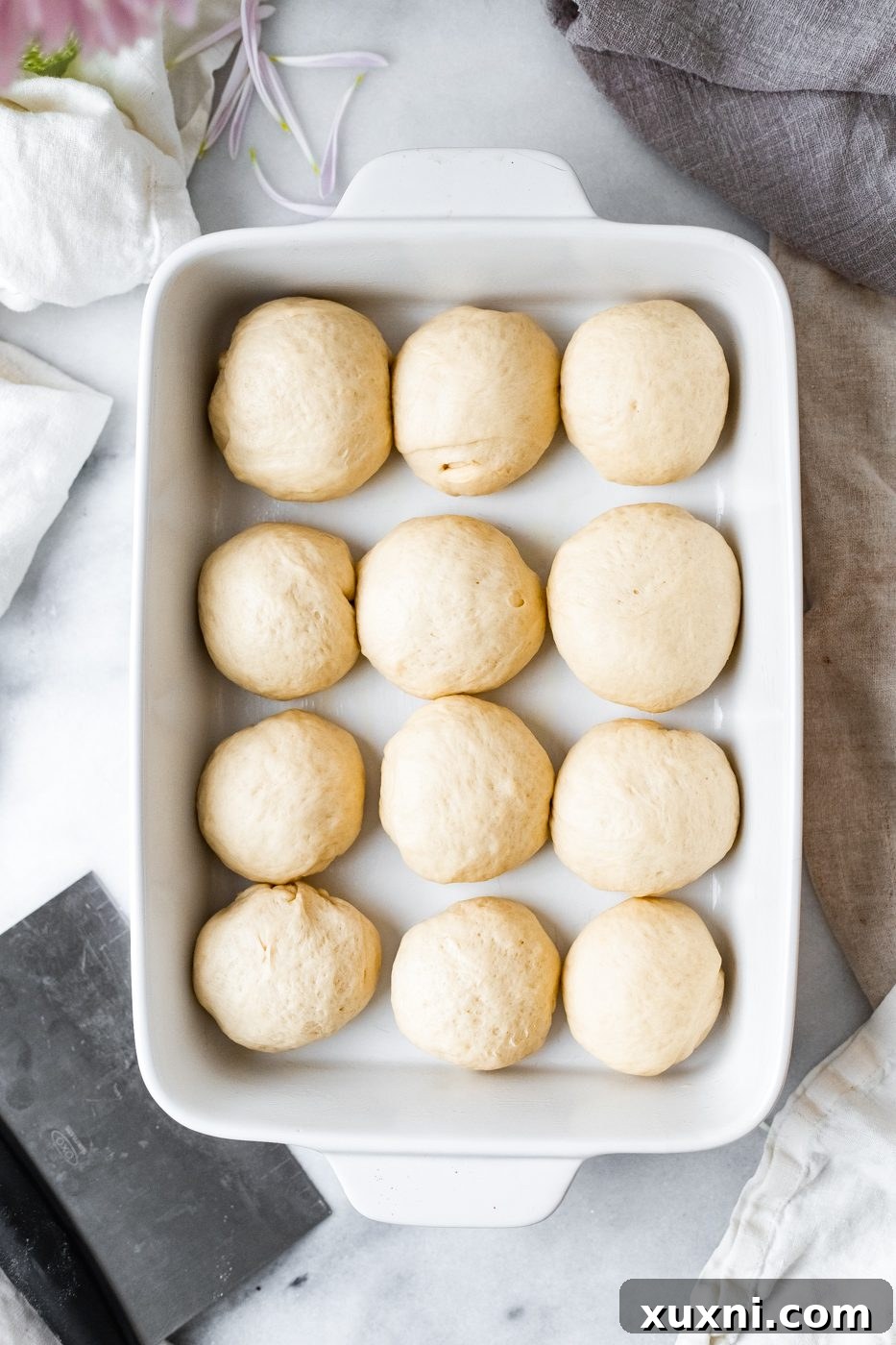
- Shaping Your Dinner Rolls: Once the dough has proudly doubled in size, gently punch it down to release the trapped gases. Turn the dough out onto a clean, lightly floured surface. To ensure evenly sized and baked rolls, use a kitchen scale to divide the dough into 12-16 equal pieces. For 16 rolls, aim for pieces weighing between 58-60 grams each. To form perfectly round rolls, gently cup each piece in your palms and roll it against the counter with light, circular pressure. Then, pinch the bottom edges of the dough together to create a smooth, taut top. A visual demonstration, like this great tutorial on how to properly shape dinner rolls, can be very helpful. Arrange the shaped rolls neatly in your prepared baking dish.
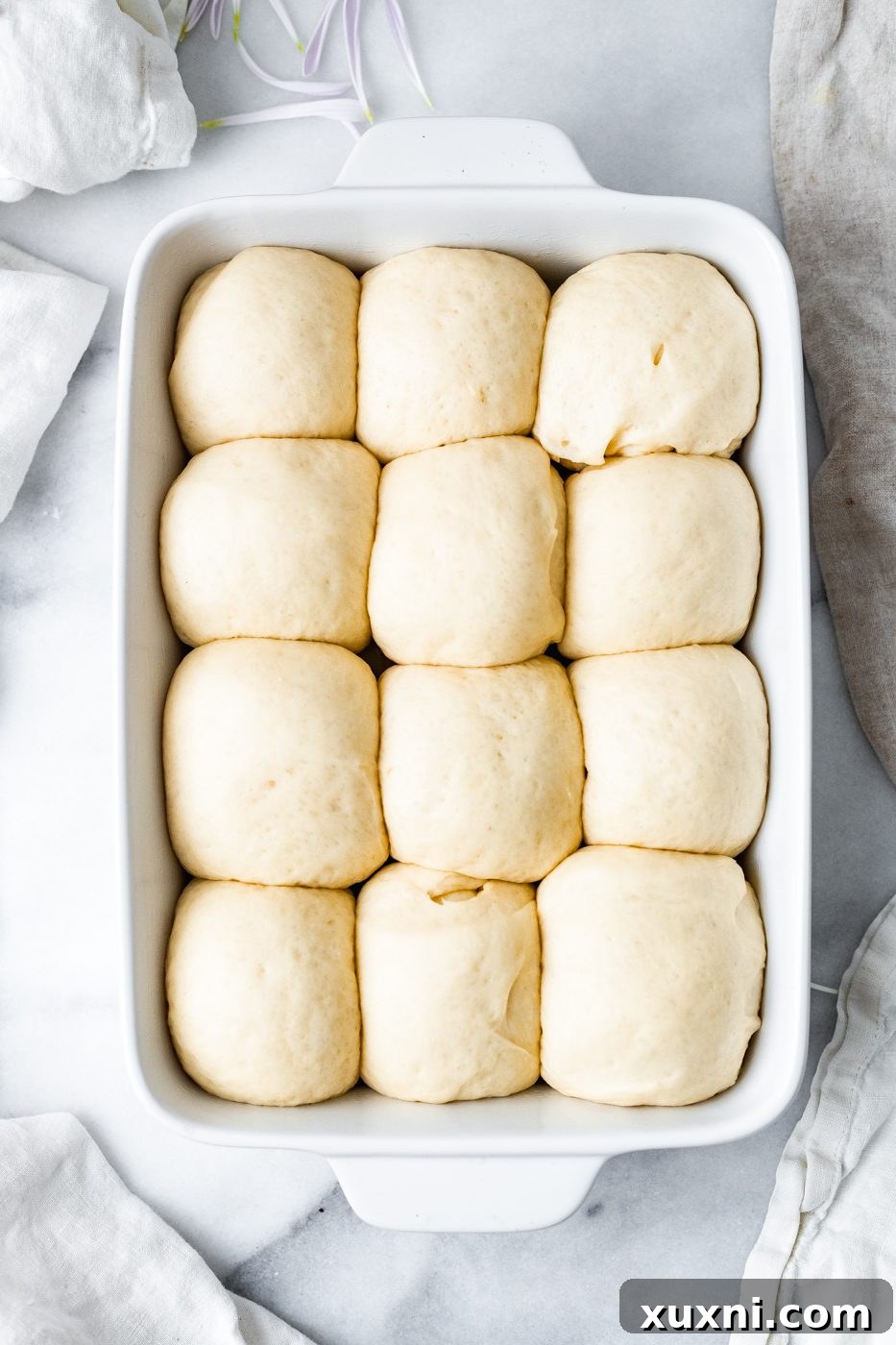
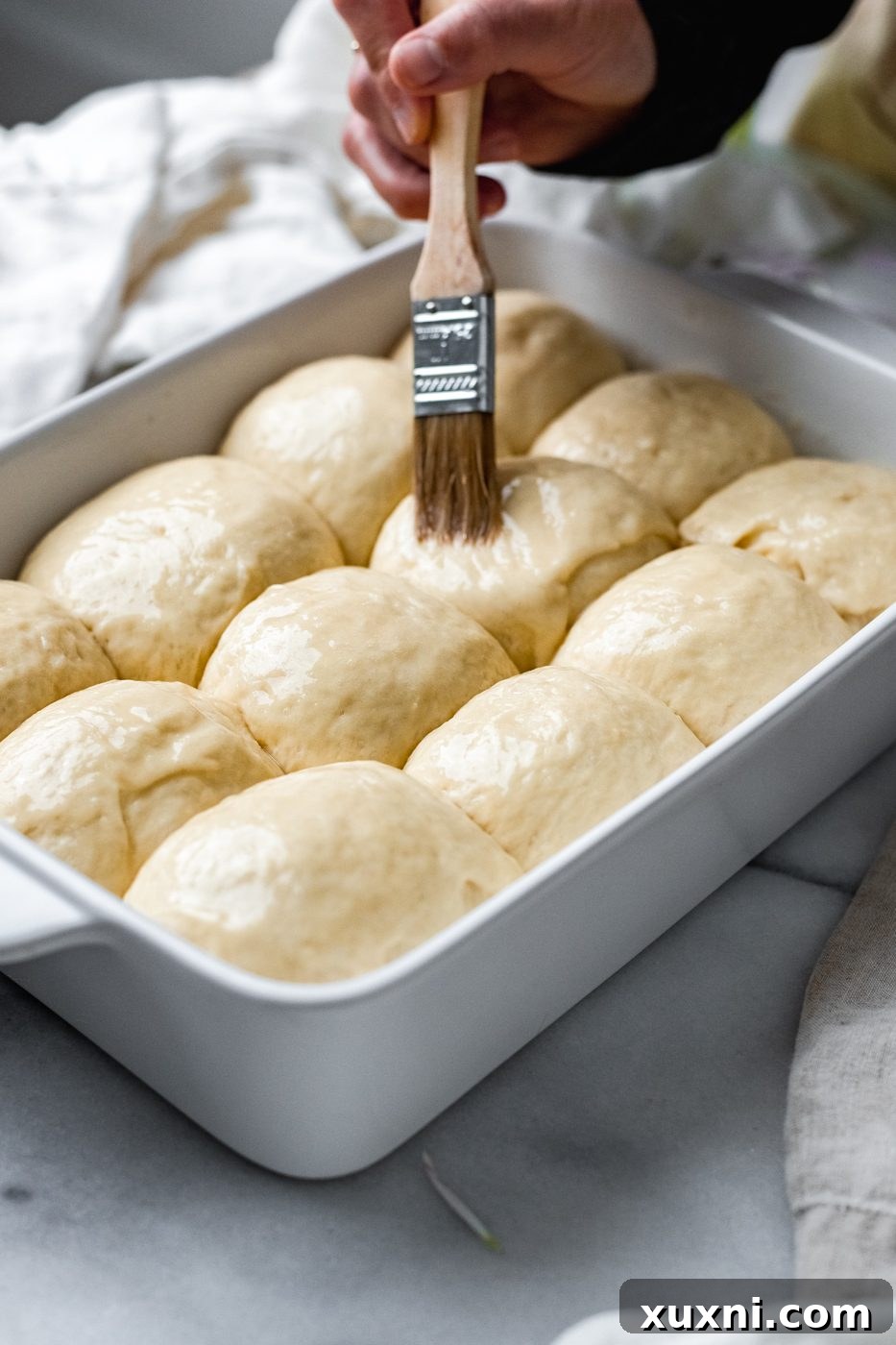
- The Second Rise & Golden Bake: Cover the shaped dinner rolls again with your thin, clean dish towel. Allow them to rest in a warm area (the warmth from your preheating oven is ideal) for a second rise until they have nearly doubled in size once more, usually another 30-45 minutes. During this second rise, preheat your oven to 375°F (190°C). Once the rolls are visibly puffed and the oven is ready, prepare your “vegan egg wash.” This is a simple mixture of melted vegan butter and maple syrup, which will give the rolls a beautiful golden-brown crust and a subtle sheen. Lightly brush this mixture over the tops of the rolls using a pastry brush. Finally, bake your rolls for 18-20 minutes, or until their tops are gorgeously golden brown and slightly crusty but still soft.
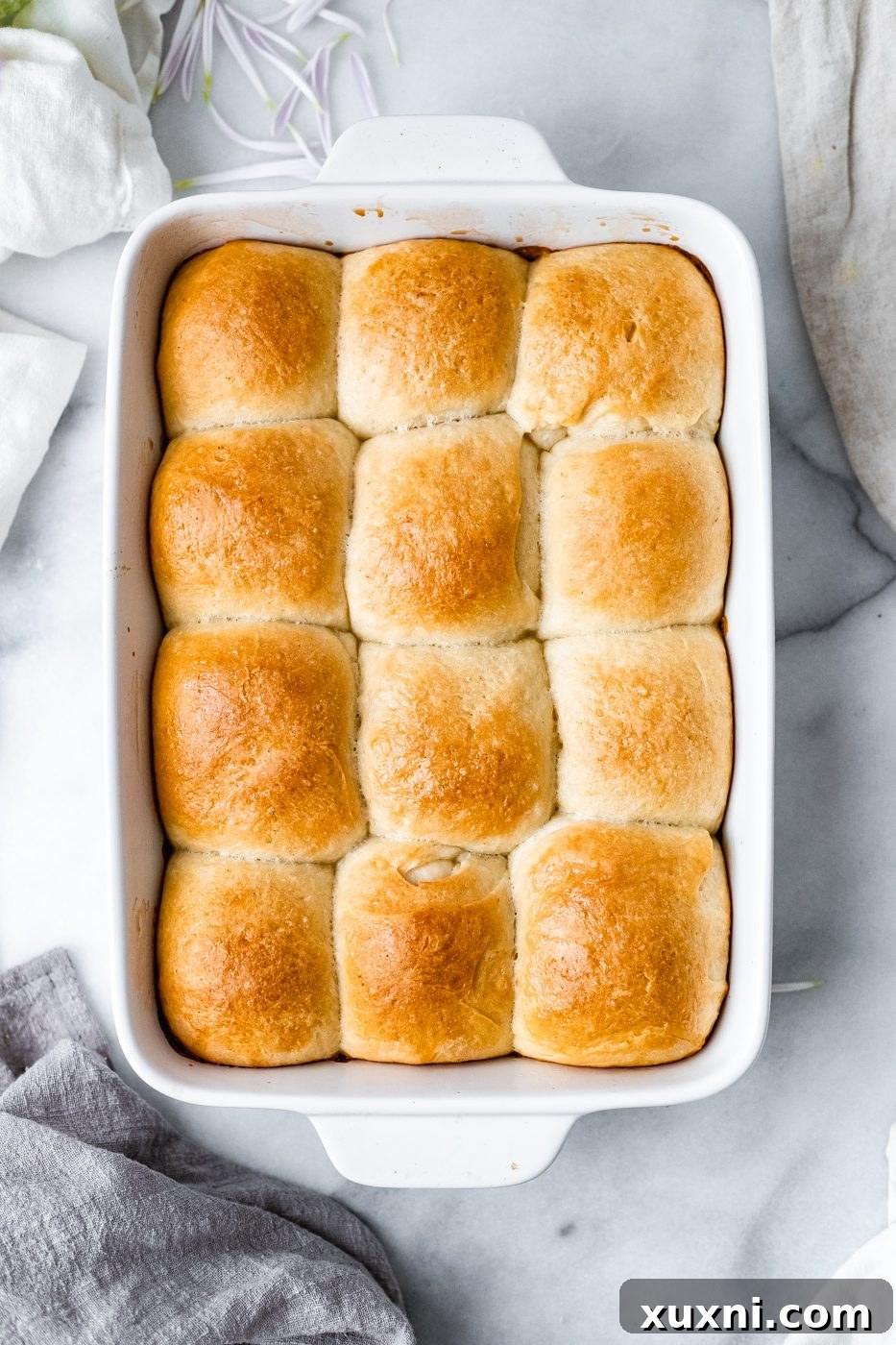
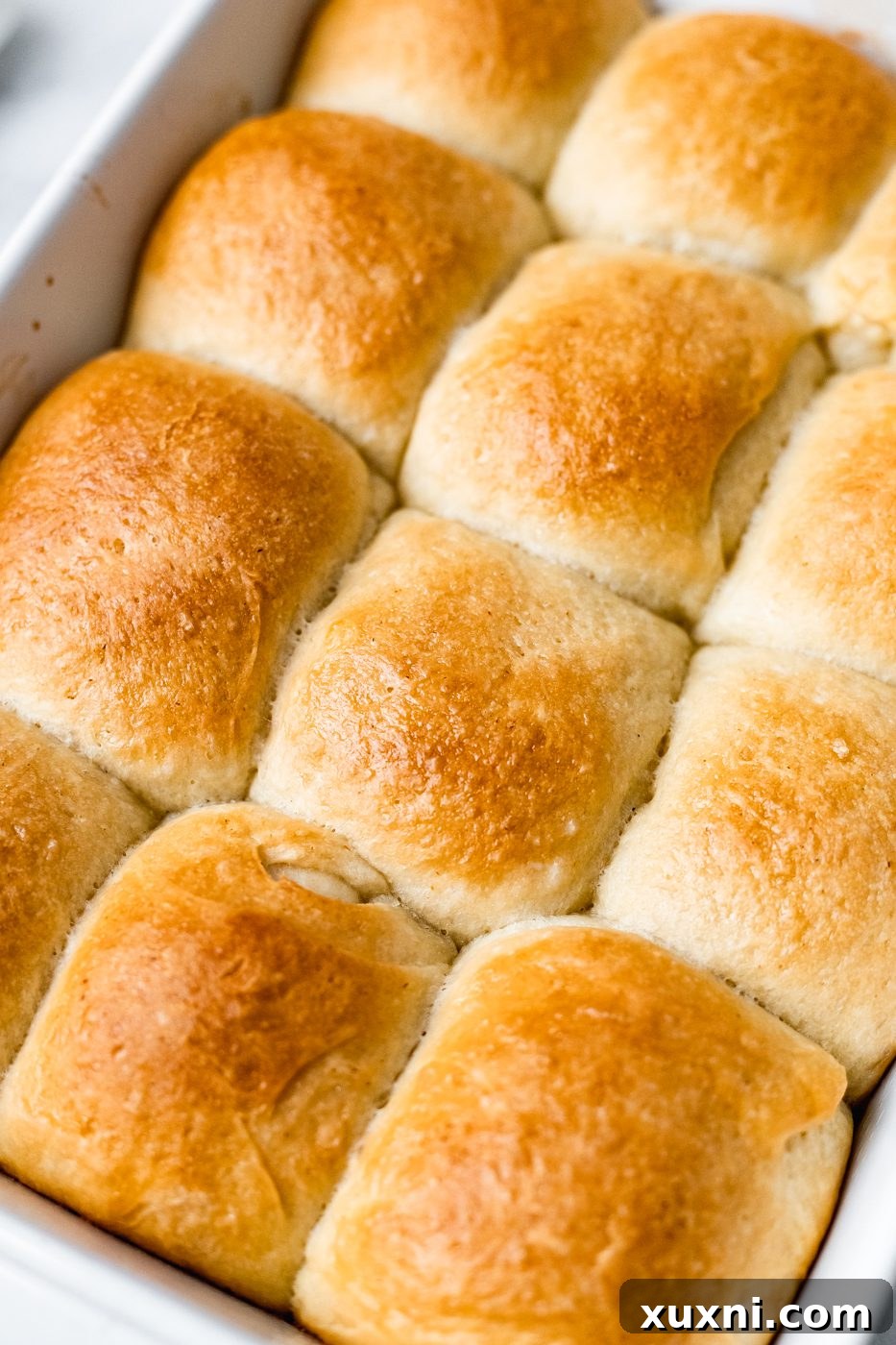
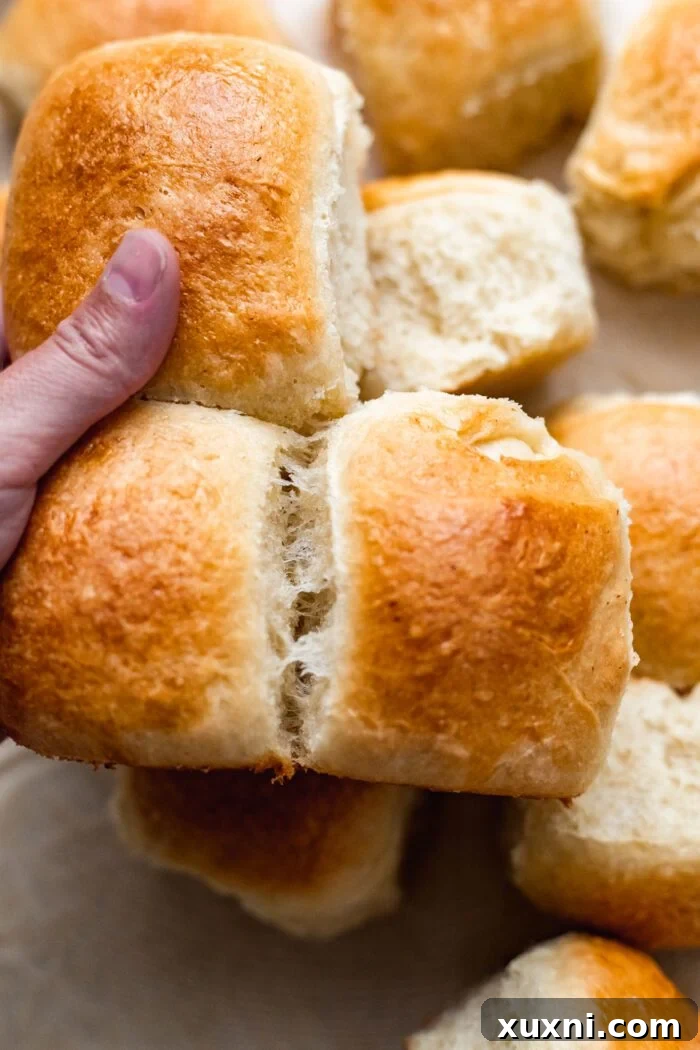
The result of these careful steps will be the most wonderfully fluffy, light, and melt-in-your-mouth pull-apart dinner rolls you’ve ever tasted. Seriously, their incredible texture and flavor are so convincing, absolutely no one will guess these dinner rolls are entirely vegan!
Prepare Ahead: Tips for Make-Ahead Vegan Dinner Rolls
One of the many convenient aspects of this recipe is its make-ahead flexibility. Yes, you can absolutely prepare these delightful vegan buns in advance to ease your workload, especially when entertaining or during busy holidays. Simply follow the recipe instructions up to the point where the rolls are shaped and ready for their second rise, just before baking. After shaping, cover the baking dish with plastic wrap or a lid, then place the rolls in the refrigerator for up to 1 day. This slow, cold proof helps develop flavor.
When you’re ready to bake, remove the dish from the fridge and allow the rolls to come to room temperature for about 30-60 minutes, or until visibly puffed (they might not double as much as a fresh dough). Preheat your oven as directed, apply the vegan bread wash, and then bake for the required time. This strategy ensures you can enjoy freshly baked, warm rolls with minimal last-minute effort!
Understanding Yeast: Dry Active vs. Instant
For my yeasted vegan bread recipes that contain gluten, I generally prefer using dry active yeast. However, I will use instant yeast if it’s the only option I have on hand. For my gluten-free vegan bread recipes, instant yeast is typically my choice, as its stronger leavening power is incredibly beneficial in helping gluten-free doughs achieve a good rise without the structure provided by gluten.
So, can you use instant yeast for these delicious vegan dinner rolls? Absolutely! The main difference lies in the activation process. Instead of “blooming” or activating instant yeast in warm milk as you would dry active yeast, you can simply whisk it directly into your dry flour mixture. However, it’s still crucial to warm your dairy-free milk. The warmth provides an optimal environment that encourages the yeast to grow and become active, whether it’s the warmth of the ingredients or the surrounding proofing area.
Expert Tips & Troubleshooting for Your Best Vegan Dinner Rolls
Mastering Yeast Activation for Fluffy Rolls:
The success of your fluffy vegan dinner rolls hinges significantly on properly activating your yeast. You’ll be able to gauge this crucial step right from the start. If, after 10-12 minutes, you don’t observe proper blooming – a foamy layer forming on top of the dairy-free milk – it’s best not to proceed. Inactive yeast will not leaven your dough, resulting in dense, flat rolls. Don’t hesitate to discard the mixture and start again; it’s worth it for perfect rolls. A great resource on how to check if your yeast is properly activated can be found here.
Visually, look for a thick, creamy foam covering the surface of the warmed milk. Olfactorily, the mixture should give off a distinct, pleasant yeast-like aroma, often compared to brewing beer. If it smells sour or nothing at all, your yeast might be old or the temperature was off.
The Importance of Your Proofing Environment:
Did you know that covering your dough with a dish towel that’s too thick can actually hinder its rise? This is a common pitfall I discovered during years of teaching myself to bake bread, a topic I discuss extensively in my vegan brioche bread recipe. Yeast requires a delicate balance of warmth and a bit of oxygen to efficiently perform the aerobic reaction that converts carbohydrates into carbon dioxide, creating the airy pockets and rise in our doughs.
A towel that is too thick can inadvertently cut off this vital oxygen supply, stifling the yeast’s activity. The purpose of the towel is primarily to create a warm, slightly humid environment for the dough while still allowing subtle airflow, not to completely seal it off. A thin, breathable cloth ensures the yeast has access to the oxygen it needs to flourish.
Flavor Variations to Elevate Your Rolls:
While these classic vegan dinner rolls are outstanding on their own, don’t hesitate to experiment with flavor! For an even more aromatic and savory experience, I highly recommend trying my Amazing Vegan Garlic & Herb Dinner Rolls. They are infused with fresh rosemary, thyme, and garlic, making them perfect for special occasions. You can also customize by adding your own favorite herbs, such as chives, oregano, or a blend of Italian herbs. For a sweeter twist, consider adding a sprinkle of cinnamon and a touch more maple syrup to the dough, or brush with a cinnamon-sugar mixture after baking. These variations make them ideal for vegan Thanksgiving dinner, Christmas Eve, or any festive meal.
Precision in Measurement for Baking Success:
In baking, accuracy is paramount. It is absolutely imperative that you measure and weigh out all your ingredients meticulously before you begin the mixing process. This “mise en place” approach saves significant time and prevents costly mistakes that can arise from guessing or rushing. Even a small error in ingredient ratios can drastically affect the final texture of your dinner rolls.
For the most consistent and best results, I strongly recommend using a kitchen scale to weigh your ingredients, especially flour. Volume measurements (cups) can vary greatly depending on how the flour is scooped. If you don’t have a scale, ensure you spoon the flour into your measuring cup and then level it off with a straight edge, rather than packing it in, to get as close to accurate as possible.
Dough Not Rising? Common Issues & Solutions:
If your dough isn’t rising as expected, but you’re confident that your yeast was properly activated, don’t despair! Here are a few suggestions to encourage that bread to get moving:
- Add a Touch More Moisture: Sometimes, dough simply needs a bit more moisture to activate the yeast fully and facilitate rising. Try dampening a thin, clean dish towel with warm water (ensure it’s just damp, not dripping wet) and placing it over your bowl before returning it to a warm area. The added humidity can often kickstart the yeast.
- Create a Warm Proofing Space: If you’re baking in the colder months or your kitchen isn’t naturally warm, you’ll need to create a cozy environment for your dough. If your oven lacks a dedicated “bread proof” setting, you can still use it effectively. Preheat your oven to its lowest setting (100-150°F or 38-65°C) for a few minutes, then turn it OFF. Crucially, turn on the oven light (its gentle heat helps maintain warmth) and place the covered dough bowl inside. This method traps warm air, creating an ideal proofing box without baking the bread.
- Patience is a Virtue: The rising time for dough is highly dependent on environmental factors such as room temperature and humidity. In the depths of winter, I’ve seen my dough take as long as an hour and 45 minutes to fully double in size. Conversely, during warm summer months, I can sometimes place the dough in a safe, warm spot outdoors, and it will rise in a mere 35-45 minutes. Be patient and allow the dough the time it needs; don’t rush the process, as proper rising is key to a light and airy texture.
Serving Suggestions & Storage Tips
These vegan dinner rolls are absolutely perfect for any celebratory occasion or simply as a comforting addition to your everyday meals. Imagine them gracing your table at Easter brunch, Thanksgiving dinner, Christmas Eve, birthday parties, or any dinner gathering. They are incredibly versatile and pair beautifully with a variety of toppings. Enjoy them warm with a generous smear of creamy vegan butter and your favorite berry jam, or get creative with a delicious savory spread like a homemade pesto or a garlic-herb cream cheese. Their tender texture makes them perfect for soaking up gravies and sauces too.
Storage: To keep any leftover rolls fresh and delicious, store them in an airtight container or a resealable baggy. They will maintain their quality at room temperature for 1-2 days, in the refrigerator for 4-5 days, or can be frozen for up to 3 months. For best results after freezing, thaw them overnight in the refrigerator and gently reheat them in the oven or microwave before serving.
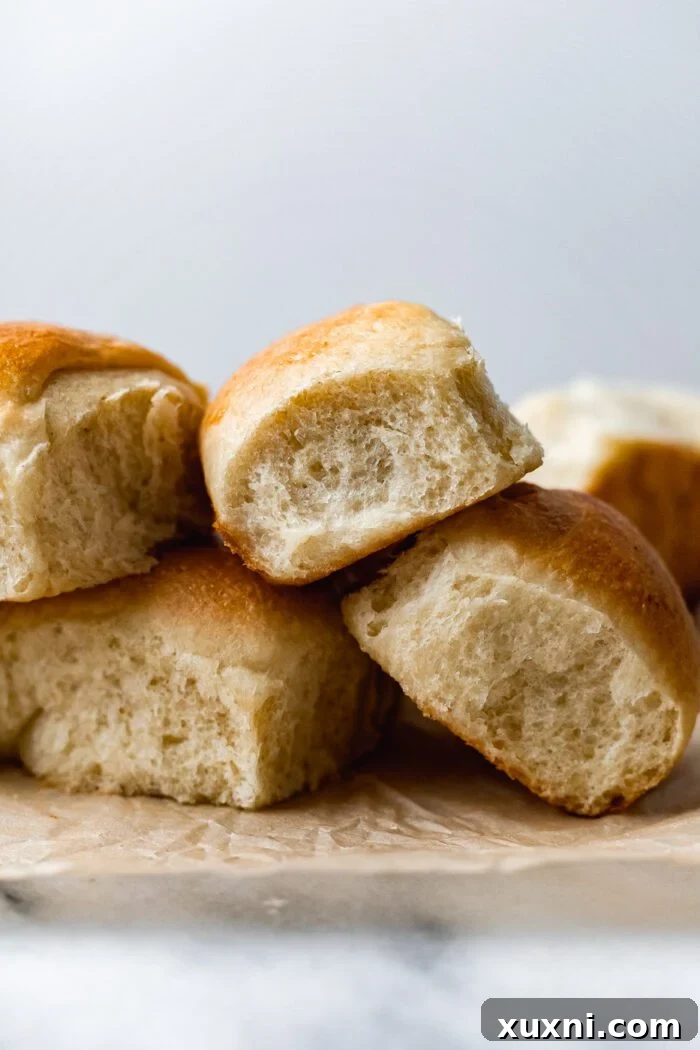
These vegan dinner rolls are more than just a side dish; they’re a testament to how simple, plant-based ingredients can create truly extraordinary results. Their tender crumb, buttery flavor, and light, airy texture make them an unforgettable addition to any meal. Give this recipe a try, and prepare to impress everyone!
If you make them, please be sure to leave a comment below, as well as a rating ⭐️⭐️⭐️⭐️⭐️ so that others may discover and enjoy this wonderful recipe!
As always, I absolutely love to see your beautiful creations on Instagram and Pinterest, so be sure to tag me there! Happy dinner roll making!
Watch: How to Make Easy Vegan Dinner Rolls
For a visual guide to making these delicious vegan dinner rolls, check out the video below. Please note: while the general method remains consistent, there may be slight variations between the recipe in the video and the detailed instructions provided in the recipe card. For the most accurate and best results, always refer to the recipe card.
Save This Recipe for Later! Pin it to Your Favorite Board!
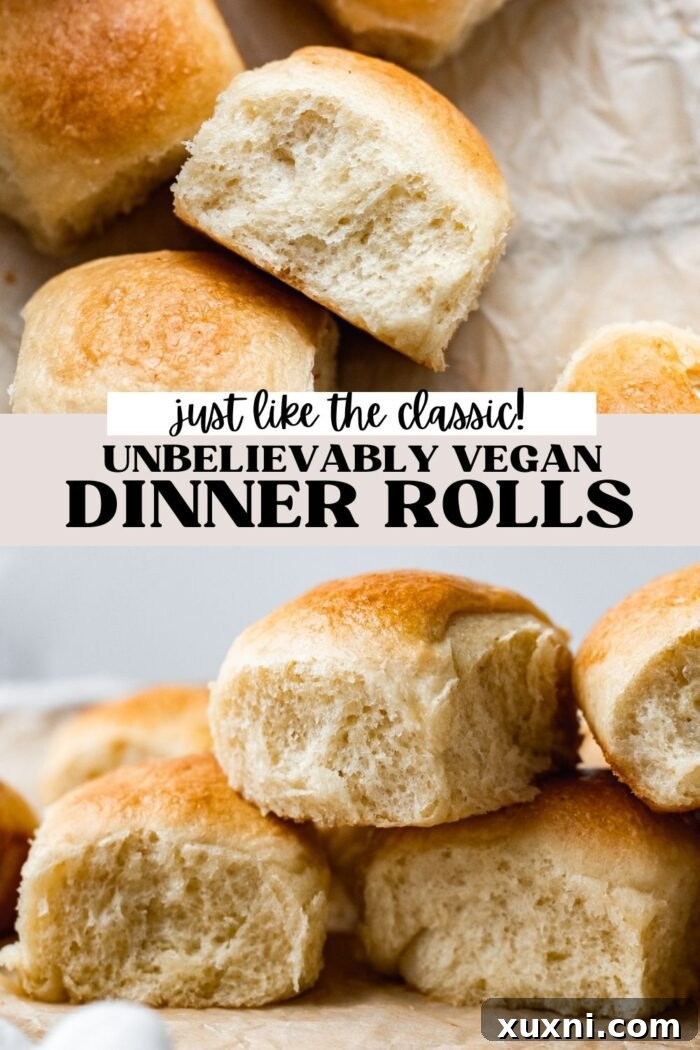
If you make this recipe, please be sure to leave a comment and a rating ⭐️⭐️⭐️⭐️⭐️ below. This helps others to find the recipes! As always, I absolutely love to see your beautiful creations on Instagram and Pinterest, so be sure to tag me there as well!
Print
Soft Homemade Vegan Dinner Rolls
5 Stars 4 Stars 3 Stars 2 Stars 1 Star
5 from 5 reviews
Author: Britt Berlin
Prep Time: 30 minutes
Cook Time: 20 minutes
Total Time: 50 minutes
Yield: 16 rolls
Category: Dinner
Method: Baking
Cuisine: American
Diet: Vegan
Description
This incredibly easy recipe creates homemade vegan dinner rolls that are wonderfully soft, richly “buttery,” and perfectly fluffy. Requiring just 5 essential ingredients, these dairy-free and eggless dinner rolls are so delicious that no one will guess they’re plant-based! They are the ultimate side dish for any meal, especially holiday feasts like Thanksgiving.
Ingredients
Scale
- 1 1/2 cups (330 mL) dairy-free milk (such as oat, almond, or soy), warmed to 110°F
- 2 1/4 tsp (7 g) dry active yeast
- 4 cups (500 g) all-purpose flour, plus 1 tsp for activating yeast
- 1/2 cup (113 g) unsalted vegan butter, softened to room temperature
- 1 tsp fine sea salt
- 2 tbsp maple syrup, room temperature
- For Vegan Bread Wash:
- 1 tbsp melted vegan butter
- 1 tbsp maple syrup
Instructions
- Prepare Your Workspace & Ingredients: Before you begin, measure and weigh all your ingredients. Grease a large bowl with cooking or coconut oil and set it aside; this bowl will be used for the dough’s first rise, separate from your mixing bowl.
- Warm the Dairy-Free Milk: Gently heat your chosen dairy-free milk to precisely 110°F (43°C). Use a food thermometer to ensure accuracy, as temperature is crucial for yeast activation.
- Activate the Yeast: In your mixing bowl, add the warmed dairy-free milk, dry active yeast, and 1 teaspoon of all-purpose flour. Stir gently with a wooden spoon, then cover the bowl. Place it in a warm area (ideally 75-80°F / 24-27°C) for 10-12 minutes to activate. You’ll know the yeast is ready when a foamy layer forms on the surface and it emits a distinct yeast-like aroma, similar to beer. If this doesn’t occur, your yeast may be inactive, and you’ll need to start this step over.
- Form the Dough: Once the yeast is activated, add the maple syrup to the yeast mixture. If using a stand mixer, attach the dough hook; otherwise, use a large spoon for hand mixing. Mix on medium-low speed until just combined. Gradually add about half of the remaining all-purpose flour, mixing on medium speed until it begins to incorporate. Add the rest of the flour and continue mixing until a shaggy dough forms. Finally, add the room temperature vegan butter and fine sea salt. Mix and knead until the butter is fully absorbed, and you have a smooth, elastic dough. Add a tiny bit more flour if the dough remains excessively sticky.
- First Proof (Rise): Transfer the dough ball to the previously greased bowl. Cover it with a thin, clean dish towel. Place the bowl in a warm environment, ideally around 85°F (29°C). If your oven has a proofing setting, use it. Alternatively, preheat your oven to 100°F (38°C), then turn it OFF and leave the oven light on, placing the covered bowl inside. Allow the dough to proof until it has doubled in size, which typically takes about an hour. If your area is cooler, it will take longer; if it’s warmer, it will be quicker.
- Shape the Dinner Rolls: While the dough undergoes its first rise, lightly grease a medium casserole dish or baking pan. Once the dough has doubled, gently punch it down to release the air and carefully transfer it to a clean, lightly floured surface. Using a pizza cutter or a sharp kitchen knife, divide the dough into 16 equal pieces. For consistent results, weigh each piece to be between 58-60 grams. To form round rolls, gently cup each dough piece in your palm and roll it against the counter with light pressure, then pinch the bottom seam together to create a smooth, taut top. See video for a visual demonstration. Arrange the shaped rolls in your prepared baking dish.
- Second Proof (Rise) & Oven Preheat: Cover the shaped dinner rolls once more with a thin, clean dish towel. Place them in a warm spot (near the preheating oven works well) to rise again until they are nearly doubled in size, typically another 30-45 minutes. During this time, preheat your oven to 375°F (190°C).
- Bake to Golden Perfection: In a small bowl, whisk together the melted vegan butter and maple syrup to create your vegan bread wash. Lightly brush this mixture over the tops of the risen dinner rolls using a pastry brush. Place the baking dish into the preheated oven and bake for 18-20 minutes, or until the tops are beautifully golden brown and slightly crusted. Avoid over-baking to maintain their soft interior.
- Serve Warm: Remove the dinner rolls from the oven. Allow them to cool slightly in the pan for a few minutes before serving them warm. They are exquisite with a dollop of vegan butter, a smear of fruit jam, or your favorite savory spread.
- Storage Instructions: Store any leftover vegan dinner rolls in an airtight container or bag. They will remain fresh at room temperature for 1-2 days, in the refrigerator for 4-5 days, or can be frozen for up to 3 months. For best results after freezing, thaw overnight in the fridge and reheat gently.
Notes
For additional tips, troubleshooting advice, and ingredient insights, please refer to the detailed blog post above.
Gluten-Free Option: If you require a gluten-free version of these delicious dinner rolls, you can find a dedicated recipe here: Gluten-Free Vegan Dinner Rolls Recipe.
Discover More Irresistible Vegan Bread Recipes:
Amazing Vegan Garlic & Herb Dinner Rolls
Luxurious Vegan Brioche Bread
The Best Gooey Vegan Cinnamon Rolls
Easy Vegan Cheesy Pull-Apart Garlic Bread
Homemade Vegan Monkey Bread from Scratch