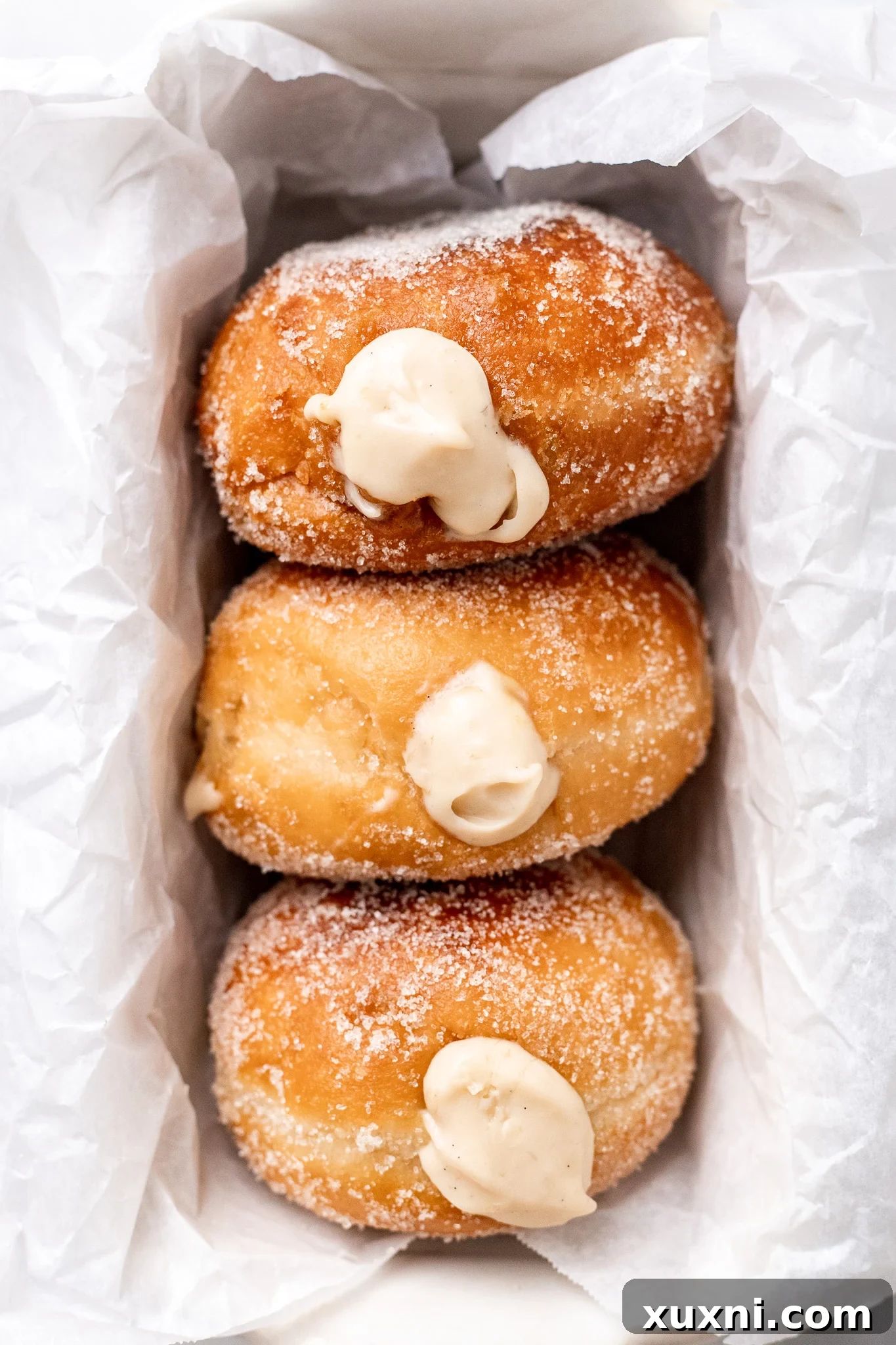
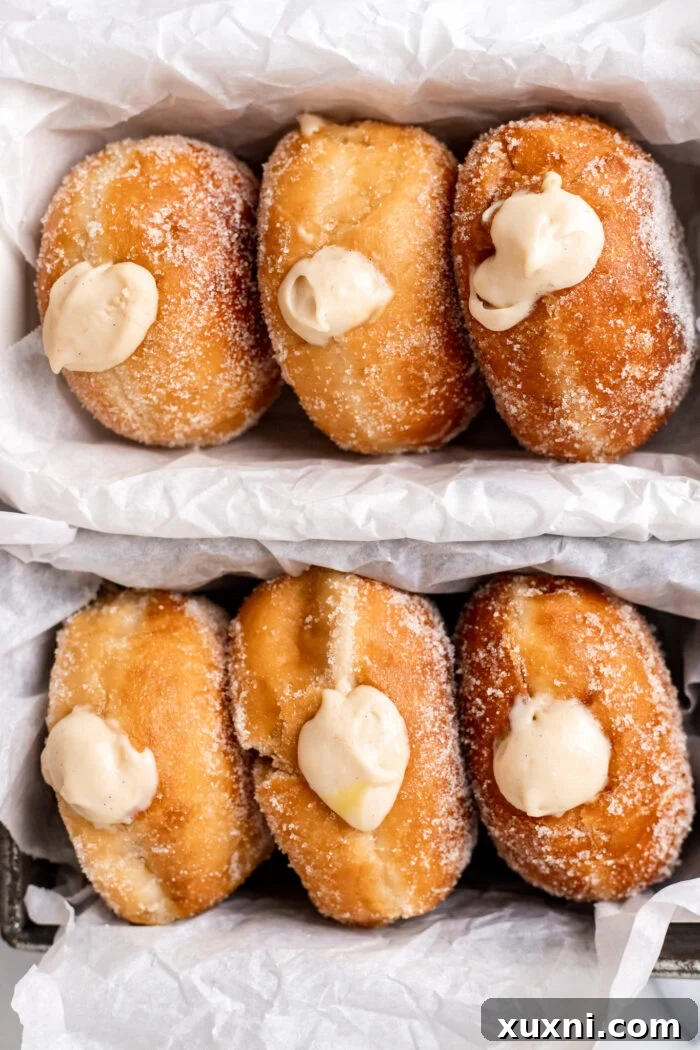
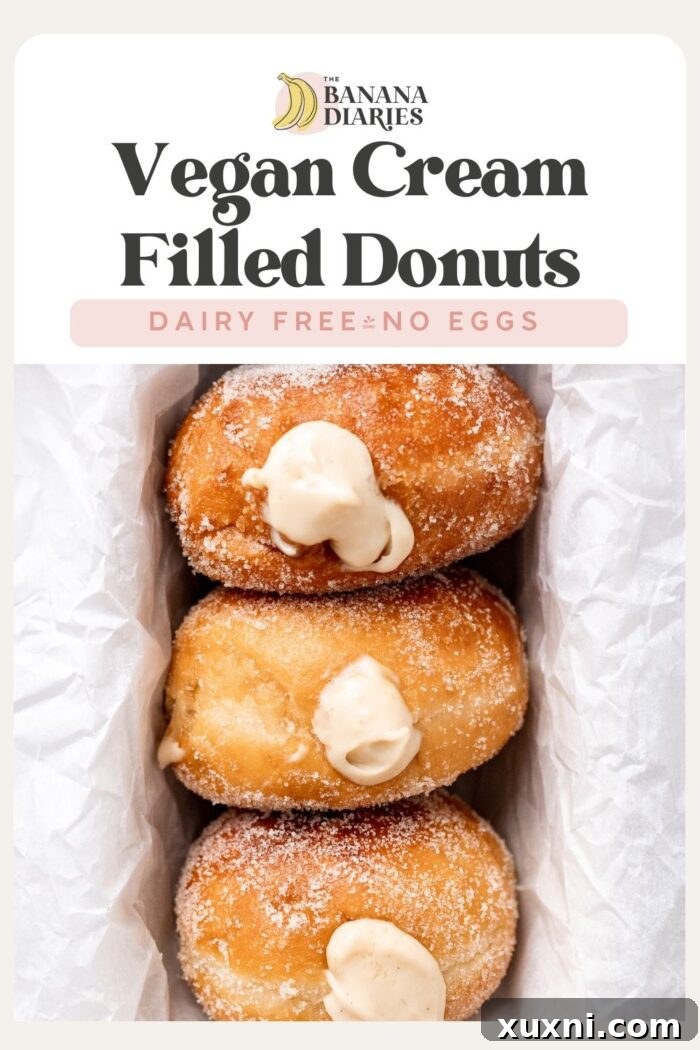
Indulge in the irresistible charm of these homemade Italian-inspired cream-filled donuts, lovingly known as Bomboloni! This recipe guides you through creating deliciously fluffy and plush donuts, generously filled with the creamiest vanilla pastry cream and a zesty lemon curd. Best of all, this recipe is completely vegan and dairy-free, ensuring everyone can enjoy this delightful treat.
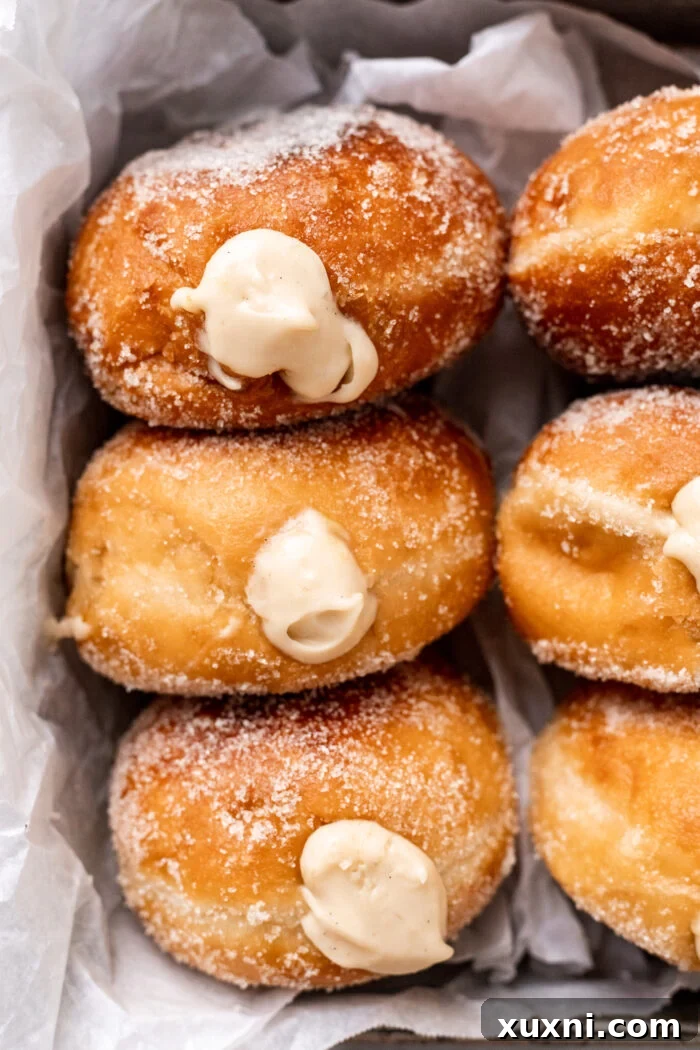
Table of Contents
- Unveiling Vegan Bomboloni: Italian Cream Filled Donuts
- The Magic Behind Dairy-Free and Egg-Free Bomboloni
- Essential Ingredients and Clever Substitutions
- For the Irresistibly Soft Dough
- For the Luscious Custard Filling
- Recommended Equipment for Perfect Donuts
- Your Bomboloni-Making Timeline
- Step-by-Step Guide to Making Vegan Cream-Filled Donuts
- Preparing and Proofing the Dough
- Expert Doughnut Shaping
- The Crucial Second Rise
- Achieving Golden Perfection Through Frying
- Coating and Mastering the Filling
- Can I Bake These Donuts Instead of Frying?
- Creative Filling Variations
- Pro Tips and Tricks for Bomboloni Success
- Storage and Reheating Tips
- Troubleshooting Common Bomboloni Challenges
- More Delightful Vegan Italian-Inspired Recipes
Unveiling Vegan Bomboloni: Italian Cream Filled Donuts
There’s something truly magical about a perfectly crafted cream-filled donut. That soft, pillowy sweet dough, fried to golden perfection, and bursting with a rich, creamy vanilla custard – it’s a bakery pastry dream come true. For many, these delectable treats evoke a sense of comfort and pure indulgence. And for those of us who follow a vegan or dairy-free lifestyle, finding such a delightful pastry can often feel like a quest for the holy grail.
But fear not, fellow food enthusiasts! This recipe brings the joy of homemade Italian cream-filled donuts, or Bomboloni, right to your kitchen. Inspired by traditional Italian recipes and meticulously adapted to be completely plant-based, these vegan bomboloni are not just a substitute; they are a celebration of flavor and texture that stand proudly on their own. We’ve taken the classic Italian essence, often found in recipes passed down through generations, and infused it with innovative vegan alternatives, ensuring that every bite is as authentic and satisfying as its traditional counterpart.
The beauty of Bomboloni lies in their simplicity and the exquisite balance of flavors. Traditionally, they often feature a hint of citrus, a characteristic we’ve embraced in this vegan rendition, especially when paired with an optional yet highly recommended lemon curd. The core, however, is the smooth, luscious vanilla pastry cream (crema pasticcera), which provides a decadent contrast to the lightly sweetened dough. Don’t let the idea of frying intimidate you; it’s a straightforward process that yields incredibly tender results, far simpler than you might imagine. Get ready to impress your taste buds and loved ones with these spectacular vegan bomboloni – perfect for a special breakfast, a festive brunch, or any moment you crave a truly exceptional donut experience.
The Magic Behind Dairy-Free and Egg-Free Bomboloni
Traditional Italian cream-filled donuts rely heavily on eggs and dairy products for both the richness of the dough and the luxuriousness of the custard filling. However, this recipe masterfully transforms the classic into a fully vegan delight without compromising on flavor or texture. We achieve this by thoughtfully selecting plant-based substitutes that mimic the properties of their animal-derived counterparts.
For the delicate and airy donut dough, we harness the power of dairy-free yogurt and vegan butter. Dairy-free yogurt, in particular, acts as a fantastic egg substitute in baking, contributing moisture, richness, and aiding in the dough’s structure and rise. Combined with plant-based milk, it creates a dough that’s incredibly soft, plush, and easy to work with. The result is a donut that’s remarkably similar in texture to traditional bomboloni.
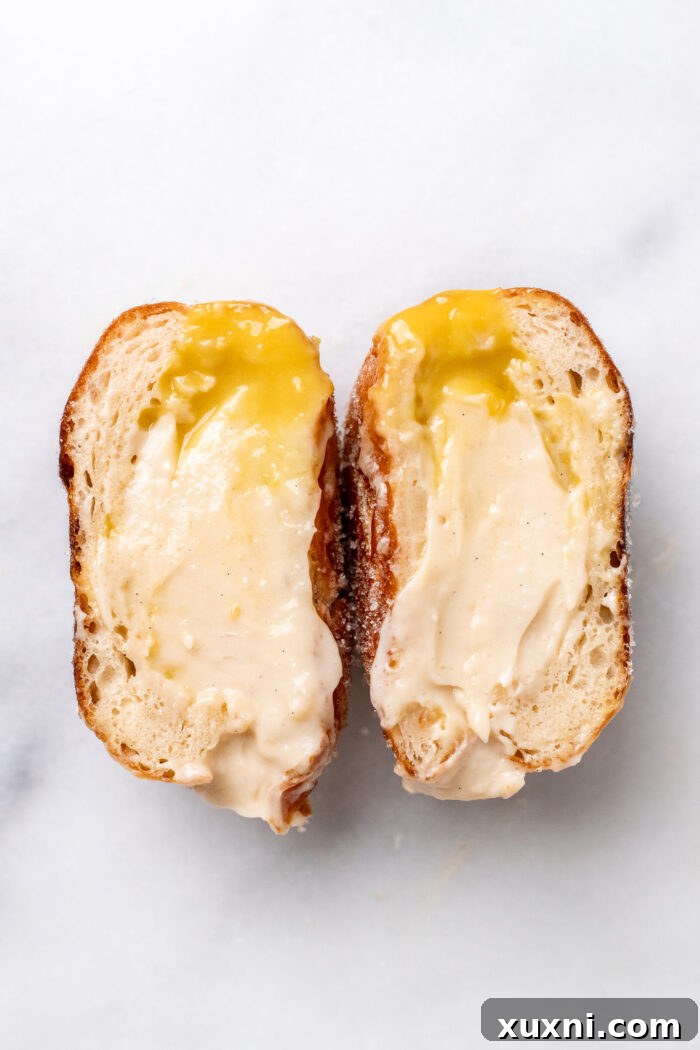
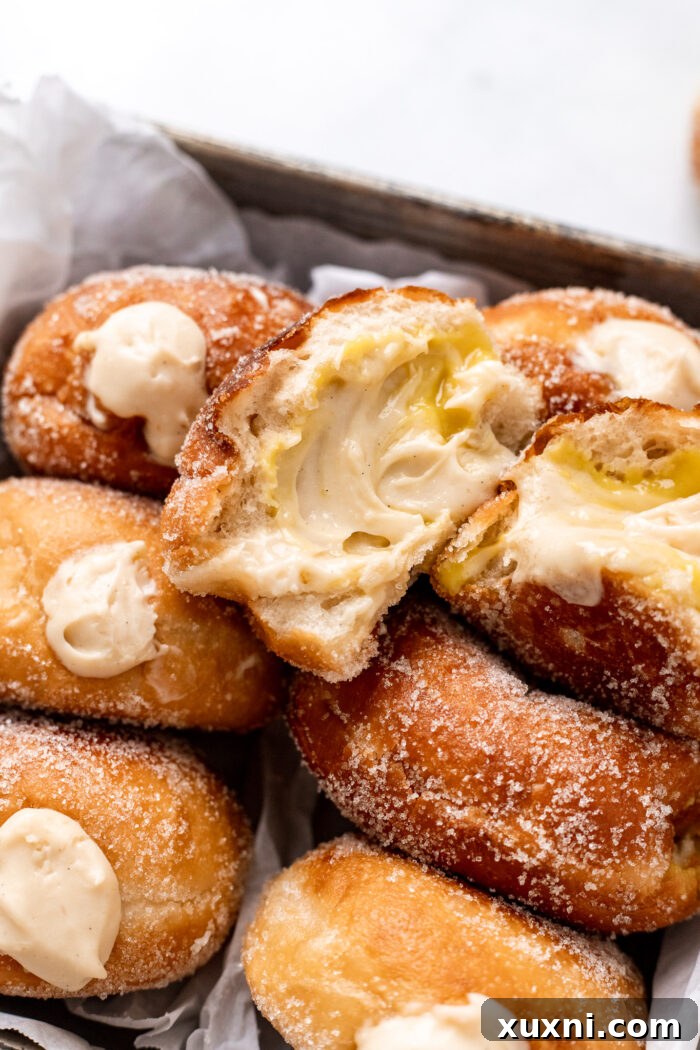
The star of the show, the creamy filling, is made using an incredibly simple yet decadent vegan vanilla pastry cream. This 10-minute wonder utilizes heavy vegan cream, dairy-free milk, and cornstarch to achieve a silky-smooth, thick custard that perfectly holds its shape and melts in your mouth. To elevate the Italian essence and add a bright, zesty counterpoint, we incorporate an optional batch of homemade vegan lemon curd. This citrusy addition truly brightens the overall flavor profile, creating a balanced and unforgettable dessert experience that tastes authentically Italian.
Essential Ingredients and Clever Substitutions
Crafting these exquisite vegan bomboloni requires a selection of high-quality ingredients, thoughtfully chosen to achieve the best flavor and texture. Here’s a detailed look at what you’ll need for both the dough and the creamy filling, along with helpful substitution notes.
For the Irresistibly Soft Dough:
- Flour: You can opt for bread flour, which offers a slightly chewier texture and higher protein content, ideal for yeasted doughs. Alternatively, a good quality all-purpose flour works beautifully, yielding a tender and soft donut.
- Sugar: A fine granulated vegan sugar is crucial here. Look for brands that are certified vegan to ensure no bone char was used in processing. Coconut sugar can also be used for a slightly deeper, caramel-like flavor, though it will give the donuts a darker hue.
- Yeast: Active dry yeast is specified for this recipe, requiring a blooming step to ensure its vitality. Should you prefer, rapid-rise or instant yeast can be used, but note that the proofing times may be slightly shorter, and you can often mix it directly with the dry ingredients without blooming.
- Dairy-Free Milk: Unsweetened soy milk or almond milk are excellent choices, providing the necessary moisture and richness without altering the flavor profile significantly. Oat milk or cashew milk are also viable options, offering slightly different nuances in taste and creaminess. Ensure it’s warmed to the correct temperature to activate the yeast effectively.
- Vegan Butter: A high-quality unsalted vegan butter is essential for achieving the rich, buttery flavor and tender crumb of the donuts. Brands like Violife or Miyoko’s Kitchen are often recommended for their exceptional taste and texture, closely mimicking dairy butter. Ensure it’s at room temperature for optimal incorporation into the dough.
- Dairy-Free Yogurt: This is our secret weapon for replacing eggs. Unsweetened plain dairy-free yogurt (soy or almond-based work best) adds moisture, richness, and acts as a binder, contributing to the dough’s elasticity and soft texture. It’s a fantastic vegan egg substitute, providing both the structure of egg whites and the richness of egg yolks. Ensure it’s at room temperature.
- Sunflower Oil (for frying): Sunflower oil is a neutral-flavored oil with a high smoke point, making it ideal for deep frying donuts. Canola oil, vegetable oil, or grapeseed oil are also suitable alternatives. Remember to monitor the oil temperature carefully for even cooking. And a great tip for sustainability: once cooled and strained, this oil can often be reused for future frying!
For the Luscious Custard Filling:
- Heavy Vegan Cream: For that rich, decadent vanilla cream, a high-quality heavy vegan cream, such as those made from oat, soy, or coconut (like Silk or Plant Crock), is recommended. Be mindful that coconut cream may impart a subtle coconut flavor, which some might enjoy but others prefer to avoid.
- Dairy-Free Milk: To achieve a perfectly creamy, lush, and not overly thick custard, dairy-free milk (soy or almond) is used to thin the heavy cream mixture to the ideal consistency.
- Cornstarch: This acts as the primary thickening agent for our custard, allowing it to become wonderfully thick and smooth without the need for eggs. For a corn-free option, arrowroot starch can be used as a direct substitute.
- Vanilla Extract or Paste: High-quality vanilla is key to a delicious pastry cream. Both pure vanilla extract and vanilla bean paste work wonderfully. Vanilla paste, with its visible specks of vanilla bean seeds, adds an extra touch of gourmet elegance.
- Vegan Butter: A small amount of vegan butter is incorporated into the custard at the end, adding a luxurious mouthfeel and a subtle richness that enhances the overall flavor.
Recommended Equipment for Perfect Donuts
Having the right tools can make the process of making homemade donuts significantly smoother and more enjoyable. While some steps can be done by hand, certain equipment can elevate your results to professional bakery quality.
- For Frying: A large, deep saucepan or Dutch oven with high walls is crucial for safely containing the frying oil. A large slotted spoon or spider skimmer is indispensable for carefully lowering and removing the donuts from the hot oil. Most importantly, a reliable candy thermometer (or deep-fry thermometer) is non-negotiable for accurately monitoring the oil temperature, ensuring even cooking and preventing burnt or greasy donuts.
- For Filling: A specialized donut nozzle attachment is the easiest way to inject fillings smoothly and cleanly. However, a regular piping bag fitted with a large round or star tip can work just as effectively for filling these beauties.
- For Dough Preparation: While you can absolutely knead the dough by hand in a large mixing bowl with a sturdy wooden spoon, a stand mixer equipped with a dough hook attachment will significantly speed up and simplify the kneading process, ensuring a perfectly smooth and elastic dough with minimal effort.
Your Bomboloni-Making Timeline
Donut making involves a few resting periods, but breaking down the process helps manage your time effectively. Here’s a quick overview of the key steps and their approximate durations:
- Make the Dough: Approximately 20 minutes
- First Proof: 60-120 minutes (Allowing the dough to double in size)
- While Proofing: Make the Custard Filling: 10 minutes (Then chill)
- Shape the Doughnuts: 10 minutes
- Second Proof: 30-45 minutes (Until almost doubled)
- Fry the Doughnuts: 20 minutes (This time is for frying all batches)
- Cool: 10 minutes (Before handling and coating)
- Fill: 10 minutes (The final, delicious step!)
Step-by-Step Guide to Making Vegan Cream-Filled Donuts
Embark on your journey to create these delightful vegan bomboloni with this detailed, step-by-step photographic guide. Each stage is crucial for achieving that perfect fluffy texture and rich filling.
Preparing and Proofing the Dough
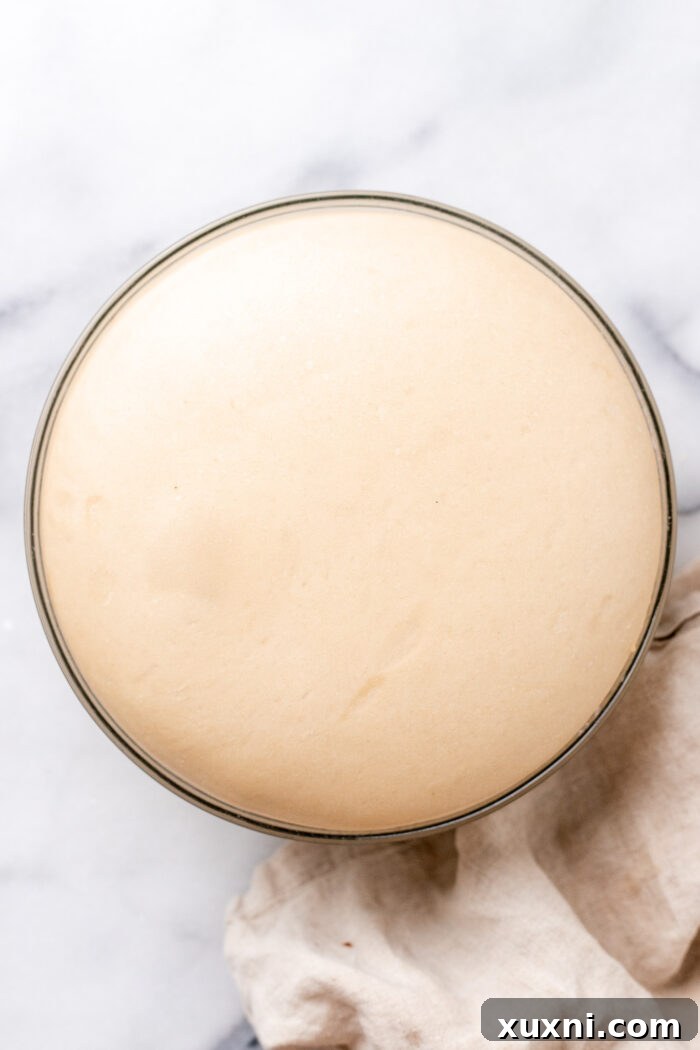
Begin by lightly greasing a medium-sized bowl with olive or coconut oil and set it aside. In a separate large bowl, combine your dairy-free milk (warmed to about 110°F), a quarter cup of granulated sugar, and the active dry yeast. Stir gently with a wooden spoon, then cover the bowl and place it in a warm environment for about 10 minutes. This step, known as blooming, activates the yeast, causing it to foam and emit a distinct, bready aroma, indicating it’s ready to work its magic. While your dough undergoes its first proof, take this opportunity to prepare your vegan vanilla pastry cream and lemon curd, if using. Preparing the fillings ahead of time allows them to cool and thicken properly in the fridge.
Expert Doughnut Shaping
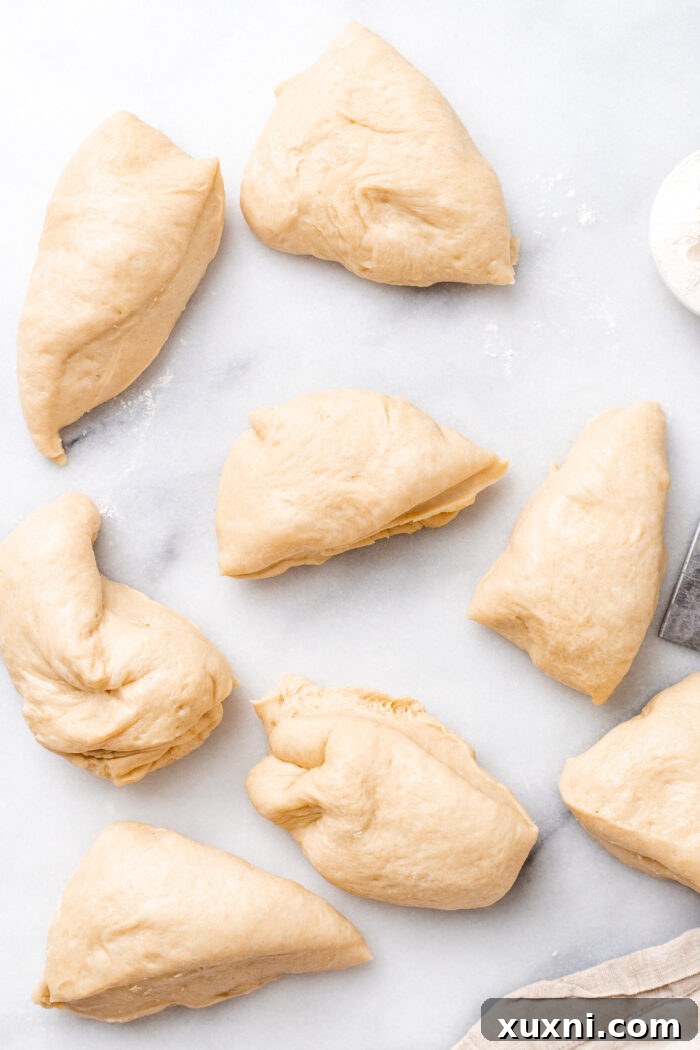
Once the dough has gracefully doubled in size, gently transfer it onto a lightly floured, clean surface. This soft, pliable dough is a joy to work with. Divide the dough into eight equal pieces; this will yield generous, satisfyingly large bomboloni. If you prefer smaller, more bite-sized treats, feel free to divide the dough into more pieces. The key is to ensure they are uniform in size for even cooking.
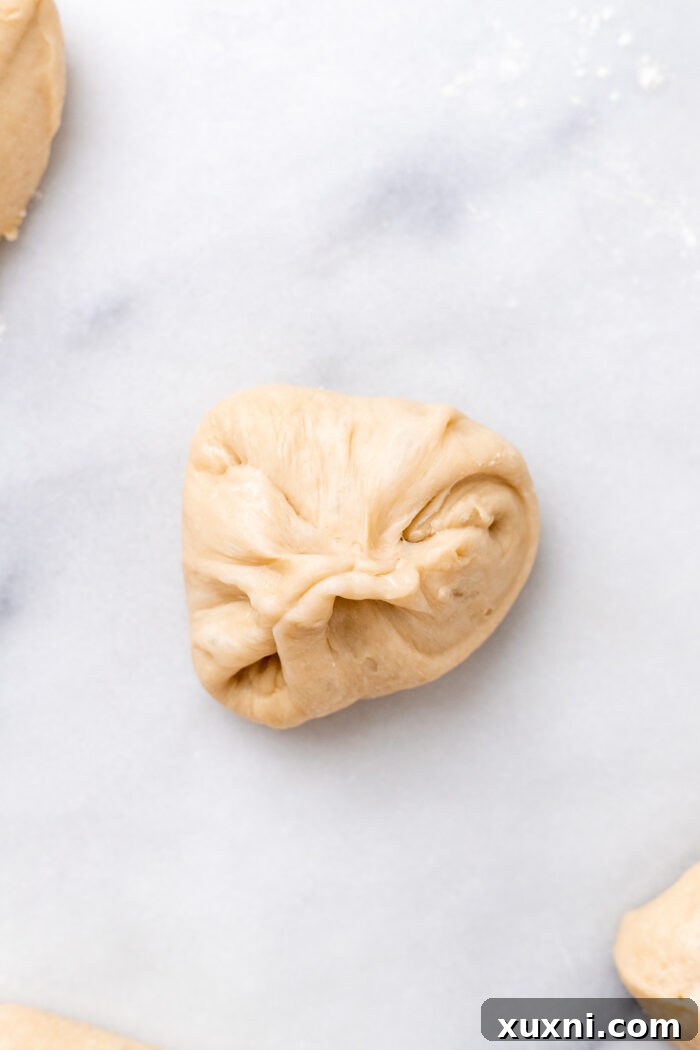
To shape each piece into a perfect ball, take one portion and gently gather and pinch the corners together on one side, forming a tight seam at the bottom. This creates tension on the surface of the dough, which contributes to a smooth exterior.
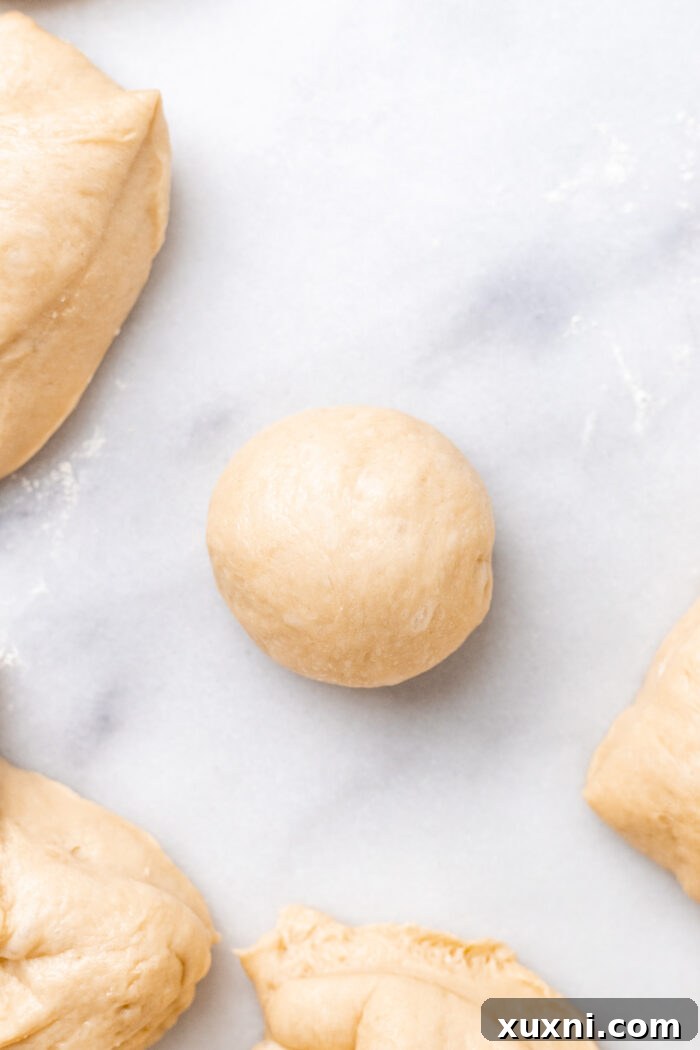
Then, using your palms or by gently rolling the dough ball on the lightly floured surface, smooth out any visible seams until you have a perfectly round, taut ball. This careful shaping ensures a beautiful, even rise and a uniform donut. Place each shaped dough ball onto individual squares of parchment paper on a baking sheet. These parchment squares are essential for easily transferring the delicate, proofed dough into the hot oil without deflating them.
The Crucial Second Rise
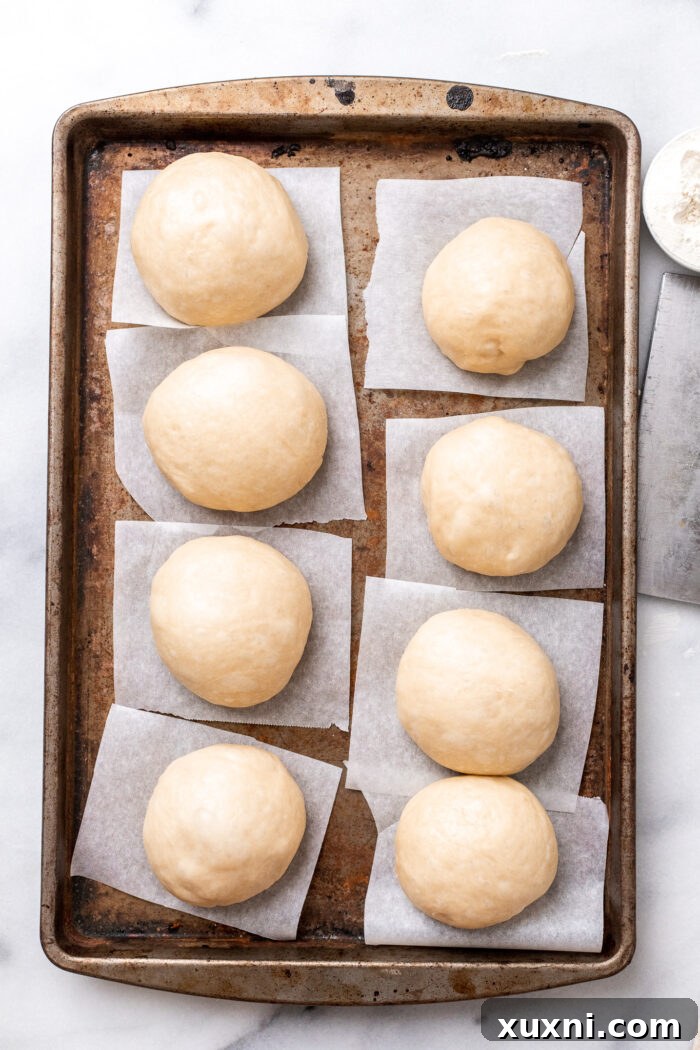
With all your donut pieces perfectly shaped and resting on their parchment squares, it’s time for their second rise. Cover the baking sheet loosely with a clean dish towel or plastic wrap to prevent them from drying out. Place them in a warm, draft-free area, ideally above 80°F (27°C), to rest for approximately 30 to 45 minutes. This second proof is critical for achieving that signature light and airy texture. During this time, the yeast continues to produce gases, causing the donuts to puff up beautifully.
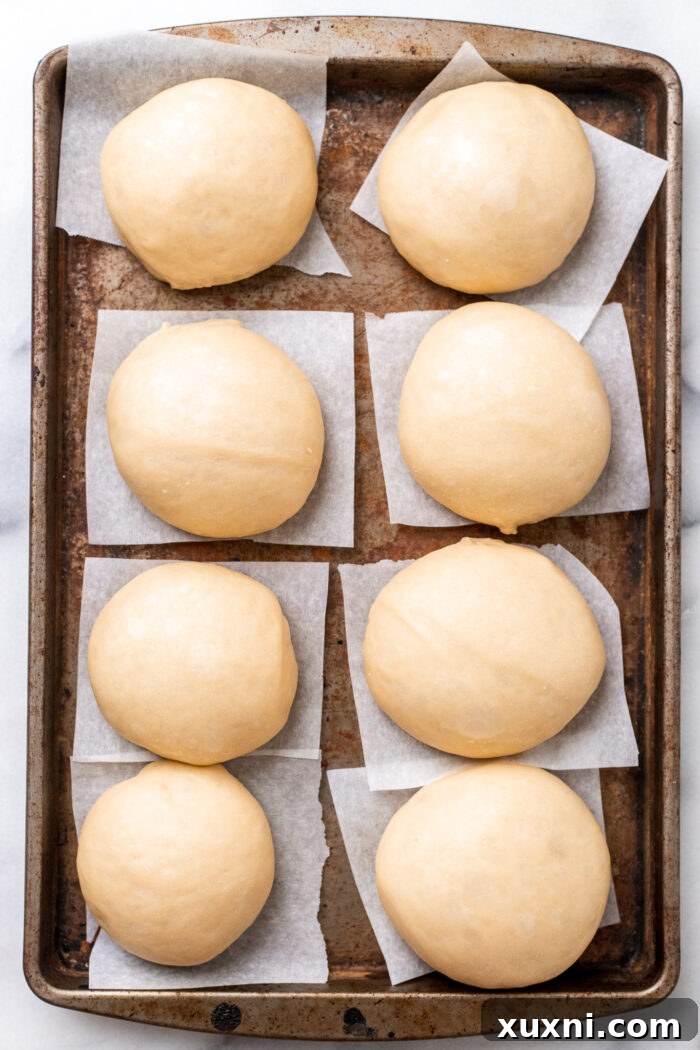
You’ll know they are ready when they appear visibly puffed up, nearly doubled in size, and feel light and airy when gently touched. While your donuts are enjoying their final rest, start preparing your frying station. Pour the sunflower oil into a large, heavy-bottomed saucepan or Dutch oven with high walls. Attach your candy thermometer to the side of the pan and begin heating the oil. Aim for a steady temperature between 350-365°F (175-185°C). Additionally, set up a cooling rack lined with paper towels nearby to absorb any excess oil from your freshly fried donuts.
Achieving Golden Perfection Through Frying
Frying the donuts is where the magic truly happens, transforming soft dough into golden, crisp-on-the-outside, fluffy-on-the-inside treats. Maintaining the correct oil temperature is absolutely critical here for perfect results.
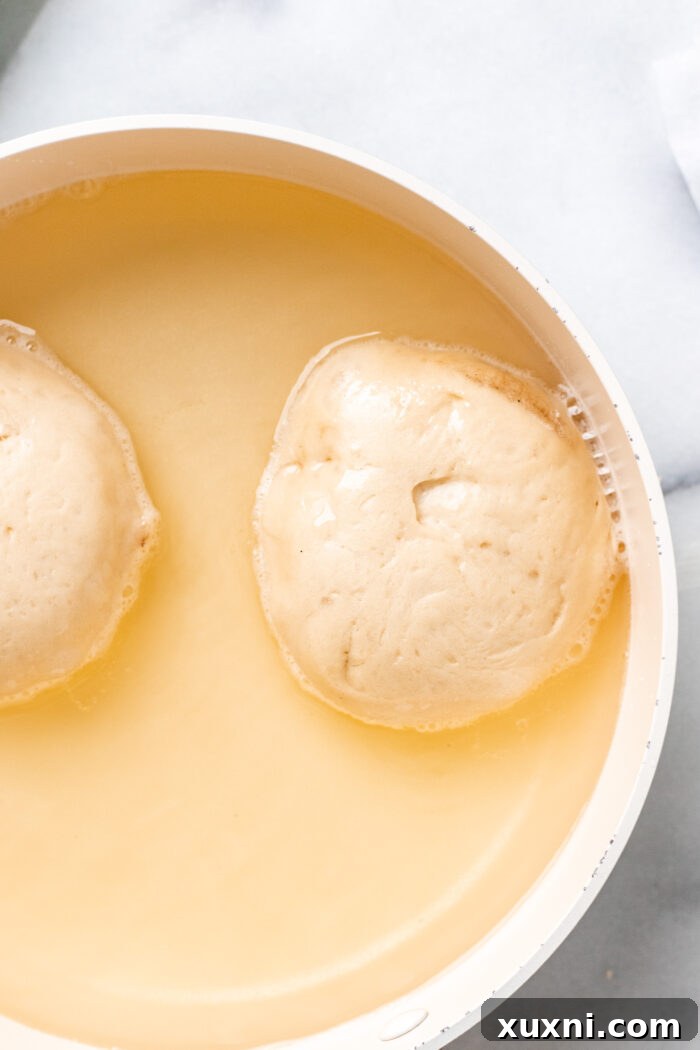
Once your oil reaches the ideal temperature of 350-365°F (175-185°C), carefully take one proofed donut, still on its parchment paper. Gently lower the donut (with the parchment paper) into the hot oil using a slotted spoon or spider. The parchment paper will usually detach itself in the oil; simply remove it with your spoon. Fry the donut on one side for approximately 2 minutes, or until it achieves a beautiful, light golden-brown color. The donuts will puff up significantly in the hot oil.
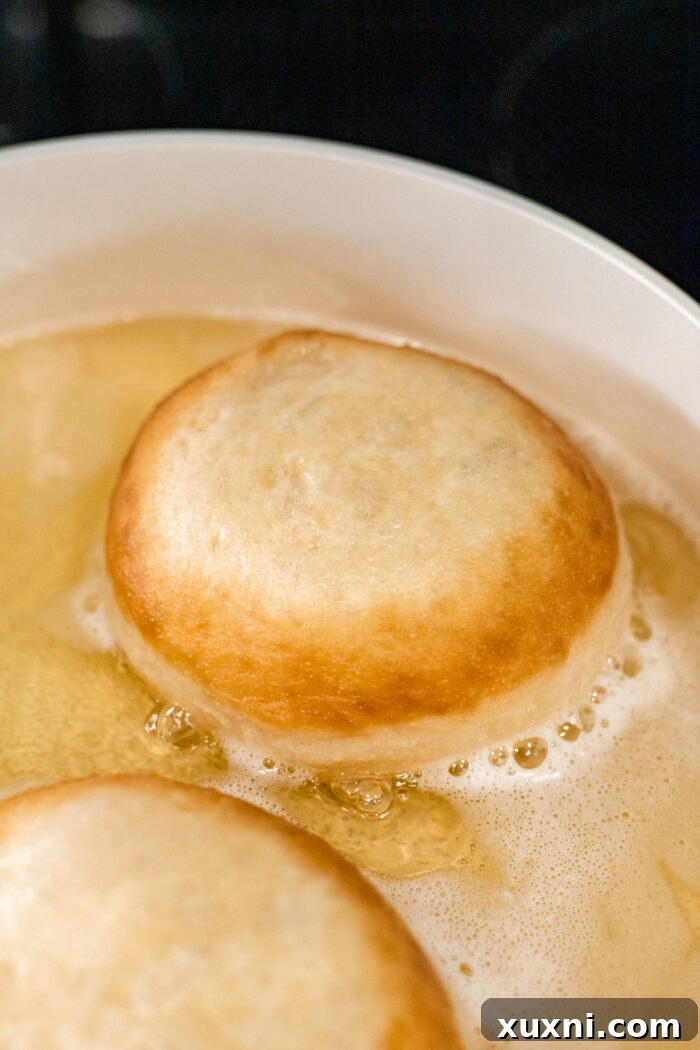
Using your slotted spoon, carefully flip the donut to cook the other side for another 1.5 minutes, or until evenly golden. You can fry multiple donuts at once, provided your pan is large enough and you don’t overcrowd it. Crucially, continuously monitor the oil temperature with your thermometer; it tends to drop when donuts are added and rise when they are removed. Adjust the heat as needed to keep it within the optimal range. Overcrowding the pan can lower the oil temperature too much, resulting in greasy donuts, while oil that’s too hot will burn the exterior before the inside cooks through.
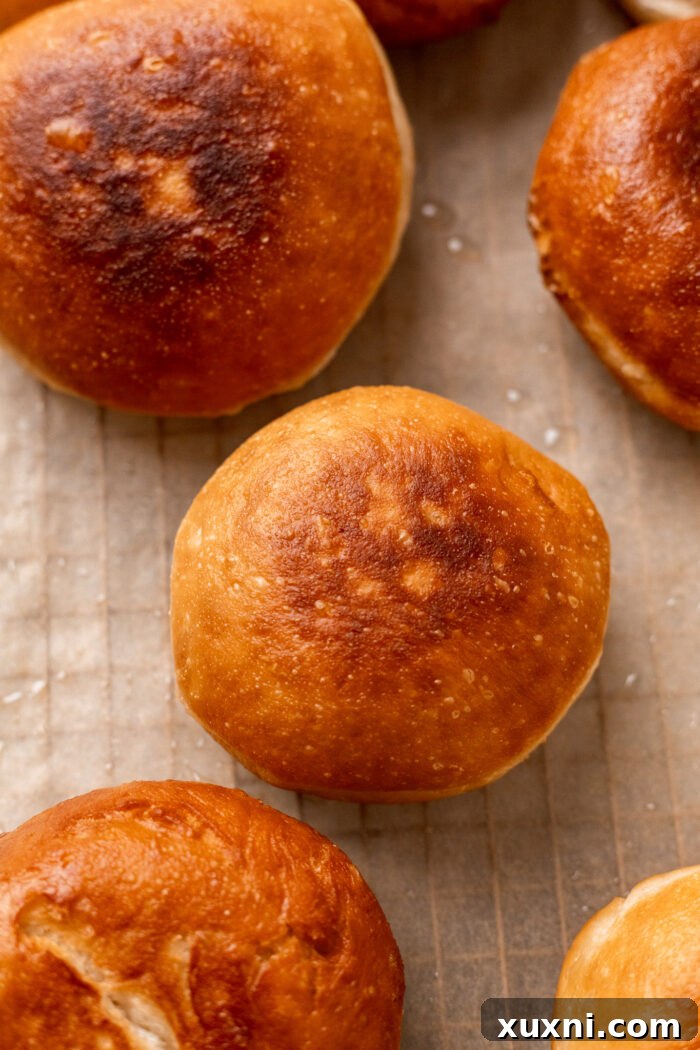
Once perfectly cooked, remove the donuts from the oil using the slotted spoon, allowing any excess oil to drip off briefly. Transfer them immediately to the prepared cooling rack lined with paper towels. The paper towels will help absorb any remaining oil, ensuring your donuts are light and not greasy.

Allow the fried donuts to cool on the rack for at least 10 minutes before proceeding to the next steps. This cooling period is important as they will be too hot to handle and coat properly right out of the fryer.
Coating and Mastering the Filling
The final touches transform these golden puffs into the irresistible bomboloni you’ve been dreaming of.
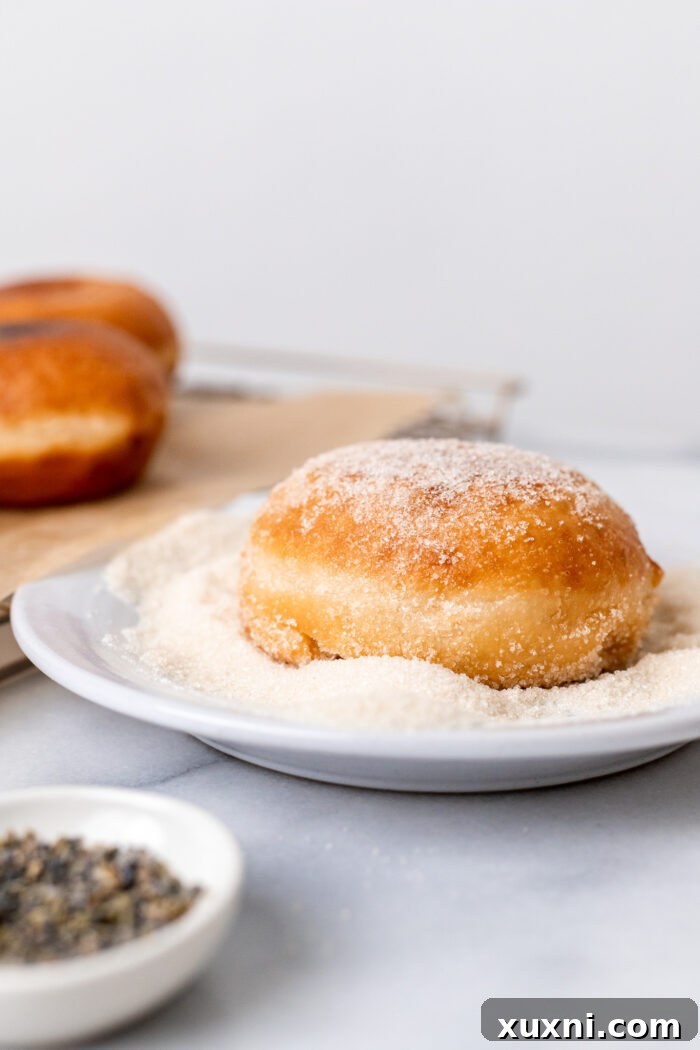
After your donuts have cooled sufficiently (about 10 minutes), it’s time to coat them. Pour the remaining granulated sugar into a wide, shallow bowl. Take each donut and gently roll it in the sugar, ensuring it’s evenly coated on all sides. This adds a delightful sweetness and a pleasant textural contrast to the soft interior.
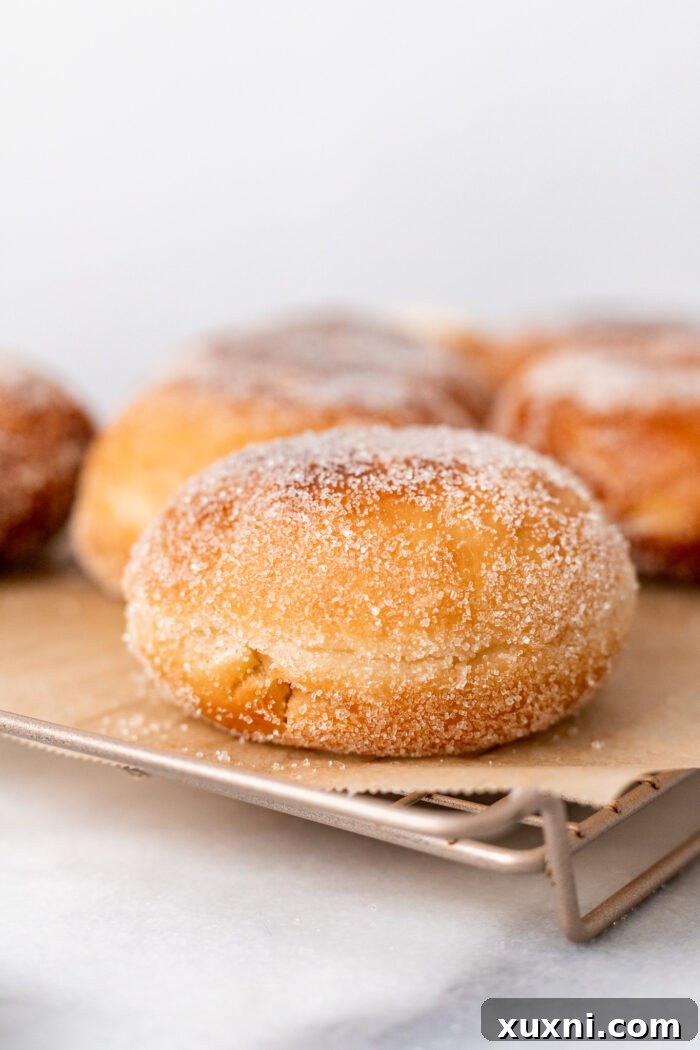
Next, prepare the donuts for filling. Using a small butter knife or a long skewer, carefully poke a hole into the side or bottom seam of each donut. Gently wiggle the knife or skewer around inside to create a small pocket in the center, large enough to accommodate your piping tip and filling. Be careful not to tear the donut completely.
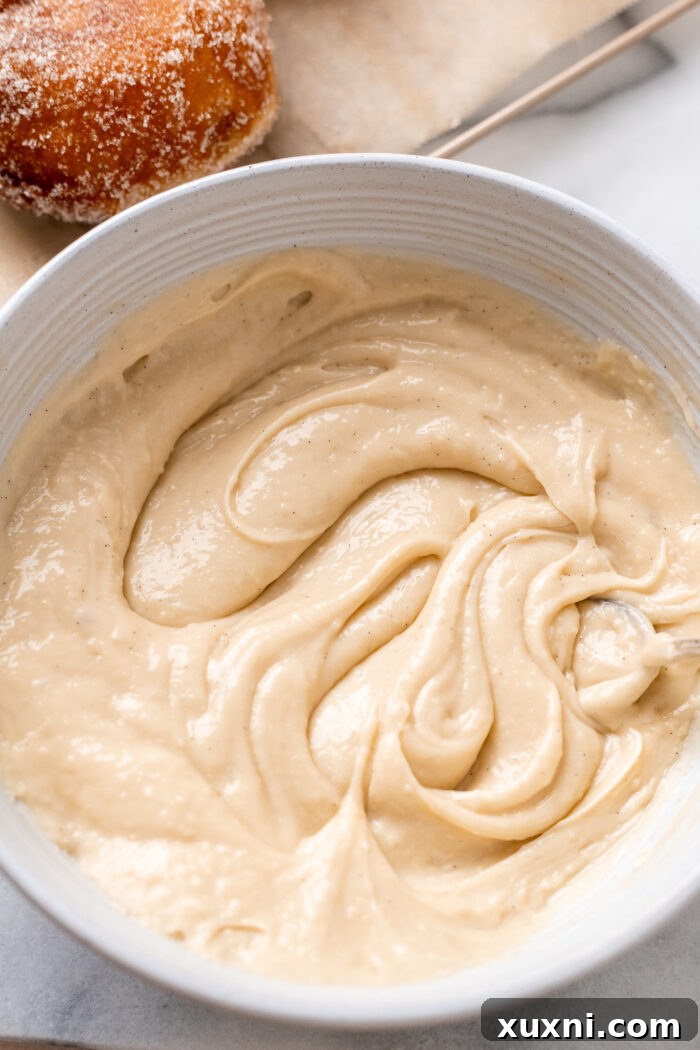
Now for the best part! Fill a pastry bag fitted with a donut nozzle or a large round piping tip with your chilled vegan vanilla pastry cream. If you’re using lemon curd as well, you can use a separate piping bag for that or pipe layers of both. Insert the tip of the pastry bag into the hole you created in each donut and gently squeeze, filling the donut until it feels pleasantly plump and the filling starts to peek out of the hole. Be generous!
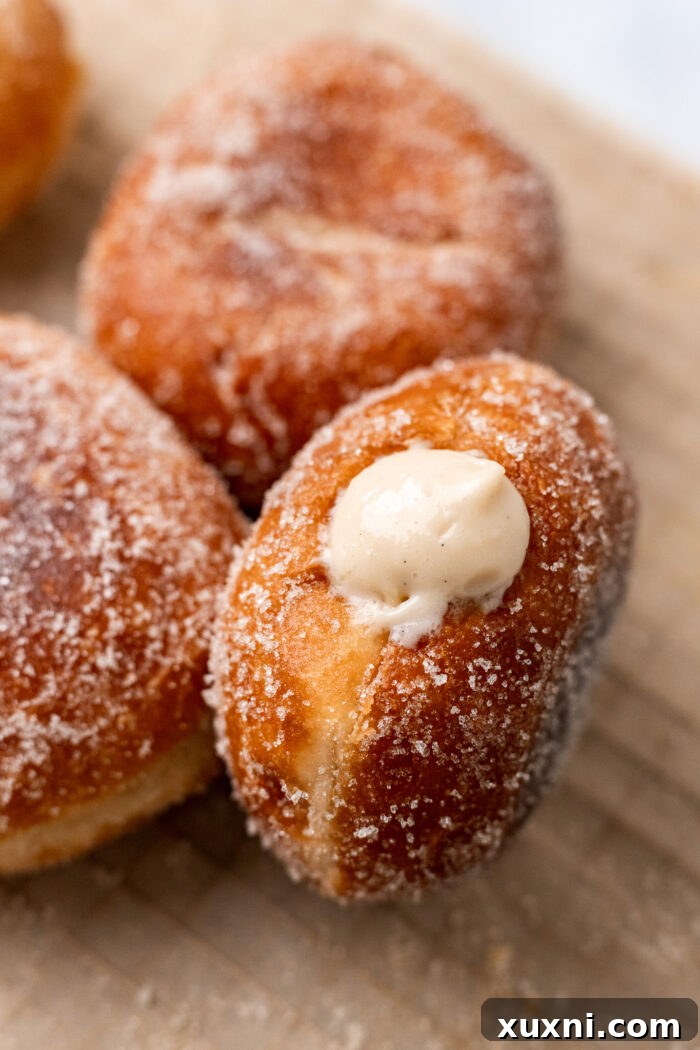
Serve these exquisite vegan bomboloni immediately for the freshest, most delightful experience. The combination of warm, fluffy dough with cold, creamy filling is simply divine. Enjoy the fruits of your labor!
Can I Bake These Donuts Instead of Frying?
While these Italian cream-filled donuts are traditionally fried for their characteristic crisp exterior and airy interior, you might be wondering if baking is a viable alternative. The short answer is yes, you can bake them, but it’s important to set realistic expectations regarding the final texture and appearance. Frying provides a unique puffiness and a perfectly golden-brown, slightly chewy crust that is difficult to replicate with baking.
When donuts are fried, the direct contact with hot oil causes them to puff up quickly and evenly, creating a beautiful ‘white ring’ around the middle, indicating a perfect rise. Flipping them halfway through ensures uniform cooking and coloring. Baked donuts, on the other hand, tend to bake on one side for the duration, which can sometimes lead to a less even rise and a denser texture. The color will also be less intensely golden compared to their fried counterparts.
If you choose to bake these vegan bomboloni, here’s how to adapt the recipe: After the second proofing, gently brush both sides of each donut with melted vegan butter. Arrange them on a baking sheet lined with parchment paper, ensuring enough space between each. Bake them in a preheated oven at 375°F (190°C) for approximately 20-25 minutes, or until they are golden brown and cooked through. Keep a close eye on them, as oven temperatures can vary. While delicious in their own right, baked bomboloni will offer a more cake-like texture rather than the classic light and airy fried dough. They’re still a fantastic option if you prefer to avoid frying!
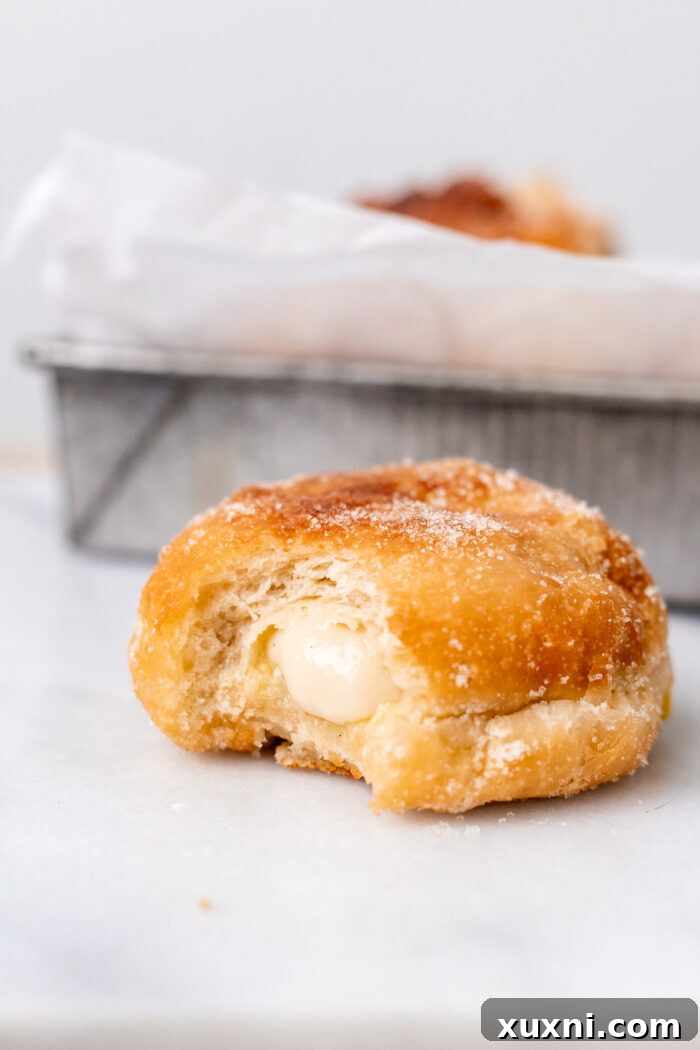
Creative Filling Variations
While the classic vanilla pastry cream with a hint of lemon curd is undeniably delicious, these versatile vegan bomboloni are the perfect canvas for a variety of creative fillings. Don’t hesitate to experiment and customize them to your personal taste!
- Chocolate Lover’s Dream: For an irresistible chocolate experience, simply melt some high-quality vegan dark chocolate and fold it into your prepared vegan pastry cream. This creates a rich, velvety chocolate custard that’s truly decadent.
- Spiced Comfort: Embrace warm, cozy flavors by stirring a pinch of nutmeg and a dash of cinnamon into your vanilla pastry cream. For an extra touch, coat the fried donuts in a fragrant cinnamon-sugar mixture instead of plain granulated sugar.
- Fruity Freshness: Swap out the custard entirely for your favorite fruit jam! Strawberry, blueberry, raspberry, or apricot jams all work wonderfully, adding a burst of sweet and tangy fruitiness. Look for high-quality vegan jams with minimal added sugar.
- Pure Lemon Zest: If you’re a true citrus aficionado, forego the vanilla pastry cream and fill your bomboloni solely with a generous amount of homemade vegan lemon curd. The vibrant, tangy lemon will cut through the richness of the fried dough beautifully.
- Nut Butter Indulgence: For a protein-packed and satisfying option, consider filling the donuts with a creamy cashew butter or almond butter, perhaps swirled with a touch of maple syrup.
- Espresso Infusion: For coffee lovers, add a shot of cooled, strong espresso or a teaspoon of espresso powder to your vegan pastry cream for a delightful tiramisu-inspired flavor.
Pro Tips and Tricks for Bomboloni Success
Achieving bakery-quality vegan bomboloni at home is entirely within reach with a few expert tips and tricks. Follow these guidelines to ensure your donuts are consistently perfect:
- Master the Oil Temperature: This is arguably the most critical factor in frying. Too hot, and your donuts will burn on the outside while remaining raw in the center. Too cool, and they will absorb too much oil, becoming greasy and heavy. Invest in a good candy thermometer and diligently monitor the oil temperature, aiming for a consistent 350-365°F (175-185°C). Adjust the heat as needed between batches.
- Reuse Frying Oil: Don’t discard your oil after one use! Once the oil has completely cooled, carefully strain it through a fine-mesh sieve or cheesecloth to remove any crumbs. Store it in an airtight container in a cool, dark place, and it can be reused for future frying sessions. This is both economical and environmentally friendly.
- Strategize Your Timing: To streamline your workflow and ensure all components are ready when needed, make the custard filling while the donut dough is undergoing its first proof. This allows the custard ample time to cool completely and thicken in the refrigerator, ensuring it’s the perfect consistency for filling.
- Experiment with Coatings: While granulated sugar provides a classic finish, don’t be afraid to try alternatives. For a less sweet or more elegant presentation, a light dusting of powdered sugar (confectioners’ sugar) is a beautiful option. For spiced donuts, a cinnamon-sugar blend is fantastic.
- Optimize Cooling: After frying, immediately transfer the hot donuts to a cooling rack placed over a layer of paper towels. The rack allows air to circulate around the donuts, preventing them from becoming soggy, while the paper towels efficiently absorb any residual oil, leading to a cleaner, less greasy donut.
- Room Temperature Ingredients are Key: For the dough, ensure your dairy-free milk, vegan butter, and dairy-free yogurt are all at room temperature. This allows for better emulsification and activation of the yeast, leading to a smoother, more consistent dough and a better rise.
- The Windowpane Test: When kneading your dough, aim for it to pass the “windowpane test.” This means you should be able to stretch a small piece of dough very thinly between your fingers until it’s almost transparent, without tearing. This indicates that the gluten has developed sufficiently, and your dough will be elastic and strong enough to hold its shape and rise beautifully.
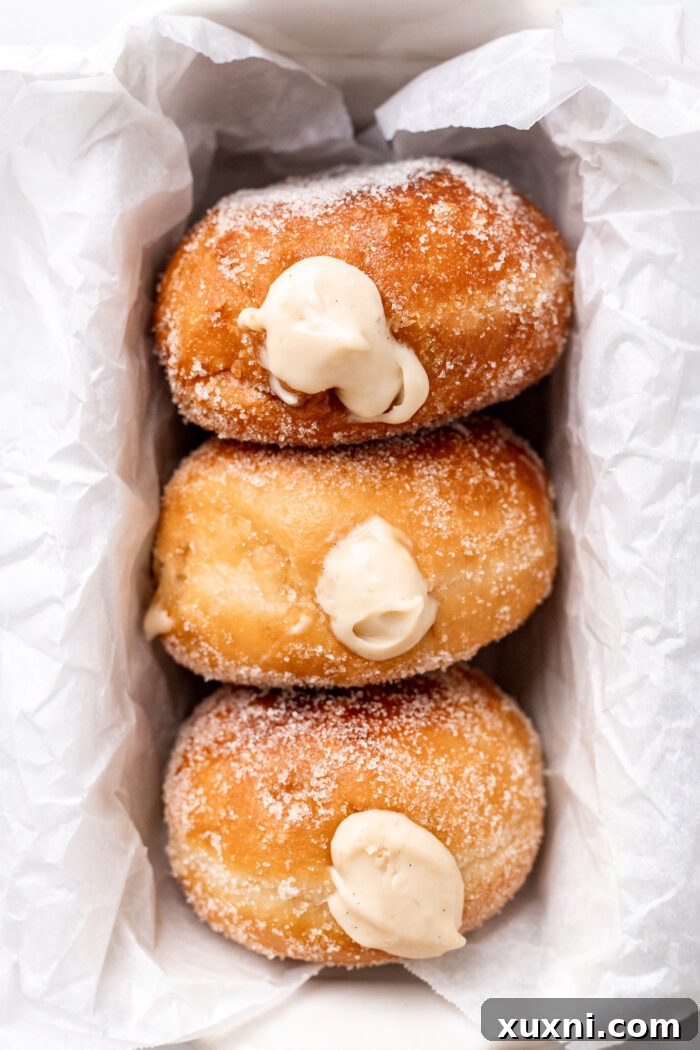
Storage and Reheating Tips
To enjoy your homemade vegan bomboloni at their best, it’s ideal to serve them fresh. However, if you have leftovers or want to prepare them slightly in advance, here are some storage and reheating recommendations:
- Storage: Once filled, these donuts are best stored in an airtight container in the refrigerator. The custard filling needs to be kept cold. They will maintain their best quality for up to 2-3 days. The dough will become slightly denser over time, but they will still be delicious.
- Freezing (Unfilled Dough): If you want to prepare the dough in advance, you can freeze the shaped, un-fried donut dough. After the first proof, shape the donuts, place them on parchment paper, and freeze until solid. Once frozen, transfer them to an airtight freezer-safe bag. When ready to use, thaw them in the refrigerator overnight, then bring them to room temperature for their second proof before frying.
- Reheating (Not Recommended for Filled): Reheating filled donuts can be tricky as the filling might become too warm or separate. For the best experience, bring refrigerated filled donuts to room temperature for about 15-20 minutes before serving. If you must reheat, a very quick flash in a warm oven (around 200°F/95°C for 5 minutes) might work, but be cautious not to overheat the filling.
Troubleshooting Common Bomboloni Challenges
Even experienced bakers encounter small hiccups. Here are solutions to common issues you might face while making vegan bomboloni:
- Dough Not Rising: If your dough isn’t rising, the most common culprits are inactive yeast or incorrect liquid temperature. Ensure your yeast is fresh and your dairy-free milk is warmed to the optimal 105-115°F (40-46°C). Also, make sure your proofing environment is warm and free of drafts.
- Donuts Soaking Up Too Much Oil: This usually indicates the oil temperature is too low. Always use a thermometer and keep the oil between 350-365°F (175-185°C). Overcrowding the pan can also drop the temperature, so fry in small batches.
- Donuts Browning Too Quickly / Raw Inside: Conversely, if your donuts are dark on the outside but uncooked inside, the oil is too hot. Lower the heat and let the oil cool slightly before continuing.
- Pastry Cream Not Thickening: Ensure you’re cooking the pastry cream long enough and stirring constantly until it reaches a thick, pudding-like consistency. Cornstarch needs heat to activate its thickening properties. Make sure you’re using the correct ratio of cornstarch to liquid.
- Donuts Deflating After Frying: This can happen if the dough was over-proofed, making the gluten structure too weak to hold the air. Or, if the oil temperature was too low, causing them to absorb oil and sink.
More Delightful Vegan Italian-Inspired Recipes
If you’ve fallen in love with these vegan bomboloni, you’ll surely enjoy exploring more plant-based interpretations of classic Italian dishes. Here are a few more recipes to inspire your culinary adventures:
- Amazing Baked Vegan Cannoli
- Vegan Tiramisu
- Easy Vegan Cannoli Cheesecake
- Homemade Vegan Gnocchi
- How to Make Vegan Pasta
- Easy Italian Rainbow Cookies
Want to save this recipe for later? Add it to your favorite recipe board on Pinterest!
If you make this recipe, please be sure to leave a comment and a rating ⭐️⭐️⭐️⭐️⭐️ below. This helps others to find the recipes! As always, I absolutely love to see your beautiful creations on Instagram and Pinterest, so be sure to tag me there as well!
Print
Vegan Homemade Italian Cream Filled Donuts (Bomboloni)
5 Stars 4 Stars 3 Stars 2 Stars 1 Star
4.5 from 2 reviews
Author: Britt Berlin
Prep Time: 50 minutes
Resting time: 105 minutes
Cook Time: 20 minutes
Total Time: 2 hours 55 minutes
Yield: 8 large doughnuts 1x
Category: Dessert
Method: Frying
Cuisine: Italian
Diet: Vegan
Description
These deliciously fluffy and plush homemade Italian-inspired cream filled donuts are simple to make and filled with the creamiest pastry cream and lemon curd! No egg and dairy free!
Ingredients
Scale
- 3/4 cup (184 g) dairy free milk, heated to 110F
- 1/2 cup (100 g) granulated sugar or coconut sugar, divided
- 4 cups (500 g) bread flour or all purpose flour
- 2.5 tsp (.25 oz) dry activated yeast
- 12 tbsp (185 g) unsalted salted vegan butter, room temperature
- 1/4 cup (62.5 grams) unsweetened applesauce or dairy free yogurt, room temperature
- 1 tsp vanilla extract
For frying:
- 3 cups sunflower oil, for frying
- 1 cup (200 g) granulated sugar
For filling:
- 1 batch vegan vanilla pastry cream
- 1 batch vegan lemon curd (optional)
Instructions
- Please read through all instructions before beginning.
- Prep: Grease a medium bowl with olive or coconut oil, and set aside.
- Bloom the yeast: In a separate large bowl, combine the dairy free milk, 1/4 cup (50 g) granulated sugar, and activated yeast. Mix with a wooden spoon, and cover. Place in a warm area to activate for about 10 minutes. The yeast should begin to foam and smell yeast-like (similar to beer).
- Make the dough: Once the yeast is activated, you’ll start the dough. In a large bowl or using a stand mixer with paddle attachment, add the bread flour and remaining sugar to the bowl. Mix just until the sugar is mixed throughout the flour. Then add in the dairy free yogurt, vanilla, and bloomed yeast mixture. Mix on medium speed until a very shaggy dough forms, about 3-4 minutes. Then add in the tablespoons of vegan butter, and begin to mix again on medium speed. Stop every so often to reincorporate the butter. Once the vegan butter is incorporated, turn the speed of the stand mixer onto high, and allow the dough to be kneaded in the bowl for about 10-15 minutes, or until soft and pliable. The dough might still be slightly tacky, but should not leave globs of dough on your finger tip. The trick is to knead the dough until it passes the windowpane test.
- First proof: Place the dough ball into the medium sized greased bowl. Cover with a clean dish towel and place in a warm area (ideally above 80F) to rest for about 60-120 minutes, or until doubled in size.
- While the dough is proofing: Follow the instructions for making the custard filling and the lemon curd if desired. Cover and chill the custard in the fridge until ready to use. Additionally, cut out 8 parchment paper squares (or more if you plan on dividing the dough into more doughnuts) and place them on a baking sheet.
- Shape the dough: Once the dough has doubled in size, lightly flour a clean surface, and place the dough onto the surface. Divide the dough into 8 even dough balls (or more for smaller doughnuts). Take one piece, and pinch the corners together to create a ball. Then gently roll the dough ball between your palms or on the lightly floured surface to smooth the seams until you get a smooth dough ball. Place the shaped dough onto the parchment paper, and repeat for the remaining dough.
- Rest: Cover the baking sheet of doughnuts and place in a warm area again to rest until almost doubled in size, about 30-45 minutes.
- While the doughnuts are resting: With 10-15 minutes remaining of resting time, pour the oil into a large saucepan with walls and heat the oil until it reaches about 350-365F, keeping it steady at that temperature for frying. Use a candy thermometer please. For the cooling, place paper towels onto a cooling rack or below to sop up any excess oil.
- Fry the doughnuts: When the doughnuts are ready, take one doughnut carrying it on its parchment paper and place it onto the slotted spoon, removing the parchment paper. Lower the doughnut into the oil and fry doughnut on onside for 2 minutes or until lightly golden the bottom. Then flip the doughnut using the slotted spoon to fry on the other side for 1:30 minutes. You can place more doughnuts in a time if your pan can hold it, as long as you keep the temperature between 350-365F. Remove the cooke doughnuts with the slotted spoon, and place them onto the cooling rack.
- Coat the doughnuts: After the doughnuts have cooled for 10 minutes, dip each doughnut into a large bowl with the granulated sugar, and flip to evenly coat. Repeat for all doughnuts.
- Fill the doughnuts: Use a knife or a long skewer to poke a hole in the seam of each doughnut, and use the skewer to create a pocket towards the middle of the donut. This will be where you fill the doughnuts. Then fill a pastry bag with piping nozzle with the lemon curd (if using) and another with the vegan custard. Pipe the filling into each doughnut by inserting the tip into the hole made by the skewer.
- Serve and enjoy! Serve the doughnuts freshly baked or store in an airtight container for up to 3 days in the fridge.
Notes
Please read blog post for all tips and tricks!