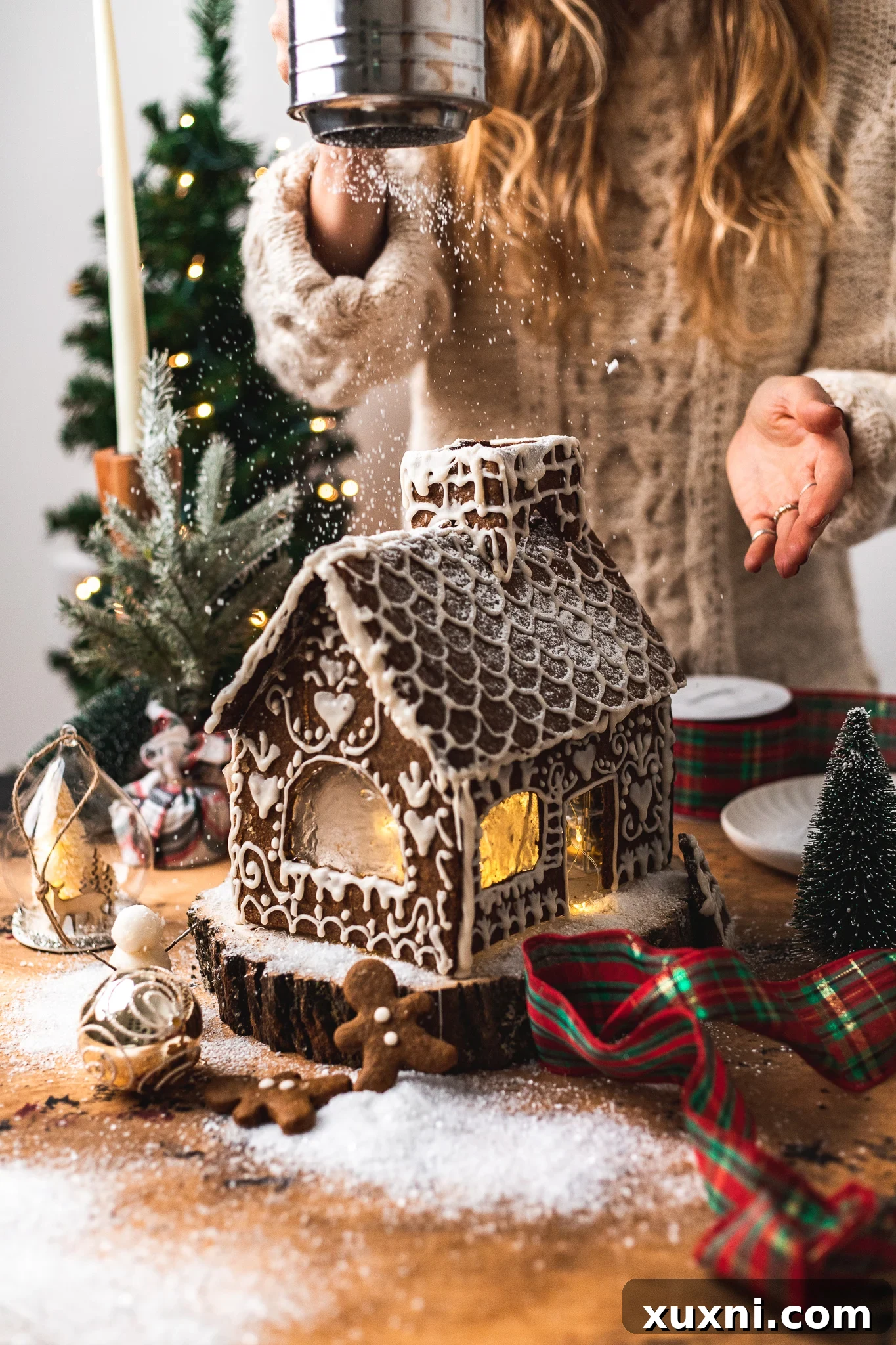
Crafting the Ultimate Vegan & Gluten-Free Gingerbread House: Your Complete Holiday Guide
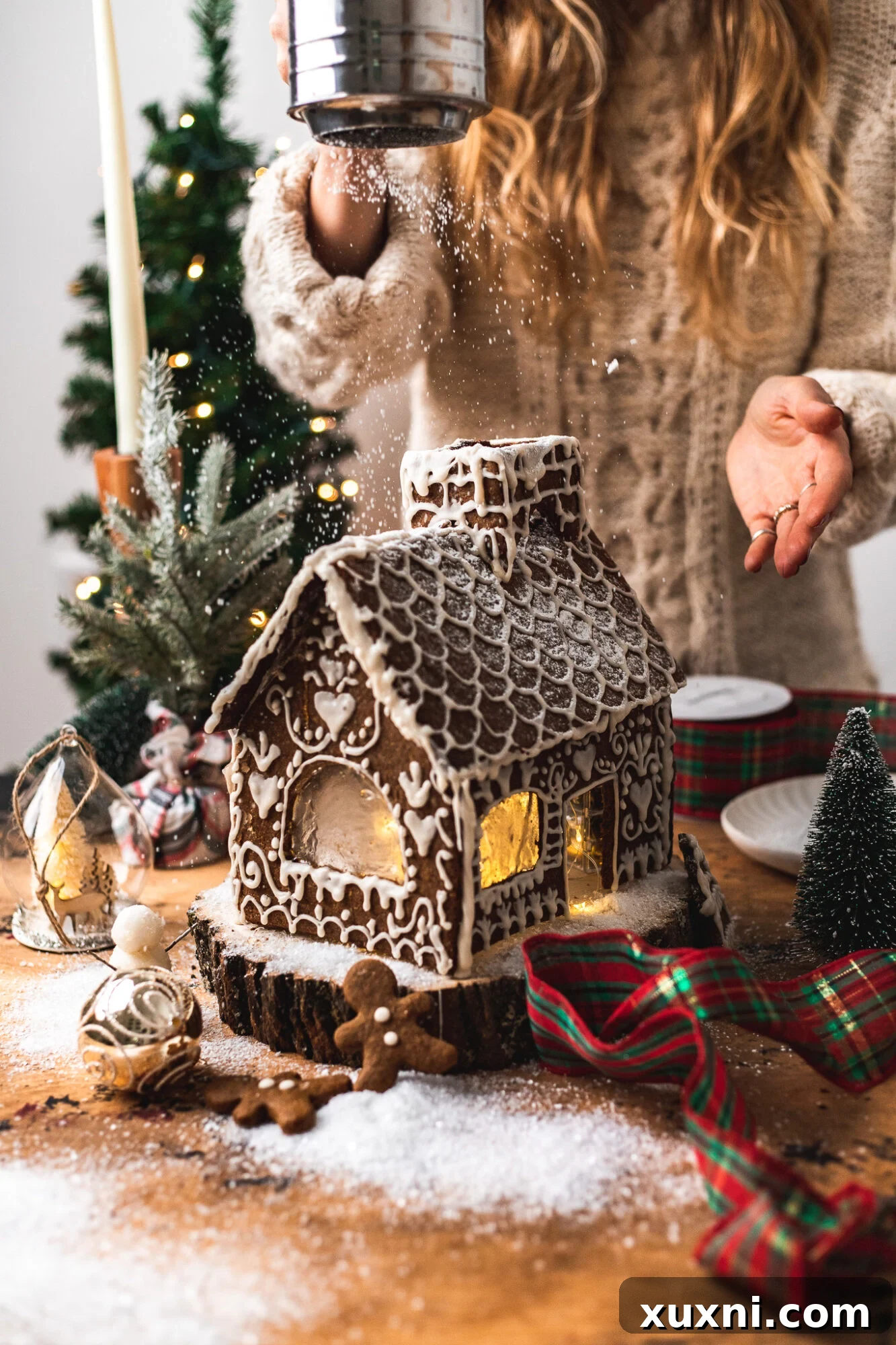
The holiday season often brings with it cherished traditions, and for many, building a gingerbread house stands out as a true festive delight. From childhood memories of sticky fingers and sugary dreams to continuing the tradition with friends and family, this activity is a quintessential part of getting into the festive spirit. Much like decorating festive sugar cookies, crafting a gingerbread house is an inclusive and joyful experience for all ages and skill levels.
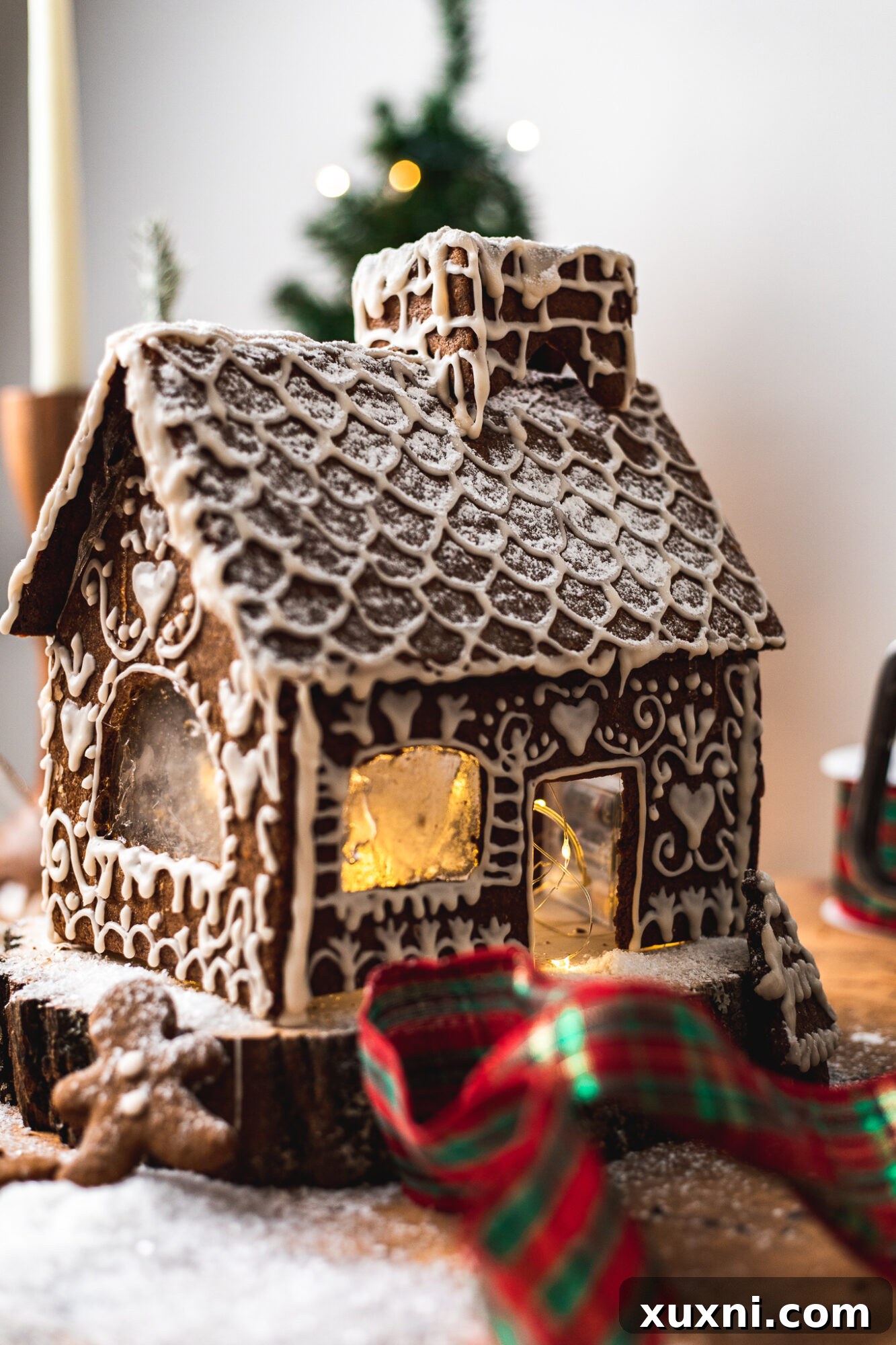
This year, we’re taking the holiday magic a step further by ensuring everyone can participate in this delightful tradition, regardless of dietary preferences. Introducing our spectacular recipe for a **dairy-free, gluten-free, and incredibly sturdy vegan gingerbread house!** This recipe is thoughtfully designed to be accessible to those with dietary restrictions, while still delivering all the classic aromatic spices and structural integrity you’d expect from a traditional gingerbread creation.
Infused with warming notes of ground ginger, rich cinnamon, fragrant cloves, and a hint of nutmeg, this vegan gingerbread recipe fills your home with an irresistible holiday aroma. And don’t be intimidated by the idea of building a gingerbread house from scratch; while it does require a touch of patience and a good sense of humor (because yes, pieces might occasionally tumble, and that’s perfectly part of the fun!), the satisfaction of seeing your edible masterpiece come to life is truly unparalleled. With our comprehensive guide and essential tips, you’ll be well-equipped to construct a beautiful and robust vegan gingerbread house that will stand tall throughout the holidays.
Crafting the Perfect Vegan Royal Icing for Your Gingerbread House
One of the most crucial elements of a successful gingerbread house is, without a doubt, the royal icing. It acts as both the adhesive that holds your creation together and the beautiful decorative frosting. If you’ve ever felt uneasy about using traditional royal icing made with raw egg whites, you’re not alone. The thought of incorporating uncooked ingredients into something meant to be consumed can be off-putting for many.
This is precisely why we’re excited to share our superior vegan royal icing recipe, which not only bypasses the need for egg whites but also provides exceptional structural strength. While a simple blend of powdered sugar and dairy-free milk can create a lovely decorative glaze, it lacks the cementing power required to keep your gingerbread house standing proudly. For a truly sturdy gingerbread house, you need an ingredient that mimics the powerful binding properties of egg whites.
Through collaboration with fellow culinary expert Yuki from Foodie Yuki, we discovered an incredible secret ingredient: **aquafaba**, also known as chickpea brine. This liquid, typically discarded from canned chickpeas, is a true game-changer in vegan baking, especially when it comes to creating stable meringues and icings. My previous attempt with salted aquafaba for vegan meringue cookies taught me a valuable lesson: ensure your aquafaba is unsalted for sweet applications!
Indeed, unsalted aquafaba is the hero of our vegan royal icing. You’ll only need two simple ingredients for this incredible adhesive:
- Unsalted aquafaba (from a can of chickpeas)
- Powdered sugar (confectioners’ sugar)
The preparation is surprisingly straightforward, but you will need a hand mixer or a stand mixer to achieve the desired consistency. It’s important to prepare your gingerbread house pieces before making the icing, but the icing itself needs to be ready just before assembly. This strategic timing ensures your house components are fully cooled and firm, while your icing is freshly prepared and at its optimal consistency for binding.
Step-by-Step Vegan Royal Icing Instructions:
- In a large, clean bowl, begin beating the unsalted aquafaba with your hand or stand mixer on medium-high speed. Continue to beat until it starts to form stiff peaks, much like whipped egg whites. This process typically takes several minutes, so be patient.
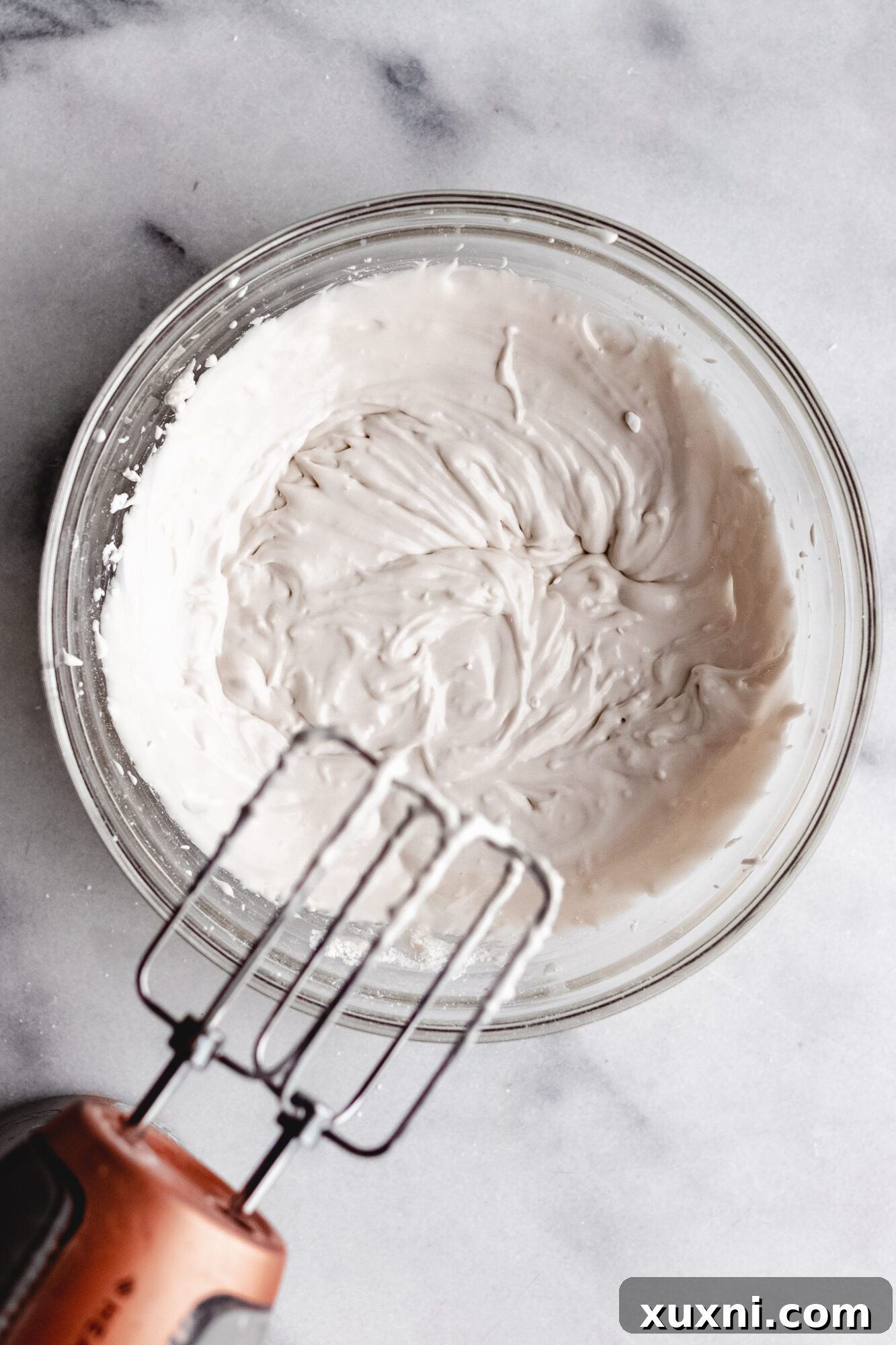
- Once stiff peaks begin to form, gradually add the powdered sugar, one cup at a time, continuing to beat the mixture. The icing will transform into a thick, glossy, and pipeable consistency. It should still be slightly fluid, but thick enough to drop in what I affectionately call “gloops” from the beater, holding its shape without running too quickly.
- Carefully spoon the prepared royal icing into a piping bag fitted with a small round tip (or simply snip the corner off a Ziploc bag). Your cement-like vegan royal icing is now ready for assembling and decorating your magnificent gingerbread house!
Now that we’ve mastered the art of vegan royal icing, let’s dive into creating our enchanting ginger villages!
Building Your Vegan Gingerbread House: A Step-by-Step Video Tutorial
As emphasized earlier, the foundation of a robust gingerbread house lies in perfectly baked gingerbread pieces. Ensure these are completely cooled and firm before you even think about the icing. Once your gingerbread components are ready, the exciting assembly process can begin.
To simplify the process, especially if little ones are joining in the fun, I highly recommend investing in a good set of gingerbread house cookie cutters. While traditionally cutting shapes from templates works, cookie cutters streamline the process and result in consistently shaped pieces, making assembly much smoother. However, if you’re aiming for a grander, larger gingerbread house, you might find it necessary to double the dough recipe to accommodate the larger cutters or template.
Through experience, I’ve found that the most enjoyable and stress-free way to build a gingerbread house is to spread the process over **two days.** Day 1 is dedicated to the technical aspects: baking the gingerbread pieces and assembling the house structure. Day 2 then becomes a relaxed, creative decorating session, perfect for putting on some festive tunes and letting your imagination run wild.
Day 1: Baking & Assembling Your Sturdy Gingerbread Structure
The first and most critical step to creating a homemade, sturdy gingerbread house from scratch is baking exceptionally resilient gingerbread cookies. Our proven recipe yields a crisp and firm gingerbread that serves as an excellent, unyielding foundation for your holiday masterpiece. This isn’t just any gingerbread; it’s specifically formulated to withstand the weight of icing and decorations, ensuring your house stands proudly without crumbling.
Once your perfectly baked pieces are cooled, we’ll move straight into assembly, transforming flat cookies into a three-dimensional marvel.
Making the Dough & Cutting Out House Pieces (Total Time: Approximately 1 Hour)
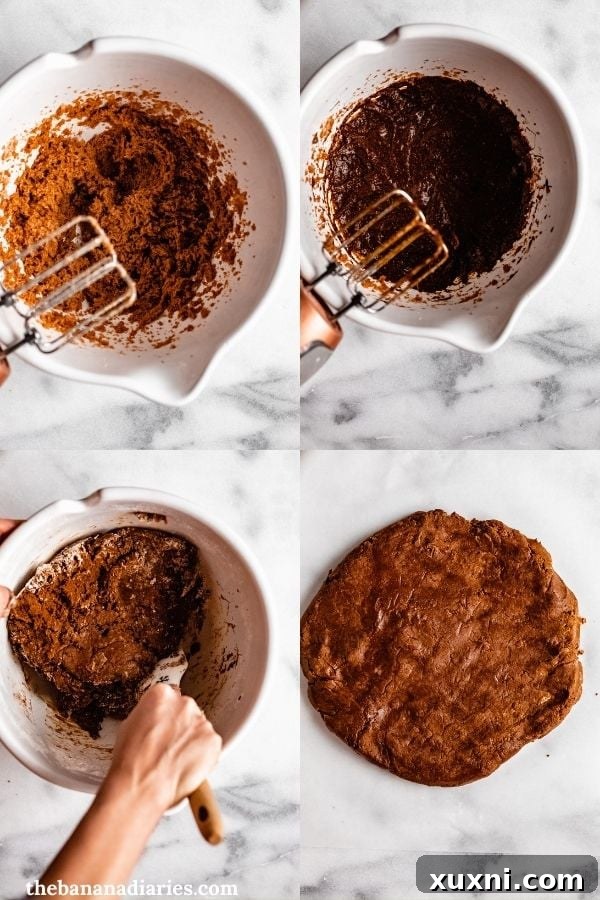
- Begin by preparing the gingerbread dough. The detailed steps are provided in the recipe card below, but rest assured, it’s a straightforward process designed to produce a strong and stable dough.
- While the gingerbread dough is chilling (a crucial step for manageability!), take this opportune 30-minute window to prepare your gingerbread house templates. If you’re not using cookie cutters, now is the time to accurately cut out your cardboard house pieces.
- Once the dough is adequately chilled and ready, lightly flour a clean work surface. For easier transfer to baking sheets, I highly recommend rolling the dough directly on a large piece of parchment paper. Roll the dough evenly to about 1/4 inch thick. Precision isn’t paramount, but consistency helps with baking.
- Next, use your gingerbread house cookie cutters or your pre-cut cardboard templates to gently cut out the various house components: two main walls, two side walls (gable ends), and two roof pieces. If using cookie cutters, the exact set I recommend is linked in the recipe card.
- Carefully transfer the cut gingerbread pieces, still on the parchment paper, to a baking sheet. Ensure they are spaced at least 1 inch apart to allow for even baking (you might need an additional baking sheet).
- Place the baking sheet with the cut dough into the freezer for 10 minutes. This quick chill helps the gingerbread pieces maintain their shape during baking, preventing excessive spreading.
- While the dough chills, preheat your oven to 350°F (175°C). Then, bake the gingerbread pieces for at least 15 minutes, or until they are golden brown around the edges and feel firm to the touch. The goal is a crisp, sturdy cookie.
- Immediately upon removing the baking sheet from the oven, gently press the cookie cutters back onto their respective baked gingerbread pieces. This simple trick helps to redefine and neaten any edges that may have spread during baking, ensuring your house components fit together perfectly.
- Allow the baked gingerbread pieces to cool on the baking sheet for 15 minutes before carefully transferring them to the refrigerator to chill completely. They need to be thoroughly cold and firm before assembly to prevent breakage.
With our robust gingerbread pieces meticulously baked and perfectly shaped, it’s time for the exciting phase: assembling the house! For maximum stability and speed in construction, I highly recommend using **Isomalt**. This incredible ingredient is not only vegan but also hardens quickly and creates a formidable bond, ensuring your gingerbread house stands strong without the worry of collapse. Isomalt, which is linked in the recipe card below, is the secret to a rock-solid structure. You will reserve your batch of vegan royal icing for the delightful task of decorating once the house structure is firmly set.
Assembling the House (Total Time: 1 Hour + Setting Time)
Here’s how to expertly assemble your gingerbread house:
- Crafting Stained Glass Windows (Optional):
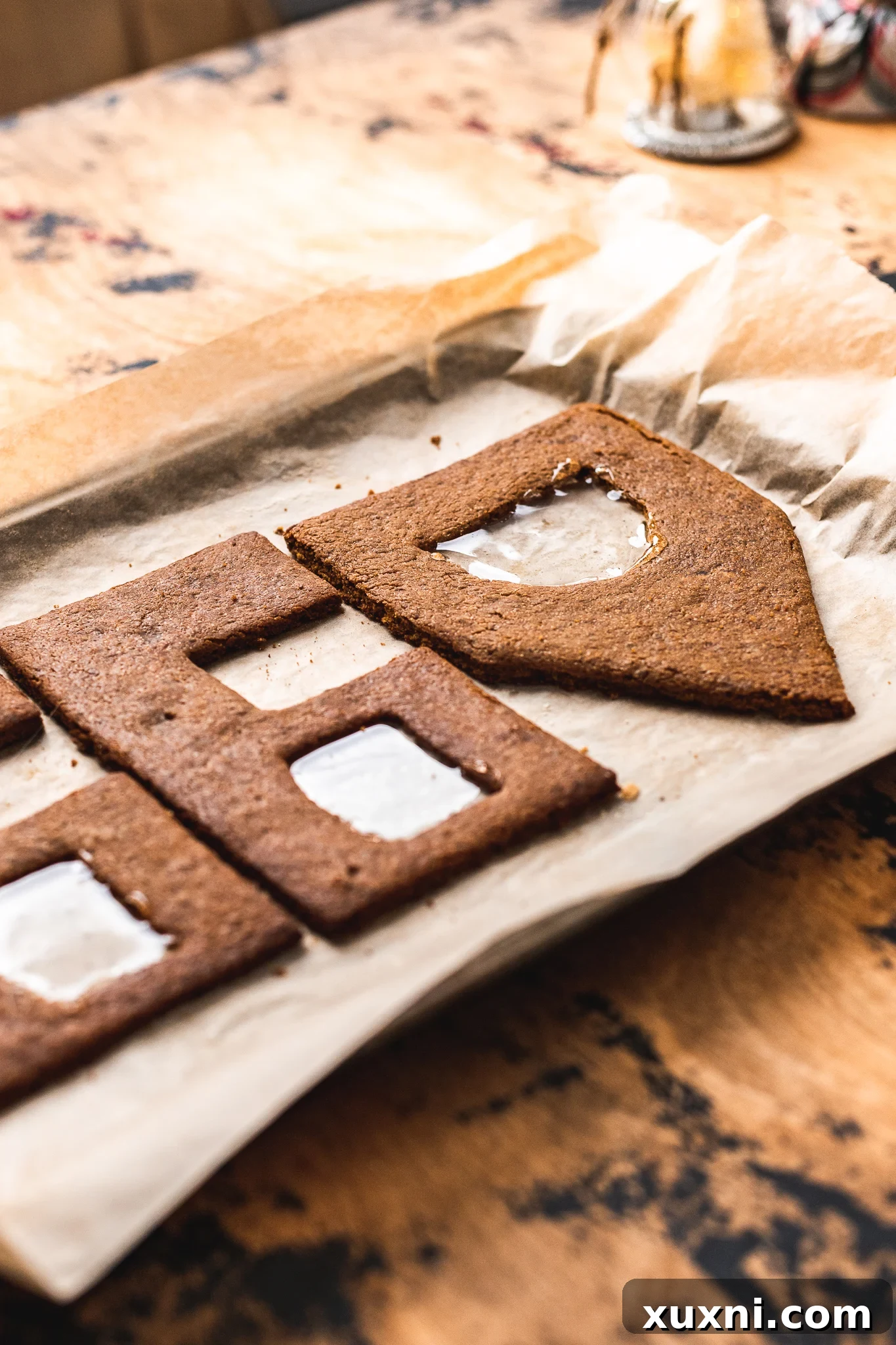
If you envision your gingerbread house twinkling with beautiful “stained glass” windows, this is the moment to create them, *before* assembly. Melt the isomalt according to package directions until it’s clear and molten. Carefully pour the melted isomalt into the cut-out window panes of your gingerbread pieces. Allow the isomalt to set completely for at least 30 minutes, forming hard, candy-like windows. Remember, safety first when working with hot isomalt!

- Assembling the Gingerbread House Walls:
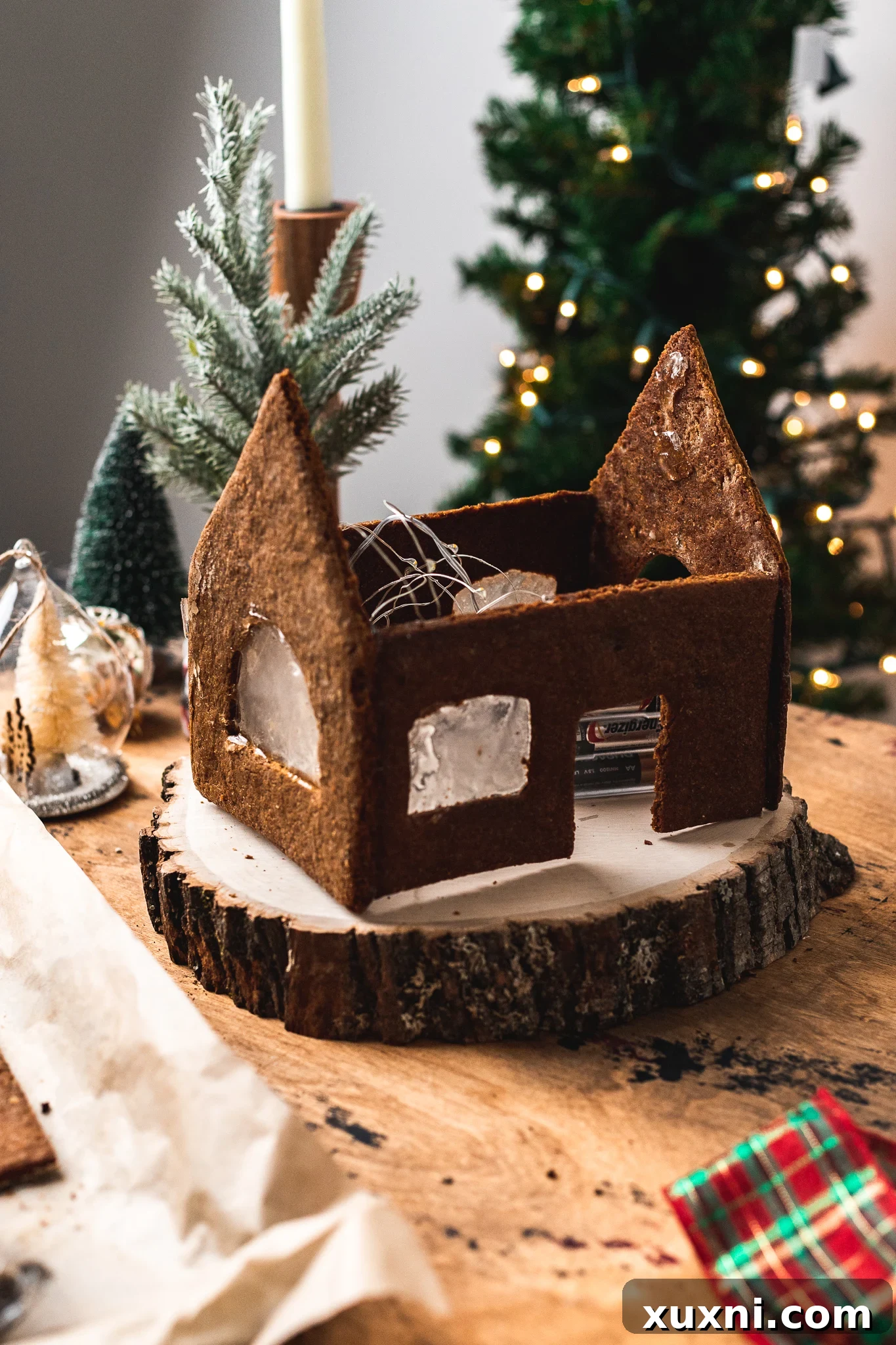
When you’re ready to begin assembly, ensure you have a few sturdy cups or cans nearby for support. Carefully melt the isomalt again until it’s bubbling and clear. Working quickly but cautiously, pour or brush a thin line of melted isomalt along the edges where two walls will meet at a right angle. Immediately place one gingerbread wall piece onto the isomalt and press gently. Lean it against a support cup for a few seconds to stabilize. Repeat this process, attaching the remaining walls one by one. Each piece should be given about 10 minutes to set fully against its support; once firm, the support can usually be removed.
- Securing the Roof:
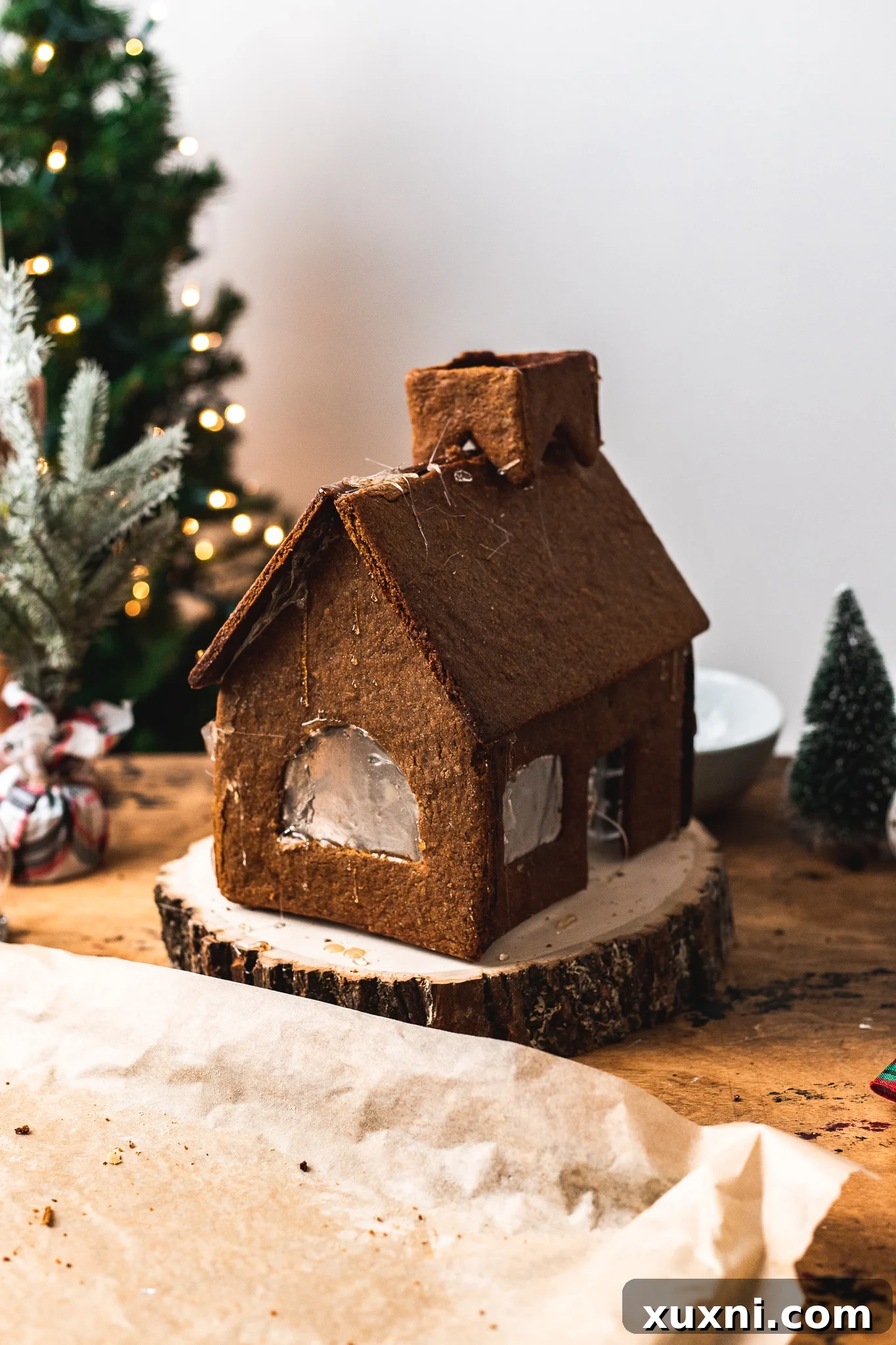
Once all the walls are firmly in place and your house structure is standing strong, it’s time to add the roof. Use the melted isomalt to adhere the roof pieces. Brush isomalt along the top edges of the assembled walls and along the meeting point of the two roof panels. Gently position the roof pieces onto the house, holding them lightly in place for 2-3 minutes until the isomalt begins to set. For added security as it dries, place a cup or small prop underneath the bottom edge of the roof panels. Important Note: Isomalt does not fare well in the refrigerator; it can become sticky. Always allow your isomalt-assembled gingerbread house to set at room temperature. This method offers significantly more structural integrity than royal icing for assembly, as shown in the video. Allow the entire structure to set for at least 30 minutes, or preferably overnight, before moving on to decoration.
Day 2: Decorating Your Gingerbread Masterpiece (Total Time: Approximately 1 Hour)
Welcome to Day 2, the most fun and creative part of your gingerbread house journey! By now, your gingerbread house should be completely set and as solid as a rock, thanks to the isomalt. This sturdy foundation is perfect for unleashing your decorating prowess.
Now is the time to prepare a fresh batch of vegan royal icing, this time aiming for a slightly thinner consistency than the assembly icing. Transfer the glossy white icing into a piping bag, snip a small corner, and let the artistic expression begin! The possibilities for design are endless. For a wealth of inspiring ideas and intricate patterns, I highly recommend browsing Pinterest – it’s a treasure trove of festive gingerbread house designs.
In addition to piping intricate details, you can add vibrant pops of color and texture using a variety of vegan candies. Don’t forget to bake some adorable vegan gingerbread people to inhabit your edible dwelling, adding a charming touch to your holiday scene. The contrast of the crispy gingerbread, the smooth icing, and the fun candies creates a truly inviting and delicious display.
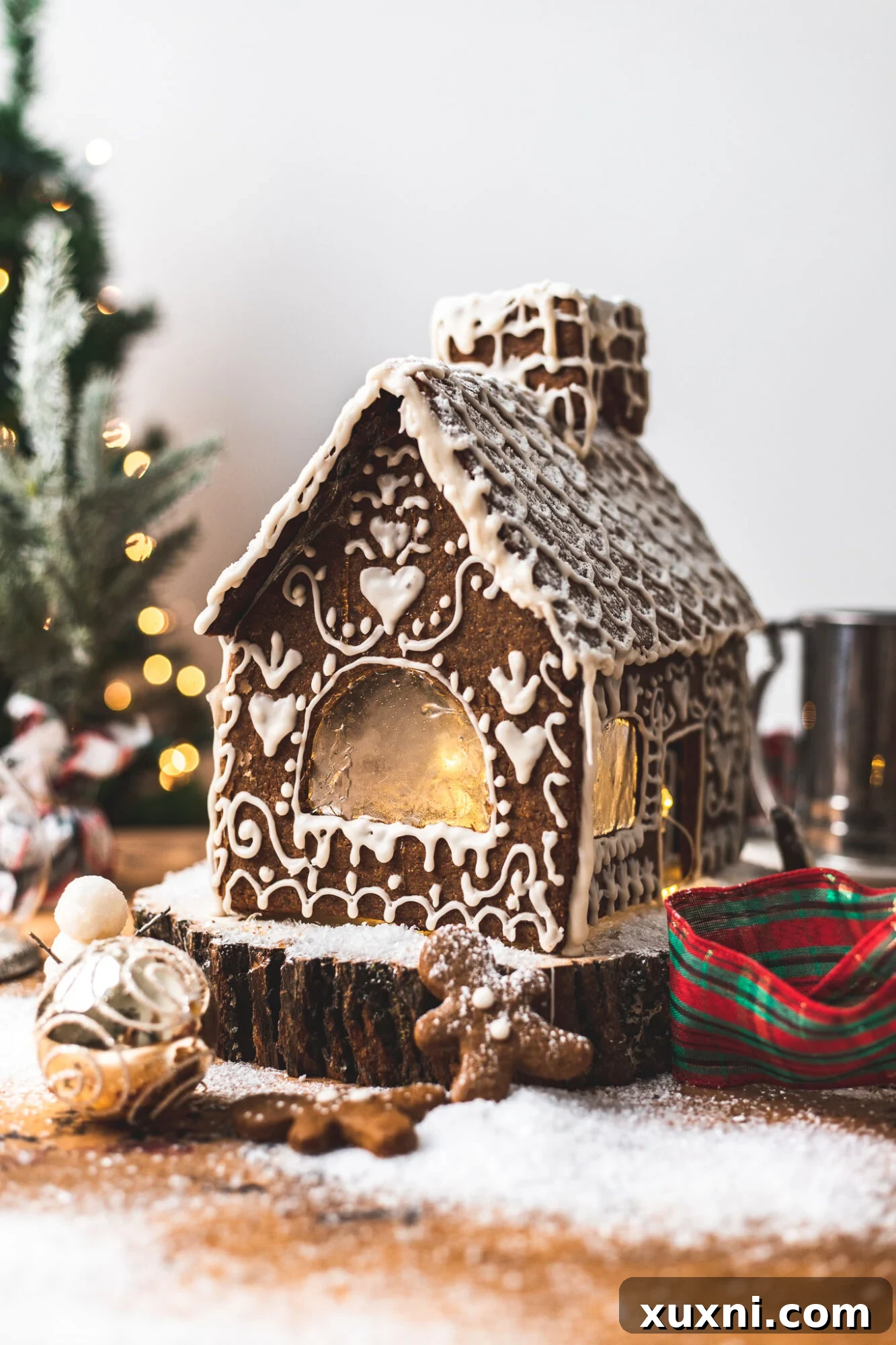
Selecting Vegan Candies for Your Gingerbread House Decorations
While traditional gingerbread house candies often contain animal products, the good news is that there are increasingly more delicious and vibrant vegan options available! To find suitable treats, explore the health food aisle of your local grocery store or visit specialty stores like Whole Foods. These sections often stock a wider array of plant-based confectionery.
Here are some excellent vegan candy suggestions to add delightful color and texture to your gingerbread house:
- Unreal Colored Chocolate Gems: These are fantastic vegan alternatives to traditional chocolate candies, offering a similar crunch and vibrant colors.
- Sweetapolita Vegan Sprinkles: Many sprinkle brands contain shellac or confectioner’s glaze, but Sweetapolita offers a dedicated range of beautiful vegan sprinkles.
- Candy Canes: Most candy canes are naturally vegan, made primarily from sugar, corn syrup, and flavorings. Always double-check labels, but these are usually a safe bet for a classic holiday look.
- Homemade Gumdrops Using Agar-Agar: For a truly homemade touch, consider making your own fruit-flavored gumdrops using agar-agar, a plant-based gelatin substitute. This allows for complete control over ingredients and colors.
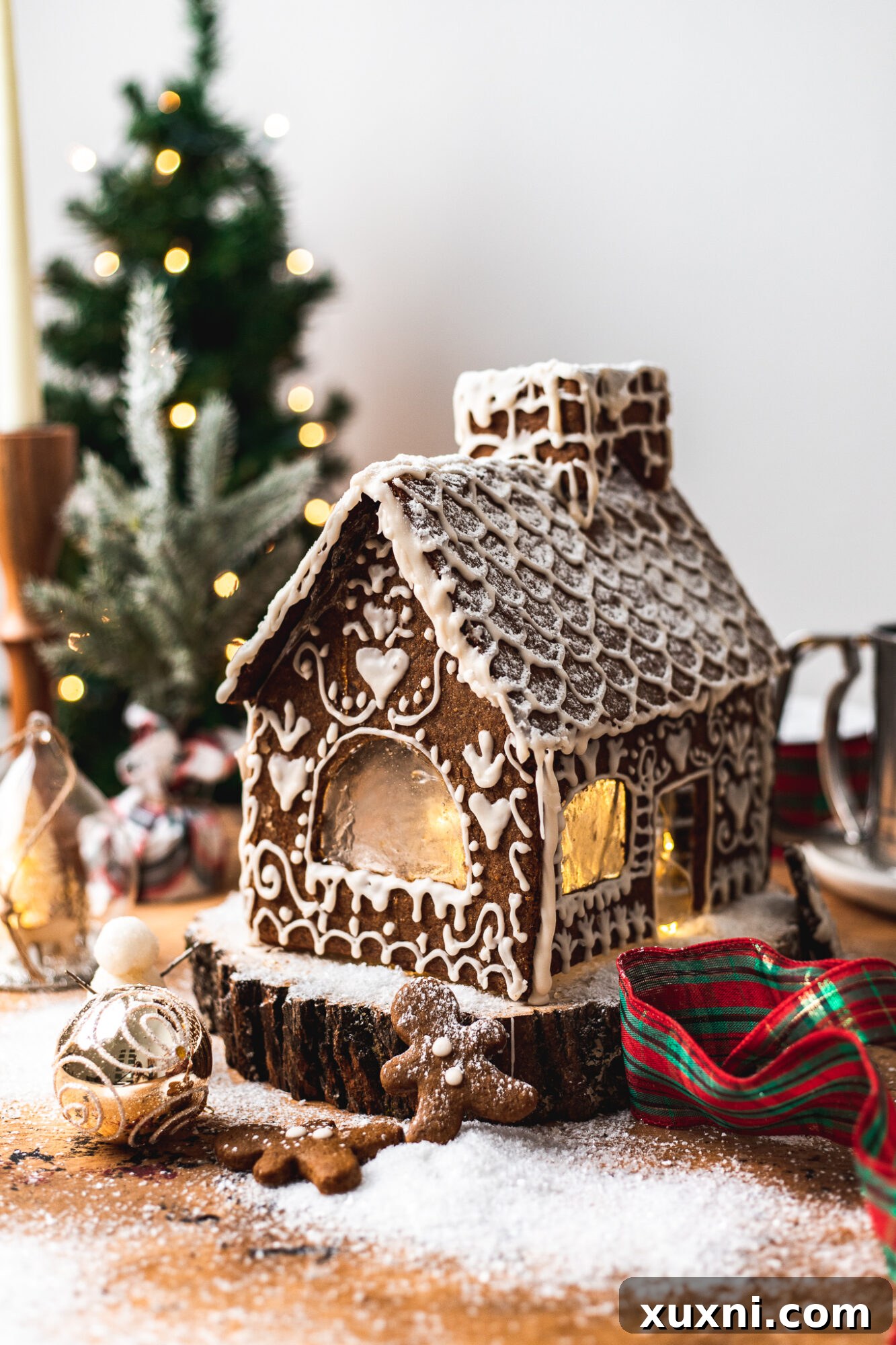
Additionally, you can easily enhance the visual appeal of your vegan royal icing by adding a few drops of vegan-friendly food coloring. This allows you to create colorful accents, snowy landscapes, or even a festive rainbow-themed house!
Building a vegan gingerbread house is more than just baking; it’s a wonderful holiday activity that fosters creativity, shared laughter, and beautiful memories. The aroma of spices, the meticulous decoration, and the final reveal of your edible masterpiece will surely become a cherished part of your holiday traditions. It also makes for a delightful and eye-catching decoration that can grace your home throughout the festive season.
We truly hope you have the most amazing time crafting your vegan gingerbread houses. If you try this recipe, please let us know your experience in the comments section below, and don’t forget to give it a rating so others can discover this joyous holiday project. As always, we’d absolutely love to see your beautiful creations, so make sure to tag us on Instagram and Pinterest!
Want to save this recipe for later? Add it to your favorite recipe board on Pinterest!
Print

Vegan Gingerbread House Recipe
5 Stars 4 Stars 3 Stars 2 Stars 1 Star
5 from 3 reviews
Author: Britt Berlin
Prep Time: 270
Cook Time: 15
Total Time: 4 hours 45 minutes
Yield: 1 1x
Category: Dessert
Method: Baking
Cuisine: German
Diet: Vegan
Description
Learn how to make the best vegan gingerbread house with vegan royal icing! This comprehensive guide provides everything you need to know to build your own dairy-free, gluten-free, and incredibly sturdy vegan gingerbread house for the holidays, complete with essential tips for success.
Ingredients
Scale
For the Vegan Gingerbread House:
- 3 1/2 cups gluten-free 1-to-1 flour blend (or all-purpose flour for non-GF)
- 1 1/2 cups granulated sugar
- 2 teaspoons ground ginger
- 2 teaspoons ground cinnamon
- 1/2 teaspoon ground nutmeg
- 1/2 teaspoon ground cardamom
- 1 teaspoon sea salt
- 1 cup vegan butter or coconut oil, softened
- 1/2 cup molasses (unsulphured, for best flavor)
- 4 tablespoons ground flaxseed mixed with 1/3 cup water (flax egg)
- 2 cups isomalt (for assembling the house and creating stained glass windows, if desired)
- 1 batch vegan royal icing, for decorating (prepared separately)
Optional Decorations:
- Assorted vegan candies (refer to the blog post for recommendations)
- 1 recipe of vegan buttercream frosting (for additional decorative elements)
Instructions
Please note: The video tutorial showcases assembly using royal icing. However, this updated recipe below utilizes isomalt for a significantly sturdier and faster-setting house structure.
- For your gingerbread house cookie templates, we recommend purchasing gingerbread house cookie cutters for ease and consistency. Alternatively, you can create your own templates using cardboard, drawing inspiration from guides like Sally’s Baking Addiction or Sugar Geek Show.
- For a stress-free experience, plan to bake and assemble your gingerbread house over two days. Day 1 will be dedicated to baking the gingerbread pieces and constructing the house structure. Day 2 will be reserved for the enjoyable task of decorating.
- Day 1: Preparing the Gingerbread Dough: In a large bowl, thoroughly whisk together the flour, ground ginger, cinnamon, nutmeg, cardamom, and sea salt. Set this dry mixture aside.
- In a separate medium bowl, cream together the softened vegan butter (or coconut oil) and granulated sugar until well combined and light. Stir in the molasses and the prepared flax egg, beating until the mixture is homogenous.
- Gradually add the wet ingredients into the dry ingredients, mixing until a sticky, cohesive dough forms. Gather the dough into a ball, wrap it tightly in plastic wrap, and refrigerate for at least 30 minutes to chill. This chilling step is essential for easier handling and to prevent spreading during baking.
- During the dough’s chilling time, if you are not using cookie cutters, meticulously cut out your cardboard templates for the gingerbread house pieces.
- Once the dough is chilled, lightly flour a clean work surface (using parchment paper is highly recommended for easy transfer) and your rolling pin. Roll the dough out evenly to approximately 1/4 inch thick.
- Carefully use your gingerbread house cookie cutters or cardboard templates to cut out the required pieces: two main walls, two side walls (gable ends), and two roof pieces.
- Gently transfer the cut gingerbread pieces (still on their parchment paper) to a baking sheet, ensuring they are spaced about 1 inch apart. You may require an additional baking sheet. Place the baking sheet with the dough into the freezer for 10 minutes while you preheat your oven to 350°F (175°C).
- Bake the gingerbread pieces for at least 15 minutes, or until they are golden brown and feel firm to the touch. Immediately after removing from the oven, gently press the cookie cutters back onto their respective pieces to neaten any edges that may have spread during baking, ensuring sharp lines for assembly.
- Allow the baked gingerbread pieces to cool on the baking sheet for 15 minutes, then transfer them to the refrigerator to chill completely before attempting any icing or assembly. They must be cold and firm.
Assembly using Isomalt:
- If you desire stained glass windows: While your gingerbread pieces are still on the parchment paper and before assembly, melt the isomalt according to package directions. Carefully pour the melted isomalt into any cut-out window panes on your gingerbread pieces. Allow to set for at least 30 minutes until hard and cool.
- Once all your gingerbread pieces are ready, melt the isomalt again either in the microwave or on the stovetop until it is bubbling and perfectly clear. Have several sturdy cups or supports nearby. Begin by carefully pouring or brushing the melted isomalt onto the vertical edges of one main wall piece where it will connect to a side wall.
- Immediately press a side wall piece onto the isomalt-coated edge, holding it firmly for 2-3 minutes until the isomalt begins to set. Use a cup or two for temporary support. Continue this process for all four walls, ensuring each connection is strong before moving to the next. Then, brush isomalt along the joining edges of the back wall and attach it to complete the box structure.
- Next, for the roof, brush melted isomalt onto the top edges of the assembled walls and along the entire length of where the two roof pieces will meet at the peak.
- Gently place the roof pieces onto the house structure, pressing lightly and holding for 2-3 minutes until the isomalt bonds. Place a small cup or prop underneath the bottom edge of the roof for light support as it completely dries and sets. Allow the entire assembled house to set for at least 30 minutes, or ideally overnight, at room temperature (do not refrigerate isomalt).
- Day 2: Decorating: Once your gingerbread house is fully set and rock-solid, prepare a batch of vegan royal icing (as described in the blog post above). Transfer the icing to a piping bag and begin decorating the sides, roof, and any other elements of your house. Pinterest offers countless design inspirations! Incorporate vegan candies for colorful accents.
- Allow the royal icing decorations to set completely before displaying or moving your beautiful vegan gingerbread house.
Notes
Gingerbread Cookie Cutters: For precise and easy house pieces, I highly recommend these specific gingerbread house cookie cutters!
Isomalt for Assembly: Isomalt is a fantastic vegan sugar substitute that hardens like candy, creating an incredibly sturdy gingerbread house that won’t collapse. This is the specific isomalt brand I used and highly recommend for its reliability.