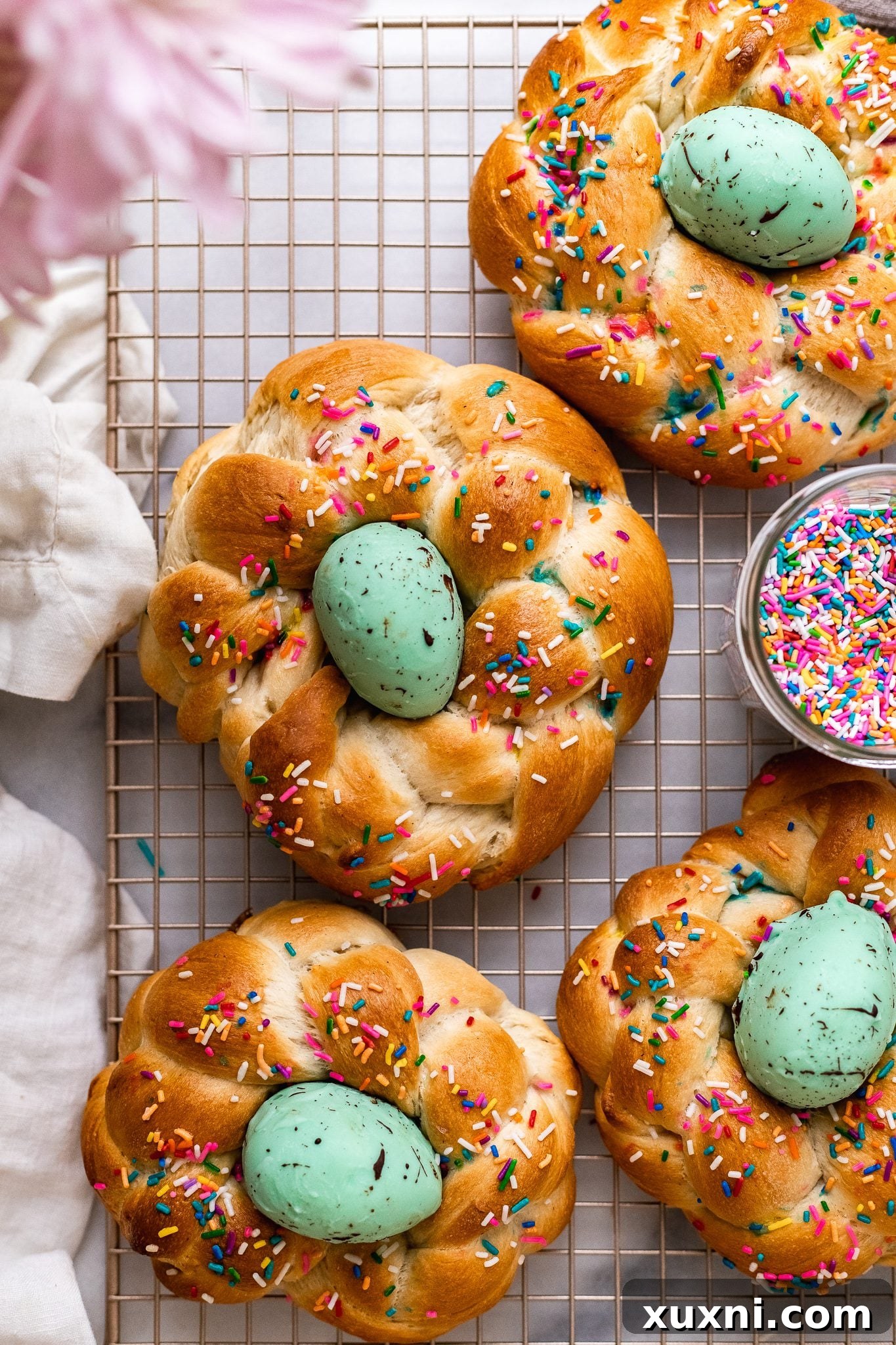
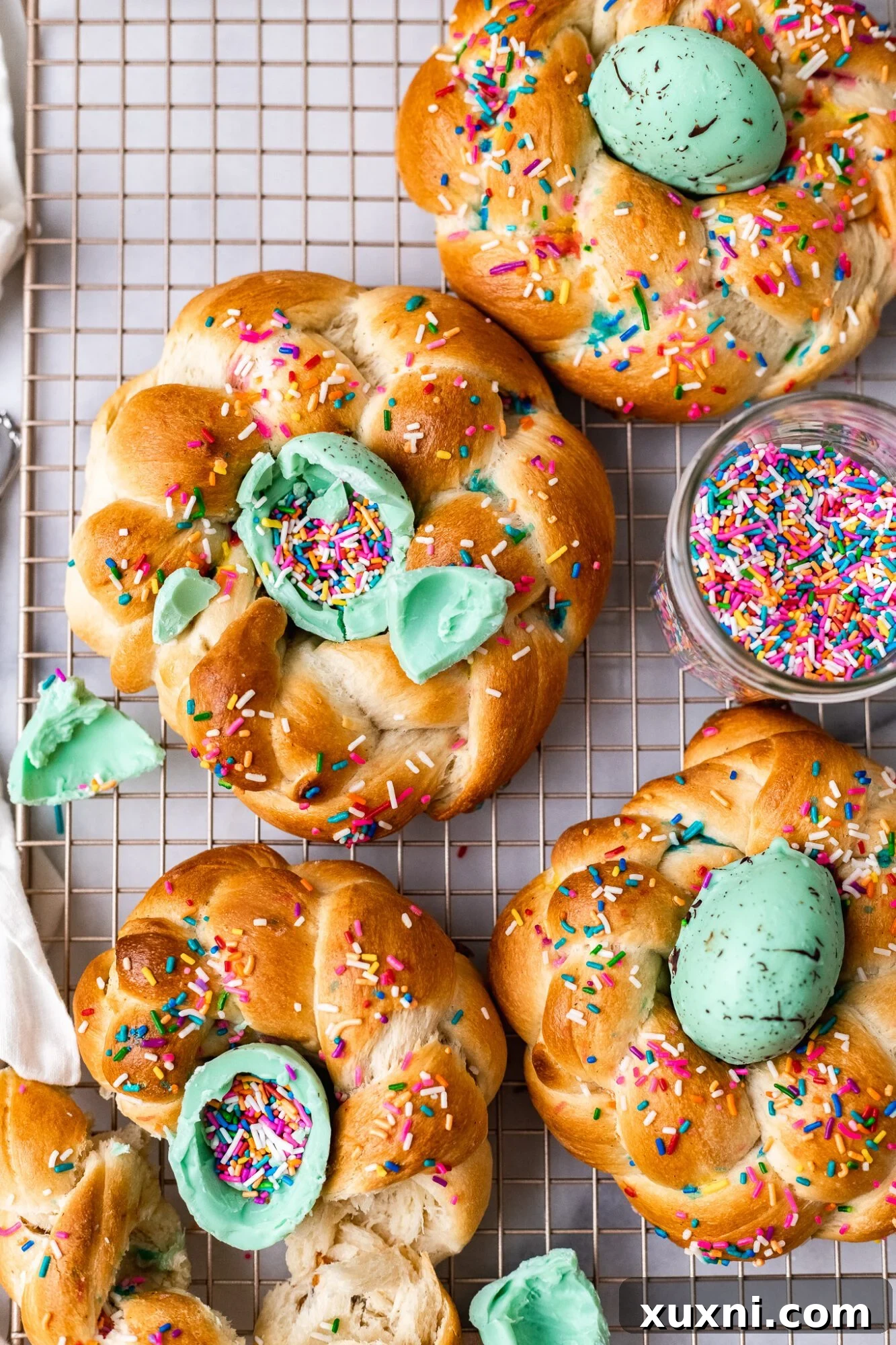
Experience the rich culinary heritage of Italy with a delightful, compassionate twist! Our traditional Pane di Pasqua, or Italian Easter Bread, has been meticulously re-imagined as an entirely vegan, eggless, and dairy-free masterpiece. Adorned with a charming homemade vegan white chocolate egg, this sweet, pillowy-soft bread is infused with bright orange zest and subtle almond notes, making it an irresistible centerpiece for your Italian Easter celebration. Prepare to enchant every guest at your table, regardless of their dietary preferences, with this remarkable plant-based creation that truly captures the spirit of spring and tradition.
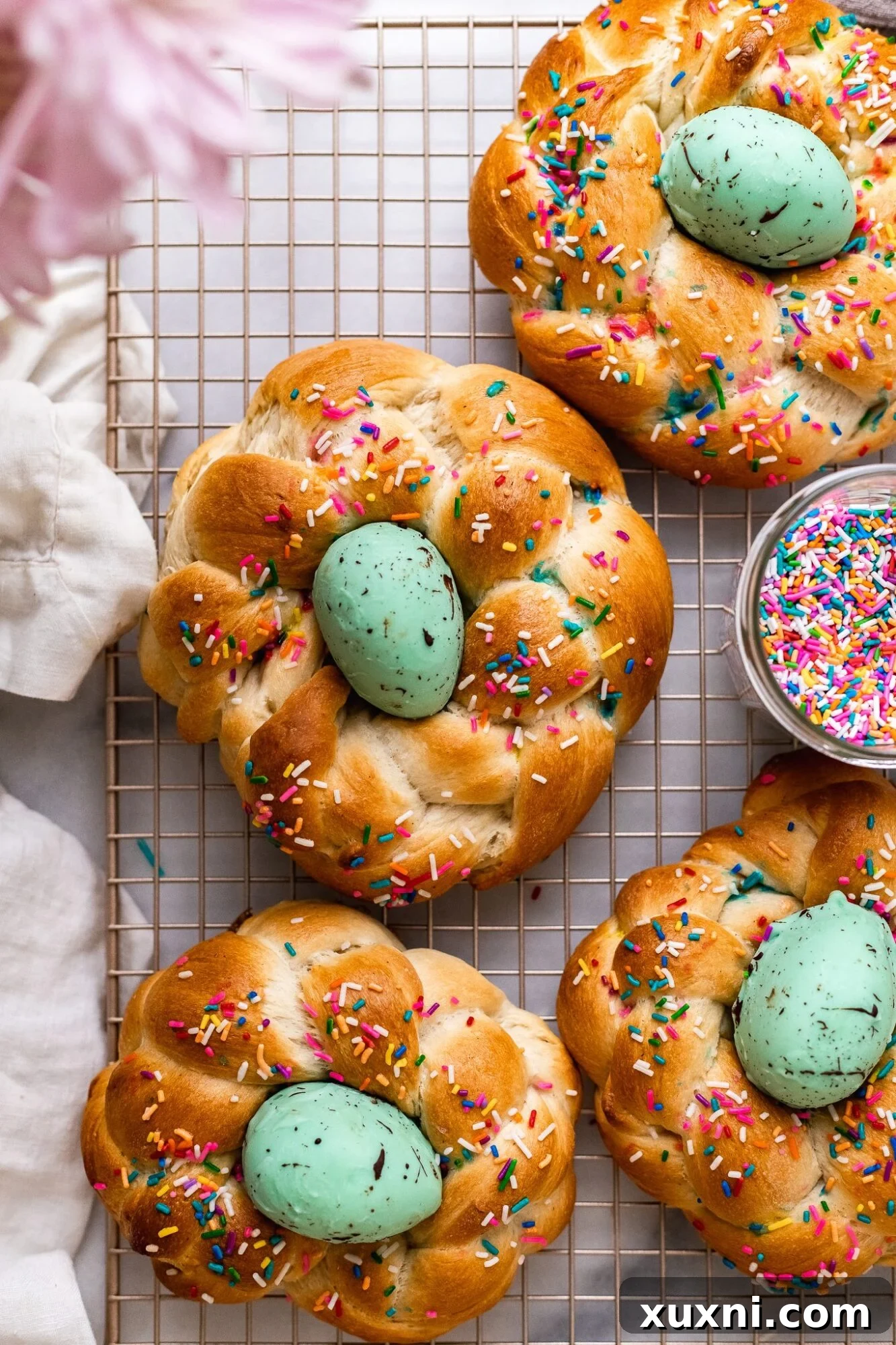
Unveiling the PERFECT Vegan Italian Easter Bread (Pane di Pasqua)
If you’ve ever had the pleasure of tasting traditional Italian Easter bread, known as Pane di Pasqua, you’ll instantly recall its uniquely delicious texture and flavor. It’s a bread that practically melts in your mouth, lightly sweet, and wonderfully fluffy, often adorned with colorful sprinkles and a symbolic real egg at its heart. For generations, this sweet leavened bread has been a staple in Italian homes during the Easter season, embodying celebration and renewal.
My family roots trace back to the beautiful regions of Sicily and Naples, where culinary traditions run deep and are passed down with immense pride. My beloved great-grandpa, a figure many seasoned readers of this blog will recognize as our family’s primary chef and baker, orchestrated our holiday feasts. Growing up, our Easter celebrations were a vibrant tapestry of deliciousness, featuring hearty risotto, fine wines, and exquisite pasta dishes. But no Easter was complete without the star of the show: Pane di Pasqua, often accompanied by its charming Sicilian cousin, pupi col’uova.
As a devoted vegan, my culinary journey has always been about translating cherished family recipes into entirely plant-based versions, ensuring that the essence and nostalgia remain intact. This quest led me to adapt my great-grandpa’s treasured Pane di Pasqua recipe, transforming it into a bread that is not only suitable for a vegan diet but also spectacular in its own right. Every element, right down to the iconic egg centerpiece, has been thoughtfully veganized.
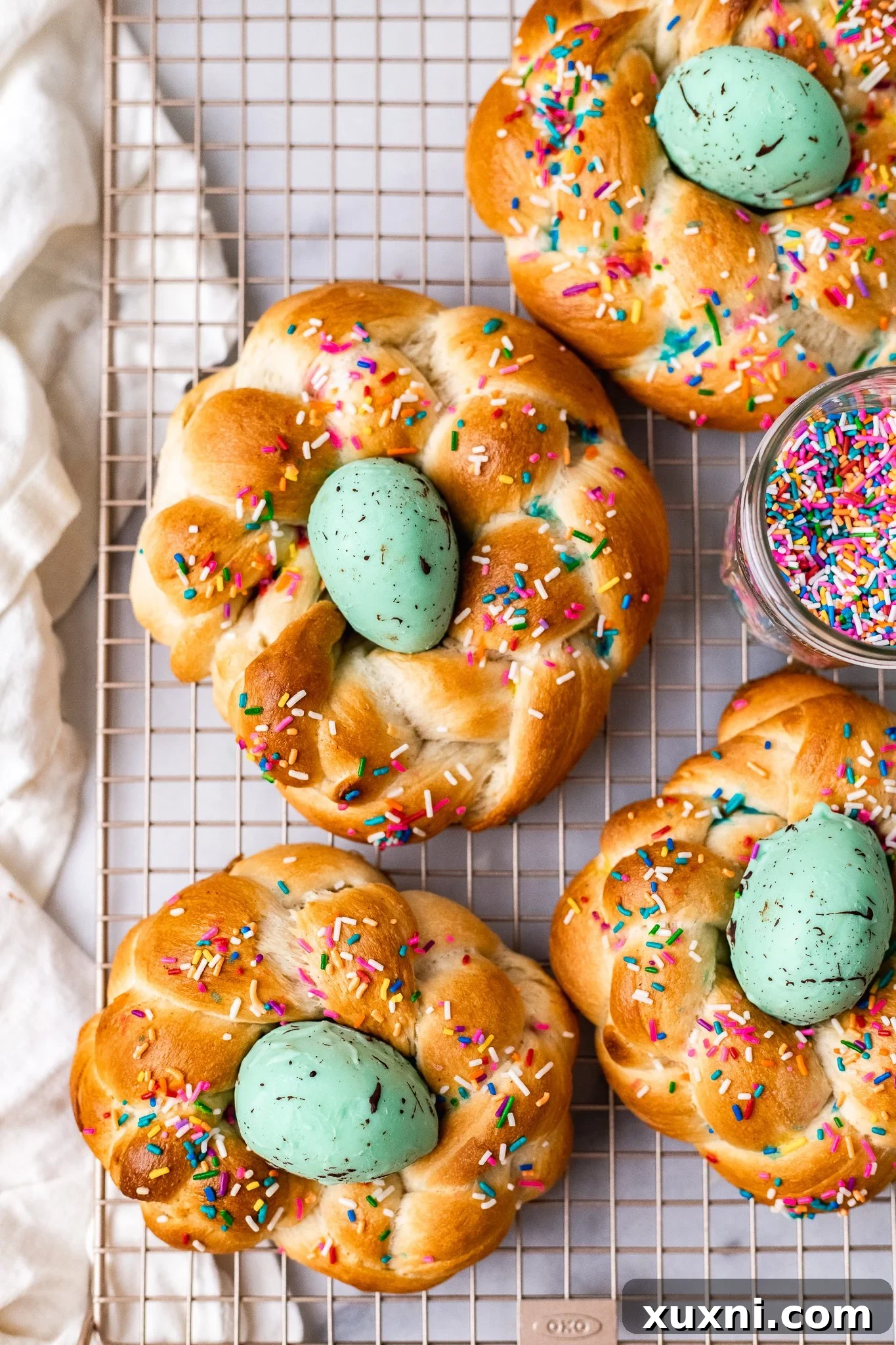
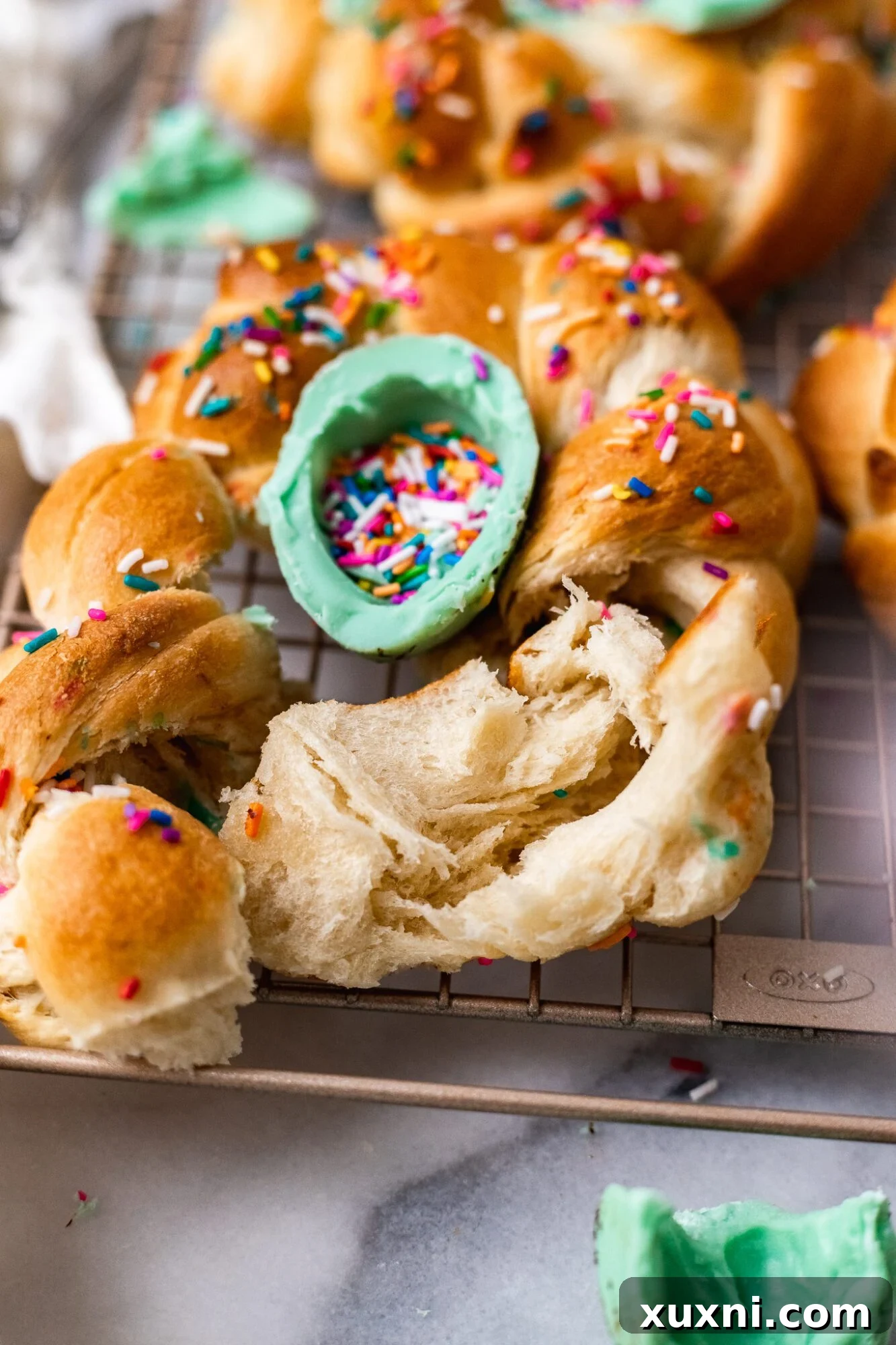
Instead of a traditional boiled egg, we’ve created a stunning homemade vegan white chocolate egg, beautifully speckled and filled with festive sprinkles. This playful yet elegant substitution adds an extra layer of delight to the bread. This innovative Pane di Pasqua is designed to be the ultimate showstopper at your vegan Easter dinner, guaranteeing that every single guest, vegan or not, will be captivated by its charm and exquisite taste. It’s a testament to how traditional flavors can be lovingly preserved and enjoyed in a modern, plant-based context.
What is Pane di Pasqua? Exploring the Heart of Italian Easter Bread
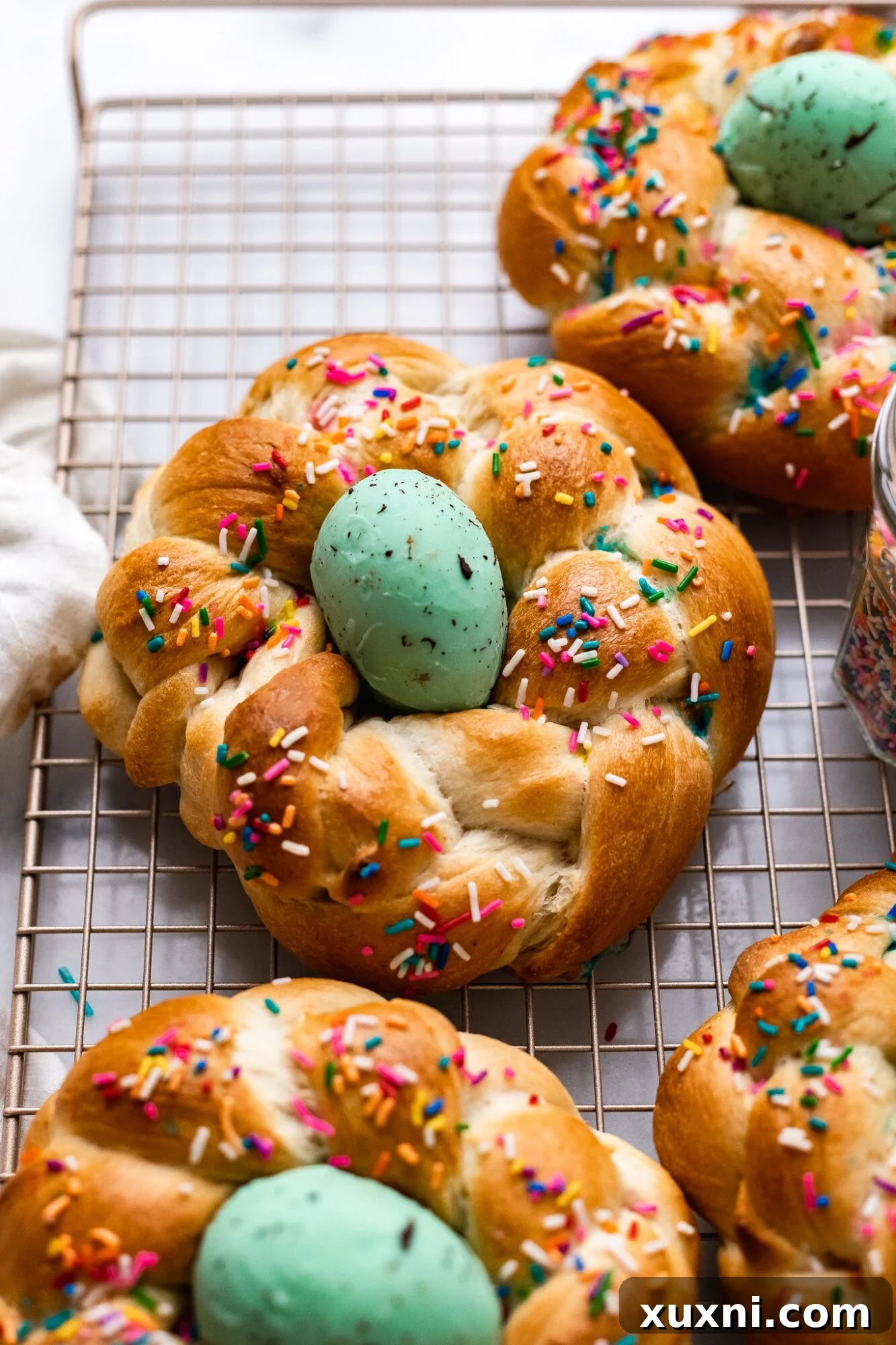
Pane di Pasqua, which literally translates to “bread of Easter,” is a deeply symbolic and sweet Italian bread traditionally baked in a circular or wreath shape. It’s distinctive for its vibrant colored eggs nestled within the braids and often adorned with sprinkles. While many draw parallels to Challah bread due to its braided appearance and enriched dough, Pane di Pasqua distinguishes itself with unique flavor profiles, primarily hints of aromatic orange zest and, in some regional variations, a touch of anise. While some Italian families might opt for lemon zest, our family’s recipe, hailing from Sicily and Naples, proudly features the bright, citrusy notes of orange.
The dough is masterfully braided or twisted, then carefully pinched together to form its characteristic wreath shape. Historically, the braiding of three strands represented the Holy Trinity – the Father, the Son (Christ), and the Holy Spirit. However, contemporary versions often feature simpler twists with two strands, perhaps evolving to visually differentiate it from Challah bread while maintaining its artistic appeal. The raw, colored eggs are traditionally baked directly into the dough, emerging as firm, brightly colored decorations after their journey in the oven.
My vegan adaptation of this treasured bread is a direct descendant of my family’s heirloom recipe. Our ancestors immigrated to America in the early 1900s from Sicily and Napoli, bringing with them a rich culinary legacy that included the distinctive use of orange zest in their Easter bread. They also prepared a delightful biscuit-like form of the bread, known as “Pupi cu l’uova” in the Sicilian dialect (or pupi con l’uova in standard Italian). This version, often smaller and sometimes shaped like dolls, also traditionally featured an egg.
It has been a passion of mine to adapt many of my family’s treasured recipes, meticulously transforming them into wholly plant-based delights while steadfastly preserving the authentic, nostalgic flavors and the deeply rooted essence of our family traditions. My grandma, a remarkable woman whose culinary wisdom I cherish, serves as my primary inspiration for all the Italian-inspired creations you find on this blog. Her approval means the world to me.
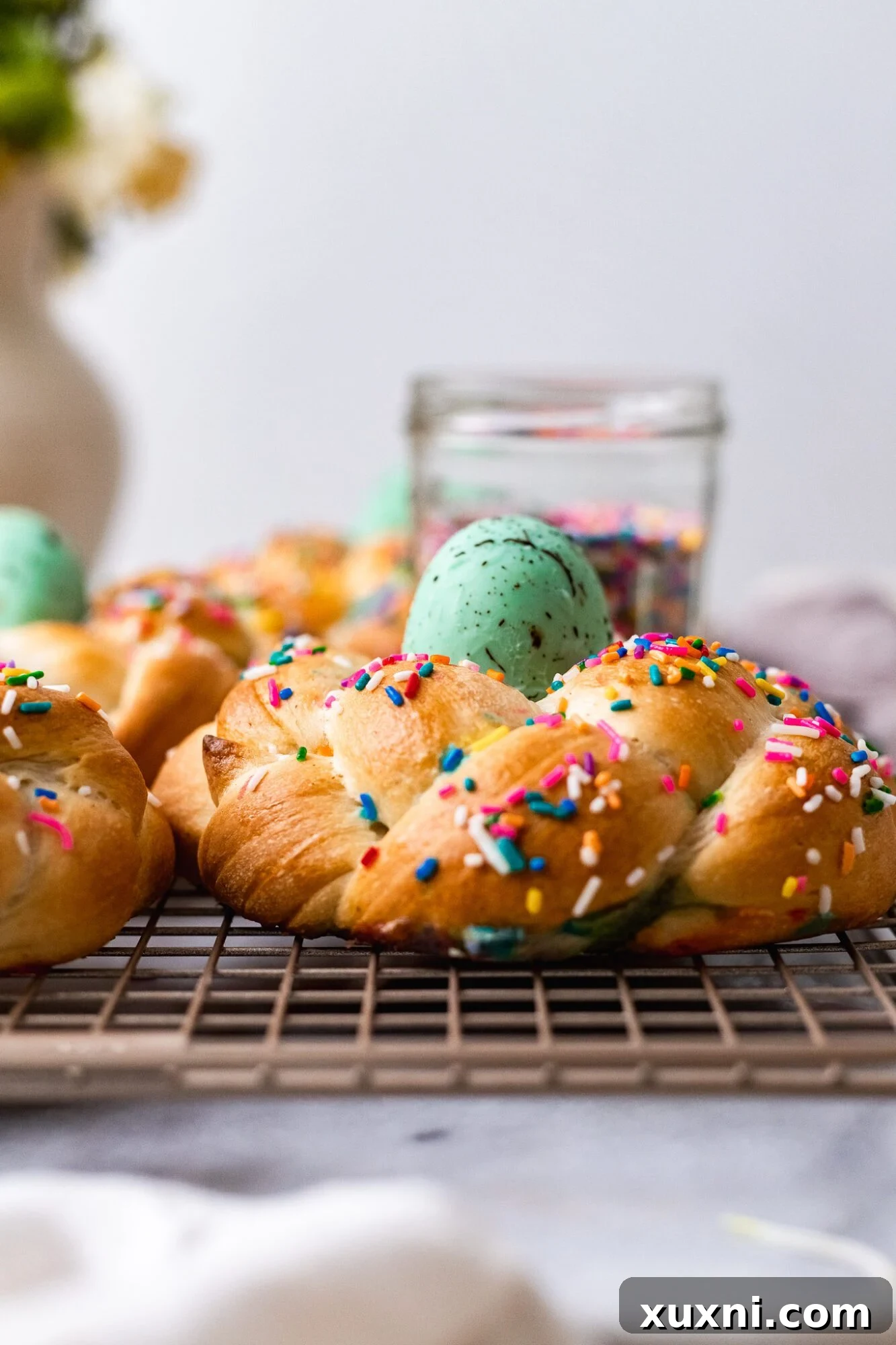
On that note, I am thrilled to share that this vegan Pane di Pasqua recipe has received the highest honor: full approval from my Italian grandmother herself! She absolutely adored it, praising its texture and flavor, and has enthusiastically requested that I continue making this plant-based version for every Easter celebration to come. Her stamp of approval is the ultimate validation that this recipe truly honors its heritage while embracing modern dietary choices.
The Rich Symbolism Behind Italian Easter Bread
Italian Easter bread carries a profound and rich history, deeply interwoven with the Christian narrative of Easter. Every element of Pane di Pasqua is steeped in symbolism, making it far more than just a delicious treat; it’s a tangible representation of faith and renewal.
The distinctive wreath shape of the bread is said to represent the crown of thorns that Jesus Christ wore during his crucifixion. This poignant imagery serves as a solemn reminder of his sacrifice. Conversely, the eggs, which are a central feature in Italian culture and many Easter traditions worldwide, symbolize both birth and death, or more specifically, rebirth and new life. In the context of Easter, they powerfully represent the empty tomb after Christ’s resurrection, and the promise of new beginnings.
Furthermore, the very act of the bread rising during the baking process holds significant meaning. This transformative expansion of the dough beautifully parallels the resurrection of Jesus Christ. As many know, the celebration of Easter centers around the triumphant resurrection of Jesus from the dead. Thus, Pane di Pasqua, through its form, its eggs, and its miraculous rise, encapsulates Jesus’s transformation, his victory over death, and the joyful celebration of renewed life and hope. It’s a powerful culinary narrative that brings centuries of tradition and meaning to the Easter table.
Overview: Crafting Our Vegan Italian Easter Bread (Pane di Pasqua, Family Recipe Edition!)
As I’ve emphasized, this particular rendition of Italian Easter bread stands apart from the strictest traditional forms due to its entirely vegan composition. While my family, with its deep Sicilian roots, continues to celebrate with their traditional Pane di Pasqua (featuring real eggs) and the beloved pupi cu l’uova (a term in the Sicilian dialect, referring to the biscuit-like egg bread), my version caters to a plant-based diet without sacrificing flavor or authenticity. My goal was to create a version of this cherished bread that I could enjoy alongside my family, fully embracing the spirit of Easter.
Rest assured, the differences between my grandmother’s original recipe and this vegan adaptation are minimal in terms of the bread’s core character. The primary substitution involves replacing egg yolks with a bit more vegan butter, which remarkably maintains the dough’s rich texture and tender crumb. You’ll be delighted to find that this Easter bread remains wonderfully soft and pillowy, just as it should be. The full, detailed instructions, complete with precise ingredient measurements, are conveniently located in the recipe card below. I will guide you through each essential step, from activating the yeast to expertly shaping and baking your beautiful bread.
Here’s a snapshot of the foundational steps involved in bringing this delightful bread to life:
- Prepare the Dough: This sweet, enriched dough, much like a classic brioche, is crafted by incorporating the vegan butter at the final stage, ensuring optimal texture.
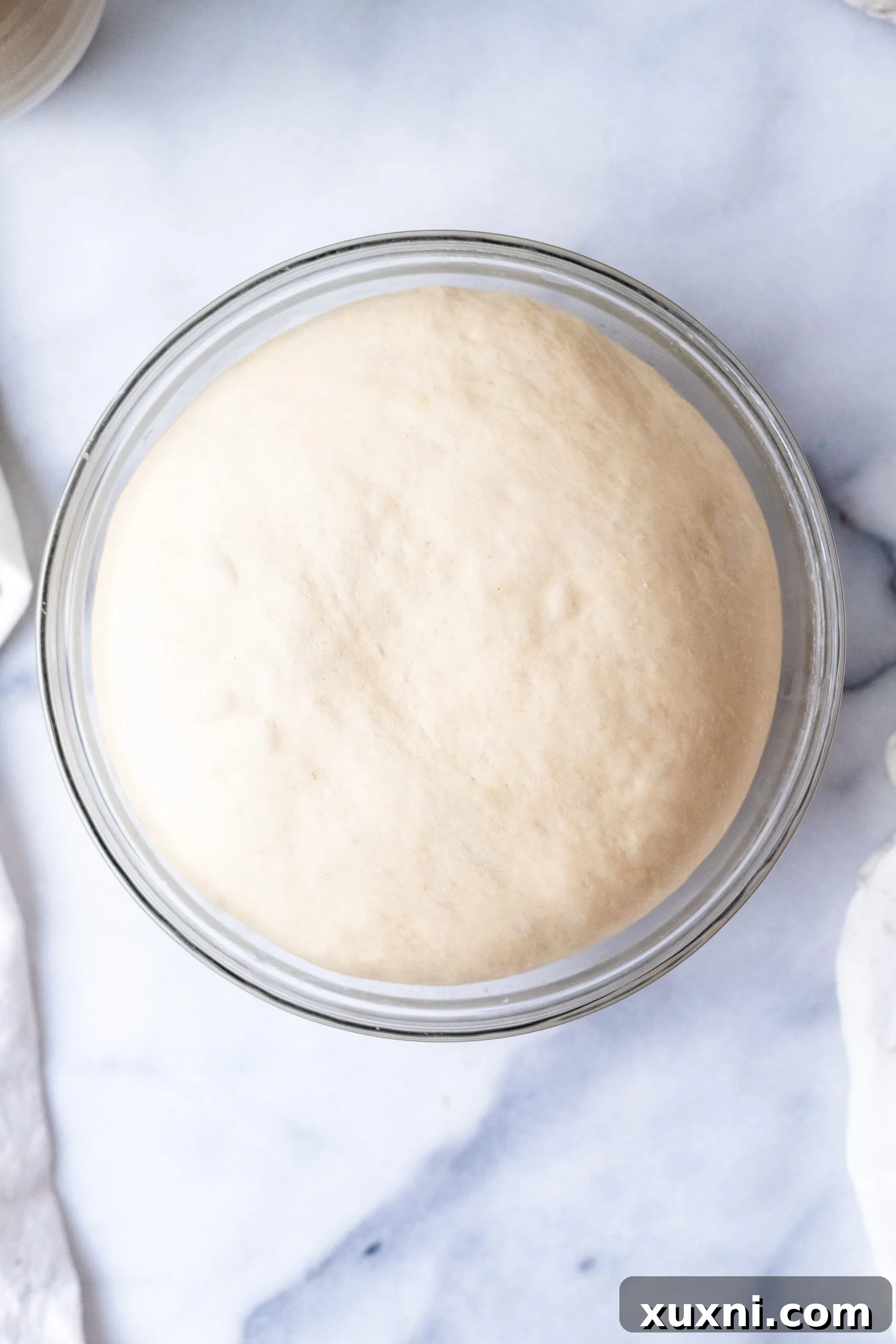
- Allow the Dough to Rise (First Proof): Patience is key here. The dough needs ample time to double in size, developing its characteristic airy structure.
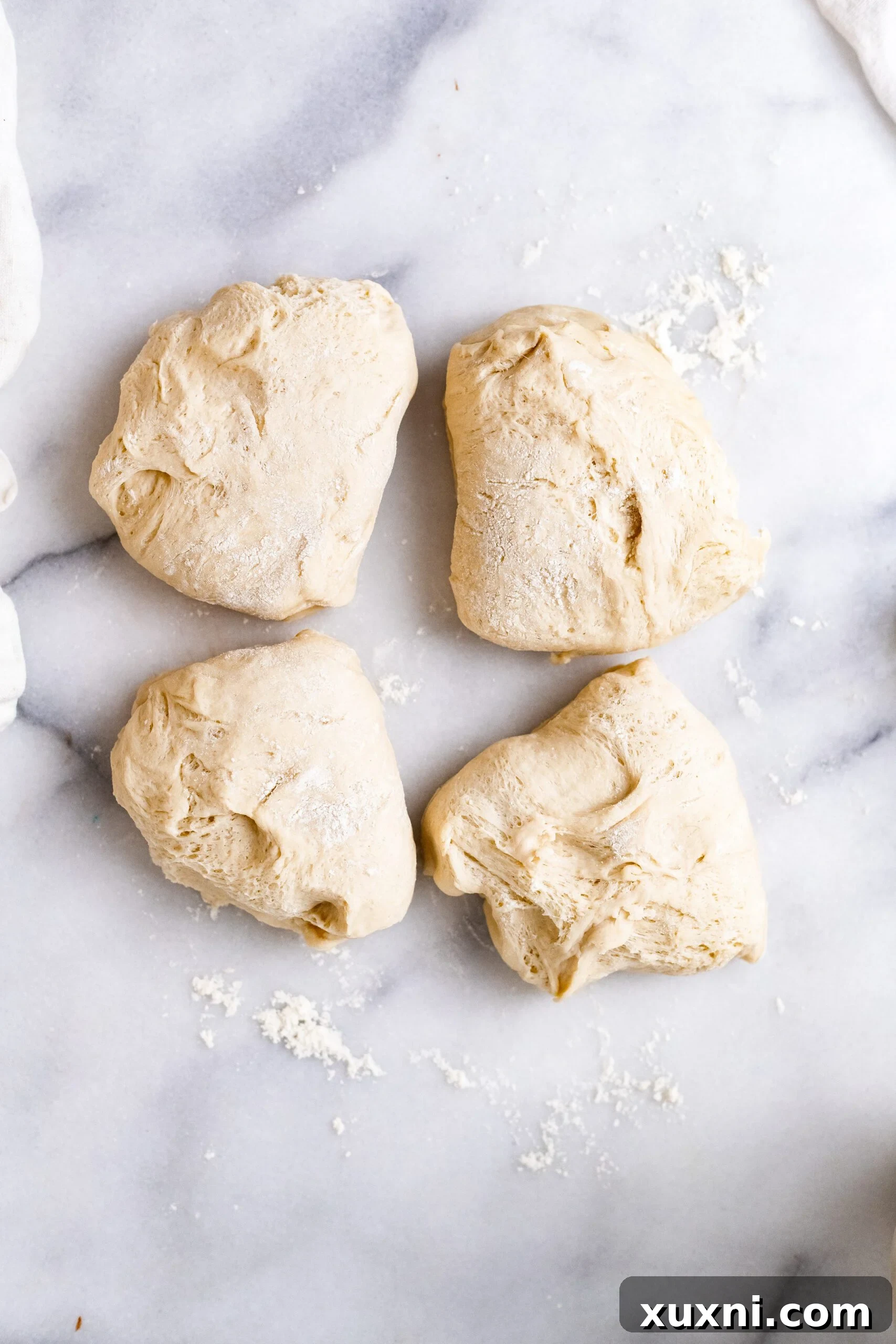
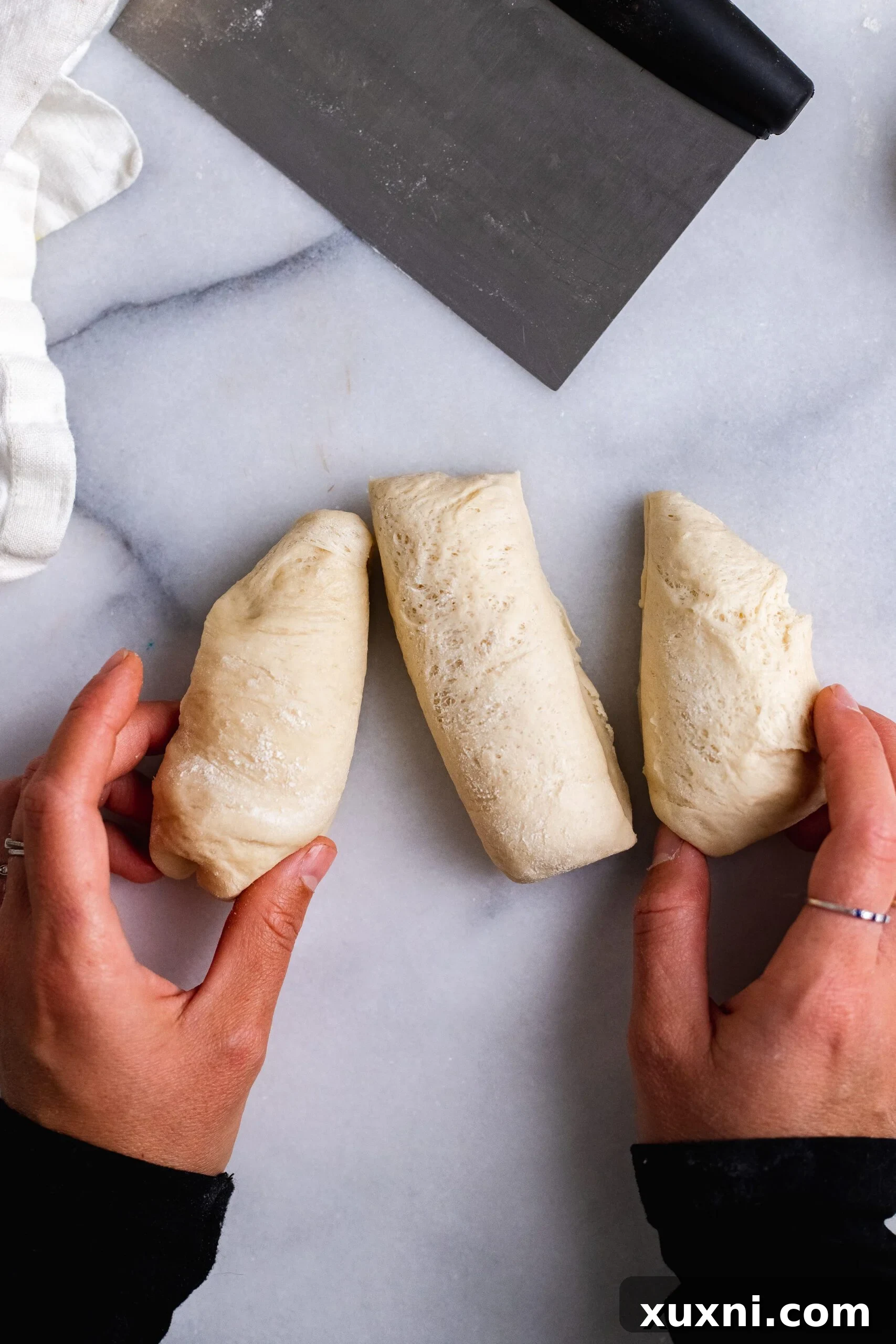
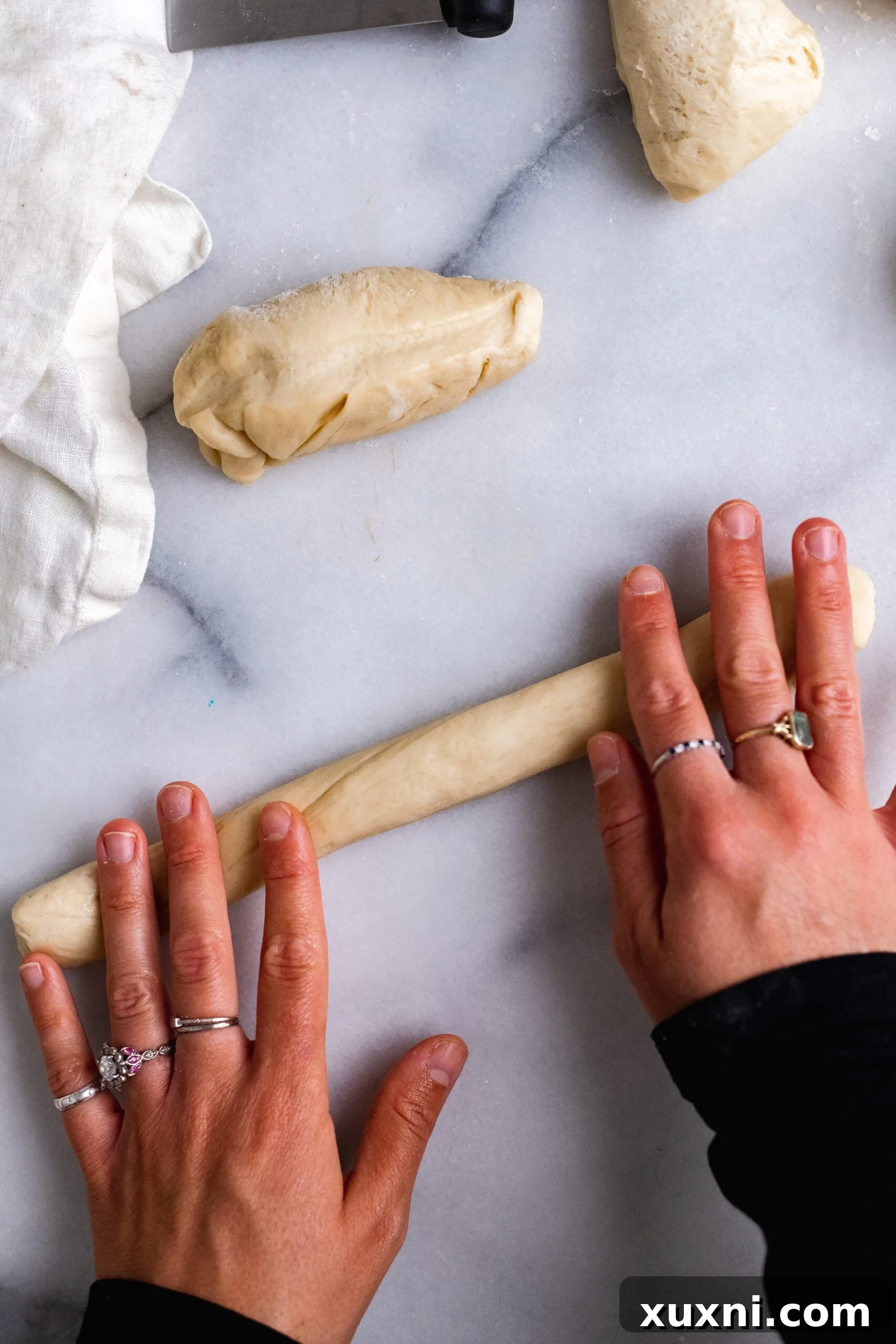
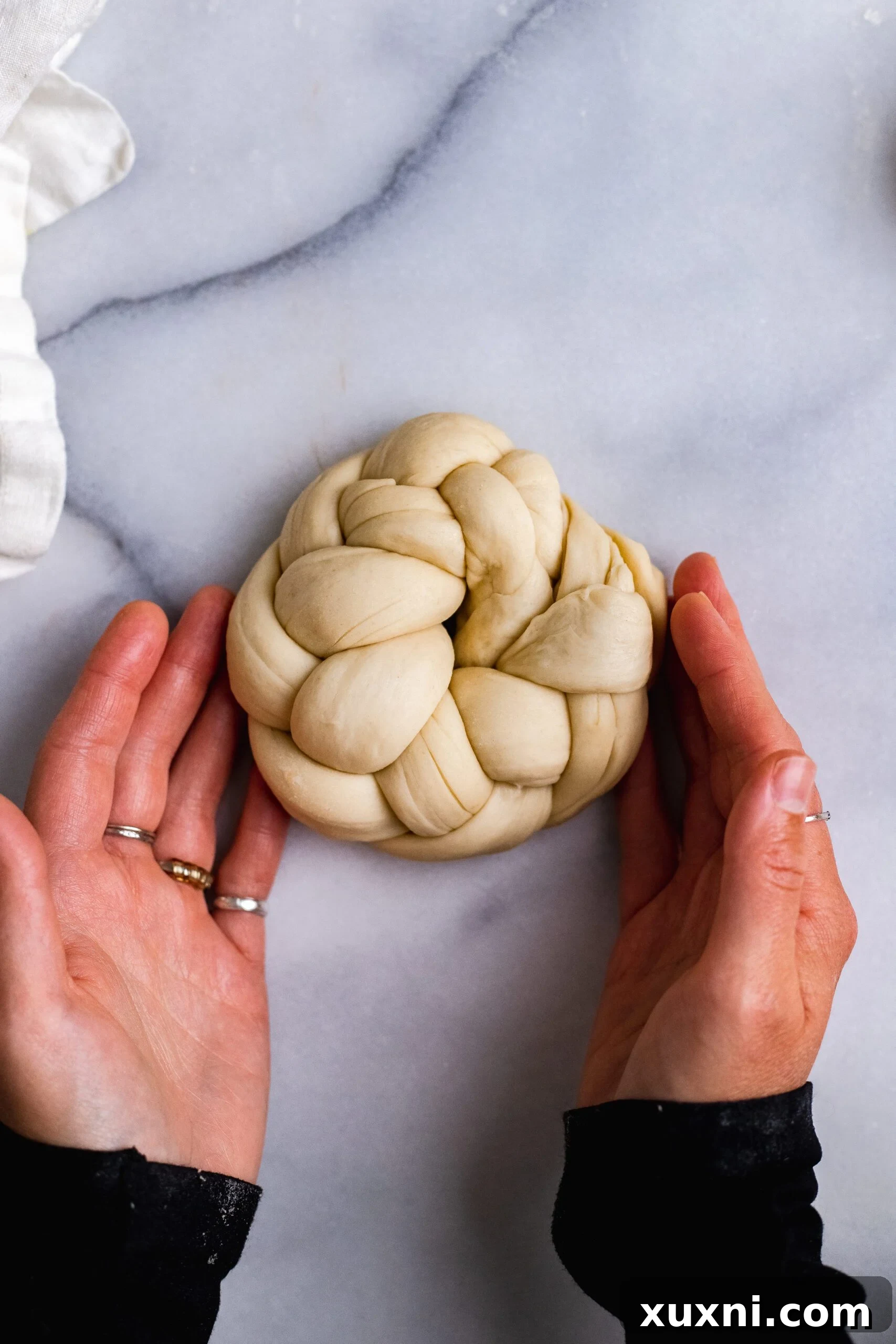
- Shape the Dough: You have the flexibility to create charming mini Italian Easter breads or one grand Pane di Pasqua. Our recipe will guide you in crafting four beautifully braided loaves.
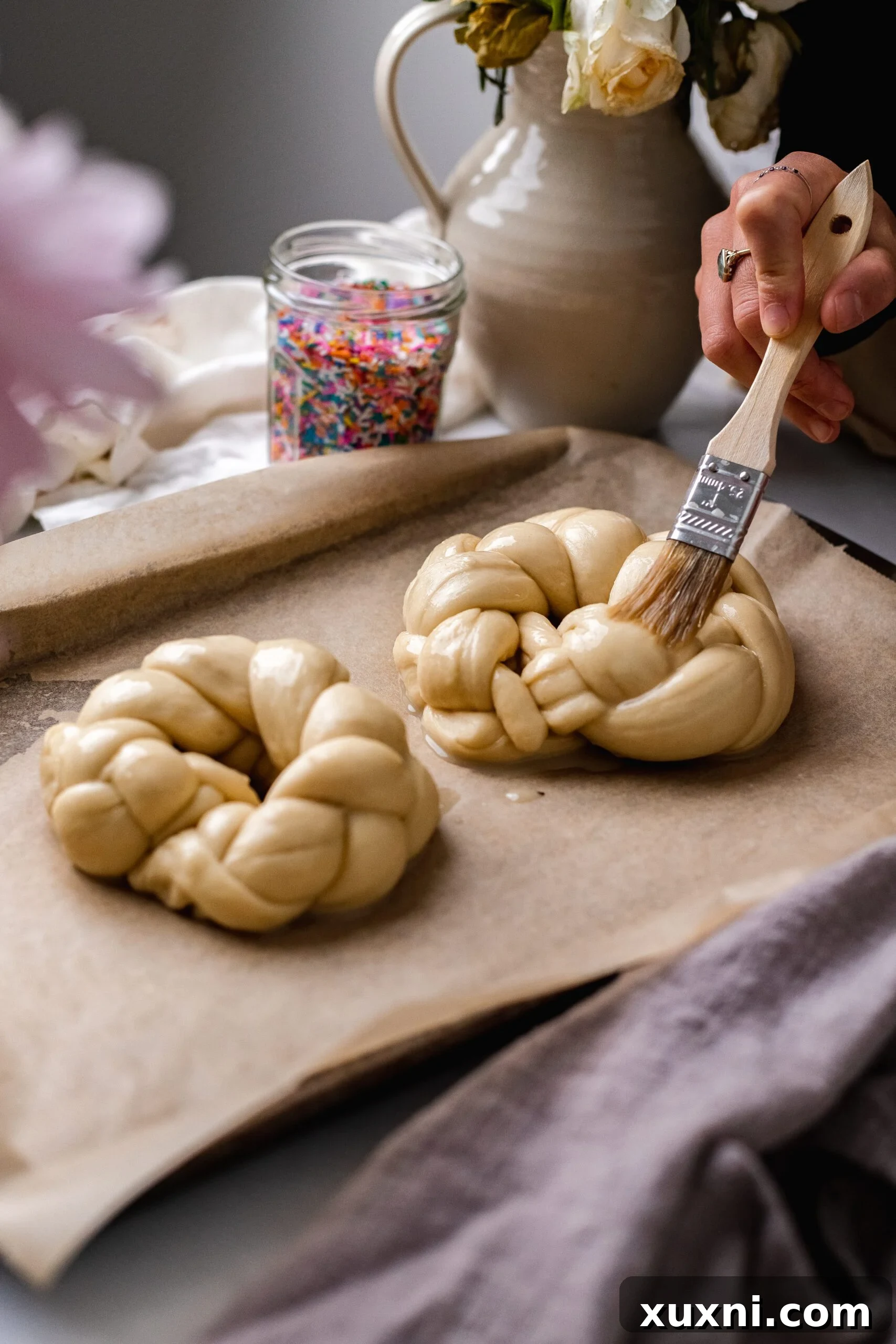
- Bake the Bread: Before baking, a light brush with our special vegan egg wash and a sprinkle of festive decorations prepare the bread for its golden transformation in the oven.
- Adorn with Vegan Easter Eggs: The final flourish involves placing our exquisite homemade vegan white chocolate eggs into their designated cavities. We’ll cover the making of these unique eggs in the subsequent section.
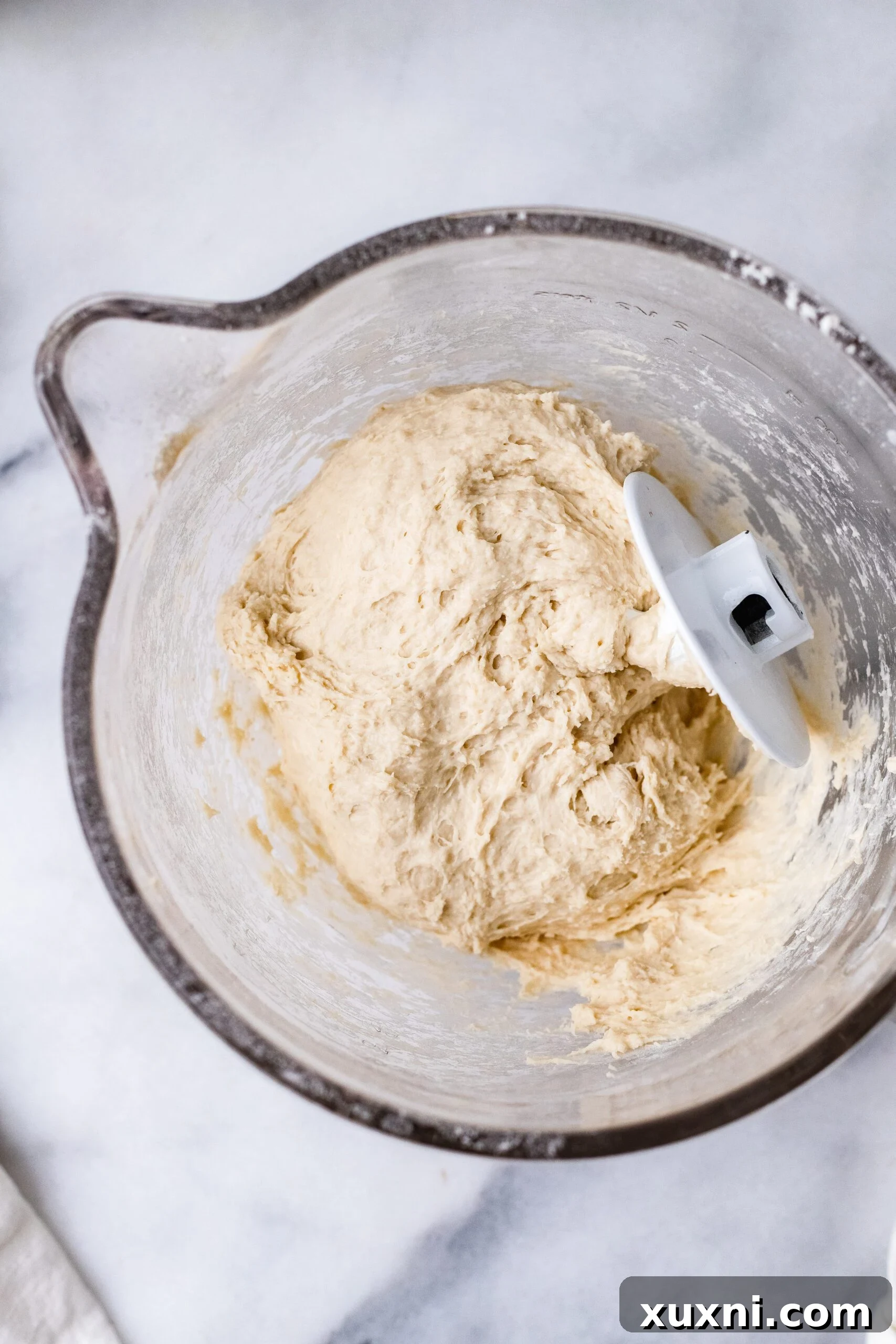
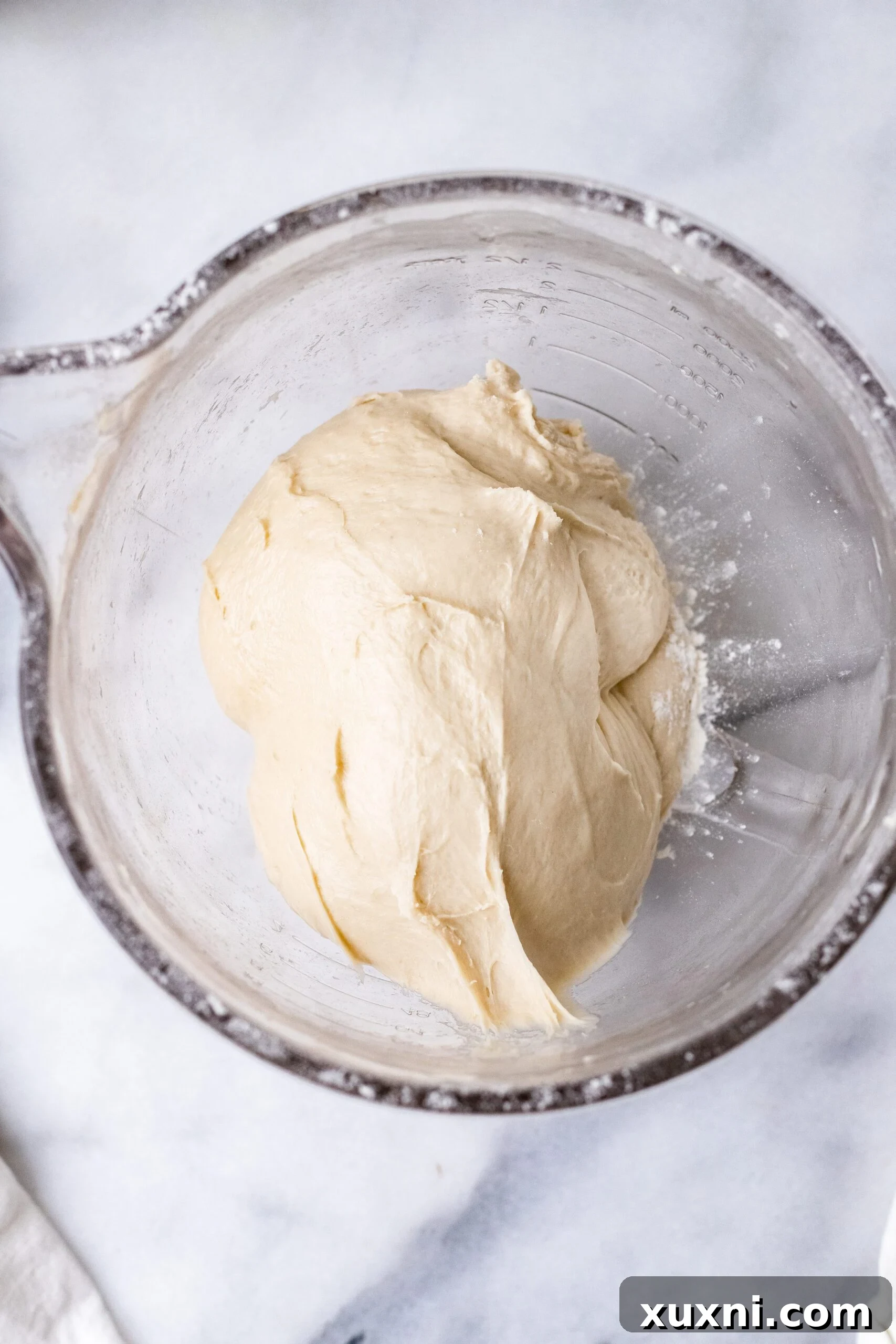
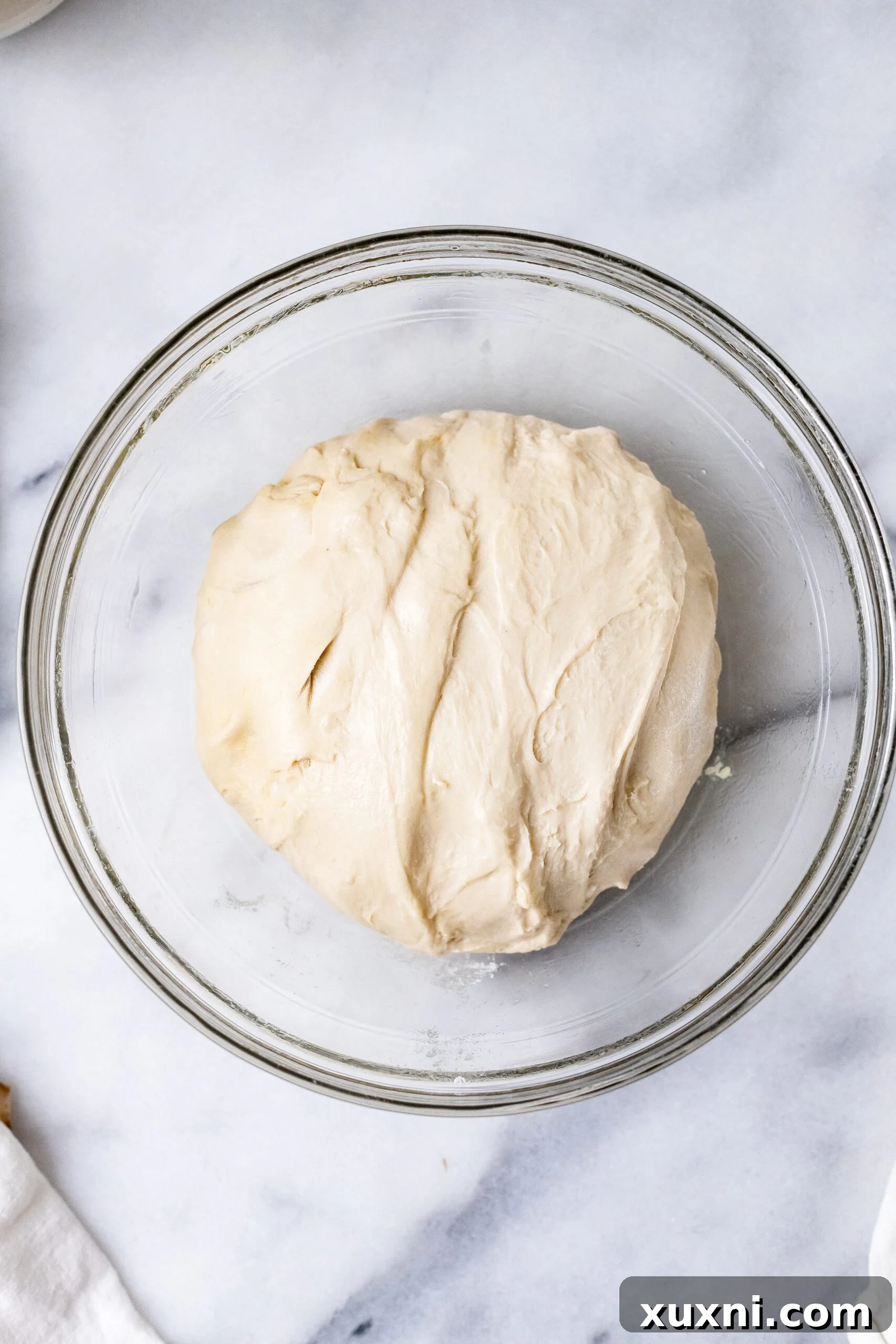
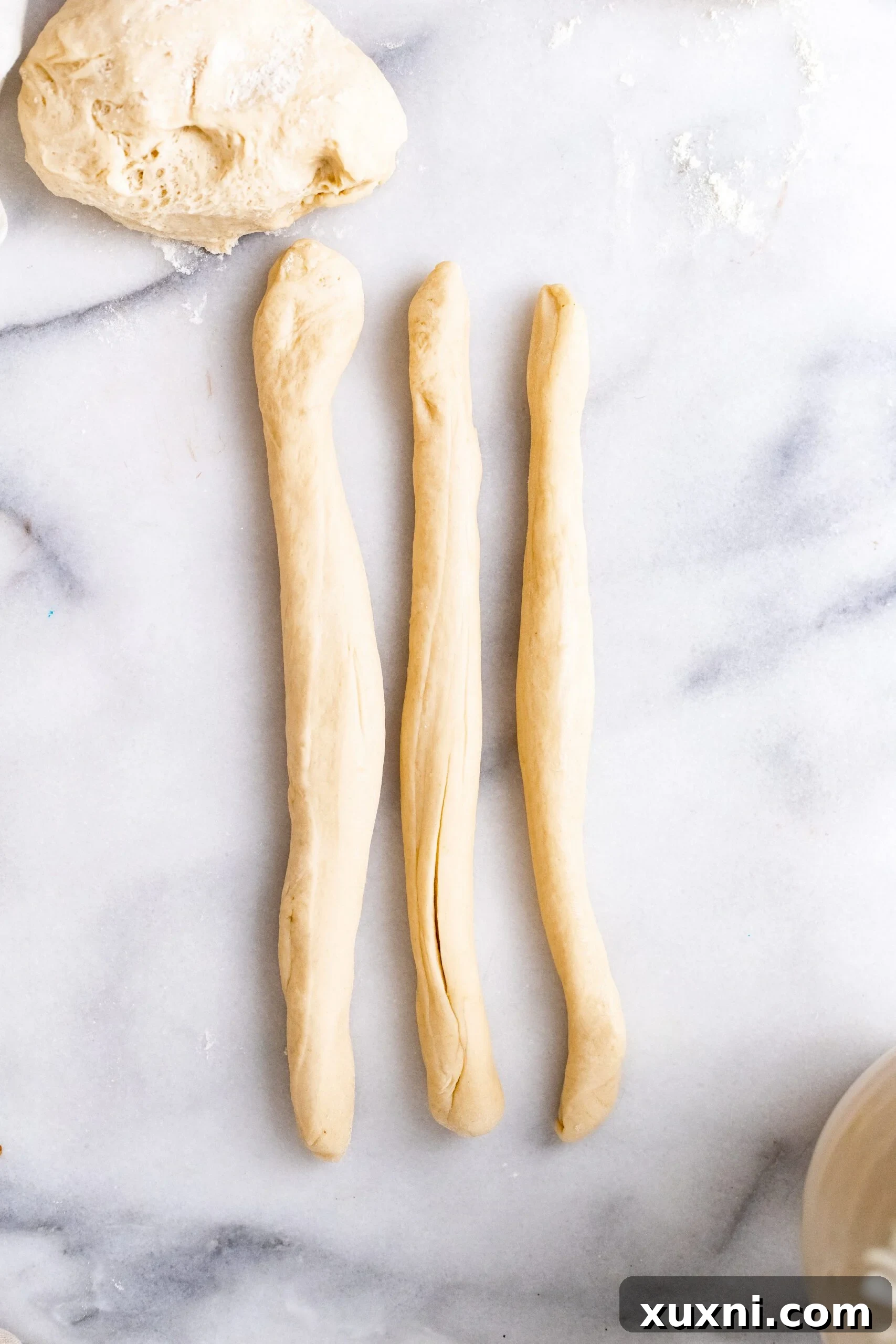
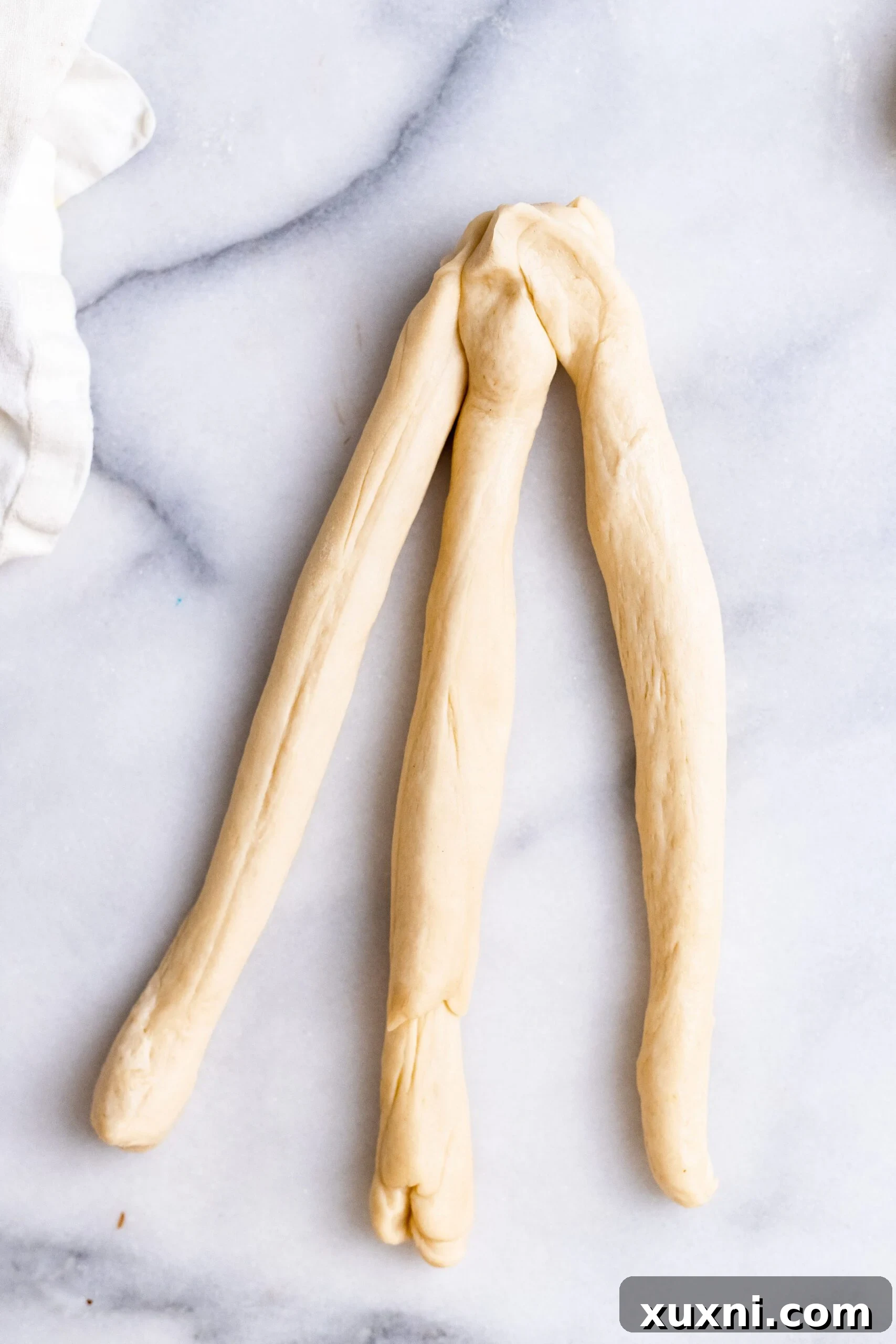
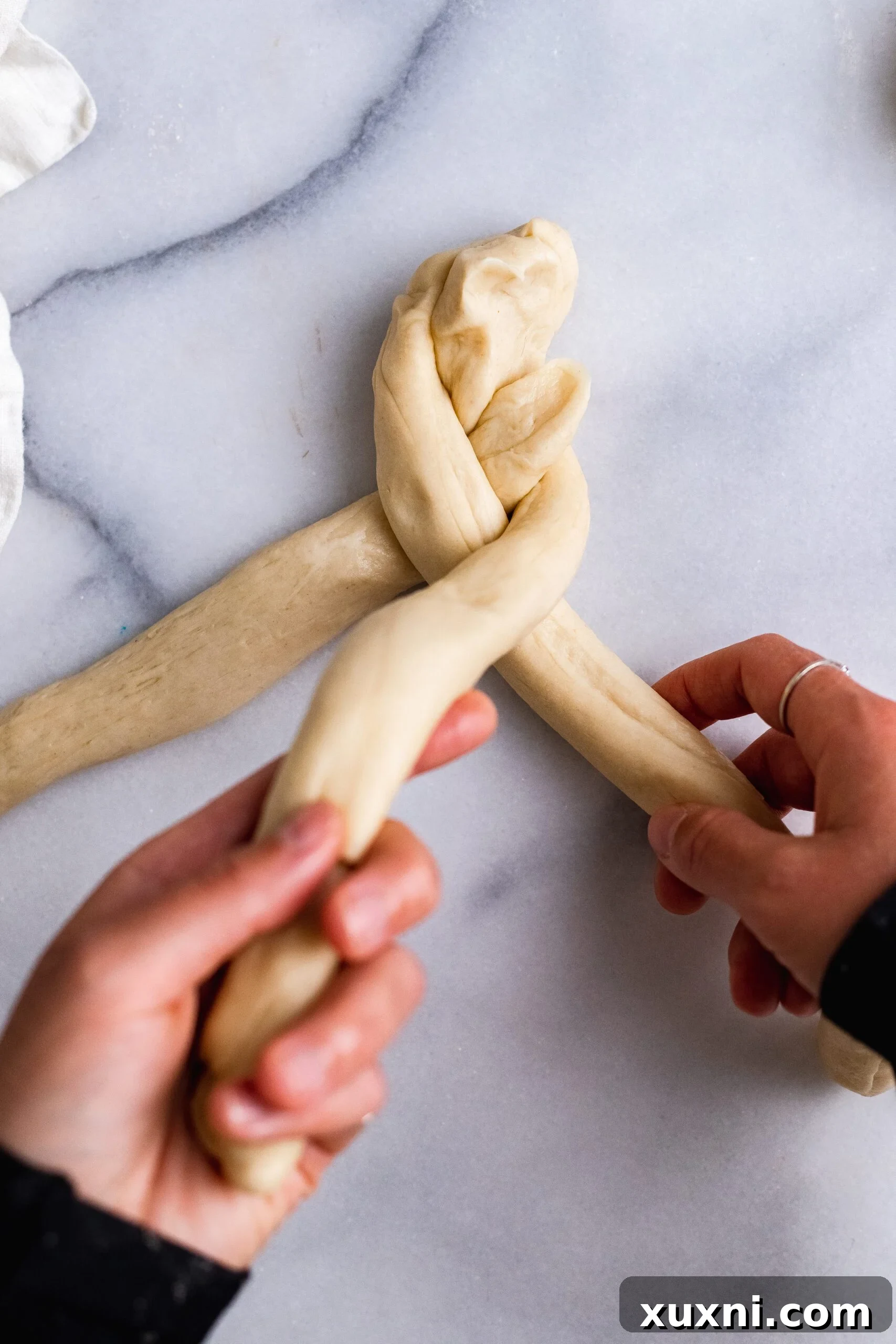
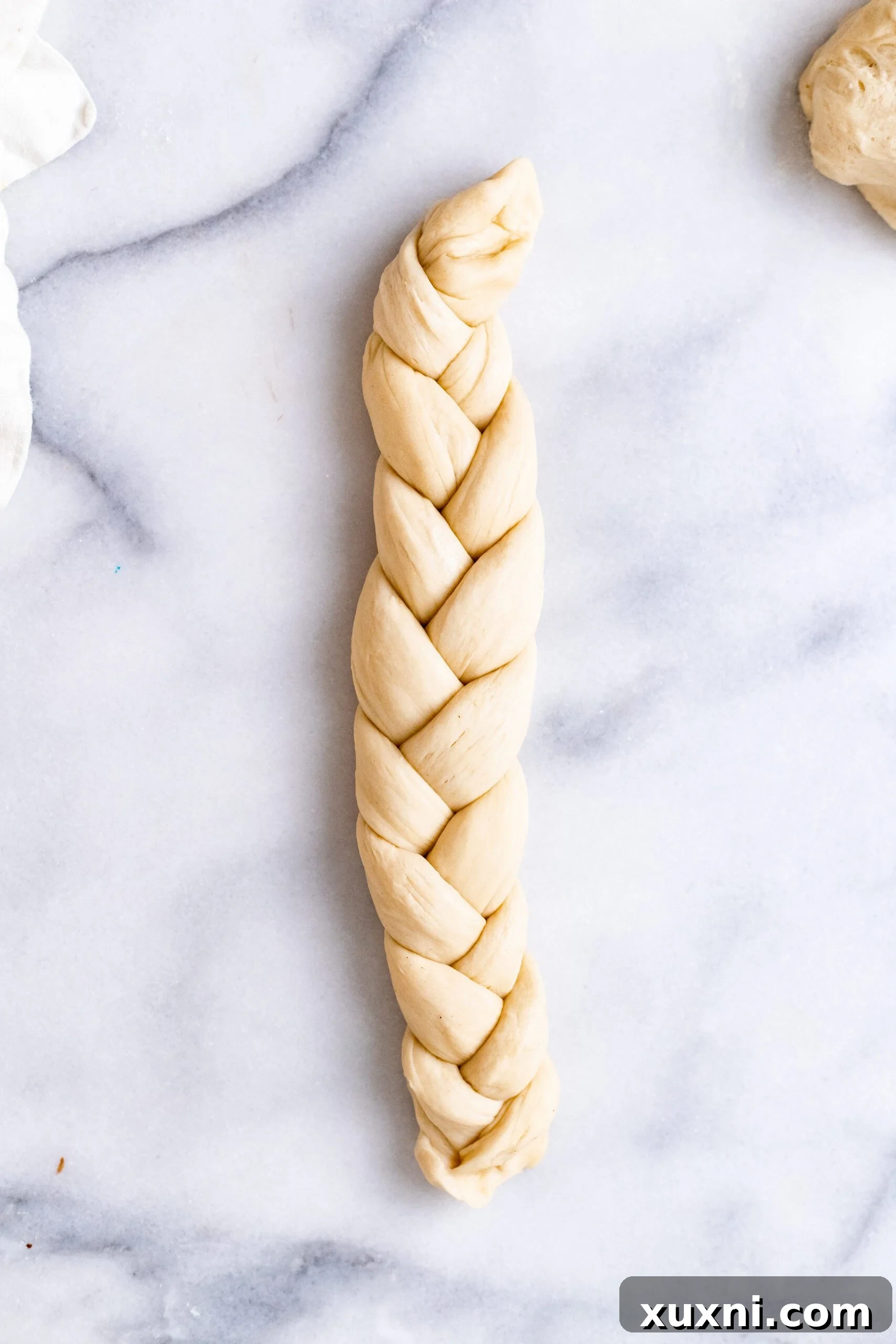
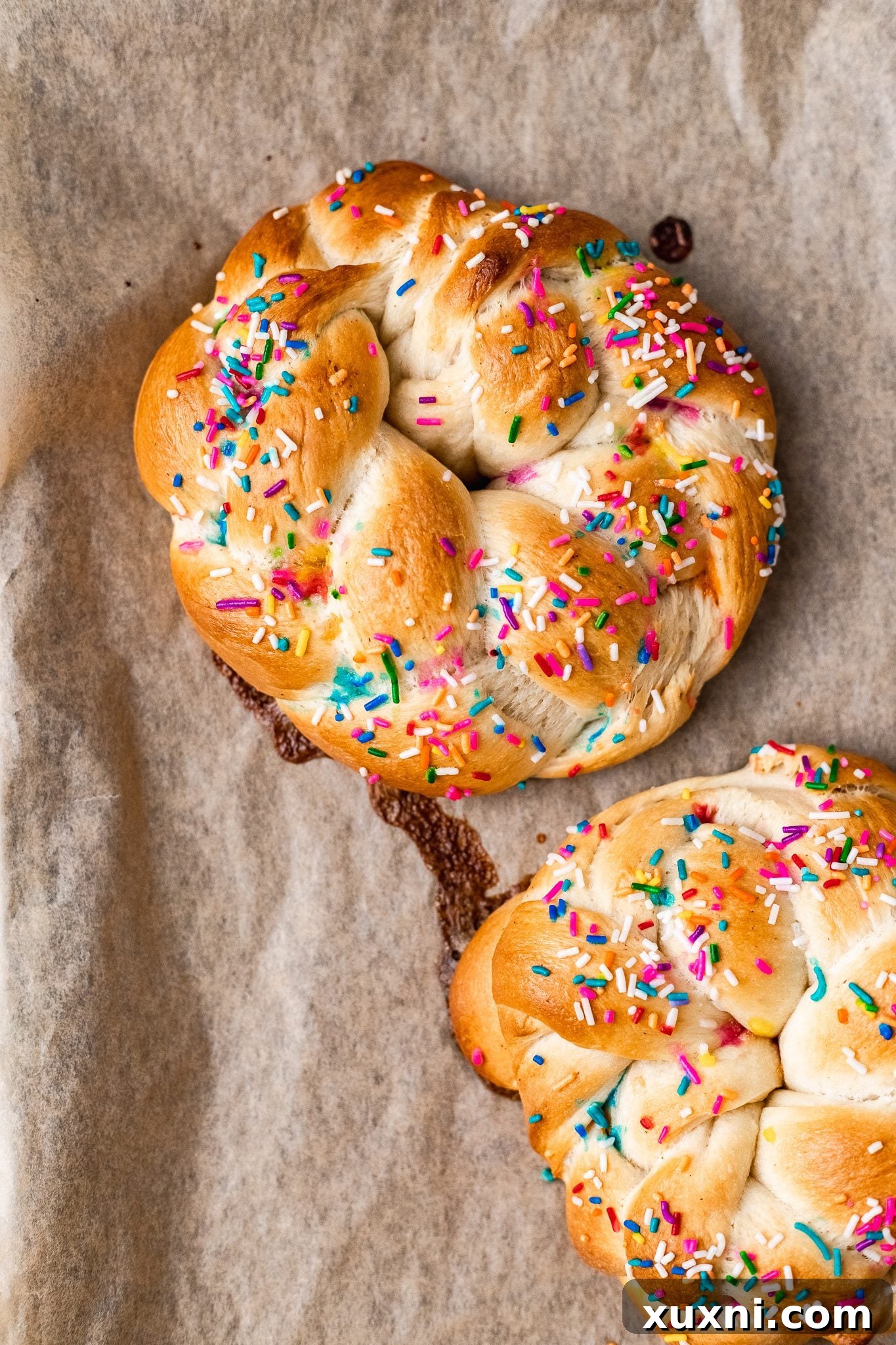
Throughout this process, attention to detail will ensure a truly spectacular result. The visual journey captured in the images below further illustrates each stage, from mixing the initial ingredients to the final braided masterpiece.
Crafting Our Delightful Vegan Easter Eggs: A Step-by-Step Guide
In traditional Pane di Pasqua, a vibrant, dyed real egg typically takes center stage within the braided wreath. However, for our entirely vegan version, we’re embarking on a creative and equally festive journey to make our very own plant-based centerpiece eggs. This innovative approach not only respects dietary choices but also adds a charming, customizable element to the bread.
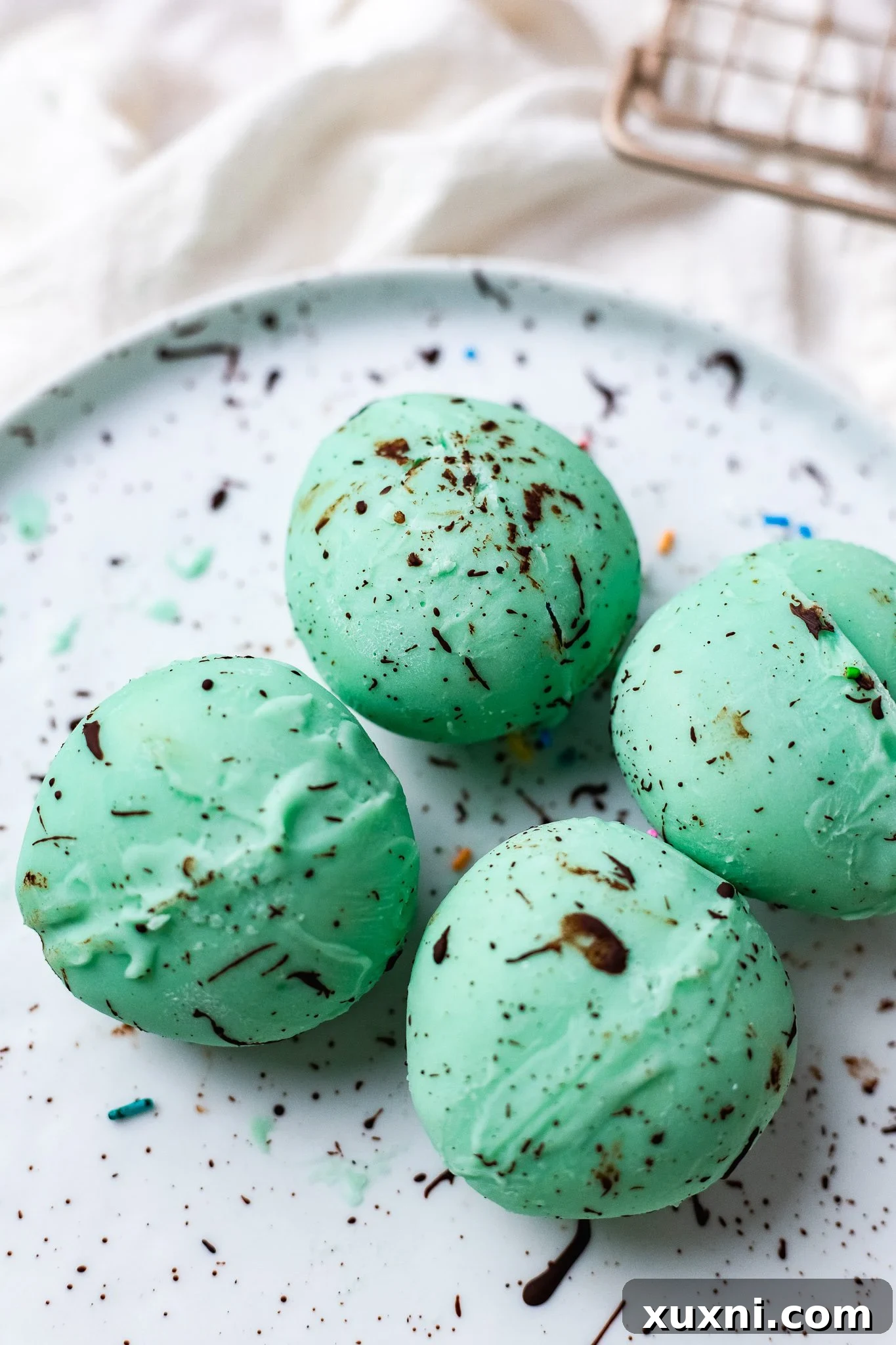
Our show-stopping centerpiece egg is fashioned from luxurious vegan white chocolate. To achieve that beautiful Robin’s egg aesthetic, it’s delicately speckled with regular vegan chocolate and then bursting with a surprise filling of colorful vegan sprinkles. For this recipe, I personally recommend using high-quality vegan white chocolate and vegan chocolate, such as those from Pascha Chocolate, and for an extra pop of joy, Sweetapolita Rainbow Sprinkles. The quality of your chocolate will significantly impact the final texture and appearance of your eggs.
To craft these delightful vegan white chocolate eggs, you’ll also need a silicone egg mold. The process is quite similar to making our popular vegan Cadbury Creme Eggs, involving careful melting, molding, and assembly. Here are the main steps to create these edible works of art:
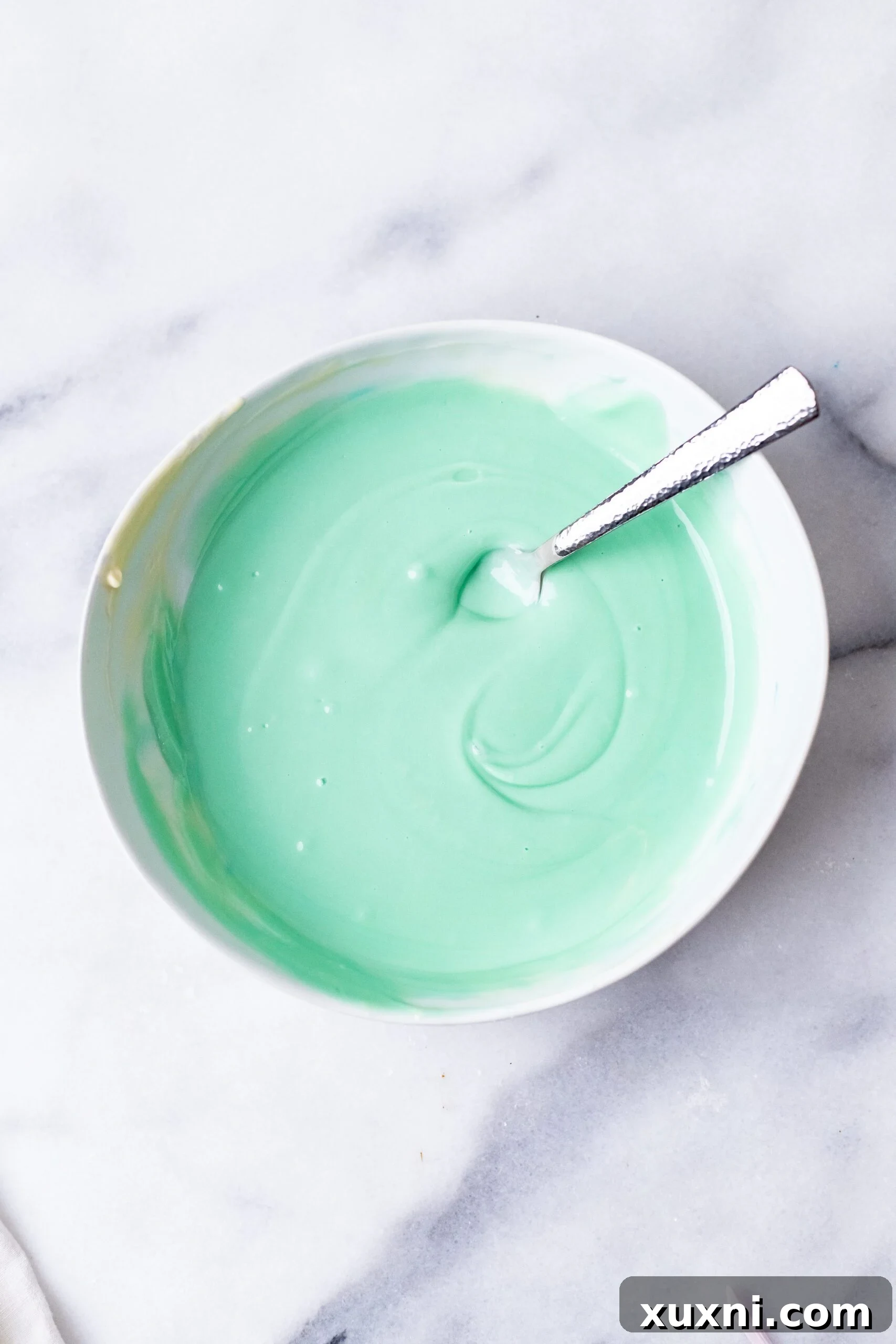
- Melt and Color the Vegan White Chocolate: Begin by gently melting your chosen vegan white chocolate. Once smooth, infuse it with a few drops of blue vegan food coloring or natural blue butterfly pea powder to achieve a lovely pastel blue hue. This colored chocolate is then carefully poured into your silicone egg molds, filling them to the brim.
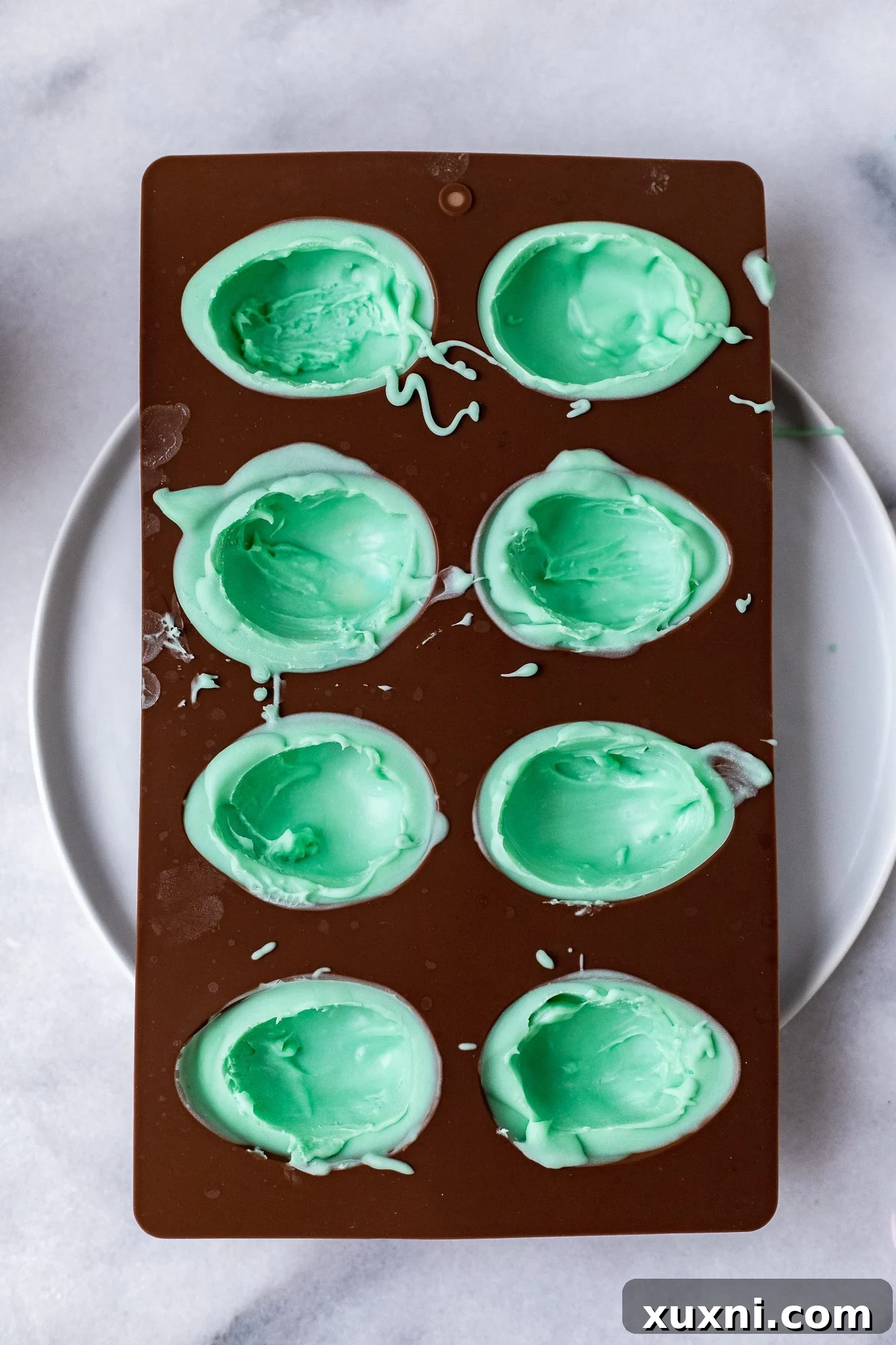
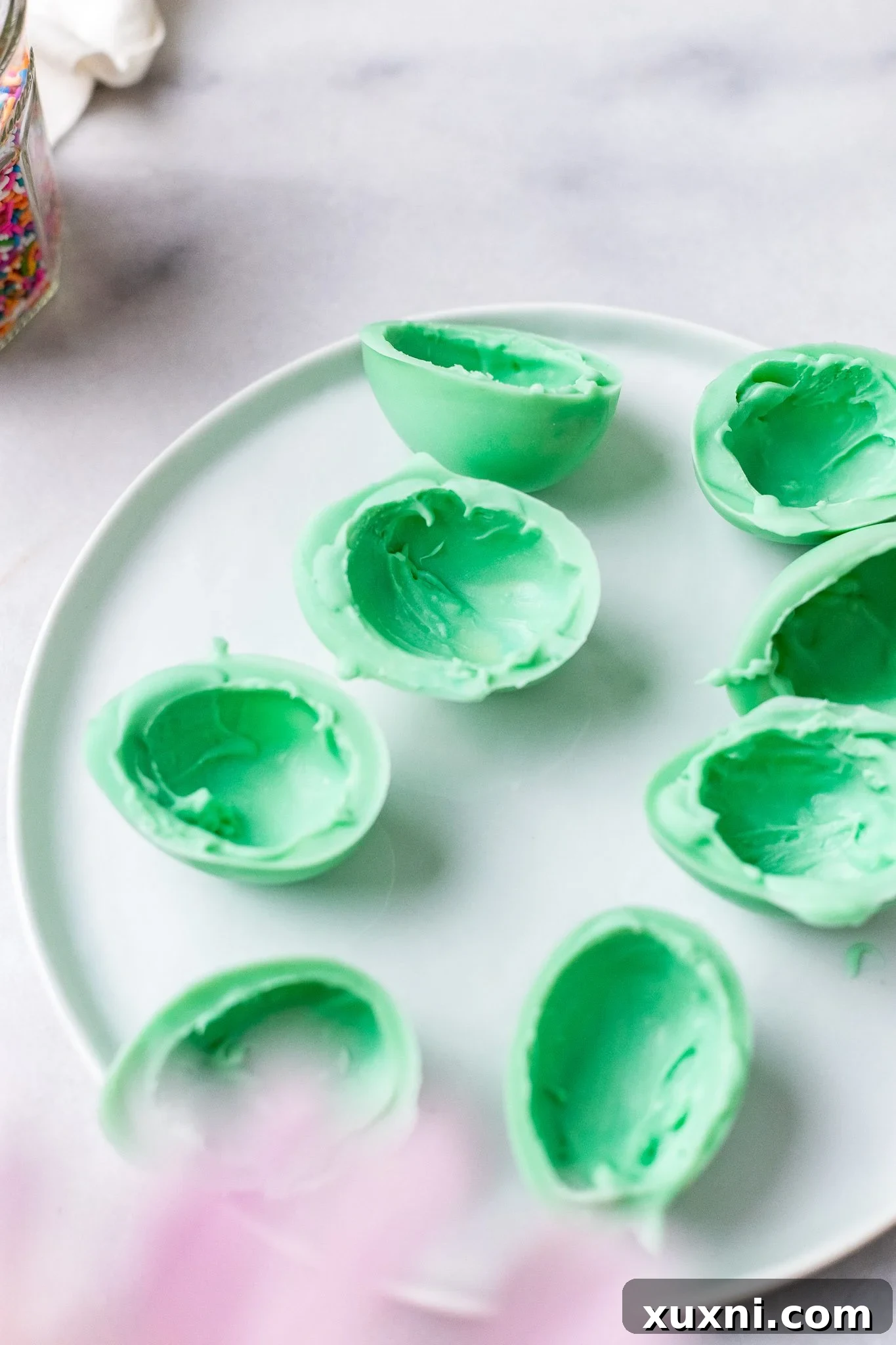
- Create the Sprinkle Cavity: After the chocolate has set slightly in the freezer, carefully remove the mold. Using a small spoon or a melon baller, delicately scoop out the semi-set interior of each egg half. This crucial step creates the perfect cavity, ready to be filled with joyful sprinkles. Remember to save these scooped-out chocolate centers!
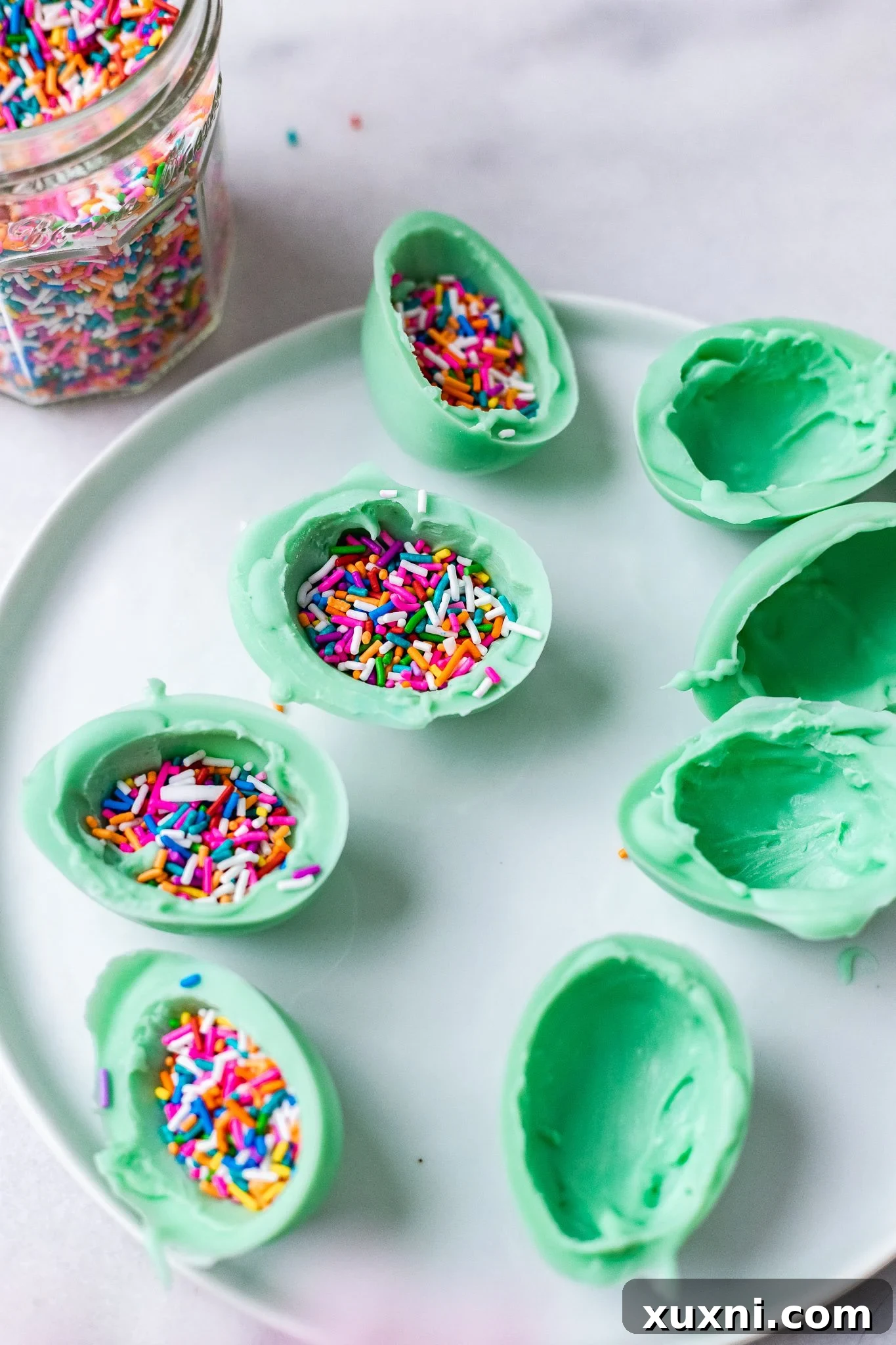
- Fill with Sprinkles: Take half of your hollowed-out egg shells and generously fill them with your favorite vegan sprinkles. These will be the surprise filling that delights everyone who breaks open an egg. The remaining hollow halves will serve as the tops to seal your eggs.
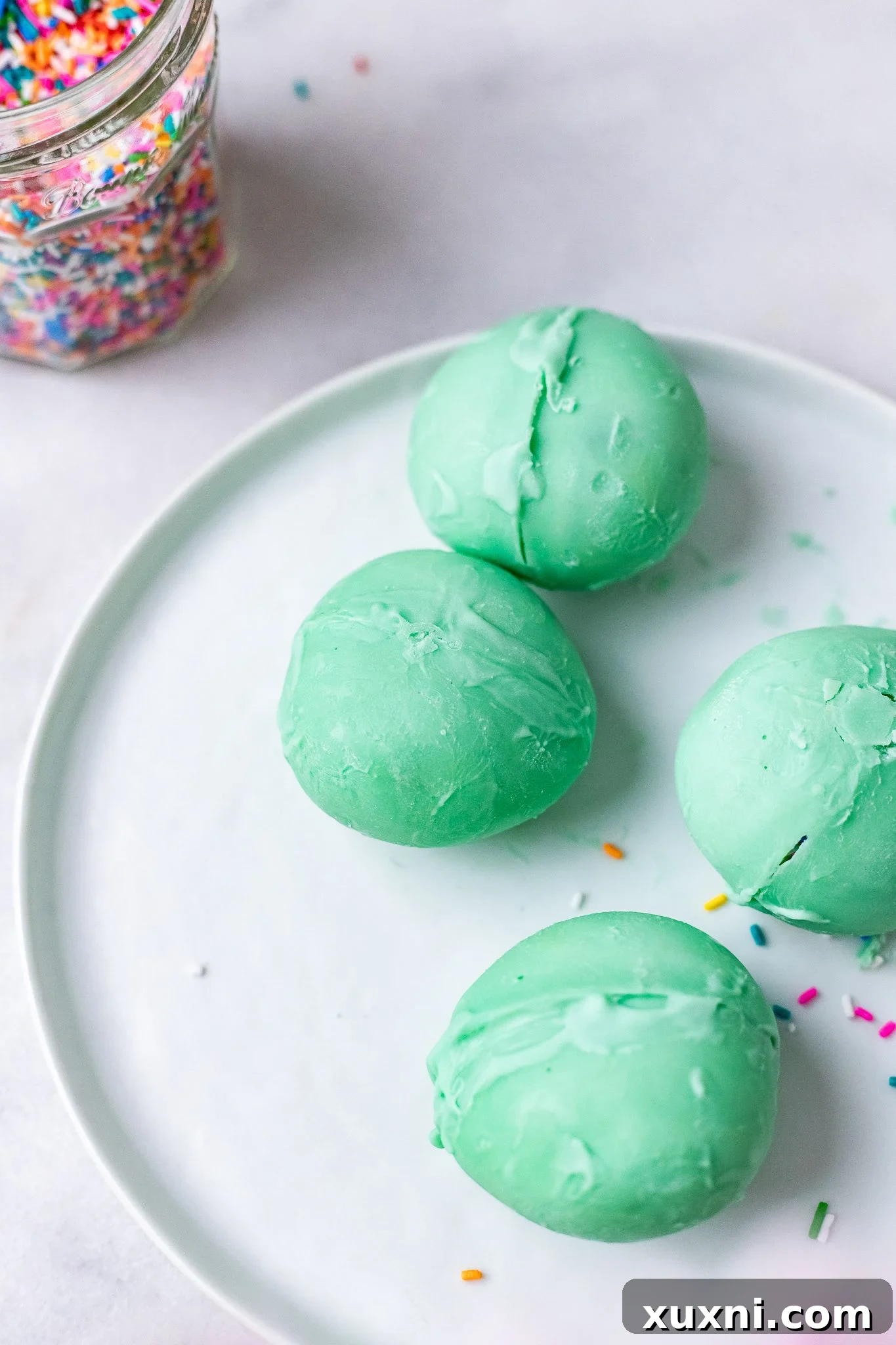
- Seal the Eggs Shut: Gently re-melt any saved or extra vegan white chocolate. Brush a small amount of this melted chocolate along the rim of the sprinkle-filled egg halves. Quickly and carefully press an empty egg half on top, sealing the two halves together. Allow these newly formed eggs to harden in the freezer.
- Achieve the Speckled Look: Once the eggs are firm, remove them from the freezer. Melt a small amount of regular vegan chocolate. Using a pastry brush or a stiff-bristled brush, lightly splatter the melted chocolate over the surface of the blue white chocolate eggs. This creates the charming, natural speckled appearance reminiscent of a robin’s egg. Return the eggs to the freezer for a final couple of minutes to set the chocolate speckles.
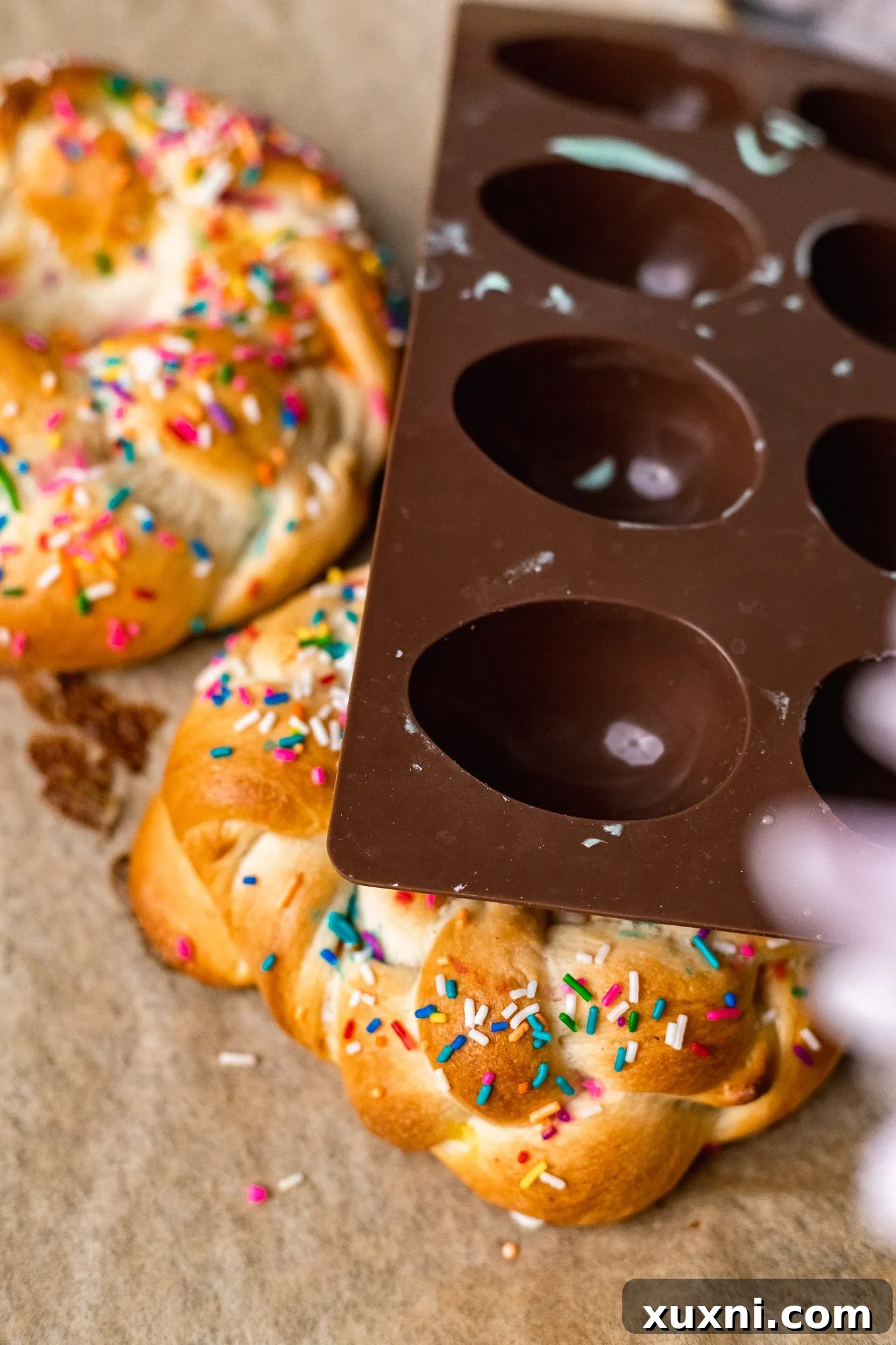
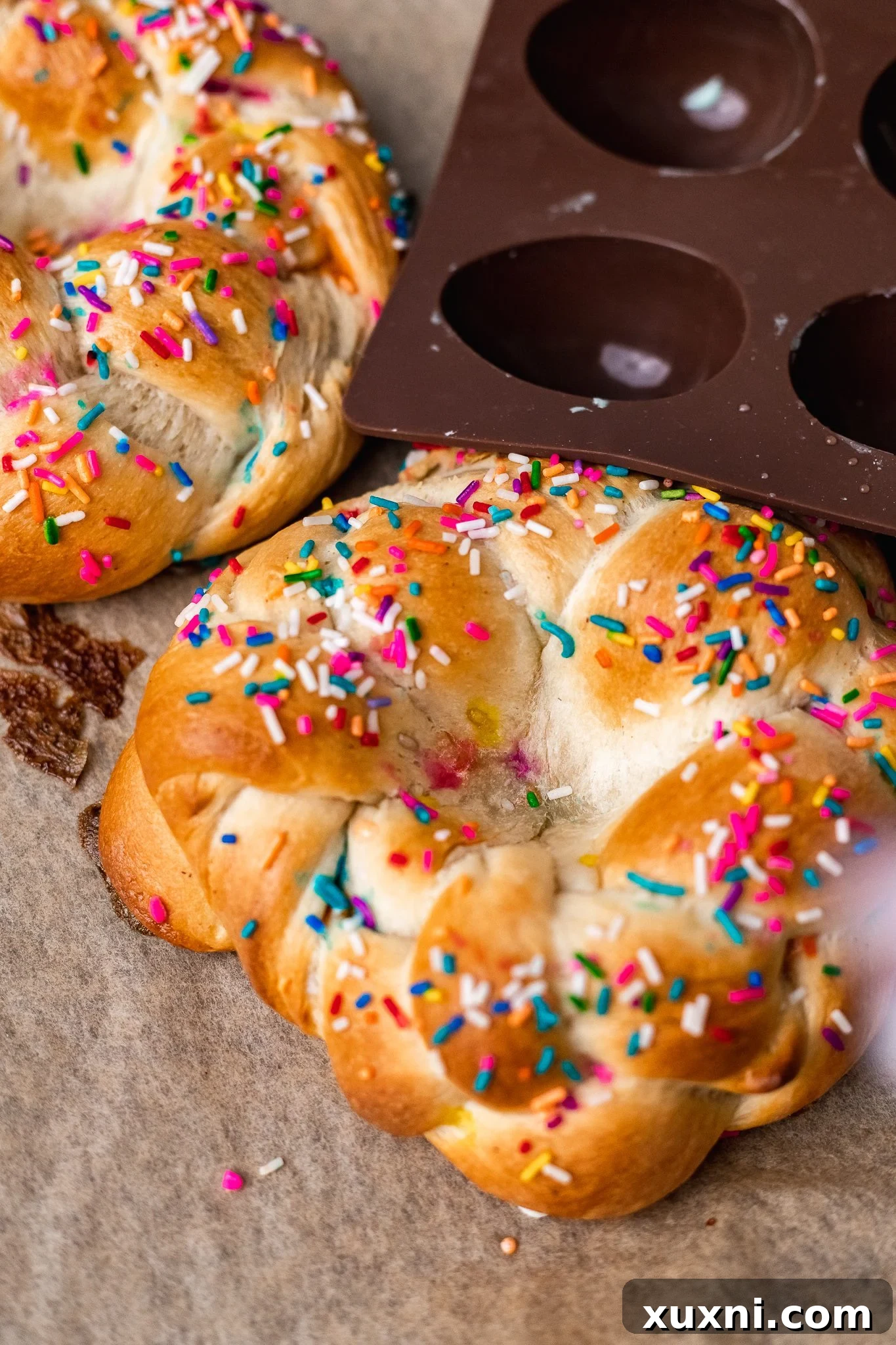
These handmade vegan eggs are not just a substitute; they are a delightful enhancement, adding a touch of personalized artistry and a burst of flavor to your Pane di Pasqua. The visual guide below further illustrates each stage of this creative process.
Expert Baking Tips for Your Vegan Italian Easter Bread Success
As a seasoned baker and a passionate advocate for yeast-based recipes, I thrive on helping others achieve baking triumphs. If you’re a long-time reader of The Banana Diaries, you know my dedication to perfecting vegan bread. For those embarking on their first bread-making adventure, I highly recommend consulting my comprehensive posts on Vegan Brioche and Vegan Dinner Rolls. These articles are packed with invaluable tips, troubleshooting advice, and foundational knowledge for successful vegan baking. They’ll equip you with the confidence to tackle any yeasted recipe!
Beyond those essential resources, I have a few additional, specific tips to ensure your Vegan Italian Easter Bread turns out absolutely spectacular:
- Personalize Your Pane di Pasqua: While my recipe embraces a delightful vegan twist, if you are not vegan, please feel empowered to decorate your Pane di Pasqua according to your family’s specific traditions. I opted for the homemade chocolate egg because it aligns with my plant-based lifestyle and because the combination of chocolate and orange is simply divine! However, if you prefer the traditional colored, real eggs, feel free to use them. This vegan bread base is robust and versatile enough to support any decoration, traditional or modern.
- Citrus Zest Alternatives: Our family recipe highlights orange zest for its vibrant flavor. However, if oranges aren’t readily available or you prefer a different citrus note, lemon zest is a perfectly acceptable alternative often used in other regional Italian Easter breads. Just be mindful of flavor pairings; if you use lemon zest, you might consider omitting the chocolate eggs and opting for sprinkles alone, as lemon and chocolate aren’t always a harmonious match.
- Mastering the Vegan Egg Wash: Achieving that beautiful, golden-brown crust is simple with our vegan egg wash. My personal favorite blend is a combination of maple syrup and dairy-free milk. This duo not only provides a lovely sheen but also complements the bread’s inherent sweetness. Agave syrup can be used as a substitute for maple syrup if preferred. I’ve found that baking the bread on the middle to top rack of the oven yields the best browning results.
- Rapid Rise Yeast vs. Active Dry Yeast: This recipe is designed to be forgiving. You can absolutely use rapid rise (instant) yeast instead of active dry yeast. Just be aware that the rising times listed in the recipe card will be shorter, as rapid rise yeast, as its name suggests, works faster! The loaves pictured in this post were actually made with rapid rise yeast, proving both types deliver excellent results.
- Troubleshooting Yeast Activation: The success of any yeasted bread hinges on active yeast. I delve into yeast activation in great detail in my vegan brioche post, but here’s a crucial reminder: active yeast is a living organism! It thrives in warm environments but is sensitive to high temperatures, ceasing to function above 138°F. From experience, I’ve learned that a precise temperature of 110°F for your dairy-free milk is ideal. To avoid the disappointment of inactive yeast and having to restart, I highly recommend using a kitchen thermometer to ensure your liquid is at the perfect temperature.
- Ingredient Quality Matters: Just as with any baking, the quality of your ingredients, especially the vegan butter and flour, can significantly impact the final product. Opt for high-quality, flavorful vegan butter for the best taste and texture.
Pane di Pasqua vs. Challah: Understanding the Nuances
While online discussions sometimes present conflicting views, it’s important to clarify that Pane di Pasqua and Challah bread, though similar in some aspects, are indeed distinct. Both are renowned examples of “enriched doughs,” meaning they contain higher amounts of fat (like butter or oil), sugar, and often eggs (or vegan substitutes) compared to lean doughs used for baguettes. This richness contributes to their soft, tender crumb and flavorful profiles, classifying them alongside brioche bread.
The primary distinguishing factor between Italian Easter bread and Challah lies in their flavorings and traditional contexts. Pane di Pasqua, particularly in my family’s Sicilian tradition, is celebrated for its bright, aromatic notes of orange juice, orange zest, and often a subtle hint of anise. These flavors evoke the freshness of spring and are deeply embedded in Italian Easter culinary customs. Challah, on the other hand, is typically a slightly sweet bread, often incorporating honey (though I proudly offer a delicious vegan version without honey!). Its flavor profile is generally less citrus-forward and more focused on the natural sweetness of the bread itself, often enhanced by poppy or sesame seeds on top. Challah is also distinctly tied to Jewish culinary traditions, especially Shabbat and other holidays.
Given that Jared and I cherish and celebrate holidays from both our families’ respective religious and cultural backgrounds, we have the immense pleasure of enjoying both of these magnificent breads throughout the year. (With the notable exception of Challah during Passover, of course!). Each bread brings its own unique history, flavor, and significance to the table, making them both cherished staples in our home.
You are going to absolutely adore this modern, compassionate take on the classic Italian Easter bread! Its vibrant flavors and comforting aroma transport me right back to my childhood, filled with warmth and family traditions. It’s truly a labor of love, crafted to bring joy and deliciousness to your Easter table. To truly elevate your experience, consider serving slices of this delightful bread alongside a fresh fruit platter, a dollop of vegan cream cheese, or your favorite fruit preserve. It’s also phenomenal on its own with a cup of coffee or tea for a special breakfast or brunch.
If you embark on the delightful journey of making this vegan Pane di Pasqua, please share your experience! Be sure to leave a comment below, along with a rating ⭐️⭐️⭐️⭐️⭐️. Your feedback is incredibly valuable and helps other enthusiastic bakers discover and enjoy this recipe. As always, I absolutely love seeing your beautiful culinary creations, so don’t forget to tag me on Instagram and Pinterest! Let’s celebrate the joy of vegan baking together!
Happy bread baking, and a very joyful Easter to you and yours!
More Irresistible Vegan Bread Recipes You’ll Love:
Pillowy Vegan Brioche Bread
Incredibly Gooey Vegan Cinnamon Rolls
Savory Vegan Garlic & Herb Dinner Rolls
The BEST Vegan Hot Cross Buns
Authentic Vegan Challah Bread
“Cheesy” Vegan Garlic Pull Apart Bread (A Crowd Favorite!)
The Best Vegan Dinner Rolls for Any Occasion
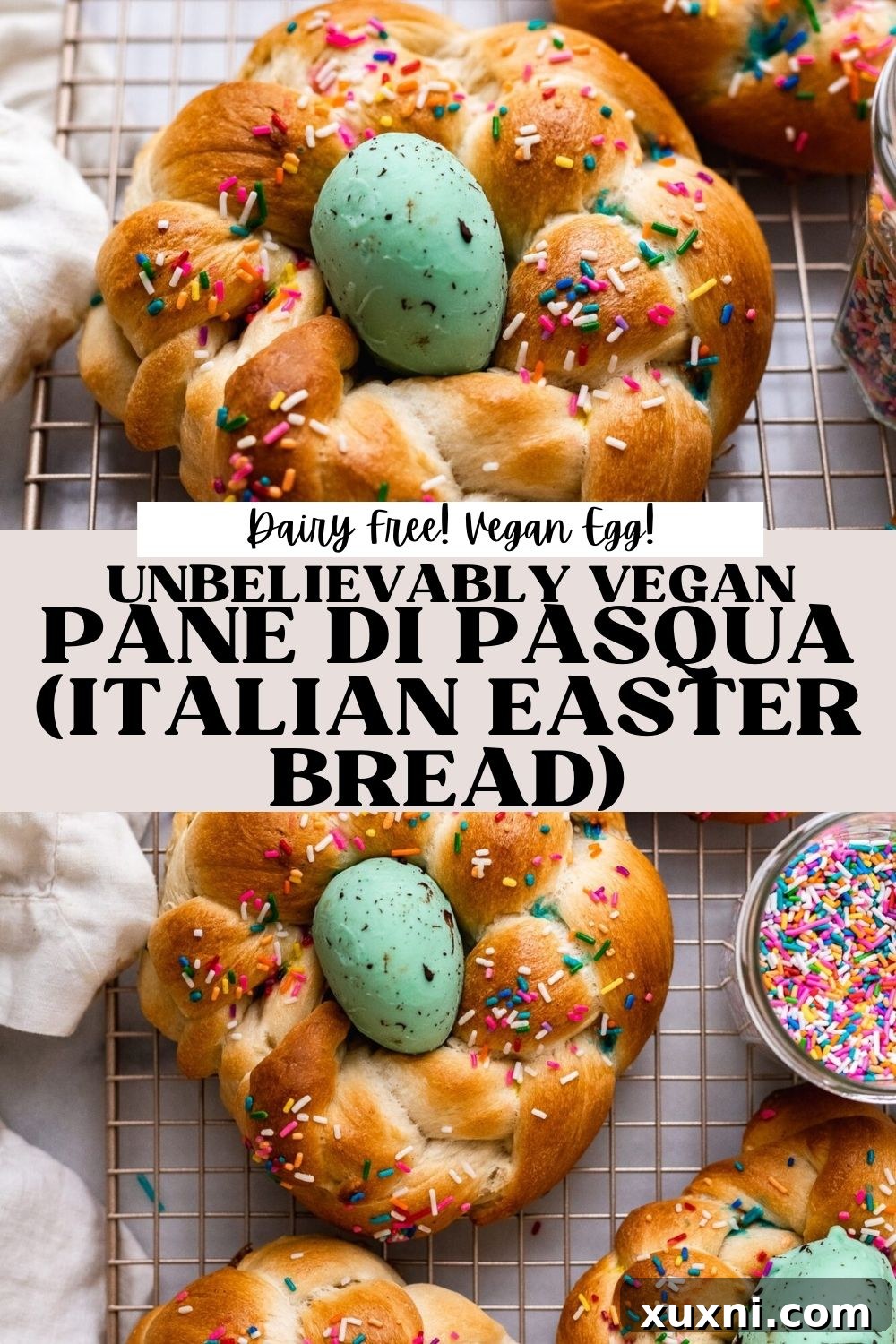
Want to save this delightful recipe for later? Pin it to your favorite Easter or baking board on Pinterest!
If you make this incredible recipe, please take a moment to leave a comment and a rating ⭐️⭐️⭐️⭐️⭐️ below. Your feedback helps others discover and enjoy these recipes! And as always, I absolutely adore seeing your beautiful creations, so be sure to tag @the_bananadiaries on Instagram and Pinterest! Happy baking!
Print
Pane di Pasqua (Vegan Italian Easter Bread)
5 Stars 4 Stars 3 Stars 2 Stars 1 Star
4.7 from 3 reviews
Author: BRITT BERLIN
Prep Time: 30 minutes
Proofing Time: 90 minutes
Cook Time: 20 minutes
Total Time: 140 minutes
Yield: 4 Small Loaves or 1 Large Loaf 1x
Category: Bread, Dessert
Method: Baking
Cuisine: Italian
Diet: Vegan, Dairy-Free, Eggless, Plant-Based
Description
This is a delightful and compassionate twist on my family’s traditional Pane di Pasqua, or Italian Easter bread! Crafted to be entirely vegan, it’s completely eggless and dairy-free. Each sweet, pillowy-soft loaf is bursting with bright orange zest and subtle almond flavor, then crowned with a charming homemade vegan white chocolate egg. It’s the perfect, irresistible bread centerpiece for your festive Italian Easter celebration, sure to impress every guest!
Ingredients
Scale
For the Vegan Italian Easter Bread:
- 1/2 cup (120 mL) unsweetened dairy-free milk (such as almond or soy), gently warmed to 110°F (43°C)
- 1/2 cup (100 g) granulated sugar or coconut sugar, divided
- 4 cups (550 g) bread flour or all-purpose flour, plus more for dusting
- 2.5 tsp (7g) active dry yeast or rapid rise yeast (see notes for rising times)
- 12 tbsp (185 g) high-quality salted vegan butter*, softened to room temperature
- 1/4 cup (62.5 g) unsweetened applesauce or plain dairy-free yogurt, at room temperature
- 1/4 cup (60 mL) freshly squeezed juice from 1 orange
- 1 tsp pure vanilla extract
- Zest from 1 large orange
- 1/2 tsp almond extract (omit if you have nut allergies)
- Vegan “egg” wash* (for brushing before baking)
For the Homemade Vegan White Chocolate Eggs:
- 2 cups good quality vegan white chocolate, chopped or in chip form
- 1/4 cup vegan dark or semi-sweet chocolate, chopped or in chip form (for speckling)
- 1/2 cup festive vegan sprinkles
- 2–3 drops blue vegan food coloring or a pinch of blue butterfly pea powder for natural coloring
- 1 silicone egg mold (approximately 2-inch or 5 cm egg halves)
Instructions
- Before You Begin: Please take a moment to carefully read through all instructions and gather your ingredients. This ensures a smooth and enjoyable baking process.
- Initial Preparation: Lightly grease a medium-sized bowl with a touch of olive or coconut oil; set this aside. Additionally, generously grease a 9-inch loaf pan or prepare two large baking sheets with parchment paper, depending on your preferred loaf size.
- Bloom the Yeast: In a separate large bowl, combine the warmed dairy-free milk (ensure it’s precisely 110°F using a thermometer), 1/4 cup (50g) of the granulated sugar, 1 teaspoon of bread flour, and the active dry yeast. Stir gently with a wooden spoon until just combined. Cover the bowl with a clean dish towel and place it in a warm, draft-free area to activate for approximately 10 minutes. You’ll know your yeast is active when it becomes frothy and emits a distinct yeast-like aroma, similar to beer.
- Prepare the Dough: Once your yeast mixture is beautifully bloomed and active, begin making the dough. In the bowl of a stand mixer fitted with a paddle attachment, or in a very large mixing bowl if kneading by hand, combine the remaining bread flour and the rest of the granulated sugar. Mix briefly until the sugar is evenly distributed. Now, add in the room-temperature dairy-free yogurt (or applesauce), orange juice, fresh orange zest, vanilla extract, almond extract, and the bloomed yeast mixture. Mix on medium speed for 3-4 minutes until a shaggy, cohesive dough forms. Then, gradually add the softened vegan butter, one tablespoon at a time, ensuring each addition is mostly incorporated before adding the next. Once all the butter is in, increase the mixer speed to high and knead the dough for 10-15 minutes. The dough should become soft, elastic, and pliable, pulling away from the sides of the bowl. It might remain slightly tacky, but it should not leave significant sticky residue on your fingertips.
- Shape for First Rise: If using a stand mixer, once the dough forms a ball, lightly flour a clean work surface. Turn the dough out and briefly knead it by hand, shaping it into a smooth ball.
- First Proofing: Place the shaped dough ball into the previously greased medium bowl. Cover the bowl tightly with a clean dish towel or plastic wrap. Position it in a warm environment (ideally above 80°F / 27°C, such as a slightly warm oven, near a sunny window, or by a pilot light) to rise for about 60-120 minutes, or until it has visibly doubled in size.
- Shape the Pane di Pasqua Loaves: While the dough is completing its first rise, prepare your baking setup: line two large baking sheets with parchment paper and set them aside. Once the dough has proudly doubled in size, gently punch it down to release the air. Carefully transfer the dough from the bowl onto a lightly floured clean surface. Using a pizza cutter, bench scraper, or a sharp kitchen knife, divide the dough into 4-6 equal pieces (this will depend on whether you want to make smaller individual loaves or a larger single one. For accuracy, you can weigh the dough portions). Take one of these pieces and further divide it into three smaller, equal sections. Gently roll each of these three smaller pieces into long, uniform strands, approximately 12-14 inches long. Pinch the three strands together firmly at one end, then begin to braid the dough (refer to the post photos for a visual guide). Once braided, carefully and gently bring the two ends of the braid together and pinch them firmly to form a wreath. Transfer this braided wreath onto one of your prepared baking sheets. Repeat this process for the remaining dough portions, placing each finished Pane di Pasqua roll onto the baking sheet, ensuring adequate space between them.
- Second Rise (Proofing): Loosely cover the shaped Pane di Pasqua loaves with a thin, clean dish towel. Place them in a warm area (near your preheating oven is often suitable) to rise again until they have nearly doubled in size. During this time, preheat your oven to 375°F (190°C).
- Bake the Pane di Pasqua: Once the loaves have completed their second rise and the oven is preheated, prepare the vegan egg wash (see the Notes section below for the simple recipe). Using a pastry brush, lightly and evenly brush the mixture over the tops of the braided loaves. For an extra festive touch, you can lightly sprinkle them with vegan sprinkles now. Carefully transfer the baking sheets into the preheated oven and bake for 18-20 minutes. The bread should achieve a beautiful light golden-brown color on top, with a slightly crusted, firm exterior, but ensure it is not over-baked to maintain its pillowy softness.
- Prepare Bread for Vegan Egg: Remove the warm Easter bread from the oven. While still warm, carefully use an oven mitt to handle the silicone egg mold. Gently press one of the egg halves from the mold into the center of each baked loaf. This action will create a perfect cavity for your homemade vegan white chocolate egg to comfortably rest. Allow the bread to cool completely on a wire rack while you proceed to make the vegan white chocolate eggs.
- Create the Vegan White Chocolate Eggs: This process requires a bit of precision for beautifully finished eggs.
- Melt & Color: Melt the vegan white chocolate using either a double boiler on the stovetop (stirring frequently) or in the microwave (heating in 30-second intervals, stirring between each, until smooth). Once melted, stir in the blue food coloring or butterfly pea powder until the chocolate is uniformly colored. Carefully pour the colored vegan white chocolate into the cavities of your silicone egg mold, filling them completely. You will yield 8 egg halves from this amount; adjust if you’re making more loaves.
- Set & Scoop: Place the filled egg mold into the freezer for just 3-4 minutes to allow the edges to firm up. Remove the mold and, using a small spoon or melon baller, gently scoop out the still-soft interior of each egg half, creating a hollow cavity. Save these scooped-out chocolate centers!
- Final Freeze: If the chocolate is still too soft after scooping, return the mold to the freezer briefly until the egg halves are firm and cold.
- Fill & Seal: Carefully remove 4 of the hardened egg halves from the mold. Generously fill the remaining 4 hollow halves in the mold with your vegan sprinkles. If your saved white chocolate centers have hardened, gently re-melt them. Brush a small amount of this melted vegan white chocolate along the rim of the sprinkle-filled halves. Quickly place an unfilled, removed egg half on top, pressing gently to seal the egg shut. Allow the assembled eggs to harden completely in the freezer.
- Splatter & Finish: Once the eggs are firm, remove them from the freezer and place them on a plate. Gently demold all eggs. Melt the 1/4 cup of vegan chocolate. Take a pastry brush or a hard-bristled brush, dip it lightly into the melted chocolate, and gently splatter the outside of the blue vegan white chocolate eggs to create a speckled, robin’s egg effect. Return the speckled eggs to the freezer for a final 2 minutes to set the chocolate speckles.
- Assemble and Serve: Once both the bread and the eggs are completely cooled, carefully place one beautiful vegan white chocolate egg into the center cavity of each Pane di Pasqua loaf. Your masterpiece is now ready! Serve immediately and delight in your homemade Italian Easter bread.
- Storage Guidelines: To keep any leftover Pane di Pasqua fresh, store it in an airtight container or a sealed baggy at room temperature for 1-2 days. For extended freshness, it can be kept in the refrigerator for 4-5 days or frozen for up to 3 months. To enjoy frozen bread, thaw it at room temperature and gently warm it in the oven if desired.
Notes
*Vegan “Egg” Wash: For that perfect golden sheen and a touch of sweetness, simply combine 1 tablespoon of pure maple syrup with 1 tablespoon of unsweetened dairy-free milk (such as soy or almond milk). Mix them together until well blended.
*Salted Vegan Butter: Our recipe calls for salted vegan butter. If you opt to use unsalted vegan butter instead, remember to incorporate an additional 1/4 teaspoon of fine sea salt into the dry ingredients when you’re mixing the dough. This small adjustment will help balance the flavors beautifully.