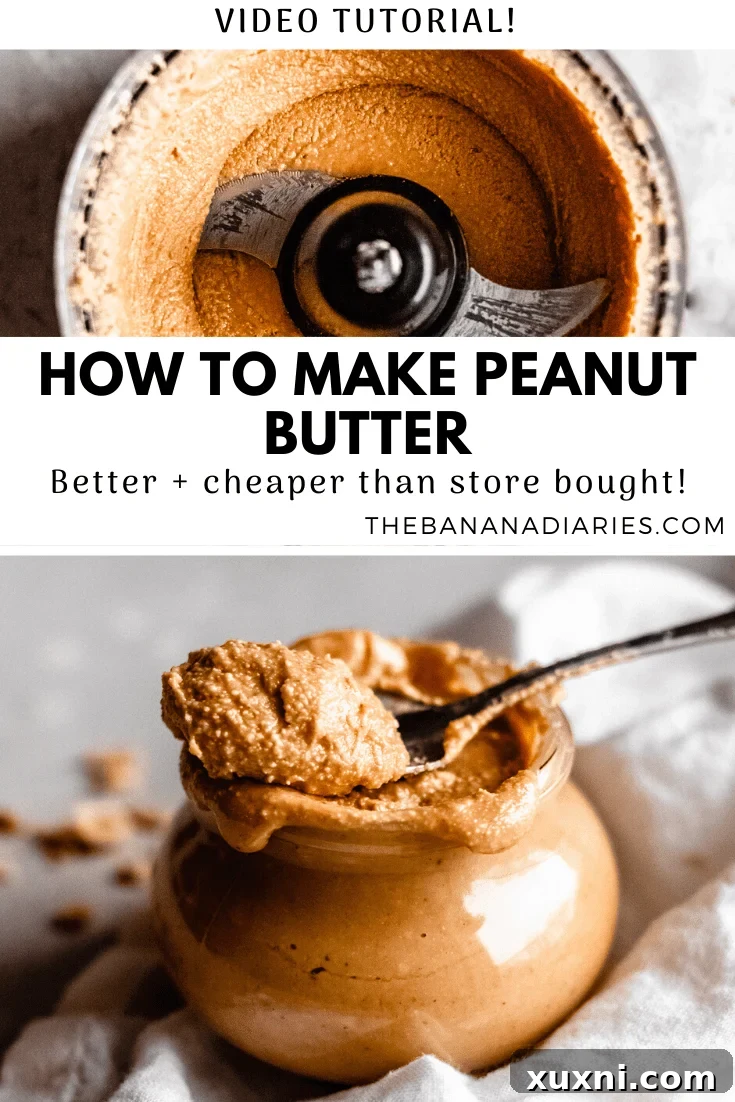
Mastering Homemade Creamy Peanut Butter: Your Ultimate Guide
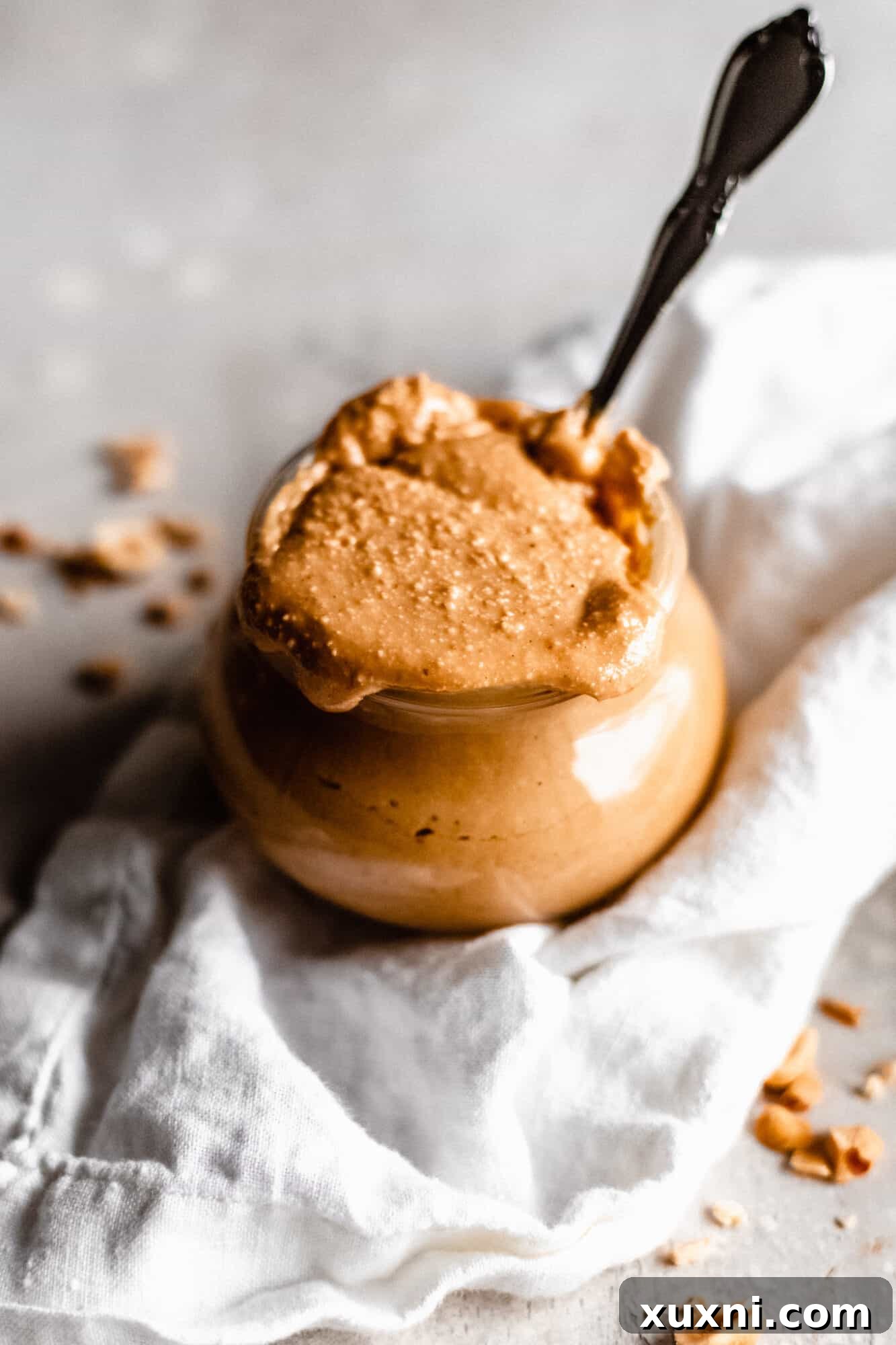
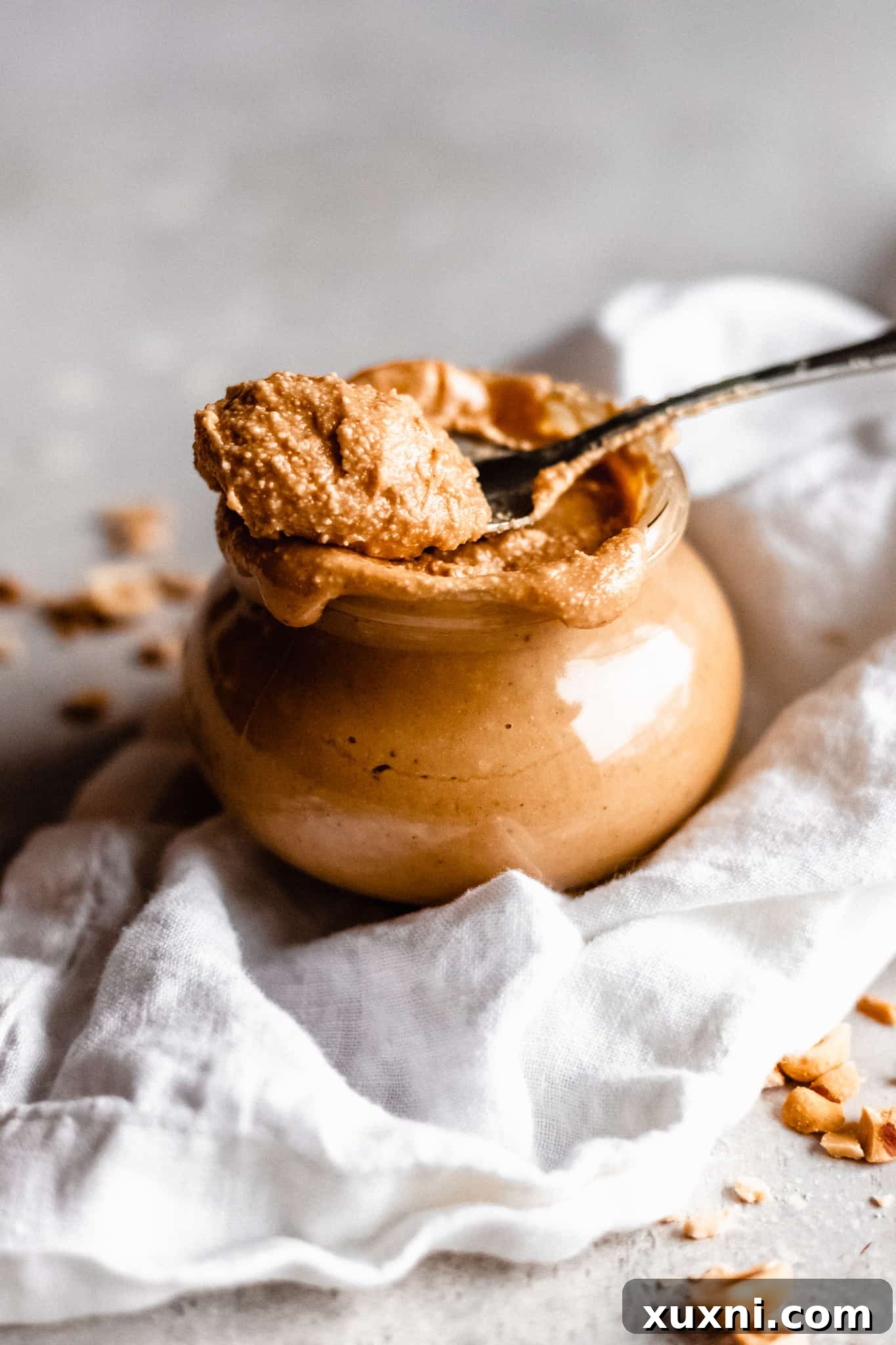
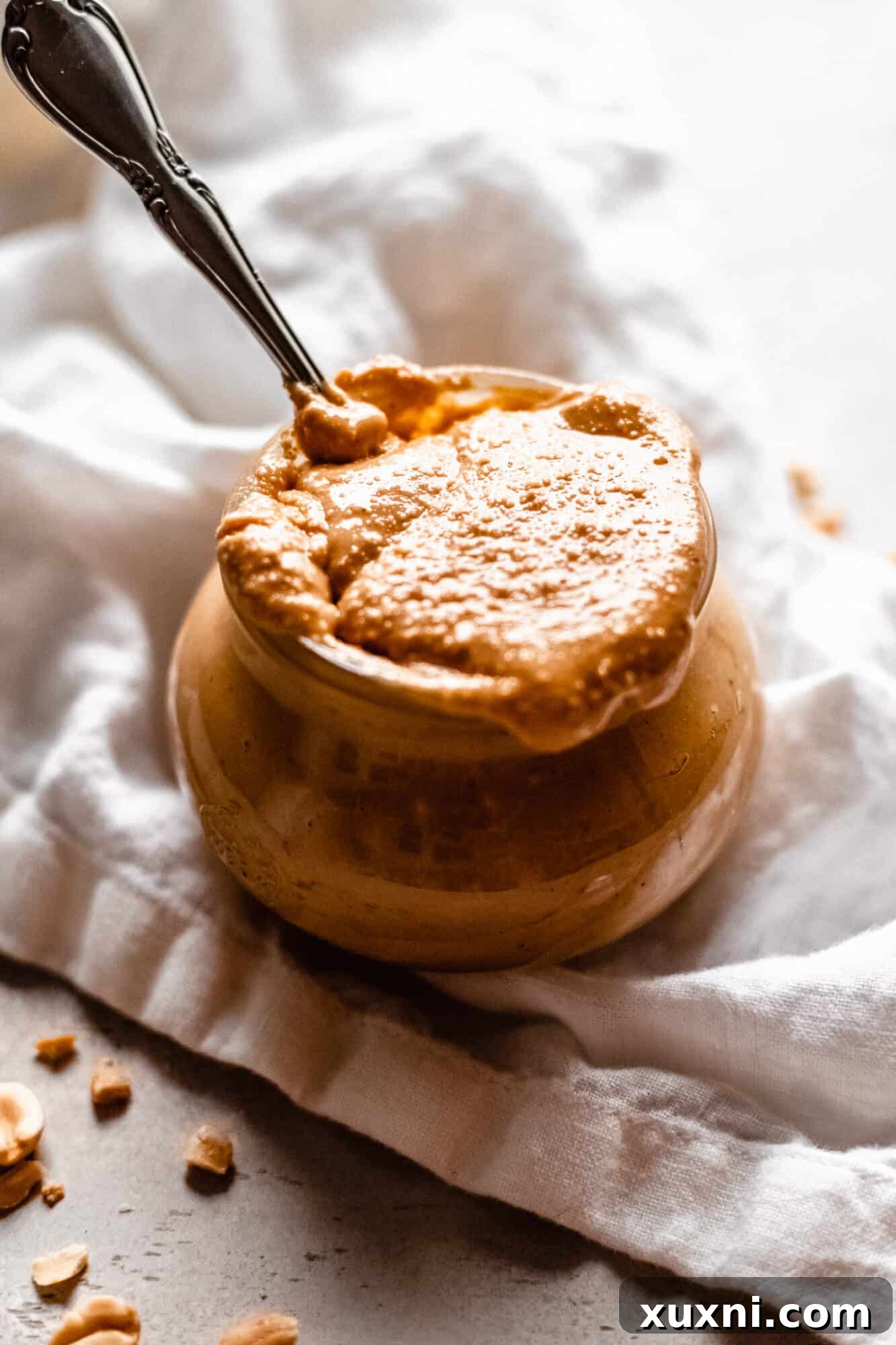
There’s something truly special about a spoonful of homemade peanut butter. Rich, velvety, and bursting with pure peanut flavor, it’s a revelation compared to most store-bought varieties. If you’ve ever thought making your own peanut butter was a complicated culinary endeavor, prepare to be pleasantly surprised. This guide will walk you through an incredibly simple, two-step method that yields perfect creamy peanut butter every single time.
For years, I’ve been crafting my own nut butters, and this creamy peanut butter recipe remains one of my all-time favorites. While I still appreciate the convenience of commercial brands, the superior taste, freshness, and control over ingredients that come with homemade are simply unmatched. All you need are raw peanuts, a robust food processor, and about ten minutes of your time. It’s that easy to create a pantry staple that’s not only delicious but also naturally vegan, gluten-free, and dairy-free.
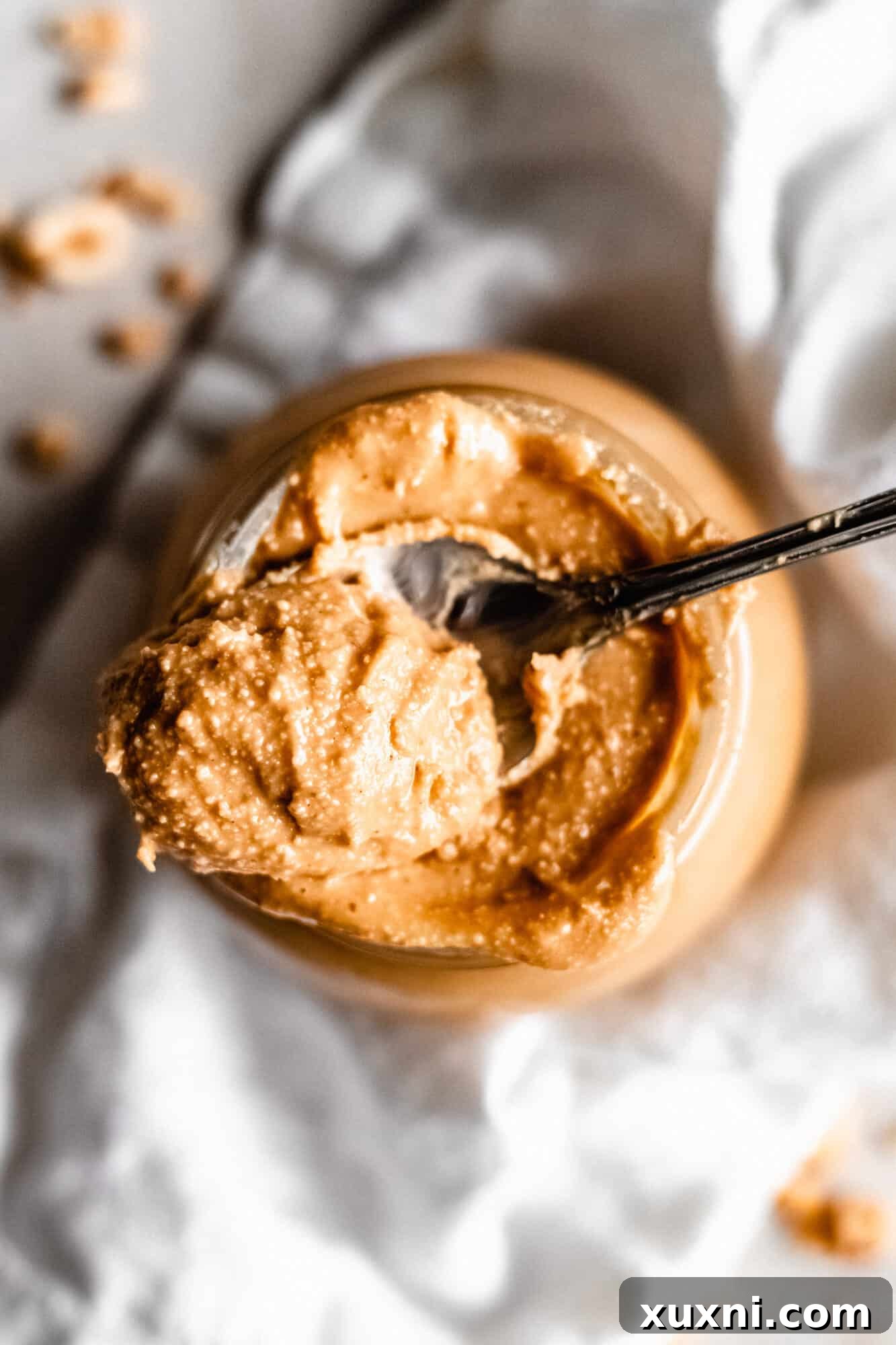
The beauty of this recipe lies in its simplicity. With just one core ingredient, you eliminate unnecessary additives, sugars, and hydrogenated oils often found in processed versions. This means you get a healthier, purer product that tastes absolutely incredible. Once you experience the unparalleled taste and texture of freshly made peanut butter, you might find it hard to go back to anything else.
Is Homemade Peanut Butter More Affordable?
The cost-effectiveness of making your own peanut butter is a common question, and the answer is a resounding yes, it absolutely can be! The savings largely depend on the quality and brand of peanuts you choose to buy. Generally, purchasing raw peanuts in bulk tends to be more economical than buying pre-made jars of specialty or organic peanut butter.
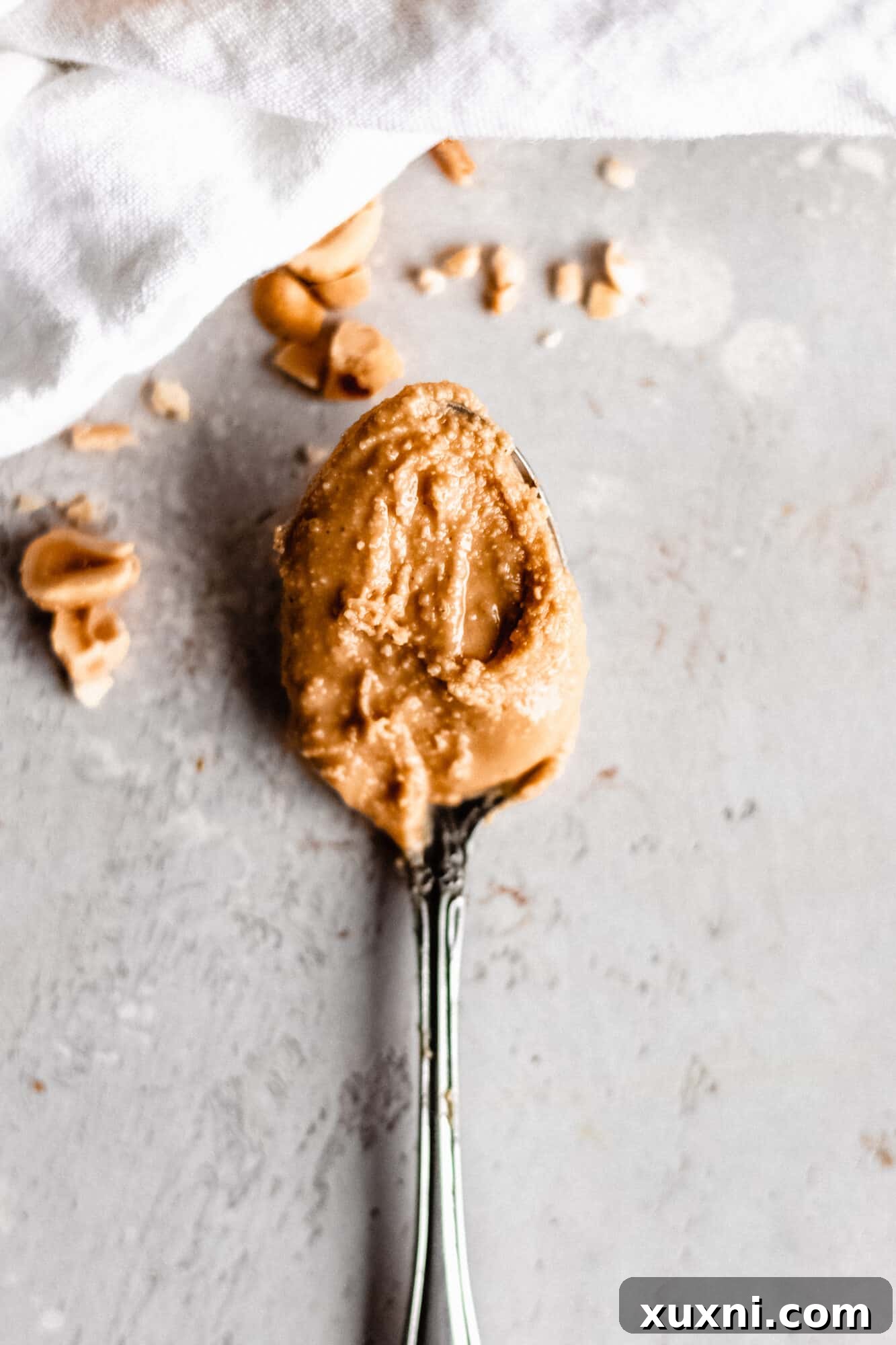
I personally opt for organic peanuts whenever possible. Non-organic peanuts can sometimes contain higher levels of pesticides and even certain fungi, making organic a preferred choice for many health-conscious individuals. While organic ingredients might initially seem pricier, the difference can often be offset when buying in larger quantities, especially if you catch them on sale. A large bag of organic raw peanuts that yields the same amount of peanut butter as a standard jar might cost anywhere from $5 to $10, while a similar jar of organic peanut butter in a store could range from $7 to $12 or more.
Consider local bulk food stores or online retailers for the best prices on raw peanuts. By stocking up when prices are low, you can significantly reduce your per-serving cost, making homemade peanut butter not only superior in taste and health but also a smart financial choice for your pantry. It’s an investment that pays off in delicious, wholesome spreads.
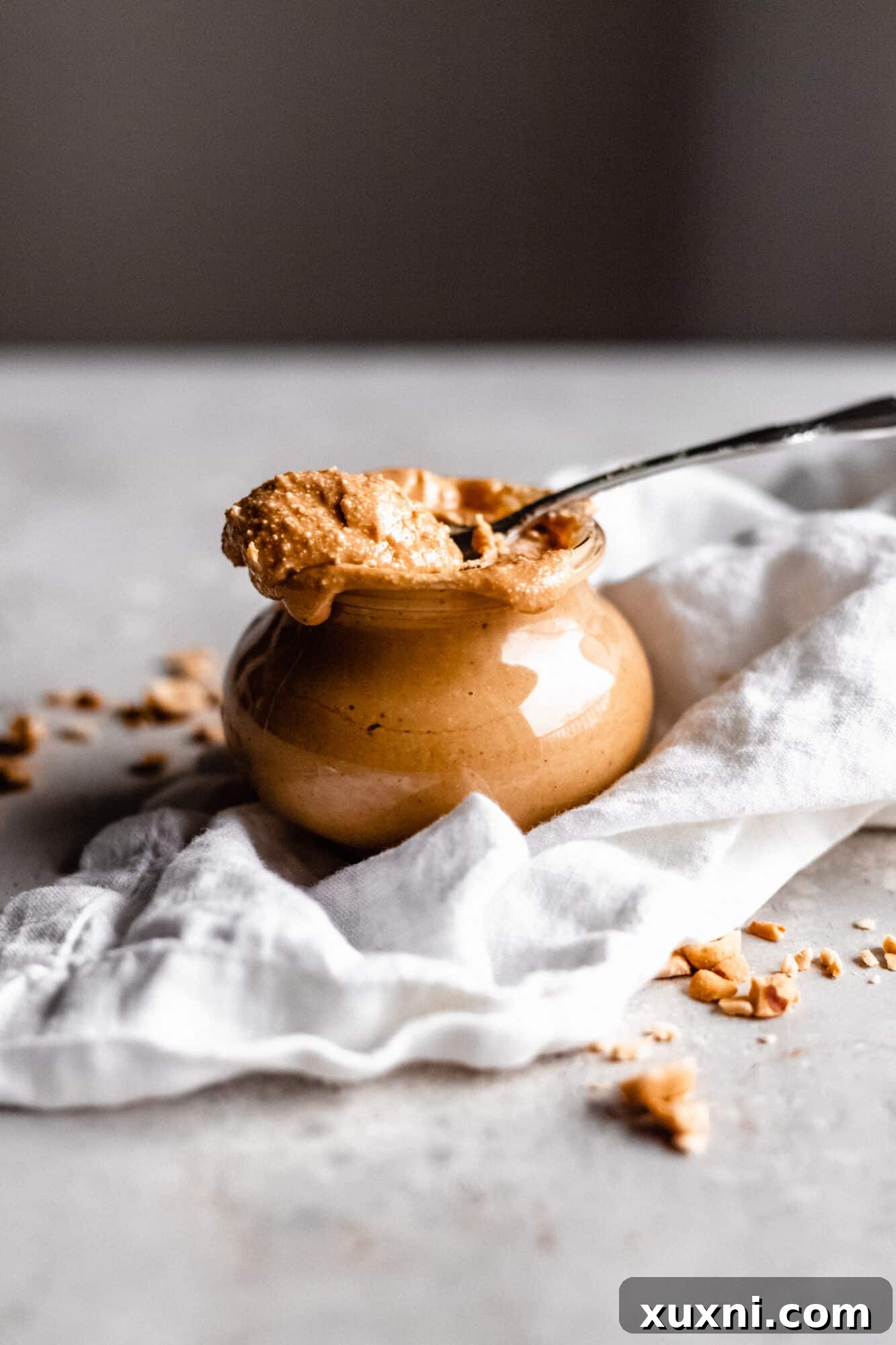
The Simple Steps to Homemade Peanut Butter
Having made my own nut butters since high school, I can confidently say this process is incredibly straightforward. It’s a skill that takes minutes to learn and will serve you well for years to come. The taste of fresh, homemade creamy peanut butter truly elevates any snack or meal.
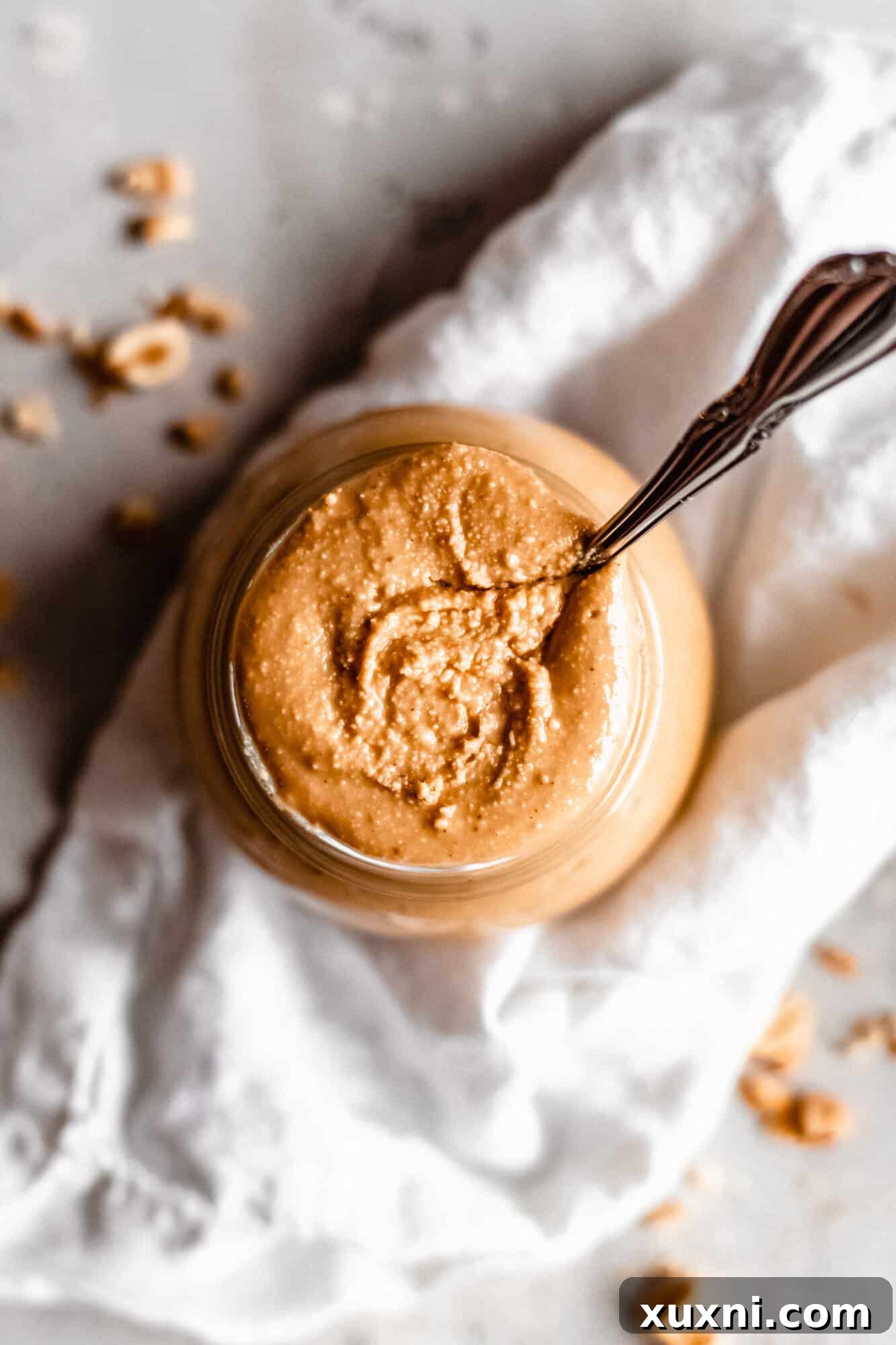
Ingredients You’ll Need:
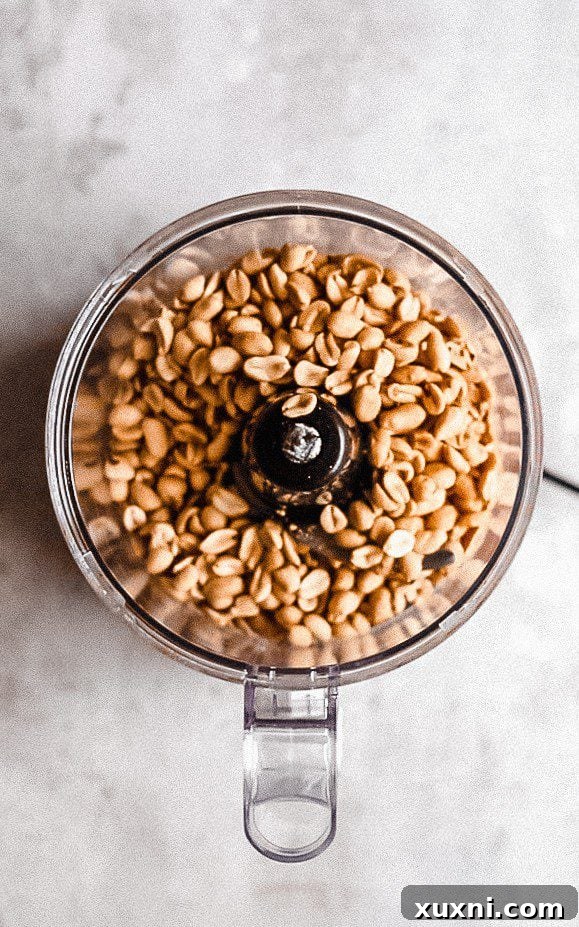
The core of this recipe requires just one essential ingredient:
- Raw Peanuts!
That’s truly all you need for an incredible basic peanut butter. However, the beauty of homemade is the ability to customize. Consider enhancing the flavor with:
- Finely ground sea salt (to balance the sweetness)
- Ground cinnamon (for warmth and spice)
- A splash of vanilla extract (for aromatic depth)
Trust me, even with just peanuts, the result is heavenly. But these simple additions can elevate it further to your personal preference.
Equipment for Success:
- Food Processor: This is the star of the show. A powerful food processor (at least 7-cup capacity with a strong motor) is crucial for breaking down the peanuts into a smooth, creamy butter. A blender might struggle to achieve the desired consistency.
- Baking Sheet & Parchment Paper/Tinfoil: For roasting the peanuts evenly.
- Airtight Container: To store your finished peanut butter.
- Spatula: For scraping down the sides of the food processor.
The Two-Step Method:
-
Roasting the Peanuts: Preheat your oven to 350°F (175°C). Spread the raw peanuts in a single layer on a baking sheet lined with parchment paper or tinfoil. Roast them for 5-7 minutes. Keep a close eye on them; you want them to become fragrant and slightly oily, not burnt. Roasting intensifies their flavor and helps release their natural oils, which are essential for that creamy texture. Once roasted, remove from the oven and let them cool for about 5 minutes. This prevents your food processor from overheating and ensures a better texture.

-
Pureeing to Perfection: Transfer the slightly cooled, roasted peanuts into your food processor. Process on high for about 3-5 minutes. This is where the magic happens! Initially, the peanuts will break down into a coarse flour. Continue processing, and they will then clump together into a thick paste. Finally, as the oils are fully released through the continuous friction, the mixture will transform into a gloriously smooth, creamy peanut butter. Be patient during this stage and scrape down the sides of the food processor bowl as needed to ensure even processing.
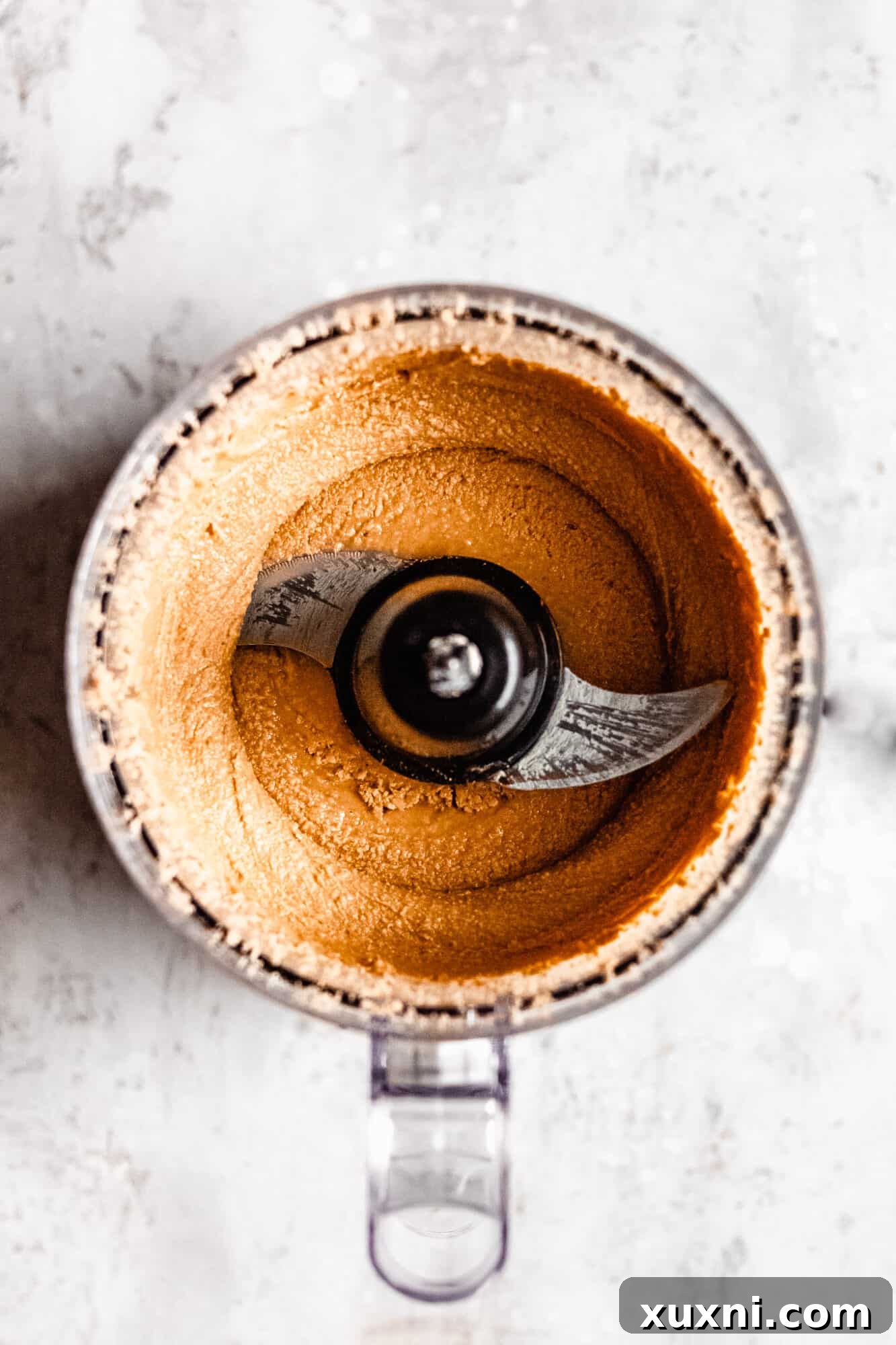
Once you’ve reached your desired creamy consistency, add the sea salt and any optional flavor enhancers like cinnamon or vanilla extract. Process again for another 30 seconds to ensure everything is thoroughly combined. Your homemade creamy peanut butter is now ready to enjoy!
Storing Your Homemade Peanut Butter for Freshness
Considering my daily consumption, even store-bought peanut butter doesn’t last very long in my household! However, for optimal freshness and longevity, proper storage of your homemade peanut butter is key.
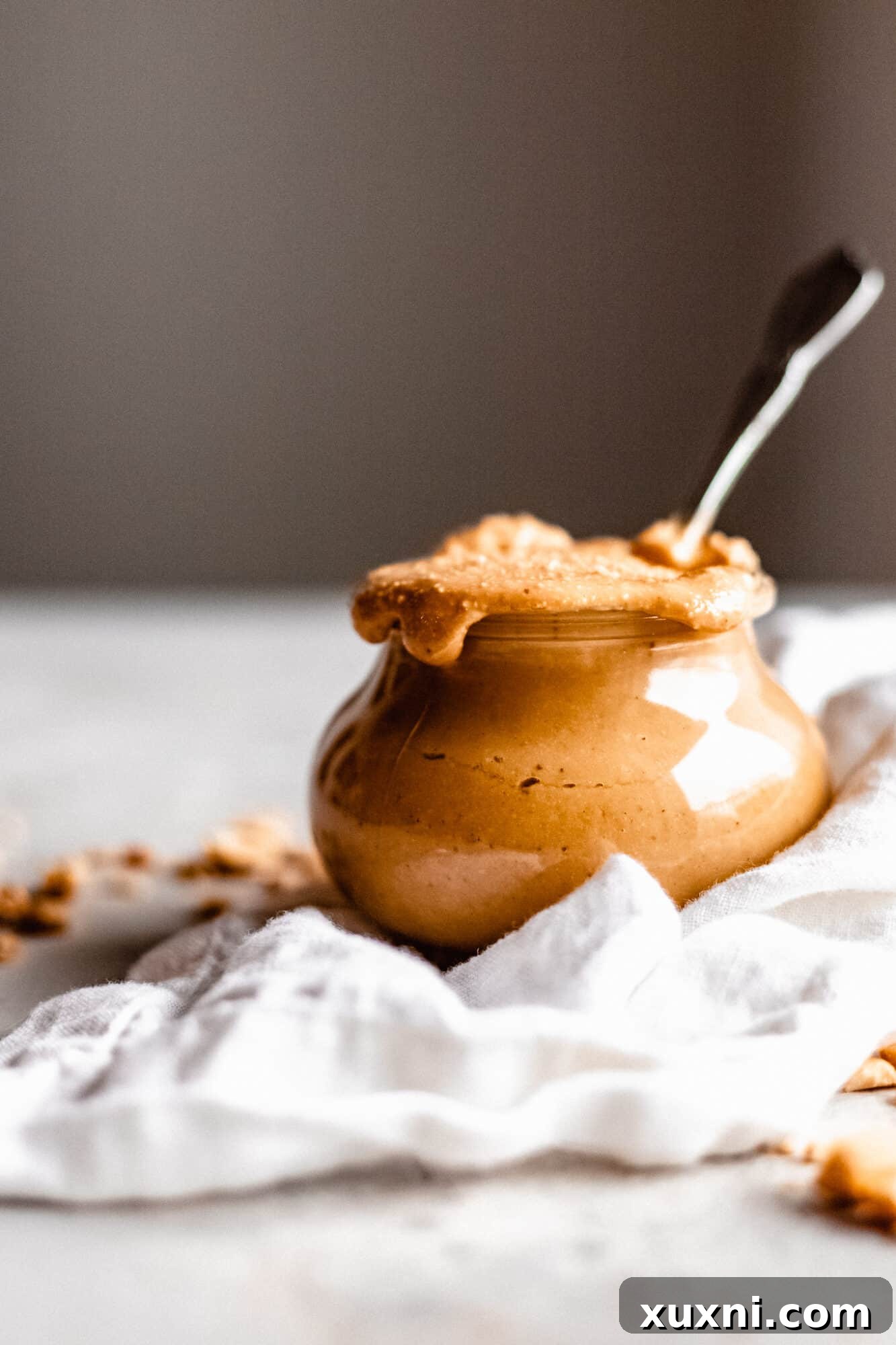
When stored in an airtight container, homemade peanut butter can last for up to 6 months. I highly recommend storing it in the refrigerator. The cooler temperatures slow down oxidation, which helps prevent the natural oils from going rancid and keeps the peanut butter fresher for longer. While it won’t spoil quickly at room temperature, refrigeration will preserve its best flavor and consistency.
A crucial tip for extending its shelf life and maintaining hygiene: always use a clean spoon. Avoid putting a licked spoon back into the jar. This prevents the introduction of bacteria, which can accelerate spoilage. You might notice some natural oil separation over time, especially in the fridge. This is completely normal! Simply give it a good stir before each use to reincorporate the oils and restore its creamy texture.
Can I Make Other Nut Butters with This Method?
Absolutely! The core technique for making homemade creamy peanut butter is remarkably versatile and can be adapted for a wide variety of nuts and even seeds. You can easily create a mixed nut butter by swapping out 1 cup of peanuts for another nut of your choice. However, you can also use this simple method to craft delicious, single-nut butters.
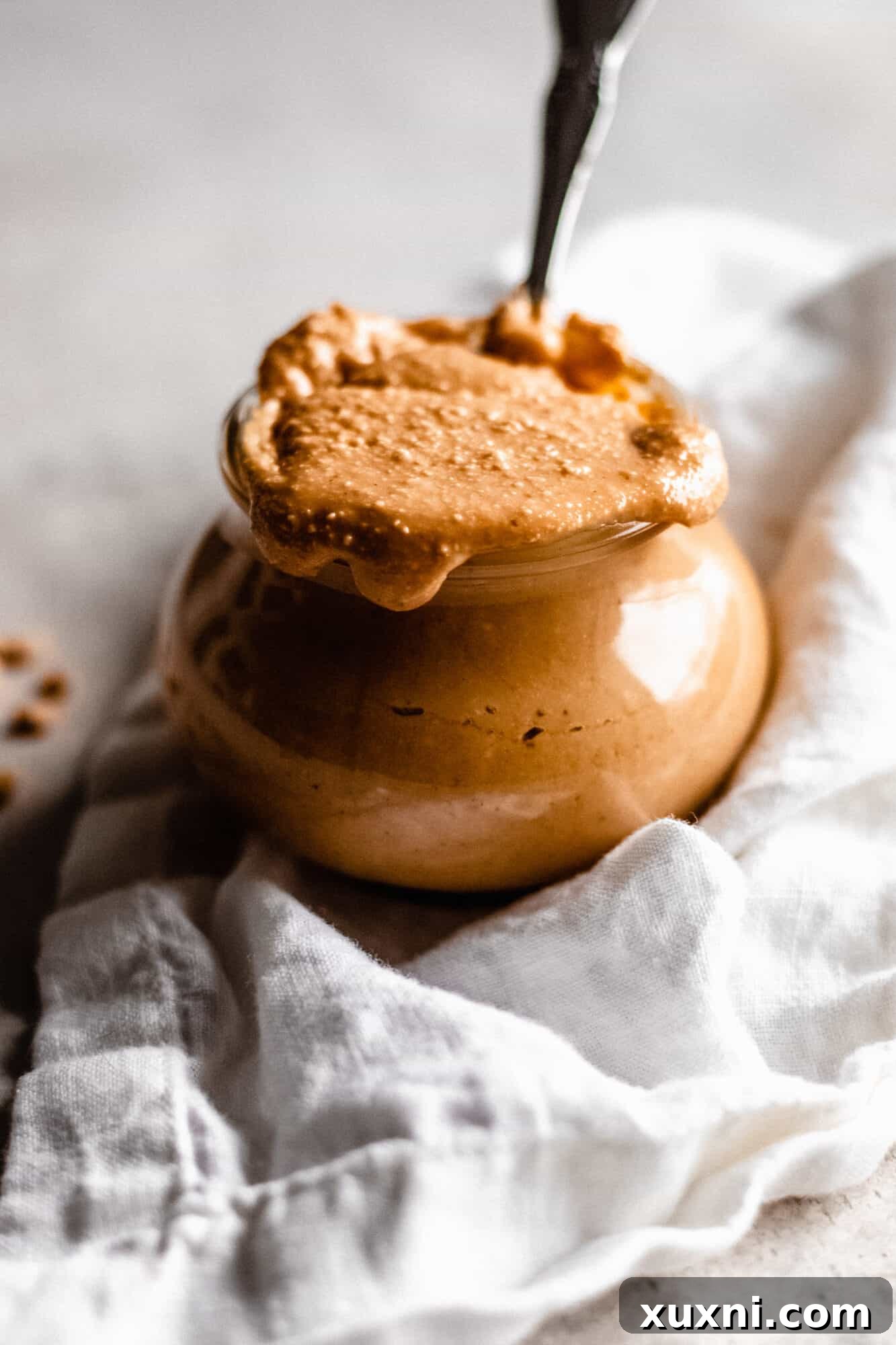
Experiment with:
- Almond Butter: Follow the same roasting and processing steps for a rich, earthy almond butter.
- Pecan Butter: Pecans release their oils quite readily, resulting in a wonderfully smooth and buttery spread.
- Walnut Butter: Walnuts create a slightly more robust, earthy butter, fantastic for those who love their unique flavor.
- Pistachio Butter: For a vibrant green and subtly sweet spread, process roasted pistachios.
While most nuts follow this straightforward process, some, like cashews, benefit from a bit of extra care. For homemade cashew butter, I actually have a dedicated cashew butter guide because they can sometimes require a short soak to achieve the creamiest texture. But for most other nuts, this two-step method is your go-to!
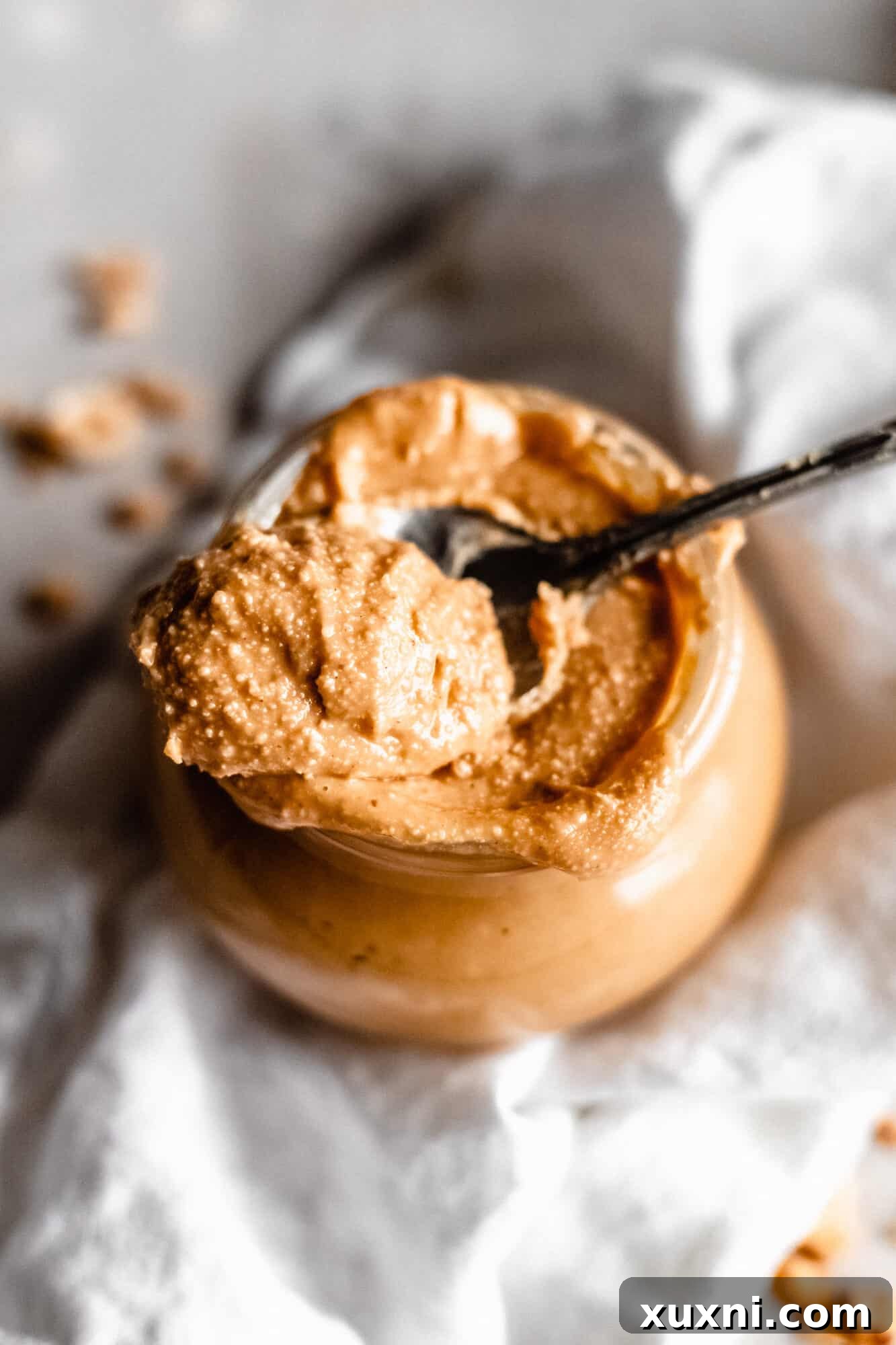
I genuinely hope you fall in love with this creamy homemade peanut butter recipe as much as I have. It’s truly a game-changer for so many dishes. It tastes absolutely divine in this creamy vegan peanut butter frosting and these soft-baked peanut butter chocolate chip cookies! If you give it a try, please let me know your thoughts in the comments section below. I always enjoy hearing about your culinary adventures.
Don’t forget to share your beautiful creations on Pinterest and Instagram by tagging me. Happy peanut butter making!
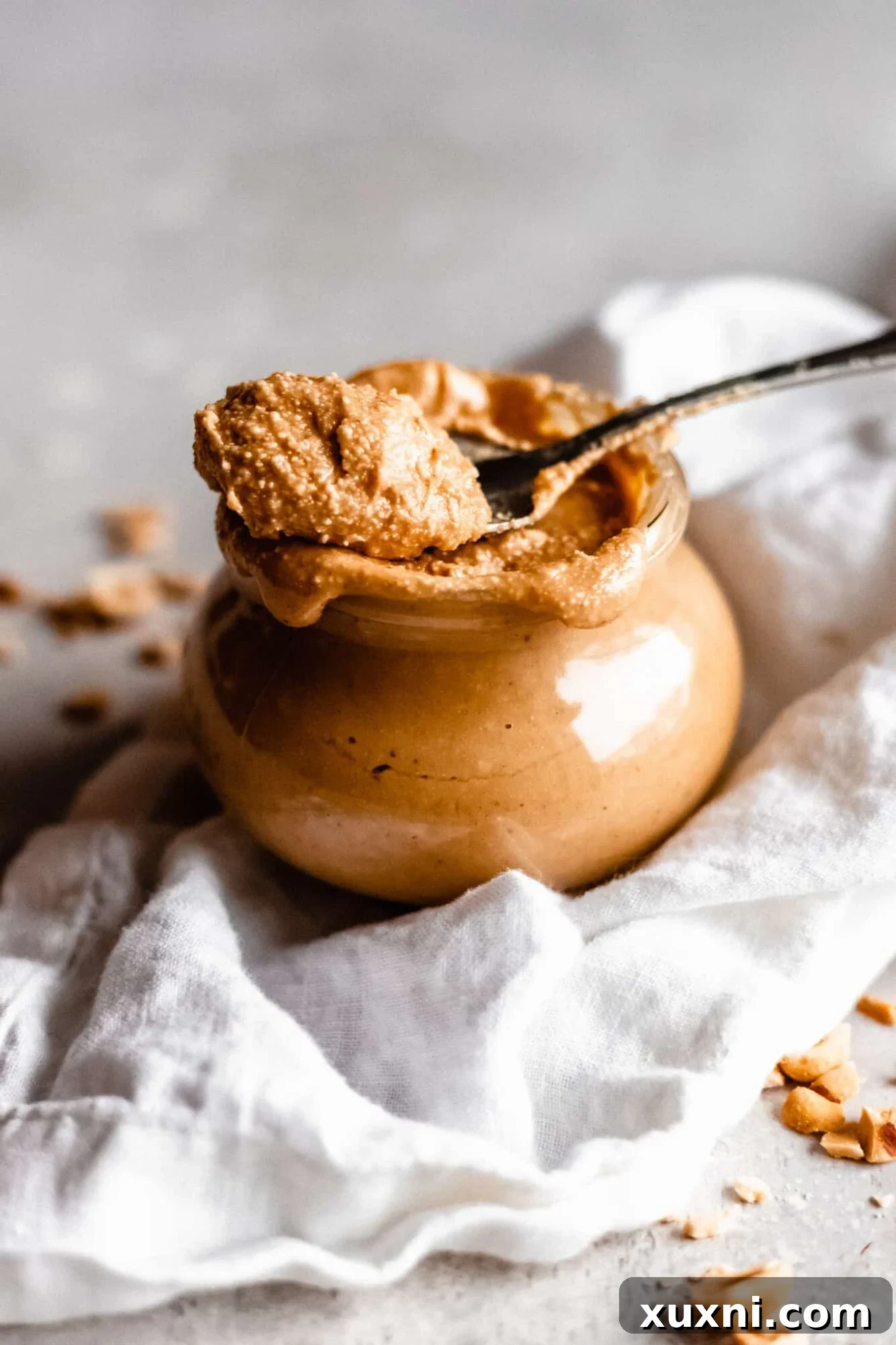
Creamy Homemade Peanut Butter Recipe
How to Make Creamy Peanut Butter
5 from 3 reviews
- Author: Britt Berlin
- Prep Time: 5 minutes
- Cook Time: 5 minutes
- Total Time: 10 minutes
- Yield: Approximately 24 tablespoons (1x batch)
- Cuisine: American
- Diet: Vegan
Description
Learn how to make your own creamy, easy peanut butter with this simple two-step method! The perfect healthy pantry staple recipe for a delicious vegan, gluten-free, dairy-free snack!
Ingredients
- 3 cups raw peanuts (unsalted, preferably organic)
- 1/2 teaspoon finely ground sea salt
- Optional: 1 teaspoon ground cinnamon, 1 teaspoon vanilla extract
Instructions
- Preheat the oven to 350°F (175°C) and line a baking sheet with tinfoil or parchment paper.
- Place the peanuts onto the baking sheet, spreading them in a single layer, and roast for 5-7 minutes, or until fragrant and the nuts appear slightly oily on top. Watch carefully to avoid burning.
- Remove the roasted peanuts from the oven and allow them to cool for 5 minutes.
- Transfer the cooled nuts into a large, powerful food processor. Puree the nuts on high for 3-5 minutes, scraping down the sides as needed, until they transform from a coarse flour to a thick paste, and finally a smooth, creamy peanut butter.
- Add in the finely ground sea salt and any optional add-ins (cinnamon, vanilla extract). Puree again for another 30 seconds to ensure everything is well combined.
- Spoon the homemade peanut butter into an airtight jar or container and store it in the fridge for up to 6 months for optimal freshness.
Nutrition Information (per 2 tbsp serving)
- Serving Size: 2 tbsp
- Calories: 183
- Sugar: 1.5 g
- Sodium: 5.8 mg
- Fat: 15.9 g
- Saturated Fat: 2 g
- Carbohydrates: 5.2 g
- Fiber: 2.7 g
- Protein: 8.3 g
- Cholesterol: 0 mg
Delicious Vegan Recipes Featuring Peanut Butter
Peanut butter is an incredibly versatile ingredient, especially in vegan cooking and baking. If you’re looking for more ways to incorporate your freshly made spread, here are some fantastic vegan recipes to try:
- Grain-Free Vegan Peanut Butter Blossoms
- Vegan Peanut Butter Oatmeal Chocolate Chip Cookies
- Healthier Peanut Butter Buckeyes
- Grain-Free Peanut Butter Cup Cookies
- Easy Vegan Peanut Butter Banana Cake with Peanut Butter Frosting
- Healthy Peanut Butter Cookie Skillet
Save This Recipe for Later!