
This post contains affiliate links. When you click on a product link and make a purchase, I may earn a commission at no additional cost to you. Your support helps sustain The Banana Diaries, and I truly appreciate it!
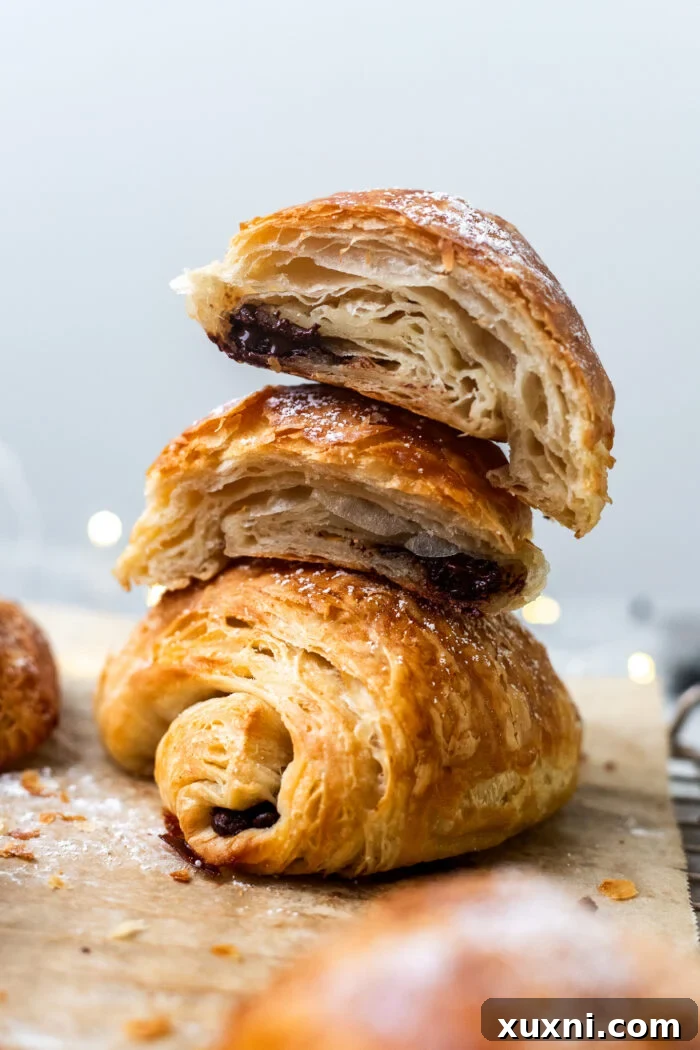
Embark on a delightful culinary adventure with this definitive vegan pain au chocolat recipe. Prepare to master the art of crafting perfectly spiraled, laminated chocolate croissants that rival those found in the finest French patisseries – all without any eggs or dairy! Building upon the foundation of my highly acclaimed vegan croissant recipe, these homemade pain au chocolat boast a simple, rich vegan pastry dough that bakes into beautifully flaky, golden layers, embracing a luscious stick of dairy-free chocolate at their heart.

Table of Contents
- Why Make Homemade Vegan Pain Au Chocolat?
- The Stages of Mastering Vegan Croissants at Home
- Essential Ingredients for Vegan Pain Au Chocolat
- Overview: How to Make Vegan Pain Au Chocolat
- Making the Perfect Vegan Dough
- Beurrage and the Magic of Laminations
- Shaping Your Vegan Pain Au Chocolat
- Overnight Proof & Bake to Perfection
- Recommended Baking Schedules
- Can These Be Made Gluten-Free?
- Is a 3-Day Process Really Necessary?
- Troubleshooting Common Vegan Croissant Issues
- Storage and Reheating Tips
Why Make Homemade Vegan Pain Au Chocolat?
There’s an unparalleled joy in creating a truly exceptional homemade pastry, and these vegan pain au chocolat stand as a testament to that. They’re just as exquisite as my renowned homemade vegan croissants, offering a rich, “buttery” experience that simply can’t be matched by any store-bought alternative – not even those from high-end bakeries. While convenience is tempting, the profound satisfaction of pulling these golden, flaky treats from your own oven is a culinary reward like no other.
The process, though requiring patience and several resting periods, is far from difficult. It’s more about strategic timing than intricate technique. Imagine your kitchen filled with the intoxicating aroma of freshly baked bread and melting chocolate, transforming your home into your very own gourmet patisserie. This isn’t just baking; it’s an experience, a journey that culminates in a truly spectacular breakfast or dessert.
While I’ll always cherish a warm, gooey vegan cinnamon roll on Christmas morning, paired with a cup of rich homemade vegan hot chocolate, these “buttery” vegan pain au chocolat have earned their rightful place on my holiday table. With their mesmerizing spiraled centers, distinctly buttery layers, and pockets of molten, decadent dairy-free chocolate, they are an irresistible indulgence. This year, embrace the magic of plant-based baking and treat yourself to the ultimate vegan chocolate croissant experience.
The Stages of Mastering Vegan Croissants at Home
Crafting perfect vegan pain au chocolat involves several distinct stages, each crucial for achieving that characteristic flaky texture and rich flavor. Don’t be intimidated; each step is manageable, and the collective effort results in a truly magnificent pastry.
- Make the Dough: This initial step is surprisingly straightforward, arguably even simpler than preparing my vegan cinnamon rolls, which are known for their ease. Whether you prefer the convenience of a stand mixer or the hands-on satisfaction of kneading by hand, the process is efficient. My accompanying video tutorial demonstrates the stand mixer method, but rest assured, the manual approach yields equally excellent results. The key here is developing a smooth, elastic dough that is then chilled to prepare for the lamination process.
- Beurrage (Butter Block Creation): This stage involves encasing a carefully prepared vegan butter layer within the dough. The secret to success lies in the butter’s consistency: it must be pliable but not overly soft, preventing it from seeping out during the subsequent rolling and folding. Mastering the beurrage ensures uniform layers of butter throughout your pastry, which are essential for flakiness.
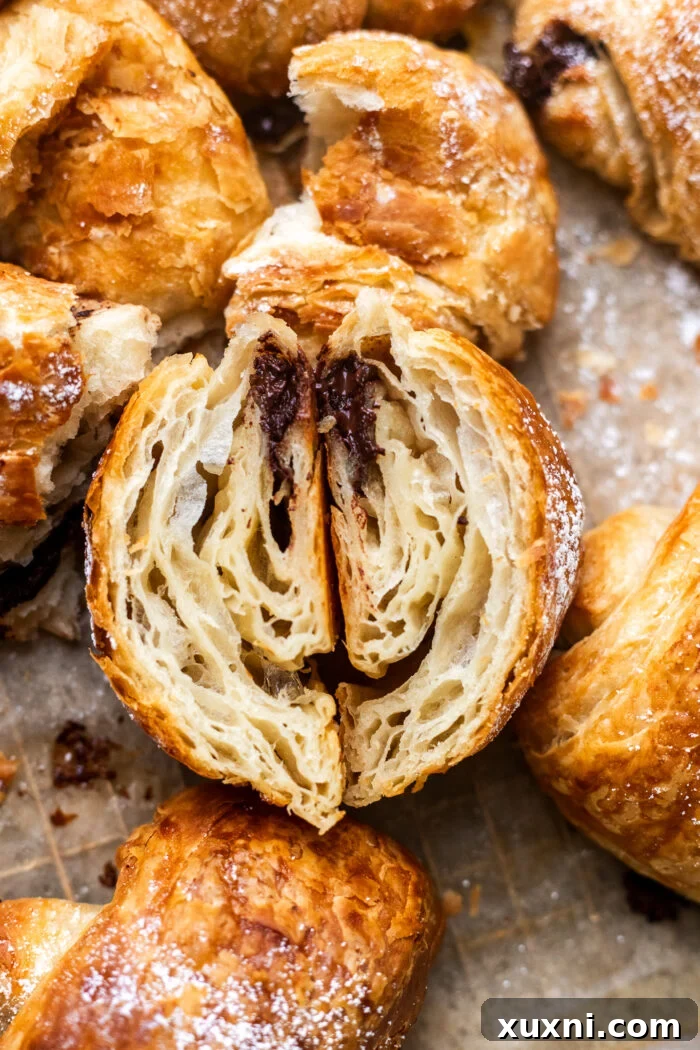
- Lamination: This is where the magic happens! We perform three rounds of precise laminations, or “turns,” to create an abundance of ultra-thin, distinct layers of dough and butter. This meticulous process is what gives vegan croissant dough its unparalleled flakiness. Each fold and roll works to evenly distribute the butter, forming hundreds of delicate strata that separate during baking to produce that signature crisp, airy texture. You’ll marvel at the perfectly round, delicate spirals when you slice into your finished pastries – a true testament to successful lamination.
- Shape & Bake: This is often the most rewarding part – watching your efforts come to fruition! After the final lamination and a crucial resting period in the fridge, we move on to shaping our vegan chocolate croissants. This involves carefully cutting and rolling the dough around sticks of chocolate. To maximize convenience and flavor, I highly recommend an overnight proofing period in the fridge. This extended cold fermentation not only deepens the dough’s flavor but also allows you to wake up to a minimal-effort baking morning, making your holiday or weekend breakfast especially easy and stress-free.

Essential Ingredients for Vegan Pain Au Chocolat
You might assume that making homemade vegan croissants would be more challenging than their traditional counterparts, but you’ll be pleasantly surprised. The ingredient list is quite similar, and in some ways, the process can even be a little more forgiving. Based on my proven vegan croissant recipe, the dough for these vegan pain au chocolat is wonderfully simple, yet yields extraordinary results.
- All-Purpose Flour: The foundation of our flaky pastry. For best results, I highly recommend using a good quality all-purpose flour, such as King Arthur Organic All-Purpose Flour. A slightly higher protein content in the flour will contribute to better gluten development, which is crucial for the dough’s elasticity during lamination and for holding those delicate layers.
- Sea Salt: Essential for balancing the sweetness and enhancing the overall flavor profile of the pastry. Don’t skip it!
- Instant Yeast: This is a crucial ingredient for a chilled dough. Instant yeast works efficiently without needing to be activated beforehand, which is ideal for this recipe. It ensures that our dough continues to rise effectively even after periods of refrigeration, minimizing the time the dough spends at warmer temperatures. This swift action helps prevent the vegan butter from melting prematurely and compromising the delicate laminations.
- High-Quality Vegan Butter: This is arguably the most critical ingredient for achieving that authentic “buttery” flavor and flaky texture. I strongly recommend Miyoko’s Kitchen Cultured Vegan Butter. Its European-style formulation, with a lower water content and higher fat percentage, mimics traditional butter very closely, providing the closest possible result to classic pain au chocolat. For those with nut allergies, Violife Vegan Butter is another excellent choice known for its stability and superior performance in baking. Avoid brands like Plant Crock or Earth Balance for lamination, as their vegan butters tend to melt too easily at room temperature, which can easily ruin your carefully crafted layers.
- Vegan Granulated Sugar: Not all sugars are vegan, as some are processed using bone char. To ensure your pain au chocolat are truly plant-based, opt for an organic granulated sugar, such as Florida Crystals, which is guaranteed to be processed without animal by-products.
- Dairy-Free Milk: Provides the necessary liquid for the dough and contributes to its richness. You have several excellent options here: soy milk, almond milk, or a homemade oat milk (ensuring it’s non-slimy) will all work beautifully. Choose your favorite, keeping in mind that richer milks will add more depth of flavor.
- Vegan Chocolate Bars (or Chocolate Chips): The star of the show! For the best molten chocolate center, I prefer using high-quality vegan chocolate bars, cut into sticks. Brands like Alter Eco (their dark sea salt chocolate is a personal favorite!), Rawmio (their 70% dark is exceptional), Endangered Species, or Valrhona offer fantastic dairy-free options. If chocolate bars aren’t readily available, good quality vegan chocolate chips can also be used in a pinch, though they might not melt into quite the same luxurious pool as a solid stick.
Overview: How to Make Vegan Pain Au Chocolat
For comprehensive written instructions and precise ingredient measurements, please refer to the recipe card located at the bottom of this post. Alternatively, you can click the “Jump to Recipe” button at the top of the page for immediate access. Here, we’ll provide a concise overview of each crucial step, complemented by visuals to enhance your understanding and confidence in mastering this delicious vegan pastry.
Making the Perfect Vegan Dough:
As highlighted earlier, the dough preparation is surprisingly uncomplicated. There’s no need for a separate yeast activation step; simply combine all the dough ingredients. You can mix everything together either in a stand mixer fitted with a dough hook for ease or by hand in a large bowl. Mix until a smooth, slightly tacky dough forms, indicating proper gluten development. Once mixed, wrap the dough tightly and refrigerate it. I typically prefer to make the dough on Day 1, allowing it to chill overnight, and then proceed with the beurrage and lamination on Day 2. However, flexible scheduling options are available for both 2-day and 3-day processes, catering to what best suits your timetable and desire for enhanced flavor.
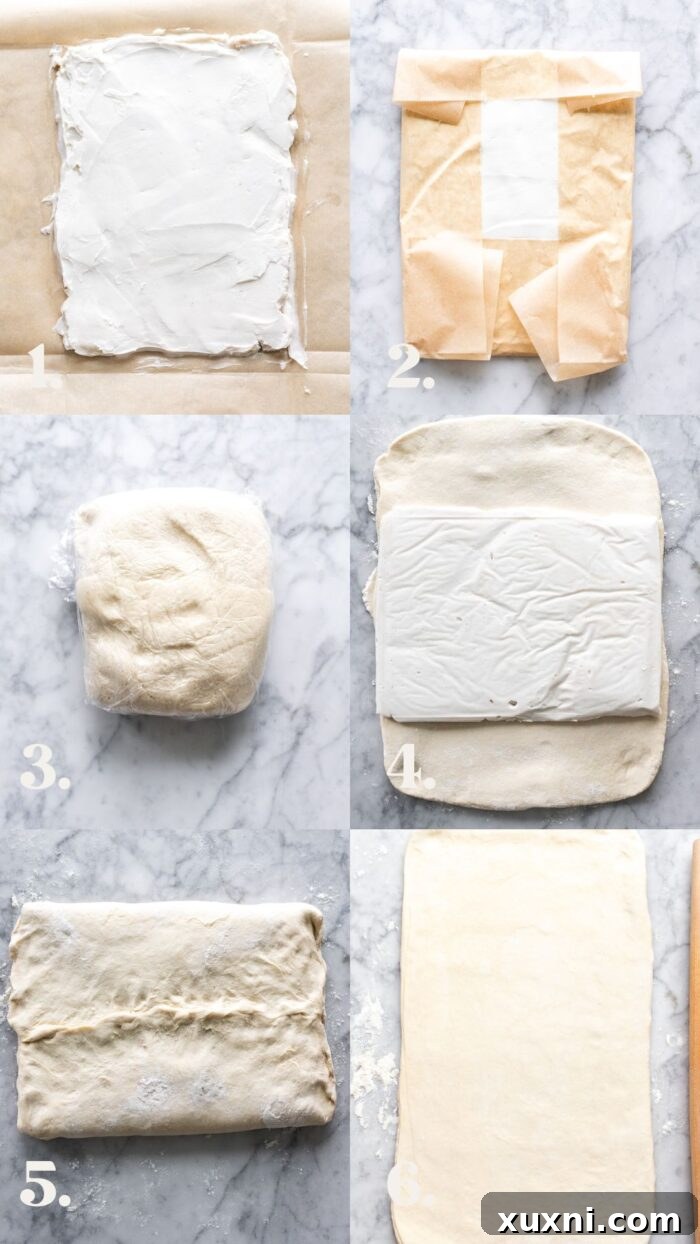
Beurrage and the Magic of Laminations:
Following the dough, we move to the beurrage and the critical lamination stages. These steps closely mirror those in my detailed vegan croissant post, which I highly recommend visiting for in-depth visual guidance and further explanation. You can also refer to the embedded video for a clear demonstration. We perform three meticulous rounds of laminations, or “turns,” to achieve the maximum number of butter and dough layers. This layering is precisely what results in the incredibly flaky, shatter-crisp texture that defines a perfect pain au chocolat. The proof is in the pudding – or rather, in the pastry! My younger brother’s friends were genuinely convinced these were not vegan, a true testament to the authentic texture we achieve.
Shaping Your Vegan Pain Au Chocolat:
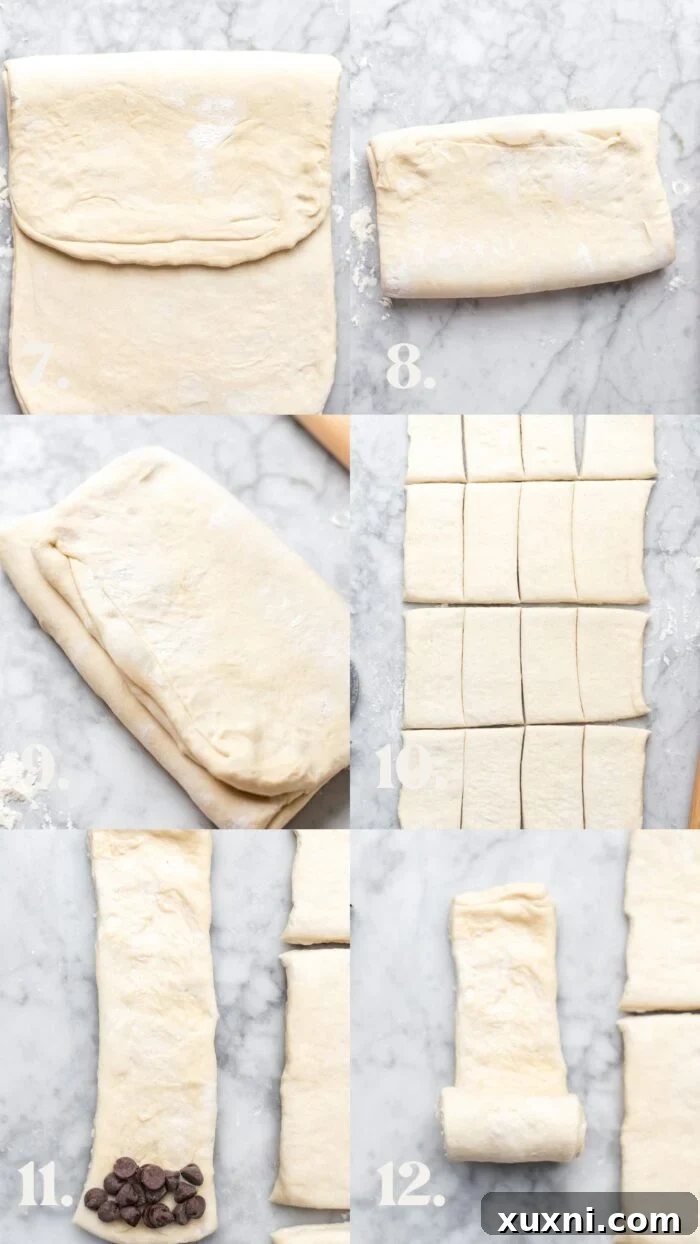
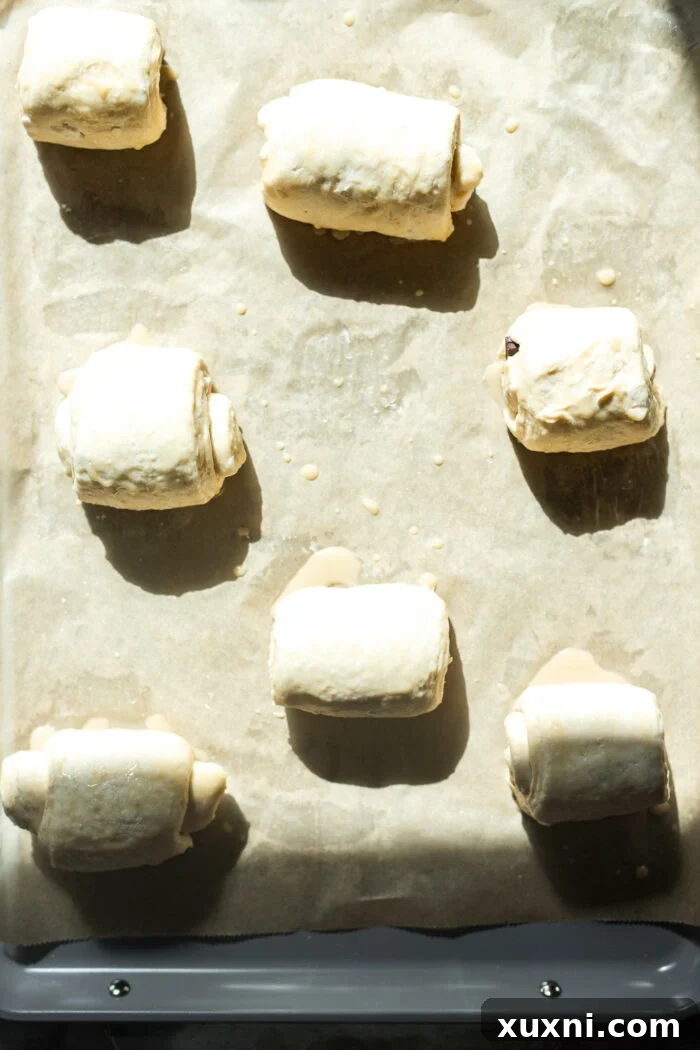
After the final lamination, the dough undergoes its longest resting period in the refrigerator. This crucial rest allows the gluten to relax, making the dough more pliable and easier to stretch for shaping. Unlike traditional croissants, which are cut into triangles, for pain au chocolat, we will cut the laminated dough into precise rectangles. Gently stretch each dough rectangle by hand to slightly elongate it by about an inch. Then, place a stick of vegan chocolate at one end of the rectangle. Carefully roll the chocolate stick up within the dough, creating a neat, compact cylinder. Ensure the seam is positioned underneath the shaped pastry to prevent unraveling during baking. Arrange the shaped vegan pain au chocolat on a baking sheet, allowing ample space between each, and repeat the process for the remaining dough rectangles.
Overnight Proof & Bake to Perfection:
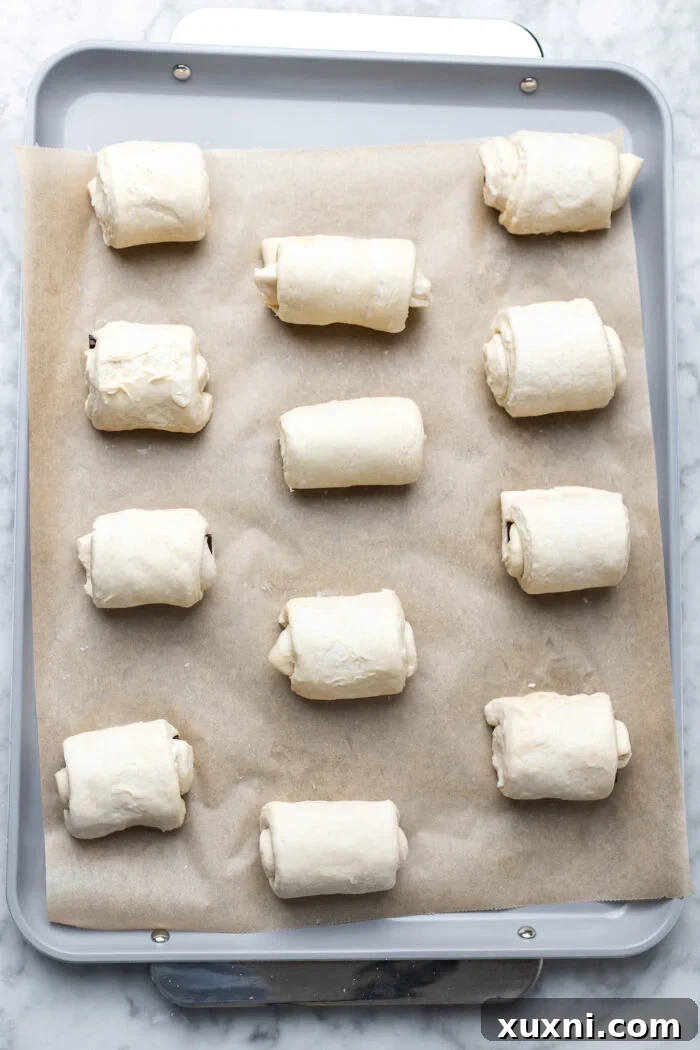
Once your croissants are beautifully shaped, I highly recommend allowing them to proof overnight in the refrigerator (as detailed in Schedule A below). This extended cold proofing offers several benefits: it significantly enhances the flavor development of the dough and ensures a remarkably easy and stress-free baking experience the following morning. By morning, your pain au chocolat should have visibly puffed up, nearly doubled in size, while maintaining the integrity of their delicate butter layers. This is the hallmark of a perfectly proofed pastry. Just before baking, gently brush the tops with a simple vegan “egg” wash – a delightful mixture of dairy-free milk and maple syrup – to achieve that coveted golden, glossy finish. Then, bake them at a high temperature, typically 390°F with a fan, until they reach a deeply golden, irresistibly flaky perfection. The aroma alone will be your reward!


Recommended Baking Schedules
To help you plan your pain au chocolat journey, here are two flexible schedules. While the 3-day schedule offers optimal flavor development and a more relaxed pace, a 2-day option is also provided for those with tighter timelines. Choose the one that best fits your lifestyle!
Option A: The 3-Day Flavor Perfection Schedule
This schedule is highly recommended for achieving the deepest flavor and the most relaxed baking experience, especially for a special morning treat.
DAY 1: Prep & Initial Chill
- 5:00 PM: Prepare your vegan croissant dough.
- 5:30 PM: Form and chill the vegan butter block (beurrage). Both the dough and butter will chill overnight.
DAY 2: Lamination & Shaping
- 10:00 AM: Begin the beurrage process by encasing the butter, followed by the first lamination (fold).
- 10:30 AM: Perform the second lamination.
- 11:00 AM: Complete the third and final lamination. Refrigerate the dough for a crucial 2-hour rest.
- 1:00 PM: Shape your pain au chocolat. Cover them and transfer to the fridge for an overnight proof. This long, cold proof dramatically enhances flavor.
DAY 3: Bake & Enjoy!
- 8:00 AM: Remove the proofed pain au chocolat from the fridge and let them rest at room temperature near the oven as it preheats.
- 9:00 AM: Brush with vegan egg wash and bake to golden, flaky perfection. Serve warm and savor the moment!
Option B: The 2-Day Accelerated Schedule
This option allows you to enjoy your homemade pain au chocolat sooner, though it involves a slightly more compressed timeline.
DAY 1: Dough, Beurrage & All Laminations
- 1:00 PM: Prepare your vegan croissant dough.
- 3:30 PM: Form the vegan butter block (beurrage).
- 4:00 PM: Execute the beurrage process and the first lamination.
- 4:30 PM: Perform the second lamination.
- 5:00 PM: Complete the third and final lamination. Cover and refrigerate the dough overnight.
DAY 2: Shape, Proof & Bake
- 7:00 AM: Take the laminated dough out of the fridge and let it rest on the counter for 30 minutes to become slightly more pliable.
- 7:30 AM: Shape your pain au chocolat.
- 8:00 AM: Begin the proofing process for the shaped croissants. Allow them to proof at room temperature for about 1-2 hours until visibly puffy.
- 9:00 AM: Preheat your oven, brush with vegan egg wash, and bake your croissants to a beautiful golden brown. Enjoy immediately!
Can These Be Made Gluten-Free?
Currently, this specific recipe for vegan pain au chocolat relies heavily on gluten for its structure and the development of those crucial flaky layers during lamination. Unfortunately, a direct substitution with a gluten-free flour blend will not yield the same results, as gluten-free flours behave very differently from wheat flour in laminated pastries. I have not yet developed a successful gluten-free adaptation for this recipe. However, I am continuously experimenting with plant-based and gluten-free baking. Please check back in the coming months for potential updates on a dedicated gluten-free vegan pain au chocolat recipe!
Is a 3-Day Process Really Necessary?
While you certainly can make these delicious vegan pain au chocolat in 2 days (as outlined in Option B of the schedule), I genuinely believe that dedicating 3 days to the process (Option A) yields the most superior flavor and texture. The extended cold fermentation during the overnight proof on Day 2 allows the yeast to work slowly, developing more complex and nuanced flavors that simply can’t be achieved with a shorter proof. Furthermore, the 3-day schedule offers a much more relaxed and enjoyable baking experience, spreading out the active time and culminating in the delightful convenience of waking up to freshly baked pastries with minimal effort. Trust me, the extra day of patience is truly worth the remarkable difference in taste and the joyful morning experience!
Troubleshooting Common Vegan Croissant Issues
Even experienced bakers can encounter hiccups when making laminated pastries. Here are a few common issues and how to address them:
- Butter Leaking During Lamination: This usually means your butter block or dough is too warm, or your butter block isn’t sealed perfectly. Ensure all ingredients are properly chilled, and work quickly. If butter starts to leak, immediately wrap the dough and chill it for 15-30 minutes before continuing.
- Croissants Don’t Rise: This could be due to inactive yeast, an under-proofed dough, or your kitchen being too cold during the final proof. Double-check your yeast’s expiration date. Ensure your proofing environment is warm enough (but not hot, which would melt the butter), and allow adequate time for the dough to double in size.
- Lack of Flakiness: This is often a sign of insufficient lamination or the butter having melted into the dough layers during the process. Make sure your butter is at the correct temperature (pliable but firm) during rolling, and avoid overworking the dough, which can combine the butter and dough layers.
- Tough Croissants: Overworking the dough during mixing or lamination can lead to excess gluten development, resulting in a tough texture. Be gentle during rolling and kneading, allowing the dough to rest as needed.
Storage and Reheating Tips
While homemade pain au chocolat are undeniably best enjoyed fresh from the oven, you can certainly store leftovers for a treat later:
- At Room Temperature: Store any uneaten pain au chocolat in an airtight container or bag for up to 2 days. This helps maintain their freshness and prevents them from drying out too quickly.
- In the Refrigerator: For longer storage, you can keep them in an airtight container in the fridge for up to 5 days.
- Freezing Baked Croissants: Once completely cooled, wrap individual pain au chocolat tightly in plastic wrap, then place them in a freezer-safe bag. They can be frozen for up to 1 month. Thaw at room temperature before reheating.
- Reheating: To restore some of that fresh-baked magic, preheat your oven to 300°F (150°C). Place the pain au chocolat directly on a baking sheet and heat for 5-10 minutes, or until warmed through and the layers have crisped up slightly. Avoid microwaving, as it can make them soft and chewy rather than flaky.
Want to save this recipe for later? Add it to your favorite recipe board on Pinterest!
If you make this irresistible vegan pain au chocolat recipe, please be sure to leave a comment and a rating ⭐️⭐️⭐️⭐️⭐️ below. Your feedback genuinely helps others discover and enjoy these recipes! As always, I absolutely adore seeing your magnificent creations on Instagram and Pinterest, so please remember to tag me there as well!
Print Recipe

Easy Step-By-Step Flaky Vegan Pain Au Chocolat Recipe
5 Stars
4 Stars
3 Stars
2 Stars
1 Star
No reviews
- Author: Britt Berlin
- Prep Time: 30 minutes
- Resting Time: 6 hours, plus overnight
- Cook Time: 22 minutes
- Total Time: Approximately 2-3 days (see schedule)
- Yield: 12 servings
- Category: Pastries
- Method: Baking
- Cuisine: French
- Diet: Vegan
Description
This vegan pain au chocolat recipe guides you through making the most perfectly spiraled, laminated chocolate croissants, just like those from your favorite bakery – but entirely without eggs and dairy! Crafted with a simple, rich vegan pastry dough, and based on my tried and true vegan croissant recipe, these pain au chocolat rise beautifully into flaky, golden pastries wrapped around a stick of decadent dairy-free chocolate.
Ingredients
For the Vegan Pain Au Chocolat Dough:
- 4 cups (500 g) all-purpose flour*
- 1 1/4 cup (300 mL) cold dairy-free milk
- 1/4 cup (50 g) granulated vegan sugar
- 1 tbsp instant yeast*
- 1/2 tsp sea salt
- 1/3 cup (5 tbsp) unsalted vegan butter, at room temperature
For the Beurrage (butter block):
- 350 g unsalted vegan butter, at room temperature
- Vegan “egg” wash (1 tbsp maple syrup + 1 tbsp soy milk)
For the Chocolate Center:
- 12 sticks of vegan chocolate (approximately 1.5 vegan chocolate bars), cut to size
Instructions
- Plan Your Schedule: Before you begin, thoroughly read through the two scheduling options (2-day and 3-day) provided in the blog post above, and watch the accompanying video tutorial. Decide which part of the process you will dedicate to overnight resting for optimal results.
- Initial Prep: Start by measuring out all the dry and wet ingredients required for the dough. While you’re preparing the dough, allow the vegan butter designated for the beurrage (butter block) to sit at room temperature so it becomes pliable.
- Mix the Dough: In the bowl of a stand mixer fitted with a dough hook, or in a large mixing bowl for hand-kneading, whisk together the flour, granulated vegan sugar, instant yeast, and sea salt. Pour in the cold dairy-free milk and begin mixing on medium speed until the ingredients form a shaggy dough. Next, add the room temperature vegan butter (from the dough ingredients) and continue mixing on medium speed for about 7-10 minutes, until a smooth, slightly tacky, and elastic dough is formed. If kneading by hand, this is the stage where you’ll develop the dough’s structure.
- First Dough Rest: Cover the dough with plastic wrap or a clean kitchen towel and place it in the refrigerator to rest for a minimum of 3 hours, or ideally, overnight. This chilling process is essential for the dough’s texture and for managing the butter.
- Prepare the Beurrage (Butter Block): Approximately 30 minutes before your dough is ready for lamination, prepare the butter block. On a piece of parchment paper, measure and mark a 7×10 inch rectangle. Fold the paper along these lines to create guiding creases. Evenly spread the room temperature vegan butter within this rectangle, using the folded paper edges to help maintain sharp, consistent lines (refer to the video and blog post images for visual guidance). Once shaped, completely wrap the butter block in the parchment paper and place it in the fridge for 30 minutes to firm up slightly; it should still be flexible, not rock hard.
- First & Second Lamination Steps: Remove both the chilled dough and the butter block from the fridge. The butter block should be firm but still flexible. Lightly flour a silicone baking mat (preferably one with a ruler printed on it) and your large rolling pin.
- Encase the Butter: Roll the dough out into a neat 10×14 inch rectangle, paying close attention to forming clean, right-angle corners. Position the butter block precisely in the center of the dough, ensuring its length aligns with the width of the dough rectangle. Fold the two outer flaps of the dough over the butter block, much like closing a book or pamphlet (again, see the video and photos). Firmly pinch the edges of the dough together to completely seal the butter block inside, preventing any leakage.
- First Lamination (Single Fold): Rotate the dough rectangle 90 degrees so that the open seam is now to your right or left. Gently but firmly press down on the dough with your rolling pin to flatten it slightly before rolling. Then, carefully roll the dough into a 10×20 inch rectangle. Execute a “letter fold” or single fold: fold one-third of the dough over the middle section, then fold the remaining third over that, creating three distinct layers (refer to the video and photos). If at any point the dough or butter feels too warm and soft, wrap it tightly in parchment paper or plastic wrap and chill it in the fridge for 30 minutes before proceeding to the next step.
- Second Lamination (Book Fold): Rotate the dough another 90 degrees. Once again, gently press down with your rolling pin before rolling. Roll the dough out into another 10×20 inch rectangle. This time, perform a “book fold”: fold both ends of the dough towards the center, ensuring they meet neatly, then fold the entire dough in half along the center crease, creating four distinct layers (see video and photos). Cover the dough and return it to the fridge to rest for 30 minutes to 1 hour. This rest is vital for the gluten to relax.
- Third Lamination & Extended Rest: After the second rest, remove the dough from the fridge. Roll it out one last time into approximately a 10×20 inch rectangle. Perform another “letter fold” (folding into thirds). Once folded, cover the dough tightly and place it back in the fridge for a final, crucial rest of 2 hours, or ideally, overnight. This long rest is essential for gluten relaxation and flavor development.
- Shape the Pain Au Chocolat: When you’re ready to shape, line two large baking sheets with parchment paper. Gently roll the chilled, laminated dough out to a rough size of 10×20 inches (precision isn’t as critical here as in lamination). Mark the dough along one of the 20-inch length sides at 5-inch intervals. Use a pizza cutter or sharp knife to slice the dough horizontally at these marks, yielding four strips of 5×10 inch dough. Next, divide each 10-inch side of these strips into thirds, approximately 3.33 inches each. Slice the dough vertically at these marks, resulting in 12 individual rectangles, each roughly 3.33×5 inches.
- Stretch and Roll the Pain Au Chocolat: Take one dough rectangle. Gently stretch it with your fingers to increase its length by about 1 inch. Place a stick of vegan chocolate at the base of the longer side (along the 3.33-inch edge). Starting from this base, roll the dough tightly, similar to how you would roll a cinnamon roll, but be careful not to roll so tightly that you compress the delicate laminations. Position the rolled pain au chocolat on your prepared baking sheet with the final seam tucked underneath to prevent it from unraveling during baking. Repeat this process for all remaining dough rectangles, arranging about 6 pastries per baking sheet, ensuring adequate space between them for expansion.
- Proofing (Overnight or Room Temperature): Gently brush the tops of the shaped pain au chocolat with a small amount of the vegan egg wash (reserve the rest for a second brushing before baking). Cover the croissants loosely with a clean dish towel or plastic wrap.
- Option A (Overnight Proof – Recommended): For the best flavor development and an easy morning, transfer the covered pain au chocolat to the refrigerator to proof overnight (8-12 hours). They should double in size and become visibly puffy while maintaining their butter layers.
- Option B (Room Temperature Proof): Alternatively, you can proof them at room temperature for 1-2 hours, until they have doubled in size. Ensure they are not placed near a warm stove or direct sunlight, as this will cause the butter to melt prematurely and leak from the pastries. While they proof, preheat your oven to 390°F (195°C) with the fan on.
- Bake: Once properly proofed, carefully brush the tops of the pain au chocolat again with the remaining vegan egg wash. Transfer the baking sheets to the preheated oven. Bake for 20-25 minutes, or until the pastries are deeply golden brown, incredibly flaky, and beautifully risen.
- Serve and Enjoy!: Remove the pain au chocolat from the oven and allow them to cool on the baking sheet for about 10 minutes. This brief cooling period helps the chocolate set slightly and makes them easier to handle. Serve warm with your favorite coffee, tea, or fresh fruit. Store any leftovers in an airtight container or bag for up to 2 days at room temperature or up to 5 days in the fridge (though they are truly best enjoyed on the first day!).
Equipment
Large Baking Sheet
Buy Now →
Pizza Cutter
Buy Now →
Large Rolling Pin
Buy Now →
Notes
Please refer to the blog post above for detailed tips on recommended schedules and precise baking times to ensure your success!
Instant Yeast vs. Active Dry Yeast: It is crucial to use instant yeast for this recipe rather than active dry yeast. Instant yeast works more quickly and efficiently, which is vital for managing the dough’s temperature and preventing the vegan butter from melting during the various proofing and resting stages. Using instant yeast helps maintain the distinct layers necessary for a truly flaky pastry.