
Welcome to the definitive recipe for the most irresistible vegan gluten-free chocolate chip cookies you’ll ever encounter! Prepare to be amazed by their perfectly chewy texture, delightfully soft interior, and ability to melt in your mouth. What makes these plant-based wonders truly special? They’re crafted exclusively with wholesome oat flour, delivering an incredibly rich and satisfying flavor without any gluten. This recipe is not just easy to follow; it’s also a universally loved treat, appealing to vegans, gluten-free eaters, and classic cookie enthusiasts alike. Get ready to bake a batch of pure joy!

Why These are Unquestionably the Best Vegan Gluten-Free Chocolate Chip Cookies
Are you on a quest for a vegan gluten-free chocolate chip cookie recipe that genuinely captures the essence of a traditional, beloved chocolate chip cookie – in both exquisite taste and comforting texture? Your search ends here. This isn’t just another cookie recipe; it’s a culinary revelation that will redefine your expectations for plant-based and gluten-free baking.
We’ve meticulously developed and rigorously tested these oat flour chocolate chip cookies, ensuring they achieve perfection every single time. Our recipe has even earned enthusiastic approval from a panel of non-vegan and gluten-tolerant taste testers, who were genuinely astonished by the indistinguishable classic cookie experience. This is the ultimate vegan gluten-free cookie recipe you’ve been dreaming of!

Imagine cookies with perfectly crisp edges, giving way to luscious, molten middles bursting with rich vegan chocolate. They strike the ideal balance of sweetness, boasting a delightful chewy texture that makes each bite incredibly satisfying. The most astonishing part? You would never guess these incredible chocolate chip cookies are entirely gluten-free and dairy-free! They effortlessly mimic the classic version, offering a nostalgic taste without any compromise.
Beyond their exceptional flavor and texture, these vegan gluten-free chocolate chip cookies are remarkably simple to prepare. If you’ve ever baked a batch of traditional chocolate chip cookies, you’ll find this process incredibly familiar and straightforward. They are the perfect companion to a tall, cold glass of soy milk, oat milk, or your favorite plant-based beverage, making for an ideal snack or dessert.
Essential Ingredients for Perfect Oat Flour Chocolate Chip Cookies
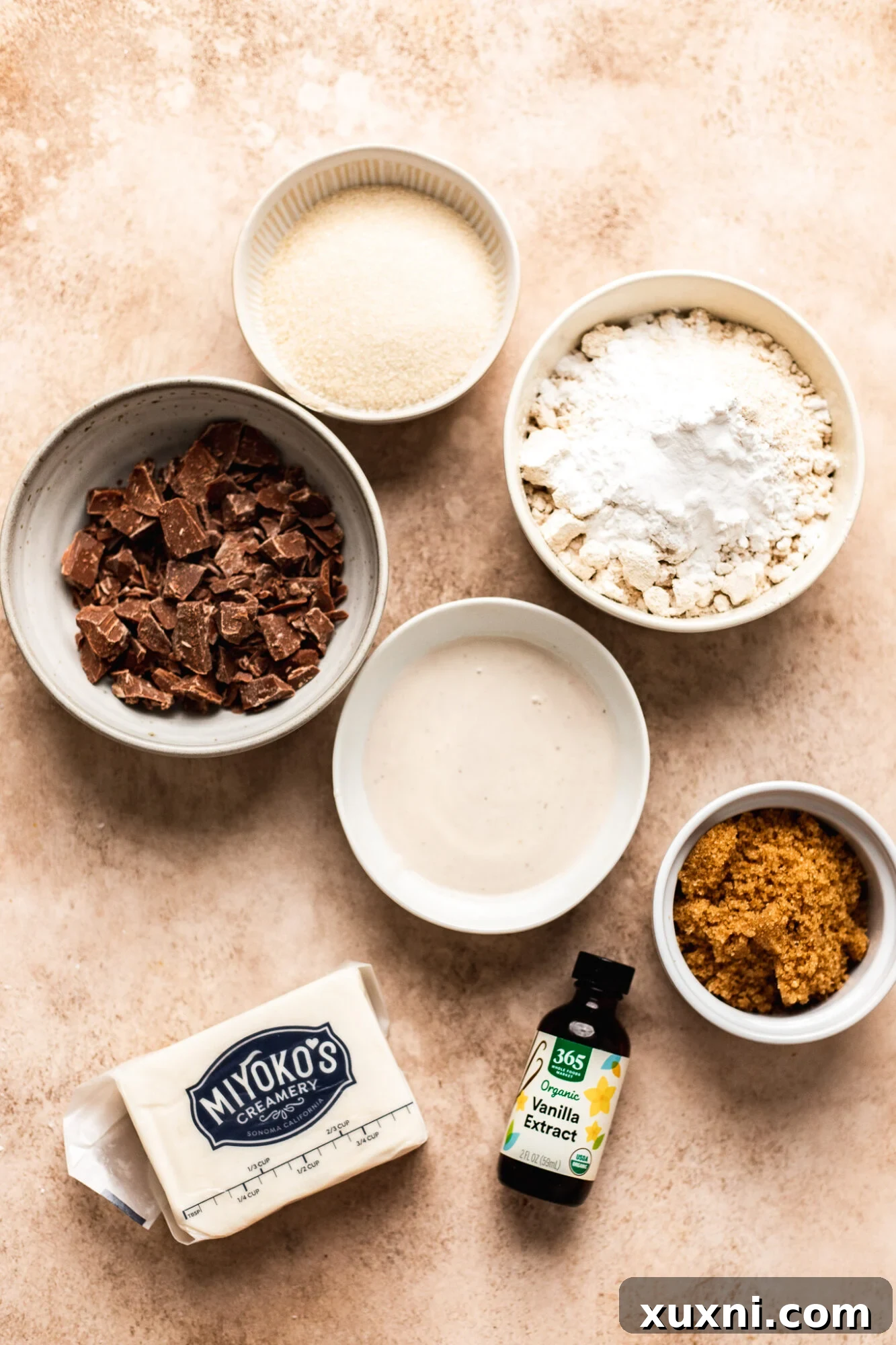
Crafting these extraordinary vegan chocolate chip cookies requires only a handful of readily available, simple gluten-free and dairy-free ingredients. Each component plays a crucial role in achieving that coveted classic cookie taste and texture. Here’s what you’ll need to gather:
- Oat Flour: This is the star of our recipe! We specifically designed these gluten-free cookies to harness the unique qualities of oat flour. For the best, most consistent results and a classic cookie appearance, we highly recommend using high-quality store-bought oat flour. While homemade oat flour can work, it tends to yield a slightly more rustic texture and a pronounced oat flavor. This recipe is not optimized for gluten-free flour blends, almond flour, or coconut flour.
- Arrowroot Starch (or Cornstarch): A secret weapon for achieving that desirable chewy texture! Arrowroot starch helps to bind the dough and contributes to the cookies’ tender interior. Cornstarch can be used as an easy 1:1 substitute if arrowroot starch is unavailable.
- Leavening Agents (Baking Powder & Baking Soda): These powerful ingredients work in harmony to give our cookies the perfect rise, preventing them from spreading too thin and ensuring a beautifully puffy, yet still crisp, result. They contribute to the light and airy pockets within the cookie.
- Vegan Butter: Essential for rich flavor and proper spread. We recommend using high-quality stick vegan butter, such as Miyoko’s Kitchen, Earth Balance baking sticks (distinct from the tub version), or Flora Plant Butter, which are specifically formulated for baking. Using coconut oil is not advised, as it can alter the texture and impart an unwanted coconut aftertaste.
- Granulated Sugar & Brown Sugar: The combination of both sugars is key for a balanced sweetness and a nuanced texture. Granulated sugar provides crispness, while brown sugar adds moisture, chewiness, and a subtle caramel note. For truly vegan cookies, always ensure your granulated sugar is certified organic, as some conventional sugars are processed with bone char. Double-check your brand’s vegan status.
- Dairy-Free Yogurt: This ingenious ingredient acts as a perfect egg substitute, providing essential moisture and helping with binding, which is vital in vegan baking. Opt for an unsweetened, unflavored dairy-free yogurt (like a good quality oat or almond yogurt). Forager Project vanilla yogurt is specifically mentioned as a good choice due to its consistency. If unavailable, unsweetened applesauce can be a substitute, but flax eggs are not recommended for this particular recipe as they can significantly change the texture.
- Vanilla Extract: A classic flavor enhancer that elevates the entire cookie experience. Pure vanilla extract adds warmth and depth to the chocolate and oat notes. Vanilla powder can also be used for an equally delicious result.
- Vegan Chocolate Chips (or Chunks): No chocolate chip cookie is complete without generous amounts of chocolate! Choose your favorite high-quality vegan chocolate chips or chunks. Brands like Pascha Chocolate, Enjoy Life, and Valrhona’s new Amatika vegan milk chocolate are excellent choices that melt beautifully and provide rich, decadent flavor. Any good quality dark chocolate that is dairy-free will also work wonderfully.
Smart Ingredient Substitutions and Tips
While this recipe is specifically formulated for optimal results, we understand that sometimes substitutions are necessary. Here are some guidelines to help you achieve success:
- Oat Flour: It’s crucial to understand that this recipe is designed to be an oat flour chocolate chip cookie recipe. Therefore, other flours like almond flour or coconut flour will not yield the same desired texture or consistency. They absorb liquids differently and would require significant adjustments. If you prefer to use a different flour, we recommend trying our classic vegan chocolate chip cookies recipe, which is adaptable for all-purpose flour or a 1:1 gluten-free baking blend.
- Vegan Butter: The type of vegan butter significantly impacts the outcome. For the best spread and flavor, stick to solid stick varieties designed for baking. Our top recommendations include Miyoko’s Kitchen Cultured Vegan Butter, Earth Balance Vegan Buttery Sticks, or Flora Plant Butter. Liquid coconut oil or butter from a tub may not provide the same structural integrity, potentially leading to cookies that don’t spread correctly or have an undesirable flavor.
- Sugar: For those looking to reduce refined sugar, we’ve successfully tested these vegan oat flour chocolate chip cookies with coconut sugar. Substituting all of the granulated and brown sugar with coconut sugar is a viable option that will still produce delicious results, albeit with a slightly different flavor profile and potentially a darker hue.
- Dairy-Free Yogurt: If you’re unable to find a suitable dairy-free yogurt, unsweetened applesauce can serve as an alternative. However, be mindful that the texture might be slightly different. We strongly advise against using a ground flax egg as a substitute in this specific recipe, as it can drastically alter the cookie’s texture, making it denser and less chewy.
Crafting the Perfect Vegan Gluten-Free Chocolate Chip Cookies: A Step-by-Step Overview
For detailed written instructions, precise ingredient measurements, and additional notes, please refer to the comprehensive recipe card at the very end of this post. You can also quickly navigate there by clicking the “jump to recipe” button located at the top of the page! This section provides a brief, visual-friendly overview of the key steps to help you understand the baking process.
If you’re accustomed to making traditional chocolate chip cookies, you’ll be delighted to know that the process for these vegan gluten-free treats is remarkably similar, almost identical in its fundamental steps. It’s an intuitive and enjoyable baking experience.
Here’s a snapshot of how to create these incredible vegan oat flour chocolate chip cookies:
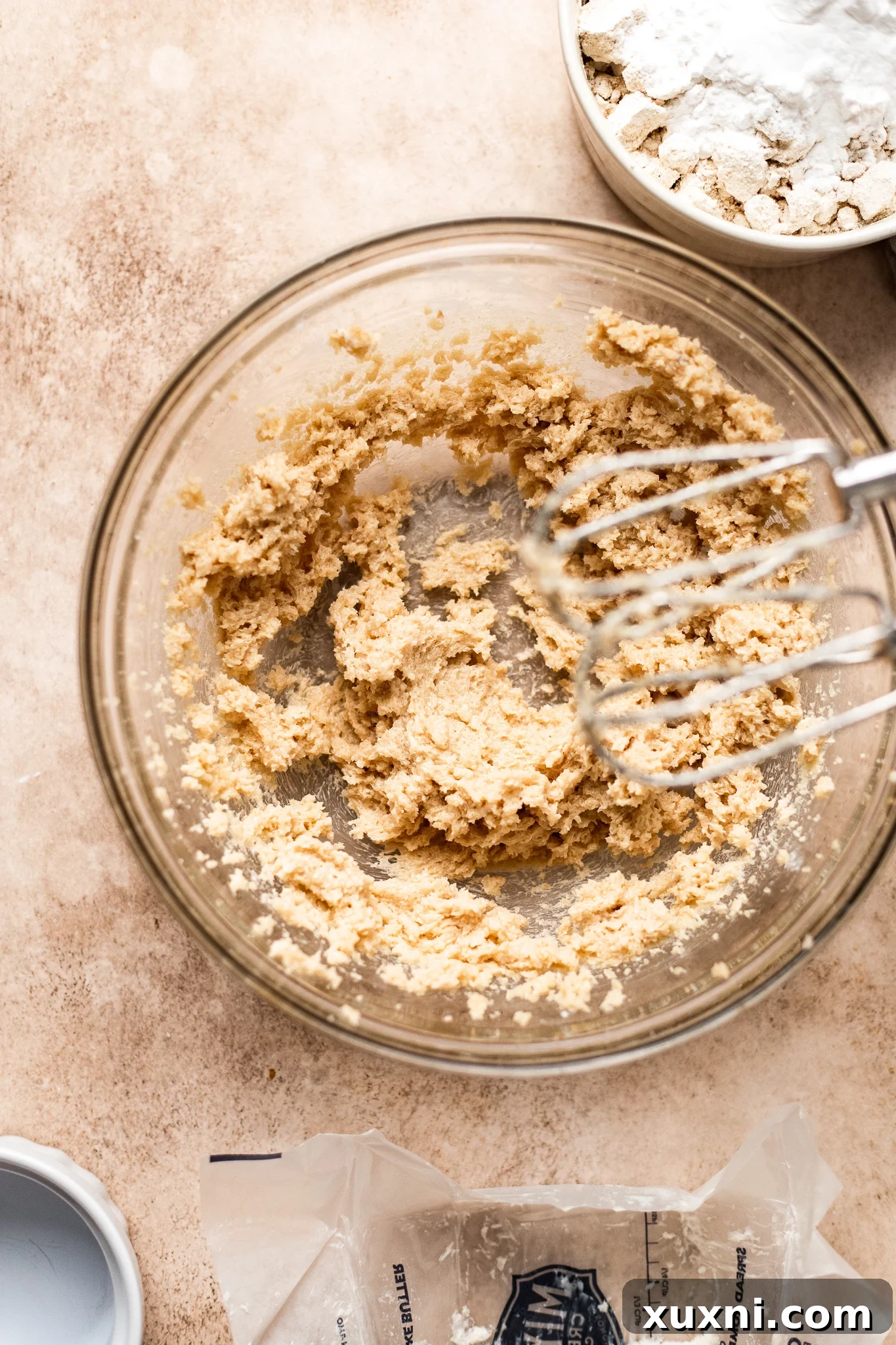
- Cream together the vegan butter and sugars.
Begin by thoroughly creaming your room-temperature vegan butter with both granulated and brown sugars. Mix these ingredients together for approximately 3 minutes, or until the mixture becomes visibly lighter in color and develops a fluffy texture. This step is critical for incorporating air, which contributes to the cookies’ final texture. For more detailed guidance on creaming, consider this helpful article on creaming butter and sugar.

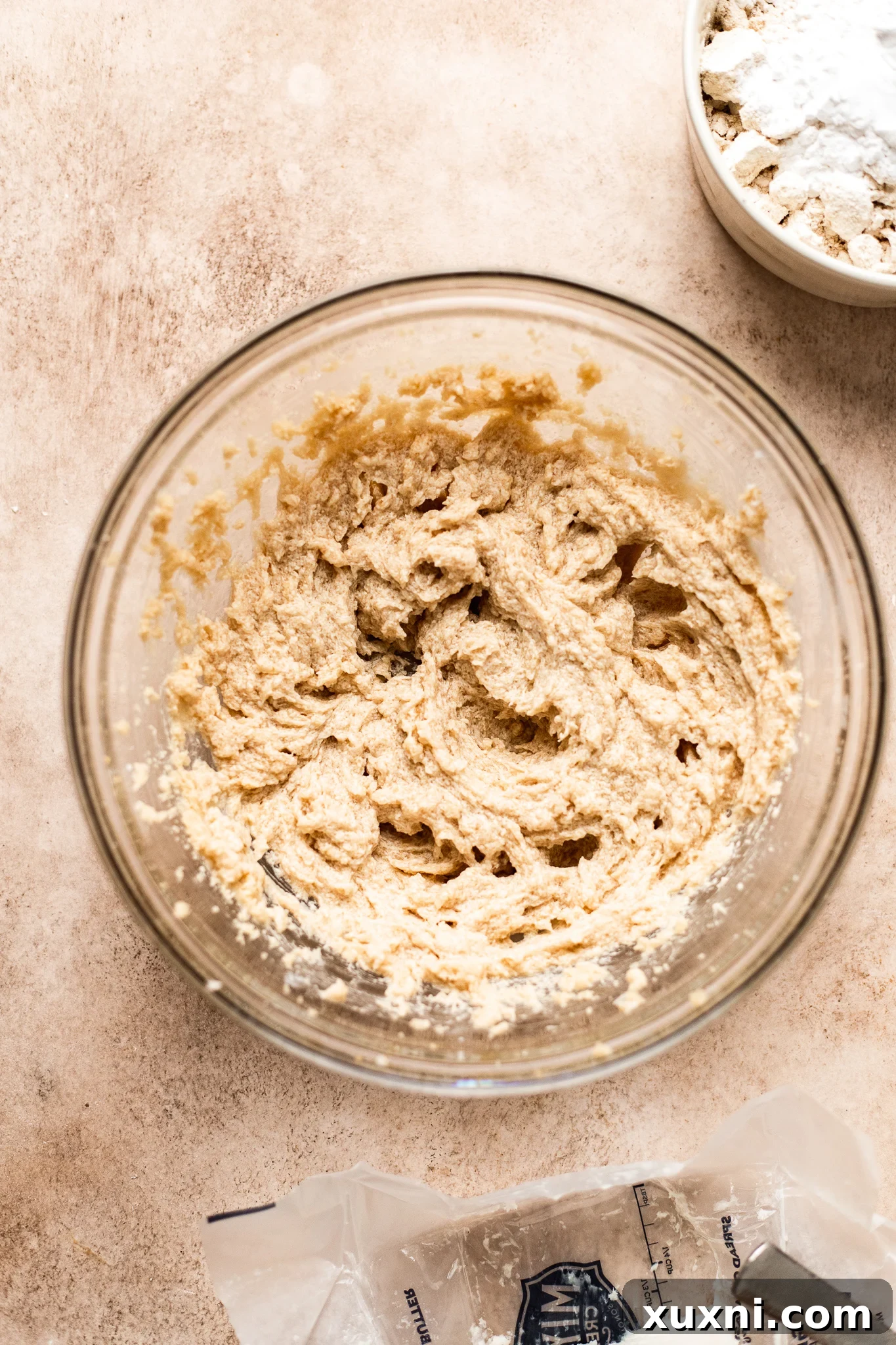
- Incorporate the dairy-free yogurt and vanilla extract.
Once your butter and sugar are perfectly creamed, add the dairy-free yogurt (our egg replacement) and the aromatic vanilla extract. Mix these in gently, just until they are fully combined and smoothly integrated into the creamy vegan butter mixture. Be careful not to overmix at this stage.
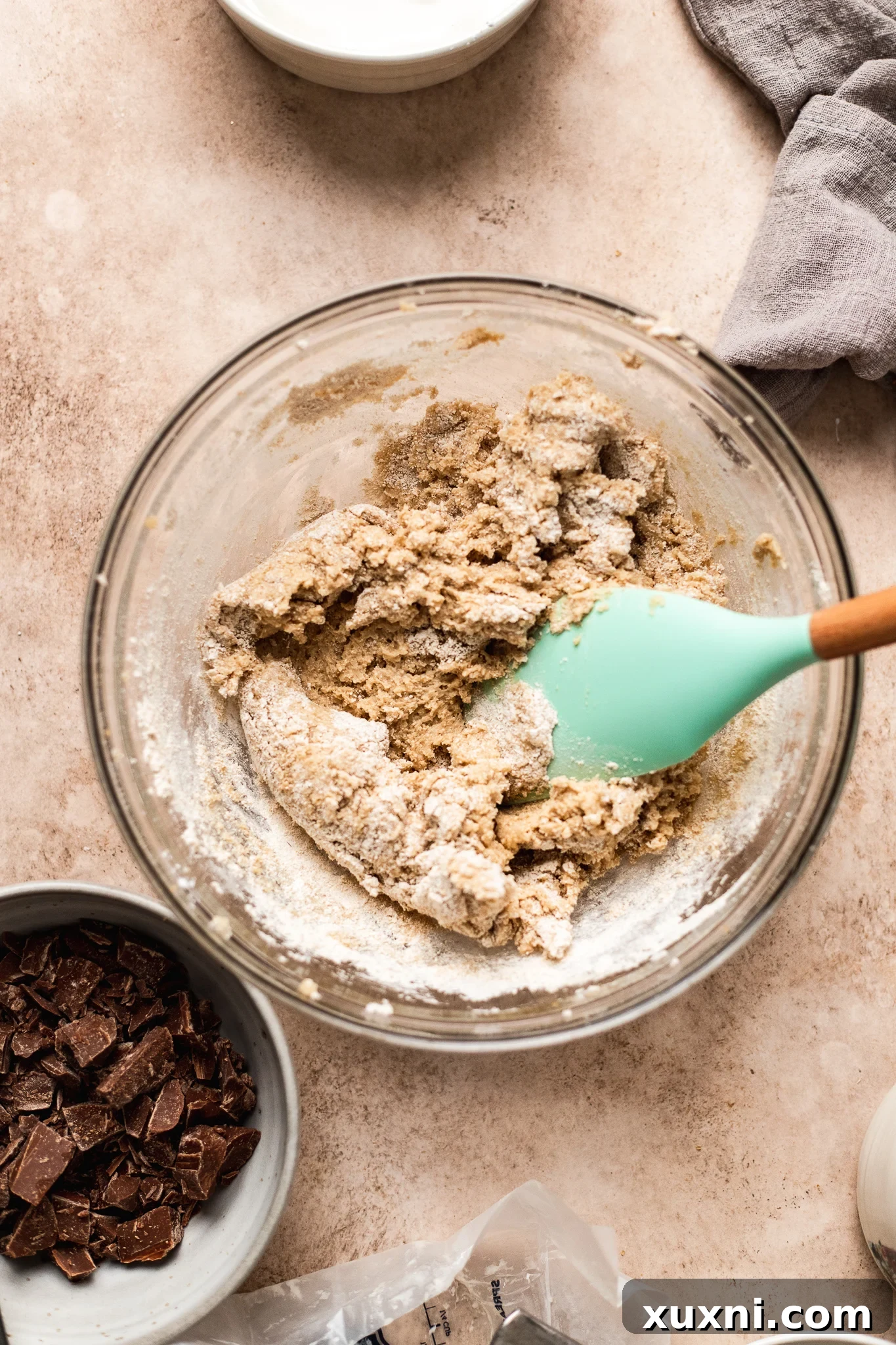
- Fold in the dry ingredients.
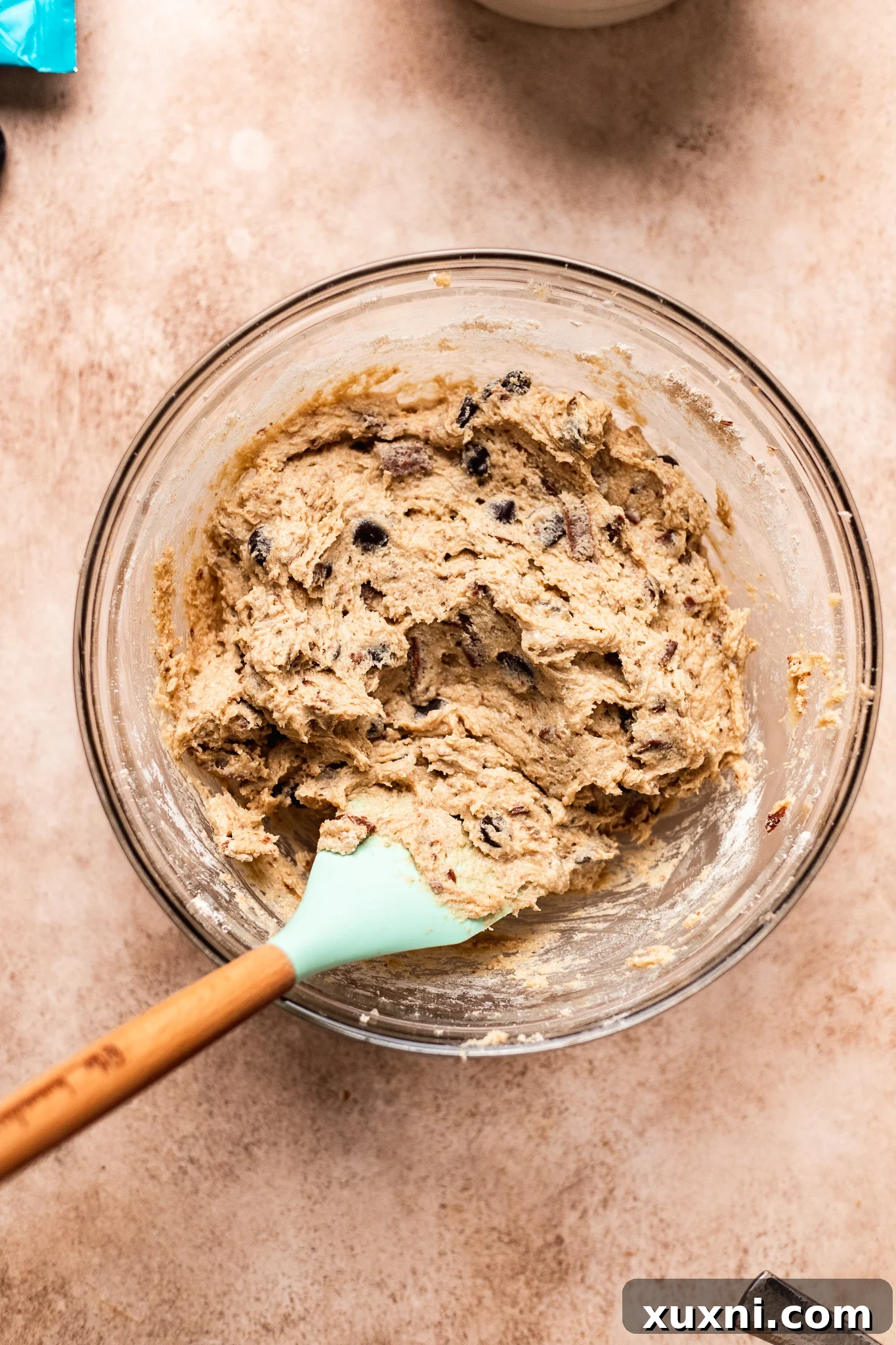
Carefully add your pre-whisked dry ingredients (oat flour, arrowroot starch, baking powder, and baking soda) to the wet mixture. Use a silicone or rubber spatula for this step; it’s far more effective for gently incorporating flour into wet ingredients than a spoon and helps prevent overworking the cookie dough. Mix only until the dry ingredients are *almost* fully incorporated, as we’ll complete the mixing when we add the chocolate chips.
- Gently fold in the vegan chocolate chips.
Now, it’s time for the star of the show – the chocolate chips! Pour them into your cookie dough. Continue folding with your spatula just until the chocolate chips are evenly distributed throughout the dough, and any remaining streaks of dry flour have disappeared. This careful mixing ensures uniform chocolatey goodness in every bite.
- Chill the vegan cookie dough.
This step is absolutely crucial for perfect cookie texture and shape, and we’ll discuss its importance in more detail below! Cover your freshly made cookie dough and place it in the refrigerator. A minimum chill time of 30 minutes is recommended, but for truly outstanding results, we find that chilling the dough for an hour yields even better, more robust cookies.
- Bake the oat flour chocolate chip cookies to golden perfection.
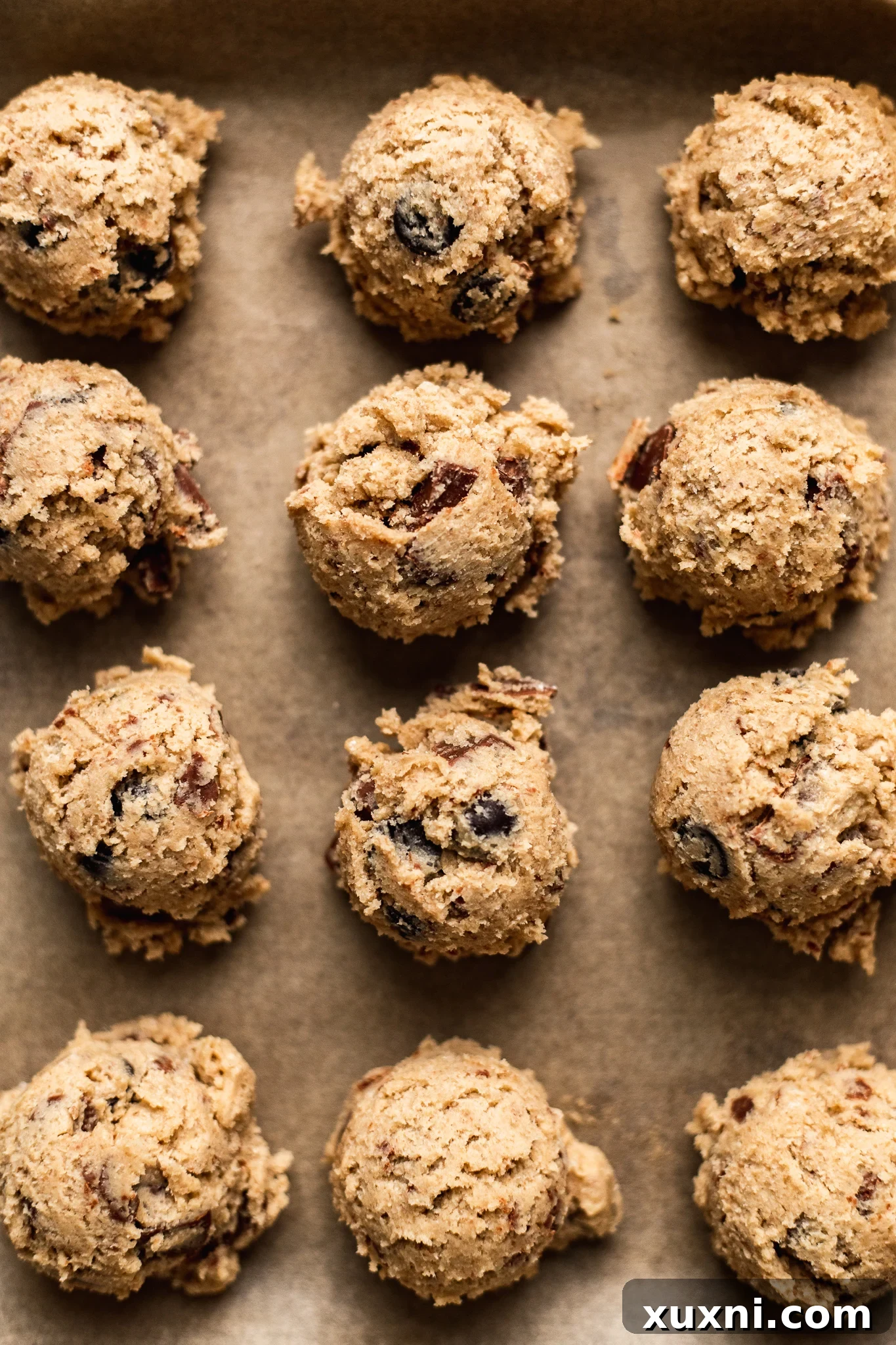
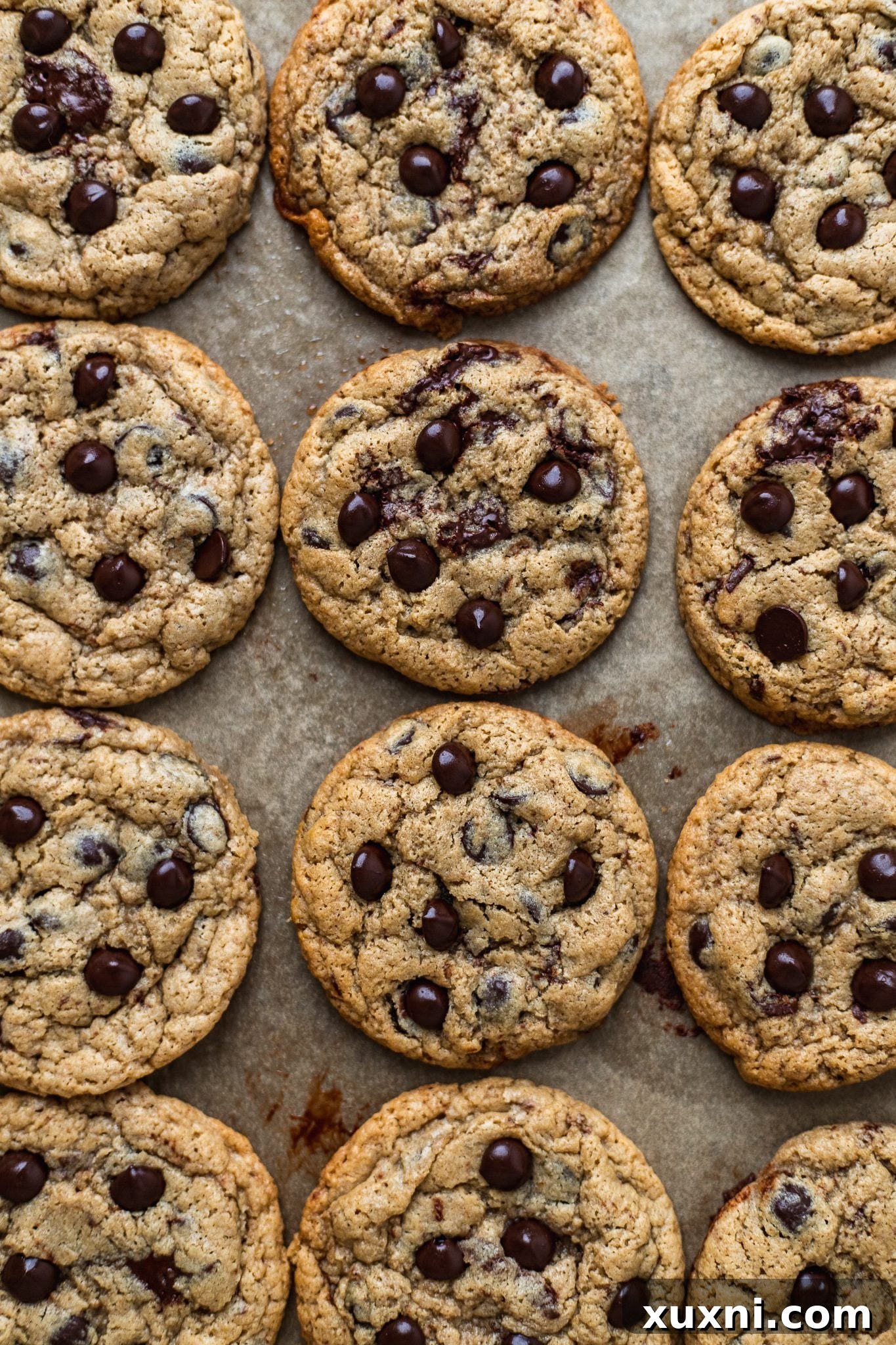
Once your dough is perfectly chilled, use a medium cookie scoop (roughly 1.5 tablespoons) to portion out the dough. You can adjust the scoop size to make smaller or larger cookies as desired. Place the scooped dough balls onto your prepared baking sheets, ensuring they are spaced approximately 2 inches apart to allow for proper spreading during baking. Then, bake until the edges are beautifully golden and the centers are just set.
The Crucial Role of Chilling Your Cookie Dough
While the temptation to bake cookies immediately after mixing the dough is incredibly strong, resisting it is paramount for achieving perfectly shaped and textured vegan gluten-free chocolate chip cookies. We wholeheartedly recommend chilling your cookie dough before it enters the oven. Skipping this vital step almost guarantees that your cookies will spread excessively, resulting in flat, thin, and often overly crispy treats that lack the desired chewiness and puffiness.
So, what exactly happens during the chilling process? When you cream butter and sugar, the fats soften, making the dough pliable and easy to mix. Chilling the cookie dough allows these fats to solidify once more. This solidification means that when the dough hits the heat of the oven, the fats melt much more slowly. This delayed melting gives the cookie’s structure more time to set before it spreads too much, resulting in a thicker, chewier cookie with a beautiful rise. Furthermore, chilling also allows the flavors to meld and deepen, enhancing the overall taste of your oat flour cookies.
For the absolute best results, aim to chill your cookie dough for at least 40 minutes. However, if you have the time and patience, extending the chilling period to an hour will yield truly exceptional outcomes. Your oat flour cookies will boast that ideal balance: just puffy enough, with controlled spreading, and those coveted perfectly crisp edges combined with a soft, tender interior.
Homemade vs. Store-Bought Oat Flour: What’s the Difference?
You absolutely can make your own oat flour at home for these delectable oat flour chocolate chip cookies! It’s a fantastic way to utilize ingredients you already have and can be more cost-effective. Simply blend rolled oats in a high-speed blender or food processor until a fine, powdery flour forms. However, there are a few considerations when choosing between homemade and store-bought.
Store-bought oat flour is typically ground to a much finer consistency than what most home blenders can achieve. This finer grind contributes to a smoother, more classic cookie appearance and texture. When using store-bought oat flour, your cookies will likely have a more uniform look and a less “oaty” flavor profile, allowing the chocolate and vanilla to shine through more prominently.
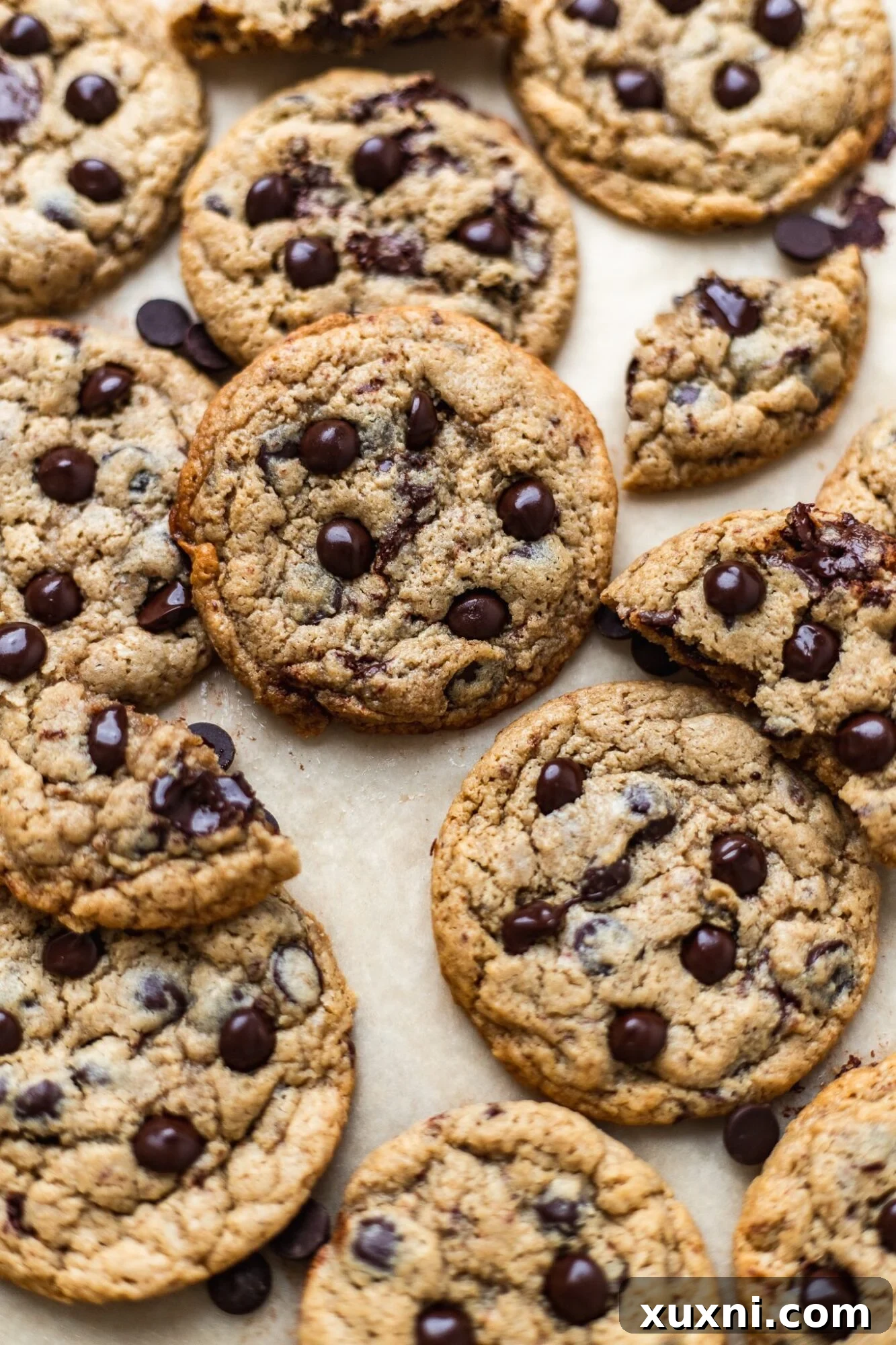
Homemade oat flour, on the other hand, tends to be slightly coarser. This can result in cookies that have a slightly more rustic appearance and a texture that hints more strongly at the oats. They might also carry a more pronounced “oaty” taste, as the flour is incredibly fresh. If you opt for homemade, ensure you grind the oats as finely as possible to minimize these textural differences and aim for a result closer to store-bought varieties. Regardless of your choice, these vegan gluten-free chocolate chip cookies will be delicious!
Is It Safe to Eat Raw Vegan Gluten-Free Cookie Dough?
The allure of raw cookie dough is undeniable, and while this gluten-free cookie dough doesn’t contain traditional all-purpose flour (which is known to potentially harbor E. coli), it’s still advisable to exercise caution. Even raw oat flour, despite being gluten-free, carries a theoretical risk of containing E. coli, as oats are an agricultural product that isn’t typically heat-treated before being processed into flour.
Therefore, if you find yourself irresistibly tempted to sample this delicious vegan gluten-free cookie dough raw, we strongly recommend heat-treating your oat flour beforehand. This simple step involves toasting your oat flour in the oven or microwave until it reaches a safe temperature, effectively neutralizing any potential bacteria. For baking purposes, however, the dough is intended to be baked, and the heat of the oven will ensure it is perfectly safe to consume once cooked.
Achieving Perfect Doneness: How Long to Bake These Vegan Cookies
Baking these delightful oat flour cookies to perfection is an art, and understanding the cues for doneness is key. We typically recommend a baking time of approximately 12 to 13 minutes. In our test kitchen, a precise 12 minutes in the oven consistently yields the ideal texture and finish for these vegan gluten-free chocolate chip cookies.
However, it’s crucial to remember that every oven is unique. Factors like calibration, hot spots, and even the material of your baking sheets can influence baking times. Therefore, use our time recommendation as a flexible guideline, and always trust your instincts and visual cues from your own oven. Keep a close eye on your cookies as they bake, especially towards the end of the recommended time.
So, how do you know when your gluten-free vegan chocolate chip cookies are perfectly baked? Look for these indicators: The edges of the cookies should appear completely set and boast a light, golden-brown hue. Crucially, the middle of the cookies should also be set, meaning they no longer look raw or wet, but they will still feel wonderfully soft and perhaps even slightly “wiggly” if gently nudged. This slight softness in the center indicates a perfectly chewy interior that will firm up beautifully as the cookies cool. Over-baking will lead to a drier, more brittle cookie, so aim for that sweet spot!
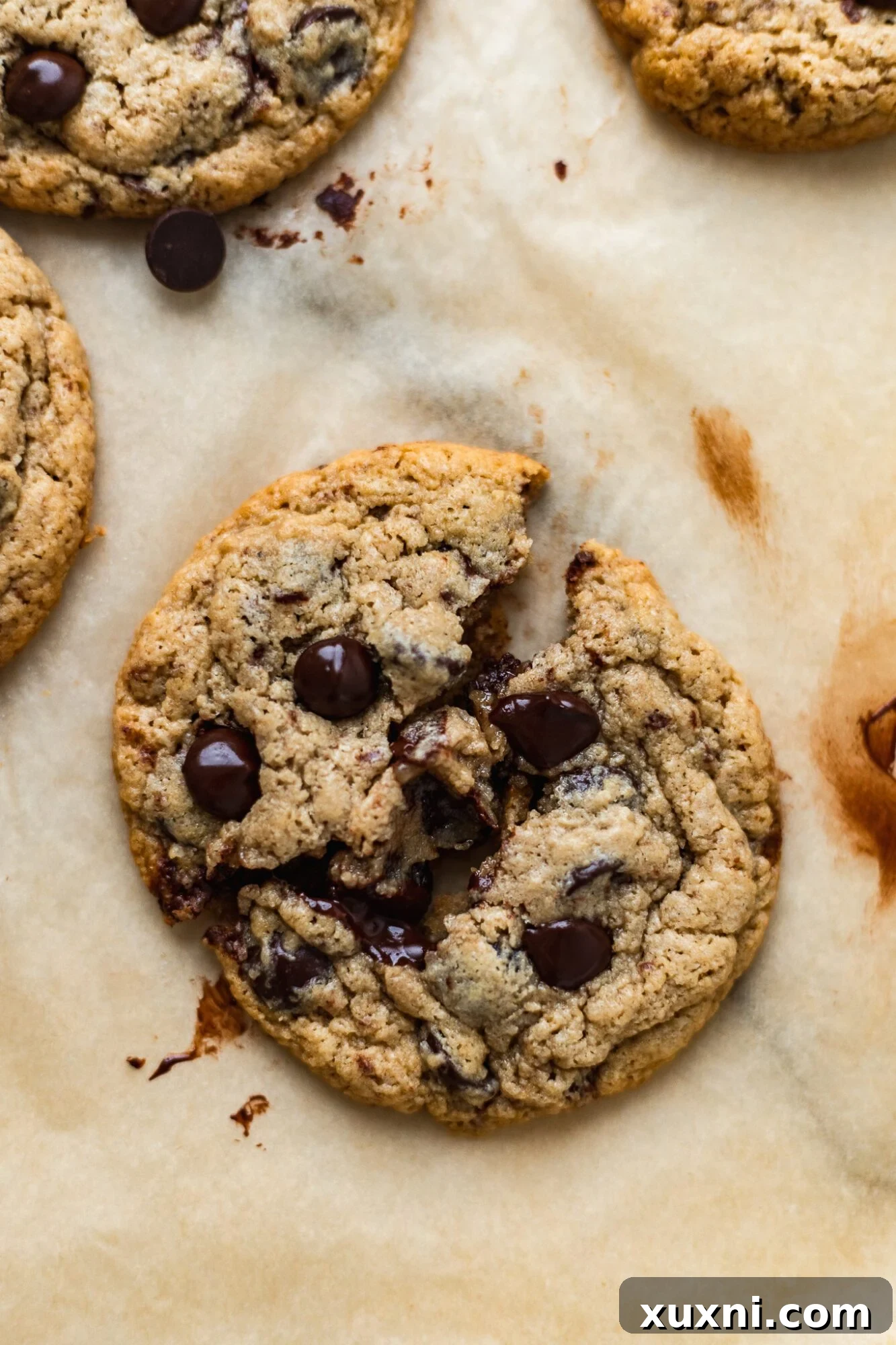
The Secret to Perfectly Round Chocolate Chip Cookies
Have you ever wondered how food bloggers and professional bakers consistently achieve those impeccably rounded chocolate chip cookies that look like they belong in a magazine? It’s a well-guarded secret within the baking community, yet surprisingly simple to execute once you know the trick.
The magic tool? A large, round cookie cutter or even the rim of a glass that’s slightly larger than your baked cookies. Immediately after removing your freshly baked vegan gluten-free chocolate chip cookies from the oven, while they are still warm and pliable on the baking sheet, take your cookie cutter or glass. Gently place it over a cookie and swirl it around the cookie, using its edges to gently push and shape the warm cookie back into a perfectly circular form. The heat of the cookie allows it to be molded, creating those smooth, symmetrical edges that are so visually appealing. This simple technique transforms your delicious oat flour cookies from rustic to picture-perfect!
Serving, Storage, and Enjoyment of Your Vegan Oat Flour Cookies
You are truly going to fall in love with these phenomenal vegan oat flour chocolate chip cookies! They are incredibly versatile and perfect for a myriad of occasions. Imagine bringing them to a festive Christmas cookie exchange, delighting your mom on Mother’s Day, celebrating birthdays, or serving them as a crowd-pleasing treat at Fourth of July parties. They’re also robust enough to be transformed into creative desserts, like decadent vegan ice cream sandwiches – a truly elevated treat!
For serving, these cookies are best enjoyed warm, ideally after resting for about 10 minutes on the baking sheet to allow their structure to set and their molten chocolate to cool slightly. A sprinkle of sea salt on top right after baking can also enhance their flavor profile, bringing out the sweetness and richness of the chocolate.
Storage: To keep your leftover vegan gluten-free chocolate chip cookies fresh and delicious, store them in an airtight container at room temperature for up to 3-4 days. For extended freshness, they can be kept in the refrigerator for up to one week. The texture will remain beautifully soft and chewy.
Freezing: These cookies freeze exceptionally well! Once completely cooled, place them in a single layer on a baking sheet and freeze until solid (about 1-2 hours). Transfer the frozen cookies to a freezer-safe bag or airtight container, separated by parchment paper, and store for up to 3 months. When you’re ready to enjoy, simply thaw them at room temperature or warm them gently in the microwave or oven for a “freshly baked” experience.
Troubleshooting Common Vegan Gluten-Free Cookie Issues
Even the best recipes can present challenges sometimes. Here are some common issues you might encounter with vegan gluten-free chocolate chip cookies and how to fix them:
- Cookies Spreading Too Much: This is often due to insufficient chilling time, or your vegan butter being too warm. Ensure your butter is at a cool room temperature (still slightly firm) before creaming, and strictly adhere to the chilling instructions. If your kitchen is very warm, try chilling for longer. Overmixing the dough can also develop gluten-like structures in oat flour, causing spread.
- Cookies Are Too Cakey or Dry: This could be a result of too much flour, or over-baking. Ensure you measure your oat flour precisely, ideally by weight for accuracy. If using homemade oat flour, make sure it’s ground very finely. Reduce baking time if they seem dry.
- Cookies Don’t Spread Enough: This might happen if your vegan butter was too cold, or if you added too much flour. Ensure your butter is at room temperature. Also, using coconut oil instead of stick vegan butter can inhibit spread.
- Grainy Texture: Typically, this indicates that your oat flour isn’t fine enough, especially if you’re using homemade. Grind your oats longer for a smoother flour.
By understanding these common pitfalls and their solutions, you can confidently bake perfect vegan gluten-free chocolate chip cookies every time!
Ready to save this incredible recipe for later? Pin it to your favorite recipe board on Pinterest!

If you try this delightful recipe, please take a moment to leave a comment and a rating ⭐️⭐️⭐️⭐️⭐️ below. Your feedback helps others discover these amazing cookies! As always, we absolutely adore seeing your beautiful culinary creations. Be sure to tag us on Instagram and Pinterest using #thebananadiaries so we can admire your work!
Print Recipe

BEST Vegan Gluten Free Chocolate Chip Cookies (Oat flour!)
5 Stars 4 Stars 3 Stars 2 Stars 1 Star
4.9 from 13 reviews
Author: thebananadiaries
Prep Time: 10 minutes
Chill Time: 30-60 minutes
Cook Time: 12 minutes
Total Time: 52-82 minutes
Yield: 18 1x cookies
Category: Dessert
Method: Baking
Cuisine: American
Diet: Vegan, Gluten-Free, Dairy-Free
Description
This is truly THE best vegan gluten free chocolate chip cookies recipe you’ve ever had. Chewy, soft, and melt in your mouth, these vegan chocolate chips cookies are made with JUST oat flour and nothing else! Super easy and perfect for all eaters, vegan or not!
Ingredients
Scale
- 2 cups (180 g) oat flour, sifted
- 1 tbsp (10 g) arrowroot starch
- 1 tsp baking powder
- 1/2 tsp baking soda
- 1/2 cup (113 g) salted vegan butter, room temperature
- 1/2 cup (100 g) organic granulated sugar
- 1/2 cup (100 g) brown sugar
- 1/3 cup (80 g) dairy free unsweetened vanilla yogurt (such as Forager Project), room temperature
- 1 tsp vanilla extract
- 1 cup (180 g) vegan chocolate chips or vegan milk chocolate chunks
Instructions
- Please read through all instructions before beginning. This ensures you understand each step and have all necessary ingredients and equipment ready.
- Prep Your Workspace: Begin by lining two (2) medium-sized baking sheets with parchment paper or a silicone baking mat. This prevents sticking and makes cleanup easier. Take a moment to measure out all your ingredients accurately before you start mixing.
- Whisk the Dry Ingredients: In a medium bowl, combine the oat flour, arrowroot starch, baking powder, and baking soda. Whisk them together thoroughly to ensure the leavening agents are evenly distributed throughout the flour. Set this bowl aside.
- Create the Cookie Dough Base: In a large mixing bowl, using a hand mixer (or a stand mixer with the paddle attachment), cream together the room-temperature vegan butter, organic granulated sugar, and brown sugar. Beat for about 3 minutes until the mixture is light, fluffy, and noticeably paler in color. Next, add the dairy-free yogurt and vanilla extract. Mix again on low speed just until these wet ingredients are fully combined into the creamed butter and sugar mixture. Then, gradually add the whisked dry ingredients to the wet mixture. Use a silicone spatula to gently fold the dry into the wet. Stop mixing just when streaks of dry flour are still barely visible. This prevents overmixing, which can lead to tough cookies.
- Fold in the Chocolate Chips: Pour your chosen vegan chocolate chips or chunks into the partially mixed dough. Continue to fold the dough with your silicone spatula until the chocolate chips are evenly distributed and no dry flour remains.
- Chill the Dough: Cover the bowl containing your cookie dough with plastic wrap and transfer it to the refrigerator. Allow the dough to chill for a minimum of 30 minutes, or ideally up to 1 hour, for best results. While the dough is chilling, preheat your oven to 350°F (175°C).
- Bake the Oat Flour Cookies: Once the dough has sufficiently chilled, use a medium cookie scoop (approximately 1.5 tablespoons per cookie) to portion out uniform balls of dough. Place these scooped cookies onto your prepared baking sheets, ensuring they are spaced at least 2 inches apart to prevent them from spreading into each other. This recipe should yield approximately 18 cookies. Bake the cookies for 12-13 minutes, or until their edges appear set and lightly golden brown, and the centers are just set but still look soft.
- Shape and Garnish (Optional Pro Tip): Immediately after removing the cookies from the oven, while they are still warm and malleable on the baking sheet, use a large round cookie cutter or the rim of a glass (slightly larger than your cookies). Gently place it over each cookie and swirl it around to nudge the edges back into a perfectly round shape. If desired, press a few extra chocolate chips onto the tops of the warm cookies for a beautiful finish, and sprinkle with a pinch of sea salt to enhance the flavors.
- Cool and Enjoy: Allow the baked cookies to rest on the baking sheet for at least 10 minutes. This crucial cooling period allows the cookies to fully set and prevents them from falling apart when transferred. Afterward, move them to a wire rack to cool completely. Store any leftover cookies in an airtight container at room temperature for up to 3-4 days, in the fridge for up to 1 week, or freeze for up to 3 months. Enjoy your delicious vegan gluten-free treats!
Notes
Oat Flour: For the most classic chocolate chip cookie appearance and texture in these vegan oat flour chocolate chip cookies, we highly recommend using commercially ground, store-bought oat flour. If you choose to use homemade oat flour, ensure it is ground as finely as possible into a powder to achieve a smooth consistency comparable to store-bought varieties. A coarser grind will result in a more rustic, slightly chewier cookie with a more pronounced oat flavor.
Vegan Butter: The success of these cookies largely depends on the right vegan butter. We strongly recommend using high-quality stick vegan butter specifically formulated for baking. Excellent options include Miyoko’s Kitchen Cultured Vegan Butter, Earth Balance Vegan Buttery Sticks (note: these are different from the tub varieties and are better for baking), or Flora Plant Butter. Avoid using liquid or tub vegan butters, as their different fat content and composition can alter the cookies’ spread and texture, potentially leading to flatter or greasier results.
Vegan Dairy-Free Yogurt: We typically achieve fantastic results using Forager Project unsweetened vanilla dairy-free yogurt due to its ideal consistency. Be aware that there can be significant variation between different dairy-free yogurt brands in terms of thickness and water content. If Forager Project is not available in your area, try to select a dairy-free yogurt that has a thinner, more “liquid-y” consistency rather than a very thick, Greek-style yogurt, as this will best mimic the moisture and binding properties needed for the dough.
Vegan Chocolate: For the best chocolate experience in your cookies, we suggest using premium vegan chocolate chips or chunks. Reliable brands that melt beautifully and offer rich flavor include Pascha Chocolate Chips and Enjoy Life chocolate chips. If you’re looking for a luxurious vegan milk chocolate experience, Valrhona’s new Amatika vegan milk chocolate is an exceptional choice that will elevate these cookies to gourmet status!