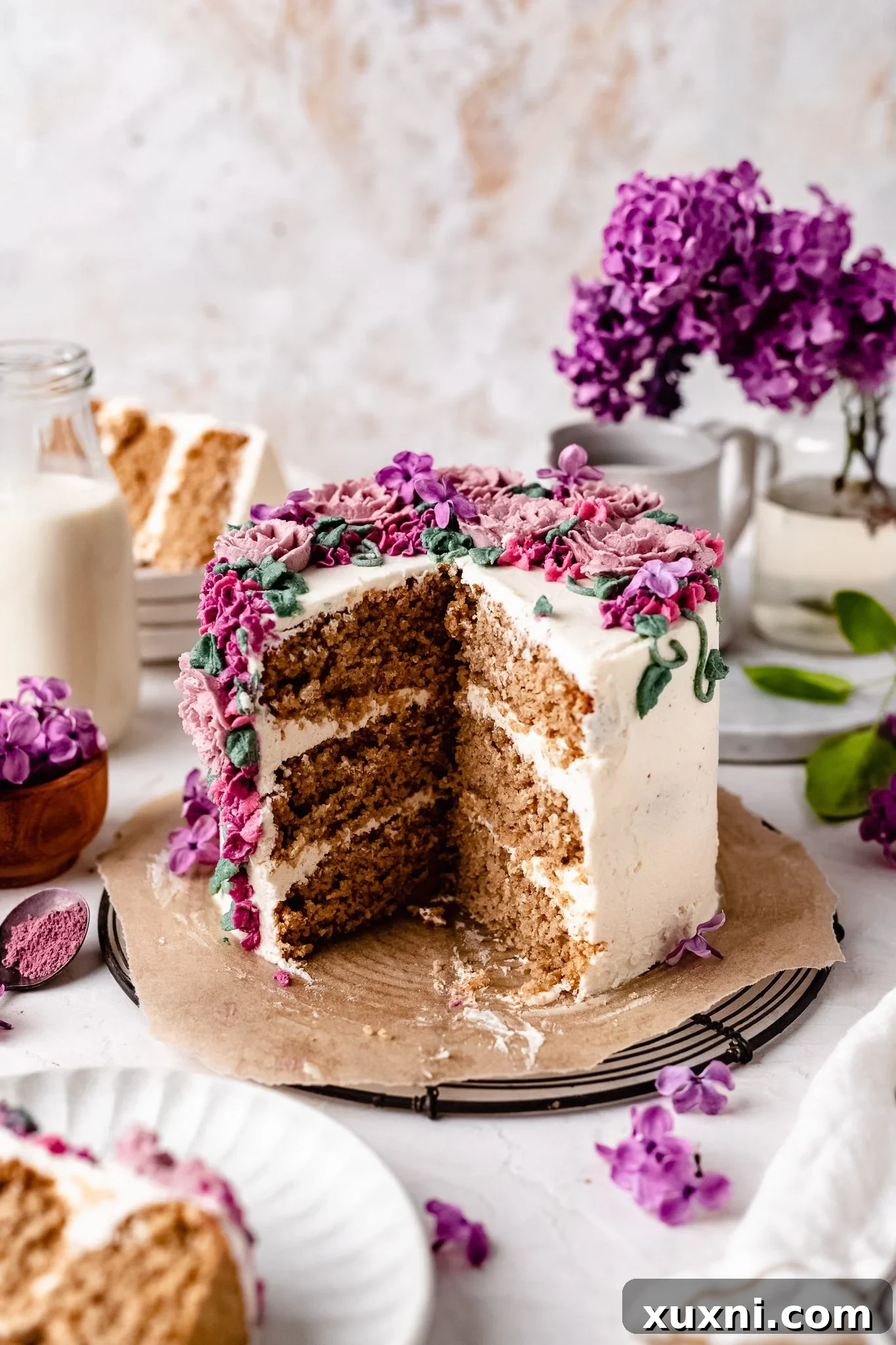
Welcome to the only vanilla vegan gluten-free cake recipe you’ll ever need! Prepare to be amazed by this incredibly light, tender, and effortlessly delicious oat flour cake. Bursting with sweet vanilla flavor and baked to achieve the most perfect, melt-in-your-mouth crumb texture, this cake is guaranteed to be a crowd-pleaser for everyone, regardless of their dietary preferences. Crowned with a luxuriously creamy dairy-free buttercream, this vanilla oat flour cake is the quintessential treat for any celebration or simply a delightful indulgence. You won’t believe it’s entirely gluten-free, eggless, and dairy-free!
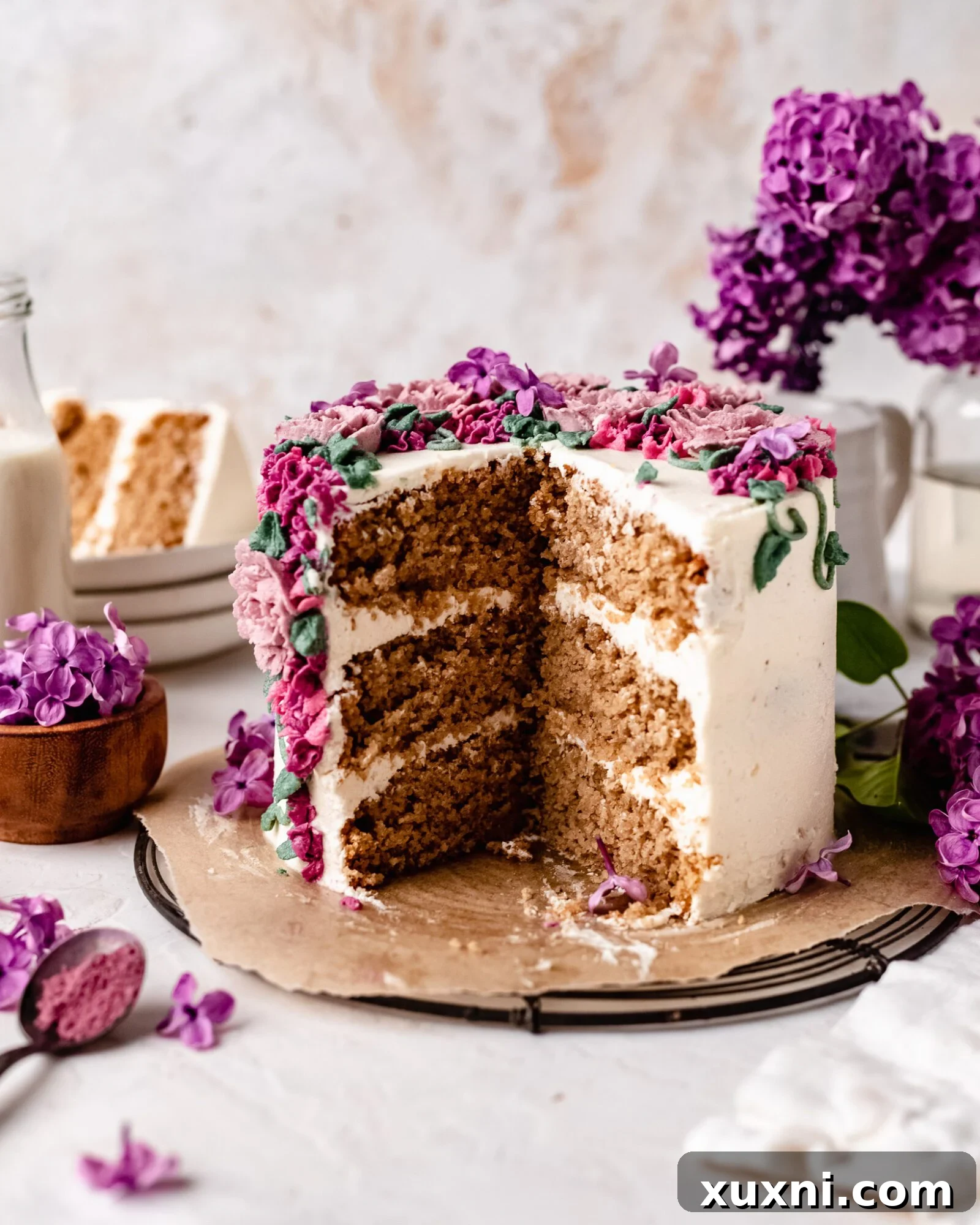
This post contains affiliate links, meaning that if you make a purchase through these links, I may receive a small commission at no extra cost to you. All recommendations are based on my genuine personal experience and preference, ensuring you get the best advice. Your support helps sustain The Banana Diaries!
Discover Your New Favorite: The Irresistible Vanilla Vegan Oat Flour Cake
The wait is over! After countless requests, I’m thrilled to introduce what I believe will become your new go-to recipe for an entirely vegan and gluten-free delight: the magnificent vanilla oat flour cake. This recipe has been meticulously developed and tested to ensure perfection, and I couldn’t be prouder of the results.
What makes this cake so special? For starters, it’s completely gluten-free, utilizing *just* oat flour – no need for complex blends, xanthan gum, or other specialty flours. This makes it not only accessible but also incredibly wholesome. Technically, this cake can even be considered “flourless” since we begin with simple rolled oats, transforming them into a fine flour right in your own kitchen or using readily available store-bought oat flour. This unique approach contributes to its distinctive and delightful texture.
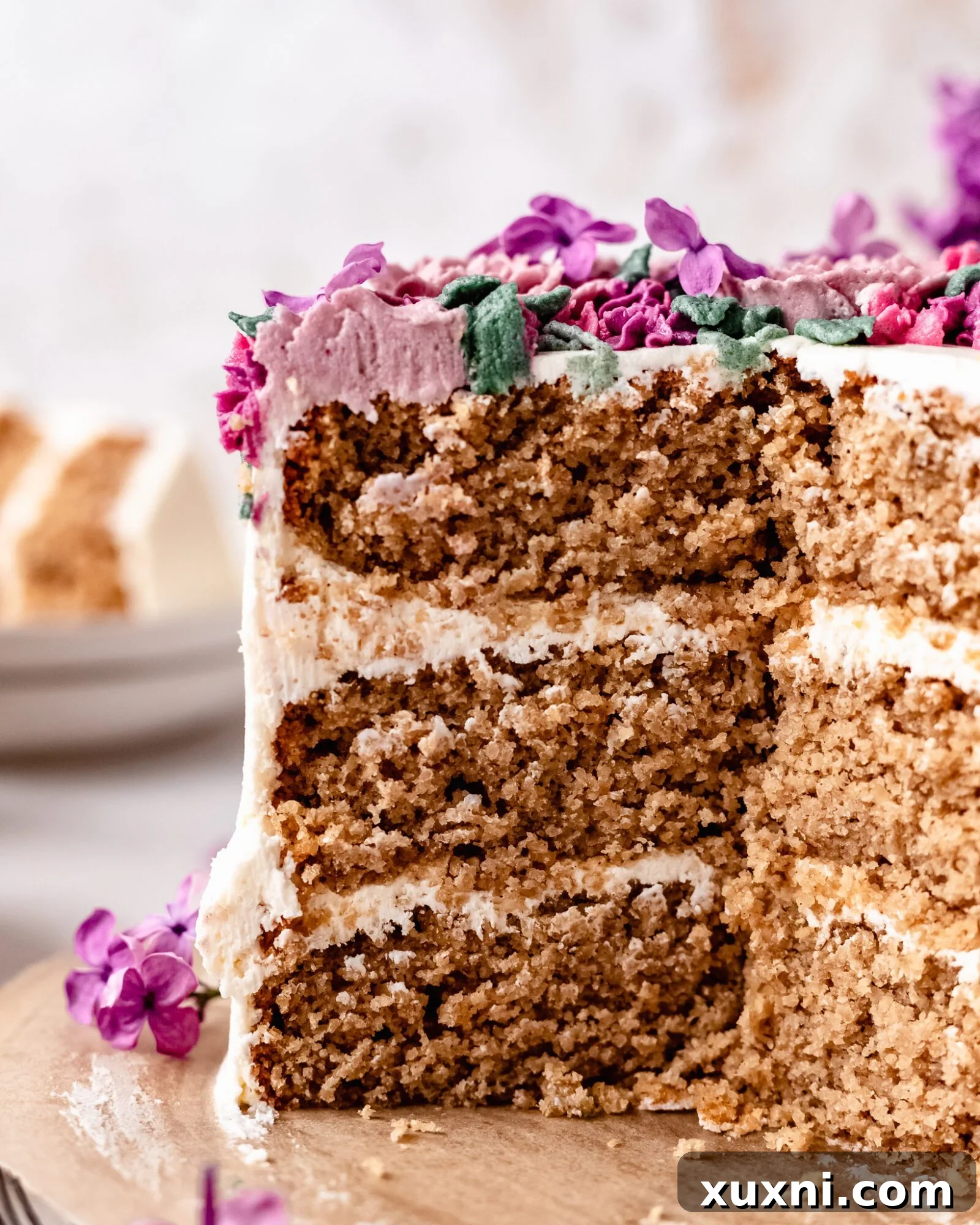
If you’re new to the world of vegan gluten-free baking, prepare for an extraordinary culinary experience. This vanilla cake ticks every box for a truly exceptional dessert: it’s wonderfully light and refreshing, never heavy or dense. It boasts the most exquisite crumb texture – moist, tender, and simply heavenly. Each bite is a testament to flavor and dedication, making it nearly impossible to put your fork down!
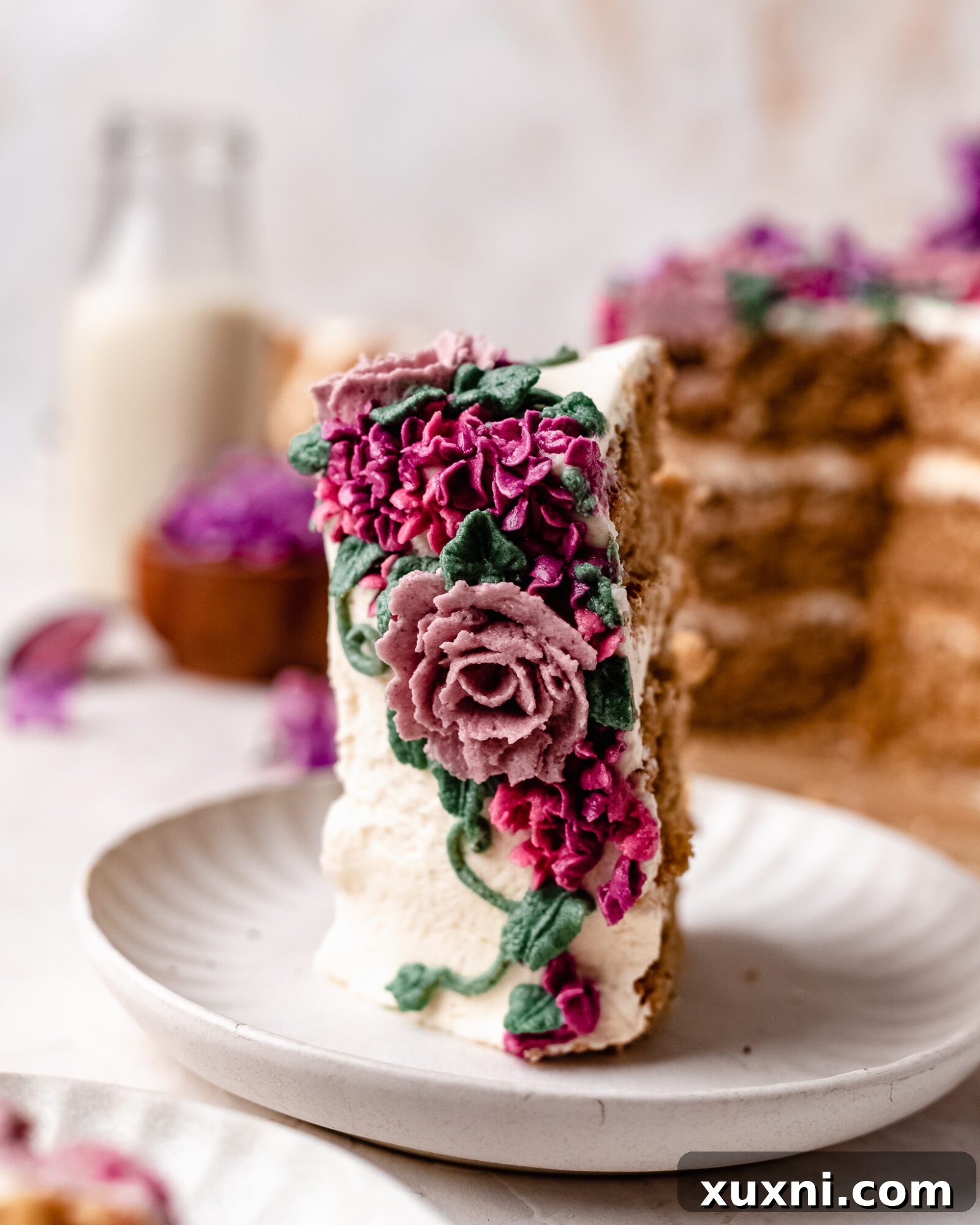
We’ve also carefully calibrated the sweetness, reducing the sugar content to ensure it’s not overwhelmingly saccharine, allowing you to comfortably enjoy a generous slice. The cake is infused with a rich, authentic vanilla flavor, thanks to the inclusion of real vanilla powder. Beyond being vegan and gluten-free, this recipe is remarkably allergy-friendly: it’s also **nut-free, soy-free, eggless, dairy-free, and coconut-free!** This means almost everyone can enjoy a slice without worry.
Seriously, you’ll be hard-pressed to find a cake with simpler ingredients that delivers such an exceptional taste. Prepare to be utterly captivated by the deliciousness of this oat flour cake – it’s a true game-changer!
Essential Ingredients for Your Perfect Vanilla Vegan Gluten-Free Cake
One of the most appealing aspects of this remarkable oat flour cake is its straightforward and accessible ingredient list. You might even find that you already have most, if not all, of these items stocked in your pantry! To create this incredible vegan gluten-free vanilla cake, you will need the following key components:
- Rolled Oats: The star of our show! If you require a strictly gluten-free cake, it is crucial to use certified gluten-free rolled oats to avoid cross-contamination. Otherwise, standard rolled oats will work perfectly. Alternatively, for convenience, you can purchase pre-made store-bought oat flour. We’ll turn these oats into a fine flour that forms the base of our cake.
- Arrowroot Starch: This vital ingredient plays a significant role in achieving that desirable light, tender, and fluffy cake-like texture. Arrowroot starch helps to lighten the oat flour and creates a beautifully delicate crumb. If arrowroot starch isn’t available, cornstarch can be used as an effective substitute.
- Sugar: You have the flexibility to use either granulated sugar or coconut sugar, depending on your preference. For those interested in a refined sugar-free option, please refer to the detailed notes in the recipe card for specific guidance on how to adjust.
- Dairy-Free Milk: Feel free to use any unsweetened dairy-free milk you have on hand, whether it’s almond, soy, oat, or cashew milk. We’ll be combining it with a touch of apple cider vinegar or white wine vinegar to create a homemade dairy-free buttermilk, which adds tenderness and aids in leavening.
- Applesauce: Acting as a brilliant egg replacer, unsweetened applesauce is the secret to moisture and binding in this vegan cake. It’s a perfect substitute as it contributes no discernible aftertaste and performs just like eggs in traditional baking, helping to create a tender structure.
- Vegan Butter: For a truly nut-free cake, I highly recommend Flora Plant Butter. Earth Balance is another fantastic and widely available option. If nuts are not a concern for your diet, Miyoko’s Kitchen Cultured Vegan Butter also yields excellent results, contributing rich flavor and moisture. Ensure it’s at room temperature for optimal creaming.
- Leavening Agents: Our dynamic duo for lift and airiness – baking powder and baking soda. These work in conjunction with the acidic buttermilk to create a beautifully risen and tender cake. Always check their freshness before baking!
- Vanilla: For an unparalleled depth of flavor, I enthusiastically recommend using pure vanilla powder in this recipe. It’s ground vanilla bean and offers an intense, aromatic vanilla essence. I’ve linked the exact brand I use in the recipe card below. If you’re baking for a truly special event, like a wedding or significant celebration, vanilla powder elevates the taste profile considerably. However, if vanilla powder isn’t accessible, premium vanilla extract will still yield an absolutely delicious cake.
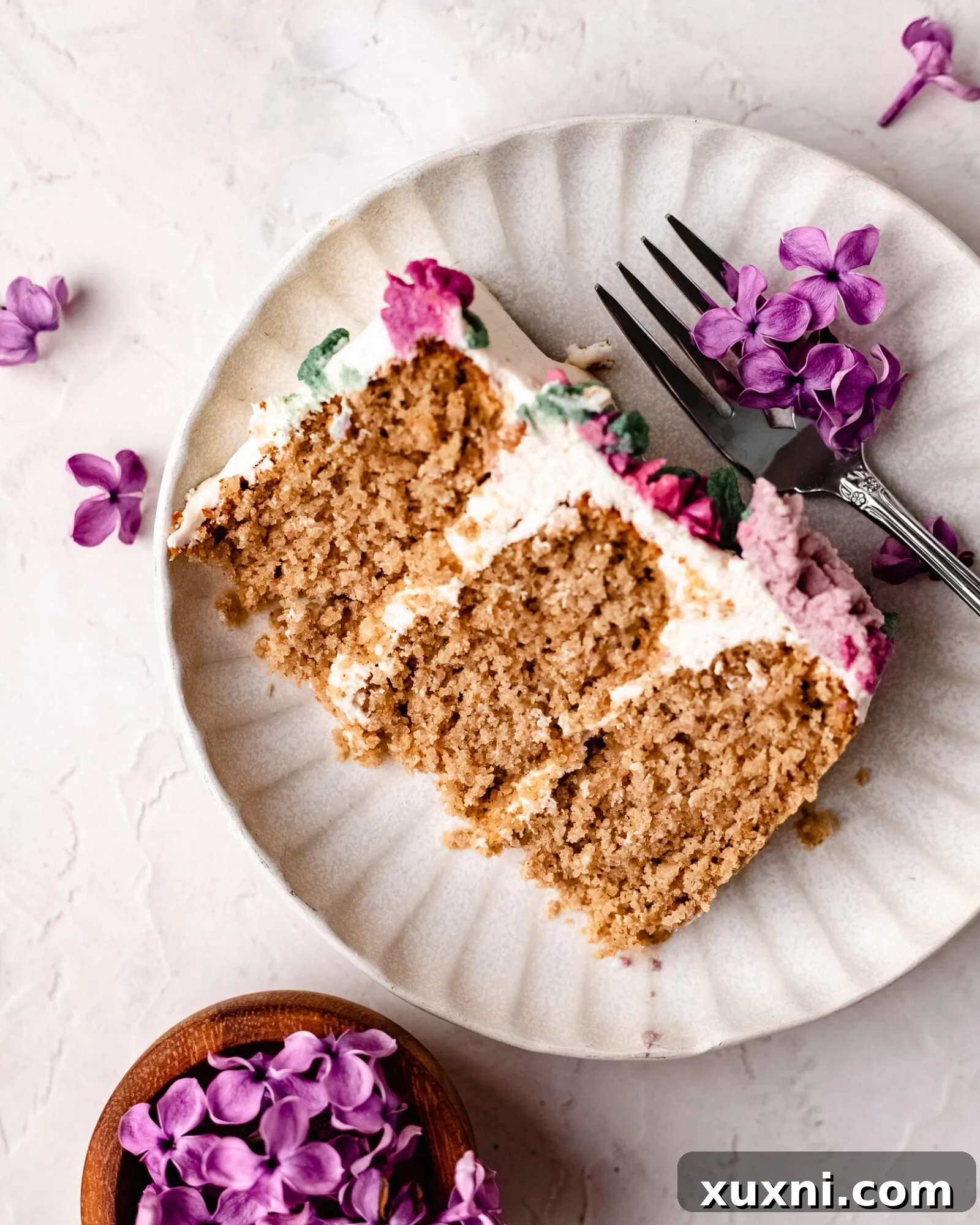
Step-by-Step Guide: Crafting Your Vegan Gluten-Free Oat Flour Cake from Scratch
You’ll be delighted by how straightforward and enjoyable it is to bake this vegan gluten-free cake. Many, including my own family and Jared’s mom, have declared it their all-time favorite vanilla cake! As with all my recipes, the complete, detailed instructions and precise ingredient measurements are conveniently listed in the recipe card below, providing everything you need for a successful bake.
However, let’s walk through a comprehensive overview of the process to create this delicious gluten-free vegan cake from scratch, ensuring you feel confident every step of the way.
The secret to improving your baking significantly lies in meticulous preparation. Before you even think about mixing, measure out all of your ingredients. I strongly advocate for using a kitchen scale for your ingredients over volumetric cup measurements. This method offers unparalleled accuracy, which is paramount in baking, especially with gluten-free flours. While cup measurements are included for convenience, remember that gram measurements will consistently yield the most reliable and precise results, leading to a perfect bake every time. Weighing and organizing all your ingredients and thoroughly reading the instructions beforehand will streamline your baking process, preventing any oversights and ensuring a seamless journey from prep to plate.
It’s equally important to prepare your cake pans *before* you start mixing any batter. This crucial step prevents any wasted precious activation time once your leavening agents begin to work. Properly prepared pans ensure a smooth transfer of batter and prevent sticking. Furthermore, always whisk your dry ingredients together thoroughly before incorporating them with the wet ingredients. This ensures that the leavening agents, along with the other dry components, are evenly distributed throughout the flour mixture, which is key to an even rise and uniform texture in your baked cake.
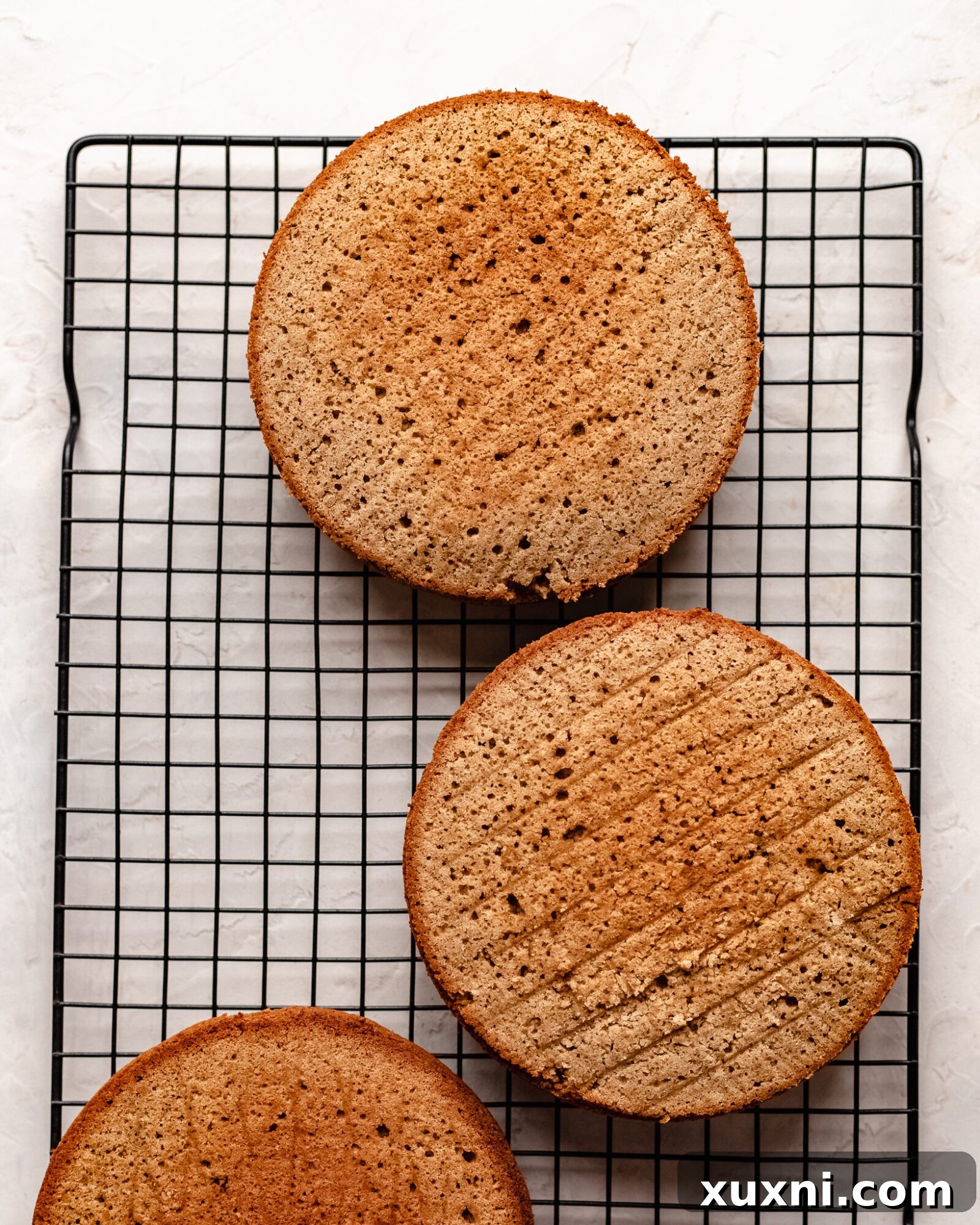
When it comes to mixing your cake batter, you have options! You can use either a stand mixer with a paddle attachment for convenience or mix everything by hand. For many years, I baked all my cakes exclusively by hand – I even created an entire cookbook doing so! So, rest assured, you absolutely can achieve an incredible cake without a stand mixer. While I now use a stand mixer, a hand-mixed cake can be just as impressive and delicious.
Once your cake layers are baked to golden perfection, the most critical step is to allow them to cool completely before you even think about preparing the frosting. I emphasize this point strongly, perhaps sounding strict, but only because I’ve experienced the heartbreak of rushed frosting: bulging layers, sliding cakes, and overall disaster! Oat flour cakes, while wonderfully light and tender, tend to be slightly denser than traditional cakes (and even some other vegan cakes), requiring a bit more cooling time. Patience truly is a virtue here, ensuring your finished cake is structurally sound and beautifully frosted.
Expert Baking Tips and Troubleshooting for Your Oat Flour Cake
As with all my cake creations, I love to provide additional baking insights to ensure your oat flour cake turns out perfectly every single time. Below are some of my top recommendations and essential tips specifically tailored for this vanilla vegan gluten-free oat flour cake. I’ve also included a few common troubleshooting scenarios to help guide you through any potential challenges during your baking journey.
Adhere to the Recipe: Avoid Unapproved Substitutions
This is arguably the most crucial tip for this particular recipe. Please do NOT substitute the oat flour for any other type of flour. This vegan gluten-free cake has been meticulously formulated and designed specifically for oat flour. The precise ratios of wet to dry ingredients have been carefully adjusted in this recipe to accommodate the unique baking properties of oat flour, whether you’re using homemade or store-bought varieties. For a general gluten-free 1:1 baking flour option, my classic vegan vanilla cake recipe already provides that flexibility (using Bob’s Red Mill in the blue bag is recommended there). Any other permissible substitutions, such as using coconut sugar instead of granulated sugar, or your preferred type of dairy-free milk, will be clearly noted in the recipe card. Stick to those! Baking is a science, and flour types behave very differently.
Ensure All Wet Ingredients are at Room Temperature
This is a fundamental baking principle that often gets overlooked and is a common culprit for issues in cakes. Using room temperature ingredients, especially wet ones like dairy-free milk, vegan butter, and applesauce, is absolutely vital. When ingredients are at drastically different temperatures, they can lead to an uneven emulsion in the batter. This results in a cake that can be disappointingly **gummy, dense, and less tender**. Room temperature ingredients blend together smoothly and uniformly, creating a cohesive batter that bakes evenly and rises beautifully, ensuring that light and tender crumb we’re aiming for.
Homemade vs. Store-Bought Oat Flour: Both Work Wonders!
While some oat flour cake recipes specify using only homemade oat flour, this versatile vanilla vegan gluten-free cake recipe accommodates both homemade and commercially available oat flour options! This flexibility is largely due to our reliance on gram measurements, which provide a significantly more accurate and consistent way to bake. Whether you’re using 460 grams of freshly ground oats or 460 grams from a bag, the weight remains the same, ensuring predictable results.
I will note that homemade oat flour tends to give the cake a slightly more rustic texture and a distinctly “oat-ier” flavor, which I personally adore and used for the cakes pictured in this recipe. If you appreciate that wholesome, nuanced flavor, homemade is an excellent choice. However, if you prefer a taste closer to a classic vanilla cake while still enjoying the benefits of oat flour, opting for a quality store-bought brand like Arrowhead Mills will achieve a smoother, more neutral flavor profile. Both options are delicious, so choose what best suits your preference and convenience!
Flexible Baking: From Layer Cakes to Sheet Cakes
This recipe is wonderfully adaptable to different pan sizes. You can easily create a beautiful three-layer 6-inch cake, which yields a taller, more elegant presentation, or opt for a two-layer 8-inch cake for a slightly wider, equally impressive result. Beyond traditional layer cakes, you can even use this versatile batter to bake a delicious vegan gluten-free sheet cake, perfect for larger gatherings or casual serving. Just remember that the baking temperatures and times will need slight adjustments based on the pan size and the amount of batter in each pan. For instance, an 8-inch two-layer cake will have more batter per pan than a 6-inch three-layer cake, thus requiring a longer baking duration. Always use the toothpick test to ensure doneness!
Verify the Freshness of Your Leavening Agents
It’s a surprisingly common oversight: when we grab our baking powder and/or baking soda for a cake or any baked good, they might already be expired or have lost their potency. This is frequently the primary reason why cakes fail to rise properly, resulting in a dense or flat outcome. Leavening agents gradually lose their effectiveness over time, especially if not stored in a cool, dry place. If your baking powder or baking soda has been in your pantry for more than six months, or if you suspect it wasn’t stored correctly, it’s highly advisable to purchase fresh ingredients before you begin baking. To quickly test their efficacy, you can refer to this excellent article on how to check if your leavening agents are still active. A quick test can save your cake!
Foolproof Method to Prevent Cake Layers from Sticking
To ensure your precious cake layers release effortlessly from their pans, I always employ a reliable preparation method: I line the bottoms of my cake pans with parchment paper and then grease and lightly flour the sides. Using parchment paper on the bottom is, in my experience, the most foolproof way to guarantee that your cakes will never stick to the base of the pan. You can purchase convenient pre-cut parchment paper cake rounds, but I actually prefer to cut my own custom sizes every time I bake a cake – a frequent activity in my kitchen! This simple step makes all the difference for stress-free cake removal.
Comprehensive Cake Troubleshooting Guide
Even with the most precise recipe for a vegan gluten-free cake, bakers can occasionally encounter common issues that affect traditional cakes. If you find yourself facing challenges such as a gummy texture, excessive denseness, or cakes that sink in the middle, I highly recommend consulting Chelsweet’s incredibly helpful cake troubleshooting guide. She offers fantastic insights and practical solutions for various baking problems, which can be invaluable for diagnosing and correcting issues in your baking process.
Transforming Your Vegan Cake: Creative Decoration Ideas
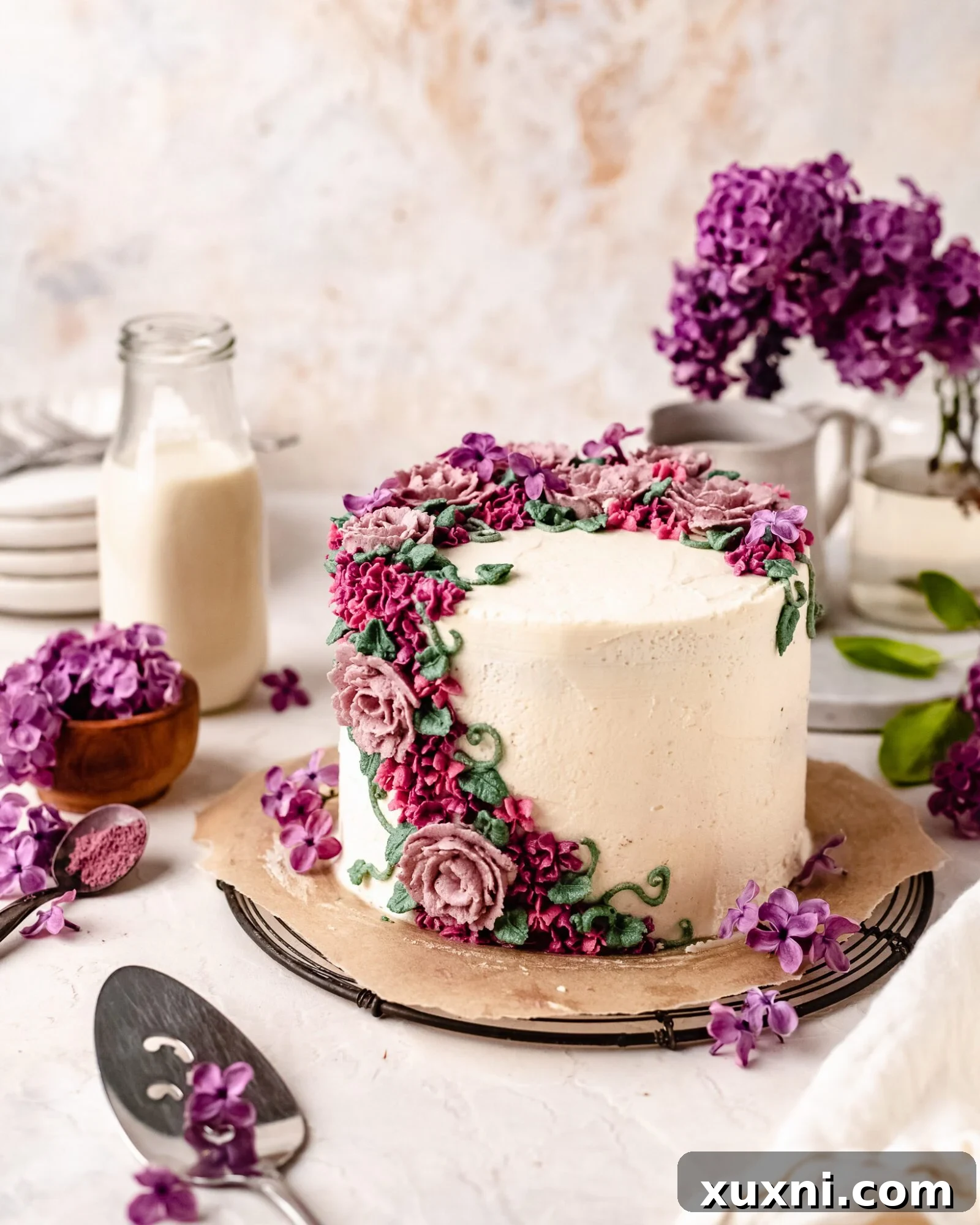
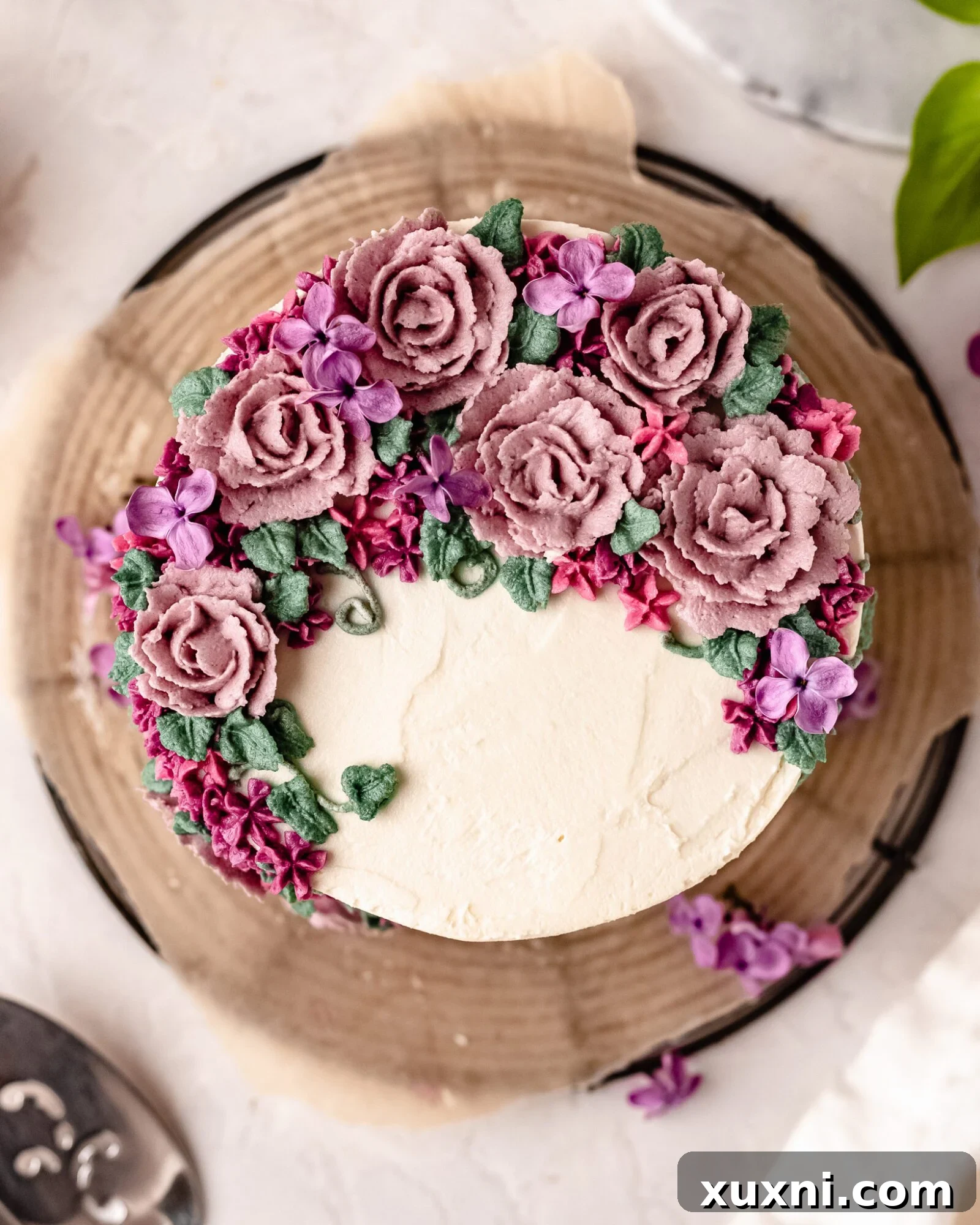
My absolute favorite part of the entire cake-making process is the decorating! There’s something truly magical about transforming simple layers into a stunning centerpiece. Typically, when I embark on a new cake project, I already have a vision for its final aesthetic. For this particular oat flour cake, baked during the vibrant spring season, a charming floral design felt like the perfect choice, bringing a touch of nature and elegance to the table.
Decorating a vegan cake is just as exciting and versatile as decorating any other cake, with endless possibilities to express your creativity. Whether you’re aiming for classic elegance, playful whimsy, or intricate artistry, the right tools and a little practice can help you achieve professional-looking results. Don’t be afraid to experiment with different piping techniques, edible elements, or even simple swirls and textures with your offset spatula.
Essential Cake Decorating Tools for Every Baker:
- Cake Turntable: This is a non-negotiable tool for smooth frosting. The exact one I use is incredibly affordable at around $10, proving you don’t need to break the bank for quality equipment. A good turntable allows you to rotate your cake effortlessly, ensuring an even coat of buttercream.
- Offset Spatulas (Small and Large): These are indispensable for spreading buttercream smoothly and evenly over your cake layers and sides. A small offset spatula is perfect for delicate work and tight corners, while a large one makes quick work of frosting large surfaces. You can find a great set of offset spatulas here.
- Piping Bags: Whether you prefer disposable or reusable, piping bags are essential for detailed decoration, creating borders, writing messages, or piping beautiful flowers. These reusable piping bags are a fantastic eco-friendly option.
- Piping Tips: The variety of piping tips available allows for endless decorative possibilities. For the beautiful floral designs on this cake, I utilized a selection of different Wilton floral piping tips to craft the delicate roses and other botanical elements. A good starter set of rose piping tips is highly recommended.
- Vegan Food Colors: Essential for adding vibrant hues to your buttercream, transforming it into a palette for your edible art. We’ll delve deeper into vegan food coloring options in the next section!
For even more in-depth guidance and expert tips on frosting and assembling stunning layer cakes, be sure to check out my comprehensive vegan wedding cake post. (And yes, as a cake baker, I absolutely plan on making my own wedding cake!). That guide offers valuable techniques that apply to any multi-layered cake project.
Exploring Vibrant Vegan Food Coloring Options
It often comes as a surprise to many, but a significant number of conventional food colorings are actually not vegan-friendly. This was one of the most intriguing discoveries I made when I first transitioned to a plant-based diet. However, there’s no need to despair! Today, the market offers a fantastic array of vegan food coloring options that are so vibrant and effective, you won’t miss the traditional ones at all.
When it comes to vegan food coloring, you generally have two excellent routes to choose from: powders and liquids. Each has its advantages and is suited for different applications in your baking endeavors.
More often than not, I find myself reaching for vegan food coloring powders. These natural wonders are typically derived from actual plants, fruits, and vegetables that have been finely ground into a powder. They offer beautiful, earthy tones and are excellent for a subtle, natural hue. However, if my goal is to achieve a particularly vivid, intense, or very specific shade, I will opt for liquid gel colors. Brands like Go Supernatural and Nomeca offer fantastic liquid vegan food colorings that provide concentrated color without diluting your buttercream’s consistency.
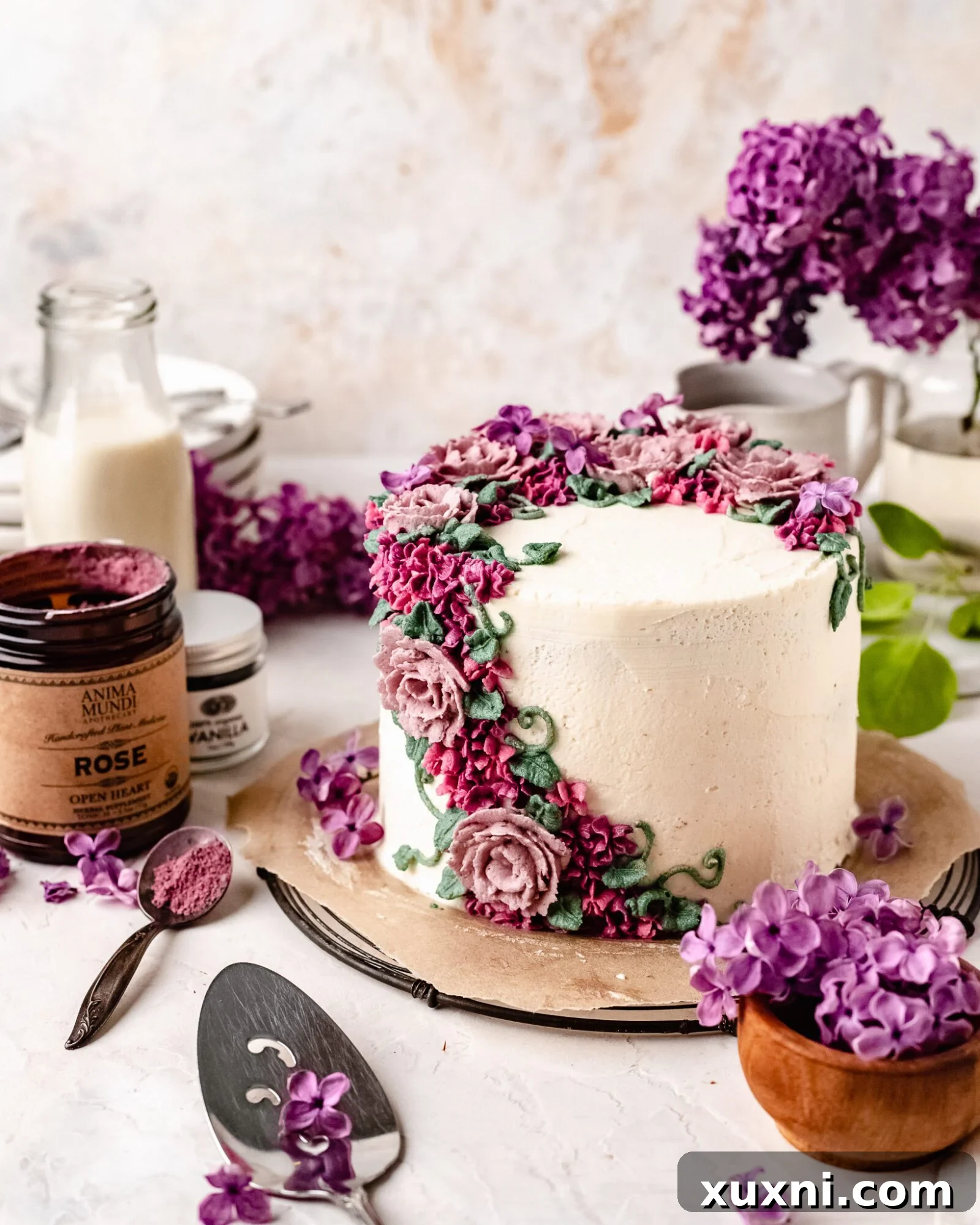
For plant-based food coloring powders, my go-to brands are both Anima Mundi and Suncore Foods. Suncore offers an impressive spectrum of vibrant colors derived from natural sources, making it easy to create a rainbow palette. Anima Mundi is another favorite, especially because they feature unique flower-based colors – in fact, I used their organic rose powder not only to tint but also to subtly flavor the piped roses on this cake! It’s always a bonus that both of these fantastic companies are women-founded and run.
A little goes a long way with these powders, so begin conservatively. Start by incorporating just 1/4 teaspoon into your buttercream, mix thoroughly, and then gradually add more until you achieve your desired shade. This approach ensures you don’t over-saturate your frosting and can precisely control the color intensity.
Can I Transform This Recipe into Delicious Vegan Gluten-Free Cupcakes?
Absolutely! This versatile vegan gluten-free oat flour cake recipe is perfectly adaptable for making a batch of delightful cupcakes. The same tender crumb and rich vanilla flavor that makes the cake so special translates beautifully into individual portions. When converting this recipe, you can expect to yield approximately 20 standard-sized cupcakes. This allows you to scale the recipe up or down as needed, depending on how many cupcakes you wish to make.
When baking as cupcakes, you will need to adjust the baking time. Cupcakes typically bake much faster than full cake layers. While oven temperatures usually remain the same, start checking for doneness around 20-25 minutes by inserting a toothpick into the center of a cupcake; it should come out clean. Once baked and cooled, you can decorate these vegan gluten-free cupcakes with the same creamy dairy-free buttercream and vibrant vegan food colorings discussed previously, making them perfect for parties, lunchboxes, or a sweet treat anytime.
Storing Your Vegan Gluten-Free Oat Flour Cake for Maximum Freshness
Proper storage is key to enjoying your delicious vegan gluten-free oat flour cake for as long as possible. If you happen to have any leftover slices (a rare occurrence, I assure you!), they can be easily stored to maintain their freshness and tender texture.
Simply place the cake slices in an airtight container and refrigerate them for up to 5 days. Keeping them in an airtight container prevents the cake from drying out and absorbing any ambient odors from your fridge. For longer-term storage, this cake freezes beautifully! You can freeze individual slices or even a whole frosted cake (if wrapped properly) in an airtight, freezer-safe container for up to 3 months.
When you’re ready to enjoy a frozen slice, simply transfer it from the freezer to room temperature and allow it to defrost for about 1 hour. This gentle defrosting process ensures the cake returns to its wonderfully soft and moist texture, tasting just as fresh as the day it was baked.
Planning Ahead: Baking Your Cake in Advance
Life can be busy, and sometimes, you need to prepare elements of your celebration in advance. This recipe is wonderfully accommodating if you need to make your cake ahead of time! Whether it’s for a special event or simply to spread out your baking tasks, preparing this vegan gluten-free oat flour cake in stages is perfectly doable.
You can easily bake the cake layers a day or two before you plan to serve the cake. Once the cake layers are completely cooled (this is crucial!), wrap each layer tightly in plastic wrap or a combination of parchment paper and aluminum foil. This dual protection helps seal in moisture and prevents freezer burn if you choose to freeze them. Store the wrapped cake layers in the refrigerator until you are ready to assemble and frost the cake the next day. This allows you to tackle the buttercream and decorating with fresh energy.
For even longer advance preparation, you can also freeze these cake layers. Freezing unfrosted cake layers is an excellent way to lock in freshness for weeks. To learn the best techniques for freezing a cake before frosting it, I highly recommend checking out this detailed and helpful post by Sally’s Baking Addiction, which provides all the tips you need for perfect results.
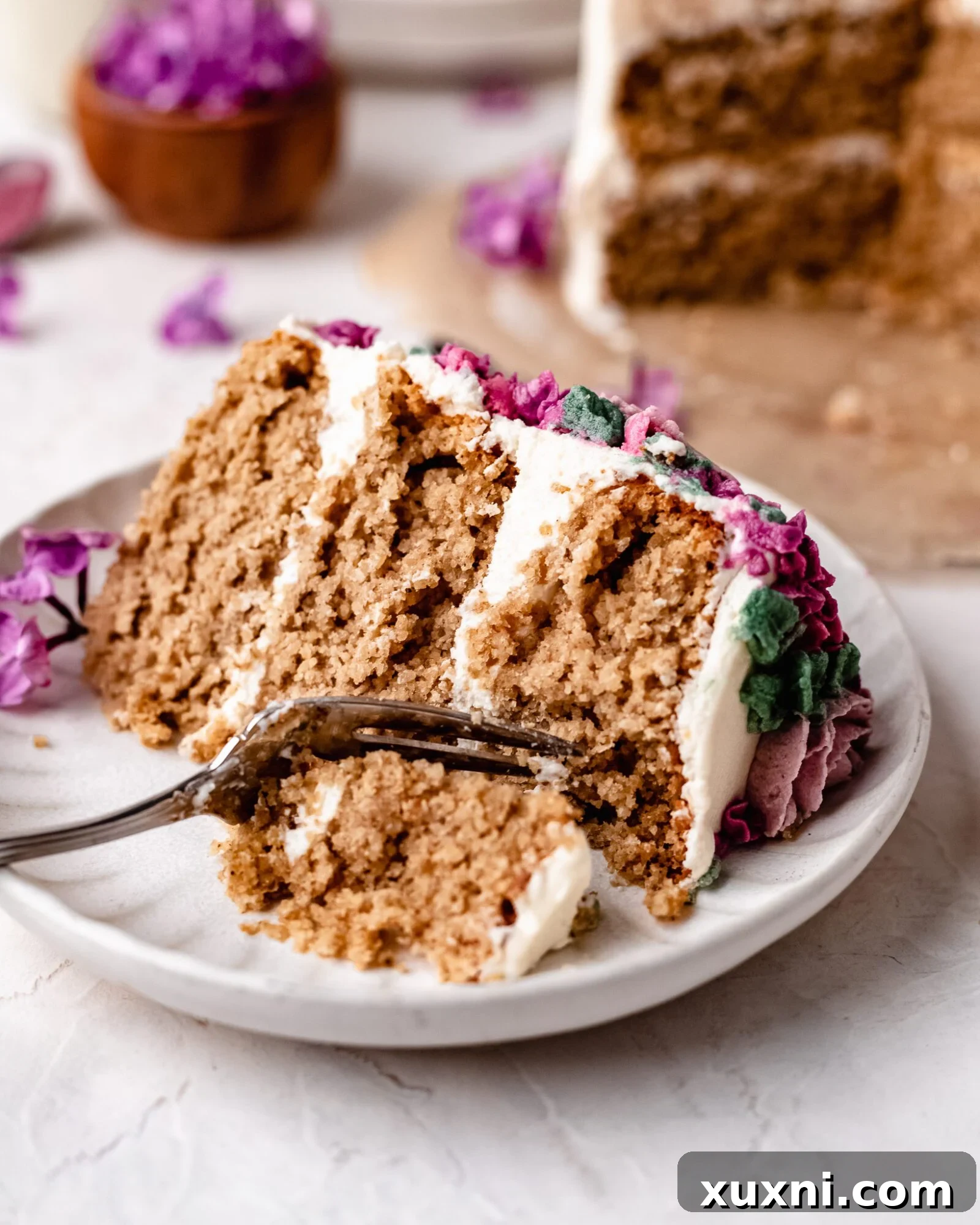
You are truly going to adore this vanilla vegan gluten-free oat flour cake! Its remarkable tenderness and light texture make it an absolutely PERFECT dessert for any and all occasions. Imagine it gracing tables at weddings, birthdays, graduations, baby showers, bridal showers, holiday gatherings, or simply as a delightful weekend treat. Its versatility and inclusive nature ensure that everyone can indulge.
If you bake this incredible oat flour cake, please be sure to leave a comment and a rating ⭐️⭐️⭐️⭐️⭐️ in the section below. Your feedback helps other bakers discover and enjoy this wonderful recipe!
As always, I absolutely LOVE seeing your beautiful culinary creations on Instagram and Pinterest. Don’t forget to tag me @the_bananadiaries and use the hashtag #thebananadiaries so I can celebrate your baking triumphs!
Happy cake baking, and enjoy every tender, vanilla-filled bite!
Explore More Delicious Vegan Cake Recipes:
Craving more plant-based delights? Expand your baking repertoire with these other fantastic vegan cake recipes:
Elegant Vegan Zebra Cake
The Best Vegan Chocolate Cake Ever
Luscious Vegan Lemon Raspberry Cake
Secretly Vegan White Chocolate Cake
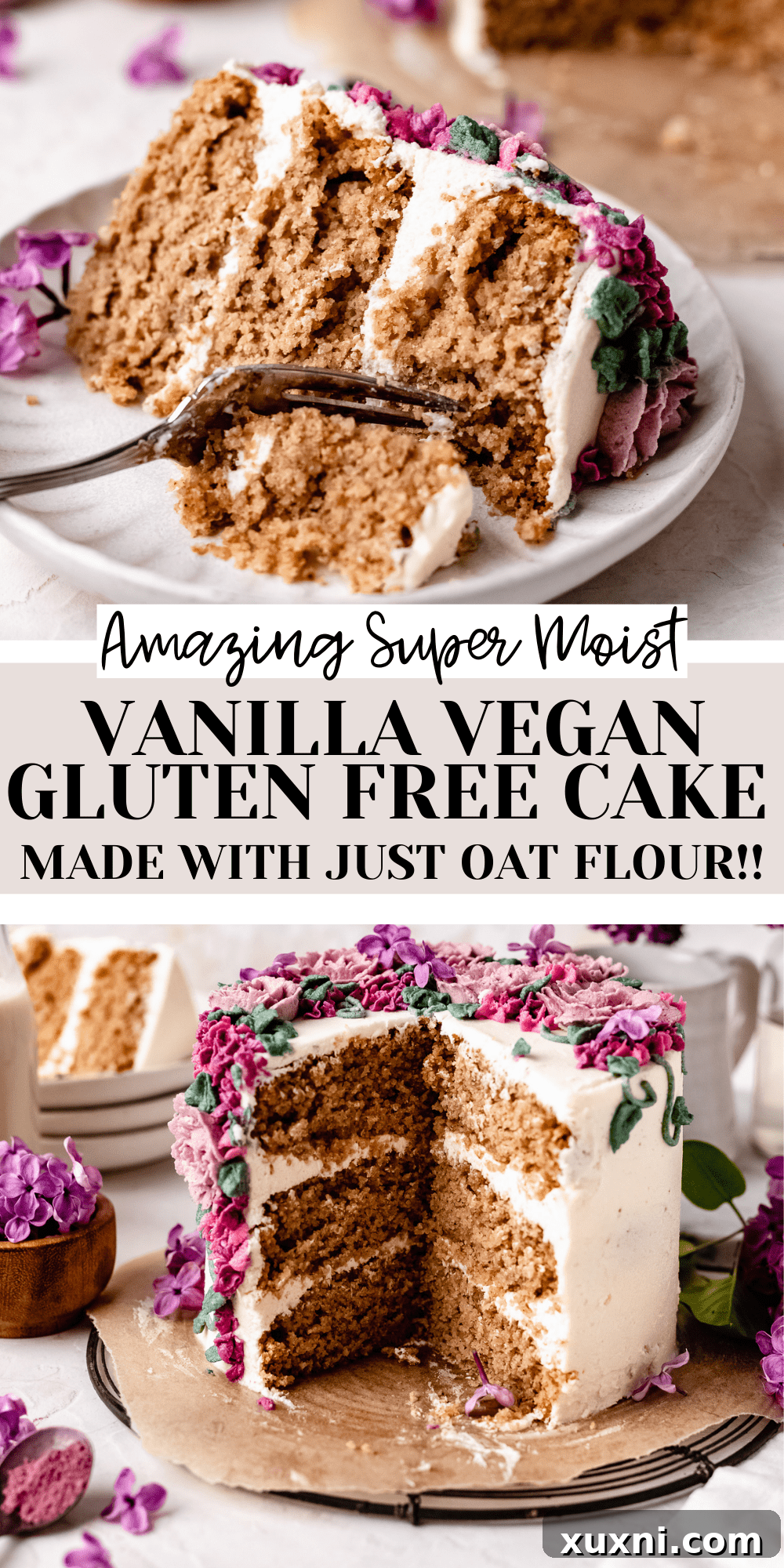
Don’t Forget to Pin It! Save This Incredible Recipe for Later!
Print
Amazing Vanilla Vegan Gluten Free Cake (Oat Flour only!)
5 Stars 4 Stars 3 Stars 2 Stars 1 Star
4.8 from 12 reviews
Author: thebananadiaries
Prep Time: 15
Cook Time: 35
Total Time: 50 minutes
Yield: 16 1x
Category: Dessert
Method: Baking
Cuisine: American
Diet: Vegan
Description
This is truly the ultimate vanilla vegan gluten-free cake recipe you’ll ever need! Crafted with wholesome oat flour, it bakes up incredibly light and tender, boasting a perfect crumb texture that will win over everyone. Crowned with a luscious, creamy dairy-free buttercream, this vanilla oat flour cake is the ideal treat for any and all occasions. Prepare to be delighted – you won’t even realize it’s gluten-free, eggless, and dairy-free!
Ingredients
Scale
For the Vegan Vanilla Cake:
- 3/4 cups (200 grams) unsweetened dairy-free milk, at room temperature
- 1 tsp apple cider vinegar (to be mixed with the dairy-free milk to create buttermilk)
- 5 1/8 cups (460 grams) certified gluten-free rolled oats* (see note for store-bought oat flour measurement)
- 2 tsp baking powder
- 1 tbsp arrowroot starch or cornstarch
- 1 tsp baking soda
- 1 cup (200 grams) granulated sugar or coconut sugar
- 1/2 cup (113 grams) salted vegan butter (Flora Plant Butter recommended), at room temperature
- 3/4 cup (190 grams) unsweetened applesauce, at room temperature
- 2 tbsp vanilla extract (yes, a full 2 tablespoons for amazing flavor!) or 1 1/2 tbsp vanilla extract + 1/2 tsp vanilla powder
For the Vegan Vanilla Buttercream:
- 2 cups (450 grams) vegan butter, softened
- 4 cups organic powdered sugar
- 1 tsp vanilla extract or 1/2 tsp vanilla powder
- 2–4 tbsp unsweetened dairy-free milk
- Vegan food coloring: rose powder, other plant-based powders, or liquid coloring (as desired for decoration)
Instructions
- Preheat your oven to 350°F (175°C). Lightly grease three 6-inch cake pans with cooking oil, then line the bottoms with parchment paper rounds. Set the prepared pans aside.
- Measure out all ingredients precisely before you begin. Using a kitchen scale for accuracy, especially with flour, is highly recommended.
- Prepare your oat flour: If making your own, pulse the gluten-free rolled oats in a high-speed blender or food processor until they reach a very fine, flour-like consistency. For detailed tips and tricks on achieving perfect homemade oat flour, please refer to this comprehensive post on how to make oat flour.
- Create the vegan buttermilk: In a small bowl or liquid measuring cup, combine the dairy-free milk with the apple cider vinegar. Stir gently and set it aside for 5-6 minutes to allow it to curdle slightly. During this time, you can continue weighing and measuring your remaining ingredients.
- In a medium-sized mixing bowl, thoroughly whisk together the prepared oat flour, baking powder, arrowroot starch (or cornstarch), and baking soda. Whisk for at least 30 seconds to ensure all dry ingredients are evenly distributed. Set aside.
- Prepare the cake batter: In the bowl of a stand mixer fitted with a paddle attachment, or using a large bowl and a hand mixer, cream together the softened vegan butter and sugar until the mixture is light and fluffy, typically about 2-3 minutes. Pause to scrape down the sides and bottom of the bowl as needed. Next, add in the unsweetened applesauce and vanilla extract. Mix again on medium speed until all ingredients are well combined, making sure to scrape down the bowl to ensure everything is incorporated. Gradually add approximately half of the dry flour mixture to the wet ingredients, along with half of the vegan buttermilk, and mix on medium speed until just combined. Repeat with the remaining dry mixture and vegan buttermilk, mixing until there are no visible dry streaks. Again, scrape the bottom and sides of the bowl to ensure a homogeneous batter. Avoid overmixing.
- Bake the cakes: Divide the prepared batter evenly among the three 6-inch cake pans. Bake for approximately 35 minutes, or until a wooden toothpick inserted into the center of a cake comes out clean. If using different pan sizes, adjust baking time accordingly (e.g., larger pans may take longer).
- Carefully remove the cakes from the oven and allow them to cool in their pans for 10 minutes. This short cooling period helps them firm up before handling. After 10 minutes, gently invert them onto a wire cooling rack to cool completely. This step is critical! Ensure there is absolutely no warmth to the touch before proceeding to make and apply your buttercream. Rushing this step can lead to a melting, sliding mess.
For the Creamy Vegan Vanilla Buttercream:
- Once the cake layers are entirely cool and you are ready to frost, place the softened vegan butter into a large mixing bowl or the bowl of your stand mixer. Cream the butter for 2-3 minutes until it becomes light and smooth.
- Add the organic powdered sugar, one cup at a time, continuing to beat the mixture on medium speed after each addition. Continue this process until you achieve a thick, smooth, and fluffy buttercream consistency.
- Stir in the vanilla extract (or vanilla powder). Then, gradually add 2-4 tablespoons of unsweetened dairy-free milk, one tablespoon at a time, until the buttercream reaches your desired pipeable and spreadable consistency. Beat on high for another minute to ensure it’s extra airy.
- Now it’s time for the fun part! Frost and decorate your cooled cake as desired. If you wish to add color, use vegan food coloring (as recommended in the blog post above) to tint portions of your buttercream before decorating. Enjoy your beautiful and delicious creation!
Notes
If using store-bought oat flour: For the most accurate results, please use the weighted measurement for the oat flour, which is 460 grams. This quantity roughly translates to 5 cups of store-bought oat flour, though weighing is always preferred for consistency.
Refined sugar-free option: To make this cake entirely refined sugar-free, you can substitute the granulated sugar in the cake batter with coconut sugar. For the buttercream, you can create powdered coconut sugar (by blending coconut sugar until fine) to use in place of organic powdered sugar. Please be aware that these substitutions will result in cakes with a lovely caramel color and a subtle caramel flavor profile, but they will still be absolutely delicious!
For all additional comprehensive baking tips, troubleshooting advice, and decorating guidance, please ensure you read the entire blog post above! This will equip you with all the knowledge for a perfect bake.