Mastering Spaghetti Squash: Your Ultimate Guide to a Delicious & Healthy Noodle Alternative
Embarking on a culinary journey can often feel daunting, especially when trying to incorporate new, healthy ingredients into your diet. For many, the idea of perfectly cooking a spaghetti squash might seem like a kitchen mystery. Trust me, I’ve been there. My college years were a whirlwind of ramen and frozen dinners, with little to no grasp of cooking wholesome meals for myself. But over time, through trial and error, I’ve discovered simple yet effective techniques that transform intimidating ingredients into delicious staples.
Among the many wonderful vegetables I’ve come to appreciate, spaghetti squash holds a special place. It’s a remarkable winter vegetable that offers incredible versatility, serving as a delightful side dish or an excellent low-carb, gluten-free substitute for traditional pasta noodles. This comprehensive guide will demystify the process, teaching you the absolute best way to cook spaghetti squash, ensuring a moist, flavorful result every time. We’ll cover everything from what spaghetti squash is, why it’s a fantastic addition to your diet, the precise steps for baking it to perfection, essential tips and tricks, and an array of delectable pairing ideas.
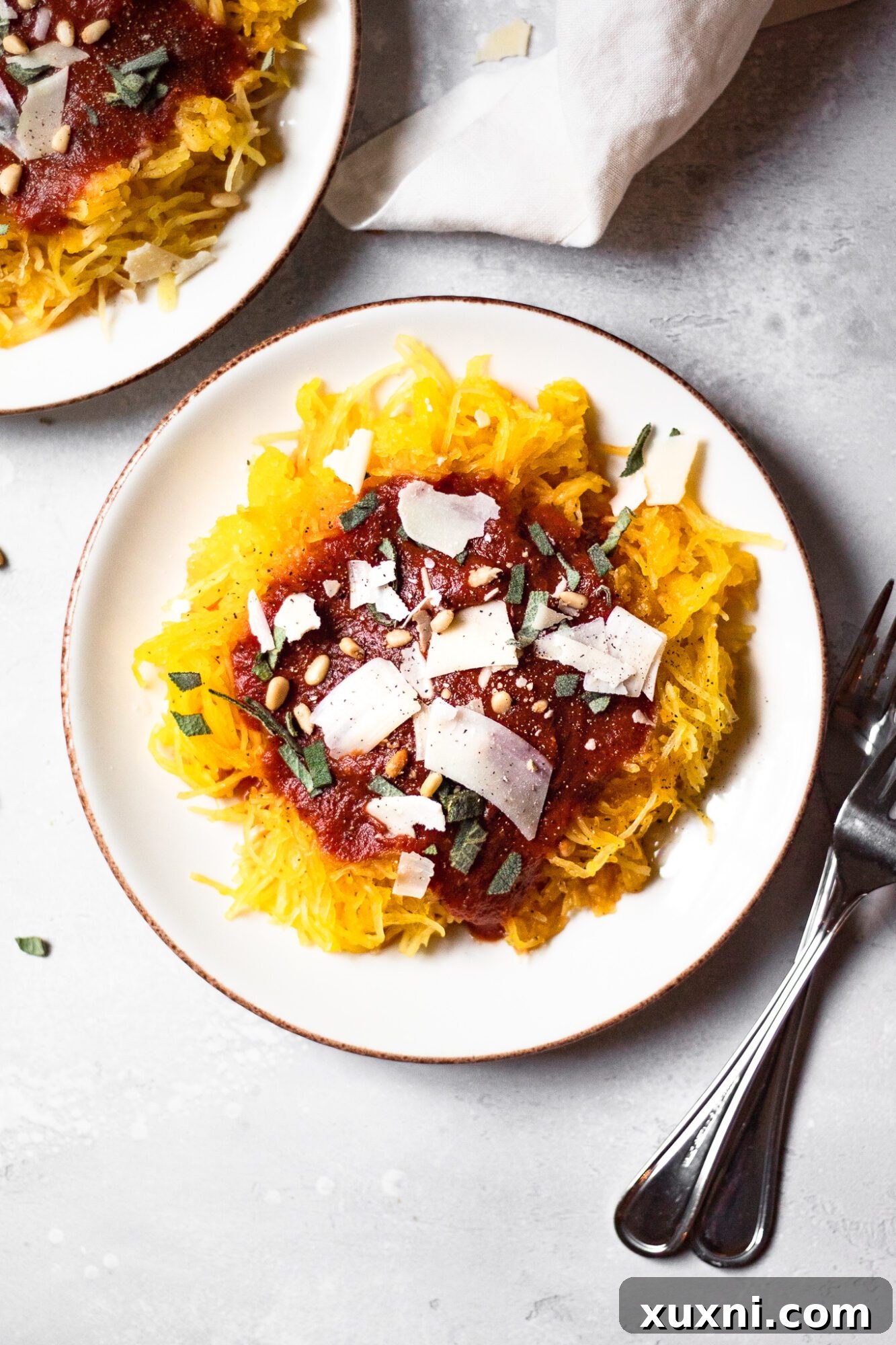
So, if you’re ready to unlock the full potential of this incredible winter squash and elevate your healthy eating game, let’s dive in!
What Exactly is Spaghetti Squash? Unraveling the Mystery
For a long time, the world of winter squash seemed complex to me. But spaghetti squash quickly became a favorite due to its unique texture and mild flavor. Scientifically known as Cucurbita pepo, spaghetti squash is a fascinating member of the gourd family. It’s easily identifiable by its firm, yellow-orange skin and an oblong shape, typically ready for harvest between early fall and late winter.
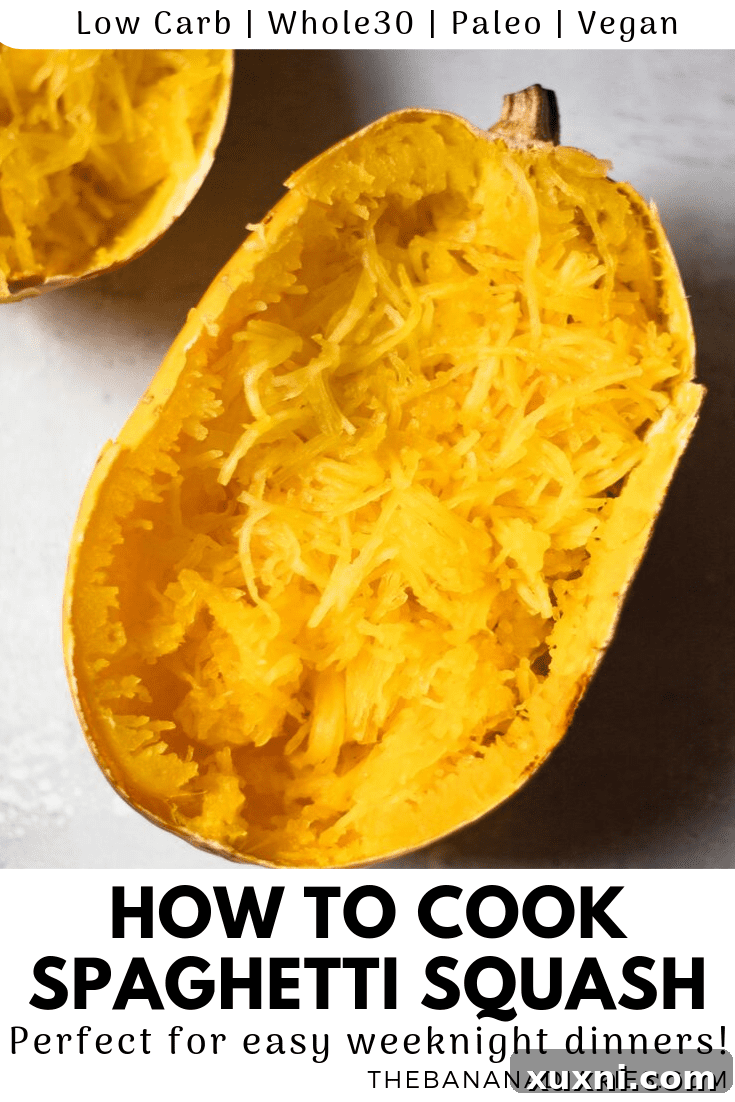
What truly sets spaghetti squash apart is found within its tough exterior. Once cooked, its flesh can be easily scraped out with a fork, revealing distinct, spaghetti-like strands. These strands provide a satisfying texture similar to pasta, making it an ideal candidate for anyone looking to reduce their carbohydrate intake or simply enjoy a vegetable-rich meal. Its delicate, slightly sweet, and nutty flavor serves as a wonderful canvas for a variety of sauces and seasonings, never overpowering the dish.
Why Spaghetti Squash Deserves a Spot on Your Plate
Beyond its unique texture, spaghetti squash boasts an impressive nutritional profile, making it a stellar choice for a wide range of dietary preferences and health goals:
- Low-Carb and Gluten-Free: For those managing blood sugar, following a ketogenic diet, or avoiding gluten, spaghetti squash is a game-changer. It offers the satisfaction of pasta without the carbohydrates or gluten, making it a perfect low-carb pasta alternative.
- Rich in Nutrients: This humble winter veggie is packed with vitamins and minerals, including Vitamin C, Vitamin B6, niacin, manganese, and beta-carotene (which the body converts to Vitamin A). These nutrients contribute to immune health, skin health, and overall well-being.
- High in Fiber: Spaghetti squash is an excellent source of dietary fiber, which is crucial for digestive health, promoting satiety, and helping to regulate blood sugar levels.
- Versatile and Diet-Friendly: It naturally fits into a multitude of dietary plans, including Whole30, Paleo, vegan, and vegetarian lifestyles. This makes it an incredibly inclusive ingredient that almost anyone can enjoy.
- Hydrating: With its high water content, spaghetti squash also contributes to your daily hydration needs, making it a refreshing addition to meals.
Whether you’re aiming for weight management, seeking nutrient-dense foods, or simply exploring new flavors, spaghetti squash is a healthy side dish that delivers on all fronts.
The Best Way to Cook Spaghetti Squash: A Step-by-Step Guide
Cooking spaghetti squash can seem intimidating due to its hard shell, but mastering the baking method will yield consistently perfect results. Unlike softer squashes, its skin doesn’t soften significantly when raw, making it challenging to cut. This baked spaghetti squash recipe simplifies the process, producing tender, moist strands ready to absorb your favorite flavors.
If you’re a visual learner, I highly recommend watching a video tutorial, but for now, here’s an easy, foolproof step-by-step guide to baking your spaghetti squash whole:
- Preheat Your Oven to 400°F (200°C): A high temperature is crucial for ensuring the squash cooks thoroughly and softens evenly through its thick skin. Line a baking sheet with parchment paper or aluminum foil for easy cleanup.
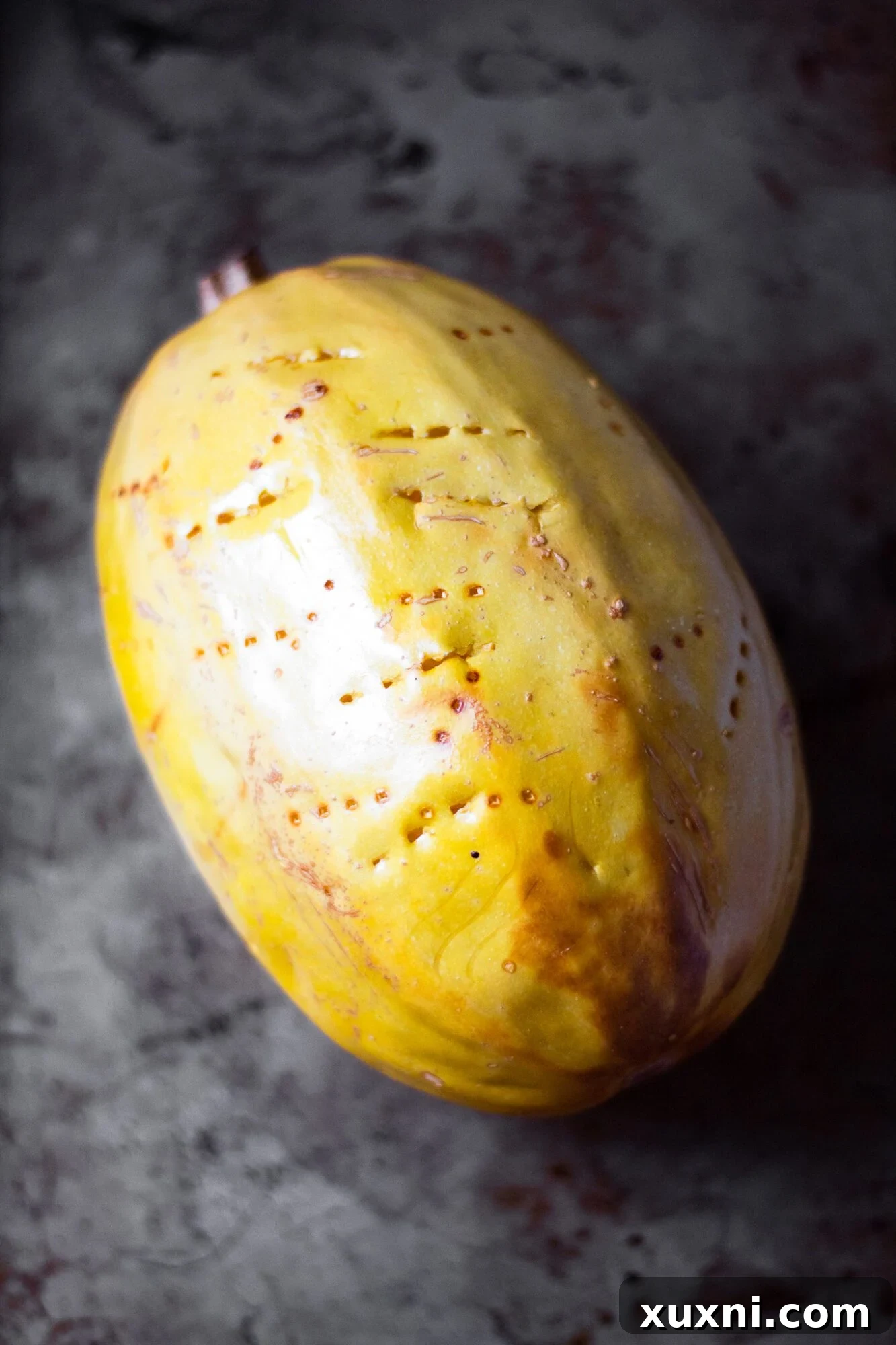
- Prepare the Squash: Carefully poke several holes all around the spaghetti squash using a sturdy fork or a sharp knife. This allows steam to escape during baking, preventing it from bursting and ensuring even cooking. Be cautious to avoid poking yourself.
- Bake Until Tender: Place the whole, poked spaghetti squash directly onto the prepared baking sheet. Bake for approximately 1 hour, or until the skin is soft enough that you can easily pierce it with a fork. The cooking time may vary slightly depending on the size of your squash; larger squashes will require more time.
- Cool Before Handling: Once baked, remove the spaghetti squash from the oven and let it cool on the baking sheet for at least 10-15 minutes. This cooling period is important not only for safety but also allows the internal temperature to stabilize, resulting in perfectly tender strands.
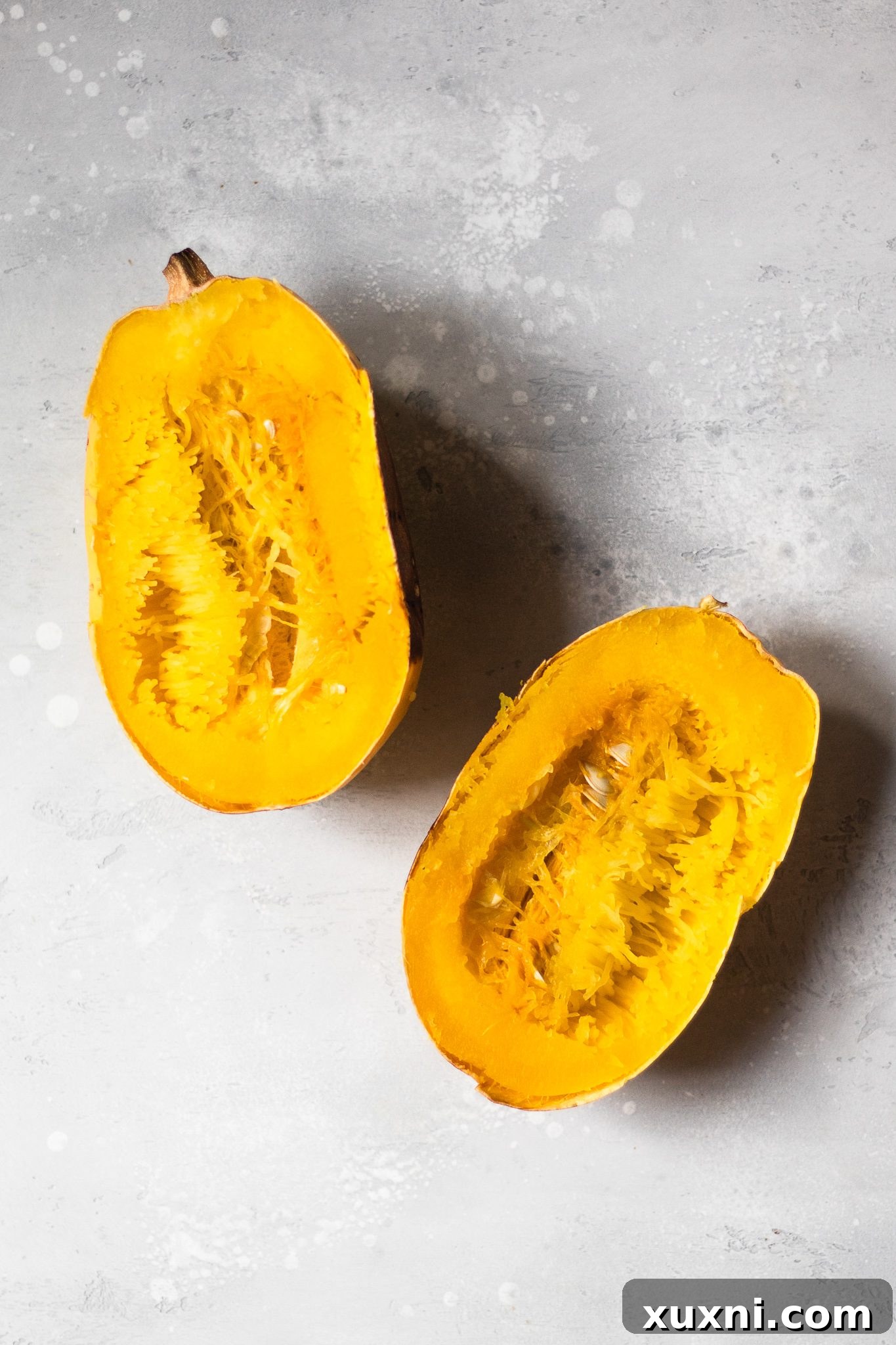
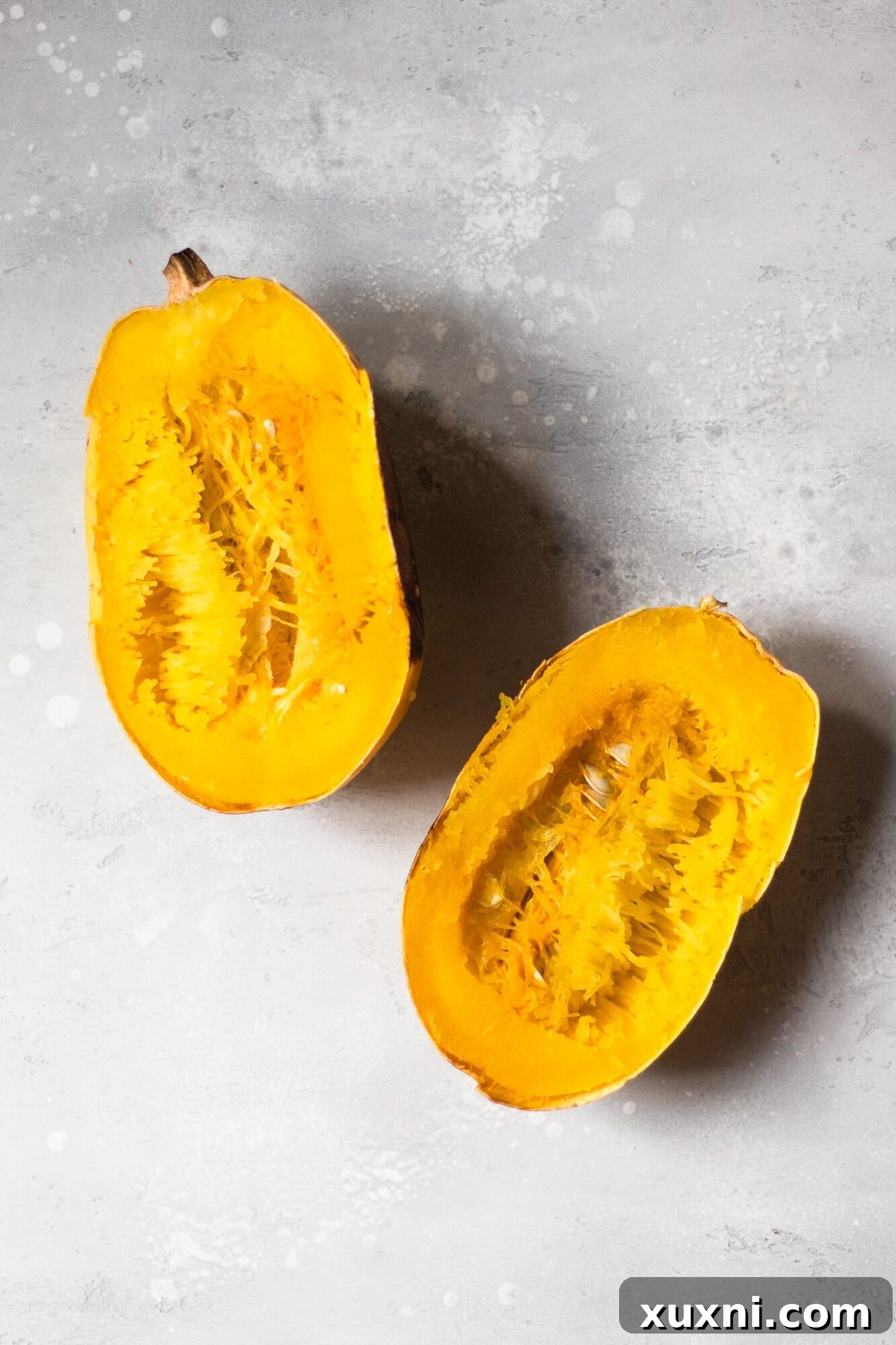
- Slice and Deseed: After cooling, carefully slice the squash in half lengthwise. Using a spoon, gently scoop out the seeds and fibrous strands from the center. You can discard these or roast the seeds separately for a crunchy snack!
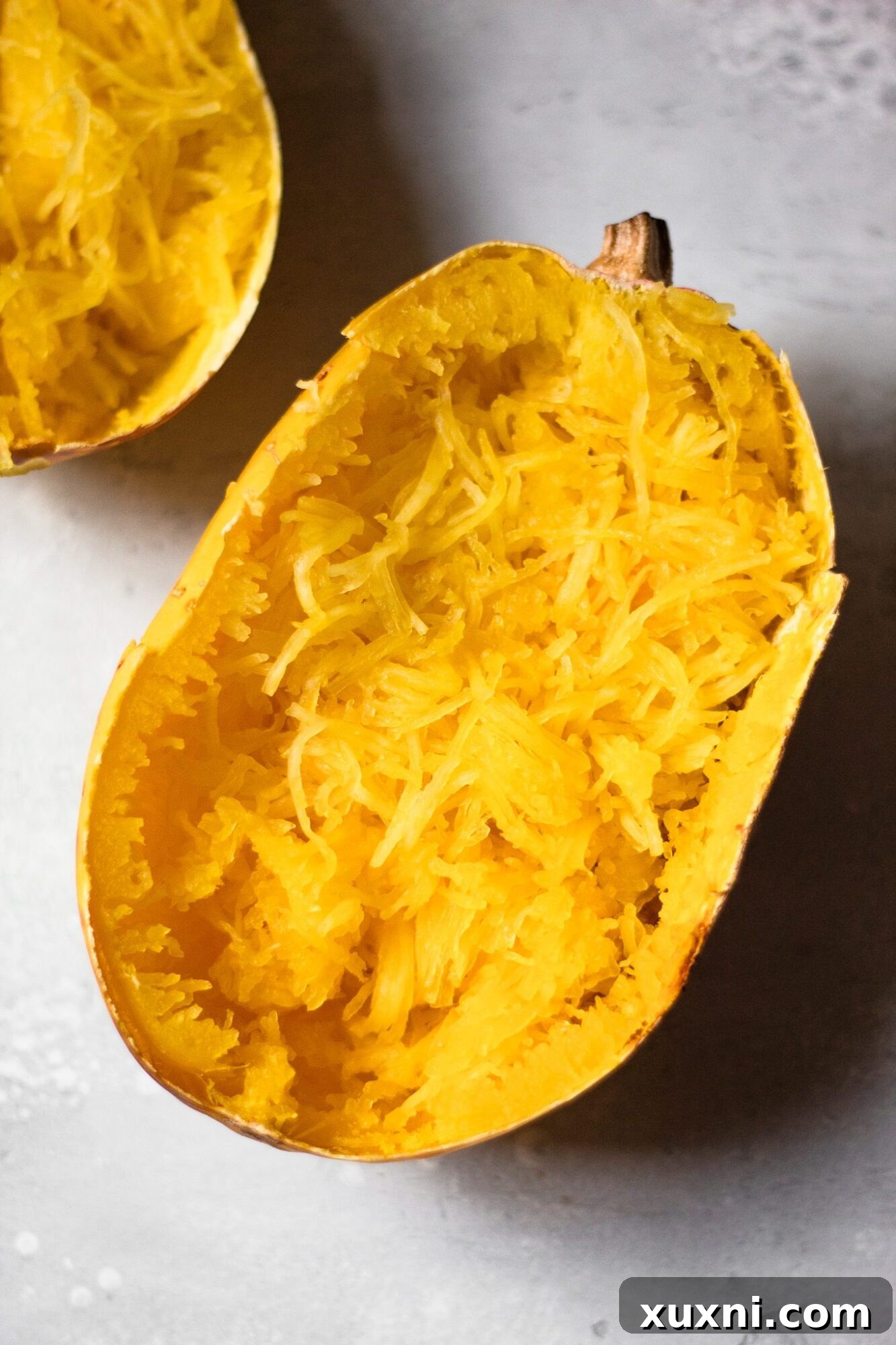
- Scrape the Strands: With a fork, gently pull at the cooked flesh from the sides of the squash. The beautiful, noodle-like strands will easily separate and pull away from the skin. And just like that, you have perfectly cooked spaghetti squash, ready to be enjoyed!
Baking spaghetti squash whole truly is the easiest and most effective method. It ensures maximum moisture retention and minimizes the effort required for preparation, making it an ideal choice for meal prepping a healthy veggie throughout the week.
What About Other Cooking Methods?
- Halving and Roasting: You can also cut the squash in half first, scoop out the seeds, then drizzle with olive oil, salt, and pepper before roasting cut-side down. This method often requires similar cooking times but can be slightly drier.
- Microwaving (Not Recommended for Best Flavor): While microwaving can be quicker, it often results in a rubbery texture and significantly less flavor compared to baking. For truly delicious spaghetti squash, baking is always the superior choice. Just like with sweet potatoes, the oven brings out the best in winter squash.
Essential Tips & Tricks for Perfect Baked Spaghetti Squash
To ensure your spaghetti squash experience is always a success, keep these expert tips in mind:
- Safety First When Slicing: If you choose to slice the squash before baking (which is harder but some prefer for quicker cooking), use a very sharp, sturdy knife. Be extremely careful, as the hard, round exterior can be difficult to handle. A good trick is to slice off a tiny bit from one side to create a flat, stable base before attempting to cut it lengthwise.
- Slice Lengthwise for Longer Strands: For the most desirable, long noodle-like strands, always slice the spaghetti squash lengthwise, from stem to base. Avoid slicing through the stem itself, as it’s too tough; cut around it.
- Enhance Flavor Simply: After scraping out the strands, a simple drizzle of good quality olive oil and a sprinkle of sea salt can elevate the natural flavors. This is perfect if you’re enjoying it as a healthy side dish or as a base for other ingredients.
- Experiment with Spices: Spaghetti squash is a flavor absorber! Before serving, toss the strands with your favorite herbs and spices. Basil, thyme, oregano, rosemary, sage, cumin, garlic powder, onion powder, and a pinch of red pepper flakes all pair wonderfully with its mild taste.
- Do NOT Microwave for Optimal Taste: I cannot stress this enough – while a microwave offers speed, it compromises the texture and flavor significantly. Baking allows for a gentle, even cook that caramelizes the natural sugars and develops a richer taste. If flavor is your priority, always bake.
- A Truly Versatile & Healthy Staple: Remember, spaghetti squash is naturally Whole30 friendly, Paleo, vegan, gluten-free, grain-free, and low in carbohydrates. This makes it an incredibly inclusive ingredient for nearly any dietary need. However, it’s not exclusively a “weight-loss food.” Anyone can enjoy the deliciousness and nutritional benefits of spaghetti squash; its role simply depends on how you choose to serve it.
Delicious Ways to Enjoy Your Cooked Spaghetti Squash
One of the greatest attributes of spaghetti squash is its incredible adaptability. Its neutral flavor and noodle-like texture make it a fantastic foundation for countless culinary creations. Here are some of my favorite ways to incorporate this healthy winter veggie into meals:
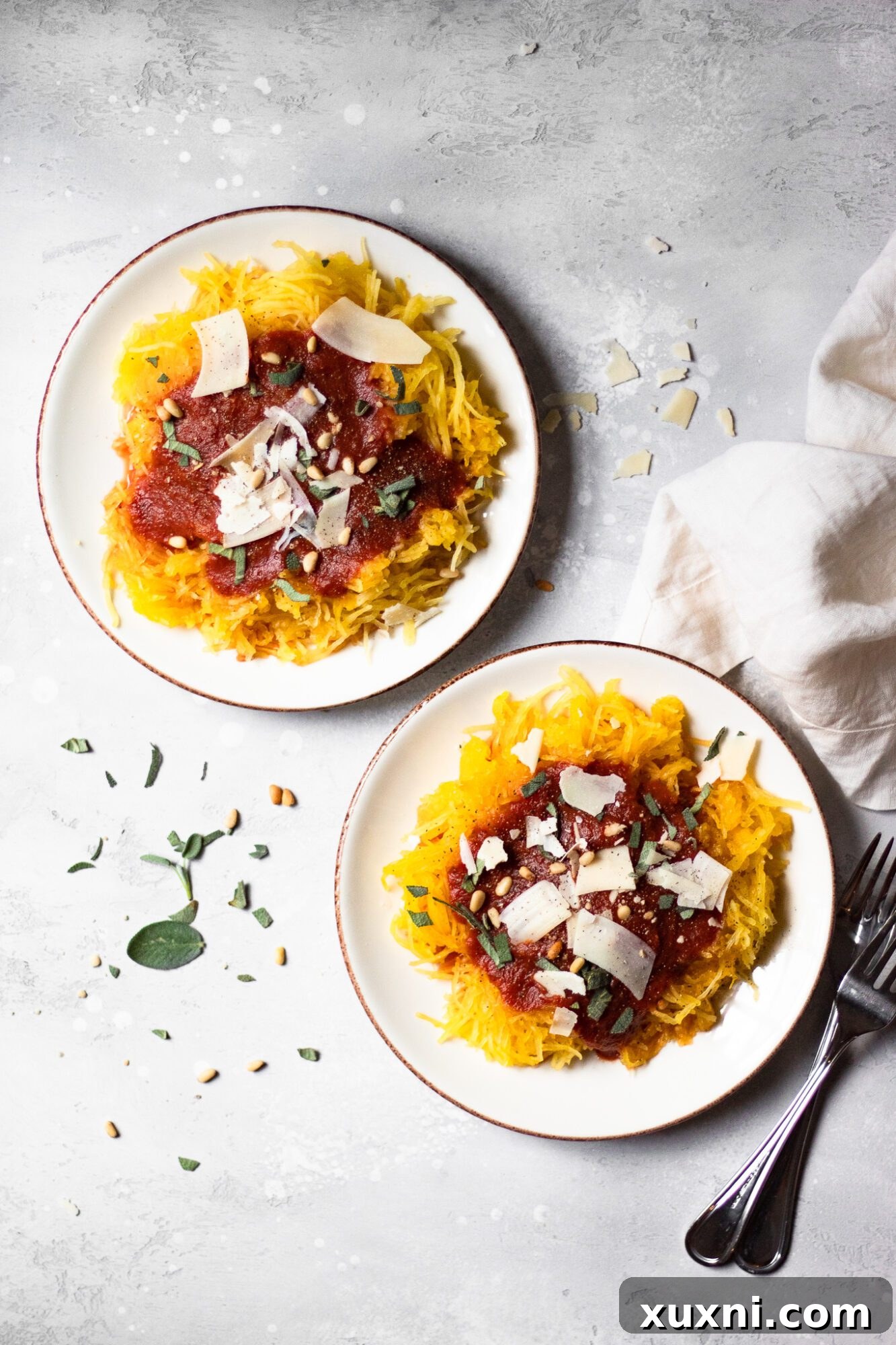
Below are some inspiring ideas, along with my favorite simple marinara sauce recipe to get you started:
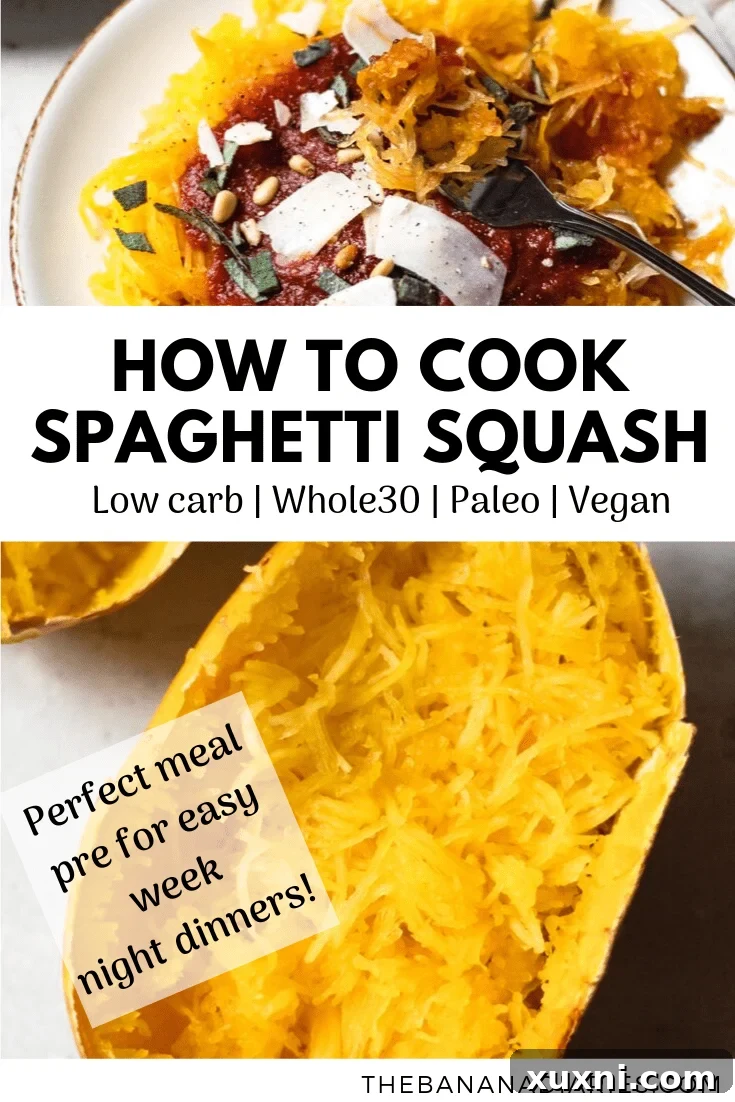
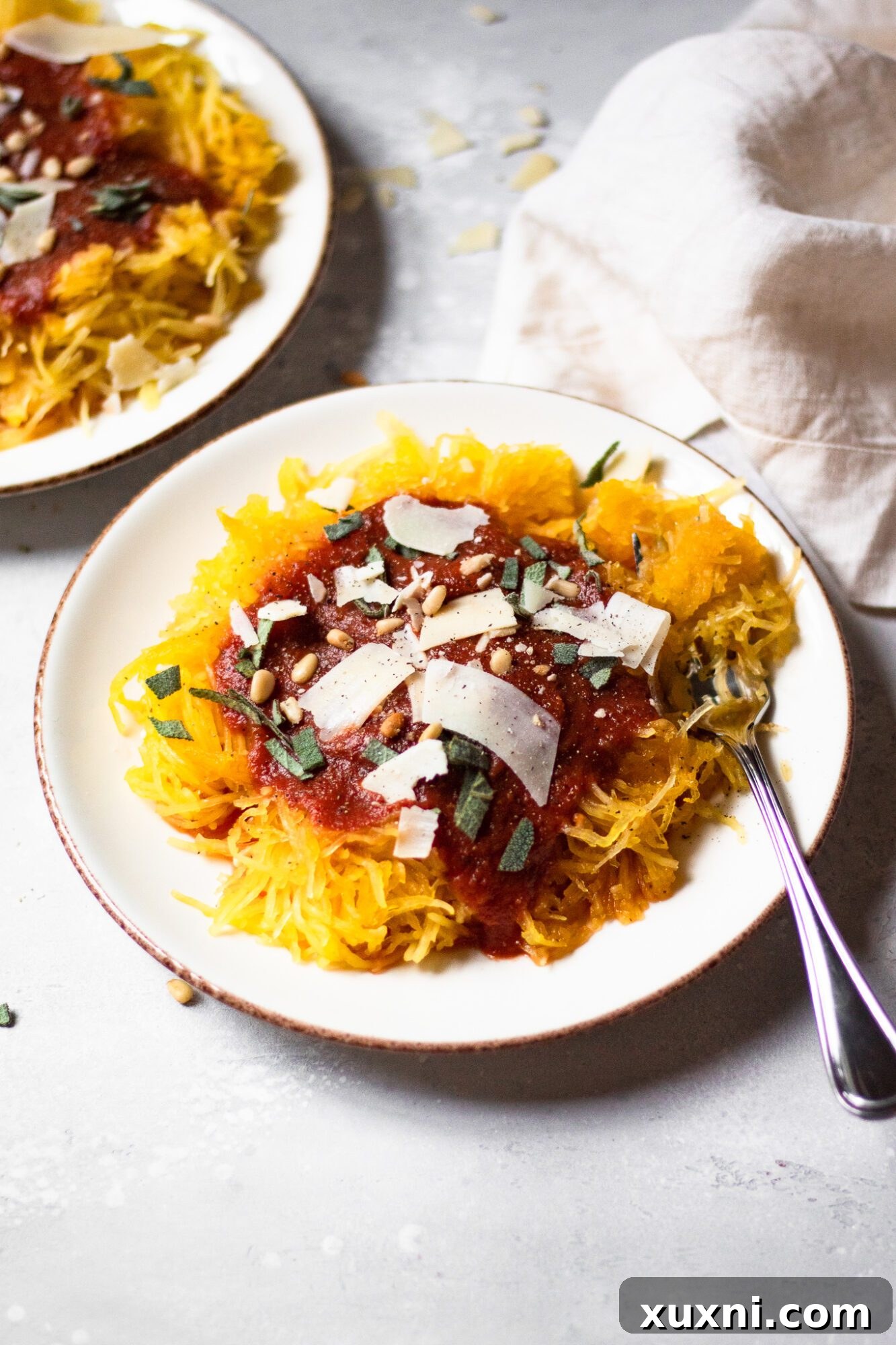
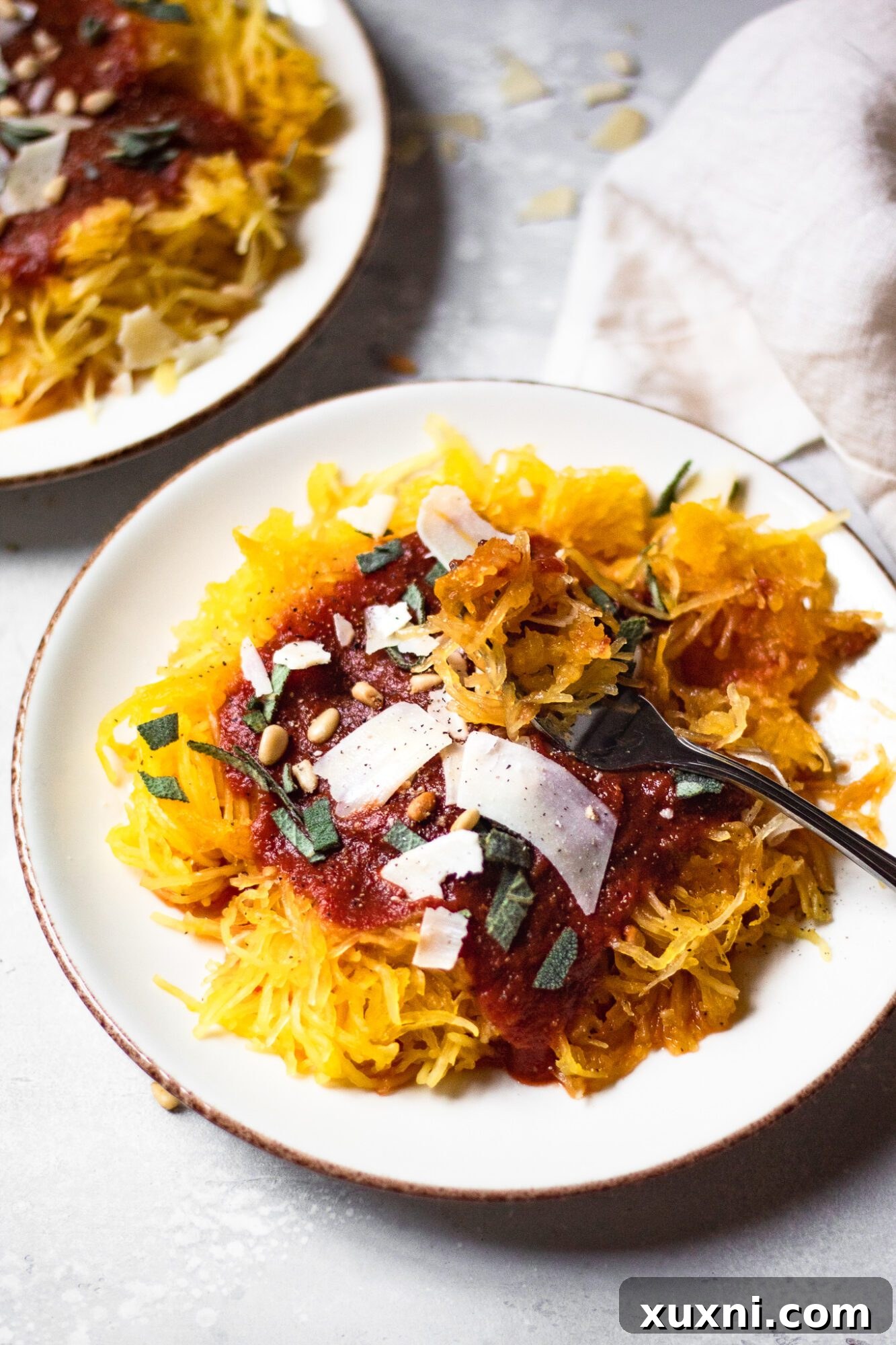
- Classic Pasta Alternative: The most popular use! Replace traditional pasta with spaghetti squash and top it with your favorite sauce. My go-to is a rich marinara sauce (recipe included below!), but it also shines with a creamy Alfredo sauce, especially a lightened-up dairy-free version. You can even bake it directly in the squash shell for a beautiful presentation.
- Baked Casseroles: Combine spaghetti squash strands with your choice of protein (chicken, ground turkey, lentils), vegetables, cheese (dairy or dairy-free), and a flavorful sauce. Bake until bubbly and golden for a comforting, nutritious meal.
- Pesto Perfection: Toss the warm spaghetti squash strands with fresh basil pesto, sun-dried tomatoes, and toasted pine nuts for a vibrant and aromatic dish. A squeeze of lemon juice brightens the flavors even more.
- Asian-Inspired Noodle Bowls: Use spaghetti squash as the base for a healthy Pad Thai, lo mein, or any stir-fry. It absorbs the savory, spicy, or sweet notes of Asian sauces beautifully. Add some sautéed tofu or shrimp and your favorite crisp veggies.
- Hearty Soups and Stews: Stir cooked spaghetti squash into brothy soups or robust stews in the last few minutes of cooking. It adds texture and substance, transforming a simple soup into a more filling meal.
- “Mac n’ Cheese” Boats: For a fun and healthier take on a classic, fill the squash halves with a creamy, rich “cheese” sauce (like a dairy-free cauliflower cheese sauce). Bake until hot and bubbly, perhaps topped with some gluten-free bread crumbs for crunch.
- Savory Pancakes or Fritters: Mix finely chopped spaghetti squash with eggs, flour (or a gluten-free alternative), herbs, and spices, then pan-fry for delicious, healthy fritters.
- Add to Salads: Cooled spaghetti squash strands can be a wonderful addition to cold salads, providing a unique texture and subtle sweetness.
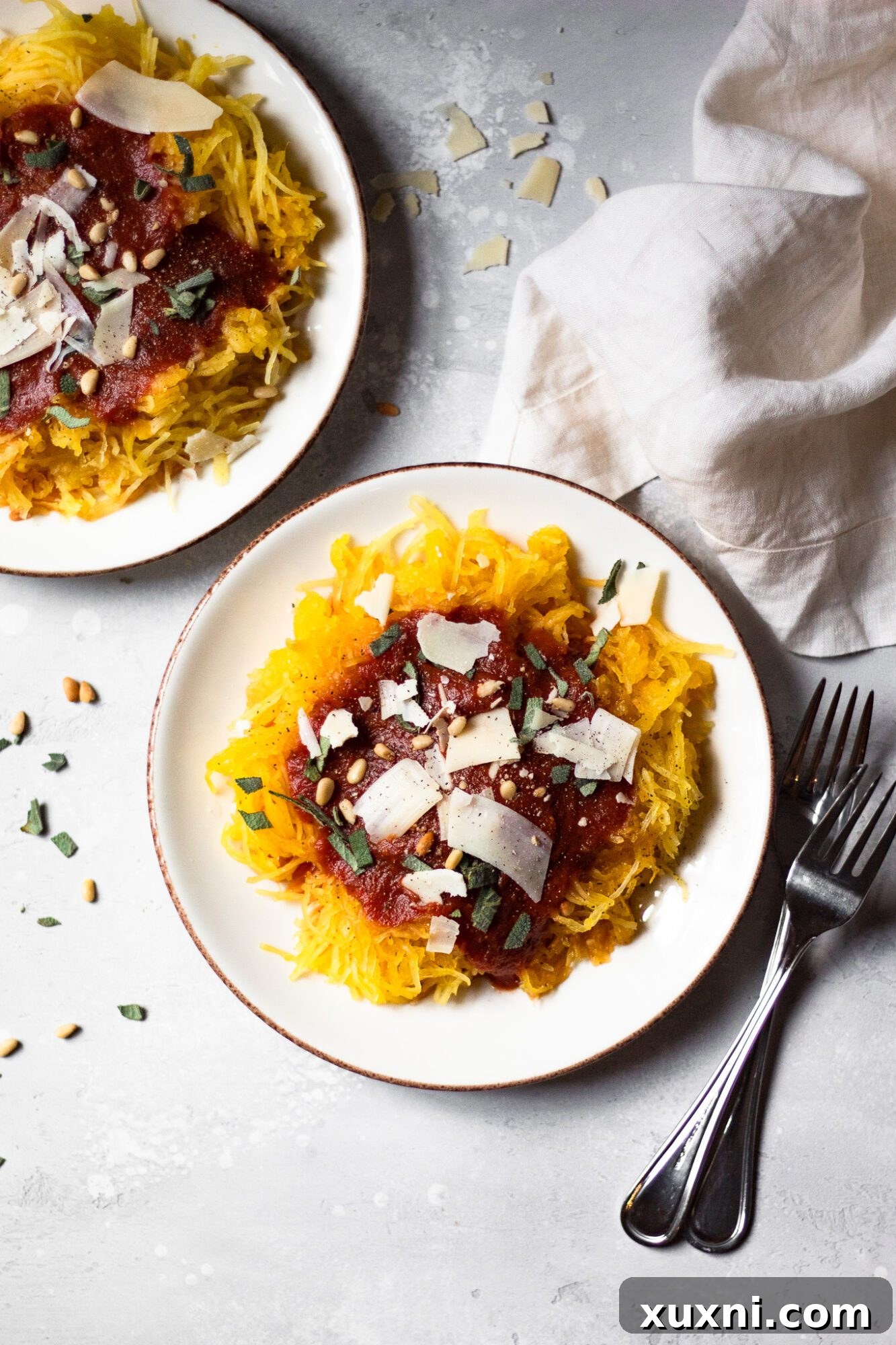
Storage and Meal Prep Made Easy
Spaghetti squash is excellent for meal prepping. Once cooked, the strands can be stored in an airtight container in the refrigerator for up to 3-5 days. This makes it incredibly convenient to pull out and use as a quick base for lunches or dinners throughout the week. You can also freeze cooked spaghetti squash. Simply place the cooled strands in a freezer-safe bag or container and freeze for up to 3-4 months. Thaw in the refrigerator overnight before reheating.
I truly hope this guide inspires you to try cooking spaghetti squash and integrate this wonderful winter veggie into your meals. It’s a simple, delicious, and incredibly healthy addition to any fall or winter dinner rotation. Don’t be afraid to experiment with flavors and find your own favorite ways to enjoy it!
Should you try this recipe and my simple marinara sauce, please let me know your thoughts in the comments below! And if you share your culinary creations on social media, don’t forget to tag me on Instagram and Pinterest using #thebananadiaries. I love seeing your delicious results!
Happy Squashing!
More Healthy & Comforting Recipes You’ll Love:
Lightened Up Fettuccine Alfredo
Sweet Potato Gnocchi
How to Make Focaccia
Easy French Ratatouille
Easy Veggie Lentil Mushroom Burgers
Save This Recipe for Later! Pin it to Your Favorite Board on Pinterest!

Print

How to Cook Spaghetti Squash: The Ultimate Guide
5 Stars 4 Stars 3 Stars 2 Stars 1 Star
5 from 1 review
Author: thebananadiaries
Prep Time: 5
Cook Time: 60
Total Time: 1 hour 5 minutes
Yield: 2-3 1x
Category: Dinner, Healthy, Vegan
Method: Baking
Cuisine: American, Italian-Inspired
Description
Discover the easiest and most effective method to cook spaghetti squash! This delicious winter veggie is an ideal healthy side or a fantastic low-carb, gluten-free noodle substitute for any sauce. Perfectly suited for Whole30, Paleo, vegan, and low-carb diets, it’s a versatile addition to your healthy dinner rotation. Get ready for moist, tender strands every time!
Ingredients
Scale
For the Spaghetti Squash:
- 1 whole spaghetti squash (medium to large size, approx. 3-4 lbs)
- Olive oil (for serving, optional)
- Sea salt (for serving, optional)
- Optional spices: garlic powder, dried basil, oregano, red pepper flakes
For the Simple Marinara Sauce (Optional, but Highly Recommended!):
- 1 tsp olive oil
- 1 tsp minced garlic (about 1-2 cloves)
- 1 tsp finely chopped onion (about 1/4 small onion)
- 1 cup high-quality marinara sauce (store-bought or homemade)
- ½ tsp sea salt (or to taste)
- Optional toppings: fresh basil, vegan parmesan cheese, nutritional yeast, toasted bread crumbs (gluten-free if needed)
Instructions
- Preheat your oven to 400°F (200°C). Line a large baking sheet with parchment paper or aluminum foil for easy cleanup.
- Carefully poke several holes into the spaghetti squash all around its surface using a sturdy fork or the tip of a sharp knife. This step is important to allow steam to escape during cooking.
- Place the prepared whole spaghetti squash onto the lined baking sheet.
- Bake for approximately 60 minutes, or until the squash skin is very soft when pressed. Cooking time may vary based on squash size; larger squashes might need an extra 15-20 minutes.
- Once baked, remove the squash from the oven and let it cool on the baking sheet for at least 10-15 minutes. This cooling time is crucial for both safety and for the strands to properly form.
- After cooling, carefully slice the spaghetti squash in half lengthwise. Using a spoon, scoop out and discard the seeds and any stringy pulp from the center.
- With a fork, gently scrape the cooked flesh from the inside of the squash halves. The flesh will separate into long, spaghetti-like strands. You can either leave the strands in the squash “boats” for serving or transfer them to a large bowl.
- Season the spaghetti squash strands with a drizzle of olive oil and a sprinkle of sea salt. For extra flavor, toss with your favorite dried herbs like basil, oregano, or a pinch of red pepper flakes. Serve immediately as a side dish, or use as a base for your chosen sauce. Leftovers can be stored in an airtight container in the refrigerator for up to 3-5 days.
To make the Simple Marinara Sauce:
- In a small saucepan, heat 1 tsp of olive oil over medium heat. Add the minced garlic and chopped onion. Sauté gently for 2-3 minutes until fragrant and the onion becomes translucent, being careful not to burn the garlic.
- Pour in the 1 cup of marinara sauce and add ½ tsp of sea salt. Stir everything together until well combined. Bring the sauce to a gentle simmer and let it cook for 5-7 minutes, allowing the flavors to meld and the sauce to heat through.
- Serve the warm marinara sauce generously over the prepared spaghetti squash strands. Garnish with optional toppings like fresh basil, vegan parmesan cheese, or toasted breadcrumbs, if desired. Enjoy your healthy and delicious meal!