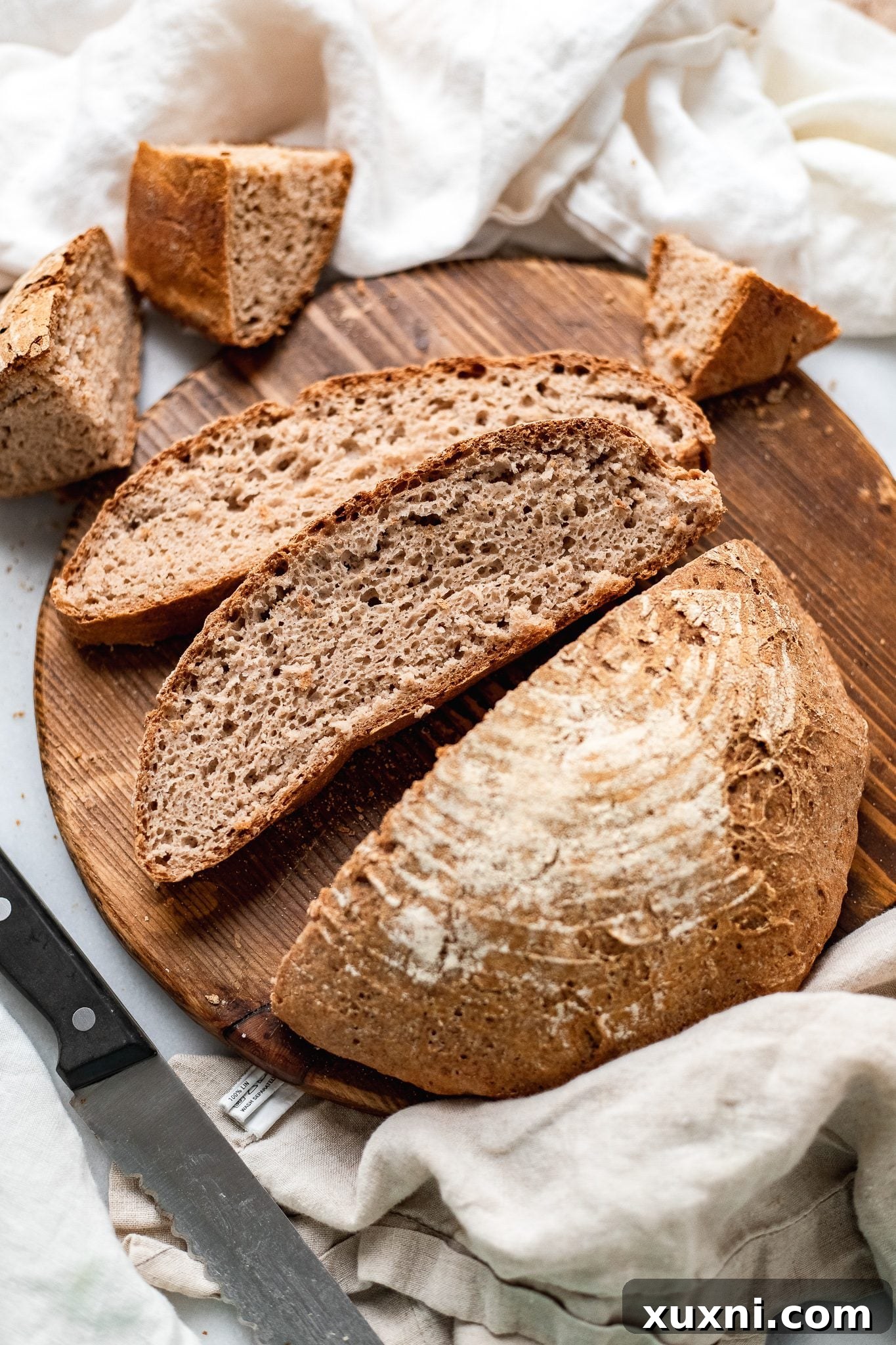
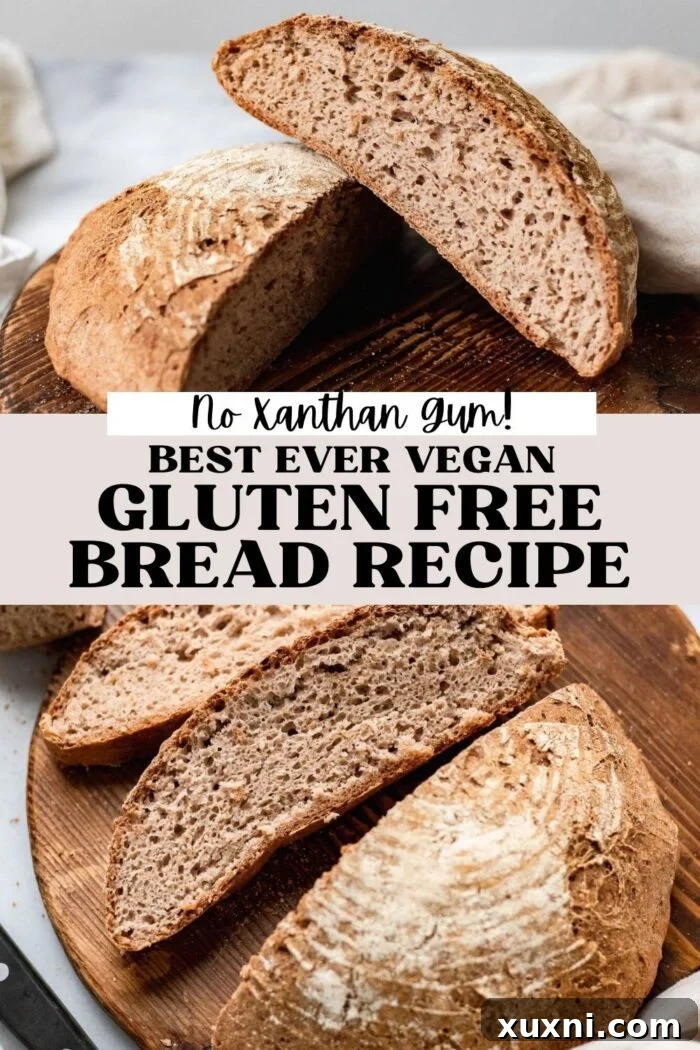
Welcome to the ultimate guide for creating a truly exceptional gluten-free artisan bread that will redefine your perception of allergen-friendly baking. Imagine a loaf that boasts a perfectly crisp crust, a soft and chewy interior, and those delightful air pockets characteristic of classic artisan bread – all without an ounce of gluten, dairy, or eggs. This isn’t just a recipe; it’s a culinary revelation. Crafted with minimal, wholesome ingredients and, most notably, free from xanthan gum, this vegan gluten-free bread recipe consistently produces results that fool even the most discerning gluten-loving palates. Get ready to bake a bread that stretches, pulls, and tastes just like the real deal!
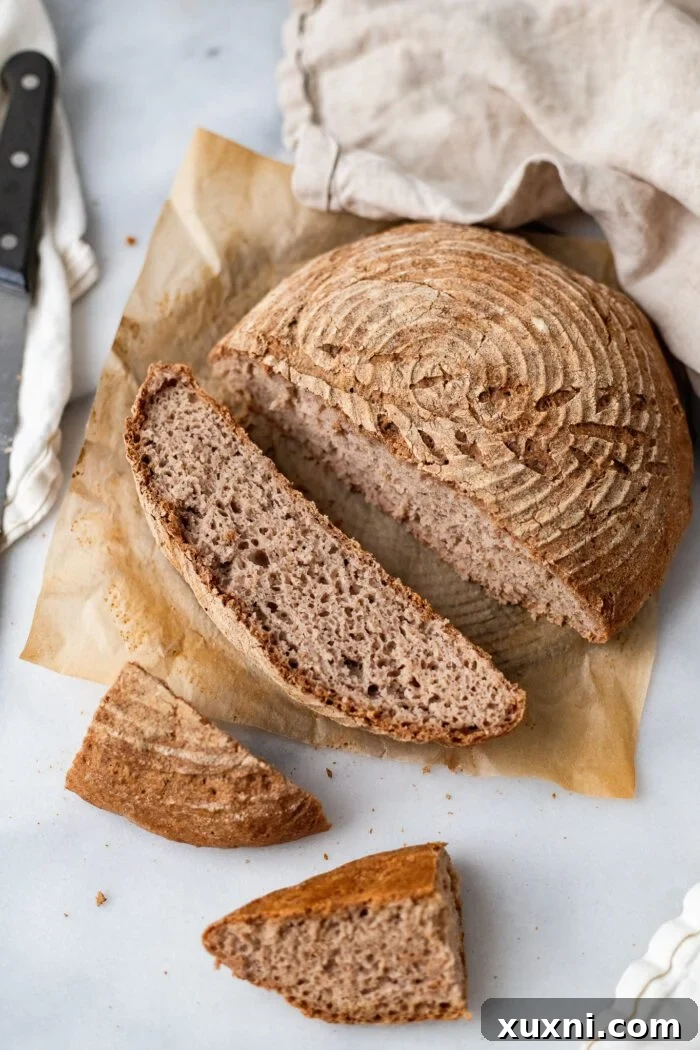
Why This Gluten-Free Vegan Bread Will Amaze You
Prepare to be genuinely excited about this homemade gluten-free vegan bread, regardless of your dietary needs. This recipe isn’t just for those avoiding gluten; it’s for anyone who appreciates truly incredible bread. I can confidently say it’s among the best gluten-free artisan loaves you’ll ever encounter.
What makes it so special? Firstly, its incredible simplicity. You don’t need years of baking experience to achieve professional-level results. Secondly, it’s naturally vegan, meaning no eggs, no dairy, no whey – just pure, plant-based goodness. Forget about expensive, specialized equipment; this recipe doesn’t even require a Dutch oven. Perhaps the biggest game-changer for many is the absence of xanthan gum. While commonly used in gluten-free baking, xanthan gum can cause digestive discomfort for some, and this recipe proves you don’t need it to create a perfect loaf.
My journey to this recipe was inspired by the pioneering work of Kat from The Loopy Whisk and Chantal from Fresh is Real, whose innovative approaches to gluten-free baking motivated me to develop my own unique method. The outcome has been nothing short of spectacular.
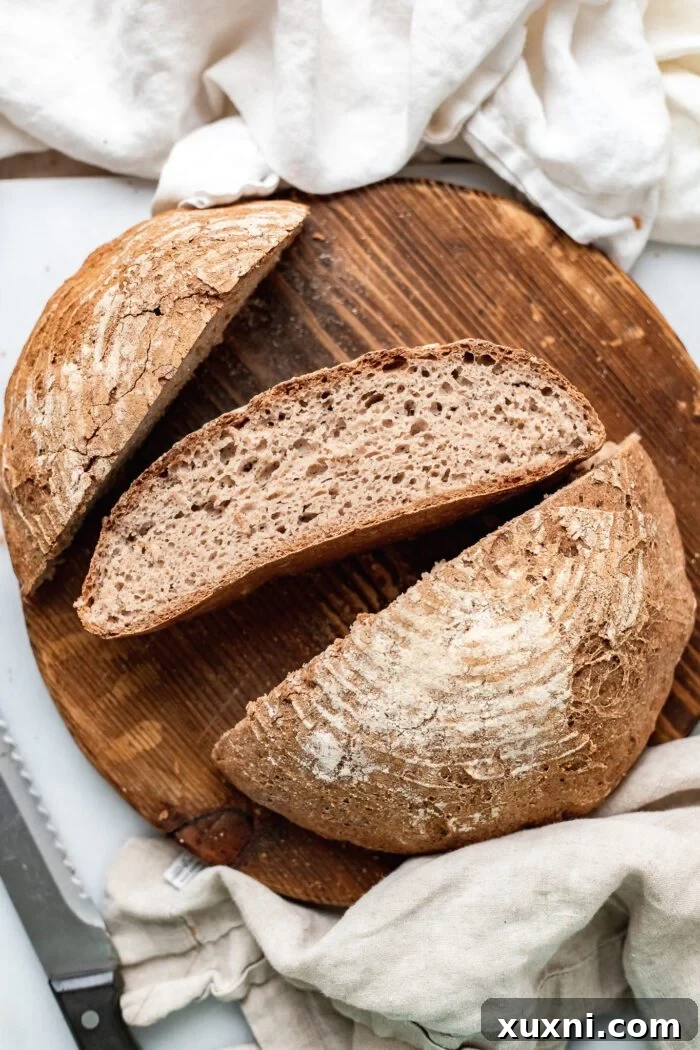
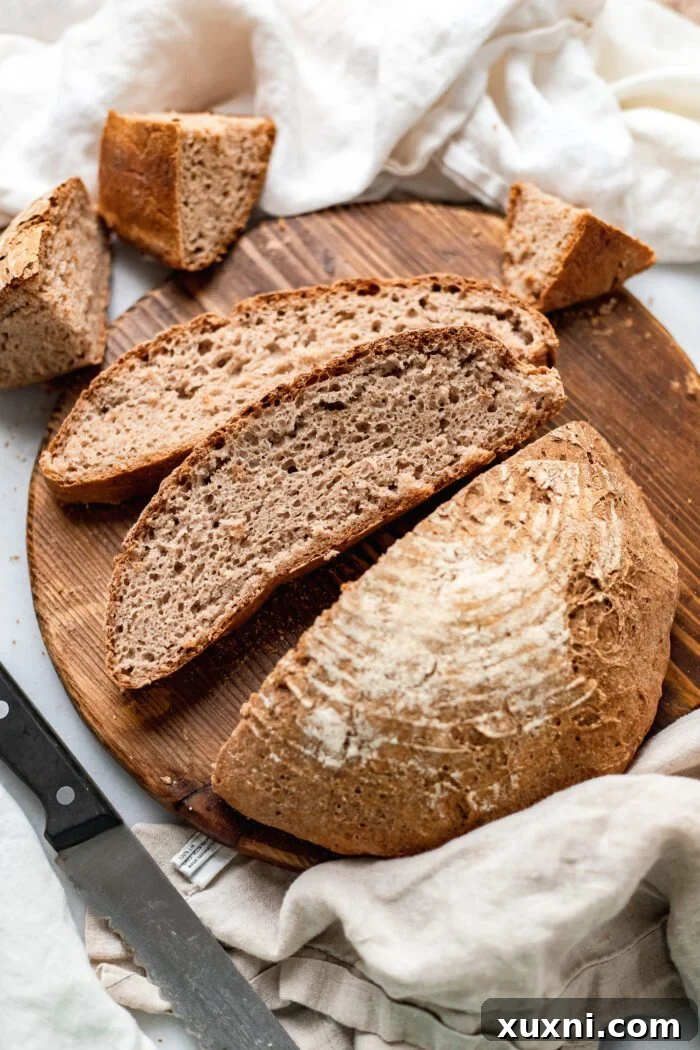
This gluten-free bread replicates the authentic experience of classic artisan bread in every way. It boasts the satisfying stretch and pull, the beautiful, open crumb structure with appealing air bubbles, and a wonderfully chewy texture. It’s robust enough for slicing, dipping, or building the perfect sandwich. Don’t be surprised when your gluten-loving friends and family ask for a second slice – or even the whole loaf!
Ready to embark on your gluten-free artisan bread adventure? Let’s dive in.
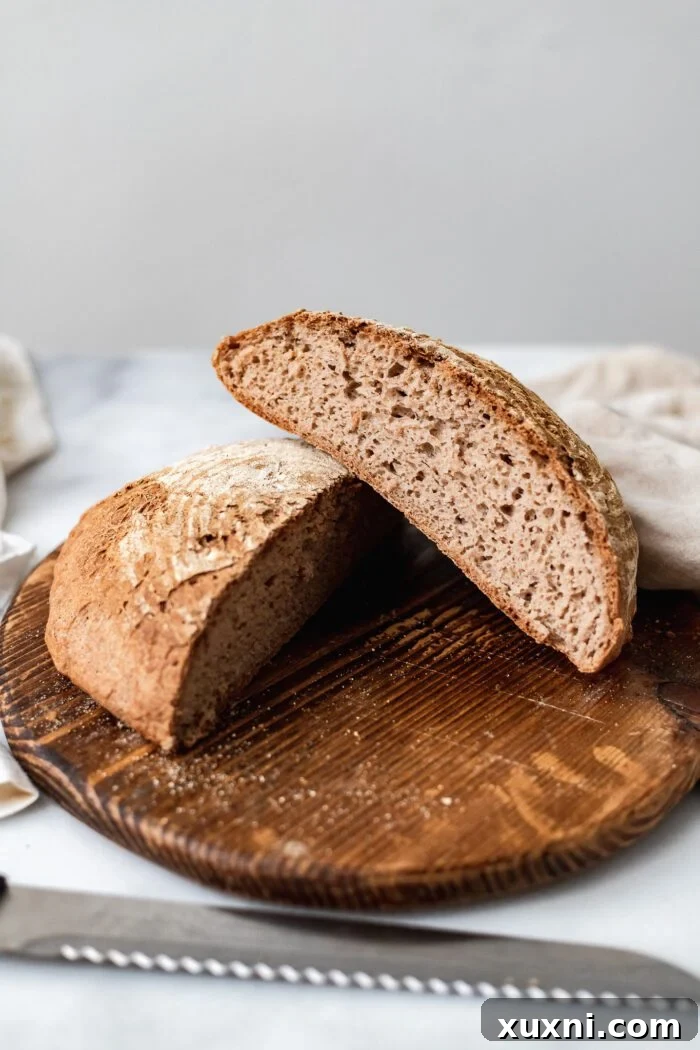
Table of Contents
- Why This Gluten-Free Vegan Bread Will Amaze You
- Essential Ingredients for Your Gluten-Free Loaf
- Understanding Psyllium Husk: The Gluten-Free Secret
- Smart Substitutions for Dietary Needs
- Tools You’ll Need: Baking Gluten-Free Bread Made Simple
- Step-by-Step Guide: Crafting Your Perfect Gluten-Free Artisan Bread
- Mastering the Art of Bread Scoring
- Creative Topping Ideas for Your Artisan Bread
- Storing and Enjoying Your Homemade Gluten-Free Bread
- Freezing Your Loaf for Future Delights
- Delicious Ways to Serve Your Gluten-Free Artisan Bread
- Frequently Asked Questions About Gluten-Free Bread
- Final Thoughts on Your Gluten-Free Baking Journey
Essential Ingredients for Your Gluten-Free Loaf
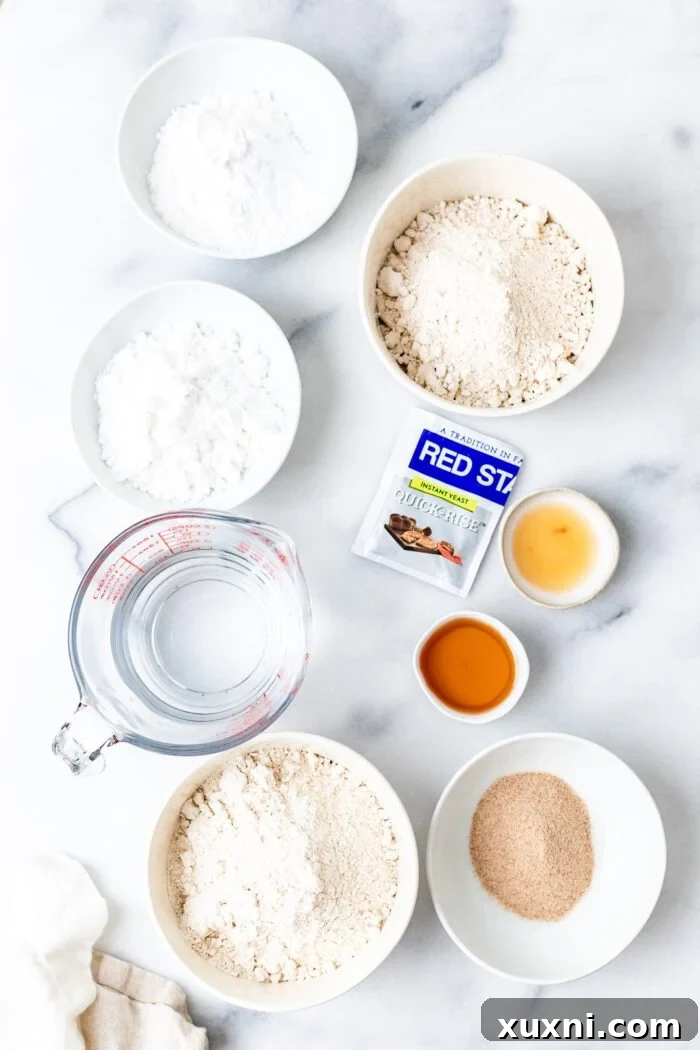
The magic of this gluten-free vegan bread lies in a carefully selected blend of ingredients, each playing a crucial role in achieving that authentic artisan texture and flavor. Here’s a closer look at what you’ll need:
- Instant Yeast: For this recipe, instant yeast (also known as quick-rise yeast) is our secret weapon for a reliable and robust rise. While typically mixed directly with dry ingredients, my extensive testing has shown that blooming instant yeast, similar to active dry yeast, yields a superior and more consistent result for this specific loaf. This ensures your bread rises beautifully, creating that coveted airy crumb.
- Maple Syrup: This natural sweetener does more than just add a touch of flavor; it acts as vital fuel for the yeast, helping it activate and thrive. Its liquid form also integrates seamlessly into the dough.
- Psyllium Husk Powder: This is a non-negotiable ingredient, the star of our gluten-free show. It mimics the elasticity and structure of gluten, providing the crucial stretch, chew, and overall integrity that makes this bread feel so authentic. We’ll delve deeper into its wonders in the next section.
- Sorghum Flour: A cornerstone of our gluten-free flour blend, sorghum flour is a wonderfully mild and slightly sweet grain. I prefer it significantly over rice flour, which often results in a grainy texture in gluten-free breads. Sorghum contributes to a smooth, tender crumb and excellent structure. While millet flour is another common gluten-free option, sorghum consistently delivers superior results here.
- Oat Flour: Adding a subtle nuttiness and a tender texture, oat flour is another fantastic gluten-free choice. It complements the sorghum perfectly. If you have an oat sensitivity, don’t worry – I’ve provided approved substitutions below.
- Potato Starch: This is a critical component for achieving the classic springy, light texture of artisan bread. Please pay close attention: you MUST use potato starch, NOT potato flour. They are entirely different in their properties and cannot be interchanged. Potato starch is a pure starch that provides lightness and crispiness, while potato flour is made from whole potatoes and behaves more like a heavy flour.
- Arrowroot Starch: Similar to potato starch, arrowroot starch (or tapioca starch/flour, as a suitable substitute) contributes to the bread’s lightness, aids in crust development, and provides a pleasant chewiness.
- Apple Cider Vinegar: Don’t skip this! Apple cider vinegar plays a pivotal role in stabilizing the yeast’s activity, helping to produce a lighter, more tender crumb. It subtly enhances the yeast’s leavening power without imparting a vinegary taste to the final product.
- Salt: Beyond enhancing flavor, salt is essential for regulating yeast activity. It helps prevent the yeast from consuming all the sugar too quickly, ensuring a controlled rise and a balanced taste profile.
Understanding Psyllium Husk: The Gluten-Free Secret
If you’re new to gluten-free baking, psyllium husk powder might seem like an unusual ingredient, but it is absolutely indispensable for this recipe. Think of it as the magical binder that replaces gluten’s elasticity and structure. If you’ve ever tried my gluten-free vegan cinnamon rolls, you’ll already be familiar with its vital contribution to achieving that perfect stretch and pull.
Psyllium husk is a soluble fiber derived from the seeds of the Plantago ovata plant. When mixed with water, it forms a thick, gelatinous substance. In gluten-free baking, this gel acts as a powerful binder and emulsifier, mimicking the structural network that gluten provides in traditional wheat bread. It’s what gives this bread its incredible ability to stretch and hold shape, creating a crumb that’s not dry or crumbly, but moist and chewy.
What’s truly remarkable is that psyllium husk often outperforms xanthan gum in achieving a superior bread texture. It provides a more natural elasticity and a less “gummy” feel, making it not just a replacement, but a significant upgrade in the world of gluten-free baking. For this recipe, I recommend using 18 grams of finely ground psyllium husk powder. If you only have rough psyllium husks, you can use 20 grams instead, as it’s less concentrated. Be precise with your measurements for the best results!
Smart Substitutions for Dietary Needs
While precision is key in gluten-free baking, I understand that sometimes substitutions are necessary. Here are approved alternatives for certain ingredients, along with important notes:
- Maple Syrup: If maple syrup isn’t available, you can easily substitute it with an equal amount of coconut sugar or organic granulated sugar. It’s crucial to ensure your granulated sugar is organic, as some non-organic sugars in the US may be processed with bone char, making them not vegan. All organic granulated sugars are inherently vegan-friendly.
- Oat Flour: While oat flour is wonderful, some individuals with Celiac disease also experience an intolerance to oats, primarily due to the avenin protein found in oats. Studies indicate this affects about 8% of Celiac patients. If you have this sensitivity, you can swap oat flour for an equal amount of buckwheat flour (1 cup / 120g) or simply use more sorghum flour (1 cup / 136g). Please refer to the recipe card notes for precise measurements. I do not recommend making the entire loaf with just oat flour, as the dough will become overly sticky and difficult to handle.
- Arrowroot Starch: For arrowroot starch, a suitable 1:1 replacement is either tapioca starch or tapioca flour. According to reputable brands like Bob’s Red Mill, their tapioca starch and tapioca flour are considered interchangeable in recipes.
A Crucial Note on Potato Starch: While other starches might seem similar, potato starch is unique and non-negotiable for this recipe. I’ve personally tested this bread using only arrowroot starch or only tapioca starch, and the results were simply not the same. For that distinctive, classic artisan bread texture and structure in your gluten-free loaf, potato starch is essential and cannot be substituted with other starches or flours.
Tools You’ll Need: Baking Gluten-Free Bread Made Simple
One of the beauties of this gluten-free vegan bread recipe is that it doesn’t demand a countertop full of specialized gadgets. You won’t need a bread machine or even a stand mixer. Forget about investing in a Dutch oven, as we have an excellent alternative. Here’s a list of the simple equipment that will set you up for success:
- Two Large Mixing Bowls: One will be for combining your ingredients, and the other will be for the first proof of the dough.
- Proofing Basket (Banneton): While a glass bowl can work in a pinch, a proofing basket is highly recommended for achieving the best shape and crust. It helps maintain the dough’s structure during the second proof. A 7-inch proofing basket is ideal, but a 9-inch one will also suffice.
- Cast Iron Skillet: This is our clever substitute for a Dutch oven. A large (at least 10-inch) cast iron skillet will help create the crucial high-heat environment and steam retention needed for a crisp, professional-quality crust.
- Square or Rectangular Baking Pan or Sheet with Walls: This pan will be placed on the lower rack of your oven to hold boiling water, creating a steam bath. This steam is absolutely essential for achieving that characteristic chewy interior and wonderfully crisp exterior.
- Small Bowl and Whisk: For preparing the psyllium husk gel.
- Kitchen Scale: For precise ingredient measurements, especially for psyllium husk and yeast, which is crucial for gluten-free baking success.
- Parchment Paper: For easy transfer of the dough and preventing sticking.
- Bread Lame or Sharp Kitchen Knife: For scoring your bread.
If you prefer a more traditional shape, you can certainly bake this gluten-free vegan bread in a loaf pan. Simply line the loaf pan with parchment paper, carefully place your shaped dough into it, and proceed with the baking instructions. However, for that classic artisan round, the proofing basket and cast iron skillet method is truly unbeatable.
Step-by-Step Guide: Crafting Your Perfect Gluten-Free Artisan Bread
Baking this gluten-free bread without xanthan gum might seem daunting, but by following these clear steps, you’ll achieve a masterpiece. The full, detailed instructions are available in the recipe card below, but let’s walk through the process with some helpful insights:
- Preparation is Key: Before you begin, measure out all your ingredients accurately. Grease one of your large mixing bowls with olive oil or coconut oil for the first proof and set it aside. Ensure your proofing basket, cast iron skillet, and baking pan are ready. Read through all instructions once to familiarize yourself with the process.
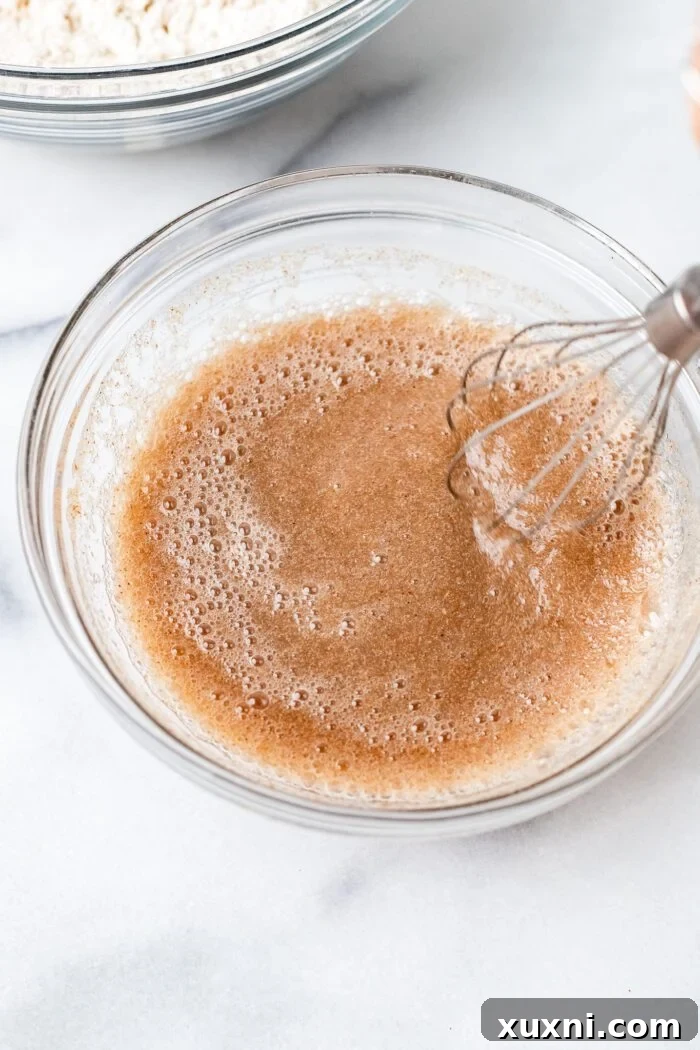
- Bloom the Yeast for Vigor: Gently heat 1 cup (240 mL) of water to approximately 100°F (38°C); it should feel comfortably warm, not hot, to the touch. Stir in the maple syrup, then sprinkle the instant yeast over the surface. Cover the bowl and allow the yeast to bloom for about 5-10 minutes. You’ll know it’s active when a foamy layer forms on top, indicating the yeast is alive and ready to work its magic. This blooming step, though unusual for instant yeast, is vital for a consistent rise in this gluten-free formulation.
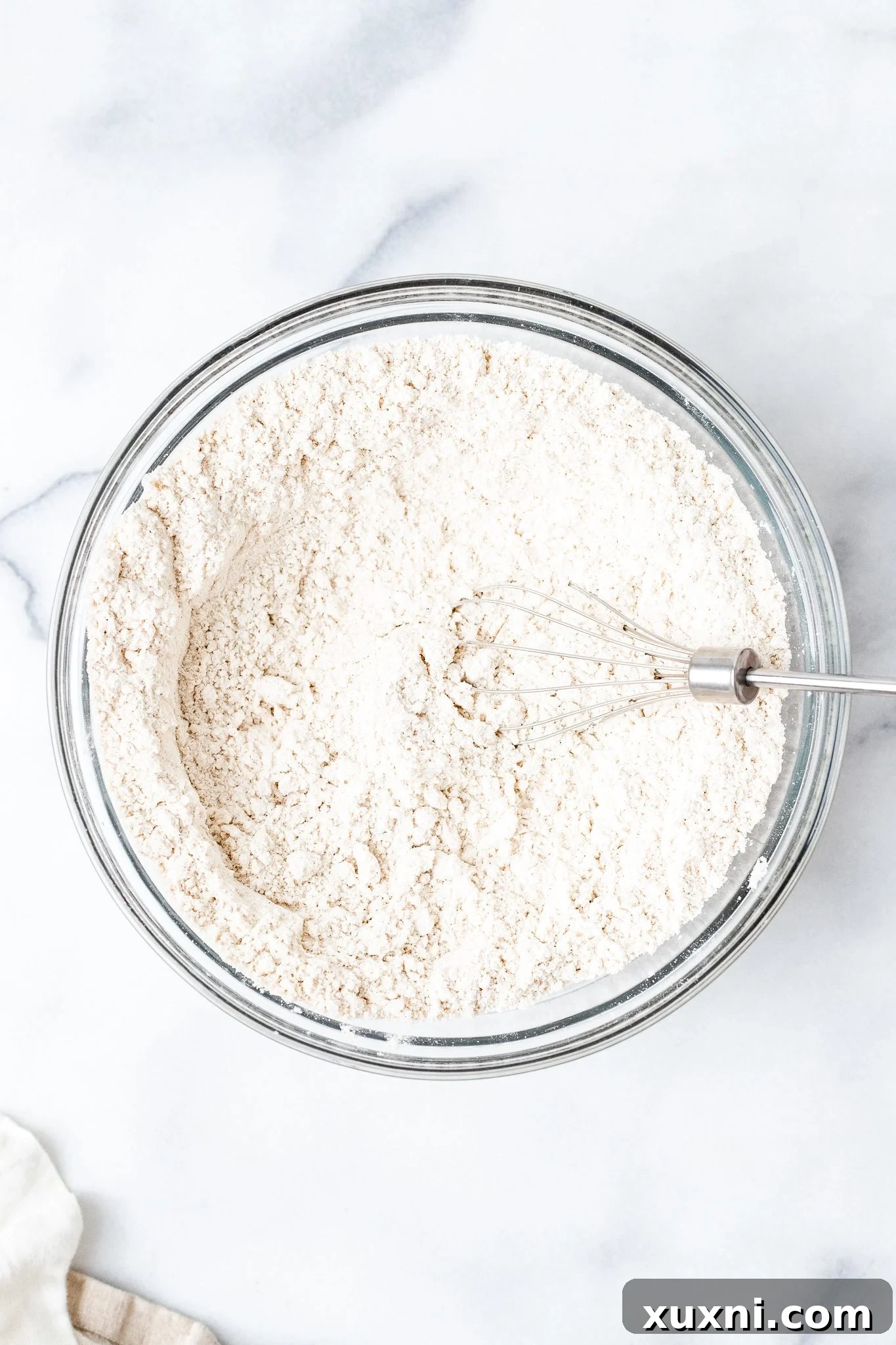
- Whisk the Dry Ingredients: While your yeast is blooming, in your other large mixing bowl, thoroughly whisk together the sorghum flour, oat flour, potato starch, arrowroot starch, and sea salt. Proper whisking ensures all ingredients are evenly distributed, which is crucial for uniform texture in gluten-free baking.
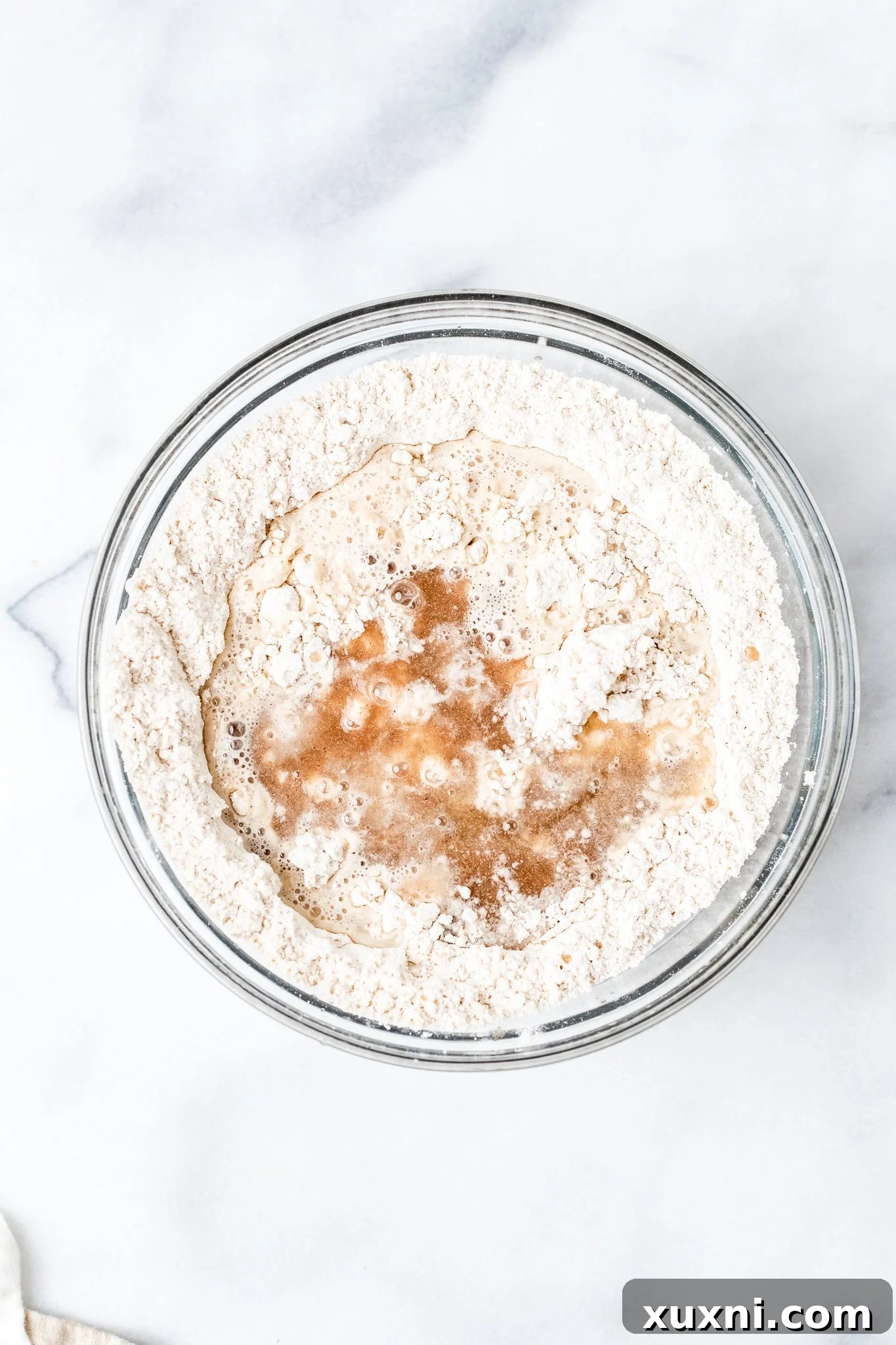
- Create the Psyllium Husk Gel: This step happens quickly, so be prepared! In a small bowl, combine the psyllium husk powder with the remaining 1/4 cup of water. Immediately begin whisking vigorously (a fork won’t cut it – use a proper whisk!). Whisk for about 30-45 seconds until the mixture rapidly thickens into a gelatinous gel. As soon as the gel forms, pour it directly over your whisked dry ingredients. Its binding properties begin instantly.
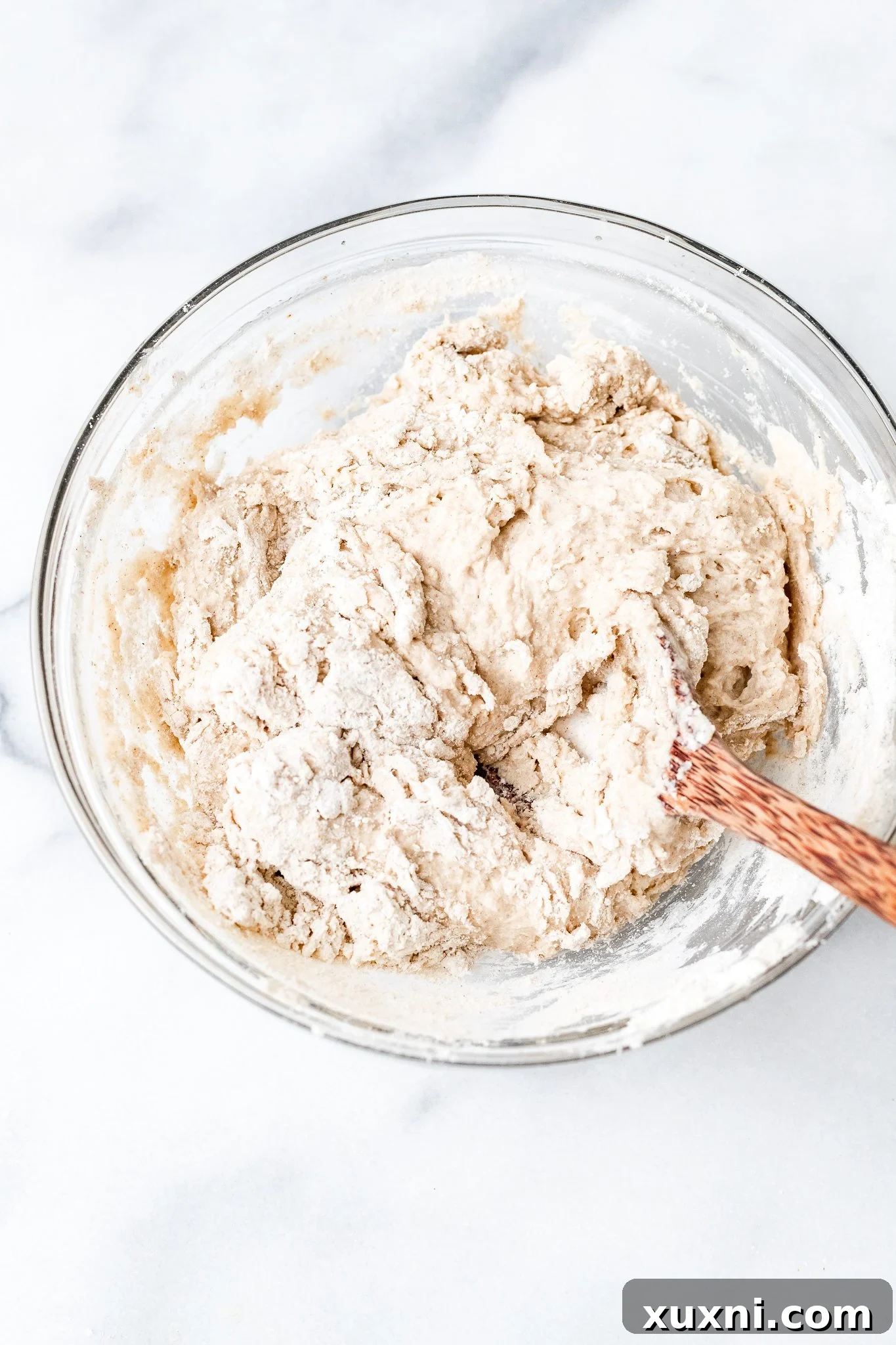
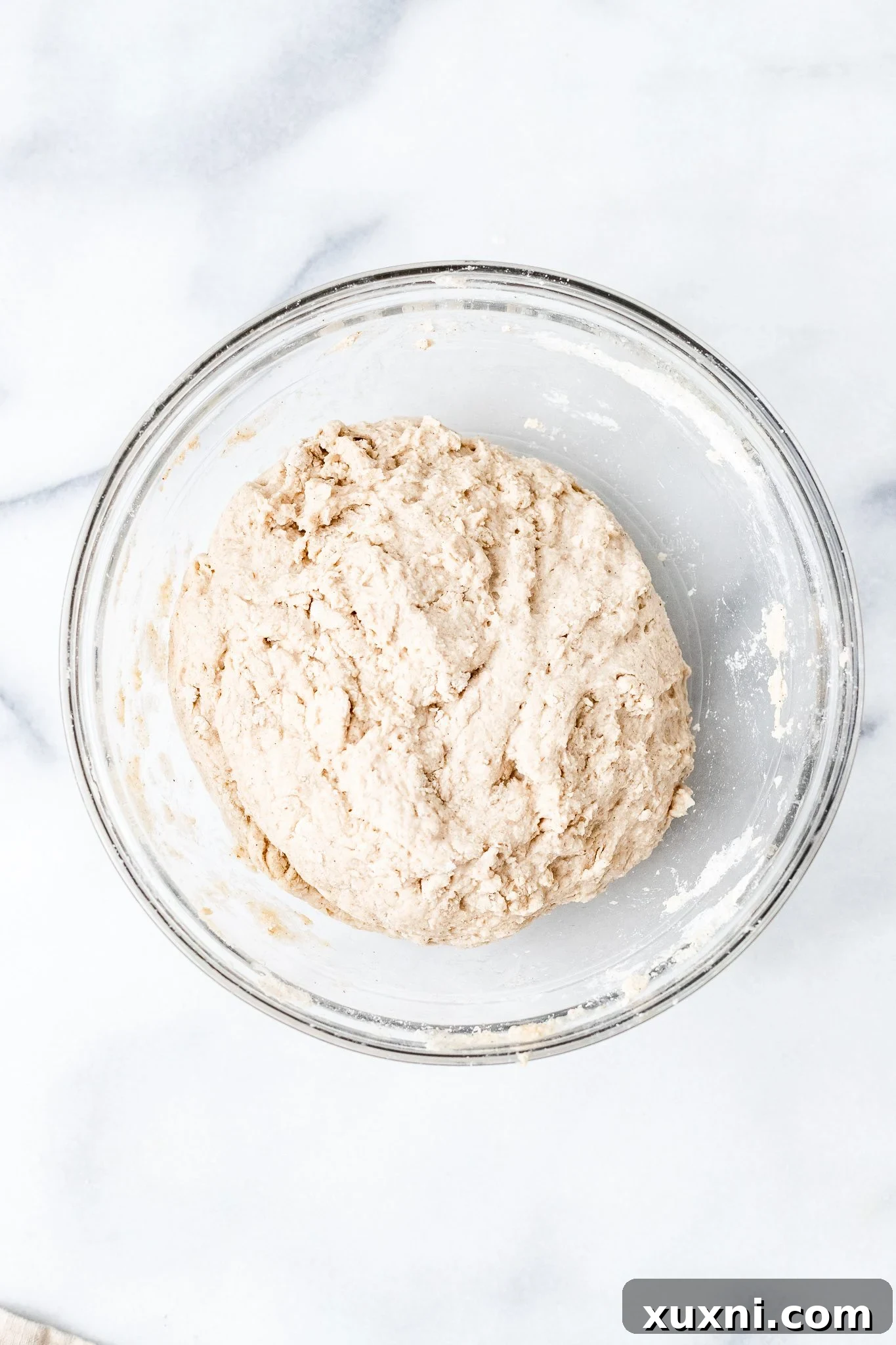
- Form the Dough: Immediately follow the psyllium gel with the bloomed yeast mixture and the apple cider vinegar. Using a sturdy wooden spoon or a spatula, begin to mix until a shaggy, cohesive dough starts to form. Unlike wheat dough, you won’t develop gluten, but you still need to bring it together. Then, using your hand, lightly knead the dough within the bowl until it becomes more consistent. The dough will feel sticky, which is normal for gluten-free dough. If it sticks excessively to your hands, dust your hands lightly with sorghum flour, but avoid adding too much flour to the dough itself.
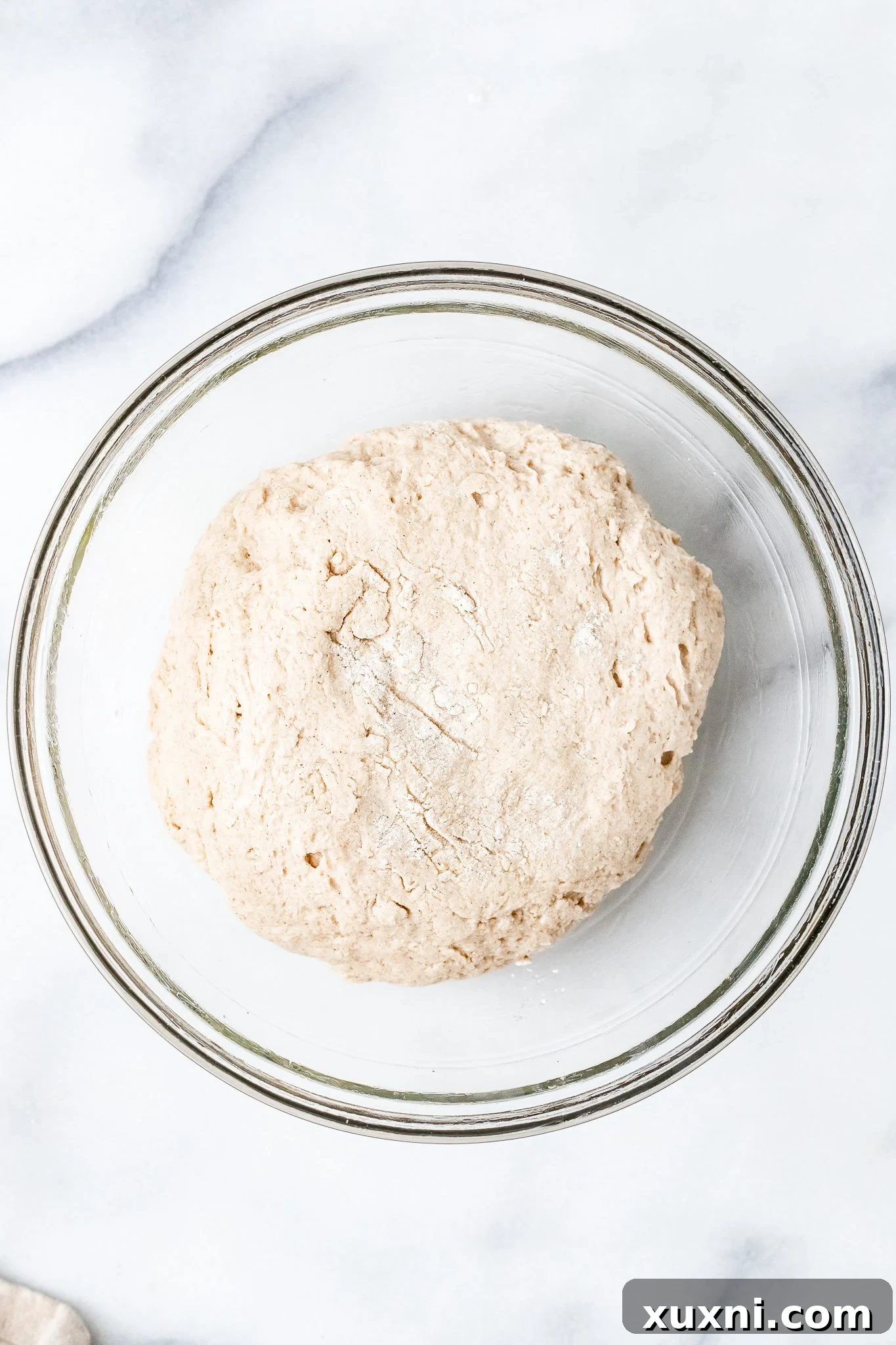
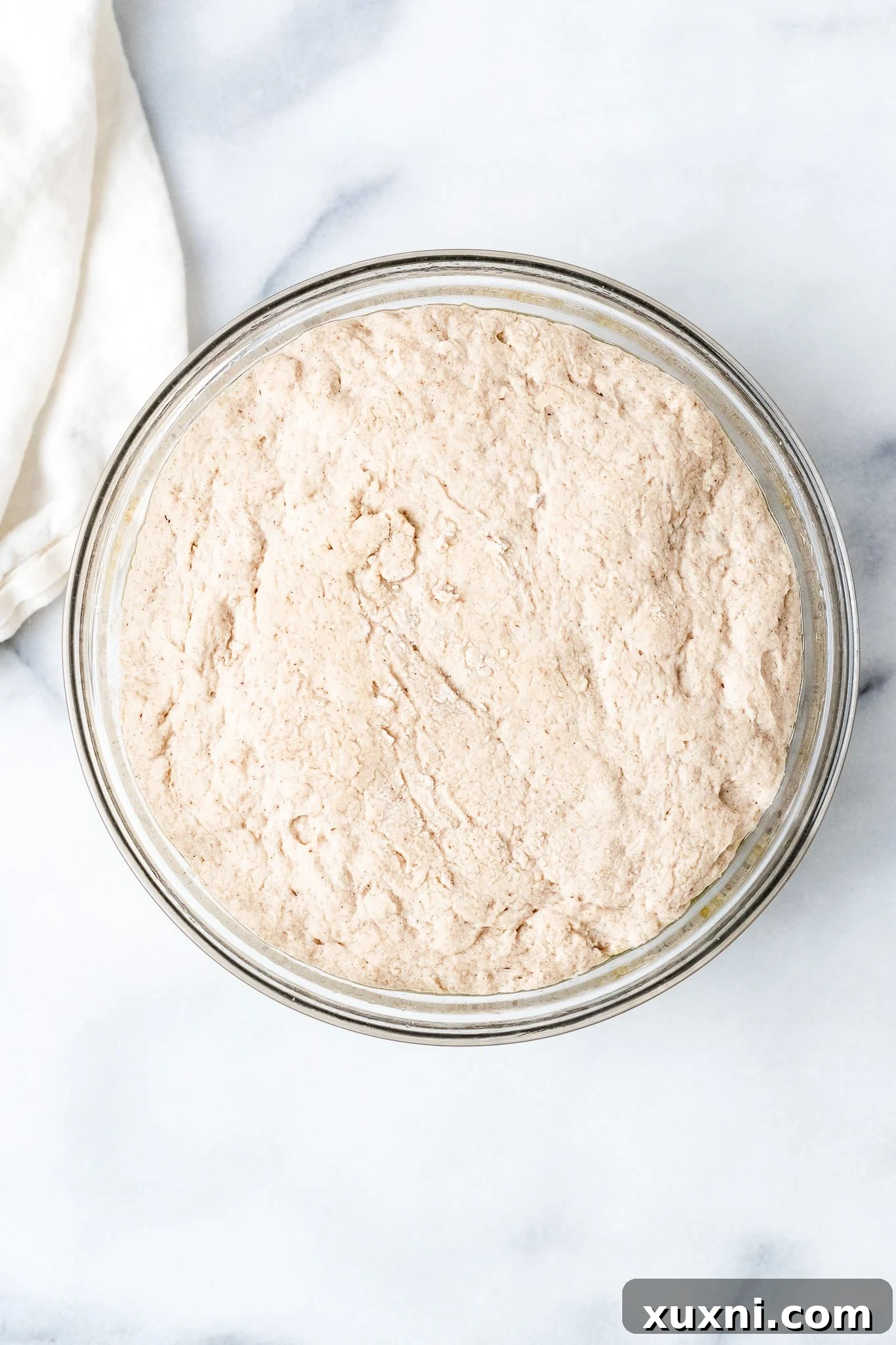
- First Proof: Shape the dough into a ball and transfer it to the greased bowl you prepared earlier. Cover the bowl tightly with plastic wrap or a damp tea towel. Place the bowl in a warm environment (ideally around 85°F / 30°C or slightly warmer, such as a lightly warmed oven that has been turned off) and allow it to proof for 45 minutes to 1 hour, or until the dough has visibly doubled in size. A warm, draft-free spot is crucial for optimal rising.
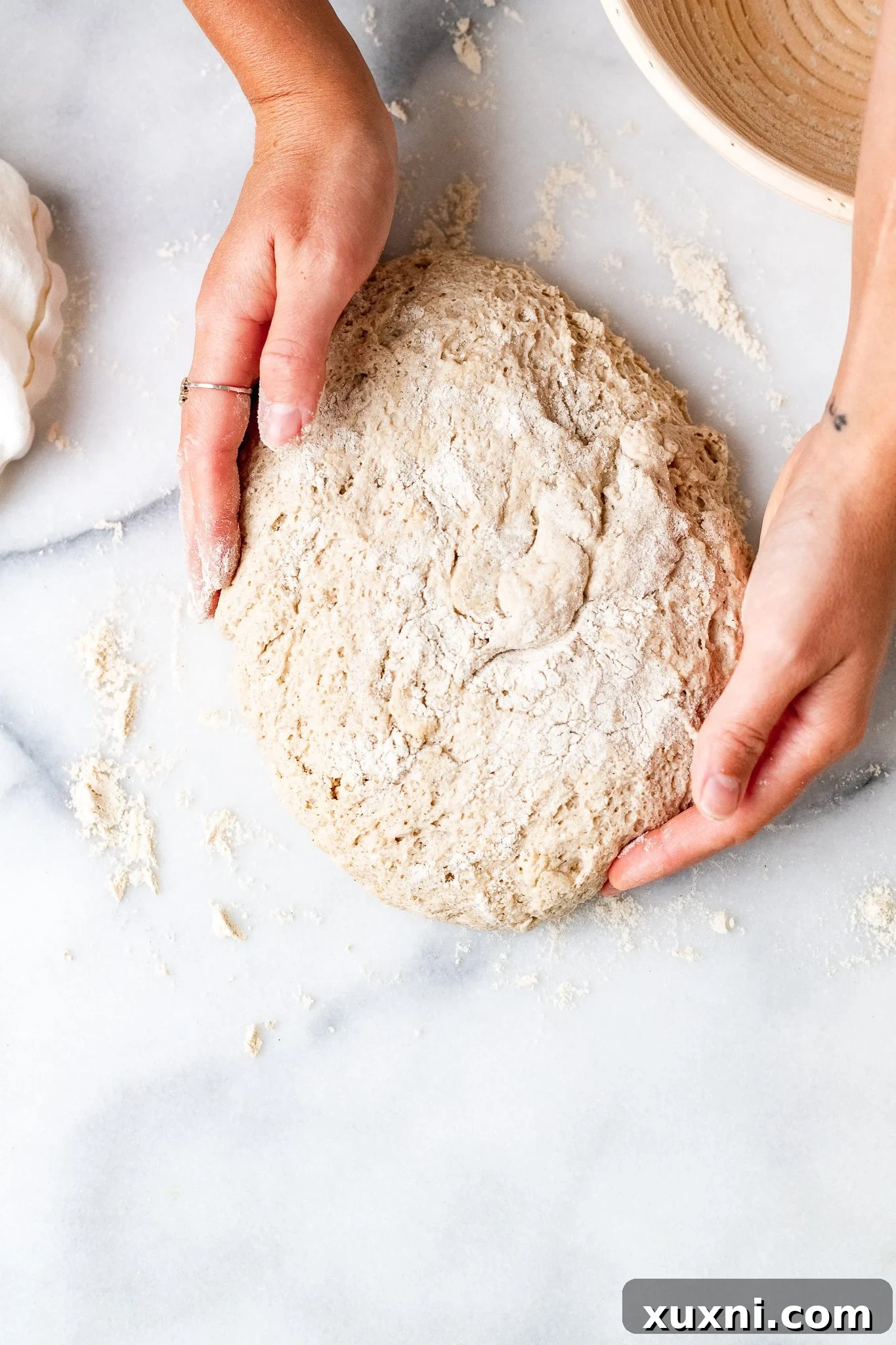
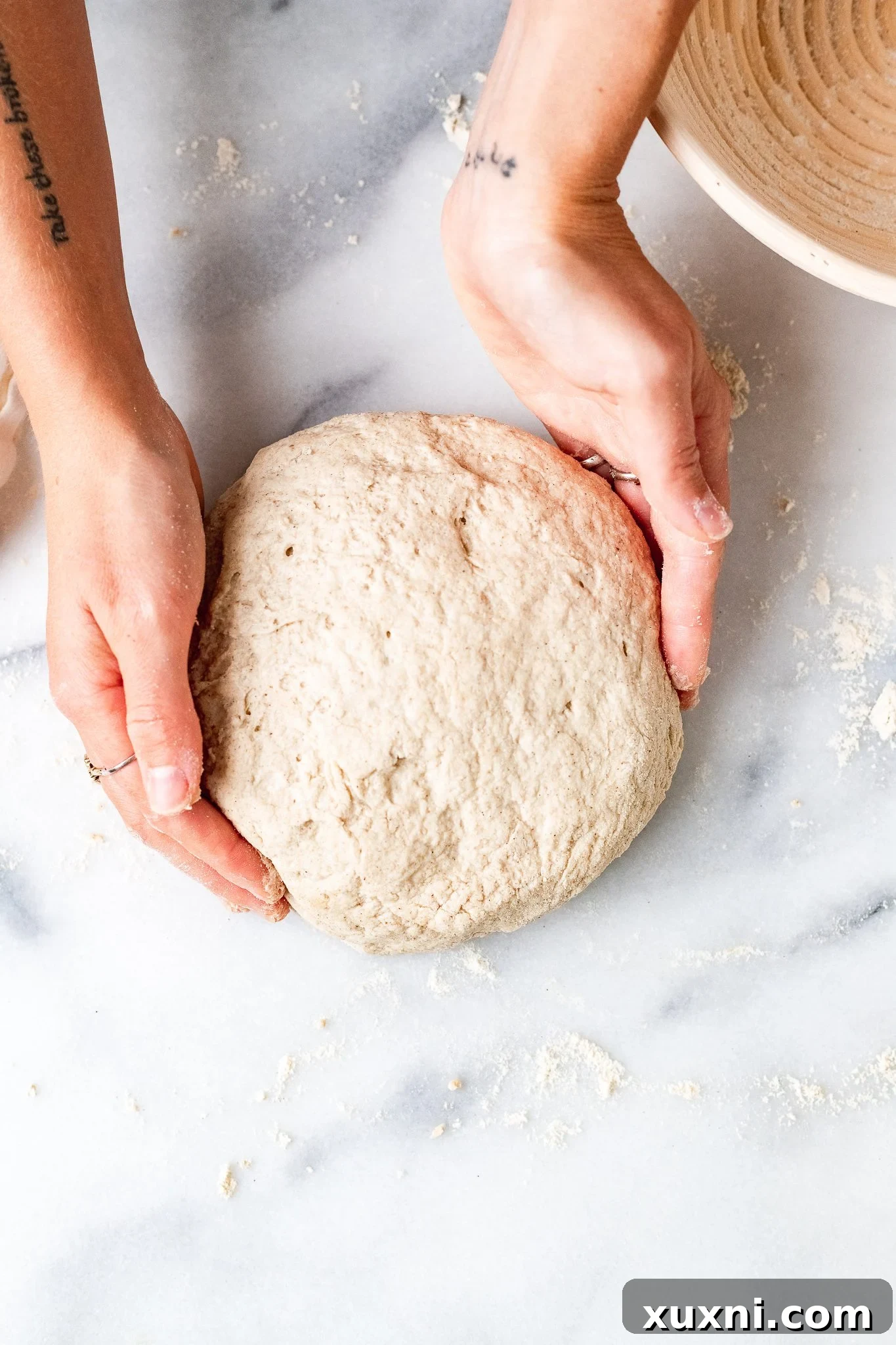
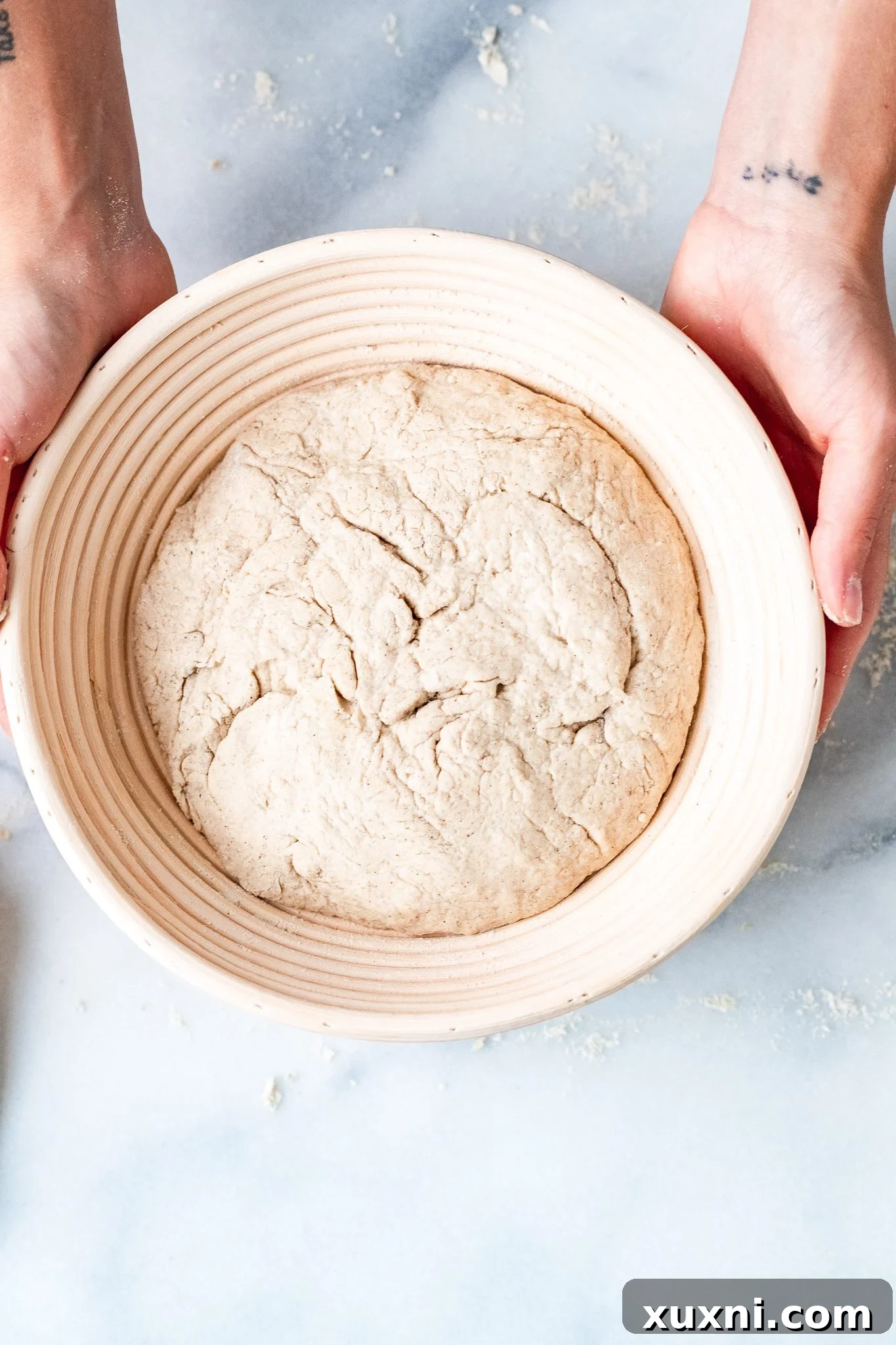
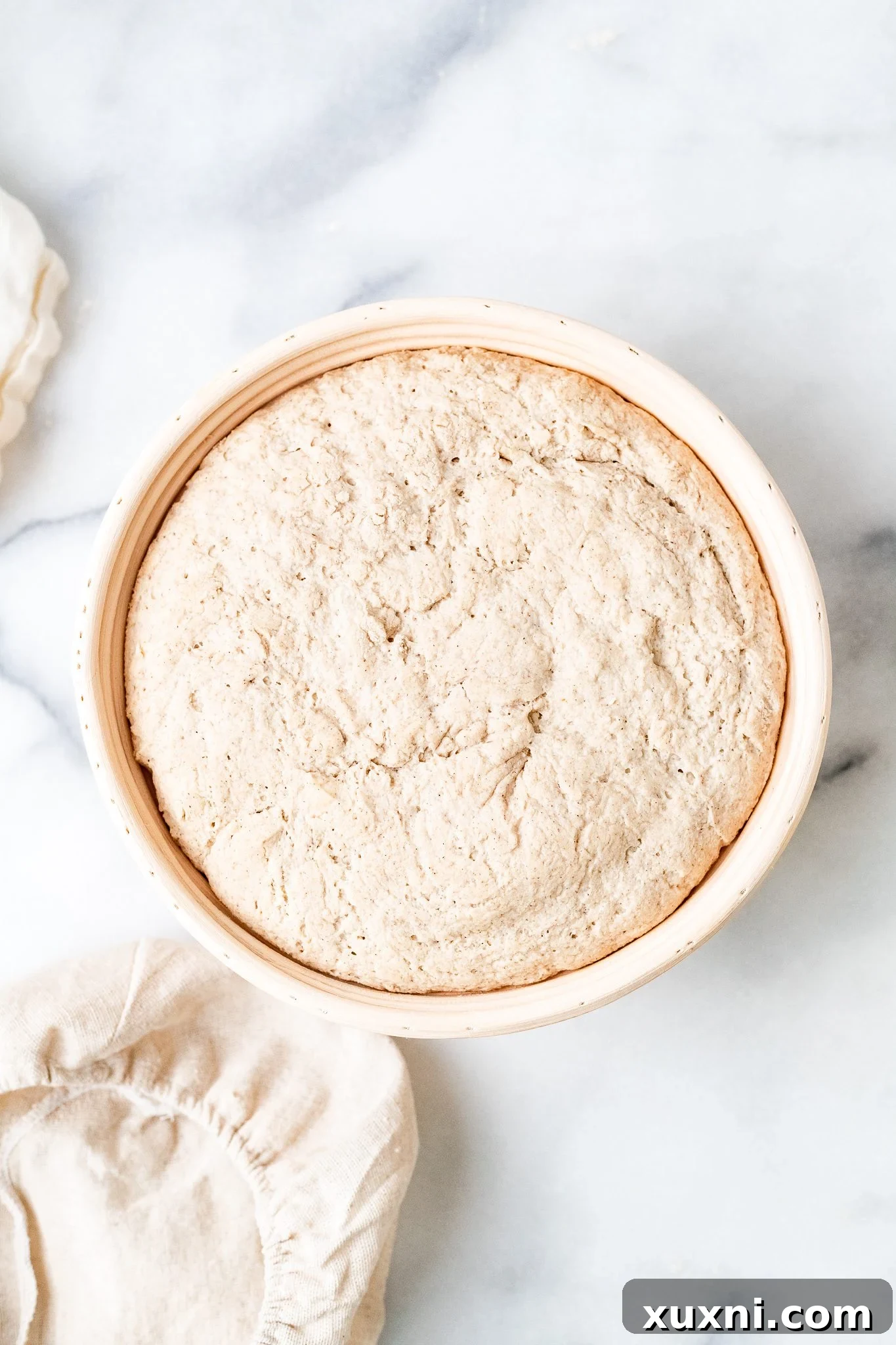
- Second Knead and Proof: Once the dough has doubled, gently scoop it out onto a clean surface lightly floured with sorghum flour. Knead the dough gently for just a few minutes, shaping it into a smooth, round ball. This helps redistribute the gases and improve texture. Carefully place the dough seam-side up (the smooth side should be facing down) into your proofing basket. Cover the proofing basket and return it to a warm place for a second rise until it has doubled in size again.
- Preheat and Prepare for Steam: While your dough is undergoing its second proof (around 10 minutes before it’s ready), preheat your oven to a high temperature of 475°F (247°C). Crucially, place your cast iron skillet onto the middle oven rack and the empty baking pan onto the lower rack as the oven preheats. This ensures they are scorching hot. Simultaneously, bring about 3 cups (720 mL) of water to a rolling boil. This boiling water will create the essential steam bath needed for a perfect crust.
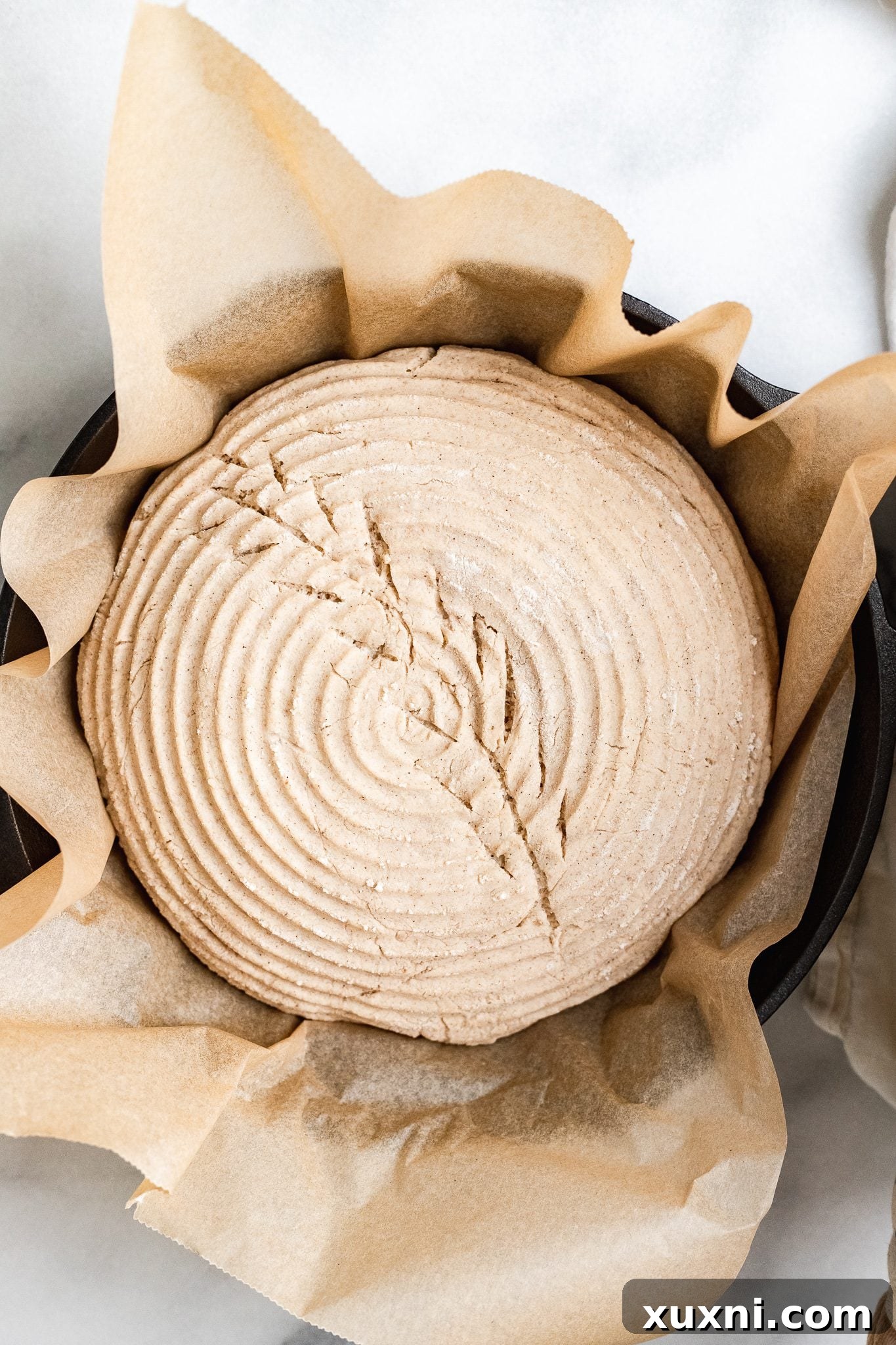
- Score and Transfer: When your dough has completed its second proof, resist the urge to punch it down. Instead, gently flip the dough from the proofing basket directly onto a piece of parchment paper. Now comes the artistic part: scoring! Using a bread lame or a very sharp kitchen knife, make a design on the top of your loaf. Scoring helps control where the bread expands during baking and creates beautiful patterns.
- Bake with Steam (Carefully!): This step requires quick, careful movements. Have 4-5 ice cubes ready nearby. Using oven mitts, carefully remove the preheated cast iron skillet from the oven (it will be extremely hot!) and place it on a heat-safe surface. Quickly transfer the parchment paper with the scored dough into the hot skillet. Immediately place the ice cubes around the bread dough, between the parchment paper and the skillet (the ice should not directly touch the dough, but create steam from the hot skillet). With oven mitts, carefully return the skillet to the middle rack of the oven and close the door promptly. Open the door once more, pour the boiling water into the preheated baking pan on the lower rack, and immediately close the oven door to trap the steam.
- Two-Stage Baking: Bake the bread at 475°F (247°C) for the initial 25 minutes. After this time, DO NOT open the oven door. Simply reduce the oven temperature to 450°F (232°C) and continue baking for another 45-50 minutes, for a total baking time of 70-75 minutes. The loaf should develop a deep golden-brown color and a wonderfully hard, crisp crust.
- The Essential Cool Down: This step is non-negotiable for gluten-free bread. Once baked, remove the bread from the oven and carefully transfer it to a wire cooling rack. Allow the bread to cool completely for at least 1 hour, or even longer. Slicing into a warm gluten-free loaf will cause it to become gummy and compromise its texture. Patience is key here!
- Slice and Serve: Once fully cooled, your beautiful gluten-free artisan bread is ready to be sliced and enjoyed!
- Storage: Store any leftover bread in an airtight bag at room temperature for up to 2-3 days, or in the refrigerator for up to 5 days to maintain its freshness.

Mastering the Art of Bread Scoring
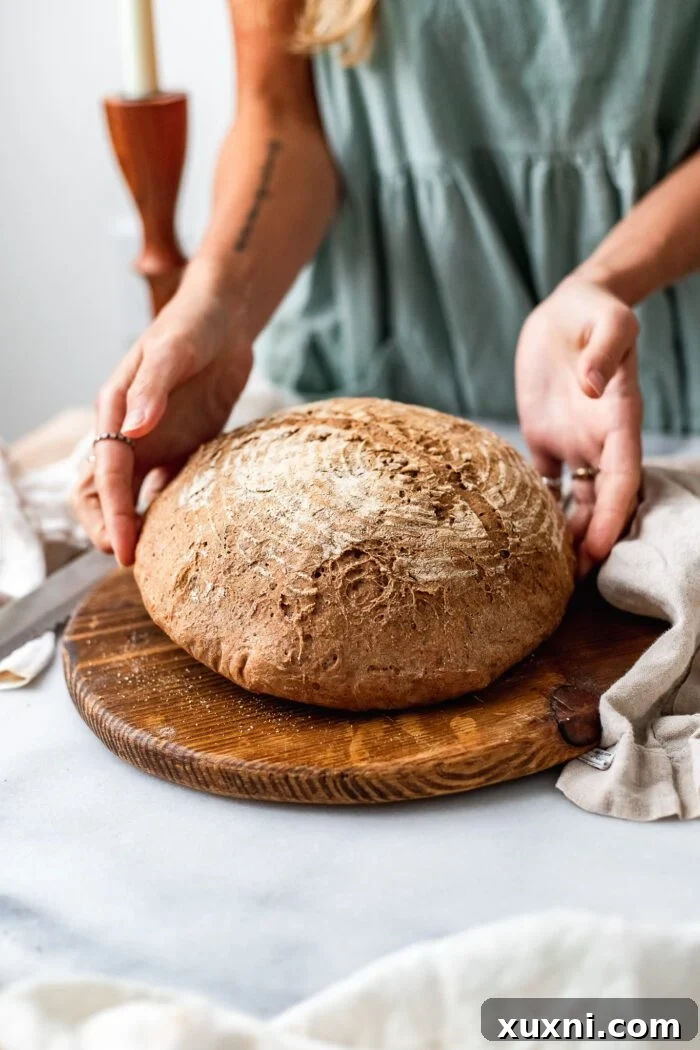
Scoring the bread is not just about aesthetics; it’s a functional step that allows your loaf to expand properly in the oven, preventing uncontrolled cracking and ensuring a beautiful, even rise. It’s also incredibly fun and allows for a touch of personal artistry on your homemade artisan loaf!
For precision and ease, I highly recommend using a bread lame, a specialized tool designed for scoring dough. These are readily available at kitchen supply stores, grocery stores, or online retailers like Amazon. If you don’t have a lame, a very thin, extremely sharp kitchen knife can be used, but proceed with extra caution to avoid injury.
There are countless bread scoring designs you can explore, from simple geometric patterns to intricate artistic motifs. You can find inspiration by searching online or checking out resources like King Arthur Baking’s guide to bread scoring techniques. For my gluten-free artisan loaf, I often opt for a simple yet elegant wheat leaf design. It’s not only visually appealing but also a playful nod to the fact that this delicious bread contains no actual wheat!
Creative Topping Ideas for Your Artisan Bread
While a beautifully scored loaf is often enough, adding toppings can elevate your gluten-free artisan bread with extra flavor, texture, and visual appeal. Here are a few suggestions to inspire your creativity:
- Chia Seeds: Sprinkle them on top for a subtle crunch and a boost of omega-3s.
- Pumpkin Seeds: Offer a hearty, nutty flavor and a satisfying chew.
- Flax Seeds: Provide a delicate crunch and are packed with fiber.
- Poppy Seeds: Add a classic, mild flavor and a distinctive visual.
- Cornmeal: Lightly dust the bottom of the loaf or the proofing basket for a rustic touch and to prevent sticking.
- Dried Herbs: A sprinkle of rosemary or thyme before baking can infuse your bread with aromatic notes.
- Everything Bagel Seasoning: For a savory, flavorful crust with a mix of sesame seeds, poppy seeds, garlic, and onion.
Experiment with different combinations to find your favorite!
Storing and Enjoying Your Homemade Gluten-Free Bread
You’ve put in the effort to bake this incredible gluten-free vegan bread, and now you want to make sure it stays fresh and delicious for as long as possible. Proper storage is key to maintaining its perfect texture and flavor.
Freezing Your Loaf for Future Delights
Yes, you absolutely can freeze your baked gluten-free artisan loaf! This is an excellent way to enjoy fresh-tasting bread whenever the craving strikes, without having to bake a new loaf from scratch. Here’s how to do it effectively:
- Ensure Complete Cooling: This is paramount. Never freeze warm bread. Allow your baked gluten-free vegan bread to cool completely to room temperature on a wire rack, which can take at least an hour. Any residual warmth will create condensation inside the packaging, leading to ice crystals and a soggy texture when thawed.
- Double Wrap for Protection: Once fully cooled, wrap the entire loaf tightly in plastic wrap. Ensure there are no exposed areas to prevent freezer burn.
- Add a Second Layer: For extra protection, wrap the plastic-wrapped loaf again, either in aluminum foil or place it into a freezer-safe plastic bag (removing as much air as possible). This double layer acts as a barrier against moisture loss and freezer odors.
- Freeze: Place the well-wrapped loaf in the freezer for up to 2 months.
- Thawing and Reheating: When you’re ready to enjoy your bread, simply remove it from the freezer and allow it to thaw at room temperature. For best results, once thawed, you can lightly toast slices or warm the entire loaf in a preheated oven (around 350°F / 175°C) for 10-15 minutes until warmed through and the crust crisps up again. Then, slice and savor!
Delicious Ways to Serve Your Gluten-Free Artisan Bread
The true beauty of this gluten-free vegan artisan bread lies in its incredible versatility. Because it tastes, looks, and feels so much like classic bread, you can enjoy it in all the same wonderful ways. Here are just a few ideas to get you started:
- Classic Toast: Spread a perfectly toasted slice with your favorite vegan butter and a dollop of sweet strawberry jam for a delightful breakfast.
- Gourmet Grilled Cheese: Create an elevated experience by toasting vegan cheese on top and sprinkling with fresh chives for a savory treat.
- Satisfying Sandwiches: Make a timeless peanut butter and jelly sandwich, or upgrade to the adult version with rich almond butter and your favorite fruit preserves. This bread holds up beautifully to all your favorite fillings.
- Soup and Chili Companion: Serve thick slices alongside a hearty bowl of homemade vegan chili or comforting vegan Mac and cheese. It’s perfect for dipping and soaking up all those delicious flavors.
- Hummus Dipper: Tear off chunks and dip them into creamy homemade hummus for a healthy and satisfying snack or appetizer.
- Sweet Breakfast Treats: Transform leftover slices into decadent vegan French toast or even a delightful vegan French toast casserole for a special brunch.
- Bruschetta Base: Lightly toast slices, rub with garlic, and top with fresh diced tomatoes, basil, and a drizzle of balsamic glaze for a vibrant appetizer.
You are truly going to fall in love with this homemade gluten-free vegan bread. Its authentic taste and texture will leave you speechless from the very first bite. Enjoy the satisfaction of baking an artisan-quality loaf right in your own kitchen!
Frequently Asked Questions About Gluten-Free Bread
Here are answers to some common questions that arise when baking gluten-free bread, especially for first-timers or those transitioning from traditional baking:
Q: Why is gluten-free bread often dense or crumbly?
A: Traditional bread relies on gluten, a protein network, for its structure, elasticity, and ability to trap gases, creating a light, airy texture. Without gluten, alternative binders like psyllium husk are needed to mimic these properties. If not enough binder is used, or the flour blend isn’t balanced, the bread can become dense (due to lack of structure) or crumbly (due to lack of binding).
Q: Can I use a generic gluten-free flour blend?
A: It’s generally not recommended for this specific artisan bread recipe. Many commercial gluten-free flour blends already contain xanthan gum, which we are specifically avoiding, or they use different ratios of starches and flours that may not yield the desired texture. This recipe’s precise blend of sorghum, oat, potato, and arrowroot starches is carefully balanced to achieve the perfect crumb and crust without xanthan gum. Deviating from it can significantly alter the results.
Q: What is the ideal temperature for proofing gluten-free dough?
A: A warm, consistent temperature is crucial for yeast activity. Ideally, aim for around 80-90°F (27-32°C). You can achieve this by placing the covered bowl in a slightly warmed (and then turned off) oven, a proofer, or even near a sunny window or a warm appliance. Avoid cold or drafty areas, as this will inhibit the yeast and result in a poor rise.
Q: My bread crust isn’t as crispy as I’d like. What went wrong?
A: A super crispy crust relies on high heat and a moist environment (steam) during the initial baking phase. Ensure your oven is fully preheated to 475°F (247°C) and your cast iron skillet is scorching hot before adding the dough. The steam created by the boiling water in the lower pan is also critical. Make sure to close the oven door quickly to trap the steam effectively. Not enough steam or heat can lead to a softer crust.
Q: Why is cooling completely so important for gluten-free bread?
A: Gluten-free breads continue to cook and set their internal structure as they cool. Slicing into a warm loaf disrupts this process, leading to a gummy, dense texture. Allowing it to cool completely (at least an hour, or even more for larger loaves) allows the starches to fully gelatinize and the moisture to redistribute, resulting in the desired light and airy crumb.
Final Thoughts on Your Gluten-Free Baking Journey
Mastering gluten-free artisan bread is a rewarding experience, and this recipe provides a foolproof path to success. The satisfaction of pulling a beautifully baked loaf from your oven, knowing it’s crafted with care and tailored to dietary needs, is truly unmatched. This bread isn’t just a substitute; it’s a celebration of flavor, texture, and the joy of baking accessible to everyone.
Don’t forget to save this recipe for later! Pin it to your favorite recipe board on Pinterest so you can easily find it whenever you’re ready to bake a fresh loaf.
If you make this recipe, please be sure to leave a comment and a rating ⭐️⭐️⭐️⭐️⭐️ below. Your feedback helps others discover and enjoy these recipes! As always, I absolutely love to see your beautiful creations, so be sure to tag me @the_bananadiaries on Instagram and Pinterest!
Print
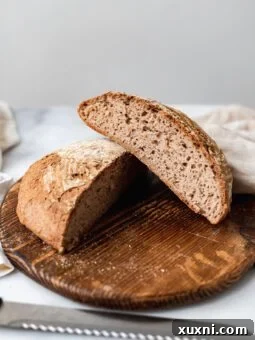
Quick & Easy Gluten Free Artisan Bread
5 Stars 4 Stars 3 Stars 2 Stars 1 Star
5 from 5 reviews
Author: Britt Berlin
Prep Time: 15
Proofing Time: 90 minutes
Cook Time: 75
Total Time: 1 hour 30 minutes (active) + 90 mins proofing
Yield: 1 Large Loaf
Category: Bread
Method: Baking
Cuisine: American
Diet: Vegan, Gluten-Free, Dairy-Free, Egg-Free
Description
This quick and easy gluten free artisan bread tastes JUST LIKE classic artisan bread and is made without xanthan gum! This gluten free artisan bread is made with minimal ingredients, no dairy, no eggs, stretches and pulls like regular bread, and has fooled even gluten loving eaters!
Ingredients
Scale
- 2 cups (480 mL) water, divided
- 2 tbsp (30 g) maple syrup
- 2.5 tsp (8 g) instant yeast (quick rise yeast)
- 1 1/2 cups (165 g) sorghum flour
- 1 cup (100 g) oat flour
- 1/2 cup (95 g) potato starch (NOT potato flour; no substitutes)
- 1/4 cup (50 g) arrowroot starch or tapioca starch
- 1 tsp finely ground sea salt
- 1/4 cup (18 grams) finely ground psyllium husk powder
- 1 tsp apple cider vinegar
Instructions
- Prep: Measure all ingredients accurately. Grease 1 large bowl with olive oil/coconut oil for the first proof. Prepare 1 proofing basket (7″ or 9″), 1 large (at least 10″) cast iron skillet, and a square or rectangular baking pan with walls. Read through all instructions carefully before starting.
- Bloom the yeast: Heat 1 cup (240 mL) water to ~100F (warm to touch). Stir in maple syrup, then instant yeast. Cover and let foam for 5-10 minutes while preparing dry ingredients.
- Whisk: In a separate large bowl, whisk together sorghum flour, oat flour, potato starch, arrowroot starch, and sea salt. Ensure yeast is active and foamy.
- Make the psyllium husk gel: In a small bowl, combine the remaining 1/4 cup water with psyllium husk powder. Immediately whisk vigorously for 30-45 seconds until a thick gel forms. Pour this gel immediately over the flour mixture.
- Make the dough: Add the bloomed yeast mixture and apple cider vinegar to the flour and psyllium gel. Mix with a wooden spoon until a shaggy dough forms. Lightly knead in the bowl with your hand until more consistent. It will be sticky; dust hands with sorghum flour if needed, but avoid adding too much to the dough.
- First proof: Place the dough ball into the greased bowl, cover, and let proof in a warm area (~85F/30C) for 45 minutes to 1 hour, or until doubled in size.
- Knead again: Scoop dough onto a sorghum-floured surface. Knead gently for a few minutes until a smooth dough ball forms. Place dough seam-side up (smooth side down) into the proofing basket. Cover and proof in a warm area again until doubled in size.
- While dough is proofing: Preheat oven to 475F (247C). Place cast iron skillet on the middle rack and the baking pan on the lower rack while preheating. About 10 minutes before dough is ready, boil 3 cups more of water for the steam bath.
- Shape the dough: Once the second proof is complete, do NOT punch down the dough. Gently flip it onto a piece of parchment paper. Score the bread dough with a bread lame or sharp kitchen knife (see blog post for design ideas).
- Place the bread dough into the oven: This step moves quickly. Have 4-5 ice cubes ready. Using oven mitts, carefully remove the hot cast iron skillet and place it on a heat-safe surface. Transfer the parchment paper with dough into the skillet. Place ice cubes between the parchment paper and the skillet (not touching the dough). Return the skillet to the oven with mitts and close the door immediately. Pour the boiling water into the baking pan on the lower rack, and close the oven door immediately to trap steam.
- Bake the bread: Bake at 475F (247C) for 25 minutes. WITHOUT opening the door, reduce heat to 450F (232C) and bake for another 45-50 minutes, for a total of 70-75 minutes. The loaf should be deep brown with a hard crust.
- Cool the bread: Remove from oven, turn off oven. Carefully transfer bread to a cooling rack to cool completely (at least 1 hour). Do NOT slice warm gluten-free bread to prevent gumminess.
- Slice and serve! Once fully cooled, slice and enjoy as toast, sandwiches, French toast, and more!
- Storage: Store in an airtight bag for 2-3 days at room temperature or up to 5 days in the fridge.
Notes
PLEASE SEE POST FOR IMAGES AND MORE DETAILS/TROUBLESHOOTING
Maple syrup: You may swap out an equal amount of coconut sugar or organic granulated sugar.
Instant yeast: I have found better results using instant yeast over dry active yeast. I know that this is typically not how you use instant yeast (normally you whisk it into the dry ingredients), but I have found again that it is a better and more consistent rise when we bloom the instant yeast as you would active yeast.
Oat flour: If you have an intolerance/allergy to oats, please feel free to swap in 1 cup (120 g) buckwheat flour or more sorghum flour (1 cup (136 g)). I do not recommend making the entire loaf with just oat flour, as the dough will be very sticky.
Potato starch: You do need to use potato starch here and NOT potato flour. Potato flour acts very differently (much like cornmeal acts differently from cornstarch).
Psyllium husk: If you have rough husk psyllium, you may use 20 g instead of 18g powder.