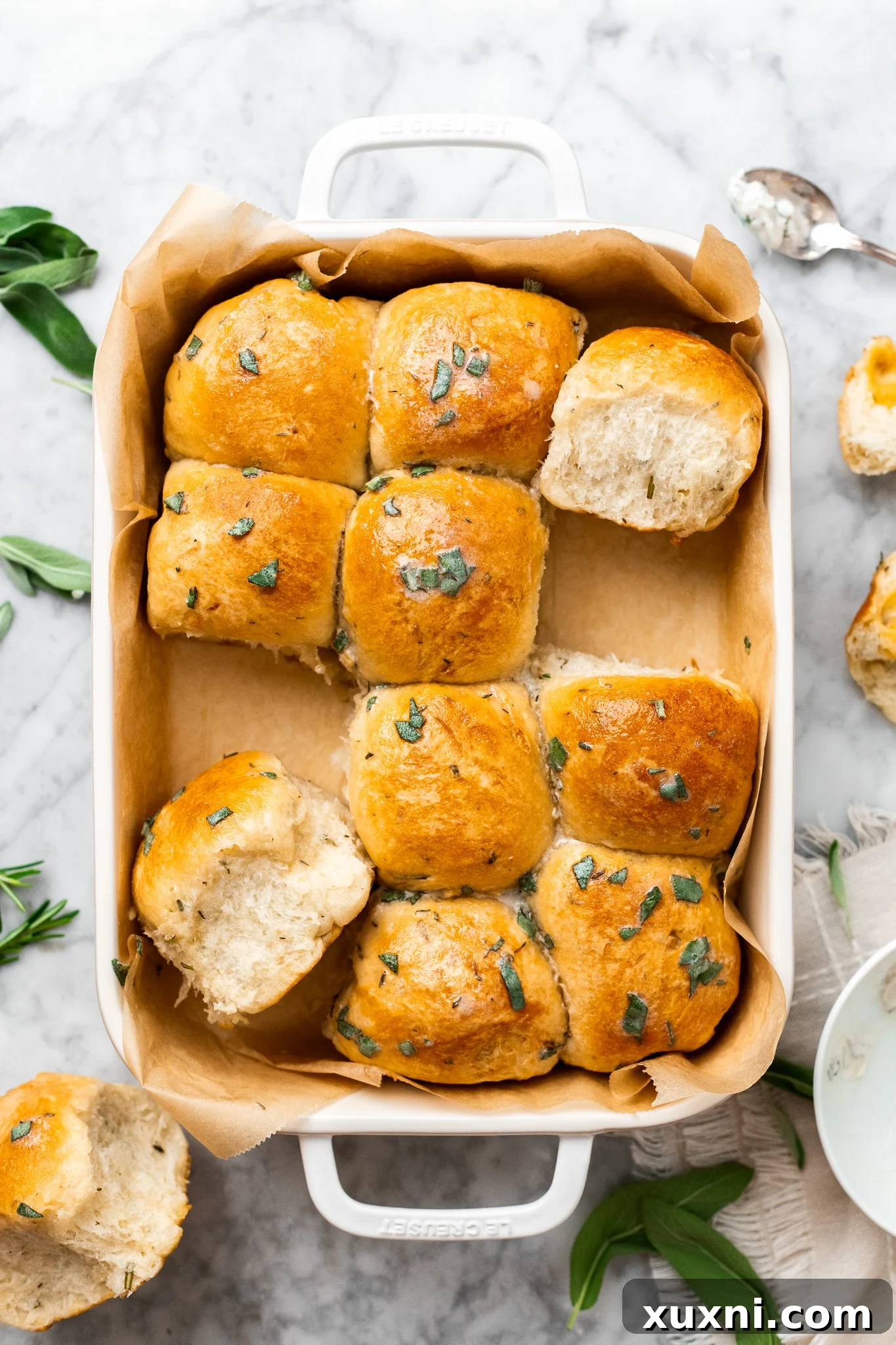
Welcome to the ultimate recipe for unbelievably soft, plush, and utterly delicious **Vegan Garlic Dinner Rolls with Dairy-Free Herbed Butter**! Forget everything you thought you knew about plant-based baking, because these rolls are here to shatter expectations. Crafted with just 8 simple ingredients, these golden-baked wonders are not only easy to make but also boast a surprise gooey dairy-free cheesy filling that pulls and stretches beautifully. Each roll is lovingly brushed with a fragrant herbed dairy-free butter, making them an indispensable side dish for any holiday gathering or a delightful addition to your weeknight meals.
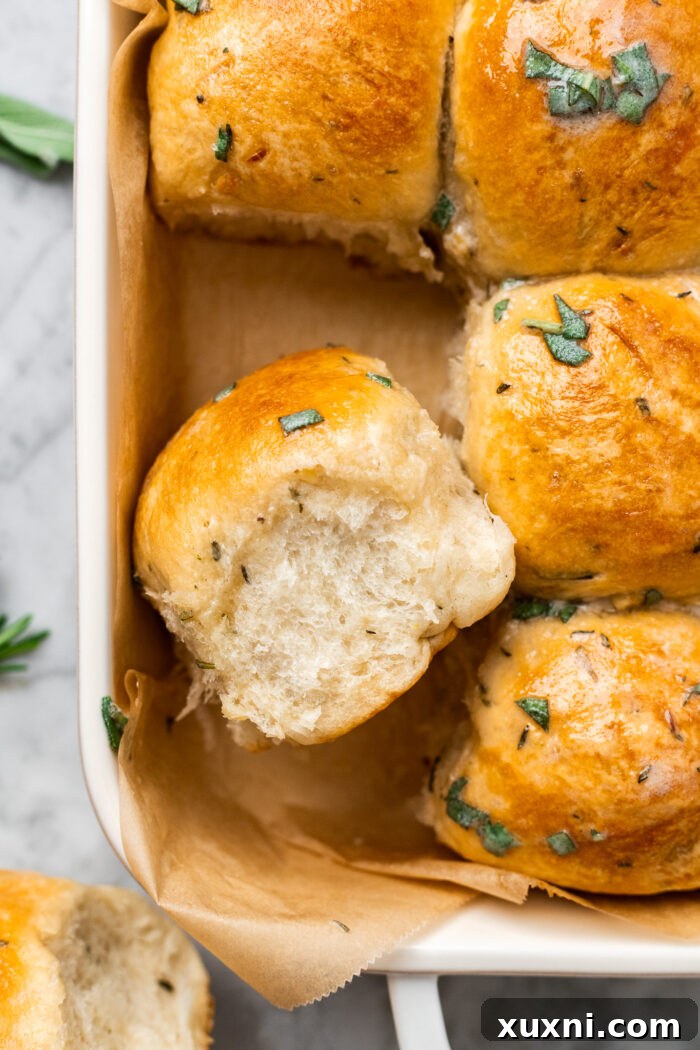
Elevate Your Meal with These Irresistible Vegan Garlic Dinner Rolls
There’s a universal truth when it comes to holiday tables or any celebratory meal: bread is a non-negotiable must-have. While classics like creamy mashed potatoes and comforting sweet potato casserole certainly hold their own, nothing quite compares to the simple pleasure of a perfectly baked, warm dinner roll. These **vegan garlic dinner rolls** don’t just meet expectations; they exceed them, offering a truly exceptional experience that will impress even the most discerning palates.
What makes these particular rolls so extraordinary? It starts with a dough that’s incredibly soft and plush, achieving a pillowy texture that melts in your mouth. But we don’t stop there. Each roll is generously filled with a luscious, gooey dairy-free cheese that stretches delightfully when you pull it apart. This creates an irresistible “pull-apart” effect, making them perfect for sharing (or not!).
The flavor profile is equally captivating, infused with aromatic garlic, earthy rosemary, fragrant thyme, and a hint of sage. This symphony of herbs creates a vibrant and complex taste that perfectly complements the rich, cheesy interior. To finish, these golden-brown beauties are brushed with a simple yet incredibly flavorful herbed vegan butter, adding a glossy sheen and an extra layer of savory goodness.
Imagine the best qualities of your favorite vegan dinner rolls recipe fused with the savory depth of garlic & herb cheesy pull-apart bread. That’s precisely what you get with this recipe – a combination so addictive, you’ll wonder how you ever hosted a meal without them. They’re not just a side; they’re a centerpiece.
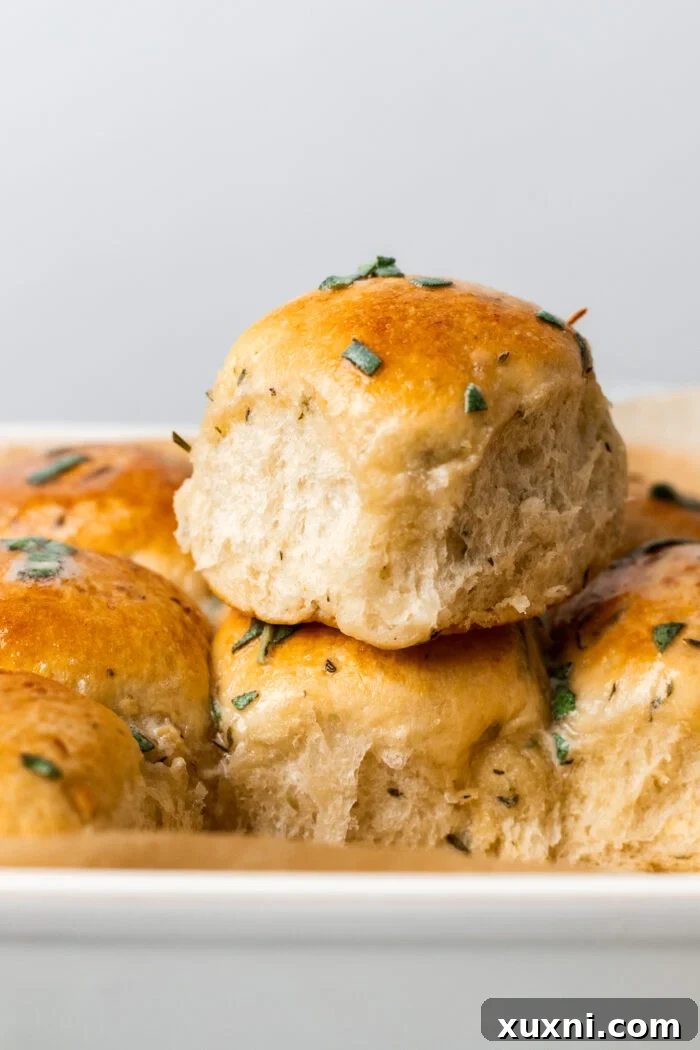
Beyond their incredible taste, these rolls are remarkably easy to prepare, requiring only 8 simple ingredients – no eggs or dairy needed! For added convenience, we even provide an option to prep them overnight, allowing you to bake them fresh just before serving. This makes them an ideal choice for busy holiday mornings or when you want to impress guests with minimal last-minute effort.
And for those who prefer their dinner rolls without the cheese, rest assured! These **garlic dinner rolls** are just as unbelievably delicious without the vegan cheese filling. Their rich garlic and herb flavor stands perfectly on its own, offering a versatile option for all preferences.
Whether you’re planning a grand Christmas feast, a heartfelt Thanksgiving dinner, a festive Easter brunch, or any special gathering, these **cheesy vegan garlic dinner rolls** are guaranteed to be a crowd-pleaser, perfect for any dinner party or holiday celebration.
Are Traditional Dinner Rolls Vegan? (And Why Ours Are So Much Better!)
When you picture a classic dinner roll, you likely imagine a soft, slightly sweet, and buttery bun. Unfortunately, traditional dinner rolls are rarely vegan. The standard recipe typically calls for ingredients like butter, milk, and sometimes eggs – all of which contain dairy or animal products. This means that for those following a vegan or dairy-free lifestyle, enjoying a warm dinner roll can often be a challenge.
However, this recipe for **vegan dinner rolls** shatters that limitation! We’ve meticulously crafted a plant-based version that not only rivals but often surpasses its traditional counterparts in flavor, richness, and that irresistible soft, tender texture. Through clever substitutions and a balanced recipe, you get all the comfort and deliciousness of a classic dinner roll without any animal products. Seriously, even I was initially in disbelief at how incredibly soft and flavorful they turned out on my first attempt!
The secret lies in utilizing quality dairy-free milk and vegan butter, which contribute to the dough’s luxurious texture and rich taste. These plant-based ingredients work wonders, creating a roll that’s so satisfying, no one will ever suspect it’s entirely vegan. Get ready to share these with everyone, regardless of their dietary preferences, and watch them disappear!
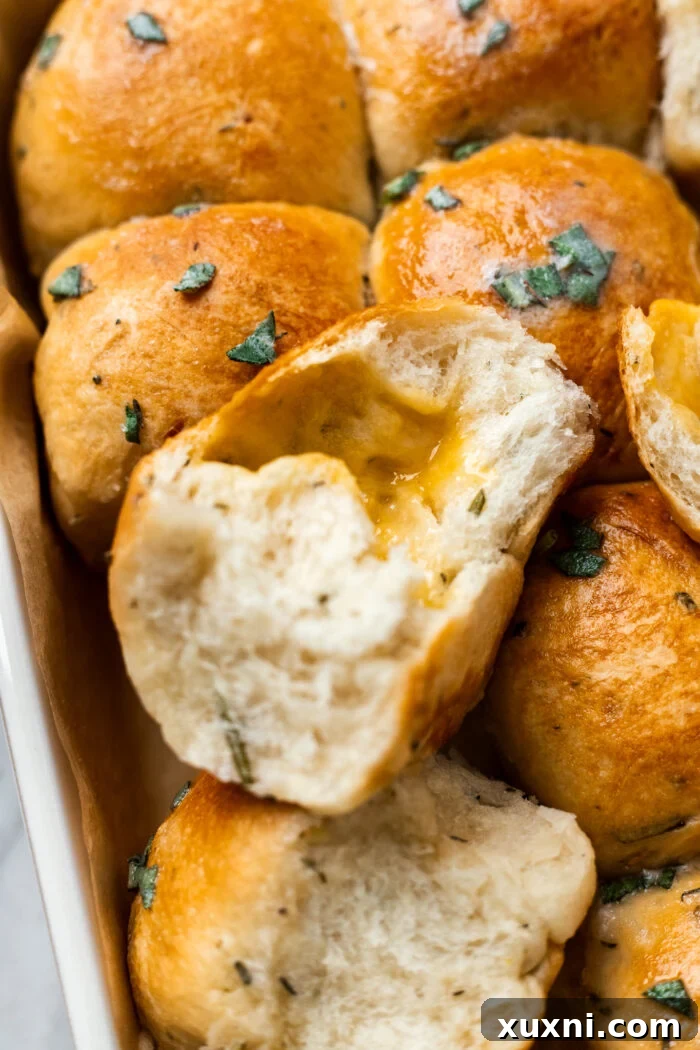
Essential Ingredients for Our Ultimate Vegan Garlic Dinner Rolls
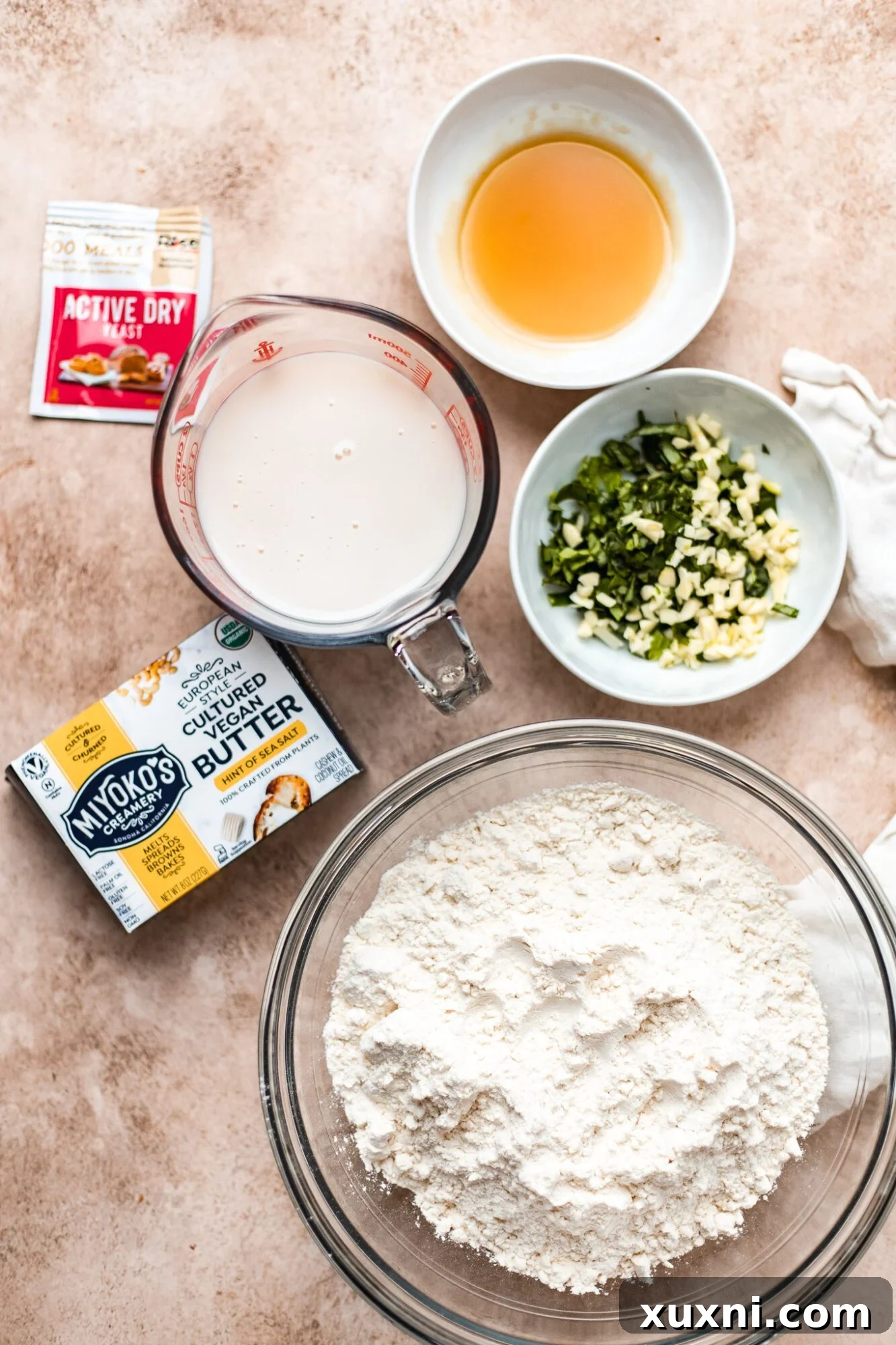
Creating these secretly vegan and utterly amazing **garlic dinner rolls** requires just a handful of straightforward ingredients. Here’s a detailed look at what you’ll need, along with some helpful tips and potential substitutions:
- Bread Flour: For the ultimate chewy yet tender texture, bread flour is your best friend. It contains a higher protein content than all-purpose flour, which translates to superior gluten development, resulting in that desirable stretch and pull in your bread. While you *can* use all-purpose flour, the results might be slightly less robust. For a **gluten-free option**, please refer to our dedicated gluten-free dinner rolls recipe for the base dough.
- Activated Dry Yeast: This is the leavening agent that gives our rolls their incredible rise and fluffiness. I’ve tested this recipe with both active dry yeast and instant/quick-rise yeast, and both work well. Instant yeast will certainly quicken the rising process, but keep in mind that it’s not suitable for the overnight proofing option as it will rise too quickly. Always ensure your yeast is fresh and properly bloomed for best results.
- Maple Syrup or Granulated Sugar: Both maple syrup and granulated sugar serve a dual purpose here: they add a touch of sweetness to the rolls and, more importantly, act as food for the yeast, helping it activate and thrive. Feel free to use whichever you have on hand.
- Dairy-Free Milk: The choice of dairy-free milk is crucial for the richness and moisture of the dough. Opt for unsweetened varieties like soy milk, oat milk, almond milk, or coconut milk. Crucially, avoid vanilla-flavored milks, as their flavor will clash with the savory profile of these rolls. Unsweetened milk ensures the perfect balance.
- Vegan Butter: While some recipes call for melted butter, I’ve found that using **room temperature vegan butter** yields the best results. When softened, it incorporates more smoothly into the dough during kneading, contributing to a wonderfully smooth and incredibly soft texture. I typically use salted vegan butter, which means there’s no need to add extra salt separately. If using unsalted vegan butter, you may wish to slightly increase the amount of sea salt in the recipe.
- Fresh Rosemary, Parsley, & Thyme: This triumvirate of fresh herbs is key to the vibrant, aromatic, and deeply flavorful profile of these **garlic and herb dinner rolls**. The fresh herbs impart a lively, garden-fresh taste that dried herbs simply can’t replicate. While dried thyme is used for convenience, fresh rosemary and parsley are highly recommended for optimal flavor.
- Fresh Garlic: To truly infuse these rolls with an authentic garlic punch, we use freshly minced garlic. This provides a much more robust and nuanced flavor compared to garlic powder, making a noticeable difference in the final product.
- Sea Salt: Essential for balancing the flavors and enhancing the overall taste of the rolls. Finely ground sea salt integrates smoothly into the dough.
- Vegan Cheese (Optional): For that irresistible gooey center, use your favorite brand of shredded vegan cheese. Look for varieties known for their melt and stretch capabilities.
This recipe is designed to yield 12-16 generously sized dinner rolls, making them perfect for sharing. You can use either a rectangular or a square baking dish, depending on your preference and what you have available. The size of the dish will influence how close together your rolls bake, affecting their final shape and softness on the sides.
Understanding Enriched Dough: The Secret to Pillowy Rolls
In the world of bread making, doughs are broadly categorized into two main types: lean dough and enriched dough. Understanding the difference is key to appreciating the texture of these incredible **vegan garlic dinner rolls**.
Lean doughs are typically minimalist, consisting of just flour, water, yeast, and salt. They are “lean” because they contain no added fats or sugars beyond what’s naturally present in the flour. Examples include baguettes and sourdough loaves, which are known for their rustic crusts and open, chewy crumb. These doughs tend to rise relatively quickly.
Enriched doughs, on the other hand, are exactly what they sound like – enriched! They incorporate additional ingredients such as milk, butter, sugar, and sometimes eggs. These additions transform the dough, resulting in a significantly more plush, tender, and soft texture. Think of classic brioche, challah, or cinnamon rolls; their melt-in-your-mouth quality is a hallmark of an enriched dough. The fat and sugar in enriched doughs tenderize the gluten structure, making the final product incredibly soft and moist. This enrichment also typically means a longer rising time compared to lean doughs, as the extra ingredients can slow yeast activity.
The good news? We can (and always do!) create these wonderfully rich and soft enriched doughs using entirely plant-based ingredients. For our **vegan garlic dinner rolls**, we achieve that luxurious texture by thoughtfully swapping in our favorite dairy-free milks and high-quality vegan butter. For other recipes, ingredients like applesauce, dairy-free yogurt, or flax eggs can also be used as excellent replacements for traditional dairy and eggs. The result is a bread that is indistinguishable from its non-vegan counterparts, offering that desirable super soft, fluffy, and truly melt-in-your-mouth experience that defines a perfect dinner roll.
Overview: How to Craft Your Own Vegan Garlic Dinner Rolls
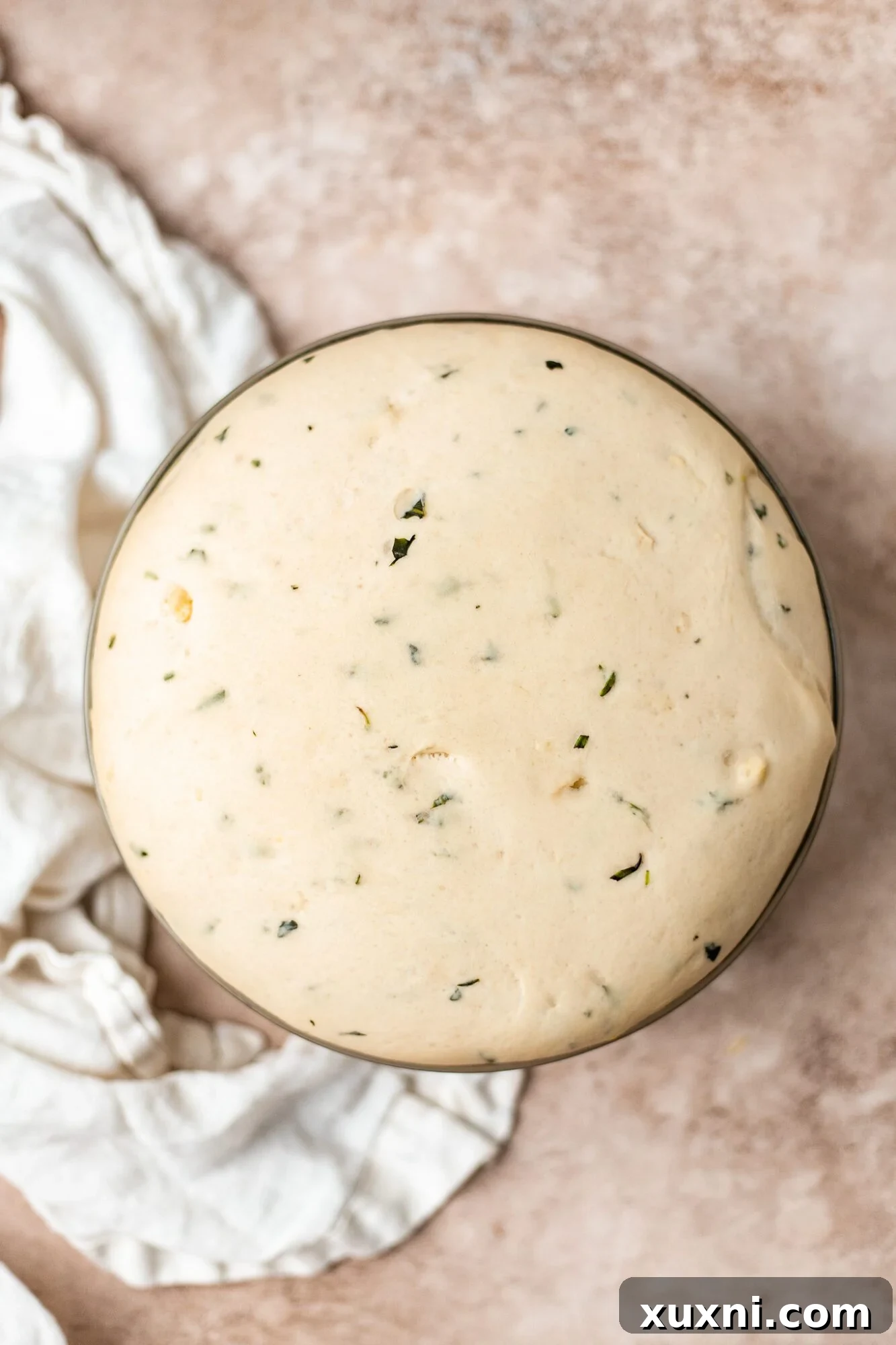
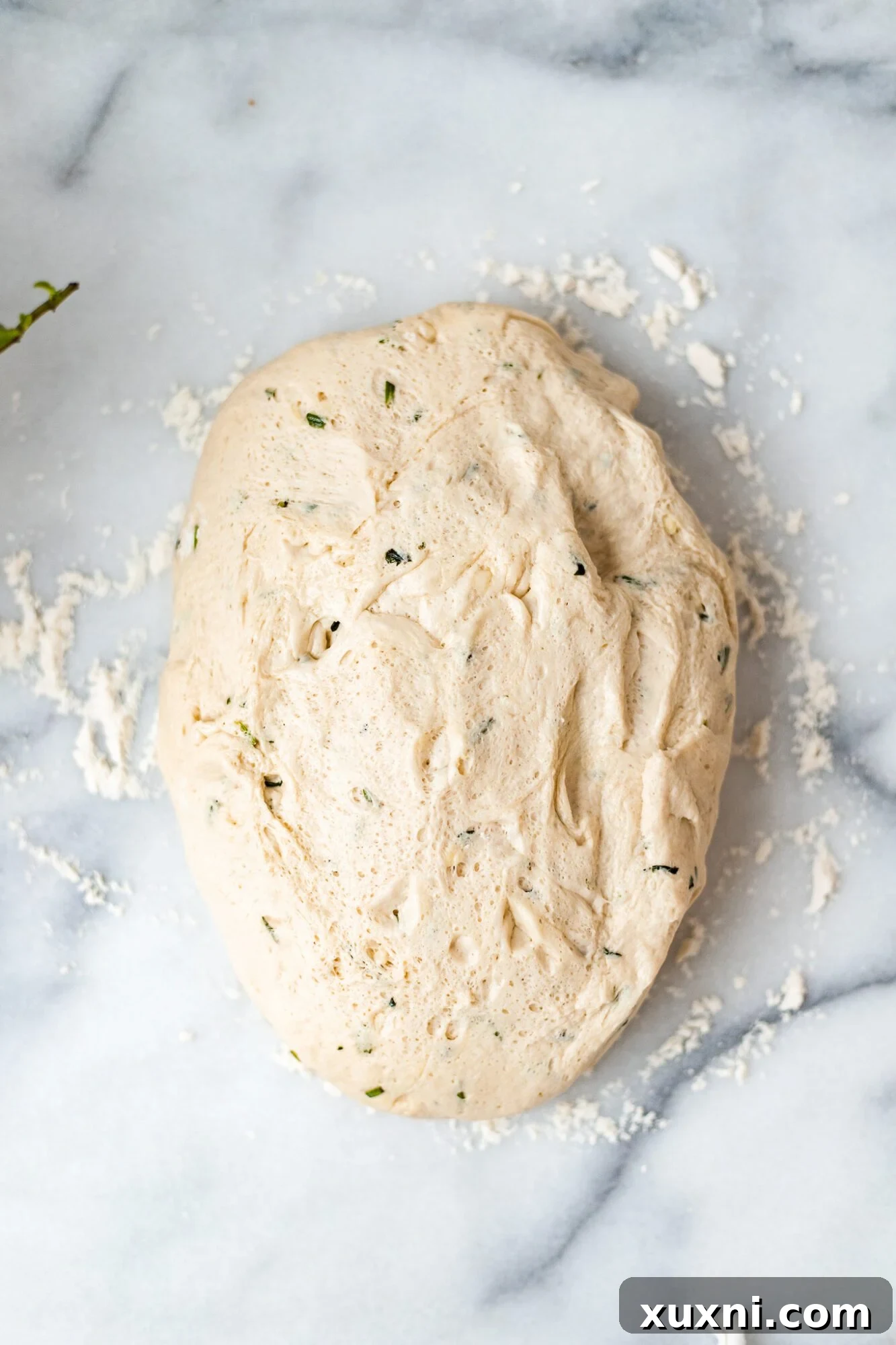
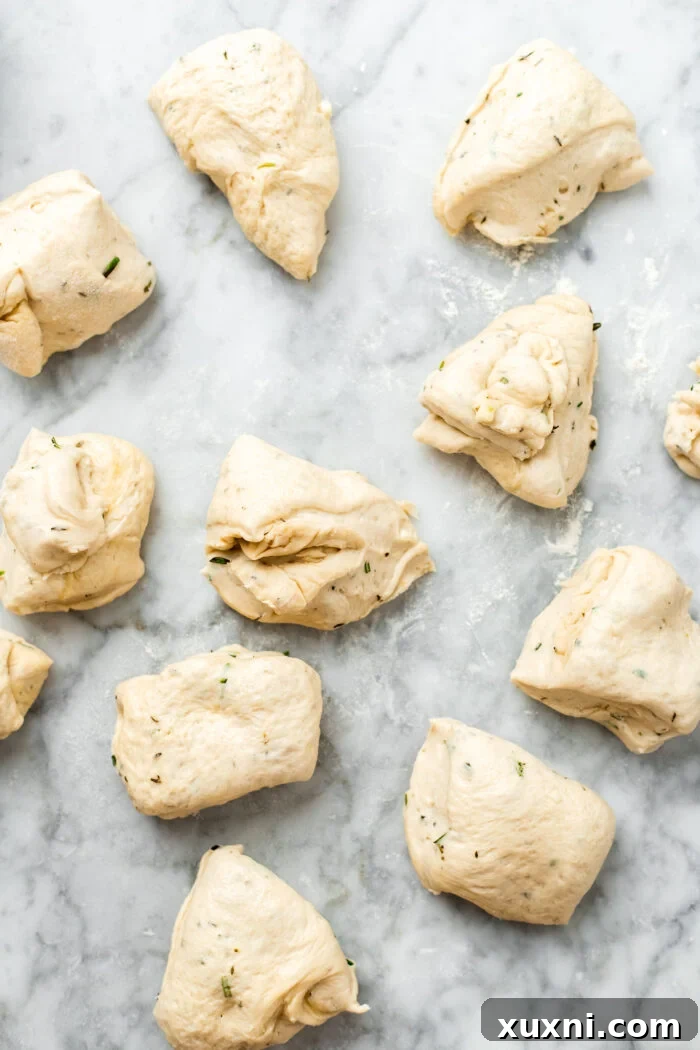
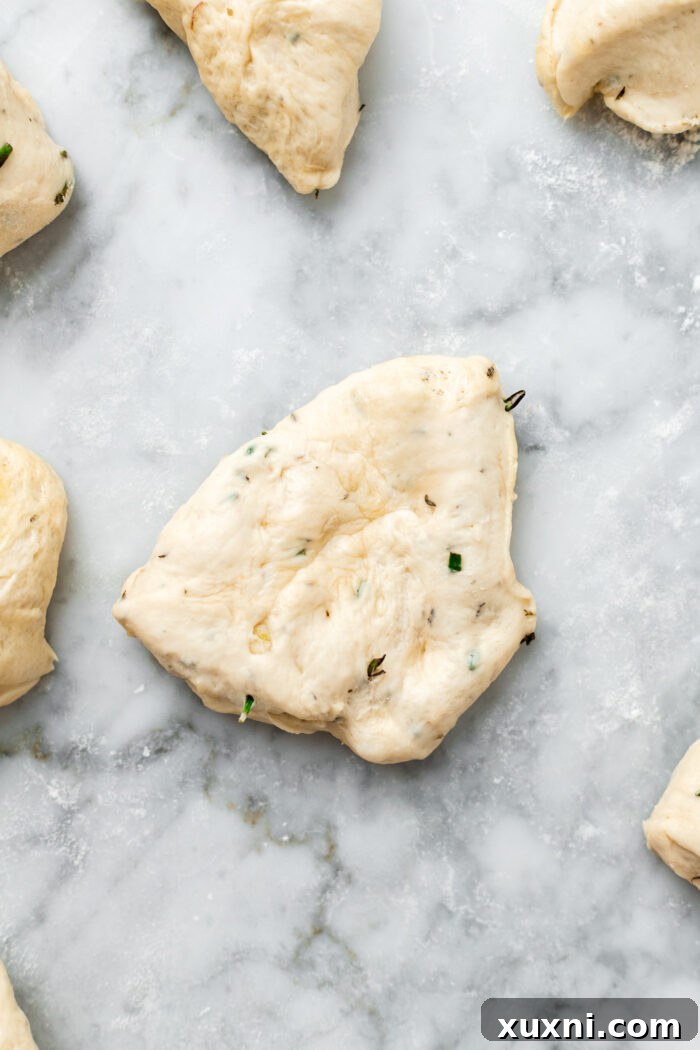
While the full, detailed instructions for this **garlic dinner roll recipe** are provided in the recipe card below, let’s walk through a brief overview of the process. This will give you a clear understanding of the steps involved in creating these magnificent rolls.
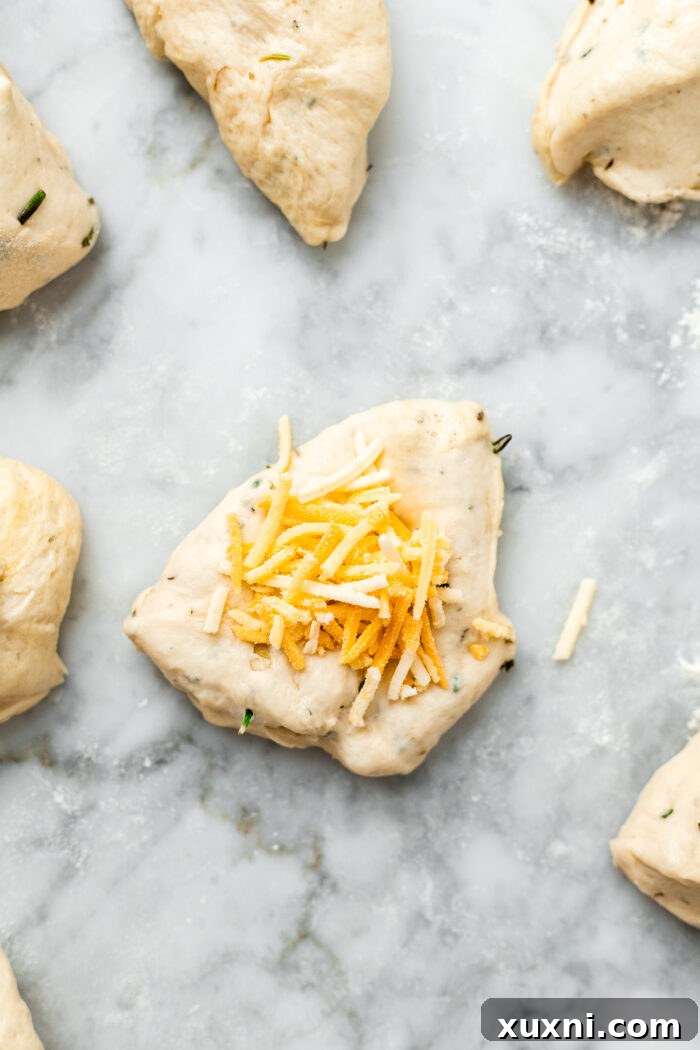
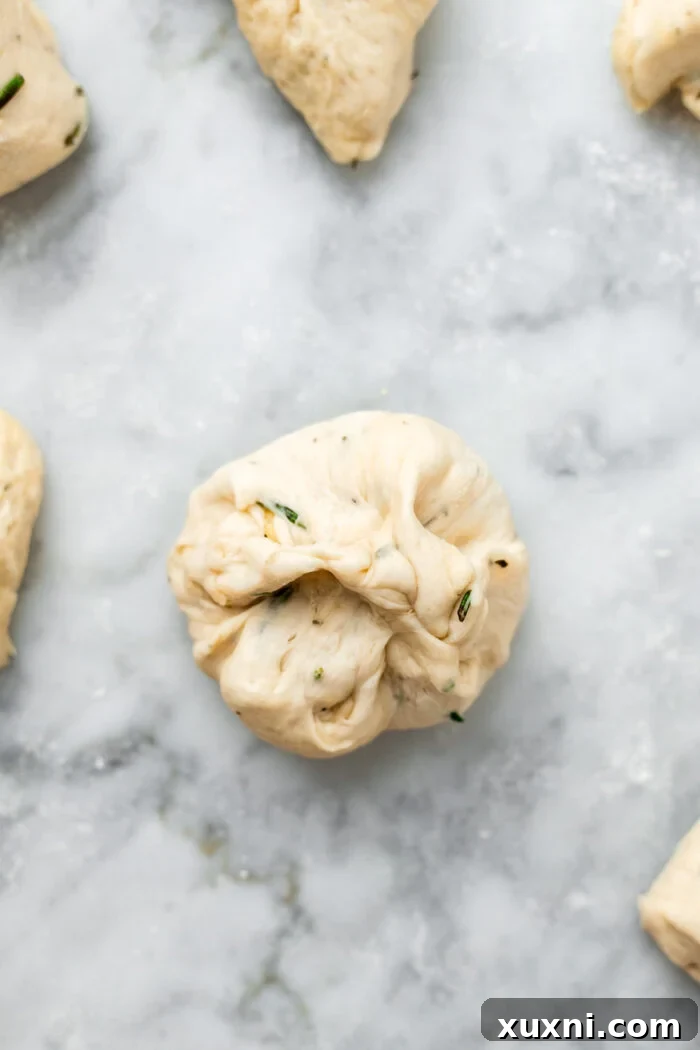
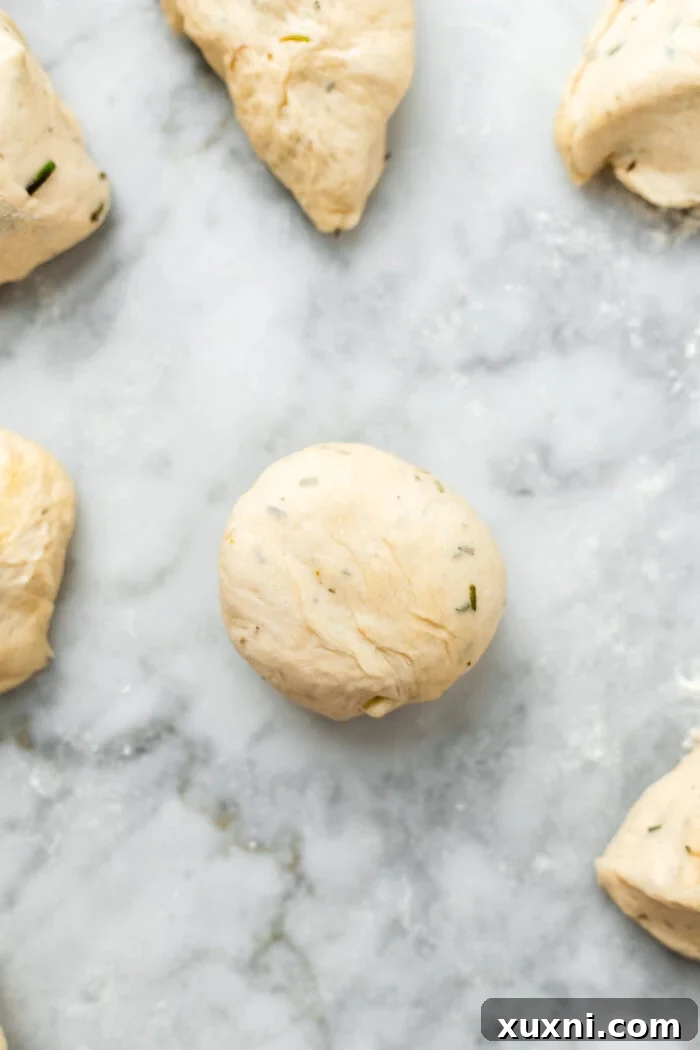
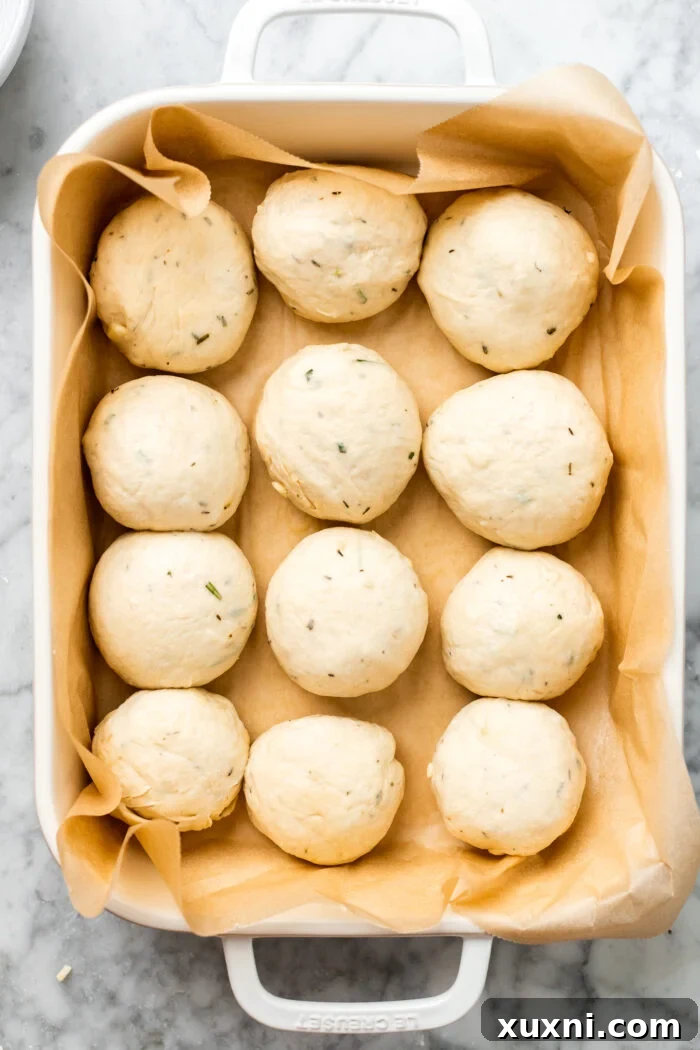
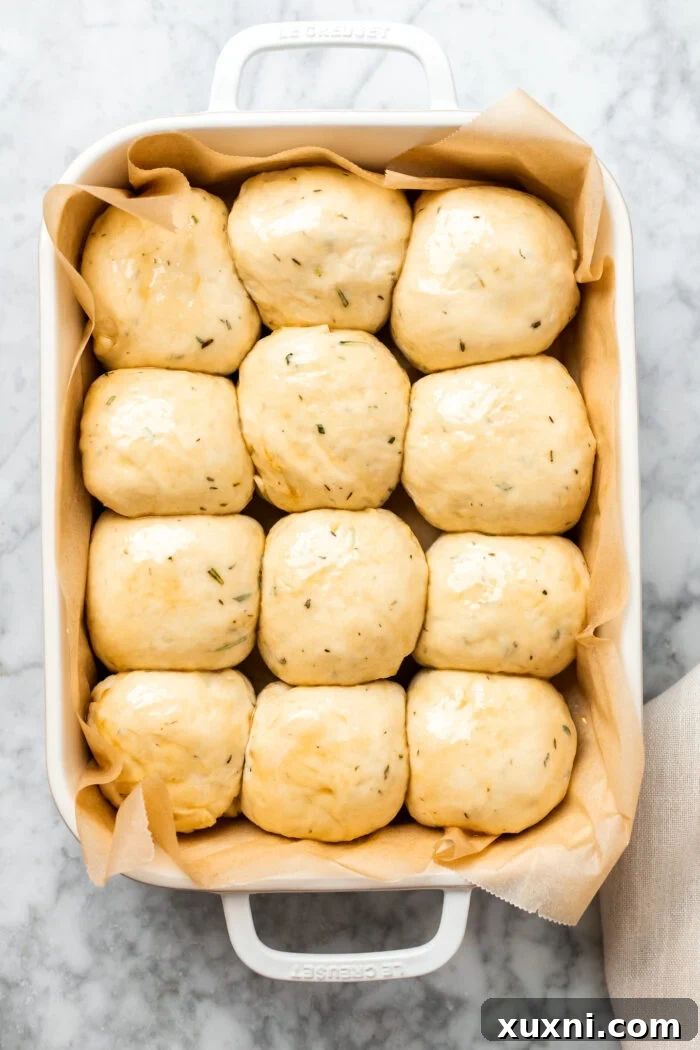
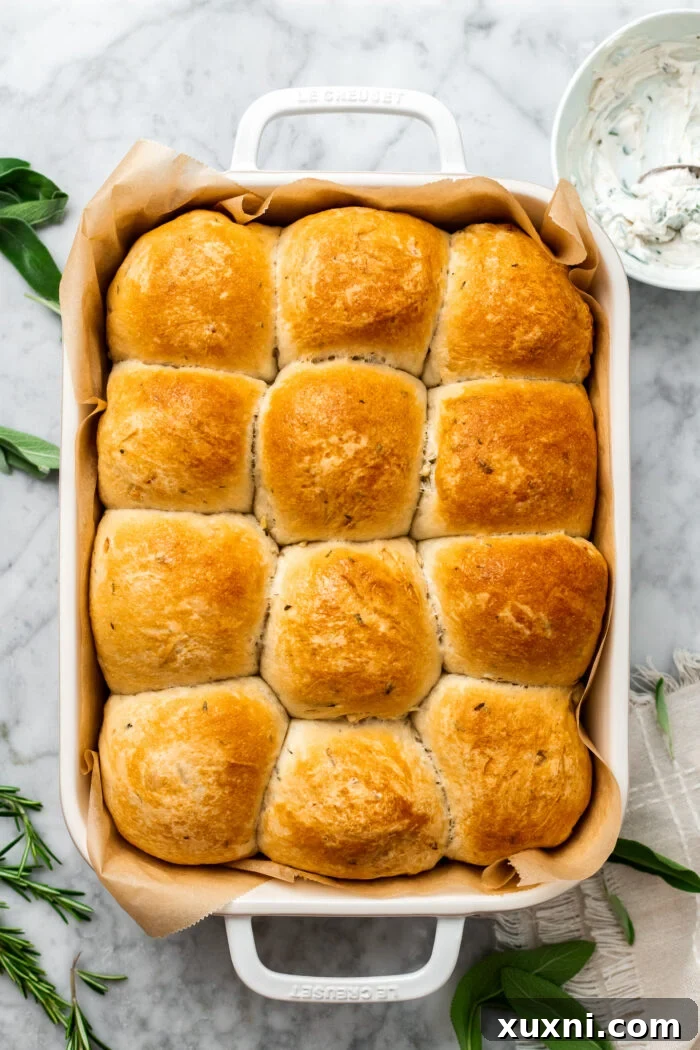
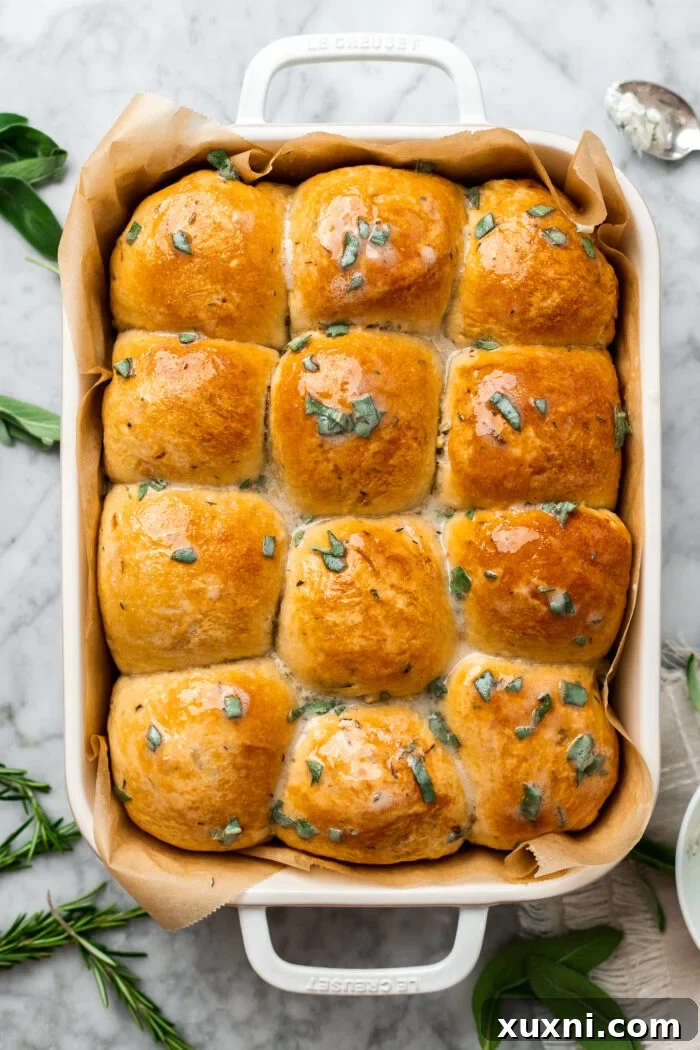
Beginner’s Tip: Mastering the Window Pane Test for Perfect Dough
For anyone new to baking or even seasoned bakers looking for a precise method, the window pane test is an invaluable technique to confirm your dough has been sufficiently kneaded. It’s the ultimate indicator that the gluten has developed correctly, signaling that your dough is ready to move on to its crucial first proof.
Here’s how to perform the window pane test:
- Preparation: After your dough has been kneading for a while (typically 10-15 minutes in a stand mixer for this recipe), pinch off a small piece, about the size of a golf ball.
- The Stretch: Gently stretch this small piece of dough between your fingers and thumbs. Imagine you’re trying to stretch it thin, like pulling taffy.
- Observation: As you stretch, observe the dough. If it has been kneaded enough, you should be able to stretch it so thin that light can pass through it, creating a translucent “window pane” without the dough tearing or breaking. The dough should feel elastic and resilient, not sticky or stiff.
- Interpretation:
- Success: If the dough stretches thinly and light shines through without it breaking, congratulations! Your dough has been kneaded perfectly, and the gluten structure is well-developed. It’s ready for its first rise.
- Needs More Kneading: If the dough tears easily or breaks before reaching that translucent stage, it means the gluten strands haven’t fully developed yet. Continue kneading the dough for another 2-3 minutes, then repeat the test.
This test ensures your rolls will have that desirable soft, airy, and chewy texture, preventing dense or crumbly results. It’s a simple yet critical step for achieving baking success!
Can You Prepare These Vegan Dinner Rolls in Advance? Absolutely!
One of the fantastic features of this recipe is its flexibility – you can absolutely make these delectable **vegan garlic dinner rolls** ahead of time! This makes them an ideal choice for holiday entertaining or busy schedules, allowing you to enjoy freshly baked rolls without the morning rush. The key lies in utilizing a slow, cold fermentation for the first rise.
Here’s how to prep them overnight:
- Prepare the Dough as Usual: Follow the recipe instructions exactly for blooming the yeast, mixing the ingredients, and kneading the dough until it passes the window pane test (Instruction Steps 1-3).
- Overnight First Proof: Instead of placing the dough in a warm area for its first rise, transfer the kneaded dough ball into your greased bowl, cover it tightly with plastic wrap or a snug-fitting lid, and place it directly into the refrigerator. The cold environment will significantly slow down the yeast activity, allowing for a long, slow fermentation overnight (typically 8-12 hours, but up to 24 hours is fine). This slow rise actually enhances the flavor of the dough, giving it a more complex and nuanced taste.
- The Next Day: When you’re ready to bake, remove the dough from the refrigerator. It will have risen slowly, likely doubled in size.
- Shape and Second Rise: Gently punch down the dough and proceed with shaping the dinner rolls as described in Instruction Step 5.
- Bring to Room Temperature & Bake: Arrange the shaped rolls in your baking dish. Instead of rushing them to a warm spot, let them rest on the counter as your oven preheats (Instruction Step 6). This resting period allows the cold dough to come back to room temperature and undergo a final, shorter second rise, ensuring a light and airy texture. Once the oven is preheated and the rolls have visibly puffed up, proceed with the baking instructions (Instruction Step 7 & 8).
This make-ahead method is a game-changer, allowing you to enjoy warm, homemade **vegan garlic dinner rolls** with minimal fuss on the day you plan to serve them.
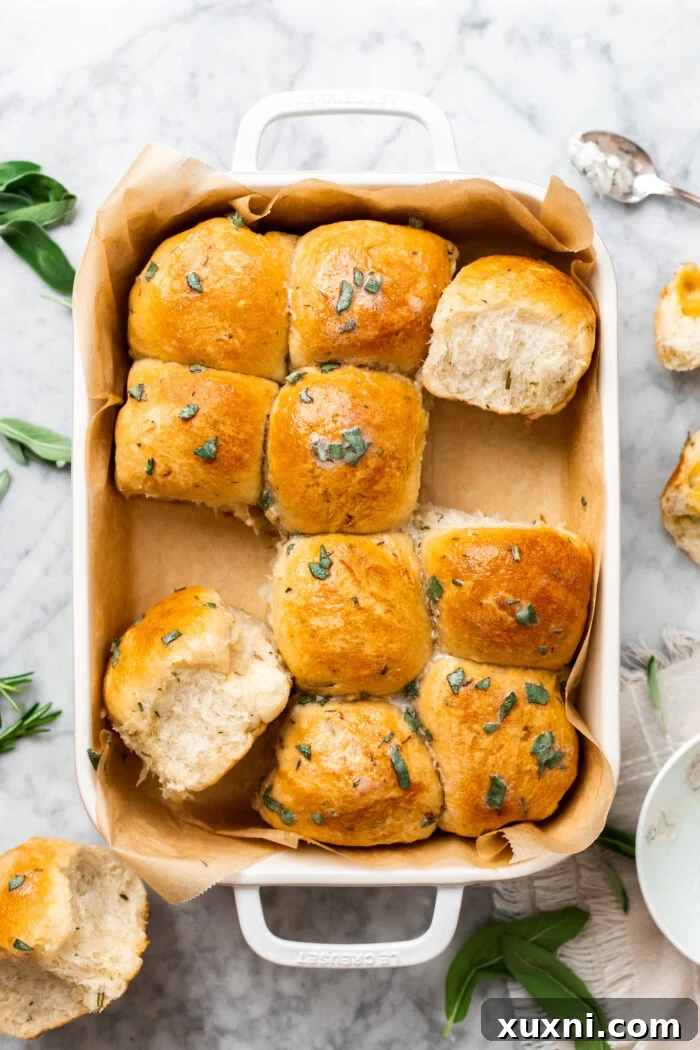
Cheesy or Not Cheesy? The Choice is Yours!
While the gooey dairy-free cheese filling adds an incredible layer of indulgence and fun to these **vegan garlic dinner rolls**, it’s absolutely not a requirement for a delicious outcome. If you prefer your dinner rolls without cheese, or if you simply don’t have vegan cheese on hand, no problem at all!
To make plain **garlic dinner rolls**, simply omit the step where you add the vegan shredded cheese in the middle of each dough piece (Instruction Step 5). You’ll still follow all other steps exactly as written. The resulting rolls will be just as “buttery,” soft, and infused with the wonderful flavors of garlic and herbs. Their rich taste and tender texture are so satisfying that no one will ever guess they’re entirely vegan and dairy-free, even without the cheesy surprise!
Whether you go for the cheesy version or keep them plain, these rolls are destined to be a hit at your table. Enjoy the flexibility and customize them to your liking!
Want to save this recipe for later? Add it to your favorite recipe board on Pinterest!
If you make this recipe, please be sure to leave a comment and a rating ⭐️⭐️⭐️⭐️⭐️ below. This helps others to find the recipes! As always, I absolutely love to see your beautiful creations on Instagram and Pinterest, so be sure to tag me there as well!
Print
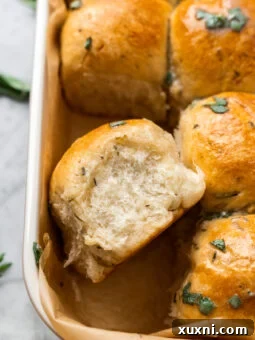
“Cheesy” Vegan Garlic Dinner Rolls with Herbed Dairy-Free Butter
5 Stars 4 Stars 3 Stars 2 Stars 1 Star
4.3 from 3 reviews
Author: Britt Berlin
Prep Time: 30 minutes
Proofing & resting: 90 minutes
Cook Time: 20-25 minutes
Total Time: 2 hours 20 minutes (excluding overnight option)
Yield: 16 1x
Category: Dinner, Side Dish, Bread
Method: Baking, Kneading
Cuisine: American
Diet: Vegan, Dairy-Free, Plant-Based
Description
These incredibly plush and pillowy **vegan garlic dinner rolls** are made with just 8 simple ingredients and feature a delightful, gooey dairy-free cheesy filling! Baked until golden brown and brushed with a fragrant herbed dairy-free butter, these unbelievably soft and savory rolls are the perfect side dish to elevate any holiday meal or special dinner. They’re easy to make, versatile, and guaranteed to be a hit with everyone, vegan or not!
Ingredients
Scale
- 1 1/2 cups (330 mL) unsweetened dairy-free milk (such as soy, oat, or almond milk)
- 2 tbsp maple syrup or granulated sugar
- 2 1/4 tsp (7 g) active dry yeast (or instant yeast for faster rise, see notes)
- 4 1/2 cups (560 g) bread flour or all-purpose flour* (plus 1 tsp for blooming yeast)
- 1/4 cup fresh rosemary, finely chopped
- 1/4 cup fresh parsley, finely chopped
- 1 tbsp dried thyme
- 7 cloves garlic, freshly minced
- 1 tsp finely ground sea salt
- 1/2 cup (113 g) unsalted vegan butter, room temperature (if using salted, adjust added salt)
- 1 cup shredded vegan cheese of choice (optional, for cheesy rolls)
For the Vegan Bread Wash:
- 1 tbsp melted vegan butter
- 1 tbsp maple syrup
- 1 clove garlic, minced (optional, for extra garlicky tops)
For the Herbed Garlic Butter Glaze:
- 3 tbsp unsalted vegan butter, room temperature
- 3 tbsp fresh sage, finely chopped
- 3 tbsp fresh rosemary, finely chopped
- 1 tsp garlic powder
Instructions
- Prepare Your Workspace and Bowl: Before you begin, ensure all your ingredients are measured and weighed for precision. Lightly grease a large bowl with cooking spray or coconut oil; this bowl will be used specifically for the dough’s initial rise and is separate from your mixing bowl. Have a medium casserole dish ready and greased for the final bake.
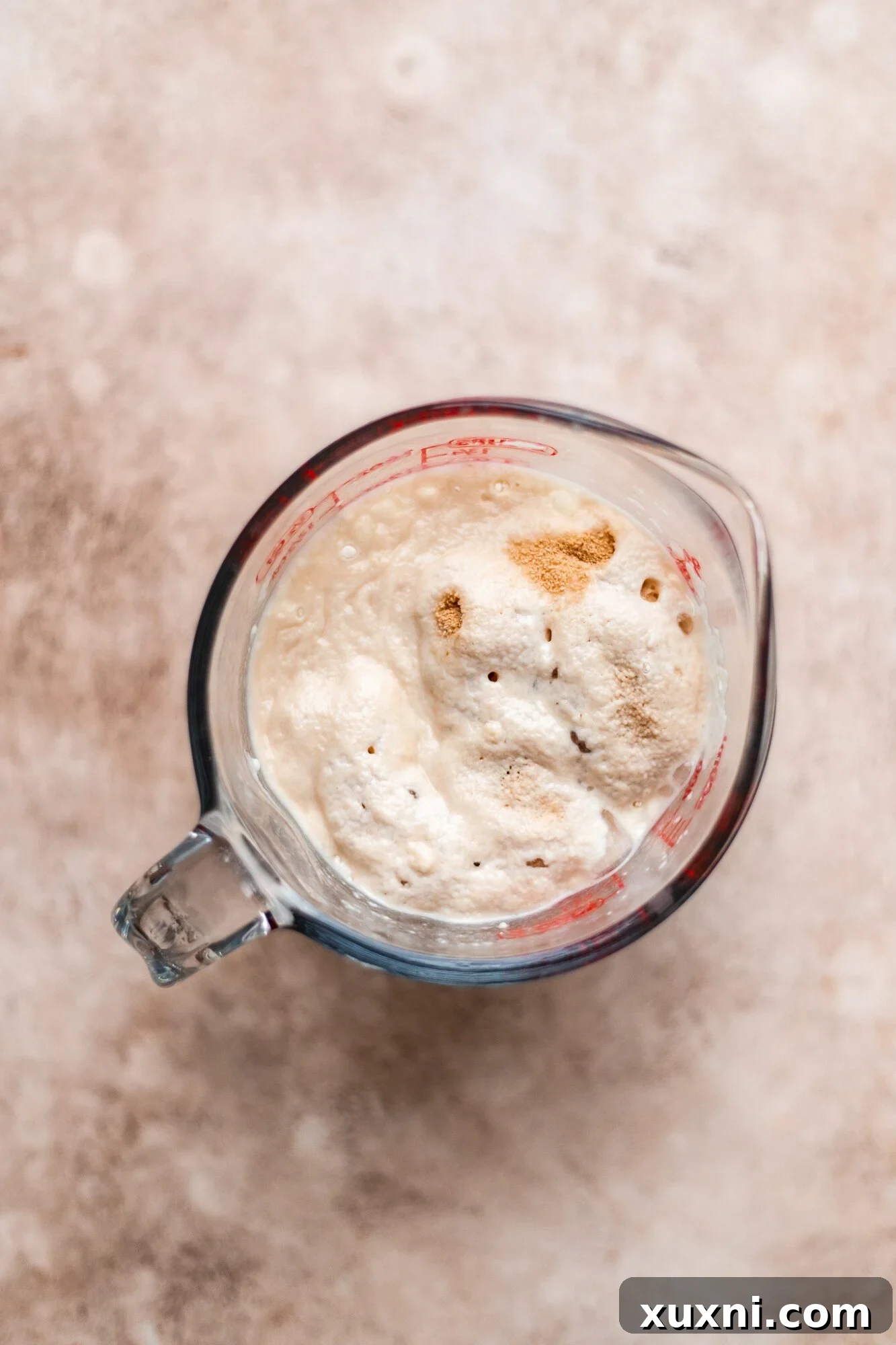
- Activate the Yeast for Success: Gently heat the dairy-free milk until it reaches precisely 110°F (43°C). A food thermometer is essential here, as milk that’s too hot will kill the yeast, and too cold won’t activate it. Once at temperature, stir in the 2 tablespoons of maple syrup (or sugar) and 1 teaspoon of flour. Add the yeast and stir using a wooden spoon (some metals can inhibit yeast activity). Cover the bowl and place it in a consistently warm spot, ideally between 75-80°F (24-27°C), for 10-12 minutes. You’ll know your yeast is active and ready when the mixture has a distinct yeast-like aroma and a frothy, foamy layer appears on the surface. If this doesn’t happen, your yeast may be old or the milk temperature was off, and you’ll need to restart.
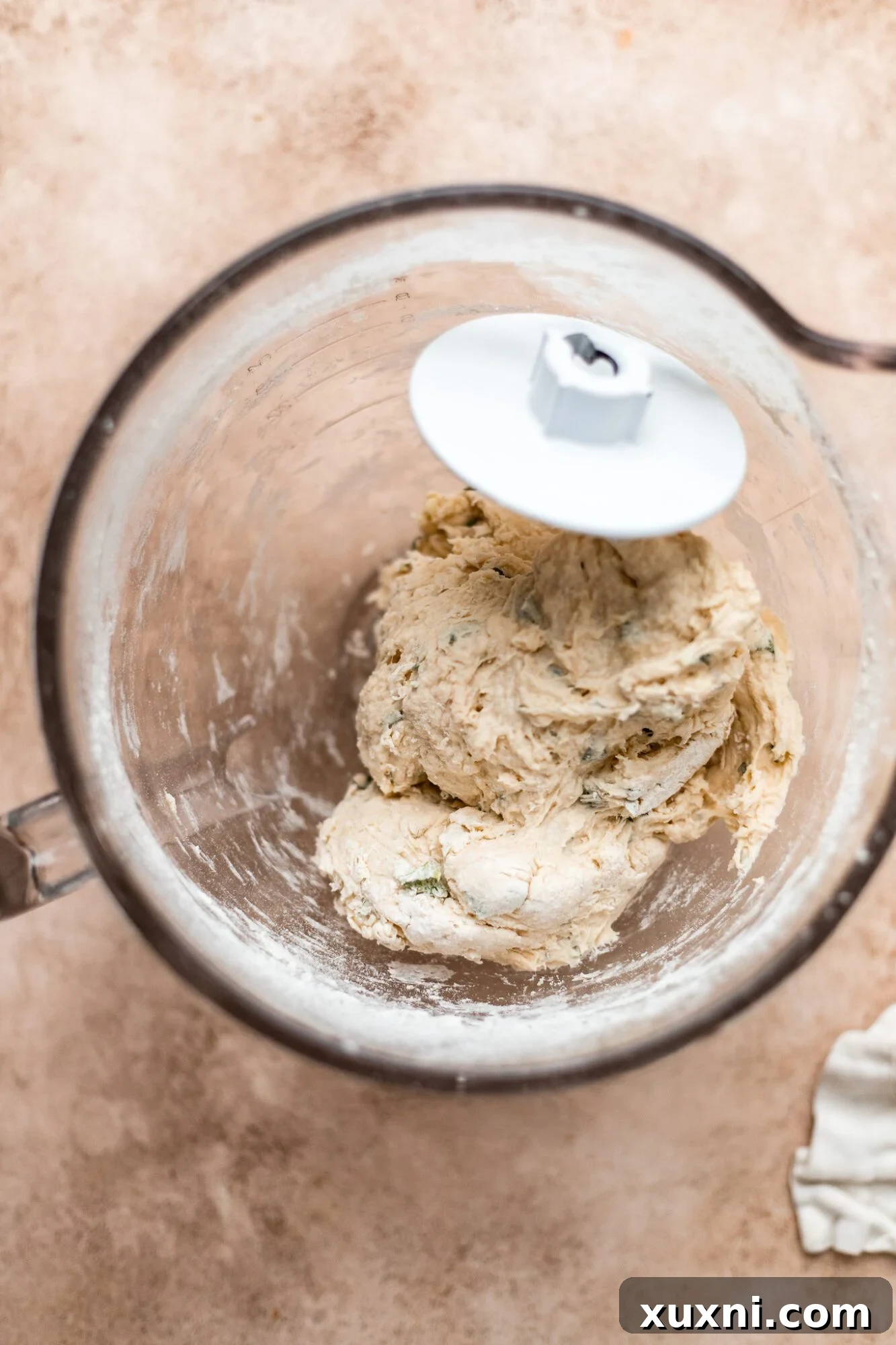
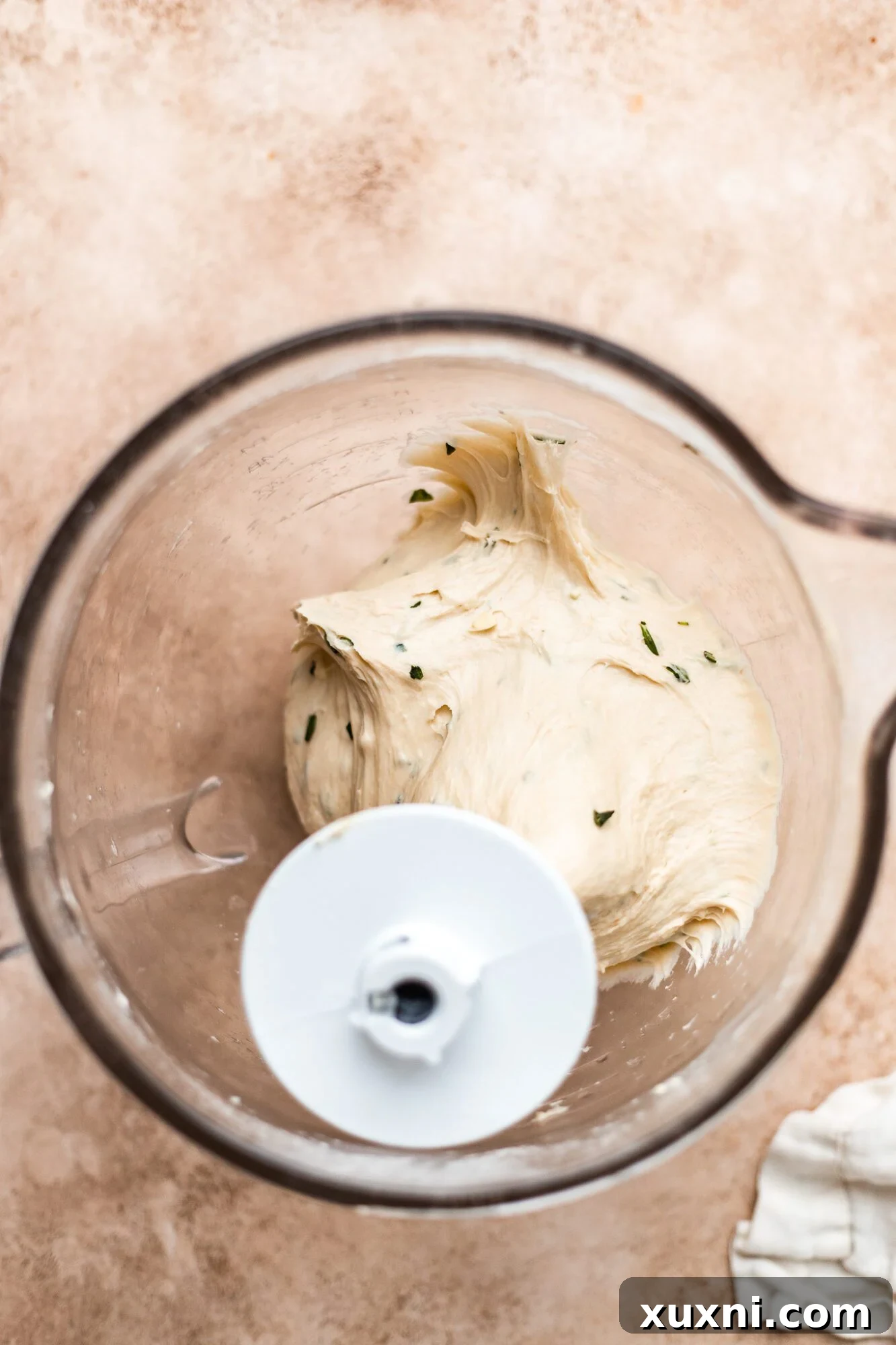
- Form and Knead the Dough: In the bowl of a stand mixer fitted with a dough hook, combine the remaining bread flour, chopped fresh rosemary, fresh parsley, dried thyme, and minced garlic. Mix these dry ingredients gently on medium speed for about a minute to combine them evenly. Next, with the mixer on medium-low speed, gradually pour in the bloomed yeast mixture. Mix until the ingredients are just combined and the dough appears shaggy. Now, add the room temperature vegan butter (cut into small pieces for easier incorporation) and the sea salt. Mix on medium speed until the butter is fully incorporated into the dough. Increase the speed to medium-high and allow the dough hook to knead the dough for 10-15 minutes. The dough should become smooth, elastic, and pull away from the sides of the bowl. Perform the window pane test (see tip above) to ensure proper kneading; if it tears, continue kneading for a few more minutes until it passes the test.
- The First Rise (Proofing): Carefully form the kneaded dough into a ball and place it into the greased bowl you prepared earlier. Cover the bowl loosely with a clean, thin dish towel. Find a warm, draft-free area for the dough to rise. An ideal temperature is around 85°F (29°C). If your oven has a “proof” setting, use that. Alternatively, you can preheat your oven to 100°F (38°C), then turn it OFF immediately, and place the covered dough bowl inside with the oven light on. Allow the dough to proof until it has noticeably doubled in size, which typically takes about an hour. Be mindful that cooler environments will prolong the rising time, while warmer spots will speed it up.
- Shape Your Dinner Rolls: While your dough is undergoing its first rise, take a moment to grease your medium casserole dish with cooking oil and set it aside. Once the dough has doubled in size, gently “punch it down” to release the accumulated air. Transfer the dough onto a lightly floured clean surface. Using a pizza cutter or a large, sharp kitchen knife, divide the dough into 12-16 equal pieces. For the most consistent results and evenly baked rolls, I highly recommend using a kitchen scale to weigh each piece (aim for 58-60 grams per roll for 16 rolls). To form each roll: gently flatten a dough piece into a disk. If you’re making cheesy rolls, place about 1-2 tablespoons of your chosen shredded vegan cheese in the center of the dough. Gather the edges of the dough around the cheese, pinching them firmly together at the bottom to create a sealed seam and a round top. Then, flip the roll over so the seam is facing down, and gently roll it between your palms to smooth it into a perfect ball. Repeat this process for all the dough pieces, arranging them snugly in your prepared casserole dish as you go. For a visual guide on shaping, you can refer to this video.
- The Second Rise and Oven Preheat: Once all the dinner rolls are shaped and placed in the casserole dish, cover them again with a thin, clean dish towel. Place them in a warm, draft-free area (near the preheating oven works well) for their second rise. They should nearly double in size again, becoming visibly plump and airy. During this time, preheat your oven to 375°F (190°C). This ensures the oven is at the correct temperature when the rolls are ready.
- Bake the Rolls to Golden Perfection: As the rolls complete their second rise and the oven finishes preheating, prepare your vegan bread wash. In a small bowl, whisk together the melted vegan butter, maple syrup, and the optional extra minced garlic. Using a pastry brush, gently and evenly brush this mixture over the tops of each risen dinner roll. This wash will contribute to a beautiful golden-brown crust. Carefully place the casserole dish into the preheated oven and bake for 20-25 minutes. If you’ve made larger, 12-count rolls, they might require a few extra minutes, up to 30-35 minutes total. Keep an eye on them; the tops should be a rich golden brown and slightly crusted, but avoid over-baking to maintain their softness.
- Final Touch: Herbed Vegan Butter Glaze: Once the dinner rolls emerge from the oven, glowing golden and fragrant, remove them from the oven. Allow them to cool slightly in the dish for a few minutes. While they’re cooling, quickly prepare the herbed vegan butter glaze. In a small bowl, combine the room temperature vegan butter with the finely chopped fresh sage, fresh rosemary, and garlic powder. Mix until well combined. Generously brush this aromatic herbed butter mixture over the still-warm rolls. The warmth of the rolls will help the butter melt and infuse its flavors beautifully. Serve them immediately to enjoy their peak warmth, softness, and incredible flavor!
- Storage Instructions: If you happen to have any leftover **vegan garlic dinner rolls** (which is rare!), store them in an airtight container or a sealed baggy. At room temperature, they will remain fresh for 1-2 days. For extended freshness, store them in the refrigerator for up to 4-5 days. For longer storage, they can be frozen for up to 3 months. To reheat, simply warm them gently in the oven or microwave until soft and heated through.
Notes
Gluten-Free Option: If you require a gluten-free version, this recipe can be adapted. For the base dough, please use our comprehensive gluten-free vegan dinner rolls recipe, and then incorporate the garlic and herb elements from this recipe. Keep in mind that gluten-free dough behaves differently and may require slight adjustments in handling.
Yeast Type: As mentioned in the ingredients, you can use active dry yeast or instant yeast. If using instant yeast, the rising times will be quicker, and it is generally not recommended for the overnight proofing method as it can over-proof. Active dry yeast is more forgiving for longer rises.
Temperature Control: Yeast is highly sensitive to temperature. Always use a thermometer for the dairy-free milk. A warm kitchen helps with proofing, especially in cooler climates. If your kitchen is cold, consider using your oven’s “proof” setting or the “warm oven with light on” trick.
Flour Accuracy: For best results, especially with baking, it is highly recommended to weigh your flour using a kitchen scale rather than measuring by volume. A cup of flour can vary significantly in weight depending on how it’s scooped, leading to inconsistent dough.