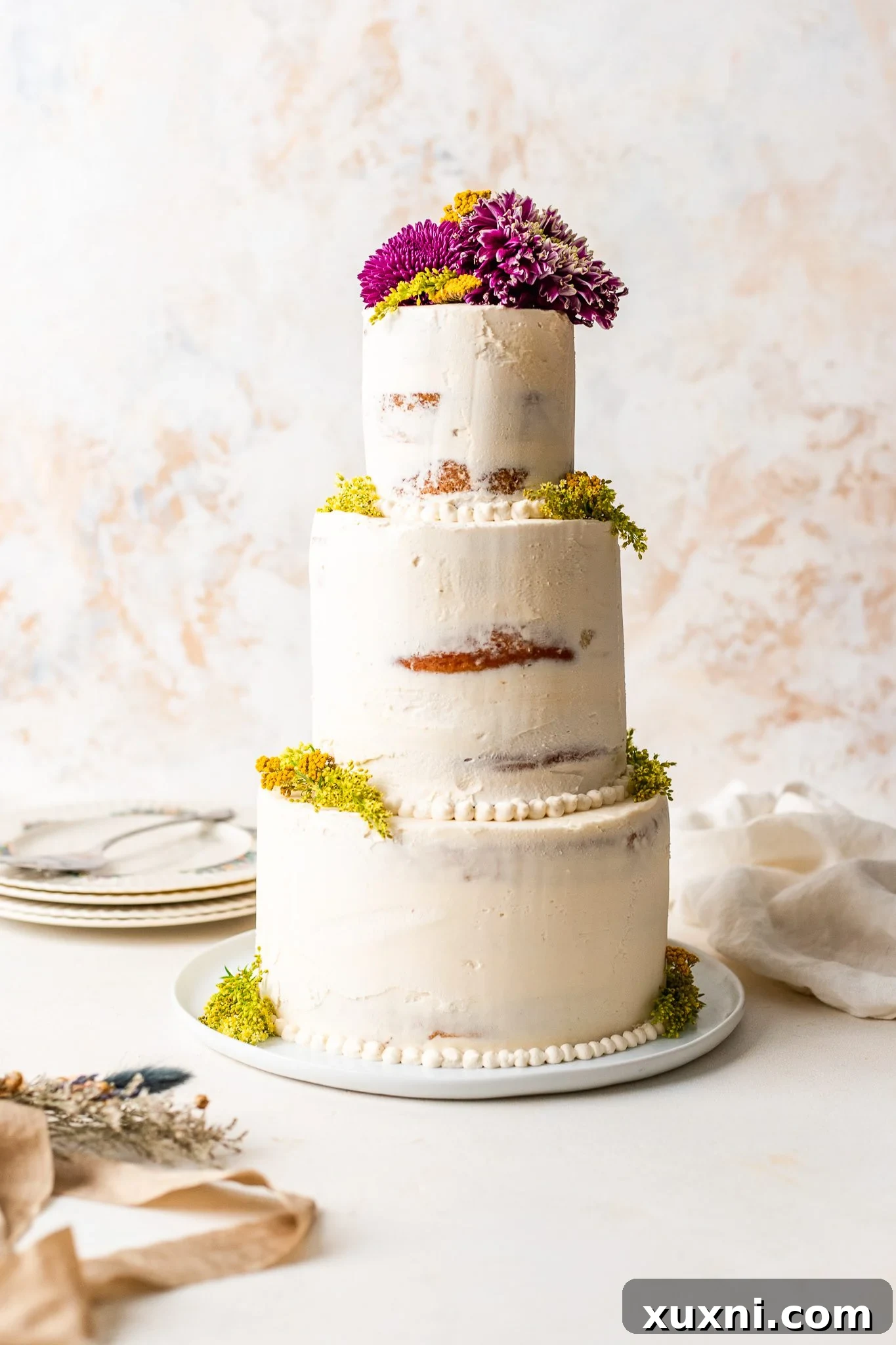
Your wedding day is a celebration of love, commitment, and joy, and what better way to culminate the festivities than with a spectacular cake that truly reflects your personal touch? This comprehensive guide unveils the secrets to baking and decorating your very own homemade vegan wedding cake, transforming what might seem like a daunting task into a fulfilling and delicious journey. Whether you’re a seasoned baker or just starting, this step-by-step tutorial is designed for any home baker ready to create a stunning, multi-tiered masterpiece. We’ll cover everything from baking the perfect moist vegan cake layers to assembling up to a four-tier structure and adorning it with elegant decorations. Dive in to discover the exact, tried-and-tested recipe that was used for a four-tiered vegan and gluten-free wedding cake, ensuring your special day is as sweet and compassionate as can be.
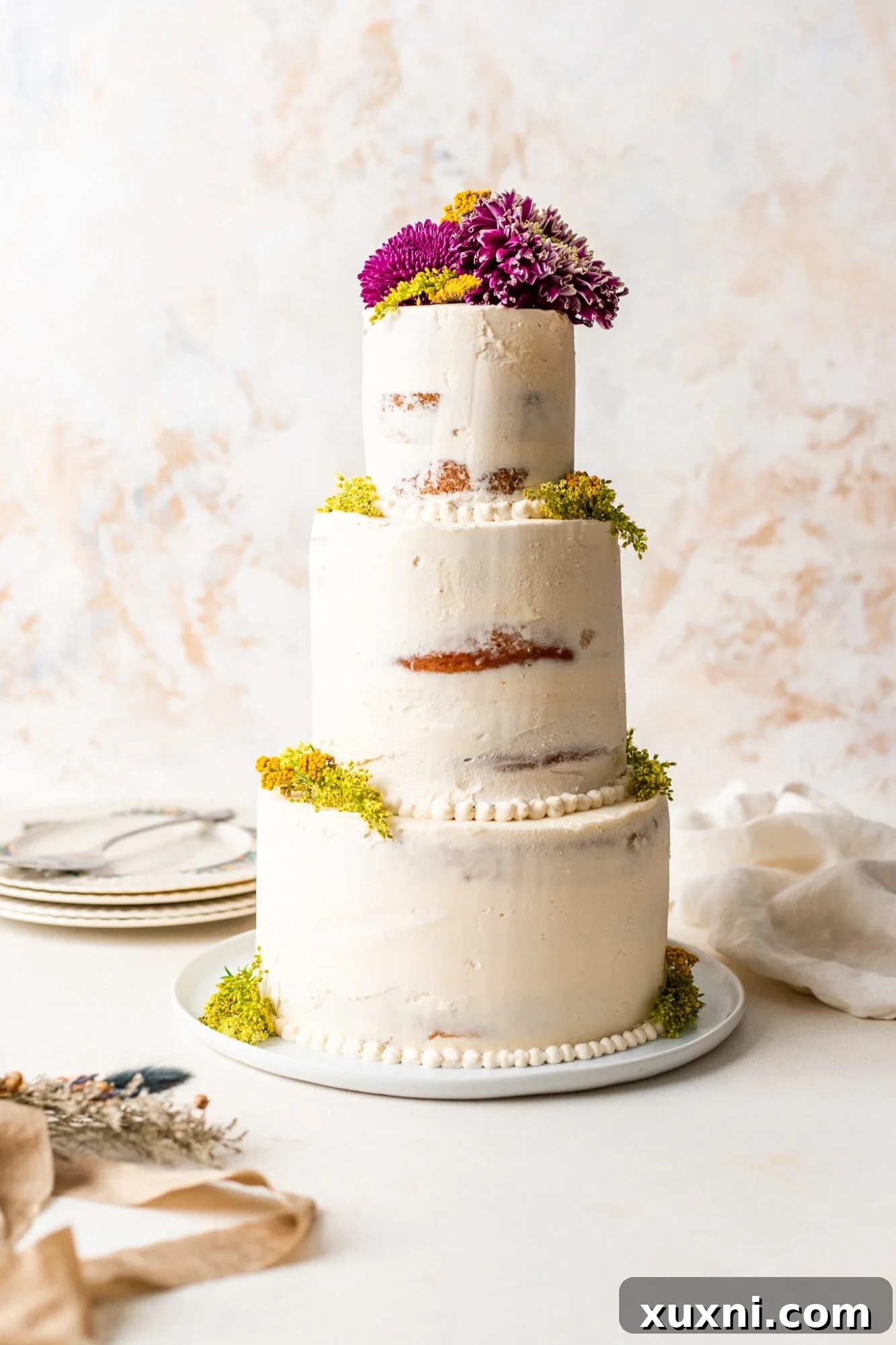
Crafting the Ultimate DIY Homemade Vegan Wedding Cake
There’s a special kind of magic in creating something truly spectacular with your own hands, especially when it’s for an occasion as significant as a wedding. This vegan wedding cake recipe isn’t just a recipe; it’s a labor of love, based on a beloved vegan vanilla cake that consistently receives rave reviews. It’s so good, in fact, that it’s earmarked for a future personal celebration!
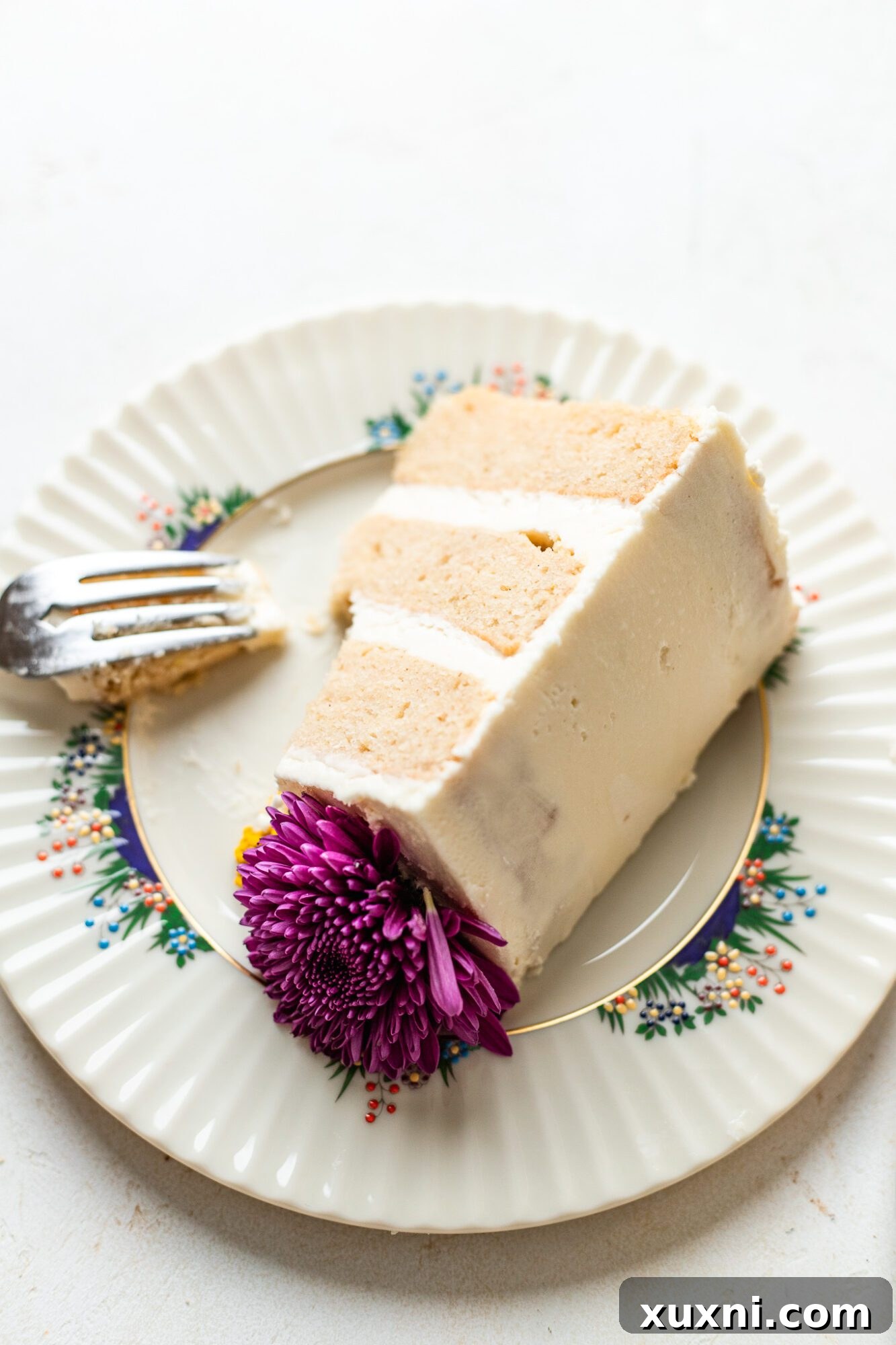
Imagine tender, exquisitely moist vegan vanilla cake layers, generously slathered with a rich, velvety vegan vanilla buttercream frosting. Envision this culinary canvas adorned with delicate, plant-based floral colors and designs, culminating in a homemade vegan wedding cake that promises to impress even the most discerning palates. This isn’t just a dessert; it’s an experience, a centerpiece that will undoubtedly “wow” every guest at your celebration.
We’ve put this recipe to the ultimate test: our family. And to our delight, absolutely no one believed it was vegan! Their surprise and delight were the highest compliments, validating the incredible taste and texture that rivals any traditional cake. Rest assured, this homemade vegan wedding cake is completely dairy-free, egg-free, soy-free, and nut-free, making it an inclusive and joyous option for any wedding day. Through this detailed tutorial, you’ll not only learn to bake a magnificent cake but also discover why creating your own wedding cake can be a far more rewarding experience than simply purchasing one.
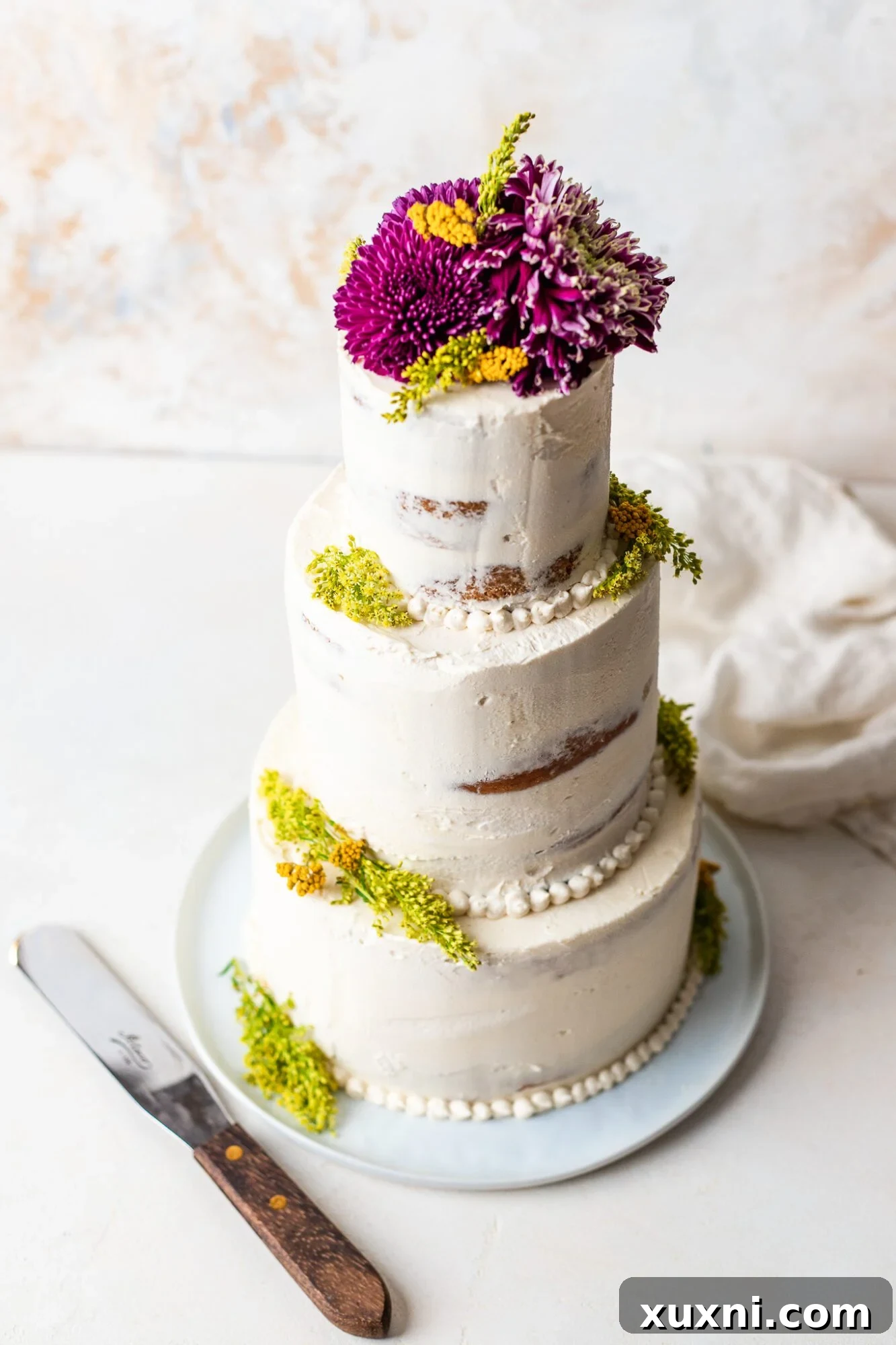
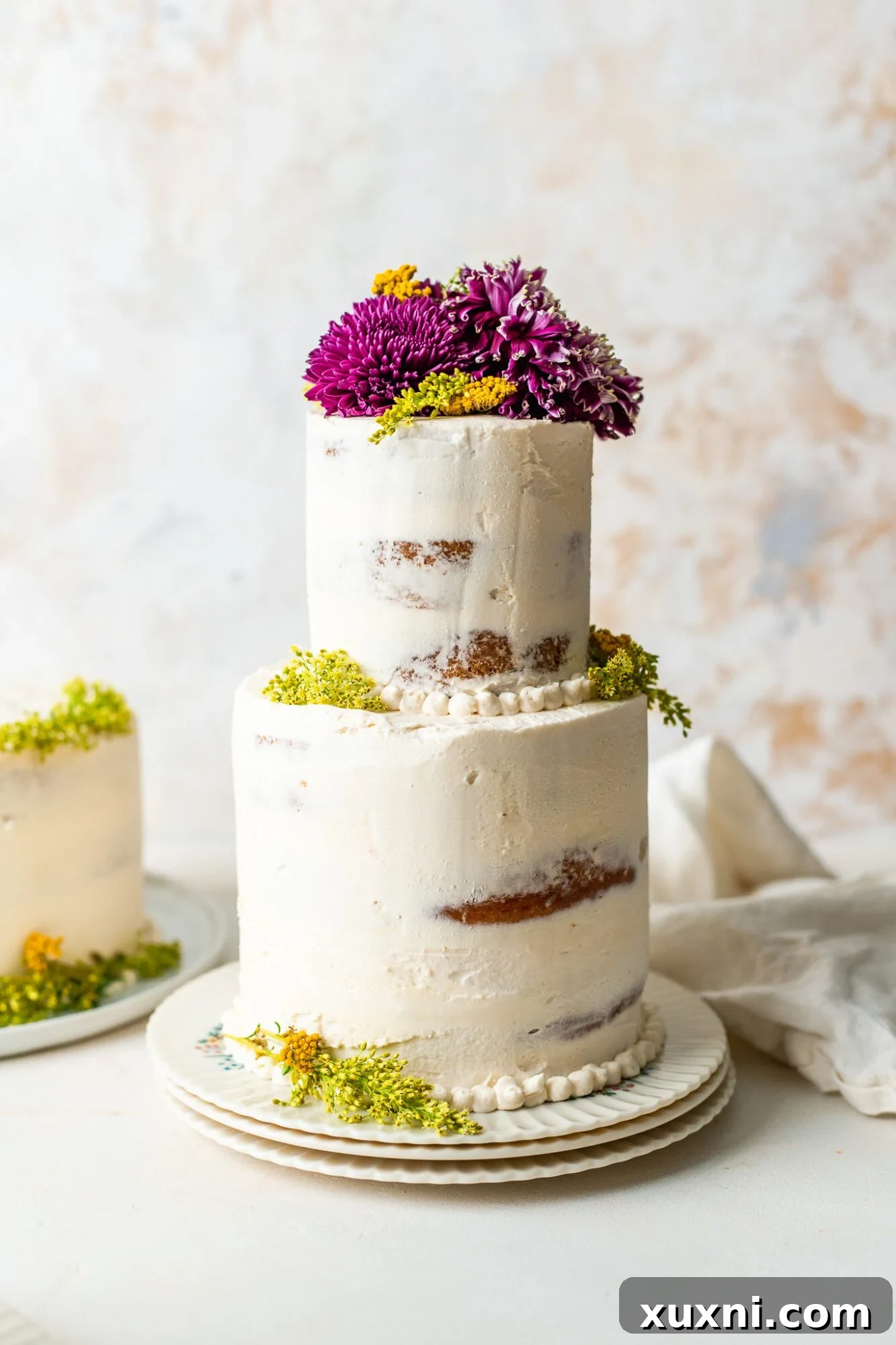
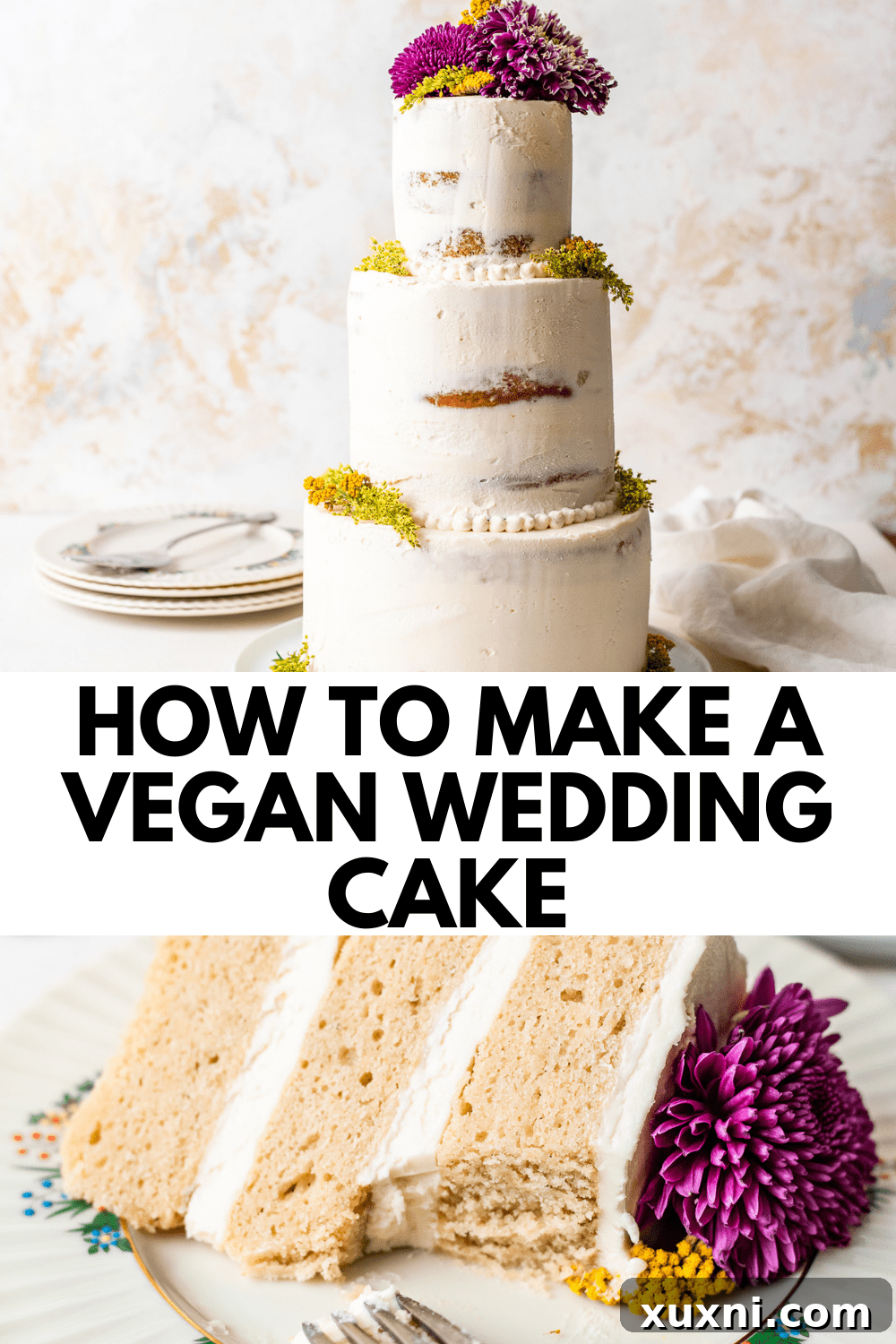
The foundation of this guide draws heavily from the experience of making a friend’s four-tiered wedding cake as a personal gift. While the detailed instructions reflect that grand scale, the accompanying photographs showcase a three-tiered practice version, proving the versatility and adaptability of this recipe for various sizes and occasions.
Why Choose to Make Your Own Vegan Wedding Cake?
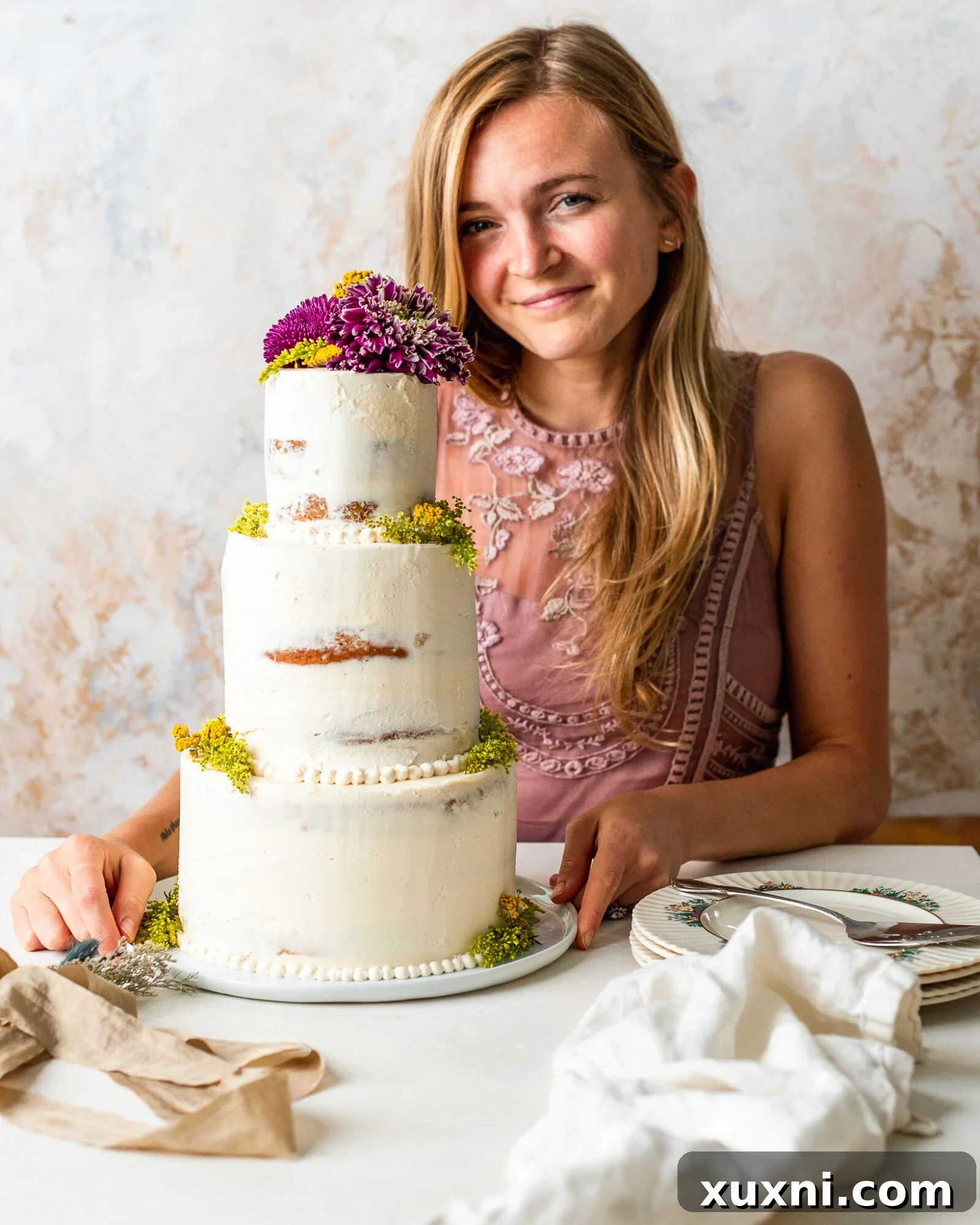
For many, the idea of baking their own wedding cake has been a long-held dream. The satisfaction of crafting something so personal and significant for such a monumental event is unparalleled. It stems from a philosophy of creating rather than consuming, a joy found in the DIY approach, especially when it comes to something as central as a wedding cake.
There are numerous compelling reasons to embark on the journey of making your own vegan wedding cake. Firstly, and perhaps most significantly for many couples, it offers substantial cost savings. Wedding expenses can quickly escalate, and opting for a homemade cake can free up a significant portion of your budget, which could be reallocated to other wedding priorities or even that dream honeymoon.
Beyond the financial aspect, creating your own cake grants you unparalleled control. You dictate every element, from the exact flavors of each tier to the precise texture of the cake and frosting, and even the guarantee of dietary compliance (vegan, gluten-free, nut-free, etc.). No more worrying about miscommunications with a baker or settling for limited options. This level of customization ensures that your wedding cake is not just delicious but also perfectly aligned with your vision and any dietary needs of your guests. It eradicates the common dilemma of tasting countless samples only to second-guess your choice on the big day.
Furthermore, for those with a passion for design and creativity, a DIY wedding cake is the ultimate canvas. You have complete artistic freedom to bring your dream cake to life. Experiment with different frosting techniques, incorporate intricate edible decorations, or choose fresh floral arrangements that perfectly match your wedding theme. The creative process itself can be a cherished part of the wedding preparation, adding another layer of personal significance to your special day.
The Cost Advantage: Making Your Own Vegan Wedding Cake Budget-Friendly
One of the most compelling arguments for crafting your own wedding cake is the significant financial savings. Let’s delve into the numbers to truly appreciate the difference. According to industry data from sources like Thumbtack, the average cost of commissioning a professional baker for a wedding cake hovers around $300, with prices ranging from $125 to $700, largely dependent on the complexity and the number of servings. The cost per slice typically falls between $2.50 and $8. For a conservative estimate, let’s use an average of $5.25 per slice. If you anticipate 75 guests, each enjoying a slice, the total professional cost would be approximately:
75 guests x $5.25/slice = $393.75 for a professionally baked wedding cake.
Now, let’s compare this to the cost of making your own vegan wedding cake. For 75 servings, you would typically need a three-tier cake, which might involve doubling the recipe for the largest tier to ensure ample portions. The ingredient costs, based on typical grocery store prices (which can vary by location), are remarkably lower:
- Flour (5 lb bag): ~$2.50
- Sugar (4 lb bag): ~$1.89
- Baking Powder + Soda (combined): ~$3.00
- Unsweetened Applesauce (2 jars): ~$5.00
- Dairy-Free Milk: ~$2.29
- Vegan Butter (5 sticks): ~$25.00
- Powdered Sugar (3 bags): ~$13.83
- Vanilla Extract: ~$13.23
Total estimated ingredient cost for a homemade vegan wedding cake serving 75 people: $76.06
This striking comparison reveals a potential saving of over $315! That’s a substantial amount that could be reallocated towards your honeymoon, wedding decorations, or any other area where your budget might benefit. By choosing to bake your own vegan wedding cake, you’re not only adding a personal touch but also making a smart financial decision, allowing you to invest in other cherished aspects of your special day.
Secrets to Achieving a Perfectly Moist Vegan Wedding Cake
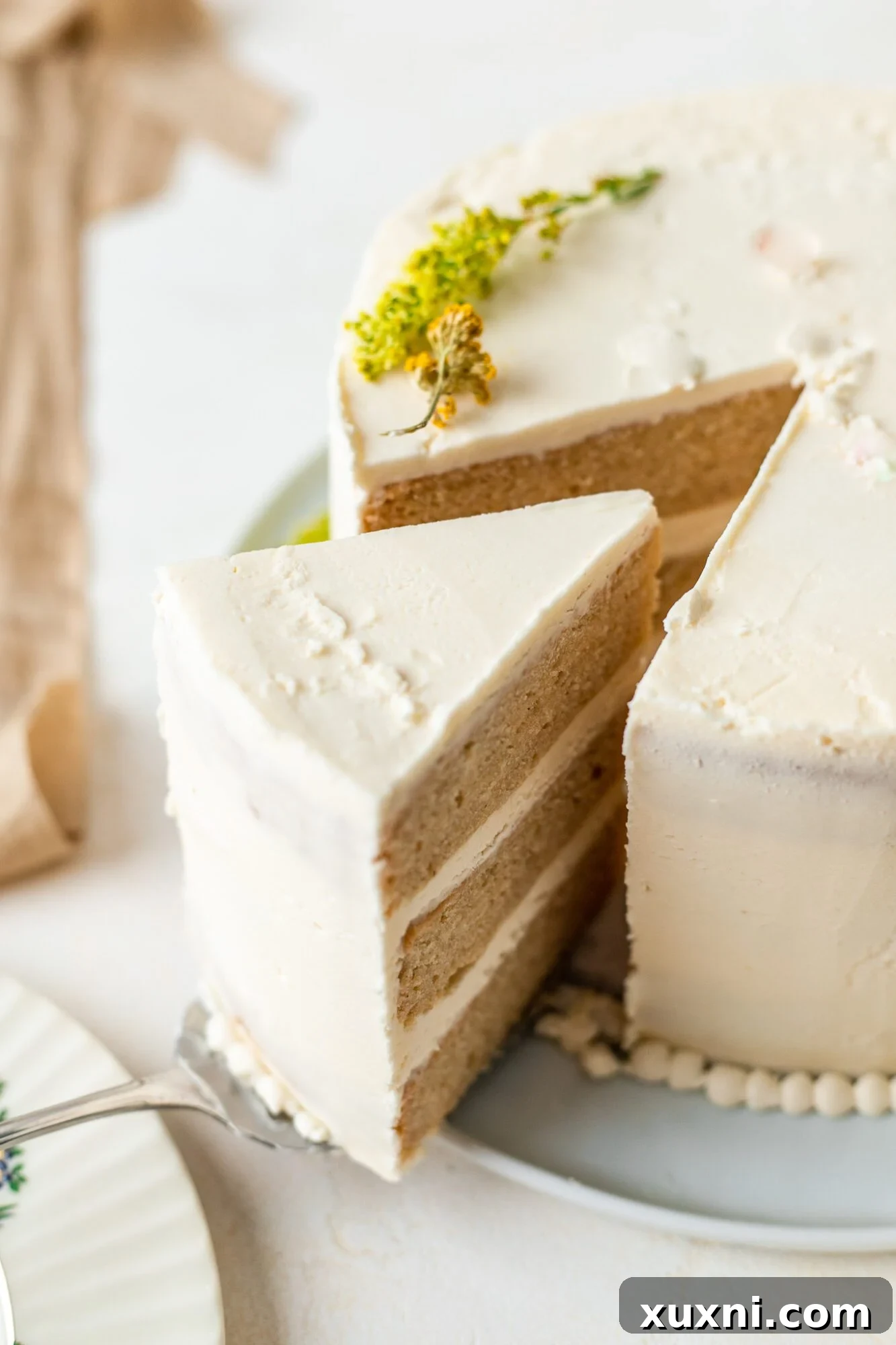
A common misconception is that vegan cakes are inherently dry or less flavorful than their traditional counterparts. However, with the right ingredients and techniques, a homemade vegan wedding cake can be incredibly moist, tender, and utterly delicious—often surprising even the most skeptical eaters. The key to achieving this luxurious texture lies in a thoughtful combination of specific plant-based ingredients.
Primarily, the moisture in this vegan cake recipe is attributed to three hero ingredients: applesauce, vegan buttermilk, and oil. Applesauce acts as a fantastic egg replacer and a natural sweetener, contributing significant moisture without adding excessive fat. Its pectin content also helps bind the cake. Vegan buttermilk, created by combining dairy-free milk with a touch of apple cider vinegar, introduces acidity that reacts with baking soda, leading to a tender crumb and light texture. The oil, chosen for its neutral flavor, ensures a consistently moist and rich result throughout the cake layers. While some vegan chocolate cake recipes can be made entirely oil-free and still achieve incredible moistness, for a vanilla wedding cake, a balanced use of these three elements creates an irresistible texture that will make anyone’s jaw drop.
Beyond the batter, how you handle and store your cake layers also plays a crucial role in maintaining moisture. If you’re preparing your wedding cake over several days, freezing the cake layers immediately after they’ve slightly cooled is an excellent strategy. This locks in moisture effectively. Detailed instructions on freezing are provided below. Furthermore, once the cake is assembled and frosted, the vegan buttercream acts as a protective barrier, insulating the cake layers and preventing them from drying out. In fact, many bakers find that vegan buttercream excels at keeping cakes moist for longer periods compared to traditional buttercreams, making it an ideal choice for a multi-day project like a wedding cake.
Your Step-by-Step Guide to Making a Homemade Vegan Wedding Cake
Now, let’s get to the heart of the matter: the exciting process of crafting your very own DIY homemade vegan wedding cake! This tutorial outlines the creation of a three-tiered cake, with each tier typically composed of three layers for impressive height and generous servings. A crucial recommendation is to prepare the batter for each tier separately. This ensures precise measurements and optimal results for each size, regardless of which tier you choose to tackle first. While two-layer tiers are also an option, three layers per tier provide a more substantial and visually appealing cake, though they will require a bit more frosting overall.
To provide a realistic timeline and strategy, I’m sharing the exact schedule I followed when making my friend’s four-tiered vegan and gluten-free vanilla wedding cake. Her wedding was on a Saturday, and I had to travel a considerable distance, so meticulous planning was essential. This schedule can be adapted to suit your specific needs and travel plans.
Here’s how I meticulously planned and executed my friend’s magnificent vegan wedding cake:
-
Monday: Baking All the Cake Layers
My baking marathon began on Monday. Prior to this, I had already calculated the precise amount of batter needed for each tier, a critical step we’ll discuss in detail later. My friend requested a four-tier vegan and gluten-free vanilla cake, consisting of 10-inch, 8-inch, 6-inch, and 4-inch tiers, each with three layers. This multi-layered approach provides an elegant height and ensures plenty of cake for everyone, including potential leftovers.
-
Cooling and Freezing the Layers for Maximum Moisture
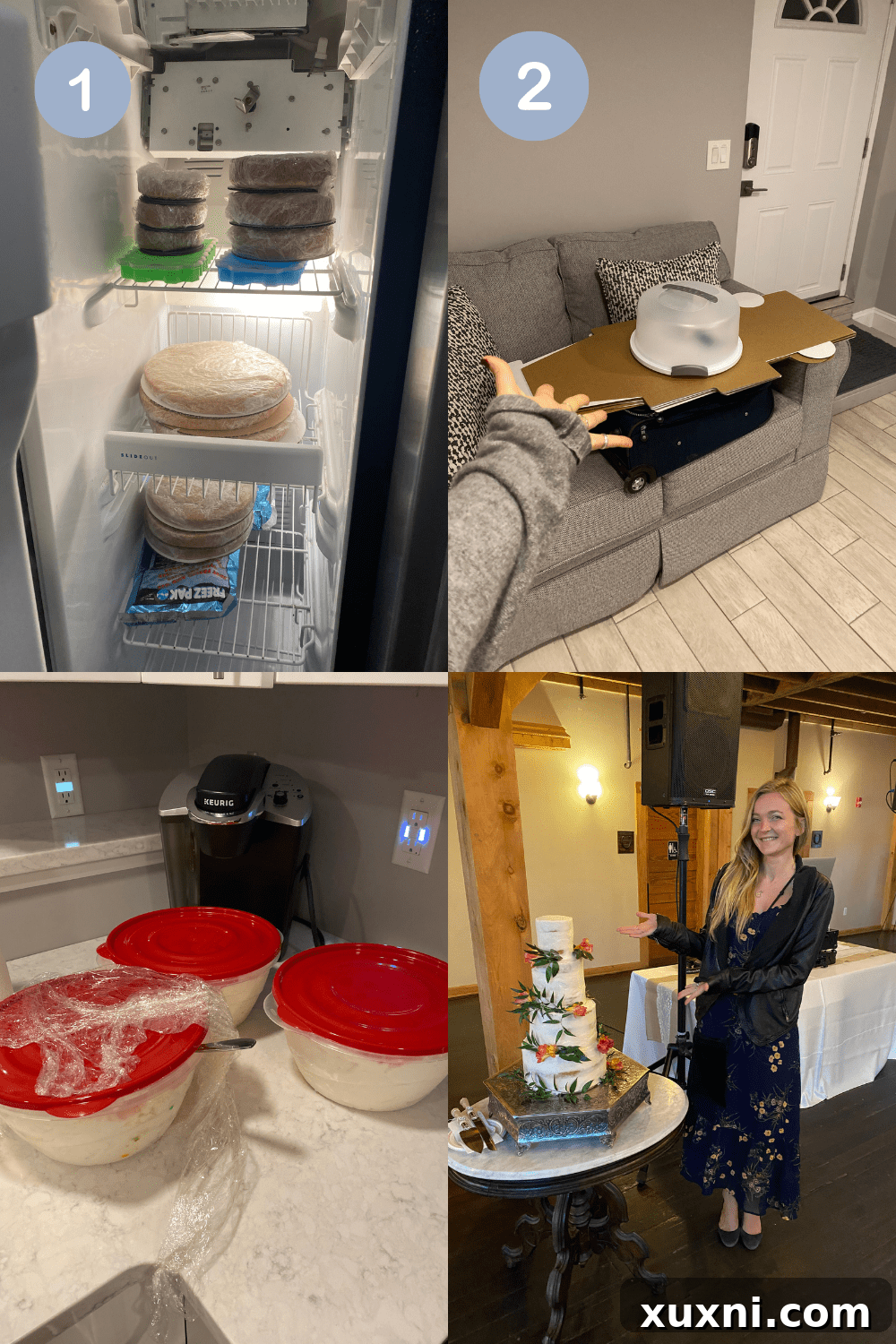
Immediately after baking, I allowed each cake layer to cool in its pan for precisely 10 minutes. This initial cooling period helps the cake firm up slightly. The layers were then carefully removed, placed on individual cake boards to ensure they froze flat, and tightly wrapped while still warm. Freezing them warm is a strategic move to lock in maximum moisture, especially crucial for vegan gluten-free cakes, which can be prone to drying out. Although I generally try to minimize plastic use, plastic wrap proved most effective here in preventing any freezer burn. Ensure your cakes are wrapped exceptionally tightly.
-
Tuesday: Preparing the Vegan Buttercream
The following day was dedicated to crafting the vegan buttercream. My friend desired a “naked cake” style, which typically uses less frosting. However, given the need to travel with the cakes, I prepared enough buttercream for a fully frosted cake – approximately six batches for a four-tiered cake – to have ample insulation. I ended up using about three batches for the naked style, but having the extra provided immense peace of mind during assembly. The remaining buttercream was frozen in large airtight containers for future use. Frozen buttercream requires significant thawing time; allow at least 10 hours at room temperature before it becomes workable for decorating.
-
Friday: Transporting Cakes and Supplies to the Venue
The night before the drive, I organized all my tools: turntable, bench scrapers, offset spatulas, piping bags (which significantly simplify frosting application), rubber gloves, cake boards, cake boxes, a long wooden central dowel, and paper straws for tier support. On Friday, the frozen cake layers and buttercream were carefully transported in suitcases packed with freezer packs, keeping everything chilled and secure during the journey to Boston.
-
Friday Night: Assembling Individual Tiers
Upon arrival, the buttercream needed adequate time to thaw, proving that 10 hours at room temperature was indeed necessary for it to become pliable. Crucially, I decorated the cake layers while they were still completely frozen. While some advise partially thawing, I’ve found that working with frozen layers consistently yields incredibly moist cakes and allows for much cleaner, sharper edges when smoothing the buttercream. From 8 PM to 10:45 PM, I meticulously assembled and frosted each tier individually, then placed them in the refrigerator overnight to set firmly.
-
Saturday (Wedding Day): Stacking and Final Decoration
Drawing inspiration from experienced cake bakers, I stacked most of the cake before heading to the venue. I carefully assembled the 8-inch and 6-inch tiers atop the 10-inch base tier, leaving the smallest 4-inch top tier separate in its box. This allowed me to hold the main stacked cake securely on my lap during the 40-minute drive, controlling its movement with the central dowel protruding from the top. The top tier was stacked upon arrival at the venue’s kitchen. With all my tools at hand, I added the final 4-inch tier and adorned the cake with the fresh flowers my friend had chosen (more on safe floral decorations below!). The completed cake was then left at room temperature for about two hours before the much-anticipated cake cutting, ensuring it was at the perfect serving temperature.
Customizing the Flavors for Your Unique Vegan Wedding Cake
While a classic vegan vanilla cake makes a timeless and universally loved wedding cake, the beauty of a homemade creation lies in its endless possibilities for customization. Don’t feel limited to a single flavor; you can mix and match to create a truly unique taste experience for your guests.
Consider a multi-flavor cake, perhaps a decadent chocolate tier alongside a refreshing vanilla one. My vegan chocolate cake recipe is easily adaptable for this purpose. Other popular vegan options that would be spectacular for a wedding include a rich classic vegan red velvet cake, a frequent favorite among readers, or a playful zebra cake, offering a beautiful marble effect and delightful flavor blend.
Beyond the cake base, you can introduce subtle or bold flavor enhancers into your batter or frosting. A touch of rose water or lavender extract can impart a delicate, sophisticated floral note, perfect for a romantic aesthetic. For a brighter, fresher profile, a squeeze of lemon zest or orange blossom water can elevate the taste. Consider infusions like almond extract for a marzipan-like essence, or even a hint of espresso powder to deepen chocolate flavors without making it taste explicitly like coffee. These small additions can transform a simple cake into a gourmet experience, tailored exactly to your preferences.
Mastering Assembly & Decoration for Your Vegan Wedding Cake
The thought of assembling a multi-tiered cake can feel intimidating, but with the right techniques and a little patience, it transforms into an incredibly fun and rewarding part of the baking process. Each tier adds to the grand spectacle, and mastering the assembly ensures your beautiful vegan wedding cake stands tall and proud.
Cake Assembly Techniques
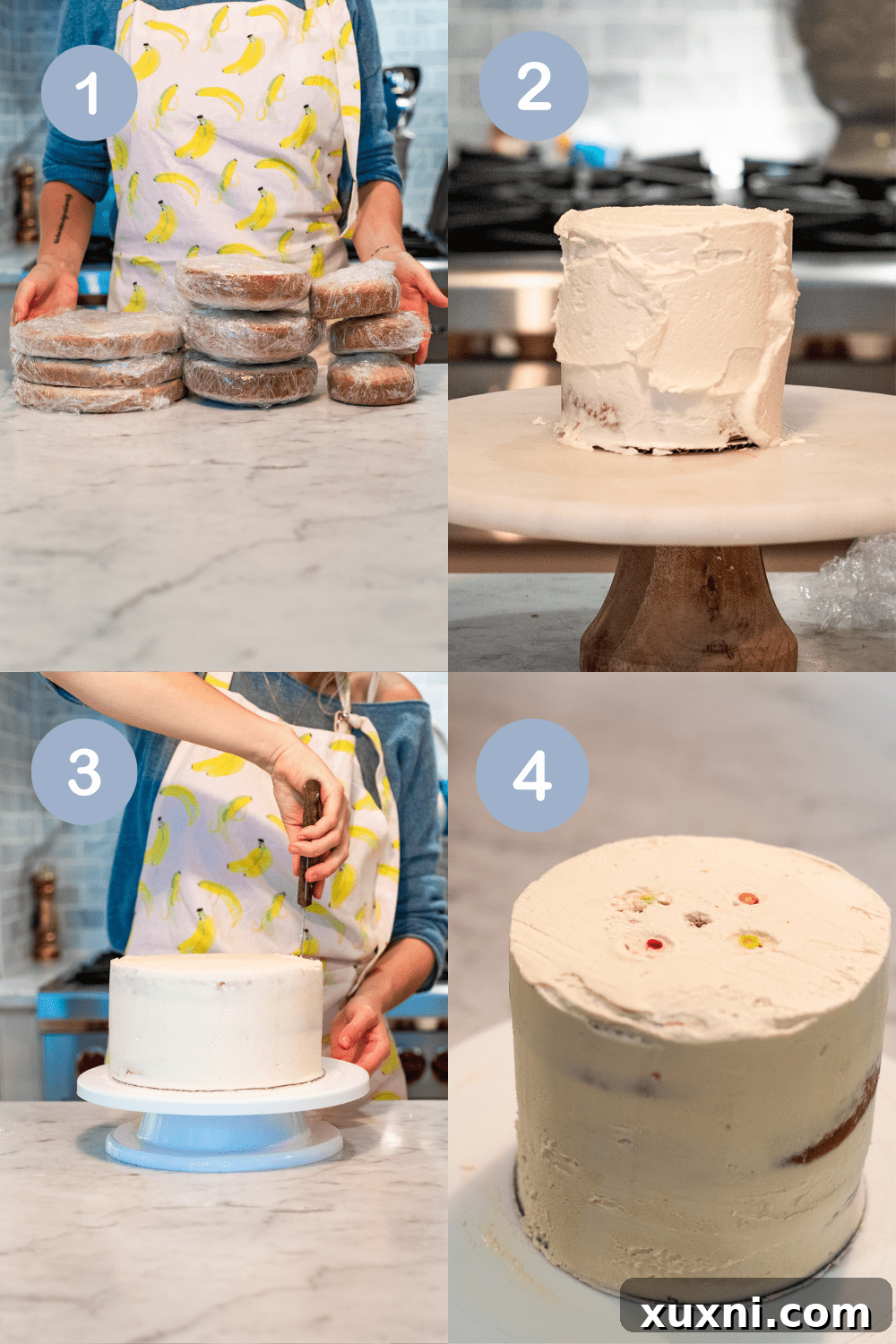
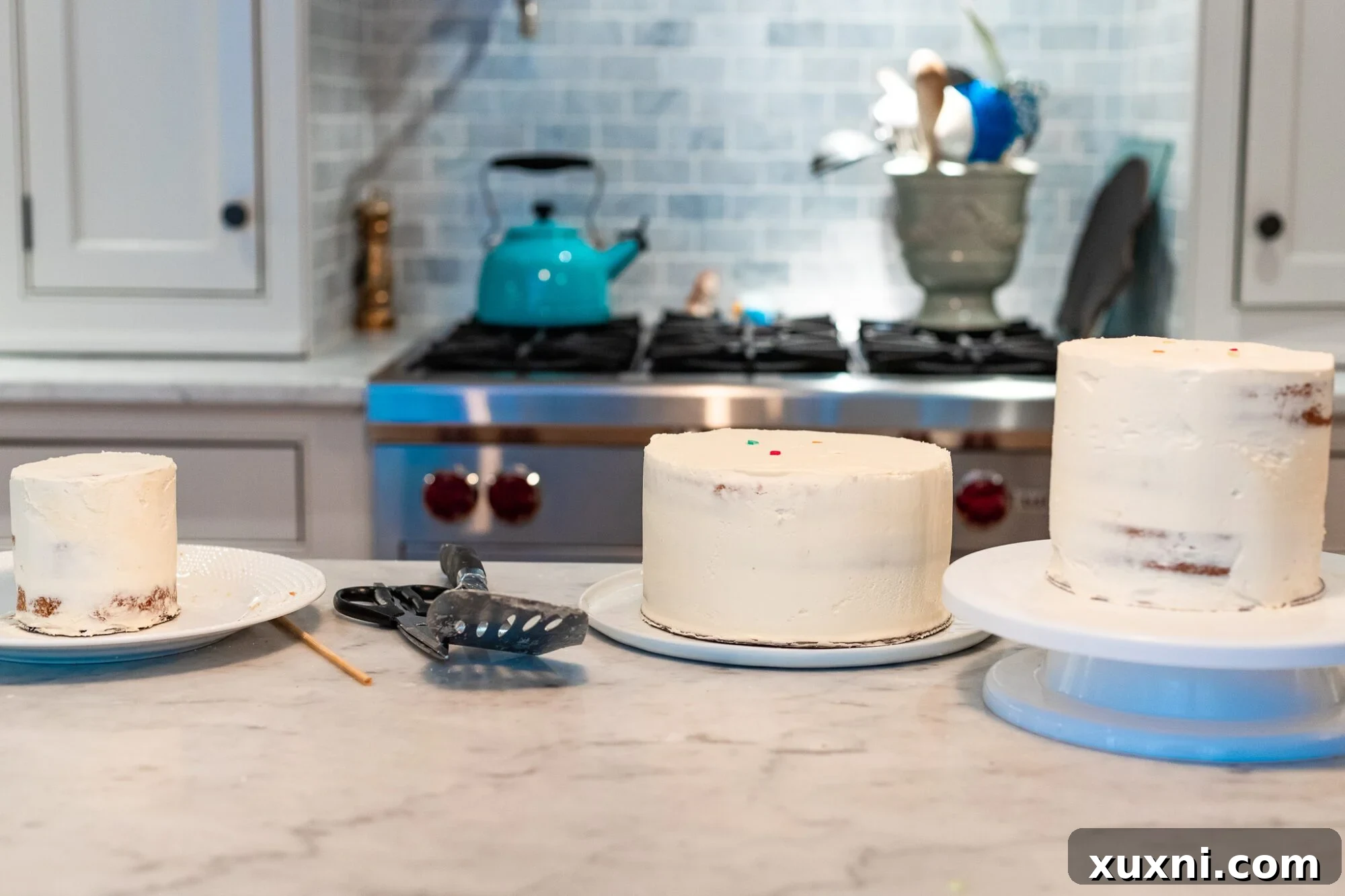
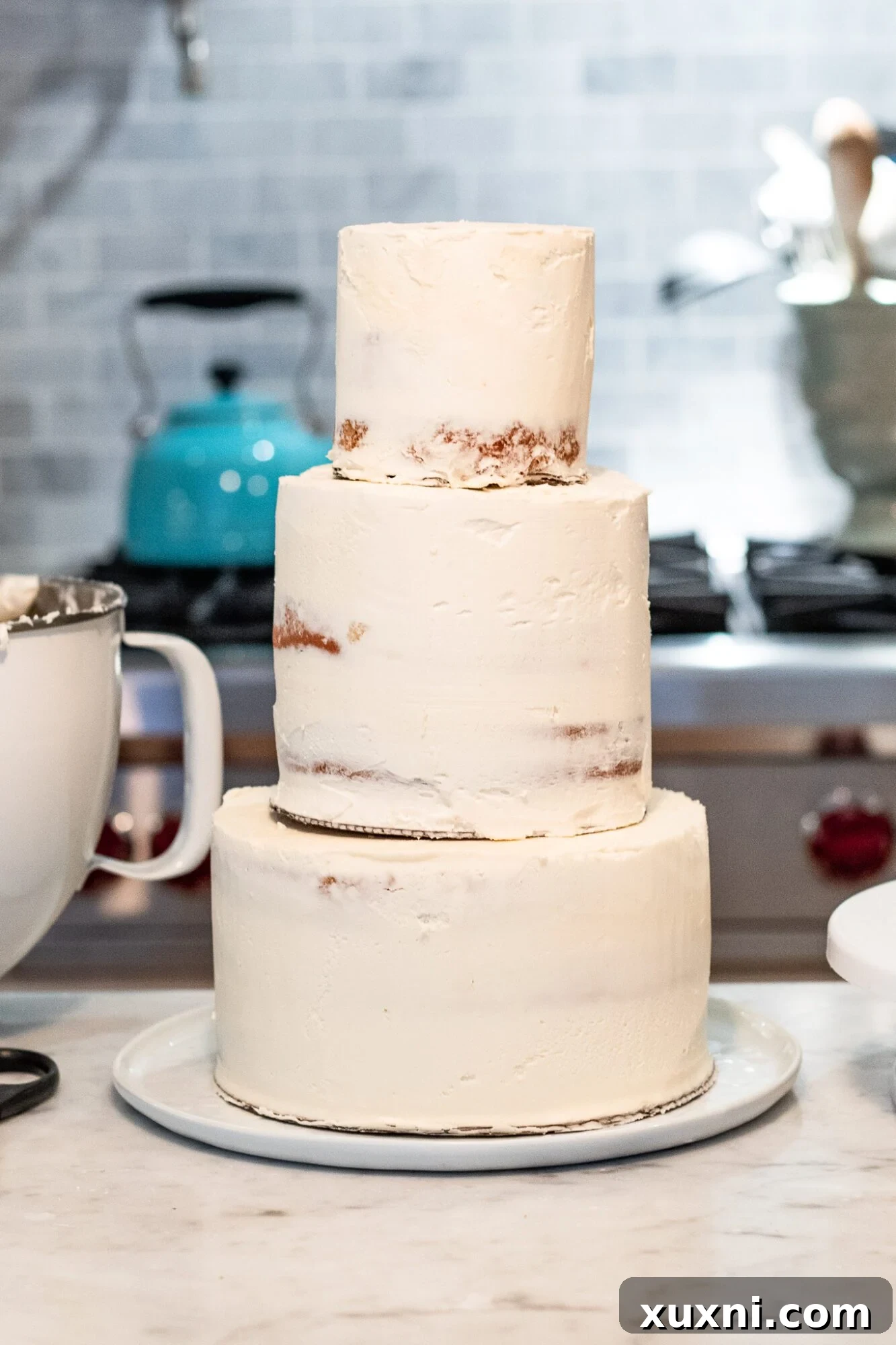
Once your cake layers are baked and perfectly chilled, you’re ready for assembly. Begin by applying an initial crumb coat to each cake layer, which is a thin layer of frosting that traps any loose crumbs. Then, apply your final layer of frosting to each individual tier before stacking. After each tier is fully frosted, place the top tier in the fridge to chill further while you prepare the crucial support system: the dowels and cake boards.
For internal support, I highly recommend using paper straws as dowels. Contrary to some concerns, I’ve found them to be incredibly sturdy—often more so than plastic options—and they are much easier to cut precisely. Position four dowels in a square formation near the center of your bottom tier. You can use more for larger or heavier cakes, but four is a good minimum. These dowels will support the weight of the tier above, preventing it from sinking into the layer below.
Equally vital is the central dowel, a single, long dowel that runs through all tiers, anchoring them together. You’ll need to pre-poke a hole in the center of each cake board (except the very bottom base board) before you begin assembly. Once your dowels are in place in the bottom tier, carefully slide the next tier down the central dowel, ensuring it aligns perfectly. Repeat this process for all subsequent tiers. Precision is key here; a perfectly centered hole in each cake board ensures a visually straight and stable cake.
After all tiers are stacked, use any remaining frosting to neatly pipe around the edges where each tier meets its cake board. This seals any gaps and creates a clean, polished look, making the transitions between tiers seamless.
Creative Cake Decoration Ideas
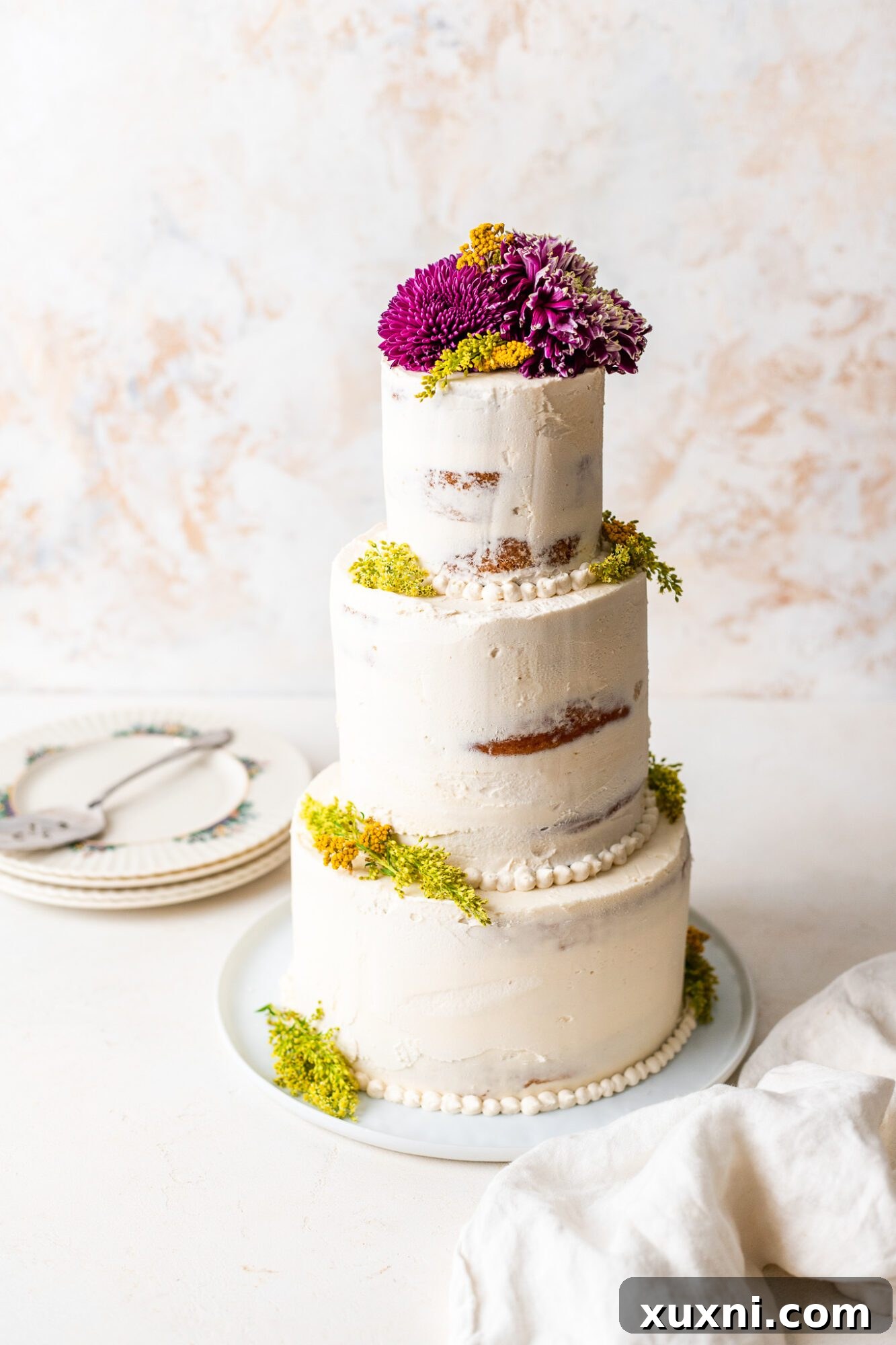
This is where your creativity truly shines, as there are no hard and fast rules for decorating your vegan wedding cake. The “naked” or “semi-naked” style of vegan vanilla cake offers a beautiful, rustic base that can be elegantly enhanced with various techniques. You can pipe intricate floral designs, delicate lacework patterns, or even bold geometric shapes directly onto the buttercream using various piping tips. For those who enjoy a more artistic approach, consider painting directly onto the cake with edible food colors, creating stunning watercolor effects or personalized illustrations. John Kanell’s painted cake tutorial on Preppy Kitchen is an excellent resource for this technique.
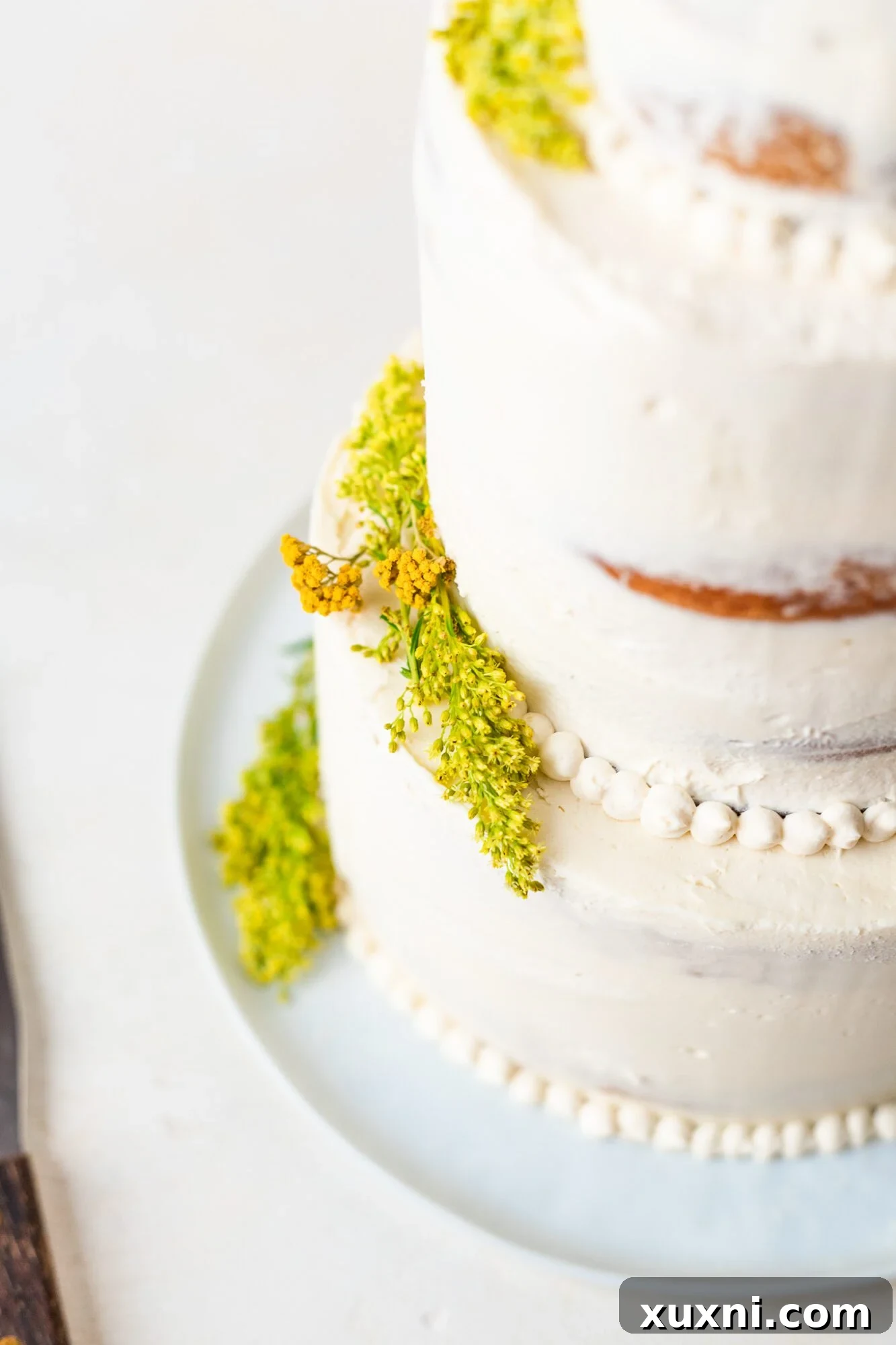
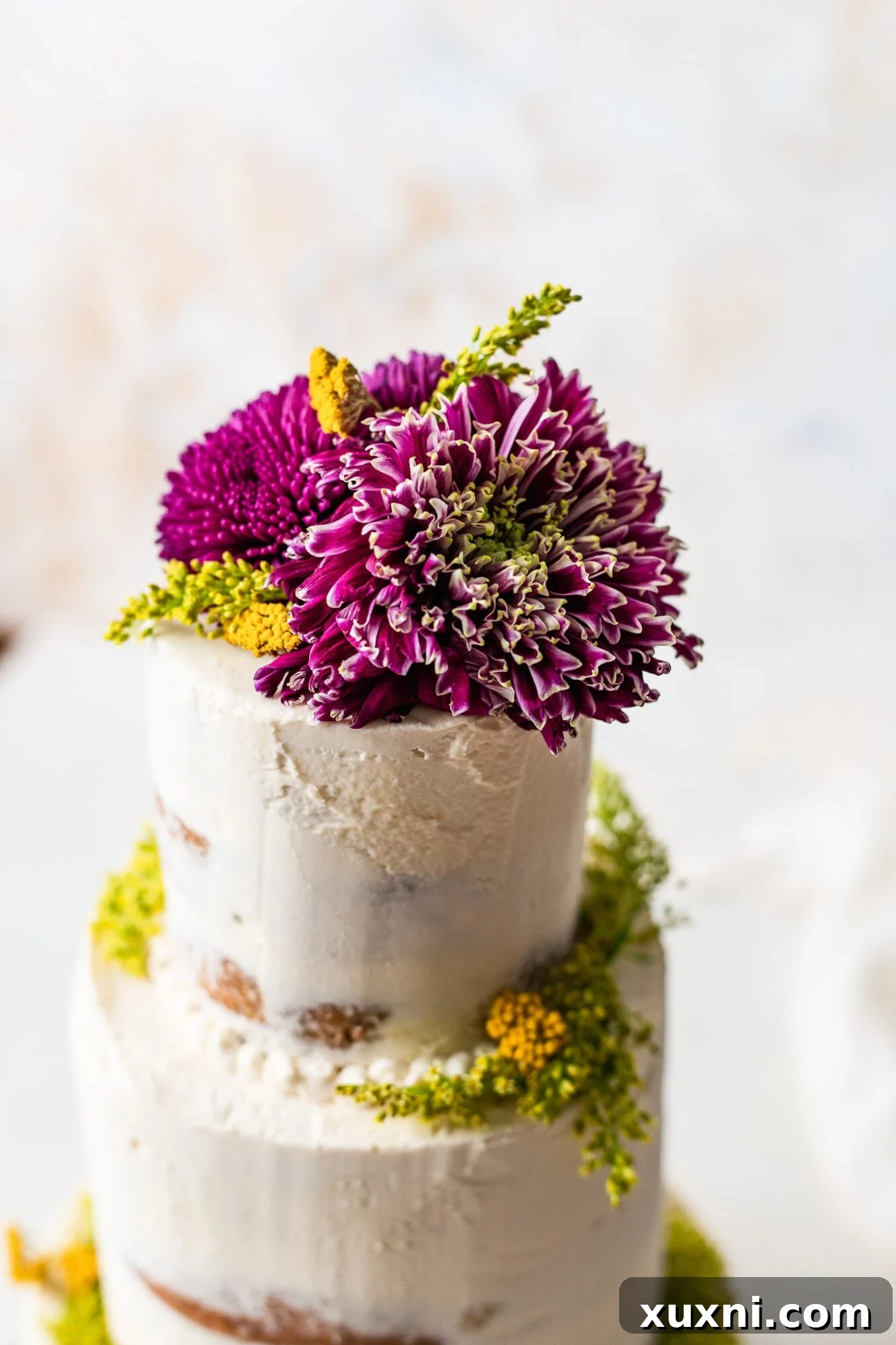
For piping, recommended tips like Wilton #70 (for leaves and small details), Wilton #129 (for delicate drop flowers), or the classic Wilton Open Star #2110 1M (for rosettes and swirls) provide a versatile toolkit. Alternatively, fresh flowers can add an organic, romantic touch, as I did for my friend’s cake. Always remember to check for non-toxic varieties (more on this below).
My ultimate tip for wedding cake decoration is to seek inspiration! Platforms like Pinterest are treasure troves of ideas, offering countless styles from minimalist elegance to opulent grandeur. Gather images that resonate with your wedding theme and personal aesthetic, then adapt them to create a cake that is uniquely yours.
Important Considerations for Floral Decorations on Cakes
While fresh flowers can add an undeniably beautiful and natural touch to your vegan wedding cake, it is critically important to be aware that not all flowers are edible or safe for direct contact with food. Some flowers contain toxins that can be harmful if ingested. For instance, the Calla Lily, a popular wedding flower, is toxic and should never be placed directly on a cake. Conversely, Marigolds are generally considered safe and were my choice for my friend’s cake.
Always exercise caution and do thorough research before incorporating any fresh flowers into your cake design. A helpful resource for identifying safe and unsafe flowers for cake decorating is typically found on baking blogs or floristry sites specializing in edible arrangements. If a flower is not edible, you can still use it by creating a barrier (such as floral tape or cling film around the stems) to prevent direct contact with the cake, or by placing the flowers in small, food-safe tubes inserted into the cake. Prioritize safety to ensure your beautiful cake is also safe for consumption.
Exquisite Vegan Wedding Cake Filling Ideas:
The filling is the delightful surprise within each slice of your wedding cake, offering an additional layer of flavor and texture. Here are some fantastic vegan filling ideas that pair wonderfully with a vanilla cake base, or can complement other cake flavors:
- Vegan Lemon Curd: A bright, tangy, and refreshing option that provides a beautiful contrast to sweet cake and frosting.
- Easy Vegan Vanilla Pastry Cream: A rich, smooth, and creamy custard-like filling that enhances the vanilla notes of the cake.
- Blueberry Jam: A simple yet effective choice, offering natural sweetness and a lovely fruity burst. Other fruit jams like raspberry, strawberry, or apricot also work beautifully.
- Vegan Ganache: For chocolate lovers, a luscious vegan ganache made with dark chocolate and plant-based cream creates an incredibly rich and indulgent layer.
- Vegan Peanut Butter Mousse: A decadent and airy peanut butter mousse provides a unique and satisfying flavor, especially for those who enjoy nutty profiles.
- Cream Cheese Frosting: A tangy and sweet vegan cream cheese frosting can be a delightful alternative or complement to the vanilla buttercream, especially with flavors like red velvet or carrot cake.
- Caramel Sauce: A drippy, rich vegan caramel sauce can be spread between layers for a luxurious and sweet addition.
- Fresh Berries: Simple layers of fresh strawberries, raspberries, or blueberries can add a burst of freshness and color, particularly when combined with a light frosting or cream.
Experiment with combinations to find the perfect harmony of flavors for your dream wedding cake!
Essential Equipment for Your DIY Vegan Wedding Cake
(This section may contain affiliate links, meaning that any purchase you make through them might earn a small commission at no extra cost to you. Your support helps maintain resources like this guide!)
Embarking on a multi-tiered wedding cake project requires a few specialized tools to ensure success. Investing in these items will not only make the process smoother but also help achieve professional-looking results for your homemade vegan wedding cake:
- Cake Pans (4″, 6″, 8″, and 10″): Having a set of varying sizes is essential for creating multi-tiered cakes. Ensure they are of good quality for even baking. For a four-tier cake, a 10-inch base is often necessary.
- Stand Mixer with Paddle and Whisk Attachments: A stand mixer is invaluable for creaming butter and sugar, and whipping up fluffy buttercream effortlessly, saving significant time and arm strength.
- Turntable Cake Stand: This rotating stand is a game-changer for easily and evenly icing your cake layers, allowing for smooth finishes.
- Sturdy Cake Stand or Cake Plate: Essential for presenting your finished cake and providing a stable base for assembly.
- Bench Scraper and Icing Knife: A bench scraper helps achieve perfectly smooth sides on your frosted cakes, while a long icing knife (or offset spatula) is ideal for leveling and spreading frosting.
- Offset Spatula: Indispensable for spreading frosting smoothly and precisely, especially for crumb coating and delicate work.
- Cake Boxes: Crucial for transporting and storing individual tiers safely before final assembly.
- Scissors: For accurately cutting your dowels to the correct height.
- Piping Tips: As mentioned in the decoration section, various tips (e.g., Wilton #70, #129, 1M) allow for diverse decorative styles.
- Vegan Food Coloring: Use natural colorings like turmeric (for yellow), beet powder (for pink/red), or matcha powder (for green) to color your buttercream without artificial additives.
- Cake Dowels and Cake Boards: Dowels (paper straws work great) provide internal support for stacked tiers, and individual cake boards for each tier are vital for stability and ease of stacking.
Gathering these tools beforehand will set you up for a smooth and enjoyable cake-baking experience, leading to a truly stunning homemade vegan wedding cake.
Precision Baking: Calculating Batter for Each Tier
One of the more technical aspects of baking a multi-tiered wedding cake is accurately calculating the batter needed for each size tier. This ensures you don’t run short on batter or have excessive leftovers. While I utilized my reliable vegan vanilla cake recipe as the base, the principles of this calculation can be applied to any cake recipe you choose. For highly accurate results, Chelsey from Chelsweets offers an exceptional online tool called the Cake Batter Calculator, which I found to be incredibly precise and invaluable.
To use such a calculator effectively, you’ll generally need the following information:
- The number of layers your base or “control” cake recipe typically yields.
- The baked height of each layer from your control recipe.
- The total number of layers you desire for your wedding cake.
- The ideal height you’d like each finished cake layer to be within your tiered structure.
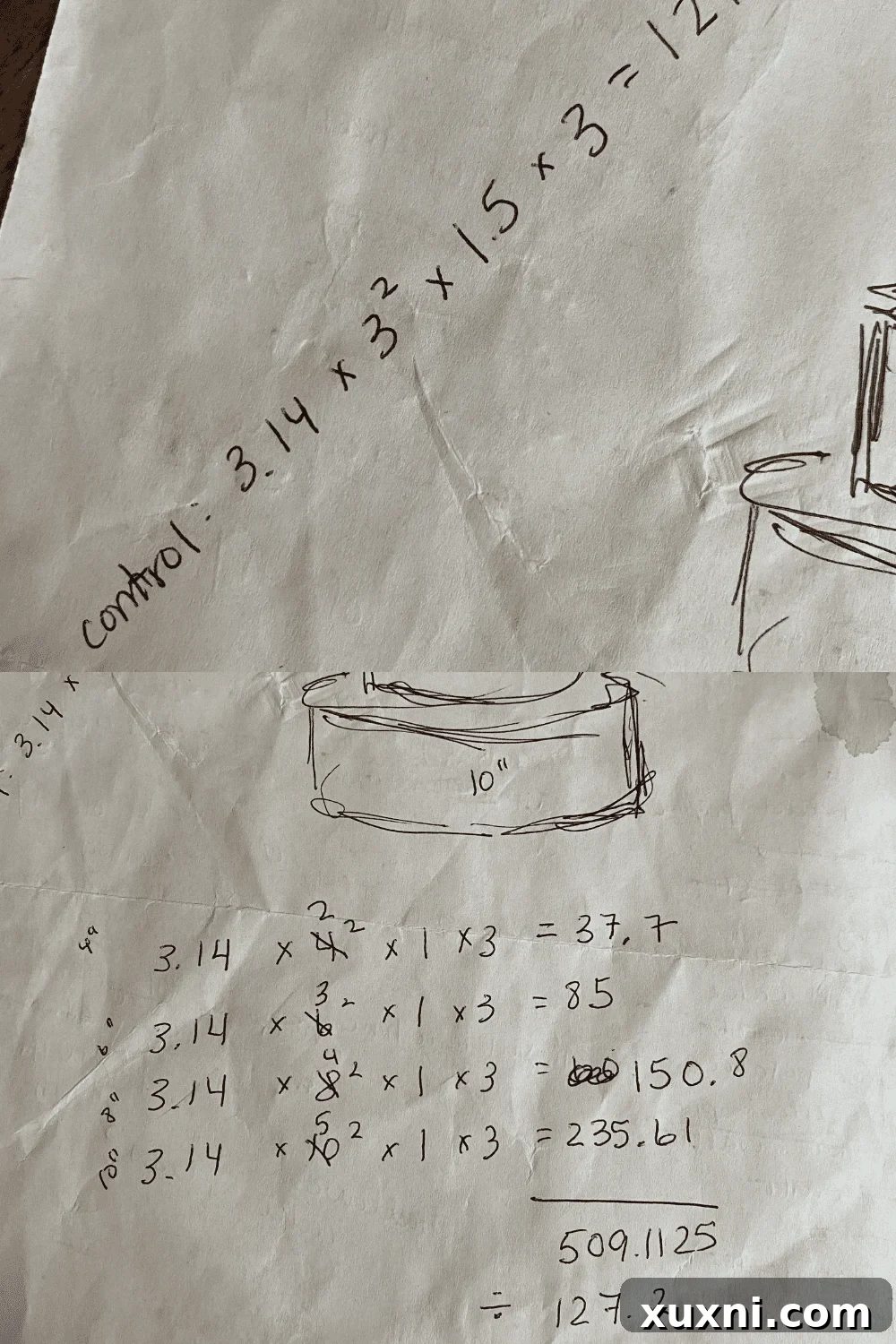
First, calculate the volume of your control cake. For example, using my vegan vanilla cake recipe for a 6-inch cake with three layers, each layer baked to approximately 1.5 inches tall. Plugging these values into the calculator provided a base cake volume of about 127.2 cubic inches of batter.
Next, determine the desired volume for each tier of your wedding cake based on your target dimensions (e.g., 4-inch, 6-inch, 8-inch, 10-inch pans), aiming for a specific number of layers and height per layer (e.g., three layers, 1 inch high each). Once you have the target volume for each tier, divide that by the base cake batter volume. This gives you a multiplier indicating what fraction or multiple of your original cake recipe is needed for each tier. For instance, a 4-inch cake tier might require 1/3 of the base recipe batter.
To simplify ingredient scaling, I then used an online recipe converter calculator. You input your full base recipe, then apply the calculated multiplier (e.g., multiply by 0.33 for 1/3 of the recipe). This tool provides the exact ingredient amounts needed for each tier, streamlining the baking process and ensuring you purchase precisely what you need, avoiding any last-minute ingredient shortages. For your convenience, the recipe card provided here includes the exact scaled measurements I used for each tier of my four-tiered vegan wedding cake.
Determining the Perfect Amount of Vegan Buttercream
One of the most frequently asked questions when preparing a multi-tiered cake is, “How much frosting will I actually need?” The answer largely depends on your desired cake style. A “naked cake” or “semi-naked cake” (where the cake layers are partially visible through a thin layer of frosting) will naturally require significantly less buttercream than a traditionally fully-frosted cake. For a four-tiered naked cake, you might find that approximately three batches of vegan buttercream are sufficient. However, for a classic, fully-frosted wedding cake, plan on needing around six batches, and it’s always a good idea to make a seventh batch just to be safe. If you envision a cake with extensive piping work or heavy decorations, you will undoubtedly need even more.
For precise calculations and detailed guidance, I highly recommend consulting resources from experienced bakers specializing in tiered cakes. Once again, Chelsweets offers an invaluable guide on “How Much Buttercream Do I Need?”, which is an excellent starting point for determining your specific requirements. While the world of wedding cakes needs more incredible vegan options, these expert resources provide foundational knowledge for quantity planning that can be applied to any cake, including our magnificent vegan creation.
We are confident you’ll adore this homemade vegan wedding cake recipe as much as we do! If you decide to embark on this wonderful baking journey, we would absolutely love to hear about your experience. Please share your thoughts and a rating in the comments below. And don’t forget to capture your beautiful creation with a photo and share it with us by tagging @the_bananadiaries on Instagram or Pinterest, or by sending us a direct message or email.
Nothing brings us more joy than seeing you celebrate with a cake made from the heart!
Happy wedding cake baking, and a huge congratulations if you’re getting married!
Want to save this recipe for later? Add it to your favorite recipe board on Pinterest!
If you make this recipe, please be sure to leave a comment and a rating ⭐️⭐️⭐️⭐️⭐️ below. This helps others to find the recipes! As always, I absolutely love to see your beautiful creations on Instagram and Pinterest, so be sure to tag me there as well!
Homemade Vegan Wedding Cake Recipe
- Author: Britt Berlin
- Prep Time: 180 minutes (including making, cooling, and decorating)
- Cook Time: 30 minutes
- Total Time: 48 minutes
- Yield: 110 servings
- Category: Dessert
- Method: Baking
- Cuisine: American
- Diet: Vegan
Description
The ultimate guide and tutorial to how to bake and decorate your own homemade vegan wedding cake! This DIY wedding cake recipe is a step-by-step tutorial for how to bake, assemble, and decorate up to a four-tier cake for any home baker! I’ve even included the exact recipe I used for making a four-tiered vegan gluten-free wedding cake!
Ingredients
Scale
4” Cake:
- 136 1/2 mL unsweetened dairy-free milk, room temperature
- 1 tsp apple cider vinegar (to be mixed with dairy-free milk)
- 209 1/3 grams all-purpose flour or gluten-free 1:1 baking flour + 1 tbsp arrowroot or cornstarch
- 1 tsp baking powder
- 1/2 tsp baking soda
- 104 2/3 grams granulated sugar
- 77 1/3 grams salted vegan butter, room temperature
- 86 1/2 grams unsweetened applesauce, room temperature
- 1 tbsp vanilla extract
- Optional (but recommended): 1/4 tsp vanilla powder
6” Cake:
- 300 mL unsweetened dairy-free milk, room temperature
- 2 tsp apple cider vinegar (to be mixed with dairy-free milk)
- 460 grams all-purpose flour or gluten-free 1:1 baking flour + 1 tbsp arrowroot or cornstarch
- 2 tsp baking powder
- 1 tsp baking soda
- 230 grams granulated sugar
- 170 grams salted vegan butter, room temperature
- 190 grams unsweetened applesauce, room temperature
- 2 tbsp vanilla extract (yes, 2 tablespoons!!)
- Optional (but recommended): 1/4 tsp vanilla powder
8” Cake:
- 390 mL unsweetened dairy-free milk, room temperature
- 2 2/3 tsp apple cider vinegar (to be mixed with dairy-free milk)
- 598 grams all-purpose flour or gluten-free 1:1 baking flour + 1 tbsp arrowroot or cornstarch
- 2 2/3 tsp baking powder
- 1 1/3 tsp baking soda
- 299 grams granulated sugar
- 221 grams salted vegan butter, room temperature
- 247 grams unsweetened applesauce, room temperature
- 2 2/3 tbsp vanilla extract
Baking time: 33 minutes
10” Cake:
- 569 1/3 mL unsweetened dairy-free milk, room temperature
- 4 tsp apple cider vinegar (to be mixed with dairy-free milk)
- 873 1/8 grams all-purpose flour or gluten-free 1:1 baking flour + 1 tbsp arrowroot or cornstarch
- 4 tsp baking powder
- 2 tsp baking soda
- 436 1/2 grams granulated sugar
- 322 2/3 grams salted vegan butter, room temperature
- 360 2/3 grams unsweetened applesauce, room temperature
- 4 tbsp vanilla extract
- Optional (but recommended): 1/4 tsp vanilla powder
Vegan buttercream recipe
Instructions
- Before beginning, please read through all instructions below, as well as the post above. The post above contains vital information for baking your wedding cake that cannot fit into the recipe card.
- Prep: Preheat the oven to 350°F (175°C). Prepare your cake pans by lining the bottom of each with a round parchment paper sheet and generously greasing the sides. Bake each tier one at a time (focus on baking all layers for the 10″ tier, then the 8″ tier, and so on). The same general directions apply for each of the tiers.
- Make the vegan buttermilk: Prepare each vegan buttermilk in a separate bowl. Combine the dairy-free milk and the apple cider vinegar and let it sit for 5-7 minutes to curdle before using.
- Whisk the dry ingredients together: It does not matter which tier you make first, just ensure each tier’s ingredients are kept separate. Start by whisking together the flour, baking powder, and baking soda for one tier, then set aside.
- Make the batter: In a stand mixer fitted with a paddle attachment, add the vegan butter and sugar for one tier. Cream them together on medium speed until light and fluffy, approximately 2-3 minutes. Next, add the vanilla extract and applesauce, mixing until just combined. Gradually add the dry flour mixture and vegan buttermilk in two alternating intervals, mixing on low speed in between. Mix the batter on medium speed until the dry ingredients are just incorporated into the wet, being careful not to overmix.
- Bake the cakes: Divide the cake batter evenly into the prepared pans for that specific tier, and bake. For the 4″ cakes: bake for 26-27 minutes; For the 6″ cake: bake for 27-30 minutes; For the 8″ cake: bake for 30-35 minutes; For the 10″ cakes: bake for 35-38 minutes. Or until a toothpick inserted into the center comes out clean. The top of the cakes should be lightly golden and spring back to the touch.
- Cool the cakes slightly: Remove the cakes from the oven and allow them to cool in their pans for 5 minutes. Then, carefully invert them onto several cooling racks to cool entirely before frosting. The cakes must be cold to the touch, otherwise the frosting will melt and slide off. If you are freezing the cake layers for later assembly, wrap them tightly only after they have cooled for 10 minutes. Freeze until you are ready to assemble.
- When ready to frost and assemble, prepare the buttercream: Beat the vegan butter until creamy. Gradually sift in the powdered sugar and continue beating until the sugar is mostly incorporated. Add in the dairy-free milk and vanilla extract, and continue beating on high speed until the frosting becomes light, fluffy, and smooth.
- To assemble: Start by placing the bottom-most tier on your chosen cake plate or base. You will need at least 4 dowels per tier, and one long central dowel. Measure the dowel against the bottom tier and mark slightly above where the top of the cake meets the dowel. Cut the dowel at this mark and repeat for the remaining dowels for that tier. Insert these dowels in a square formation (refer to the post above for visual guidance) in the middle of the cake. Then, carefully push the central dowel through the center of the bottom tier. Dowel the remaining tiers similarly, ensuring you’ve pre-cut a centered hole in the bottom of each cake board for the central dowel to pass through. When stacking, carefully place the next tier (e.g., the 8″ cake tier) and slide it down the central dowel. Repeat for any remaining cake tiers. Use a few tablespoons of leftover buttercream to fill and smooth any small gaps between each of the tiers.
- To decorate: If desired, mix vegan food colors into portions of your buttercream frosting. Pipe designs, patterns, or flowers onto the cake using your chosen piping tips! For more advanced techniques, I recommend watching tutorials on YouTube, specifically from channels like Cake It! or The Preppy Kitchen. You can also use real, non-toxic flowers (see the post above for recommendations) or even paint directly onto the cake with edible colors for an artistic touch.
- Store the cake in a cool place before serving! When ready, slice and enjoy! Any remaining cake can be stored in an airtight container in the fridge for up to 5 days.
Notes
If you are using gluten-free 1-to-1 baking flour, make sure to add in a teaspoon of arrowroot powder or cornstarch. This helps to give the flour a texture more akin to cake flour when baked, resulting in a very tender and moist cake!
If you opt to use coconut sugar instead of granulated sugar, your cake will have a slightly tanner hue, but it will remain equally delicious!
Please refer to the main blog post above for comprehensive instructions on how to bake your vegan wedding cake over several days, complete with photo references for the assembly process.